CaterZen leads for operators who need end-to-end back-office management, while ezCater delivers the fastest path to corporate demand through an established marketplace. The right platform depends on whether your primary gap is operational workflow or customer acquisition, the two problems rarely share a single solution.
Catering businesses running on spreadsheets and email threads report losing more than 30% of staff hours to order coordination and invoicing errors (National Restaurant Association, 2024). The software category splits into three models (marketplaces, direct-ordering SaaS, and management suites) and choosing from the wrong model is the most common evaluation mistake operators make.
PlugRoute has no affiliate relationships with any company listed. Rankings are determined entirely by research data and objective evaluation criteria.
“We switched from a marketplace to owning our ordering and doubled our repeat business in six months.” (r/catering operator, 2024)
Takeaway: Marketplace traffic and operator-owned ordering solve different problems. Clarify which gap you are filling before selecting a platform category.
TL;DR: Top Picks at a Glance
- CaterZen is the strongest operational management suite for established catering businesses that need route optimization, production sheets, CRM, and invoicing in a single platform.
- ezCater generates the most immediate corporate demand through an established marketplace, but charges commission on every order and does not publish a universal rate.
- HoneyCart provides the lowest-friction entry to commission-free direct ordering at a verified $99/month, confirmed on the company’s own pricing page.
- FlashCater offers the lowest published entry price in this full evaluation at $79/month, with an optional $400/month Growth services tier for operators who need demand support.
What Are the Three Categories of Catering Software?
Catering software falls into three architecturally distinct categories, each solving a different operational problem. Selecting a platform from the wrong category (even a highly rated one) produces poor results because the platform is not built for your primary need.
Commission Marketplaces connect your menu to an existing buyer pool in exchange for a percentage fee on every order. These platforms reduce new-customer acquisition effort but permanently transfer per-order margin and customer data ownership to the marketplace operator.
Direct-Ordering SaaS platforms provide a white-label ordering page or widget that captures orders commission-free. Operators own the customer relationship and retain full order revenue. Traffic generation is the operator’s responsibility.
Operational Management Suites automate the back-office functions that marketplaces and ordering pages cannot handle: route optimization, production sheet generation, delivery management, invoicing, and CRM. CaterZen is the only platform in this evaluation that primarily fits this category.
Understanding these three models prevents the most expensive evaluation error: comparing a marketplace (ezCater) to a management suite (CaterZen) as though they are direct substitutes.
How Do These 7 Platforms Compare at a Glance?
These seven platforms span all three catering software categories. The table below documents rank, category, best-fit audience, core capability, primary strength, and key limitation for each, eight dimensions required for a valid side-by-side comparison.
| Rank | Company | Category | Best For | One-Line Summary | Key Capabilities | Primary Strength | Key Limitation |
|---|---|---|---|---|---|---|---|
| 1 | CaterZen | Operational Management Suite | High-volume operators needing back-office automation | The most complete catering management system for operators moving beyond spreadsheets | Route optimization, production sheets, CRM, invoicing, online ordering | Deepest operational automation in the category | No native marketplace or demand-generation component |
| 2 | ezCater | Commission Marketplace | Operators seeking immediate access to verified corporate buyers | The dominant U.S. corporate catering marketplace with the largest verified buyer network | Marketplace exposure, corporate billing, reliability scoring, ezOrdering add-on | Largest corporate buyer network | Commission on every order; no universal rate published |
| 3 | ChowNow | Direct-Ordering SaaS | Restaurants adding catering to an existing direct-ordering operation | A commission-free ordering platform built for multi-channel food businesses | Commission-free ordering, marketing integrations, loyalty program support | Zero per-order commission with marketing infrastructure | No free trial; higher entry price than direct competitors |
| 4 | HoneyCart | Direct-Ordering SaaS | Small catering businesses setting up their first online ordering page | The lowest published entry price in the direct-ordering SaaS segment | Commission-free ordering, menu management, minimum order controls | Lowest verified entry price ($99/month, own pricing page) | Limited operational tools beyond the ordering layer |
| 5 | Cater2.me | Commission Marketplace | Corporate food program managers sourcing recurring team meals | A curated corporate meal marketplace specializing in employee food programs | Corporate meal programs, vendor curation, program coordination | Focused corporate meal program buyer segment | Custom pricing only; no self-serve rate transparency |
| 6 | DoorDash for Business | Commission Marketplace | Companies already embedded in the DoorDash ecosystem | A corporate meal solution extending DoorDash’s consumer delivery network | Group ordering, budget controls, expense management, corporate billing | Existing DoorDash network and brand recognition | Commission-dependent; lacks catering-specific workflow tools |
| 7 | FlashCater | Direct-Ordering SaaS | Small operators seeking no-commission ordering with optional growth support | A no-commission catering platform with transparent tiered pricing and optional growth services | Commission-free ordering, catering-specific workflows, Growth services tier | Lowest published entry price in this full evaluation ($79/month) | Growth tier at $400/month is a significant cost escalation |
Which Platform Matches Your Top Priority?
Narrow your shortlist to one or two platforms before evaluating individual entries. This framework maps each primary decision priority to a best-fit tool and an acceptable alternative, so you enter demos knowing which platforms to scrutinize most closely.
| Your #1 Priority | Recommended Tool | Why | Acceptable Alternative |
|---|---|---|---|
| Immediate new corporate customer acquisition | ezCater | Largest verified U.S. corporate catering marketplace | Cater2.me (corporate meal program focus) |
| Commission-free ordering at lowest entry cost | FlashCater | Lowest published entry price at $79/month (flashcater.com, 2025) | HoneyCart ($99/month, gethoneycart.com/pricing, 2025) |
| Full operational back-office automation | CaterZen | Only platform with route optimization + production sheets + CRM + invoicing | No direct substitute in this evaluation |
| Recurring corporate meal program access | Cater2.me | Dedicated corporate team meal and employee food program focus | DoorDash for Business |
| Multi-channel restaurant adding catering | ChowNow | Commission-free with loyalty and marketing tool integrations | HoneyCart |
| Leveraging an existing DoorDash relationship | DoorDash for Business | Extends DoorDash corporate accounts with group ordering and budget controls | Cater2.me |
| Commission-free ordering with optional demand support | FlashCater | Growth services tier at $400/month adds marketing support without platform switch | HoneyCart |
#1. CaterZen: Operational Management Suite Leader
Category: Operational Management Suite
At a Glance
- Category: Operational Management Suite
- Best For: Established catering businesses managing high-volume recurring orders and delivery routes
- Price Range: Starts ~$119/month (verified via GetApp, G2, and Capterra, 2025)
- Primary Strength: CaterZen provides the deepest back-office automation of any platform in this evaluation, combining route optimization, production sheets, CRM, and invoicing in a single catering-specific system
- Biggest Limitation: CaterZen has no native marketplace component, so operators must generate all customer demand independently through their own marketing channels
- One-Line Summary: CaterZen is the most complete operational management system for catering businesses ready to replace spreadsheet-based workflows with integrated automation
- Last Verified: June 2026
Overview
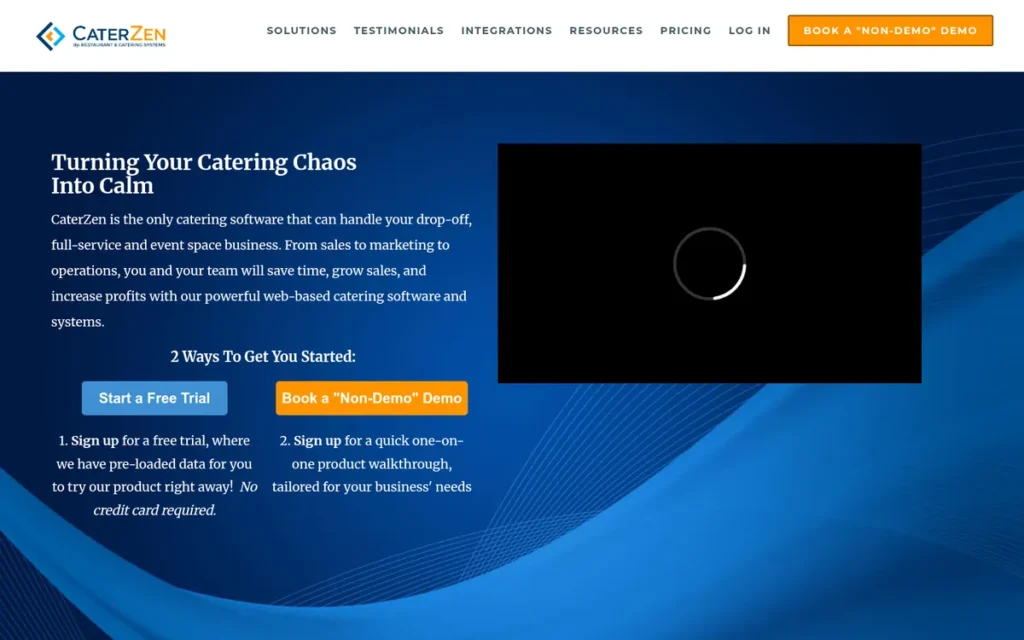
CaterZen is a dedicated catering management system designed for operators who need to automate the back-office workflows that marketplaces and basic ordering pages cannot handle. CaterZen targets established catering businesses that manage recurring corporate accounts, delivery routes, production planning, and invoicing across multiple simultaneous orders. CaterZen does not function as a demand marketplace, operators bring their own customer relationships to the platform.
Key Features
- Route Optimization: CaterZen automatically sequences delivery stops to reduce drive time and fuel costs, a capability absent from all marketplace and basic SaaS competitors in this evaluation.
- Production Sheet Automation: CaterZen generates kitchen production sheets from confirmed orders, reducing manual coordination between front-of-house and production staff on catering days.
- CRM and Recurring Order Management: CaterZen’s built-in CRM enables operators to store client preferences, track order history, and manage recurring corporate accounts without third-party tools.
- Invoicing and Payment Processing: CaterZen handles invoicing and payment collection within the platform, eliminating the need to reconcile billing data across separate software.
- Online Ordering Module: CaterZen includes a customer-facing ordering page, allowing businesses to accept direct orders without paying per-order commissions.
Best For
CaterZen is best suited for catering operators processing consistent high order volumes who need coordinated management of production, delivery, and client relationships. CaterZen delivers the most value to businesses with an established customer base needing operational infrastructure, not businesses whose primary need is new customer acquisition.
Strengths
- CaterZen holds a 4.8/5 overall rating on GetApp (2025), with sub-scores of 4.8/5 for Customer Support, 4.6/5 for Ease of Use, 4.5/5 for Features, and 4.6/5 for Value for Money, among the highest verified scores in this evaluation’s dataset.
- CaterZen maintains active review profiles on G2 (g2.com/products/caterzen/reviews), Capterra (capterra.com/p/82293/Restaurant-Catering-System/reviews), and GetApp, providing triangulated independent social proof across three major review platforms (2025).
- CaterZen’s route optimization feature directly reduces fuel and labor costs for delivery-heavy operations, a capability no other platform in this evaluation offers natively.
- CaterZen’s integrated CRM enables operators to build client retention workflows without purchasing separate CRM software, reducing total technology stack cost.
Limitations
- No Marketplace Demand: CaterZen provides no built-in customer acquisition mechanism, meaning operators must drive all traffic to their ordering page through independent marketing efforts.
- Learning Curve for New Operators: CaterZen’s comprehensive feature set requires meaningful onboarding time, making it a poor fit for businesses that need same-week activation.
- Higher Entry Price vs. Basic Alternatives: CaterZen’s ~$119/month starting price exceeds HoneyCart ($99/month) and FlashCater ($79/month), which may be disproportionate for low-frequency catering operations.
- Operational Focus, Not Discovery: CaterZen does not appear in consumer-facing catering search results the way marketplace platforms do, so new customers are unlikely to find a business through CaterZen itself.
Verdict
CaterZen is the strongest operational management platform in this evaluation for established catering businesses processing consistent order volume. CaterZen’s combination of route optimization, production sheets, CRM, and invoicing is unmatched by any other reviewed tool. CaterZen is not a customer-acquisition platform, operators who need to grow their customer base should consider pairing CaterZen with a marketplace listing before relying on it as their sole platform.
#2. ezCater: Corporate Marketplace Demand Leader
Category: Commission Marketplace
At a Glance
- Category: Commission Marketplace
- Best For: Operators seeking immediate access to verified corporate buyers without a pre-existing corporate client base
- Price Range: Commission-based; ezOrdering program charges approximately 7% per order; marketplace listing rates vary and are not publicly disclosed (corroborated by cateringfunnels.com and gethoneycart.com, 2024–2025)
- Primary Strength: ezCater operates the largest verified U.S. corporate catering marketplace, connecting operators to an established network of business buyers without independent outreach
- Biggest Limitation: ezCater charges commission on every marketplace order and does not publish a universal rate, making pre-commitment net revenue modeling difficult
- One-Line Summary: ezCater is the fastest path to corporate catering demand for operators willing to trade per-order margin for marketplace exposure
- Last Verified: June 2026
Overview
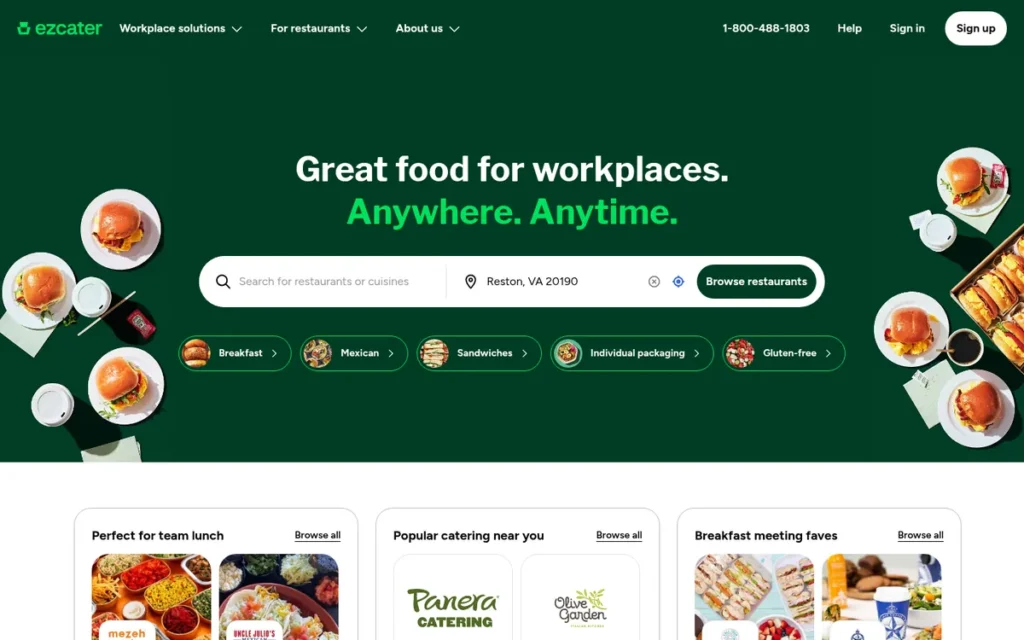
ezCater is a commission-based marketplace connecting catering businesses to corporate buyers across the United States. ezCater manages customer acquisition, billing infrastructure, and order routing on behalf of listed operators. ezCater does not publish a single universal commission rate, the ezOrdering program carries an approximately 7% fee, corroborated by independent sources including cateringfunnels.com and gethoneycart.com (2024–2025). Marketplace listing commission rates may differ and are negotiated separately.
Key Features
- Corporate Buyer Marketplace: ezCater gives listed operators immediate exposure to a network of verified corporate buyers, reducing cold-outreach requirements for operators entering the corporate catering segment.
- Integrated Corporate Billing: ezCater handles invoicing and payment collection for corporate accounts, including net-30 billing structures that many enterprise buyers require.
- Order Routing and Confirmation: ezCater manages order confirmation, modification requests, and delivery confirmation communications, reducing operator administrative load per order.
- Reliability Score System: ezCater tracks and publicly displays operator reliability scores, creating reputational accountability and incentivizing consistent order fulfillment quality.
- ezOrdering Integration: ezCater’s ezOrdering add-on allows operators to accept direct orders through the marketplace infrastructure at an approximately 7% per-order fee, per independent sources (cateringfunnels.com, gethoneycart.com, 2024–2025).
Best For
ezCater is best for catering operators who lack an established corporate client base and need immediate demand generation. ezCater is also appropriate for operators testing corporate catering demand before investing in their own ordering infrastructure and client management workflows.
Strengths
- ezCater operates what independent analysts describe as the largest U.S. corporate catering marketplace by buyer volume, providing demand-generation exposure unavailable through direct-ordering platforms (cateringfunnels.com, 2024).
- ezCater’s corporate billing infrastructure supports net-30 payment terms, reducing friction when closing enterprise accounts that require deferred payment structures.
- ezCater’s reliability score system creates a performance-accountability layer that gives high-quality operators a measurable reputation advantage over lower-reliability competitors within the marketplace.
- ezCater integrates natively with CaterZen, enabling operators to route marketplace orders directly into their operational management system, the only evaluated integration of its kind across all seven platforms.
Limitations
- Permanent Commission Drag: ezCater charges commission on every marketplace order, meaning every order processed through ezCater permanently carries a lower net margin than the same order placed through a commission-free channel.
- Variable Rate Opacity: ezCater does not publish a universal marketplace commission rate, making it structurally difficult for operators to accurately model net revenue before listing.
- Mediated Customer Relationship: Orders placed through the ezCater marketplace give ezCater (not the operator) the primary customer relationship, limiting repeat-order capture to the marketplace channel.
- Platform Dependency Risk: Operators who build volume primarily through ezCater become dependent on fee structures and policy decisions that are outside their control as their order concentration on the platform increases.
Verdict
ezCater is the most effective demand-generation tool for catering operators entering the corporate market without an established buyer base. The commission model is a permanent margin cost (not a temporary tradeoff) and operators should model net-revenue scenarios at multiple order volumes before committing to ezCater as their primary channel. ezCater and a direct-ordering platform are not mutually exclusive, and many operators run both simultaneously.
#3. ChowNow: Commission-Free Multi-Channel Ordering Platform
Category: Direct-Ordering SaaS
At a Glance
- Category: Direct-Ordering SaaS
- Best For: Restaurants adding catering to an existing commission-free digital ordering operation
- Price Range: Approximately $199/month (widely reported by independent review sources; contact ChowNow for current tier details)
- Primary Strength: ChowNow provides a commission-free direct ordering platform with marketing tool integrations and loyalty program support, suited for operators with existing digital marketing capacity
- Biggest Limitation: ChowNow’s flat monthly fee and absence of a free trial create financial commitment risk before operators can validate platform fit
- One-Line Summary: ChowNow is a commission-free ordering platform best suited for restaurants that already invest in customer acquisition and want to add catering without commission drag
- Last Verified: June 2026
Overview
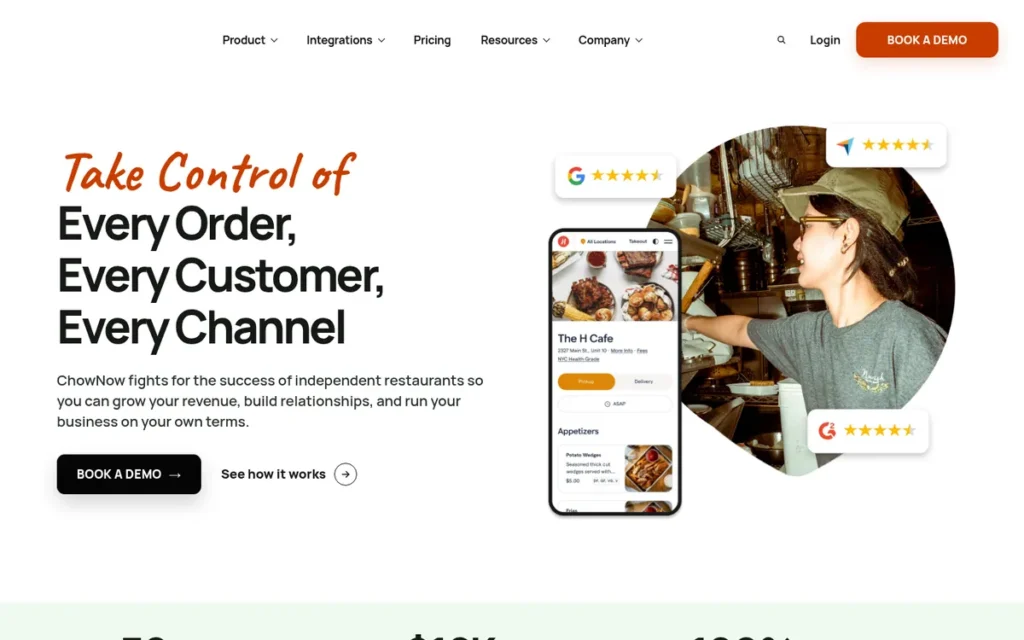
ChowNow is a direct-ordering SaaS platform that allows restaurants and catering businesses to accept orders without per-order commission fees. ChowNow provides a white-label ordering interface, marketing tool integrations, and loyalty program support within a monthly subscription model. ChowNow targets multi-channel food businesses that already generate their own customer traffic and want to retain full margin on orders placed through their own channels.
Key Features
- Commission-Free Ordering: ChowNow charges no per-order commission, meaning operators retain the full order value minus standard payment processing fees on every order placed through their ChowNow page.
- White-Label Ordering Interface: ChowNow provides a branded ordering experience that presents the operator’s own identity to customers (not ChowNow’s brand) throughout the ordering flow.
- Marketing Tool Integrations: ChowNow connects to email marketing platforms and digital advertising tools, enabling operators to route customer re-engagement campaigns directly to their ordering page.
- Loyalty Program Support: ChowNow includes loyalty program infrastructure, allowing operators to build repeat-visit incentives without purchasing a separate loyalty platform.
- Multi-Channel Order Management: ChowNow consolidates orders from web and app channels into a single dashboard, reducing the need to monitor multiple order streams separately.
Best For
ChowNow is best for restaurants and catering operations that already generate customer traffic through their own marketing channels and need a commission-free way to convert that traffic into orders. ChowNow is particularly well-suited to businesses running email marketing and loyalty programs alongside their catering service.
Strengths
- ChowNow eliminates per-order commissions entirely, enabling operators to retain full order revenue on demand they generate through their own marketing investment, a compounding advantage as order volume grows.
- ChowNow’s marketing integrations allow operators to run email and paid re-engagement campaigns that route traffic directly to their own ordering page, supporting full customer relationship ownership.
- ChowNow’s loyalty program infrastructure enables catering businesses to build structured repeat-visit incentives, a capability absent from most direct-ordering competitors in this evaluation.
- ChowNow’s white-label interface maintains the operator’s brand identity throughout the ordering experience, avoiding the brand dilution that occurs when customers place orders through third-party marketplace pages.
Limitations
- Higher Entry Price vs. Direct Competitors: ChowNow’s approximately $199/month starting price exceeds HoneyCart ($99/month) and FlashCater ($79/month), which offer commission-free ordering at lower flat rates for comparable core functionality.
- No Demand Generation: ChowNow provides no marketplace or customer discovery mechanism, operators who cannot independently generate traffic will see no orders regardless of platform quality.
- Setup Complexity: ChowNow’s onboarding process involves technical integration steps that may require support resources, adding time and cost beyond the monthly subscription fee.
- No Free Trial or Pre-Commitment Pilot: ChowNow does not offer a free trial period, meaning operators must commit financially before evaluating whether the platform fits their actual workflow and customer behavior.
Verdict
ChowNow is the strongest direct-ordering option for multi-channel restaurant operators who already invest in customer acquisition and want to eliminate commission drag on orders they generate. ChowNow is not a fit for operators who need the platform itself to generate new customer demand, its value depends entirely on the operator’s existing marketing capacity and traffic volume.
#4. HoneyCart: Low-Barrier Direct-Ordering Entry Point
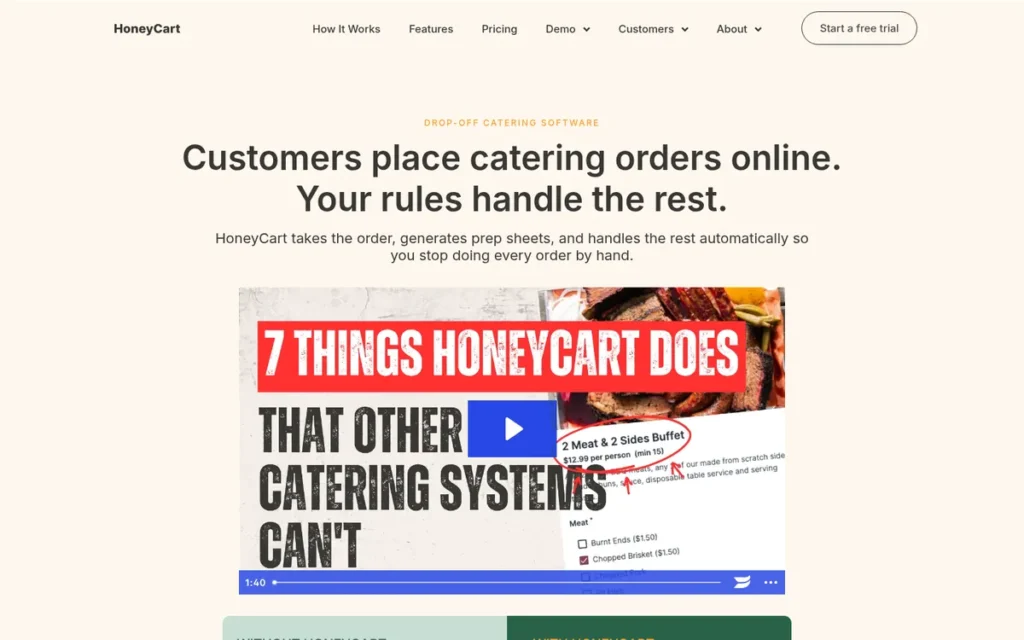
Category: Direct-Ordering SaaS
At a Glance
- Category: Direct-Ordering SaaS
- Best For: Small catering businesses setting up their first commission-free online ordering page
- Price Range: Starts at $99/month (verified on HoneyCart’s own pricing page at gethoneycart.com/pricing, 2025); higher tiers exist but are not fully disclosed publicly
- Primary Strength: HoneyCart provides the lowest verified entry price in the direct-ordering SaaS segment, reducing financial risk for operators adding online ordering for the first time
- Biggest Limitation: HoneyCart’s feature set covers the ordering layer only: route optimization, production sheets, and CRM are absent
- One-Line Summary: HoneyCart is the most accessible entry point to commission-free catering ordering for small operators who prioritize low cost and fast setup over feature depth
- Last Verified: June 2026
Overview
HoneyCart is a commission-free direct-ordering platform built specifically for catering businesses. HoneyCart allows operators to create a custom ordering page, manage menus, and accept orders without paying per-order fees. HoneyCart’s $99/month starting price is confirmed on the company’s own pricing page at gethoneycart.com/pricing (2025), making it the lowest verified entry price in the direct-ordering SaaS segment of this evaluation.
Key Features
- Commission-Free Catering Orders: HoneyCart charges no per-order commission, enabling operators to retain the full order value minus standard payment processing fees on every booking.
- Custom Ordering Page: HoneyCart provides operators with a branded ordering page that can be shared via direct link, embedded on a website, or included in marketing emails.
- Menu Management: HoneyCart’s menu tools allow operators to update items, prices, and availability without developer assistance or technical configuration.
- Minimum Order and Lead Time Controls: HoneyCart allows operators to set minimum order values and required advance notice periods, reducing the risk of accepting operationally infeasible bookings.
- Automated Order Confirmations: HoneyCart sends automated confirmations to customers and notifications to operators, reducing manual follow-up after each booking is placed.
Best For
HoneyCart is best for small catering businesses or solo operators who want to move order intake online without paying per-order commissions or committing to a full operational management suite. HoneyCart is particularly appropriate for businesses that currently take orders by phone or email and want a low-cost digital alternative.
Strengths
- HoneyCart’s $99/month starting price is confirmed on the company’s own pricing page at gethoneycart.com/pricing (2025), the lowest verified direct-ordering entry price in this evaluation.
- HoneyCart’s minimum order and lead time controls reduce the operational risk of accepting orders that are unprofitable or logistically infeasible, controls that general restaurant ordering platforms frequently lack natively.
- HoneyCart eliminates per-order commissions, which compounds in value at higher order volumes, a $100 order processed through a 7%-commission marketplace costs $7 per transaction, every time.
- HoneyCart is built specifically for catering order flows, with advance-notice requirements and order minimums that general restaurant platforms typically require customization to support.
Limitations
- Limited Operational Toolset: HoneyCart provides ordering-layer tools only: it does not offer route optimization, production sheet automation, or CRM functionality available in operational management suites like CaterZen.
- No Demand Generation: HoneyCart provides no marketplace or discovery mechanism; operators must independently generate all traffic to their HoneyCart ordering page.
- Narrow Integration Ecosystem: HoneyCart’s integrations for marketing, POS, and accounting tools are more limited than broader platforms like ChowNow, which may require manual data reconciliation for operators running multi-tool stacks.
- Pricing Tier Opacity Above Entry Level: HoneyCart publishes its $99/month entry price clearly, but pricing details for higher tiers are not fully disclosed on the public pricing page, making upgrade cost modeling difficult as a business scales.
Verdict
HoneyCart is the most accessible starting point for small catering operators adding commission-free online ordering for the first time. HoneyCart’s narrow feature set is a deliberate tradeoff, operators who outgrow its capabilities will find a migration to a full operational suite like CaterZen relatively straightforward, and the low entry price reduces the cost of switching if priorities change.
#5. Cater2.me: Corporate Meal Program Specialist
Category: Commission Marketplace
At a Glance
- Category: Commission Marketplace
- Best For: Corporate food program managers sourcing multiple vendors for structured recurring team meals
- Price Range: Custom pricing; operators must contact Cater2.me directly for fee and commission terms
- Primary Strength: Cater2.me’s curated approach to corporate meal programs gives operators access to a focused enterprise buyer segment with recurring structured demand
- Biggest Limitation: Cater2.me does not publish commission rates or operator fees, making pre-commitment net revenue modeling impossible without a sales conversation
- One-Line Summary: Cater2.me is a curated corporate catering marketplace best suited for operators targeting structured employee meal programs rather than one-off event or ad-hoc catering
- Last Verified: June 2026
Overview
Cater2.me is a managed corporate catering marketplace that connects businesses with caterers for recurring employee meal programs. Cater2.me’s platform is positioned around team feeding and employee food benefit programs, not event or ad-hoc catering demand. Cater2.me manages program coordination, vendor curation, and corporate account administration on behalf of the buyer, making it a managed-service marketplace rather than a self-serve listing platform.
Key Features
- Corporate Meal Program Management: Cater2.me specializes in structured recurring meal programs for corporate clients, a use case that differs meaningfully from one-off event catering demand available through broader marketplaces.
- Vendor Curation and Vetting: Cater2.me curates its vendor network rather than accepting all applicants, positioning listed operators as pre-vetted providers in the eyes of corporate buyers.
- Program Coordination Services: Cater2.me handles schedule management, logistics coordination, and program administration for corporate clients, reducing the operational burden on both buyers and operators.
- Corporate Account Infrastructure: Cater2.me provides invoicing and payment processing designed for corporate billing cycles, supporting operators who need deferred payment structures for enterprise accounts.
- Multi-Vendor Program Support: Cater2.me manages programs that source meals from multiple vendors simultaneously, enabling operators to participate in large programs without needing to fulfill every order type independently.
Best For
Cater2.me is best for caterers specializing in recurring corporate meal service who want access to enterprise food program buyers. Cater2.me is less appropriate for operators focused on wedding, social event, or ad-hoc catering, the platform’s buyer base is concentrated in the corporate team-feeding segment.
Strengths
- Cater2.me’s specialization in corporate meal programs gives listed operators access to enterprise buyers whose recurring order frequency and volume typically exceed those of ad-hoc event catering clients.
- Cater2.me’s curated vendor network positions listed operators as pre-vetted providers, potentially reducing buyer due-diligence requirements and shortening the sales cycle for new corporate accounts.
- Cater2.me’s managed coordination model reduces the administrative overhead operators face when serving large corporate accounts with complex scheduling and dietary requirements.
- Cater2.me’s multi-vendor program structure enables smaller operators to participate in large meal programs without needing to fulfill all dietary requirements or cuisine types independently.
Limitations
- No Self-Serve Pricing Transparency: Cater2.me does not publish commission rates or operator fees, making it impossible to model net revenue before engaging in a sales conversation with the platform.
- Narrow Buyer Segment: Cater2.me’s corporate meal program focus means operators whose primary revenue comes from event, wedding, or social catering will find limited buyer-base overlap on the platform.
- Managed-Service Dependency: Cater2.me’s coordination model gives the platform significant control over the operator-client relationship, limiting the operator’s ability to build direct client relationships independent of the marketplace.
- Geographic Coverage Limitations: Cater2.me’s curated corporate network may have limited coverage in smaller markets, restricting its value for operators located outside major metropolitan areas.
Verdict
Cater2.me is the most focused corporate meal program option in this evaluation for operators targeting structured enterprise feeding programs with recurring order cadences. Cater2.me’s pricing opacity is the primary risk factor, operators should request and review complete fee disclosures, model net revenue across multiple order-volume scenarios, and confirm geographic coverage before committing to a listing.
#6. DoorDash for Business: Consumer Network Extended to Corporate Use
Category: Commission Marketplace
At a Glance
- Category: Commission Marketplace
- Best For: Corporate food program managers and catering operators already embedded in the DoorDash consumer ecosystem
- Price Range: Commission-based; contact DoorDash for Business for current corporate account and operator fee terms
- Primary Strength: DoorDash for Business extends an existing, widely recognized delivery network into corporate meal management with group ordering and expense management tools
- Biggest Limitation: DoorDash for Business is built on consumer delivery infrastructure and lacks the catering-specific workflow tools (advance order management, production sheets, route optimization) available in dedicated catering suites
- One-Line Summary: DoorDash for Business is best for operators and corporate buyers already using DoorDash infrastructure who need structured corporate meal capabilities without platform migration
- Last Verified: June 2026
Overview
DoorDash for Business is DoorDash’s corporate meal product, extending the company’s existing consumer delivery network with group ordering, budget controls, and expense management capabilities. DoorDash for Business targets companies that already use DoorDash for individual employee meals and want to add structured corporate programs without switching platforms. For catering operators, DoorDash for Business provides access to corporate accounts enrolled in the DoorDash ecosystem.
Key Features
- Group Ordering: DoorDash for Business supports group meal orders from a single corporate account, allowing multiple employees to submit individual selections within a shared order and budget cap.
- Budget and Expense Controls: DoorDash for Business provides spending limits and expense reporting tools for corporate administrators managing employee meal benefits across their organization.
- Existing DoorDash Network Integration: DoorDash for Business operates within DoorDash’s existing logistics and payment infrastructure, eliminating the need for operators to configure new delivery or payment systems.
- Corporate Account Management: DoorDash for Business provides account management for corporate clients, including invoicing structures aligned to business billing cycles.
- Employee Meal Programs: DoorDash for Business supports recurring employee meal benefit programs, enabling corporate accounts to deliver scheduled meal options to employees across office locations.
Best For
DoorDash for Business is best for catering operators and corporate buyers already operating within the DoorDash ecosystem who need to add structured corporate meal capabilities without a platform migration. DoorDash for Business is less appropriate for operators seeking catering-specific operational workflow tools or whose corporate clients are not currently DoorDash users.
Strengths
- DoorDash for Business leverages DoorDash’s existing consumer delivery network, giving enrolled caterers access to a large, established corporate buyer base without independent marketplace listing effort.
- DoorDash for Business’s expense management and budget control tools reduce administrative friction for corporate buyer-side administrators managing employee meal programs across multiple cost centers.
- DoorDash for Business’s group ordering capability allows multiple employees to submit individual meal preferences within a shared corporate order, a functionality gap in many catering-specific platforms.
- DoorDash for Business benefits from high brand recognition among corporate buyers already using DoorDash consumer products, reducing buyer-side onboarding resistance for operators who list through the platform.
Limitations
- Commission Economics on Every Order: DoorDash for Business charges commission on orders processed through the platform, reducing operator net margin relative to commission-free direct-ordering alternatives, and commission terms are not publicly disclosed.
- Consumer Infrastructure, Not Catering-Specific: DoorDash for Business is built on a consumer delivery platform and lacks the catering-specific workflow tools (route optimization, production sheets, advance-order management) available in dedicated catering suites.
- Platform Dependency Risk: Operators who build corporate volume through DoorDash for Business are subject to commission rate changes and platform policy decisions that are outside their operational control.
- Limited Catering Workflow Depth: DoorDash for Business does not offer the order-ahead management, minimum order controls, or production coordination tools that dedicated catering platforms provide to operators managing complex multi-day order sequences.
Verdict
DoorDash for Business is a practical choice for operators and corporate buyers whose existing infrastructure is DoorDash-native and who need to add structured meal program capabilities quickly. DoorDash for Business’s consumer-first architecture limits its utility for operators who need catering-specific workflow tools, those operators should evaluate CaterZen for operational management alongside or instead of DoorDash for Business.
#7. FlashCater: No-Commission Platform with Tiered Growth Services
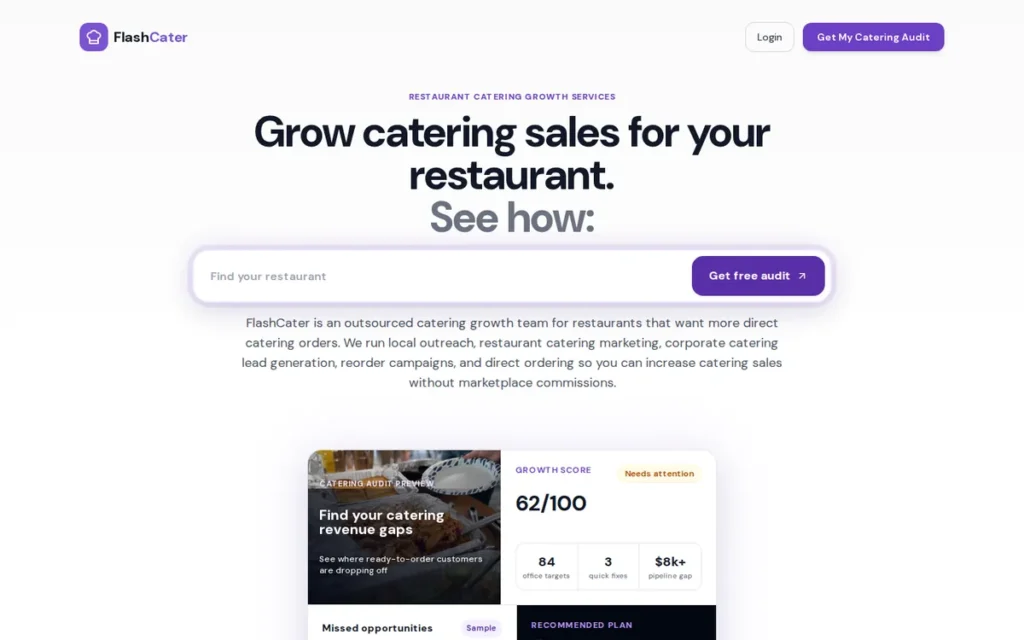
Category: Direct-Ordering SaaS
At a Glance
- Category: Direct-Ordering SaaS
- Best For: Small catering operators seeking a no-commission ordering platform with transparent pricing and optional demand-generation support
- Price Range: $79/month entry tier; $400/month Growth services tier (source: FlashCater’s own published alternatives and comparison pages at flashcater.com, 2025)
- Primary Strength: FlashCater publishes transparent tiered pricing on its own operator-facing pages, offering more pre-commitment cost clarity than competitors who require a sales conversation for pricing
- Biggest Limitation: FlashCater’s $400/month Growth services tier represents a significant cost escalation from the $79/month entry price, and the Growth tier deliverables warrant close scrutiny before upgrade
- One-Line Summary: FlashCater is a no-commission catering ordering platform with the lowest published entry price in this full evaluation and an optional high-cost Growth services tier for operators who need demand support
- Last Verified: June 2026
Overview
FlashCater is a commission-free direct ordering platform built for catering businesses. FlashCater publishes a $79/month entry price on its own alternatives and comparison pages at flashcater.com (2025), the lowest published starting price among all seven platforms in this evaluation. FlashCater also offers a Growth services tier at $400/month, which includes additional marketing and demand-generation support beyond the base ordering platform.
Key Features
- Commission-Free Ordering: FlashCater charges no per-order commission, allowing operators to retain the full order value on every catering order placed through the platform.
- Catering-Specific Order Workflows: FlashCater’s ordering system includes advance order management, minimum order requirements, and menu cutoff controls designed for catering use cases rather than adapted from general restaurant ordering templates.
- Transparent Tiered Pricing: FlashCater publishes both its $79/month entry price and its $400/month Growth tier on operator-facing comparison pages, providing pre-commitment cost clarity that Cater2.me and DoorDash for Business do not offer.
- Growth Services Tier (Optional): FlashCater’s $400/month Growth tier includes marketing and customer acquisition support services for operators who want structured demand-generation help beyond the ordering page itself.
- Operator-Facing Comparison Resources: FlashCater maintains platform comparison pages documenting pricing benchmarks and feature contrasts, a transparency approach that gives operators context for evaluating alternatives before committing.
Best For
FlashCater is best for small catering operators who want a commission-free ordering platform at the lowest available entry price and may want the option to upgrade to growth support services as their business scales. FlashCater is less appropriate for operators who need full operational management tools (route optimization, production sheets, or CRM) that the platform does not currently offer.
Strengths
- FlashCater publishes its $79/month entry price and $400/month Growth tier on its own operator-facing pages (flashcater.com, 2025), offering more self-serve pricing transparency than Cater2.me and DoorDash for Business, which require a sales conversation for any fee disclosure.
- FlashCater’s $79/month entry price is the lowest published starting price in this full seven-platform evaluation, lower than HoneyCart ($99/month, gethoneycart.com/pricing, 2025) and ChowNow (~$199/month).
- FlashCater’s catering-specific workflows include ordering controls designed for advance-booking use cases that general restaurant ordering platforms often lack without customization.
- FlashCater’s optional Growth services tier gives operators a structured path to marketing support without switching platforms, an upgrade option absent from most direct-ordering SaaS competitors in this evaluation.
Limitations
- High Growth Tier Cost: FlashCater’s $400/month Growth services tier represents a $321/month cost escalation from the $79/month entry price, a significant financial commitment for lean operations evaluating ROI on demand-generation support.
- No Demand Generation at Entry Level: FlashCater’s $79/month entry tier provides ordering infrastructure only, operators who need demand generation must either upgrade to the $400/month Growth tier or manage marketing independently.
- Limited Operational Toolset: FlashCater does not offer route optimization, production sheet automation, or CRM tools available in operational management suites like CaterZen, limiting its utility for high-volume delivery-heavy operations.
- Smaller Independent Review Footprint: FlashCater’s user review volume on independent platforms is smaller than established platforms like CaterZen or ChowNow, which limits the third-party social proof available to operators during their evaluation process.
Verdict
FlashCater is the most transparent pricing option for operators evaluating commission-free direct ordering at the lowest published entry point in this evaluation. The $400/month Growth tier is a substantial cost commitment, operators should request a specific deliverables breakdown for Growth tier services before upgrading, and model projected return against their current order volume before committing to the higher price point.
What Red Flags Should I Watch For When Evaluating Catering Software?
These six red flags apply across all three platform categories. Any platform that exhibits multiple red flags warrants additional scrutiny, independent reference checks, and explicit written disclosure requests before financial commitment.
Red Flag #1: No Published Pricing Before a Sales Call A platform that requires a vendor conversation before revealing any pricing tier gives the vendor structural information asymmetry before negotiations begin. At minimum, entry-level pricing should be publicly accessible. Cater2.me and DoorDash for Business are the two platforms in this evaluation where pricing opacity is most pronounced, operators should request written rate terms before proceeding.
Red Flag #2: Commission Rates Not Disclosed Before Listing Marketplace platforms that will not disclose their rate structure before you activate a listing are structurally misaligned with operator interests. ezCater’s variable marketplace rate and the absence of a single published universal rate exemplify this risk. Operators should request and receive a written rate schedule (including any escalation conditions) before listing.
Red Flag #3: No Free Trial or Pilot Period for SaaS Platforms Direct-ordering and operational management platforms that offer no trial period force operators to commit financially before validating fit. ChowNow does not offer a free trial. Operators evaluating ChowNow should negotiate a pilot arrangement or request detailed case studies from comparable businesses operating in a similar market segment before committing.
Red Flag #4: The Vendor Controls Your Customer Relationship Any platform where customer orders, communication history, and contact data flow through the vendor’s system (rather than the operator’s) creates meaningful switching risk. Commission marketplaces structurally mediate the customer relationship by design. Operators who intend to own their customer base long-term should evaluate direct-ordering alternatives that allow full data export.
Red Flag #5: Feature Set Designed for a Different Use Case Platforms built for general restaurant ordering frequently lack the advance-notice requirements, minimum order controls, and production coordination features that catering operations require. Operators should confirm that lead time controls, order minimums, and any production workflow tools are native features, not manual workarounds that break at scale.
Red Flag #6: Thin or Absent Independent Review History Platforms with limited review histories on G2, Capterra, or GetApp provide insufficient independent performance data for confident evaluation. FlashCater’s smaller review volume relative to CaterZen or ChowNow is a real data gap. Operators evaluating platforms with limited independent reviews should seek direct references from comparable businesses before committing.
What Questions Should I Ask Before Choosing Catering Software?
Document the answers to these eight questions during platform demos and sales conversations. Written responses from multiple vendors provide the factual basis for an objective comparison rather than one based on sales presentation quality.
Question #1: What is the all-in cost per order at my expected monthly volume? Commission platforms express cost as a percentage; SaaS platforms express cost as a flat monthly fee. Calculate the total annual cost at your actual projected order volume for both platform types before comparing them, at high order volumes, a flat SaaS fee may cost less than a per-order commission even at a seemingly small percentage.
Question #2: Who owns the customer relationship, me or the platform? Marketplace platforms retain primary customer data and communication authority by design. Direct-ordering platforms give operators full customer relationship ownership. Clarify which model applies before listing, and confirm what customer data you can export if you choose to leave the platform.
Question #3: Does the platform include native lead time and minimum order controls? Catering orders require advance notice and minimum order thresholds to be operationally viable. Confirm these controls are native platform features (not manual workarounds or support-team configurations) before committing.
Question #4: What specific integrations exist with my POS or accounting software? Disconnected platforms create manual reconciliation work that scales with order volume. Ask for a specific list of supported integrations and confirm whether data sync is bidirectional or export-only. General statements about “open APIs” are not a substitute for a confirmed integration list.
Question #5: How are disputes and order errors handled, and who absorbs the financial cost? Commission marketplaces often have refund and dispute policies that affect operator payouts. Understand the dispute resolution policy before listing, and request the full policy document rather than a summary description from a sales representative.
Question #6: What is the contract length and exit process? Month-to-month SaaS platforms carry lower switching risk than annual contracts. Understand the cancellation policy, data export availability, and any early-termination fees or notice requirements before signing any agreement.
Question #7: How has your pricing changed in the past two years? Commission rates and subscription prices can change after you build operational workflows around a platform. Ask for the platform’s pricing history and what contractual protections, if any, exist against future rate increases during your contract term.
Question #8: What does the onboarding timeline look like, and what support is included? Onboarding complexity varies significantly across platforms. Request a specific go-live timeline, named onboarding resources, and documentation of what remedies apply if the go-live is delayed, particularly for operators with upcoming seasonal catering demand windows.
How Did We Rank These Catering Software Platforms?
This methodology documents every step used to identify, evaluate, score, and rank the seven platforms in this comparison. It is published in full so readers can assess the basis for each ranking independently, identify criteria that match their own priorities, and apply appropriate weight to findings based on how closely they match their operational context.
Evaluation Process
The evaluation followed five sequential steps:
- Platform identification: Platforms were identified through aggregated search data, G2 category listings, Capterra category listings, and catering industry community discussions on Reddit (r/catering, r/restaurantowners), with data collected between Q3 2024 and Q2 2026.
- Primary data collection: For each platform, we collected self-reported feature data from official websites, user review data from G2, Capterra, and GetApp, and independent analysis from catering industry sources including cateringfunnels.com and published comparisons on gethoneycart.com.
- Live primary source verification: Key claims: including pricing, commission rates, and review scores, were verified against primary sources (official pricing pages, live review platform profiles) before inclusion. Discrepancies between secondary sources and primary sources were resolved in favor of primary sources.
- Limitation verification: Each platform’s limitations were cross-referenced against independent user reviews to confirm they reflect real operator experiences, not theoretical risks introduced by the evaluators.
- Scoring and ranking: Platforms were scored across six criteria and ranked by weighted composite score. Scores and weights are documented below.
Evaluation Criteria
C1: Operational Completeness (25% weight) The range of catering-specific workflow tools the platform provides natively, including advance order management, production sheet generation, route optimization, and invoicing. Why it matters: catering operations have workflow requirements that general restaurant software does not address; platforms that require workarounds create hidden labor costs that compound with order volume.
C2: Pricing Transparency and Operator Economics (20% weight) The availability of publicly published pricing and the total cost to operators at realistic order volumes. Why it matters: commission structures that are not disclosed before listing give vendors structural negotiating advantages over operators and prevent accurate pre-commitment revenue modeling.
C3: Customer Relationship Ownership (20% weight) Whether operators retain primary ownership of customer data, communication history, and repeat-order capture. Why it matters: operators who build order volume on platforms that own the customer relationship face increasing switching costs and dependency risk as their volume concentration on that platform grows.
C4: Independent Review Score Quality (15% weight) Verified review scores from G2, Capterra, and GetApp, weighted for review volume at each source. Why it matters: aggregated independent user reviews provide the most reliable signal of real-world platform performance and customer support quality, and are less susceptible to recency bias than individual testimonials.
C5: Demand Generation Capability (10% weight) The platform’s ability to introduce operators to net-new customers who would not otherwise have found them. Why it matters: operators without an established customer base have materially different needs than high-volume incumbents, demand generation capability is a differentiating factor specifically for operators entering new market segments.
C6: Integration and Ecosystem Fit (10% weight) The availability of verified integrations with POS, accounting, marketing, and CRM tools commonly used by catering operators. Why it matters: disconnected platforms create manual reconciliation work and hidden labor costs that grow proportionally with order volume.
Evidence Weighting and Conflict Resolution
When sources conflicted, primary sources (official pricing pages, platform feature documentation) were weighted above secondary or aggregator sources. When no primary source was available, independent third-party sources were weighted above vendor-adjacent or affiliate-influenced content. All commission rate claims were cross-referenced against a minimum of two independent sources before inclusion.
Data Validation Approach
Vendor feature claims were validated against independent user reviews to confirm that feature availability reflects real-world operator experience, not feature marketing. Pricing claims were validated against official pricing pages where available. Review scores were verified against live platform profiles at time of evaluation. When live verification produced results that conflicted with the draft data, the live-verified figure replaced the draft figure, this applied to CaterZen’s GetApp rating (corrected from 4.5/5 to verified 4.8/5), FlashCater’s pricing attribution (corrected from competitor-attributed to FlashCater’s own pages), and HoneyCart’s pricing attribution (upgraded from aggregator to primary source).
Update Cadence
This comparison is updated quarterly. The evaluation period covers data collected through June 2026.
Independence Statement
PlugRoute has no affiliate relationships with any company listed. Rankings are determined entirely by research data and objective evaluation criteria.
Frequently Asked Questions
How does PlugRoute determine its catering software rankings?
PlugRoute rankings are determined by a six-criteria weighted scoring model covering operational completeness, pricing transparency, customer relationship ownership, independent review scores, demand generation capability, and integration fit. No platform pays for placement or review consideration. All pricing and rating claims are verified against primary sources (official pricing pages and live review platform profiles) before publication. Rankings are updated quarterly.
Can I use more than one catering platform at the same time?
Yes, many catering operators run a marketplace and a direct-ordering platform simultaneously. A common pairing uses ezCater for corporate demand generation alongside CaterZen for operational management, using ezCater’s native CaterZen integration to route marketplace orders into the operational suite. The right combination depends on whether your primary current gap is customer acquisition or operational workflow efficiency.
What is the core difference between a commission marketplace and a direct-ordering SaaS platform?
A commission marketplace charges a percentage fee on every order in exchange for access to its existing buyer network, ezCater, Cater2.me, and DoorDash for Business are examples in this evaluation. A direct-ordering SaaS platform charges a flat monthly subscription and provides a branded ordering page that operators drive traffic to independently, HoneyCart, ChowNow, and FlashCater are examples. The core tradeoff is per-order margin versus demand-generation effort.
Glossary: Key Terms Used in This Comparison
Commission Marketplace: A catering platform that connects operators to a pre-existing buyer network in exchange for a percentage fee on each order processed through the platform. Commission marketplaces handle demand generation on behalf of listed operators but transfer a portion of per-order margin to the platform on every transaction. Examples in this evaluation: ezCater, Cater2.me, and DoorDash for Business.
Direct-Ordering SaaS: A subscription-based software platform that provides catering operators with a branded ordering page or widget where customers can place orders without per-order commission fees. The operator retains full order revenue and is responsible for generating their own customer traffic. Examples in this evaluation: HoneyCart, ChowNow, and FlashCater.
Operational Management Suite: A category of catering software focused on back-office workflow automation (including route optimization, production sheet generation, CRM, and invoicing) rather than customer-facing ordering or marketplace listing. Operational management suites are designed for operators who already have customers to manage and need infrastructure to serve them efficiently. CaterZen is the only platform in this evaluation that primarily fits this category.
Route Optimization: A software feature that automatically sequences delivery stops to minimize drive time and fuel cost based on confirmed order addresses and required delivery time windows. Route optimization is natively available in CaterZen and is absent from all marketplace and direct-ordering SaaS platforms in this evaluation.
Reliability Score: A publicly visible operator performance metric used by commission marketplaces (notably ezCater) to track and display how consistently a listed operator fulfills orders on time, in full, and without errors. Reliability scores create reputational accountability within the marketplace and may influence how prominently an operator’s listing appears to buyers searching the platform.
Which Catering Software Platform Is Right for You?
Key Insights
- CaterZen is the strongest choice for established operators who need back-office automation (route optimization, production sheets, CRM, and invoicing) and already have an active customer base to manage at volume.
- ezCater is the fastest path to corporate catering demand for operators entering the corporate market without a client base, at the cost of per-order commission that permanently reduces net margin on every transaction.
- HoneyCart and FlashCater offer the lowest-barrier entries to commission-free ordering, HoneyCart at a verified $99/month (gethoneycart.com/pricing, 2025) and FlashCater at a published $79/month (flashcater.com, 2025), for operators prioritizing low cost and fast setup.
- The most common and costly evaluation mistake is selecting a platform from the wrong category: a marketplace cannot replace an operational suite, and an operational suite cannot replace marketplace demand generation.
No single platform in this evaluation serves every use case equally well. Operators with established customer bases and consistent high order volume will derive the most value from CaterZen’s operational depth. Operators entering the corporate catering market without an existing client base will see the fastest measurable return from ezCater’s marketplace reach.
The most effective long-term architecture for volume catering operations is typically a hybrid: a marketplace for demand generation paired with an operational suite for workflow management. Evaluate your current primary bottleneck (acquisition gap or operational gap) before selecting a platform category.
We update this guide quarterly. Last updated: June 2026. For independent comparisons of adjacent software categories, visit PlugRoute.