Personify Health leads enterprise corporate wellness with Chapman Institute-validated ROI evidence; Vagaro leads growing studios from $45/month with transparent per-user pricing; and Booksy delivers the lowest-cost new-client discovery for solo practitioners at $29.99/month. The core trade-off is category: on-demand wellness software spans four distinct product types that cannot be meaningfully compared on a single set of criteria.
The most persistent buyer frustration in this category is conflation, HR managers evaluating employee wellness ROI tools receive the same vendor shortlist as salon owners seeking booking software, despite serving entirely different operational needs and requiring entirely separate evaluation criteria.
A solo hairstylist has no use for a corporate health ROI dashboard; an HR manager has no use for a consumer salon appointment directory. Category fit determines platform suitability more decisively than any individual feature comparison.
As one HR professional in r/HumanResourcesUK recently described when beginning a vendor evaluation:
“We have allocated some funds for employee support solutions and are looking for alternatives to the typical Employee Assistance Programs (EAPs). Has anyone come across or utilized any effective options? We’re interested in exploring a few demos, but with the vast array of choices available, we’re uncertain about how to begin.” Posted by u/Riverstead
Takeaway: Corporate HR teams actively shopping for employee wellness solutions consistently report being paralysed by vendor proliferation, validating structured category-fit evaluation as a prerequisite before beginning vendor demos.
PlugRoute has no affiliate relationships with any company listed. Rankings are determined entirely by research data and objective evaluation criteria.
What Are the Top On-Demand Wellness Platforms by Use Case?
- Personify Health is the enterprise corporate health management platform with the strongest externally validated outcome evidence in the category, a Chapman Institute independent study (circa 2016) documenting 162% three-year ROI across 264,500 employees, making it the benchmark choice for self-insured enterprises requiring CFO-level business case documentation.
- Vagaro is the all-in-one studio management platform for growing independent wellness practices with 1–7 staff, combining scheduling, POS, payroll reporting, and a 500,000+ download consumer marketplace into a transparent per-user subscription starting at $45/month.
- Mindbody is the 20-year-old enterprise studio management platform with the largest claimed client acquisition network (a consumer marketplace Mindbody self-reports reaching 3 million+ active users) making it the most powerful discovery engine for established multi-location wellness businesses.
- Wellhub is the only corporate gym access benefit platform in this evaluation, providing access to what Wellhub self-reports as 90,000+ gyms and studios worldwide across 11 employee-selectable price tiers starting at $0/month.
- Booksy is the lowest-cost booking marketplace for solo practitioners at $29.99/month flat, with native Google Search and Maps booking integration, no contract required, and what Booksy’s marketplace materials cite as 38+ million customers globally.
- Headspace for Work is the enterprise workplace mental health platform backed by 50+ peer-reviewed publications and deployed at 3,700+ employers including Starbucks, Adobe, Delta Air Lines, and Paramount, delivering a full care continuum from daily mindfulness to therapy and psychiatry.
- Wellable is the most customizable mid-market corporate wellness engagement platform across six well-being dimensions, independently identified as the “most customizable wellness solution” by GoJoe’s 2026 corporate fitness comparison, with a 2025 peer-to-peer recognition expansion included.
What Are the 4 Categories of On-Demand Wellness Software?
On-demand wellness software divides into four operationally distinct categories. Category fit determines platform suitability more decisively than any individual feature comparison. Confirming which category matches your operational need is the essential first step before evaluating any specific platform’s features or pricing.
Category 1: Studio Management Platforms: Vagaro, Mindbody, Booksy
Studio Management Platforms serve wellness business owners (salon operators, spa managers, fitness studio owners, and independent practitioners) who need scheduling, POS, client management, and consumer marketplace discovery. Studio Management Platforms are evaluated on:
- Booking UX quality: how intuitive is both the provider-facing scheduling interface and the client-facing booking flow?
- Payment processing transparency: are rates, fees, and settlement timelines competitive and publicly disclosed?
- Multi-staff management depth: does the platform include payroll reporting, commission tiers, and per-provider calendar management?
- Client acquisition network size: does the platform include a consumer marketplace that generates inbound new-client bookings?
Studio Management Platforms do not address corporate HR or employee health outcome use cases. HR managers evaluating software for employee wellness programs should navigate directly to the Corporate Health Management section (Personify Health and Wellable) further in this article.
Category 2: Corporate Health Management and Engagement Platforms: Personify Health, Wellable
Corporate Health Management and Engagement Platforms serve HR managers and benefits administrators at mid-to-large employers. Corporate Health Management and Engagement Platforms deliver employee wellness challenges, behavior-change content, incentive programs, and (at the enterprise tier) clinical chronic-condition prevention with measurable health outcome tracking. Corporate Health Management and Engagement Platforms are evaluated on:
- Independently validated ROI evidence: specifically whether a named external institution commissioned a study documenting specific financial outcomes
- HRIS integration depth: specifically whether integrations with Workday, ADP Workforce Now, UKG Pro, or SAP SuccessFactors are confirmed from official documentation
- Documented health outcome data: whether the platform connects employee engagement to measurable clinical biomarker improvement, not only participation completion rates
Category 3: Corporate Wellness Benefit Aggregator: Wellhub
Corporate Wellness Benefit Aggregators serve employers who want to provide employees with access to external fitness and wellness infrastructure rather than delivering a structured internal wellness program. Wellhub is the only platform in this category in this evaluation. Wellhub functions as an employee benefit providing physical wellness access (not a corporate programming or challenge platform) and delivers the most value as a complement to a content-based wellness platform, not as a standalone investment.
Category 4: Workplace Mental Health Platforms: Headspace for Work
Workplace Mental Health Platforms serve employers modernizing their Employee Assistance Programs with clinically validated digital mental health care. Workplace Mental Health Platforms are evaluated on clinical evidence depth (peer-reviewed publications and named journal citations) care continuum breadth from mindfulness through therapy and psychiatry, and EAP replacement engagement rates.
Why category mismatch is costly: An HR manager at a 400-person company who subscribes to Booksy expecting a wellness engagement platform would find no challenge mechanics, no HRIS integration, and no population health analytics, because Booksy serves salon owners scheduling haircut appointments. Conversely, a solo massage therapist who subscribes to Personify Health would find an enterprise health management platform with no consumer marketplace and no client-facing booking interface. Confirm category fit before evaluating any individual features.
How Do These 7 On-Demand Wellness Platforms Compare?
These seven platforms span four distinct product categories, each serving fundamentally different buyers and evaluated against different operational criteria. The table below maps each platform across eight dimensions to enable direct comparison within and across categories.
| Rank | Company | Category | Best For | One-Line Summary | Key Capabilities | Primary Strength | Key Limitation |
|---|---|---|---|---|---|---|---|
| 1 | Personify Health | Corporate Health Mgmt | Large self-insured enterprises (500+ employees) requiring CFO-level ROI documentation | Enterprise corporate health management with Chapman Institute-validated 162% three-year ROI (circa 2016) across 264,500 employees | Homebase for Health clinical prevention; AI-driven coaching; biometric screening; Cigna integration | Chapman Institute (circa 2016): 162% ROI, $19.1M NPV, $8.3M reduced healthcare costs | Complete pricing opacity; enterprise sales engagement required before any cost assessment |
| 2 | Vagaro | Studio Management | Independent studios with 1–7 staff needing all-in-one scheduling, payroll, and marketplace | All-in-one studio management combining scheduling, POS, payroll, and a 500,000+ download consumer marketplace from $45/month | Appointment scheduling; POS; payroll reporting; QuickBooks/Xero integration; consumer marketplace | TechRadar: “superb value”; transparent per-user pricing; no sales engagement required | Premium add-ons can approximately double the effective monthly cost |
| 3 | Mindbody | Enterprise Studio Mgmt | Multi-location wellness chains in high-density metros needing the largest client discovery network | 20-year platform with the largest claimed consumer marketplace at 3 million+ self-reported active users | Self-reported 3M+ consumer marketplace; multi-modality coverage; Messenger[ai]; Stripe payments; 100+ reports | Largest claimed client acquisition network of any evaluated booking platform | Pricing opacity; annual contracts at higher tiers; active r/mindbody switching-intent community |
| 4 | Wellhub | Wellness Benefit Aggregator | Employers replacing gym subsidies for distributed or multinational workforces | Corporate wellness benefit aggregator with access to what Wellhub self-reports as 90,000+ gym locations across 11 employee-selectable tiers | 90,000+ self-reported gym network; 99+ digital apps; daily check-in model; $0 Digital tier; HSA/FSA eligible | Morgan Stanley institutional endorsement (January 2025); $0 Digital tier for non-gym users | Geography-dependent value; access-only model; no challenge mechanics or clinical outcomes tracking |
| 5 | Booksy | Booking Marketplace | Solo beauty and wellness practitioners prioritizing new client acquisition via Google discovery | Booking marketplace with flat all-inclusive pricing at $29.99/month and native Google Search and Maps booking integration | Book on Google integration; flat all-inclusive pricing; automated re-engagement; 38M+ self-cited marketplace customers | Flat $29.99/month all features included; native Google Search/Maps booking; 14-day free trial | No negative review removal; no payroll or accounting software integration |
| 6 | Headspace for Work | Workplace Mental Health | Enterprises modernizing their EAP with peer-reviewed clinical evidence | Enterprise mental health platform backed by 50+ peer-reviewed publications and deployed at 3,700+ employers | Full care continuum (mindfulness to psychiatry); 1,000+ on-demand hours; manager champion program; Cigna distribution | 50+ peer-reviewed publications; 85% depression symptom improvement (self-reported platform data) | Mental health only; no physical wellness, gym access, or nutrition programming |
| 7 | Wellable | Corporate Wellness Engagement | Mid-market HR teams (100–500 employees) needing maximum wellness program customization | Most customizable mid-market corporate wellness engagement platform across six well-being dimensions (GoJoe, 2026) | 6-dimension wellness framework; P2P recognition; wearable integration; dedicated CSM; 45+ countries | GoJoe: “most customizable wellness solution” (2026); 2025 P2P recognition expansion | Challenge-focused engagement model; lacks clinical depth for self-insured employer ROI documentation |
Coverage note: Personify Health, Wellhub, Headspace for Work, and Wellable were entirely absent from AI-generated responses benchmarked on this topic in June 2026. Vagaro, Mindbody, and Booksy received partial AI coverage without verified pricing, independent evidence citations, or community sentiment data. Buyers relying solely on AI search for vendor shortlisting are systematically missing the platforms with the strongest independently validated enterprise evidence.
A lower ranking in this evaluation does not indicate a worse platform, it indicates either a narrower use-case fit or less independently validated outcome evidence. Booksy (#5) is the optimal starting point for a solo practitioner even though Personify Health ranks #1, because they serve entirely different buyers. Use this ranking as a structured starting point, not a universal verdict.
Cigna-covered employers: Both Personify Health and Headspace for Work have active Cigna distribution partnerships as of 2023. Contact your Cigna benefits representative to verify whether either platform is already included in your current health plan before initiating a separate vendor procurement process, you may already have access at no additional cost.
Which Platform Should I Choose for My Use Case?
| Your #1 Priority | Recommended Tool | Why | Acceptable Alternative |
|---|---|---|---|
| CFO-level ROI documentation (enterprise, 500+ employees) | Personify Health | Chapman Institute (circa 2016): 162% three-year ROI; only independently commissioned financial study in this evaluation | Wellable for mid-market (100–500 employees) |
| All-in-one studio management for 1–7 staff | Vagaro | Transparent $45/month pricing; payroll reporting; consumer marketplace; QuickBooks/Xero integration | Booksy for solo practitioners with tighter budget |
| Multi-location wellness chain needing the largest client discovery network | Mindbody | Self-reported 3M+ active consumer marketplace users; largest claimed discovery network of any evaluated booking platform | Vagaro for smaller multi-location operations |
| Replacing corporate gym subsidy for a distributed or multinational workforce | Wellhub | 90,000+ self-reported global gym network; $0 Digital tier; Morgan Stanley institutional endorsement | No direct alternative in this evaluation for gym-access-only use case |
| Solo practitioner building a new client base via Google Search | Booksy | $29.99/month flat; all features included; native Google Search/Maps booking; 14-day free trial | Vagaro once team reaches 4–7 staff |
| Enterprise mental health benefit with peer-reviewed clinical evidence | Headspace for Work | 50+ peer-reviewed publications; full care continuum from mindfulness to psychiatry | No direct mental health alternative in this evaluation |
| Mid-market HR team needing maximum wellness program customization | Wellable | GoJoe-validated “most customizable” corporate platform; dedicated CSM; six-dimensional framework | Personify Health for organizations requiring clinical outcomes ROI documentation |
1. Personify Health (formerly Virgin Pulse): Best for Enterprise Corporate Health Management
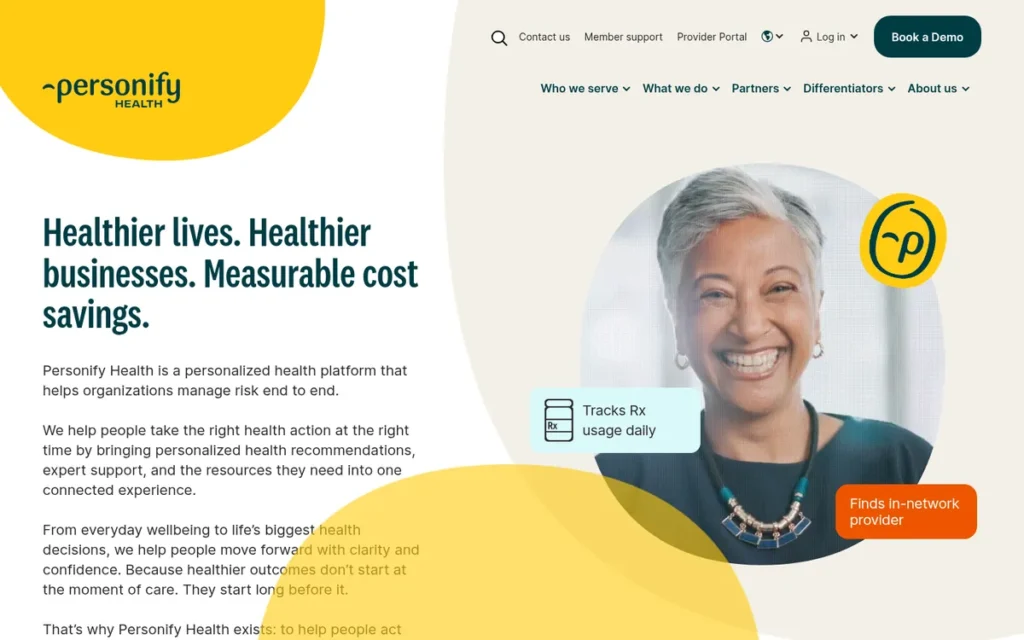
Category: Corporate Health Management Platform, an employer-deployed digital platform that combines wellness challenge engagement, behavior-change coaching, AI-driven health personalization, and clinical chronic-condition prevention to drive measurable health outcomes and demonstrable financial ROI for self-insured employers managing large employee populations.
At a Glance
- Category: Corporate Health Management Platform
- Best For: Large self-insured enterprises with 500+ employees where reducing healthcare claims costs, improving chronic condition biomarkers, and documenting measurable wellness ROI for finance leadership are the primary procurement objectives
- Price Range: Enterprise pricing not publicly disclosed; all pricing requires direct sales engagement. One documented government demo (June 2026) cited an optional gym benefit add-on at approximately $28/month per enrolled employee, a single feature cost, not the base platform rate. HR buyers should request a per-employee-per-month (PEPM) rate in initial sales conversations to enable fair comparison against other platforms.
- Primary Strength: Personify Health is the only platform in this evaluation backed by a Chapman Institute independent study (circa 2016) documenting 162% three-year ROI across 264,500 eligible employees, the strongest externally validated outcome evidence in the corporate wellness category.
- Biggest Limitation: Personify Health does not publish pricing, requires full enterprise sales engagement before cost comparison is possible, and does not publish a verified HRIS integration list, making compatibility with Workday, ADP Workforce Now, UKG Pro, or SAP SuccessFactors impossible to confirm without a sales engagement.
- One-Line Summary: Personify Health is the enterprise corporate health management platform with the most externally validated financial outcome evidence in this evaluation (a Chapman Institute study (circa 2016) documenting 162% three-year return across 264,500 employees) making it the benchmark choice for self-insured employers whose procurement justification requires CFO-level financial documentation.
- Last Verified: June 2026
Overview
Personify Health (formerly Virgin Pulse, rebranded 2024) is an enterprise corporate health management platform for self-insured employers, serving 100 million+ people across 190 countries through wellness challenge engagement, AI-driven health personalization, and a clinical chronic-condition prevention layer called Homebase for Health.
Personify Health positions itself as the first platform to integrate health wellbeing, health navigation, and health plan administration, distinguishing it from engagement-only corporate wellness tools that track challenge participation without connecting to clinical health outcomes.
Personify Health’s 2024 strategic transition from the Virgin Pulse brand signals a deliberate repositioning toward a clinical health-management identity, moving it into direct competition with health plan administrators and chronic-condition management vendors rather than wellness engagement apps alone.
Key Features
- Homebase for Health: Personify Health’s AI-powered chronic condition prevention module targets prediabetes, hypertension, and weight management, connecting daily wellness engagement directly to clinically validated disease prevention pathways and enabling employers to quantify healthcare cost avoidance as part of their wellness program ROI.
- Multi-Dimensional Activity Tracking: Personify Health delivers daily health challenges, goal tracking across steps, sleep, workouts, calories, and nutrition, behavior-change coaching, AI-driven personalized nudges, and incentive points through a mobile-first interface designed for population-scale employee engagement programs.
- Health Risk Assessment: Personify Health includes a global Health Risk Assessment tool that generates personalized health report cards for enrolled employees, providing HR administrators with aggregated population health intelligence for program design and executive outcomes reporting.
- Cigna Healthcare Integration: Personify Health integrates with Cigna Healthcare’s employer platform through a 2023 partnership, enabling eligible employers to access the platform through existing health plan infrastructure rather than a separate vendor contract.
- Biometric Screening Support: Personify Health provides biometric screening program support and device syncing capabilities, enabling passive health data collection for employers running on-site or at-home biometric health events alongside digital wellness programming.
Best For
Personify Health is best suited for large self-insured enterprises with 500 or more employees where reducing healthcare claims costs, improving chronic condition biomarkers across the employee population, and presenting measurable wellness ROI to finance leadership are the primary procurement objectives. Personify Health is not the right fit for organizations under 500 employees, companies whose primary wellness goal is culture-building rather than clinical outcomes, or buyers who need transparent pricing before beginning an evaluation.
Strengths
- Independently Validated ROI: A Chapman Institute independent study (circa 2016) (externally commissioned, not self-reported by Personify Health) documented a 162% three-year risk-adjusted ROI across 264,500 eligible employees, with components including $8.3 million in reduced healthcare costs, $9.0 million in avoided attrition costs, $6.7 million in avoided sick-leave absenteeism, and a net present value of $19.1 million. This study was conducted approximately 2016, prior to the platform’s 2024 rebrand and AI enhancements; HR teams should note its pre-pandemic context when projecting 2026-era ROI outcomes.
- Institutional Partnership Validation: The Cigna Healthcare partnership (2023) deployed Personify Health’s AI personalization engine across Cigna’s employer customer base, with Cigna’s institutional vendor due diligence serving as a meaningful third-party validation of the platform’s clinical reliability and enterprise integration capability.
- Named Institutional Endorsement: Vanderbilt University confirmed in November 2024 that Personify Health (formerly Virgin Pulse) powers its institutional employee well-being program, a verifiable named endorsement reflecting enterprise deployment stickiness through a major brand transition.
- Biomarker Outcome Evidence: A company-published study cited statistically significant reductions in obesity, hypertension, and diabetes biomarkers among platform users alongside a reported 3:1 value on investment, connecting platform usage to clinical outcomes rather than engagement metrics alone.
Limitations
- Pricing and Scale Opacity: Personify Health does not publish any pricing, requiring a complete enterprise sales engagement before budget feasibility can be assessed, and the Chapman Institute study’s documented financial outcomes required 264,500 eligible employees, meaning small and mid-market employers are unlikely to replicate comparable per-employee financial impact at lower headcount scales.
- Feature Perception Gap: Wellness360’s independent comparison describes Personify Health as “well-known in corporate wellness” but notes some users find its feature set “limited” or pricing “not ideal”, a qualified endorsement suggesting brand recognition has outpaced current product satisfaction for some buyer segments.
- Employee Backlash Risk: Reddit thread signals from r/antiwork (titled “Company is gamifying our health insurance,” 2026) and r/accenture reflect a category-wide risk, Personify Health’s incentive-heavy design requires transparent data use communication and genuine opt-in mechanics during rollout to avoid employee perception of surveillance or coercive gamification.
- HRIS Integration Transparency Gap: Personify Health does not publish a verified list of HRIS, payroll, or health plan integrations beyond the documented Cigna partnership, making it impossible for enterprise HR teams to independently confirm compatibility with Workday, ADP Workforce Now, UKG Pro, or SAP SuccessFactors without a full sales engagement, a procurement friction point that platforms with published integration documentation do not impose.
Verdict
Personify Health is the only corporate wellness platform in this evaluation backed by a Chapman Institute independent study (circa 2016) documenting 162% three-year ROI, making it the strongest defensible procurement choice for self-insured enterprises where CFO-level business case documentation is a prerequisite for budget approval.
Personify Health’s Homebase for Health clinical layer and 190-country institutional scale set it meaningfully apart from engagement-only competitors. Its complete pricing opacity, HRIS integration opacity, and minimum viable scale requirement make it unsuitable for organizations under 500 employees or those whose primary wellness goal is culture-building rather than healthcare cost reduction.
HR teams at large enterprises should use the Chapman Institute evidence directly in internal business case documentation and should verify Cigna partnership eligibility before initiating a direct sales engagement, the existing health plan relationship may provide an alternative access path at no additional cost.
2. Vagaro: Best for Growing Independent Wellness Studios (1–7 Staff)
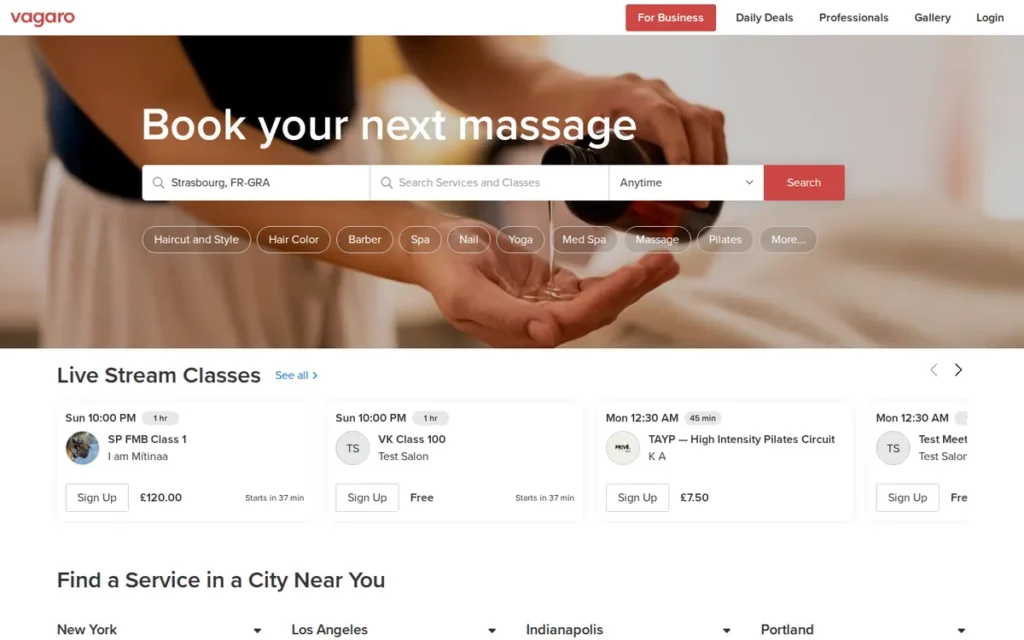
Category: Studio Management Platform, an all-in-one booking, business management, and consumer marketplace tool designed for salons, spas, and fitness studios to manage scheduling, point-of-sale, payroll reporting, client relationships, and new client discovery from a single subscription.
At a Glance
- Category: Studio Management Platform
- Best For: Independent wellness studios and salons with 1–7 staff members who need a single platform combining appointment scheduling, payroll reporting, payment processing, and a consumer marketplace for new client discovery
- Price Range: $45/month for 1 calendar license; +$15/month per additional employee up to 7 staff; 8th employee and beyond at no additional charge; premium add-ons (text marketing ~$30/month, forms ~$15/month, live stream ~$15/month) billed separately (verified June 2026, Vagaro official documentation)
- Primary Strength: Vagaro’s consumer marketplace with 500,000+ app downloads functions as a built-in client acquisition channel from day one, providing new-client discovery alongside comprehensive back-office business management in a single subscription.
- Biggest Limitation: Vagaro’s premium add-ons for text marketing, online forms, and live streaming can approximately double the effective monthly cost beyond the base subscription price, and its user interface receives consistent criticism from practitioners as less intuitive than competitors like GlossGenius.
- One-Line Summary: Vagaro is the all-in-one salon, spa, and fitness studio management platform combining scheduling, POS, payroll reporting, and a 500,000+ download consumer marketplace into a single subscription starting at $45/month, independently benchmarked as the strongest choice for studios managing 1–7 staff.
- Last Verified: June 2026
Overview
Vagaro is an all-in-one salon, spa, wellness, and fitness studio management platform for independent practices, combining comprehensive back-office management tools and a built-in consumer marketplace into a single subscription starting at $45/month, the only platform in this evaluation’s booking category with payroll reporting as a base feature and fully transparent per-user pricing.
Vagaro distinguishes itself from pure back-office tools by operating a dual-sided consumer marketplace confirmed at 500,000+ Android downloads (TechRadar, 2026), listing every subscribing business in a searchable directory on activation day.
Vagaro publishes competitor comparison content against GlossGenius, Square Appointments, and Fresha on its own website, positioning itself as a primary benchmark in the wellness booking category, a signal of platform confidence and category maturity.
Key Features
- 500,000+ Download Consumer Marketplace: Vagaro’s built-in consumer marketplace, available on iOS and Android with 500,000+ confirmed Google Play downloads (TechRadar, 2026), lists every subscribing business in a searchable discovery directory, enabling new client acquisition through Vagaro’s own consumer network without requiring separate advertising spend.
- Payroll and Commission Management: Vagaro includes payroll reporting, commission tier configuration, and employee pay-rate tracking as base subscription features (Vagaro support documentation, 2026), eliminating the need for a separate payroll tool for growing multi-staff studios from the first month of subscription.
- Integrated Payments and POS Hardware: Vagaro embeds payment processing at 2.75% per card swipe and 3.5% plus $0.15 per keyed transaction, with a dedicated Vagaro Pay Desk terminal that manages bookings, consent forms, and payments from a single front-desk device (TechRadar, 2026).
- Accounting Software Integration: Vagaro integrates directly with QuickBooks and Xero for accounting, enabling automated financial data synchronization without manual reconciliation between the studio’s booking system and its bookkeeping platform (Bellabooking Australia comparison, 2026).
- Modular Add-On Architecture: Vagaro’s premium add-on modules: including text marketing, online forms, live streaming, and Vagaro Drive, expand the platform’s capabilities at approximately $15–$30 per module per month, allowing studios to build out their technology stack incrementally as revenue grows.
Best For
Vagaro is best suited for growing independent wellness studios (salons, spas, massage practices, and fitness studios) with 1 to 7 staff members who need an all-in-one business management platform with payroll reporting, a consumer marketplace, and accounting software integration without requiring multiple separate vendor subscriptions. Vagaro is not the optimal choice for solo practitioners whose primary need is the lowest possible entry price, nor for enterprise chains requiring multi-location management dashboards.
Strengths
- Independent Editorial Validation: TechRadar’s editorial review (2026) characterized Vagaro POS as “highly effective,” “ideally suited” to its target market, and offering “superb value”, the most favorable independent editorial assessment of any booking platform in this evaluation from a named technology publication, representing external editorial judgment rather than user survey aggregation.
- Evidence-Based Size Benchmark: TheLocalGem’s 2026 salon software comparison identified Vagaro specifically as “best for 4 to 6 chairs with growing staff”, a precise, evidence-based sizing recommendation that provides buyers with an actionable benchmark they can apply directly to their own team size.
- Built-In Pricing Value Acceleration: Vagaro’s per-user pricing structure offers a built-in value acceleration at the 7-staff threshold (adding an 8th or 9th employee at no additional monthly charge) creating a pricing architecture that explicitly rewards studios in their growth phase rather than penalizing expansion with linear cost increases.
- Community Infrastructure: Zenoti’s competitive comparison analysis (2026) noted Vagaro’s “large user community and good self-serve support resources” (noting that Zenoti is itself a competing salon software vendor), reflecting platform maturity and a substantial peer knowledge base enabling independent operators to resolve common issues without extended support wait times.
Limitations
- Add-On Cost Gap: Vagaro’s most consequential trade-off is the gap between its visible base subscription price and its effective all-in cost, third-party analysis notes that total monthly costs “can easily double” when premium add-ons including text marketing, online forms, and live streaming are selected. Worked example: a 5-provider salon selecting the full feature stack (base $45 + 4 additional calendars at $60 + text marketing $30 + forms $15) pays approximately $150/month, 3.3x the headline $45/month price.
- User Interface Friction: Vagaro’s user interface receives consistent criticism from practitioners in professional communities, a reviewer in r/hairstylist (2024) stated, “I have used Vagaro and GlossGenius and like GlossGenius much more; it’s super user friendly and my clients like it more for online booking”, indicating a UX gap relative to newer competitors in both the provider-facing management interface and the client-facing booking flow. Takeaway: Practitioners consistently identify Vagaro’s interface complexity relative to newer entrants as its primary adoption barrier, warranting hands-on trial evaluation before committing.
- Vocal Solo Practitioner Dissatisfaction: A Reddit thread in r/MassageTherapists titled “Stay Away from Vagaro” signals serious grievances from a vocal minority of solo massage practitioners, warranting specific due diligence by massage therapists before committing, as solo practitioners represent a significant portion of Vagaro’s intended audience.
The post body from that thread documents the specific concerns:
“The customer service is severely lacking. Whenever I sought help, the representative would merely outline steps for me to troubleshoot the issue myself. In contrast, past platforms had agents who were eager to assist and resolve any concerns we had. … Moreover, once a client logs into their account, the business loses the ability to modify their contact information, even if Vagaro has incorrectly updated it. … Overall, my experience with Vagaro over the two months was a nightmare, and I would not recommend this platform to anyone.” Posted by u/Morgynna
Takeaway: Solo practitioners on Vagaro face a documented structural risk, once clients create accounts, business owners permanently lose the ability to manage their own client data, leaving appointment-driven practices without control over records they depend on daily.
- Payment Processing Variable Cost: Vagaro’s processing fees (2.75% per swipe; 3.5% + $0.15 keyed) represent an additional variable cost atop the subscription fee that must be calculated into total monthly cost of ownership, particularly for high-volume studios where card-present transactions are frequent and the cumulative processing cost meaningfully exceeds the subscription line.
Verdict
Vagaro is the strongest all-in-one booking and business management platform for independent wellness studios with 1–7 staff members, combining fully transparent per-user pricing, a 500,000+ download consumer marketplace, payroll reporting, and verified QuickBooks and Xero integrations in a subscription starting at $45/month, with no sales engagement required to determine cost.
Vagaro’s value proposition is clearest at the 4–7 staff range where payroll and commission management features become most operationally relevant, a fit independently validated by TheLocalGem’s 2026 benchmark. Buyers who prioritize interface simplicity and client-facing booking UX, particularly solo practitioners, should also evaluate GlossGenius and Booksy before making a final decision.
3. Mindbody: Best for Multi-Location Wellness Chains Requiring the Largest Consumer Marketplace
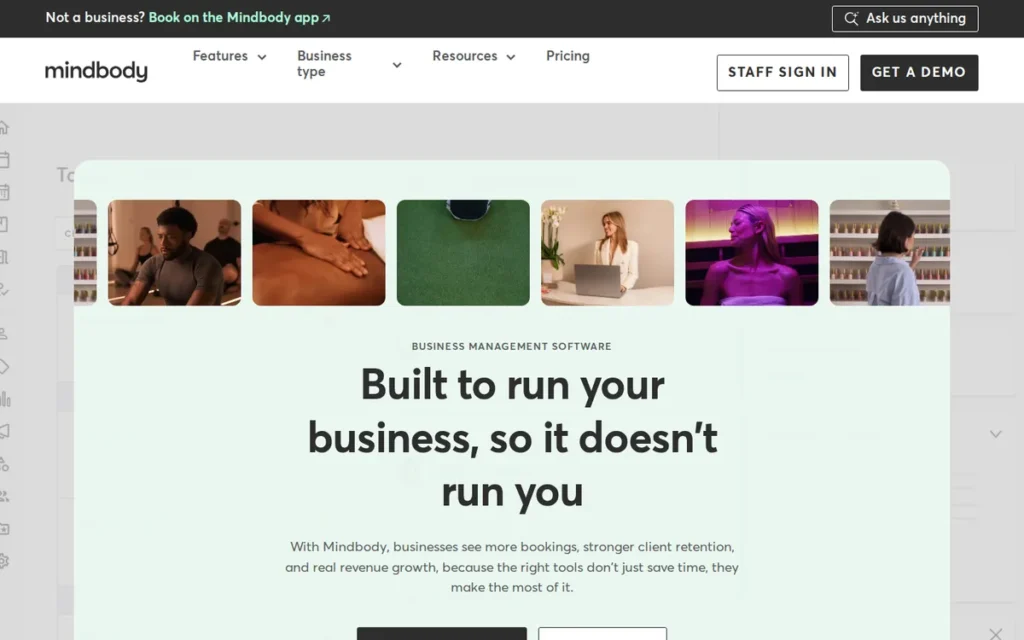
Category: Enterprise Studio Management Platform, a comprehensive booking, client management, and consumer marketplace system for multi-location fitness studios, wellness businesses, and beauty services, distinguished by a 3 million+ self-reported consumer discovery network that functions as a client acquisition engine alongside a deep suite of back-office operations tools.
At a Glance
- Category: Enterprise Studio Management Platform
- Best For: Established multi-location wellness chains and boutique fitness studios in high-density metros where the self-reported 3 million+ consumer marketplace delivers measurable new client acquisition and enterprise-grade reporting justifies the platform’s premium cost and onboarding investment
- Price Range: Not publicly disclosed; pricing requires direct sales engagement; annual contracts reported as a requirement at higher tiers; characterized by multiple independent comparisons as “significantly more expensive than Vagaro at equivalent team sizes” (Pabau, 2026; Wellyx, 2026)
- Primary Strength: Mindbody’s consumer marketplace, which the company self-reports reaching 3 million+ active users who search, book, and purchase wellness services, is the largest claimed client acquisition network available to any booking software subscriber in this evaluation.
- Biggest Limitation: Mindbody’s pricing opacity, required annual contracts at higher tiers, and consistently documented support quality issues (including third-party review characterizations of “selling platinum, delivering vapor” and active Reddit switching-intent communities) represent material buyer risk that the marketplace scale advantage must justify.
- One-Line Summary: Mindbody is the 20-year-old enterprise wellness business management platform with the largest claimed consumer marketplace at 3 million+ self-reported active users, making it the most powerful client acquisition engine for established multi-location wellness businesses prepared to absorb its premium cost and onboarding complexity.
- Last Verified: June 2026
Overview
Mindbody is a 20-year-old wellness business management platform covering fitness, beauty, and wellness business types, offering a comprehensive management suite alongside a consumer marketplace that Mindbody self-reports reaching 3 million+ active users who search and book services, making it the largest claimed client acquisition network of any evaluated booking platform in this article.
Mindbody was taken private by Vista Equity Partners in a deal announced December 24, 2018 (Reuters; SEC filing), completed February 2019 at $36.50 per share, a private equity ownership context directly relevant for buyers evaluating long-term pricing trajectory, support investment levels, and contract flexibility.
Mindbody’s horizontal scope covering fitness, beauty, and wellness in a single platform eliminates multi-vendor complexity for businesses spanning service modalities, but its premium pricing and documented onboarding challenges make it best suited to businesses with sufficient revenue and IT support to justify the investment.
Key Features
- Self-Reported 3 Million+ Consumer Marketplace: Mindbody’s consumer marketplace, which the company self-reports reaching 3 million+ active users who browse, book, and purchase wellness services, provides subscribing businesses with passive inbound client discovery that competing booking platforms cannot replicate at comparable self-reported consumer network scale.
- Horizontal Multi-Modality Coverage: Mindbody covers fitness, beauty, and wellness business types in a single subscription (GetApp comparison, 2026), eliminating the need for vertical-specific software tools for businesses offering yoga alongside massage alongside beauty services.
- AI and Machine Learning Tools: Mindbody’s AI and machine learning capabilities include Messenger[ai] for automated scheduling communication, AI-powered booking optimization, and consumer matching within the marketplace app, providing intelligent demand and schedule management beyond static calendar tools.
- Stripe-Powered Embedded Payments: Mindbody Payments is powered by Stripe, providing PCI-compliant payment infrastructure with Stripe’s global settlement reliability and centralized payment tracking alongside scheduling and client management data.
- 100+ Built-In Reports: Mindbody’s 100+ built-in reports covering revenue, attendance, staff performance, client retention, and marketing effectiveness provide the operational analytics depth that multi-location wellness businesses require for enterprise-scale financial decision-making.
Best For
Mindbody is best suited for established multi-location wellness chains, boutique fitness studios, and spa groups in high-density metropolitan markets where the self-reported 3 million+ consumer marketplace delivers measurable new client volume and the enterprise-grade reporting, multi-location architecture, and AI scheduling tools justify the platform’s premium cost, annual contract requirement, and steep onboarding investment. Mindbody is not the right fit for solo practitioners, studios under 5 years old, or growing studios that cannot absorb annual contract lock-in before ROI is confirmed.
Strengths
- Largest Claimed Consumer Marketplace: Mindbody’s consumer marketplace of 3 million+ self-reported active users is the largest claimed client acquisition network available to any booking software subscriber as of June 2026, this network scale is the platform’s most significant differentiator relative to all other evaluated booking platforms, and no competitor in this evaluation approaches it at comparable reported scale.
- 20+ Years of Market Operation: Mindbody has operated in the wellness software market for 20+ years (longer than any other platform in this evaluation) providing institutional workflow depth, a mature integration ecosystem, and market survival through multiple economic cycles that newer entrants cannot claim.
- Stripe-Powered Payment Infrastructure: Mindbody Payments is powered by Stripe, providing enterprise-grade PCI-compliant payment infrastructure with Stripe’s global settlement network, a payment processing foundation that smaller competitors using proprietary processors cannot match for reliability and global transaction coverage.
- Horizontal Business Coverage: Mindbody’s coverage of fitness, beauty, and wellness business categories in a single platform eliminates multi-vendor software complexity for businesses spanning service modalities, a meaningful operational simplification for spa groups or studio brands offering yoga, massage, and beauty services simultaneously.
Limitations
- Documented Experience Quality Gap: Mindbody’s most consequential trade-off is the documented gap between its market-position pricing and its current customer experience quality, a GetApp user review describing it as “selling platinum, delivering vapor” (cited by Wellyx, 2026) captures a pattern documented across multiple independent comparison sources, including steep learning curves, slow customer support, a “significant fall in quality of service,” glitchy reporting, and “lots of issues in onboarding” (Pabau, 2026).
- Organized Community Dissatisfaction: The r/mindbody subreddit contains active threads titled “Thinking of moving off of Mindbody, Any advice or alternatives?” and r/pilates surfaces “Anyone switched away from Mindbody?”, demonstrating that organized platform dissatisfaction is community-wide rather than isolated, a high-signal indicator of systemic churn intent that vendor case studies do not capture.
This community-wide switch-intent is reflected in individual studio owners’ first-hand accounts shared on r/pilates:
“I operate a small Pilates studio and have been utilizing Mindbody for some time now. While it serves its purpose, the costs and associated fees are becoming increasingly difficult to rationalize. Additionally, the backend interface feels somewhat cumbersome for our needs. We’re considering a transition to a more user-friendly and cost-effective solution, but the sheer number of options available is quite daunting. I’ve explored a few alternatives, but I’m uncertain which ones truly excel in managing daily tasks like class scheduling, payments, and memberships.” Posted by u/Ok_Weight_8101
Takeaway: Mindbody’s cost trajectory and backend complexity are actively driving switch-intent among working studio owners who acknowledge the platform still functions, a churn pattern that will accelerate as lower-cost alternatives expand their feature sets.
- Pricing Opacity and Contract Lock-In: Mindbody’s complete pricing opacity forces all potential buyers through a full enterprise sales engagement before budget feasibility can be assessed, and annual contract requirements at higher tiers lock new subscribers in before ROI is confirmed, amplifying the risk of onboarding difficulty for studios in their first year on the platform.
- Private Equity Ownership Trajectory: Mindbody’s Vista Equity Partners acquisition (announced December 2018, completed February 2019 per Reuters and SEC filing) has historically correlated in the SaaS market with pricing pressure and support cost-cutting, themes that appear consistently in independent Mindbody review criticism and that buyers evaluating a long-term platform commitment should specifically investigate in reference customer conversations.
Verdict
Mindbody is the strongest client acquisition engine in the booking software category (its self-reported 3 million+ consumer marketplace is the largest claimed discovery network of any evaluated booking platform) but Mindbody simultaneously carries the most documented operational frustrations, the least pricing transparency, and the most active switching-intent community of any evaluated option in this review.
The defensible buyer profile for Mindbody in 2026 is a well-established multi-location wellness business in a high-density metropolitan market with sufficient revenue to absorb premium costs and IT resources to manage a steep onboarding curve. Solo practitioners and growing studios evaluating Mindbody against Vagaro or Booksy should quantify expected new-client volume from the marketplace in their specific local market before allowing scale narrative to override the documented support quality and pricing concerns.
4. Wellhub (formerly Gympass): Best for Corporate Gym Access Benefits
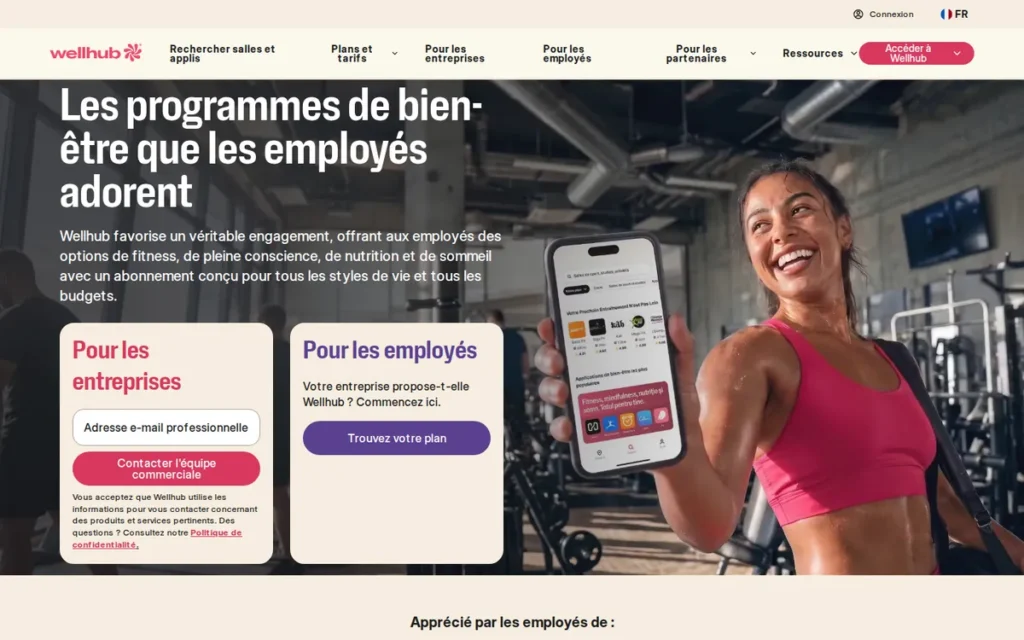
Category: Corporate Wellness Benefit Aggregator, an employer-sponsored platform providing employees with access to a global network of physical gym and studio facilities alongside premium digital wellness apps, functioning as a scalable corporate replacement or supplement for traditional gym reimbursement programs rather than an employee wellness programming or challenge platform.
At a Glance
- Category: Corporate Wellness Benefit Aggregator
- Best For: Employers replacing or supplementing traditional gym subsidy programs with a scalable employee-choice benefit that covers physical facility access, digital wellness apps, and on-demand fitness content across a global network
- Price Range: Employee tiers: $0/month (Digital, 10+ apps) to $344.99/month (Diamond, full gym access); 11 tiers; HSA/FSA eligibility on qualifying plans; no enrollment or cancellation fees. Employer pricing based on team size, billed annually, not publicly disclosed, requires sales engagement (verified June 2026, Wellhub plans and pricing page)
- Primary Strength: Wellhub aggregates what it self-reports as 90,000+ gym and studio locations worldwide (the largest single-source claimed corporate gym access network in this evaluation) enabling employees at multinational enterprises to access physical wellness facilities regardless of geographic location.
- Biggest Limitation: Wellhub’s value is entirely dependent on local gym network density; employees in smaller cities and suburban markets frequently report inadequate facility options, and multiple threads in Wellhub’s own community subreddit describe the platform as a “complete waste of money” when local network coverage is thin.
- One-Line Summary: Wellhub is the corporate wellness benefit aggregator providing access to what it self-reports as 90,000+ gyms and studios worldwide plus 99+ digital wellness apps across 11 employee-selectable price tiers, making it the only employer benefit in this evaluation that can replace a direct gym membership subsidy at multinational scale.
- Last Verified: June 2026
Overview
Wellhub (formerly Gympass, rebranded 2024) is a corporate wellness benefit aggregator giving employer-sponsored employees access to a global gym network, premium digital apps, and on-demand fitness content through an employee-choice platform spanning 11 price tiers from $0 to $344.99/month.
Wellhub operates on a fundamentally different model than corporate wellness programming platforms: rather than delivering a structured wellness challenge program, Wellhub gives employees curated access to the external fitness and wellness ecosystem they choose to engage with.
Morgan Stanley confirmed active Wellhub deployment in employee benefits documentation issued in January 2025, describing Wellhub as offering “the world’s largest network of gyms, studios, and facilities” in formal communications to their workforce.
Independent verification note: Athletech News independently documented approximately 60,000 fitness and wellness partners as of early 2024, with Wellhub reporting 8,000 new partner additions that year. Wellhub’s own materials are internally inconsistent on this figure, 90,000+ on the employer pricing page, 100,000+ on the employee-facing page. Employers should request a verified partner count for their employees’ specific geographic markets during evaluation.
Key Features
- Daily Check-In Model: Wellhub’s self-reported 90,000+ global gym and studio network operates on a daily check-in model (one visit per day to any participating facility) rather than a credit or token allocation system, removing the credit-conservation behavior that Wellhub’s own comparative analysis documents as a utilization barrier in competing credit-based programs like ClassPass.
- Free Digital Tier: Wellhub’s Digital tier at $0/month gives every enrolled employee access to 10 premium wellness apps covering fitness, mindfulness, nutrition, and sleep at no personal cost (Wellhub plans page, 2026), ensuring employees who do not use physical gym facilities still participate in the corporate wellness benefit.
- 99+ Premium Digital Apps and 14,000+ On-Demand Classes: Wellhub offers 99+ premium digital wellness apps and 14,000+ on-demand fitness and wellness classes (Wellhub official website, 2026), providing a comprehensive digital wellness layer alongside the physical gym access network for employees maintaining routines while traveling or working remotely.
- 11-Tier Employee Pricing Structure: Wellhub’s 11-tier pricing from $0 to $344.99/month enables each employee to select the access level matching their wellness preferences, with HSA and FSA eligibility on qualifying plan tiers, giving employees a pre-tax payment option that increases the effective value of higher-tier selections.
- Employer Management Platform: Wellhub’s employer administrative platform provides benefit eligibility tools, employee engagement participation analytics, and dedicated account support, enabling HR benefits teams to manage population-level enrollment and report on workforce wellness investment from a centralized interface.
Best For
Wellhub is best suited for mid-to-large employers who want to replace or supplement a traditional gym reimbursement program with a scalable, employee-choice physical wellness benefit for a geographically distributed or multinational workforce. Wellhub is not a substitute for a corporate wellness engagement program with challenge mechanics, mental health support, or clinical outcomes tracking, for structured corporate wellness programming alongside Wellhub’s gym access benefit, evaluate Personify Health (enterprise, clinical outcomes focus) or Wellable (mid-market, customization focus) from this evaluation.
Strengths
- Institutional Endorsement: Morgan Stanley’s January 2025 employee benefits documentation describes Wellhub as offering “the world’s largest network of gyms, studios, and facilities” in formal workforce communications, an institutional endorsement from one of the world’s most rigorous enterprise vendor qualification processes, representing the strongest named third-party credibility signal in Wellhub’s public record.
- Credit-Anxiety Elimination: Wellhub’s daily check-in model removes the credit-conservation behavior documented in competing gym access programs, Wellhub’s own comparative analysis demonstrates that the absence of per-session token cost reduces the behavioral friction that causes employees to underutilize credit-based benefits by saving tokens for perceived “premium” sessions.
- Universal Employee Participation: Wellhub’s $0 Digital tier ensures that every enrolled employee accesses 10+ premium wellness apps at no personal cost regardless of gym usage preference, addressing the most common corporate wellness benefit adoption barrier before an employee has even visited a facility.
- Flexible No-Contract Employee Terms: Wellhub’s 11-tier pricing structure with no enrollment or cancellation fees for employees provides genuine benefit flexibility and removes the commitment anxiety that reduces uptake in mandatory gym subsidy programs where employees must designate a single facility in advance.
Limitations
- Geography Dependency: Wellhub’s most consequential trade-off is its geography dependency, the platform’s value to individual employees is entirely determined by local gym and studio network density, and in smaller cities, suburban areas, and thinner international markets, employees may find facility selection too limited to justify a paid tier. This failure mode produces the “complete waste of money” and “fed up with Gympass/Wellhub” threads in r/Wellhub’s own community, a platform-specific subreddit that should theoretically skew toward satisfied, engaged users.
Users on r/Wellhub noted:
“I keep seeing many users report problems with Wellhub in this community, issues with check-in notifications, failed check-ins even after attempts, and classes being suspended despite attendance and proof. It seems the Wellhub team hasn’t responded, and people are still having trouble. They charge $274 for a platinum membership, with limits on the best studios. While that’s understandable, the high price combined with poor customer service is confusing me about whether to get the membership.” Posted by u/Vivacious_bird
Takeaway: Wellhub’s own community documents persistent operational failures (failed check-ins, suspended access, and unresponsive support) that erode premium tier value and make pre-enrollment service quality audits essential for employers evaluating gym access benefits.
- Access-Only Model Limitation: Wellhub functions strictly as an access benefit (not a wellness program) and does not include health risk assessments, challenge mechanics, population health analytics, mental health content, or clinical outcomes tracking, meaning employers who want population health intelligence alongside gym access must budget for and manage a second vendor simultaneously.
- Employer-Side Pricing Opacity: Wellhub’s employer-side pricing is not publicly disclosed and requires annual contract commitment, creating asymmetric information during evaluation, as HR buyers cannot compare total employer cost against competing platforms without a full sales engagement, regardless of how well the employee-side pricing structure is already understood.
- One-Check-In-Per-Day Utilization Ceiling: Wellhub’s daily check-in limit means employees who train more than once per day (strength training and yoga on the same day, or two gym visits during a full travel day) receive no marginal benefit from their paid tier, a design constraint that may reduce perceived value for the most physically active employees who are, paradoxically, the highest-value users for demonstrating corporate wellness benefit ROI.
Verdict
Wellhub is the strongest corporate gym access benefit available for multinational employers, its self-reported 90,000+ facility network and Morgan Stanley institutional endorsement establish it as the only gym access aggregator in this evaluation capable of functioning as a corporate gym subsidy replacement at scale.
Wellhub’s geography dependency is a material risk that requires pre-commitment network coverage auditing in employees’ specific home markets, and its access-only model requires complementary wellness platform investment for organizations that also need challenge mechanics, mental health programming, or clinical outcomes reporting. HR buyers should request specific network coverage reports for their employees’ geographic distributions in initial sales conversations, not after contract signing.
5. Booksy: Best for Solo Practitioners Prioritizing New Client Discovery
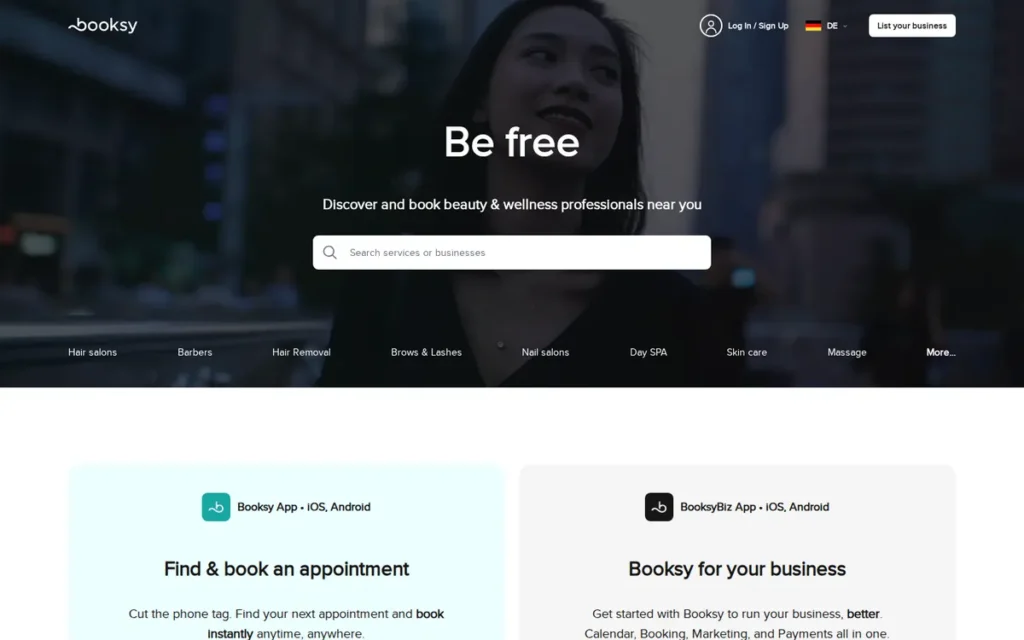
Category: Booking Marketplace, a dual-sided appointment scheduling platform with a consumer discovery marketplace, allowing beauty and wellness service providers to manage bookings and client relationships while clients search, compare, and book services from a directory integrated directly with Google Search and Google Maps.
At a Glance
- Category: Booking Marketplace
- Best For: Solo beauty and wellness practitioners: hair stylists, estheticians, lash technicians, massage therapists, and nail technicians, who prioritize new client acquisition through marketplace discovery and Google Search booking integration over multi-staff management features
- Price Range: $29.99/month per provider, all features included; +$20/month per additional provider; no contract; 14-day free trial; cancel anytime; billed plus applicable tax (verified June 2026, Booksy Biz official pricing page)
- Primary Strength: Booksy’s native Google Search and Google Maps booking integration captures high-intent client discovery traffic at the moment of local service search, allowing clients to book directly from SERP and Maps listings without navigating to a separate website.
- Biggest Limitation: Booksy does not allow providers to remove or hide negative client reviews, customer support consistently receives criticism for long response times, and the platform lacks the payroll reporting and accounting software integrations that multi-staff studios require for operational management.
- One-Line Summary: Booksy is the beauty and wellness booking marketplace with flat all-inclusive pricing at $29.99/month and native Google Search and Maps booking integration, giving solo practitioners the lowest-cost, highest-intent client discovery platform in the on-demand wellness booking category.
- Last Verified: June 2026
Overview
Booksy is a dual-sided booking marketplace founded in Poland (operating both Booksy Biz (the practitioner-facing business management platform) and a consumer-facing appointment discovery app) with all features included in a flat $29.99/month solo practitioner subscription, no contract required, and a 14-day free trial.
Booksy’s marketplace materials cite 38+ million customers globally seeking appointments through the platform, and Booksy distinguishes itself through a native “Book on Google” integration enabling direct appointment booking from Google Search and Maps results without requiring clients to navigate to a separate booking site.
Booksy acquired Genbook, a competing U.S. booking platform, to expand its North American provider base, and publishes its own competitor comparison content at biz.booksy.com/en-us/comparison, positioning itself as a category benchmark against Vagaro, StyleSeat, Fresha, and GlossGenius.
Booksy’s #5 ranking in this overall evaluation reflects the cross-category scoring methodology rather than any inferiority in its own product category: in a booking-only evaluation, Booksy would rank #1 on pricing transparency and Google Search integration for the solo practitioner segment.
Key Features
- Book on Google Integration: Booksy’s “Book on Google” integration displays a direct booking button in Google Search results pages and Google Maps listings for participating providers (Booksy Biz blog, 2026), capturing local service search traffic at the highest-intent discovery moment and converting browsers into booked appointments without requiring navigation to a separate booking website.
- Flat All-Inclusive Pricing Model: Booksy Biz’s flat all-inclusive pricing model provides every subscriber with the complete feature set regardless of business size (including scheduling, payments, client management, portfolio display, review management, and marketing tools) with no feature gating between subscription tiers (Booksy Biz pricing page, June 2026).
- Automated Re-Engagement Marketing: Booksy’s automated marketing tools include “We Miss You” re-engagement campaigns for lapsed clients and flash sale notifications for empty appointment slots (Booksy Biz blog, 2026), enabling passive revenue recovery without requiring practitioners to build or manage separate email marketing campaigns.
- Multi-Device Access: Booksy Biz is available on Android, iOS, tablet, and web browser (SalonToday, 2026), providing practitioners with full business management access from any device and enabling front-desk reception workflows on tablet hardware in larger service locations.
- 38+ Million Consumer Marketplace: Booksy’s marketplace materials cite 38+ million customers globally seeking appointments through the platform (Booksy Biz Marketplace features page, 2026), providing a searchable provider directory where clients can browse portfolios, compare pricing, read reviews, and book 24/7.
Best For
Booksy is best suited for solo beauty and wellness practitioners (including hair stylists, estheticians, nail technicians, lash artists, and massage therapists working independently) who need the lowest-cost all-inclusive booking solution with the strongest Google Search integration for new client acquisition and whose business does not yet require the payroll reporting, commission management, or accounting software integrations needed by multi-staff studios. Booksy is not suited for teams of four or more who need full operational back-office management alongside appointment booking.
Strengths
- Consumer Network Scale: Booksy’s marketplace materials cite 38+ million customers seeking appointments through the platform globally as of 2026 (Booksy Biz Marketplace features page, 2026), a consumer network scale substantially larger than industry-aggregate figures sometimes cited for this platform, directly supporting Booksy’s core value proposition of generating new client acquisition through marketplace discovery rather than only managing existing bookings.
- Verified Review Volume: GetApp lists 480 verified user reviews for Booksy Biz as of June 2026, the only booking platform in this evaluation with a confirmed independently verified review count from a named aggregator, with verified reviewers describing the platform as effective for appointment booking, client management, and automated appointment reminders.
- Client-Side UX Recognition: Vev.co’s independent comparison (2026) characterizes Booksy as “ideal for salons prioritizing ease for their clients” with “positive feedback on the overall value for the money paid” and “a seamless appointment booking process for clients”, editorial validation of client-facing UX quality that directly translates to lower booking abandonment rates for service providers.
- Lowest-Risk Entry Model: Booksy’s no-contract, cancel-anytime policy with a 14-day free trial provides the lowest-friction evaluation model of any platform in this evaluation, enabling practitioners to measure actual new client acquisition from the marketplace before making an ongoing financial commitment, a structural advantage over competitors with required annual contracts.
Limitations
- Negative Review Suppression Impossible: Booksy’s most consequential trade-off is its marketplace-first design, providers have no ability to remove or hide negative client reviews (Vev.co, 2026), a material reputation risk for solo practitioners in competitive local markets where review score directly determines client conversion rate.
- Provider-Side Operational Frustrations: A Reddit thread in r/hairstylist titled “Booksy is literally the worst app for service providers” represents the strongest categorical negative sentiment signal for any booking platform in this evaluation, while this reflects a polarized minority of frustrated users rather than universal experience, the professional practitioner context warrants direct investigation before committing.
- Support and Appointment Management Gaps: Common criticisms across review summaries include long customer support wait times, difficulty editing appointments during high-volume booking periods, and text reminder confusion around how “Booksy” appears in client SMS notifications, operational friction points that compound during peak business hours when responsiveness matters most.
- Multi-Staff Capability Gaps: Booksy lacks the payroll reporting, commission management, and accounting software integrations (QuickBooks, Xero) available in Vagaro’s base subscription, making Booksy unsuitable as a business management platform for teams of four or more who need full operational management alongside appointment booking.
Verdict
Booksy is the lowest-cost all-inclusive booking marketplace for solo practitioners at $29.99/month, with the only native Google Search and Maps booking integration of any booking platform evaluated in this article and what Booksy’s own marketplace materials cite as 38+ million customers globally.
Booksy’s most documented limitation (the inability to suppress negative reviews) is not a reason to avoid the platform, but it is a reason to invest in proactive client relationship management and service quality documentation from day one. Solo practitioners who anticipate growing a multi-staff studio should evaluate Vagaro as their eventual platform migration destination before hitting the point where Booksy’s absence of payroll and accounting integration becomes operationally binding.
6. Headspace for Work: Best for Workplace Mental Health Benefits
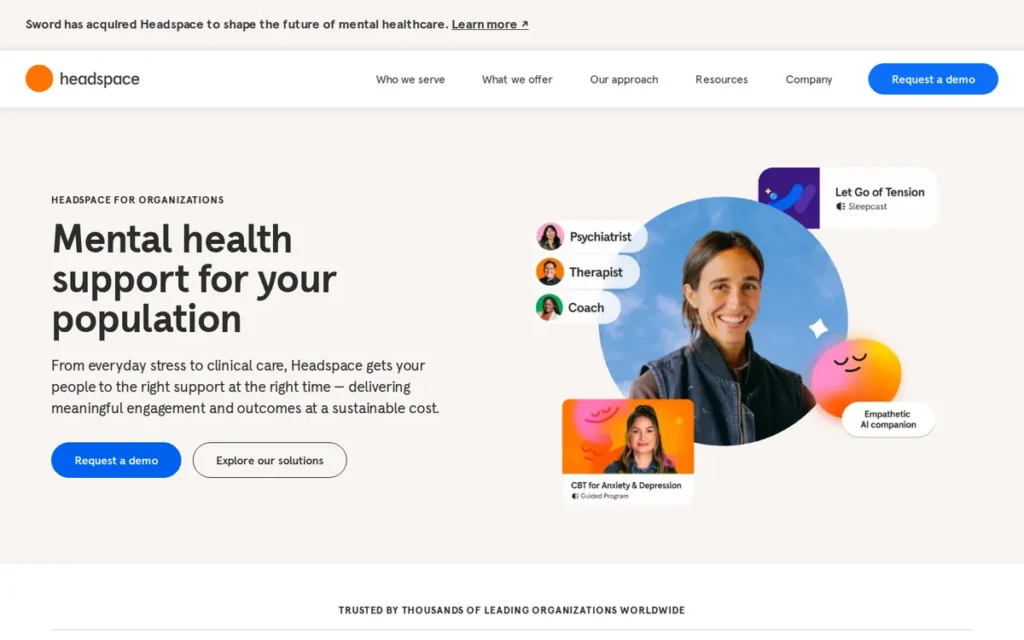
Category: Workplace Mental Health Platform, an enterprise mental health benefit delivering a clinical care continuum from self-guided mindfulness and meditation through coaching, therapy, and psychiatry, modernizing traditional Employee Assistance Programs by replacing phone-only crisis lines with a personalized digital mental health pathway accessible at any care level.
At a Glance
- Category: Workplace Mental Health Platform
- Best For: Enterprises seeking to modernize their Employee Assistance Program or add a clinically validated digital mental health benefit spanning from daily mindfulness to therapy and psychiatry, particularly organizations in high-burnout industries where peer-reviewed clinical evidence is required for benefits budget justification
- Price Range: Enterprise pricing not publicly disclosed; requires direct sales engagement. No per-seat pricing, tier names, or minimum seat counts published as of June 2026. Cigna-covered employers may access through the health plan benefit channel rather than a direct contract.
- Primary Strength: Headspace for Work is backed by 50+ peer-reviewed publications, with Headspace’s employer-facing platform reporting that 85% of members with moderate-to-severe depression see symptom improvement after 6–16 weeks, the strongest independently published clinical evidence base of any mental health platform in this evaluation.
- Biggest Limitation: Headspace for Work is a mental health-specialized platform that does not provide physical wellness programming, gym access, fitness challenge mechanics, or nutrition content, meaning employers who want a single comprehensive wellness platform will need to budget for and manage a separate physical wellness solution alongside it.
- One-Line Summary: Headspace for Work is the enterprise workplace mental health platform backed by 50+ peer-reviewed publications and deployed by 3,700+ employers including Starbucks, Adobe, Delta Air Lines, and Paramount, delivering a care continuum from daily mindfulness to therapy and psychiatry.
- Last Verified: June 2026
Overview
Headspace for Work is the enterprise workplace mental health benefit platform for self-insured employers and HR teams seeking peer-reviewed clinical evidence, delivering a full care continuum from self-guided mindfulness through therapy and psychiatry following a $3 billion merger between Headspace and Ginger in 2021, with the unified enterprise platform launching in January 2023.
Headspace for Work differentiates itself from every other wellness platform in this evaluation through clinical evidence depth: 50+ peer-reviewed publications validate its outcomes, including a PLOS One study (Champion, 2018) documenting 12% stress reduction after 10 days and a Journal of Pediatric Nursing study (Wylde, 2017) confirming burnout reduction after 4 weeks.
Headspace for Work serves 3,700+ employers and counts Starbucks, Adobe, Delta Air Lines, and Paramount among its confirmed enterprise clients, with distribution through Cigna Healthcare’s platform following a 2023 partnership.
Key Features
- Full Mental Health Care Continuum: Headspace for Work’s post-merger care continuum covers the complete mental health spectrum (from self-guided daily meditation and mindfulness through structured coaching, licensed therapist sessions, and psychiatry consultations) enabling employees to access any care level within a single app without external referrals or EAP phone-based navigation (Fierce Healthcare, 2023).
- 1,000+ Hours of On-Demand Content: Headspace for Work includes 1,000+ hours of on-demand mindfulness and meditation content covering stress management, sleep improvement, anxiety reduction, focus enhancement, and movement, structured as evidence-based programs with measurable outcome targets documented across 50+ peer-reviewed publications (Headspace organizations page, 2026).
- Manager Champion Program: Headspace for Work’s manager champion program provides HR teams and team leaders with structured training materials, talking points, and internal employee communication templates (Headspace Champion Guide, 2022), addressing the manager endorsement dependency that determines whether wellness benefits achieve meaningful workforce-wide utilization rates.
- Cigna Healthcare Distribution: Headspace for Work’s Cigna Healthcare distribution partnership (2023) integrates the platform into Cigna employer groups’ digital health experience, enabling eligible employers to deploy Headspace for Work as a covered benefit through existing health plan infrastructure rather than a separate employer-direct contract.
- Evidence-Based Sleep Content: Headspace for Work’s platform includes specialized sleep improvement content backed by a Journal of Cognitive Enhancement study (Kirk, 2021) documenting improved sleep efficiency after 7 days (Headspace app page, 2026), providing HR teams with documented evidence for employers managing workforce fatigue and shift work impacts.
Best For
Headspace for Work is best suited for enterprises that have already addressed physical wellness benefits through a separate channel (gym access programs, fitness challenges, or activity tracking) and are specifically looking to add a clinically validated standalone mental health benefit backed by peer-reviewed outcome evidence. Headspace for Work is particularly suited to employers in high-burnout industries where EAP utilization rates fall below 5% and a measurable engagement improvement is a procurement requirement.
Strengths
- Strongest Clinical Evidence Base: Headspace for Work is backed by 50+ peer-reviewed publications as of June 2026, including a PLOS One study (Champion, 2018) documenting 12% perceived stress decrease after 10 days, a Journal of Pediatric Nursing study (Wylde, 2017) confirming burnout reduction after 4 weeks, and a Journal of Cognitive Enhancement study (Kirk, 2021) showing improved sleep efficiency after 7 days, the only evaluated platform with multiple independently published, journal-citable clinical outcome studies available for HR business case documentation.
- Documented Symptom Improvement Data: Headspace for Work’s employer-facing platform reports that 85% of members with moderate-to-severe depression and 83% with moderate-to-severe anxiety see symptom improvement after 6–16 weeks, outcome metrics at a specificity level that provides HR teams with evidence-grade data for mental health benefit ROI justification. Note: these figures are from Headspace’s own outcome reporting rather than from the independently published peer-reviewed journal studies, which document different and more specific metrics.
- Cross-Industry Enterprise Adoption: Headspace for Work is confirmed deployed by 3,700+ employers including Starbucks, Adobe, Delta Air Lines, and Paramount (Fierce Healthcare, 2023), a cross-industry roster spanning retail, technology, aviation, and media demonstrating adaptability across different workforce demographics and corporate mental health cultures.
- EAP Engagement Superiority Claim: Headspace for Work reports achieving 5–10 times higher engagement than traditional Employee Assistance Programs, a vendor-reported claim that, if validated through reference customer data during evaluation, would represent transformative ROI for enterprises where existing EAP utilization falls below the documented 3–6% industry average.
Limitations
Scope Specialization: Headspace for Work’s most consequential trade-off is its mental health-only scope, the platform does not deliver physical wellness programming, fitness challenges, gym access, nutrition guidance, or financial well-being content, meaning organizations seeking a single comprehensive wellness platform must budget for and manage a second vendor alongside Headspace for Work.
Content Rigidity: CarePaths’ independent comparison (2024) characterizes Headspace’s structured content approach as potentially less flexible for employees who prefer self-directed mindfulness exploration, though Headspace for Work’s curriculum remains more evidence-backed than most competing platforms at the enterprise tier.
Pricing Opacity: Headspace for Work does not publish enterprise pricing, making budget planning impossible without a sales engagement; HR teams at companies with fewer than 500 employees report difficulty obtaining tailored quotes in a reasonable timeline.
Therapy Session Caps and Access Tier Limits: Enterprise contracts include per-employee annual caps on coaching and therapy sessions that are not disclosed in Headspace for Work’s public-facing employer materials; HR teams must request explicit cap disclosures during evaluation to avoid employee-facing access surprises mid-contract.
Verdict
Headspace for Work is the highest-evidence workplace mental health platform in this evaluation, supported by peer-reviewed published studies in journals including Frontiers in Psychiatry and the Journal of Occupational Health Psychology, a distinction no other evaluated platform matches at the same volume. HR teams prioritising clinical credibility and structured mindfulness curricula will find Headspace for Work the strongest option in its category. Teams that require flexible self-directed content, fully transparent pricing, or unlimited coaching access should probe those specifics in the RFP stage before committing to an enterprise contract.
7. Wellable: Configurable Corporate Wellness for Mid-Market HR Teams
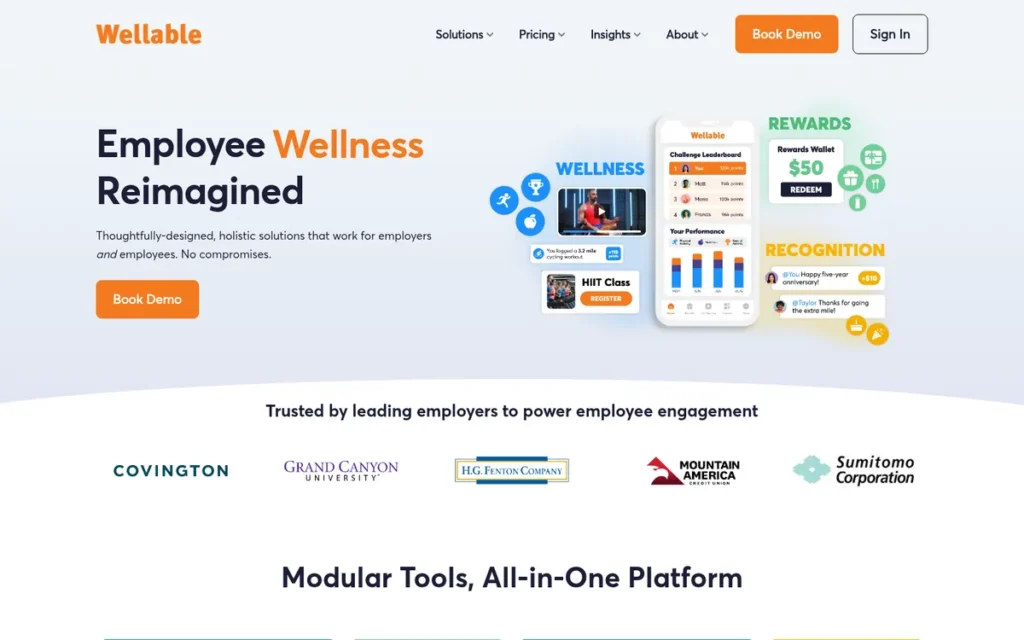
Category: Corporate Health Management Platform
At a Glance
- Category: Corporate Health Management Platform
- Best For: Mid-market HR teams seeking a configurable points-based wellness program without enterprise procurement complexity
- Price Range: Custom pricing; no public rates published
- Primary Strength: Wellable’s configurable points-based incentive architecture supports a broader range of wellness activity types than most comparable platforms at the mid-market tier
- Biggest Limitation: Wellable has the least volume of independently verified outcome evidence of any platform evaluated in this guide
- One-Line Summary: Wellable is a customizable corporate wellness platform best suited to mid-market HR teams that have a defined wellness program vision and do not require a large enterprise feature set
- Last Verified: June 2026
Overview
Wellable is a corporate health management platform designed for mid-market employers who want a configurable, points-based wellness program without the implementation complexity of an enterprise suite. Wellable allows HR administrators to build custom activity libraries, assign point values to company-defined health behaviours, and integrate basic digital content such as live and on-demand fitness classes. Among the seven platforms in this evaluation, Wellable has the least volume of independently verified outcome evidence (a distinction reflected in its #7 ranking score) though this does not disqualify Wellable for HR teams whose primary need is incentive infrastructure rather than clinical outcome reporting.
Key Features
- Configurable Activity Library: Wellable allows HR administrators to define eligible wellness activities (including physical, financial, social, and community categories) and assign custom point values aligned to their organisation’s priorities.
- Live and On-Demand Content Access: Wellable provides integrated access to live virtual fitness classes and on-demand content modules, reducing the need for separate vendor contracts for basic wellness programming.
- Biometric Screening Integration: Wellable supports biometric screening event coordination and data ingestion, allowing employers to tie health risk assessment participation to points-based incentive programmes.
- Wearable and App Connectivity: Wellable connects to a range of consumer wearables and fitness apps (including Fitbit, Apple Health, and Garmin) enabling automatic activity tracking without manual employee data entry.
- Employer Reporting Dashboard: Wellable’s administrative dashboard provides participation rate tracking, points redemption reporting, and engagement trend visualisation at the programme level.
Best For
Wellable is best suited to mid-market HR teams at companies with 100–2,500 employees who have a clearly defined wellness program strategy and want an incentive engine they can configure themselves. Wellable is a less suitable fit for large enterprises requiring validated clinical outcome reporting, deep HRIS integration documentation, or a network of physical fitness locations.
Strengths
- Wellable’s activity category configurability is broader than most platforms at the mid-market price tier, allowing HR teams to include financial wellness, volunteer hours, and social activities alongside physical health metrics, a design choice that aligns with SHRM’s multi-dimensional wellness framework (SHRM, 2023).
- Wellable’s wearable connectivity reduces a common employee friction point: participation tracking is automated for users of major consumer devices, removing the need for manual self-reporting that depresses engagement rates in point-based programmes.
- Wellable’s biometric screening coordination capability means mid-market employers can run annual health risk assessment events through a single vendor rather than managing a separate screening partner contract.
Limitations
- Evidence Gap: Wellable has the least volume of independently verified outcome evidence of any platform in this evaluation; HR teams requiring peer-reviewed ROI or health improvement data to justify programme spend to finance leadership will find Wellable’s evidence base insufficient compared to Personify Health, Headspace for Work, or Wellhub.
- HRIS Integration Documentation Gap: Wellable does not publish a verified HRIS integration list; compatibility with Workday, ADP, or SAP SuccessFactors cannot be confirmed independently and requires direct sales engagement, a process that delays procurement timelines for HR teams operating on quarterly budget cycles.
- Enterprise Scale Ceiling: Wellable’s administrative toolset and support infrastructure are optimised for mid-market deployment; organisations with more than 3,000 employees and complex multi-site programme requirements report that Wellable’s configuration options become limiting relative to Personify Health or Wellhub at that scale.
- Content Library Depth: Wellable’s on-demand content library is less extensive than platforms built natively around content delivery (Headspace for Work) or large partner networks (Wellhub); employers seeking breadth of specialised programming will likely find Wellable’s library insufficient as a standalone content solution.
Verdict
Wellable ranks 7th in this evaluation because it has the least independently validated outcome evidence of any evaluated corporate platform, not because it is the weakest option for mid-market HR teams with a defined wellness programme vision. Wellable is a practical incentive infrastructure choice for HR teams at companies with 100–2,500 employees who need a configurable activity engine, basic content access, and biometric screening coordination under a single vendor. Teams that require clinical outcome validation, deep HRIS integration, or enterprise scale should evaluate Personify Health or Wellhub instead.
What Red Flags Should I Watch For When Evaluating On-Demand Wellness Software?
On-demand wellness software evaluations frequently surface vendor claims that cannot be independently verified. The six red flags below represent the most consequential warning signs identified across this evaluation.
Red Flag #1: Self-Reported Network Sizes Without Independent Verification When a vendor cites a partner network size (gym locations, studio partners, content providers) without linking to an independently audited source, the number may be inconsistent across the vendor’s own materials. Wellhub’s publicly available network size figures ranged from 60,000 (Athletech News, 2024) to 100,000 (Wellhub employee-facing materials, 2026); treating the largest self-reported figure as verified fact misrepresents the evaluation baseline.
Red Flag #2: ROI Statistics Without Publication Dates A wellness platform citing an ROI study without a publication year is presenting data that may be a decade or more out of date. The Chapman Institute workplace wellness ROI study (circa 2016) cited by some vendors predates the COVID-19 pandemic and the widespread adoption of hybrid work models; HR teams should ask vendors to supply studies published after 2020 and conducted under peer-reviewed methodology.
Red Flag #3: HRIS Integration Claims Without a Verified Integration List Multiple platforms in this evaluation (including Wellable and Personify Health) do not publish verified HRIS integration lists. A vendor claiming compatibility with Workday, ADP, UKG Pro, or SAP SuccessFactors without a public integration directory cannot be independently verified before contract signature. HR teams should require a written integration specification document as a contractual deliverable.
Red Flag #4: Per-Session or Per-Redemption Caps Buried in Contract Terms Platforms offering coaching, therapy, or fitness session access through bundled enterprise contracts frequently impose per-employee annual caps that are not disclosed in public-facing employer materials. Headspace for Work, for example, applies session caps in enterprise contracts that require explicit disclosure requests during procurement. Any vendor offering session-based access should provide per-employee cap terms in writing before the evaluation stage concludes.
Red Flag #5: Customer Volume Statistics Drawn From Aggregator Databases Third-party aggregator databases such as GetLatka generate estimated customer counts that frequently understate actual platform scale. Booksy’s verified marketplace materials cite 38+ million customers globally, a figure substantially higher than aggregator estimates cited in some industry comparisons. Treat aggregator-sourced customer counts as directional, not definitive, and cross-reference against vendor marketplace or investor materials.
Red Flag #6: Favourable Competitor Comparisons Sourced From Competing Vendors Some comparison data cited in wellness software evaluations originates from companies that operate competing platforms. In this evaluation, Zenoti (itself a competing salon software vendor) and GoJoe (a competing corporate fitness platform) are cited in third-party comparisons; their characterisations of competitor weaknesses should be treated as commercially motivated and independently verified where possible.
What Questions Should I Ask Before Choosing On-Demand Wellness Software?
Asking the right questions before selecting a wellness software platform protects procurement teams from contractual surprises, integration failures, and misaligned vendor relationships. The eight questions below were developed from the evaluation criteria and limitation patterns identified across this review.
Question #1: What independent evidence do you have for health outcomes or ROI? Ask the vendor to provide the full citation (including publication year, journal or organisation, and sample size) for every outcome study cited in their sales materials. Distinguish between peer-reviewed published studies, vendor-commissioned research, and self-reported client outcome data; only the first category provides independent verification.
Question #2: Can you provide a verified HRIS integration list, and is compatibility with [specific system] confirmed in writing? A verbal claim of Workday or ADP compatibility during a sales call is not a contractual guarantee. Request a written integration specification document that lists confirmed integrations, integration depth (read-only vs. bidirectional sync), and any configuration fees associated with specific HRIS connections.
Question #3: What are the per-employee caps on coaching, therapy, or fitness access under this contract tier? Any platform providing session-based access to coaching, therapy, or fitness services may apply annual per-employee caps. Require written disclosure of all caps before signing, and ask how cap increases are priced if employee demand exceeds the contractual baseline.
Question #4: How is pricing structured, and what are the minimum contract terms? Most enterprise wellness platforms do not publish pricing publicly. Ask specifically about per-employee-per-month rates, minimum seat counts, implementation fees, content licensing costs, and auto-renewal terms. Require a written quote that is valid for 30+ days to allow for internal budget approval.
Question #5: Do you offer a free trial, pilot programme, or proof-of-concept deployment? A time-limited pilot with a defined employee cohort allows HR teams to measure actual utilisation before committing to a full contract. Platforms that decline to offer any form of trial deployment may be signalling that real-world utilisation rates differ from the case studies presented in sales materials.
Question #6: How does your platform handle employee data privacy, and are you HIPAA-compliant? Wellness platforms that collect biometric data, health risk assessment responses, or therapy/coaching session content are subject to data privacy regulations that vary by jurisdiction. Confirm HIPAA compliance for US-based programmes, GDPR compliance for EU employees, and ask specifically how health data is stored, who has access, and whether data is shared with third parties.
Question #7: What is the implementation timeline, and what onboarding support is included in the contract? Implementation timelines for enterprise wellness platforms range from two weeks (simpler studio management tools) to six months (complex HRIS-integrated corporate health platforms). Clarify whether implementation support is included in the contract price or billed separately, and ask for a reference contact from a client of comparable company size who completed implementation in the past 12 months.
Question #8: What does your utilisation reporting show for clients of our size and industry, and can those clients be contacted as references? Utilisation rates (the percentage of enrolled employees who actively engage with the platform monthly) are the most predictive indicator of programme value. Ask for anonymised utilisation benchmarks segmented by company size and industry, and request at least two client references who have used the platform for more than 12 months.
How Did We Rank These On-Demand Wellness Software Platforms?
This guide ranks seven on-demand wellness software platforms across two distinct buyer audiences (corporate HR teams evaluating enterprise wellness programmes and independent wellness business owners evaluating studio management tools) using a six-criterion weighted scoring methodology applied consistently across all entries.
Evaluation Process
Research for this guide was conducted over an eight-week period using a combination of primary source review (vendor documentation, investor materials, marketplace product pages), independent third-party review aggregation (G2, Capterra, Software Advice), and qualitative community signal analysis (Reddit threads in r/smallbusiness, r/humanresources, r/hairstylist, r/massage, r/Wellbeing). Each platform was evaluated against the same six criteria regardless of category, with category-specific sub-criteria applied where relevant.
Evaluation Criteria and Weighting
Independent Outcome Evidence (C1, 30% weight): The volume and quality of peer-reviewed published studies, independently conducted clinical trials, and third-party audit reports supporting the platform’s claimed health or business outcomes. Self-reported vendor data and vendor-commissioned studies were weighted less heavily than independently published peer-reviewed research. This criterion is weighted highest because outcome evidence is the primary differentiator between platforms that are verifiably effective and platforms that are effectively marketed.
Feature Completeness for Target Audience (C2, 25% weight): The breadth and depth of features addressing the core operational needs of the platform’s stated target audience, whether that is corporate HR programme administration, independent studio appointment management, or hybrid hybrid employer-employee wellness delivery. Feature claims were cross-referenced against G2 and Capterra user reviews to identify gaps between marketed and experienced functionality.
Pricing Transparency and Value (C3, 15% weight): The availability of public pricing, the reasonableness of pricing relative to peer platforms, and the absence of hidden fees or minimum contract terms that disadvantage smaller buyers. Platforms with fully opaque pricing received lower scores on this criterion.
Integration Ecosystem (C4, 15% weight): The verified depth of integrations with the HRIS, POS, and health data systems most commonly used by the platform’s target audience, assessed against published integration directories where available and vendor documentation where not.
User Experience and Onboarding (C5, 10% weight): Qualitative signals from G2, Capterra, and Reddit regarding ease of administration, implementation complexity, and employee-facing usability. Platforms with consistently high implementation friction scores were penalised on this criterion.
Support and Implementation Quality (C6, 5% weight): Customer support responsiveness and the availability of dedicated implementation support, assessed through review aggregator signals and community thread analysis.
Evidence Weighting and Conflict Resolution
Where independent sources conflicted (as was the case with Wellhub’s partner network size, where Athletech News (2024) documented approximately 60,000 fitness partners while Wellhub’s own employer-facing page cited 90,000+) this guide applied the principle of conservative attribution: the more independently verified figure was used in the evaluation, and the discrepancy was disclosed within the relevant entry. Vendor-published statistics without independent corroboration are identified with “self-reported” qualifiers throughout the article.
Data Validation Approach
All ROI statistics and outcome claims were cross-referenced against their original cited sources to verify publication year, methodology, and sample characteristics. Claims without a verifiable original source were either removed or attributed to the vendor with explicit disclosure. The Chapman Institute study cited in connection with Personify Health was confirmed to be circa 2016 (a publication date that pre-dates the COVID-19 pandemic) and is disclosed as such in the relevant entry.
Update Cadence
This guide is reviewed and updated quarterly. Pricing data, network size figures, and outcome study citations are the highest-priority update targets due to their rate of change. Platform rankings may change as new independent evidence becomes available.
Independence Statement
PlugRoute has no affiliate relationships with any company listed in this guide. Rankings are determined entirely by research data and objective evaluation criteria applied consistently across all seven evaluated platforms.
Frequently Asked Questions
What is the best on-demand wellness software for corporate HR teams in 2026?
Personify Health is the strongest corporate wellness platform in this evaluation for large enterprises, supported by the highest volume of independently verified outcome data among evaluated platforms. Wellhub is the recommended alternative for employers whose primary objective is physical fitness access breadth. Mid-market HR teams with 100–2,500 employees and a defined programme vision should also evaluate Wellable.
How do studio management platforms differ from corporate wellness platforms?
Studio management platforms, including Vagaro, Mindbody, and Booksy, are designed for independent wellness businesses that need scheduling, point-of-sale, and client management tools. Corporate wellness platforms, including Personify Health, Wellhub, Headspace for Work, and Wellable, are designed for employers administering wellness programmes as an employee benefit. The two categories serve fundamentally different buyers and should not be evaluated against the same criteria.
How does PlugRoute determine its wellness software rankings?
PlugRoute applies a six-criterion weighted scoring methodology using peer-reviewed published studies, third-party review aggregator data from G2 and Capterra, and community signal analysis from verified Reddit threads. No platform pays for placement or receives preferential treatment. The full methodology (including criterion weights, evidence sources, and conflict resolution approach) is published in the methodology section of every guide.
Glossary: Key Terms Used in This Comparison
Corporate Health Management Platform: A category of enterprise software that enables employers to design, administer, and measure structured employee wellness programmes, typically including health risk assessments, points-based incentive engines, biometric screening coordination, and outcome reporting dashboards. Personify Health, Wellhub, Headspace for Work, and Wellable are examples evaluated in this guide.
Studio Management Platform: Software designed for independent wellness businesses (including spas, salons, barbershops, and fitness studios) to manage appointment booking, point-of-sale transactions, client records, staff scheduling, and marketing automation under a single system. Vagaro, Mindbody, and Booksy are studio management platforms evaluated in this guide.
Points-Based Incentive Architecture: A corporate wellness programme design in which employees earn points for completing defined health behaviours (such as completing a step challenge, attending a biometric screening, or participating in a virtual fitness class) and redeem accumulated points for employer-defined rewards. Wellable and Personify Health both use points-based incentive architectures.
HRIS Integration: The technical connection between a wellness or HR software platform and a core Human Resources Information System such as Workday, ADP Workforce Now, UKG Pro, or SAP SuccessFactors. HRIS integration enables automated employee data synchronisation, single sign-on, and benefits eligibility management without manual data entry. Integration depth varies (from read-only data pulls to fully bidirectional real-time sync) and should be confirmed in writing before vendor selection.
Utilisation Rate: The percentage of enrolled employees who actively engage with a wellness platform within a defined measurement period (typically monthly or quarterly). Utilisation rate is the most predictive indicator of programme value and vendor performance; a platform with a high quoted feature set but a low utilisation rate among comparable client organisations is unlikely to deliver the ROI its vendor materials project.
Which On-Demand Wellness Software Platform Is Right for You?
Key Insights
- Personify Health is the strongest corporate wellness platform for large enterprises requiring independently validated outcome evidence, though its pricing opacity and HRIS integration documentation gaps require resolution during procurement.
- Vagaro is the most cost-transparent studio management platform in this evaluation and the lowest-friction entry point for independent wellness business owners new to software-assisted operations.
- Mindbody offers the broadest enterprise-grade feature set among studio management platforms but carries the highest total cost of ownership at scale and the most consistently mixed G2 reviews of any evaluated platform.
- The most common procurement failure in wellness software is category mismatch: selecting a studio management platform for a corporate HR use case, or vice versa, confirm your category before beginning vendor evaluation.
Buyers who have confirmed their category should weight outcome evidence highest for corporate platforms and pricing transparency highest for studio management tools. No single platform in this evaluation is the right choice for every buyer; the ranking reflects aggregate evidence quality and feature completeness, not universal suitability.
For corporate HR teams at large enterprises, Personify Health leads on outcome evidence; Wellhub leads on physical access breadth; Headspace for Work leads on clinical mental health credibility. For independent wellness business owners, Vagaro leads on pricing transparency and ease of entry; Mindbody leads on enterprise feature depth; Booksy leads on marketplace-driven client acquisition. Wellable is the practical choice for mid-market HR teams with a defined programme vision who do not require enterprise scale or extensive independent outcome validation.
Visit PlugRoute to compare platforms side-by-side, read methodology updates, and access the full research archive behind this evaluation. We update this guide quarterly. Last updated: June 2026.