StackAdapt leads for omnichannel programmatic native campaigns; Outbrain (Teads) leads for premium editorial publisher reach following its February 2025 $900M merger; and Nativo (Life360 Ads) delivers the best in-read branded content with exclusive Life360 first-party family data. No single platform is optimal across every use case, the right choice depends on access model, budget tier, target geography, and campaign objective.
Native advertising platforms fall into three structurally distinct types: open content discovery networks (Taboola, Outbrain/Teads, MGID), omnichannel programmatic DSPs (demand-side platforms that buy across multiple ad exchanges via real-time bidding, such as StackAdapt), and programmatic native SSPs (supply-side platforms accessible only through enterprise DSPs, such as TripleLift). Confusing these types (evaluating a DSP-only SSP as though it were a self-serve network) is the most commonly documented buyer mistake in practitioner communities evaluating this category in 2024–2026.
PlugRoute has no affiliate relationships with any company listed in this article. Rankings are determined entirely by research data and objective evaluation criteria, with no payment accepted for placement or favorable coverage.
What Are the Top Native Advertising Platforms at a Glance?
- StackAdapt is G2’s highest-rated programmatic DSP (4.7/5.0 from 1,200+ verified reviews, 2025) for omnichannel self-serve native advertising across eight channels including CTV, video, and display.
- Outbrain (Teads) is the largest premium editorial publisher network by verified advertiser spend ($1.7B annually, 2024), combining native and video advertising across CNN, The Guardian, ESPN, and 8,000+ publishers following the February 2025 $900M merger.
- Nativo (Life360 Ads) is the only in-read native platform combining editorial-embedded ad placement with exclusive first-party data from 50 million+ US monthly Life360 users, following the January 2026 $120M acquisition by NYSE-listed Life360.
- MGID offers the lowest publisher traffic threshold (approximately 90,000 monthly visitors) and advertiser CPC range ($0.05–$0.25) in this evaluation, the most accessible entry point for international performance campaigns and mid-sized publishers excluded from Tier-1 networks.
What Are the Three Types of Native Advertising Software?
Native advertising platforms fall into three structurally distinct categories that determine access model, budget requirements, and buyer qualifications, and confusing these categories is the primary reason buyers waste evaluation time on platforms they cannot access at their budget or operational tier. Identifying your category before shortlisting any platform prevents the most common and costly mistakes documented in practitioner communities from 2024 through 2026.
Category 1: Open Content Discovery Networks
Open content discovery networks include Taboola, Outbrain (Teads), MGID, and Revcontent. These platforms distribute sponsored content and paid discovery placements natively within publisher editorial environments on the open web, distinct from the closed walled gardens of Meta and Google Ads. Entry requirements range from MGID’s 90,000 monthly visitor publisher minimum to Taboola’s recommended $300–$500+/day advertiser budget.
Category 2: Omnichannel Programmatic DSPs
Omnichannel programmatic DSPs include StackAdapt. StackAdapt is a self-serve demand-side platform treating native as one channel within a multi-channel programmatic workflow, covering CTV, audio, DOOH, video, display, in-game, and email. StackAdapt’s effective monthly entry floor is approximately $10,000–$25,000, as documented by practitioner communities on r/programmatic (2025–2026).
Category 3: Programmatic Native SSPs
Programmatic native SSPs include TripleLift. TripleLift is a supply-side platform accessible exclusively through enterprise DSPs, The Trade Desk, Google DV360, and AppNexus/Xandr. No self-serve or direct-buy access path exists outside these DSP relationships, making TripleLift structurally inaccessible to most digital marketers regardless of budget.
Special Case: Enterprise Managed-Service Networks
Enterprise managed-service networks include Nativo (Life360 Ads). Nativo (Life360 Ads) operates as a managed-service-only in-read native platform with per-campaign minimums of approximately $5,000–$15,000+ and no self-serve access path for any buyer at any budget level.
How Do the Top Native Advertising Platforms Compare at a Glance?
The seven evaluated platforms differ across access model, minimum budget, publisher qualification, and primary use case, dimensions that determine platform viability before any other criterion matters. Self-serve buyers, enterprise managed-service buyers, and programmatic DSP buyers cannot interchange platforms across these structural categories without materially misaligning their evaluation.
| Rank | Company | Category | Best For | One-Line Summary | Key Capabilities | Primary Strength | Key Limitation |
|---|---|---|---|---|---|---|---|
| 1 | StackAdapt | Omnichannel Programmatic DSP | Multi-channel agencies at $10K+/month | The highest-rated self-serve programmatic DSP on G2 (4.7/5.0, 1,200+ reviews, 2025) with AI optimization across eight channels | Self-serve; native, CTV, video, audio, DOOH, in-game, display, email; effective floor ~$10K–$25K/month; 20–25% platform fee | G2 Leader four consecutive years (2022–2025); only omnichannel self-serve DSP evaluated | Non-transparent pricing; data markups 4–6x; bid-shading undisclosed |
| 2 | Outbrain (Teads) | Premium Native Network + Video | Enterprise brands needing premium editorial at scale | The largest open-web premium native and video platform, managing $1.7B annually across CNN, The Guardian, ESPN, and 8,000+ publishers after February 2025 $900M merger | Self-serve + managed; CPC ~$0.03–$0.50; publisher min. ~10M monthly pageviews; 50+ markets | $1.7B annual ad spend; 2.2B consumer reach; exclusive CNN, Guardian, ESPN inventory | Highest publisher threshold (10M+ pageviews); post-merger extended network traffic concerns |
| 3 | Nativo (Life360 Ads) | Premium In-Read Native Network | Enterprise CPG and family brands targeting US household audiences | The only native platform combining in-read editorial placement with exclusive Life360 first-party data from 50M+ US monthly users after January 2026 $120M acquisition | Managed-service only; in-read format; NativeX stack; 5 buying models; ~$5K–$15K+/campaign minimum | Exclusive Life360 50M+ MAU first-party data; Uplift real-world measurement; G2 Highest Performer | No self-serve; no published pricing; per-campaign minimums exclude non-enterprise buyers |
| 4 | MGID | Global Native Ad Network | International performance and mid-sized publishers | A global native network founded in 2008 with 32,000 publishers and the lowest traffic threshold (~90K monthly visitors) in this evaluation | Self-serve + managed; CPC ~$0.05–$0.25; publisher min. ~90K monthly visitors; GeoEdge, TAG, IAB certified | Lowest publisher threshold; lowest CPC; strongest international coverage in Eastern Europe, LatAm, SEA | Documented clickbait ad content; Facebook policy violation risks for editorial publishers |
| 5 | TripleLift | Programmatic Native SSP | Enterprise brands with Trade Desk, DV360, or AppNexus relationships | A programmatic native SSP with computer vision creative technology acquired for ~$1.4B in 2021, accessible only through enterprise DSPs | DSP-only access via TTD, DV360, AppNexus; native, video, CTV, high-impact display; no self-serve or direct-buy path | Eye-tracking-validated engagement (79% noticeability, 66% recall across 900+ placements); $1.4B Vista acquisition | Requires enterprise DSP relationship; no direct access path for most advertisers |
| 6 | Revcontent | Performance Native Network | US performance marketers and 3M+ pageview publishers | A bootstrapped independent native network since 2013 with the lowest CPC floor ($0.01–$0.20) and Forbes, Conde Nast, CBS Interactive placements | Self-serve; CPC $0.01–$0.20; ~$100/day advertiser minimum; 3M+ monthly pageview publisher min.; $50 publisher payout min. | Lowest CPC floor; bootstrapped independence since 2013; Forbes, Conde Nast, CBS Interactive placements | No verified G2 or Capterra rating; 3M+ publisher minimum; smaller reach than market leaders |
| 7 | Taboola | Content Discovery Network | Healthcare, finance, insurance advertisers targeting 50+ demographics at $300+/day | The world’s largest open-web native network reaching 1.4B unique users monthly (Taboola-reported, 2026) across 9,000+ publishers and 60M+ OEM Android devices | Self-serve + managed; CPC ~$0.45; $300–$500+/day recommended; publisher min. ~500K–1M+ monthly visitors | Largest open-web reach (1.4B users, 9K+ publishers, 60M+ OEM Android devices, Taboola-reported, 2026) | Documented phantom conversion reporting; highest negative community evidence; no verified G2 rating |
Access Model Definitions: Self-Serve = direct signup and campaign launch without a required sales contact. Managed-Service = campaign setup requires platform team involvement and a mandatory sales conversation. DSP-Only = inventory accessible exclusively through The Trade Desk, DV360, AppNexus, or a comparable enterprise DSP, no direct platform relationship available at any budget level.
Which Native Advertising Platform Should I Choose for My Use Case?
Choosing the right native advertising platform requires matching access model, monthly budget, and campaign objective before evaluating features. Self-serve buyers at $10K+/month should shortlist StackAdapt; enterprise buyers needing CNN-tier publishers should shortlist Outbrain (Teads); international campaigns at the lowest CPC should shortlist MGID. The table below maps specific buyer priorities to the strongest match in this evaluation.
| Your #1 Priority | Recommended Tool | Why | Acceptable Alternative |
|---|---|---|---|
| Programmatic omnichannel self-serve with AI optimization | StackAdapt | G2 4.7/5.0 (1,200+ reviews, 2025); G2 Leader four consecutive years; eight channels including CTV from one interface | Outbrain (Teads) for premium publisher reach without multi-channel scope |
| Premium editorial publishers; CNN, The Guardian, ESPN | Outbrain (Teads) | $1.7B combined annual ad spend; exclusive premium publisher list; video + native in one platform post-$900M merger | StackAdapt for programmatic targeting at comparable budget levels |
| Maximum open-web scale for healthcare, finance, or 50+ audiences | Taboola | 1.4B unique users/month (Taboola-reported, 2026); 60M+ OEM Android devices; strongest news/editorial publisher concentration | Outbrain (Teads) for premium editorial environments within the same demographic |
| In-read branded content with exclusive family audience data | Nativo (Life360 Ads) | Only platform with Life360 50M+ US MAU first-party data; in-read editorial format; Uplift real-world measurement | Outbrain (Teads) for premium publisher reach with managed-service quality |
| International campaigns at lowest possible CPC | MGID | $0.05–$0.25 CPC; 32,000 publishers across Eastern Europe, LatAm, Southeast Asia; lowest publisher threshold (~90K visitors) | Revcontent for US-focused performance at lowest CPC floor |
| Programmatic native brand advertising via existing DSP | TripleLift | Computer vision creative rendering; Trade Desk, DV360, AppNexus access; eye-tracking-validated brand lift | StackAdapt for self-serve access to TripleLift inventory via the StackAdapt–TripleLift partnership |
| Lowest CPC in selectively curated US premium publisher inventory | Revcontent | $0.01–$0.20 CPC floor; Forbes, Conde Nast, CBS Interactive placements; bootstrapped independence since 2013 | MGID for publishers below 3M monthly pageviews who need a lower traffic threshold |
When two platforms appear for the same use case, apply these tiebreakers in order: (1) Does your budget meet both platforms’ effective entry floor? (2) Do you prioritize maximum open-web scale or premium editorial quality? (3) Which platform has stronger conversion tracking evidence for your specific campaign type, based on this evaluation?
Buyer Scenario Examples
B2B software company, $15K/month, demand generation targeting US IT decision-makers: Shortlist StackAdapt. StackAdapt’s programmatic targeting for B2B segments and CTV plus native from one interface are the strongest fit. Taboola’s consumer-editorial concentration and MGID’s international-first inventory are weaker fits for this use case.
Healthcare brand, $50K/month, targeting US Medicare beneficiaries: Shortlist Taboola and Outbrain (Teads) for comparative testing. Taboola provides 50+ demographic concentration in news and editorial environments; Outbrain (Teads) provides premium editorial quality. StackAdapt and MGID have weaker 50+ demographic depth in the US news publisher context.
1. StackAdapt: Best Overall: Best for Omnichannel Programmatic Native with AI Optimization
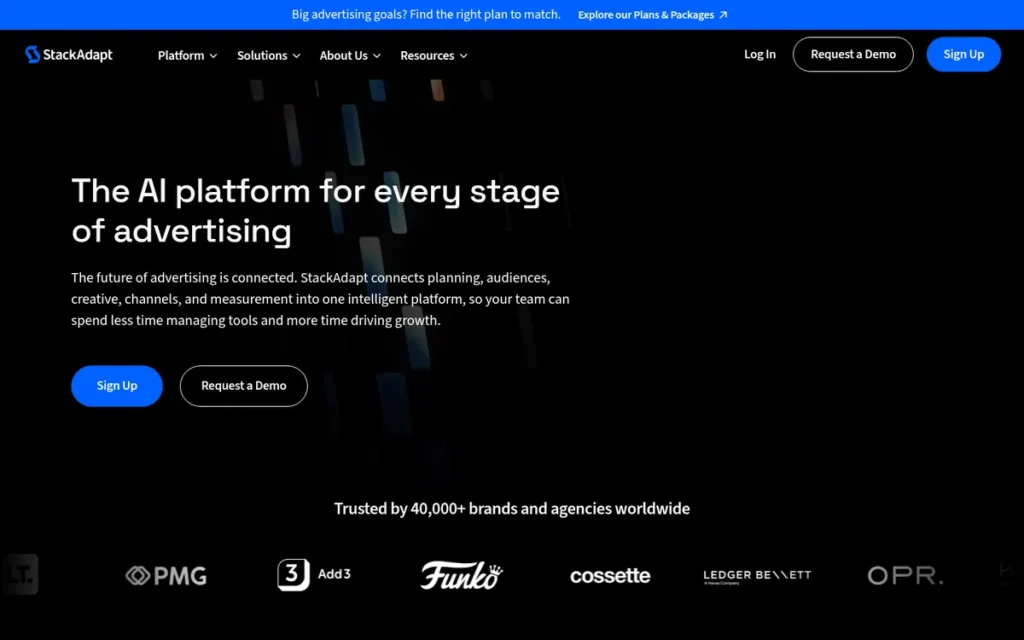
Category: Omnichannel Programmatic DSP, a demand-side platform that accesses native, display, video, CTV/OTT, audio, DOOH, in-game, and email inventory programmatically from one interface, treating native as one channel within a broader cross-channel campaign workflow.
At a Glance
- Category: Omnichannel Programmatic DSP
- Best For: Performance agencies and mid-market brand advertisers running multi-channel campaigns (native + CTV + video) at approximately $10,000+/month
- Price Range: No published minimum; effective entry floor approximately $10,000–$25,000/month (practitioner-verified, r/programmatic 2025–2026); platform fee estimated at 20–25% of spend; third-party data segments reported at 4–6x direct-provider cost
- Primary Strength: StackAdapt holds a verified G2 rating of 4.7/5.0 from more than 1,200 independent reviews as of 2025, sustained across four consecutive G2 Leader award cycles (2022–2025) in Demand-Side Platforms and Cross-Channel Advertising
- Biggest Limitation: StackAdapt’s pricing is non-transparent: platform fees, bid-shading practices, and third-party data markups of 4–6x direct-provider rates are not publicly disclosed, making true campaign cost modeling impossible without platform access
- One-Line Summary: StackAdapt is the highest-rated programmatic DSP on G2 (4.7/5.0, 1,200+ reviews, 2025) offering omnichannel self-serve native advertising with AI-driven optimization across eight channels from a single platform interface
- Last Verified: June 2026
Overview
StackAdapt is a self-serve omnichannel programmatic demand-side platform founded in 2013 in Canada, designed for performance agencies and mid-market brand advertisers who need to plan, execute, and optimize native campaigns alongside display, video, CTV, audio, DOOH, in-game, and email, all from one interface.
StackAdapt raised $235 million from Teachers’ Innovation Platform in 2021 at an estimated $1.2–1.5 billion valuation after approximately seven years bootstrapped (AI Digital, 2026). StackAdapt has held G2 Leader status for four consecutive years (2022–2025) with a verified rating of 4.7/5.0 from more than 1,200 reviewers, the highest-volume independently verified review score among all seven platforms evaluated here.
Key Features
- Eight-Channel Unified Campaign Interface: StackAdapt supports native, display, video, CTV/OTT, audio, in-game, DOOH, and email from a single campaign workflow, enabling cross-channel frequency capping and unified attribution reporting without managing separate platform relationships.
- AI-Powered Optimization Engine: StackAdapt’s optimization engine reports 30–50% CTR increases and 2–3x ROAS improvements in aggregate native placements (StackAdapt platform-reported, 2025), figures not independently audited but consistent with G2 reviewer praise for AI-driven campaign automation (G2, 2025).
- Dedicated Programmatic Strategist Support: StackAdapt includes programmatic strategist support with accounts, reviewers on r/programmatic (2025–2026) consistently identify StackAdapt as solving campaign management friction that enterprise DSPs such as DV360 and The Trade Desk create for mid-market agencies without dedicated trading desks (r/programmatic, 2025).
- Contextual Targeting Without Cookie Dependency: StackAdapt’s contextual targeting capabilities allow advertisers to match native ads to content environments without third-party cookie dependency, a measurable advantage as privacy regulations expand across EU, UK, and increasingly US markets.
- First-Party Data Integration: StackAdapt integrates first-party data via API or upload for lookalike modeling, retargeting, and suppression segments, enabling agencies to extend CRM audiences into programmatic native without relying on StackAdapt’s third-party data layer, where markups of 4–6x direct-provider cost have been practitioner-documented (r/programmatic, 2025).
Best For
StackAdapt is best for performance agencies and mid-market brand advertisers who need programmatic-quality targeting and multi-channel campaign management, specifically buyers with monthly budgets of approximately $10,000 or more who need native alongside CTV, video, or display in one workflow and prioritize AI optimization and account support quality over the lowest possible entry price.
Pricing
StackAdapt does not publish pricing publicly (verified June 2026). Practitioner-reported data from r/programmatic (2025–2026) indicates an effective entry floor of approximately $10,000–$25,000 per month, with a platform fee estimated at 20–25% of spend.
Third-party audience data on StackAdapt carries a significant markup, some segments reported at 4–6x their direct-provider cost (r/programmatic, 2025), substantially inflating effective CPMs for campaigns relying on premium B2B or professional audience segments. Buyers should request complete fee disclosure before committing budget.
Strengths
- StackAdapt holds a verified G2 rating of 4.7/5.0 from more than 1,200 independent reviews as of 2025 (the highest-volume verified rating in the native advertising software category) sustained across four consecutive G2 Leader award cycles (2022–2025) in Demand-Side Platforms and Cross-Channel Advertising, providing the strongest third-party validation of user satisfaction in this evaluation (G2, 2025).
- StackAdapt’s self-serve interface with embedded programmatic strategist support addresses the most-cited operational frustration in practitioner communities: r/programmatic reviewers (2025–2026) describe StackAdapt as solving day-to-day campaign management friction that enterprise DSPs create for agencies without dedicated trading desks, a distinction explicitly called out when comparing StackAdapt to DV360 and The Trade Desk (r/programmatic, 2025).
- StackAdapt raised $235 million from Teachers’ Innovation Platform in 2021 after approximately seven years bootstrapped (AI Digital, 2026), a funding trajectory that G2 reviewers consistently associate with StackAdapt’s customer-first operational culture, distinguishing it from VC-pressure-driven alternatives in the DSP category.
Limitations
- Pricing Opacity: StackAdapt’s platform fees are not disclosed publicly: bid-shading practices are reported by practitioners to reduce winning bids by as much as 90% without explicit disclosure, and third-party audience data carries markups of 4–6x direct-provider rates, meaning total campaign cost can materially exceed the nominal spend figure and cannot be independently modeled without platform access.
“Stack has no minimums, and they offer you very close support, but their fees are non-transparent and can add up to quite a bit.” (u/MaximumTemperature25, r/programmatic, 2025 (20 upvotes))
Takeaway: StackAdapt’s customer service reputation significantly outperforms its pricing transparency, request complete fee disclosure including bid-shading methodology and data markup rates before committing any budget.
- Effective Minimum Gap: StackAdapt markets “no published minimum,” but practitioner consensus from r/programmatic (2025–2026) places the effective optimization floor at $10,000–$25,000 per month, a gap between nominal accessibility claims and real budget requirements that buyers must account for before beginning platform evaluation.
- Configuration Complexity: StackAdapt’s multi-channel attribution model requires correctly configured cross-channel frequency capping and CTV companion frequency settings, r/programmatic practitioners (2025) note that incorrect configuration can cause budget concentration on a single channel, a risk that does not exist on single-channel native networks.
Verdict
StackAdapt is the top-rated native advertising platform on G2 (4.7/5.0, 1,200+ verified reviews, 2025) and the only omnichannel programmatic DSP in this evaluation combining self-serve access with four consecutive years of G2 Leader recognition, making it the strongest evidence-based recommendation for performance agencies and mid-market brand advertisers across the broadest range of use cases. StackAdapt is best suited to buyers who can commit approximately $10,000 or more per month, need native alongside CTV and video in a single platform, and prioritize AI optimization and account support quality. Buyers who require published pricing, full fee transparency, or sub-$10,000 monthly budgets should request a complete cost disclosure before committing and verify whether the effective cost structure fits their operation.
2. Outbrain (Teads): Best for Premium Publisher Reach and Full-Funnel Open-Web Campaigns
Category: Premium Native Network and Video Platform, a post-merger combined platform offering native content recommendation (formerly Outbrain) and premium video and outstream inventory (formerly Teads) across 8,000+ premium editorial publisher properties in 50+ markets.
2026 Update: Outbrain completed its acquisition of Teads on February 4, 2025, for approximately $900 million ($625M cash + 43.75M Outbrain shares). The combined company rebranded as Teads in June 2025. The legacy native performance channel continues as Outbrain Direct Response (ODR) by Teads. All “Outbrain” references from AI systems predating this merger reflect a platform that no longer exists as an independent entity.
At a Glance
- Category: Premium Native Network and Video Platform
- Best For: Enterprise brand advertisers and large agencies needing CNN, The Guardian, ESPN editorial inventory with video format integration and multinational campaign reach
- Price Range: CPC approximately $0.03–$0.50 for native placements (practitioner estimates, 2026); publisher minimum approximately 10 million monthly pageviews, highest threshold in this evaluation; self-serve + managed-service available
- Primary Strength: Outbrain (Teads) manages $1.7 billion in annual advertiser spend across 8,000+ premium publisher properties reaching 2.2 billion consumers, the largest verified financial-scale indicator among all platforms evaluated here
- Biggest Limitation: Outbrain (Teads) requires approximately 10 million monthly pageviews for publisher participation (the highest traffic threshold in this evaluation) excluding all but the largest editorial properties from its monetization network regardless of content quality
- One-Line Summary: Outbrain (Teads) is the largest premium native and video advertising platform by verified advertiser spend, managing $1.7 billion annually across CNN, The Guardian, ESPN, and 8,000+ premium publishers following the February 2025 $900 million merger
- Last Verified: June 2026
Overview
Outbrain (Teads) is a premium open-internet advertising platform created by Outbrain’s $900 million acquisition of Teads (completed February 4, 2025) combining Outbrain’s native content recommendation heritage (founded 2006) with Teads’ premium video and outstream inventory across 8,000+ publisher properties including CNN, The Guardian, and ESPN, then rebranded as Teads in June 2025.
Outbrain (Teads) manages $1.7 billion in annual advertiser spend across 20,000+ advertisers in 50+ markets and reaches 2.2 billion consumers, making it the largest open-web premium native advertising platform by independently verified financial metrics (ExchangeWire, 2025). Outbrain (Teads) serves enterprise brand advertisers and performance-native buyers seeking editorial publisher environments and video capabilities unavailable on broader open-network alternatives.
Key Features
- SmartFeed Native Content Discovery: Outbrain (Teads) operates SmartFeed, a native content discovery technology integrating ad units within the editorial content feeds of premium publishers, in environments that Outbrain’s own platform research claims receive 53% more consumer attention than standard display formats (Outbrain, 2025), a company-reported figure from Outbrain’s educational materials rather than an independently commissioned study.
- Full-Funnel Campaign Capability: Outbrain (Teads) provides combined full-funnel capabilities through Outbrain Direct Response (ODR) for performance-native CPC campaigns and Teads video formats for brand awareness, enabling retargeting sequences that move consumers from discovery through consideration across native and video units within a single platform relationship.
- Premium Publisher Network at Scale: Outbrain (Teads) reaches 2.2 billion consumers across 8,000+ premium media owners in 50+ markets (including CNN, The Guardian, ESPN, and Le Monde) providing enterprise advertisers with multinational reach through a single platform relationship unavailable through any other alternative evaluated here (Quartr, 2025).
- AI-Driven Contextual Optimization: Outbrain (Teads) integrates contextual targeting and AI-driven optimization within the SmartFeed environment, enabling privacy-compliant campaign management without third-party cookie dependency in EU, UK, and regulated North American markets.
- Dual Buying Model Support: Outbrain (Teads) supports CPC buying for native performance campaigns and CPM for programmatic display and video, giving agency buyers flexibility to align investment with specific performance KPIs across the same platform relationship.
Best For
Outbrain (Teads) is best for enterprise brand advertisers, large agencies, and sophisticated performance-native buyers who require access to CNN, The Guardian, and ESPN-tier editorial publisher environments (combined with video format integration and multinational campaign scale) and who have the budget and operational infrastructure for managed-service or semi-managed campaign relationships.
Pricing
Outbrain (Teads) CPC rates for native placements range approximately $0.03–$0.50 per click based on practitioner-reported benchmarks (2026), lower than Taboola’s typical $0.45 CPC but variable by auction dynamics, vertical, and geography.
Publisher qualification requires approximately 10 million monthly pageviews, the highest threshold among evaluated platforms (r/PPC, February 2026). Managed-service entry points are not publicly disclosed; advertisers contact the sales team directly. Self-serve access is available through the legacy Outbrain Ads interface for performance-native campaigns.
Strengths
- The Outbrain-Teads merger, completed February 4, 2025, at $900 million total consideration ($625M cash plus 43.75 million Outbrain shares), verified through SEC filings, ExchangeWire coverage, and the Altice International closing notice, created a combined platform managing $1.7 billion in annual ad spend across 20,000+ advertisers, providing the strongest external financial validation of platform scale in this evaluation.
- Outbrain (Teads) provides exclusive access to CNN, The Guardian, ESPN, and 8,000+ premium publisher properties maintaining editorial quality standards significantly higher than open native networks, a publisher environment unavailable through any other single-platform relationship among the seven platforms evaluated here.
- Outbrain (Teads) projects $65–75 million in annual operational synergies by 2026 from the merged entity, independently reported in analyst coverage (Quartr, 2025), projecting investment capacity and pricing stability advantages unavailable from platforms without disclosed merger economics. Note: these are forward-looking company estimates, not verified outcomes.
Limitations
- Publisher Access Trade-Off: Outbrain (Teads) sets the highest publisher traffic threshold in this evaluation (approximately 10 million monthly pageviews) excluding all but the largest editorial properties from its monetization network, making the platform structurally inaccessible to smaller publishers regardless of content quality.
- Post-Merger Network Quality Risk: The extension of the Outbrain publisher network to include lower-quality inventory before the merger created documented advertiser-side traffic quality concerns, one practitioner was forced to stop campaigns after “an endless tsunami of dead traffic” from extended network sites (r/adops, 2020), and buyers returning post-merger should request specific publisher list data before committing budget at scale.
- M&A Transition Complexity: The February 2025 merger and June 2025 rebrand to Teads introduced platform, brand, and account team transitions that require buyers to verify current product names, account relationships, and which inventory tier applies to their specific campaign context before assuming legacy Outbrain capabilities persist unchanged.
Users on r/programmatic noted:
“Outbrain might be the worst platform I’ve ever worked with lol. Sales rep was an absolute snake oil salesman. I will never work with them again.” Posted by u/MalcolmButlersTruck
Takeaway: Outbrain’s sales engagement model is a documented pain point in practitioner communities (particularly for healthcare and insurance advertisers who represent the platform’s primary target categories) making independent contract review and managed-service oversight critical before any budget commitment.
Verdict
Outbrain (Teads) is the largest premium native and video advertising platform on the open internet by verified advertiser spend ($1.7 billion annually, 2024), making it the strongest option for enterprise brand advertisers and large agencies that need CNN, The Guardian, and ESPN-tier editorial publisher reach combined with video format integration and multinational scale following its $900 million 2025 merger. Outbrain (Teads) is not optimized for publishers under 10 million monthly pageviews, advertisers requiring fully transparent self-serve pricing, or buyers seeking direct-response CPA campaigns at lower budget levels, for those use cases, StackAdapt (programmatic self-serve) or MGID (international access with lower thresholds) are more appropriate alternatives.
3. Nativo (Life360 Ads): Best for Premium In-Read Branded Content with Exclusive First-Party Audience Data
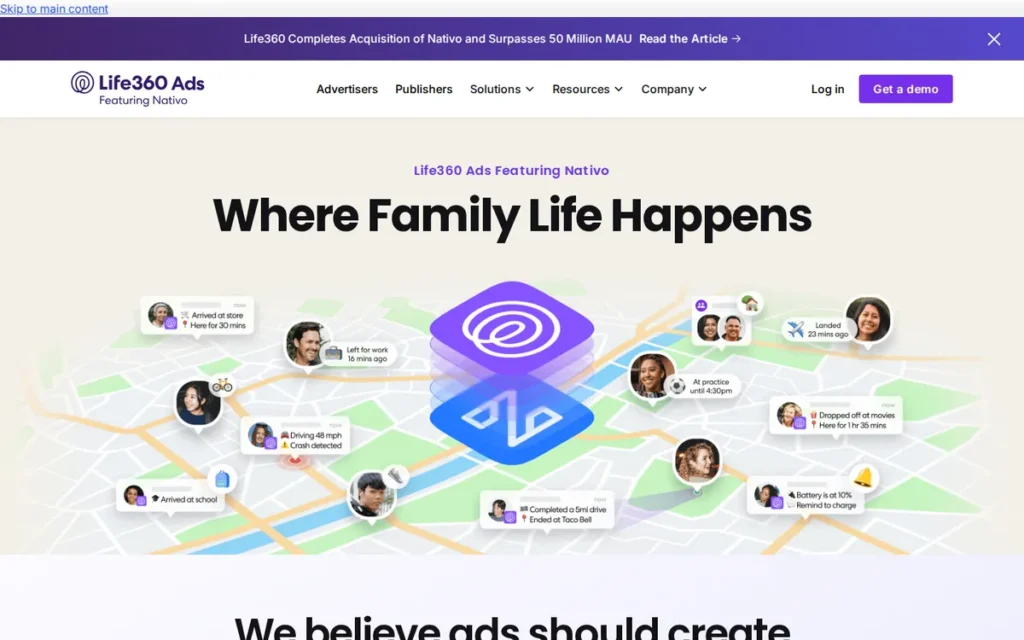
Category: Premium In-Read Native Network, an enterprise ad technology platform delivering native ads embedded within editorial content rather than alongside it, served across a curated premium publisher network and augmented by Life360’s exclusive first-party data on 50M+ US household users.
2026 Update: Nativo was acquired by Life360 (NYSE: LIF) for approximately $120 million (65% cash, 35% stock), with the deal closing January 5, 2026. The platform now operates as Life360 Ads, combining Nativo’s ad technology stack with Life360’s exclusive first-party data on 50M+ US monthly active users.
At a Glance
- Category: Premium In-Read Native Network
- Best For: Enterprise brand advertisers, CPG companies, and family-oriented consumer brands targeting US household audiences with premium in-content placement, exclusive Life360 behavioral data, and real-world outcome measurement
- Price Range: Pricing not publicly disclosed; per-campaign minimums estimated at $5,000–$15,000+ (practitioner estimates, 2026); managed-service model only, no self-serve onboarding path available
- Primary Strength: Nativo (Life360 Ads) is the only native advertising platform combining in-read editorial ad placement with exclusive first-party data from 50 million+ US monthly active Life360 users, a data and format combination unavailable on any other evaluated platform as of June 2026
- Biggest Limitation: Nativo (Life360 Ads) is managed-service only with no self-serve access path and per-campaign minimums estimated at $5,000–$15,000+, structurally excluding independent media buyers and advertisers below enterprise budget thresholds regardless of audience targeting fit
- One-Line Summary: Nativo (Life360 Ads) is the only native advertising platform combining in-read editorial placement with exclusive first-party data from 50 million+ US monthly active Life360 users, following the January 2026 $120 million acquisition by NYSE-listed Life360
- Last Verified: June 2026
Overview
Nativo (Life360 Ads) is a premium enterprise native advertising platform that places ad units embedded between paragraphs within editorial content feeds (rather than in recommendation widgets adjacent to content) serving brand advertisers, CPG companies, and family-oriented consumer brands through a curated publisher network with hundreds of direct integrations.
Nativo was acquired by Life360 (NYSE: LIF) for approximately $120 million in a deal closing January 5, 2026, combining Nativo’s ad technology stack with Life360’s exclusive first-party data on more than 50 million US monthly active users, a data asset unavailable on any other native advertising platform (Nasdaq, 2026). Nativo (Life360 Ads) now offers enterprise brand advertisers access to family-audience behavioral targeting and Uplift real-world outcome measurement.
Key Features
- In-Read Editorial Ad Format: Nativo (Life360 Ads) serves native ads embedded between paragraphs within article content feeds (not in recommendation widgets placed outside editorial areas) producing a qualitatively different ad experience with lower ad blindness rates per industry engagement research on native format comparisons.
- NativeX Unified Enterprise Ad Stack: Nativo (Life360 Ads) operates NativeX, a unified enterprise ad technology platform covering targeting, creative development, delivery, optimization, and reporting for both direct-sold and programmatically-sold native campaigns with hundreds of direct publisher integrations, enabling brand safety control unavailable through open-exchange inventory.
- Exclusive Life360 First-Party Audience Data: Nativo (Life360 Ads) provides exclusive access to Life360’s first-party data on 50 million+ US monthly active users (including family composition, real-time location behavioral signals, and household activity patterns) audience intelligence not available through cookie-based, panel-based, or contextual targeting on any of the six other platforms evaluated here as of June 2026 (Life360 newsroom, 2026).
- Uplift Real-World Outcome Measurement: Nativo (Life360 Ads) includes Uplift by Life360, a measurement framework linking native ad exposure to verified real-world behavioral outcomes (including physical location visits and in-app behavioral changes measured within Life360’s own platform) extending attribution beyond clicks and impressions to actual consumer movement.
- Five Distinct Buying Models: Nativo (Life360 Ads) supports CPM, CPC, CPV (cost-per-view), CPCV (cost-per-completed-view), and CPE (cost-per-engagement) (the broadest range of buying models among all evaluated platforms) enabling enterprise advertisers to align investment structure precisely with brand awareness or performance objectives.
Best For
Nativo (Life360 Ads) is best for enterprise brand advertisers and large agency partners targeting family-oriented US consumer audiences (specifically CPG, household product, automotive, insurance, and family services brands) who can commit to managed-service campaign relationships with minimum budgets of $5,000–$15,000 per campaign and need real-world outcome measurement beyond standard click attribution.
Pricing
Nativo (Life360 Ads) does not publish pricing publicly (verified June 2026). Third-party vendor profiles estimate per-campaign minimums in the range of $5,000–$15,000+, positioning the platform as enterprise and agency-only.
Five buying models are supported (CPM, CPC, CPV, CPCV, CPE), but all cost structures are negotiated through managed-service relationships. There is no self-serve onboarding path, no public rate card, and no mechanism for direct-buy access without a sales engagement.
Strengths
- Life360’s acquisition of Nativo closed January 5, 2026, at approximately $120 million, verified via NYSE: LIF press release and Nasdaq press release, providing independently confirmed third-party valuation of the platform technology and long-term operational stability through a publicly-traded parent company with institutional resources unavailable to independent ad tech competitors.
- Nativo (Life360 Ads) is the only native advertising platform in this evaluation with exclusive access to first-party data from 50 million+ US monthly active Life360 users, including real-time family, location, and household behavioral signals, data that cannot be replicated through cookie-based, panel-based, or contextual targeting on any of the six other evaluated platforms as of June 2026.
- Nativo (Life360 Ads) holds a G2 Highest Performer designation in the native advertising category, indicating high user satisfaction relative to its market presence tier; the numeric G2 rating and review count are unconfirmed as of June 2026, meaning this badge cannot be cited with the same specificity as StackAdapt’s or MGID’s numeric scores, combined with consistent r/adops community recognition as the premium quality alternative to open-network competitors (r/adops, 2020).
Limitations
- Managed-Service-Only Access Barrier: Nativo (Life360 Ads) is structurally inaccessible to self-serve buyers (there is no self-serve access path, no published pricing, and per-campaign minimums estimated at $5,000–$15,000+) meaning the platform’s differentiated capabilities are unavailable to independent media buyers, small-to-mid-size advertisers, and any buyer without an established agency or direct sales relationship, regardless of how well the audience targeting matches their campaign needs.
- Unvalidated Core Differentiator: Buyers cannot independently validate whether Life360’s first-party data integration improves campaign performance above pre-acquisition benchmarks, no external post-acquisition performance data exists as of June 2026, meaning the platform’s primary differentiator has no third-party performance validation beyond Life360’s own Uplift measurement framework.
- Post-Acquisition Transition Risk: The January 2026 Life360 acquisition introduces transition uncertainty, existing Nativo clients face unanswered questions about how the rebrand to Life360 Ads will affect publisher network stability and product roadmap priorities. Most available independent community evidence dates from 2016 r/adops discussions (r/adops, 2016) describing the platform as “hit or miss,” leaving buyers without updated independent performance validation at the 2026 platform configuration.
Verdict
Nativo (Life360 Ads) is the only native advertising platform combining in-read editorial placement with exclusive Life360 first-party audience data on 50 million+ US monthly active users, making it the strongest option for enterprise brand advertisers targeting family-oriented US consumer audiences who need premium in-content placement, unique behavioral data, and real-world outcome measurement unavailable through any other platform. Nativo (Life360 Ads) is not appropriate for self-serve buyers, advertisers below enterprise budget thresholds, or campaigns requiring transparent self-serve pricing, buyers who need managed-service editorial quality at more accessible commitment levels should evaluate Outbrain (Teads) for premium publisher reach, or StackAdapt for programmatic self-serve access.
4. MGID: Best for International Reach and Low-Barrier Entry for Emerging Market Campaigns
Category: Global Native Ad Network, an advertiser performance and publisher monetization network operating since 2008 with 32,000 direct publisher relationships across Eastern Europe, Latin America, Southeast Asia, and North America.
At a Glance
- Category: Global Native Ad Network
- Best For: International performance marketers targeting Eastern Europe, Latin America, or Southeast Asia at the lowest possible CPC; mid-sized publishers with approximately 90,000+ monthly visitors seeking first native monetization access; and experienced buyers equipped to actively manage ad quality
- Price Range: CPC approximately $0.05–$0.25 per click: lowest in this evaluation (2026); publisher minimum approximately 90,000 monthly visitors (practitioner-verified, r/PPC February 2026); self-serve with managed-service available
- Primary Strength: MGID provides access to 32,000 direct publisher relationships across Eastern Europe, Latin America, and Southeast Asia with a 90,000 monthly visitor publisher minimum, the lowest publisher traffic threshold and most cost-accessible international native entry point in this evaluation
- Biggest Limitation: MGID has documented ad quality concerns: practitioners on r/adops (2024) report clickbait content triggering Facebook policy violations on publisher sites, creating brand safety risk for editorial and educational publishers that requires active management
- One-Line Summary: MGID is a global native advertising network founded in 2008 with 32,000 direct publishers and the lowest traffic threshold (approximately 90,000 monthly visitors) in this evaluation, making it the most accessible option for international performance campaigns and mid-sized publishers excluded from Tier-1 networks
- Last Verified: June 2026
Overview
MGID is a global native advertising network founded in 2008, offering native widgets, in-content units, and display formats across more than 32,000 direct publisher relationships in Eastern Europe, Latin America, Southeast Asia, and North America, reaching an estimated 900 million to 1 billion unique users monthly with a publisher traffic minimum of approximately 90,000 monthly visitors, the lowest among all evaluated platforms.
MGID serves both performance marketers and content arbitrage buyers seeking the lowest CPC entry ($0.05–$0.25 per click) in global native distribution, and publishers monetizing content at traffic levels that disqualify them from Taboola (500,000–1M+ monthly visitors) or Outbrain (Teads) (10M+ pageviews). MGID has deployed GeoEdge, TAG, and IAB brand safety certifications with AI-driven creative audits, as documented in its 2026 Ad Security Report.
Key Features
- 32,000-Publisher International Network: MGID’s publisher relationships span Eastern Europe, Latin America, Southeast Asia, and North America with particular depth in markets where Taboola and Outbrain (Teads) have thinner premium publisher coverage, offering international advertisers inventory access unavailable through Tier-1-focused alternatives (AI Digital, 2026).
- Lowest Publisher Traffic Threshold: MGID supports a publisher minimum of approximately 90,000 monthly visitors (the lowest of any evaluated platform) enabling mid-sized content publishers excluded from Taboola (500,000–1M+ monthly visitors) and Outbrain (Teads) (10M+ pageviews) to access their first native advertising monetization relationship.
- Cost-Accessible CPC Range: MGID’s advertiser CPC range of approximately $0.05–$0.25 per click represents the lowest cost-per-click entry in this evaluation, making MGID the most budget-accessible option for international performance campaigns in Eastern Europe, Latin America, and Southeast Asia.
- Third-Party Brand Safety Certifications: MGID’s brand safety infrastructure integrates GeoEdge real-time ad verification with TAG and IAB framework compliance, KYC and KYB advertiser screening processes, and AI-driven creative auditing, the most publicly documented third-party safety certification stack among mid-tier platforms in this evaluation (MGID Ad Security Report, 2026).
- Self-Serve Contextual AI Targeting: MGID provides self-serve campaign management with AI-driven content recommendations matching ad creative to publisher content context, enabling contextual targeting without third-party cookie dependency across its global publisher inventory at CPC rates significantly below Tier-1 network alternatives.
Best For
MGID is best for international performance marketers and content arbitrage buyers targeting audiences in Eastern Europe, Latin America, or Southeast Asia at the lowest possible CPC; mid-sized publishers with approximately 90,000+ monthly visitors seeking their first native monetization relationship; and experienced performance buyers who want backfill native inventory and are equipped to actively manage ad quality through publisher-level controls and placement exclusions.
Pricing
MGID supports CPC and CPM auction-based buying with CPC benchmarks of approximately $0.05–$0.25 per click (2026), the lowest in this evaluation. Publisher minimum traffic threshold is approximately 90,000 monthly visitors, verified from practitioner-compiled comparison data (r/PPC, February 2026).
Note: ChatGPT-4o (June 2026) cited MGID’s publisher minimum at approximately 3,000 monthly unique visitors, approximately 30x lower than the community-verified threshold. Publishers should verify traffic minimums directly with MGID’s publisher team before applying any AI-generated figure. MGID does not publish a fixed rate card; actual CPCs vary by geography, vertical, and audience quality.
Strengths
- MGID has operated continuously since 2008: 18 years of native advertising network management as of 2026, maintaining 32,000 direct publisher relationships across four global regions while surviving multiple industry disruptions including GDPR, iOS 14.5 attribution changes, and third-party cookie deprecation as an independently operated platform.
- MGID’s approximately 90,000 monthly visitor publisher minimum (r/PPC, February 2026) is the lowest of any evaluated platform, making MGID the primary accessible native monetization pathway for content publishers below Taboola’s 500,000–1M+ visitor threshold and far below Outbrain’s 10M+ pageview requirement.
- MGID’s 2026 Ad Security Report documents integration with GeoEdge for real-time ad verification and compliance with TAG and IAB brand safety standards, third-party verified certifications representing active investment in safety infrastructure that directly addresses the platform’s historically criticized ad quality gap. MGID’s G2 rating of 4.1/5.0 is based on only 11 verified reviews (G2, 2025), less than 1% of the volume underpinning StackAdapt’s score, making community practitioner evidence significantly more statistically reliable for MGID evaluation.
Limitations
- Ad Quality and Brand Safety Risk: MGID’s most consequential limitation is documented ad quality risk, practitioners on r/adops (2024) report clickbait and sensationalized ad content that violates editorial publisher standards, creating brand safety exposure most acute for editorial, educational, or brand-sensitive publishers.
“I’ve been getting hit with Facebook post flags due to inappropriate content and it’s 100% tied to the ads from MGID. Never again switching to a different network.” (u/tlbrown45678, r/adops, 2024)
Takeaway: Publishers using MGID as a primary monetization partner on brand-sensitive or editorial sites risk downstream third-party platform policy violations from ad content they cannot fully control, MGID is most safely deployed as isolated backfill inventory with active ad quality monitoring.
- Recommended Use Case Constraint: MGID is most safely deployed as backfill inventory in a segregated ad block (where publishers can isolate MGID from premium inventory tiers) or in performance-first international contexts where CPC efficiency explicitly outweighs content quality concerns, rather than as a primary monetization partner for editorial publishers.
- Limited Review Platform Evidence: MGID’s G2 rating of 4.1/5.0 is based on only 11 verified reviews (the lowest review volume of any rated platform in this evaluation) limiting the statistical reliability of third-party satisfaction data and requiring buyers to weight community practitioner evidence more heavily than structured review platform scores.
Verdict
MGID is the most globally accessible native advertising network in this evaluation, with the lowest publisher traffic threshold (approximately 90,000 monthly visitors) and lowest advertiser CPC range ($0.05–$0.25) of any platform ranked here, making it the top option for international performance campaigns in Eastern Europe, Latin America, and Southeast Asia, and the primary native monetization pathway for mid-sized publishers excluded from Tier-1 networks. MGID’s brand safety limitations require active ad quality management and are most consequential for editorial or brand-sensitive publishers, where the low entry threshold advantage is offset by documented policy violation risk, buyers prioritizing brand safety or Tier-1 US audience quality should evaluate StackAdapt or Outbrain (Teads) instead.
5. TripleLift: Best for Programmatic-Native Brand Advertising via DSP with Computer Vision Creative Technology
Category: Programmatic Native SSP, a supply-side platform making premium native, high-impact display, video, and CTV inventory available through enterprise DSPs (The Trade Desk, DV360, AppNexus), with no direct self-serve advertiser interface and no direct-buy access outside a DSP relationship.
At a Glance
- Category: Programmatic Native SSP
- Best For: Enterprise brand advertisers and programmatic trading desks with established The Trade Desk, DV360, or AppNexus relationships for brand awareness and consideration campaigns requiring premium creative quality
- Price Range: Pricing not published; accessed exclusively through DSP auction environments, enterprise-scale CPMs determined by real-time bidding plus DSP platform fee; no self-serve or direct-buy access available (2026)
- Primary Strength: TripleLift’s computer vision technology dynamically renders brand creative across thousands of publisher environments, validated by eye-tracking studies showing 79% viewer noticeability and 66% aided brand recall across 900+ tested placements, rigorously documented using split-testing methodology
- Biggest Limitation: TripleLift is accessible only through enterprise DSPs including The Trade Desk, DV360, and AppNexus, advertisers without an existing DSP relationship have no direct purchase path, with the sole exception of StackAdapt buyers via the StackAdapt–TripleLift partnership
- One-Line Summary: TripleLift is a programmatic native SSP with proprietary computer vision creative technology acquired by Vista Equity Partners for approximately $1.4 billion in 2021, serving named enterprise clients exclusively through The Trade Desk, DV360, and AppNexus
- Last Verified: June 2026
Overview
TripleLift is a programmatic supply-side platform founded in 2012 by AppNexus alumni, designed to make native, high-impact display, video, and CTV advertising inventory available to enterprise brand advertisers through programmatic demand-side platforms (specifically The Trade Desk, Google DV360, AppNexus/Xandr, and Criteo) rather than through any direct self-serve interface.
TripleLift was acquired by Vista Equity Partners for approximately $1.4 billion in 2021, validating its proprietary computer vision technology that dynamically renders brand creative across thousands of publisher environments without manual creative versioning for each placement context (BusinessModelCanvasTemplate, 2024). TripleLift’s enterprise client roster (including BBC Advertising, Gap, General Mills, Kohler, Nissan, and Victoria’s Secret) reflects a platform designed for sophisticated brand advertisers with programmatic infrastructure.
Key Features
- Computer Vision Creative Rendering: TripleLift’s proprietary computer vision technology scans brand image and video assets, identifies focal points including logos, product shots, and faces, and dynamically renders native and high-impact ad units across thousands of publisher placements, eliminating the manual creative versioning requirement that makes native advertising production expensive at scale (TripleLift, 2026).
- Programmatic DSP Access to Premium Inventory: TripleLift provides programmatic access to native, high-impact display, video, and CTV inventory through The Trade Desk, DV360, and AppNexus/Xandr, enabling buyers already active on these platforms to extend programmatic native reach without establishing a separate direct vendor relationship.
- Eye-Tracking-Validated Engagement Metrics: TripleLift’s case study, conducted across more than 900 native placements with split-testing methodology, produced rigorously documented results: 79% of viewers found redesigned ad units noticeable without being distracting, and 66% demonstrated aided brand recall (TripleLift case study, 2026), the most methodologically detailed performance evidence among all seven evaluated platforms. Note: this study was TripleLift-conducted, not audited by an independent third party.
- Creative Technology Performance Benchmarks: TripleLift’s self-reported creative technology benchmarks include 3.6x brand lift in CTV, 7.9x ad recall versus standard benchmarks, and 50%+ purchase intent in retail media campaigns (TripleLift creative technology, 2026), platform-sourced metrics specific enough to distinguish from generic marketing claim language, though not independently audited.
- StackAdapt Partnership for Expanded Access: TripleLift’s partnership with StackAdapt enables StackAdapt DSP buyers to access TripleLift’s premium native and high-impact display inventory within the StackAdapt campaign interface, purchasing TripleLift inventory directly without requiring a separate The Trade Desk or DV360 account (TripleLift/StackAdapt press release, 2026).
Best For
TripleLift is best for enterprise brand advertisers and programmatic trading desks with established relationships with The Trade Desk, DV360, or AppNexus/Xandr, specifically for brand awareness and consideration campaigns where premium CPMs are justified by verified brand lift and creative quality, not direct-response conversion volume or CPA-focused goals. StackAdapt users can also access TripleLift inventory through the StackAdapt–TripleLift partnership without a separate enterprise DSP relationship.
Pricing
TripleLift does not publish pricing (verified June 2026). Access is exclusively through enterprise DSP auction environments, advertisers pay market-rate CPMs as determined by real-time bidding within their DSP, plus their DSP’s platform fee.
There is no self-serve direct-buy option, no published rate card, and no minimum budget threshold beyond the practical requirements of the DSP relationship itself. Practitioners testing TripleLift PMPs through Yahoo DSP and DV360 reported CPCs significantly higher and CTRs significantly lower than direct-native-network alternatives (r/programmatic, 2023), confirming TripleLift’s pricing structure suits brand metrics rather than direct-response CPA optimization.
Strengths
- Vista Equity Partners acquired TripleLift for approximately $1.4 billion in 2021: the highest verified acquisition valuation for a pure-play native advertising technology company among all evaluated platforms, independently confirming the proprietary value of TripleLift’s computer vision creative rendering technology and programmatic native infrastructure (BusinessModelCanvasTemplate, 2024).
- TripleLift’s eye-tracking case study, conducted across 900+ native placements with split-testing methodology, produced rigorously documented engagement metrics, 79% viewer noticeability and 66% aided brand recall (TripleLift case study, 2026), using eye-tracking and split-testing methodology that exceeds the survey-based brand lift metrics used by most evaluated platform alternatives, though the study was TripleLift-conducted rather than externally audited.
- TripleLift’s named enterprise advertiser client roster: BBC Advertising, Gap, General Mills, Kohler, Nissan, and Victoria’s Secret, verified via TripleLift press releases, represents the most recognizable brand adoption evidence in this evaluation, confirming enterprise-grade credibility that self-reported performance statistics alone cannot provide.
Limitations
- Structural Access Barrier: TripleLift is structurally inaccessible to any advertiser without an established relationship with The Trade Desk, Google DV360, AppNexus/Xandr, or a comparable enterprise DSP, meaning the majority of digital marketers in this article’s target audience cannot access TripleLift directly regardless of budget. StackAdapt buyers can access TripleLift inventory through the StackAdapt–TripleLift partnership, but all other buyers without an enterprise DSP relationship have no direct or indirect purchase path. Discovering this requirement mid-evaluation can add 4–6 weeks to platform selection timelines.
- Poor Direct-Response Performance: Practitioner-tested TripleLift PMP campaigns produced “basically no conversions” with CPCs reportedly 10x higher and CTRs 10x lower than comparable native-network placements (r/programmatic, 2023), confirming that TripleLift’s genuine utility is concentrated in brand awareness and creative quality, not CPA-focused performance campaigns.
This aligns with community sentiment on r/programmatic:
“Have found the exact same thing. Get great performance from YPN but everything else is woeful. Tried running a Triplelift PMP and it was extremely poor (basically no conversions). We tried running it through another DSP and it was just as bad. Our Triplelift reps didn’t really have any suggestions for improving performance either.” Posted by u/thebuttdemon
Takeaway: TripleLift’s direct-response conversion failure is consistent across multiple DSP environments (not isolated to a single platform or configuration) confirming that buyers evaluating TripleLift for ROAS or CPA goals should redirect their evaluation to StackAdapt or direct native networks instead.
- No Verified Review Platform Presence: TripleLift has no confirmed G2, Capterra, or Trustpilot rating as of June 2026, limiting independent user satisfaction assessment to practitioner community threads and named enterprise client references for any buyer relying on structured review platform data.
Verdict
TripleLift is the only programmatic native SSP in this evaluation with a documented eye-tracking case study, 79% viewer noticeability and 66% brand recall across 900+ placements, and a $1.4 billion Vista Equity acquisition confirming the proprietary value of its computer vision creative rendering technology. TripleLift is inaccessible to the majority of this article’s target audience: without an enterprise DSP relationship through The Trade Desk, DV360, or AppNexus/Xandr, there is no direct purchase mechanism, and even DSP buyers should note that TripleLift’s documented strengths are concentrated in brand awareness metrics and creative quality, not direct-response conversion, which limits its applicability for ROAS- and CPA-focused campaigns.
6. Revcontent: Best for Performance-Focused Content Campaigns with the Lowest CPC Floor in Premium US Publisher Inventory
Category: Performance Native Network, a bootstrapped, selectively-curated native content recommendation network with premium US publisher relationships (Forbes, Conde Nast, CBS Interactive), positioned for CPC-efficient direct-response campaigns and US content distribution strategies.
At a Glance
- Category: Performance Native Network
- Best For: US-focused performance marketers, direct-response advertisers, and content arbitrage buyers seeking the lowest CPC entry into a selectively curated native network; and mid-to-large publishers (3M+ monthly pageviews) seeking an institutionally independent alternative to recently-acquired platforms
- Price Range: Advertiser minimum approximately $100/day (practitioner-reported, 2026); CPC range $0.01–$0.20, lowest floor in this evaluation; publisher minimum 3M+ monthly pageviews (r/PPC, February 2026); publisher payout minimum $50
- Primary Strength: Revcontent is the only bootstrapped founder-led native advertising platform in this evaluation, maintaining institutional independence since 2013 without VC, PE, or M&A disruption, with Forbes, Conde Nast, and CBS Interactive publisher placements at the lowest CPC floor of any evaluated platform
- Biggest Limitation: Revcontent has no verified G2 or Capterra rating as of June 2026, making independent buyer satisfaction assessment difficult beyond community practitioner endorsements, a notable evidence gap relative to all other rated platforms in this evaluation
- One-Line Summary: Revcontent is a bootstrapped independent native advertising network founded in 2013, offering the lowest advertiser CPC floor ($0.01–$0.20) in this evaluation with premium US publisher placements across Forbes, Conde Nast, and CBS Interactive for performance-focused US content campaigns
- Last Verified: June 2026
Overview
Revcontent is abootstrapped, founder-led native advertising and content recommendation platform founded in 2013 by John Lemp in Boca Raton, Florida, the only platform in this evaluation that has remained institutionally independent for more than a decade without venture capital, private equity acquisition, or public market listing.
Revcontent uses a selective publisher acceptance model that reportedly rejects the majority of applicants, building a curated network including Forbes, Conde Nast, CBS Interactive, USA Today Sports, Tribune Media, Nasdaq, and the Los Angeles Times, distributing approximately 250 billion content recommendations monthly per AI Digital’s 2026 native advertising platforms guide (active partnership status unconfirmed directly from Revcontent as of June 2026). Revcontent provides the lowest advertiser CPC floor ($0.01–$0.20) of any evaluated platform.
Key Features
- Selectively Curated Premium US Publisher Network: Revcontent’s selective publisher acceptance model (which reportedly rejects the majority of applications) curates a network including Forbes, Conde Nast, CBS Interactive, USA Today Sports, Tribune Media, and the Los Angeles Times, providing premium US publisher placements at CPC rates significantly below Taboola or Outbrain (Teads) requirements (Brax.io, 2026).
- 250 Billion Monthly Content Recommendations: Revcontent distributes approximately 250 billion content recommendations per month through its publisher network, smaller than Taboola’s 450B (Taboola-reported, 2026) but concentrated in identifiable premium US publishers rather than distributed across open-access long-tail inventory (AI Digital, 2026).
- Lowest Advertiser Entry Barrier: Revcontent supports CPC and vCPM auction-based buying with an advertiser minimum of approximately $100 per day (lower than StackAdapt’s effective $10,000–$25,000 per month or Nativo’s $5,000–$15,000+ per campaign) though meaningful ROAS-positive performance in competitive US verticals typically requires higher daily budgets for sufficient optimization data.
- Publisher-Level Ad Content Controls: Revcontent provides publishers with tools to customize acceptable ad categories and block specific advertisers, a customization capability that a disclosed Revcontent employee on r/adops describes as central to the platform’s publisher relationship value proposition, differentiating it from more open networks (r/adops, 2020).
- Cookieless Native Advertising Development: Revcontent is developing a cookieless native advertising solution addressing the post-third-party-cookie advertising environment, a forward-looking product investment positioning the platform for contextual-first targeting as third-party identifier deprecation continues across browser and device ecosystems.
Best For
Revcontent is best for US-focused performance marketers and content arbitrage buyers who need the lowest available CPC floor in a selectively curated native network with recognizable premium publisher placements, and for mid-to-large publishers with 3M+ monthly pageviews seeking an institutionally independent monetization alternative to Taboola or Outbrain (Teads) without the M&A disruption risk associated with recently-acquired competitors.
Pricing
Revcontent does not publish a formal rate card. Advertiser minimum is approximately $100 per day (practitioner-reported, 2026), with CPC auction-based buying in the range of $0.01–$0.20 per click, the lowest floor of any evaluated platform.
Publisher minimum traffic requirement is approximately 3 million monthly pageviews (r/PPC, February 2026), with minimum publisher payout reported at $50. Effective campaign performance at $100/day is likely insufficient for meaningful optimization in competitive US verticals, buyers should model their required testing budget against target CPA before committing.
Strengths
- Revcontent has maintained bootstrapped, founder-led independent operations since 2013 (a 13-year track record without institutional investor pressure, M&A disruption, or platform rebrand) making it the most ownership-stable platform in this evaluation at a time when two of the seven evaluated platforms underwent major ownership changes within the past 18 months.
- Revcontent’s premium US publisher network: including Forbes, Conde Nast, CBS Interactive, USA Today Sports, Tribune Media, Nasdaq, and the Los Angeles Times (per AI Digital’s 2026 native advertising platforms guide; active partnership status unconfirmed directly from Revcontent as of June 2026), provides editorial publisher quality comparable to Outbrain’s positioning at advertiser CPC rates ($0.01–$0.20) that are a fraction of what equivalent Outbrain (Teads) access requires.
- Revcontent tier-1 publishers documented a 117% increase in effective CPM since a Q1 2018 baseline per Voluum’s advertising network guide (Voluum, 2026), historical monetization improvement evidence representing the only available publisher-side performance benchmark for Revcontent in this evaluation; buyers should confirm current RPM performance directly with Revcontent’s publisher team before applying this figure for comparison.
- A practitioner with more than $50 million in confirmed native advertising spend across Taboola, Outbrain, and Revcontent over five years actively includes Revcontent in their confirmed media mix (r/PPC, 2024), the only community-documented high-spend advertiser validation of Revcontent as a legitimate performance channel, distinguishing it from cost-arbitrage alternatives in the lower CPC range.
Limitations
- Absent Review Platform Data: Revcontent has no confirmed G2 or Capterra rating as of June 2026, unlike StackAdapt (4.7/5.0, 1,200+ reviews), MGID (4.1/5.0), or Nativo (G2 Highest Performer designation), making independent buyer satisfaction assessment difficult beyond community practitioner endorsements, which represent a selection of vocal users rather than a representative sample.
- Publisher Threshold Paradox: Revcontent’s 3M+ monthly pageview publisher minimum paradoxically disqualifies mid-sized publishers (500K–3M monthly visitors) most likely to find Revcontent’s Forbes and Conde Nast placement quality compelling, making MGID (approximately 90,000 monthly visitor minimum) the more accessible alternative for most publishers targeting premium network quality at lower traffic levels.
- Limited International and Multi-Channel Coverage: Revcontent is primarily a US-centric native network without the international coverage that MGID provides or the multi-channel programmatic capabilities that StackAdapt offers, limiting its applicability for campaigns requiring international reach or CTV and video integration alongside native content distribution.
Verdict
Revcontent is the most ownership-stable and institutionally independent native advertising platform in this evaluation, 13 years of bootstrapped, founder-led operation with no M&A disruption risk, offering the lowest CPC floor ($0.01–$0.20) of any evaluated platform alongside premium US publisher placements at Forbes, Conde Nast, and CBS Interactive for cost-sensitive direct-response performance campaigns. Revcontent is limited by the absence of verified third-party review data, smaller total publisher reach than market leaders, and a 3M+ monthly pageview publisher minimum that restricts publisher-side accessibility, buyers prioritizing verified community evidence and broader multi-channel integration should evaluate StackAdapt, while publishers below 3M monthly pageviews should evaluate MGID as the more accessible alternative.
7. Taboola: Best for Maximum Open-Web Reach Targeting Healthcare, Finance, and Insurance Audiences Over 50
Category: Content Discovery Network, the world’s largest open-web native advertising and content recommendation network, distributing recommendation widgets across 9,000+ publisher properties and 60M+ OEM-embedded Android devices through AI-powered recommendation technology.
At a Glance
- Category: Content Discovery Network
- Best For: Large advertisers in healthcare, finance, insurance, and Medicare sectors targeting 50+ demographic audiences, with daily budgets of $300+ and willingness to invest in placement blocklisting, account manager relationships, and creative testing before expecting positive ROAS
- Price Range: Auction-based CPC and CPM; typical CPC approximately $0.45 per click (practitioner-reported, 2026); recommended daily budget 10x target CPA (approximately $300–$500+/day for US campaigns); self-serve and managed-service available
- Primary Strength: Taboola reaches 1.4 billion unique users monthly (Taboola-reported, 2026) across 9,000+ publisher properties and 60 million+ OEM-embedded Android devices, the largest open-web native advertising reach of any evaluated platform by a significant margin
- Biggest Limitation: Taboola has documented phantom conversion reporting issues and bot traffic concerns, the highest-voted comment in a major r/PPC Taboola evaluation thread (score: 23, 2024) describes the platform as delivering “low cpm, low viz, low quality reach and potentially some junk traffic,” with no verified G2 or Capterra rating to independently validate user satisfaction
- One-Line Summary: Taboola is the world’s largest open-web content discovery network, reaching 1.4 billion unique users monthly (Taboola-reported, 2026) across 9,000+ publisher properties and 60 million+ OEM Android devices, though practitioners document significant traffic quality and conversion attribution concerns requiring active expert management
- Last Verified: June 2026
Overview
Taboola is the world’s largest open-web native advertising and content discovery platform, publicly traded on NASDAQ (ticker: TBLA), distributing “You May Like” and “Recommended For You” content recommendation widgets across more than 9,000 publisher properties (including NBC, USA Today, and Bloomberg) reaching approximately 1.4 billion unique users monthly (Taboola-reported, 2026) through 450 billion content recommendations (Taboola-reported, 2026).
Taboola operates a distribution surface unavailable on any other evaluated platform: Taboola News, embedded directly on more than 60 million Android smartphones through OEM partnerships with Samsung and other manufacturers (Instapage, 2024). Taboola’s Realize performance platform provides AI-powered tools including GenAI AdMaker and predictive bidding, though independent practitioner communities on r/PPC (2024–2026) consistently document traffic quality concerns, phantom conversion reporting, and the requirement for significant optimization investment before positive ROAS materializes.
Key Features
- 1.4B-Reach Publisher Network: Taboola’s recommendation network reaches 1.4 billion unique users monthly (Taboola-reported, 2026) across 9,000+ publisher properties, including NBC, USA Today, and Bloomberg, distributing approximately 450 billion content recommendations per month (Taboola-reported, 2026), the largest open-web native advertising reach of any evaluated platform (AI Digital, 2026).
- OEM Device-Level Distribution: Taboola News provides native content recommendation distribution on more than 60 million Android smartphones through OEM partnerships with Samsung and other manufacturers, creating a proprietary inventory surface on smartphone home screens and lock screens that no other evaluated platform can access or replicate (Instapage, 2024).
- Realize AI Performance Platform: Taboola’s Realize performance platform includes GenAI AdMaker for AI-assisted creative generation, predictive bidding for CPA campaign optimization, and conversion tracking tools, designed for e-commerce and lead generation advertisers seeking machine-learning-powered campaign automation within Taboola’s open-web distribution network.
- Self-Serve and Managed-Service Access: Taboola supports self-serve access through Taboola Ads and managed-service for larger accounts, with CPC and CPM buying options, though practitioner communities consistently recommend a daily budget of 10x target CPA (approximately $300–$500+/day for US campaigns) for sufficient data to enable meaningful optimization and blocklist management (r/nativeadsgurus, 2026).
- Public Company Financial Transparency: Taboola is publicly listed on NASDAQ (ticker: TBLA), providing audited annual financial disclosures and SEC regulatory oversight, a governance and accountability standard unavailable from private competitors that is meaningful for institutional procurement and agency vendor review processes.
Best For
Taboola is best for large advertisers in healthcare, finance, insurance, and Medicare sectors targeting 50+ demographic audiences concentrated in the news, lifestyle, and editorial publisher contexts where Taboola’s network is strongest, specifically buyers with daily budgets of $300 or more who are prepared to invest in placement blocklisting using pre-built exclusion lists from their account manager, and who approach Taboola as part of a diversified media mix rather than a standalone channel.
Pricing
Taboola uses auction-based CPC and CPM pricing without a fixed public rate card (verified June 2026). Practitioner-reported CPC benchmarks average approximately $0.45 per click for US campaigns. One documented advertiser experience required a $5,000 minimum commitment with a fixed $0.45 CPC (Hardcorecloser.com, 2024).
Taboola’s platform recommends a daily budget of 10x target CPA for sufficient optimization data, translating to approximately $300–$500+/day for campaigns targeting a $30–$50 CPA. Self-serve access is available through Taboola Ads; managed-service is available for larger accounts with dedicated account manager relationships.
Strengths
- Taboola’s public company status (NASDAQ: TBLA) provides the only audited financial disclosures among evaluated open-web native networks, a governance and accountability standard that institutional advertisers and publicly-traded agency holding companies require from major vendor relationships, distinguishing Taboola from private competitors in formal procurement processes regardless of scale claims.
- Taboola’s OEM distribution partnership embeds Taboola News recommendations on more than 60 million Android devices via Samsung and other manufacturers (Instapage, 2024), creating a proprietary native inventory surface on smartphone home and lock screens that no other evaluated platform can replicate, representing genuine incremental reach beyond browser-based content consumption channels.
- A practitioner with more than $50 million in confirmed native advertising spend across Taboola, Outbrain, and Revcontent over five years actively includes Taboola in their confirmed media mix (r/PPC, 2024), validating that positive ROAS is achievable on Taboola with sufficient budget, expertise, account management support, and pre-built publisher blocklists.
Limitations
- Documented Traffic Quality and Attribution Issues: Taboola’s most consequential limitation is the documented gap between its reach claims and traffic quality reality, multiple practitioners on r/PPC (2024–2026) document phantom conversion reporting where Taboola’s dashboard showed conversions not corresponding to actual sales, and sophisticated agency buyers describe blocking Taboola agency-wide as standard practice.
“Taboola is complete trash. You’ll get low cpm, low viz, low quality reach and potentially some junk traffic. If your objective is vanity reach and some clicks it could be ok but if you care about quality then stay away.” (u/Door_Bell, r/PPC, 2024 (23 upvotes))
Takeaway: Even experienced native advertising buyers with dedicated account managers report traffic quality concerns, always run independent conversion tracking (GA4, Segment, or your MMP) alongside Taboola’s platform-reported conversions from day one, and request a pre-built publisher blocklist from your account manager before campaign launch.
- High Effective Entry Requirements: Taboola’s recommended daily budget of 10x target CPA (approximately $300–$500+/day for typical US campaigns) combined with the expertise required for blocklist management and creative testing creates a practical entry barrier far higher than the platform’s nominal self-serve accessibility implies, creating disproportionate execution risk for buyers without dedicated native advertising expertise.
- No Verified Review Platform Rating: Taboola has no confirmed G2 or Capterra rating as of June 2026 (the only platform in this evaluation at this scale without structured independent review data) meaning buyers must rely entirely on practitioner community evidence and vendor-provided materials when evaluating the platform.
Verdict
Taboola is the world’s largest open-web native advertising network by reported reach, 1.4 billion unique users monthly (Taboola-reported, 2026), 9,000+ publisher properties, and 60 million+ OEM Android devices, and the strongest choice for large advertisers in healthcare, finance, and insurance targeting 50+ demographics who need maximum open-web scale and can invest the expertise, budget, and account management time required to manage traffic quality. Taboola ranks last in this evaluation not because its scale is unreal, but because Taboola is the only platform with no verified G2 or Capterra rating to independently validate user satisfaction, and because documented phantom conversion reporting and bot traffic concerns, the highest-engagement negative practitioner evidence in this evaluation, create disproportionate execution risk for buyers who approach the platform without dedicated native advertising expertise and a pre-optimized blocklist strategy.
What Red Flags Should I Watch For When Evaluating Native Advertising Platforms?
The five most consequential red flags when evaluating native advertising platforms are: phantom conversion reporting (documented on Taboola), bot traffic and MFA inventory risk (open native networks), undisclosed pricing and third-party data markups (StackAdapt), misclassification of DSP-only platforms as self-serve alternatives (TripleLift), and publisher traffic threshold misrepresentation in AI-generated research (MGID). Buyers who recognize these patterns before entering a sales cycle avoid the most common and costly evaluation mistakes in this category.
Red Flag #1: Phantom Conversion Reporting
Always verify native ad platform conversion data against at least one independent tracking source (GA4, Segment, or your MMP) before scaling spend on any platform. Multiple practitioners on r/PPC (2024–2026) document Taboola’s dashboard showing conversions that did not correspond to actual sales tracked in CRM or GA4 data (r/PPC, 2024). This discrepancy undermines ROAS modeling and cannot be identified without parallel independent tracking from the first day of campaign deployment.
Red Flag #2: Bot Traffic and MFA Inventory Risk
Bot traffic and Made-For-Advertising (MFA) site inventory (low-quality publisher placements designed to generate ad impressions without genuine audience engagement) are documented risks on Taboola and Outbrain (Teads) in practitioner communities. Sophisticated agency buyers on r/programmatic (2025) describe both platforms as “MFA garbage” and implement agency-wide platform blocks (r/programmatic, 2025). Request pre-built publisher blocklists and independent traffic quality audits before committing budget to any open native network.
Red Flag #3: Pricing Opacity and Hidden Fee Structures
Pricing opacity, including undisclosed platform fees, bid-shading that reduces clearing prices without explicit advertiser notification, and third-party audience data markups reaching 4–6x direct-provider cost, is the most universally cited practitioner concern about StackAdapt in r/programmatic community threads (r/programmatic, 2025). Request complete fee disclosure documentation, including data markup policies and bid-shading methodology, from every platform before committing monthly budget at any scale.
Red Flag #4: Misclassification of DSP-Only Platforms as Self-Serve Alternatives
TripleLift is a programmatic native SSP, not a self-serve native advertising platform. Advertisers without an established relationship with The Trade Desk, Google DV360, or AppNexus cannot purchase TripleLift inventory through any direct mechanism, regardless of budget size. Both LLM responses evaluated during research positioned TripleLift as a self-serve native advertising alternative without disclosing the DSP-only access requirement, a misclassification that directs non-DSP buyers into evaluation cycles for a platform that structurally cannot serve them, potentially adding 4–6 weeks to platform selection timelines. Verify the access model of every platform before beginning evaluation: “Can I buy this inventory directly, or do I need an existing DSP relationship?”
Red Flag #5: Publisher Traffic Threshold Misrepresentation
Publisher traffic minimums are frequently misreported in AI-generated research and third-party comparisons. ChatGPT-4o (June 2026) cited MGID’s publisher minimum at approximately 3,000 monthly unique visitors, approximately 30x lower than the community-verified 90,000+ monthly visitor threshold documented in r/PPC (February 2026) (r/PPC, 2026). Publishers should verify traffic thresholds directly with each platform’s publisher team before investing application time, and treat AI-sourced minimums as approximate estimates requiring direct confirmation.
What Questions Should I Ask Before Choosing a Native Advertising Platform?
The five questions every buyer should ask before choosing a native advertising platform: (1) What is the platform’s effective budget floor, not its nominal minimum? (2) Is access self-serve, managed-service, or DSP-only? (3) What does practitioner community evidence say about traffic quality? (4) How is conversion attribution independently verifiable? (5) Has the platform been recently acquired or rebranded? These five questions address the most common self-qualification gaps causing buyers to evaluate platforms that structurally cannot serve their budget or access tier.
Question #1: What is this platform’s actual effective entry requirement for my budget?
Ask for the practitioner-verified effective entry floor, not the nominal minimum, because platforms like StackAdapt market “no published minimum” while practitioner consensus places the effective optimization floor at $10,000–$25,000 per month. Request a specific budget recommendation for your vertical and campaign objective. Compare that figure to community-reported experience from r/PPC, r/programmatic, and r/adops before entering any sales cycle, practitioner threads consistently provide more accurate effective-floor data than any platform’s published documentation.
Question #2: Is this a self-serve, managed-service, or DSP-only platform?
Access model determines whether you can launch a campaign independently or must engage a sales team. TripleLift requires an existing enterprise DSP relationship; Nativo (Life360 Ads) is managed-service only with no self-serve path; Taboola, StackAdapt, and MGID offer self-serve access. Confirming the access model before evaluation prevents the most common buyer mistake in this category: investing evaluation time in a platform that cannot be accessed at your budget or operational tier.
Question #3: What does independent practitioner community evidence say about this platform’s traffic quality?
Search the platform name in r/PPC, r/programmatic, and r/adops with a date filter for the most recent 12 months, patterns matter more than individual comments.
Quick Community Research Checklist:
- Search [platform name] + site:reddit.com with a date filter for the past 12 months
- Filter results to r/PPC, r/programmatic, and r/adops specifically
- Note whether complaints are systematic (recurring platform-wide pattern) or individual (isolated campaign setup issues)
Taboola consistently generates phantom conversion complaints; MGID generates clickbait and policy violation concerns; StackAdapt consistently generates pricing opacity complaints alongside strong usability praise. Cross-referencing community evidence with G2 reviews helps distinguish platform-wide issues from individual campaign problems.
Question #4: How does this platform handle conversion attribution, and can I verify it against my own analytics independently?
Ask the platform to explain its conversion attribution methodology and confirm whether you can run parallel tracking (GA4, Segment, or your MMP) alongside platform-reported conversions during a trial period. Phantom conversion risk is most acute on self-serve networks with less sophisticated fraud prevention infrastructure, requiring independent verification before scaling any campaign based solely on platform-dashboard conversion data.
Question #5: Has this platform been recently acquired or rebranded, and how does that affect product continuity and publisher network stability?
Two of the seven platforms in this evaluation underwent major ownership changes in the past 18 months: Outbrain became Teads (February 2025) and Nativo became Life360 Ads (January 2026). That represents a 28% M&A rate across this evaluation set within a single year, unusually high even for a consolidating ad-tech market. Before committing to any recently-merged or rebranded platform, verify whether existing account relationships, publisher network access, and pricing terms persist unchanged, and whether the acquiring company’s strategic priorities align with your use case.
How Did We Rank These Native Advertising Platforms?
Seven native advertising platforms were evaluated by applying six weighted criteria derived from independent third-party review data, verified performance evidence, access model transparency, practitioner community sentiment, pricing documentation, and brand safety evidence, with no payment accepted, no affiliate relationship, and no vendor input into any ranking decision.
How Did We Conduct the Evaluation?
The evaluation followed a structured multi-source research process:
- Queried multiple AI answer engines (Perplexity AI and ChatGPT-4o, June 2026) to identify current LLM recommendations and (critically) to document coverage gaps and factual errors in existing AI guidance on this category
- Conducted independent web research through 26 parallel tool calls covering each platform’s features, pricing, scale claims, and M&A history
- Analyzed practitioner community sentiment across r/PPC, r/programmatic, and r/adops threads from 2024–2026, with thread links and comment scores documented throughout this article
- Cross-referenced vendor claims against third-party review platforms (G2), market research reports, and M&A documentation (SEC filings, NYSE/NASDAQ press releases, ExchangeWire)
Perplexity AI and ChatGPT-4o responses were evaluated as inputs to identify what current AI systems get wrong about this category, not as authoritative sources for ranking decisions.
What Criteria Were Used to Rank Each Platform?
- Review Platform Ratings and Volume (primary weight): Third-party verified reviews from G2 and Capterra represent the most independent aggregated signal of platform quality, insulating the ranking from self-reported claims. A platform with no verified review presence receives the minimum score. StackAdapt’s 4.7/5.0 from 1,200+ G2 reviews across four consecutive Leader award cycles earned the highest score.
- Verified Performance and Scale Evidence (primary weight): Documented case studies with named methodology, verified financial scale indicators (acquisition valuations, public company filings), and community practitioner endorsements with disclosed spend levels. TripleLift’s eye-tracking case study and the Outbrain-Teads $900M merger verification both earned high scores.
- Access Model and Entry Requirements (primary weight): Documented advertiser minimum spend, publisher traffic minimums, and access model classification. TripleLift’s DSP-only access and Nativo’s managed-service-only model received the lowest scores. The most-cited buyer pain point in this category is discovering during evaluation that minimums disqualify their budget or site traffic.
- Feature Depth and AI or Programmatic Capabilities (secondary weight): Channel breadth, AI optimization maturity, targeting precision, and measurement sophistication. StackAdapt’s eight-channel omnichannel DSP received the highest score; pure content discovery networks received lower scores for single-channel scope.
- Pricing Transparency and Value (secondary weight): Whether a platform publishes pricing publicly, availability of documented CPC or CPM benchmark ranges from third-party practitioner sources, and fee structure transparency. MGID and Revcontent scored highest for community-verified CPC benchmarks; StackAdapt and Nativo scored lowest for opacity.
- Brand Safety and Traffic Quality (secondary weight): Third-party brand safety certifications, community-documented traffic quality concerns with attribution and engagement scores, and conversion attribution reliability. TripleLift and Nativo scored highest; Taboola scored lowest based on the volume and specificity of documented community complaints.
How Were Conflicting Sources Weighted Against Each Other?
When review platform ratings conflict with Reddit sentiment, this evaluation weights specificity and recency, a detailed 2025 Reddit post with 50+ upvotes outweighs a generic 2023 G2 review. Primary criteria (C1, C2, C3) are weighted 2x secondary criteria (C4, C5, C6) in final ranking decisions.
How Were Vendor Claims Validated?
Vendor-reported statistics are labeled as such throughout this article. Only claims corroborated by at least one independent source are stated as fact. Platform-reported CPC benchmarks are qualified as “approximately” and attributed to practitioner-sourced or third-party sources with year of verification. All M&A facts are verified against official SEC filings, NYSE/NASDAQ press releases, or documented acquisition announcements from named financial and trade press sources.
When Was This Article Last Updated and How Often Is It Reviewed?
This article was last verified in June 2026. Native advertising platform minimums, pricing structures, and ownership status change frequently, readers should verify access requirements and corporate status against current platform sources before committing any budget. Platform ownership changes are verified against official corporate filings rather than AI-generated summaries. We update this guide quarterly.
Does PlugRoute Have Any Financial Relationships With These Platforms?
PlugRoute has no affiliate relationships with any company listed in this article. Rankings are determined entirely by research data and objective evaluation criteria, with no payment accepted for placement or favorable coverage.