Amazon Ads leads retail media for marketplace conversion scale, holding approximately 68% of U.S. retail media market share (ATTN Agency, 2026 estimate). The right platform depends entirely on where your product already sells. Walmart Connect delivers verified in-store attribution for CPG brands with Walmart distribution. Target Roundel offers no-minimum self-serve access for premium brand building.
Managing multiple retail media networks means confronting fragmented measurement standards, rising CPCs, attribution conflicts between networks, and access barriers that price out mid-market brands. Compounding this: most buyers confuse retailer-owned networks and third-party management SaaS, two categories that solve fundamentally different problems and cannot substitute for one another.
PlugRoute has no affiliate relationships with any company listed in this article. Rankings are determined entirely by research data and objective evaluation criteria. No company paid for placement or received preferential treatment in exchange for any commercial consideration.
“Every platform is its own universe. Kroger Precision Marketing works completely different from Amazon DSP. CVS Media Exchange has its own weird logic. You’re not learning ‘retail media,’ you’re learning 5 separate systems that have nothing in common.” (u/Training-Entry-743, r/DigitalMarketing)
Takeaway: The practitioner fragmentation problem (managing five incompatible retail media systems with no shared language, metrics, or workflow) is the operational driver behind every management platform in this review and the reason this article defines platform types before listing individual tools.
Which Retail Media Platforms Made Our Top Picks List?
- Amazon Ads is the largest retail media marketplace network for DTC and CPG conversion scale, holding approximately 68% of U.S. retail media market share in 2026 (ATTN Agency, 2026 estimate), the default starting platform for any brand with Amazon distribution.
- Walmart Connect is the only major retail media network offering verified in-store purchase attribution via first-party POS data, essential for omnichannel CPG brands with active Walmart retail distribution.
- Target Roundel provides no-minimum self-serve access to a first-party audience of 165 million guests skewing affluent millennial and Gen Z, the strongest major U.S. retailer network for premium brand building.
- Kroger Precision Marketing delivers the highest-precision grocery retail media targeting via deterministic loyalty data from 60 million identity-verified households, essential for CPG brands with active Kroger-banner distribution.
- Pacvue is the enterprise retail media management platform preferred by G2 peer reviewers over Skai in head-to-head comparison and designated as KPM’s preferred enterprise software partner for programmatic campaign management.
- Skai manages campaigns across 300+ publishers, platforms, and retail media networks alongside paid search and paid social, best for enterprise advertisers requiring a single AI-optimized system for all three digital channel types, with published pricing starting at $114,000/year.
What Are the Two Types of Retail Media Advertising Platforms?
Retail media advertising platforms fall into two distinct categories (retailer-owned networks and multi-retailer management SaaS) that solve fundamentally different problems. Confusing these types leads to mismatched vendor decisions: a management platform cannot substitute for a retailer’s first-party audience data, and a retailer’s network cannot substitute for cross-network campaign orchestration.
| Platform Type | What It Does | Who Operates It | Examples in This Review |
|---|---|---|---|
| Retailer-Owned Network | Sells ad inventory using the retailer’s own first-party shopper data within a closed-loop ecosystem | The retailer itself | Amazon Ads, Walmart Connect, Target Roundel, Kroger Precision Marketing |
| Multi-Retailer Management SaaS | Software enabling unified campaign management, reporting, and automation across multiple retailer networks | Independent software companies | Pacvue, Skai |
Not sure where to start? If your primary retail channel is online marketplace, start with Amazon Ads (#1). If it is physical grocery or mass retail, start with Walmart Connect (#2) and Kroger Precision Marketing (#4). If your audience skews millennial and Gen Z for lifestyle categories, add Target Roundel (#3). If you already run three or more networks and need to stop managing separate dashboards, go directly to Pacvue (#5) or Skai (#6).
How Do the Top Retail Media Advertising Platforms Compare?
Users on r/advertising shared their experience making the shift to retail media:
“retail media hits people already shopping vs programmatic’s spray and pray approach. plus you get that closed loop attribution – someone sees your ad for cereal on walmart.com, buys your cereal on walmart.com, walmart tells you exactly what happened. no more guessing if your facebook ad actually drove that sale or if they were gonna buy anyway. cpms are way higher but conversion rates destroy traditional display.” Posted by u/Empty_Matter793
Takeaway: Retail media practitioners confirm that closed-loop attribution resolves the attribution ambiguity that programmatic cannot answer, but only for brands already generating meaningful sales velocity at the specific retailer, and only after accepting a significantly higher CPM floor than open-web programmatic alternatives.
The six retail media advertising platforms reviewed here differ on four dimensions that determine fit: whether they are retailer-owned networks or management software; the scale and demographic composition of their first-party audience; whether they offer self-serve access or managed-service-only entry; and how they verify that ad spend drove verified purchases.
| Rank | Platform | Category | Best For | One-Line Summary | Key Capabilities | Primary Strength | Key Limitation |
|---|---|---|---|---|---|---|---|
| 1 | Amazon Ads | Retailer-Owned (Marketplace) | DTC and CPG brands with Amazon distribution | Amazon Ads generated $56.2B in ad revenue in 2024 (Amazon earnings) and holds ~68% U.S. retail media market share (ATTN Agency, 2026 est.); the default starting platform for brands with Amazon distribution. | Sponsored Products, Sponsored Brands, Sponsored Display, Amazon DSP, Amazon Marketing Cloud (AMC) | Closed-loop purchase attribution at global marketplace scale with AMC analytics | CPCs risen ~15–25% annually in competitive categories; no independent attribution verification possible |
| 2 | Walmart Connect | Retailer-Owned (Omnichannel) | CPG brands with Walmart distribution needing in-store attribution | Walmart’s total global advertising revenue reached ~$6.4B in 2025 (including Vizio; U.S.-specific Walmart Connect grew 31–41% per quarter per Walmart earnings disclosures); the fastest-growing major retail media network. | Sponsored Products, Onsite Display, Offsite Media, In-Store advertising, TTD DSP architecture | In-store POS attribution + Trade Desk DSP architecture for frictionless programmatic onboarding | Full value conditional on Walmart retail distribution; smaller audience than Amazon |
| 3 | Target Roundel | Retailer-Owned (Premium Brand Builder) | Premium CPG brands targeting affluent millennial and Gen Z shoppers | Target Roundel generated $649M in direct ad revenue in 2024 (growing to ~$915M in 2025, AdWeek) and launched no-minimum self-serve access in 2024 via Roundel Media Studio. | Target Product Ads (no minimum), Display, Google Search/Shopping, Social by Roundel, Programmatic, CTV, In-Store | No-minimum self-serve entry + affluent millennial/Gen Z demographic | Absolute conversion scale significantly smaller than Amazon and Walmart; full capabilities require managed-service minimums |
| 4 | Kroger Precision Marketing | Retailer-Owned (Grocery Specialist) | Grocery CPG brands with Kroger-banner distribution | Kroger Precision Marketing operates on deterministic loyalty data from 60M verified households with SKU-level purchase history and 100% verified in-store attribution through Kroger’s own POS data. | On-site Sponsored Ads, Targeted Onsite Ads, Digital Coupons, Off-site Programmatic, Social, CTV, In-Store | Deterministic loyalty-card data with verified in-store sales attribution across all format types | No self-serve tier; no published pricing; zero value without Kroger-banner retail distribution |
| 5 | Pacvue | Multi-Retailer Management SaaS | Enterprise brands managing 3+ retail networks simultaneously | Pacvue is KPM’s designated preferred enterprise software partner (Grocery Dive, 2026), connects to 250+ commerce media partners via January 2026 TTD partnership, and is preferred over Skai by G2 peer reviewers. | SKU-level automation, Dynamic Dayparting, Share of Voice tracking, unified multi-retailer reporting, NIQ shelf intelligence | Retail-first SaaS with KPM preferred partnership and G2 peer preference over Skai | Enterprise-only pricing; no self-serve trial; configuration-intensive rule-based setup |
| 6 | Skai | Omnichannel Management SaaS | Enterprise brands unifying retail media, paid search, and paid social | Skai manages 300+ publisher and RMN connections alongside paid search and paid social, integrated NielsenIQ Digital Shelf intelligence in January 2026 alongside Pacvue, and publishes tier pricing starting at $114,000/year (skai.io/pricing, June 2026). | 300+ network integrations, unified retail/search/social, NielsenIQ shelf intelligence, AI/ML optimization, GMP/CM360 integration | Broadest omnichannel scope + shared NielsenIQ digital shelf intelligence | Published Standard tier $114,000/year; no pre-contract trial; GMP/CM360 dependency for maximum value |
Which Retail Media Platform Should I Choose for My Use Case?
Choose Amazon Ads for maximum marketplace conversion volume, Walmart Connect for in-store CPG attribution with Walmart distribution, Target Roundel for affluent millennial and Gen Z brand building, and Kroger Precision Marketing for deterministic grocery targeting, with Pacvue or Skai when managing three or more networks simultaneously creates operational overhead that can no longer be handled manually.
| Your #1 Priority | Recommended Tool | Why | Acceptable Alternative |
|---|---|---|---|
| Maximum conversion volume at marketplace scale | Amazon Ads | ~68% U.S. retail media market share (ATTN Agency, 2026 est.); closed-loop attribution; no minimum spend for Sponsored Products | Walmart Connect (lower CPCs; secondary volume) |
| In-store purchase attribution for omnichannel CPG | Walmart Connect | Only major RMN with verified POS-linked in-store attribution; Trade Desk DSP architecture | Kroger Precision Marketing (grocery deterministic data) |
| Premium brand building for millennial/Gen Z | Target Roundel | Affluent demographic fit; no-minimum self-serve via Roundel Media Studio (launched 2024) | Amazon Ads (broader volume; different demographic mix) |
| Grocery CPG with deterministic category buyer targeting | Kroger Precision Marketing | 60M household deterministic loyalty data; 100% verified in-store sales attribution | Walmart Connect (larger footprint; less data precision) |
| Managing 3+ retail networks from one platform | Pacvue | Retail-first SaaS; KPM preferred partner; G2 peer preference over Skai | Skai (if also managing paid search and paid social simultaneously) |
| Commerce media reach across multiple retailers | Pacvue | 250+ commerce media partners via the January 2026 Trade Desk partnership; unified multi-retailer reporting | Skai (300+ publisher and RMN connections) |
| Unified retail media + paid search + paid social | Skai | 300+ integrations; NielsenIQ shelf intelligence; GMP/CM360 integration; published pricing | Pacvue (retail-only scope; for brands not managing search and social) |
1. Amazon Ads: Best Overall: Marketplace Scale and Closed-Loop Attribution Leader
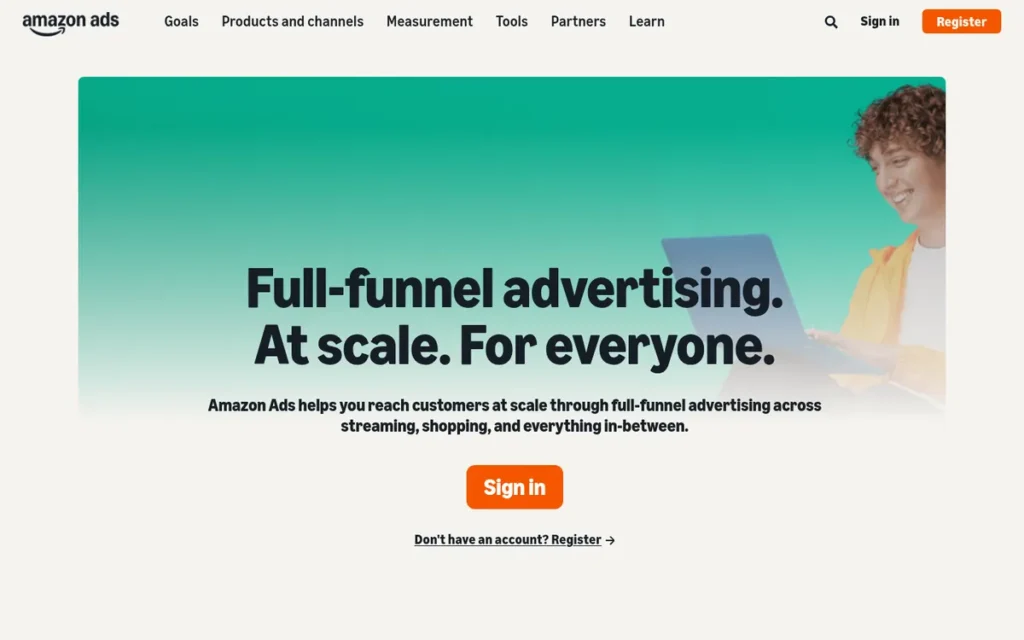
Category: Retailer-Owned Network (Marketplace Scale): A retail media network operated by the world’s largest online marketplace, offering self-serve and managed ad formats that leverage first-party purchase-intent data to drive on-site and off-site conversions within a closed-loop attribution ecosystem.
At a Glance
- Category: Retailer-Owned Network (Marketplace Scale)
- Best For: DTC brands, CPG manufacturers, and ecommerce sellers with active Amazon distribution seeking the largest high-intent audience, full-funnel campaign formats from sponsored search to programmatic DSP, and closed-loop purchase attribution in a single ecosystem
- Price Range: Sponsored Products and Sponsored Brands: CPC, no published minimum spend; Amazon DSP: ~$35,000 managed minimum (third-party cited, not officially confirmed by Amazon); CPC pricing determined by live auction; no public rate card
- Primary Strength: Amazon Ads holds approximately 68% of U.S. retail media market share in 2026 (ATTN Agency, 2026 estimate) and operates the only retail media ecosystem where advertiser spend, buyer search behavior, and completed marketplace purchases exist within the same closed-loop attribution system at global scale
- Biggest Limitation: Amazon Ads CPCs rose approximately 15–25% year-over-year in competitive categories as of 2026 (Improvado, 2026), and the platform’s walled-garden architecture means all campaign performance measurement is controlled exclusively by Amazon, no independent attribution verification is possible through any external source
- One-Line Summary: Amazon Ads generated $46.9 billion in advertising services revenue in 2023, $56.2 billion in 2024, and approximately $68.6 billion in 2025 (Amazon annual earnings disclosures), holds approximately 68% of U.S. retail media market share (ATTN Agency, 2026 estimate), and is the only retail media network where ad spend, purchase-intent signal, and verified marketplace transactions exist within the same closed-loop ecosystem.
- Last Verified: June 2026
Overview
Amazon Ads is the retail media network operated by Amazon.com, Inc. (the world’s largest online marketplace) providing Sponsored Products, Sponsored Brands, Sponsored Display, Amazon DSP, and Amazon Marketing Cloud (AMC) to connect brands with buyers actively searching for products across Amazon’s global marketplace and off-site publisher network.
Amazon Ads generated $46.9 billion in advertising services revenue in 2023, $56.2 billion in 2024, and approximately $68.6 billion in 2025 (Amazon annual earnings disclosures), a scale that makes Amazon Ads’ ad business larger than any global advertising holding company and establishes Amazon Ads as the benchmark against which all other retail media platforms are measured by industry analysts, media buyers, and competing retailers.
Key Features
- Closed-Loop Purchase Attribution: Amazon Ads is the only retail media network in this review where advertiser spend, buyer search intent, and completed marketplace purchases exist within the same closed ecosystem, eliminating the cross-channel matching required by every competing network to link ad exposure to verified purchase outcomes.
- Four Primary Ad Formats: Amazon Ads offers Sponsored Products (CPC keyword and ASIN targeting), Sponsored Brands (brand portfolio awareness), Sponsored Display (on-site and off-Amazon retargeting), and Amazon DSP (programmatic CPM including CTV), enabling full-funnel campaign structures from keyword-level conversion to upper-funnel programmatic awareness (Amazon Ads targeting guide, 2026).
- Advanced Sponsored Products Targeting: Amazon Ads Sponsored Products supports automatic targeting across four match groups (Close Match, Loose Match, Substitutes, and Complements) alongside manual keyword and ASIN targeting with dynamic bid optimization, giving brands simultaneous control over defensive, offensive, and category adjacency campaigns (Amazon Ads, 2026).
- Amazon Marketing Cloud (AMC): Amazon Ads provides AMC: a privacy-safe, event-level SQL analytics environment for custom audience construction, multi-touch path-to-conversion analysis, and cross-campaign attribution modeling, a first-party analytics capability structurally more sophisticated than the standard reporting interfaces of every other retailer-owned network reviewed (Amazon Ads documentation, 2026).
- Privacy-Safe Attribution Infrastructure: Amazon Ads integrated Google Privacy Sandbox into its DSP measurement stack in 2026, enabling attribution for Chrome users who have opted out of third-party cookies, positioning Amazon’s measurement infrastructure ahead of competing retail media networks that have not yet built equivalent cookieless attribution solutions (My Amazon Guy, 2026).
Best For
Amazon Ads is best for DTC brands, CPG manufacturers, and ecommerce sellers that have established product listings on Amazon.com and want to reach buyers at peak purchase intent during active product search. Amazon Ads is also the right choice for enterprise advertisers seeking full-funnel capability from sponsored keyword search through programmatic off-Amazon display and CTV, all measured within Amazon’s closed-loop attribution system.
Pricing
Amazon Ads Sponsored Products and Sponsored Brands are CPC-priced with no published minimum spend and no floor rate as of June 2026. Amazon DSP carries a commonly cited managed-service minimum of approximately $35,000, a third-party cited figure (PPC Ninja, 2026) that Amazon does not officially confirm. CPCs across competitive product categories have risen approximately 15–25% year-over-year as of 2026 (Improvado, 2026), with specific clearing prices determined by live auction dynamics. No centralized public rate card exists for any Amazon Ads product.
Strengths
- Amazon Ads generated $46.9 billion in advertising services revenue in 2023, $56.2 billion in 2024, and approximately $68.6 billion in 2025 (Amazon annual earnings disclosures), a scale larger than any global advertising holding company, confirming sustained demand at a level with no viable substitute for its marketplace audience reach.
- Amazon Ads’ closed-loop attribution connects advertiser spend, buyer search signals, and completed marketplace purchases within a single ecosystem, a structural measurement advantage over all competing retail media networks that rely on modeled attribution or cross-device matching to link ad exposure to purchase outcomes.
- Amazon Marketing Cloud (AMC) provides a SQL-accessible, privacy-safe event-level analytics environment for custom audience construction and multi-touch attribution, structurally more sophisticated than the standard reporting interfaces of every other retailer-owned retail media network reviewed (Amazon Ads documentation, 2026).
- Amazon Ads integrated Google Privacy Sandbox into its DSP measurement stack in 2026 (My Amazon Guy, 2026), enabling attribution for Chrome users opting out of third-party cookies and positioning Amazon’s measurement infrastructure ahead of competing retail media networks that have not yet built equivalent cookieless attribution solutions.
Limitations
- CPC Inflation: Amazon Ads CPCs rose approximately 15–25% year-over-year in competitive categories as of 2026 (Improvado, 2026), driven by auction pressure from millions of competing sellers, and practitioners note that Amazon’s keyword recommendation logic appears to prioritize high-CPC inventory over long-tail relevance, continuously disadvantaging smaller brands and those in saturated categories (r/selfpublish, 2024).
- Walled-Garden Attribution: Amazon Ads operates as a closed measurement environment where all campaign performance data is controlled exclusively by the same entity that sold the advertising, no independent external verification of attributed sales lift is possible through any third-party source, a conflict-of-interest limitation shared by all retailer-owned networks in this review but most consequential at Amazon’s budget scale.
- DSP Access Barrier: Amazon Ads DSP carries a commonly cited managed-service minimum of approximately $35,000 (PPC Ninja, 2026), creating a de facto segmentation between enterprise advertisers with full-funnel programmatic access and smaller brands effectively limited to Sponsored Products and Sponsored Brands.
Verdict
Amazon Ads is the default starting point for any brand with Amazon distribution, holding approximately 68% of U.S. retail media market share (ATTN Agency, 2026 estimate) and generating approximately $68.6 billion in advertising services revenue in 2025, no competing retail media network currently replicates Amazon’s closed-loop purchase-attribution infrastructure at equivalent buyer volume as of June 2026.
Amazon Ads’ primary limitations (rising CPCs and walled-garden attribution opacity) are genuine constraints every serious Amazon advertiser must plan for, but they do not displace the platform from its #1 ranking given its categorical lead in marketplace audience scale, AMC analytics sophistication, and the complete absence of any competing network that provides equivalent closed-loop marketplace attribution at comparable transaction volume.
2. Walmart Connect: Best for Omnichannel CPG: In-Store Attribution and Fastest-Growing Major Retail Media Network
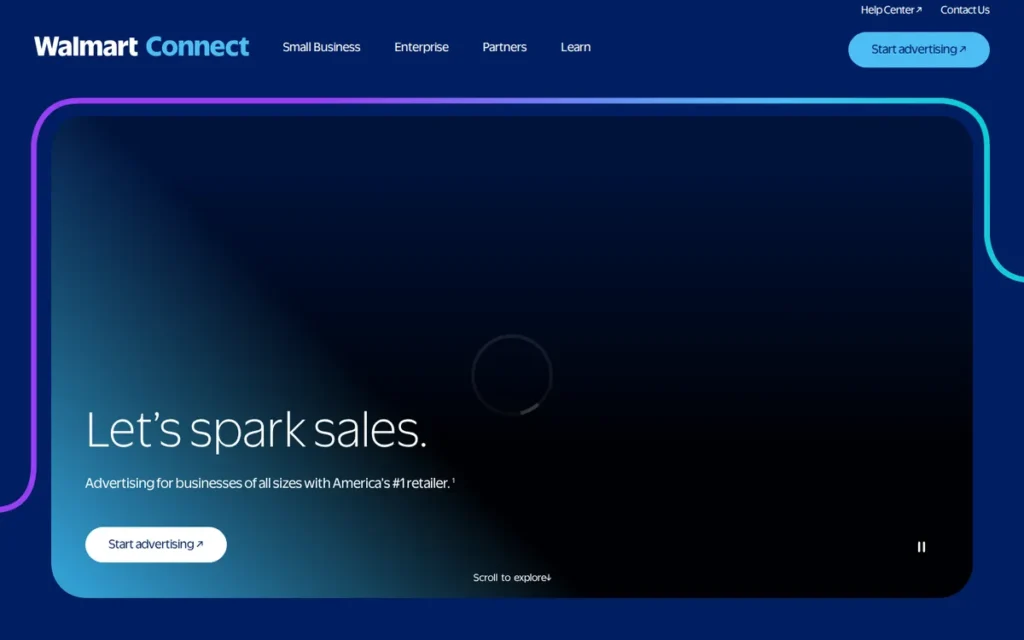
Category: Retailer-Owned Network (Omnichannel): A retail media network operated by the world’s largest physical retailer, offering in-store, on-site, off-site, and CTV advertising formats tied to verified first-party Walmart purchase data across both digital and physical commerce touchpoints.
At a Glance
- Category: Retailer-Owned Network (Omnichannel)
- Best For: CPG brands with active Walmart retail distribution seeking in-store purchase attribution, omnichannel campaign coverage across digital and physical store touchpoints, and lower-competition CPCs relative to Amazon
- Price Range: Sponsored Products: CPC, no published minimum spend for self-serve (June 2026); Onsite Display, Offsite Media, and In-Store formats: managed-service with custom pricing through Walmart Connect sales teams; no public rate card
- Primary Strength: Walmart Connect attributes advertising performance to verified in-store Walmart purchases through first-party POS data, the only major RMN that closes the digital-to-physical attribution loop at the scale of 4,615 U.S. stores and 37 million daily in-store customers
- Biggest Limitation: Walmart Connect’s marketplace audience: approximately 150,000–200,000 sellers versus Amazon’s millions, means absolute conversion volume is significantly smaller than Amazon Ads; full value is entirely conditional on existing Walmart retail distribution
- One-Line Summary: Walmart’s total global advertising revenue reached approximately $6.4 billion in 2025 (including Vizio; U.S.-specific Walmart Connect grew 31–41% per quarter per Walmart earnings disclosures), is the only platform that verifiably attributes ad spend to in-store Walmart purchases through first-party POS data, and operates a DSP architecturally built on The Trade Desk’s technology stack.
- Last Verified: June 2026
Overview
Walmart Connect is the retail media network operated by Walmart Inc. (the world’s largest physical retailer) providing sponsored search, on-site display, off-site programmatic, in-store digital advertising, and Connected TV formats activated using Walmart’s first-party shopper data across 4,615 U.S. stores and Walmart.com, making it the most relevant retail media network for CPG brands whose product volume remains concentrated in physical store locations.
Walmart’s total global advertising revenue reached approximately $6.4 billion in 2025 (growing 46% year-over-year including Vizio; U.S.-specific Walmart Connect grew 31–41% per quarter per Walmart earnings disclosures) (more than double Amazon Ads’ 22% growth rate) and its DSP is architecturally built on The Trade Desk’s technology stack, meaning brands with existing Trade Desk agreements can activate Walmart first-party audiences with spend applying to their existing TTD master service agreement (r/programmatic, 2026).
Key Features
- In-Store Purchase Attribution: Walmart Connect links digital ad exposures to verified in-store, pickup, and home delivery purchases using Walmart’s first-party POS and shopper data across 4,615 U.S. store locations, the only major retail media network feature that closes the digital-to-physical attribution loop at physical retail scale (Walmart Connect, 2026).
- Trade Desk DSP Architecture: Walmart Connect’s DSP is architecturally built on The Trade Desk’s technology stack, meaning advertisers with existing Trade Desk contracts can activate Walmart first-party shopper audiences without onboarding an entirely new platform, Walmart Connect DSP spend applies toward the advertiser’s existing Trade Desk master service agreement, a structural adoption advantage practitioners describe as a data upgrade rather than a platform migration (r/programmatic, 2026).
- Four Core Ad Format Categories: Walmart Connect offers Sponsored Products/Search (CPC-based on-site placements), Onsite Display (homepage, category, brand pages), Offsite Media (Walmart first-party data activation beyond Walmart.com), and In-Store Advertising (checkout screens, TV walls, audio announcements, product samples, and in-store demos), enabling CPG brands to build full-funnel omnichannel campaigns spanning digital discovery to physical store activation (Walmart Connect solutions, 2026).
- Second-Price Auction Mechanics: Walmart Connect transitioned from first-price to advanced second-price auction mechanics for Sponsored Products in 2023, aligning its bidding model with Google and industry-standard programmatic practices and improving CPC efficiency for experienced programmatic buyers (Quartile, 2026).
- Physical Retail Scale: Walmart Connect reaches 230+ million monthly U.S. shoppers, with more than 90% of the U.S. population living within 10 miles of a Walmart store and 37 million customers visiting in-store daily, a physical proximity and first-party data advantage no digital-first retail media network in this review can replicate (SPS Commerce, 2026).
Best For
Walmart Connect is best for CPG brands with established product distribution across Walmart stores and Walmart.com (particularly in grocery, household goods, consumables, and general merchandise) that want to attribute digital ad investment to verified in-store purchase outcomes. Walmart Connect is also the natural next step for brands already using The Trade Desk who want to activate Walmart first-party shopper data as an audience overlay with minimal additional onboarding.
Pricing
Walmart Connect Sponsored Products are CPC-priced with no officially published minimum spend for self-serve access as of June 2026. Onsite Display, Offsite Media, and In-Store formats are managed-service products with pricing negotiated through Walmart Connect’s sales team, no official rate card is publicly available. Third-party benchmark data indicates Walmart Connect CPCs run approximately 40–55% below Amazon’s in equivalent categories and average ROAS can run approximately 25% higher in less-competitive categories (Pacvue, 2026), these are practitioner-cited benchmarks, not independently audited figures.
Strengths
- Walmart’s total global advertising revenue reached approximately $6.4 billion in 2025 (growing 46% year-over-year including Vizio; U.S.-specific Walmart Connect grew 31–41% per quarter per Walmart earnings disclosures, 2025), representing the fastest revenue growth trajectory of any major retail media network and the strongest advertiser adoption momentum signal in the category.
- Walmart Connect’s in-store attribution capability links digital advertising exposures to verified in-store Walmart purchases through first-party POS data across 4,615 U.S. store locations, the only major retail media network feature that closes the offline purchase attribution loop for physical commerce, a critical measurement advantage for CPG brands where the majority of product volume remains in brick-and-mortar retail.
- Walmart Connect’s DSP architecture as a fork of The Trade Desk’s technology stack means advertisers with existing Trade Desk relationships can add Walmart first-party audiences to their programmatic campaigns with no additional technology onboarding, practitioners confirm this reduces multi-network expansion friction to near zero for existing TTD users (r/programmatic, 2026).
Users on r/adops noted the cross-seat frequency management advantage this architecture creates:
“So really a brand is best served by operating across both TTD and Walmart DSP while utilizing TTDs infrastructure to manage frequency across both which benefits both Walmart and TTD quite well. My only fear is that other retailers will think they are as big as Walmart and Amazon, and start trying to silo their data off into their own dsp. As a buyer, I think that level of fragmentation would make buying across retail data quite frustrating.” Posted by u/SaveOurServer
Takeaway: Programmatic practitioners confirm that Walmart Connect’s Trade Desk architecture delivers a genuine cross-seat frequency management advantage that no competing brick-and-mortar RMN can replicate, while warning that retailer DSP proliferation risks recreating the fragmentation problem across the entire retail media programmatic ecosystem.
- Walmart Connect CPCs in less-competitive categories benchmark approximately 40–55% lower than Amazon’s equivalent keyword auctions as of 2026 (Pacvue, 2026), offering measurable CPC efficiency gains where Walmart’s smaller seller pool creates less-saturated auction dynamics than Amazon’s marketplace.
Limitations
- Audience Volume Gap: Walmart Connect’s most significant structural limitation is audience volume relative to Amazon, practitioners consistently report ratios of approximately 500 Amazon orders per every Walmart order for equivalent products (r/ecommerce, 2026), meaning CPC efficiency gains only partially compensate for the absolute volume ceiling created by Walmart’s smaller marketplace seller pool.
- Distribution Prerequisite: Walmart Connect’s strongest differentiator: in-store purchase attribution, delivers zero incremental value to brands without meaningful Walmart retail distribution, making Walmart Connect a supplement to Amazon rather than a substitute for most non-CPG or DTC-exclusive advertiser segments.
- Platform Maturity Gap: Walmart Connect is consistently characterized in trade press as “still maturing” relative to Amazon, as of June 2026, Walmart Connect’s self-serve reporting interface does not offer the equivalent of Amazon’s Search Term Report, requiring brands to request detailed performance data through account teams rather than pulling it independently, adding operational overhead for performance optimization workflows (Quartile, 2026).
Verdict
Walmart Connect is the strongest retail media complement to Amazon Ads for CPG brands with active Walmart distribution, earning its #2 ranking through the fastest revenue growth rate of any major retail media network (46% total global including Vizio; 31–41% U.S.-specific per Walmart earnings, 2025), the only in-store digital-to-physical attribution capability at physical retail scale, and a DSP architecture that dramatically reduces onboarding friction for existing Trade Desk buyers.
This community assessment is echoed by practitioners who have traded across multiple retail media networks firsthand. As one early retail media trader noted on r/programmatic:
“Was on of the first hands on keyboard traders for many of the RMNs. Lots of them are still ironing out the everything. Attribution across the board is still a huge work in progress. Walmart is definitely miles ahead of the other brick and mortar RMNs” Posted by u/VFL2015
Takeaway: Practitioners with direct hands-on experience across multiple retail media networks consistently rate Walmart Connect as the leading omnichannel RMN among physical retailers, a market position its revenue growth trajectory and Trade Desk architecture have since confirmed at scale.
Walmart Connect’s honest limitation (that absolute audience volume remains significantly smaller than Amazon and full measurement value is conditional on meaningful Walmart retail distribution) is material for budget planning: the platform rewards brands that have already earned Walmart retail shelf space far more than those attempting to enter Walmart’s ecosystem through advertising investment alone.
3. Target Roundel: Best for Premium Brand Building: No-Minimum Self-Serve Access and Affluent Millennial/Gen Z Demographic
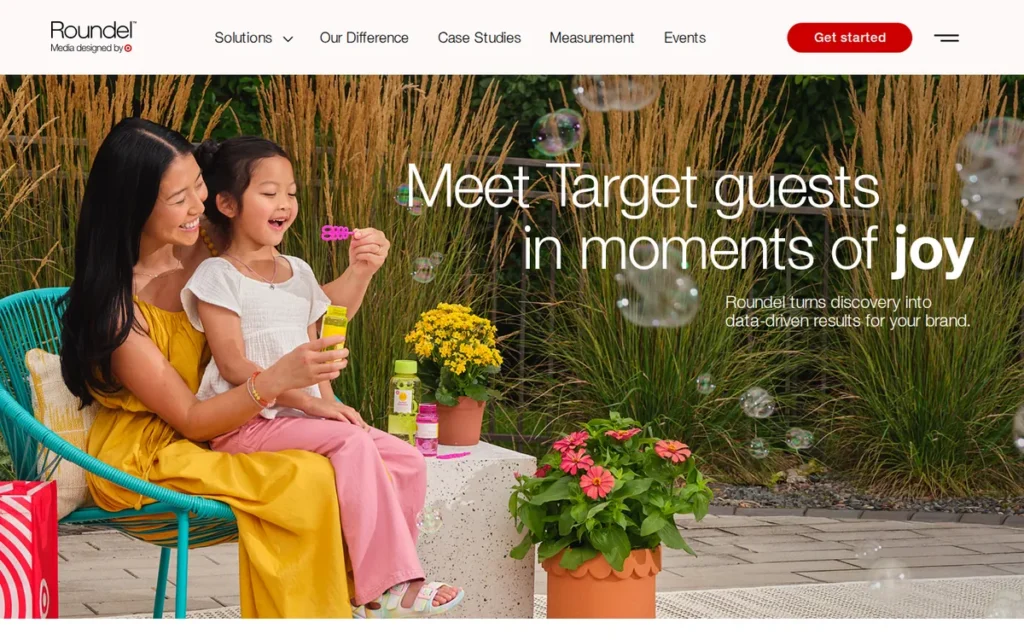
Category: Retailer-Owned Network (Premium Brand Builder): A retail media network operated by a major premium mass-market retailer, offering no-minimum self-serve sponsored listings and managed omnichannel advertising activated against a first-party loyalty audience skewing affluent millennial and Gen Z shoppers.
At a Glance
- Category: Retailer-Owned Network (Premium Brand Builder)
- Best For: Beauty, home, apparel, and premium lifestyle CPG brands targeting affluent millennial and Gen Z shoppers, and emerging or DTC brands wanting a no-minimum self-serve entry point at a major U.S. retailer
- Price Range: Target Product Ads (self-serve via Roundel Media Studio): no minimum spend, no access fee, no DSP fee (June 2026); managed Display: ~$50,000/quarter minimum (historical); full managed service: ~$100,000+/quarter; CPM/CPC rates for Display, CTV, and Social by Roundel not publicly disclosed
- Primary Strength: Target Roundel offers the only no-minimum self-serve access among major U.S. retailer ad networks, activates 165 million Target guest relationships across seven format categories, and reaches a shopper demographic (affluent millennials and Gen Z) that outperforms mass-market alternatives for beauty, home, and premium CPG brand campaigns
- Biggest Limitation: Target Roundel’s direct advertising revenue of $649 million in 2024 (approximately $915 million in 2025 per AdWeek) is significantly smaller than Amazon Ads’ $68.6 billion in 2025, meaning absolute conversion volume is fundamentally constrained by Target’s smaller digital audience footprint
- One-Line Summary: Target Roundel generated $649 million in direct advertising revenue in 2024 (growing to approximately $915 million in 2025 per AdWeek), launched no-minimum self-serve access via Roundel Media Studio in 2024, and was among the first retail media networks to test ChatGPT advertising inventory in 2026, making it the strongest choice for premium CPG brand building among major U.S. retailer ad networks.
- Last Verified: June 2026
Overview
Target Roundel is the retail media network operated by Target Corporation, providing no-minimum self-serve Target Product Ads and managed advertising formats (including Display across 150+ premium publishers, Google Search/Shopping, Social by Roundel, Programmatic via The Trade Desk, Connected TV, and In-Store) all activated against Target’s 165 million guest relationships and 100 million Target Circle loyalty members whose demographic skews more affluent and younger than the general mass-market retail audience.
Target Roundel generated $649 million in direct advertising revenue in 2024 (growing 25% year-over-year from $522 million in 2023) and approximately $915 million in 2025 (AdWeek, 2025), launched Roundel Media Studio in 2024 eliminating the approximately 20% third-party DSP access fee previously required for self-serve campaigns, and in 2026 became one of the first retail media networks to test advertising placements within a generative AI assistant environment through an OpenAI/ChatGPT pilot (Digiday, 2026).
Key Features
- Seven Ad Format Categories: Target Roundel offers seven primary advertising format types, Target Product Ads (self-serve, no minimum spend), Display (managed, 150+ premium publishers), Google Search/Shopping (using Target first-party guest data), Social by Roundel (Facebook, Instagram, Pinterest, Snapchat), Programmatic (Trade Desk-activated off-site), Connected TV/Streaming (Roku, Fire TV, Xbox, Samsung), and In-Store (demos, sampling, digital screens), covering every media surface from self-serve search performance to managed CTV brand building (Target press fact sheet, 2023).
- Roundel Media Studio: No-Minimum Self-Serve: Target Roundel launched Roundel Media Studio in 2024, eliminating the approximately 20% third-party DSP access fee previously required for all self-serve campaigns and making Target Product Ads available with no minimum spend, no access fee, and no DSP fee, the most significant retail media entry barrier reduction of the 2024–2026 period, and a change still absent from most AI-generated content about Roundel (RMIQ, 2026).
- Precision Plus Multi-Platform Activation: Target Roundel’s Precision Plus solution activates Target first-party guest data simultaneously across Google, Meta, Pinterest, and The Trade Desk, enabling brands to reach Target shoppers during their search sessions, social media browsing, and programmatic content consumption beyond Target’s owned properties.
- Signal Sharing Measurement: Target Roundel’s signal sharing initiative delivered an average sales lift of 10% across participating advertisers (with a ceiling of 39% in top-performing campaigns) providing closed-loop measurement connecting ad exposure to verified Target guest purchase outcomes (Target earnings commentary, 2026).
- Growing First-Party Audience: Target Roundel reached 165 million Target guests across on-site and off-site channels as of 2026 (LiveRamp customer story, 2026), including 100 million Target Circle loyalty members and 13 million new Target Circle additions in the most recent membership cycle.
Best For
Target Roundel is best for beauty, home, apparel, toy, premium food, and lifestyle CPG brands whose customer profile aligns with Target’s affluent millennial and Gen Z shopper demographic. Target Roundel is also the right platform for emerging brands, DTC companies, and Target Plus marketplace sellers wanting access to a major retailer’s ad inventory through the only no-minimum, no-fee self-serve entry point available among the major retailer networks reviewed.
Pricing
Target Product Ads via Roundel Media Studio carry no minimum spend, no access fee, and no DSP fee as of June 2026 (RMIQ, 2026). Managed-service Display campaigns have historically required approximately $50,000 per quarter minimum; full managed-service campaigns have historically required $100,000+ per quarter. CPM and CPC rates for Display, CTV, and Social by Roundel are not publicly disclosed. One Digiday report (2026) cited an early CPM reference of approximately $60 per thousand views for Roundel’s OpenAI/ChatGPT ad inventory, this is a single practitioner-cited reference, and Target has not officially confirmed pricing for that product.
Strengths
- Target Roundel generated $649 million in direct advertising revenue in 2024 (growing 25% year-over-year) and approximately $915 million in 2025 (AdWeek, 2025), demonstrating sustained double-digit revenue growth across two consecutive years and accelerating to approximately 40% year-over-year growth in 2025.
- Target Roundel’s 2024 Roundel Media Studio launch eliminated the approximately 20% third-party DSP access fee previously required for all self-serve campaigns, making Target Product Ads available with no minimum spend and no platform fee, recapturing approximately $20,000 in platform overhead per $100,000 in Target advertising budget for brands that previously used the third-party DSP model.
- Target Roundel’s shopper demographic: skewing affluent millennials and Gen Z with higher average basket sizes than comparable mass-market retailer audiences, provides a compositional audience quality advantage for premium CPG, beauty, home, and lifestyle brands for whom audience composition drives more campaign value than raw audience volume (Target investor relations materials, 2026).
- Target Roundel became one of the first retail media networks to test advertising placements within a generative AI assistant environment through a 2026 OpenAI/ChatGPT pilot, with early CPM references cited at approximately $60 per thousand views (Digiday, 2026), an innovation posture ahead of all other retailer-owned networks reviewed.
Limitations
- Audience Volume vs. Quality Trade-Off: Target Roundel’s direct advertising revenue of $649 million in 2024 (approximately $915 million in 2025 per AdWeek) is significantly smaller than Amazon Ads’ 2025 revenue base, directly constraining the absolute conversion volume achievable at comparable budget levels, making the scale gap with Amazon and Walmart a material constraint for brands seeking maximum transaction volume rather than demographic precision.
- Full Capability Access Barrier: Target Roundel’s no-minimum self-serve product (Target Product Ads) represents only a fraction of the platform’s full capability set, Precision Plus, managed Display, CTV, and Social by Roundel each require managed-service relationships at $50,000–$100,000+ quarterly minimums, meaning barrier-free entry applies only to sponsored search placements.
- Attribution Overlap: Running Target Roundel alongside Walmart Connect for the same product creates attribution conflicts, both retailers claim credit for the same conversion, leaving CPG media planners without a definitive answer on which platform drove incremental sales without independent third-party measurement (r/DigitalMarketing, 2026).
Verdict
Target Roundel is the strongest major U.S. retailer ad network for premium brand building, earning its #3 ranking through the only no-minimum self-serve entry point among platforms reviewed, a first-party audience of 165 million Target guests with an affluent millennial and Gen Z demographic that outperforms mass-market alternatives in beauty, home, and lifestyle CPG categories, and two years of accelerating revenue growth.
Target Roundel ranks above Kroger Precision Marketing (#4) because its value is not restricted to a single product category, beauty, home, apparel, and lifestyle brands with no Kroger distribution can activate Target Roundel fully, while KPM provides zero value to brands without Kroger-banner retail presence. Brands requiring maximum conversion volume should weight Target Roundel as a premium brand-building complement to Amazon Ads rather than a volume-driving substitute.
4. Kroger Precision Marketing: Best for Grocery CPG Precision: Deterministic Loyalty Data and Verified In-Store Sales Lift
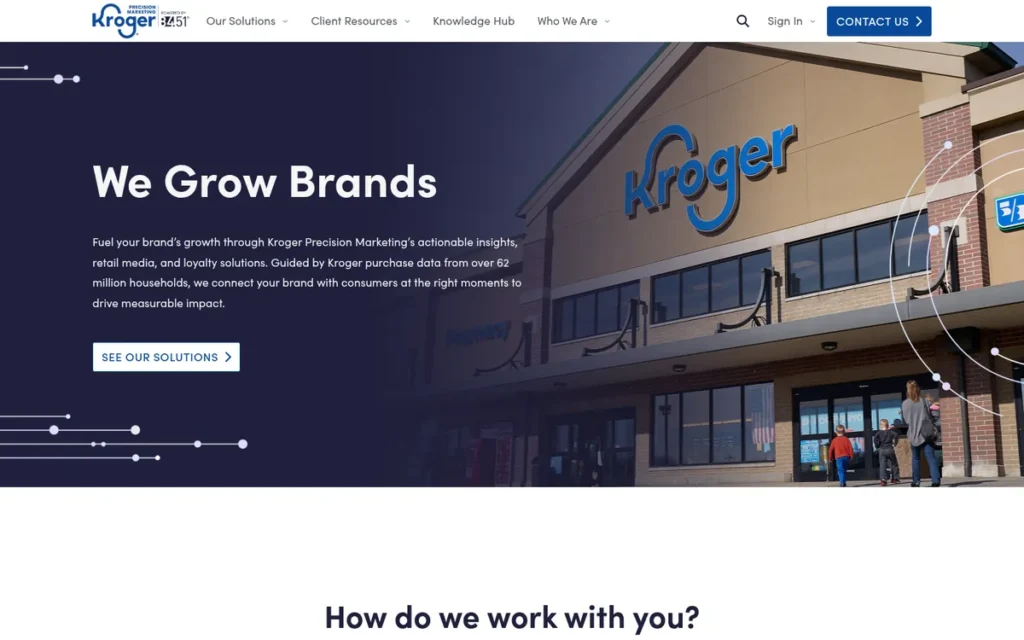
Category: Retailer-Owned Network (Grocery Data Specialist): A retail media network operated by a major U.S. grocery chain, offering full-funnel advertising formats activated against deterministic loyalty-card purchase data from 60 million U.S. households, with verified in-store sales lift attribution through Kroger’s own register data.
At a Glance
- Category: Retailer-Owned Network (Grocery Data Specialist)
- Best For: CPG brands in grocery, food and beverage, household goods, health and personal care, or pet food with active product distribution across Kroger-banner stores (Kroger, Ralphs, Fred Meyer, King Soopers, Harris Teeter, Mariano’s)
- Price Range: No published rate card; no self-serve tier; all pricing custom through KPM managed-service account teams (June 2026); no CPM, CPC floor rates, or minimum spend thresholds publicly disclosed
- Primary Strength: Kroger Precision Marketing operates on deterministic loyalty-card data from 60 million U.S. households with verified SKU-level purchase history, enabling targeting of confirmed category buyers, competitive brand switchers, and lapsed purchasers with attribution verified through Kroger’s own register transactions, not modeled or probabilistic
- Biggest Limitation: Kroger Precision Marketing offers no self-serve tier, requires a managed-service relationship for all campaigns, and delivers zero incremental value to brands without meaningful product distribution across Kroger-banner stores
- One-Line Summary: Kroger Precision Marketing delivered 2.4 billion retail media impressions in Q1 2026, ranking first among U.S. grocery retail media networks in that period (SensorTower as cited by industry sources, not independently confirmed through additional sources), operates on deterministic loyalty data from 60 million households with verified SKU-level purchase history, and provides 100% in-store and online transaction attribution through Kroger’s own register data.
- Last Verified: June 2026
Overview
Kroger Precision Marketing (KPM) is the retail media network operated by The Kroger Co. and powered by 84.51° (Kroger’s data science subsidiary formed in 2015) providing full-funnel advertising activation across on-site sponsored placements, off-site programmatic, social, Connected TV, and in-store digital media, all activated against deterministic loyalty-card purchase data from 60 million U.S. households with SKU-level transaction history.
Kroger Precision Marketing delivered 2.4 billion retail media impressions in Q1 2026, ranking first among all U.S. grocery retail media networks in impression volume for that quarter (SensorTower as cited by industry sources (this figure was not independently confirmed through additional sources), and was formally recognized by the Path to Purchase Institute as a Top 10 Retail Media Network) independent industry recognition confirming KPM’s grocery-segment position.
Key Features
- Deterministic Loyalty-Card Data: Kroger Precision Marketing activates identity-verified (not modeled) loyalty-card data from 60 million U.S. households with individual SKU-level purchase history, enabling campaigns targeting confirmed current-category buyers, active competitive brand purchasers, lapsed brand buyers, and household penetration expansion segments that probabilistic audience modeling cannot replicate at equivalent precision (84.51°, 2026).
- Verified In-Store Attribution: Kroger Precision Marketing’s measurement framework provides 100% verified in-store and online transaction attribution using Kroger’s own POS and loyalty card data (Kroger IR, 2020), enabling reporting on sales lift, household penetration, unit lift, and dollar sales impact, grounded in verified register transactions rather than modeled attribution.
- Full-Funnel Media Formats: Kroger Precision Marketing’s full-funnel format suite spans seven channel types activated against the same 60 million household loyalty dataset:
- On-site: Sponsored Product placements and Targeted Onsite Ads (banner display) on Kroger.com and associated banners
- Promotions: Targeted Digital Coupons delivered to loyalty-card-identified households
- Off-site: Programmatic display, audio, and video activated via Kroger shopper data
- Social: Sponsored placements on Facebook, Instagram, and Pinterest using Kroger first-party audiences
- Streaming: Connected TV inventory on Roku, Paramount, and Samsung platforms
- In-Store: Digital in-store media placements within Kroger-banner retail locations
- All seven formats are activated against and measured through Kroger’s 60 million household loyalty dataset, providing unified campaign-to-purchase attribution.
- Pacvue Preferred Enterprise Partnership: Kroger Precision Marketing designated Pacvue as its preferred enterprise software partner for programmatic bidding and campaign automation (Grocery Dive, 2026), enabling Pacvue users to manage KPM campaigns within their existing multi-retailer interface. Brands should confirm current partner integration availability directly with KPM account teams, as KPM has expanded its programmatic partner ecosystem.
- 2025 Organizational Consolidation: Kroger Precision Marketing consolidated 84.51° (data science) with KPM’s media activation operations into a single unified division in 2025 (Mars United Commerce, 2025), reducing the organizational touchpoints previously required for CPG brands to execute a single campaign, directly addressing the primary operational complexity concern from media buyers.
Best For
Kroger Precision Marketing is best for CPG brands in grocery, food and beverage, household goods, health and personal care, or pet food categories that have active product listings across Kroger-banner stores and need deterministic purchase-behavior data to drive verified in-store sales lift (not digital-only conversion metrics) as the primary campaign objective and internal budget justification mechanism. Kroger Precision Marketing is also the natural destination for CPG brands redeploying trade promotion or co-op advertising budgets toward digital retail media, given KPM’s deterministic in-store measurement infrastructure that directly mirrors the sales-lift metrics trade promotion managers already report against.
Pricing
Kroger Precision Marketing publishes no public rate card and offers no self-serve access tier as of June 2026. All campaigns are custom-priced through managed-service account teams, with pricing determined by campaign objective, format type, audience targeting segments, and campaign scale. No CPM, CPC floor rates, or minimum spend thresholds are disclosed in any publicly available KPM materials; pricing requires direct sales engagement to determine.
Strengths
- Kroger Precision Marketing delivered 2.4 billion retail media impressions in Q1 2026, ranking first among all U.S. grocery retail media networks in impression volume for that period per SensorTower as cited by industry sources, this figure was not independently confirmed through additional sources, and brands should verify current performance benchmarks directly with KPM account teams.
- Kroger Precision Marketing’s loyalty-card data is deterministic: tied to real, identity-verified household accounts with SKU-level transaction records, not probabilistic audience modeling, providing a targeting precision standard for CPG grocery advertisers that digital advertising platforms outside of closed-loop retail environments cannot match at equivalent household scale (84.51°, 2026).
- Kroger’s loyalty data monetization generated approximately $527 million in 2024 per a WKYC investigation citing Kroger financials (2024) (this figure was not confirmed by Kroger’s official investor relations materials) indicating KPM operates as a material institutional revenue line sustaining continuous platform investment rather than a marketing side project.
- Kroger Precision Marketing’s 2025 organizational consolidation unified 84.51° and KPM’s media activation operations (Mars United Commerce, 2025), consolidating media-buying, data-science, and loyalty-insights functions that previously required CPG advertisers to navigate multiple separate organizational touchpoints to execute a single campaign.
Limitations
- Distribution Dependency: Kroger Precision Marketing’s entire value proposition (deterministic loyalty data, verified in-store attribution, and 60 million household targeting precision) is available only to brands with meaningful product listings in Kroger-banner stores, making KPM irrelevant for brands without Kroger retail distribution regardless of media budget size.
- No Self-Serve Access: Kroger Precision Marketing offers no self-serve tier and requires a managed-service sales relationship for all campaign types, a former KPM employee publicly described the platform interface as “pretty clunky” in a practitioner forum (r/DigitalMarketing, 2026), corroborating trade press characterizations of longer campaign setup times and higher operational overhead relative to self-serve-first alternatives, concerns the 2025 restructuring aimed to address.
- Unverified ROAS Claims: Kroger Precision Marketing’s self-reported 11x ROAS figure (KPM media materials, 2026) has no independently published third-party validation in public sources, advertisers should treat this metric as a vendor claim rather than an audited benchmark and budget for independent incrementality measurement tools to verify campaign outcomes.
Verdict
Kroger Precision Marketing is the highest-precision grocery retail media network in the U.S. as of 2026, with deterministic loyalty data from 60 million identity-verified households and 100% verified in-store sales attribution through Kroger’s own POS data, no probabilistic or digital-only alternative replicates this combination for CPG grocery targeting at equivalent household scale.
Kroger Precision Marketing’s position at #4 reflects two material constraints limiting applicability below enterprise-CPG scale: the complete absence of a self-serve tier and the strict distribution prerequisite that restricts KPM’s value to brands already generating meaningful sales across Kroger-banner stores. For the right CPG advertiser profile, KPM is an essential platform; for everyone else, it is effectively inaccessible.
5. Pacvue: Best Multi-Retailer Management Platform: Retail-First Operations and SKU-Level Campaign Automation
Category: Multi-Retailer Management Platform (Retail-First SaaS): A software-as-a-service platform that enables brands and agencies to manage, automate, and optimize retail media advertising campaigns across multiple retailer ad networks simultaneously from a single unified interface, without owning ad inventory or audience data.
At a Glance
- Category: Multi-Retailer Management Platform (Retail-First SaaS)
- Best For: Enterprise CPG brands, large DTC brands, and retail-media-specialized agencies managing active campaigns across three or more major retail media networks simultaneously
- Price Range: Enterprise contract only; no publicly disclosed rate card; no self-serve tier; no trial before contract commitment; comparable entry-level retail media management tools (e.g., Perpetua) start at ~$695/month + ~3% of ad spend above $10,000 (r/AmazonFBA practitioner reference, 2026, Perpetua’s pricing, not Pacvue’s); Pacvue’s enterprise tier is positioned above that range
- Primary Strength: Pacvue is KPM’s designated preferred enterprise software partner for programmatic campaign management (Grocery Dive, 2026), integrates with 250+ commerce media partners through a January 2026 Trade Desk partnership, and provides SKU-level bid automation, Dynamic Dayparting, and real-time Share of Voice tracking across its multi-retailer integration set
- Biggest Limitation: Exclusively enterprise-positioned with no publicly disclosed pricing, no self-serve trial tier, and a rule-based automation architecture requiring substantial configuration, preventing mid-market brands from accessing the platform’s capabilities without significant time and investment commitment
- One-Line Summary: Pacvue is the retail-first multi-retailer management platform preferred over Skai by G2 peer reviewers in head-to-head comparison, designated as KPM’s preferred enterprise software partner for programmatic campaigns, and connected to 250+ commerce media partners through a January 2026 Trade Desk partnership, making it the leading operational solution for enterprise brands managing retail media campaigns across three or more networks simultaneously.
- Last Verified: June 2026
Overview
Pacvue is an enterprise retail media management platform (marketed as a “commerce operating system”) that enables brands, agencies, and ecommerce sellers to manage, automate, and optimize advertising campaigns across Amazon, Walmart, Target, Instacart, Kroger Precision Marketing, and dozens of additional retail media networks from a single unified interface, solving the multi-network fragmentation problem that practitioners managing three or more retailer ad platforms consistently identify as the primary operational burden in retail media management.
Pacvue was founded in 2016, is designated as KPM’s preferred enterprise software partner for programmatic campaign management (Grocery Dive, 2026), and in January 2026 entered a unified activation and measurement partnership with The Trade Desk alongside Skai, connecting Pacvue users to 250+ commerce media partners through a coordinated workflow spanning activation, reporting, and performance measurement (The Trade Desk, January 2026).
Key Features
- Multi-Retailer Unified Management: Pacvue provides unified campaign management across Amazon, Walmart, Target, Instacart, Kroger Precision Marketing, and dozens of additional retail media networks, enabling advertisers to set bid strategies, allocate budgets, configure targeting, and pull consolidated performance reports across all active networks from a single platform interface (Pacvue, 2026).
- SKU-Level Automation Suite: Pacvue’s automation suite includes Dynamic Dayparting (hourly bid adjustments by time of day and day of week), SKU-level budget pacing to prevent individual product overspend, out-of-budget prevention alerts, and automated Share of Voice tracking across competitor and category search terms, designed for CPG brands managing hundreds of SKUs across multiple retail channels simultaneously where manual execution is operationally unworkable at scale.
- KPM Preferred Enterprise Partnership: Pacvue is designated by Kroger Precision Marketing as its preferred enterprise software partner for programmatic bidding and campaign automation (Grocery Dive, 2026), providing technical integration with KPM’s advertising infrastructure that competing platforms do not have by default. Brands should confirm current partner integration status directly with KPM account teams, as KPM has expanded its programmatic partner ecosystem since that designation.
- Trade Desk Unified Activation: Pacvue entered a unified activation and measurement partnership with The Trade Desk in January 2026 alongside Skai, enabling Pacvue users to activate Walmart DSP campaigns and manage 250+ additional commerce media partners through Pacvue’s consolidated management interface (The Trade Desk press release, January 2026).
- NielsenIQ Digital Shelf Intelligence: Pacvue entered a NielsenIQ Digital Shelf intelligence partnership in January 2026 as part of the same initiative that also includes Skai (DestinationCRM, 2026), adding product content quality, inventory availability, pricing, and competitive shelf intelligence alongside campaign data, the scope and depth of this integration for Pacvue users should be confirmed directly with Pacvue account teams.
Best For
Pacvue is best for enterprise CPG brands, large DTC brands, and retail-media-specialized agencies running active campaigns across three or more major retail media networks simultaneously, with team resources to configure and maintain a rule-based automation architecture, who prioritize retail media campaign depth (including SKU-level management, Dynamic Dayparting, and Share of Voice tracking) over broader omnichannel scope extending into paid search and paid social.
Pricing
Pacvue does not publish a public pricing page or disclose contract terms as of June 2026. The platform operates exclusively on enterprise contracts with custom pricing through Pacvue’s sales team. For reference context, comparable entry-level retail media management platforms such as Perpetua operate at approximately $695/month plus approximately 3% of ad spend above $10,000 (r/AmazonFBA practitioner reference, 2026, this is Perpetua’s pricing, not Pacvue’s); Pacvue’s enterprise tier is positioned above this range. Total cost of ownership, including configuration and onboarding overhead, requires direct sales engagement to assess accurately.
Strengths
- Pacvue is KPM’s designated preferred enterprise software partner for programmatic campaign management (Grocery Dive, 2026), providing technical integration with KPM’s advertising infrastructure that competing retail media management platforms do not have by default, creating a structural advantage for brands whose multi-network programs include Kroger grocery advertising.
- G2 head-to-head comparison data indicates Pacvue reviewers preferred Pacvue’s overall platform direction and business needs alignment over Skai (G2 compare page, 2026), the most direct independent practitioner validation available for retail media management SaaS, reflecting Pacvue’s retail-first product specialization depth versus Skai’s broader omnichannel orientation.
- Pacvue’s January 2026 unified activation and measurement partnership with The Trade Desk expanded access to 250+ commerce media partners (including Walmart DSP workflow connectivity) through Pacvue’s consolidated management interface, shared in this initiative with Skai (The Trade Desk press release, January 2026).
- Practitioners managing multi-network CPG retail media programs organically recommend Pacvue as the operational solution for cross-retailer management fragmentation, specifically citing its ability to consolidate Amazon, Kroger, and other networks “into one space to see everything at once” as a named differentiator versus managing five separate platform logins (r/DigitalMarketing, 2026).
Limitations
- Enterprise-Only Access Barrier: Pacvue’s most significant limitation is its exclusively enterprise positioning, no self-serve trial tier, no publicly disclosed pricing, and a rule-based automation architecture requiring substantial configuration before delivering operational efficiency, with practitioners noting that “building a rules architecture takes time” (Pare.so, 2026) and a complete absence of trial access before contract commitment.
- Operations Layer, Not a Network: Pacvue is a management layer, not a media network, Pacvue does not own inventory, audience data, or attribution infrastructure, and its value is entirely conditional on the underlying retailer networks being active and generating campaign performance worth aggregating, making it a compounding investment on top of existing retailer network spend.
- Cost and Integration Uncertainty: Pacvue’s lack of public pricing creates total cost of ownership uncertainty, and its multi-retailer management depth varies by retailer, practitioners note that automation sophistication is highest for Amazon and primary networks, while some smaller retailers in Pacvue’s integration set offer fewer optimization levers than the primary supported platforms, requiring direct engagement with Pacvue’s sales team to assess actual cost and per-retailer capability depth.
Verdict
Pacvue is the leading enterprise retail media management platform for brands whose primary media focus is retail (not paid search or social) earning its #5 ranking through the strongest practitioner peer-comparison ratings among management SaaS tools (G2 head-to-head preference over Skai), a KPM preferred enterprise partnership, and a 2026 Trade Desk connectivity expansion covering 250+ commerce media partners.
Pacvue’s #5 position accurately reflects what the platform is: an operations layer on top of retailer ad networks, with an enterprise-only price threshold that limits applicability to brands managing multi-network programs at sufficient scale to justify the investment.
6. Skai: Best for Enterprise Omnichannel Management: Retail Media, Paid Search, and Paid Social Unified with Digital Shelf Intelligence
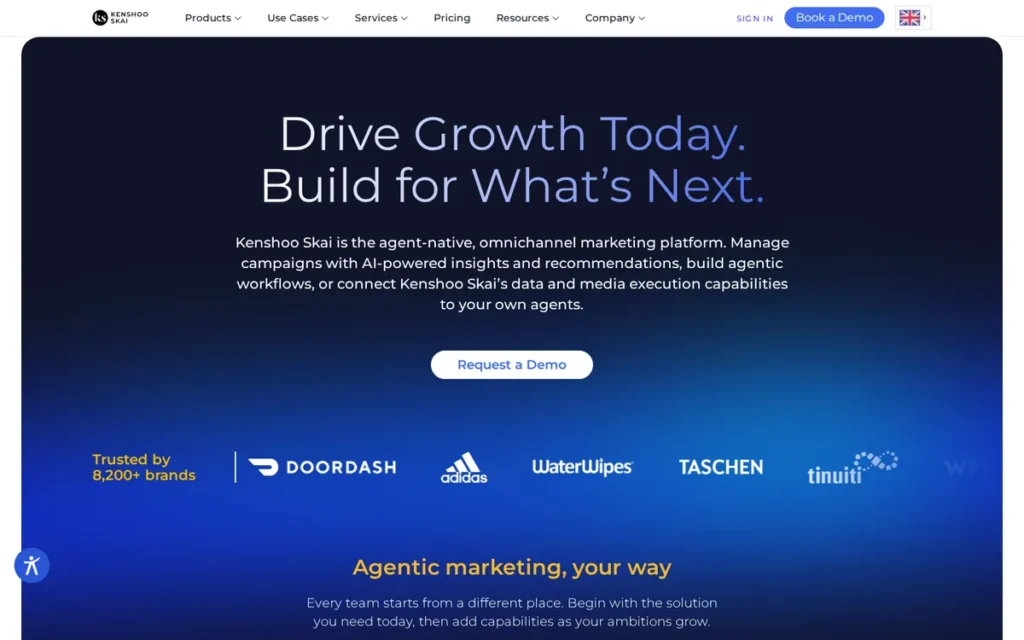
Category: Omnichannel Commerce Media Platform (Management SaaS): A software platform that unifies retail media campaign management across 300+ publisher and retailer networks alongside paid search and paid social in a single AI-optimized interface, designed for enterprise brands and agencies managing significant digital media budgets across all three channel types simultaneously.
At a Glance
- Category: Omnichannel Commerce Media Platform (Management SaaS)
- Best For: Enterprise CMOs, major agencies, and large brands managing paid search or paid social alongside retail media, using Google Marketing Platform (Campaign Manager 360 / CM360) as existing measurement infrastructure, provided the published pricing tiers and GMP prerequisites are met
- Price Range: Standard $114,000/year (up to $4M annual ad spend), Advanced $276,000/year (up to $10M), Enterprise $504,000/year (up to $20M), Enterprise Premier $756,000/year (up to $35M), custom pricing above $35M (skai.io/pricing, June 2026); no trial before contract; an earlier practitioner-cited reference of ~$95,000/year (r/programmatic, 2026) may reflect a negotiated or legacy rate below the current published Standard tier
- Primary Strength: Skai connects to 300+ publishers, platforms, and retail media networks and manages paid search and paid social alongside retail media from a single AI-optimized interface, and integrated NielsenIQ Digital Shelf insights in January 2026 alongside Pacvue (DestinationCRM), adding product content quality, inventory, pricing, and competitive intelligence into the campaign management workflow
- Biggest Limitation: Skai’s published Standard tier starts at $114,000/year (skai.io/pricing, June 2026) with no pre-contract trial period, creating the highest confirmed entry cost and highest commitment risk of any platform reviewed, with at least one documented case of a practitioner describing a $60,000 commitment as regretted (r/programmatic, 2026)
- One-Line Summary: Skai manages campaigns across 300+ publishers, platforms, and retail media networks alongside paid search and paid social from a single AI-optimized interface, integrated NielsenIQ Digital Shelf intelligence in January 2026 alongside Pacvue, was jointly selected by The Trade Desk alongside Pacvue for a 250+ commerce media partner activation partnership, and publishes tier pricing starting at $114,000/year (skai.io/pricing, June 2026).
- Last Verified: June 2026
Overview
Skai (formerly Kenshoo) is an omnichannel commerce media management platform founded in Israel in 2006 (originally one of the first enterprise search bid management platforms) that rebranded from Kenshoo to Skai in 2021 following a strategic pivot toward unified retail media, paid search, and paid social campaign management, making it the most comprehensive omnichannel management option for enterprise brands and agencies managing significant budgets across all three digital media channel types from a single AI-driven system.
Skai integrated NielsenIQ Digital Shelf insights in January 2026 as part of a partnership that also includes Pacvue (DestinationCRM, 2026), adding product content quality, inventory, pricing, and competitive intelligence signals alongside campaign performance data, and participated alongside Pacvue in The Trade Desk’s January 2026 unified activation and measurement partnership covering 250+ commerce media partners, while also surviving the April 2025 dissolution of Marin Software, its longtime search management competitor.
Key Features
- Unified Cross-Channel Management: Skai unifies retail media campaign management (Amazon, Walmart, Instacart, Kroger, Target, and 300+ additional publishers, platforms, and RMNs), paid search (Google, Bing), and paid social (Meta, TikTok, and others) in a single interface, enabling enterprise brands and agencies to plan, optimize, and report across all three digital media channel types without separate management systems per channel (Skai, 2026).
- NielsenIQ Digital Shelf Intelligence: Skai integrated NielsenIQ Digital Shelf insights in January 2026 as part of a shared partnership with Pacvue (DestinationCRM, 2026), adding product content quality scores, inventory availability, pricing, promotional status, and competitive shelf intelligence directly alongside campaign performance metrics, connecting media spend decisions with organic marketplace shelf conditions.
- 300+ Network Coverage: Skai connects to 300+ publishers, platforms, and retail media networks, the broadest multi-source integration coverage among retail media management SaaS platforms reviewed (AdWeek, 2026), providing enterprise advertisers with holistic cross-channel reporting that includes retail networks not yet integrated into narrower-scope management tools.
- AI/ML Optimization Engine: Skai’s AI/ML engine provides continuous bid, budget, and targeting optimization in real time across all connected channels, and Skai Decision Pro offers forward-looking forecasting capabilities practitioners have cited as more advanced than Pacvue’s comparable planning tools (Pare.so, 2026).
- Trade Desk Unified Activation: Skai participated alongside Pacvue in The Trade Desk’s January 2026 unified activation and measurement partnership, providing Skai users with access to Walmart DSP campaign workflows and 250+ commerce media partners through Skai’s consolidated management interface (The Trade Desk press release, January 2026).
Best For
Skai is best for enterprise CMOs, major advertising agencies, and large brands that manage significant paid search and paid social budgets alongside retail media (especially those already using Google Marketing Platform (Campaign Manager 360 / CM360) as existing measurement infrastructure) and require a single AI-optimized system for all three digital channel types, provided the organization can justify published pricing starting at $114,000/year for the Standard tier and navigate a contract commitment process without a pre-contract trial period.
Pricing
Skai publishes official pricing tiers as of June 2026: Standard $114,000/year (for brands with up to $4 million in annual ad spend), Advanced $276,000/year (up to $10 million), Enterprise $504,000/year (up to $20 million), and Enterprise Premier $756,000/year (up to $35 million), with custom pricing for brands exceeding $35 million in annual ad spend (skai.io/pricing, June 2026). An earlier practitioner-cited reference of approximately $95,000/year (r/programmatic, 2026) may reflect a negotiated or legacy rate below the current published Standard tier. Skai offers no trial period before contract commitment, at least one practitioner publicly described a $60,000 commitment as a regretted outcome, citing a discrepancy between sales presentations and post-contract platform reality including inadequate AMC and auto-bidding capabilities (r/programmatic, 2026).
Strengths
- Skai connects to 300+ publishers, platforms, and retail media networks: the broadest multi-source data and activation coverage among retail media management SaaS platforms reviewed (AdWeek, 2026), providing enterprise brands and agencies with cross-channel reporting across retail, search, and social that no narrower-scope management tool in this review can match.
Users on r/programmatic shared their hands-on experience with Skai’s cross-channel reporting capability:
“I used it for managing $1M+/month Google campaigns & Bing campaigns a couple years ago. There was a huge learning curve before I could use their bulksheets but it honestly saved me a lot of time. I wish I could keep using it at my current job but the yearly fee is too high for our current ad spend. I really loved seeing my SEM campaigns and the other team’s Criteo and Baidu campaigns all in one place. Monthly reporting was much easier!” Posted by u/Temporary-Rabbit
Takeaway: Skai delivers genuine cross-channel reporting efficiency once practitioners clear the learning curve, but its annual pricing model creates a hard ceiling where the platform becomes economically unjustifiable the moment an organization’s ad spend contracts below the implied threshold.
- Skai integrated NielsenIQ Digital Shelf insights in January 2026 alongside Pacvue (DestinationCRM, 2026), extending the platform beyond campaign execution to include product content quality, inventory status, pricing, promotions, and competitive shelf intelligence alongside campaign performance, connecting media spend decisions with organic shelf conditions.
- Skai survived the dissolution of Marin Software in April 2025: its longtime search bid management competitor from the same era, confirming that Skai’s strategic pivot from its 2006 search management origins toward retail media and commerce has been operationally validated by competitive survival in a category that eliminated a major incumbent (r/PPC, April 2025).
- Skai and Pacvue were jointly selected by The Trade Desk for the January 2026 unified activation and measurement partnership covering 250+ commerce media partners (The Trade Desk, January 2026), institutional validation identifying Skai as one of the two leading enterprise platforms for multi-network commerce media management.
Limitations
- Contract Risk Without Trial: Skai’s published Standard tier at $114,000/year (skai.io/pricing, June 2026) and the complete absence of a pre-contract trial period create the highest-commitment entry environment of any platform reviewed, at least one practitioner publicly described a $60,000 commitment as a regretted outcome, citing a discrepancy between sales presentations and post-contract platform reality including inadequate AMC and auto-bidding capabilities relative to what was promised (r/programmatic, 2026). The financial risk is asymmetric: if the platform works, you gain operational efficiency; if it does not match your use case, you have committed with no structured recourse.
- Narrow GMP-Dependent Applicability: Skai’s deepest integration value, Google Marketing Platform (Campaign Manager 360 / CM360) connectivity, applies primarily to enterprise advertisers already invested in GMP, and practitioners characterize Skai as “only really relevant if your measurement is based around GMP or you are an enterprise brand with lots of campaigns and complexity” (r/PPC, 2026), meaning the majority of retail media advertisers without existing GMP infrastructure will find Pacvue’s retail-first depth more directly applicable.
- G2 Peer Comparison: G2 head-to-head data indicates reviewers preferred Pacvue’s platform direction and business needs alignment over Skai (G2 compare page, 2026), suggesting that for the retail-media-primary use case both platforms serve, Skai’s broader omnichannel scope does not overcome Pacvue’s deeper retail specialization in direct practitioner evaluation.
Verdict
Skai is the most comprehensive omnichannel management platform for enterprise advertisers managing retail media, paid search, and paid social under a unified AI-optimized system, and its January 2026 NielsenIQ digital shelf intelligence integration (shared with Pacvue) connects advertising performance to organic marketplace shelf conditions in a way no other combination of platforms reviewed here replicates in a single interface.
Skai’s #6 ranking reflects the highest confirmed entry cost of any reviewed platform ($114,000/year Standard tier per published pricing at skai.io), the absence of a pre-contract trial period, a documented negative contract experience, narrower GMP-dependent applicability, and lower G2 head-to-head preference versus Pacvue, constraints that collectively make Skai the right platform for a specific and narrow enterprise context while justifying its last-place ranking on accessibility, practitioner trust, and value-at-threshold criteria relative to all platforms ranked above it.
What Red Flags Should I Watch For When Evaluating a Retail Media Advertising Platform?
The most critical retail media red flag: advertising on a network where your product has no retail distribution, which wastes 100% of budget regardless of platform quality. Four additional flags (self-measured attribution, pricing opacity, enterprise contracts without trials, and treating management SaaS as a network substitute) apply across all six platforms reviewed and have been documented by practitioners in real-world evaluations, not theoretical concerns.
Red Flag #1: No Distribution, No Value Each retailer-owned network in this article, Amazon Ads, Walmart Connect, Target Roundel, and Kroger Precision Marketing, derives its core measurement and targeting value from the advertiser’s existing retail sales footprint at that specific retailer, and distribution must precede media investment on every retailer-owned network reviewed. Advertising before distribution is a waste of budget regardless of platform quality, distribution earns the data; data earns the targeting; targeting earns the ROAS.
Red Flag #2: Self-Measured Attribution Each retailer-owned network in this review measures its own ad performance, creating a structural conflict of interest where the same entity sells the advertising and controls the measurement. Ask every platform what independent third-party measurement options are available before committing budget, and plan for an independent incrementality tool if the platform cannot provide a third-party measurement path (r/DigitalMarketing, 2026). If your CFO asks which platform actually drove the sale and you genuinely cannot answer, you are not failing at retail media management; you are experiencing its fundamental unresolved problem, shared by every major advertiser in the category.
This structural reality was put plainly by a 20+ year retail marketing consultant on r/advertising:
“And yes, RMNs will rival Google, Meta, etc. for dollars going forward. RMN attribution is a joke honestly, but suppliers aren’t in a position to challenge the retailer on it. It’s increasingly an obligatory pay to play, like in-store demos in the club channel.” Posted by u/AdOwn5055
Takeaway: Veteran retail marketing professionals with decades of CPG experience consistently characterize RMN attribution as structurally unverifiable and RMN spend as effectively coercive, validating this article’s recommendation to budget for independent incrementality measurement as a non-optional baseline requirement before committing to any retailer-owned network.
Red Flag #3: Pricing Opacity No platform reviewed publishes a complete public rate card, with Skai as the notable exception (published tiers from $114,000 to $756,000/year at skai.io/pricing, June 2026). Be skeptical of any platform that requires a sales contract commitment before disclosing any pricing information, and require that all pricing figures be confirmed or denied in writing before contract engagement.
Red Flag #4: Enterprise Contract Without Trial Management platforms requiring contract commitment before trial access (including Pacvue and Skai) create significant cost-lock risk. Always request reference customers at your specific budget tier, documented case studies with verified client names, and a 90-day pilot clause or structured exit provision before signing a full enterprise contract. The documented $60,000 negative contract experience with Skai (r/programmatic, 2026) illustrates the consequence of skipping this step.
Red Flag #5: Treating Management SaaS as a Network Substitute Pacvue and Skai are operations layers, not retail media networks, brands purchasing these platforms without active campaign spend on the underlying retailer networks gain nothing from the management layer. Enterprise SaaS investment is justified only when managing three or more active retailer networks creates operational overhead that cannot be handled manually at your current budget and team scale.
What Questions Should I Ask Before Choosing a Retail Media Platform?
Before committing to any retail media platform, ask where your product already sells and which networks carry your distribution; what measurement methodology the platform uses and who controls attribution; what the minimum spend is and when managed service becomes required; and how attribution credit is handled when two networks run simultaneously for the same product.
Question #1: Where Does My Product Sell, and Which Retailer Networks Already Carry My Distribution? Distribution-fit is the prerequisite filter for every retailer-owned network reviewed, identify which retailers generate meaningful sales velocity for your products before evaluating any retail media network, and eliminate from consideration any network where your products are not actively listed and selling with measurable volume.
Question #2: What Measurement Methodology Does This Platform Use, and Who Controls Attribution? Request a written description of the attribution methodology (including lookback window length, whether attribution is deterministic or probabilistic, who controls the measurement data, and what independent third-party verification options are available) before committing any budget to any retail media network or management platform.
Question #3: What Is the Self-Serve Minimum Spend, and At What Budget Does Managed Service Become Required? Understand the exact access tier structure, specifically whether self-serve campaigns (like Amazon Sponsored Products or Target Product Ads via Roundel Media Studio) are genuinely available without a minimum, and what budget or campaign type thresholds trigger a requirement to use managed-service with its associated pricing and minimums.
Question #4: If I Run Campaigns on Two Networks Simultaneously, How Does Each Handle Attribution and Credit Overlap? Both Walmart Connect and Target Roundel can claim credit for the same in-store or online conversion when running simultaneously, ask both platforms what deduplication methodology is applied when the same shopper is exposed to ads on multiple networks, and evaluate whether their answer enables you to provide your CFO a defensible incrementality statement.
Question #5: What Is the Total Cost of Ownership for Management SaaS, Including Setup and Configuration Time? For Pacvue and Skai, the annual license fee is only part of the cost, building and maintaining a rule-based automation architecture requires internal team resources or agency support, and time to operational efficiency is measured in weeks, not days. Require a specific implementation timeline, resource estimate, and retailer-specific capability confirmation before signing.
Question #6: What Independent Case Studies or Client References Are Available at My Specific Budget Level? Require reference customers at your specific ad spend level and in your specific product category (not only high-profile enterprise case studies) to validate that the platform’s value proposition holds at your budget scale and in your category’s auction dynamics.
How Did We Rank These Retail Media Advertising Platforms?
The six platforms in this article were ranked by weighted scores across six criteria applied consistently to every entry. Platforms of different types (retailer-owned networks and management SaaS) were evaluated within their applicable competitive context, not on a single undifferentiated scale.
What Was the Evaluation Process?
The evaluation comprised four parallel research tracks:
- AI engine query analysis: multiple AI search engines were queried with the target search terms to map existing LLM coverage gaps and identify claims requiring independent verification
- Independent web research: publicly available platform documentation, trade press (Grocery Dive, AdExchanger, Digiday, AdWeek), and analyst reports (Mordor Intelligence, PMG, SensorTower) were sourced and cross-referenced
- Practitioner community analysis: r/PPC, r/programmatic, r/DigitalMarketing, r/AmazonFBA, and r/ecommerce discussions were analyzed for unfiltered operational sentiment and real-world performance signals
- Software review platform analysis: G2 head-to-head comparisons and available review data were incorporated where applicable
What Are the Six Ranking Criteria?
- Market Leadership and Documented Adoption Evidence (primary weight): Verified advertising revenue from earnings disclosures or credible analyst reports; market share data; year-over-year growth rates; formal technology partnerships. Matters because platform viability and institutional durability are baseline requirements before any other criterion is relevant.
- First-Party Data Quality and Attribution Credibility (primary weight): Data type, deterministic loyalty card vs. transaction-verified marketplace vs. probabilistic open-web modeling; attribution methodology and lookback window; conflict-of-interest analysis; independent measurement options. Matters because attribution credibility determines whether ROAS figures can be trusted and budget allocation can be defensibly justified.
- Accessibility and Entry Point Clarity (secondary weight): Published minimum spend thresholds; self-serve tier availability; pricing transparency; trial period availability; access tier changes in 2024–2026. Matters because the practical barrier to begin using a platform determines which brands can access it at all.
- Capability Breadth and Channel Coverage (primary weight): Ad formats; on-site, off-site, in-store, CTV, social, and programmatic channel coverage; management automation features; significant capability additions in 2024–2026. Matters because a platform’s range determines whether it can support a full-funnel strategy or is limited to a single channel.
- Practitioner Validation and Community Trust (secondary weight): G2 ratings and review volume; Reddit community sentiment; industry award recognition; balance of positive versus negative practitioner comments. Matters because independent practitioner reviews surface real-world operational performance that marketing materials cannot.
- Unique Value Proposition for CPG/DTC/Ecommerce Audience (primary weight): Exclusive capabilities; audience demographic distinctions; distribution-fit prerequisites; operational problems solved uniquely at scale. Matters because some platforms are technically capable but insufficiently differentiated to justify activation ahead of higher-scoring alternatives.
What Is the Distribution-First Prerequisite?
The single most consequential retail media selection rule: only advertise on retailer-owned networks where you already have meaningful product distribution and sales velocity. This practitioner-documented principle was confirmed across multiple r/programmatic, r/DigitalMarketing, and r/ecommerce discussions and is explicitly referenced in the Limitations sections for Amazon Ads, Walmart Connect, Target Roundel, and Kroger Precision Marketing. Distribution earns the data; data earns the targeting; targeting earns the ROAS, in that order.
How Was Conflicting Evidence Handled?
When review platform ratings conflict with Reddit sentiment, this analysis weights specificity and recency, a detailed 2026 Reddit post from a practitioner with documented domain experience outweighs a generic undated G2 review. Vendor-reported statistics such as KPM’s self-reported 11x ROAS are labeled as vendor-reported and not treated as independently verified data.
How Were Vendor Claims Verified?
Vendor-reported statistics are labeled as such. Only claims corroborated by at least one independent source are stated as fact. Pricing figures from practitioner sources carry explicit uncertainty qualifiers in every entry. Skai’s pricing was verified against published tier pricing at skai.io/pricing in June 2026, overriding the practitioner-cited ~$95,000/year figure from earlier community discussions. Claims that could not be independently confirmed (including KPM’s Q1 2026 impression volume (SensorTower as cited by industry sources) and Kroger’s data monetization revenue (WKYC investigation)) are presented with explicit uncertainty qualifiers throughout this article.
When Will This Article Be Updated?
This article was researched and published in June 2026. PlugRoute refreshes retail media platform rankings quarterly as platform capabilities, revenue data, and access structures evolve. We recommend verifying current pricing and access terms directly with each platform before committing budget.
PlugRoute has no affiliate relationships with any company listed in this article. Rankings are determined entirely by research data and objective evaluation criteria. No company paid for placement or received preferential treatment in exchange for any commercial consideration.
What Do Marketers Most Often Ask About Retail Media Advertising Platforms?
What is the best retail media advertising platform for CPG brands in 2026?
For CPG brands in 2026, Amazon Ads, Walmart Connect, and Kroger Precision Marketing form the core retail media stack, covering marketplace scale, in-store omnichannel attribution, and deterministic grocery targeting respectively. Most enterprise CPG brands run all three simultaneously, with Pacvue managing unified campaign operations across networks. The right mix depends on where your products already sell.
What is the difference between a retail media network and a retail media management platform?
A retail media network (Amazon Ads, Walmart Connect, Target Roundel, Kroger Precision Marketing) is operated by the retailer itself and sells advertising using its own first-party shopper data. A retail media management platform (Pacvue, Skai) is independent software that manages campaigns across multiple networks from one interface, it owns no inventory, no audience data, and no attribution infrastructure.
How does PlugRoute determine its retail media platform rankings?
PlugRoute ranks retail media platforms by weighted scores across six criteria:
- Market leadership and documented adoption evidence (primary weight)
- First-party data quality and attribution credibility (primary weight)
- Accessibility and entry point clarity: self-serve availability and minimum spend thresholds (secondary weight)
- Capability breadth and channel coverage across on-site, off-site, in-store, CTV, and programmatic (primary weight)
- Independent practitioner validation from G2 head-to-head comparisons and practitioner forum discussions (secondary weight)
- Unique value proposition for CPG, DTC, and ecommerce audience segments (primary weight)
No platform pays for placement. Every entry receives equal editorial depth, and all ranking criteria are published in the methodology section above.
What Key Terms Should I Know Before Comparing Retail Media Advertising Platforms?
Retail Media Network (RMN): A retailer-owned advertising platform that enables brands to buy ad placements within a retailer’s digital properties (including website, app, and off-site inventory) using the retailer’s own first-party shopper data for targeting and closed-loop purchase attribution. Amazon Ads, Walmart Connect, Target Roundel, and Kro ger Precision Marketing are all retailer-owned RMNs.
Closed-Loop Attribution: A measurement approach in which the same entity that sells the ad also tracks whether the exposed shopper purchased the product within its own store or app. Closed-loop attribution eliminates the panel-based estimation used in traditional media measurement but introduces a structural conflict of interest: the retailer controls both the ad sale and the measurement outcome.
Deterministic Data: Audience data tied to verified, individually-identified consumer transactions (such as loyalty-card purchase history) rather than probabilistic inference from modeled behavior. Kroger Precision Marketing’s 60-million-household loyalty-card dataset is a deterministic first-party asset; probabilistic audiences are derived from lookalike modeling and carry higher targeting uncertainty.
Share of Voice (SOV): The percentage of total ad impressions (or spend) within a category that a single brand captures on a given retailer platform. SOV is a key retail media KPI because higher SOV within a category page correlates with organic ranking improvements on many retailer search algorithms. Pacvue and Skai both surface SOV benchmarks natively.
Incrementality: The portion of sales that occurred because of an ad exposure and would not have happened without it, as opposed to sales that would have occurred organically. No retailer-owned RMN provides independent incrementality measurement by default; brands seeking true incrementality require third-party lift studies (e.g., Measured, Northbeam) layered on top of the retailer’s own attribution.
Glossary: Key Terms Used in This Comparison
Retail Media Network (RMN): A retailer-owned advertising platform that enables brands to buy ad placements within a retailer’s digital properties using the retailer’s own first-party shopper data for targeting and purchase attribution. Examples include Amazon Ads, Walmart Connect, Target Roundel, and Kroger Precision Marketing.
Closed-Loop Attribution: A measurement approach in which the same entity that sells the ad also tracks whether the exposed shopper purchased the product within its own store or app. This eliminates panel-based estimation but introduces a structural conflict of interest, as the retailer controls both the ad sale and the measurement outcome.
Deterministic Data: Audience data tied to verified, individually-identified consumer transactions (such as loyalty-card purchase history) rather than probabilistic inference from modeled behavior. Deterministic data carries higher targeting precision than probabilistic audiences derived from lookalike modeling.
Incrementality: The portion of sales that occurred because of an ad exposure and would not have happened without it, as opposed to sales that would have occurred organically regardless of advertising. Retailer-owned networks do not provide independent incrementality measurement by default, requiring brands to layer third-party lift studies on top of the retailer’s own attribution.
Share of Voice (SOV): The percentage of total ad impressions or spend within a product category that a single brand captures on a given retailer platform. SOV is a key retail media KPI because higher SOV within a category page correlates with organic ranking improvements on many retailer search algorithms.
Which Retail Media Platform Is Right for You?
The right retail media platform depends on where your products are distributed, how much budget you control, and whether you need a single-retailer network or a cross-retailer management layer. Amazon Ads is the default starting point for brands with Amazon distribution; Pacvue or Skai become essential the moment you manage campaigns across two or more major retailers simultaneously.
Key Insights
- Amazon Ads controls an estimated ~68% of U.S. retail media ad spend (ATTN Agency, 2026 estimate), making it the default starting point for any brand with Amazon distribution, but high CPCs and opaque auction mechanics mean it should not be the only platform in your media mix.
- Walmart Connect’s DSP is architecturally a fork of The Trade Desk, giving brands access to programmatic off-site reach and TTD’s audience graph, a significant infrastructure advantage that most retail media comparisons overlook.
- Target Roundel commands the highest CPMs in U.S. retail media and is best suited for premium consumer brands that align with Target’s shopper demographic; brands outside that demographic profile should expect below-average efficiency.
- Kroger Precision Marketing’s 60-million-household deterministic loyalty-card dataset is unmatched in grocery CPG precision, but the platform’s value is entirely contingent on having active distribution in Kroger-family stores.
- Pacvue and Skai are not retailers: they are multi-retailer management SaaS platforms that sit above the individual networks; brands should evaluate them after, not before, deciding which retailer networks to activate.
- No retailer-owned RMN provides independent incrementality measurement by default; brands with rigorous attribution requirements should budget for third-party lift studies from the outset.
- The single most common mistake brand teams make is activating retail media without confirming adequate in-store or online distribution first, ad spend on a retail network where the product has poor shelf presence produces near-zero return.
For enterprise CPG teams managing $1M+ in annual retail media spend across three or more retailers, the operational burden of native platform management makes a SaaS layer (Pacvue or Skai) effectively mandatory. The choice between them depends primarily on which retailers you prioritize: Pacvue’s KPM-designated partnership status and Amazon-depth tooling favor brands with heavy Kroger and Amazon exposure; Skai’s omnichannel signal integration and portfolio-level optimization favor brands running simultaneous retail, paid search, and social campaigns under a single planning workflow.
For smaller brands, DTC-first companies, or those activating retail media for the first time, the recommended sequence is: (1) confirm distribution coverage on the target retailer, (2) activate that retailer’s native sponsored products ad type with a minimum 60-day test budget, (3) establish a baseline ROAS and SOV benchmark before expanding to off-site or programmatic inventory, and (4) revisit a management platform evaluation only once you are running campaigns on two or more retailer networks concurrently.
We update this guide quarterly as platform pricing, network reach, and attribution capabilities change. Last updated: June 2026.
For additional independent comparisons with no affiliate relationships, visit PlugRoute.