Brevo is the highest-scoring email marketing software for small businesses in PlugRoute’s 2026 ranking, leading mainly on value; Klaviyo is best for ecommerce stores, Kit for creators and beginners who want a large free plan, and ActiveCampaign for advanced automation. The right choice depends on what each tool costs at your list size, not its advertised starting price.
Choosing a platform feels overwhelming because most of them look alike. Prices shift with contact count, send volume, billing terms and promotions. Free plans often hide subscriber caps, daily send limits or paywalled automations until you are already committed.
PlugRoute has no affiliate relationships with any company listed. Rankings are determined entirely by research data and objective evaluation criteria.
This guide scores seven platforms on six weighted criteria. Each entry shows its own score, and every price and rating carries a date. A lower-ranked tool can still be the best fit for a specific job, so start with the Quick Decision table to match your top priority.
What Are the 4 Categories of Email Marketing Software?
Email marketing software falls into four categories: General SMB Senders, Creator Newsletter Platforms, Automation & CRM Platforms and Ecommerce Retention Platforms. Each category is built and priced around a different job. Knowing which job you need done narrows your shortlist faster than comparing brand names.
- General SMB Sender: General SMB Senders are all-purpose platforms for newsletters, promotions and basic automation. This category includes Brevo, Constant Contact and Intuit Mailchimp.
- Ecommerce Retention Platform: Ecommerce Retention Platforms are built on store and purchase data for online retailers. This category includes Klaviyo.
- Creator Newsletter Platform: Creator Newsletter Platforms are built for writers and audience-led businesses that earn money from subscribers. This category includes Kit.
- Automation & CRM Platform: Automation & CRM Platforms are built around multi-step customer journeys and sales-pipeline data. This category includes ActiveCampaign and HubSpot Marketing Hub.
This aligns with community sentiment on r/startups:
“Depends on what you are selling.
- Klavyio is brilliant for online shops with physical stock
- Convertkit is the go-to for content creators, followed by BeeHive
- B2B Saas: look at what plays nicely with your CRM.” Posted by u/Global-Carob-929
Takeaway: Experienced email marketers match platforms to business model first, which supports choosing email software by category rather than by brand name.
How Do the Top Email Marketing Platforms Compare at a Glance?
Brevo ranks first in PlugRoute’s 2026 ranking with 36.5/45 points. Klaviyo, Kit, ActiveCampaign, HubSpot Marketing Hub, Constant Contact and Intuit Mailchimp follow. The table gives each platform’s score, category, best-fit buyer, main strength and main limitation, so you can shortlist two or three tools before reading the full entries.
| Rank | Company | Category | Best For | One-Line Summary | Key Capabilities | Primary Strength | Key Limitation |
|---|---|---|---|---|---|---|---|
| 1 (36.5/45) | Brevo | General SMB Sender | Tight budgets; large lists emailed infrequently | Brevo is the highest-scoring email platform in PlugRoute’s 2026 ranking, leading on value. | Email, SMS, WhatsApp, transactional email, sales CRM | $9/month paid entry price plus a 4.5/5 deliverability-features rating | Starter tiers cap contacts at 500–2,500 |
| 2 (34/45) | Klaviyo | Ecommerce Retention Platform | Shopify stores focused on retention | Klaviyo is the best email platform for ecommerce stores in 2026. | Ecommerce flows, real-time Shopify sync, predictive analytics, SMS | Only 5.0/5 deliverability-features rating | 1.6/5 Trustpilot; about $150/month at 10,000 profiles before SMS |
| 3 (33.5/45) | Kit | Creator Newsletter Platform | Creators, paid newsletters, beginners | Kit is the best email platform for creators, with free sending to up to 10,000 subscribers. | Newsletters, sequences, digital product sales, referrals | Most generous free sending allowance | Steep jump to paid plans for sequences |
| 4 (33.5/45) | ActiveCampaign | Automation & CRM Platform | Branching automation on a mid-range budget | ActiveCampaign is the best platform for advanced automation on a mid-range budget. | Visual workflows, lead scoring, CRM, predictive sending | Deepest automation per dollar | 1.3/10 TrustRadius support score (42 ratings) |
| 5 (27/45) | HubSpot Marketing Hub | Automation & CRM Platform | B2B teams with a sales CRM | HubSpot Marketing Hub is the best fit for email driven by shared sales-CRM records. | CRM-native email, workflows, attribution, Breeze AI | Same CRM records for marketing and sales | Automation costs about $12,600 in year one |
| 6 (26.5/45) | Constant Contact | General SMB Sender | Local businesses, events, nonprofits | Constant Contact is the best pick for buyers who need phone support and event tools. | Email, events/RSVP, SMS, social posting | Phone and live chat advertised from the entry plan; 4.0/5 Trustpilot | Highest cost per contact among comparable mid-tier plans |
| 7 (26/45) | Intuit Mailchimp | General SMB Sender | Beginners tied to Mailchimp or Intuit integrations | Intuit Mailchimp is an easy, widely integrated email platform for beginners. | Drag-and-drop builder, Customer Journeys, predictive tools | Approachable editor and broad integrations | 3.0/5 deliverability-features rating; bills unsubscribed contacts |
Which Email Marketing Software Should I Choose for My Use Case?
Choose email marketing software by your single most important priority, not by overall rank. The table below matches common priorities, from a tight budget to phone support, with the tool that fit best in PlugRoute’s 2026 research. It also lists an acceptable alternative in case your first choice fails on price or features.
| Your #1 Priority | Recommended Tool | Why | Acceptable Alternative |
|---|---|---|---|
| Tight budget, or a large list you email rarely | Brevo | Pricing is based mainly on sends; free plan stores up to 100,000 contacts | Kit (for creators) |
| Shopify store retention flows | Klaviyo | Complete ecommerce flows and a 5.0/5 deliverability-features rating | Intuit Mailchimp (lighter needs) |
| Creator, or you need a big free plan | Kit | Free for up to 10,000 subscribers with unlimited sends | Brevo |
| Branching automation for under $200/month | ActiveCampaign | Visual multi-step workflows from $15–$19/month at 1,000 contacts | Klaviyo (for stores) |
| Email driven by a sales CRM, with about $12,600 budgeted for year one | HubSpot Marketing Hub | Marketing and sales share the same CRM records | ActiveCampaign Plus or Pro |
| You need phone support and event tools | Constant Contact | Phone and live chat advertised as core features | Intuit Mailchimp Premium (phone support) |
| You already use Mailchimp integrations | Intuit Mailchimp (price your tier first) | Familiar editor and Intuit/Shopify integrations | Brevo |
| Under 1,000 contacts and a $0 budget | Kit (creators) or Brevo (businesses) | Both free plans have no stated time limit | Klaviyo Free (stores testing flows) |
| About 10,000 contacts | Compare Brevo, Intuit Mailchimp Essentials, Kit Creator and Klaviyo Email | Prices range from about $110 to $150/month at this size (2026) | ActiveCampaign Plus ($189/month, annual) |
1. Brevo (formerly Sendinblue): Best Overall Value for Tight Budgets and Large, Rarely Emailed Lists
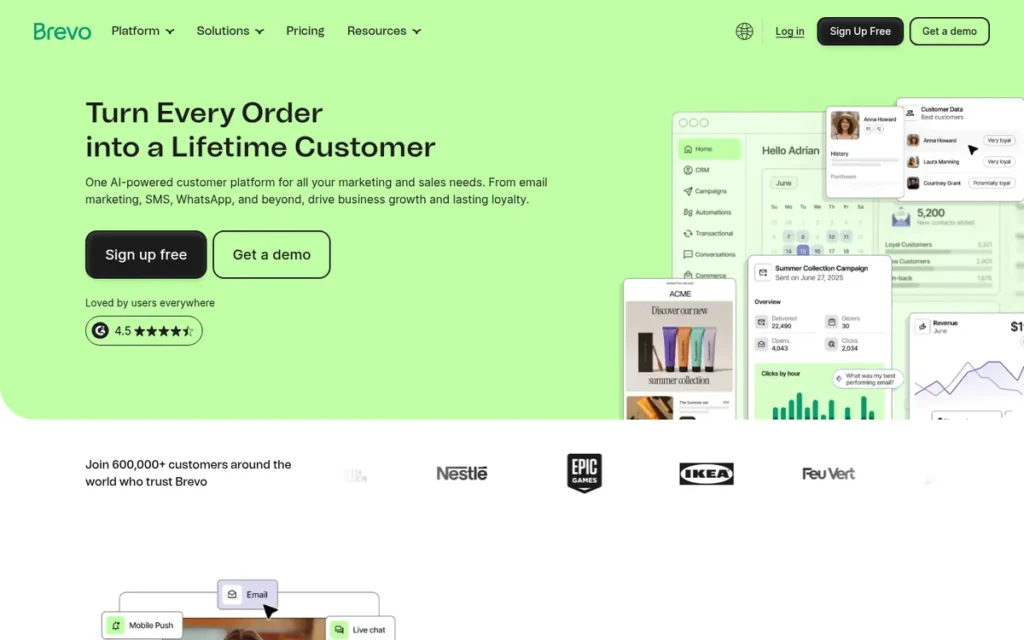
Category: General SMB Sender. An all-purpose platform for newsletters, promotions and basic automation for small businesses.
At a Glance
- Category: General SMB Sender
- Best For: Budget-conscious small businesses and teams with large contact lists that send infrequently
- Price Range: Free (300 emails/day); paid from $9/month (5,000 emails); Professional about $499/month at 150,000 emails
- Primary Strength: Brevo pairs the lowest paid entry price in this ranking with a 4.5/5 deliverability-features rating.
- Biggest Limitation: Brevo’s low Starter tiers now cap stored contacts at 500–2,500, so its “unlimited contacts” reputation no longer applies to every plan.
- One-Line Summary: Brevo is the best-value email marketing platform for small businesses in 2026, combining send-based pricing, a 100,000-contact free plan and the second-highest deliverability-features rating in PlugRoute’s ranking.
- Last Verified: November 2026
PlugRoute Score: 36.5/45 (Capability 4, Deliverability 4.5, Cost 4.5, Reputation 4.5, Support 3, Billing Risk 3)
Overview
Brevo (formerly Sendinblue) is an EU-based multichannel email marketing platform priced mainly by monthly send volume. Brevo is built for budget-conscious small businesses, solo marketers and teams with large lists they email infrequently.
Brevo also runs SMS, WhatsApp and transactional email from the same account, and it promotes GDPR compliance and EU data residency.
Key Features
- Brevo prices most plans by monthly email volume rather than stored contacts, so a large list you email rarely can cost less than on contact-billed platforms.
- Brevo includes transactional email through SMTP and API alongside marketing campaigns.
- Brevo offers SMS, WhatsApp and Conversations live chat with an AI agent in the same account as email.
- Brevo includes a Sales CRM with pipelines and meeting scheduling, plus landing pages from the Standard tier upward.
- Brevo provides an authentication wizard, a Deliverability Center and IP warm-up tools.
Best For
Brevo is best for small businesses, nonprofits and solo marketers with large contact lists who send a modest number of campaigns each month and want email and SMS without contact-based pricing. Skip Brevo if you need deeply customized ecommerce flows or the most advanced branching automation.
Pricing
Brevo’s pricing (verified November 2026):
- Brevo Free costs $0 for 300 emails/day (about 9,000/month) and up to 100,000 contacts. Brevo branding is included, and unused daily sends do not roll over (Brevo Help Center, 2026).
- Brevo Starter starts at $9/month for 5,000 emails with no daily cap (Brevo Help Center, 2026).
- Brevo Starter caps contacts at 500 on the 5,000-email tier, 1,500 on 10,000 and 2,500 on 15,000. Tiers from 20,000 emails up allow up to 500,000 contacts (Brevo Help Center, 2026).
- Brevo Standard starts at about $18/month, a third-party figure (SaaSscored, 2026).
- Brevo Professional costs about $499/month from 150,000 emails, and Brevo Enterprise pricing is custom (Brevo pricing, 2026).
- Brevo’s prices above 15,000 emails were not retrieved in PlugRoute’s research, so check the live calculator.
Strengths
- Brevo earned a 4.5/5 rating for deliverability features (authentication, monitoring and warm-up tools), second only to Klaviyo among the platforms rated (EmailToolTester, 2025).
- Brevo has one of the most consistent reputations in PlugRoute’s ranking. Ratings are G2 4.5/5 (2,400–2,775 reviews), Capterra 4.6/5 (3,527) and Trustpilot 3.8/5 (7,252), which is the largest Trustpilot base among the seven platforms (G2, Capterra, Trustpilot, 2026).
- Brevo’s free plan stores up to 100,000 contacts with no stated time limit, which makes it a free option you can stay on rather than a disguised trial (Brevo Help Center, 2026).
- Brevo is the most common low-cost Mailchimp alternative in 2026 Reddit threads, including one user who replaced a $180 monthly Mailchimp quote with a $60 Brevo plan (r/MailChimp, 2026).
Limitations
Brevo trades its low entry price for tighter plan limits and rougher edges than premium platforms. The biggest trade-off is the new Starter contact cap of 500–2,500, which can force an upgrade sooner than older reviews suggest (Brevo Help Center, 2026).
- Brevo’s free plan caps sending at 300 emails per day, so one newsletter to a larger list cannot go out in a single day (Brevo Help Center, 2026).
- Brevo’s Trustpilot reviewers report paid accounts suspended during validation and template-style support replies (Trustpilot, 2026).
- Brevo’s editor feels dated to some reviewers, and lower tiers raise deliverability concerns on shared IPs (Mailcon, 2026).
- Brevo has no built-in list cleaning (EmailToolTester, 2025).
Verdict
Brevo is the highest-scoring email marketing platform in PlugRoute’s 2026 ranking because it combines send-based pricing, a 100,000-contact free plan with no time limit and a 4.5/5 deliverability-features rating.
Brevo does not score higher because its support (3/5) and billing-risk (3/5) scores trail its pricing strengths. Buyers should check the Starter contact caps against their list size and clean their lists before importing.
2. Klaviyo: Best for Ecommerce Retention Flows, Especially Shopify Stores
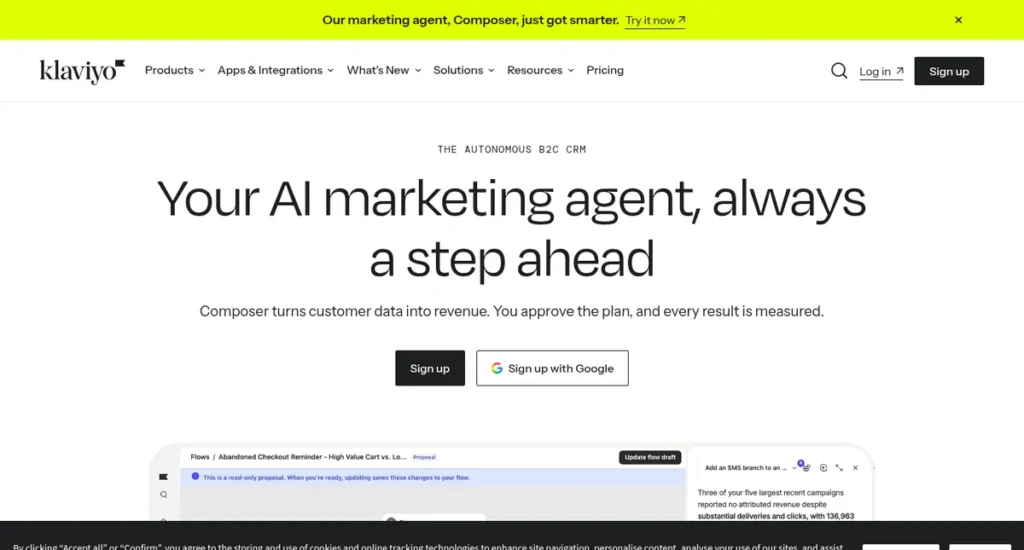
Category: Ecommerce Retention Platform. Email and SMS software built on store and purchase data for online retailers.
At a Glance
- Category: Ecommerce Retention Platform
- Best For: Shopify and other ecommerce stores whose retention flows earn enough to justify specialist pricing
- Price Range: Free (250 active profiles, 500 sends/month); Email plan about $30/month at 1,000 active profiles, $100 at 5,000 and $150 at 10,000, before SMS credits
- Primary Strength: Klaviyo holds the only 5.0/5 rating in EmailToolTester’s 2025 deliverability-features assessment.
- Biggest Limitation: Klaviyo’s 1.6/5 Trustpilot score is the weakest consumer rating in this ranking, driven by support, billing and suspension complaints.
- One-Line Summary: Klaviyo is the best email marketing platform for ecommerce stores in 2026, pairing real-time Shopify data and complete retention flows with the highest deliverability-features rating in PlugRoute’s ranking.
- Last Verified: November 2026
PlugRoute Score: 34/45 (Capability 5, Deliverability 5, Cost 3, Reputation 3.5, Support 2, Billing Risk 2.5)
Overview
Klaviyo is an ecommerce email and SMS platform built on real-time store data. Klaviyo is made for online retailers, especially Shopify merchants, that want automated retention flows driven by predictive customer analytics.
Klaviyo positions itself as a B2C CRM and reported $1.234B in audited 2025 revenue (Klaviyo SEC 10-K, 2025).
Key Features
- Klaviyo includes pre-built ecommerce flows for abandoned cart, browse abandonment, post-purchase, back-in-stock, price-drop, win-back and replenishment.
- Klaviyo syncs Shopify data in real time and uses a product catalog to insert dynamic product recommendations into emails.
- Klaviyo’s predictive analytics estimate each customer’s lifetime value, churn risk and next order date.
- Klaviyo sends email, SMS/MMS, push and WhatsApp messages from one customer profile.
- Klaviyo’s AI tools, including Composer and Marketing Agent, generate campaigns and content.
Best For
Klaviyo is best for established ecommerce stores, particularly on Shopify, where retention flows earn enough revenue to justify specialist pricing and added SMS costs. Skip Klaviyo if you do not sell products online or your store is too small for retention flows to pay back the cost.
Pricing
Klaviyo’s pricing (verified November 2026):
- Klaviyo Free includes 250 active profiles, 500 email sends/month and about $5/month of mobile messaging credit (Klaviyo pricing, 2026).
- Klaviyo bills by active profiles, a model introduced in 2025 (Klaviyo pricing, 2026).
- Klaviyo’s Email plan costs about $20/month at 500 active profiles, $30 at 1,000, $100 at 5,000 and $150 at 10,000 (Klaviyo pricing calculator, 2026).
- Klaviyo’s price ladder is backed up by a third-party review, but buyers should still recheck the live calculator at their own profile count (Email Software Insights, 2026).
- Klaviyo’s SMS is credit-based, and SMS prices vary by country (Klaviyo pricing, 2026).
Strengths
- Klaviyo earned a 5.0/5 rating for deliverability features, the highest of any platform rated, citing its Deliverability Hub and strict list hygiene (EmailToolTester, 2025).
- Klaviyo reported audited 2025 revenue of $1.234B, up 31.6% year over year, and more than 193,000 customers (Klaviyo SEC 10-K, 2025).
- Klaviyo holds 4.6/5 on both G2 (1,360+ reviews) and Capterra (530+), and 4.7/5 on the Shopify App Store (3,360+) (G2, Capterra, Shopify App Store, 2026).
- Klaviyo has been the recommended email solution for Shopify Plus through a strategic partnership since 2022 (Klaviyo Annual Report, 2025).
Limitations
Klaviyo trades specialist ecommerce power for higher cost, more complexity and weaker support. The biggest trade-off is the gap between its 4.6/5 G2 rating and its 1.6/5 Trustpilot score from 374 reviews, where complaints focus on support, billing and suspensions (G2, Trustpilot, 2026).
- Klaviyo offers no phone support on lower plans, and its strict list rules are linked to account suspensions (Trustpilot, 2026).
- Klaviyo’s Email plan costs about $150/month at 10,000 active profiles before SMS credits, and reviewers consistently call it expensive at scale (Capterra, 2026).
- Klaviyo earned about 77.9% of its 2025 ARR from customers who also use Shopify, so it is a weaker fit for non-Shopify stores, B2B firms and publishers (Klaviyo SEC 10-K, 2025).
- Klaviyo is described on Reddit as overkill for small stores, and advanced teams add separate tools on top, which raises total cost of ownership (r/AI_EmailMarketing, 2026).
- Klaviyo’s predictive analytics need enough order history to be useful, so new stores typically benefit less from them.
Users on r/Klaviyo noted:
“Klaviyo’s really going to have to keep their prices down or have extended free trials if they want companies to convert. If I was a company, I would ask for a bundle deal and lock that in for a year or so and see how much Klaviyo decides to raise prices. Klaviyo isn’t cheap and their pricing is one of their major disadvantages compared to other companies.” Posted by u/DeadInternetUsername
Takeaway: Even in Klaviyo’s own community, users call pricing its biggest weakness against competitors and advise locking in rates before increases arrive.
Verdict
Klaviyo is the strongest email platform for revenue-driven ecommerce stores in 2026, backed by the only 5.0/5 deliverability-features rating in PlugRoute’s ranking.
Klaviyo ranks second rather than first because its cost (3/5), support (2/5) and billing-risk (2.5/5) scores trail Brevo’s. Small or non-Shopify stores should price Klaviyo at their own profile count before committing.
3. Kit (formerly ConvertKit): Best for Creators, Paid Newsletters and a Generous Free Plan
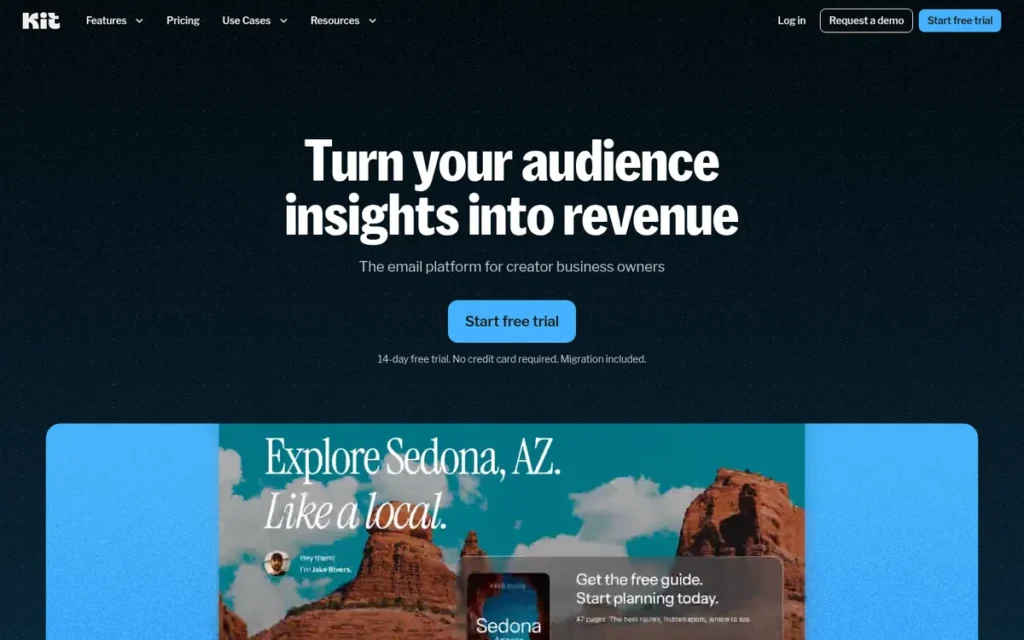
Category: Creator Newsletter Platform. Email software built for writers, creators and audience-led businesses that earn money from subscribers.
At a Glance
- Category: Creator Newsletter Platform
- Best For: Newsletter creators, bloggers, course sellers and beginners who want a large free subscriber allowance
- Price Range: Free up to 10,000 subscribers; Creator $39–$139/month and Creator Pro $79–$189/month for 1,000–10,000 subscribers
- Primary Strength: Kit offers the most generous free sending allowance in this ranking: unlimited sends to up to 10,000 subscribers.
- Biggest Limitation: Kit’s paid pricing rises steeply once a creator needs more than one automation or sequence, starting at $39/month for 1,000 subscribers.
- One-Line Summary: Kit is the best email marketing platform for creators and newsletter writers in 2026, offering free sending to up to 10,000 subscribers plus built-in digital product and paid newsletter sales.
- Last Verified: November 2026
PlugRoute Score: 33.5/45 (Capability 3.5, Deliverability 4, Cost 4, Reputation 4, Support 3, Billing Risk 3.5)
Overview
Kit (formerly ConvertKit) is a creator-focused email marketing platform for newsletter writers, bloggers, course sellers and beginners who want to grow an audience and earn money from it. Kit’s free plan covers up to 10,000 subscribers.
Kit’s text-focused editor suits writer-style newsletters better than heavily designed promotional emails.
Key Features
- Kit’s free Newsletter plan supports up to 10,000 subscribers with unlimited sends, unlimited forms and landing pages, and one basic visual automation with one sequence.
- Kit’s sequences deliver welcome series and lead-magnet follow-ups, with multiple sequences available on paid plans.
- Kit lets creators sell digital products and paid newsletter subscriptions directly from the platform.
- Kit’s Creator Network and, on Creator Pro, SparkLoop referrals help creators gain subscribers through recommendations and referral programs.
- Kit organizes subscribers with tags in a single audience and integrates with Shopify, Teachable, Kajabi, WordPress and Zapier.
Best For
Kit is best for newsletter creators, bloggers and course sellers who want to start free, grow to thousands of subscribers and sell digital products without a separate checkout tool. Skip Kit if you run a retail brand that needs heavily designed promotional emails or detailed reporting.
Pricing
Kit’s pricing (verified November 2026):
- Kit Newsletter is free for up to 10,000 subscribers (Kit Help Center, 2026).
- Kit Creator costs $39/month at 1,000 subscribers, $59 at 3,000 and $139 at 10,000 (Kit pricing, 2026).
- Kit Creator Pro costs $79/month at 1,000 subscribers, $99 at 3,000 and $189 at 10,000 (Kit pricing, 2026).
- Kit’s annual billing gives two months free (about 17% off). Promotional displays showing Creator at $33 and Pro at $50–$66 conflict with these figures (Kit pricing, 2026).
- Kit charges 3.5% + $0.30 per sale including card processing, and about 0.6% of that is Kit’s own platform share (Kit, 2026).
- Kit’s price at 25,000 subscribers was not verified in PlugRoute’s research.
As one user on r/beehiiv described:
“From what I know convertkit is free for the first 10K subscribers, however it get quite expensive as you grow, it’s costs like 400 bucks/mo for a list over 50K.” Posted by u/E-A-T
Takeaway: Kit’s free tier is a strong starting point, but creators expect costs to climb sharply once their list grows past 10,000 subscribers.
Strengths
- Kit earned a 4.0/5 rating for deliverability features. Kit also tied for the highest inbox-placement result among the seven platforms in PlugRoute’s ranking (84.4%) in one destination-specific test (EmailToolTester, 2025).
- Kit’s free plan covers up to 10,000 subscribers with unlimited sends, 40 times the 250-contact free allowances of Intuit Mailchimp and Klaviyo (Kit Help Center, 2026).
- Kit holds 4.6/5 on Capterra (244 reviews). PlugRoute’s research recorded a 3.9/5 Trustpilot rating, which could not be re-confirmed in November 2026 (Capterra, Trustpilot, 2026).
- Kit’s built-in commerce lets creators sell digital products and paid newsletters without a separate checkout tool (Kit, 2026).
Limitations
Kit trades design flexibility and breadth for a creator-focused, text-first experience. The biggest trade-off is cost past the free tier. Kit’s paid plans start at $39/month for 1,000 subscribers, and you need a paid plan for multi-step automations and multiple sequences (Kit pricing, 2026).
- Kit’s limited templates, basic reporting and A/B testing limits make it a weaker fit for retailers that need heavily designed promotional emails (G2, SaaSscored, 2026).
- Kit’s deliverability evidence is mixed, because another source ranks Kit below MailerLite and ActiveCampaign on average deliverability (SaaSscored, 2026).
- Kit’s Trustpilot reviewers report slow handling of deliverability, integration and billing issues, plus integrations that broke after the 2024 rebrand (Trustpilot, 2026).
- Kit has no Reddit sentiment data in PlugRoute’s research, so community experience is unverified.
Verdict
Kit is the strongest email marketing choice for creators and beginners in 2026 because its free plan supports up to 10,000 subscribers with unlimited sends and built-in selling.
Kit and ActiveCampaign tied at 33.5/45. Kit ranks third because ties are broken on cost at scale, where Kit scores 4 to ActiveCampaign’s 3.5. Kit’s narrower creator focus (Capability 3.5/5) keeps it below Brevo and Klaviyo.
4. ActiveCampaign: Best for Advanced Automation on a Mid-Range Budget
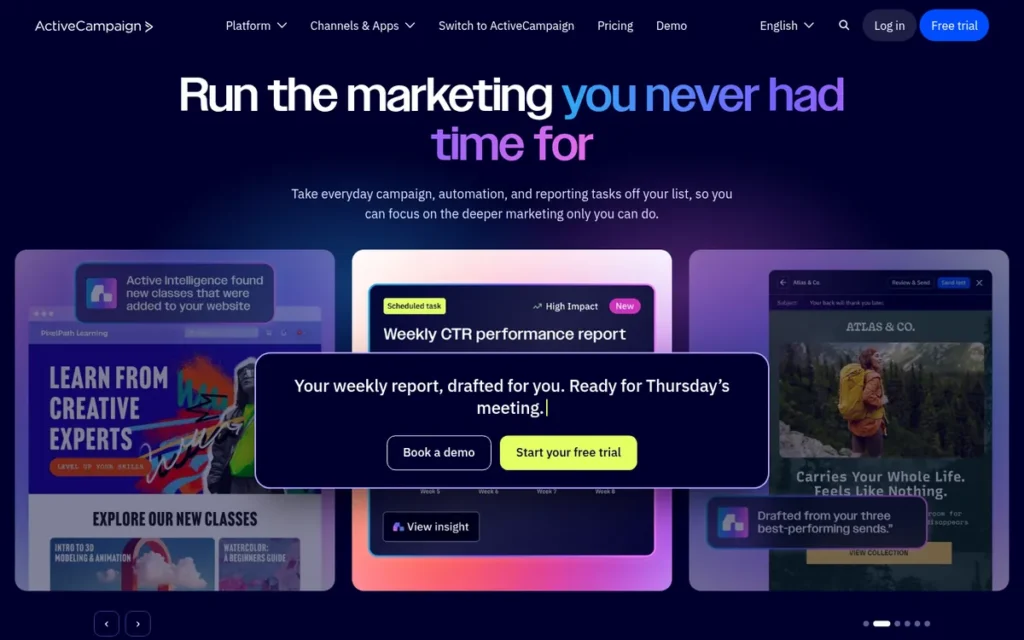
Category: Automation & CRM Platform. Email software built around multi-step customer journeys and sales-pipeline data.
At a Glance
- Category: Automation & CRM Platform
- Best For: Small and mid-sized businesses that need branching, behavior-based automation and a light CRM without enterprise pricing
- Price Range: $15–$19/month (Starter, 1,000 contacts) to $145–$179/month (Enterprise, 1,000 contacts); Plus $189/month at 10,000 contacts, billed annually
- Primary Strength: ActiveCampaign offers the deepest multi-step automation in this ranking at a mid-market price.
- Biggest Limitation: ActiveCampaign scores just 1.3/10 for support on TrustRadius, the weakest independent support score in this ranking, though from only 42 ratings.
- One-Line Summary: ActiveCampaign is the best email marketing platform for advanced automation on a mid-range budget in 2026, combining a visual branching workflow builder, a built-in CRM and a 4.0/5 deliverability-features rating.
- Last Verified: November 2026
PlugRoute Score: 33.5/45 (Capability 5, Deliverability 4, Cost 3.5, Reputation 4, Support 1.5, Billing Risk 3)
Overview
ActiveCampaign is an automation-first email marketing platform with a built-in CRM. ActiveCampaign is designed for small and mid-sized businesses that need branching, behavior-triggered customer journeys and lead scoring without paying enterprise prices.
ActiveCampaign sits between Intuit Mailchimp’s simplicity and HubSpot Marketing Hub’s cost, with features unlocking tier by tier.
Key Features
- ActiveCampaign’s visual automation builder supports triggers, if/else branches, goals and lead scoring for multi-step customer journeys.
- ActiveCampaign includes a CRM with sales pipelines from the Plus tier upward.
- ActiveCampaign’s Predictive Sending times each email to the individual contact’s past engagement, so the feature needs engagement history to be useful.
- ActiveCampaign offers conditional and predictive content, site tracking and attribution on the Pro tier.
- ActiveCampaign provides SMS, generative AI and AI agents, and advertises more than 900 integrations.
Best For
ActiveCampaign is best for service businesses, B2B teams and online sellers whose leads need different follow-up based on their behavior, and who want a light CRM in the same tool. Skip ActiveCampaign if you depend on fast human support or need a full-featured sales CRM.
Pricing
ActiveCampaign’s pricing (verified November 2026):
- ActiveCampaign at 1,000 contacts costs $19 monthly or $15/month billed annually for Starter, $59/$49 for Plus, $99/$79 for Pro and $179/$145 for Enterprise (ActiveCampaign pricing, 2026).
- ActiveCampaign Plus, billed annually, costs $95 at 2,500 contacts, $145 at 5,000, $169 at 7,500 and $189 at 10,000 (Activepieces, 2026).
- ActiveCampaign at 5,000 contacts costs from $79/month (Starter) to $375/month (Enterprise), billed annually (Activepieces, 2026).
- ActiveCampaign requires Plus for landing pages and the CRM, and Pro for predictive sending, conditional content and attribution (ActiveCampaign pricing, 2026).
- ActiveCampaign offers a free trial, but PlugRoute did not verify its length.
Strengths
- ActiveCampaign earned a 4.0/5 rating for deliverability features, with strong authentication and bounce handling (EmailToolTester, 2025).
- ActiveCampaign holds a 4.4/5 G2 rating from 14,859 reviews, one of the largest review bases in the category (G2, 2026).
- ActiveCampaign scores 9.3/10 for usability and 8.6/10 for likelihood to recommend (704 ratings) on TrustRadius (TrustRadius, 2026).
- ActiveCampaign starts multi-step automation at $15–$19/month for 1,000 contacts, far below HubSpot Marketing Hub’s automation-capable Professional tier (ActiveCampaign pricing, 2026).
Limitations
ActiveCampaign trades automation depth for weaker support and rising costs. The biggest trade-off is support. ActiveCampaign’s TrustRadius support score is 1.3/10 from only 42 ratings, and Trustpilot reviewers describe support that starts with a chatbot (TrustRadius, Trustpilot, 2026).
- ActiveCampaign’s costs can climb over time. One Trustpilot reviewer reported a bill that rose about 4× over two years without clear notice (Trustpilot, 2026).
- ActiveCampaign spreads key features across tiers, so the CRM and landing pages need Plus while predictive sending and attribution need Pro (ActiveCampaign pricing, 2026).
- ActiveCampaign’s Reddit users are split on whether the built-in CRM is enough, and some call note-logging clunky and the mobile apps weak (r/ActiveCampaign, 2022–2025).
- ActiveCampaign has no deliverability dashboard or health score (EmailToolTester, 2025).
Users on r/ActiveCampaign noted:
“There is not as robust of a community around AC compared to Salesforce or HubSpot. I managed the AC instance for several business and did a whole lot more than email campaigns with it. Its a pretty powerful tool but you are kind of on your own when it comes to building complex workflows.” Posted by u/smallpages
Takeaway: ActiveCampaign delivers powerful automation, but users building complex workflows are largely left to work them out on their own.
Verdict
ActiveCampaign is the best choice in 2026 for businesses that need advanced, branching email automation at a mid-market price.
ActiveCampaign tied with Kit at 33.5/45 and ranks fourth on the cost-at-scale tie-break (3.5 vs. 4). ActiveCampaign’s support score (1.5/5) is the main reason it does not rank higher despite top capability (5/5).
5. HubSpot Marketing Hub: Best for Email Connected to a Sales CRM (B2B Lead Nurturing)
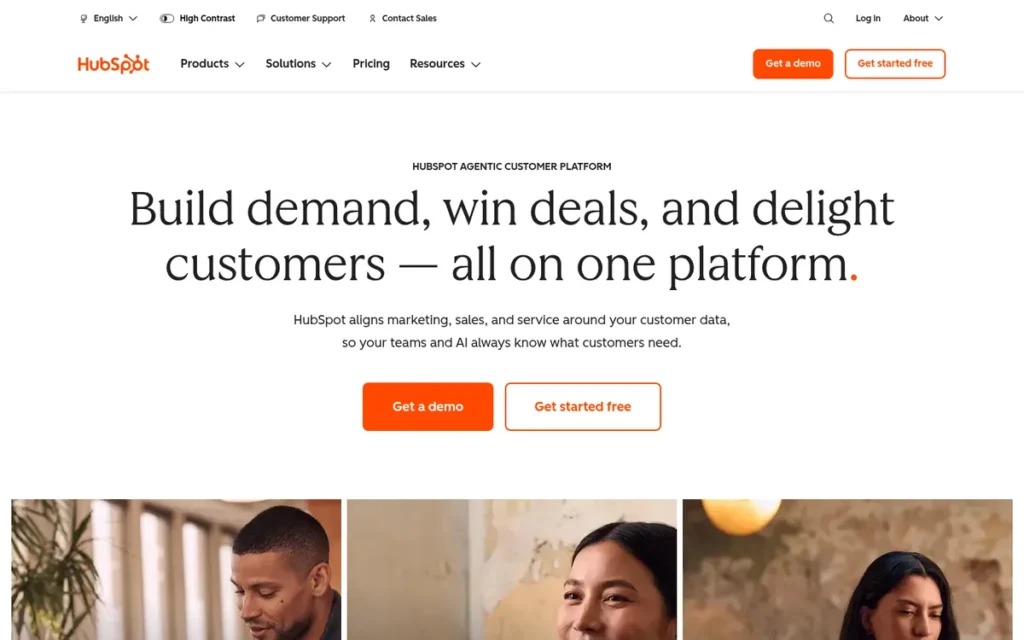
Category: Automation & CRM Platform.
At a Glance
- Category: Automation & CRM Platform
- Best For: B2B companies with sales teams and long sales cycles that need marketing email driven by shared CRM records
- Price Range: Free (up to 2 users); Starter $9/seat/month billed annually or $20 monthly; Professional $800–$890/month plus $3,000 onboarding; Enterprise $3,600/month plus $7,000 onboarding
- Primary Strength: HubSpot Marketing Hub runs email on the same CRM records its sales teams use, more fully than any other product in this ranking.
- Biggest Limitation: HubSpot Marketing Hub locks multi-step automation behind Professional, which costs an estimated $12,600 in year one including the mandatory onboarding fee.
- One-Line Summary: HubSpot Marketing Hub is the best email marketing platform in 2026 for B2B teams that need email tightly connected to a sales CRM.
- Last Verified: November 2026
PlugRoute Score: 27/45 (Capability 4.5, Deliverability 2.5, Cost 1.5, Reputation 4, Support 3, Billing Risk 3)
Overview
HubSpot Marketing Hub is a CRM-native marketing suite that runs email, forms, landing pages and workflows on one customer database. HubSpot Marketing Hub is built for B2B companies whose marketing email depends on sales-pipeline data such as lifecycle stage and deal activity.
HubSpot Marketing Hub is strongest for teams already using HubSpot’s CRM.
Key Features
- HubSpot Marketing Hub segments email audiences using the same CRM records, lifecycle stages and deal activity that sales teams use.
- HubSpot Marketing Hub offers automated multi-step workflows on the Professional tier and above.
- HubSpot Marketing Hub includes forms, landing pages, SEO and social tools, and attribution reporting in the same suite.
- HubSpot Marketing Hub provides Breeze AI agents for content and campaign tasks.
- HubSpot Marketing Hub bills by “marketing contacts,” and Professional and Enterprise usually require annual commitments.
Best For
HubSpot Marketing Hub is best for B2B companies with sales teams and long sales cycles that need marketing and sales working from one CRM and can afford the Professional tier. Skip HubSpot Marketing Hub if you mainly need email automation and cannot budget about $12,600 for the first year.
Pricing
HubSpot Marketing Hub’s pricing (verified November 2026):
- HubSpot Marketing Hub Free costs $0 for up to two users (HubSpot pricing, 2026).
- HubSpot Marketing Hub Starter costs $9 per seat/month billed annually or $20 month-to-month. Starter includes 1,000 marketing contacts and sends at 5× the contact tier (HubSpot pricing, 2026).
- HubSpot Marketing Hub Professional costs $800/month billed annually or $890 monthly. Professional includes three seats (+$45/seat), 2,000 marketing contacts and 10× sends, plus a required $3,000 onboarding fee (HubSpot pricing, 2026).
- HubSpot Marketing Hub Enterprise costs $3,600/month with five seats (+$75/seat), 10,000 contacts, 20× sends and a $7,000 onboarding fee (HubSpot pricing, 2026).
- HubSpot Marketing Hub’s advertised jump from Starter to Professional is roughly 44× (PCMag, 2026).
Strengths
- HubSpot announced that Gartner named it a Leader in the Magic Quadrant for B2B Marketing Automation Platforms for the sixth consecutive year in 2026 (HubSpot newsroom, 2026).
- HubSpot Marketing Hub holds a 4.4/5 G2 rating from 16,051 reviews and an 8.5/10 TrustRadius score from 2,320 reviews and ratings (G2, TrustRadius, 2026).
- HubSpot’s ROI Report claims Marketing Hub customers got 3× more inbound leads after six months and that 84% reported positive ROI. HubSpot reported these figures itself, and they are not independently audited (HubSpot, 2025).
- HubSpot Marketing Hub’s free plan supports up to two users, so teams can try CRM-connected email at no cost before upgrading (HubSpot pricing, 2026).
Limitations
HubSpot Marketing Hub trades unified CRM data for a steep, front-loaded cost. The biggest trade-off is that automation requires Professional. PlugRoute estimates Professional at about $12,600 in year one ($800 × 12 plus $3,000 onboarding) before extra seats, based on HubSpot’s 2026 pricing.
- HubSpot Marketing Hub Starter lacks full automation, which is the main reason small buyers outgrow it (PCMag, 2026).
- HubSpot Marketing Hub reviewers describe complexity, restricted customization on lower tiers and slow support during busy periods (Capterra, TrustRadius, 2026).
- HubSpot Marketing Hub draws Reddit comments that “you can find a more robust tool elsewhere” for email alone. That thread dates from 2021 and includes partner voices (r/MarketingAutomation, 2021).
- HubSpot Marketing Hub has no rating in EmailToolTester’s deliverability assessment, so its deliverability has not been independently checked (EmailToolTester, 2025).
Verdict
HubSpot Marketing Hub is the best fit in 2026 for B2B teams that need marketing email driven by the same CRM records their sales team uses.
HubSpot Marketing Hub ranks fifth because its cost score (1.5/5) is the lowest in the ranking. Its neutral deliverability score (2.5/5) reflects missing data, not poor results. Small businesses that mainly need automation will usually get more for less from ActiveCampaign.
6. Constant Contact: Best for Local Businesses, Events and Nonprofits That Need Phone Support
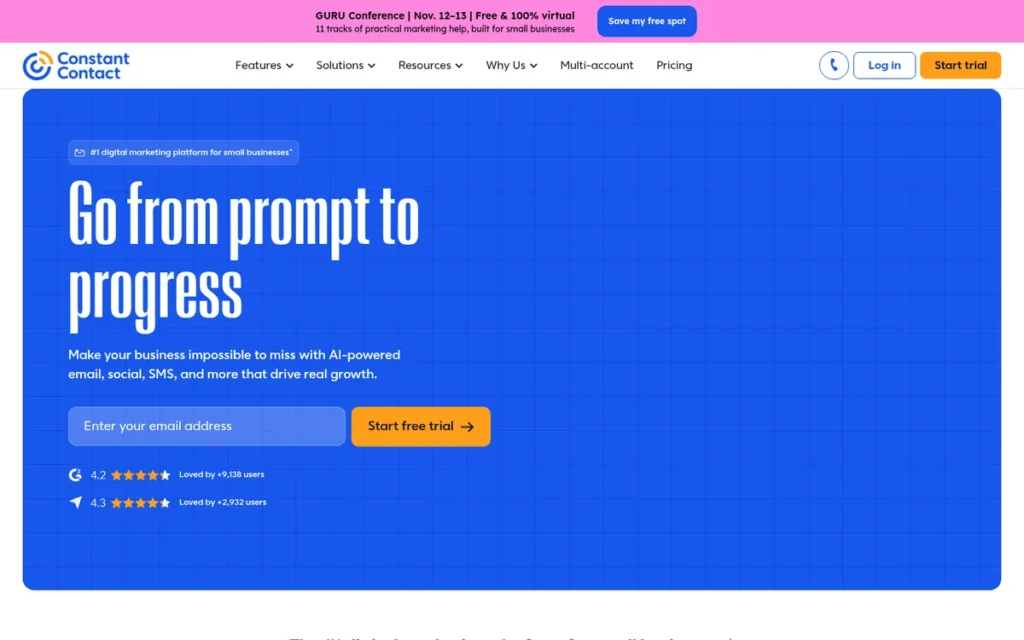
Category: General SMB Sender.
At a Glance
- Category: General SMB Sender
- Best For: Local businesses, associations and nonprofits that run events and need phone or live chat help with campaigns
- Price Range: Lite from $12/month, Standard from $35/month, Premium from $80/month (up to 500 contacts); Standard over $200/month at 10,000 contacts
- Primary Strength: Constant Contact is the only platform in this ranking that advertises phone and live chat support as a core feature from its entry plan.
- Biggest Limitation: Constant Contact has the highest cost per contact among comparable mid-tier plans in this ranking, with send overage fees on top.
- One-Line Summary: Constant Contact is the best email marketing platform in 2026 for local businesses and nonprofits that need phone support and event tools.
- Last Verified: November 2026
PlugRoute Score: 26.5/45 (Capability 3, Deliverability 3, Cost 2, Reputation 4, Support 4.5, Billing Risk 2)
Overview
Constant Contact is a small-business email marketing platform that combines drag-and-drop email and event management with advertised phone and live chat support. Constant Contact is designed for local businesses, associations and nonprofits that want human help more than advanced automation.
Constant Contact prices its plans by both contact count and send volume.
Key Features
- Constant Contact advertises phone and live chat support as a core part of its plans.
- Constant Contact includes event management and RSVP tools for promoting events and tracking attendance.
- Constant Contact offers a drag-and-drop email editor, templates and an AI content generator.
- Constant Contact combines email with SMS, social posting, landing pages and lead-capture features.
- Constant Contact provides one ready-made automation flow on Lite, with custom workflows, branching and deeper segmentation on Standard and Premium.
Best For
Constant Contact is best for local businesses, associations and nonprofits that run events, have little technical experience and are willing to pay more for phone and chat support. Skip Constant Contact if you need advanced automation or the lowest cost at 10,000 contacts.
Pricing
Constant Contact’s pricing (verified November 2026):
- Constant Contact Lite starts at $12/month, Standard at $35/month and Premium at $80/month for up to 500 contacts (Constant Contact pricing, 2026).
- Constant Contact Standard costs about $75/month at 2,500 contacts and over $200/month at 10,000 (Campaigner, 2026).
- Constant Contact charges extra for sends beyond the plan allowance, reported as starting at $10/month per additional block of up to 500. Overage fees may apply, so confirm the unit on Constant Contact’s pricing page (Constant Contact pricing, 2026).
- Constant Contact’s 60-day free trial and nonprofit discount were not verified, and prepaid discounted plans are reported as non-refundable (BBB, 2026).
Strengths
- Constant Contact holds a 4.0/5 Trustpilot rating from 2,121 reviews, the highest Trustpilot score in PlugRoute’s ranking (Trustpilot, 2026).
- Constant Contact tied with Kit for the highest destination-specific inbox-placement result among the seven platforms (84.4%), though EmailToolTester did not give it a 5-point rating (EmailToolTester, 2025).
- Constant Contact holds an 8.0/10 TrustRadius score from 891 reviews, and 85% of 61 respondents said they would buy again (TrustRadius, 2026).
- Constant Contact’s Capterra reviewers (4.3/5, 2,946 reviews) repeatedly describe support staff as friendly and knowledgeable, including reps who walked users through RSVP setup (Capterra, 2026).
Limitations
Constant Contact trades human support for higher cost and shallower automation. The biggest trade-off is price. Constant Contact Standard runs above $200/month at 10,000 contacts plus send overage fees, the highest among comparable mid-tier plans in this ranking (Campaigner, 2026).
- Constant Contact’s Lite plan includes only one ready-made automation flow (rfp.wiki, 2026).
- Constant Contact’s 4.1/5 G2 rating (7,392 reviews) is the lowest G2 score in this ranking, with reviewers citing limited customization and occasionally slow ticket replies (G2, 2026).
- Constant Contact’s BBB complaints describe hours spent cancelling, charges after cancellation, surprise auto-renewals and a bill that doubled as contacts grew (BBB, 2026).
- Constant Contact has no Reddit sentiment data in PlugRoute’s research and no EmailToolTester 5-point deliverability rating.
Verdict
Constant Contact is the right choice in 2026 for local businesses and nonprofits that need phone support and event tools more than automation or low cost.
Constant Contact ranks sixth because its cost (2/5) and capability (3/5) scores hold it back despite the top support score (4.5/5). Buyers should confirm cancellation and renewal terms before prepaying.
7. Intuit Mailchimp: Best for Beginners Who Value a Familiar Editor and Broad Integrations
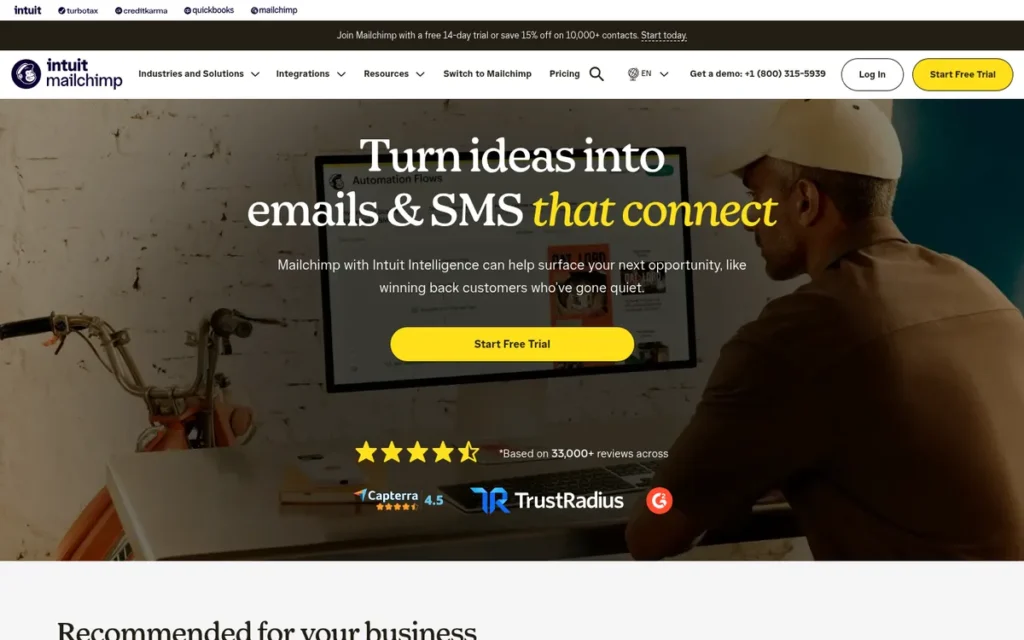
Category: General SMB Sender.
At a Glance
- Category: General SMB Sender
- Best For: Beginners and small businesses already using Mailchimp integrations or Intuit products
- Price Range: Free (250 contacts, 500 sends/month); Essentials $13–$110/month and Standard $20–$135/month for 500–10,000 contacts; Premium $350/month at 10,000
- Primary Strength: Intuit Mailchimp offers one of the most approachable email builders in the category, backed by a large template library and integration ecosystem.
- Biggest Limitation: Intuit Mailchimp received a 3.0/5 deliverability-features rating from EmailToolTester in 2025, the lowest among the platforms it rated in this ranking.
- One-Line Summary: Intuit Mailchimp is an easy, widely integrated email platform in 2026 for beginners and businesses already tied to its integrations.
- Last Verified: November 2026
PlugRoute Score: 26/45 (Capability 4, Deliverability 3, Cost 2.5, Reputation 3, Support 2, Billing Risk 2)
Overview
Intuit Mailchimp is a general-purpose email marketing platform known for its approachable drag-and-drop builder and wide integrations. Intuit Mailchimp is aimed at beginners and small businesses that want templates and automated Customer Journeys in a familiar interface.
Intuit has owned Intuit Mailchimp since an acquisition of about $12B (widely reported, 2021).
Key Features
- Intuit Mailchimp provides a drag-and-drop email builder with a large library of templates.
- Intuit Mailchimp offers Customer Journeys automation, with advanced automation starting at the Standard tier.
- Intuit Mailchimp includes predictive tools for purchase likelihood, predicted lifetime value and send-time optimization.
- Intuit Mailchimp builds in Intuit Assist generative AI for campaign creation, with features varying by plan.
- Intuit Mailchimp integrates with Shopify, QuickBooks and a broad ecosystem of third-party apps.
Best For
Intuit Mailchimp is best for beginners and small businesses that already rely on Mailchimp integrations or Intuit products and care more about an easy editor than the lowest cost. Skip Intuit Mailchimp if top deliverability or the lowest cost at your list size matters most.
Pricing
Intuit Mailchimp’s pricing (verified November 2026):
- Intuit Mailchimp Free includes 250 contacts and 500 emails/month, with a 250/day cap (Mailchimp Help Center, 2026).
- Intuit Mailchimp Free has no multi-step automation or A/B testing, shows Mailchimp branding and offers email support only for the first 30 days (Mailchimp Help Center, 2026).
- Intuit Mailchimp Essentials costs $13 (500 contacts), $26 (1,500) and $110 (10,000), with sends at 10× contacts (Mailchimp Help Center, 2026).
- Intuit Mailchimp Standard costs $20, $45 and $135 at the same contact levels, with 12× sends (Mailchimp Help Center, 2026).
- Intuit Mailchimp Premium costs $350 at 10,000 contacts and includes phone support (Mailchimp Help Center, 2026).
- Intuit Mailchimp counts unsubscribed and non-subscribed contacts toward billing, though archived contacts do not count (Mailchimp Help Center, 2026).
Strengths
- Intuit Mailchimp holds a 4.3/5 G2 rating across 12,998 reviews on its product page, with reviewers praising its approachable editor and fast setup (G2, 2026).
- Intuit Mailchimp publishes vendor-reported all-user benchmarks of a 2.62% average click rate and a 0.22% unsubscribe rate, drawn from hundreds of millions of emails (Mailchimp, 2026).
- Intuit Mailchimp’s Standard tier adds Customer Journeys automation from $20/month at 500 contacts (Mailchimp Help Center, 2026).
- Intuit Mailchimp’s Premium tier includes phone support and unlimited users at $350/month for 10,000 contacts (Mailchimp Help Center, 2026).
Limitations
Intuit Mailchimp trades familiarity for weaker deliverability features and riskier billing. The biggest trade-off is its 3.0/5 deliverability-features rating. EmailToolTester cited no health dashboard, no list-validation service and incomplete SPF alignment (EmailToolTester, 2025).
- Intuit Mailchimp bills for unsubscribed and non-subscribed contacts. One Reddit user reported a $52 overage for contacts archived within minutes, plus a two-week sending block (r/MailChimp, 2026).
- Intuit Mailchimp holds a 2.5/5 Trustpilot rating from 1,560 reviews, with complaints about surprise charges, hard cancellations and lockouts (Trustpilot, 2026).
- Intuit Mailchimp users report price increases since the Intuit acquisition (r/MailChimp, 2026).
- Intuit Mailchimp’s free plan is now just 250 contacts, and phone support is reserved for Premium at $350/month (Mailchimp Help Center, 2026).
Users on r/smallbusiness shared their experience:
“I use Mailchimp, I’m not 100% happy with it as when they brought in new audience caps, they held everyone’s audiences hostage instead of grandfathering existing loyal customers in and charging the new rates to new customers.” Posted by u/Resinseer
Takeaway: Intuit Mailchimp’s decision not to grandfather existing customers through pricing changes has cost it the loyalty of long-time users.
Verdict
Intuit Mailchimp remains one of the easiest email platforms for beginners in 2026, but its 3.0/5 deliverability-features rating and billing for unsubscribed contacts place it seventh in PlugRoute’s ranking.
Intuit Mailchimp scores 26/45, half a point behind Constant Contact, mainly because of its billing-risk (2/5) and reputation (3/5) scores. New buyers should compare its cost at their list size against Brevo and Kit before choosing it by default.
What Will Email Marketing Software Actually Cost at My List Size?
At about 10,000 contacts, most mid-tier email marketing plans in PlugRoute’s ranking cost roughly $110 to $200+ per month. That runs from Intuit Mailchimp Essentials ($110) to Constant Contact Standard (over $200). HubSpot Marketing Hub’s automation tier costs about $12,600 in year one. How a platform bills (stored contacts, active profiles or sends) changes the math more than starting prices do.
Each platform bills on a different basis:
- Intuit Mailchimp bills by stored contacts, including unsubscribed and non-subscribed contacts but not archived ones.
- HubSpot Marketing Hub bills by marketing contacts plus seats.
- ActiveCampaign and Kit bill by contacts or subscribers.
- Constant Contact bills by contacts plus sends.
- Klaviyo bills by active profiles.
- Brevo bills mainly by sends, with contact caps on Starter.
On contact-billed platforms you pay for the size of your list; on send-billed platforms you pay for how often you email it.
Cost at your list size (verified November 2026)
| Platform | ~1,000 contacts | ~5,000 contacts | ~10,000 contacts |
|---|---|---|---|
| Brevo | Starter from $9 (5,000 emails, 500-contact cap) | Depends on send volume; check calculator | Needs a 20,000+ email tier; price not retrieved |
| Klaviyo | Email about $30 | Email about $100 | Email about $150 (before SMS) |
| Kit | Creator $39 / Pro $79 | Not published in PlugRoute’s Nov 2026 research | Creator $139 / Pro $189 |
| ActiveCampaign | Starter $15–$19 / Plus $49–$59 | Starter $79 / Plus $145 (annual) | Plus $189 (annual) |
| HubSpot Marketing Hub | Starter $9–$20/seat | Professional $800–$890 + $3,000 onboarding (2,000 included) | Enterprise $3,600 + $7,000 onboarding (10,000 included) |
| Constant Contact | Standard from $35 (500); about $75 at 2,500 | Not published in PlugRoute’s Nov 2026 research | Standard over $200 |
| Intuit Mailchimp | Essentials $26 / Standard $45 (1,500) | Not published in PlugRoute’s Nov 2026 research | Essentials $110 / Standard $135 / Premium $350 |
Worked example: 10,000 contacts emailed twice a month (about 20,000 sends)
- Brevo needs a 20,000-email tier, because Starter tiers up to 15,000 emails cap contacts at 2,500. PlugRoute could not retrieve that tier’s price (Brevo Help Center, 2026).
- Intuit Mailchimp Essentials costs $110/month, and its 10× send allowance covers 20,000 sends (Mailchimp Help Center, 2026).
- Kit Creator costs $139/month at 10,000 subscribers (Kit pricing, 2026).
- Klaviyo’s Email plan costs about $150/month at 10,000 active profiles before SMS credits (Klaviyo pricing calculator, 2026).
- ActiveCampaign Plus costs $189/month billed annually (Activepieces, 2026).
- Constant Contact Standard costs over $200/month (Campaigner, 2026).
“Every step of the way we grew we got bumped into the next tier. Prices kept growing and growing even though our sending wasn’t.” (u/daugaard47, r/AI_EmailMarketing (2026; the commenter disclosed founding a competing tool))
Takeaway: On contact-tiered platforms, list growth alone can push you into higher tiers even if your sending volume stays flat.
Which Plan Tier Unlocks Multi-Step Automation?
Multi-step automation unlocks at very different price points in 2026. ActiveCampaign includes it from Starter at $15–$19/month, Intuit Mailchimp from Standard at $20/month and Kit from Creator at $39/month. HubSpot Marketing Hub includes it only from Professional, at $800–$890/month plus $3,000 onboarding. This tier jump is often the largest hidden cost.
| Platform | Tier That Unlocks Multi-Step Automation | Entry Price for That Tier |
|---|---|---|
| ActiveCampaign | Starter | $15–$19/month (1,000 contacts) |
| Intuit Mailchimp | Standard (Free has none) | $20/month (500 contacts) |
| Constant Contact | Standard (Lite has one ready-made flow) | $35/month (500 contacts) |
| Kit | Creator (free plan has 1 automation, 1 sequence) | $39/month (1,000 subscribers) |
| Brevo | Basic automation on Free; tier for advanced workflows not confirmed | Free; paid from $9/month |
| Klaviyo | Tier with full flows not confirmed in PlugRoute’s research | Email plan from about $20/month (500 profiles) |
| HubSpot Marketing Hub | Professional | $800–$890/month + $3,000 onboarding |
The cheapest email platform at 500 contacts is rarely the cheapest once you need automation at 10,000.
What Do Free Email Marketing Plans Really Include?
Kit and Brevo offer the most usable long-term free plans in PlugRoute’s 2026 ranking. Kit covers 10,000 subscribers with unlimited sends, and Brevo stores 100,000 contacts but caps sending at 300 emails a day. HubSpot Marketing Hub’s free plan is lasting but limited, while the 250-contact plans from Intuit Mailchimp and Klaviyo work more like trials.
| Platform | Free Allowance | Key Hidden Limits | Lasting Plan or Trial? |
|---|---|---|---|
| Kit | 10,000 subscribers, unlimited sends | 1 basic automation, 1 sequence | Lasting |
| Brevo | Up to 100,000 contacts, 300 emails/day | Daily cap; Brevo branding; basic automation | Lasting |
| HubSpot Marketing Hub | Up to 2 users | Monthly send limit not confirmed in research | Lasting, but limited |
| Intuit Mailchimp | 250 contacts, 500 emails/month | 250/day cap; no multi-step automation or A/B testing; branding; email support only for 30 days | Trial-like |
| Klaviyo | 250 active profiles, 500 sends/month | About $5/month mobile credit | Trial-like |
| ActiveCampaign | Free trial | Trial length not verified | Trial |
| Constant Contact | Free trial reported | 60-day length not verified | Trial |
A free plan capped at 250 contacts is a trial without an end date: useful for testing, not for building a list.
How Do Review Ratings Compare Across G2, Capterra, Trustpilot and TrustRadius?
G2 and Capterra ratings mostly reflect product quality, while Trustpilot reviews surface billing and support problems. Klaviyo shows the widest gap in PlugRoute’s ranking (4.6/5 on G2 vs. 1.6/5 on Trustpilot, November 2026). Constant Contact (4.1 vs. 4.0) and Brevo (4.5 vs. 3.8) show the most consistent ratings across both types of review site.
| Platform | G2 | Capterra | TrustRadius | Trustpilot |
|---|---|---|---|---|
| Brevo | 4.5/5 (2,400–2,775) | 4.6/5 (3,527) | Not retrieved | 3.8/5 (7,252) |
| Klaviyo | 4.6/5 (1,360+) | 4.6/5 (530+) | Not retrieved | 1.6/5 (374) |
| Kit | 4.4/5 (count not verified) | 4.6/5 (244) | Not retrieved | 3.9/5 (not re-confirmed) |
| ActiveCampaign | 4.4/5 (14,859) | Not retrieved | Recommend 8.6/10; support 1.3/10 (42 ratings) | Score not retrieved (147 reviews) |
| HubSpot Marketing Hub | 4.4/5 (16,051) | Score not retrieved | 8.5/10 (2,320) | Not retrieved |
| Constant Contact | 4.1/5 (7,392–7,625) | 4.3/5 (2,946) | 8.0/10 (891) | 4.0/5 (2,121) |
| Intuit Mailchimp | 4.3/5 (12,998) | Not retrieved | Not retrieved | 2.5/5 (1,560) |
All ratings are 2026 snapshots, and review counts vary by snapshot date.
G2 tells you whether the product works; Trustpilot tells you what happens when the bill or the account goes wrong.
What Red Flags Should I Watch For When Evaluating Email Marketing Software?
The six biggest red flags in email marketing software all show up in documented 2026 complaints. Check every platform for these warning signs before you commit, whatever its rank:
- Billing for contacts you never email.
- Automation locked behind a much higher tier.
- Free plans that work more like trials.
- Big gaps between G2 and Trustpilot ratings.
- Unclear suspension and cancellation terms.
- Pricing that only shows up inside a calculator.
Red Flag #1: Billing for Contacts You Never Email Billing for contacts you never email inflates costs without adding reach. Intuit Mailchimp counts unsubscribed and non-subscribed contacts toward billing, and one 2026 Reddit user reported a $52 overage for contacts archived within minutes (r/MailChimp, 2026). Archived contacts do not count, so archiving unsubscribes can lower your tier (Mailchimp Help Center, 2026).
Red Flag #2: Automation Locked Behind a Much Higher Tier Automation locked behind a premium tier can multiply your bill overnight. HubSpot Marketing Hub requires Professional ($800–$890/month plus $3,000 onboarding) for multi-step workflows, roughly 44× the advertised Starter price (PCMag, 2026). Before choosing any platform, find out which tier unlocks branching workflows and price that tier, not the entry plan.
Red Flag #3: Free Plans That Are Really Trials Free plans capped at 250 contacts work more like trials than lasting plans. That applies to Intuit Mailchimp and Klaviyo in 2026 (Mailchimp Help Center, Klaviyo pricing, 2026). Check these limits before you build a list on any free tier:
- Subscriber or contact caps can force an upgrade before your list is useful.
- Daily and monthly send limits can stop one newsletter from reaching your whole list.
- Mandatory vendor branding appears on every email sent from many free plans.
- Support cutoffs, such as Intuit Mailchimp Free’s 30-day email support, leave free users without help.
Red Flag #4: Big Gaps Between G2 and Trustpilot Ratings A large gap between G2 and Trustpilot ratings often signals billing or support problems that feature lists hide. Klaviyo’s 4.6/5 G2 rating vs. 1.6/5 Trustpilot score (November 2026) is the widest gap in PlugRoute’s ranking. Read the one- and two-star Trustpilot reviews for recurring billing, suspension or support themes before you commit.
Red Flag #5: Unclear Suspension and Cancellation Terms Unclear suspension and cancellation terms can halt your marketing or trap you in renewals. Users report suspensions at Intuit Mailchimp, Brevo and Klaviyo, and BBB complaints about Constant Contact describe hard cancellations and surprise auto-renewals (BBB, 2026). Community discussions note that suspensions on any platform often trace back to lists collected without clear permission (r/Emailmarketing, 2022).
Red Flag #6: Pricing You Can’t See Without a Calculator or Sales Call Pricing that only appears inside a calculator, or that changes with the billing term, makes tools hard to compare. Klaviyo’s prices depend on active-profile count in its calculator. HubSpot Marketing Hub Starter costs $9 per seat billed annually but $20 month-to-month (HubSpot pricing, 2026). Always compare platforms at the same list size and billing term.
What Questions Should I Ask Before Choosing Email Marketing Software?
Before choosing email marketing software, ask six questions. Together they expose most hidden costs and switching risks before you sign an annual plan:
- What will the platform cost in 12 months?
- Which tier unlocks automation?
- Which contacts count toward your bill?
- Which support channels does your tier include?
- Does the platform support required email authentication?
- How hard is it to cancel or migrate?
Question #1: What will this cost at my contact count and send frequency 12 months from now? Your 12-month cost depends on projected list growth and send frequency, not today’s starting price. Price your expected contact count at both monthly and annual billing. For example, HubSpot Marketing Hub Professional’s $800/month becomes about $12,600 in year one with onboarding (HubSpot pricing, 2026). Add these costs to your total cost of ownership:
- Onboarding fees, such as HubSpot Marketing Hub Professional’s $3,000, can add thousands to year one.
- Extra seats raise monthly costs on seat-billed platforms.
- SMS or messaging credits add usage-based charges on top of email plans.
- Monthly billing usually costs more than annual billing for the same tier.
Question #2: Which tier do I need for multi-step automation? Multi-step automation ranges from ActiveCampaign Starter at $15–$19/month to HubSpot Marketing Hub Professional at $800+/month in 2026. Before buying, confirm which tier includes branching workflows, multiple sequences and the ecommerce flows you need. Intuit Mailchimp Free, Kit Newsletter and Constant Contact Lite include little or no multi-step automation.
Question #3: Which contacts count toward my bill? Billing rules differ by platform. Intuit Mailchimp counts unsubscribed and non-subscribed contacts but not archived ones. Klaviyo counts active profiles, HubSpot Marketing Hub counts marketing contacts, and Brevo bills mainly by sends. Ask whether unsubscribed, bounced and archived contacts are billed, and how quickly removed contacts stop counting toward your tier.
Question #4: Which support channels does my tier include? Support channels vary sharply by tier in 2026. Constant Contact advertises phone and live chat as core features. Intuit Mailchimp reserves phone support for Premium at $350/month, and Klaviyo offers no phone support on lower plans. Ask which channels your specific tier includes, and what response times apply, before you migrate a list.
Question #5: Does this platform support SPF, DKIM, DMARC and one-click unsubscribe? Authentication support is now effectively required. Gmail and Yahoo mandate it for bulk senders of more than 5,000 emails a day, and smaller senders benefit from it too (Google and Yahoo sender guidelines, 2024). Confirm the platform supports each of these requirements:
- SPF, DKIM and DMARC authentication must work on your own sending domain.
- One-click unsubscribe must be available in every marketing email.
- Spam complaints must stay under 0.3% under Gmail and Yahoo’s bulk-sender rules (Google and Yahoo sender guidelines, 2024).
- Microsoft began enforcing similar rules for Outlook and Hotmail in May 2025 (Microsoft Outlook sender requirements, 2025).
Deliverability also depends on sender reputation. List hygiene, double opt-in and authenticated domains matter on every platform, and dedicated IPs are usually reserved for high-volume plans.
Question #6: How hard is it to cancel or migrate? Cancelling and migrating can be harder than signing up. Switching platforms usually means re-importing suppression lists, rebuilding automations and warming up a sending domain over several weeks. Work through this checklist before you commit:
- Renewal, auto-renewal and refund terms should be read before you prepay any plan.
- Contact and suppression-list exports should be confirmed before signing up.
- Automations will need to be rebuilt on the new platform, so budget setup time.
- Domain warm-up should start with your most recently engaged contacts and grow gradually.
How Did We Rank These Email Marketing Platforms?
PlugRoute scored each platform from 1 to 5 on six criteria using dated, sourced evidence, for a maximum of 45 points. Capability, deliverability features and cost at scale count double. Reputation, support and billing risk count once. Missing data received a neutral or partial score, and each gap is disclosed.
Primary criteria (double weight):
- Capability (×2): Use-case capability and automation depth matters because readers need a tool that fits their actual job, such as newsletters, ecommerce flows, creator sales or CRM-linked nurturing.
- Deliverability (×2): Independent deliverability evidence matters because emails that miss the inbox earn nothing. EmailToolTester’s 2025 5-point scores rate deliverability features such as authentication, dashboards and list validation. Its separate inbox-placement tests produced different results.
- Cost at Scale (×2): Cost at scale and pricing transparency matters because advertised starting prices mislead once lists grow or automation is needed.
Secondary criteria (single weight):
- Reputation: Cross-platform reputation consistency matters because gaps between G2 and Trustpilot reveal billing and support risk.
- Support: Support access by tier matters because non-technical owners need human help during setup.
- Billing Risk: Documented billing and compliance risk matters because surprise charges and suspensions can stop a small business’s marketing entirely.
| Rank | Platform | Capability (×2) | Deliverability (×2) | Cost at Scale (×2) | Reputation | Support | Billing Risk | Total /45 |
|---|---|---|---|---|---|---|---|---|
| 1 | Brevo | 4 | 4.5 | 4.5 | 4.5 | 3 | 3 | 36.5 |
| 2 | Klaviyo | 5 | 5 | 3 | 3.5 | 2 | 2.5 | 34 |
| 3 | Kit | 3.5 | 4 | 4 | 4 | 3 | 3.5 | 33.5 |
| 4 | ActiveCampaign | 5 | 4 | 3.5 | 4 | 1.5 | 3 | 33.5 |
| 5 | HubSpot Marketing Hub | 4.5 | 2.5* | 1.5 | 4 | 3 | 3 | 27 |
| 6 | Constant Contact | 3 | 3** | 2 | 4 | 4.5 | 2 | 26.5 |
| 7 | Intuit Mailchimp | 4 | 3 | 2.5 | 3 | 2 | 2 | 26 |
*HubSpot Marketing Hub received a neutral 2.5 because no independent deliverability rating exists. **Constant Contact received a partial score based on one inbox-placement test column (84.4%).
Ties were broken by the cost-at-scale criterion, so Kit ranks ahead of ActiveCampaign (4 vs. 3.5) even though both total 33.5/45.
PlugRoute made three scoring changes in its November 2026 verification:
- Klaviyo’s cost score rose from 2 to 3 after its calculator prices were found, which moved Klaviyo from #4 to #2.
- Brevo’s cost score fell from 5 to 4.5 because PlugRoute could not confirm its prices above 15,000 emails.
- Constant Contact’s reputation score rose from 3 to 4 after its 4.0/5 Trustpilot rating was found, which moved Constant Contact above Intuit Mailchimp.
Ranks #2 to #4 are within 0.5 points of each other, so choose among Klaviyo, Kit and ActiveCampaign by use case rather than by rank. Brevo stays first even if its cost score drops another full point.
PlugRoute could not verify the following as of November 2026:
- Brevo’s prices above 15,000 emails were not retrievable.
- Kit’s price at 25,000 subscribers and its Trustpilot score were not re-confirmed.
- Constant Contact’s trial length and nonprofit discount were not verified.
- Reddit sentiment for Kit and Constant Contact was not found.
- HubSpot Marketing Hub and Constant Contact have no EmailToolTester deliverability ratings.
PlugRoute does not compare open rates, because Apple Mail Privacy Protection inflates them. Click and conversion data are more reliable.
PlugRoute ranked sources in this order:
- PlugRoute gave independent tests, such as EmailToolTester’s assessment, the most weight.
- PlugRoute ranked user-review platforms such as G2, Capterra, TrustRadius and Trustpilot second in evidence weight.
- PlugRoute ranked community discussion third and gave less weight to commenters who disclosed working for a vendor.
- PlugRoute labeled vendor claims as vendor-reported and flagged competitor-authored sources.
PlugRoute has no affiliate relationships with any company listed. Rankings are determined entirely by research data and objective evaluation criteria.
Frequently Asked Questions About Email Marketing Software
What is the best free email marketing software for beginners?
Kit has the most generous free sending allowance for beginners in 2026, covering up to 10,000 subscribers with unlimited sends and one basic automation (Kit Help Center, 2026). Brevo suits businesses better, storing up to 100,000 contacts but capping sends at 300 per day. Intuit Mailchimp’s and Klaviyo’s 250-contact free plans work more like trials.
What is the best email marketing software for ecommerce stores?
Klaviyo is the best email marketing software for most ecommerce stores in PlugRoute’s 2026 ranking. Klaviyo pairs real-time Shopify sync and complete retention flows with a 5.0/5 deliverability-features rating (EmailToolTester, 2025). Klaviyo’s Email plan costs about $150/month at 10,000 active profiles before SMS credits. Smaller stores should also compare Brevo and Intuit Mailchimp.
How does PlugRoute determine rankings?
PlugRoute scores every platform from 1 to 5 on six criteria for a maximum of 45 points. Capability, deliverability features and cost at scale count double, while reputation, support and billing risk count once. Data points are dated and sourced wherever possible, unverified figures are labeled, and missing independent data receives a neutral score.
What Do Key Email Marketing Software Terms Mean?
Contact-based billing: A pricing model where your monthly cost depends on how many contacts are stored in your account, no matter how often you email them. Check which contacts count, because some platforms bill for unsubscribed and non-subscribed contacts and only exclude archived ones.
Send-based pricing: A pricing model where you pay mainly for how many emails you send each month, not for how big your list is. It can cost less if you have a large list and email it rarely, but some send-based tiers still cap how many contacts you can store.
Active profiles: A billing unit that counts only the customer profiles a platform treats as active, not every stored record. Prices tied to active profiles are often shown only inside a calculator, so price your own profile count before comparing vendors.
Marketing contacts: A billing unit used by some CRM-based platforms, where you pay only for the contacts you mark for marketing. Seats are usually billed on top, so add both when you work out your total cost.
Multi-step automation: Workflows that send a series of emails based on triggers, if/else branches and how each contact behaves, such as welcome series or abandoned-cart flows. Platforms unlock it at very different tiers, and having to jump up a tier to get it is often the largest hidden cost.
Deliverability: How reliably your emails reach the inbox instead of the spam folder or being blocked. It depends on the platform’s authentication, monitoring and list-cleaning tools and on your sender reputation, and emails that miss the inbox earn nothing.
Inbox placement: A test result showing what share of emails actually landed in the inbox at specific email providers. It is measured separately from deliverability-feature ratings and can give different results, so look at both when judging a platform.
SPF, DKIM and DMARC: Email authentication standards that prove your messages really come from your sending domain. Gmail and Yahoo require them for bulk senders of more than 5,000 emails a day, so confirm they work on your own domain before you choose a platform.
One-click unsubscribe: A link that lets recipients opt out of marketing email in a single step. Major mailbox providers require it for bulk senders, along with keeping spam complaints under 0.3%.
Transactional email: Automated one-to-one messages such as receipts or account notices, sent by SMTP or API instead of as marketing campaigns. If a platform covers both, you can avoid paying for a second sending tool.
Domain warm-up: Building up sending volume from a new domain or IP gradually, starting with your most engaged contacts. It usually takes several weeks, so plan for it when you switch platforms, along with re-importing suppression lists and rebuilding automations.
Onboarding fee: A one-time setup charge some vendors require on higher tiers. It can add thousands of dollars to your first-year cost, so include it in total cost of ownership and don’t look only at the monthly price.
Which Email Marketing Software Is Right for You?
Key Insights
- Brevo leads PlugRoute’s 2026 ranking at 36.5/45, pairing a $9/month entry price with a 4.5/5 deliverability-features rating.
- Klaviyo holds the only 5.0/5 deliverability-features rating (EmailToolTester, 2025) and ranks second, though its Email plan costs about $150/month at 10,000 profiles before SMS credits.
- Kit offers the most generous free sending allowance in this ranking: unlimited sends to up to 10,000 subscribers.
- Intuit Mailchimp’s reputation as the default choice outruns its 3.0/5 deliverability-features rating and its billing for unsubscribed contacts.
- HubSpot Marketing Hub’s automation-capable Professional tier costs about $12,600 in year one, including the required onboarding fee.
The right email marketing software depends on your main job and your list size 12 months from now. Brevo leads on overall value, Klaviyo on ecommerce, Kit on free plans for creators and ActiveCampaign on automation. HubSpot Marketing Hub leads on CRM integration, Constant Contact on human support and Intuit Mailchimp on familiarity.
Your situation should drive the choice:
- If you need low cost with a large list, consider Brevo.
- If you run a Shopify store focused on retention, consider Klaviyo.
- If you are a creator selling digital products, consider Kit.
- If your leads need conditional, behavior-based follow-up, consider ActiveCampaign.
- If your sales team runs on a shared CRM and you can budget about $12,600 in year one, consider HubSpot Marketing Hub.
- If you need phone support while setting up campaigns, consider Constant Contact.
- If you already rely on Mailchimp or QuickBooks integrations, consider Intuit Mailchimp after pricing your tier.
Pricing models in this category keep changing, from Klaviyo’s 2025 move to active-profile billing to Brevo’s new Starter contact caps. Re-check any platform’s terms at your projected list size before you commit to an annual plan.
Mentioned but Not Evaluated: MailerLite and Omnisend often appear in AI answers and Reddit threads as budget and ecommerce alternatives. PlugRoute left both out because they were not researched to the same depth as the seven platforms in this ranking.
MailerLite’s only verified data point is a 3.5/5 deliverability-features rating (EmailToolTester, 2025). PlugRoute has flagged both platforms for a future update.
We update this guide quarterly. Last updated: November 2026.
Read PlugRoute’s full scoring methodology, and see our independent comparisons of free email plans and ecommerce email tools to keep narrowing your shortlist.