The best bundled pay management software in 2026 is Cedar Gate Technologies for payers and TPAs administering prospective bundles, Carrum Health for self-insured employers wanting evidence-backed surgical bundles, and Lantern for employers needing local access across surgery, cancer, and infusion. The right fit depends on your buyer type and program design.
The phrase “bundled pay management” can mean three different things:
- Bundled pay management can mean healthcare episode-based bundled payments, which this ranking covers.
- Bundled pay management can mean small-business payroll, HR, and benefits bundles.
- Bundled pay management can mean accounts payable automation.
In healthcare, vendors hide pricing, review data is thin, and some AI answers still recommend a vendor that left bundled payments in 2022. Small-business payroll searchers should see “Looking for Bundled Payroll and HR Software Instead?” below.
PlugRoute has no affiliate relationships with any company listed. Rankings are determined entirely by research data and objective evaluation criteria.
Which Meaning of Bundled Pay Management Do You Need?
Bundled pay management usually means healthcare software and services for episode-based bundled payments, where one price covers a whole episode of care. The phrase can also mean a small-business platform that bundles payroll, HR, and benefits. This ranking covers the healthcare meaning, which G2 tracks as its own software category (G2, 2026).
Use this test to find the section that fits you:
- Payer, health plan, or TPA launching prospective bundles: Start with the Bundle Administrator category (Cedar Gate Technologies).
- Payer that mainly needs claims pricing and provider payouts: Look at the Payment Infrastructure category (Zelis), and plan to pair it with a bundle engine.
- Hospital selected for CMS’s TEAM model: You need retrospective reconciliation analytics, and you may also need physician-payment compliance tools (Dynafios).
- Self-insured employer or public plan: Look at the Employer Bundle Network category (Carrum Health, Lantern).
- Small business wanting payroll plus HR: Go to “Looking for Bundled Payroll and HR Software Instead?” below.
What Changed for Bundled Payments in 2026?
Two federal changes reshaped bundled payments in 2026. CMS’s BPCI Advanced model ended on December 31, 2025, and the mandatory Transforming Episode Accountability Model (TEAM) began on January 1, 2026. Under TEAM, hospitals keep billing fee-for-service and CMS reconciles costs afterward, so reconciliation analytics is now the key capability for selected hospitals.
According to CMS (2026), BPCI Advanced’s final evaluation found:
- BPCI Advanced produced about $800M in net Medicare savings over its 8 years.
- Most BPCI Advanced savings came in the later years of the model.
- BPCI Advanced savings came largely from lower use of post-acute care.
- BPCI Advanced did not increase mortality or readmissions.
The global bundled pay management software market was estimated at US$1.31B in 2025 and is projected to reach US$2.79B by 2034 (The Insight Partners, 2025). That figure comes from a single analyst firm, and PlugRoute could not verify its market definition.
TEAM runs through 2030 and is mandatory for selected acute-care hospitals. TEAM covers five surgical episode types, and each episode includes the 30 days after the procedure (CMS, 2026):
- TEAM covers lower-extremity joint replacement.
- TEAM covers hip and femur fracture treatment.
- TEAM covers spinal fusion.
- TEAM covers coronary artery bypass graft (CABG) surgery.
- TEAM covers major bowel surgery.
TEAM follows earlier CMS bundled models, including BPCI, BPCI Advanced, and the Comprehensive Care for Joint Replacement (CJR) model. TEAM runs alongside the Enhancing Oncology Model (EOM), and TEAM performance is reconciled retrospectively against target prices (CMS, 2026).
If you’re a TEAM hospital: As of November 2026, none of the five vendors PlugRoute reviewed fully documents TEAM reconciliation, and only Cedar Gate Technologies publishes a dedicated TEAM offering. Ask any vendor for a live reconciliation demo that uses your own episode data. PlugRoute has not yet evaluated the analytics vendors named in the methodology scope note.
What Are the 5 Categories of Bundled Pay Management Tools?
Bundled pay management tools fall into five categories: Bundle Administrators adjudicate and pay episodes, Employer Bundle Networks sell bundles as a benefit, Payment Infrastructure prices and pays claims, Episode Analyzers measure performance, and Provider Program & Compliance Partners support providers. Most buyers need one category, and complex programs often combine two.
- Bundle Administrator (short label: Administrator): A Bundle Administrator configures episodes, adjudicates claims against bundle rules, and distributes payments. Cedar Gate Technologies is in this category.
- Employer Bundle Network (short label: Network): An Employer Bundle Network contracts with vetted providers at prospective bundled prices and offers them to employees as a benefit. Carrum Health and Lantern are in this category.
- Payment Infrastructure (short label: Payments): A Payment Infrastructure vendor prices claims, checks payment integrity, and pays providers, but does not define episodes. Zelis is in this category as an adjacent fit.
- Episode Analyzer (short label: Analyzer): An Episode Analyzer measures episode cost, quality, and provider variation without paying claims.
- Provider Program & Compliance Partner (short label: Partner): A Provider Program & Compliance Partner supports providers’ operational, financial, or compliance obligations in episode programs. Dynafios is in this category as an adjacent fit.
Employer Bundle Networks exist to fix fragmented billing. In a thread about surgery costs, one patient who was not in a bundle program described a separate charge:
“the separate bill for anesthesia was like $800” Posted by u/octagonally, Reddit r/gastricsleeve (2025)
Takeaway: Outside a bundle, a patient can get a separate bill from each provider involved in one surgery. A single bundled price is designed to remove those surprise charges.
How Do the Top Bundled Pay Management Tools Compare at a Glance?
The five vendors below sit in four of the five categories, so this table compares fit, not interchangeable products. Cedar Gate Technologies leads on documented workflow coverage, Carrum Health leads on independent evidence, and Lantern leads on reported reach. Zelis and Dynafios are adjacent fits.
| Rank | Company | Category | Best For | One-Line Summary | Key Capabilities | Primary Strength | Key Limitation |
|---|---|---|---|---|---|---|---|
| 1 | Cedar Gate Technologies | Administrator | Payers and TPAs running prospective bundles | Cedar Gate Technologies adjudicates and pays prospective episode bundles inside existing claims systems. | Episode modeling, real-time adjudication via API, payment distribution, managed services, TEAM offering | Most complete documented bundle workflow in this review | Almost no user reviews; no public pricing |
| 2 | Carrum Health | Network | Self-insured employers wanting evidence-backed surgical savings | Carrum Health contracts directly with centers of excellence at single bundled prices backed by a 2021 RAND study. | Direct COE contracts, single bundle price, complication warranty, plan-dependent $0 member cost | Strongest independent evidence (RAND, 2021) | Low member take-up in public data (12.1%, 2026) |
| 3 | Lantern (formerly SurgeryPlus) | Network | Dispersed workforces needing local specialty access | Lantern bundles surgery, cancer, and infusion care through a surgeon-level, local-first network. | Surgeon-level selection, surgery/cancer/infusion programs, care advocates, performance-based pricing | Largest reported reach (12M people, 2026) | Outcomes self-reported; 3% vs. 4% spend-reduction discrepancy |
| 4 | Zelis | Payments | Payers needing pricing, payment integrity, and payouts | Zelis prices claims and pays providers at $300B+ volume but is not a bundle engine. | Claims pricing, AI plus clinical payment integrity, ACH/virtual card/check payouts | Largest reported payment volume in this review ($300B+, Dec 2025) | No documented episode-definition product |
| 5 | Dynafios | Partner | Hospitals documenting physician gainsharing | Dynafios logs and audits physician contract payments through its TRACE software. | Physician time logging, e-signature approvals, invoicing, audit trail, consulting | Auditable physician-payment records (4.7/5, 14 Capterra reviews) | No episode tools; 1.9/5 mobile rating (15 reviews) |
Which Bundled Pay Management Tool Should I Choose for My Use Case?
Your buyer type decides the shortlist. Payers and TPAs that administer prospective bundles should start with Cedar Gate Technologies, and self-insured employers should compare Carrum Health and Lantern. TEAM hospitals need reconciliation analytics plus physician-payment compliance, and no profiled vendor fully documents TEAM reconciliation. Small businesses that want payroll and HR are outside this healthcare ranking.
| Your #1 Priority | Recommended Tool | Why | Acceptable Alternative |
|---|---|---|---|
| Administering prospective bundles without replacing your claims system | Cedar Gate Technologies | Only profiled vendor with documented adjudication plus payment distribution | No verified alternative in this review |
| Claims pricing, payment integrity, and provider payouts | Zelis (pair with a bundle engine) | $300B+ payment volume as of December 2025 (company-reported) | Cedar Gate Technologies for in-workflow bundle payments |
| Evidence-backed surgical bundles for employees | Carrum Health | 2021 RAND study of 2,372 surgeries | Lantern |
| Local access across surgery, cancer, and infusion | Lantern | 81% of members drive under 50 miles (company-reported, 2026) | Carrum Health |
| Documenting physician gainsharing under TEAM | Dynafios (with a separate analytics tool) | TRACE audit trail for physician contract payments | No profiled vendor documents TEAM reconciliation; request demos |
| Small-business payroll plus HR | PlugRoute’s payroll and HR companion review | Outside this healthcare ranking | None |
What Are the Best Bundled Pay Management Software Vendors in 2026?
PlugRoute ranks Cedar Gate Technologies first, Carrum Health second, and Lantern third, followed by Zelis and Dynafios. Cedar Gate Technologies and Carrum Health tied at 35 weighted points, and Cedar Gate Technologies placed first on documented workflow coverage. Every entry uses the same structure and dated, graded evidence, last verified in November 2026.
1. Cedar Gate Technologies: Best for Payers and TPAs Administering Prospective Bundles
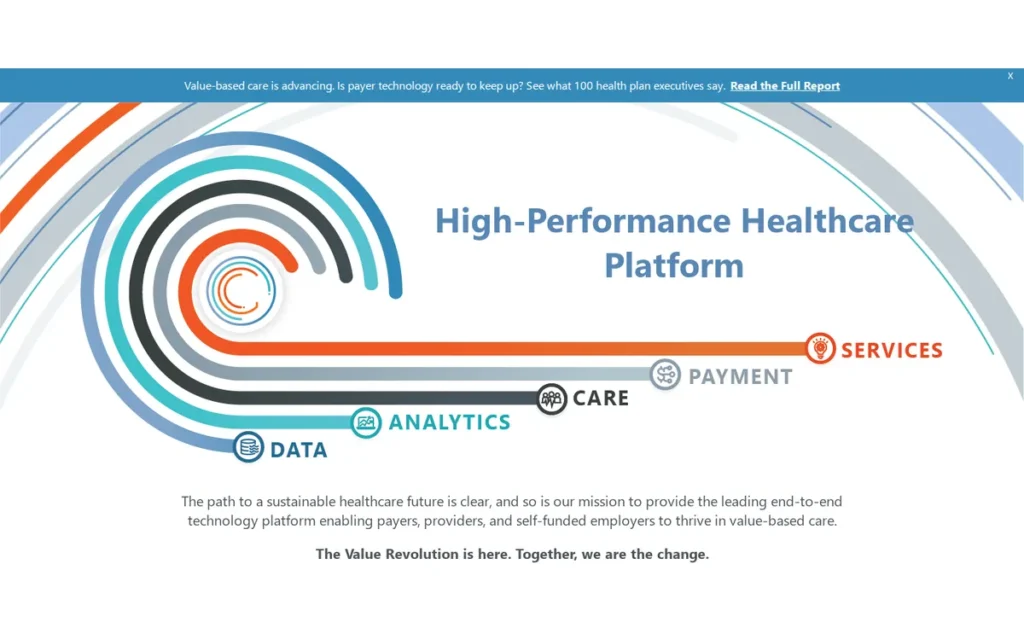
Category: Bundle Administrator, configures, adjudicates, and pays episode-based bundles from end to end.
At a Glance
- Category: Bundle Administrator
- Best For: Payers, TPAs, and self-funded plans running prospective bundles without replacing their claims system
- Price Range: Pricing on request (no public pricing as of November 2026)
- Primary Strength: Cedar Gate Technologies documents the most complete prospective-bundle workflow in this review, from episode modeling through adjudication and payment distribution.
- Biggest Limitation: Cedar Gate Technologies has almost no independent user reviews, and its public materials don’t clearly document how it handles retrospective reconciliation.
- One-Line Summary: Cedar Gate Technologies is a bundled-payment administration platform, now an IQVIA business, that adjudicates and pays prospective episode bundles inside existing claims systems and offers optional managed program services.
- Last Verified: November 2026
Overview
Cedar Gate Technologies is a value-based care platform owned by IQVIA. Its Bundles Adjudication and Bundles Program Management products let payers, TPAs, and self-funded plans design, adjudicate, and pay prospective episode bundles without replacing their existing claims system.
Cedar Gate Technologies sells its software alone (self-service) or with managed services. IQVIA acquired Cedar Gate Technologies from GTCR, the private equity firm that backed its 2014 launch (MarketScreener, date not disclosed). The company reports more than 1,000 employees (Cedar Gate, 2026).
Key Features
- Cedar Gate Technologies’ Bundles Adjudication applies configurable episode triggers, eligibility, pricing, and payment rules to claims in real time and returns results to the payer’s claims system through an API.
- Cedar Gate Technologies supports virtual episode definitions that can be tested against historical fee-for-service claims before launch, and one brain-and-spine program used 35 bundle categories (Cedar Gate, 2026).
- Cedar Gate Technologies’ Bundles Program Management covers the program lifecycle, from design and provider contracting through daily operations and payments.
- Cedar Gate Technologies publishes guidance and an offering for CMS’s TEAM model, which began in January 2026 (Cedar Gate, 2026).
Best For
Cedar Gate Technologies is best for payers, TPAs, and self-insured plan operators that want claims adjudication and payment distribution in one platform, including organizations that prefer to outsource program operations.
Strengths
- Cedar Gate Technologies’ MedBen / Brain & Spine Network program was the subject of a KLAS Points of Light case study. The case study reported 60% lower total cost for participants than for non-participants, about 50% lower surgery rates, 91% of bundles performed in ambulatory surgery centers, and 97% patient satisfaction (KLAS Research, 2026; vendor- and partner-reported). MedBen waived deductibles and copays for participants, which helps explain those results (MedBen, 2026).
- Cedar Gate Technologies reports that Metro Nashville Public Schools and Vanderbilt Health saved the employer $400,000 through prospective maternity bundles (Cedar Gate, 2026; vendor-reported).
- Cedar Gate Technologies reports that CardioVascular Care Providers cut spending per high-risk cardiac patient by 26% (Cedar Gate, 2026; vendor-reported).
- Cedar Gate Technologies connects to existing claims systems through an API, so buyers don’t have to replace their claims platform (Cedar Gate, 2026; vendor documentation).
Limitations
Cedar Gate Technologies gives up independent user validation in exchange for documented workflow depth. Cedar Gate Technologies’ own G2 page has no reviews, and the related “Cedar Gate Payment” listing (3.0/5 from 1 review) may describe a different product (G2, 2026).
- Cedar Gate Technologies’ public materials focus on prospective bundles, so TEAM hospitals should ask for a demonstration of retrospective reconciliation.
- Cedar Gate Technologies does not state how long implementation takes, and PlugRoute could not verify its HITRUST certification status.
- Cedar Gate Technologies’ managed-service option can create dependence on the vendor, so buyers should review data portability and exit terms.
- Cedar Gate Technologies reports that more than 700 of its 1,000+ employees are based in Nepal, so buyers should confirm support hours and data handling (Cedar Gate, 2026).
Verdict
Of the five vendors PlugRoute reviewed in November 2026, Cedar Gate Technologies documents the most complete workflow for administering prospective bundles. It is also the only one that documents episode modeling, real-time claims adjudication, and payment distribution in a single workflow.
TPAs should ask Cedar Gate Technologies for an implementation plan specific to their claims platform and for references from comparable TPAs. TEAM participants should also ask for a reconciliation demo.
2. Carrum Health: Best for Evidence-Backed Employer Surgical Bundles

Category: Employer Bundle Network, delivers prospectively priced specialty-care bundles to self-insured employers through vetted provider networks.
At a Glance
- Category: Employer Bundle Network
- Best For: Self-insured employers and public plans that want surgical and specialty bundles backed by independent savings evidence
- Price Range: Pricing on request (no public PEPM or platform fees as of November 2026)
- Primary Strength: Carrum Health has the strongest independent outcome evidence in this review, including a 2021 RAND study that found more than 45% savings per procedure.
- Biggest Limitation: Carrum Health’s results depend on how many members use the benefit, and Nevada’s public employee plan reported a 12.1% conversion rate in 2026.
- One-Line Summary: Carrum Health is an employer benefit that contracts directly with centers of excellence at single bundled prices, and a 2021 RAND study of 2,372 surgeries found it saved more than 45% per procedure.
- Last Verified: November 2026
Overview
Carrum Health is a centers-of-excellence benefit for self-insured employers. It contracts directly with vetted surgical and specialty providers at a single bundled price, so employees get covered procedures through one coordinated episode. The member pays $0 out of pocket when the employer’s plan design waives cost-sharing.
Carrum Health was founded in 2014 by CEO Sach Jain and reported 10M covered lives in 2026 (Carrum Health, 2026; company-reported). Carrum Health tied Cedar Gate Technologies on PlugRoute’s weighted score (35 points each) and placed second only on the workflow-coverage tiebreaker.
Key Features
- Carrum Health negotiates one bundled price per episode that covers the procedure, facility, anesthesia, and pre- and post-operative care.
- Carrum Health lets employers waive copays, deductibles, and coinsurance for covered episodes, depending on plan design.
- Carrum Health includes a complication warranty, with terms that vary by employer contract.
- Carrum Health reports that 90% of Americans live within 50 miles of one of its centers of excellence, with an average distance of 29 miles (Carrum Health, 2026; company-reported).
- Carrum Health has expanded into cancer care through a Memorial Sloan Kettering collaboration and into substance-use treatment. It also offers mental health through partner Lyra and weight management through partner Virta (Carrum Health, 2025–2026).
Best For
Carrum Health is best for self-insured employers and public-sector plans that want independently validated surgical savings to present to a CFO or board, and that are willing to invest in member engagement to drive take-up.
Strengths
- A 2021 RAND study covered 2,372 joint replacement, spinal fusion, and bariatric surgeries across eight employers. It found that Carrum Health saved more than 45% per procedure (an average of $16,144 per surgery) and cut medical costs for covered procedures by 10.7%. It also found that 30% of members recommended for surgery were redirected to less invasive care (RAND, 2021; claims data 2016–2020; summarized by Carrum Health and covered by HealthLeaders).
- Carrum Health’s Nevada PEBP program recorded a Net Promoter Score of 87 between July 2024 and May 2026 (Nevada PEBP, 2026; public-sector data).
- Carrum Health reports that US Foods avoided 27% of unnecessary surgeries and paid 27–47% less per procedure (Carrum Health, 2026; vendor case study).
- Carrum Health members on Reddit describe $0 surgery costs plus covered travel, a hotel, and a $1,500 expense stipend (Reddit r/gastricsleeve, 2025).
Limitations
Carrum Health gives up broad access in exchange for a concentrated, contracted network, so its results depend on employees choosing to use the benefit. Nevada PEBP reported 2,208 registrations and 109 completed consults or surgeries, 70 of them surgeries. That is a 12.1% conversion rate as of May 15, 2026 (Nevada PEBP, 2026).
- Carrum Health members sometimes travel for care, and one Reddit member described flying from Seattle to Monterey (Reddit r/gastricsleeve, 2025).
- Carrum Health covers only contracted procedures, and its complication warranty terms vary by contract.
- Carrum Health’s RAND evidence covers claims from 2016–2020 and three procedure types, and the study did not quantify savings from avoided surgeries.
- Carrum Health has no presence on G2 or Trustpilot, and it publishes no fees.
Users on r/gastricsleeve shared their experience:
“I ended up not qualifying for the COE program after waiting for over a year because Walmart’s insurance was my secondary plan. But I will say that if Carrum is your administrator everything moves FAST. You likely won’t have to deal with a lot of the waiting periods and requirements common with other insurance.” Posted by u/Quirktato
Takeaway: Carrum Health speeds up care for members who qualify, but eligibility rules such as secondary-coverage conflicts can shut out members who have already waited for months.
Verdict
Of the employer programs PlugRoute reviewed, Carrum Health has the strongest independent outcome evidence: a 2021 RAND study of 2,372 surgeries that found more than 45% savings per procedure. For Carrum Health, how many members use the benefit limits ROI more than the unit price does.
Before signing, employers should ask Carrum Health for ZIP-code-level access maps, take-up data from comparable employers, and its complication warranty terms in writing.
3. Lantern (formerly SurgeryPlus): Best for Local Multi-Specialty Employer Access
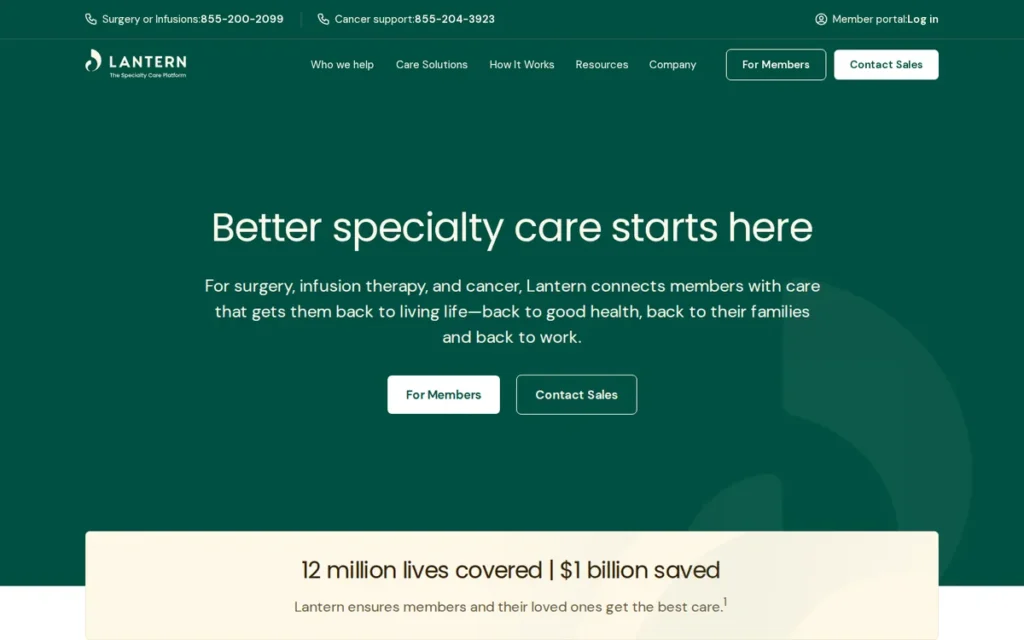
Category: Employer Bundle Network, delivers prospectively priced specialty-care bundles to self-insured employers through vetted provider networks.
At a Glance
- Category: Employer Bundle Network
- Best For: Large or dispersed self-insured employers that want local access across surgery, cancer, and infusion
- Price Range: Pricing on request (performance-based; no public PEPM or per-case fees as of November 2026)
- Primary Strength: Lantern has the widest specialty scope and the largest reported reach in this review, serving 12M people across 1,000+ employers in 2026.
- Biggest Limitation: Lantern’s outcome figures are self-reported, not independently validated, and inconsistent across its own pages.
- One-Line Summary: Lantern, formerly SurgeryPlus, is a specialty-care benefit for self-insured employers that bundles surgery, cancer, and infusion care through a surgeon-level, local-first network serving 12M people in 2026.
- Last Verified: November 2026
Overview
Lantern was called SurgeryPlus until its September 2024 rebrand. It is a specialty-care benefit for self-insured employers that sends members to a vetted, mostly local network for surgery, cancer care, and infusion therapy at prospective bundled prices, with support from nurses and care advocates.
Lantern was founded in 2011 in Dallas and reported serving 12M people and 1,000+ employers in 2026 (Lantern, 2026; company-reported). Searchers and AI answers may still use the SurgeryPlus or Employer Direct Healthcare names for Lantern.
Key Features
- Lantern selects providers at the individual surgeon level and says it applies more than 300 quality and appropriateness measures (Lantern, 2026; company-reported).
- Lantern’s surgery network includes 650+ facilities, and Lantern reports that 81% of members drive under 50 miles for care (Lantern, 2026; company-reported).
- Lantern’s infusion program includes 500+ providers covering about 500 therapies and steers patients to home or ambulatory sites (Lantern, 2026; company-reported).
- Lantern’s cancer program uses oncology nurse navigation and NCI-designated cancer centers.
- Lantern offers performance-based pricing with no upfront cost and an advertised 2× guaranteed ROI for surgery.
Best For
Lantern is best for large self-insured employers and state or municipal plans with dispersed workforces that want local access and one vendor across several specialties, and that will negotiate the guarantee terms in detail.
An employee who received a Lantern benefit notice on r/cernercorporation noted:
“It’s a letter telling you about Lantern benefits. Zero cost procedures and post care covered by surgeons in your area. I checked on it and to me, it’s just a layer of bureaucracy but it will save money.” Posted by u/AlienTrapDoor
Takeaway: Employees offered Lantern see its local, zero-cost surgery benefit as a real money-saver but also as one more administrative layer to navigate, so employers need to invest in clear member communication.
Strengths
- Lantern reported serving 12M people and 1,000+ employers, including a North Carolina State Health Plan contract covering more than 500,000 members (Lantern, 2026; company-reported).
- Lantern secured a $30M strategic investment led by Morgan Health and Echo Health Ventures in March 2026 (Lantern, 2026; confirmed by Morgan Health). That followed a reported $92M secondary investment at a $1B valuation (Fierce Healthcare, 2024).
- Lantern’s reported clients include Hyatt, 7-Eleven, the State of Florida, Phillips 66, Medtronic, and Amtrak (D Magazine, 2026).
- Lantern reported about $700M in cumulative employer savings in 2024 and $1B+ in 2026. Lantern also reports a complication rate under 1%, against an 8–15% benchmark, and an average time to care of 17 days versus 38 (Lantern, 2026; company-reported).
Limitations
Lantern gives up verified evidence in exchange for scale and scope. Every Lantern outcome figure is self-reported, and PlugRoute found no independent study or public-sector dataset that validates Lantern’s results.
- Lantern’s own pages disagree on medical-spend reduction: one page reports 3% and another reports 4% (Lantern, 2026).
- Lantern’s “$15+ PEPM in surgical savings” and “2× guaranteed ROI” describe savings and a guarantee, not prices, and Lantern does not publish the guarantee’s terms, exclusions, or measurement method.
- Lantern’s surgeon-level network leaves out surgeons it does not select, which narrows member choice.
- Lantern has no member review record on any review platform or on Reddit.
Verdict
Of the employer bundle networks PlugRoute reviewed, Lantern reports the broadest specialty scope and the largest reach (12M people, 2026), but its outcome claims are not independently validated. Lantern suits dispersed workforces that care more about local access than travel-based models.
Employers should get Lantern’s 2× ROI guarantee terms, its savings measurement method, and reconciled outcome figures in writing.
4. Zelis: Best for Payer Pricing and Payouts at Scale (Adjacent Fit)
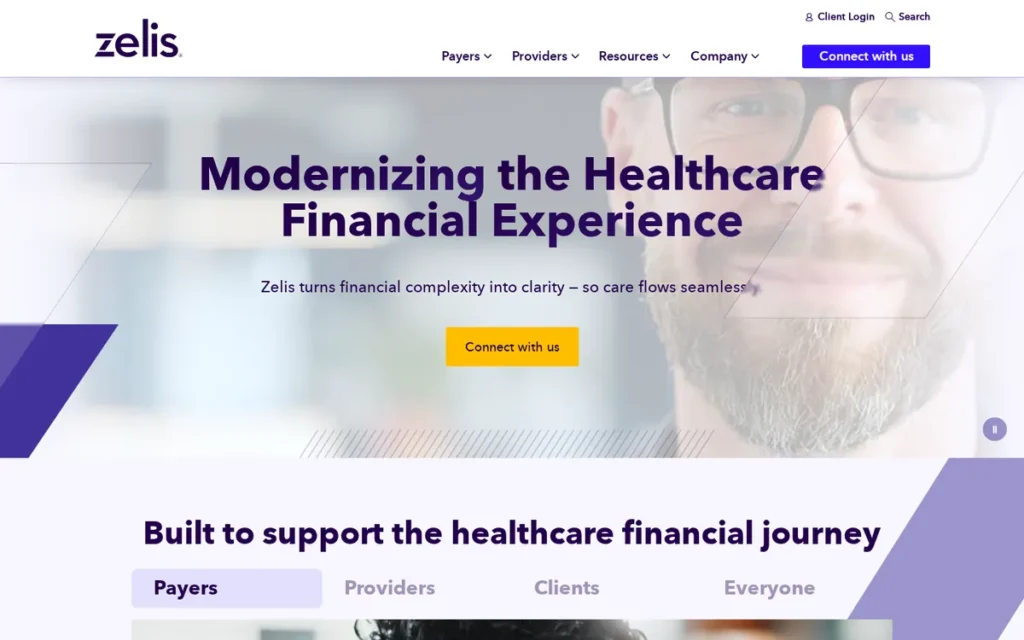
Category: Payment Infrastructure (Adjacent Fit), prices claims, checks payment integrity, and distributes provider payments, but does not define or adjudicate episode bundles.
At a Glance
- Category: Payment Infrastructure (Adjacent Fit)
- Best For: Health plans and TPAs that need claims pricing, payment integrity, and provider payouts around a bundle program built elsewhere
- Price Range: Pricing on request for payers; provider-side ACH fees disclosed at enrollment (as of November 2026)
- Primary Strength: Zelis runs payment infrastructure at a scale no other vendor in this review matches, with more than $300B in payment volume as of December 2025.
- Biggest Limitation: Zelis has no documented product built to define, trigger, or adjudicate episode-based bundles.
- One-Line Summary: Zelis is a payer-side claims pricing, payment integrity, and provider payments platform that handles more than $300B in payment volume. That makes it an adjacent fit for bundled-payment programs rather than a bundle administration engine.
- Last Verified: November 2026
Overview
Zelis is a healthcare payments and claims-optimization platform for health plans and TPAs. It combines claims pricing, AI-assisted payment integrity, and provider payments, and it can support the pricing and payout steps of a bundle program without being an episode-administration engine.
Zelis appears in G2’s bundled pay management category (G2, 2026). PlugRoute labels Zelis an adjacent fit because no source documents a Zelis episode-definition product.
Key Features
- Zelis prices claims using network discounts, reference-based pricing, and out-of-network pricing methods.
- Zelis’s payment integrity service combines AI with human clinical and coding review before claims are paid.
- Zelis’s ZAPP pays providers by ACH, virtual card, check, or prepaid card, using configurable routing rules and consolidated remittance.
- Zelis’s ZAPP Edge brings payments and remittances from 485+ payers into one provider portal (Zelis, 2026).
- Zelis states that its provider payment service is HITRUST-certified (Zelis, 2026; company-stated).
Best For
Zelis is best for payers and TPAs that already have, or are buying, a bundle-definition and adjudication engine and need large-scale pricing, payment integrity, and provider payout infrastructure around it.
Strengths
- Zelis was named a Leader in Everest Group’s 2026 Pre-payment Integrity Solutions PEAK Matrix, which assessed 28 providers (Everest Group, 2026; via Zelis). This is the only analyst ranking PlugRoute found for any vendor in this review, and it covers payment integrity, not bundle administration.
- Zelis reports more than $300B in payment volume, 725 payer clients, and 850,000+ providers as of December 31, 2025 (Zelis, 2026; company-reported).
- Zelis has 19 G2 reviews, the most of any vendor in this review, and users praise its responsive support and ease of use (G2, 2026).
- Zelis reports that one payer reached 70% EFT adoption and cut $400,000 in print and postage costs (Zelis, 2026; anonymous customer story).
Limitations
Zelis gives up bundle-specific functionality in exchange for payments scale. Zelis has no documented engine for defining episodes, setting triggers, or adjudicating bundles, so buyers need a separate administration or analytics vendor.
- Zelis charges providers fees for premium ACH that are disclosed only at enrollment, and one G2 reviewer criticized virtual-card fees (G2, 2026).
- When a provider chooses the virtual-card option, Zelis sends that provider’s future payments by virtual card (Zelis, 2026).
- Zelis’s out-of-network pricing reductions can lead to disputes with providers.
- Zelis users on G2 mention complexity, Zelis’s customer stories are anonymous, and Zelis does not publish payer pricing (G2, 2026).
This aligns with provider sentiment on r/therapists:
“Allegiance (TPA of Cigna) does. It was either that or wait for the physical checks that could take up 6 weeks to get. FWIW Zelis has been okay, even if they do skim a small amount off the top. Allegiance checks are literally the only one I funnel through Zelis, so the loss is very negligible. I HATE their new UI, though.” Posted by u/Siggykewts
Takeaway: Providers tolerate Zelis when a payer or TPA effectively requires it, but its per-payment fees and interface frustrate them, which is a real friction point for payers that want providers inside a bundle network.
Verdict
Zelis is the largest payment-infrastructure vendor by reported volume in G2’s bundled pay management category. Zelis is still an adjacent fit, because it supports bundle pricing and payouts rather than defining or adjudicating episodes.
Buyers should pair Zelis with a dedicated bundle engine. Ask Zelis for the full provider fee schedule and the process providers use to opt out of virtual-card payments.
5. Dynafios: Best for Physician Gainsharing Compliance (Adjacent Fit)
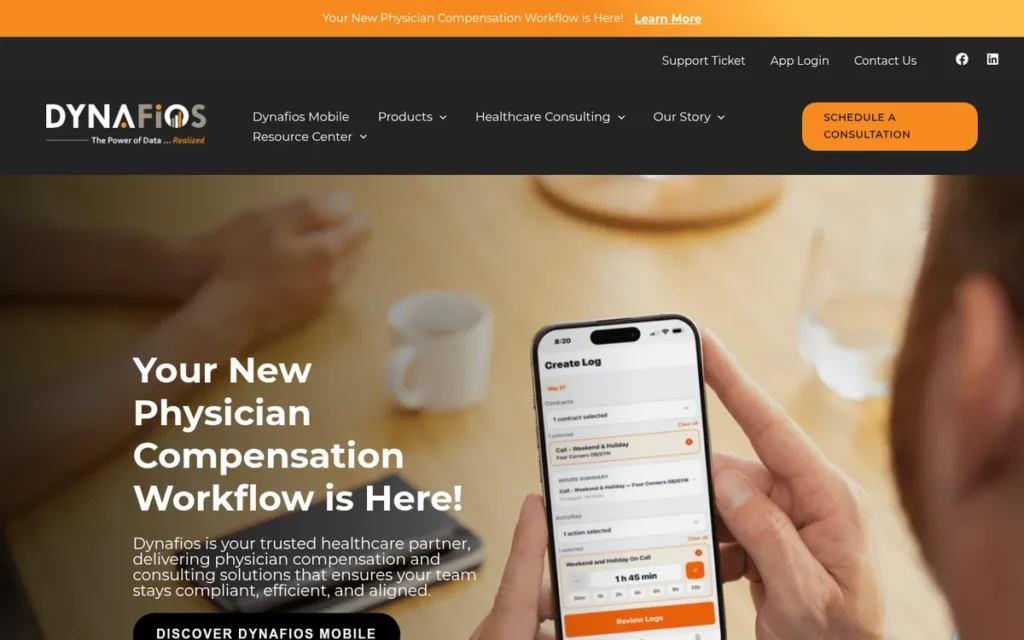
Category: Provider Program & Compliance Partner (Adjacent Fit), supports providers’ compliance obligations in episode programs rather than administering bundles directly.
At a Glance
- Category: Provider Program & Compliance Partner (Adjacent Fit)
- Best For: Hospitals that must document physician gainsharing, co-management, and contract payments for fair-market-value compliance
- Price Range: Pricing on request (no public pricing for consulting or TRACE as of November 2026)
- Primary Strength: Dynafios’s TRACE provides an auditable record of physician time and contract payments and is rated 4.7/5 from 14 Capterra reviews.
- Biggest Limitation: Dynafios has no documented tools for episode design, adjudication, or reconciliation, and its TRACE mobile app is rated 1.9/5 on Google Play.
- One-Line Summary: Dynafios is a physician compensation consulting firm whose TRACE software logs and audits physician contract payments, which makes it an adjacent fit for hospitals managing gainsharing under bundled-payment programs.
- Last Verified: November 2026
Overview
Dynafios is a Washington-based healthcare consulting and software company that helps hospitals with physician compensation, alternative payment models, and compliance. Its TRACE software logs physician time and contract activity so that gainsharing and co-management payments can be audited.
Dynafios is listed in G2’s category as “Dynafios Bundled Payment Services” (G2, 2026), but Dynafios’s documented software focuses on physician-payment compliance. Dynafios was founded in 2004 and is privately held.
Key Features
- Dynafios’s TRACE records physician time against contracts for medical directorships, on-call coverage, and co-management arrangements.
- Dynafios’s TRACE sends logs through e-signature and approval workflows and generates invoices with a full audit trail.
- Dynafios’s TRACE connects to Ntracts contract lifecycle management through a partnership announced in 2021 (Ntracts, 2021).
- Dynafios provides consulting on physician compensation, alternative payment models, and regulatory compliance.
Best For
Dynafios is best for hospitals entering TEAM or commercial bundles that must document physician gainsharing and co-management payments against fair-market-value rules, and that already use a separate tool for episode analytics.
Strengths
- Dynafios’s TRACE holds a 4.7/5 rating from 14 Capterra reviews, and users praise its ease of use and time savings (Capterra, 2026).
- Dynafios says it has served 550+ healthcare facilities in 40 states (Dynafios, 2026; company-reported).
- Dynafios’s TRACE keeps an audit trail of physician contract activity, which helps document gainsharing compliance in episode programs (GetApp, 2026; vendor documentation).
Limitations
Dynafios gives up bundle-management depth in exchange for a focus on physician compliance. Dynafios has no documented tools for episode design, adjudication, or reconciliation, and it publishes no bundled-payment clients or outcomes.
- Dynafios’s TRACE mobile app is rated 1.9/5 from 15 Google Play reviews, which cite freezing, login and update loops, and trouble entering or approving logs (Google Play, 2026).
- Dynafios’s TRACE Capterra reviewers report trouble submitting signatures on Android and say time can’t be entered in increments smaller than 15 minutes (Capterra, 2026).
- Dynafios’s TRACE has one G2 review, and that review criticizes usability, the lack of customization, and repeated resubmissions (G2, 2026).
- Dynafios is a small company with 11–50 employees on LinkedIn (LinkedIn, 2026), and it does not publish pricing.
Verdict
Dynafios is an adjacent fit for bundled pay management in 2026. It is useful for documenting physician gainsharing and co-management payments, but it does not design, adjudicate, or reconcile episodes.
TEAM hospitals should use Dynafios alongside a reconciliation analytics vendor. Because TRACE’s Capterra and Google Play ratings are so far apart, buyers should pilot the Dynafios TRACE mobile app with physicians before committing.
How Do These Vendors Compare on Workflow Coverage and Evidence?
No single vendor in this review documents every step of the bundled-payment lifecycle. As of November 2026, none of the five vendors PlugRoute reviewed fully documents retrospective reconciliation for CMS’s TEAM model, which is the core capability TEAM hospitals need. Cedar Gate Technologies covers the most steps. Only Carrum Health and Cedar Gate Technologies have third-party or public-sector outcome validation.
As of November 2026, none of the five healthcare vendors in PlugRoute’s review publishes pricing.
Workflow Coverage Matrix (documented capabilities only)
| Vendor | Episode Definition | Contracting / Network | Adjudication | Payment Distribution | Reconciliation Analytics | TEAM Support Documented |
|---|---|---|---|---|---|---|
| Cedar Gate Technologies | Yes | Yes | Yes | Yes | Not clearly documented | Yes (offering published) |
| Carrum Health | Partial (fixed procedure bundles) | Yes | No | Not documented | Not documented | No |
| Lantern | Partial (fixed procedure bundles) | Yes | No | Not documented | Not documented | No |
| Zelis | No | Pricing only | No | Yes | No | No |
| Dynafios | No | Physician contracts only | No | Partial (physician invoicing) | No | No |
Evidence and Transparency Comparison
| Vendor | Evidence Grade (C1, 1–5) | Review Data | Public Pricing | Status Verified |
|---|---|---|---|---|
| Cedar Gate Technologies | 4 (KLAS-published case study) | 0 on own G2 page; 1 on a possibly mismatched listing | No | Yes |
| Carrum Health | 5 (RAND study; public-sector data) | No platform reviews; Nevada PEBP NPS 87 | No | Yes |
| Lantern | 2 (vendor-reported, inconsistent) | None found | No | Yes |
| Zelis | 3 (analyst recognition outside bundled payments, capped at 3) | 19 G2 reviews | No | Yes |
| Dynafios | 1 (no quantified outcomes) | 14 Capterra; 15 Google Play; 1 G2 | No | Yes |
Looking for Bundled Payroll and HR Software Instead?
Small businesses that search for “bundled pay management” usually want one platform that combines payroll, HR, benefits administration, and time tracking. PlugRoute did not rank payroll vendors here, because their tier contents and fees were not verified to the same standard as the healthcare vendors in this ranking.
AI answers commonly name these payroll platforms, which PlugRoute has not yet ranked:
- Gusto is a payroll and HR platform for small businesses.
- OnPay is a payroll and HR platform for small businesses.
- Rippling is a combined HR, IT, and payroll platform.
- ADP RUN is ADP’s payroll product for small businesses.
- Paychex Flex is Paychex’s payroll and HR platform.
Before comparing payroll bundles, check these cost traps:
- Payroll vendors often keep time tracking and multi-state payroll for higher tiers, so the cheapest plan may not be fully bundled.
- Payroll vendors’ listed prices can be promotional, so confirm what the price will be after the promotion ends.
- Benefits insurance premiums are billed separately from payroll software fees.
- Payroll vendors may charge setup, year-end form, or off-cycle payroll fees, so ask for them in writing.
See PlugRoute’s independent review of bundled payroll and HR software for small businesses for a dedicated comparison.
What Red Flags Should I Watch For When Evaluating Bundled Pay Management Software?
The biggest red flags in bundled pay management are evidence that looks stronger than it is and terms the vendor won’t put in writing. PlugRoute saw each of the five red flags below among the five vendors it reviewed in November 2026, and each one maps to a question you can ask before signing.
Red Flag #1: Savings Claims Presented as Prices A savings figure is an outcome, not a fee. None of the five vendors PlugRoute reviewed publishes fees, so every number on a vendor website is an outcome claim. Lantern’s “$15+ PEPM in surgical savings” and Carrum Health’s $16,144 average savings per surgery both describe results, not prices.
For a 1,000-employee company, $15 PEPM works out to about $180,000 a year in projected savings. That figure is not the vendor’s fee, and you won’t know the fee until you get a written quote.
Red Flag #2: Ratings Based on One or Two Reviews A 5.0/5 or 3.0/5 rating based on one review gives buyers too little evidence to judge usability or support. In this category, no vendor has more than 19 G2 reviews (G2, 2026). Always check the review count, and confirm that the listing describes the product you are evaluating.
Red Flag #3: No Documented Retrospective Reconciliation for TEAM A vendor that documents only prospective bundles may not support TEAM, which reconciles hospital performance against target prices after the fact (CMS, 2026). As of November 2026, none of the five vendors PlugRoute reviewed fully documents TEAM reconciliation, so TEAM hospitals should ask for a live demo using their own episode data.
Red Flag #4: Guarantees Without Published Terms An ROI guarantee or complication warranty is only as strong as its exclusions and the method used to measure it. Before signing, ask for the guarantee’s contract language, including who calculates savings and what baseline they measure against, so you know what the vendor actually promises.
Red Flag #5: Undisclosed Provider-Side Payment Fees An electronic payment option may still cost providers money if the fees are disclosed only at enrollment. Before launch, payers should check whether their provider partners will face ACH or virtual-card fees. Hidden fees can damage provider relationships inside a bundle network and slow recruitment.
What Questions Should I Ask Before Choosing Bundled Pay Management Software?
The most important questions test each vendor against your own program type, your claims data, and your contract terms before you sign. Employers should also ask how many members actually use the benefit. Ask each question below in writing, and compare the answers across every vendor on your shortlist.
Question #1: Is my program prospective or retrospective? Your program type determines your shortlist, so settle it before you request any demo. Prospective programs need software that adjudicates claims and distributes payments. Retrospective programs such as CMS’s TEAM model need reconciliation analytics that compare actual episode spending against target prices.
Here is the difference in practice. In a prospective bundle, a hip replacement is paid one agreed price up front. Under TEAM’s retrospective design, the hospital bills each service normally, and months later CMS compares total 30-day spending with a target price.
As one user on r/HospitalBills described:
“If you go to a urologist directly affiliated with a hospital for the exact same reason, in many cases, besides being billed for that service (and probably at a higher rate than a urologist in a private practice), you could also be charged a facility fee. That’s legal and a lot of hospitals, but not all, do that.” Posted by u/corgi0603
Takeaway: Under fee-for-service billing, the same service can generate different and additional charges depending on where it is delivered, which is exactly the cost variation that bundled-payment reconciliation has to capture.
Question #2: Can you demonstrate our exact episode definitions, exclusions, and outlier rules using our claims data? A strong vendor can model your episodes against your historical claims before launch, using your own triggers, exclusions, and outlier rules. Be cautious of demos that use only sample data, because those rules cause most reconciliation disputes once a program goes live.
Question #3: How do you integrate with our claims, EHR, and revenue-cycle systems, and what are the setup fees? A good answer names the integration method (for example, API), the systems the vendor already connects to, a timeline, and itemized setup fees. Ask whether the vendor takes in standard 837 claims and 834 eligibility files, and how it handles claims runout before final reconciliation.
Ask for references from organizations that use the same claims platform you do.
Question #4: Which of your outcome figures are independently validated? A credible vendor separates independent studies, analyst findings, and public-sector data from its own reported results, and labels each figure. In PlugRoute’s November 2026 review, only Carrum Health and Cedar Gate Technologies had third-party or public-sector outcome validation. Ask every vendor which of its figures an outside party has checked.
Question #5: What are the data portability and exit terms if we leave a managed service? A managed-service contract should say how and when your episode definitions, claims history, and reports will be returned to you in usable formats. Without written exit terms, outsourcing program operations can lock you into one vendor, and switching later can mean rebuilding your episode definitions from scratch.
Question #6: For employer programs, what member take-up have comparable employers achieved? A good employer-bundle vendor shares registration, conversion, and completed-procedure data from comparable employers. In employer bundle programs, member take-up limits ROI more than unit price does. Nevada’s public employee plan converted 12.1% of 2,208 Carrum Health registrations into consults or surgeries (Nevada PEBP, 2026).
At that 12.1% rate, 1,000 registered members would produce about 121 consults or surgeries. Per-procedure savings therefore apply to only a small share of the people who sign up.
How Did We Rank These Bundled Pay Management Software Vendors?
PlugRoute scored five healthcare bundled-payment vendors on six criteria, and the three primary criteria count double. Research was last verified in November 2026. Cedar Gate Technologies and Carrum Health tied on weighted score, and Cedar Gate Technologies placed first on the published tiebreaker, documented workflow coverage.
Primary criteria (counted double):
- C1, Independent or Third-Party Outcome Evidence: C1 rewards proof that doesn’t come from the vendor’s own marketing, because buyers otherwise can’t tell independent results from sales claims.
- C2, Bundled-Payment Workflow Coverage: C2 counts the capabilities a vendor documents across the bundle lifecycle, because a tool that covers only one step forces buyers to manage several vendors.
- C3, 2026 Program Currency and Vendor Viability: C3 checks for active operation, clear ownership, and support for current programs, because AI answers still recommend vendors that have left the category.
Secondary criteria (counted once):
- C4, Market Scale and Adoption: C4 uses dated, self-reported scale figures and gives extra weight to named contracts that third parties have verified.
- C5, User Review and Community Sentiment Signal: C5 shows every rating with its review count and treats fewer than 5 reviews as insufficient data.
- C6, Commercial Model Transparency: C6 rewards vendors that disclose their pricing structure, guarantee terms, and provider-side fees.
PlugRoute’s five-level evidence grade for C1 works as follows:
- Grade 5 means an independent or peer-reviewed study, or a public-sector dataset.
- Grade 4 means analyst recognition or a case study published by an independent firm.
- Grade 3 means vendor-reported results with named customers.
- Grade 2 means vendor-reported results that are anonymous or more than five years old.
- Grade 1 means no quantified outcomes, or figures that contradict each other.
Analyst recognition of capabilities other than bundled payments is capped at Grade 3. That is why Zelis’s 2026 Everest Group Leader rating, which covers pre-payment integrity, scores 3.
Criteria Scores (maximum weighted total: 45)
| Rank | Vendor | C1 | C2 | C3 | C4 | C5 | C6 | Weighted Total |
|---|---|---|---|---|---|---|---|---|
| 1 | Cedar Gate Technologies | 4 | 5 | 5 | 4 | 1 | 2 | 35 |
| 2 | Carrum Health | 5 | 3 | 5 | 4 | 3 | 2 | 35 |
| 3 | Lantern | 2 | 3 | 5 | 5 | 1 | 3 | 29 |
| 4 | Zelis | 3 | 2 | 4 | 5 | 3 | 1 | 27 |
| 5 | Dynafios | 1 | 2 | 3 | 2 | 3 | 1 | 18 |
Cedar Gate Technologies placed first because it documents more of the workflow than Carrum Health (C2: 5 vs. 3), and the two serve different buyers.
Scope note: PlugRoute did not rank the following vendors because they were not researched to the same depth as of November 2026. PlugRoute plans to evaluate them in a future update:
- Milliman Bundled Payment Reporting Interface was named in AI answers.
- Lightbeam Health Solutions was named in AI answers.
- StrataJazz Episode Analytics (Strata Decision) was named in AI answers.
- MDsave was named in AI answers.
- Transcarent was mentioned by Carrum Health members on Reddit (Reddit r/gastricsleeve, 2025).
Exclusions:
- Signify Health was excluded because it announced in July 2022 that it would exit CMS’s BPCI Advanced program and wind down its Episodes of Care Services business (Healthcare Finance News, 2022). CVS Health completed its acquisition of Signify Health on March 29, 2023 (Signify Health, 2023).
- PROMETHEUS Analytics was excluded because PlugRoute could not verify an official domain, and its G2 listing had 0 reviews (G2, 2026).
PlugRoute has no affiliate relationships with any company listed. Rankings are determined entirely by research data and objective evaluation criteria.
What Do Buyers Ask Most About Bundled Pay Management Software?
Buyers most often ask what bundled pay management software costs, what TEAM hospitals need, and how PlugRoute ranks vendors. Each answer below stands on its own and draws on the same evidence and criteria used throughout this ranking, last verified in November 2026.
How much does bundled pay management software cost?
As of November 2026, none of the five healthcare vendors in PlugRoute’s review publishes pricing, so you need a quote for every price. Ask for every setup and provider-side fee in writing, and treat published savings figures as outcomes, not prices. Vendors in this category commonly use the fee models listed below.
- A per member per month (PMPM) fee scales with the number of covered members.
- A per employee per month (PEPM) fee scales with the number of enrolled employees.
- A per-episode fee is charged for each completed bundle.
- A shared-savings model pays the vendor a portion of documented savings.
- A software-plus-services model combines a license with managed-service fees.
What software do hospitals need for CMS’s TEAM model?
Hospitals in CMS’s TEAM model need retrospective reconciliation analytics that compare 30-day episode spending against CMS target prices. Hospitals that gainshare with physicians also need tools to document those payments. As of November 2026, none of the five vendors PlugRoute reviewed fully documents TEAM reconciliation. Cedar Gate Technologies publishes a TEAM offering, and hospitals should ask for a live demo.
How does PlugRoute determine rankings?
PlugRoute ranks vendors against six published criteria and counts the three primary criteria double, so independent evidence and workflow coverage outweigh market scale. Each claim is dated and graded on a five-level evidence scale, and every rating is shown with its review count. All five vendors got the same entry structure and the same scrutiny, and each entry lists both strengths and limitations.
What Do Key Bundled Pay Management Terms Mean?
Buyers comparing bundled-payment vendors will run into specialized terms for payment models, pricing units, and compliance. The definitions below explain each term in plain language and why it matters when you evaluate proposals, contracts, and demos.
Bundled payment: A bundled payment is a single payment that covers all services in a defined episode of care, such as a surgery plus related follow-up. Bundled payments shift cost risk toward providers, so the contract’s definitions matter.
Episode of care: An episode of care is the set of services, providers, and days counted as one unit for payment. How an episode is defined determines which costs are included, and therefore whether a program saves money.
Prospective bundle: A prospective bundle is priced and paid at an agreed rate before or at the time of care. Prospective bundles need software that can adjudicate claims and distribute payments.
Retrospective reconciliation: Retrospective reconciliation is a process in which providers bill normally and actual episode spending is later compared against a target. Retrospective programs need strong analytics because the results arrive months after care.
Target price: A target price is the benchmark cost an episode is measured against during reconciliation. Buyers should understand how a target price is calculated, because unclear methods cause disputes.
Claims runout: Claims runout is the waiting period after an episode ends, when late claims can still be submitted. Runout delays final reconciliation and affects when savings or losses are known.
Claims adjudication: Claims adjudication is the process of checking a claim against plan and contract rules and deciding what to pay. In a bundle program, adjudication applies episode rules instead of paying each service separately.
Center of excellence (COE): A center of excellence is a provider selected for strong quality and cost performance in specific procedures. COE programs can lower costs, but they depend on members choosing to use them.
PEPM (per employee per month): PEPM is a fee or savings figure expressed per employee each month. Buyers should confirm whether a PEPM figure is a price or a savings claim.
PMPM (per member per month): PMPM is a fee expressed per covered member each month and is common in payer contracts. PMPM pricing scales with enrollment, so total cost rises as membership grows.
Gainsharing: Gainsharing is an arrangement in which a hospital shares episode savings with the physicians who helped achieve them. Gainsharing payments must be documented carefully to meet compliance rules.
Fair market value (FMV): Fair market value is the level of compensation that compliance rules require for physician arrangements, to avoid improper incentives. FMV documentation is a core audit requirement for physician payments under bundles.
Which Bundled Pay Management Tool Is Right for You?
Key Insights
- Cedar Gate Technologies is the only vendor in PlugRoute’s review that documents episode modeling, real-time adjudication, payment distribution, and a TEAM offering in one platform.
- Carrum Health has the strongest independent evidence among the reviewed vendors: a 2021 RAND study of 2,372 surgeries found more than 45% savings per procedure.
- Lantern reports the broadest employer specialty scope and the largest reach (12M people, 2026), but Lantern’s outcome figures are self-reported.
- Zelis and Dynafios are adjacent fits that support payouts or physician compliance.
- As of November 2026, none of the five healthcare vendors in PlugRoute’s review publishes pricing or fully documents TEAM reconciliation.
Payers and TPAs running prospective bundles should start with Cedar Gate Technologies, and add Zelis only if they need payment infrastructure at scale.
Employers that need evidence they can show a board should consider Carrum Health. Employers that care more about local access across several specialties should consider Lantern and get its guarantee terms in writing.
Use this three-step process before any demo:
- Shortlist two vendors from the category that matches your buyer type.
- Send the six evaluation questions above to each shortlisted vendor in writing.
- Ask each shortlisted vendor for its fee schedule, guarantee terms, and exit terms before you schedule demos.
TEAM runs through 2030, so PlugRoute expects more vendors to document retrospective reconciliation tools and will update this ranking as that evidence appears. Explore PlugRoute’s TEAM reconciliation readiness guide, or read PlugRoute’s full ranking methodology to see how every vendor was scored.
We update this guide quarterly. Last updated: November 2026.