The best AI patient engagement and operations software in 2026 depends on your bottleneck. Artera fits enterprise multi-EHR communications, Luma Health fits end-to-end patient access, NexHealth fits small-practice EHR write-back, and Assort Health fits specialty call-center overload. The category bundles six product types, so choose the tool that completes your workflow on your own EHR.
Front desks are buried in inbound calls, long holds and missed after-hours calls. Scheduling, intake and payments often sit in disconnected systems. Ambulatory groups rank patient access and engagement as their #1 IT investment priority (Industry research; Bain/KLAS, 2026). Phreesia leads intake, Weave leads phone-first practices and Notable leads back-office automation.
As one user on r/Chiropractic described:
“when I checked into a call service it was 2-3k/mo for the volume of my practice calls… cost prohibitive so I trained patients to schedule online with Jane and now only about 20% of my volume still calling…means i only have a small number I have to call back to schedule.” Posted by u/KDCWA
Takeaway: For small practices, human answering services cost too much to fix call overload, so shifting patients to self-scheduling and automation is the more workable way to cut inbound phone volume.
PlugRoute has no affiliate relationships with any company listed, and rankings are determined entirely by research data and objective evaluation criteria.
Rank #1 means the strongest overall documented evidence. It does not mean the best fit for every buyer. Start with the category framework, then use the decision table to match a vendor to your bottleneck.
What Are the 6 Categories of AI Patient Engagement & Operations Tools?
AI patient engagement and operations tools fall into six categories, and each one solves a different operational bottleneck. If you compare vendors across categories before naming your bottleneck, you end up with a mismatched shortlist. Each category below maps to one bottleneck and at least one ranked vendor in this 2026 evaluation.
- Communications Orchestrator (table label: Orchestrator): A Communications Orchestrator coordinates patient messaging and voice across channels, departments and EHRs, which solves fragmented communication. The ranked entry is Artera.
- Patient Access Platform (table label: Access): A Patient Access Platform completes scheduling, referral, waitlist and call workflows with write-back to the EHR, which solves fragmented access. The ranked entry is Luma Health.
- Scheduling & EHR Sync Platform (table label: Sync): A Scheduling & EHR Sync Platform books appointments and writes forms, payments and patient data back into the practice EHR, which removes manual re-entry. The ranked entry is NexHealth.
- Intake & Payments Platform (table label: Intake): An Intake & Payments Platform digitizes registration, eligibility, consent, check-in and collections, which reduces front-desk check-in burden. The ranked entry is Phreesia.
- Phone & Voice Agent (table label: Voice): A Phone & Voice Agent answers, routes or automates patient calls, which addresses call overload and missed calls. The ranked entries are Weave and Assort Health.
- Agentic Workflow Automation (table label: Agentic): An Agentic Workflow Automation platform uses AI agents to complete multi-step administrative tasks across EHRs and payer portals, which reduces back-office labor. The ranked entry is Notable.
Vendors often market three different kinds of “AI” under one label, and buyers should tell them apart:
- Patient-facing AI agents talk directly to patients by voice or text and can complete tasks such as booking.
- Staff copilots help employees draft responses or find information, and they do not talk to patients.
- Call analytics tools record, transcribe and score calls after they happen, and they do no patient work on their own.
How Do the Top AI Patient Engagement & Operations Tools Compare at a Glance?
Artera ranks first on independent validation, Luma Health second on documented access write-back, and NexHealth third on small-practice write-back and transparent terms. Phreesia, Weave, Notable and Assort Health follow, and each one leads a specific bottleneck. This comparison table summarizes category, fit, strength and limitation for all seven vendors.
| Rank | Company | Category | Best For | One-Line Summary | Key Capabilities | Primary Strength | Key Limitation |
|---|---|---|---|---|---|---|---|
| 1 | Artera | Orchestrator | Multi-EHR health systems, federal buyers | Artera is the best-validated enterprise patient communications platform in 2026, ranked #1 Best in KLAS for Patient Communications. | SMS, voice, email, web and chat; AI agents; 100+ messaging languages | #1 Best in KLAS 2026 (89.8); G2 4.8/5 (101–108 reviews, Nov 2026) | Waitlist and scheduling write-back depth not verified; no published containment rate |
| 2 | Luma Health | Access | Health systems fixing scheduling, referrals, waitlists | Luma Health documents the most patient-access workflows with EHR write-back in this 2026 evaluation. | Self-scheduling, waitlist backfill, referrals, Navigator voice/SMS | Published identity-verification metric (82% at UAMS, 2025); G2 4.8/5 (84 reviews, Nov 2026) | Reviewers report months-long custom integrations |
| 3 | NexHealth | Sync | Small/midsize practices, developers | NexHealth is the strongest 2026 choice for small practices that need bookings, forms and payments written back to the EHR. | Online booking, forms to chart, payments to ledger, Synchronizer API | Read/write sync across 15+ systems; G2 4.8/5 (138 reviews, Nov 2026); public API pricing | Reported sync lag up to 45 minutes; Messaging Coworker in limited pilot |
| 4 | Phreesia | Intake | Registration, check-in and collections at scale | Phreesia has the largest audited scale in intake and patient payments in this 2026 evaluation. | Intake, kiosks, eligibility, payments, VoiceAI, financing | ~180M visits in FY2026 (audited); Best in KLAS intake 2019–2022 | Lowest G2 rating in set (3.9/5, 45 reviews, Nov 2026) |
| 5 | Weave | Voice | Phone-first small and dental practices | Weave is a phone-first patient communication platform with the largest G2 review base of the seven, starting at $199 per month. | VoIP phones, texting, missed-call text-back, AI Receptionist | Largest G2 review base of the seven (4.6/5, 551 reviews, Nov 2026) | Dental-leaning integrations; contract complaints |
| 6 | Notable | Agentic | Health systems automating back-office work | Notable is the broadest agentic workflow-automation platform in this 2026 evaluation, holding HITRUST AI Certification. | Access, prior auth, coding, MyChart help-desk agents; Flow Builder | Broadest operational scope; HITRUST ai2 (Dec 2025) | No verified G2, Capterra or KLAS presence |
| 7 | Assort Health | Voice | Specialty groups and FQHCs with call overload | Assort Health is the most specialized AI voice-agent vendor in this 2026 evaluation, built for specialty call-center overload. | 24/7 voice agents, in-call EHR booking, specialty rules | Most detailed vendor-reported call-center case data | Minimal independent reviews (1 G2 review); SOC 2 Type II vendor-stated |
Which AI Patient Engagement Tool Should I Choose for My Bottleneck?
Pick the vendor that matches your single biggest bottleneck, then run its decision-gate test before you sign. Each row of this decision table gives a recommended tool, the evidence behind it, the test that tool must pass on your EHR, and an acceptable alternative. If you have two bottlenecks, use the combination row.
| Your #1 Priority | Recommended Tool | Why | Acceptable Alternative |
|---|---|---|---|
| High call volume and after-hours calls at specialty groups | Assort Health | Most detailed vendor-reported hold-time and abandonment cases; specialty rules. Test first: resolution rate on your call mix with a clean warm handoff. | Phreesia VoiceAI, Luma Health Navigator |
| Phone system and missed calls at small or dental practices | Weave | Phones, texting and AI Receptionist in one system; $199/month published start. Test first: medical EHR write-back and written contract terms. | NexHealth |
| Scheduling, forms and payments write-back at small/midsize practices | NexHealth | Documented read/write sync; public API pricing. Test first: sync latency and BAA scope of the integration method. | Weave |
| Write-back plus an AI voice agent at a small practice | NexHealth plus an API-connected AI receptionist | NexHealth’s API already powers third-party AI receptionists. Test first: whether both vendors’ BAAs cover the combined data flow. | Weave |
| Intake, check-in and payments | Phreesia | Largest audited scale; PCI DSS Level 1 (vendor-stated). Test first: feature availability on your specific EHR. | Luma Health |
| Fragmented access in a multi-EHR health system | Luma Health | Waitlist and scheduling write-back; 7 named EHRs. Test first: a contractual go-live date on your EHR. | Artera, Notable |
| Enterprise multichannel communications and federal buyers | Artera | Best in KLAS 2026; FedRAMP Class D (High), 2026. Test first: scheduling write-back depth and agency-specific VA approval. | Luma Health |
| Back-office and prior authorization automation | Notable | Broadest agent scope; HITRUST AI certified. Test first: references for your exact workflows and architecture documentation. | Luma Health |
What Are the Best AI Patient Engagement & Operations Tools in 2026?
PlugRoute ranked these seven tools on six published criteria. EHR workflow completion, independent customer evidence and measured AI agent performance carry the most weight. Rank #1 means the strongest overall documented evidence, not the best fit for every buyer. Each vendor’s ratings appear in the Criteria Ratings by Vendor table in PlugRoute’s methodology section.
1. Artera: Best Overall for Enterprise Multi-EHR Patient Communications
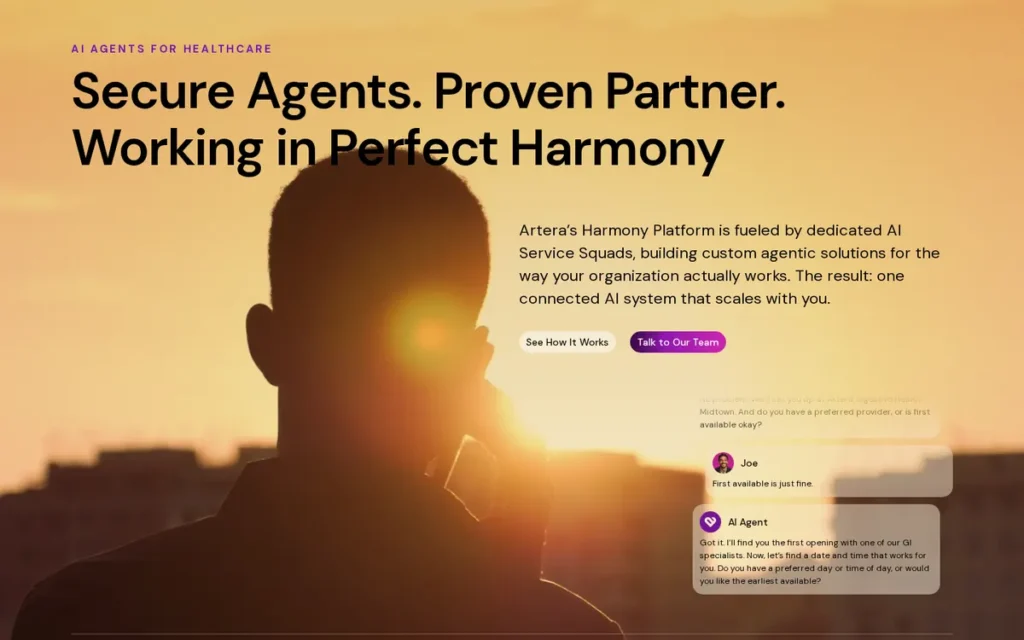
Category: Communications Orchestrator. Artera coordinates AI-assisted patient messaging and voice across channels, departments and EHRs at enterprise scale.
At a Glance
- Category: Communications Orchestrator
- Best For: Multi-EHR health systems, large provider groups and federal or public-sector buyers that need one patient communications layer
- Price Range: Pricing on request (custom quote only, verified November 2026)
- Primary Strength: Artera has the strongest independent customer validation in this evaluation, including the #1 Best in KLAS 2026 ranking for Patient Communications.
- Biggest Limitation: Artera’s waitlist and scheduling write-back depth were not verified, so buyers should not assume it is a full patient-access operations suite.
- One-Line Summary: Artera is the best-validated enterprise patient communications platform in 2026. It is ranked #1 Best in KLAS for Patient Communications and is strongest for health systems that need omnichannel, multilingual AI messaging across multiple EHRs.
- Last Verified: November 2026
Overview
Artera is an enterprise patient communications platform that orchestrates SMS, voice, email, web chat and AI agents across multiple EHRs. It is built for health systems and large provider groups that need one communications layer across many departments and languages.
Artera’s AI agents handle scheduling, referral and intake conversations, so buyers should confirm in demos how far Artera writes completed actions back to their EHR. Artera (artera.io) is unrelated to ArteraAI, a prostate-cancer test company.
Key Features
- Artera Harmony connects through API, FHIR, HL7 and SFTP, with published two-way integrations to Epic, Oracle Cerner, MEDITECH, athenahealth, NextGen and eClinicalWorks.
- Artera AI agents handle scheduling, referral and intake conversations by voice and SMS, and they can sit on direct lines or inside existing IVR phone trees.
- Artera voice agents can switch among 10 languages mid-call, and Artera messaging translation covers 100+ languages (Vendor claim; Artera, accessed November 2026).
- Artera Staff AI Co-Pilot and Insights AI Co-Pilot, introduced at Heartbeat ’24, are staff-facing tools that are separate from Artera’s patient-facing agents.
- Artera Flows supports workflow configuration, and UNC Health’s Abdalla Ihmeidan has praised being able to inspect workflows without technical staff (Customer testimonial; Artera, accessed November 2026).
Best For
Artera is best for multi-EHR health systems and large groups whose main bottleneck is fragmented patient communication across departments, channels and languages. That includes VA-adjacent buyers that need FedRAMP-authorized vendors.
Strengths
- Artera was named 2026 Best in KLAS for Patient Communications with a score of 89.8. It is the only current #1 Best in KLAS ranking among the seven vendors evaluated (Independent analyst; KLAS, 2026).
- Artera Harmony Federal Edition received FedRAMP Class D (High) authorization in May 2026, as listed on the FedRAMP Marketplace. Before that, it received a VA-sponsored Authority to Operate in February 2026 (Federal registry; FedRAMP Marketplace, accessed November 2026).
- Artera holds a G2 rating of 4.8/5 across roughly 101–108 reviews and a Capterra rating of 4.9/5 across 26 reviews (Review platforms; G2 and Capterra, November 2026).
- Artera reports a 50% no-show reduction at Deborah Heart & Lung and an 88% drop in staff phone time at Eisenhower Health, with no measurement period stated (Vendor-reported case studies; Artera ROI page, accessed November 2026).
Limitations
Artera’s most consequential trade-off is that its strength in communications does not make it a full operations-automation suite. Our research could not verify a dedicated waitlist feature or how deep its scheduling write-back goes.
- Artera publishes no named-customer containment, resolution or identity-verification rate for its AI agents. Its 17% call-volume and 57.5% hold-time figures are platform-wide averages (Vendor-reported; Artera, accessed November 2026).
- Artera Harmony Federal Edition holds FedRAMP authorization, but DigitalVA’s marketplace listed its VA status as Pending, so federal buyers should confirm agency-specific approval (DigitalVA Marketplace, accessed November 2026).
- Artera’s pricing is fully quote-based. Our research also found no documented pattern of user complaints, which is an evidence gap rather than proof that Artera has no weaknesses.
Verdict
Artera is the strongest-evidenced 2026 choice for health systems whose main bottleneck is enterprise-wide, multilingual patient communication across several EHRs. Artera’s current Best in KLAS ranking and high review ratings give it the clearest independent validation in this evaluation.
Artera and Luma Health are close on the primary criteria. Artera ranks first because its Strong rating on independent customer evidence rests on a current KLAS #1 ranking. Buyers focused on scheduling and waitlist completion should compare Artera with Luma Health directly and make write-back a contractual acceptance condition.
2. Luma Health: Best for End-to-End Patient Access in Multi-EHR Health Systems
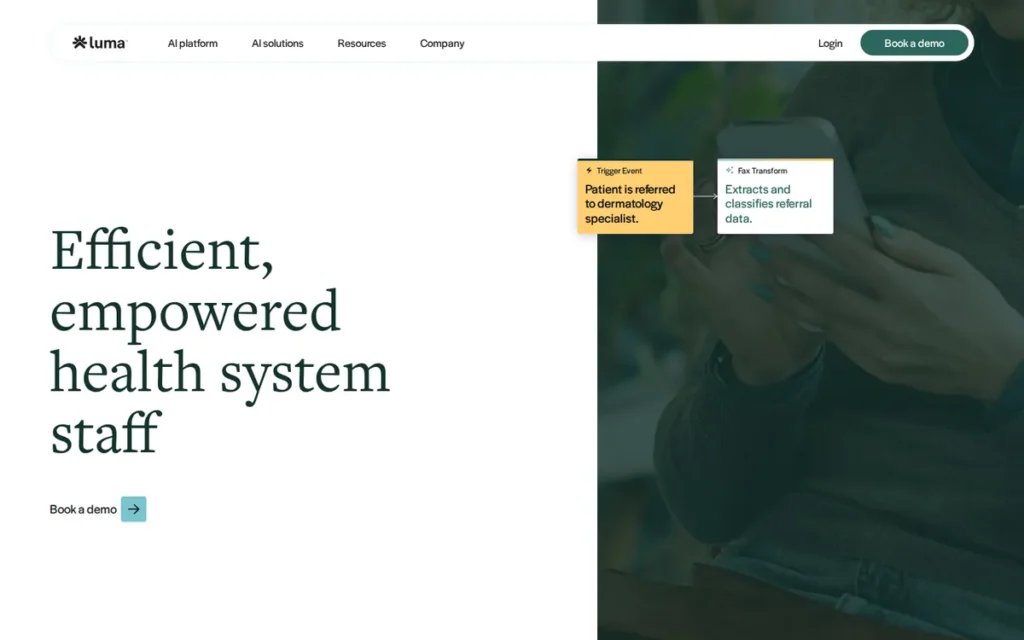
Category: Patient Access Platform. Luma Health completes scheduling, referral, waitlist, intake and call workflows with write-back into the EHR.
At a Glance
- Category: Patient Access Platform
- Best For: Multi-EHR health systems and large groups fixing fragmented scheduling, referrals, waitlists and inbound call handling
- Price Range: Pricing on request (custom quote only, verified November 2026)
- Primary Strength: Luma Health documents end-to-end access workflows that write back into the EHR, including waitlist backfill and AI voice scheduling.
- Biggest Limitation: Luma Health reviewers report EHR integration limits discovered late in implementation and custom API connections that took months.
- One-Line Summary: Luma Health documents the most patient-access workflows with EHR write-back in this 2026 evaluation. It covers scheduling, waitlist and referral workflows and publishes AI voice identity-verification metrics for health systems.
- Last Verified: November 2026
Overview
Luma Health is a patient access platform that automates self-scheduling, referral outreach, waitlist backfill, digital intake, and AI voice and SMS workflows with two-way EHR write-back. It is built for health systems and multi-EHR organizations that need to fix fragmented access.
Luma Health announced its Spark, Navigator and Fax Transform AI products in August 2025. Luma Health lists two-way integrations with Epic, Oracle Health, MEDITECH, athenahealth, eClinicalWorks, NextGen and Greenway.
Key Features
- Luma Health self-scheduling books against live EHR availability, and Luma Health waitlist slot-matching fills openings by booking directly into the EHR.
- Luma Health Navigator is a voice and SMS concierge that uses EHR context, can switch a call to text, hands off to staff and follows up on dropped calls.
- Luma Health Fax Transform handles inbound fax intake and runs eligibility checks.
- Luma Health two-way SMS supports 30+ languages, but voice-channel language coverage was not separately verified.
- Luma Health provides an AI Committee Kit for Navigator to support internal AI and clinical governance review.
Best For
Luma Health is best for health systems and multi-EHR organizations whose main bottleneck is disconnected scheduling, referral, waitlist and intake workflows. It also suits buyers that need AI voice automation documented down to identity verification.
Strengths
- Luma Health reports that Navigator automated 95% of after-hours calls at UAMS in its first month. It also reports 82% identity-verification success, 98 staff hours saved and 1,200 cancellations processed without staff (Vendor-reported case study; Luma Health, 2025).
- Luma Health holds a G2 rating of 4.8/5 across 84 reviews, and one reviewer reported no-shows falling from 22% to 17% within three months (Review platform; G2, November 2026).
- Luma Health lists HITRUST, SOC 2 Type II, ISO 27001 and TX-RAMP Level 2, one of the broadest security certification lists in this evaluation (Vendor-stated; Luma Health, accessed November 2026).
- Luma Health reports that TriState Health cut its no-show rate from 5% to under 3% and that Northfield Hospital reduced average hold time to 30 seconds (Vendor-reported case studies; Luma Health, 2025–2026).
Limitations
Luma Health’s most consequential trade-off is integration complexity. Capterra and Software Advice reviewers report custom EHR API connections that took months and an integration limit that surfaced late in implementation (Review platforms; Capterra and Software Advice, accessed November 2026).
- Luma Health G2 reviewers cite slow web performance, needing to refresh to see new messages, report filters that don’t save, and a steep learning curve (Review platform; G2, November 2026).
- Luma Health reviewers describe ticket-only support and inconsistent account managers, and some say older patients felt overwhelmed by confirm/cancel texts.
- Luma Health’s 95% UAMS figure covers after-hours calls only. Its other materials cite 88% and 84.02% verification rates, so buyers should ask which definition applies.
Verdict
Luma Health is the strongest 2026 choice for health systems whose biggest bottleneck is completing patient access workflows with documented EHR write-back. Luma Health’s published identity-verification and automation metrics are more transparent than most of the category.
Luma Health rates Strong on EHR workflow completion and measured AI performance but Moderate on independent evidence. It has no verified Best in KLAS award, and reviewers repeatedly complain about implementation, which places it second. Buyers should write go-live dates and EHR-specific functions into contractual acceptance criteria.
3. NexHealth: Best for EHR Write-Back and Online Scheduling at Small Practices
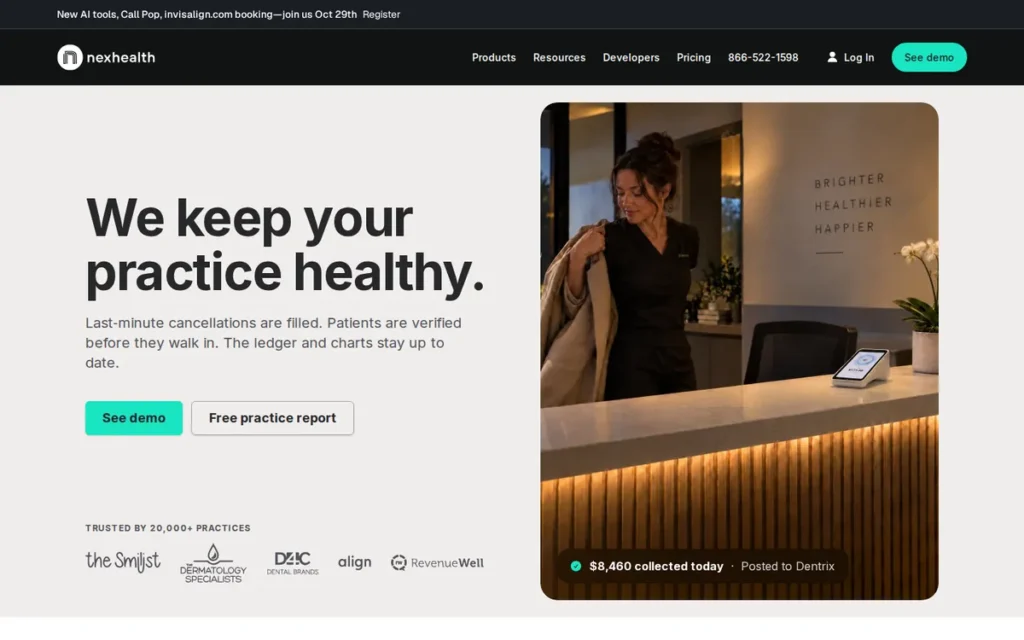
Category: Scheduling & EHR Sync Platform. NexHealth books appointments and writes forms, payments and patient data back into the practice EHR.
At a Glance
- Category: Scheduling & EHR Sync Platform
- Best For: Small and midsize practices (strongest in dental) and developers building AI front-desk tools that need verified EHR write-back
- Price Range: Quote-based; G2 lists ~$350 per feature per month (unit unclear); API $0.10/call, $0.05/webhook (verified November 2026)
- Primary Strength: NexHealth documents read/write synchronization of appointments, forms, payments and ledgers across 15+ dental and medical systems.
- Biggest Limitation: NexHealth’s “real-time” sync has been reported to lag up to 45 minutes in some setups, and practice IT staff debate its database-level connection method.
- One-Line Summary: NexHealth is the strongest 2026 choice for small and midsize practices that need online booking, forms and payments written back to the EHR. It has the most transparent API pricing and contract terms in this evaluation.
- Last Verified: November 2026
Overview
NexHealth is a scheduling, patient-communication and EHR-sync platform whose Synchronizer API reads and writes appointments, forms, payments and ledgers across 15+ dental and medical systems. It is built for small and midsize practices and for developers who need verified write-back.
NexHealth Messaging Coworker is an AI assistant for patient texts, booking, forms and balance questions. It entered a limited pilot in November 2026 and is not generally available (Vendor-published; NexHealth Fall Release, 2026).
Key Features
- NexHealth online booking, including booking through Google, writes appointments into the practice EHR, and NexHealth digital forms write into the patient chart.
- NexHealth payments post to the EHR ledger. NexHealth also offers waitlist, recall, reminders, insurance verification and review requests.
- NexHealth Synchronizer API supports athenahealth, eClinicalWorks, NextGen Office and ModMed, with webhooks, a free sandbox and a vendor-cited 99.9% uptime SLA.
- NexHealth Messaging Coworker answers texts, books and reschedules, sends forms and collects balances with write-back, and practices can request beta access.
- NexHealth’s API also powers third-party AI receptionists such as Yobi, Dr. Zarger and Dentina.AI.
Best For
NexHealth is best for small and midsize practices whose main bottleneck is getting bookings, forms and payments into the EHR without re-entry. That applies especially to dental practices and to medical groups on athenahealth, eClinicalWorks, NextGen Office or ModMed.
Strengths
- NexHealth holds a G2 rating of 4.8/5 across 138 reviews and a G2 support score of 9.7, compared with 8.4 for Solutionreach (Review platform; G2, November 2026).
- NexHealth rates 4.7/5 on Capterra (31 reviews) and 4.7/5 on Trustpilot (~53 reviews), where reviewers praise onboarding, online booking and less manual work (Review platforms; Capterra and Trustpilot, November 2026).
- NexHealth publishes API usage pricing and states it has no cancellation fees. These are the most transparent commercial terms among the seven vendors (Vendor-published; NexHealth, November 2026).
- NexHealth reports that Sartini Dentistry saves 60+ staff hours a month on intake and that Dr. Zarger’s bilingual AI receptionist went live in two weeks (Vendor-reported case studies; NexHealth, accessed November 2026).
Limitations
NexHealth’s most consequential trade-off is write-back speed versus integration governance. An r/Dentistry thread questioned why NexHealth requested SQL database credentials and whether its BAA covers that path (Community discussion; Reddit r/Dentistry, accessed November 2026).
- NexHealth sync delays of up to 45 minutes have been reported in some setups, despite claims of real-time sync (Third-party comparison; Classic Informatics, accessed November 2026).
- NexHealth Capterra reviewers cite price and difficulty reaching support after onboarding (Review platform; Capterra, November 2026).
- NexHealth case studies are mostly dental, and Messaging Coworker is in limited pilot, so medical practices should ask for medical references on their own EHR.
Verdict
NexHealth is the best-documented 2026 option for small and midsize practices that need scheduling, forms and payments written back into the EHR under transparent terms. NexHealth’s review ratings and support scores are among the strongest in the category.
NexHealth ranks third because its measured AI agent performance is Limited: Messaging Coworker is in limited pilot and no containment data exists. That holds despite Strong ratings on write-back, independent evidence and pricing transparency. IT leaders should review NexHealth’s database-level integration method and BAA scope before signing.
4. Phreesia: Best for Digital Intake, Check-In and Patient Payments at Scale
Category: Intake & Payments Platform. Phreesia digitizes registration, eligibility, consent, check-in and patient collections around the visit.
At a Glance
- Category: Intake & Payments Platform
- Best For: Practices and health systems whose biggest bottleneck is registration, eligibility, check-in and point-of-service collections
- Price Range: Pricing on request (quote-based, reportedly by provider count, verified November 2026)
- Primary Strength: Phreesia has the deepest audited scale in intake and payments, handling about 180 million patient visits in fiscal 2026.
- Biggest Limitation: Phreesia has the lowest G2 rating in this evaluation (3.9/5, 45 reviews), and one reviewer documented that real-time scheduling was unavailable on their athenahealth integration.
- One-Line Summary: Phreesia has the largest audited scale in intake and patient payments in this 2026 evaluation, about 180 million visits in fiscal 2026. It holds PCI DSS Level 1 certification and offers VoiceAI as a newer call-handling add-on.
- Last Verified: November 2026
Overview
Phreesia is a patient intake, check-in, payments and VoiceAI platform that handled about 180 million patient visits in fiscal 2026. It is built for practices and health systems whose biggest bottleneck is registration, eligibility, consent and point-of-service collections.
Phreesia added AI call handling through VoiceAI in fiscal 2026. Phreesia also added patient financing through its AccessOne acquisition, which closed November 12, 2025, for about $164M (Audited filing; Phreesia FY2026 10-K, 2026).
Key Features
- Phreesia digital intake covers registration, eligibility, consent and check-in on patients’ own devices, kiosks or PhreesiaPad tablets.
- Phreesia payments support patient collections, and Phreesia’s AccessOne acquisition adds patient financing options.
- Phreesia VoiceAI answers and triages calls for scheduling, refills, billing and after-hours questions, routes calls to staff, and later added cancel/rebook in the schedule.
- Phreesia sends appointment reminders and patient messages from the same platform as intake.
- Phreesia runs a life-sciences messaging network that places sponsored health content inside the intake flow as a separate revenue line.
Best For
Phreesia is best for practices and health systems whose main bottleneck is front-desk registration, eligibility and patient collections. It also suits buyers that want call handling added to an established intake platform.
Strengths
- Phreesia reported FY2026 revenue of $480.6M (up 14%), about 180 million patient visits and an average of 4,514 healthcare services clients (Audited filing; Phreesia SEC filings, 2026).
- Phreesia was named Best in KLAS for Patient Intake Management four consecutive years, from 2019 to 2022 (Independent analyst; KLAS, 2019–2022).
- Phreesia lists HITRUST CSF, SOC 2 Type 2 and PCI DSS Level 1, which is the strongest payments-specific security credential in this evaluation (Vendor-stated with published SOC 3 report; Phreesia, accessed November 2026).
- Phreesia holds a Capterra rating of 4.3/5 across 170 reviews, the largest Capterra review base among the seven vendors (Review platform; Capterra, November 2026).
Limitations
Phreesia’s most consequential trade-off is that capabilities can vary by EHR. One Capterra reviewer found out during implementation that real-time scheduling was unavailable on their athenahealth integration, and the practice was still charged a termination fee (Individual customer review; Capterra, accessed November 2026).
- Phreesia has the lowest G2 rating in this evaluation (3.9/5, 45 reviews), and reviewers cite a learning curve, integration problems and bill-pay limits (Review platform; G2, November 2026).
- Phreesia reviewers also report patients re-entering information repeatedly and app crashes (Review platform; Software Advice, accessed November 2026).
- Phreesia scored 86.5 in the 2025 KLAS Patient Intake Management ranking and placed third, behind Simple Interact (96.7) and Epic Welcome (89.5) (Independent analyst; KLAS, 2025).
Users on r/PetPeeves noted:
“Phreesia is a PIA. I’ve worked healthcare IT for doctors offices and there’s just something hard coded in Phreesia that automatically triggers. It’s like they missed the integral piece of code that checks if the link was already click, or they coded it intentionally. It’s a huge PIA and I won’t fill out Phreesia forms until I’m literally in the waiting room.” Posted by u/Genepoolperfect
Takeaway: Phreesia’s repeated check-in reminders can push patients to put off pre-visit intake, which cuts into the front-desk time savings the platform promises.
Verdict
Phreesia is the strongest-evidenced 2026 choice for organizations whose main bottleneck is intake, check-in and patient payments, backed by audited scale and PCI DSS Level 1. Phreesia VoiceAI makes the most sense for existing Phreesia customers.
Phreesia ranks fourth for two reasons. EHR workflow completion is Moderate to Limited because of a documented EHR-specific scheduling gap. Independent evidence is Moderate, with mixed ratings offset by its KLAS intake history. Buyers should confirm in the contract which Phreesia VoiceAI and scheduling functions work on their EHR.
5. Weave: Best for Phone-First Front Offices at Small and Dental Practices
Category: Phone & Voice Agent. Weave answers, routes or automates patient phone calls and front-desk conversations.
At a Glance
- Category: Phone & Voice Agent
- Best For: Small and midsize practices, especially dental, whose biggest bottleneck is the front-desk phone line and missed calls
- Price Range: From $199/month; per-tier prices, setup, hardware and contract terms not published (verified November 2026)
- Primary Strength: Weave combines the practice phone system, texting, reminders, forms and payments in one platform and has the largest G2 review base among the seven vendors evaluated.
- Biggest Limitation: Weave’s integrations and evidence lean toward dental, and reviewers report declining support after signing and restrictive contract terms.
- One-Line Summary: Weave is a phone-first patient communication platform with the largest G2 review base among the seven vendors in this 2026 evaluation. It is best for small dental and midsize practices that want phones, texting, reminders and an AI receptionist in one system from $199 per month.
- Last Verified: November 2026
Overview
Weave is a phone-first patient communication platform that combines VoIP phones, two-way texting, reminders, forms, payments, call intelligence and an AI receptionist. It is built for small and midsize practices, especially dental, whose biggest bottleneck is the front-desk phone line.
Weave is publicly traded on the NYSE under the ticker WEAV. Weave completed its acquisition of AI-receptionist company TrueLark on May 16, 2025, for $35M (Company press release; Weave, 2025).
Key Features
- Weave Call Pop shows the caller’s patient and appointment details when the phone rings, so staff can answer with context.
- Weave missed-call text-back automatically texts patients whose calls go unanswered, which helps recover peak-time and after-hours calls.
- Weave AI Receptionist handles patient calls and texts and hands off to staff, building on Weave’s 2025 TrueLark acquisition.
- Weave Call Intelligence provides recording, transcription, sentiment analysis and call analytics, and it is a staff-facing analytics tool rather than a patient-facing agent.
- Weave bundles reminders, digital forms, online scheduling, review requests and payments with its phone system.
Best For
Weave is best for small and midsize practices, especially dental, that want to replace their phone system with one vendor at a published starting price. Weave also lets those practices bring texting, reminders, forms and payments onto that same system.
Strengths
- Weave holds a G2 rating of 4.6/5 across 551 reviews, the largest G2 review base among the seven vendors evaluated (Review platform; G2, November 2026).
- Weave publishes a $199/month starting price. It is one of only two vendors here that publish any price signal (Vendor-published; Weave, November 2026).
- Weave lets small practices consolidate phones, texting, missed-call text-back, forms, scheduling, reviews and payments with one vendor (Third-party review sites; PracticeAll and Review.dental, accessed November 2026).
- Weave reports that Smith Dental gained 28% more new patients, though Weave gave no measurement period or method (Vendor testimonial; Weave, accessed November 2026).
Limitations
Weave’s most consequential trade-off is that its dental-centered design costs it depth on medical EHRs. Several comparisons say Weave’s integrations are thinner for medical EHRs (Third-party comparisons; Pabau and Review.dental, accessed November 2026).
- Weave Capterra reviewers describe support declining after signing, phone freezes, hardware problems, and integrations that need manual workarounds (Review platform; Capterra via Quo, accessed November 2026).
- Weave contract terms reportedly include annual lock-in, auto-renewal and renewal increases (Third-party pricing site; CostBench, accessed November 2026).
- Weave AI Receptionist has no independent call-resolution or containment data in our research.
Users on r/Chiropractic shared their experience:
“I use weave and honestly have gotten the price reduced 2x bec of constant glitches. The phone service is great and fax and that is why I need it… but texting is glitchy among other services. Its way overpriced though….” Posted by u/crossfit6
Takeaway: Weave’s core phone service keeps practices on the platform, but glitchy texting and a high price weaken its value outside dental workflows.
Verdict
Weave is the most widely reviewed 2026 option in this evaluation for small and midsize practices, especially dental, whose main bottleneck is the phone line. Weave also gives practices one front-office platform at a published starting price.
Weave ranks fifth for two reasons. Its EHR workflow completion is Limited to Moderate for medical EHRs, and its measured AI performance is Limited. On the other side, its independent evidence is Strong on review volume. Medical practices should verify Weave’s write-back on their EHR, and all buyers should request AI Receptionist call metrics.
6. Notable: Best for Agentic Back-Office and Access Workflow Automation
Category: Agentic Workflow Automation. Notable’s AI agents complete multi-step administrative tasks across EHRs, payer portals and back-office systems.
At a Glance
- Category: Agentic Workflow Automation
- Best For: Health systems automating patient-access and back-office work such as referrals, prior authorization, registration and MyChart help desk
- Price Range: Pricing on request (sales-led enterprise deals, verified November 2026)
- Primary Strength: Notable has the broadest operational scope in this evaluation, with AI agents that complete access, revenue-cycle and care-operations tasks instead of only sending messages.
- Biggest Limitation: Notable has no verified presence on G2, Capterra or KLAS, so every outcome figure comes from Notable’s own materials.
- One-Line Summary: Notable is the broadest agentic workflow-automation platform in this 2026 evaluation. It holds HITRUST AI Certification and automates access and back-office tasks for health systems, though its results are vendor-reported and have no independent reviews.
- Last Verified: November 2026
Overview
Notable is an agentic workflow-automation platform whose AI agents complete registration, intake, scheduling, referrals, prior authorization, coding and MyChart help-desk tasks across EHRs and payer portals. It is built for health systems that want to automate administrative work beyond patient messaging.
Notable lets internal teams build and monitor agents through its low-code Flow Builder. Notable CEO and co-founder Pranay Kapadia leads a company focused on health systems, not small practices.
Key Features
- Notable AI agents work across the EHR, payer portals, data warehouses and health information exchanges.
- Notable Flow Builder, launched in October 2024 and significantly updated in March 2025, is a low-code tool for building, debugging and monitoring agents.
- Notable Flow AI, launched in October 2025, lets teams build agents in natural language with human-review steps.
- Notable agents cover care-gap outreach and MyChart help-desk calls, and Notable reports measured voice containment at Catholic Health.
- Notable runs a Builder Certification program so customer teams can maintain agents without relying on vendor engineering.
Best For
Notable is best for health systems whose biggest bottleneck is administrative labor across access, revenue-cycle and care-operations workflows. Buyers should also have internal teams that can build and govern agents.
Strengths
- Notable earned HITRUST AI Security (ai2) Certification and renewed its HITRUST r2 Certification on December 4, 2025. This is the only AI-specific security certification verified among the seven vendors (Independent certification; HITRUST, 2025).
- Notable reports that Catholic Health’s MyChart Help Desk voice agent went live in about five weeks, contains 64% of calls, and is projected to save $360K a year (Vendor-reported case study; Notable, 2026).
- Notable reports that NKC Health ran 5.5 million automations in one year, saving about 122,000 staff hours (Vendor-reported case study; Notable, accessed November 2026).
- Notable reports that Marshall Health Network deployed access agents across 19 primary-care practices in under 6 months and added 400+ net-new patients (Vendor-reported; Notable 2026 achievement awards, 2026).
Limitations
Notable’s most consequential trade-off is broad automation versus independent proof. Our research found no verified presence on G2, Capterra or KLAS, and Notable’s separate $375K+ figure for Catholic Health covers broader agent work.
- Notable does not disclose how much it relies on APIs versus screen-level automation. That mix affects how fragile it is to EHR updates and how security teams scope the BAA.
- Notable has not demonstrated fit for small practices in our research.
- Notable’s sales-led pricing makes cost comparison difficult before a sales engagement.
Verdict
Notable is the strongest 2026 option for health systems that want AI agents to complete administrative work across access, revenue-cycle and care operations, not only send patient messages. Notable’s HITRUST AI Certification and human-review steps support governance approval.
Notable ranks sixth because its independent customer evidence is Limited, with every outcome figure vendor-reported, even though workflow breadth and security governance rate Strong. Buyers should ask Notable for references on their exact target workflows and for architecture documentation before committing.
7. Assort Health: Best for Specialty Call-Center Overload and After-Hours Calls
Category: Phone & Voice Agent. Assort Health answers, routes or automates patient phone calls and front-desk conversations.
At a Glance
- Category: Phone & Voice Agent
- Best For: Specialty groups (orthopedics, ENT, dermatology) and FQHCs with high inbound call volume, long holds and missed after-hours calls
- Price Range: Pricing on request (custom, based on call volume, features and locations, verified November 2026)
- Primary Strength: Assort Health has the most detailed published call-center outcome data in this evaluation, including hold-time, abandonment and pre-handoff resolution figures at named specialty practices.
- Biggest Limitation: Assort Health has almost no independent review presence, its clinical triage safety has not been independently validated, and its SOC 2 Type II is vendor-stated.
- One-Line Summary: Assort Health is the most specialized AI voice-agent vendor in this 2026 evaluation, built for specialty practices with call-center overload. Its strong hold-time and abandonment results are vendor-reported, and independent reviews are minimal.
- Last Verified: November 2026
Overview
Assort Health is an AI voice-agent platform that answers patient calls 24/7, books against live EHR availability during the call, and applies specialty-specific rules. It is built for specialty groups and FQHCs, and it offers an alternative to traditional medical answering services.
Assort Health raised a $76M Series B led by Lightspeed Venture Partners on September 30, 2025, bringing total funding to $102M (Press coverage; PR Newswire and Fierce Healthcare, 2025).
Key Features
- Assort Health voice agents handle scheduling, rescheduling, cancellations, triage, intake, FAQs, and insurance and referral capture around the clock.
- Assort Health books against live EHR availability and writes appointments back during the call, with named integrations to Epic, athenahealth and eClinicalWorks.
- Assort Health applies specialty rules for provider preferences, payer prerequisites, appointment sequencing and urgency, and it cites 62,000 care protocols (Vendor claim; Assort Health, accessed November 2026).
- Assort Health outbound outreach through Concierge and Activate covers reminders, recalls, no-show follow-up, waitlist and referral scheduling.
- Assort Health claims 29 languages and routes urgent after-hours calls to on-call providers, with warm handoffs that pass context to staff.
Best For
Assort Health is best for specialty practices and FQHCs whose main bottleneck is long holds, abandoned calls and missed after-hours calls. It also fits practices whose scheduling logic is too complex for general-purpose receptionists.
Strengths
- Assort Health reports that TidalHealth Orthopaedic Institute cut call abandonment from about 42% to 2–7% and cut peak holds from up to 90 minutes to seconds (Vendor-reported case study; Assort Health, accessed November 2026).
- Assort Health reports that SENTA Partners (ENT, ~70 locations) cut hold time from 6:36 to 12 seconds and added $1.3M in appointment revenue (Vendor-reported case study; Assort Health, accessed November 2026).
- Assort Health reports that South Shore Orthopedics resolved 45% of inbound requests before handoff, which is a realistic benchmark (Vendor-reported case study; Assort Health, accessed November 2026).
- Assort Health reports a 4.3/5 patient rating across 344,000 calls, though it did not disclose its method (Vendor self-reported; Assort Health, accessed November 2026).
Limitations
Assort Health’s most consequential trade-off is strong vendor-reported results paired with minimal independent validation. Our research found only one G2 review (4.5/5) and no Capterra or KLAS presence (Review platform; G2, November 2026).
- Assort Health states SOC 2 Type II certification and shares its report through a trust center, partly under NDA. PlugRoute did not review the report (Vendor-stated; Assort Health, accessed November 2026).
- Assort Health’s own pages disagree on how many EHRs it supports (20+ vs. 37), and its clinical triage protocols have not been independently validated for safety.
- Assort Health’s published customers are concentrated in orthopedics, ENT, dermatology and FQHCs, so primary-care buyers should request comparable references.
Verdict
Assort Health is the most specialized 2026 option for specialty practices and FQHCs whose biggest bottleneck is call-center overload and after-hours access. Assort Health also has the most detailed published hold-time and abandonment cases in this evaluation.
Assort Health ranks seventh. Its independent customer evidence and pricing transparency are both Limited, and its triage protocols lack independent validation, despite a Strong rating on measured AI performance. Buyers should pilot Assort Health on their own call mix and send symptom-based triage through local clinical governance.
Which Tools Actually Write Back to the EHR?
NexHealth, Luma Health and Assort Health have the most specifically documented EHR write-back. NexHealth covers appointments, forms and ledger payments, Luma Health covers scheduling and waitlist fills, and Assort Health covers in-call booking. Artera, Phreesia, Weave and Notable document integrations, but our research found less specific evidence of write-back depth for each workflow.
| Vendor | Appointments | Forms to Chart | Payments to Ledger | Waitlist Fills | Named EHRs | Integration Method |
|---|---|---|---|---|---|---|
| Artera | Agents handle scheduling; write-back depth not verified | Not verified | Not documented | Not verified | Epic, Oracle Cerner, MEDITECH, athenahealth, NextGen, eClinicalWorks | Disclosed: API, FHIR, HL7, SFTP |
| Luma Health | Documented (books against EHR availability) | Intake offered; chart write-back not separately verified | Copay detection; ledger not documented | Documented (books into EHR) | Epic, Oracle Health, MEDITECH, athenahealth, eClinicalWorks, NextGen, Greenway | Two-way integration; reviewers report months-long custom API work |
| NexHealth | Documented | Documented | Documented | Offered | 15+ systems incl. athenahealth, eClinicalWorks, NextGen Office, ModMed | Synchronizer API; reported SQL credential request; up to 45-min lag reported |
| Phreesia | VoiceAI cancel/rebook documented; real-time scheduling unavailable on athenahealth per one reviewer | Intake offered; chart write-back not specified | Payments offered; ledger posting not specified | Not documented | Not enumerated in our research | Not disclosed in our research |
| Weave | Scheduling offered; strongest on dental software | Forms offered | Payments offered | Not documented | Dental-leaning; medical thinner | Not disclosed in our research |
| Notable | Agents complete scheduling and registration | Intake offered | Not documented | Not documented | EHRs, payer portals, HIEs (not enumerated) | Undisclosed: API vs. screen automation |
| Assort Health | Documented (in-call write-back) | Intake capture offered | Not documented | Outbound waitlist offered | Epic, athenahealth, eClinicalWorks (20+ vs. 37 claimed) | Not disclosed in our research |
In this matrix, “Not documented” means our research found no evidence. It does not mean the capability is absent. Treat every cell as a demo test to run on your own EHR.
“Integrates with Epic” is a claim. A booked appointment visible in your EHR is evidence.
What AI Call Automation Results Are Realistic?
Measured AI call results in this research come in lower, and cover narrower scopes, than headline figures suggest. Assort Health reports 45% pre-handoff resolution and Notable reports 64% voice containment. Luma Health reports 95% of after-hours calls automated, with 82% identity-verification success. Every one of these figures is vendor-reported, so ask each vendor how it defines automation.
Realistic Benchmarks (all vendor-reported)
- Assort Health reports that South Shore Orthopedics resolved 45% of inbound requests before handoff (Vendor-reported case study; Assort Health, accessed November 2026).
- Notable reports that Catholic Health’s MyChart Help Desk voice agent contains 64% of calls (Vendor-reported case study; Notable, 2026).
- Luma Health reports that 95% of after-hours calls were automated at UAMS in month one, with 82% identity-verification success (Vendor-reported case study; Luma Health, 2025).
Platform-Wide Operational Averages (not containment)
- Artera reports platform-wide averages of 17% lower call volume and 57.5% lower hold time, but our research found no published Artera containment rate (Vendor-reported; Artera, accessed November 2026).
Definitions to Request in Writing (PlugRoute definitions for comparison purposes)
- Automation rate can include any call the AI touched, so it is often the most generous figure.
- Containment rate counts only calls the AI fully handled with no transfer to staff.
- Pre-handoff resolution counts requests completed before any human handoff, which is often the most conservative figure.
Luma Health’s 95% UAMS figure covers after-hours calls, where requests often lean toward cancellations and rescheduling. That workload differs from a weekday contact center, so pilot daytime performance separately.
Here is an illustration of what these rates mean for staffing. A practice that receives 1,000 calls a day with an agent at 45% pre-handoff resolution still routes about 550 calls to staff. At 64% containment, about 360 calls still reach staff.
Will Pilots and Patients Follow Through?
- Bain’s Healthcare AI Adoption Index found that 30% of completed healthcare AI proofs of concept reached production, rising to 35% among providers (Industry research; Bain, 2025).
- Sinch found that 35% of consumers would use a provider’s AI chatbot, 40% would not, and 25% were unsure (Industry research; Sinch, 2025).
- The Philips Future Health Index found patients more comfortable with AI for administrative tasks such as appointments than for clinical tasks (Industry research; Philips, 2025).
How Transparent Is Pricing Across These Vendors?
Only Weave and NexHealth publish meaningful price signals. Weave starts at $199 per month, and NexHealth publishes API rates. Phreesia’s only public signal is a free VoiceAI promotion. Artera, Luma Health, Notable and Assort Health are fully quote-based, so the only way to compare total cost of ownership is through each vendor’s sales process.
| Vendor | Pricing Status | Known Signals and Terms (verified November 2026) | What to Confirm in Writing |
|---|---|---|---|
| Weave | Published starting price | From $199/month; third parties report annual lock-in, auto-renewal, phone-only cancellation, add-ons (CostBench) | Per-tier price, setup and hardware fees, renewal caps |
| NexHealth | Partial signal | G2: $350/feature/month (unit unclear); API $0.10/call, $0.05/webhook; no cancellation fees per vendor; no setup fees per Capterra | Whether $350 is per location or per feature |
| Phreesia | Quote-only | Provider-count billing per G2 reviewers; VoiceAI free during promo (SEC Q2 FY2026 letter); termination fee reported by one reviewer | VoiceAI renewal price; who counts as a provider |
| Artera | Quote-only | No substantiated third-party figures | Whether AI agents, translation and co-pilots are add-ons |
| Luma Health | Quote-only | Cost varies by modules, integrations, implementation | Separate price for custom EHR API work |
| Notable | Quote-only | Sales-led enterprise deals | Per-automation, per-workflow or platform pricing |
| Assort Health | Quote-only | Based on call volume, features, locations | Price per resolved call vs. per total call |
How Strong Is the Independent Evidence for Each Vendor?
Artera has the strongest current independent evidence, holding the 2026 Best in KLAS #1 ranking for Patient Communications. Phreesia has audited SEC data and won Best in KLAS for intake from 2019 to 2022. Weave and NexHealth have the largest review bases. Notable and Assort Health have almost no independent reviews, so their outcome claims rest on vendor materials.
| Vendor | Analyst Ranking | Review Platforms (Nov 2026) | Audited Data | Certifications (verified / vendor-stated) |
|---|---|---|---|---|
| Artera | #1 Best in KLAS Patient Communications 2026 (89.8) | G2 4.8 (101–108); Capterra 4.9 (26) | None | Verified: FedRAMP Class D (High), 2026. Vendor-stated: SOC 2 Type 2, HITRUST; VA ATO (DigitalVA lists Pending) |
| Luma Health | No Best in KLAS award verified | G2 4.8 (84) | None | Vendor-stated: HITRUST, SOC 2 Type II, ISO 27001, TX-RAMP Level 2 |
| NexHealth | None verified | G2 4.8 (138); Capterra 4.7 (31); Trustpilot 4.7 (~53) | None | Vendor-stated: HIPAA compliance and signed BAA |
| Phreesia | Best in KLAS Patient Intake Management 2019–2022; third in 2025 (86.5) | G2 3.9 (45); Capterra 4.3 (170) | SEC filings FY2026 | Verified: SOC 2 Type 2 (published SOC 3). Vendor-stated: HITRUST CSF, PCI DSS Level 1 |
| Weave | None verified | G2 4.6 (551); Capterra 4.4 (count not verified) | Public (NYSE: WEAV); figures not reviewed | None verified |
| Notable | None found | No verified presence | None | Verified: HITRUST ai2 and r2 (December 4, 2025) |
| Assort Health | None found | G2: 1 review (4.5) | None | Vendor-stated: SOC 2 Type II, HIPAA (report via trust center, partly under NDA, not reviewed) |
What Red Flags Should I Watch For When Evaluating AI Patient Engagement Software?
The biggest red flags in AI patient engagement software are gaps between what a vendor claims and what it can prove on your EHR. Each of the six warning signs here comes from documented reviewer complaints or evidence gaps found in this 2026 research, and you can test for every one of them before signing a contract.
Red Flag #1: Integration Claims Without Workflow-Level Write-Back Proof
An “integrates with Epic” claim does not prove an AI patient engagement tool books appointments, files forms or posts payments into your EHR. Ask the vendor to demonstrate each workflow writing back on your EHR version. Check documented write-back for appointments, forms, payments and waitlist fills before signing.
Red Flag #2: AI Features Announced but Not Generally Available on Your EHR
The same AI patient engagement product can be fully featured on one EHR and missing a core workflow on another. One Phreesia reviewer found real-time scheduling unavailable on athenahealth only during implementation and was still charged a termination fee (Individual customer review; Capterra, accessed November 2026).
Release status also matters, because NexHealth Messaging Coworker remained in limited pilot as of November 2026. Get each feature’s release status by EHR in writing, and tie termination rights to delivery of every contracted feature.
Red Flag #3: Automation Rates With No Stated Definition
A headline automation rate means little until the vendor defines it. In this research, vendor-reported containment and pre-handoff resolution ranged from 45% to 64%, while Luma Health’s 95% figure covered only after-hours calls at UAMS. Require separate, defined rates for automation, containment and resolution on your own call mix.
Red Flag #4: Support That Declines After Signing
Post-sale support decline is one of the most frequent complaints in AI patient engagement reviews. Reviewers raised it about Weave, NexHealth and Luma Health (Review platforms; Capterra and Software Advice, accessed November 2026). Ask for named post-go-live support contacts, response-time service levels and escalation paths in the contract.
Red Flag #5: Clinical Triage Without Local Clinical Validation
Symptom-based call routing carries patient-safety risk, and our research found no independent safety validation of any evaluated vendor’s triage protocols. Joint Commission and CHAI guidance recommends governance, ongoing monitoring and safety-event reporting (Industry guidance; Joint Commission/CHAI, September 2025). Route AI triage through local clinical review before go-live.
Red Flag #6: Unclear BAA Scope for Database-Level or Screen-Automation Access
Direct database connections and screen-level automation can fall outside what your security team assumes a Business Associate Agreement covers. NexHealth’s database credential requests started this debate on r/Dentistry, and Notable does not disclose its mix of API and screen automation. Get each vendor’s integration architecture in writing.
The r/Dentistry thread put both sides of the trade-off on record:
“Why is NexHealth needing the SQL password for an integration? It’s never been needed with any other integrations. Something isn’t right.” (u/Murky-Koala-8690, r/Dentistry)
“The EHR APIs don’t work well and NexHealth can’t give the kind of experience it does if it has to chase down all non-deterministic API behavior. Everything ought to be adherent to the BAA.” (u/mishrabinit, r/Dentistry)
Takeaway: Database-level integration can trade governance clarity for write-back reliability, so IT should confirm BAA scope in writing.
What Questions Should I Ask Before Choosing AI Patient Engagement Software?
The most important questions force AI patient engagement vendors to prove their claims on your own EHR, call mix and contract. Each of the eight questions here targets a failure point documented in this category. Ask vendors to answer in writing and to back each answer with references from customers on your EHR and in your specialty.
Question #1: Can you demonstrate each workflow writing back on our specific EHR?
A strong answer is a live demo on your EHR version that shows appointments, forms, payments and waitlist fills landing in the patient record. Ask the vendor to state sync latency in writing. NexHealth delays of up to 45 minutes have been reported in some setups (Third-party comparison; Classic Informatics, accessed November 2026).
Question #2: How do you define automation, containment and resolution, and what are your rates?
A strong answer gives separate automation, containment and pre-handoff resolution rates, each tied to a named customer and a measurement period. For reference, vendor-reported figures in this research were 45% resolution (Assort Health, South Shore Orthopedics) and 64% containment (Notable, Catholic Health). Treat a single undefined rate as a warning sign.
Question #3: What is your identity-verification success rate, and what happens when it fails?
A strong answer gives a measured identity-verification rate, its definition and a clear fallback path for callers who fail. For reference, Luma Health reports 82% success at UAMS, so about 1 in 5 callers needed a fallback. Other Luma Health materials cite 88% and 84.02% (Vendor-reported; Luma Health, 2025).
Question #4: How does warm handoff work when the AI misunderstands a request?
A strong answer shows context passing to staff, after-hours routing to on-call providers and follow-up on dropped calls. Test voice latency and how natural the agent sounds in a live pilot, because developer communities flag both as common voice-AI weaknesses (Community discussion; Reddit r/AI_Agents, accessed November 2026).
This aligns with community sentiment on r/AI_Agents:
“For a structured assessment workflow like this, the biggest thing to watch is how your stack handles state transitions and data extraction under real voice conditions. Most frameworks can manage the logic layer, but they break once latency, interruptions, and accent variance show up.” Posted by u/maffeziy
Takeaway: Healthcare voice agents that pass scripted demos often fail under real-call latency, interruptions and accents, so only a live pilot on your own call mix proves handoff reliability.
Question #5: Which languages are supported on voice versus SMS versus forms?
A strong answer lists language coverage separately for each channel, along with evidence of accessibility testing. Counts often differ by channel. Artera lists 10 voice languages and 100+ messaging languages, Luma Health lists 30+ SMS languages, and Assort Health claims 29 languages (Vendor claims, accessed November 2026).
Question #6: Can we see your SOC 2 Type 2 report and your AI governance documentation?
A strong answer includes the SOC 2 report itself, not a logo, plus HITRUST, PCI DSS or AI-specific certification documents. The vendor should also show how it supports Joint Commission/CHAI governance guidance (September 2025) and patient disclosure options.
California AB 3030 (effective January 2025) requires disclosure of generative AI in certain patient communications unless a licensed provider reviews the message. Ask how each vendor handles that disclosure.
Question #7: What are the cancellation terms, renewal increases and billing unit?
A strong answer states the billing unit, whether that is provider, location, feature or call, in the order form. It should also cover auto-renewal terms, renewal price caps and promotional end dates. Third-party sources report Weave annual lock-in, and G2 reviewers report Phreesia provider-count billing, so confirm these terms for every vendor.
Question #8: What is the realistic go-live timeline on our EHR, and who supports us afterward?
A strong answer gives a dated go-live timeline from customers on your EHR and names the support contacts after launch. Luma Health reviewers report custom EHR API connections that took months, so write the go-live date and EHR-specific functions into your contractual acceptance criteria.
How Did We Rank These AI Patient Engagement & Operations Tools?
PlugRoute ranked seven vendors on six published criteria, rating each one Strong, Moderate or Limited rather than inventing numeric scores. Three primary criteria carry the most weight: EHR workflow completion, independent customer evidence and measured AI agent performance. Workflow breadth, verified security and governance, and pricing transparency are secondary criteria.
Primary criteria
- C1 EHR Workflow Completion and Write-Back matters because failed write-back is a documented cause of failed implementations. PlugRoute counted documented write-back workflows, named EHRs, integration methods and known exceptions.
- C2 Independent Customer Evidence matters because nearly all outcome data in this category is published by vendors. PlugRoute weighed KLAS rankings, review ratings with counts (November 2026) and audited filings.
- C3 Measured AI Agent Performance and Human Handoff matters because weak escalation strands patients. PlugRoute checked attributed containment, resolution, identity verification, handoff behavior and release status.
Secondary criteria
- C4 Workflow Breadth matters because buyers want fewer disconnected systems, so PlugRoute mapped each vendor against six bottlenecks, including multilingual reach.
- C5 Security, Compliance and AI Governance matters because compliance teams can block deals, so PlugRoute separated verified certifications from vendor-stated ones.
- C6 Pricing Transparency and Contract Terms matters because total cost is unclear across the category, so PlugRoute classified each vendor as Published, Partial signal or Quote-only.
Weighting and tie-breaks: Primary criteria outweigh secondary criteria. When two vendors’ primary ratings are close, a rating backed by independent evidence outweighs one backed mainly by vendor-reported evidence. Buyers who weight write-back above independent validation may reasonably place Luma Health first.
Criteria Ratings by Vendor
| Vendor | C1 Write-Back | C2 Independent Evidence | C3 AI Performance | C4 Breadth | C5 Security & Governance | C6 Pricing Transparency |
|---|---|---|---|---|---|---|
| Artera | Moderate | Strong | Moderate | Strong | Strong | Limited |
| Luma Health | Strong | Moderate | Strong | Strong | Strong | Limited |
| NexHealth | Strong | Strong | Limited | Moderate | Limited | Strong |
| Phreesia | Moderate to Limited | Moderate | Moderate | Strong | Strong | Limited |
| Weave | Limited to Moderate | Strong | Limited | Moderate | Limited | Moderate |
| Notable | Moderate | Limited | Moderate to Strong | Strong | Strong | Limited |
| Assort Health | Moderate | Limited | Strong | Moderate | Moderate | Limited |
Adjacent-rank tie-breaks
- Artera ranks above Luma Health because Artera’s Strong C2 rests on a current KLAS #1 ranking, while Luma Health’s Strong C1 and C3 ratings rest mainly on vendor documentation and case studies.
- NexHealth ranks above Phreesia because NexHealth rates Strong on two primary criteria, while Phreesia rates Strong on none.
- Phreesia ranks above Weave because Phreesia’s audited filings, KLAS intake history, and Strong breadth and security ratings outweigh Weave’s review volume.
- Weave ranks above Notable because Weave’s Strong C2 rests on 551 independent reviews, while Notable’s primary ratings rest on vendor-reported evidence.
- Notable ranks above Assort Health because Notable has independently verified HITRUST certification and broader workflow scope.
Evidence labels used, strongest first
- An audited filing is a figure reported to the SEC.
- An independent analyst finding is a ranking such as KLAS.
- An independent certification or registry listing is a credential such as HITRUST AI or a FedRAMP Marketplace entry.
- A review platform rating always appears with its review count and date.
- An individual customer review is a single reviewer’s account.
- A vendor-reported case study, vendor-stated certification or vendor claim is unaudited and labeled as such.
Missing evidence lowers a vendor’s rating on the relevant criterion and is disclosed openly. PlugRoute does not treat missing evidence as a negative claim about the product.
PlugRoute has no affiliate relationships with any company listed, and rankings are determined entirely by research data and objective evaluation criteria.
Other Vendors We Considered
To be ranked, a vendor had to be a standalone engagement or operations tool with enough research evidence. PlugRoute excluded EHR and practice-management suites.
- Hyro was the alternate voice-agent candidate, and Assort Health had more published case-study data in our research.
- Carepatron was excluded because it is mainly a practice-management/EHR system.
- Tebra and ModMed were excluded because they are practice-management/EHR suites.
- athenaOne native AI tools were excluded because they are EHR-native features.
- Commure, Clearstep and OhMD were cited by answer engines but were not researched this cycle.
- Qventus, Klara, Solutionreach, Relatient/Upfront, Clearwave and Infinitus surfaced in discovery but were not researched this cycle.
What Do Buyers Most Often Ask About AI Patient Engagement Software?
What is the best AI patient engagement software for small practices in 2026?
NexHealth is the strongest small-practice choice in this 2026 evaluation when write-back of bookings, forms and payments matters most. Weave is the strongest when the phone line is the bottleneck. Evidence for both leans heavily toward dental practices. Medical practices should confirm write-back on their specific EHR and request medical references before signing.
What is the best AI software for patient call center automation?
Assort Health has the most detailed vendor-reported call-center results in this 2026 evaluation, including call abandonment cut from about 42% to 2–7% at TidalHealth Orthopaedic Institute. Phreesia VoiceAI and Luma Health Navigator are alternatives. Before signing, pilot any AI voice agent on your own call mix and measure pre-handoff resolution, not headline automation.
How does PlugRoute determine rankings?
PlugRoute rates each vendor Strong, Moderate or Limited on six published criteria. EHR write-back, independent customer evidence and measured AI agent performance carry the most weight. Ratings backed by independent evidence outweigh ratings backed by vendor-reported evidence, and missing evidence lowers a rating openly. Rank #1 means the strongest overall documented evidence, not the best fit for every buyer.
What Do Key AI Patient Engagement Terms Mean?
Six terms decide most AI patient engagement evaluations: EHR write-back, containment rate, pre-handoff resolution, identity verification, warm handoff and BAA scope. Vendors often define these terms differently. Buyers should request a written definition and a measured rate for each one before comparing products or signing a contract.
EHR write-back: EHR write-back means a tool records a completed action, such as a booked appointment or a posted payment, directly in the electronic health record. Without write-back, staff must re-enter the data by hand.
Containment rate: Containment rate is the share of calls or conversations an AI handles fully without transferring to a human. Vendors define containment differently, so always ask for the exact definition.
Pre-handoff resolution: Pre-handoff resolution is the share of patient requests completed before any human gets involved. Pre-handoff resolution is usually a more conservative measure than a general “automation” rate.
Identity verification: Identity verification is the step where an AI agent confirms who the patient is before it shares or changes information. Failed identity verification sends callers to fallback paths, which affects staffing.
Warm handoff: A warm handoff transfers a patient from an AI agent to a staff member along with the conversation’s context. A warm handoff keeps patients from repeating themselves or getting stranded.
Business Associate Agreement (BAA): A Business Associate Agreement is a HIPAA contract that defines how a vendor protects patient health information. Buyers should confirm that the BAA covers every integration path the vendor uses.
FHIR: FHIR (Fast Healthcare Interoperability Resources) is a modern standard for exchanging health data through APIs. FHIR support often makes integrations faster to build and easier to maintain.
HL7: HL7 is a long-established family of standards for sending clinical and administrative messages between systems. Many hospital interfaces still depend on HL7.
SOC 2 Type 2: SOC 2 Type 2 is an independent audit of a vendor’s security controls over a period of time. Requesting the actual SOC 2 Type 2 report verifies a security claim better than a logo does.
HITRUST: HITRUST is a certifiable security framework widely used in healthcare. HITRUST also offers a separate AI-specific certification for AI systems.
PCI DSS: PCI DSS is the payment card industry’s security standard. PCI DSS matters for any tool that collects patient payments.
Provider-count billing: Provider-count billing prices software by the number of providers at a practice. Buyers should clarify who counts as a provider, because broad definitions can raise costs.
Which AI Patient Engagement Tool Is Right for You?
Key Insights
- The right AI patient engagement tool is the one that completes your biggest bottleneck on your own EHR. In this evaluation, Artera leads on independent validation, Luma Health and NexHealth lead on write-back, Phreesia leads intake, Weave leads phone-first practices, Notable leads back-office automation, and Assort Health leads specialty call overload.
- The category label tells you what an AI patient engagement vendor sells, while the write-back matrix tells you what it finishes.
- Artera leads this 2026 evaluation on independent validation, holding the current #1 Best in KLAS ranking for Patient Communications.
- Measured AI containment and resolution in this research ranged from 45% to 64%, and Luma Health’s 95% figure covered only after-hours calls.
- Nearly all outcome data in AI patient engagement is vendor-reported, and Notable and Assort Health have almost no independent reviews.
- Only Weave and NexHealth publish meaningful price signals, while the other five vendors are quote-based.
From Shortlist to Signed Contract
- Name your single biggest bottleneck before contacting any AI patient engagement vendor.
- Pick two vendors from PlugRoute’s decision table, a recommended tool and an acceptable alternative.
- Run Questions #1 through #4 in demos on your own EHR version.
- Pilot the leading vendor on your own call mix, using a defined resolution metric.
- Write go-live dates, EHR-specific features and exit rights into the order form.
Guidance differs by buyer type:
- Small dental practices should start with Weave if phones are the bottleneck, or NexHealth if bookings and payments need write-back.
- Small medical practices should shortlist NexHealth and confirm medical references on their own EHR.
- Small practices that need both write-back and voice can pair NexHealth with an API-connected AI receptionist, after confirming that both BAAs cover the setup.
- Midsize specialty groups facing heavy call volume should pilot Assort Health.
- Existing Phreesia customers should compare Assort Health with Phreesia VoiceAI before adding a second vendor.
- Multi-EHR health systems should compare Artera for communications against Luma Health for access workflows, and add Notable for back-office automation.
- Federal buyers should note Artera’s FedRAMP Class D (High) authorization from 2026 and confirm agency-specific VA approval.
Agentic AI is moving into budgets fast: 61% of U.S. health system executives are building, implementing or budgeting for it (Industry research; Deloitte, September 2025). As that happens, documented and verifiable vendor evidence will matter more.
Read PlugRoute’s full methodology, download our AI patient engagement pilot checklist, and browse our other independent healthcare software reviews. We update this guide quarterly. Last updated: November 12, 2026.