The best book marketing tools for self-published authors in 2026 are MailerLite for building an email list you own, Canva for promotional graphics without design skills, and BookFunnel for delivering reader magnets and ARCs. The core rule is to fix your biggest bottleneck first and build an owned audience before paying for exposure or ads.
Many indie authors struggle less with finding tools than with buying a full stack before their book page converts. Others rely entirely on Amazon’s algorithm, or compare plans whose limits keep changing. This ranking matches each tool to the one bottleneck it fixes.
PlugRoute has no affiliate relationships with any company listed, and rankings are determined entirely by research data and objective evaluation criteria.
“I sadly can’t afford both yet.” (u/GeorgianasBooks, weighing BookFunnel against StoryOrigin (Reddit r/selfpublish, 2022))
Takeaway: Most indie authors can only afford one tool at a time, so buy first the tool that fixes your biggest bottleneck.
What Are the 5 Categories of Book Marketing Tools?
Book marketing tools fall into five categories, and each fixes a different bottleneck. Audience Builders capture readers you own. Delivery Infrastructure gets files to readers. Exposure Networks offer new readers or reviewers. Discoverability Research improves Amazon metadata. Creative Production makes graphics. Fix the bottleneck that costs you the most sales first.
The seven ranked tools fit the categories like this:
- Audience Builder: MailerLite captures and keeps a reader email list the author owns, so the author doesn’t depend on retailer algorithms.
- Delivery Infrastructure: BookFunnel delivers ebook files to readers, reviewers, and buyers, and its Mid-List plan and higher send signups to an email list.
- Exposure Network: StoryOrigin, BookBub Partners, and BookSprout reach new readers or reviewers through other authors or curated audiences, and results are not guaranteed.
- Discoverability Research: Publisher Rocket estimates Amazon search demand, competition, and categories.
- Creative Production: Canva makes promotional graphics, ad creatives, and video, but it does not distribute them.
Audience Builder and Delivery Infrastructure tools work best with readers you already have. Exposure Network tools promise new readers, but results depend on genre. In PlugRoute’s editorial view, this suggests a spending order: build owned infrastructure cheaply first, then pay for exposure.
As one user on r/selfpublish described:
“I’ve never tested Bookbub itself, though I heard it’s the best one. However, I tried out other platforms and most of the time the fee plus sales is a negative or close to break even. I think most people get their sales for books by being active on social media, building a website with something like Payhip which is free and email list. Building an audience before your launch is really important.” Posted by u/Specific_Dingo8631
Takeaway: Paid promo platforms often only break even for indie authors, so building an owned audience before launch is the more dependable first step.
Distribution choice matters too. Exposure platforms work differently for Kindle Unlimited (KU) authors, who sell exclusively through Amazon, than for authors who go wide and sell beyond Amazon.
Use this bottleneck check to decide where to start:
- If readers can’t find your book, start with a Discoverability Research tool.
- If readers find you but you can’t reach them again, start with an Audience Builder.
- If new signups can’t reliably get your reader magnet, start with Delivery Infrastructure.
- If you need early reviews, use an Exposure Network or recruit your own ARC team.
- If you need visuals for ads, social posts, or newsletters, use a Creative Production tool.
How Do the Top Book Marketing Tools Compare at a Glance?
MailerLite (4.44/5), Canva (4.22/5), and BookFunnel (4.11/5) lead PlugRoute’s ranking. Each has transparent entry pricing, a free or low-cost plan, and a clear job. StoryOrigin, BookBub Partners, Publisher Rocket, and BookSprout follow. Their independent evidence is thinner, their returns are harder to predict, or their audiences skew toward certain genres.
| Rank | Company | Category | Best For | One-Line Summary | Key Capabilities | Primary Strength | Key Limitation |
|---|---|---|---|---|---|---|---|
| 1 | MailerLite (4.44/5) | Audience Builder | Building an owned email list at any career stage | MailerLite is the best-evidenced email platform for indie authors building a list they own, free up to 250 subscribers. | Newsletters, signup forms, automations, BookFunnel and StoryOrigin integrations | Large rating samples on two platforms (G2 1,115; Capterra 2,340 reviews, November 2026) | Documented account pauses and terminations; free tier has shrunk |
| 2 | Canva (4.22/5) | Creative Production | Promo graphics and ad creatives without design skills | Canva is a free design tool for author promo graphics, with Pro at US$144/year, though its templates are non-exclusive. | Templates, Magic Resize, Brand Kit, AI tools, video editing | Largest review sample here (G2 7,815 reviews) and the most capable free plan | Non-exclusive assets; general-purpose mockups |
| 3 | BookFunnel (4.11/5) | Delivery Infrastructure | Delivering reader magnets, private ARCs, and direct-sale ebooks | BookFunnel is a widely recommended delivery service, from $30/year for delivery and $200/year for list capture. | Any-device delivery, reader support, Certified Mail ARCs, direct-sales fulfillment | Public pricing with reader tech support included | $30 plan excludes email collection, list integrations, and Certified Mail; no reviewer pool |
| 4 | StoryOrigin (3.56/5) | Exposure Network | Genre fiction newsletter swaps and group promos | StoryOrigin is the lowest-cost platform evaluated with verifiable swap partner stats, at $100/year for Standard. | Partner stats, follow-through records, genre filters, ARC vetting | Partner stats you can check | Single-founder vendor; authors report plateauing results |
| 5 | BookBub Partners (3.00/5) | Exposure Network | Discounted backlist and series books | BookBub Partners runs one of the longest-established curated ebook deal promotions, with US romance deals at $276–$765. | Featured Deals, BookBub Ads, free Author Profile | Genre-segmented curated reach | Selective, uncertain ROI, needs read-through |
| 6 | Publisher Rocket (2.78/5) | Discoverability Research | Amazon keywords and categories, especially nonfiction | Publisher Rocket is a $199 one-time Amazon keyword tool whose figures should be treated as directional estimates. | Keyword search, Competition Analyzer, 19,000+ categories, Ads keyword generator | One-time price with a 30-day money-back guarantee | Figures are estimates; thin independent ratings |
| 7 | BookSprout (2.33/5) | Exposure Network | Authors with no ARC team | BookSprout is an ARC reviewer marketplace from $9/month whose independently tracked completion falls below its claims. | Reviewer marketplace, ARC Assistant reminders, reviewer ranks | Only dedicated ARC reviewer marketplace evaluated | Claims ~80% review rate vs 38–50% in one author’s 2025 tracking |
Which Book Marketing Tool Should I Choose for My Situation?
Choose by bottleneck, not by brand. First-time authors can start with Canva Free and MailerLite Free, and deliver a reader magnet through BookFunnel’s $30/year plan or StoryOrigin’s free plan. Authors with a discounted series can test BookBub Partners. Nonfiction authors should pay for keyword research and an owned list before exposure.
| Your #1 Priority | Recommended Tool | Why | Acceptable Alternative |
|---|---|---|---|
| No budget, first book | MailerLite Free + Canva Free + BookFunnel First-Time | About $30 in year one; put the BookFunnel delivery link in a MailerLite welcome email (November 2026) | StoryOrigin free Basic plan for file delivery |
| Reaching readers again | MailerLite | Authors rank an owned email list the #1 tactic (Written Word Media, 2025); free up to 250 subscribers | Kit (unranked) |
| Reader magnet delivery | BookFunnel | Any-device delivery and reader support from $30/year; native list integration from $200/year | StoryOrigin Standard ($100/year, includes email collection) |
| Newsletter swap partners | StoryOrigin Standard | Verifiable partner stats and follow-through records; $100/year | BookFunnel group promos and author swaps (from $30/year) |
| Early reviews, no ARC team | BookSprout (one-campaign test) | Only dedicated ARC reviewer marketplace evaluated; $9/month for one campaign with up to 25 readers | Recruiting ARC readers on social media for free |
| Discounted series backlist | BookBub Partners Featured Deal | Fee charged only if selected; series read-through can recover US romance fees of $276–$765 | Written Word Media promo sites (unranked) |
| Nonfiction or niche genre | Publisher Rocket + MailerLite Free | Neither relies on genre-skewed audience pools; $199 one-time with a 30-day money-back guarantee | Free Amazon autocomplete and category browsing |
| Ad and social graphics | Canva Free | Free plan covers most promo graphics; Pro (US$144/year) adds CMYK print export | Book Brush (unranked) for 3D book mockups |
What Are the 7 Best Book Marketing Tools for Self-Published Authors?
The seven best book marketing tools for self-published authors in 2026 are MailerLite, Canva, BookFunnel, StoryOrigin, BookBub Partners, Publisher Rocket, and BookSprout, in that order. Every entry uses the same structure. Vendor claims are labeled self-reported and unaudited, and missing third-party ratings are stated, not estimated.
1. MailerLite: Best Overall / Best for Building an Email List You Own
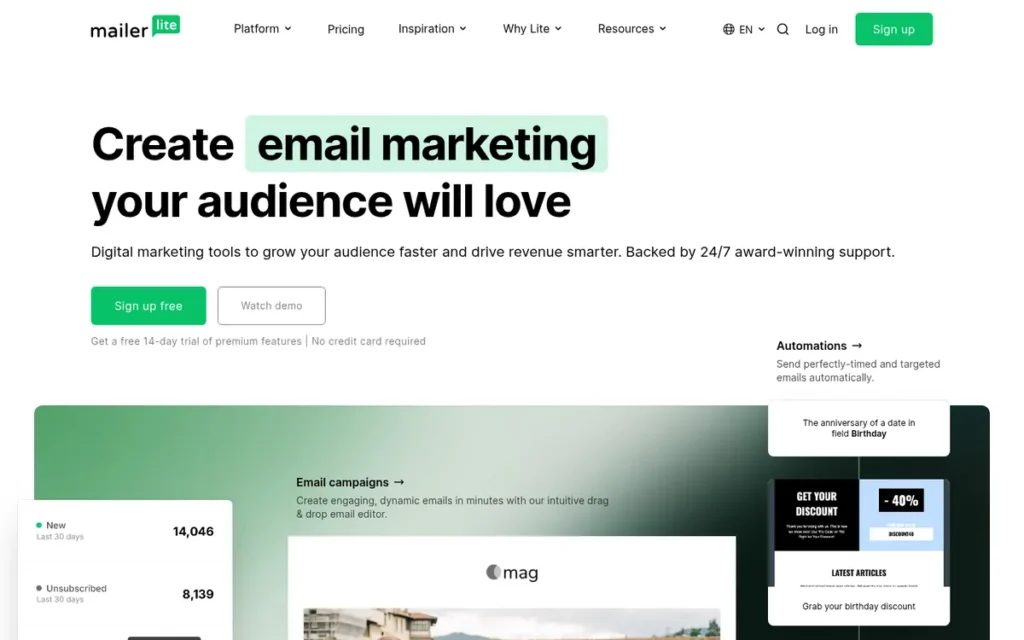
Category: Audience Builder, captures and keeps a reader audience the author owns, so the author doesn’t depend on retailer algorithms.
At a Glance
- Category: Audience Builder
- Best For: Authors at any stage who want an email list they own, especially first-time authors with fewer than 250 subscribers
- Price Range: Free (250 subscribers / 2,500 emails per 30 days); paid plans reported from about $12/month, rising with list size
- Primary Strength: MailerLite combines high ratings from large independent samples with author-specific integrations for BookFunnel and StoryOrigin.
- Biggest Limitation: MailerLite has paused or terminated accounts after high bounce rates, which is a real risk for authors who import swap or group-promo subscribers.
- One-Line Summary: MailerLite is the best-evidenced email platform for indie authors building a reader list they own, with a free plan for up to 250 subscribers and native BookFunnel and StoryOrigin integrations.
- Last Verified: November 2026
Overview
MailerLite is an email marketing platform with a dedicated author program. Self-published authors use MailerLite to build a reader newsletter, signup pages, and welcome automations they own, and it suits first-time and backlist authors who want to rely less on Amazon’s algorithm.
MailerLite fixes the “reach readers again” bottleneck, but MailerLite does not bring subscribers to the signup page by itself. That traffic has to come from a reader magnet (lead magnet), swaps, or back-matter links.
Key Features
- MailerLite provides a drag-and-drop email editor, signup forms, pop-ups, and landing pages for building an author newsletter.
- MailerLite’s visual automations can send a welcome sequence and deliver an EPUB or PDF reader magnet automatically.
- MailerLite integrates natively with BookFunnel. On BookFunnel’s Mid-List plan or higher, a reader magnet download adds the subscriber to a MailerLite group and starts an automation.
- MailerLite syncs with StoryOrigin through its API and also connects with Prolific Works and LittleStack.
- MailerLite supports selling digital products and paid subscriptions through Stripe.
Best For
MailerLite is best for authors who want to stop relying entirely on Amazon and build a direct relationship with readers. Authors can start on the free plan and move to a paid tier as the list grows.
Pricing
- MailerLite’s Free plan allows up to 250 active subscribers and 2,500 emails per 30-day period, including automations and digital products. Sending pauses when either cap is reached (MailerLite, November 2026).
- MailerLite’s free tier has shrunk. Earlier limits were reported at 500 subscribers, and a 2024 Reddit post cites 1,000 subscribers (Reddit r/NewsletterManagers, 2024).
- MailerLite’s paid plans are reported from about $12/month, depending on list size (Capterra; Mailercloud, 2026). Check your list size against the live MailerLite pricing page.
Strengths
- MailerLite addresses the tactic authors rate most effective. Authors with an email list reported about 20 times the median monthly income of authors without one, $300 versus $15 (Written Word Media, 2025). This is a self-reported correlation, and it supports having an email list in general, not MailerLite over other email platforms.
- MailerLite has large independent samples on two platforms: G2 4.6/5 from 1,115 reviews and Capterra 4.7/5 from 2,340 reviews (G2; Capterra, November 2026). Reviewers mainly praise ease of use and price.
- MailerLite’s native BookFunnel and StoryOrigin integrations connect reader magnet delivery and swaps to list building without manual imports.
- Kindlepreneur, an author-education site, calls MailerLite one of the easiest email services for authors (Kindlepreneur, November 2026). Treat this as editorial opinion, not independent testing.
This aligns with community sentiment on r/Emailmarketing:
“I can’t fault MailerLite – simple to setup, affordable, great templates, brilliant newsletter builder – really love it.
It’s also easy to setup autoresponders and campaigns so all around awesome.
I’ve been with them for many years.” Posted by u/warwickabrown
Takeaway: Long-term MailerLite users credit its ease of setup, affordability, and automation builder for keeping them on the platform for years.
Limitations
MailerLite’s biggest trade-off is that its ease of use comes with strict compliance enforcement. Reviewers report accounts paused after a high-bounce campaign or terminated after extensive setup (Trustpilot; Capterra, November 2026).
- MailerLite’s compliance risk is higher for authors who import swap or group-promo subscribers who may not have clearly agreed to hear from that author.
- MailerLite offers no phone support, and reviewers report limited recourse during compliance reviews (Capterra; Trustpilot, November 2026).
- MailerLite has cut its free tier repeatedly, and one Reddit user left after templates were removed from free accounts (Reddit r/NewsletterManagers, 2024).
- MailerLite’s community praise needs some caution: one positive Reddit comment links through a MailerLite referral URL, and MailerLite publishes its own author newsletter examples.
Verdict
MailerLite is the best-evidenced starting point for indie authors who want to own their reader relationship, combining a free plan, author-specific integrations, and more than 3,400 reviews on G2 and Capterra.
MailerLite scores 4.44/5 (C1 5, C2 5, C3 4, C4 4, C5 3, C6 5). Its high bottleneck-impact and genre-fit scores drive the result. Pair MailerLite with a traffic source such as a reader magnet or swaps, keep subscriber consent clean, and export list backups regularly.
2. Canva: Best for Promotional Graphics and Ad Creatives Without Design Skills
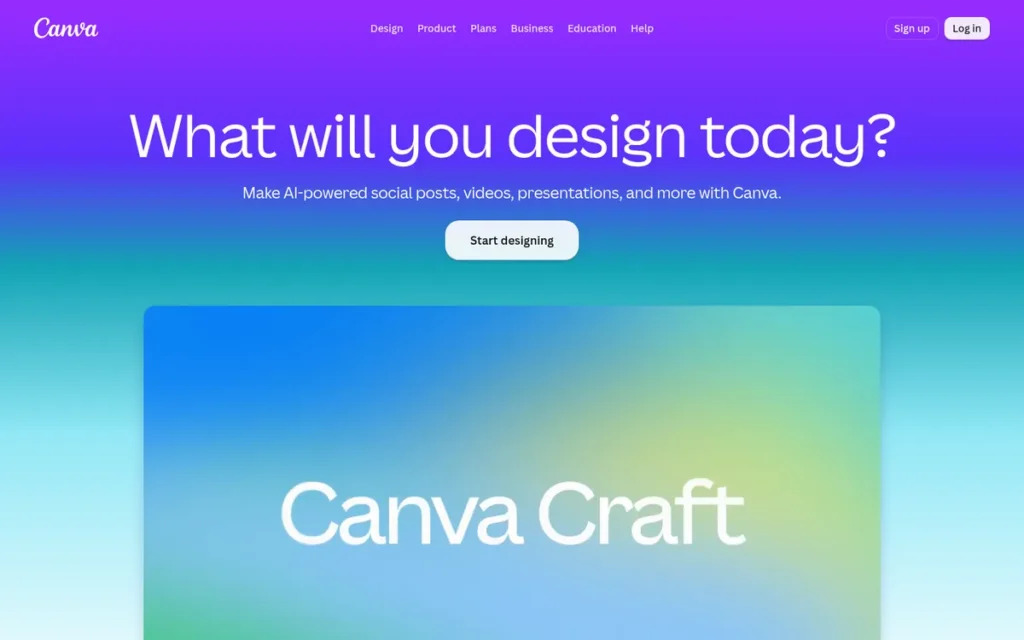
Category: Creative Production, creates promotional graphics, ad creatives, and video, but does not distribute them to readers.
At a Glance
- Category: Creative Production
- Best For: Authors without design skills who need social posts, ad images, newsletter headers, and trailers
- Price Range: Free; Pro US$144/year for one person (US pricing page)
- Primary Strength: Canva gives non-designers a large template library, a capable free plan, and the largest independent review sample among the seven tools.
- Biggest Limitation: Canva’s assets are non-exclusive, and its mockups are general-purpose rather than built for books.
- One-Line Summary: Canva is one of the most widely used free design tools for indie authors creating promotional graphics and ad creatives, though its templates are non-exclusive and it was not built for book publishing.
- Last Verified: November 2026
Overview
Canva is a general-purpose online design platform with templates, AI image tools, and video editing. Self-published authors without design skills use Canva to produce social posts, ad creatives, newsletter headers, and book trailers, and it suits authors at every budget level.
Canva creates assets but does not reach readers by itself, and Canva is not a substitute for professional cover design.
Key Features
- Canva offers templates for social posts, ads, email headers, and bookmarks that non-designers can edit by drag and drop.
- Canva’s Magic Resize and Magic Switch convert one design into multiple ad and social formats.
- Canva’s Brand Kit stores fonts, colors, and logos to keep pen-name and series branding consistent.
- Canva’s Magic Studio AI generates images and copy and removes backgrounds, though the output often needs editing.
- Canva includes video editing for reels, TikToks, and book trailers, plus device mockups and Canva Print.
Best For
Canva is best for authors who need a steady supply of social graphics, ad images, and newsletter visuals at little or no cost. Authors who need realistic 3D book mockups often pair Canva with Book Brush (unranked).
Pricing
- Canva offers a free plan with core tools and limited AI features (Canva, November 2026).
- Canva Pro costs US$144/year for one person on the official US pricing page, and regional prices vary (Canva, November 2026).
- Canva Teams is closed to new sign-ups, and its replacement, Canva Business, is reported at about US$20 per person per month (Sacra, 2026).
Strengths
- Canva holds a G2 rating of 4.7/5 from 7,815 reviews, the largest independent review sample among the seven tools (G2, November 2026). Users praise its ease of use, templates, and speed.
- Canva reported more than 265 million monthly active users, 31 million paid users, and US$4 billion in annual recurring revenue (ARR) at the end of 2025 (TechCrunch, February 2026, citing Canva).
- Canva is by far the largest company on this list by users, revenue, and headcount, with more than 5,000 employees (SQ Magazine, 2025).
- Canva’s free plan covers most author promo-graphics needs at no cost. Canva works for almost any genre or career stage because it doesn’t depend on an audience pool.
Limitations
Canva’s biggest trade-off is that its speed and low cost come with sameness and licensing limits. Canva’s templates and stock assets are non-exclusive, so another author can use the same design (Bookbird, 2026).
- Canva template elements can’t be trademarked as an exclusive series logo, so check each element’s license before using it on a commercial cover.
- Canva’s CMYK print export requires Pro. Free exports are RGB only, which can shift colors in print (BookDesigner.ai, 2026).
- Canva users criticize the generic “Canva look,” AI output that needs heavy editing, and limited typography and prepress controls (BeYourCover, 2026).
- Canva has drawn Trustpilot complaints about billing, renewals, and cancellations (Trustpilot, November 2026).
- Canva’s mockups are general-purpose, and author-focused comparisons rate Book Brush stronger for 3D book images (Bookbird; BeYourCover, 2026). This research found no verifiable Reddit discussion of Canva for book marketing.
Verdict
Canva is the strongest free design option on this list for indie authors who need promotional graphics and ad creatives without design skills, backed by a 4.7/5 G2 rating from 7,815 reviews.
Canva scores 4.22/5 (C1 3, C2 5, C3 4, C4 5, C5 4, C6 5). Its C3 score rose once the US Pro price was confirmed, but the CMYK paywall kept it below 5. Canva needs a channel such as a newsletter or ads to reach readers, so check licenses before any cover use.
3. BookFunnel: Best for Delivering Reader Magnets and ARCs
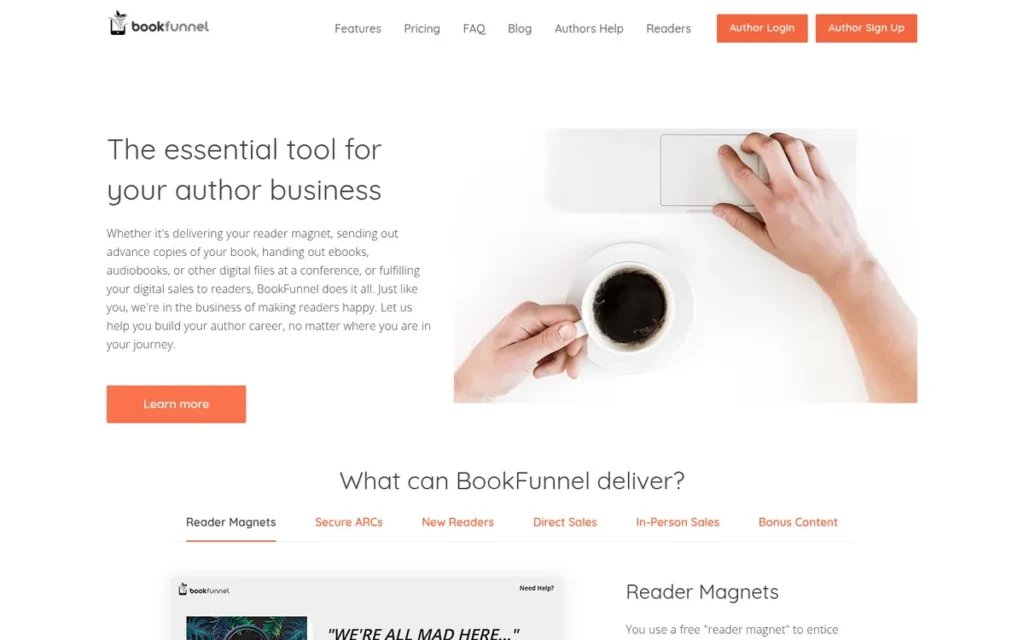
Category: Delivery Infrastructure, reliably gets ebook files to readers, reviewers, and buyers, and on higher plans sends signups to an email list.
At a Glance
- Category: Delivery Infrastructure
- Best For: Authors delivering reader magnets, private ARCs to their own review team, or direct-sale ebooks
- Price Range: $30/year (First-Time Author, delivery only); $200/year or $20/month (Mid-List Author, list integrations and Certified Mail); $300/year (Bestseller, unlimited downloads)
- Primary Strength: BookFunnel delivers ebooks to any device and handles reader support, with native email-list integration from the Mid-List plan up.
- Biggest Limitation: BookFunnel has no built-in reviewer pool, and its $30 plan excludes email collection, list integrations, and Certified Mail.
- One-Line Summary: BookFunnel is a widely recommended delivery service for reader magnets, ARCs, and direct-sale ebooks, starting at $30 per year for delivery and $200 per year for list capture and secure ARCs.
- Last Verified: November 2026
Overview
BookFunnel is an ebook delivery service built by an indie author. BookFunnel sends reader magnets, advance review copies, and direct-sale ebooks to any device and handles reader tech support, and it suits authors who already have readers or a review team.
BookFunnel is delivery infrastructure, not a reviewer marketplace or a newsletter platform. BookFunnel restructured its plans on February 20, 2026 (BookFunnel, 2026).
Key Features
- BookFunnel delivers EPUB, PDF, and audiobook files to any reading device and answers readers’ download support questions.
- BookFunnel’s Certified Mail, available from the Mid-List plan, sends ARCs through private, non-shareable links with download tracking and watermarked EPUBs.
- BookFunnel’s email signup pages connect to services such as MailerLite on Mid-List and higher plans and add new readers to a list automatically.
- BookFunnel runs group promotions, author swaps, gifting, and bundles, and First-Time Author accounts can join group promos and swaps.
- BookFunnel fulfills direct sales from Shopify, Payhip, WooCommerce, ThriveCart, Gumroad, and Kickstarter/BackerKit.
Best For
BookFunnel is best for authors who want reader magnets and ARCs delivered without tech-support headaches, and for authors starting to sell direct. It works best alongside an email platform and an existing audience.
Pricing
- BookFunnel’s First-Time Author plan costs $30/year for 500 downloads per month. It covers delivery, group promos, and author swaps, but not email collection, mailing-list integrations, or Certified Mail (BookFunnel, November 2026).
- BookFunnel’s Mid-List Author plan costs $200/year or $20/month for up to four pen names, 5,000 downloads per month, list integrations, and Certified Mail (BookFunnel, November 2026).
- BookFunnel’s Bestseller plan costs $300/year or $30/month for up to six pen names and unlimited downloads (BookFunnel, November 2026).
Strengths
- BookFunnel reports delivering more than 2 million ebooks per month (BookFunnel, 2026; self-reported, unaudited). In one author’s data, about 75% of new signups came from BookFunnel versus 25% from StoryOrigin (Reddit r/selfpublish, 2022; single case).
- BookFunnel publishes all current plan prices, and its $30/year First-Time Author plan is one of the lowest paid entry points on this list.
- BookFunnel gets consistently positive Reddit sentiment. One author wrote “I use Bookfunnel and I’m happy with it,” and a reader said “I choose Book Funnel whenever its available” (Reddit r/romanceauthors, 2025).
- BookFunnel’s founder, Damon Courtney, is an indie fantasy author and software engineer. One author reports he “changed my file limits early on so I could serve audiobooks and RPGs, and charged nothing” (Reddit r/selfpublish, 2022).
Limitations
BookFunnel’s biggest trade-off is that its $30 entry plan delivers files but does not capture emails. Authors who need list capture or secure ARCs have to pay $200/year for Mid-List (BookFunnel, November 2026).
- BookFunnel provides reliable delivery but no audience of its own, so authors without an ARC team or list get little ARC value from it.
- BookFunnel scored 6.6/10, against BookSprout’s 7.1/10, on ARC reviewer functions and cost in one comparison (Bookbird, 2026).
- BookFunnel’s group promotions often attract subscribers who only want free books, and watermarking discourages piracy without preventing it (Bookbird, 2026).
- BookFunnel has no verified G2, Capterra, or Trustpilot rating to check its vendor-hosted testimonials against, and its small team is a continuity consideration.
Users on r/selfpublish noted:
“I’ve certainly done some BookFunnel newsletter builders over the years, and I have found some active subscribers that way. But there are so many free books out there these days. The odds that someone who downloads your reader magnet in a builder will actually read it are not great.” Posted by u/__The_Kraken__
Takeaway: BookFunnel newsletter builders do bring in some active subscribers, but in a market flooded with free books, most reader-magnet downloads never turn into engaged readers.
Verdict
BookFunnel is one of the most cost-effective ways for indie authors to deliver reader magnets and private ARCs reliably, with delivery from $30 per year and list capture plus Certified Mail from $200 per year.
BookFunnel scores 4.11/5 (C1 5, C2 3, C3 5, C4 3, C5 4, C6 4). C4 dropped because the $30 plan cannot capture emails. On the $30 plan, link the delivery page from a MailerLite welcome email, and treat group-promo subscribers as low-intent until they engage.
4. StoryOrigin: Best for Newsletter Swaps and Group Promotions on a Budget
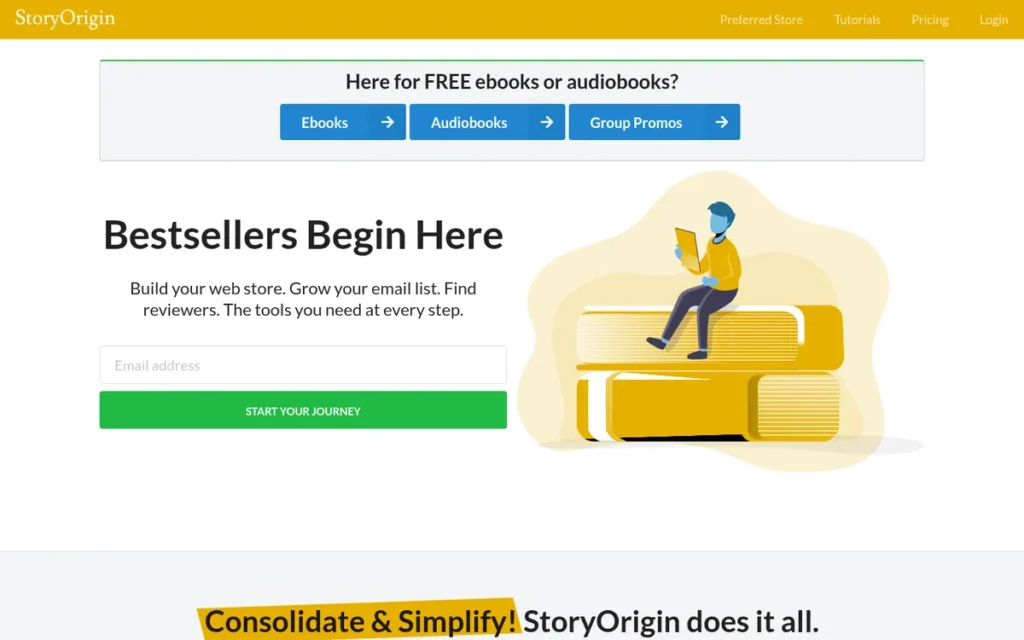
Category: Exposure Network, reaches new readers or reviewers through other authors or curated audiences, and results are not guaranteed.
At a Glance
- Category: Exposure Network
- Best For: Genre fiction authors (especially romance and fantasy) with at least a small list who want low-cost swaps and group promos
- Price Range: Free Basic plan; Standard $10/month or $100/year; extra pen name $50/year
- Primary Strength: StoryOrigin shows swap partners’ list stats and whether they actually shared, so authors can check partners before trusting them.
- Biggest Limitation: StoryOrigin is run by a single founder, and authors report swap pools that plateau and bring in more giveaway signups than sales.
- One-Line Summary: StoryOrigin is the lowest-cost platform evaluated that shows verifiable swap partner stats and follow-through records, at $100 per year, though results vary by genre.
- Last Verified: November 2026
Overview
StoryOrigin is an author cross-promotion platform for newsletter swaps, group promotions, reader magnets, and vetted review copies. StoryOrigin is built for genre fiction authors who want to grow an email list by promoting alongside authors with similar readers.
StoryOrigin’s results depend on genre fit and on partners following through, and authors with no list will find StoryOrigin hard to start with.
Key Features
- StoryOrigin’s newsletter swaps show each partner’s list size, open rate, click rate, and clicks sent.
- StoryOrigin shows whether partners actually shared a promotion, and missed promotions can appear publicly on a partner’s profile.
- StoryOrigin filters swap partners by genre, subgenre, and KU versus wide distribution.
- StoryOrigin delivers ebook and audiobook review copies (Audible, Spotify, Audiobooks.com, and Kobo codes) and checks each reviewer’s completion history.
- StoryOrigin includes reader magnets with email capture, universal book links, a website builder, and direct-sale ebooks.
Best For
StoryOrigin is best for romance, fantasy, and other genre fiction authors who already have a small list, want inexpensive swaps and group promos, and are willing to promote other authors’ books in return.
Pricing
- StoryOrigin’s free Basic plan includes file delivery, universal links, reader support, and email-service integrations (StoryOrigin, November 2026).
- StoryOrigin Standard costs $10/month or $100/year and is required for newsletter swaps, group promos, email collection, and review-copy vetting (StoryOrigin, November 2026).
- StoryOrigin charges $50/year for each extra pen name (StoryOrigin, November 2026). It was entirely free until April 2021 (Indie Author Magazine, 2026).
Strengths
- StoryOrigin Standard costs $100/year, the lowest price among the tools evaluated for swaps with verifiable partner stats, group promos, and ARC vetting (StoryOrigin, November 2026).
- StoryOrigin publishes swap partner stats and follow-through records, an accountability feature PlugRoute’s research found on no other ranked tool.
- StoryOrigin has helped some authors grow their lists. One author reports they “tripled my list size” (Reddit r/selfpublish, 2022), and a testimonial on StoryOrigin’s site reports 2,065 subscribers at a 72.2% open rate (StoryOrigin, 2026; self-reported, unaudited).
- StoryOrigin’s founder, Evan Gow, is described by one author as “always available to help” (Reddit r/romanceauthors, 2025).
Limitations
StoryOrigin’s biggest trade-off is that its low price comes with uneven results. Authors report partners who “sign up to every swap and then don’t complete their end of the bargain” (Reddit r/selfpublish, 2022).
- StoryOrigin promos are increasingly crowded by small “publishing houses” that “put in a lot less effort,” and one author keeps “ending up with the same 5-10 other authors” (Reddit r/selfpublish, 2022).
- StoryOrigin drew a 2025 view that “it’s no longer good for sales,” though it “might still be good for giveaways” (Reddit r/romanceauthors, 2025).
- StoryOrigin’s partner pools lean toward romance and fantasy, KU and wide authors can end up mismatched, and swap-sourced subscribers can raise consent and bounce risks on email platforms.
- StoryOrigin’s founder is described as a team of one (Indie Author Magazine, 2026), which limits support capacity. StoryOrigin also has no verified third-party rating.
Users on r/selfpublish shared their experience:
“I did storyorigin a few years ago, then I stopped because my genre (horror) ran out of builders and people to collab with on swaps. So I decided to just save the $10/month.” Posted by u/DefPixEric
Takeaway: StoryOrigin’s value falls off sharply outside its core genres, where swap partners and group builders can run out entirely.
Verdict
StoryOrigin is the most affordable way among the tools evaluated for genre fiction authors to run accountable newsletter swaps, though recent author reports suggest StoryOrigin now grows lists more reliably than it drives sales.
StoryOrigin scores 3.56/5 (C1 4, C2 2, C3 5, C4 5, C5 2, C6 3). Choose partners by genre fit and click history rather than list size. StoryOrigin works best alongside an email platform. Start on the free Basic plan and move to Standard once you have a small list.
5. BookBub Partners: Best for Promotional Reach on Discounted Backlist and Series Books
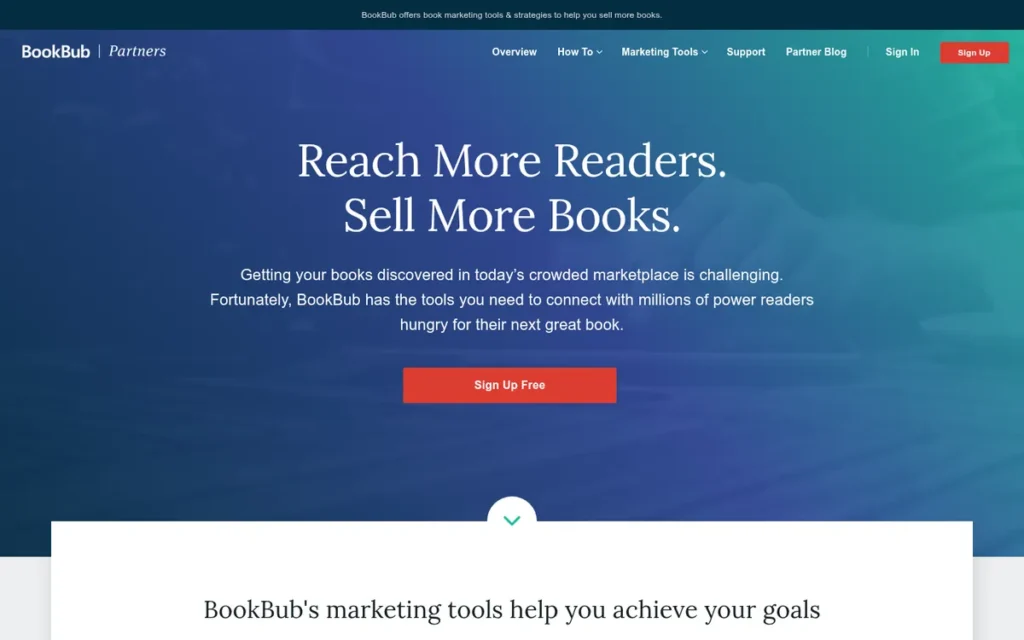
Category: Exposure Network.
At a Glance
- Category: Exposure Network
- Best For: Fiction authors with a discounted backlist title or series where read-through can earn back the deal fee
- Price Range: Free Author Profile; Featured Deal fees vary by category, price band, and region (for example, $276–$765 for US romance deals at $0.99); BookBub Ads self-serve CPM/CPC
- Primary Strength: BookBub Partners runs one of the longest-established curated ebook deal promotions, with genre-segmented reader emails.
- Biggest Limitation: BookBub Partners Featured Deals are selective and carry no guaranteed results, so acceptance and ROI are both uncertain.
- One-Line Summary: BookBub Partners runs one of the longest-established curated ebook deal promotions for indie authors, but its Featured Deals are selective and most likely to pay off for discounted series books with read-through.
- Last Verified: November 2026
Overview
BookBub Partners is the author-facing side of BookBub, offering editor-selected Featured Deals, self-serve BookBub Ads, and free author profiles for reaching deal-seeking ebook readers. BookBub Partners suits fiction authors with discounted backlist or series titles better than first-time authors.
BookBub Partners Featured Deals don’t guarantee acceptance or results, so they belong in a planned discount strategy, not an automatic launch budget.
Key Features
- BookBub Partners Featured Deals place selected discounted or free ebooks in genre-specific reader emails.
- BookBub Partners editors weigh reviews, cover, description, comparable-title performance, timing, and competing submissions, not price alone.
- BookBub Ads let authors run self-serve campaigns paid by CPM (cost per thousand impressions) or CPC (cost per click), targeted by author interest, category, retailer, and region.
- BookBub Partners offers a free Author Profile that sends New Release Alerts to followers.
- BookBub Partners also runs New Releases for Less, Chirp audiobook deals, and a Partner Dashboard.
Best For
BookBub Partners is best for popular-genre fiction authors with a deeply discounted backlist title or series starter whose read-through can earn back the fee. Any author can claim the free Author Profile.
Pricing
- BookBub Partners Featured Deal fees vary by category, deal price band (Free / $0.99 / $1–2 / $2–3 / $3+), and region. At $0.99, the US chart lists Contemporary Romance at $765, American Historical Romance at $540, and Dark Romance at $276. A free Contemporary Romance deal costs $620 (BookBub, November 2026).
- BookBub Partners submissions are free. The fee is charged only if BookBub selects the book and the author confirms (BookBub Support, November 2026).
- BookBub Partners Featured Deals require a discount of at least 50%. Acceptance is estimated at about 10–15% of US submissions, a figure that isn’t confirmed as official (BookBub Support; SelfPublishing.com, November 2026).
Strengths
- BookBub said its emails drove more than 10 million ebook sales in 2014 (Boston Herald, 2015), and it reported about 8 million members by 2016 (Boston.com, 2016). These figures are historical, and no 2025–26 total was verified.
- BookBub Partners can produce sharp sales spikes. One author spent about $348 on a romance Featured Deal and saw $600+ in revenue, 800+ copies sold at $0.99, and about 20,000 KU pages the following week (Reddit r/selfpublish, 2026; single case).
- BookBub Partners publishes book-description testing data. Its own A/B tests found testimonials raised CTR by 22.6% and genre-matched copy by 15.8% (BookBub Insights, 2026; self-reported, unaudited).
- BookBub Partners is backed by an established company. BookBub raised a $3.8M Series A (Publishers Weekly, 2014) and a further $7M (BookBub Insights, 2015), and had about 120 employees at Chirp’s launch (press coverage, 2019).
Limitations
BookBub Partners’ biggest trade-off is reach in exchange for cost and uncertainty. At $0.99, Amazon’s 35% KDP royalty pays about $0.35 per sale, so a $765 deal needs roughly 2,200 sales of that book alone to break even (illustrative calculation).
- BookBub Partners’ $348 Reddit case shows why read-through matters: 800 copies at about $0.35 each earned roughly $280, so most of the reported $600+ came from KU reads and later books (illustrative calculation).
- BookBub Partners delivers mixed ROI in author reports, and some deals fail to earn back the fee (Reddit r/selfpublish, 2026; paraphrased via Perplexity).
- BookBub Partners rejections are opaque, and BookBub itself says a single rejection reason “could be misleading” (BookBub Insights, 2026).
- BookBub Partners is a poor fit for niche nonfiction and first books without a series, and authors describe BookBub Ads as hard to make profitable (Publishing.co.uk, 2026).
- BookBub Partners has no G2, Capterra, or Trustpilot rating for the author side, and a BookBub-hosted testimonial claiming more than 300% ROI is self-reported and unaudited.
Users on r/selfpublish noted:
“My experience with Bookbub: They always earn out over every one I’ve had over the last 3 years or so, except lately there has been a noticeable slippage. They are not as magical as they used to be.” Posted by u/Patient_Bet3645
Takeaway: BookBub Featured Deals still earn out for experienced series authors, but even regular users report that returns have been slipping.
Verdict
BookBub Partners offers one of the most established curated promotion channels for indie authors, but its Featured Deals pay off mainly for discounted series books where read-through can recover the fee.
BookBub Partners scores 3.00/5 (C1 4, C2 3, C3 2, C4 3, C5 4, C6 2). Claim the free Author Profile now, and don’t build a launch budget around acceptance. Before confirming a deal, compare the quoted fee with your expected series read-through.
6. Publisher Rocket: Best for Amazon Keyword and Category Research
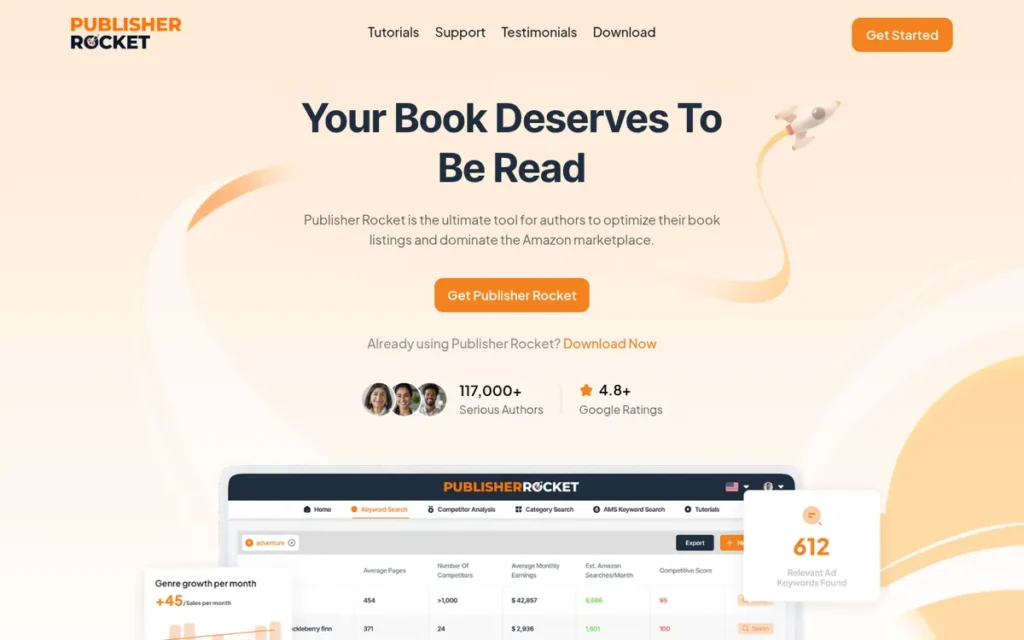
Category: Discoverability Research, estimates Amazon search demand, competition, and categories to help readers find a book.
At a Glance
- Category: Discoverability Research
- Best For: Authors fixing metadata, keywords, and categories before launch, especially nonfiction authors and authors who sell mainly on Amazon
- Price Range: $199 one-time (promotional; $299 list) with a 30-day money-back guarantee; optional Rocket Report $49.99
- Primary Strength: Publisher Rocket offers Kindle-specific keyword, competition, and category research for a one-time fee instead of a subscription.
- Biggest Limitation: Publisher Rocket’s search volumes and earnings figures are estimates inferred from public signals, and authors report they don’t match real sales.
- One-Line Summary: Publisher Rocket is a one-time-purchase Amazon keyword and category research tool for indie authors whose search and earnings figures should be treated as directional estimates rather than precise data.
- Last Verified: November 2026
Overview
Publisher Rocket is a research tool, sold for a one-time fee, that estimates Amazon keyword search volume, competition, and category options for Kindle books. Publisher Rocket suits authors optimizing metadata and Amazon Ads keywords before or after launch.
Publisher Rocket’s numbers are inferred estimates, and free Amazon autocomplete and category browsing can do some of the same work first.
Key Features
- Publisher Rocket’s keyword search shows estimated monthly Amazon searches and a competition score.
- Publisher Rocket’s Competition Analyzer shows rank, price, reviews, and estimated earnings for competing books.
- Publisher Rocket’s category search covers more than 19,000 Amazon categories.
- Publisher Rocket’s Amazon Ads keyword generator builds keyword lists for campaigns.
- Publisher Rocket offers an optional Rocket Report, in which its team recommends keywords and categories.
Best For
Publisher Rocket is best for Amazon-focused authors who want structured keyword and category research, especially nonfiction authors. Authors on the tightest budgets should try free Amazon search first.
Pricing
- Publisher Rocket costs $199 one-time (down from $299), with lifetime access and a 30-day money-back guarantee (Publisher Rocket, November 2026).
- Publisher Rocket’s vendor notes that the one-time offer may eventually become an annual subscription (Publisher Rocket, November 2026).
- Publisher Rocket’s optional Rocket Report costs $49.99 per report, and Publisher Rocket has no free tier (Publisher Rocket, November 2026).
Strengths
- Publisher Rocket’s one-time $199 price avoids the ongoing subscriptions charged by tools such as BookBeam or Helium 10 (PublishFlow, 2026), which matters for budget authors.
- Publisher Rocket is built specifically for Kindle books and covers more than 19,000 Amazon categories, unlike seller tools aimed at physical products.
- Publisher Rocket holds 4.4/5 on Trustpilot from 64 reviews, though only 6 were posted in the last 12 months (Trustpilot, November 2026).
- Publisher Rocket’s vendor testimonials report results such as income rising from $500 to $4,000/month after category and keyword changes (Publisher Rocket, 2026; self-reported, unaudited, with no baselines or ad spend disclosed).
Limitations
Publisher Rocket’s biggest trade-off is that its low one-time price comes with estimates, not measured data. Search volumes and earnings are inferred from public signals such as Best Seller Rank (BSR), Amazon’s sales-rank number (Chapter, 2026).
- Reddit users called Publisher Rocket’s estimates “completely inaccurate” and “closer to guesses,” and one tester found no significant difference for Amazon Ads (Reddit r/selfpublish; r/KDP, 2025; paraphrased via Perplexity).
- One discussion said Publisher Rocket confuses KU borrows with sales (Reddit r/selfpublish, 2025; paraphrased via Perplexity).
- Publisher Rocket’s independent evidence is thin: its G2 rating is 4.0/5 from a single review, and that review mentions the app hanging (G2, November 2026).
- Publisher Rocket is promoted mainly through Kindlepreneur, the education site run by its creator, Dave Chesson. Readers should weigh that conflict of interest.
- Publisher Rocket drew a Trustpilot complaint about problems after buying a lifetime license (Trustpilot, November 2026).
Users on r/selfpublish noted:
“I’ve not seen any change since applying the keywords from the tool. The categories are good, I did those on my books but the only way they’re really useful if you’re able to get enough sales at once to get the orange bestseller sticker really.” Posted by u/craigybacha
Takeaway: Publisher Rocket’s category research gets more credit from buyers than its keyword suggestions, which some users say did nothing measurable for their sales.
Verdict
Publisher Rocket is a one-time-purchase alternative to subscription keyword tools such as BookBeam and Helium 10. It fits authors who want structured Kindle metadata research and treat its figures as directional estimates.
Publisher Rocket scores 2.78/5 (C1 3, C2 2, C3 3, C4 2, C5 3, C6 4). Try free Amazon autocomplete first, then use the 30-day guarantee to check Publisher Rocket against your own Amazon results. Publisher Rocket is most valuable before launch and for nonfiction.
7. BookSprout: Best for Authors With No ARC Team Who Want a Reviewer Marketplace
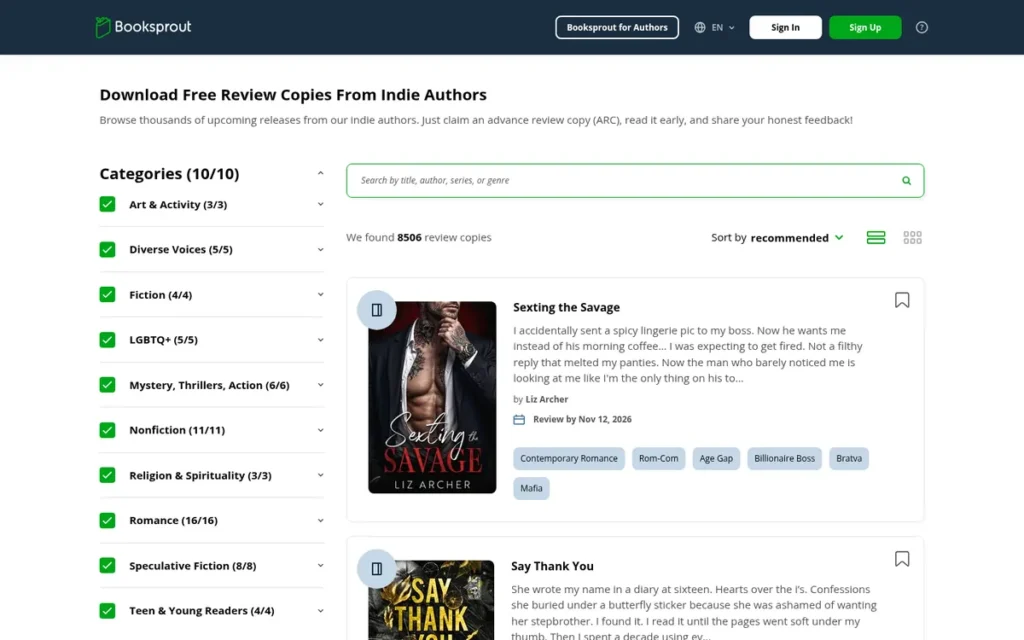
Category: Exposure Network.
At a Glance
- Category: Exposure Network
- Best For: Romance and genre fiction authors with no ARC team who want access to a reviewer pool for one launch
- Price Range: Free plan (cannot run campaigns); paid plans $9, $19, $29, and $59/month
- Primary Strength: BookSprout is the only dedicated ARC reviewer marketplace among the tools evaluated, sorting readers by genre and reviewer track record.
- Biggest Limitation: BookSprout claims about an 80% review rate, but one author’s 2025 tracking found 38–50% completion.
- One-Line Summary: BookSprout is an ARC reviewer marketplace for authors without their own review team, but one author’s independent 2025 tracking found completion rates of 38–50%, well below its claimed 80%.
- Last Verified: November 2026
Overview
BookSprout is an advance review copy marketplace where readers claim ARCs by genre and authors get automated reminders and review tracking. BookSprout suits authors, mainly in romance and genre fiction, who have no ARC team of their own before launch.
BookSprout’s independently tracked completion rates fall well below its marketing claims, so test BookSprout with one campaign before committing.
Key Features
- BookSprout lets readers claim review copies by genre from a pool it reports at more than 300,000 readers (BookSprout, 2026; self-reported).
- BookSprout’s ARC Assistant sends readers automated review reminders.
- BookSprout tracks reviews across books and pen names and links to Amazon and Goodreads review pages.
- BookSprout uses reviewer ranks that limit how many copies a reader can claim, based on review count and on-time rate.
- BookSprout adds watermarking to ARCs on paid plans and lets readers follow authors.
Best For
BookSprout is best for romance and genre fiction authors with no list or ARC team who need some early reviews and can afford a small test. Authors with their own readers may do better with private ARC delivery through BookFunnel or StoryOrigin.
Pricing
- BookSprout’s paid plans start at $9/month for Growing Author, which allows one active campaign with up to 25 readers (BookSprout, November 2026).
- BookSprout’s higher plans cost $19/month (Pro Author), $29/month (Bestselling Author), and $59/month (Publisher) (BookSprout, November 2026).
- BookSprout’s Free plan cannot run review campaigns. Older sources list different prices, so confirm tiers on the live BookSprout pricing page (booksprout.co/pricing).
Strengths
- BookSprout is the only dedicated ARC reviewer marketplace among the tools evaluated. It reports 300,000+ readers, 45,000+ authors, and 3.8M+ reviews generated (BookSprout, 2026; self-reported, unaudited).
- BookSprout’s reviewer ranks act as a quality filter. Valued reviewers need 30 reviews and a 70% on-time rate before they can claim up to 10 copies per week (BookSprout Help, 2026).
- BookSprout scored 7.1/10, against BookFunnel’s 6.6/10, on ARC reviewer functions and cost (Bookbird, 2026).
- BookSprout is recommended by some authors as a starting point for new authors with no list: “Booksprout. There’s usually some genre-specific places you can look for too” (Reddit r/KDP, 2026).
Limitations
BookSprout’s biggest trade-off is convenient reviewer access with inconsistent results. One author’s September 2025 campaign tracked 38.4% completion for onsite requests and 50% for invited readers, against 72% and 93% on BookSirens (Susan Illene, 2025; single campaign).
- BookSprout’s claimed rate implies about 20 reviews from 25 ARCs on the $9 plan, while the 2025 independent tracking implies about 10 to 12 (illustrative calculation).
- BookSprout produced a 22% review rate for another author, and other authors report getting 3 reviews, none, or closing their account (Reddit r/selfpublish, 2026; single cases, paraphrased via Perplexity).
- BookSprout holds 1.7/5 on Trustpilot from 42 reviews and 3.2/5 on Google Play from 87 reviews (Trustpilot; Google Play, November 2026).
- BookSprout’s results are stronger in romance than in SFF, mystery, or nonfiction. One piracy case was reported despite watermarking, and BookSprout has 1–10 employees (Self-Publishing Directory; LinkedIn, 2026).
Verdict
BookSprout claims about 8 reviews per 10 readers, while one author’s independent 2025 tracking found closer to 4 to 5, so authors should treat BookSprout as a one-campaign test rather than a launch guarantee.
BookSprout scores 2.33/5 (C1 3, C2 1, C3 3, C4 2, C5 3, C6 2). Verified pricing raised its score, but the gap between claimed and tracked results keeps it at #7. Start with the $9 Growing Author plan, and follow retailer rules that reviews be voluntary and honest.
What Are the Best Free Book Marketing Tools for New Authors?
The best free book marketing tools for new authors are Canva Free for graphics, MailerLite Free for an email list of up to 250 subscribers, and StoryOrigin’s free Basic plan for file delivery and universal links. BookFunnel’s $30/year First-Time plan adds reader magnet delivery to any device when linked from a MailerLite welcome email.
Budget stacks by career stage (prices verified November 2026):
- First book (under $100): A stack of Canva Free, MailerLite Free, and BookFunnel First-Time Author costs about $30 in year one, with the BookFunnel download link placed in a MailerLite welcome email.
- Launch-focused ($200–$500): A launch stack adds Publisher Rocket ($199 one-time) for keyword research, plus either a BookSprout Growing Author test ($9/month) or BookFunnel Mid-List ($200/year) for Certified Mail ARCs.
- Backlist and series: A backlist stack adds BookBub Partners Featured Deals (charged only if selected), a paid MailerLite tier (reported from about $12/month), and BookFunnel Mid-List or Bestseller.
- Nonfiction or niche genre: A nonfiction stack spends first on Publisher Rocket ($199, 30-day money-back guarantee) plus MailerLite Free and Canva Free, because swap pools, ARC readers, and deal audiences lean toward romance and fantasy.
Upgrade when you hit a cap, not on a schedule:
- Upgrade MailerLite when you pass 250 subscribers or 2,500 monthly sends.
- Upgrade BookFunnel to Mid-List when you pass 500 downloads per month or need automatic list sync or Certified Mail.
- Consider BookBub Partners when a second book makes series read-through possible.
Which Book Marketing Tools Should I Use to Launch a Book in 2026?
To launch a book in 2026, set up keyword research and ARC delivery before launch, use your email list and swaps during launch week, and add paid deal promotions only once you have a backlist. In PlugRoute’s editorial view, this order puts low-cost owned infrastructure ahead of exposure fees.
Use this launch-phase mapping:
- Pre-launch (metadata): Publisher Rocket or free Amazon autocomplete helps set keywords and categories before the book page goes live.
- Pre-launch (reviews): BookFunnel Certified Mail (Mid-List, $200/year) delivers ARCs to your own team, and BookSprout or StoryOrigin review copies can fill in if you have no team.
- Pre-launch (list): MailerLite starts capturing readers you own, with a reader magnet delivered through BookFunnel or StoryOrigin.
- Launch week: MailerLite announcements and StoryOrigin swaps put the book in front of readers, and Canva supplies graphics for social posts and newsletters.
- Post-launch and backlist: BookBub Partners Featured Deals make the most sense once a discounted series starter can generate read-through.
Which Tool Should I Choose If I Can Only Afford One?
If you can afford only one paid book marketing tool, match it to your bottleneck. Pick StoryOrigin Standard ($100/year) for swaps plus email collection, BookFunnel Mid-List ($200/year) for native list integration and secure ARCs, or Publisher Rocket ($199 one-time) for nonfiction discoverability. Free MailerLite and Canva plans cover the rest.
These head-to-heads cover the matchups authors ask about most:
- BookFunnel vs StoryOrigin: BookFunnel generated about 75% of one author’s new signups versus 25% from StoryOrigin (Reddit r/selfpublish, 2022; single case). StoryOrigin’s paid route to email collection is cheaper, at $100/year against $200/year.
- BookSprout vs free ARC recruiting: BookSprout’s independently tracked completion of 38–50% suggests trying free social-media ARC recruiting first, as one r/KDP author describes.
- Publisher Rocket vs free Amazon search: Publisher Rocket organizes research that free Amazon autocomplete can partly replicate, so test the free route before paying $199.
- BookBub Partners Featured Deal, once accepted: BookBub Partners deals make the most sense when a series can recover the fee through read-through, and single-title authors face mixed ROI.
- Canva vs Book Brush: Canva handles ad layouts and social graphics, author-focused comparisons favor Book Brush for 3D book mockups, and many authors use both.
Three vendors lower the risk of testing:
- Publisher Rocket offers a 30-day money-back guarantee (Publisher Rocket, November 2026).
- BookBub Partners charges a Featured Deal fee only after a book is selected and the author confirms (BookBub Support, November 2026).
- BookSprout’s $9/month Growing Author tier lets authors test one campaign with up to 25 readers (BookSprout, November 2026).
How Do I Measure Whether Book Marketing Is Working?
In PlugRoute’s research, none of the seven ranked tools directly tied traffic from outside Amazon to Amazon sales, so authors have to measure it themselves. The practical workaround combines Amazon Attribution links, universal book links with click tracking, and a simple spreadsheet comparing clicks, spend, and sales by date.
A basic measurement routine looks like this:
- Amazon Attribution links on newsletter and ad traffic let you compare clicks from outside Amazon with sales.
- StoryOrigin’s universal book links and swap click counts show how many readers each promotion sent.
- BookBub Partners’ pricing page lists recent click ranges by category, which helps set expectations before you book.
- A spreadsheet that logs every promotion’s date, cost, clicks, sales, and KU page reads shows which channels pay back.
Amazon Ads are a common money drain when clicks aren’t tracked against sales. In PlugRoute’s editorial view, test Amazon Ads only with a capped budget after the book page converts.
What Other Book Marketing Tools Are Worth Knowing?
Other book marketing tools worth knowing are Amazon Ads, Amazon Attribution, Kit, Book Brush, BookSirens, Written Word Media’s Freebooksy and Bargain Booksy, and Reedsy’s free courses. PlugRoute lists them unranked because they were not researched to the same depth as the seven ranked tools.
- Amazon Ads is Amazon’s pay-per-click advertising, best tested with a capped budget after the book’s detail page converts.
- Amazon Attribution is a free Amazon tool for measuring traffic that reaches Amazon from outside Amazon.
- Kit is an email marketing platform that AI answer engines often mention as a MailerLite alternative.
- Book Brush is a book-specific design tool for 3D mockups, box sets, and genre ad scenes.
- BookSirens is an ARC marketplace that showed higher completion rates than BookSprout in one author’s 2025 tracking.
- Written Word Media runs the Freebooksy and Bargain Booksy promo sites.
- Reedsy offers free book marketing courses.
What Red Flags Should I Watch For When Evaluating Book Marketing Tools?
The biggest red flags in book marketing tools are success rates reported only by the vendor, estimates presented as precise data, up-front spending with no read-through to recover it, entry plans whose limits recently changed, and non-exclusive design assets. Each red flag below is numbered and named for easy reference.
Red Flag #1: Vendor-Reported Completion or Success Rates With No Independent Data Vendor-reported success rates often exceed what independent tracking finds. BookSprout claims about an 80% review rate, while one author’s 2025 campaign tracked 38–50% completion (Susan Illene, 2025; single campaign). Look for third-party data before trusting any vendor’s headline figure, whether it’s a delivery volume or a testimonial.
Red Flag #2: Importing Swap or Promo Subscribers Without Clear Consent Importing subscribers who didn’t clearly agree to hear from you can get your email account restricted. MailerLite reviewers report accounts paused after high-bounce campaigns (Trustpilot, November 2026), and swap or group-promo signups from StoryOrigin or BookFunnel carry this risk. Use double opt-in and remove unengaged subscribers.
Red Flag #3: Estimated Data Presented as Precise Numbers Keyword volumes and earnings figures in Amazon research tools are usually inferred, not measured. Publisher Rocket’s figures are inferred from public signals such as BSR (Chapter, 2026), so treat any such number as directional. Check estimates against your own sales and Amazon search results before acting on them.
Red Flag #4: Up-Front Spending Before the Book Page Converts or Read-Through Exists Paying for exposure before your book page converts, or before a series can carry readers forward, usually wastes money. A $765 BookBub Partners romance deal at $0.99 needs roughly 2,200 sales to break even on royalties alone (illustrative calculation). Fix the cover, description, and early reviews before buying ads.
Red Flag #5: Free or Entry Plans With Recently Changed Limits Free and entry plans can shrink or lose features, which breaks budgets built around them. MailerLite’s free plan has dropped from limits reported at 1,000 (Reddit, 2024) and 500 subscribers to 250 (MailerLite, November 2026). BookFunnel removed list integrations from its $30 plan in February 2026.
Red Flag #6: Using Non-Exclusive Design Assets on Commercial Covers Non-exclusive templates and stock elements can leave your cover or series logo looking like another author’s. Canva’s assets are non-exclusive, and its template elements can’t be trademarked as an exclusive series logo (Bookbird, 2026). Check each element’s license, and use a professional designer for covers.
What Questions Should I Ask Before Choosing Book Marketing Tools?
Before choosing book marketing tools, ask six questions: which bottleneck costs you the most sales, whether you already have an audience, whether the platform’s audience matches your genre, what the entry plan allows today, how you will measure sales, and whether you can export your data. These questions prevent most wasted spending.
Question #1: Which bottleneck is costing me the most sales right now? Your biggest bottleneck decides which category of tool to buy first. If readers can’t find you, invest in discoverability research. If readers can’t hear from you again, invest in an email list. Buying for a bottleneck you don’t have wastes a limited marketing budget.
Question #2: Do I already have an audience, or do I need exposure? Your existing audience decides whether delivery tools or exposure tools come first. BookFunnel and MailerLite work best with readers you already have. StoryOrigin, BookBub Partners, and BookSprout promise new readers or reviewers, but their results vary by genre and are not guaranteed.
Question #3: Does this platform’s audience match my genre and KU/wide choice? Genre fit decides whether an exposure platform can work for you at all. Swap pools, ARC readers, and deal audiences lean toward romance and fantasy. Nonfiction and niche-genre authors, and both KU-exclusive and wide authors, should check that matching partners exist before paying.
Question #4: What does the free or entry plan actually allow, and when was that verified? Entry plan limits decide whether a tool is really cheap for your needs. MailerLite Free allows 250 subscribers, BookFunnel’s $30 plan excludes email collection, and BookSprout’s free plan cannot run campaigns (November 2026). Always check the date of any pricing you rely on.
Question #5: How will I measure whether this tool produced sales? Measurement decides whether you can renew a tool with confidence. In PlugRoute’s research, none of the seven ranked tools directly tied outside traffic to Amazon sales. Set up Amazon Attribution links and a tracking spreadsheet before a promotion runs, not after.
Question #6: Can I export my data if the vendor suspends my account or shuts down? Data portability protects your list, files, and contacts if something goes wrong. MailerLite has documented account terminations, and StoryOrigin is described as a team of one (Indie Author Magazine, 2026). Export subscriber lists and review-team contacts on a regular schedule.
How Did We Rank These Book Marketing Tools?
PlugRoute scored each tool from 1 to 5 on six criteria. Bottleneck Impact, Independent Evidence, and Cost-to-Value count double. Free Entry, Reliability, and Genre Fit count once. Dividing the weighted total by 9 gives a score out of 5. The highest score ranks first, and ties go to the higher Bottleneck Impact score.
The six criteria, and why each matters:
- C1 Bottleneck Impact (x2) measures whether a tool fixes a high-value bottleneck; authors rank an owned email list as the #1 tactic (Written Word Media, 2025).
- C2 Independent Evidence (x2) weights third-party ratings by sample size and penalizes gaps between vendor claims and independent data.
- C3 Cost-to-Value (x2) rewards public, consistent pricing that ties cost to outcomes authors can measure.
- C4 Free Entry (x1) scores what the free plan or cheapest paid tier actually allows.
- C5 Reliability (x1) covers account suspensions, licensing limits, review removal, and vendor team size.
- C6 Genre Fit (x1) scores fit across fiction and nonfiction, KU and wide, and first-book and backlist authors.
| Tool | C1 Bottleneck (x2) | C2 Evidence (x2) | C3 Cost-to-Value (x2) | C4 Free Entry | C5 Reliability | C6 Genre Fit | Weighted Score |
|---|---|---|---|---|---|---|---|
| MailerLite | 5 | 5 | 4 | 4 | 3 | 5 | 4.44 |
| Canva | 3 | 5 | 4 | 5 | 4 | 5 | 4.22 |
| BookFunnel | 5 | 3 | 5 | 3 | 4 | 4 | 4.11 |
| StoryOrigin | 4 | 2 | 5 | 5 | 2 | 3 | 3.56 |
| BookBub Partners | 4 | 3 | 2 | 3 | 4 | 2 | 3.00 |
| Publisher Rocket | 3 | 2 | 3 | 2 | 3 | 4 | 2.78 |
| BookSprout | 3 | 1 | 3 | 2 | 3 | 2 | 2.33 |
Pricing rechecks in November 2026 changed three scores:
- BookFunnel’s C4 fell from 4 to 3 because its $30 plan excludes email collection.
- Canva’s C3 rose from 3 to 4 once the US Pro price was confirmed, which moved Canva to #2.
- BookSprout’s C3 and C4 each rose one point after its $9 tier was verified, and BookSprout stays at #7.
These tools do different jobs. The overall rank reflects evidence strength and value for budget-limited authors. The overall rank does not mean one tool can replace another, which is why every entry also has a “best for” position.
PlugRoute applied the same evidence rules to every tool:
- Vendor testimonials, vendor-run tests, and vendor-reported rates are labeled “self-reported, unaudited.”
- Reddit sentiment surfaced through Perplexity is labeled “paraphrased” unless the quote was checked word for word.
- Missing third-party ratings are stated as missing and count as limited evidence, not negative evidence.
The research has known limits:
- The research does not cover YouTube content.
- Some independent data comes from small samples or single campaigns.
- Historical pricing conflicted across sources for MailerLite and BookSprout, so current prices were rechecked on vendor pages in November 2026.
PlugRoute has no affiliate relationships with any company listed, and rankings are determined entirely by research data and objective evaluation criteria.
What Do Authors Most Often Ask About Book Marketing Tools?
Self-published authors most often ask three things: how much to spend on book marketing tools, which tools work for nonfiction, and how PlugRoute decides its rankings. The short answers below lead with the direct answer and use the same research behind the rankings.
How much should a self-published author spend on book marketing tools?
A first-time author can start a working tool stack for about $30 in year one: Canva Free, MailerLite Free, and BookFunnel’s First-Time plan linked from a welcome email.
For context, authors in Written Word Media’s 2025 survey spent about $636/month on marketing on average, from about $80 to $4,500 (Written Word Media, 2025).
Which book marketing tools work for nonfiction authors?
Nonfiction authors usually get the most value from Publisher Rocket for Amazon keyword research, MailerLite for an owned email list, and Canva for graphics, because none of these depends on a genre-skewed audience. Swap pools, ARC marketplaces, and BookBub Partners deal audiences lean toward romance and fantasy, which makes them riskier for nonfiction.
How does PlugRoute determine rankings?
PlugRoute scores tools from 1 to 5 on six published criteria. Bottleneck Impact, Independent Evidence, and Cost-to-Value count double, and Free Entry, Reliability, and Genre Fit count once. The weighted score out of 5 sets the order, and ties go to the higher Bottleneck Impact score. Vendor claims are labeled self-reported.
What Do Key Book Marketing Tool Terms Mean?
Reader Magnet: A free ebook or bonus file (also called a lead magnet) that an author gives away in exchange for a reader’s email signup. It is the main way to bring subscribers to a signup page, because an email platform does not bring in traffic by itself.
ARC (Advance Review Copy): An early copy of a book sent to readers before launch so they can post reviews. Some tools only deliver ARCs to a review team you already have, while reviewer marketplaces supply readers. Check which kind you are paying for.
Certified Mail: A secure way to deliver ARCs through private links that can’t be shared, with download tracking and watermarked EPUB files. It is often available only on higher-priced plans, so authors who need secure ARCs should check which tier includes it.
Newsletter Swap: An arrangement where two authors promote each other’s books to their email lists. Results depend on genre fit and on whether partners actually share, so tools that show partner list stats and follow-through records help you check partners before you rely on them.
Group Promotion: A shared promotion where many authors offer books together to grow their lists. These can bring in signups quickly, but the subscribers often just want free books, so treat them as low-intent until they engage.
Read-Through: How often readers of one book in a series go on to buy or read the later books. It matters most for paid deal promotions, because the fee often can’t be earned back from the discounted book alone.
Featured Deal: An editor-selected promotion that puts a discounted or free ebook in genre-specific reader emails. Acceptance is selective and results are not guaranteed, so plan it as part of a discount strategy rather than an automatic launch expense.
KU vs Wide: Kindle Unlimited (KU) authors sell only through Amazon, and “wide” authors sell beyond Amazon. This choice affects which swap partners and exposure platforms suit you, so filter partners by it to avoid mismatches.
Completion Rate: The share of reviewers who actually post a review after claiming an ARC. Vendor-claimed rates can be much higher than what authors track themselves, so test with one campaign before you commit.
CPM and CPC: Two ways self-serve ads are billed: CPM is the cost per thousand impressions and CPC is the cost per click. Knowing which one you are paying for helps you track ad spend against actual sales.
Best Seller Rank (BSR): Amazon’s sales-rank number for a book. Keyword research tools work out search volumes and earnings estimates from public signals like BSR, so treat their figures as rough guides rather than measured data.
Amazon Attribution: A free Amazon tool that measures traffic arriving at Amazon from outside sources such as newsletters and ads. None of the ranked tools ties outside traffic to Amazon sales on its own, so this is how authors check whether a promotion paid back.
Which Book Marketing Tool Is Right for You?
Key Insights
The right book marketing tool is the one that fixes your current bottleneck at the lowest cost. For most indie authors, that means MailerLite for an owned list, Canva for free graphics, and BookFunnel for delivery. Pay for exposure through StoryOrigin, BookBub Partners, or BookSprout only once the basics work.
- MailerLite ranks #1 (4.44/5) because an owned email list is the tactic authors rate most effective, and MailerLite works for every genre and career stage.
- Canva (4.22/5) has the strongest free plan for promotional graphics and the largest independent review sample, though Canva’s assets are non-exclusive.
- BookFunnel (4.11/5) delivers reader magnets from $30/year, but BookFunnel’s list integrations and Certified Mail ARCs start at $200/year.
- StoryOrigin and BookBub Partners deliver exposure that depends on genre fit, and BookBub Partners deals pay off mainly when series read-through can recover the fee.
- Publisher Rocket’s figures should be treated as directional estimates, and BookSprout works best as a one-campaign test on its $9 plan.
If you are a first-time author, start with the roughly $30 stack and focus on growing your list. If you have a discounted series, consider testing BookBub Partners. If you write nonfiction, put keyword research and an owned list ahead of exposure platforms.
Pay for owned infrastructure before exposure, because a list you own keeps working after a $765 promotion has run. In PlugRoute’s research, no ranked tool solved attribution, so track every promotion with Amazon Attribution links and a spreadsheet.
Plan limits and fees change often. BookFunnel restructured its plans in February 2026, and every price here was verified in November 2026. We update this guide quarterly. Last updated: November 2026.
Read PlugRoute’s full methodology and our other independent reviews of author tools before building your stack.