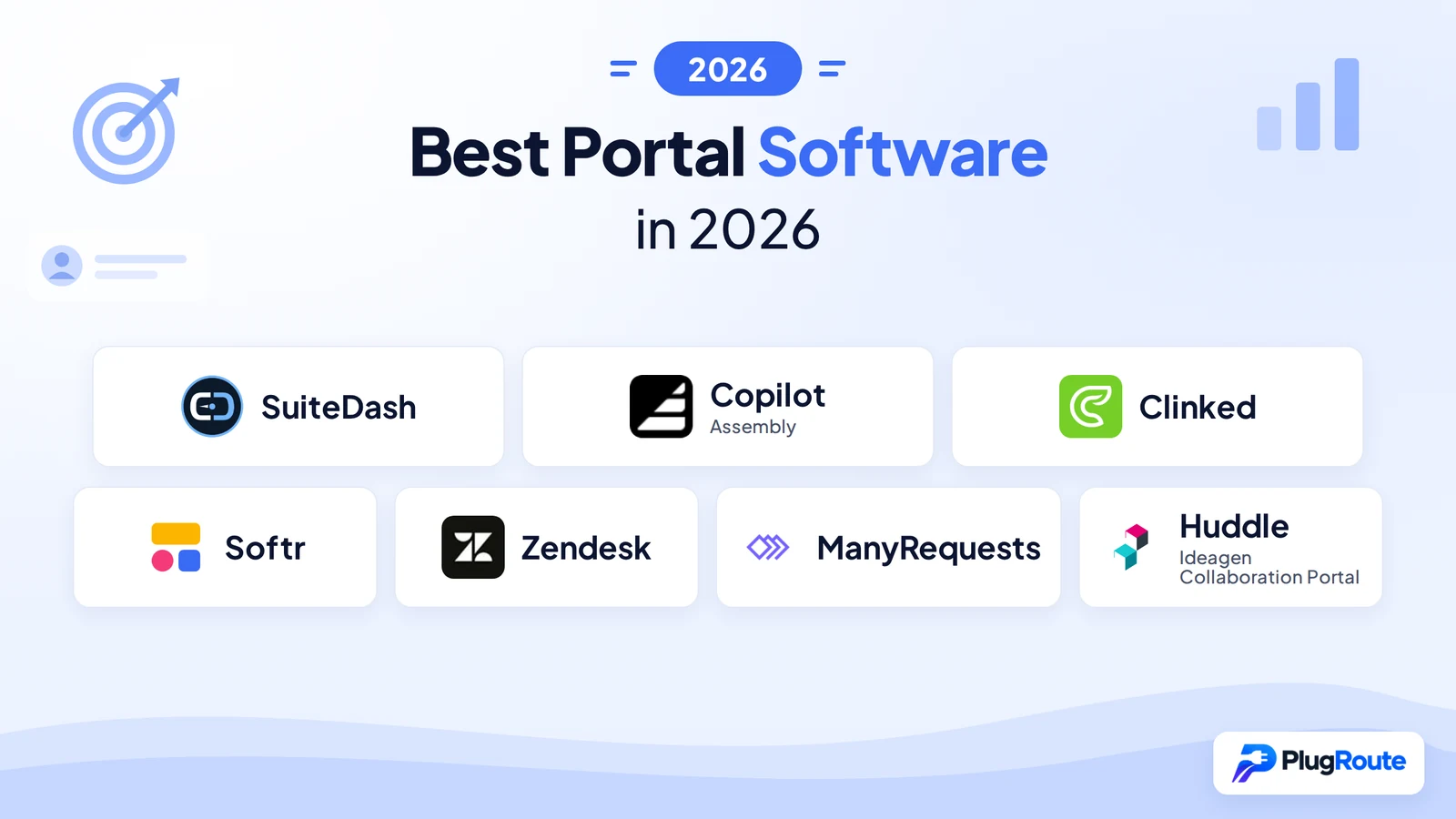
SuiteDash is the strongest all-in-one portal for most small businesses, delivering CRM, invoicing, and project management with unlimited user access at a flat $19–$99/month. Copilot (Assembly) leads for agency client portals with its modular workspace and native billing. No single platform wins on both feature breadth and ease of deployment simultaneously.
Choosing portal software means navigating dozens of platforms across overlapping categories: client collaboration, productized service delivery, compliance-heavy document exchange, no-code custom builds, and enterprise customer support. Selecting the wrong category (not the wrong tool) is the most common and costliest portal software mistake.
PlugRoute holds no affiliate relationship with any platform listed in this article. Rankings reflect evidence gathered from independent review platforms, community discussions, and publicly available product data.
Overall rankings weight breadth of accessible use cases, pricing transparency, and real-world community validation. SuiteDash ranks #1 as the platform serving the widest range of SMB portal needs at the lowest confirmed price point. Copilot (Assembly) leads specifically for agency use cases; Zendesk leads within customer support portals, these are category wins within the broader ranking framework.
“Every client portal tool sounds great until you realize half the features you actually need are locked behind higher tiers or weird per-client pricing that scales horribly once you grow.” (u/RivenTries, r/CRM)
Takeaway: The most documented portal software regret is discovering that essential features (white-labeling, automation engines, and advanced analytics) are locked behind expensive tier upgrades only after workflows are built on an entry-level plan. Confirming feature gating before sign-up is the single most impactful pre-purchase step in this category.
Quick Navigation by Buyer Profile
- Running a digital agency → start at Copilot (Assembly), #2
- SMB replacing multiple tool subscriptions → start at SuiteDash, #1
- Regulated industry requiring compliance certification → go to Clinked (#3) or Huddle (Ideagen) (#7)
- Building a custom portal without code → go to Softr, #4
- Managing high-volume customer support → go to Zendesk, #5
- Selling subscription-based packaged services → go to ManyRequests, #6
TL;DR: Top Picks at a Glance
- SuiteDash is the best portal for SMBs consolidating multiple tool subscriptions, offering unlimited clients, staff, and projects on a flat $19–$99/month plan with no per-user fees.
- Copilot (Assembly) is the leading modular agency client portal, combining built-in billing, messaging, file sharing, and e-signatures in a composable branded workspace starting at approximately $39/month.
- Clinked is the most compliance-certified white-label portal for commercial professional services and regulated industries, combining ISO 27001 certification and branded iOS/Android mobile apps from $299/month.
- Softr is the only AI-native no-code portal builder in this comparison, letting non-technical teams build fully customized portals on Airtable or Google Sheets data, with a free tier available.
- Zendesk is the enterprise customer support portal for mid-market to enterprise teams managing high-volume omnichannel ticket operations with AI-assisted first-line resolution.
- ManyRequests is the only portal in this comparison with a checkout-ready service catalog, purpose-built for agencies selling subscription-based productized services, with plans from approximately $59/month.
- Huddle (Ideagen Collaboration Portal) is the only FedRAMP-certified option in this comparison (required for US government and regulated-enterprise procurement) and is not designed for commercial SMB use.
What Are the Main Categories of Portal Software?
Portal software divides into three functional categories based on primary use case. The right category is determined by whether you manage ongoing service-provider–client relationships, build customized portal logic on your own data, or operate compliance-driven document exchange and high-volume customer support workflows.
Client Collaboration Portals centralize file sharing, messaging, task management, and billing between service providers and their named clients. Platforms in this group: SuiteDash, Copilot (Assembly), Clinked, and ManyRequests. Client Collaboration Portals are also described as client workspace software, B2B portals, or extranets, particularly in professional services verticals such as accounting firm portals, law firm client portals, and financial advisory platforms, where the portal serves as a secure client-facing layer above an internal CRM.
Custom Portal Builders let non-technical teams design portal logic on top of existing data sources with no fixed feature set. Platform in this group: Softr.
Support and Enterprise Portals serve high-volume customer service operations or government-regulated document exchange with formal compliance certification requirements. Platforms in this group: Zendesk and Huddle (Ideagen Collaboration Portal).
Before comparing platforms in detail, answer three questions:
- Is your primary use case client collaboration, customer support, or custom portal building?
- Do you have formal compliance certification requirements: ISO 27001, FedRAMP, or HIPAA?
- Will your total user base (clients plus staff) exceed 20 people within 12 months?
Your answers eliminate at least four of the seven platforms from your shortlist immediately.
How Do the Top Portal Software Platforms Compare at a Glance?
The seven leading portal software platforms in 2026 differ primarily by use case, pricing model, and compliance depth. SuiteDash leads on flat-rate total cost; Clinked leads on compliance certification depth for commercial professional services; Softr is the only no-code builder in this comparison; and Zendesk is purpose-built for customer support operations rather than client collaboration or project delivery.
| Rank | Company | Category | Best For | One-Line Summary | Key Capabilities | Primary Strength | Key Limitation |
|---|---|---|---|---|---|---|---|
| 1 | SuiteDash | All-in-One | SMBs replacing multiple tool subscriptions | SuiteDash delivers the lowest confirmed total cost of ownership of any all-in-one portal in this comparison; unlimited clients, staff, and projects at a flat $19–$99/month. | CRM, project management, invoicing, email marketing, LMS, e-sign, automation engine | Unlimited users on every plan from $19/month flat rate | Dense interface with steep initial learning curve |
| 2 | Copilot (Assembly) | Agency Portal | Digital agencies and consultants needing a branded modular workspace | Copilot (Assembly) is a modular agency client portal combining messaging, billing, file sharing, contracts, and e-signatures in a composable branded workspace starting at ~$39/month. | Modular app blocks, help center builder, native billing, e-signatures, custom domain | Composable app-block architecture with native billing and a built-in help center | Full brand removal requires the Advanced plan at ~$399/month |
| 3 | Clinked | Compliance Portal | Regulated professional services firms needing deep white-label and certifications | Clinked is the most compliance-certified white-label portal for commercial professional services firms, holding ISO 27001 certification and providing branded mobile apps alongside SOC 2/FedRAMP-aligned AWS infrastructure. | White-label mobile apps, version control, audit trails, ISO 27001, HIPAA, enforced 2FA | ISO 27001 certified; deepest white-label stack including branded iOS/Android mobile apps | Entry tier starts at $299/month; white-label mobile apps require Enterprise pricing |
| 4 | Softr | No-Code Builder | Non-technical teams building custom portals without developers | Softr is an AI-native no-code portal builder that connects Airtable, Google Sheets, and HubSpot data to fully customized portals without writing any code, with plans from free to $269/month. | AI Co-Builder, Airtable/Sheets/HubSpot integration, member portals, dashboards, workflow automation | AI Co-Builder (launched early 2026) generates near-complete apps from natural language prompts | No code export; hosted-only architecture creates vendor lock-in risk |
| 5 | Zendesk | Support Portal | Mid-market to enterprise customer support teams | Zendesk is an enterprise-grade customer support portal with a G2 Leader badge in customer service software and Nucleus Research–confirmed 61% reduction in first response times for qualifying migrations (vendor-cited). | AI agents, omnichannel ticketing, help center, community forums, enterprise analytics | G2 Leader in customer service software; 61% reduction in first response times (Nucleus Research, vendor-cited) | Complex setup; per-agent pricing scales steeply with support team size |
| 6 | ManyRequests | Service Delivery | Productized agencies selling subscription service packages | ManyRequests is a purpose-built service delivery portal for productized agencies, combining a checkout-ready service catalog, Stripe-integrated billing, and structured request management in a single client-facing workspace. | Service catalog, Stripe subscription billing, workload view, request intake forms, lightweight CRM | Only portal in this comparison with a checkout-ready service catalog for productized service offerings | Per-seat staff pricing scales poorly; not suited for non-productized agency models |
| 7 | Huddle (Ideagen) | Enterprise/Gov | Government contractors and regulated enterprises | Huddle (Ideagen Collaboration Portal) is the only FedRAMP-certified portal in this comparison; Ideagen reports adoption by over 80% of UK Central Government agencies (unverified by independent sources as of June 2026) for regulated document exchange. | FedRAMP, ISO 27001, Cyber Essentials Plus, audit trails, Office co-authoring, e-signatures | Only FedRAMP-certified portal in this comparison; required for US federal government procurement | Quote-only pricing; unsuitable for SMBs, commercial agencies, or self-serve evaluation |
Which Portal Software Should I Choose for My Use Case?
The right portal software depends entirely on your primary use case. SuiteDash serves SMBs replacing multiple subscriptions; Copilot (Assembly) serves agency client portals; Clinked serves regulated-industry compliance; Softr serves no-code custom builds; Zendesk serves customer support ticket management; ManyRequests serves productized service agencies; and Huddle (Ideagen) serves government and regulated-enterprise procurement.
| Your #1 Priority | Recommended Tool | Why | Acceptable Alternative |
|---|---|---|---|
| Lowest cost with unlimited users and clients | SuiteDash | Flat $19/month; unlimited clients, staff, and projects on all plans | Copilot (Assembly) for agencies needing a cleaner, simpler UX |
| Branded agency portal under your own domain | Copilot (Assembly) | Modular composability, built-in billing, custom domain from ~$149/month | SuiteDash for teams also needing CRM and email marketing |
| Deep white-label with verified compliance certifications | Clinked | ISO 27001 certified, white-label mobile app, audit trails, enforced 2FA | Huddle (Ideagen) for government-specific FedRAMP requirements |
| Custom portal without writing any code | Softr | AI Co-Builder, Airtable/Google Sheets backend, free tier available | ManyRequests for productized agency service delivery |
| High-volume customer support self-service | Zendesk | G2 Leader in customer service software; AI agents; omnichannel ticketing | Clinked if compliance and document sharing are the core need |
| Productized agency selling subscription services | ManyRequests | Checkout-ready service catalog plus Stripe billing built in | SuiteDash for flat-rate staff pricing and broader back-office depth |
| Government or regulated-industry document exchange | Huddle (Ideagen) | Only FedRAMP-certified portal in this comparison | Clinked for non-government regulated professional services |
1. SuiteDash: Best All-in-One Portal for SMBs
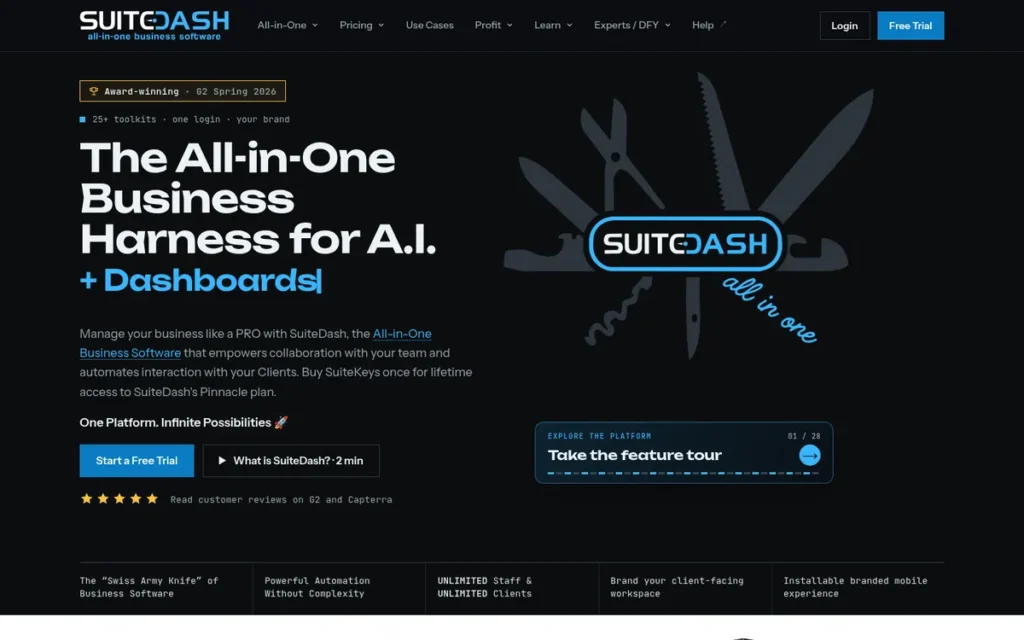
Category: All-in-One Platform, replaces CRM, project management, invoicing, and client portal in one flat-rate workspace.
At a Glance
- Category: All-in-One Platform
- Best For: Small to mid-sized businesses replacing multiple tool subscriptions
- Price Range: $19–$99/month flat rate; 14-day free trial, no credit card required
- Primary Strength: Unlimited clients, staff, and projects at flat-rate pricing with no per-seat fees on any plan
- Biggest Limitation: Dense interface with steep initial setup and significant ongoing learning curve
- One-Line Summary: At $19–$99/month for unlimited users, clients, and projects, SuiteDash delivers the lowest confirmed total cost of ownership of any all-in-one portal platform in this comparison.
- Last Verified: June 2026
Overview
SuiteDash is an all-in-one, white-label business management and client portal platform for small to mid-sized businesses, freelancers, and creative agencies seeking to replace multiple tool subscriptions with a single flat-rate workspace. SuiteDash combines CRM, project management, invoicing, and client portal functionality with no per-user fees on any plan.
Core capabilities include:
- CRM with deal pipelines and contact management
- Project and task management with client-facing visibility
- Invoicing, file sharing, and secure client messaging
- Email marketing, scheduling, and native e-signing
- Support ticketing and a built-in learning management system (LMS)
- Workflow automation engine (Pinnacle plan)
SuiteDash positions itself as a stack replacement, enabling businesses to cancel separate CRM, project management, invoicing, and email marketing subscriptions in favor of one connected system. Among all-in-one portal platforms at this price point, SuiteDash’s unlimited-user flat rate makes it the most cost-competitive option for agencies with large client rosters (SuiteDash features page, 2026).
Key Features
- Flat-Rate Unlimited Users: SuiteDash includes unlimited clients, unlimited staff, and unlimited projects on all plans (no per-seat pricing model) making SuiteDash one of the most cost-competitive all-in-one portals for agencies with large client rosters (SuiteDash pricing page, 2026).
- End-to-End Automation (Actions Engine): SuiteDash’s Pinnacle-tier automation engine connects modules so a signed proposal automatically creates a project, generates an invoice, and triggers client onboarding without manual handoffs, a workflow automation depth absent from most competing portals.
- White-Label Client Portal: SuiteDash supports custom domain, logo, brand colors, and a client-facing home screen that presents the portal entirely under the business’s brand on all plans, not restricted to a premium tier.
- Built-in LMS: SuiteDash includes a native learning management system for building onboarding courses or client training modules directly within the portal, a feature absent from most competing platforms in this comparison.
- CRM and Deal Pipelines: SuiteDash’s integrated CRM eliminates the need for a separate CRM subscription, which is central to SuiteDash’s stack-replacement value proposition and primary competitive differentiation at the $19/month price point.
Best For
SuiteDash is best for small and mid-sized businesses in professional services, creative agencies, and consulting that want to consolidate CRM, project management, invoicing, and client communication into a single flat-rate platform with no per-user scaling costs.
Pricing
SuiteDash offers three publicly documented pricing tiers: Start at $19/month ($180/year billed annually), Thrive at $49/month ($480/year), and Pinnacle at $99/month ($960/year). All plans include unlimited clients, staff, and projects. SuiteDash’s Actions automation engine is restricted to the $99/month Pinnacle plan. A 14-day free trial is available with no credit card required (SuiteDash pricing page, 2026; assembly.com/blog/suitedash-pricing, 2026).
Strengths
- SuiteDash’s flat-rate unlimited pricing is its most distinctive competitive advantage: at $19/month for unlimited clients and staff, SuiteDash consistently outperforms per-seat competitors on total cost of ownership for growing teams (SuiteDash features page, 2026).
- SuiteDash earned a Crozscore of 4.8/5.0 based on aggregated user sentiment across review platforms, reflecting high satisfaction with its comprehensive feature coverage relative to price (thedigitalprojectmanager.com, 2026).
- SuiteDash maintains a public product roadmap and a community-driven feature request model, a customer-responsive development approach consistent with its bootstrapped product philosophy that provides buyers with transparency into future feature direction (suitedash.com/roadmap, 2026).
- SuiteDash eliminates common stack fragmentation: users can cancel separate CRM, email marketing, scheduling, invoicing, and project management tool subscriptions in favor of a single connected workspace, a consolidation documented consistently across user reviews.
Limitations
- Setup Complexity: SuiteDash’s breadth creates a steep learning curve and ongoing maintenance overhead. A Reddit user evaluating SuiteDash concluded that “the time it cost to maintain it just did not add up,” indicating that administrative overhead can negate cost savings for resource-constrained teams (u/No_Molasses_1518, r/CRM, 2026).
- Interface Density: SuiteDash is consistently described as “clunky” across review sources, one community comparison explicitly recommended Clinked as “more intuitive” for teams that found SuiteDash’s UX burdensome (u/needle-ln-techstack, r/CRM, 2026).
- Advanced Automation Gating: SuiteDash’s most powerful automation capability: the Actions engine that chains module triggers, is restricted to the $99/month Pinnacle plan, meaning users on Start or Thrive tiers cannot access the feature that most differentiates SuiteDash from simpler portals.
- Limited Specialization Depth: SuiteDash’s breadth-first approach means no single module reaches the depth of a best-in-class standalone tool, teams needing advanced scheduling, niche integrations, or specialized vertical features may find individual modules insufficient (thedigitalprojectmanager.com, 2026).
“SuiteDash: the portal looked good, but once I added the numbers on how much time it cost to maintain, it just did not add up.” (u/No_Molasses_1518, r/CRM)
Takeaway: SuiteDash’s value proposition is contingent on a realistic setup-time investment. Teams that underestimate the ongoing maintenance overhead risk spending more in administrative hours than they save in subscription consolidation, making a frank pre-commitment audit of implementation capacity essential before signing up.
Verdict
SuiteDash delivers the lowest confirmed total cost of ownership of any all-in-one portal platform in this comparison, providing unlimited users, projects, and clients at a flat $19–$99/month with zero per-seat scaling risk. SuiteDash ranks #1 overall because its flat-rate unlimited model serves the widest range of SMB portal needs at the lowest confirmed price across all plans. SuiteDash’s value proposition is strongest for teams willing to invest meaningful setup time in exchange for long-term subscription consolidation. Teams that prioritize fast time-to-value or a clean, minimal UX should evaluate Copilot (Assembly) or Clinked alongside SuiteDash before committing.
2. Copilot (Assembly): Best Agency Client Portal
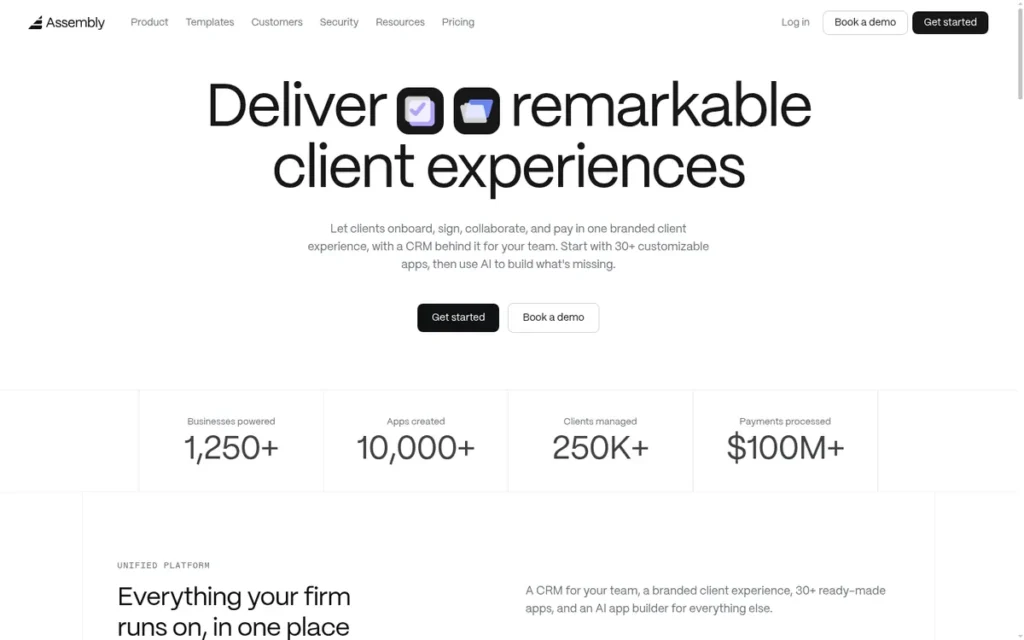
Category: Agency Client Portal, modular client workspace with built-in billing and communications.
At a Glance
- Category: Agency Client Portal
- Best For: Digital agencies and consultants needing a branded, modular client workspace
- Price Range: Starter ~$39/month; Professional ~$149/month (custom domain, white-label); Advanced ~$399/month (full brand removal); 14-day free trial
- Primary Strength: Composable app-block architecture with native billing, messaging, and a built-in help center builder
- Biggest Limitation: Full removal of all Assembly branding requires the Advanced plan at ~$399/month, a significant step from the Starter entry price
- One-Line Summary: Copilot (Assembly) is a modular agency client portal combining messaging, file sharing, billing, e-signatures, and a help center builder in a composable branded workspace, with entry plans from approximately $39/month.
- Last Verified: June 2026
Overview
Copilot (officially rebranded as Assembly in late 2024) is a modular client portal platform for agencies, consultants, and service-based businesses that want a branded, clean client experience without the operational complexity of an all-in-one platform. Copilot (Assembly) enables users to compose a portal from interchangeable app blocks and configure a branded client homepage.
The platform’s composable architecture lets admins select and reorder app blocks (messaging, file sharing, billing, contracts, forms, e-signatures, and a help center) so each client workspace contains only the functionality that client actually needs. Copilot (Assembly) targets teams prioritizing client-facing simplicity over back-office operational depth, differentiating it from monolithic portals like SuiteDash.
Key Features
- Modular App-Block Architecture: Copilot (Assembly)’s composable portal lets admins build a client workspace by combining and reordering discrete app blocks, making portal customization accessible to non-technical users without code or custom development work.
- Built-in Help Center Builder: Copilot (Assembly) includes a native help center builder described by third-party reviewers as the platform’s standout feature, enabling agencies to create searchable self-service documentation alongside client workspaces (getzendo.io, 2026).
- Native Billing and Payments: Copilot (Assembly) includes billing, invoicing, and payment collection at no extra cost on standard plans, eliminating the need for a separate invoicing tool for most agency billing workflows.
- Branded Client Onboarding: Copilot (Assembly) supports custom domain setup and a branded client signup flow on Professional and Advanced plans, enabling agencies to present a fully branded first-touch client experience.
- E-Signatures and Contracts: Copilot (Assembly) includes native contract and e-signature capability for streamlining client agreement execution within the portal, without requiring a separate DocuSign integration.
Best For
Copilot (Assembly) is best for digital agencies, consulting firms, and freelancers that need a clean, modular client workspace with built-in billing, messaging, file sharing, and e-signatures, particularly teams that prioritize client-facing simplicity over CRM pipelines, email marketing, or LMS features.
Pricing
Entry-level access starts at approximately $39/month (Starter plan). White-label and custom domain features become available from approximately $149/month (Professional plan). Full removal of all Assembly branding (presenting the portal entirely under the agency’s brand) requires the Advanced plan at approximately $399/month. This pricing gap between partial and complete white-labeling is not always prominently disclosed during trial sign-up (plutio.com/compare/plutio-vs-copilot, 2026). A 14-day free trial is available. Verify current pricing at copilot.app/pricing, as tiers have evolved post-rebrand.
Strengths
- Copilot (Assembly)’s modular app-block system is consistently cited by third-party reviewers as the platform’s strongest differentiator, enabling non-technical users to configure exactly the client-facing experience they need without developer involvement (getzendo.io, 2026).
- Copilot (Assembly) includes native billing, invoicing, and payments on standard plans, a meaningful cost advantage over portals requiring separate billing integrations.
- Copilot (Assembly)’s founder confirmed the platform “primarily serves agencies and consulting firms” with features including “file-sharing, contracts, task and project management, and secure messaging,” validating direct product-market fit for the agency segment (u/marlonmisra, r/smallbusiness, 2026).
- Copilot (Assembly) appears in G2’s portal category and is cited favorably across multiple independent third-party comparison roundups as a leading choice for agency-focused portals (G2 portal category, 2026).
Limitations
- White-Label Pricing Wall: Copilot (Assembly) locks full brand removal behind the ~$399/month Advanced plan, a barrier documented directly in community feedback: “White labelling locked behind a $150USD/month plan is criminal. I was ready to jump in at 40, but come on this is ridiculous” (u/TonyBikini, r/CRM, 2026). Note that complete brand removal costs more than the ~$150/month cited in that comment.
- Rebrand Confusion: The ongoing transition from “Copilot” to “Assembly” creates documented discovery and continuity confusion, community threads actively ask “Is copilot now assembly?”, complicating support lookup, documentation access, and vendor evaluation across third-party review sites (u/TillBright6670, r/CRM, 2026).
- Limited Back-Office Depth: Copilot (Assembly) is a client-facing portal, not a business operations platform, teams needing CRM pipelines, email marketing automation, or an LMS will find SuiteDash a materially better fit for those requirements.
- Tier Structure Complexity: White-label features are distributed across two tiers (Professional (~$149/month, custom domain and partial white-label) and Advanced (~$399/month, full brand removal)) creating a $250/month gap between partial and complete white-labeling that is not prominently disclosed during the trial sign-up experience.
“Is the copilot now assembly?” (u/TillBright6670, r/CRM)
Takeaway: The Copilot-to-Assembly rebrand creates a real discovery gap for buyers who encounter the product under its old name. Verify that you are evaluating the current product at assembly.com before comparing features, pricing, or support documentation, third-party reviews may still reference outdated branding and pricing tiers.
Verdict
Copilot (Assembly) is the most modular purpose-built agency client portal in this comparison, based on its composable app-block architecture and native billing integration. Copilot (Assembly) ranks #2 overall rather than #1 primarily because SuiteDash’s flat-rate unlimited-user model delivers broader operational coverage at a lower confirmed entry price, Copilot (Assembly) outranks SuiteDash specifically for digital agencies prioritizing a clean, modular client-facing workspace with built-in billing and communications. The full brand-removal pricing wall at ~$399/month (Advanced plan) is the platform’s most significant barrier for cost-conscious agencies evaluating alternatives.
3. Clinked: Best for Compliance and Deep White-Labeling
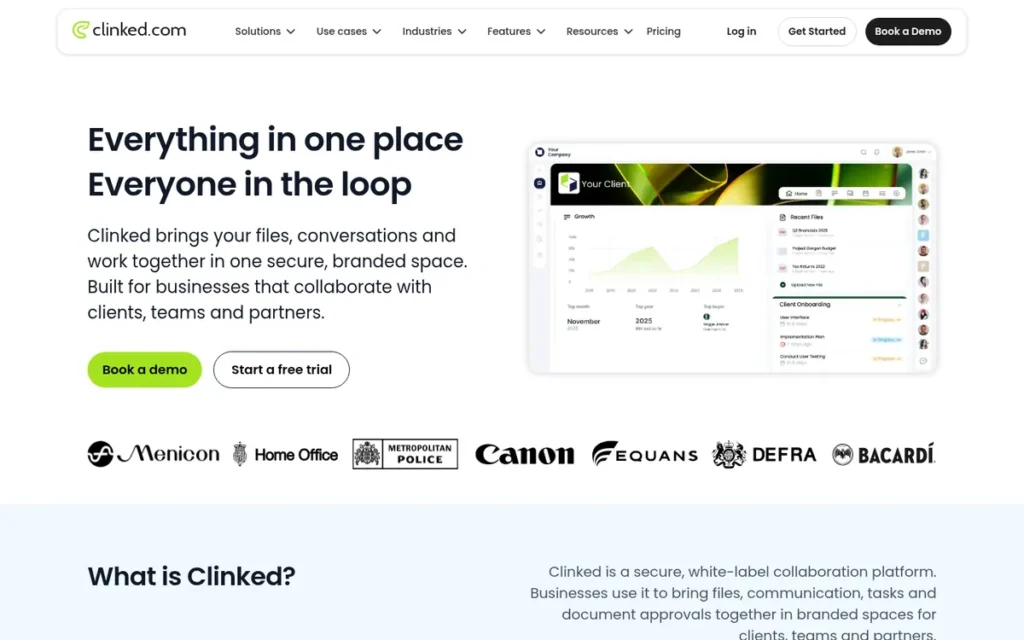
Category: Compliance Portal, ISO 27001-certified secure client collaboration with white-label mobile apps.
At a Glance
- Category: Compliance Portal
- Best For: Law firms, accounting firms, and regulated organizations requiring branded compliance portals
- Price Range: Standard $299/month; Premium $599/month; Enterprise custom; VDR from $599/month
- Primary Strength: Full-stack white-labeling including branded iOS/Android mobile apps, with ISO 27001 certification and direct HIPAA compliance
- Biggest Limitation: Entry tier at $299/month prices out solo practitioners, micro-agencies, and small teams
- One-Line Summary: Clinked is the most compliance-certified white-label portal for commercial professional services firms, combining ISO 27001 certification, HIPAA compliance, and SOC 2/FedRAMP-aligned AWS infrastructure with full-stack white-labeling, including branded mobile apps.
- Last Verified: June 2026
Overview
Clinked is a white-label client portal built for professional services firms and regulated industries that need branded client workspaces with enterprise-grade security and ISO 27001 certification. Clinked is designed for accounting firms, law firms, and financial services organizations as a secure, auditable client-facing collaboration layer.
Core collaboration features:
- Secure file sharing with full version control and document annotation
- Task management with structured approvals for document review cycles
- Discussion threads and real-time messaging for organized, auditable client communication
- Comprehensive audit trails documenting all user actions with timestamps for compliance evidence retention
Clinked holds ISO 27001 certification and direct HIPAA compliance, with AWS infrastructure aligned with SOC 1, SOC 2, SOC 3, FedRAMP, and FISMA standards. ISO 27001 and HIPAA are direct Clinked certifications; SOC 2 and FedRAMP reflect Clinked’s AWS infrastructure alignment, not a direct Clinked vendor authorization (clinked.com/industries/government-portal-solution, 2026).
Key Features
- Full-Stack White-Label Including Mobile Apps: Clinked provides white-label iOS and Android mobile apps under the client’s brand at the Enterprise tier, a depth of white-labeling that no other platform in this comparison matches (softr.io/blog/best-white-label-client-portals, 2026).
- ISO 27001 and Multi-Framework Compliance: Clinked holds ISO 27001 certification and HIPAA compliance, with AWS infrastructure aligned with SOC 1, SOC 2, SOC 3, FedRAMP, FISMA, and GDPR, the most comprehensive compliance positioning among commercial professional services portals in this comparison.
- Version Control and Document Management: Clinked includes file version control and document annotation, enabling professional services teams to manage document review cycles entirely within the portal without emailing attachments.
- Audit Trails: Clinked’s audit trail creates a timestamped log of all user actions, a requirement in regulated environments for demonstrating access accountability and satisfying evidence-retention mandates.
- Enforced Two-Factor Authentication: Clinked’s Premium and above plans support enforced 2FA, a security control requirement for regulated industries handling sensitive client data, not merely an optional user-level setting.
Best For
Clinked is best for accounting firm client portals, law firm client portals, financial services organizations, and regulated enterprises (particularly UK-based and global firms) that require a fully white-labeled, ISO 27001-compliant portal with branded mobile apps, audit-trail evidence retention, and compliance certifications as formal procurement prerequisites.
Pricing
Clinked’s four documented pricing tiers: Standard at $299/month ($239/month annual), 100 members, 1TB storage; Premium at $599/month ($479/month annual), 250 members, 3TB storage, enforced 2FA, Kanban view; Enterprise at custom annual pricing, 1,000+ members, 5TB+, white-label mobile app, SSO/Active Directory; VDR from $599/month, document redaction, dynamic watermarking, NDA workflows (softr.io/blog/best-white-label-client-portals, 2026). White-label mobile apps are exclusively available at the Enterprise (custom-priced) tier.
Strengths
- Clinked received a G2 “Highest Performer” badge in the portal software category, reflecting strong user satisfaction scores relative to market presence among compliance-focused portal buyers (G2 portal category, 2026).
- Clinked’s compliance stack: including direct ISO 27001 certification and HIPAA compliance, plus SOC 2/FedRAMP-aligned AWS infrastructure, is the most comprehensive among commercial professional services portals in this comparison, making Clinked procurement-ready for regulated-industry buyers (clinked.com/industries/government-portal-solution, 2026).
- Clinked’s white-labeling goes “several layers deeper” than competitors: clients experience zero Clinked branding on any touchpoint, including mobile apps, email notifications, and login screens, making the portal appear entirely as the service provider’s own product (clinked.com/client-portal, 2026).
- A Reddit user in r/smallbusiness confirmed choosing Clinked specifically for “smooth project + file management with messaging in one spot”, noting the white-label feature let the firm “brand it as our own” (u/russ_west45113, r/smallbusiness, 2026).
Limitations
- High Entry Price: Clinked’s $299/month Standard tier is the highest entry price of all seven platforms evaluated (approximately 15× SuiteDash’s $19/month entry) making it impractical for solo practitioners, micro-agencies, or teams without a meaningful client roster and formal compliance requirements to justify the cost.
- White-Label Mobile Apps Require Enterprise Pricing: Clinked’s signature differentiator (branded iOS/Android mobile apps) is exclusively available at the Enterprise tier with custom (undisclosed) annual pricing, meaning buyers must enter a sales negotiation to access the feature most prominently showcased in Clinked’s marketing materials.
- Limited CRM and Billing Features: Clinked is a secure collaboration portal, not an all-in-one operations platform, teams needing CRM pipelines, invoicing, or service catalog features require separate tools alongside Clinked, adding to total cost of ownership.
- No Real-Time Document Co-Authoring: Clinked lacks real-time document co-authoring comparable to Huddle (Ideagen)’s Microsoft Office Online integration, regulated teams needing live collaborative editing across large document review cycles may find Huddle more suitable for that specific workflow requirement.
“We needed something lightweight but secure for client collaboration, and ended up on Clinked. It let us centralize docs, templates, and chat in a simple portal our clients could use without training. The fact it’s white-label was a bonus, we brand it as our own. If you want something more feature packed (CRM, invoicing, etc.) you could look at SuiteDash, but if your focus is smooth project + file management with messaging in one spot, Clinked is definitely worth a demo.” (u/russ_west45113, r/smallbusiness)
Takeaway: Clinked is the right choice as a secure, white-labeled collaboration layer, not as an all-in-one operations platform. Buyers who also need CRM, invoicing, or project management features will need to integrate Clinked with a separate tool or evaluate SuiteDash as a consolidated alternative.
Verdict
Clinked is the strongest compliance-first white-label client portal for professional services and regulated commercial enterprises, offering ISO 27001 certification and full-stack white-labeling, including branded mobile apps, that no other commercial general-purpose portal in this comparison matches. Clinked ranks #3 overall because its certified compliance stack and full white-label depth address a materially larger commercial buyer segment, law firms, accounting firms, financial services organizations, than the specialized use cases served by Softr (#4) or ManyRequests (#6). Clinked’s $299/month entry pricing is justified only when compliance certifications and full white-labeling are non-negotiable procurement requirements; teams without those needs will find substantially better value in SuiteDash or Copilot (Assembly).
4. Softr: Best No-Code Portal Builder
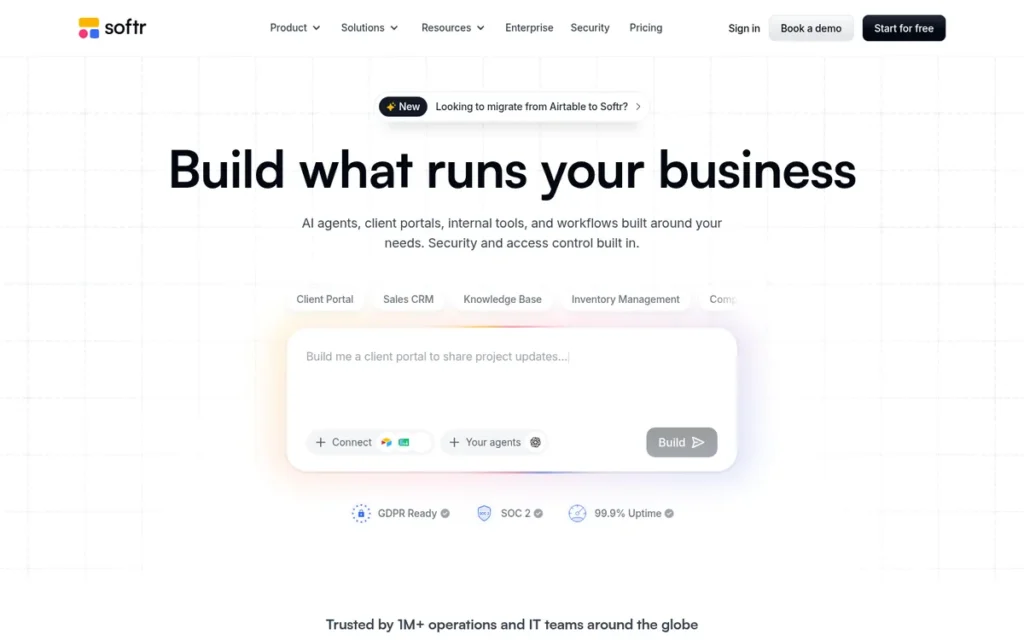
Category: No-Code Portal Builder, AI-native portal builder connecting Airtable, Google Sheets, and HubSpot without code.
At a Glance
- Category: No-Code Portal Builder
- Best For: Non-technical teams building custom portals on existing Airtable or Google Sheets data
- Price Range: Free (10 users); Starter $49/month; Professional $139/month; Business $269/month; Enterprise custom
- Primary Strength: Softr’s AI Co-Builder: launched early 2026, generates near-complete portals from natural language prompts
- Biggest Limitation: No code export; hosted-only architecture creates vendor lock-in risk if Softr changes pricing or ceases operations
- One-Line Summary: Softr is an AI-native no-code portal builder that lets non-technical teams create client portals, member portals, and dashboards on top of Airtable, Google Sheets, or HubSpot data without writing any code, with plans from free to $269/month.
- Last Verified: June 2026
Overview
Softr is the only no-code portal builder on this list, and the only platform that provides no fixed feature set. Non-technical teams build fully customized client portals, member portals, and dashboards on top of existing data in Airtable, Google Sheets, or HubSpot without writing any code.
Softr is operated by Softr Platforms GmbH, Berlin, Germany, and was founded in 2019 by Mariam Hakobyan and Narek Simonyan. Softr has reported institutional venture backing since founding; buyers seeking to verify current investor and funding status should consult softr.io/about or Crunchbase directly.
Supported portal and app types:
- Client portals, member portals, and employee intranets
- Partner platforms, internal tools, and dashboards
Supported data backends:
- Airtable, Google Sheets, Notion, HubSpot, Xano, and SQL databases
In early 2026, Softr launched its AI Co-Builder, announced March 31, 2026 via SiliconAngle and confirmed live on Product Hunt in April 2026. Softr’s AI Co-Builder generates database structure, application logic, and interface from a natural language prompt, with applications described as “90% of the way complete” from the prompt (SiliconAngle, March 2026).
Key Features
- AI Co-Builder (Early 2026): Softr’s AI Co-Builder generates database structure, application logic, and interface from a natural language description. According to SiliconAngle (March 31, 2026), the resulting applications are 90% complete from the prompt, dramatically reducing the portal configuration time that previously required days of manual setup.
- Multi-Source Data Connectivity: Softr connects to Airtable, Google Sheets, Notion, HubSpot, Xano, and SQL databases as backend sources, allowing teams to build portals on top of data sources they already manage rather than migrating to a new system.
- Granular Role-Based Access Control: Softr’s member portal feature supports role-based access so each client sees only their data, files, and project information, a prerequisite for multi-tenant client portals where data segregation is mandatory.
- Workflow Automation Engine: Softr’s workflow automation (Starter plan and above) enables automated email notifications, record updates, and conditional logic without writing code, reducing manual follow-up in client-facing workflows.
- Built-in Authentication: Softr includes native user authentication, sign-up/login flows, and email verification, foundational portal infrastructure accessible without third-party identity providers on Softr’s entry plans.
Best For
Softr is best for non-technical business owners, operations managers, and small teams in industries such as insurance, consulting, and membership organizations who need a customized client portal built on their existing Airtable or Google Sheets data, and who accept a hosted, builder-model approach in exchange for zero coding requirements.
Pricing
Softr’s documented pricing tiers: Free, 10 users, unlimited apps, 5 AI credits, 5,000 database records; Starter at $49/month, 20 users, 10 AI credits, 50K records, 2,500 workflow actions; Professional at $139/month, 100 users, 50 AI credits, 500K records, 10K workflow actions; Business at $269/month; Enterprise at custom pricing. The 20-user limit on Starter means agencies with larger rosters will quickly need the $139/month Professional plan (softr.io/blog/best-no-code-portal-tools, 2026).
Strengths
- Softr’s early 2026 AI Co-Builder positions Softr as the only AI-native portal builder in this comparison, with SiliconAngle (March 31, 2026) confirming applications are generated 90% complete from natural language prompts, substantially reducing the configuration barrier for non-technical users (SiliconAngle, March 2026).
- Softr is the organic go-to recommendation across r/nocode communities for the “Softr + Airtable” portal stack, confirming market-validated product-market fit in the no-code builder segment (u/Spare-Ad-6934, r/nocode, 2026).
- A real-world portal was built in 10 days by an insurance-industry user with no prior development experience using Softr, demonstrating genuine accessibility for non-technical teams in vertical-specific use cases (u/nowcodingwithai, r/nocode, 2026).
- Softr (Softr Platforms GmbH, Berlin) has reported institutional venture backing since its 2019 founding; buyers seeking to verify current investor and funding status should consult softr.io/about or Crunchbase directly before using funding as a vendor stability signal.
Limitations
- Vendor Lock-In Risk: Softr explicitly does not generate exportable code: the application runs on Softr’s hosted infrastructure with no self-hosting or code portability option, meaning users cannot migrate their portal logic if Softr changes pricing, terms, or ceases operations (softr.io/blog/best-ai-app-builders-for-teams, 2026).
- Per-User Pricing Cliff: Softr’s user-count caps create a significant scaling cost, the Starter plan’s 20-user limit means agencies with larger client rosters will quickly need the $139/month Professional plan. Community analysis confirms “if you’re onboarding 20+ clients the economics shift fast” (u/Major_Lock5840, r/nocode, 2026).
- Customization Ceiling: Softr is described by developer reviewers as “extremely limited and frustrating once you want to do any meaningful customizations”, the platform is opinionated and does not accommodate complex custom logic outside its component model (u/foofork, r/nocode, 2024).
- External Data Dependency: Softr requires an external database (Airtable, Google Sheets, etc.) as its data backend, teams without an existing data source must configure one before building, adding a prerequisite setup step that pre-built portals like SuiteDash and Clinked eliminate entirely.
Verdict
Softr is the strongest no-code portal builder for teams that want a fully customized portal on top of their existing data without hiring a developer. Softr’s early 2026 AI Co-Builder (generating near-complete applications from natural language prompts) substantially lowers the configuration barrier that previously made Softr more accessible to technically-inclined users than true non-coders. The hosted-only model and per-user pricing cliff at 20 users remain genuine trade-offs that buyers should model against their projected client volume and exit-option requirements before committing business-critical workflows to Softr’s infrastructure.
5. Zendesk: Best Enterprise Customer Support Portal

Category: Enterprise Support Portal, omnichannel customer service platform with AI agents and self-service knowledge base.
At a Glance
- Category: Enterprise Support Portal
- Best For: Mid-market to enterprise teams managing high-volume, omnichannel customer support operations
- Price Range: Per-agent monthly pricing billed annually; verify current tiers at zendesk.com/pricing
- Primary Strength: G2 Leader in customer service software; Nucleus Research confirmed 61% reduction in first response times for Intercom-to-Zendesk migrations (vendor-cited study, 2026)
- Biggest Limitation: Complex setup and per-agent pricing model that compounds steeply with support team size
- One-Line Summary: Zendesk is an enterprise-grade customer support portal with a G2 Leader badge in customer service software, combining omnichannel ticketing, AI agents, and a self-service knowledge base for mid-market to enterprise support operations.
- Last Verified: June 2026
Overview
Zendesk is the only platform on this list purpose-built for customer support operations rather than ongoing client collaboration or project delivery. Zendesk’s portal centers on a searchable Help Center, a customer ticket-tracking portal, AI-powered agents for first-line resolution, and omnichannel ticketing across email, chat, voice, and social media.
Zendesk’s core portal capabilities:
- Help Center: Zendesk’s searchable knowledge base provides FAQs, articles, and peer-to-peer community forums for self-service issue resolution before tickets are created.
- Customer Portal: Zendesk’s customer portal lets end-users submit, track, and review support ticket interactions in a branded interface.
- AI Agents and Copilot: Zendesk’s AI Agents handle first-line resolution autonomously; Copilot assists human agents with suggested responses and ticket context, reducing time-to-resolution.
- Omnichannel Ticketing: Zendesk unifies inquiries from email, chat, voice, social media, messaging apps, and web forms into a single agent workspace.
- Community Self-Service: Zendesk’s community self-service hubs enable peer-to-peer support, reducing agent-handled volume for common issues.
Zendesk’s ROI model is built on deflecting support tickets through self-service knowledge bases before they become costly agent interactions. This self-service deflection model is structurally different from client collaboration portals, where the goal is ongoing relationship management rather than issue closure and resolution.
Key Features
- Omnichannel Ticketing: Zendesk unifies customer inquiries from email, chat, voice, social media, messaging apps, and web forms into a single agent workspace, enabling support teams to manage all channels without context-switching between tools.
- AI Agents and Copilot: Zendesk’s AI Agents handle first-line support resolution autonomously, while Copilot assists human agents with suggested responses and ticket context, reducing time-to-resolution across the support operation.
- Self-Service Help Center: Zendesk’s searchable knowledge base with community forums enables customers to resolve common issues before opening tickets, directly reducing support volume and cost-per-resolution for high-volume operations.
- Customer Portal for Ticket Tracking: Zendesk’s customer portal allows end-users to submit, track, and review ticket interactions within a branded, intuitive interface (zendesk.com/service/customer-portal, 2026).
- Enterprise Reporting and Analytics: Zendesk provides built-in reporting on ticket volume, response times, resolution rates, and CSAT scores, operational intelligence required by mid-market and enterprise support operations managing large agent teams.
Best For
Zendesk is best for mid-market and enterprise technology, e-commerce, and financial services companies managing high-volume customer support operations where omnichannel ticket management, AI-assisted resolution, and self-service knowledge base deflection are the primary requirements.
Pricing
Zendesk uses per-agent, per-month pricing billed annually across multiple Suite tiers. AI Agent functionality is priced separately as an add-on above base plan costs. Verify current pricing at zendesk.com/pricing before budgeting, total cost compounds significantly with support team size. Small support teams should model total cost against flat-rate alternatives before committing (zendesk.com/pricing, 2026).
Strengths
- A Nucleus Research study cited by Zendesk found that companies migrating from Intercom to Zendesk reduced first response times by 61%, a vendor-cited but credibly sourced quantitative anchor for support efficiency improvement at scale (Zendesk vs. Intercom comparison page, 2026).
- Zendesk holds a G2 Leader badge in customer service and help desk software, reflecting dominant market share and sustained user satisfaction at enterprise scale, the strongest independent recognition available in this comparison for support-specific portals (G2 portal category, 2026).
- Zendesk’s scale and institutional history: founded 2007, taken private by Permira at $10.2B in 2022, make Zendesk among the most financially stable and operationally mature platforms evaluated in this comparison, reducing long-term platform risk for enterprise buyers.
- Zendesk’s self-service architecture directly reduces support costs by deflecting tickets through searchable knowledge bases before they reach agents, a clear ROI pathway for high-volume operations seeking to reduce cost-per-resolution.
Limitations
- Setup Complexity Barrier: Zendesk’s configuration depth creates a significant onboarding barrier, the highest-scored community comment in a frustrated-user thread acknowledged: “The problem is you don’t know what you’re doing… if you can’t get things to work with Zendesk good luck with any other platform out there”, confirming that even defenders frame Zendesk’s value as contingent on user expertise (u/respeckmyauthoriteh, r/Zendesk, 2023).
- Per-Agent Pricing Scales Steeply: Zendesk’s per-seat pricing compounds with team size, making total cost of ownership substantially higher than flat-rate alternatives for teams with even modest support staffing, particularly compared to all-in-one portals that include unlimited users.
- AI Add-On Fragmentation: Zendesk’s AI Agent capability is an add-on purchase above base plan pricing, a fragmented cost model that natively embedded-AI competitors use as a comparison advantage in sales conversations.
- Support Quality Inconsistency: Multiple Reddit threads document poor support responsiveness from Zendesk’s own customer support team, a notable brand-reputation inconsistency for a company whose core product is customer service software (r/Zendesk, 2023).
Verdict
Zendesk is the market-leading enterprise customer support portal for organizations managing high-volume, omnichannel support operations, and the right choice when ticket deflection, AI-assisted resolution, and enterprise-grade operational reliability are the primary evaluation criteria. Zendesk ranks #5 in this overall comparison not because of product quality, where Zendesk leads its own category, but because its customer support portal use case is purpose-built for a narrower buyer segment than the agency leads, operations managers, and small-business owners who represent the primary audience for this comparison. Buyers evaluating Zendesk for client collaboration, project delivery, or service-based agency workflows should redirect to SuiteDash or Copilot (Assembly) instead.
6. ManyRequests: Best for Productized Service Agencies
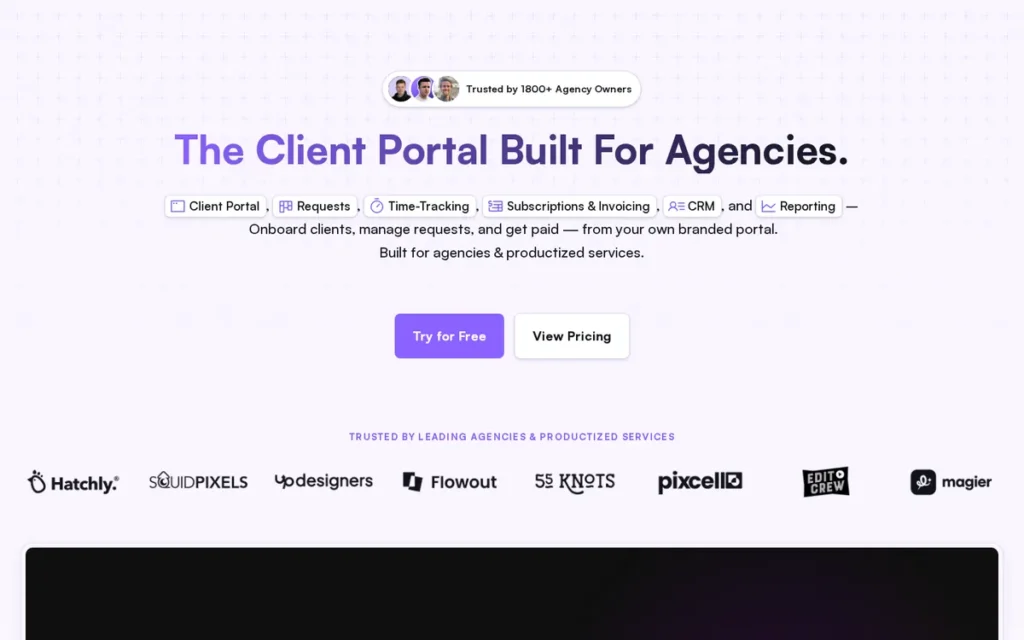
Category: Service Delivery Portal, purpose-built for agencies running subscription-based productized services.
At a Glance
- Category: Service Delivery Portal
- Best For: Productized agencies selling packaged, subscription-based creative and development services
- Price Range: Core ~$59/month; Pro ~$99/month; Enterprise custom; verify at manyrequests.com/pricing
- Primary Strength: ManyRequests’ checkout-ready service catalog with Stripe-integrated subscription billing, a feature absent from every other platform in this comparison
- Biggest Limitation: Per-seat staff pricing scales poorly and the platform is unsuited for non-productized agency billing models
- One-Line Summary: ManyRequests is a purpose-built service delivery portal for productized agencies, combining a checkout-ready service catalog, Stripe-integrated subscription billing, and structured request management in a single client-facing workspace, with plans from approximately $59/month.
- Last Verified: June 2026
Overview
ManyRequests is a service delivery portal founded in 2019 and built exclusively for agencies selling productized, subscription-based services (getzendo.io/blog/manyrequests-pricing/, 2026). ManyRequests’ defining feature is a checkout-ready service catalog where clients browse, purchase, and manage recurring service subscriptions directly, a model no other platform in this comparison replicates.
ManyRequests combines its service catalog with the following capabilities:
- A checkout-ready service catalog where clients browse, purchase, and manage recurring subscriptions directly
- Stripe-integrated subscription and recurring billing management
- Structured request intake forms requiring complete briefs before work begins
- Workload view and capacity planning for team bandwidth management (ManyRequests 2.0)
- A lightweight built-in CRM and file sharing for centralized client management
ManyRequests 2.0 introduced a visual workload view and capacity planning feature, moving the platform from a pure portal into agency operations management territory.
Key Features
- Checkout-Ready Service Catalog: ManyRequests enables agencies to build a client-facing service store where clients browse, purchase, and manage recurring service subscriptions directly, a feature absent from all other platforms in this comparison, enabling revenue generation without manual quoting or proposal workflows.
- Stripe-Integrated Subscription Billing: ManyRequests connects to Stripe for recurring billing and subscription management, automating payment collection alongside service delivery in a single unified client workspace.
- Workload View and Capacity Planning: ManyRequests 2.0 introduced a visual workload view and capacity planning feature, enabling team bandwidth management from within the platform and moving ManyRequests beyond a pure portal into operational agency management (ManyRequests 2.0 blog, 2026).
- Structured Request Intake Forms: ManyRequests’ request intake forms ensure clients submit complete briefs before work begins, a workflow discipline that productized agencies rely on for consistent, predictable service delivery at scale.
- Unlimited Clients on All Plans: ManyRequests includes unlimited client access on all plans, providing cost predictability for agencies managing large client rosters and eliminating the per-client pricing anxiety common to seat-based competitors.
Best For
ManyRequests is best for creative, design, development, and content agencies that sell packaged, subscription-based services and need a single platform to list, sell, onboard, and deliver those services to clients, particularly teams replacing a patchwork of Stripe, email, and project management tools. ManyRequests is particularly well-matched for design agency client portals, content subscription agencies, and development studios selling fixed-scope retainers, use cases where a checkout-ready service catalog replaces manual quoting and proposal sending.
Pricing
Currently available comparison sources indicate: Core at approximately $59/month and Pro at approximately $99/month. An Enterprise tier with API access and a dedicated account manager is available at custom pricing. All plans include unlimited clients; staff seat costs are an add-on above the base plan (getzendo.io/blog/manyrequests-pricing/, 2026). Verify current pricing at manyrequests.com/pricing before budgeting, as tiers have evolved since ManyRequests’ 2019 founding.
Strengths
- ManyRequests’ service catalog model is the only checkout-ready client-facing service store in this comparison, a decisive advantage for productized agencies generating revenue from packaged, subscription-based service delivery that other portals require workarounds to replicate.
- Third-party comparison articles consistently praise ManyRequests for easy setup, client-friendly workflow, and organized request handling for creative and productized agencies (getzendo.io, 2026; clientmanager.io, 2026).
- ManyRequests 2.0’s workload and capacity planning adds agency operations depth that moves the platform beyond pure portal functionality, enabling team bandwidth management from within a single workspace (ManyRequests blog, 2026).
- ManyRequests’ unlimited client model provides cost predictability for agencies managing large client rosters, eliminating the per-client pricing anxiety common to seat-based competitors like Clinked and Copilot (Assembly).
Limitations
- Per-Seat Staff Pricing Scales Poorly: ManyRequests charges per seat for team members on top of the base plan cost, a structure that compounds with team growth and contrasts unfavorably with SuiteDash’s fully flat-rate unlimited-staff model (prospeo.io comparison, 2026).
- Not Suited for Non-Productized Models: ManyRequests is designed for one business model (productized subscription services) and teams using retainer-based, time-and-materials, or project-based billing consistently report fit issues with the platform’s catalog-centric architecture (getzendo.io, 2026).
- Limited Multilingual Support: Community discussion identified ManyRequests as lacking multilingual support for non-English-speaking client bases, a documented gap for agencies serving international markets where clients primarily communicate in other languages (r/agency, 2026).
- Limited Native Reporting Depth: ManyRequests provides basic analytics but lacks revenue attribution, profitability analysis, and time-tracking reporting capabilities that growing agencies typically require, teams needing detailed operational performance reporting will need a supplemental analytics tool alongside ManyRequests (getzendo.io, 2026).
Verdict
ManyRequests is the strongest platform for productized service agencies that sell packaged, subscription-based services and need a single tool for service listing, client checkout, billing, and request management. ManyRequests’ service catalog model is genuinely differentiated, no competing platform in this comparison replicates the checkout-ready service store for agency offerings. The per-seat staff pricing and poor fit for non-productized billing models are real constraints that buyers outside the productized service model should carefully evaluate before selecting ManyRequests over SuiteDash or Copilot (Assembly).
7. Huddle (Ideagen Collaboration Portal): Best for Government and Regulated Enterprise
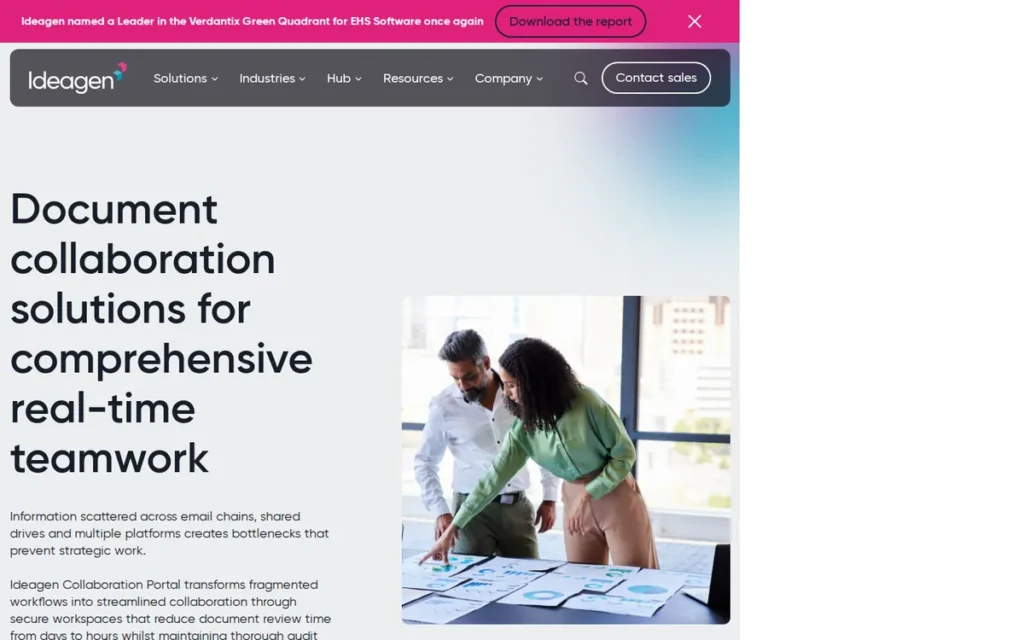
Category: Enterprise / Government Portal, FedRAMP-certified secure document collaboration for regulated industries.
At a Glance
- Category: Enterprise / Government Portal
- Best For: US federal agencies, UK government contractors, regulated financial services, and defense enterprises
- Price Range: Quote-only; no publicly listed pricing
- Primary Strength: Huddle (Ideagen) is the only FedRAMP-certified portal in this comparison, FedRAMP authorization independently confirmed via Ideagen’s marketplace listing
- Biggest Limitation: Quote-only pricing with no published benchmark; unsuitable for SMBs, commercial agencies, or self-serve evaluation
- One-Line Summary: Huddle (Ideagen Collaboration Portal) is the only FedRAMP-certified portal on this list; Ideagen reports adoption by over 80% of UK Central Government agencies (unverified by independent sources as of June 2026) for secure external document exchange and compliance-driven collaboration.
- Last Verified: June 2026
Overview
Huddle (officially rebranded as Ideagen Collaboration Portal following Ideagen’s 2021 acquisition) is a security-first, regulated-industry client portal and external document collaboration platform. Huddle (Ideagen) was built to replace email-based sensitive document exchange in regulated environments including government, defense, finance, legal, and healthcare.
Huddle (Ideagen) is described by Ideagen as among the earliest SaaS collaboration vendors to achieve FedRAMP certification in the US (ideagen.com/products/huddle, 2026). Ideagen reports that Huddle is used by over 80% of UK Central Government agencies, this figure is vendor-reported and has not been independently verified by third-party sources as of June 2026.
Core capabilities include secure document sharing with bank-level security, client workspaces, Microsoft Office Online co-authoring, task management, file request management, approvals, version control, audit trails, e-signatures, and bulk team updates in one click.
Key Features
- FedRAMP Certification: Huddle (Ideagen) is the only FedRAMP-certified portal in this seven-platform comparison, a US federal cloud security authorization confirmed via Ideagen’s FedRAMP marketplace listing that is a formal procurement requirement for vendors selling to US federal agencies (ideagen.com/company/news/ideagen-joins-fedramp-marketplace, 2026).
- Comprehensive Compliance Stack: Huddle (Ideagen) complies with ISO 27001, Cyber Essentials Plus, FedRAMP, HIPAA, and Official Government Security Classification for UK public sector use, confirmed by UK Government Digital Marketplace listing (applytosupply.digitalmarketplace.service.gov.uk, 2026).
- Microsoft Office Online Co-Authoring: Huddle (Ideagen) integrates with Microsoft Office Online for real-time document co-authoring within the secure workspace, eliminating the download-edit-reupload cycle that creates version control failures in regulated document workflows.
- Audit Trails and Version Control: Huddle (Ideagen) provides comprehensive audit trails and version control across all documents, meeting evidence-retention requirements of government and regulated-industry workflows with full timestamped access logs.
- E-Signatures and Bulk Team Updates: Huddle (Ideagen) includes e-signature capability alongside a bulk team update feature for coordinating large document review cycles across multiple stakeholders simultaneously.
Best For
Huddle (Ideagen Collaboration Portal) is best for US federal agencies, UK government contractors, regulated financial services firms, defense organizations, and healthcare enterprises that require FedRAMP certification, ISO 27001 compliance, and secure external document collaboration as formal procurement prerequisites, not for commercial SMBs or agency use cases.
Pricing
Huddle’s pricing is not publicly listed, the platform operates on a quote-only, enterprise sales model. A third-party guide cited a starting point of approximately $10/month per user, but this is an unverified third-party claim that should not be taken as authoritative (knack.com/blog/top-client-portal-software-guide/, 2026). All contracts are negotiated through Ideagen’s enterprise sales process. Contact ideagen.com/products/huddle for formal pricing.
Strengths
- Huddle (Ideagen) is the only FedRAMP-certified portal in this seven-platform comparison, a unique credential confirmed via Ideagen’s FedRAMP marketplace listing that makes it the required choice for US federal government procurement, with no viable alternative among the platforms reviewed (ideagen.com/company/news/ideagen-joins-fedramp-marketplace, 2026).
- Ideagen reports that Huddle is used by over 80% of UK Central Government agencies: a vendor-reported metric representing the most concentrated government-sector penetration claimed by any portal platform in this comparison (unverified by independent sources as of June 2026) (ideagen.com/products/huddle, 2026).
- Huddle earned a G2 High Performer badge (Winter 2022, Europe) and a G2 “Users Love Us” badge, the most recent available G2 recognition at the time of this research, concentrated within European professional services and public sector organizations (G2 Ideagen Huddle reviews, 2022).
- Huddle’s compliance stack: ISO 27001, FedRAMP (confirmed), HIPAA, Cyber Essentials Plus, and Official Government Security Classification, is the most comprehensive of any platform in this comparison for government and regulated-industry procurement (applytosupply.digitalmarketplace.service.gov.uk, 2026).
Limitations
- No Transparent Pricing: Huddle’s quote-only model creates friction for self-directed evaluation, there is no published pricing benchmark, making cost comparison with alternatives impossible without entering a formal enterprise sales conversation.
- Enterprise Complexity for Smaller Teams: Huddle (Ideagen) is consistently described as disproportionately complex for smaller businesses, its compliance depth and feature architecture is calibrated to requirements that SMBs and mid-market commercial agencies do not have and should not pay to accommodate.
- No Native CRM, Project Management, or Invoicing Layer: Huddle (Ideagen) is a document-centric collaboration portal, it includes no CRM pipeline management, task workflow management, or billing capabilities. Regulated enterprises requiring a full client management platform must integrate Huddle with a separate CRM or ERP system, adding integration complexity and total cost (ideagen.com/products/huddle, 2026).
- Post-Acquisition Identity Risk: Huddle’s 2021 acquisition by Ideagen and rebrand as Ideagen Collaboration Portal means the product identity is no longer independent, buyers should evaluate Ideagen’s broader product roadmap and corporate direction when assessing long-term platform continuity risk.
Verdict
Huddle (Ideagen Collaboration Portal) is the only viable option for US federal government procurement portals and the strongest choice for UK-regulated enterprises requiring government-grade security certifications. Huddle’s confirmed FedRAMP authorization and Ideagen’s vendor-reported 80%+ UK Central Government adoption (unverified by independent sources as of June 2026) make Huddle uniquely qualified for regulated-sector use cases where no commercial alternative meets compliance thresholds. Buyers without specific government or regulated-enterprise requirements will find Clinked, SuiteDash, or Copilot (Assembly) better-matched and more cost-effective for commercial portal needs.
What Red Flags Should I Watch For When Evaluating Portal Software?
The most consequential red flags in portal software evaluation are features locked behind undisclosed tier jumps, per-seat pricing without a scaling calculator, hosted-only architectures that prevent data portability, and compliance claims without verifiable certification documentation. Vendors offering only “contact sales” with no published pricing signal enterprise-only positioning incompatible with SMB self-serve evaluation.
Red Flag #1: Key Features Locked Behind Hidden Tier Jumps
White-labeling, automation engines, advanced analytics, and mobile apps are frequently locked behind expensive plan upgrades not prominently disclosed during trial sign-up. Copilot (Assembly)’s full brand removal costs ~$399/month (Advanced) versus ~$39/month (Starter), a 10× gap. Clinked’s white-label mobile apps require Enterprise pricing. Confirming feature gating before building any workflows on a trial plan is the single most impactful pre-purchase step in this category.
Red Flag #2: Per-Seat Pricing Without a Scaling Calculator
Platforms that charge per client or per staff member without providing a clear cost calculator make it impossible to estimate total cost at expected user volumes. ManyRequests charges per staff seat above base pricing; Zendesk charges per agent; Clinked charges per member. Request a formal 12-month cost projection at your expected user growth before signing any contract or committing to onboarding.
Red Flag #3: No Code Export or Self-Hosting Option
Hosted no-code builders like Softr explicitly do not generate exportable code. If the vendor ceases operations, changes pricing materially, or discontinues a critical feature, you cannot migrate your portal logic elsewhere. Buyers evaluating no-code builders should verify data export formats and exit options before committing business-critical workflows to any hosted-only platform.
Red Flag #4: Compliance Claims Without Certification Documentation
Vendors frequently state they are “HIPAA-compliant” or “SOC 2-aligned” without verifiable certification documents. True compliance credentials, ISO 27001, FedRAMP, SOC 2 Type II, are issued by independent certifying bodies with certificate numbers and validity dates. A simple verification test: ask the vendor for the certification registration number and the name of the issuing body. A certified vendor answers in one sentence; a non-certified vendor redirects to “aligned with” or “compliant with” language, two phrases that carry no legal or procurement weight.
Red Flag #5: Poor Vendor Support Quality
Community threads consistently document support quality as a leading predictor of long-term platform satisfaction. Zendesk’s community forums contain documented complaints about Zendesk’s own customer support responsiveness, a noted brand-reputation inconsistency for a customer service software vendor. Request support response time SLAs and scan community threads for support quality patterns before purchasing any platform.
Red Flag #6: Single-Model Fit Marketed as Universal
Some platforms are purpose-built for one business model but marketed with language implying broad applicability. ManyRequests is purpose-built for productized subscription agencies but generates documented fit complaints from retainer-based or time-and-materials teams. Confirm that the platform’s core architecture matches your billing and service delivery model before investing in configuration, a category mismatch costs more in migration and setup time than any subscription price difference on this list.
What Questions Should I Ask Before Choosing Portal Software?
Portal software selection becomes significantly cleaner when buyers prioritize three questions above all others: what use case is the portal primarily serving, what is the true total cost at expected user volumes, and what are the data portability and exit terms if migration becomes necessary.
Question #1: What Is the Portal’s Primary Use Case, Client Collaboration, Service Delivery, Customer Support, or Regulated Document Exchange?
Portal software that excels at one use case is rarely optimized for others. SuiteDash and Copilot (Assembly) are built for ongoing client collaboration; ManyRequests is built for productized service delivery; Zendesk is built for customer support ticket management; Clinked and Huddle (Ideagen) are built for regulated document exchange. Clarifying your primary use case before evaluating features eliminates most of the category confusion in portal software selection.
Question #2: What Is the True Total Cost at My Expected Client and Staff Volume in 12 Months?
List price at sign-up rarely reflects actual cost at scale. Ask vendors directly: Does pricing change as I add clients? Does it change as I add staff? Are white-labeling, automation, and advanced analytics included in my plan tier or locked behind upgrades? Run a cost projection for your 12-month expected user volumes before making any platform comparisons.
Question #3: What Are the Data Portability and Exit Terms if I Need to Migrate?
Ask directly: Can I export my portal’s data, structure, and logic to another system? For hosted no-code builders like Softr, the answer is no code portability. For hosted SaaS platforms like SuiteDash or Clinked, data export is typically available but portal logic may not be transferable. Understanding exit terms before sign-up determines how deeply locked in your organization becomes.
Question #4: Does the Platform Support My Compliance Requirements?
If your industry has formal regulatory requirements (HIPAA for healthcare, FedRAMP for US government, ISO 27001 for regulated enterprise) verify certifications before shortlisting. Do not accept “aligned with” or “compliant with” as equivalent to certified; request documentation with certificate numbers and expiry dates. Only Clinked (ISO 27001 and HIPAA direct certifications) and Huddle (Ideagen) (FedRAMP confirmed) have independently verifiable certifications in this comparison.
Question #5: Is White-Labeling Included in My Plan or Is It a Premium Add-On?
White-labeling is the feature most frequently gated behind expensive plan upgrades in the portal category. Confirm explicitly: at what plan tier does white-labeling activate, and what does it include, custom domain, custom email notifications, and mobile apps? Copilot (Assembly) offers partial white-label at ~$149/month but requires ~$399/month for complete brand removal; Clinked’s mobile apps require Enterprise pricing. Understanding these gating points before vendor selection avoids the most documented post-purchase regret in this category. The white-label discovery pattern, building a portal on an entry plan, then discovering the fully branded version costs 5-10× more, repeats across community discussions in every portal software segment.
Question #6: What Does the Implementation and Onboarding Process Look Like?
Setup complexity is the most common reason portal software fails to deliver value quickly. SuiteDash and Zendesk both require significant configuration investment before delivering their core value. A realistic onboarding estimate should include admin setup time, not just subscription cost. Ask the vendor: How long does a typical implementation take? Is onboarding support included in my plan or an additional purchase?
Question #7: Does the Platform Offer a Free Trial or Demo for Self-Directed Evaluation?
SuiteDash, Copilot (Assembly), Softr, and ManyRequests all offer free trials or free tiers, enabling self-directed evaluation before any purchase commitment. Clinked and Zendesk offer structured demos. Huddle (Ideagen) requires an enterprise sales conversation to evaluate. The presence of a free trial is the fastest proxy for how confident a vendor is in self-directed product discovery, and the fastest way for buyers to resolve the uncertainty that comparison lists cannot.
How Did We Rank These Portal Software Platforms?
Seven portal software platforms were evaluated in this comparison using a consistent methodology across independent review platform data, community sentiment analysis, pricing transparency, feature depth, and compliance verification, with no affiliate relationships influencing any placement or ranking decision.
How Were These Portal Software Platforms Evaluated?
Our evaluation followed five sequential steps:
- Platform discovery: We identified the most-referenced portal software platforms across G2 category listings, independent review roundups, and community discussions in r/CRM, r/smallbusiness, r/nocode, r/agency, and r/Zendesk.
- Independent web research: We gathered product information, pricing, and feature documentation from vendor public materials and third-party review sites, with all data points timestamped to their source date.
- Community sentiment analysis: We collected and analyzed Reddit community discussions to surface genuine user experiences beyond vendor-produced content.
- Review platform analysis: We cross-referenced available G2 ratings, badges, and review counts for each platform, explicitly noting where review bases are too small for statistical reliability.
- Category mapping: We mapped each platform to its primary use case to prevent cross-category comparison bias, a compliance portal should not be ranked below an agency portal for lacking CRM features it was never designed to provide.
What Criteria Determine Each Platform’s Ranking Position?
Rankings reflect seven weighted criteria applied equally across all seven platforms:
- Review Platform Ratings and Volume: Aggregate user satisfaction scores across independent reviewers are the highest-confidence signal of real-world product performance. Products with very limited review counts (ManyRequests: 1 G2 review) are noted explicitly with appropriate confidence caveats.
- Real-World Community Sentiment, Community discussions surface specific, unfiltered pain points, pricing surprises, onboarding friction, support quality, that curated review platforms may underrepresent.
- Pricing Transparency and Value: Platforms with publicly available pricing receive more favorable evaluation than quote-only models at equivalent functionality, because transparency enables independent evaluation before any sales conversation.
- Feature Depth and Category Fit: A portal’s value is proportional to how well its core feature set matches the buyer’s primary use case. Features gated behind expensive tier upgrades are treated as limitations.
- White-Label and Customization Depth: White-labeling is consistently cited as a must-have for agencies. Platforms including meaningful white-labeling in accessible tiers are valued more highly than those restricting it to premium pricing.
- Compliance Credentials: Verified compliance certifications (ISO 27001, FedRAMP, SOC 2 Type II) carry evidential weight; unverified claims carry none. Certifications are a primary ranking input for compliance-sensitive use cases.
- AI and Automation Capability: Platforms with meaningful AI features (Softr’s AI Co-Builder, Zendesk’s AI Agents) are recognized for reducing time-to-value in ways competitors without these features cannot match.
How Is Conflicting Evidence Weighted in the Rankings?
When review platform ratings conflict with Reddit sentiment, we weight specificity and recency. A detailed 2025–2026 Reddit thread with multiple corroborating comments outweighs a single undated or generic G2 review. Vendor-stated statistics (such as Ideagen’s reported 80% UK Central Government adoption figure) are labeled as vendor-sourced throughout and treated as unverified claims unless independently corroborated by a third-party source.
How Are Vendor Claims Validated Before Publication?
Vendor-reported statistics are labeled as such throughout this article. Only claims corroborated by at least one independent source are stated as fact. Pricing data is verified against the most recently available third-party source and labeled with the verification date. All pricing should be confirmed at vendor websites before any purchase decision. One claim (Softr’s specific institutional funding details) was flagged as unverified during research and is presented with appropriate hedging rather than as confirmed fact throughout this article.
How Often Is This Comparison Updated?
This article was researched and published in June 2026. PlugRoute refreshes comparison articles on a rolling schedule, prioritizing updates when vendors make significant pricing changes, release major product updates, or when community sentiment shifts materially.
How Does PlugRoute Ensure Editorial Independence?
PlugRoute holds no affiliate relationship with any company listed in this article. No company paid for placement, review, or editorial influence. Rankings are determined solely by the evaluation criteria described in this methodology. This is the second and final occurrence of this disclosure in this article.
Frequently Asked Questions About Portal Software
What Is the Difference Between a Client Portal and a Customer Support Portal?
A client portal supports ongoing B2B service relationships, file sharing, project visibility, and billing between a service provider and named clients. A customer support portal manages high-volume ticket resolution across a broad customer base. SuiteDash, Copilot (Assembly), Clinked, and ManyRequests are client portals; Zendesk is a customer support portal. Selecting the wrong category costs more in setup and migration than any price difference between platforms.
Which Portal Software Is Best for a Small Business Under $100/Month?
For small businesses under $100/month, SuiteDash’s Pinnacle plan at $99/month delivers the broadest feature set with unlimited clients, staff, and projects plus the full automation engine. Copilot (Assembly) serves leaner agency needs from approximately $39/month. Softr’s Starter plan at $49/month fits non-technical teams building custom portals on Airtable or Google Sheets data without writing code.
How Does PlugRoute Determine Its Rankings?
PlugRoute rankings are determined by a transparent, evidence-based methodology covering review platform ratings, real-world community sentiment, pricing transparency, feature depth and category fit, white-label access, compliance credentials, and AI capability. No company pays for placement or has any editorial influence. The full methodology is documented in the “How Did We Rank These Portal Software Platforms?” section above.
What Key Terms Should I Know Before Evaluating Portal Software?
White-Label Portal: A white-label portal is a client-facing platform fully branded with the service provider’s name, logo, and domain, with no visible branding from the underlying software vendor. White-label portals allow agencies and professional services firms to present clients with a portal that appears entirely as their own proprietary product. Clinked and Copilot (Assembly) both offer white-labeling at different price points and depth levels, with full brand removal varying significantly between entry and premium tiers.
FedRAMP Certification: FedRAMP (Federal Risk and Authorization Management Program) is the US federal government’s cloud security authorization framework and a formal procurement prerequisite for cloud software vendors selling to US federal agencies. FedRAMP certification represents the most rigorous government-specific security validation available in this product category, only Huddle (Ideagen Collaboration Portal) holds this certification among the seven platforms reviewed.
Productized Services: Productized services are agency offerings packaged as fixed-scope, fixed-price, subscription-based deliverables, as opposed to bespoke, time-and-materials engagements. ManyRequests is purpose-built for agencies operating on a productized service model, where clients browse, subscribe to, and manage service packages through a checkout-ready catalog rather than negotiating scope on a per-project basis.
No-Code Builder: A no-code builder is a software platform that enables non-technical users to create functional applications (including portals, databases, and dashboards) through visual interfaces and configuration, without writing any code. Softr is the only no-code portal builder in this comparison; all other platforms are pre-built portals with fixed feature sets that require configuration rather than custom application build.
Audit Trail: An audit trail is a timestamped, tamper-evident log of all user actions within a software system, documenting who accessed, modified, or shared a document and when. Audit trails are a compliance requirement in regulated environments (government, finance, legal, healthcare) and are a core feature of Clinked and Huddle (Ideagen), distinguishing compliance-grade portals from general-purpose client collaboration tools.
Which Portal Software Is Right for You?
Key Insights
- At $19–$99/month for unlimited users, clients, and projects, SuiteDash delivers the lowest confirmed total cost of ownership of any all-in-one portal platform in this comparison, but requires a meaningful setup-time investment before delivering consistent value.
- Copilot (Assembly) is the most modular purpose-built agency client portal in this comparison, with native billing and a composable app architecture, but full brand removal requires the Advanced plan at approximately $399/month.
- Clinked is the right choice when ISO 27001 compliance and full white-label depth: including branded mobile apps, are non-negotiable procurement requirements, justified at $299/month entry for professional services and regulated organizations.
- Softr is the only AI-native no-code builder in this comparison, generating near-complete portal applications from natural language prompts, with a hosted-only vendor lock-in trade-off that buyers must evaluate carefully against their exit requirements before committing.
If your priority is minimizing cost while managing many clients and staff, SuiteDash at $19–$99/month flat rate delivers the broadest feature set per dollar. If you run a productized agency selling subscription services, ManyRequests is the only platform in this comparison with a checkout-ready service catalog. If you serve US government or regulated enterprise clients, Huddle (Ideagen Collaboration Portal) is the only FedRAMP-certified option, not a preference, but a procurement requirement.
The single most common portal software mistake is selecting a tool optimized for customer support when you need client collaboration, or choosing an all-in-one platform when a purpose-built delivery tool would eliminate 80% of your operational friction. Matching category to use case delivers more value than comparing features within the same category.
Your next step is requesting a trial or demo from your shortlisted platform. SuiteDash, Copilot (Assembly), Softr, and ManyRequests all offer free trials or free tiers. Clinked and Zendesk offer structured demos. Huddle (Ideagen) requires an enterprise sales conversation. Requesting a trial costs nothing and resolves most of the uncertainty that feature-comparison lists cannot.
For independent, evidence-based comparisons of adjacent SaaS categories, visit PlugRoute. We update this guide quarterly. Last updated: June 2026.