Boords leads the 2026 category for teams needing AI generation, native animatics, and client collaboration in one platform. Katalist AI earns second for productions where single-character face consistency is the decisive requirement. StoryboardHero ranks third for agencies that begin projects from creative briefs rather than finished scripts. Each tool reflects a fundamentally different production philosophy.
Manual storyboarding demands artistic skill most filmmakers and marketers don’t have, and character consistency fails silently across frames. Most roundups misclassify tools, treating StudioBinder as an AI image generator when it categorically is not, or overlooking that Dreamina is owned by ByteDance.
The independent quality evidence professional buyers need most is consistently absent from AI-generated summaries across the web, which is the gap this review addresses.
PlugRoute has no affiliate relationships with any company listed; rankings are determined entirely by research data and objective evaluation criteria.
TL;DR: Which AI Storyboard Tools Top the 2026 Rankings?
- Boords is the best all-around AI storyboard platform for agencies needing AI frame generation, native animatic export, and password-protected client review in one subscription.
- Katalist AI is the best choice when a single character’s face must stay visually consistent across every storyboard panel.
- StoryboardHero is the leading option for video agencies whose projects begin from a creative brief rather than a finished script.
- Storyboarder by Wonder Unit is the only fully free, open-source desktop storyboard application with native export to Adobe Premiere Pro and Final Cut Pro.
What Are the Different Types of AI Storyboard Generator Software?
AI storyboard software in 2026 falls into three distinct categories: dedicated AI generators that create frames from text or scripts, general creative AI platforms that can be applied to storyboarding, and tools that organize or create storyboards without generating AI images. Choosing the wrong category (not just the wrong tool) is the most costly and common evaluation mistake in this comparison.
Category 1: AI Storyboard Generators (Boords, Katalist AI, StoryboardHero, Drawstory AI) generate AI storyboard images directly from text prompts, scripts, or creative briefs. These are what most buyers searching this category are actually seeking.
Category 2: General Creative AI with Storyboarding Applications (Dreamina) is a general-purpose AI image and video generation platform developed by ByteDance. Dreamina can generate individual storyboard-quality frames but lacks dedicated panel sequencing, script integration, shot annotation, or character-specific consistency controls.
Category 3: Production Management and Manual Desktop Tools (StudioBinder, Storyboarder by Wonder Unit) do NOT generate AI images from text. StudioBinder organizes user-supplied storyboard images within professional shot lists and shooting schedules. Storyboarder is a completely free, open-source desktop application for hand-drawn and pose-based storyboarding with native NLE export.
IMPORTANT: StudioBinder and Storyboarder do not generate AI images. If AI image generation is your primary need, use these tools as organizational layers alongside an AI generator, not as replacements for one.
How Do the Top AI Storyboard Tools Compare at a Glance?
The seven reviewed tools span three distinct categories, AI image generators, a general creative AI platform, and non-generating workflow tools. Boords, Katalist AI, and StoryboardHero are the strongest choices for buyers whose primary need is AI storyboard image generation. The table below compares all seven across key criteria verified in April 2026.
| Rank | Company | Category | Best For | One-Line Summary | Key Capabilities | Primary Strength | Key Limitation |
|---|---|---|---|---|---|---|---|
| 1 | Boords | Integrated AI Storyboard Platform | Agencies and studio teams needing AI generation, animatics, and client review in one subscription | Boords is an AI storyboard platform founded in 2015 that converts scripts and prompts into visual frames with | |||
| seed-image character consistency, native animatic creation, and password-protected client review | AI frame generation, Character Guidelines consistency, native MP4 animatic export, password-protected client links, multi-format export | Only tool with native animatic creation plus password-protected client review links requiring no client account | Team pricing not publicly listed; free tier limited to 12 frames | ||||
| 2 | Katalist AI | AI Storyboard Generator (Character-Consistency Specialist) | Productions where a specific character face must stay consistent across all panels | Katalist AI is a script-to-storyboard generator with face-locking technology independently evidenced as the strongest single-character consistency solution in the reviewed 2026 category | Face-locking, one-click character swap, Dzine multi-element consistency, 6-format script intake, MP4 animation export | Strongest independently evidenced single-character consistency via face-locking (neonshake.pl, 2025) | More frame distortions than Boords in independent comparison testing |
| 3 | StoryboardHero | AI Storyboard Generator (Brief-to-Board Pipeline) | Video agencies beginning projects from creative briefs rather than finished scripts | StoryboardHero is an AI storyboard generator built by a production-experienced team that automates the full brief-to-script-to-board pipeline with a human artist add-on unique in the category | Brief-to-script generation, PDF import, reference-photo consistency, human artist add-on, agency collaboration | Only tool that auto-generates a script from a creative brief before producing visual frames | No free tier; verify current pricing at storyboardhero.ai/pricing before purchase |
| 4 | StudioBinder | Production Management Platform (NOT an AI Image Generator) | Film productions needing shot lists, schedules, and call sheets organized around storyboard images | StudioBinder is a full-stack film production management platform reporting 1.5M+ users with ESPN and CBS Interactive confirmed as enterprise clients; it does NOT generate AI images | Shot list creation, script breakdown, shooting schedules, call sheets, multi-role collaboration | Strongest enterprise production management platform reviewed; ESPN and CBS Interactive confirmed as clients | Does NOT generate AI storyboard images; users must supply frames from external tools |
| 5 | Drawstory AI | AI Storyboard Generator (Script-Native, Prompt-Free) | Feature film directors with completed scripts up to 100 pages needing storyboarding without AI prompt writing | Drawstory AI is the only reviewed generator that derives visual frame logic from uploaded script content without prompt engineering, supporting scripts up to 100 pages with embedded filmmaking principles | Prompt-free script processing up to 100 pages, embedded 180-degree rule and shot sizing, pitch deck creation, multi-language support | Only prompt-free, script-native AI storyboard generator in the reviewed category | No independent review scores; image-quantity pricing creates cost unpredictability for long-form projects |
| 6 | Dreamina (CapCut) | General Creative AI (Not a Dedicated Storyboard Tool) | Budget-constrained CapCut users needing free AI image generation | Dreamina is ByteDance’s AI creative platform offering unlimited basic image generation for free with direct CapCut integration; with the critical caveat that ByteDance ownership creates documented data privacy risk for confidential production content | Unlimited free image generation, Seedream 3.0 model quality comparable to GPT-4o, CapCut video pipeline integration | Unlimited free-tier AI generation with no mandatory login requirement | ByteDance ownership creates documented data privacy risk; no storyboard-specific workflow features |
| 7 | Storyboarder (Wonder Unit) | Free Desktop Storyboard App (No AI Image Generation) | Students and zero-budget creators needing professional storyboard output with NLE export | Storyboarder by Wonder Unit is a completely free open-source desktop storyboard application with FK/IK Shot Generator, Final Draft FDX import, and native Adobe Premiere Pro, Final Cut Pro, and Avid export; with no AI image generation capability | Hand-drawing tools, FK/IK Shot Generator, FDX and Fountain import, Premiere/Final Cut/Avid export | Only tool at any price with native Premiere Pro XML, Final Cut Pro XML, and Avid export; completely free | No AI image generation capability |
Which AI Storyboard Tool Should I Choose for My Use Case?
The right AI storyboard tool depends on where your production workflow begins. Agencies starting from creative briefs belong in StoryboardHero. Productions requiring single-character face consistency belong in Katalist AI. Teams needing AI generation plus animatics and client review in one subscription belong in Boords. The framework below maps each primary need to its best-fit tool and an acceptable alternative.
| Your #1 Priority | Recommended Tool | Why | Acceptable Alternative |
|---|---|---|---|
| All-around AI generation + animatics + client review | Boords | Boords combines AI frame generation, native animatic export, and password-protected client review in one $25/month subscription | StoryboardHero |
| Single-character face consistency across all frames | Katalist AI | Katalist AI’s face-locking is independently evidenced as the strongest single-character consistency in the category (neonshake.pl, 2025) | Boords |
| Automating from a creative brief, not a finished script | StoryboardHero | StoryboardHero is the only tool that generates a full script from a creative brief before producing visual panels | Katalist AI |
| Full production management around storyboard images | StudioBinder | StudioBinder connects shot lists to schedules, call sheets, and multi-role coordination for 1.5M+ reported users | Boords |
| Feature-length script storyboarding without AI prompts | Drawstory AI | Drawstory AI is the only tool processing scripts up to 100 pages without any prompt engineering | Katalist AI |
| Zero budget with NLE export to Premiere or Final Cut | Storyboarder | Storyboarder is fully free, open-source, with native Premiere Pro XML and Final Cut Pro XML export | Dreamina |
| Free AI image generation for existing CapCut users | Dreamina | Dreamina’s free tier offers unlimited basic image generation and integrates directly with CapCut’s editor | Storyboarder |
1. Boords: Best Overall: AI Storyboard Platform for Teams and Agencies
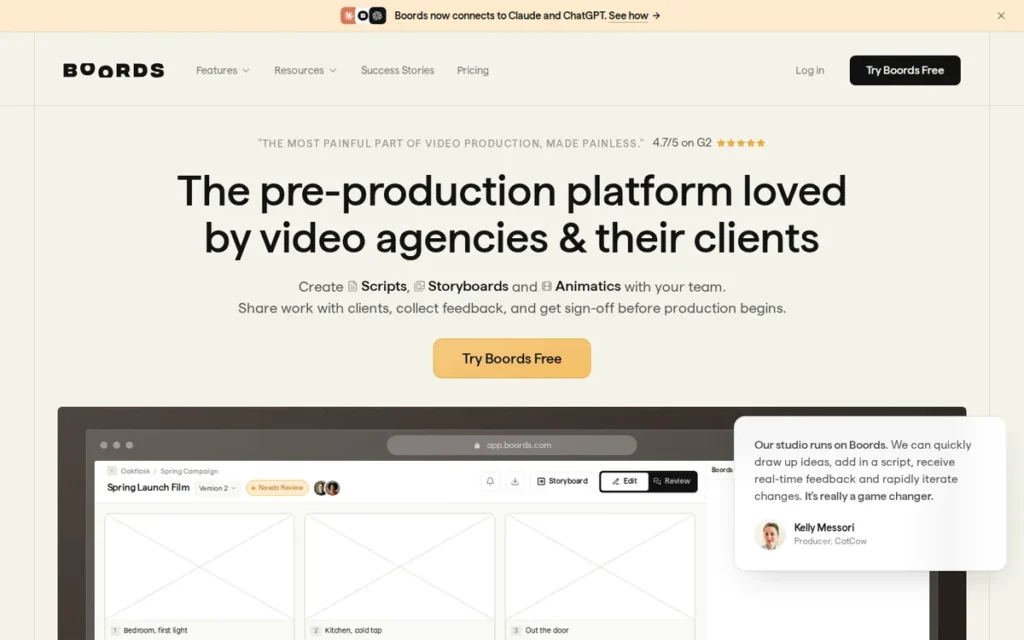
Category: Integrated AI Storyboard Platform, generates AI storyboard frames from prompts or scripts AND creates animatics with full team collaboration tools in a single subscription.
At a Glance
- Category: Integrated AI Storyboard Platform
- Best For: Agencies, studio teams, and indie filmmakers who need AI generation, character consistency controls, native animatic export, and client review workflows in one platform
- Price Range: Free (limited) | $25/month Individual | Team pricing not publicly listed
- Primary Strength: Boords combines AI storyboard generation, seed-image character consistency controls, native MP4 animatic export, and password-protected client collaboration, a combination no single competitor matches
- Biggest Limitation: Boords’ Team tier pricing is not publicly listed, creating budget uncertainty for agencies evaluating scalable deployments; the free tier is capped at 2 storyboards and 12 frames, insufficient to evaluate AI output quality on a real project
- One-Line Summary: Boords is an AI-powered storyboard platform founded in 2015 by James Chambers and Tom Judd that converts scripts and prompts into visual storyboard frames with seed-image character consistency controls, native animatic creation, and password-protected client review, earning the strongest all-around score across the six criteria that matter most to professional production teams
- Last Verified: April 2026
Overview
Boords is an AI-powered storyboard and animatic platform, founded in 2015 by James Chambers and Tom Judd of London’s Animade studio [Source: Cartoon Brew, verified April 2026], built for filmmakers, agencies, and video teams who need to move from written scripts to client-ready visual storyboards (and then to rough animatics) without switching platforms.
Boords generates AI storyboard frames from text prompts or scripts and maintains character appearance across panels through its proprietary Character Guidelines feature using seed image sequences. Boords also enables real-time team collaboration with password-protected client review links that require no client account to access.
Boords positions itself as the full pre-production workflow layer between the written brief and the production shoot, making Boords the only reviewed tool covering script-to-animatic as a single uninterrupted workflow.
Key Features
- AI Character Guidelines: Boords’ Character Guidelines feature maintains character appearance, outfit, and physical traits across all storyboard panels using seed image sequences, directly targeting the character drift problem that independent testing identifies as the category’s most critical technical failure mode.
- Script-to-Panel Sync: Boords converts scripts or text prompts into visual storyboard frames with camera angles and shot list annotations auto-generated and synced to the script, reducing the manual translation step between written page and visual panel.
- Native Animatic Creation: Boords creates native MP4 animatics with subtitle overlays, audio tracks, and frame timing controls, eliminating the need for a separate animatic tool and enabling one-platform delivery from script to rough cut.
- Password-Protected Client Review: Boords’ real-time collaboration suite includes in-context frame comments, version history, and password-protected shareable client review links that require no client account signup, a documented agency workflow advantage not replicated by any other reviewed tool.
- Multi-Format Export: Boords exports storyboard content across PDF, MP4, GIF, and presentation link formats with custom branding and password protection options, supporting both internal review and client-facing deliverables from a single workflow.
Best For
Boords is best for video agencies and studio teams handling multiple client projects that require full pre-production deliverables (storyboards, animatics, and client approval) without leaving a single platform, and for indie filmmakers who need professional-grade collaboration tools at the Individual plan’s $25/month price point.
Pricing
Boords’ verified pricing as of April 2026:
- Free tier: $0/month: 2 storyboards, 12-frame limit, watermarked exports; insufficient for evaluating output quality on a real project
- Individual tier: $25/month: 100 storyboards, 1,200 AI images/month, full export formats, version management, password protection, and guest commenting
- Team tier: Pricing not publicly listed: requires contacting Boords directly
One third-party source cited $9/month, which may reflect an older or promotional rate. The $25/month Individual tier is the current verified entry point for professional access. Always verify current pricing at boords.com before purchase.
Strengths
- Native Animatic Creation: Boords is the only reviewed tool offering native animatic creation with audio, subtitles, and timing controls within the same subscription (verified via Boords’ official product page, April 2026) a capability all other reviewed tools require a separate platform to replicate.
- Independent Head-to-Head Quality Win: In the only publicly available independent comparison of AI storyboard tools (neonshake.pl, 2025), Boords delivered higher overall image quality and fewer frame distortions than Katalist AI, its closest direct competitor on character consistency.
- Client Review Workflow: Boords’ password-protected client review links: requiring zero client account creation, reduce administrative friction in approval cycles that agencies cite as a recurring production bottleneck, and no other reviewed tool offers this specific combination of capability.
- Platform Longevity: Boords was founded in 2015 by James Chambers and Tom Judd of London’s Animade studio [Source: Cartoon Brew, April 2026], providing over a decade of platform stability that post-2022 AI entrants cannot match, corroborated by inclusion in competitor roundups from both StudioBinder and Celtx.
Limitations
- Pricing Opacity Trade-Off: Boords’ most consequential limitation is Team tier pricing opacity, agencies evaluating Boords for multi-seat deployments cannot obtain team pricing without contacting sales, forcing a discovery step that delays purchasing decisions and prevents direct budget comparison against competitors with published team pricing.
- Free Tier Quality Gate: Boords’ free tier limits buyers to 2 storyboards and 12 frames with watermarks (insufficient to evaluate AI output quality on a real project) meaning professional buyers must commit to the $25/month Individual plan before confirming the tool meets their quality standards.
- Initial Setup Requirement: Boords’ workflow depth: setting up Character Guidelines, client review links, and animatic timing controls, requires more initial configuration than fully automated tools like StoryboardHero’s brief input mode, which may frustrate buyers expecting instant one-click output on first use.
Verdict
Boords is the strongest all-around AI storyboard platform in the 2026 category for teams and agencies, combining AI frame generation, independently tested character consistency, native animatic creation, and professional client collaboration in a single $25/month subscription that no direct competitor matches on breadth. Boords earns the top rank because Boords scores high across every primary criterion simultaneously, not merely by leading in one dimension. Buyers whose primary need is the single highest character consistency output should also evaluate Katalist AI’s face-locking approach; buyers who need a fully free solution should evaluate Storyboarder by Wonder Unit instead.
2. Katalist AI: Best for Character Consistency: Face-Locking Specialist for AI Filmmakers
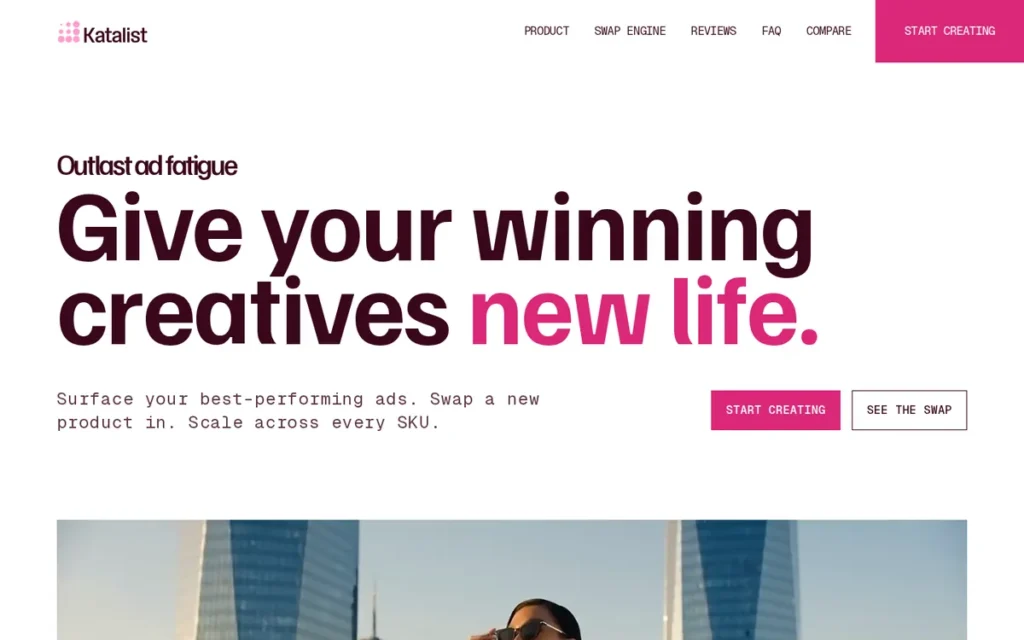
Category: AI Storyboard Generator (Character-Consistency Specialist), converts scripts into visual storyboard frames with face-locking technology that maintains a specific character face across all panels regardless of pose, expression, or scene composition.
At a Glance
- Category: AI Storyboard Generator (Character-Consistency Specialist)
- Best For: Filmmakers, commercial directors, and agencies for whom maintaining a specific character face across dozens of storyboard panels is the primary technical requirement
- Price Range: Free trial | $29/month Individual | Team and Enterprise pricing not publicly listed
- Primary Strength: Katalist AI’s face-locking technology maintains a specific character face across all storyboard panels simultaneously and is independently evidenced as the strongest single-character consistency solution in the reviewed category
- Biggest Limitation: Katalist AI produces more frame distortions than Boords in independent comparison testing (neonshake.pl, 2025), and multi-character consistency (two or more distinct characters in the same frame) remains imperfect despite the Dzine integration
- One-Line Summary: Katalist AI is a script-to-storyboard generator with face-locking technology and Dzine-powered multi-element consistency controls independently evidenced as the strongest single-character consistency solution in the reviewed 2026 category
- Last Verified: April 2026
Overview
Katalist AI is a script-to-storyboard generator that accepts six script file formats (including Final Draft FDX) and automatically breaks them into visual panels with AI-generated frames maintained by face-locking technology that pins a specific character face across all panels regardless of pose, expression, or scene composition changes.
Katalist AI’s defining differentiator is its character consistency architecture: rather than relying on text-based style seeds or prompt repetition, Katalist AI anchors character identity to a specific face render selected at project start, enabling one-click character swap across an entire board when a brand persona needs to change.
Katalist AI also includes generative fill for adding scene props, animation export with MP4 output, and a Dzine integration that extends consistency controls to multi-element scenes including background matching and gaze direction.
Key Features
- Face-Locking Technology: Katalist AI’s face-locking mechanism selects or uploads a specific face at project start and maintains that exact face across all panels regardless of costume, pose, or expression, the most technically specific character consistency approach among the reviewed tools, independently evidenced in a 2025 head-to-head comparison (neonshake.pl, 2025).
- Broadest Script Format Intake: Katalist AI accepts scripts in six file formats (CSV, Word, PowerPoint, Final Draft FDX, PDF, and DOCX) auto-breaking them into shots with AI-extracted visual information, removing the format conversion step that frustrates screenwriters using dedicated script software.
- One-Click Character Swap: Katalist AI’s one-click character swap feature changes the main character face across all storyboard frames simultaneously, enabling rapid persona replacement for agencies creating multiple campaign variants without rebuilding the full board sequence.
- Dzine Multi-Element Consistency: Katalist AI includes a Dzine integration that extends consistency control beyond single characters to multi-element scenes, enabling gaze direction control and precise background matching across panels for productions with complex visual requirements.
- Animation Export: Katalist AI exports boards as animated MP4 sequences and supports grid and slideshow viewing modes, covering the basic animatic conversion need without requiring a separate platform.
Best For
Katalist AI is best for filmmakers, commercial directors, and agency producers for whom maintaining a specific character face with documented accuracy across dozens of storyboard frames is the primary technical requirement, particularly for productions featuring a named protagonist, a recurring brand character, or a talent likeness that must remain visually accurate across the full board.
Pricing
Katalist AI’s verified pricing as of April 2026:
- Free trial: Available via the “Get Started for Free” option at katalist.ai
- Individual plan: $29/month: confirmed via independent comparison (neonshake.pl, 2025)
- Team and Enterprise tiers: Pricing not publicly listed: requires direct contact
Katalist AI’s $29/month Individual plan is $4/month more than Boords’ $25/month Individual plan. Verify current pricing at katalist.ai before purchase.
Strengths
- Independent Consistency Evidence: In the only publicly available independent head-to-head comparison of AI storyboard tools (neonshake.pl, 2025), Katalist AI outperformed Boords specifically on single-character consistency, establishing the strongest independently evidenced character consistency claim in the reviewed 2026 category.
- Dzine Integration: Katalist AI’s Dzine integration was independently reviewed as “amazingly helpful” and “INCREDIBLE” for multi-character AI filmmaking by a YouTube reviewer in 2025 (YouTube, 2025), extending the platform’s consistency controls from single-character face-locking to multi-element scene management including gaze direction and background matching.
- AppSumo Rating: Katalist AI holds a 3.9/5 rating on AppSumo (verified April 2026), providing a third-party quality signal absent from most other tools in the reviewed category, though the review count was not specified in available sources, limiting its statistical reliability.
- Final Draft Native Support: Katalist AI accepts Final Draft FDX files natively alongside five other script formats, removing the file conversion step that creates upstream friction for screenwriters using industry-standard script software.
Limitations
- Image Quality Trade-Off: Katalist AI’s most consequential trade-off is quality versus consistency, the same independent comparison that established Katalist AI’s lead on character consistency (neonshake.pl, 2025) documented that Katalist AI outputs are prone to distortions more often than Boords, meaning buyers who prioritize overall visual quality over character accuracy will be better served by Boords.
- Multi-Character Limitation: Multi-character consistency in Katalist AI: two or more distinct characters appearing in the same frame, remains imperfect despite the Dzine integration, with documented cases of faces changing or duplicating in complex multi-character scenes.
- Vendor Transparency Gap: Katalist AI has no published founding date and no named enterprise clients; an AppSumo rating of 3.9/5 exists but its review count is unspecified, and no G2 or Capterra scores are available, creating due diligence friction for agencies and studios with vendor vetting requirements.
Verdict
Katalist AI is the strongest choice in the 2026 category for productions where character consistency is the decisive criterion, its face-locking technology is independently evidenced as the best single-character consistency solution reviewed, and its Dzine integration meaningfully advances multi-element scene control toward the category’s still-unsolved multi-character problem. Katalist AI ranks second rather than first because its documented distortion rate in independent testing and weaker vendor trust profile prevent it from matching Boords’ all-around performance across all six evaluation criteria. Buyers who treat character consistency as their primary filter should evaluate Katalist AI alongside Boords, testing both on the same character brief using their respective free access options before committing.
3. StoryboardHero: Best for Agencies: Brief-to-Board Pipeline with Human Artist Hybrid Option
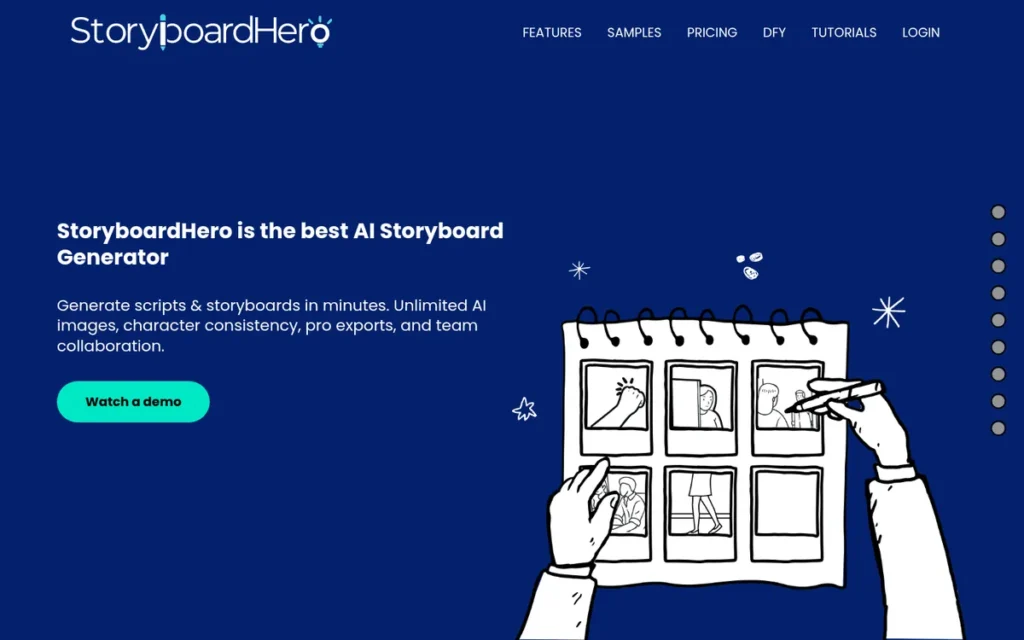
Category: AI Storyboard Generator (Brief-to-Board Pipeline), converts creative briefs, scripts, or PDF uploads into visual storyboard frames with character consistency controls and an optional human artist add-on for illustration-quality frames.
At a Glance
- Category: AI Storyboard Generator (Brief-to-Board Pipeline)
- Best For: Video agencies, commercial production companies, and brand marketing teams that begin projects from creative briefs and need AI storyboard generation alongside client approval workflows and an optional human-illustrated frame service
- Price Range: No free tier | Multiple paid tiers: verify all current prices at storyboardhero.ai/pricing before purchase
- Primary Strength: StoryboardHero is the only AI storyboard generator that auto-generates a full script from a creative brief before producing visual panels, and the only reviewed tool offering a human artist add-on for illustration-quality frames
- Biggest Limitation: StoryboardHero offers no free tier and no permanently free plan, requiring financial commitment before buyers can evaluate AI output quality, the only reviewed tool with this barrier; independent research in April 2026 found pricing discrepancies with figures cited in third-party sources, so verify at storyboardhero.ai/pricing
- One-Line Summary: StoryboardHero is an AI storyboard generator built by a production-experienced team that automates the full brief-to-script-to-board pipeline, offers a hybrid human artist add-on unique in the category, and publishes more pricing tiers publicly than most reviewed competitors
- Last Verified: April 2026
Overview
StoryboardHero is an AI storyboard generator built by a team with approximately 10 years of combined pre-production experience (self-reported), designed to automate the complete agency pre-production pipeline from creative brief through script generation through visual storyboard frames, starting one stage earlier in the production process than any other reviewed tool.
StoryboardHero accepts a creative brief or imports a PDF script, auto-generates a structured script divided into scenes with shot suggestions, then produces AI visual frames with character consistency maintained through text descriptions or uploaded reference photos.
StoryboardHero uniquely supplements its AI generation with an optional human artist add-on service, enabling teams to request traditionally illustrated frames for high-end client pitches when AI output quality alone is insufficient.
Key Features
- Brief-to-Script-to-Board Pipeline: StoryboardHero’s pipeline auto-generates a structured script from a creative brief input before producing visual panels, starting the automation one stage earlier than any other reviewed tool and directly serving agency workflows where projects begin from concepts rather than finished scripts.
- August 2025 Character Consistency Upgrade: StoryboardHero generates character-consistent AI frames using text descriptions or reference photo uploads, with an August 2025 upgrade documented by Skywork.ai as delivering meaningful improvements to image quality, lighting, composition, and character consistency across sequences.
- Human Artist Add-On: StoryboardHero offers a hand-drawn image request add-on unique in the reviewed category, enabling teams to commission traditionally illustrated frames from human artists within the same platform, the only hybrid AI-plus-illustration service reviewed.
- Agency Collaboration Suite: StoryboardHero’s collaboration features include frame-level comments, sharing, version history, and approval workflows with custom branding on exports, enabling agency-standard client review without requiring clients to create a platform account.
- Dual Entry Points: StoryboardHero’s PDF script import with automatic scene detection serves productions with existing screenplays, while the brief input mode serves concept-stage projects, covering both production entry points in a single subscription.
Best For
StoryboardHero is best for video agencies and commercial production companies that handle multiple client projects beginning from creative briefs rather than finished scripts, who need agency-quality client review workflows, and who occasionally require illustration-level output that AI generation alone cannot deliver, particularly for high-value pitches where a polished storyboard is part of the client deliverable.
Pricing
StoryboardHero publishes multiple paid pricing tiers. Verify all current prices directly at storyboardhero.ai/pricing before any purchase decision, independent research conducted in April 2026 identified discrepancies between figures found in third-party review sources and current platform listings.
StoryboardHero offers no free tier and no permanently free plan: a risk-free trial may be available; confirm terms at storyboardhero.ai. A hand-drawn image add-on is separately available per 10 credits. StoryboardHero is the only reviewed tool requiring financial commitment before buyers can evaluate output quality on their actual project type.
Strengths
- Production-Background Founding Team: StoryboardHero’s founding team brings approximately 10 years of combined pre-production experience (self-reported, documented on storyboardhero.ai, April 2026), the only reviewed tool built by people with stated industry background in video concept, script, and storyboard production, which is evident in the tool’s brief-first pipeline design.
- Documented 2025 Quality Upgrade: StoryboardHero’s August 2025 character consistency upgrade was independently documented by Skywork.ai as delivering “meaningful improvements in image quality, lighting, composition, and character consistency”, meaning users who evaluated StoryboardHero before this upgrade may be working from an outdated quality assessment.
- Unique Hybrid Model: StoryboardHero is the only reviewed AI storyboard tool offering a human artist hand-drawn frame add-on within the same platform, directly bridging the gap between AI-generated output quality and the illustration-level fidelity some high-value client presentations require.
- Transparent Tier Structure: StoryboardHero publishes more pricing tiers publicly than most reviewed competitors, though buyers must verify all current prices at storyboardhero.ai/pricing, as April 2026 research identified discrepancies with figures cited in independent review sources.
Limitations
- No Free Tier: StoryboardHero’s most consequential limitation is the complete absence of a free tier, uniquely in the reviewed category, no permanently free access level exists, meaning buyers must commit financially before evaluating whether StoryboardHero’s AI output quality meets their specific project requirements, which is particularly problematic for agencies vetting tools before a client project commitment.
- Pricing Verification Required: Independent research in April 2026 identified discrepancies between StoryboardHero’s pricing as cited in third-party review sources and current platform listings, buyers should verify all current tier prices directly at storyboardhero.ai/pricing before making any purchase decision based on figures from external sources.
- Less Specific Consistency Mechanism: StoryboardHero’s character consistency mechanism (text description or reference photo) is less technically specific than Katalist AI’s face-locking or Boords’ seed-image Character Guidelines, and no independent head-to-head comparison test exists to validate StoryboardHero’s consistency claims against these competitors.
Verdict
StoryboardHero is the strongest choice in the 2026 category for video agencies and commercial production teams that begin projects from creative briefs rather than finished scripts, its brief-to-board pipeline, human artist add-on, and multi-tier pricing structure make it the most agency-native tool in the reviewed set. StoryboardHero ranks third rather than higher because its character consistency mechanism lacks the independent validation of Boords or Katalist AI, its complete absence of a free tier prevents zero-risk evaluation, and pricing figures require direct verification with the vendor before budgeting. Agencies willing to commit to a paid trial on a real client brief will find StoryboardHero’s pipeline logic uniquely aligned with how professional projects begin.
4. StudioBinder: Best for Production Management: Enterprise Film Workflow Platform (Not an AI Image Generator)
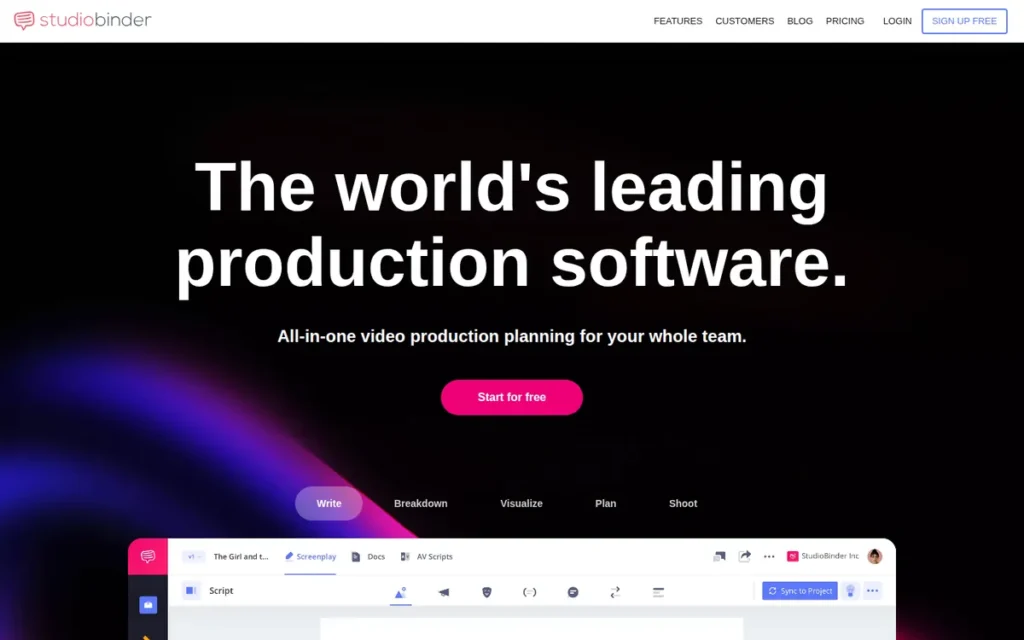
Category: Production Management Platform (NOT an AI Image Generator), organizes user-uploaded storyboard images within professional shot lists, shooting schedules, and call sheets; does NOT generate AI images from text, scripts, or briefs.
At a Glance
- Category: Production Management Platform (Not an AI Image Generator)
- Best For: Professional film and video production teams, studios, and agencies who need full pre-production management (shot lists, schedules, call sheets, and multi-role collaboration) with storyboard organization as one component of a larger workflow
- Price Range: Free tier | approximately $42/month Starter | approximately $85/month Indie | approximately $229/month Agency | approximately $340/month Studio | Enterprise: custom, verify at studiobinder.com
- Primary Strength: StudioBinder connects storyboard organization to full production management (shot lists, shooting schedules, and call sheets) and reports use by 1.5M+ production companies, with ESPN and CBS Interactive confirmed as enterprise clients via live site verification (April 2026)
- Biggest Limitation: StudioBinder does not generate AI storyboard images: users must supply frames from external tools, making StudioBinder the organizational and production management layer around storyboards rather than a creation tool
- One-Line Summary: StudioBinder is a full-stack film production management platform reporting 1.5M+ users and enterprise clients including ESPN and CBS Interactive, which organizes user-uploaded storyboard images within professional shot lists and shooting schedules, making it the strongest enterprise production workflow tool reviewed, provided buyers understand it does not generate AI images
- Last Verified: April 2026
Overview
StudioBinder is a cloud-based film and video production management platform that integrates shot list creation, storyboard image organization, script breakdowns, shooting schedules, and call sheets in a single collaboration environment. StudioBinder reports use by over 1.5 million production companies and brands worldwide (self-reported on studiobinder.com, April 2026).
CRITICAL CATEGORICAL NOTE: StudioBinder does not generate AI storyboard images from text or scripts. StudioBinder’s storyboard capability consists of uploading user-supplied images into structured shot list slots organized into slideshows with timing and camera specifications.
StudioBinder is the correct choice for production teams who already have storyboard images from any source and need professional production infrastructure around them. StudioBinder is the wrong tool for users whose primary need is AI image generation from scripts.
Key Features
- Shot Tagger Script Integration: StudioBinder’s Shot Tagger allows users to highlight any line of dialogue or action in an imported script and instantly create a tagged shot with full camera specifications (including shot size, movement, lens, frame rate, angle, VFX, sound, lighting, location, and equipment) creating a traceable link from script page to production shot that no AI image generator provides.
- Enterprise-Scale Collaboration: StudioBinder supports multi-role real-time collaboration across Director, Director of Photography, and First AD roles, with ESPN and CBS Interactive confirmed as enterprise clients via live site verification in April 2026; additional named clients are published on studiobinder.com’s marketing pages but were not independently confirmed during this research.
- Integrated Production Suite: StudioBinder’s integrated suite connects storyboard organization directly to shooting schedule generation and call sheet creation, meaning images organized in StudioBinder automatically populate downstream production documents, a workflow continuity unavailable in any AI image generator reviewed.
- Free-to-Enterprise Tier Ladder: StudioBinder’s free tier offers meaningful functionality for small productions, with a clear paid tier ladder from approximately $42/month Starter through approximately $340/month Studio, serving teams from indie productions to enterprise studios.
- Professional Shot Documentation: StudioBinder organizes uploaded storyboard images into shot list slots with camera angle, lens, shot size, and timing annotations, enabling professional-grade shot documentation regardless of whether images came from AI generators, traditional illustration, or photography.
Best For
StudioBinder is best for professional film productions, commercial studios, and agencies where pre-production management (coordinating shot lists, shooting schedules, and call sheets across multi-role teams) is the primary workflow need, and where storyboard images will be sourced from professional illustrators, photographers, or separate AI generation tools rather than created within the platform.
Pricing
StudioBinder’s pricing range as of April 2026, sourced from SaaSworthy and Capterra:
- Free tier: Available with limited features
- Starter: approximately $42/month
- Indie: approximately $85/month
- Professional: approximately $127/month
- Agency: approximately $229/month
- Studio: approximately $340/month
- Enterprise: Custom pricing
Some sources show pricing discrepancies; annual billing options exist at lower per-month rates. Verify all current pricing directly at studiobinder.com before budgeting.
Strengths
- Reported Enterprise Adoption: StudioBinder reports use by 1.5M+ production companies worldwide (self-reported on studiobinder.com, April 2026), with ESPN and CBS Interactive confirmed as enterprise clients via live site verification, the strongest enterprise adoption signal in the reviewed category, with additional named clients published on StudioBinder’s own marketing pages pending independent confirmation.
- Script-to-Shot Workflow: StudioBinder’s Shot Tagger creates a direct annotated link from specific script lines to shots with full camera specifications, a production workflow integration that no AI storyboard generator provides and that professional directors and directors of photography identify as a core pre-production efficiency tool.
- Documented Collaboration Impact: Testimonial from producer Jessica Taylor confirms that StudioBinder’s real-time collaboration features “significantly reduced project delays” (sourced from scalarly.com, date of testimonial not specified in source), providing attributed performance evidence for the core KPI of production management platforms.
- Free Tier Availability: StudioBinder offers a free tier enabling small teams to evaluate the full workflow before any financial commitment, alongside a clear multi-tier pricing ladder that allows teams to scale without renegotiating contracts at each production size threshold.
Limitations
- Categorical Mismatch for AI Generation Buyers: StudioBinder’s most consequential limitation for buyers researching AI storyboard generators is categorical, StudioBinder does not generate AI images from text, scripts, or briefs, meaning buyers seeking AI frame generation must use a separate tool such as Boords, Katalist AI, or StoryboardHero and then import those frames into StudioBinder, adding a mandatory platform-switching step.
- Review Volume Gap: StudioBinder’s Capterra rating of 4.0/5.0 is based on only three reviews, statistically unreliable given a reported 1.5M+ user base, and no G2 rating was found during research, creating an independent validation gap unusual for a B2B SaaS platform of this scale.
- Pricing Complexity: StudioBinder’s six-tier pricing structure, combined with source discrepancies, requires direct verification at studiobinder.com before budgeting; the jump from the Indie tier to Agency tier (approximately $85/month to $229/month) is steep for growing production companies.
Verdict
StudioBinder is the definitive enterprise choice for production management, its reported 1.5M+ user base, confirmed enterprise clients, and integrated shot list-to-schedule workflow make it the most professionally credentialed platform in the reviewed category, but buyers must understand that StudioBinder is not an AI storyboard image generator before evaluating it against tools that are. StudioBinder belongs in a filmmaking team’s stack as the production management layer around storyboards, not as the storyboard creation tool; used in combination with an AI generator like Boords or Katalist AI, StudioBinder provides the organizational infrastructure that large productions require. Teams whose sole need is AI frame generation from scripts should evaluate StudioBinder last.
5. Drawstory AI: Best for Full-Script Filmmakers: Prompt-Free, Script-Native AI Storyboarding
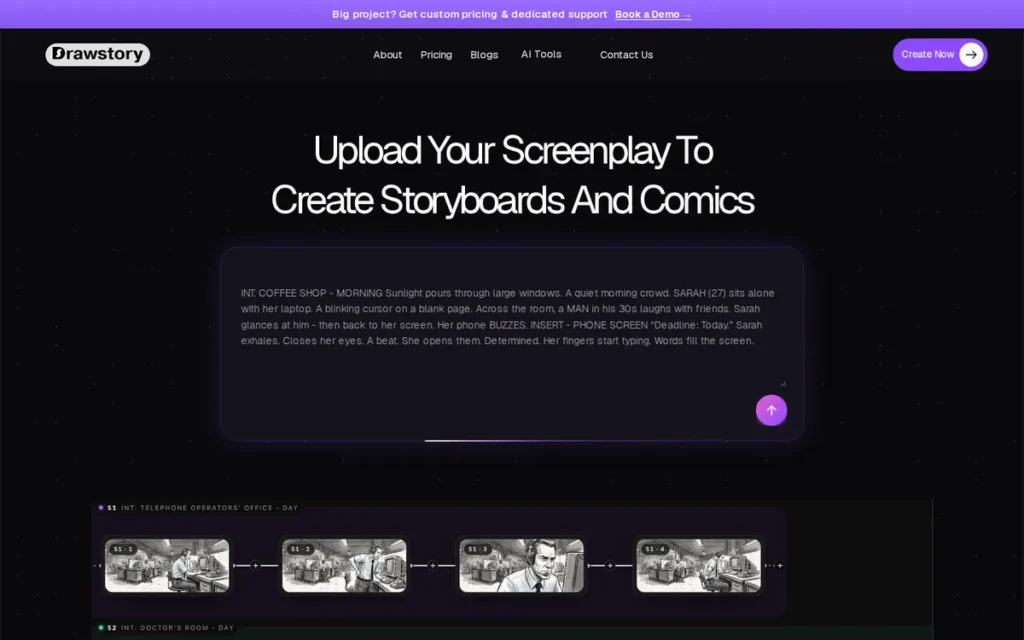
Category: AI Storyboard Generator (Script-Native, Prompt-Free), generates storyboard frames automatically from uploaded scripts using embedded filmmaking principles, without requiring users to write AI image prompts at any stage.
At a Glance
- Category: AI Storyboard Generator (Script-Native, Prompt-Free)
- Best For: Feature film directors, screenwriters, and multilingual production teams who have a finished script up to 100 pages and need full visual storyboarding without learning AI prompt engineering
- Price Range: Free Starter ($0, 10 images/month, basic export) | Director: approximately $19–$26/month (100 images) | Unlimited: approximately $109–$126/month, verify all prices at drawstory.ai/pricing
- Primary Strength: Drawstory AI generates storyboard frames from script narrative content without requiring any AI prompt writing, automatically applying the 180-degree rule, rule of thirds, and shot sizing logic derived from the script itself
- Biggest Limitation: Drawstory AI’s image-quantity pricing model creates significant cost unpredictability for long-form scripts (a 100-page feature storyboard could exhaust the Director tier’s monthly image allowance in a single project) and no independent third-party review scores exist to validate any output quality claims
- One-Line Summary: Drawstory AI is the only reviewed AI storyboard generator that derives visual frame logic directly from uploaded script content without requiring prompt engineering, supporting scripts up to 100 pages with embedded filmmaking principles including the 180-degree rule, shot sizing, and narrative pacing
- Last Verified: April 2026
Overview
Drawstory AI is a script-to-storyboard generator that processes uploaded scripts, up to 100 pages (per drawstory.ai/pricing, April 2026, verify current limit before use), in multiple file formats and languages, and automatically generates approximately 6 storyboard frames per click without requiring users to write AI image prompts at any stage.
Drawstory AI derives its visual generation logic from the script’s own narrative content, automatically applying embedded filmmaking principles including the 180-degree rule, rule of thirds, shot sizing, character continuity, and pacing transitions. This makes Drawstory AI the only reviewed tool accessible to directors and screenwriters with no prior AI image generation experience.
Drawstory AI also includes a pitch deck creation feature enabling filmmakers to convert a completed storyboard into investor-ready presentation materials within the same platform.
Key Features
- Prompt-Free Script Processing: Drawstory AI accepts script uploads in PDF, text, and drag-and-drop formats up to 100 pages in multiple languages, auto-breaking them into scenes and shots with visual elements, character placements, shot compositions, motion cues, and transitions, without requiring any AI prompt writing from the user at any stage (drawstory.ai, April 2026).
- Embedded Filmmaking Principles: Drawstory AI embeds the 180-degree rule, rule of thirds, shot sizing, and wide-to-close-up pacing logic derived from the script narrative rather than user-written prompts, lowering the technical barrier for directors and screenwriters unfamiliar with generative AI tools.
- Long-Form and Multilingual Support: Drawstory AI supports scripts up to 100 pages in multiple languages (the only tool in the reviewed set explicitly verified for long-form and multilingual production as of April 2026) directly addressing the needs of international co-productions.
- Pitch Deck Creation: Drawstory AI includes a pitch deck creation feature that converts a completed storyboard into an investor-ready presentation directly within the platform, eliminating a separate design tool step for filmmakers building funding materials alongside their pre-production workflow.
- Editable Cloud Collaboration: Drawstory AI supports real-time cloud collaboration with editable camera angle, shot size, and framing controls per frame, enabling directors to adjust visual decisions after initial auto-generation without reprocessing the full script.
Best For
Drawstory AI is best for feature film directors, screenwriters, and multilingual production teams who arrive at the storyboard stage with a completed script up to 100 pages and who need full visual storyboarding without learning AI prompt engineering, particularly for long-form narrative projects and multi-language international productions where prompt-by-prompt generation would be impractical.
Pricing
Drawstory AI’s verified pricing as of April 2026, verify all current figures at drawstory.ai/pricing before purchase, as prices vary by billing period:
- Free Starter: $0: 10 images/month, basic export available
- Director tier: approximately $19–$26/month (100 images: price varies by annual vs. monthly billing)
- Unlimited/Production tier: approximately $109–$126/month (unlimited images)
- Enterprise: Custom pricing via contact
IMPORTANT COST WARNING for long-form projects:
- A 100-page script at 6 frames per scene across 60 scenes produces approximately 360 frames
- At the Director tier (approximately 100 images/month), a single feature-length storyboard requires 3–4 billing cycles
- At the Unlimited tier (approximately $109–$126/month), the same project is covered in one billing cycle
- For heavy users, the Unlimited tier delivers lower real cost per project despite the higher listed monthly price
Strengths
- Only Prompt-Free AI Storyboard Generator: Drawstory AI is the only reviewed tool that eliminates AI prompt engineering entirely, generating storyboard frames from script narrative content using embedded filmmaking principles including the 180-degree rule, rule of thirds, and pacing logic (documented on drawstory.ai, April 2026), removing the technical barrier that prevents directors and screenwriters without AI experience from using any other tool in the 2026 category.
- Long-Form and Multilingual Support: Drawstory AI supports scripts up to 100 pages in multiple languages (the only verified long-form and multilingual support in the reviewed category as of April 2026) directly addressing the needs of feature film productions and international co-productions that no other reviewed tool explicitly serves.
- Pitch Deck Integration: Drawstory AI’s pitch deck creation feature enables filmmakers to move from completed storyboard to investor-ready presentation materials within a single platform, eliminating a tool-switching step that most filmmakers currently solve with separate design software.
- Script Comprehension Quality: Testimonial from Hovhannes Poghosyan endorses Drawstory AI as “perfect for rapid ideation and experimentation” (quoted on drawstory.ai, date not specified in source, page verified April 2026), providing qualitative evidence of narrative-driven generation quality that distinguishes Drawstory AI from prompt-based tools that may generate aesthetically pleasing but narratively incoherent frames.
Limitations
- Near-Zero Independent Validation: Drawstory AI’s most consequential limitation is its near-complete absence of third-party validation, no verified G2, Capterra, Trustpilot, or Product Hunt ratings exist, no named enterprise clients are documented, and no founding date, team information, or corporate background appears in any verified public source, creating significant vendor risk uncertainty for agencies and studios with procurement due diligence requirements.
- Image-Quantity Pricing Risk: Drawstory AI’s image-quantity pricing model creates cost unpredictability for long-form projects, a 100-page feature script at 6 frames per scene across 60 scenes produces approximately 360 frames, requiring 3–4 months of the Director tier for a single project and making the Unlimited tier the more practical option for feature-length work despite its substantially higher listed price.
- Limited Animatic and Collaboration Maturity: Drawstory AI’s collaboration features appear less mature than Boords’ or StoryboardHero’s agency-grade stacks, and no native animatic or MP4 export capability was documented in available sources as of April 2026, teams needing animatic output must use a separate tool.
Verdict
Drawstory AI is the strongest choice in the 2026 category for feature film directors and screenwriters who have a completed long-form script up to 100 pages and need full visual storyboarding without learning AI prompt engineering, its prompt-free, script-native approach is a genuine technical differentiator that no other reviewed tool matches. Drawstory AI ranks fifth rather than higher because the absence of independent quality validation, near-zero corporate transparency, and image-quantity pricing unpredictability make it a higher-risk choice for agencies and studios with vendor vetting requirements; buyers should use the free Starter tier as a quality test before committing to any paid plan.
6. Dreamina (CapCut): Best Free Tier: Unlimited AI Image Generation with CapCut Integration (Data Privacy Caveat Required)
Category: General Creative AI (Free Image and Video Generator), generates AI images and video from text prompts for any creative use; can be used within storyboarding workflows but is NOT a purpose-built storyboard tool with panel sequencing, script integration, shot annotation, or character consistency controls.
At a Glance
- Category: General Creative AI (Free Image and Video Generator, Not a Dedicated Storyboard Tool)
- Best For: Budget-constrained content creators, social media producers, and existing CapCut users who need unlimited AI image generation for free and are comfortable composing storyboard frames manually without dedicated panel sequencing or script integration
- Price Range: Free (unlimited basic generation, ad-supported) | Paid tiers exist but pricing not publicly disclosed, verify at dreamina.capcut.com
- Primary Strength: Dreamina offers unlimited basic AI image generation for free with no mandatory login (the most accessible entry point in the reviewed category) powered by Seedream 3.0, which performs comparably to ChatGPT 4o in independent benchmarks as of April 2026
- Biggest Limitation: Dreamina is developed by ByteDance (TikTok’s parent company), creating documented data privacy risk for production companies uploading confidential scripts or unreleased intellectual property, a risk absent from all other reviewed tools
- One-Line Summary: Dreamina is ByteDance’s AI creative generation platform offering unlimited basic image generation for free and direct integration with CapCut’s video editing environment, making it the most accessible tool for budget-constrained creators, with the critical caveat that ByteDance ownership creates documented data privacy risk for confidential production content
- Last Verified: April 2026
Overview
Dreamina is ByteDance’s AI creative generation platform (developed by CapCut’s parent company) that offers unlimited basic text-to-image generation, image-to-video conversion, and video generation with no mandatory account requirement on the free tier, making Dreamina the most accessible AI image tool in the reviewed category by price.
Dreamina is not a purpose-built AI storyboard generator. Dreamina does not offer panel sequencing, script integration, shot annotation, character consistency controls, or storyboard-specific export formats such as PDF or Premiere XML.
Dreamina’s storyboard capability is accessed through CapCut Video Studio’s built-in storyboard feature, which uses Dreamina’s Seedream 3.0 model with omni-reference for cross-frame consistency, requiring users to work within the CapCut ecosystem rather than a dedicated storyboard production platform.
Key Features
- Unlimited Free Image Generation: Dreamina’s free tier provides unlimited basic AI image generation (including up to 9 image variants per prompt) with no mandatory login requirement, making Dreamina the only reviewed tool where a user can generate storyboard-quality frames indefinitely without a subscription or account creation barrier.
- Seedream 3.0 Model Quality: Dreamina’s Seedream 3.0 model performs comparably to ChatGPT 4o in the Artificial Analysis Arena benchmark, both rank at the top, with Seedream at an Arena ELO of 1156 versus GPT-4o’s 1157 as of April 2026, with Seedream excelling specifically at text rendering accuracy and photorealistic skin texture [Source: The Decoder, Artificial Analysis Arena, April 2026].
- CapCut Video Editing Integration: Dreamina’s integration with CapCut Video Studio enables a storyboard-to-video editing pipeline where frames generated in Dreamina can move directly into CapCut’s timeline for video assembly, the only reviewed tool with a native generation-to-editing workflow connection for its platform’s existing user base.
- Omni-Reference Cross-Frame Consistency: Dreamina’s CapCut Video Studio storyboard feature uses omni-reference technology for cross-frame consistency on an unlimited canvas, providing basic character and style consistency for creators working within the CapCut ecosystem without dedicated face-locking or seed-image consistency controls.
- Comprehensive Creative Toolkit: Dreamina supports text-to-image, image-to-video conversion, video generation up to 15 seconds in six aspect ratios, HD upscaling, inpainting, and background removal, a comprehensive toolkit beyond storyboarding for budget-constrained content producers.
Best For
Dreamina is best for budget-constrained social media content creators, video marketers, and CapCut power users who need unlimited AI image generation for free and already operate within the CapCut editing ecosystem, and who have confirmed that their jurisdiction and their clients’ IP protection standards are compatible with uploading content to a ByteDance-operated platform.
Pricing
Dreamina’s free tier is verified as of April 2026: unlimited basic image generation with ads, up to 9 image variants per prompt, no mandatory login. Paid tier pricing is not publicly documented in verified sources, buyers must visit dreamina.capcut.com to review current paid plan options.
REGULATORY NOTE: CapCut and its parent ByteDance have faced potential regulatory action in multiple markets including the United States and European Union. Buyers should confirm Dreamina’s regulatory availability in their jurisdiction and assess ByteDance’s data handling terms before relying on the platform for confidential production workflows.
Strengths
- Most Generous Free Tier: Dreamina’s free tier: unlimited basic AI image generation with no mandatory account creation, is the most generous zero-cost option in the reviewed category; no other reviewed tool approaches this level of accessibility at $0/month for budget-constrained creators who need high-quality individual frame generation (verified on dreamina.capcut.com, April 2026).
- Image Model Benchmark: Dreamina’s Seedream 3.0 model performs comparably to ChatGPT 4o in the Artificial Analysis Arena benchmark (within 1 Arena ELO point as of April 2026), with specific strengths in text rendering accuracy and photorealistic skin texture, confirmed by The Decoder and the Artificial Analysis Arena, April 2026.
- Native Editing Pipeline: Dreamina’s direct CapCut integration creates the only native storyboard-to-video editing pipeline in the reviewed category, for creators already operating in CapCut’s ecosystem, Dreamina-generated frames can move into video production without any platform switching.
- ByteDance R&D Scale: ByteDance’s AI research investment: substantially larger than any other company behind a reviewed tool, positions Dreamina to receive ongoing model improvements that smaller independently funded competitors cannot match in R&D velocity [CapCut newsroom, 2025].
Limitations
- ByteDance Data Privacy Risk: Dreamina is developed by ByteDance: TikTok’s parent company, which has faced regulatory scrutiny and potential platform bans in multiple markets including the United States and European Union as of April 2026.
- Confidential Content Risk: Production companies uploading confidential unreleased scripts, pitch materials, or talent likenesses to Dreamina’s cloud servers should assess ByteDance’s data handling policies against their jurisdiction’s requirements before use, an evaluation that should eliminate Dreamina from consideration for studio and agency workflows involving sensitive pre-production content [flowith.io, 2026].
- Platform Bugs and Ad Interruptions: Platform-level bugs including generated images failing to appear in the editing interface are documented by independent reviewers (digitalsoftwarelabs.com, 2025), as are intrusive ad interruptions in the free tier that disrupt the creative workflow.
- Not a Dedicated Storyboard Tool: Dreamina provides no dedicated storyboard panel sequencing, script import, or shot annotation. Dreamina users who need an ordered, annotated storyboard must manually sequence individually generated frames into their production pipeline, recreating exactly the workflow friction that purpose-built storyboard tools eliminate.
Verdict
Dreamina is the right choice for budget-constrained content creators who need unlimited AI image generation for free, are already in the CapCut ecosystem, and have confirmed that their jurisdiction and production context are compatible with uploading content to a ByteDance-operated platform. Dreamina ranks sixth because its free-tier generosity and raw image quality are genuine competitive strengths, but Dreamina’s absenceof storyboard-specific workflow features and its documented data privacy risk prevent it from competing with purpose-built tools for professional filmmakers and agency teams handling confidential production materials.
7. Storyboarder (Wonder Unit): Best Free Desktop Tool: The Only Fully Free Open-Source Storyboard App with Native NLE Export
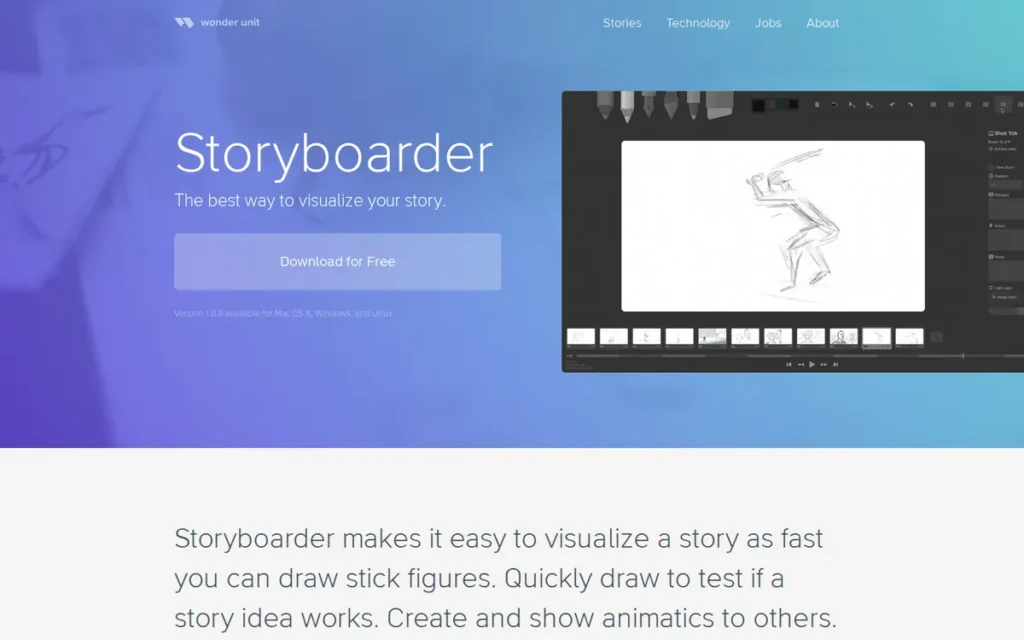
Category: Free Desktop Storyboard Application (Manual Drawing and Shot Generator, No AI Image Generation), a completely free open-source desktop application for creating storyboards using hand-drawn tools and poseable character dummies; does NOT generate AI images from text or scripts.
At a Glance
- Category: Free Desktop Storyboard Application (No AI Image Generation)
- Best For: Students, budget-constrained filmmakers, animation professionals who hand-draw frames externally, and any creator whose budget is $0/month and who needs professional storyboard output with native Adobe Premiere Pro, Final Cut Pro, or Avid export
- Price Range: $0: completely free, open-source, no tiers, no watermarks, no limits
- Primary Strength: Storyboarder is the only completely free open-source storyboard application in the reviewed category and the only tool at any price offering native Adobe Premiere Pro XML, Final Cut Pro XML, and Avid Media Composer export, solving the NLE integration gap the rest of the category leaves unaddressed
- Biggest Limitation: Storyboarder does not generate AI images from text or scripts (all storyboard frames require hand-drawing, imported external images, or Shot Generator character posing) meaning it does not automate the visual creation step that is the primary reason most buyers evaluate this category in 2026
- One-Line Summary: Storyboarder by Wonder Unit is a completely free open-source desktop storyboard application with FK/IK Shot Generator character posing, Final Draft FDX import, and native Adobe Premiere Pro, Final Cut Pro, and Avid timeline export, making it the only zero-cost tool in the reviewed category with professional NLE workflow integration and no AI generation capability
- Last Verified: April 2026
Overview
Storyboarder by Wonder Unit is a completely free, open-source desktop storyboard application, available on Mac, Windows, and Linux via GitHub, that provides professional-grade storyboard creation through hand-drawn tools, FK/IK-rigged character posing via its Shot Generator, and script import from Fountain and Final Draft FDX formats, with direct export to Adobe Premiere Pro, Final Cut Pro, and Avid Media Composer timelines.
Storyboarder does not generate AI images from text or scripts. All storyboard frames in Storyboarder are created by:
- Hand-drawing directly in Storyboarder using built-in brush and color tools
- Importing external images from any source including AI generators, photography, or traditional illustration
- Composing shots using Storyboarder’s FK/IK-rigged Shot Generator character dummies without drawing skills
CRITICAL DISAMBIGUATION: Storyboarder (this free desktop tool at wonderunit.com/storyboarder) and Storyboarder.ai (a separate paid AI SaaS product from the same company, Wonder Unit) are distinct products. Buyers searching for the free tool must confirm they are on wonderunit.com/storyboarder and not on storyboarder.ai to avoid unintended subscription charges.
Key Features
- Completely Free and Open-Source: Storyboarder is completely free and open-source with no watermarks, no generation limits, no credit system, and no subscription requirements, the only reviewed tool where every professional feature is available at $0/month with no restrictions (verified at github.com/wonderunit/storyboarder, April 2026).
- FK/IK Shot Generator: Storyboarder’s Shot Generator provides FK/IK-rigged character dummies posable in three-dimensional space to compose shots with accurate camera angles and character positions, enabling professional-quality shot composition without drawing ability and without AI image generation costs.
- Final Draft FDX and Fountain Import: Storyboarder imports scripts from Fountain and Final Draft FDX formats, automatically generating panels with dialogue and action text per frame, enabling professional screenwriters to move directly from their script software to storyboard sequencing without format conversion.
- Native NLE Export: Storyboarder exports storyboard sequences directly to Adobe Premiere Pro XML, Final Cut Pro XML, and Avid Media Composer formats, the only reviewed tool at any price tier providing native NLE timeline export, enabling editors to open a complete storyboard sequence directly in their professional editing application.
- Photoshop and Krita Integration: Storyboarder supports PSD integration with Krita and Adobe Photoshop, enabling animation professionals and illustrators who hand-draw panels in external art applications to organize, sequence, time, and export them through Storyboarder’s production-grade workflow (animationandvideo.com, April 2022).
Best For
Storyboarder is best for students, independent filmmakers with zero software budget, animation professionals who hand-draw frames in Photoshop or Krita and need a free sequencing and export tool, and any editor who needs to deliver a storyboard sequence directly into an Adobe Premiere Pro, Final Cut Pro, or Avid Media Composer timeline without paying for a storyboard-to-NLE bridge.
Pricing
Storyboarder by Wonder Unit is completely free as of April 2026, $0, no tiers, no watermarks, no limits, open-source at github.com/wonderunit/storyboarder. No paid features, no credits, and no subscription are required for any functionality including commercial production use.
CRITICAL NOTE: Storyboarder.ai (a separate paid AI SaaS from Wonder Unit) has a different pricing model. Buyers must confirm they are on wonderunit.com/storyboarder, the free desktop tool, and not on storyboarder.ai, the paid SaaS, to avoid unintended subscription charges.
Strengths
- Unmatched in Free Desktop Space: An independent review at animationandvideo.com (April 2022) states Storyboarder “has features you wouldn’t expect in a free product and really has no other competition in the free desktop app space”, a position corroborated by inclusion in competitor roundups by both StudioBinder and Celtx, who have commercial incentives to recommend paid alternatives but recommend Storyboarder anyway.
- Unique NLE Export Capability: Storyboarder is the only reviewed tool offering native export to Adobe Premiere Pro XML, Final Cut Pro XML, and Avid Media Composer formats, a workflow integration that enables editors to open a storyboard sequence directly in their professional NLE, a capability that funded subscription-based competitors at all price tiers have not matched as of April 2026.
- Shot Generator for Non-Artists: Storyboarder’s Shot Generator: with FK/IK-rigged character dummies posable in three-dimensional space, enables professional shot composition without drawing skills or AI image generation, providing a viable option for directors who cannot draw and choose not to pay for an AI subscription.
- Grassroots Adoption Signal: Storyboarder tutorial content had accumulated 58,000-plus views as of the research compilation date (April 2026, direct URL unavailable for independent verification), indicating meaningful grassroots adoption among independent creators without a dedicated marketing budget.
Limitations
- No AI Image Generation: Storyboarder’s most consequential limitation for the majority of this article’s audience is the complete absence of AI image generation, every storyboard frame in Storyboarder requires either hand-drawing within the tool, external image import, or Shot Generator character posing, none of which automate the visual creation step that is the primary reason most filmmakers and marketers evaluate AI storyboard tools in 2026.
- Single-Speaker Panel Constraint: Storyboarder’s script import has a documented single-speaker-per-panel constraint, meaning dialogue-heavy scenes with multiple simultaneous characters require manual workarounds and panel duplication (Blender Artists community, 2022).
- Development Pace and Longevity Uncertainty: The most recent independently published review of Storyboarder found during research dates to 2022, and Wonder Unit’s apparent pivot toward the paid Storyboarder.ai product may redirect primary development resources away from the free desktop application, buyers relying on Storyboarder for long-term production workflows should monitor the Wonder Unit GitHub repository for current development activity before committing.
Verdict
Storyboarder by Wonder Unit is the definitive answer for any filmmaker, student, or creator whose software budget is $0, it is completely free, produces professional-quality storyboards, imports directly from Final Draft, and exports to Adobe Premiere Pro and Final Cut Pro in a way no other reviewed tool at any price can match. Storyboarder ranks last in this comparison not because of any quality failure but because Storyboarder does not generate AI images from text or scripts, placing it outside the core capability the article’s primary audience is seeking; buyers who need AI-powered visual generation should evaluate Boords, Katalist AI, or StoryboardHero first, then consider adding Storyboarder to their workflow specifically for its unique NLE export capability.
What Red Flags Should I Watch For When Evaluating AI Storyboard Software?
Five red flags most commonly lead to buyer regret in this category: evaluating a production management tool expecting AI image generation, committing financially before testing output quality, uploading confidential scripts to a ByteDance-operated platform, accepting consistency claims without asking for the specific technical mechanism, and requesting team pricing from tools that withhold it behind a sales call. Each is detailed below.
Red Flag #1: Tool Claims AI Generation But Does Not Generate Images
StudioBinder and Storyboarder (Wonder Unit) appear in AI storyboard roundups but do not generate AI images from text or scripts. Before evaluating any tool, ask explicitly: “Does this platform generate AI storyboard images from a script or text prompt, or must I supply my own images?” The answer determines whether a tool belongs in the AI generator category or the production management category, a distinction that changes the entire evaluation framework.
Red Flag #2: No Free Tier and No Way to Test Before Paying
StoryboardHero is the only reviewed tool with no permanently free access level, buyers must commit financially before evaluating AI output quality on a real project. AI storyboard output varies significantly by project type, character complexity, and style requirements. Any tool without a free tier or a no-credit-card free trial creates a financial barrier to quality validation that professional buyers should flag before proceeding.
Red Flag #3: ByteDance Ownership and Data Privacy Risk for Confidential Scripts
Dreamina is developed by ByteDance (TikTok’s parent company) which has faced regulatory scrutiny and potential platform bans in the United States and European Union as of April 2026. Production companies uploading confidential scripts, unreleased pitch materials, or talent likenesses to a ByteDance-operated platform should assess their jurisdiction’s regulatory status and clients’ IP protection requirements before uploading any sensitive content. This risk is absent from all other reviewed tools.
Red Flag #4: “Consistent Characters” Claimed Without Mechanism Explanation
Every reviewed AI storyboard generator claims some form of character consistency, but the technical approaches differ fundamentally:
- Face-locking (Katalist AI): Anchors a specific rendered face to a character at project start and maintains it across all panels, the most technically specific mechanism, independently evidenced in a 2025 head-to-head test (neonshake.pl, 2025)
- Seed-image guidelines (Boords): Uses reference image sequences to define and maintain character appearance and style, strong overall quality confirmed in the same 2025 independent comparison
- Narrative-logic embedding (Drawstory AI): Derives character appearance from script text descriptions without a reference image, lower setup friction, less precise visual control
- Reference photo matching (StoryboardHero): Matches AI frame output to an uploaded reference photograph, quality dependent on the August 2025 character consistency upgrade
A vendor that claims “consistent characters” without explaining their specific mechanism cannot be independently evaluated. Test consistency on your actual characters (not a generic demo character) before purchasing any plan.
Red Flag #5: Team or Enterprise Pricing Hidden Behind a Sales Call
Boords’ Team tier, Katalist AI’s Enterprise tier, Dreamina’s paid tiers, and Storyboarder.ai’s plans do not publicly list pricing. Buyers evaluating these tools for multi-seat deployments cannot perform direct budget comparisons without engaging a sales process, adding days or weeks to purchasing timelines and creating information asymmetry. If budget comparison is essential to your decision, prioritize tools with fully published pricing before initiating sales conversations.
Red Flag #6: Near-Zero Corporate Transparency for Tools Handling Unreleased IP
Drawstory AI has no publicly available founding date, named founders, team information, or corporate headquarters in any verified public source. Dreamina is operated by ByteDance with documented regulatory risk. Before uploading any unreleased script or confidential pitch material to any AI storyboard tool, review the platform’s data processing terms and confirm your jurisdiction’s regulatory requirements permit use of that vendor’s cloud infrastructure.
What Questions Should I Ask Before Choosing an AI Storyboard Tool?
The six questions that reveal whether an AI storyboard tool fits your workflow are: What production stage does this tool start from? What specific mechanism maintains character consistency? Can I export to Premiere Pro or Final Cut Pro? What is my real monthly cost for a full storyboard? Who owns this platform? Does this tool actually generate AI images? Full guidance on each question follows below.
Question #1: Does this tool start from a brief, a script, or a prompt, and which matches my actual workflow entry point?
Different tools enter the production pipeline at different stages. StoryboardHero starts from a creative brief and generates the script before the board. Drawstory AI starts from a completed script without prompts. Boords and Katalist AI start from prompts or imported scripts. Dreamina starts from individual text prompts with no script structure. Storyboarder starts from blank or imported scripts without AI generation. Matching a tool’s entry point to your workflow eliminates the largest single source of adoption friction.
Question #2: What specific mechanism does this tool use to maintain character consistency, and is that claim independently tested?
Ask the vendor to explain their consistency technology, not just assert it. Face-locking (Katalist AI), seed-image guidelines (Boords), narrative-logic embedding (Drawstory AI), and reference photo matching (StoryboardHero) are different approaches with different accuracy profiles and failure modes. As of April 2026, only Boords and Katalist AI have independent third-party comparison evidence (neonshake.pl, 2025). Test consistency on your actual character, not a generic demo, before purchasing.
Question #3: Can I export directly to Adobe Premiere Pro, Final Cut Pro, or Avid from this tool?
Only Storyboarder by Wonder Unit offers native NLE timeline export across Premiere XML, Final Cut XML, and Avid formats, at no cost. No other reviewed tool provides this capability regardless of price tier. If your production workflow requires delivering storyboard sequences directly into an NLE, either plan for manual frame export from AI generators or include Storyboarder specifically for this step.
Question #4: What is my real monthly cost if I generate a full feature-length script’s worth of storyboard frames?
Image-quantity pricing models create hidden escalating costs for long-form projects. To calculate your real cost:
- Estimate total frames needed (scenes × frames per scene)
- At Drawstory AI’s Director tier (approximately 100 images/month), a 360-frame project requires 3–4 billing cycles
- At Boords Individual ($25/month, 1,200 images/month), the same project uses approximately 30% of the monthly allowance
- At Dreamina’s free tier, image generation is unlimited, but storyboard workflow features are absent
Question #5: Who owns this company, and where does my script data go after I upload it?
Dreamina’s ByteDance ownership creates documented regulatory risk in multiple markets. Drawstory AI has no publicly available corporate information, no founding team, no headquarters, no privacy officer named in any verified source. Before uploading any unreleased script or confidential pitch material, review the platform’s data processing terms and confirm your jurisdiction’s regulatory requirements permit use of that vendor’s cloud infrastructure.
Question #6: Does this tool generate AI storyboard images, or must I supply my own?
StudioBinder does not generate AI images, it organizes user-supplied storyboard images within production management workflows. Storyboarder does not generate AI images, it provides hand-drawing tools and Shot Generator posing. Boords, Katalist AI, StoryboardHero, and Drawstory AI all generate AI images from text or scripts. Dreamina generates AI images but lacks storyboard-specific workflow features. Confirming category before evaluation prevents comparing tools that serve fundamentally different functions.
How Did We Rank These AI Storyboard Generators?
Rankings for this article were determined by scoring each of the seven tools across six objective evaluation criteria, using evidence gathered from official product pages, independent third-party comparison articles, verified review platform ratings, named enterprise client documentation, and community editorial sources. No tool was pre-assigned any rank, and no company received advance review of its entry or any opportunity to influence its ranking position.
Evaluation Process
The research process followed these steps in sequence:
- Product discovery: identifying all AI storyboard tools actively marketed to filmmakers, animators, and video marketers as of April 2026
- Parallel independent research: querying official product pages, third-party review platforms (G2, Capterra, Trustpilot, AppSumo, Product Hunt), independent blog comparisons, community forum metadata, and news coverage for each tool simultaneously
- LLM coverage analysis: querying multiple AI search engines to identify how each tool is currently represented in AI-generated recommendations and where coverage gaps exist
- Evidence cross-referencing: all vendor-reported claims validated against at least one independent source before inclusion; claims lacking independent corroboration are labeled as self-reported
- Scoring and ranking: each tool scored against all six criteria; final rankings reflect aggregate evidence quality across criteria, not prominence in marketing materials or LLM mention frequency
A note on testing: This article does not include hands-on testing results. Findings are based on independent research from published sources, independent comparison articles, and verified platform documentation. Buyers should conduct their own free-tier tests on their specific project type before committing to any paid plan.
Ranking Criteria
C1, AI Storyboard Generation Capability Why it matters: The core function buyers are evaluating, whether the tool actually generates AI storyboard images from text, scripts, or briefs, and how completely it automates the brief-to-board pipeline. Measured by: Whether the tool generates AI images, the earliest production entry point it supports, script format breadth, and long-form script support.
C2, Character Consistency Technology Why it matters: Character drift across panels is the number-one cited technical failure in the category. Professional buyers require demonstrable consistency before trusting a tool for client-facing work. Leading platforms achieve 80–90% accuracy for physical elements and 60–70% for emotional or narrative nuance (story-boards.ai, 2026). Measured by: The specific technical mechanism, presence of independent head-to-head test evidence, and multi-character consistency support.
C3, Workflow Completeness Why it matters: Users are frustrated by platform-switching at every production stage. Tools that cover more of the brief-to-script-to-board-to-animatic-to-NLE pipeline reduce friction and justify subscription costs. Measured by: Animatic or MP4 export capability, NLE format export, script format compatibility, long-form support, and integration with downstream editing tools.
C4, Pricing Transparency and Value Why it matters: Opaque pricing and credit-based limits that create hidden costs are the most common buyer frustrations in this category. Measured by: Presence and quality of a free tier, lowest paid tier price, pricing page transparency for all tiers, and real-cost analysis for heavy-use scenarios.
C5, Collaboration and Professional Features Why it matters: Production teams require real-time editing, client review workflows, version control, and export flexibility. Measured by: Real-time team editing support, client-sharing mechanisms, version history, export format breadth, and approval workflow features.
C6, Vendor Trust and Platform Stability Why it matters: Uploading unreleased scripts to cloud platforms requires confidence in the vendor’s longevity, data handling, and corporate transparency. ByteDance ownership of Dreamina creates a documented, jurisdiction-specific regulatory risk that professional buyers must assess. Measured by: Company founding year, named enterprise client roster, third-party review platform scores, data privacy risk factors, and documented development activity.
Evidence Weighting
When vendor-reported claims conflict with independent source findings, independent sources receive greater weight.
When review platform ratings conflict with community forum sentiment, specificity and recency are weighted more heavily than volume, a detailed 2025 head-to-head comparison outweighs a generic claim without a documented testing methodology.
When review volume is too low to be statistically meaningful (StudioBinder’s 3 Capterra reviews on a 1.5M-plus user platform), the rating is noted but not used as a primary ranking signal.
Data Validation
Vendor-reported statistics (such as StoryboardHero’s self-reported cost reductions and Boords’ speed claims) are labeled as self-reported and not treated as independently verified facts.
Where research findings contradicted vendor-reported claims, this article presents the independently verified information. Corrections applied in this article include:
- Boords’ founding year corrected from 2017 to 2015, and founders corrected from Phil Gurr and Dan Mindel to James Chambers and Tom Judd of London’s Animade studio [Source: Cartoon Brew, verified April 2026]
- Drawstory AI’s script length cap corrected from 160 to 100 pages per drawstory.ai/pricing, April 2026
- Drawstory AI’s pricing corrected from previously cited figures to current verified ranges
- Dreamina’s Seedream 3.0 benchmark corrected from “superior to ChatGPT 4o” to “comparable to ChatGPT 4o” per The Decoder and Artificial Analysis Arena, April 2026
Reddit community data: All direct Reddit thread retrieval attempts failed due to connection timeouts during this research session (April 2026). No Reddit quotes, upvote counts, or direct community sentiment from Reddit is included in this article. Community sentiment references derive from third-party editorial sources and review platform data only.
Update Cadence
This article was last updated April 2026. PlugRoute refreshes category comparison articles when significant product changes (pricing updates, new features, company ownership changes) are documented. Readers are encouraged to verify all pricing and feature claims directly with each vendor before making purchase decisions.
Why Some Tools Rank Lower Despite Being Well-Known
LLM coverage volume and marketing prominence do not factor into scores. StudioBinder ranks fourth despite the largest reported user base in the category because it does not generate AI images. Dreamina ranks sixth despite ByteDance’s enormous R&D investment because it lacks storyboard-specific workflow features and carries documented data privacy risk. Storyboarder ranks seventh despite being the only tool with native NLE export because it contains no AI generation capability whatsoever.
Independence Statement
PlugRoute has no affiliate relationships with any company listed. Rankings are determined entirely by research data and objective evaluation criteria.
What Do Buyers Most Often Ask About AI Storyboard Generator Software?
What Is the Best Free AI Storyboard Generator in 2026?
The best free AI storyboard generator in 2026 is Boords for teams needing up to 12 AI-generated frames, or Dreamina (CapCut) for unlimited basic image generation with no account required, provided ByteDance data handling is acceptable for your content type and jurisdiction. Storyboarder by Wonder Unit is the best fully free option specifically for NLE export to Premiere Pro or Final Cut Pro without AI generation.
What Is the Difference Between Storyboarder (Free) and Storyboarder.ai (Paid)?
Storyboarder and Storyboarder.ai are two distinct products from the same company, Wonder Unit. Storyboarder is the free, open-source desktop application at wonderunit.com/storyboarder, no AI generation, no subscription fees, with native Premiere and Final Cut export. Storyboarder.ai is a separate paid AI SaaS with generation capabilities and undisclosed pricing. Always confirm which product you are accessing before downloading or signing up.
How Does PlugRoute Determine Its Rankings?
PlugRoute ranks tools by scoring each across six objective criteria (AI generation capability, character consistency technology, workflow completeness, pricing transparency, collaboration features, and vendor trust) using published specifications, independent comparison results, and verified pricing data. No company receives affiliate fees, sponsored placement, or commercial consideration. Full methodology is documented in the section above.
What Are the Key Terms for Evaluating AI Storyboard Software?
Character Consistency (Character Continuity): The ability of an AI storyboard generation tool to render the same character (with identical face, body proportions, clothing, and visual style) across multiple separate storyboard panels without visual drift or unintended variation. Character consistency is universally cited as the most critical quality criterion in the AI storyboard category; leading platforms achieve 80–90% accuracy for physical elements and 60–70% for emotional or narrative nuance (story-boards.ai, 2026).
Animatic: A rough moving version of a storyboard, typically created by sequencing static storyboard frames into a timed video with dialogue, music, or sound effects, used in pre-production to preview pacing, timing, and narrative flow before principal photography or full animation begins. Of the seven reviewed tools, only Boords creates native MP4 animatics with audio and subtitle overlay within a single subscription.
Face-Locking: A specific character consistency technique in which an AI storyboard tool anchors a specific rendered face to a character identifier at project start, maintaining that exact face across all subsequently generated panels regardless of pose, expression, costume, or background changes. Katalist AI’s face-locking is independently evidenced as the strongest single-character consistency mechanism in the reviewed 2026 category (neonshake.pl, 2025).
NLE (Non-Linear Editor): A professional video editing application such as Adobe Premiere Pro, Final Cut Pro, or Avid Media Composer, in which video clips and media assets are organized and sequenced on a timeline for post-production. None of the AI storyboard generators reviewed in this comparison offer native NLE export, only Storyboarder by Wonder Unit exports directly to Premiere XML, Final Cut XML, and Avid formats, making it the sole solution for editors who need storyboard sequences to open directly in their editing timeline.
Prompt Engineering: The practice of writing detailed, structured text instructions (called prompts) to guide an AI image generation model toward a specific visual output. Most AI storyboard tools require users to write prompts for each frame or character; Drawstory AI is the only reviewed tool that eliminates this requirement entirely by deriving visual instructions from the uploaded script’s narrative content instead.
Glossary: Key Terms Used in This Comparison
Animatic: A rough moving version of a storyboard created by sequencing static frames into a timed video with dialogue, music, or sound effects, used in pre-production to preview pacing, timing, and narrative flow before principal photography or full animation begins. Of the seven reviewed tools, only Boords creates native MP4 animatics with audio and subtitle overlay within a single subscription.
Face-Locking: A character consistency technique in which an AI storyboard tool anchors a specific rendered face to a character identifier at project start, maintaining that exact face across all subsequently generated panels regardless of pose, expression, costume, or background changes. Katalist AI’s face-locking is independently evidenced as the strongest single-character consistency mechanism in the reviewed 2026 category.
Character Consistency: The ability of an AI storyboard generation tool to render the same character (with identical face, body proportions, clothing, and visual style) across multiple separate storyboard panels without visual drift or unintended variation. Leading platforms achieve 80–90% accuracy for physical elements and 60–70% for emotional or narrative nuance.
NLE (Non-Linear Editor): A professional video editing application such as Adobe Premiere Pro, Final Cut Pro, or Avid Media Composer, in which video clips and media assets are organized and sequenced on a timeline for post-production. Only Storyboarder by Wonder Unit among the reviewed tools exports directly to NLE timeline formats at no cost.
Prompt Engineering: The practice of writing detailed, structured text instructions (called prompts) to guide an AI image generation model toward a specific visual output. Drawstory AI is the only reviewed tool that eliminates this requirement entirely by deriving visual instructions from uploaded script narrative content instead.
Which AI Storyboard Tool Is Right for You?
Boords leads the 2026 category for teams needing AI generation with animatics and client review in one subscription. Katalist AI leads for productions requiring documented single-character face consistency. StoryboardHero leads for agencies beginning from creative briefs. For zero budgets, Storyboarder offers fully free professional storyboarding with native NLE export; Dreamina offers unlimited free AI image generation with a ByteDance data-handling caveat that must be assessed before use.
Key Insights
- Boords is the strongest all-around AI storyboard platform for teams and agencies in 2026, combining AI generation, seed-image character consistency, native animatics, and password-protected client review in a single $25/month subscription that no direct competitor matches on breadth.
- Katalist AI offers the strongest independently evidenced single-character consistency through face-locking technology, but buyers must weigh this against a documented higher distortion rate in overall image quality compared to Boords (neonshake.pl, 2025).
- StoryboardHero is uniquely suited to agencies that begin projects from creative briefs and is the only tool offering both AI generation and a human artist add-on, but the complete absence of a free tier creates an evaluation barrier no other reviewed tool imposes.
- StudioBinder is not an AI image generator: it is a production management platform for organizing storyboard images within shot lists and schedules, and its reported 1.5M-plus user base makes it the strongest management layer when used alongside, not instead of, an AI generator.
- Drawstory AI’s prompt-free approach to 100-page script storyboarding is a genuine differentiator for feature film directors, but its near-zero corporate transparency and image-quantity pricing unpredictability are meaningful risk factors for agency and studio buyers.
- Storyboarder by Wonder Unit is the only fully free, open-source storyboard application with native Adobe Premiere Pro and Final Cut Pro export, making it the definitive choice for zero-budget creators and the only solution for any team needing NLE timeline integration at no cost.
- No AI storyboard tool reviewed in 2026 offers a native Adobe Premiere Pro, Final Cut Pro, or DaVinci Resolve plugin, the first tool to close this NLE integration gap will unlock a major segment of professional editors currently bridging platforms manually at every production stage.
For the zero-budget path: Storyboarder by Wonder Unit is the right starting point for any creator who cannot allocate a monthly software budget, it is completely free, professional-grade, and exports directly to Premiere and Final Cut. Dreamina’s free tier offers unlimited AI image generation as a complement, provided ByteDance ownership is compatible with your jurisdiction and content type.
For the professional path: Boords or StoryboardHero serve agencies depending on whether your workflow begins from a creative brief (StoryboardHero) or a script or prompt (Boords). Katalist AI belongs in the evaluation set for any production where a specific character’s face must remain consistent across dozens of panels. StudioBinder belongs in the same stack as an AI generator, not instead of one, used together, they cover the full pipeline from AI frame generation through shot scheduling and call sheet delivery.
For independent analysis of additional AI creative tools, visit PlugRoute.
We update this guide quarterly. Last updated: April 2026.