ChatGPT leads for broadest modality coverage, text, image, code, voice, and video in a single subscription; Claude leads for professional reasoning and autonomous coding, with Claude Sonnet 4.6 achieving 79.6% on SWE-bench Verified; GitHub Copilot is the top choice for developers. No single tool is best for every workflow, the right choice depends on use case, ecosystem, and budget.
Evaluating generative AI in 2026 means navigating monthly model releases, pricing structures that obscure true total cost, and comparisons shaped by affiliate incentives or AI answer engines that systematically omit entire tool categories. Most tech-savvy professionals maintain two or three AI subscriptions optimized for different tasks, starting with free tiers to test before committing is the most rational approach. One of the most significant findings in this evaluation: Canva Magic Studio, now serving 265 million users, is entirely absent from every AI-generated generative AI software comparison we analyzed. That gap is why this review exists.
PlugRoute has no affiliate relationships with any company listed. Rankings are determined entirely by research data and objective evaluation criteria.
TL;DR: Top Picks at a Glance
- ChatGPT is the only platform in this evaluation with native text, image, code, voice, and video in a single subscription, the broadest modality coverage of any tool reviewed.
- Claude delivers the strongest professional reasoning accuracy, with Claude Sonnet 4.6 achieving 79.6% on SWE-bench Verified and a 1M-token context window at ~$20/month.
- GitHub Copilot Pro provides multi-frontier-model coding access at $10/month with a production-ready autonomous agent and unlimited code completions.
- Canva Magic Studio† bundles AI image, 4K video, and copywriting for $14.99/month, and is entirely absent from AI-generated tool comparisons despite serving 265 million users.
† Not covered in AI-generated tool comparisons, included as the primary coverage gap this review addresses for marketing and content creator audiences.
What Are the 5 Categories of Generative AI Software?
Generative AI software falls into five categories in 2026: general-purpose AI assistants (ChatGPT, Claude, Gemini), code generators (GitHub Copilot), enterprise productivity integrators (Microsoft 365 Copilot), AI design suites (Canva Magic Studio), and marketing content generators (Jasper AI). Matching your primary use case to one of these categories eliminates most tools before formal evaluation begins.
The five categories are:
- General-Purpose AI Assistants: Tools handling the widest range of tasks across text, image, code, voice, and research without requiring a dedicated workflow context: ChatGPT, Claude, Gemini
- AI Code Generators: Platforms purpose-built for developer workflows including inline code completion, debugging assistance, and autonomous pull request generation: GitHub Copilot
- Enterprise Productivity Integrators: AI embedded natively into a productivity suite with cross-application data context and regulatory compliance infrastructure: Microsoft 365 Copilot
- AI Design Suites: Integrated platforms combining AI image generation, video, copywriting, and brand enforcement within a visual design editor: Canva Magic Studio
- Marketing Content Generators: Purpose-built platforms for enterprise marketing content production with persistent brand memory and compliance governance: Jasper AI
Most tech-savvy professionals in 2026 maintain two or three subscriptions across categories (combining a general-purpose assistant with a coding tool or design platform) rather than seeking a single all-in-one solution.
This guide supports both approaches: helping you identify a single primary tool and mapping the cases where a second subscription delivers outsized additional value.
How Do the Top 7 Generative AI Tools Compare at a Glance?
| Rank | Company | Category | Best For | One-Line Summary | Key Capabilities | Primary Strength | Key Limitation |
|---|---|---|---|---|---|---|---|
| 1 | ChatGPT | General-Purpose Assistant | Broadest range of tasks in one subscription | ChatGPT is the most versatile generative AI platform in 2026, covering text, image, code, voice, and video in a single subscription, with GPT-5 achieving 74.9% on SWE-bench Verified | Text, image (DALL-E/gpt-image-1), code, voice, video comprehension, agentic workflows | Only platform with native text, image, code, voice, and video comprehension in one Plus-tier subscription | Plus-tier inference routing assigns lighter models inconsistently; $200/month Pro required for priority access |
| 2 | Claude | Reasoning Assistant | Reasoning, long-document analysis, autonomous coding | Claude is the top-ranked generative AI for professional reasoning in 2026, with Claude Sonnet 4.6 achieving 79.6% on SWE-bench Verified, a 1M-token context window, and the strongest cross-community professional endorsement | Long-document analysis, reasoning, computer use, autonomous coding, Constitutional AI safety | Claude Sonnet 4.6 achieves 79.6% on SWE-bench Verified; leading general-purpose AI tools; 1M-token context at ~$20/month | No native image generation; 1M-token context remains in beta via Opus 4.6 |
| 3 | Gemini | Multimodal Research Assistant | Research-intensive workflows; Google Workspace organizations | Gemini is Google DeepMind’s flagship AI, achieving 94.3% on GPQA Diamond, 80.6% on SWE-bench Verified, with a 1–2M token context window and the deepest native Google Workspace integration | Science/math reasoning, Deep Research, Personal Intelligence, Workspace native embedding, 1–2M context | Strongest science and math benchmarks (94.3% GPQA Diamond); largest context window (1–2M tokens); best bundle value for Google users | Developer community adoption and IDE workflow integration trail GitHub Copilot despite strong benchmarks; Bard-era trust residue persists |
| 4 | GitHub Copilot | Code Generator | Individual developers and engineering teams | GitHub Copilot is the leading AI coding platform in 2026, combining multi-model selection, a production-ready autonomous coding agent, and $10/month Pro pricing | Inline completion, autonomous agent, multi-model selection (GPT-5/Claude/Gemini), Copilot Vision, IP indemnity | Only coding platform with model selection between GPT-5, Claude, and Gemini in one IDE; autonomous agent GA March 2026 | Does not expose the full native context of frontier models; effective IDE context (64K–128K tokens) trails Claude and Gemini’s 1M-token native capacity |
| 5 | Microsoft 365 Copilot | Productivity Integrator | Enterprise Microsoft 365 organizations | Microsoft 365 Copilot is the leading enterprise AI productivity platform for M365 environments, with cross-application context via Microsoft Graph and native Purview DLP governance | Microsoft Graph cross-app context, Purview DLP, Copilot Dashboard, Word Agent Mode, Copilot Studio | Only tool with native Microsoft Purview DLP integration and cross-application Microsoft Graph context | All-in cost exceeds $50/user/month; value is conditional on full M365 deployment with Teams transcription enabled |
| 6† | Canva Magic Studio | AI Design Suite | Marketing professionals and non-designer content teams | Canva Magic Studio serves 265 million users with integrated AI image, video, text, and brand enforcement at $14.99/month; and is entirely absent from AI-generated tool recommendations | AI image generation, 4K video (Veo 3), Magic Write copywriting, Brand Kit enforcement, Kaleidoscope multi-model orchestration | Bundles AI image, 4K video, copywriting, and brand enforcement in one $14.99/month subscription for 265 million users | Image generation offers less fine-grained artistic control than specialized tools like Midjourney for print-quality or art-direction-intensive work |
| 7 | Jasper AI | Marketing Content Generator | Large enterprise brand-governed marketing orgs (100+ users) | Jasper AI is a purpose-built marketing content platform with genuine brand governance differentiation, but its $39–$59/seat/month pricing is consistently identified as unjustifiable by professional communities for teams without active enterprise brand requirements | Brand Voice/IQ, IQ Knowledge Hub, Campaign Assistant, Trust Foundation compliance, Surfer SEO integration | Brand Voice/IQ vector embedding for enterprise-scale brand-consistent content generation without per-user prompt engineering | Creator plan at $39/seat/month (2× ChatGPT/Claude Pro); Pro at $59/seat/month (3×); self-reported ROI claims without independent verification |
† Canva Magic Studio is entirely absent from AI-generated generative AI software recommendations despite serving 265 million users in the target audience’s primary use case.
Which Generative AI Tool Should I Choose for My Use Case?
| Your #1 Priority | Recommended Tool | Why | Acceptable Alternative |
|---|---|---|---|
| One AI for the widest range of tasks | ChatGPT | Only tool with native text, image, code, voice, and video in one subscription | Claude (stronger reasoning on most professional tasks; no image generation) |
| Best reasoning accuracy and long-document analysis | Claude | Claude Sonnet 4.6 achieves 79.6% on SWE-bench Verified; 1M-token context at ~$20/month | Gemini (comparable context depth; stronger for Google Workspace users) |
| Google Workspace integration or sourced research reports | Gemini | Deepest native Workspace embedding; 94.3% GPQA Diamond; AI Pro bundle includes 2TB storage | Claude (stronger professional reasoning on most non-research tasks) |
| AI-accelerated coding and developer productivity | GitHub Copilot | Multi-model selection (GPT-5, Claude, Gemini); autonomous agent GA March 2026; $10/month Pro | ChatGPT Pro or Claude Pro (broader reasoning; no native IDE integration) |
| Enterprise Microsoft 365 with regulatory data governance | Microsoft 365 Copilot | Only tool with native Purview DLP and Microsoft Graph cross-application context | ChatGPT or Claude at $20/month (no M365 integration, but significantly lower cost) |
| Visual content creation for non-designers† | Canva Magic Studio | Integrates AI image, 4K video, copywriting, and brand enforcement in one $14.99/month tool | ChatGPT (text + image only; no design editing environment) |
| Enterprise marketing brand governance at scale | Jasper AI | Brand Voice/IQ, Knowledge Hub, Trust Foundation; for 100+ user teams with active brand governance needs | Claude or ChatGPT at $20/month (comparable output for teams without active brand governance requirements) |
| I’m evaluating AI for the first time | ChatGPT Free + Claude Free | Testing both on your actual work for 2–3 weeks is more informative than any comparison article; upgrade only after identifying which output you would use without heavy editing | GitHub Copilot Free (if you write code) |
| Multi-subscription power user setup | ChatGPT + Claude or GitHub Copilot | Multi-subscription is the dominant pattern among tech-savvy professionals in 2026 | ChatGPT + Gemini for Google Workspace organizations |
† Not covered in AI-generated tool comparisons, included as the primary gap tool for the marketing and content creator audience.
1. ChatGPT: Best Overall: Broadest Modality Coverage for General-Purpose AI
Category: General-Purpose Assistant, a multimodal AI platform generating text, images, code, audio, and video-comprehension responses from natural language prompts across the widest range of task types of any tool in this evaluation.
At a Glance
- Category: General-Purpose Assistant
- Best For: Professionals who need one AI platform covering the widest range of tasks (writing, image creation, coding, voice interaction, and data analysis) without switching between tools
- Price Range: Free (limited, falls back to lighter models); Plus $20/month; Pro $200/month; Team and Enterprise custom
- Primary Strength: ChatGPT is the only AI platform in this evaluation offering native text, image, code, voice, and video comprehension in a single subscription at the Plus pricing tier
- Biggest Limitation: ChatGPT’s inference routing assigns lighter models to simpler queries on Plus plans, creating documented quality inconsistency that requires a steep upgrade to the $200/month Pro tier to avoid
- One-Line Summary: ChatGPT is the most versatile generative AI platform in 2026, covering text, image, code, voice, and video comprehension in a single subscription, with GPT-5 achieving 74.9% on SWE-bench Verified, though Claude Sonnet 4.6 (79.6%) and Gemini 3.1 Pro (80.6%) score higher on this specific benchmark
- Last Verified: April 2026
Overview
ChatGPT, developed by OpenAI, is a multimodal AI assistant covering text generation, image creation, code, voice interaction, data analysis, and video comprehension, designed for individuals, professionals, and enterprises who need one AI tool to handle the broadest range of tasks across every skill level. ChatGPT’s 2026 model lineup spans GPT-4o, GPT-5, o3, and o4-mini, with GPT-5 supporting a 256K+ context window, native reasoning, and autonomous multi-step agentic workflows that combine web search, Python execution, image generation, and file analysis in a single chain.
ChatGPT is the platform against which all other generative AI tools are measured in professional and enterprise communities, and the only tool in this evaluation with native coverage across all five major AI modalities in a single subscription. ChatGPT’s training methodology, Reinforcement Learning from Human Feedback (RLHF), is the pioneering alignment framework for conversational AI, contributing to its natural language fluency across diverse query types.
Key Features
- SWE-bench Verified Performance: ChatGPT’s GPT-5 achieves 74.9% on SWE-bench Verified (a top-tier software engineering benchmark score confirming frontier-level code generation capability) though Claude Sonnet 4.6 (79.6%) and Gemini 3.1 Pro (80.6%) score higher on this specific benchmark in 2026 (OpenAI, October 2025).
- Native Image Generation: ChatGPT generates and edits images via DALL-E and gpt-image-1 directly within the conversation thread (a capability absent in Claude and requiring a separate subscription when using most AI coding platforms) making ChatGPT the only tool in this evaluation enabling image creation natively at the Plus pricing tier.
- Agentic Reasoning Models: ChatGPT’s o3 and o4-mini models use reinforcement learning to autonomously execute multi-step workflows combining web search, Python execution, image generation, and file analysis in a single reasoning chain, with o3 demonstrating 25% faster response times than the prior o1 generation across STEM benchmarks (OpenAI, 2026).
- Advanced Voice Mode: ChatGPT provides real-time spoken-language voice interaction through Advanced Voice Mode with live audio processing, enabling voice-driven conversations and audio content creation tasks not available in text-only AI platforms.
- Enterprise and Azure Deployment: ChatGPT’s Team and Enterprise tiers exclude user data from model training, provide admin controls, SSO, expanded context, and IP indemnity, with additional enterprise deployment via Azure OpenAI Service for organizations already in the Microsoft ecosystem.
Best For
ChatGPT is best for professionals and teams who need a single generative AI platform covering the widest variety of tasks (writing, coding, image creation, data analysis, and voice interaction) and who prioritize breadth of modality coverage over specialized depth in any single category.
ChatGPT is particularly well-matched for SaaS product teams, independent content creators, and cross-functional professionals who work across multiple content formats in a single workflow.
Pricing
ChatGPT offers a free tier with usage caps that fall back to lighter models (GPT-5.3 Instant Mini). Plus at $20/month unlocks GPT-4o with higher usage limits. Pro at $200/month provides priority access to o3 and GPT-5 without rate-limiting.
Team and Enterprise are custom-priced per seat with data exclusion and admin controls. The gap from Plus ($20/month) to Pro ($200/month) is a 10× price increase, users who regularly encounter Plus-tier inference routing limitations should evaluate whether the Pro tier cost is justified before upgrading. (Pricing verified April 2026 per OpenAI pricing page.)
Strengths
- Broadest Modality Coverage of Any Tool in This Evaluation: ChatGPT is the only platform in this evaluation offering native text generation, image creation (DALL-E/gpt-image-1), code generation, voice interaction, and video comprehension within a single subscription, a genuine competitive distinction that no other tool reviewed matches at the Plus pricing tier, making ChatGPT the recommended choice when workflow breadth is the primary criterion.
Users on r/ChatGPTPro reflected on what actually justifies the ChatGPT Plus subscription:
“At this point (for me): ChatGPT is worth it just for the new image generation, and deep research (which utilizes the unreleased full o3 model, we only get 10 prompts a month). That’s where the value is at. So yes, it’s worth it but not for the reason you mention if you want the smartest model.” Posted by u/NutInBobby
Takeaway: ChatGPT Plus earns its subscription value from modality-specific features (particularly image generation and deep research) rather than top-tier reasoning performance, which is precisely why its #1 ranking rests on breadth, not benchmarks.
- Fastest Consumer Product Adoption in History: ChatGPT reached 100 million monthly active users within two months of its November 2022 public launch (the fastest consumer product adoption on record at that time (Reuters/UBS analysis, January 2023)) reflecting its sustained position as the default generative AI reference tool across professional communities worldwide.
- Proven Agentic Workflow Performance: ChatGPT’s o3 and o4-mini reasoning models demonstrate 25% faster response times versus the prior o1 generation across STEM benchmarks, with autonomous multi-step tool-use enabling chained workflows (web search, Python execution, image generation, and file analysis) without manual user orchestration (OpenAI, 2026).
Limitations
- Inference Routing Quality Inconsistency: ChatGPT’s tiered inference routing assigns lighter models (GPT-5.3 Instant Mini) to simpler queries on the Plus plan to manage infrastructure costs, a practice that Plus users have documented as producing perceptible output quality inconsistency, effectively meaning the $20/month tier does not reliably deliver GPT-5 performance on every request (nxcode.io, 2026).
- Smaller Context Window at Plus Tier: ChatGPT’s effective context window at the Plus tier (approximately 300 pages equivalent) is substantially smaller than Claude’s 1M-token offering and Gemini’s 1–2M token window at comparable price points, a meaningful gap for professionals processing large legal documents, extensive codebases, or lengthy research corpora in a single session.
- Steep Plus-to-Pro Upgrade Premium: ChatGPT’s pricing structure creates a disproportionate burden for professional users, the jump from Plus ($20/month) to Pro ($200/month) is a 10× price increase for priority model access, with no intermediate tier available at the direct consumer level for users needing reliable frontier model performance without rate-limiting.
Verdict
ChatGPT is the most versatile generative AI platform available in 2026, offering broader native modality coverage (text, image, voice, code, and video comprehension) than any competing tool at comparable price points. ChatGPT’s #1 ranking is justified by modality breadth, not coding benchmark leadership: Claude Sonnet 4.6 (79.6%) and Gemini 3.1 Pro (80.6%) score higher than GPT-5’s 74.9% on SWE-bench Verified. ChatGPT is the recommended choice for professionals who need one platform handling the widest variety of tasks without managing multiple AI subscriptions.
2. Claude: Best for Reasoning, Long-Document Analysis, and Autonomous Coding
Category: Reasoning Assistant, an AI platform optimized for deep reasoning, long-document analysis, and autonomous coding, with particular strength in nuanced instruction-following and complex multi-step professional tasks.
At a Glance
- Category: Reasoning Assistant
- Best For: Knowledge workers, developers, researchers, and regulated-industry enterprises requiring superior reasoning accuracy, long-context document processing, and safety-auditable AI outputs
- Price Range: Free (limited); Pro ~$20/month; Team and Enterprise custom; API from $1.00/$5.00 per million input/output tokens (Haiku 4.5)
- Primary Strength: Claude Sonnet 4.6 achieves 79.6% on SWE-bench Verified: leading general-purpose AI tools in this evaluation, with a 1M-token context window in beta and documented advantages on GPQA science reasoning (87.4% vs. GPT-5.4’s 83.9%)
- Biggest Limitation: Claude lacks native image generation, requiring users to maintain a separate tool for visual content workflows, a gap that ChatGPT and Gemini do not present at comparable price points
- One-Line Summary: Claude is the top-ranked generative AI for professional reasoning tasks in 2026, with Claude Sonnet 4.6 achieving 79.6% on SWE-bench Verified, a 1M-token context window in beta, and autonomous computer use capability for desktop workflow automation
- Last Verified: April 2026
Overview
Claude, developed by Anthropic, is a safety-focused generative AI platform optimized for deep reasoning, long-document analysis, and autonomous coding, designed for knowledge workers, developers, and enterprises that prioritize instruction-following accuracy, regulatory safety, and context depth over modality breadth. Claude’s 2026 model family includes Sonnet 4.6 (200K context standard) and Opus 4.6 (1M context in beta), all built on Anthropic’s Constitutional AI alignment framework, which Anthropic positions as delivering no trade-off between safety and frontier capability.
Claude is the preferred tool among developer and knowledge worker communities (as documented across r/ClaudeAI, r/programming, and r/SocialMediaMarketing) for tasks where reasoning accuracy and long-context depth matter more than feature breadth. Claude integrates natively with Amazon Bedrock and Google Cloud Vertex AI, lowering adoption barriers for organizations already deployed in those cloud environments.
Key Features
- SWE-bench Verified Leadership Among General-Purpose AI Tools: Claude Sonnet 4.6 achieves 79.6% on SWE-bench Verified (Anthropic system card, 2026) and Claude Opus 4.6 achieves 80.8%, placing Claude 4.x models above GPT-5’s 74.9% on this software engineering benchmark and confirming Claude’s advantage on reasoning-intensive coding tasks at the Pro subscription tier.
- 1M Token Context Window: Claude’s Opus 4.6 model supports a 1M token context window (beta) with 128K token max output, enabling analysis of entire codebases, book-length legal documents, or months of organizational communications in a single session, substantially deeper than ChatGPT’s Plus-tier context at a comparable price point (Anthropic, 2026).
- Computer Use for Desktop Automation: Claude’s computer use capability enables the model to directly operate desktop applications and web browsers (moving cursors, clicking UI elements, typing in forms) completing autonomous multi-step workflows without human intervention, integrated natively with Claude Code for developer automation (Galileo.ai, 2026).
- Constitutional AI Safety Framework: Anthropic’s Constitutional AI methodology trains Claude to follow a defined set of principles rather than relying solely on human rater feedback, providing an auditable safety framework that regulated-industry enterprise buyers in healthcare, legal, and financial services can reference in vendor compliance documentation.
- API Cost Efficiency at Scale: Claude’s Prompt Caching reduces API costs by up to 90% for repeated context (cached tokens billed at 10% of the standard input token price) and the Batch API delivers 50% savings for asynchronous workloads, making Claude the most cost-efficient option for enterprises running high-volume document processing pipelines (Anthropic platform documentation, 2026).
Best For
Claude is best for knowledge workers who need reliable, nuanced instruction-following; developers building or reviewing complex codebases; researchers working with long documents; and regulated-industry enterprises requiring safety-auditable AI outputs.
Claude is particularly well-suited for organizations already deployed on AWS Bedrock or Google Cloud Vertex AI, where Claude integrates natively into existing cloud infrastructure without additional contract overhead.
Pricing
Claude offers a free tier with limited access. Pro at approximately $20/month provides priority access to Sonnet models, longer context sessions, and Projects/Artifacts features. Team and Enterprise tiers add data residency options, audit logs, and SSO at custom per-seat pricing.
API pricing spans $1.00/$5.00 per million tokens (Haiku 4.5) to $5.00/$25.00 per million tokens (Opus 4.6), with extended thinking available at a premium. Prompt Caching (up to 90% cost reduction) and Batch API (50% savings) make high-volume API deployments substantially more cost-efficient. (Pricing verified April 2026 per claudefa.st, 2026.)
Strengths
- Verified SWE-bench Leadership Over GPT-5 Among General-Purpose Tools: Claude Sonnet 4.6 achieves 79.6% on SWE-bench Verified versus GPT-5’s 74.9%, and Claude leads GPT-5.4 on GPQA science reasoning (87.4% vs. 83.9%), confirming Claude’s documented advantage on reasoning-heavy professional tasks where precision matters more than execution breadth (Anthropic system card, 2026; nxcode.io, 2026).
- Autonomous Coding at the Frontier Tier: Claude Sonnet 4.6 achieves 79.6% on SWE-bench Verified with a 68% improvement trajectory from the Claude 3.x generation, confirming measurable, sustained progress in autonomous software engineering that places Claude 4.x models at the top of this software engineering benchmark among general-purpose AI tools (Anthropic, 2026).
- Strongest Cross-Community Professional Endorsement: In multiple professional subreddits, including r/SocialMediaMarketing, r/programming, and r/microsoft_365_copilot, Claude receives the most consistent positive endorsements relative to competing tools at similar price points: “There is no need to pay premium for Jasper, Claude is the best.” (u/joe_swanson__, r/SocialMediaMarketing, 2025.)
Takeaway: Claude earns consistent cross-community endorsement over tools at 2–3× its price point, including Jasper AI and, in many professional tasks, Microsoft 365 Copilot.
Limitations
- No Native Image Generation: Claude’s most consequential trade-off is the complete absence of native image generation, unlike ChatGPT (DALL-E/gpt-image-1) and Gemini, Claude cannot produce or edit visual assets, meaning any workflow combining text and image output requires a secondary tool, adding both cost and workflow friction for creative and marketing professionals.
- 1M Token Context Remains in Beta: Claude’s 1M-token context window, while the deepest available at the Pro subscription tier, remains in beta via Opus 4.6 and is not uniformly accessible across all API configurations and subscription contexts at the time of research, limiting practical availability for enterprise API deployments that require confirmed general availability before adoption.
- Growing Competitive Pricing Pressure: Claude faces increasing API pricing competition from emerging models such as Kimi K2 at $0.60/$2.50 per million tokens versus Sonnet 4.6’s $3.00/$15.00 per million, a differential that may challenge Claude’s quality-premium pricing narrative for cost-sensitive enterprise API consumers as the competitive landscape continues to evolve (flowith.io, 2026).
Verdict
Claude is the highest-ranked generative AI for professional reasoning tasks in 2026, with Claude Sonnet 4.6 achieving 79.6% on SWE-bench Verified (leading general-purpose AI tools in this evaluation) and providing the deepest context window available at the Pro subscription tier. Claude is the recommended choice for knowledge workers, developers, researchers, and regulated-industry enterprises that prioritize instruction-following accuracy, long-document analysis, and autonomous coding capability. Users requiring native image generation or the broadest modality coverage should evaluate ChatGPT alongside Claude; users embedded in the Google ecosystem should compare Gemini’s Workspace integration and context window depth at a similar price point.
3. Gemini: Best for Research-Intensive Workflows and Google Workspace Organizations
Category: Multimodal Research Assistant, a natively multimodal AI platform built for mixed-media processing, research synthesis, and deep Google Workspace integration, with the largest context window in this evaluation.
At a Glance
- Category: Multimodal Research Assistant
- Best For: Research-intensive professionals, Google Workspace organizations, and teams requiring the largest available context windows and frontier performance in science and mathematics reasoning
- Price Range: Free (basic access); AI Pro ~$19.99/month (includes 2TB Google One storage); AI Ultra custom; Gemini for Google Workspace enterprise add-on (custom per-seat)
- Primary Strength: Gemini 3.1 Pro achieves 94.3% on GPQA Diamond and 80.6% on SWE-bench Verified (deepmind.google model card, February 2026), with the largest context window (1–2M tokens) and deepest native Google Workspace integration of any platform evaluated
- Biggest Limitation: Developer community adoption and IDE workflow integration trail GitHub Copilot despite strong benchmark scores, and Bard-era trust residue persists in some professional communities despite substantially improved 3.x model generations
- One-Line Summary: Gemini is Google DeepMind’s flagship multimodal AI platform, achieving 94.3% on GPQA Diamond, offering a 1–2M token context window, and providing the deepest native integration with Google Workspace of any AI platform evaluated in 2026
- Last Verified: April 2026
Overview
Gemini, developed by Google DeepMind, is a frontier multimodal AI platform built natively for mixed-media processing, research synthesis, and deep Google Workspace integration, designed for research-intensive professionals, Google-ecosystem organizations, and teams requiring the largest available context windows in production-ready AI software. Gemini’s 2026 model tier spans Gemini 2.0 Flash, 2.5 Pro, and 3.1 Pro, with Gemini 3.1 Pro achieving 94.3% on GPQA Diamond, 80.6% on SWE-bench Verified, and supporting a 1–2M token context window.
Gemini is uniquely positioned as both a frontier AI model and the native AI layer across Gmail, Docs, Sheets, Slides, and Meet for organizations deployed on Google Workspace. Gemini’s natively multimodal architecture (built from the ground up for mixed-media processing rather than adding modalities onto a text-first system) provides structural advantages for tasks involving PDFs with embedded charts, video analysis, and complex document synthesis.
Key Features
- Frontier Science, Math, and Coding Benchmarks: Gemini 3.1 Pro achieves 94.3% on GPQA Diamond and 80.6% on SWE-bench Verified, placing Gemini at the frontier for scientific, mathematical, and software engineering professional workflows among all seven tools in this evaluation (deepmind.google model card, February 2026).
- Largest Context Window in the Evaluation: Gemini’s 1M token context window (with 2M in experimental versions) enables processing of book-length documents, entire legal discovery repositories, or months of organizational communication history in a single prompt, the largest confirmed production-ready context window among all seven tools reviewed (Neontri, 2026).
- Deep Research for Sourced Reports: Gemini’s Deep Research feature generates comprehensive, cited research reports with real-time fact-checking, available up to 120 times per day on AI Ultra, providing more structured research synthesis than ChatGPT’s web browsing and more automated citation management than Claude’s Artifacts for research-intensive workflows (9to5Google, 2026).
- Personal Intelligence Integration: Gemini’s Personal Intelligence feature (beta, March 2026, US Pro/Ultra users) connects the AI to a user’s Gmail, Google Photos, YouTube history, and Search data, delivering personalized, contextually aware responses that no other top-7 platform offers at the consumer subscription level (Google, March 2026).
- Native Google Workspace Embedding: Gemini is embedded natively across Gmail, Google Docs, Sheets, Slides, and Meet via the Google Workspace AI add-on, enabling direct AI assistance within the applications where Google Workspace users already spend the majority of their workday, without requiring a tab switch or copy-paste workflow.
Best For
Gemini is best for research-intensive professionals who need sourced, structured reports via Deep Research; organizations fully deployed on Google Workspace who need native AI integration without managing a separate tool.
Gemini is also the strongest value for professionals for whom the Google AI Pro bundle (~$19.99/month including 2TB Google One storage) provides cost-efficient composite value over purchasing AI access and cloud storage separately.
Pricing
Gemini’s free tier provides basic access with limited AI usage. Google AI Pro (historically ~$19.99/month) includes the following at the time of research:
- Gemini 2.5 Pro access: 30 queries/day
- Gemini Thinking: 90 queries/day
- Deep Research: 12 reports/day
- AI image generation: 50 images/day
- Veo video generation: 3 clips/day
- Google One cloud storage: 2TB included
Google AI Ultra targets power users with 1,500 Thinking queries/day, Deep Research (120/day), and Personal Intelligence beta. Gemini for Google Workspace requires an existing Workspace subscription; exact 2026 enterprise per-seat pricing was not publicly confirmed at research date. (Pricing verified April 2026 per 9to5Google, 2026.)
Strengths
- Top Benchmark Scores Across Science, Math, and Software Engineering: Gemini 3.1 Pro achieves 94.3% on GPQA Diamond and 80.6% on SWE-bench Verified, confirming frontier-tier capability for both scientific and software engineering professional workflows, with GPQA Diamond the strongest science reasoning score among all seven tools in this evaluation (deepmind.google model card, February 2026).
- Most Cost-Effective Bundle for Google Users: Gemini’s Google AI Pro plan bundles Gemini 2.5 Pro AI access with 2TB of Google One cloud storage at approximately $19.99/month, the most cost-effective subscription for any professional already paying for Google cloud storage who is simultaneously evaluating AI tool purchases (9to5Google, 2026).
- Unique Personal Intelligence Personalization: Gemini’s Personal Intelligence feature, launched in beta for US Pro/Ultra users in March 2026, connects the model to Gmail, Google Photos, YouTube history, and Search data, providing personalized responses that no other AI platform in this evaluation offers at the consumer subscription level (Google, March 2026).
Limitations
- Developer Community Adoption Trails Coding Benchmark Scores: Gemini 3.1 Pro’s 80.6% SWE-bench Verified score is strong, but developer community sentiment consistently positions Gemini behind Claude for nuanced reasoning tasks and behind GitHub Copilot for IDE workflow integration, reflecting a meaningful gap between benchmark performance and real-world developer adoption that requires consideration beyond benchmark data alone.
This gap between headline benchmarks and real-world Workspace performance is reflected in community feedback on r/GeminiAI:
“I just tried it. It cut off the document and only summarized the first few chapters. When I pointed it out, it acknowledged this… and did it again.” Posted by u/psyche74
Takeaway: Gemini’s Workspace integration inconsistency (where the model fails to process full documents and then repeats the error when corrected) is a documented friction point that tempers its strong benchmark scores for professionals relying on the integration for real workflow automation.
- Bard-Era Reputation Residue: Gemini carries reputational residue from its Bard-era launch in early 2023 (which generated significant negative press) and has undergone multiple rebrands (Bard → Gemini → AI Pro/Ultra tier renames) that have created trust deficits and naming confusion in some professional communities, persisting despite substantially improved 2.x and 3.x model generations.
- Regional Feature Inconsistency: Several Gemini features: including Personal Intelligence (beta, US-only as of April 2026) and some AI Ultra capabilities, remain geographically limited or restricted by tier, creating inconsistency for global enterprise deployments that require uniform feature availability across all regional user populations.
Verdict
Gemini is the strongest generative AI platform for research-intensive workflows and Google Workspace organizations in 2026, combining frontier benchmark performance (94.3% GPQA Diamond, 80.6% SWE-bench Verified), the largest context window in this evaluation (1–2M tokens), and the deepest native integration with Gmail, Docs, Sheets, Meet, and Slides of any platform reviewed. Gemini is the recommended choice for organizations already on Google Workspace, researchers who need structured sourced reports via Deep Research, and professionals for whom the Google AI Pro storage bundle provides composite cost-efficiency at ~$19.99/month. Developer-focused teams evaluating Gemini primarily for coding workflows should compare GitHub Copilot’s IDE integration and autonomous agent capabilities alongside Gemini’s strong benchmark scores before committing.
4. GitHub Copilot: Best for Developers: AI Coding Platform with Autonomous Agent and Multi-Model Selection
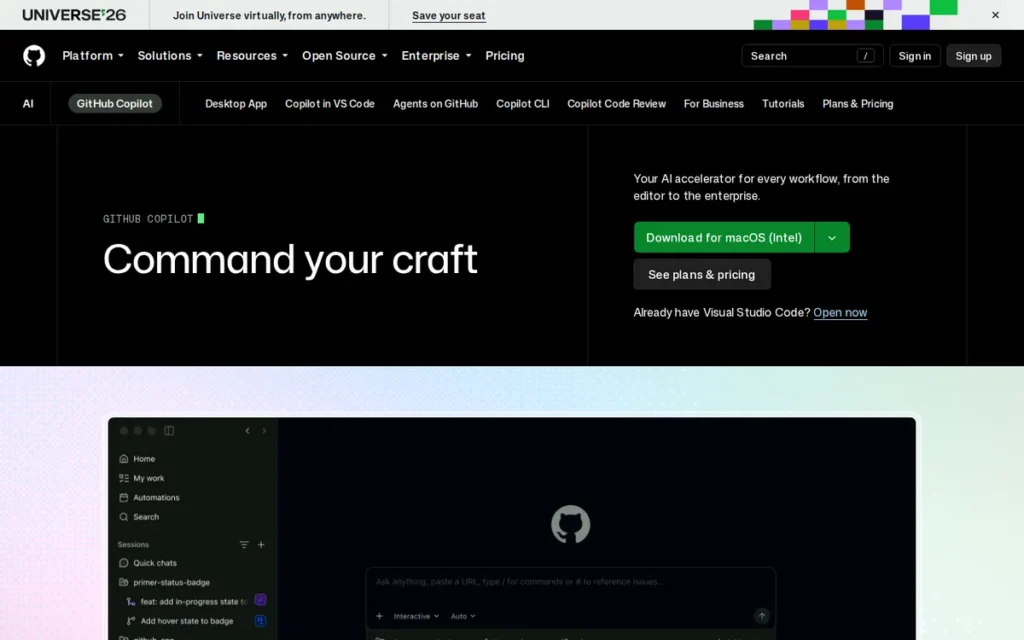
Category: Code Generator, an AI coding platform delivering inline code completion, chat-based debugging, and autonomous multi-file coding agents within developer IDEs and the GitHub version control environment.
At a Glance
- Category: Code Generator
- Best For: Individual developers and engineering teams seeking AI-accelerated code completion, debugging, automated pull request creation, and design-to-code workflows within VS Code, JetBrains, Xcode, or other major IDEs
- Price Range: Free (2,000 completions + 50 premium requests/month); Pro $10/month; Business $19/user/month; Pro+ (higher; includes Opus 4.6 access); Enterprise $39/user/month
- Primary Strength: GitHub Copilot is the only AI coding platform offering model-level selection between GPT-5, Claude, and Gemini 2.5 Pro within a single IDE, combined with a production-ready autonomous coding agent reaching general availability in March 2026
- Biggest Limitation: GitHub Copilot does not expose the full native context capacity of its underlying frontier models, effective IDE context (64K–128K tokens in most configurations) is significantly below the 1M-token native capacity of Claude and Gemini, due to GitHub’s backend context management
- One-Line Summary: GitHub Copilot is the market-leading AI coding platform in 2026, combining a free entry tier, $10/month Pro access to multiple frontier models, and a production-ready autonomous coding agent, with GitHub reporting up to 55% developer productivity improvement
- Last Verified: April 2026
Overview
GitHub Copilot is an AI coding platform integrated directly into VS Code, JetBrains IDEs, Xcode, Vim/Neovim, Eclipse, and Zed, designed for individual developers and engineering teams needing AI-accelerated code completion, chat-based debugging, and autonomous multi-file coding agents within their existing version control workflow. GitHub Copilot’s 2026 platform represents a significant evolution from its origins as an inline autocomplete tool: the March 2026 general availability of Agent Mode enables autonomous issue-to-PR workflows, and multi-model selection gives developers access to GPT-5, Claude Opus 4.6, and Gemini 2.5 Pro in a single environment.
GitHub Copilot is broadly recognized as the leading AI coding platform by developer adoption, backed by GitHub’s 150+ million-user developer community, the largest software collaboration platform in the world.
Key Features
- Autonomous Coding Agent (GA March 2026): GitHub Copilot’s Agent Mode, reaching general availability in VS Code and JetBrains IDEs in March 2026, enables developers to assign a GitHub issue and receive completed multi-file edits, executed tests, and an opened pull request without developer involvement until the human review stage, the most production-ready autonomous coding implementation of any tool in this evaluation (GitHub, March 2026).
- Multi-Model Selection Within One IDE: GitHub Copilot offers model-level selection between GPT-5, Claude Opus 4.6, and Gemini 2.5 Pro within a single IDE environment (the only AI coding platform in this evaluation providing this choice) enabling developers to optimize model selection for each task type including generation, refactoring, and documentation (GitHub documentation, 2026).
- Copilot Vision for Design-to-Code: GitHub Copilot Vision accepts image inputs (UI mockups, whiteboard diagrams, and design screenshots) and generates corresponding frontend code, eliminating the manual design-to-code translation step for frontend teams receiving visual specifications from product and design stakeholders (nxcode.io, 2026).
- Enterprise IP Indemnity and Governance: GitHub Copilot Business at $19/user/month includes IP indemnity for commercially produced code, centralized seat management, user data exclusion from model training, SAML SSO, content exclusion policies, and audit logs, the enterprise governance features required for commercial software development in regulated or IP-sensitive industries.
- 50% Faster Agent Startup Times: GitHub Copilot’s agent startup performance was improved by 50% in March 2026 through pre-indexing, parallel context loading, and session-level caching, reducing one of the most-cited developer friction points in iterative autonomous coding workflows (GitHub, March 2026).
Best For
GitHub Copilot is best for individual developers who want AI-accelerated coding within their existing IDE at the strongest price-to-performance ratio in the category ($10/month Pro).
GitHub Copilot is also the recommended choice for engineering teams that need autonomous issue-to-PR workflows, centralized governance, and IP indemnity at the Business or Enterprise tier, especially teams already using GitHub for version control and project management.
Pricing
GitHub Copilot Free provides 2,000 code completions and 50 premium model requests per month at no cost, sufficient for students, hobbyists, and developers evaluating the platform. Pro at $10/month is the recommended tier for professional use: unlimited completions, 300 premium requests, access to Claude and Gemini in addition to GPT, and a 30-day free trial.
Business at $19/user/month adds IP indemnity, content exclusion policies, centralized seat management, and audit logs. Pro+ provides Claude Opus 4.6 access and 5× premium requests versus Pro. Enterprise at $39/user/month adds internal documentation indexing and a custom knowledge base. (Pricing verified April 2026 per nxcode.io, 2026.)
Strengths
- Vendor-Reported and Independently Supported Productivity Gains: GitHub reports developers using Copilot are up to 55% more productive at writing code (GitHub, 2026, vendor self-reported; github.com/features/copilot). Independent case study analysis found median task time reductions of 20% per task and 63% of developers completing more tasks per sprint (arXiv, January 2025), confirming real productivity benefits at robust, if more modest, levels than vendor headline figures.
Users on r/GithubCopilot described direct productivity experiences from production use:
“I think it’s all in how you use it. I’ve used Copilot and more recently Claude Code and though there have been some rough spots where it wasn’t entirely productive, generally it enhances my speed considerably. It would take me 10 to 100 times as long to do some of the same things on my own without it.” Posted by u/phylter99
Takeaway: Developers using GitHub Copilot in production environments consistently report task completion time reductions measured in days-to-hours, validating productivity gains well beyond GitHub’s vendor headline figures.
- Most Production-Ready Autonomous Coding Agent: GitHub Copilot’s autonomous coding agent, reaching general availability in March 2026, can receive a GitHub issue and produce a completed pull request with multi-file edits and executed tests without developer involvement until review, making GitHub Copilot the most production-ready autonomous coding implementation of any tool in this evaluation at the time of research (GitHub, March 2026).
- Strongest Price-to-Performance in the Coding Category: GitHub Copilot Pro at $10/month provides unlimited code completions and 300 premium model requests across GPT-5, Claude Opus 4.6, and Gemini 2.5 Pro, the strongest price-to-performance ratio of any specialized AI tool in this evaluation, and the only platform giving developers multi-frontier-model access within a single $10/month subscription.
Limitations
- Reduced Effective Context vs. Native Frontier Models: GitHub Copilot does not expose the full native context capacity of its underlying frontier models, effective context in most IDE configurations (64K–128K tokens) is significantly below the 1M-token native capacity of Claude and Gemini, due to GitHub’s backend context management, meaning teams requiring maximum context for large-scale codebase navigation may prefer accessing Claude or Gemini directly via native APIs in some scenarios (GitHub community discussions, 2026).
- Architecture-Scale Refactoring Gap vs. Specialized Coding Tools: GitHub Copilot’s autonomous agent and IDE integration excel at common coding patterns, boilerplate generation, and issue-to-PR workflows, but developer evaluations document a performance gap for deeply interconnected, architecture-scale codebase restructuring compared to specialized coding tools with deeper context indexing capabilities.
- Training Data Copyright Concerns Persist: IP and copyright concerns regarding training data sourced from open-source repositories remain a category-level concern for GitHub Copilot, though Business and Enterprise tier IP indemnity provisions mitigate commercial liability risk for organizations producing commercial software in regulated or IP-sensitive industries.
Verdict
GitHub Copilot is the market-leading AI coding platform in 2026, combining the deepest IDE ecosystem integration across VS Code, JetBrains, Xcode, and more, with unique multi-model selection capability, a production-ready autonomous coding agent, and the most accessible professional pricing in the category at $10/month. At $10/month, GitHub Copilot Pro provides access to three frontier AI models (GPT-5, Claude, and Gemini) within a single IDE: the broadest multi-model access at the lowest price point of any professional AI tool evaluated in 2026. Teams working on large, architecturally complex codebases should evaluate GitHub Copilot’s effective context window in their specific IDE configuration and compare it against directly accessing Claude or Gemini’s native APIs for maximum context before committing.
5. Microsoft 365 Copilot: Best for Enterprise Microsoft 365 Organizations: Cross-Application AI with Native Data Governance
Category: Productivity Integrator, an AI layer embedded natively in Microsoft 365 apps (Word, Excel, PowerPoint, Teams, Outlook) enabling cross-application context, autonomous document workflows, and regulatory-grade data governance within the Microsoft ecosystem.
At a Glance
- Category: Productivity Integrator
- Best For: Enterprise organizations fully deployed on Microsoft 365 that need AI integrated into their existing productivity suite with native data governance, regulatory compliance, and cross-application context, not recommended as a first AI purchase for organizations outside the Microsoft ecosystem
- Price Range: Copilot Pro $30/month per user (plus required M365 subscription ~$6–$23/user/month; all-in typically exceeds $50/user/month); Enterprise add-on custom pricing
- Primary Strength: Microsoft 365 Copilot is the only generative AI platform with native Microsoft Purview Data Loss Prevention integration, providing prompt scanning, audit logging, and authoritative source management for enterprise regulatory compliance
- Biggest Limitation: Microsoft 365 Copilot’s total all-in cost (Copilot Pro $30/month plus required M365 subscription) frequently exceeds $50/user/month (the highest in this evaluation) and full value requires Teams meeting transcription to be actively deployable
- One-Line Summary: Microsoft 365 Copilot is the leading enterprise AI productivity platform for Microsoft 365 environments in 2026, offering cross-application context via Microsoft Graph, native Purview DLP governance, and autonomous document agents powered by GPT-5.4 Thinking, but delivers its full value proposition only within a fully deployed Microsoft 365 organization
- Last Verified: April 2026
Overview
Microsoft 365 Copilot is an AI productivity layer embedded natively across Word, Excel, PowerPoint, Teams, and Outlook, designed for enterprise organizations fully deployed on Microsoft 365 that require cross-application AI context, regulatory-grade data governance, and autonomous document workflows managed within the Microsoft ecosystem. Microsoft 365 Copilot’s defining capability is its access to Microsoft Graph, the data fabric connecting a user’s calendar, emails, Teams chats, shared files, and contacts, enabling AI queries that simultaneously reference all these data sources in ways no standalone AI tool can replicate.
Microsoft 365 Copilot runs on GPT-5.4 Thinking as of March 2026, giving it the same underlying model quality as ChatGPT Pro within an enterprise governance architecture that includes native Purview DLP, audit logs, and SAML SSO.
Key Features
- Microsoft Graph Cross-Application Context: Microsoft 365 Copilot’s access to Microsoft Graph enables simultaneous cross-referencing of a user’s calendar, Outlook emails, Teams meeting transcripts, and SharePoint documents in a single AI query, enabling requests such as “summarize this week’s key decisions from Teams and draft a status update” that standalone AI tools without Microsoft Graph access cannot replicate (Microsoft, March 2026).
- Native Purview DLP Integration: Microsoft 365 Copilot integrates natively with Microsoft Purview Data Loss Prevention for prompt and web search scanning, audit logging, and authoritative source management, providing the regulatory-compliance infrastructure required by financial services, healthcare, and government enterprise deployments (Microsoft, January 2026).
- Copilot Dashboard with Chat Insights: Microsoft 365 Copilot’s built-in workforce-level productivity reporting and AI usage analytics are available from a single license as of 2026, enabling organizations to measure actual ROI from AI deployment without requiring third-party analytics instrumentation (Microsoft, November 2025).
- Word Agent Mode for Autonomous Document Creation: Microsoft 365 Copilot’s Word Agent Mode enables autonomous document creation from a user’s existing organizational files, drafting proposals, reports, and communications grounded in internal context rather than generic AI outputs.
- Copilot Studio for Custom Agent Building: Copilot Studio enables enterprise teams to build custom autonomous agents grounded on internal Copilot Notebooks, with connectors for Egnyte, Aha!, and Jira Data Center, extending Microsoft 365 Copilot capabilities into bespoke enterprise workflows beyond the pre-built app integrations (Microsoft, March 2026).
Best For
Microsoft 365 Copilot is best for large enterprise organizations fully deployed on Microsoft 365 that can enable Teams meeting transcription across their workforce and have sufficient per-seat volume to justify all-in costs exceeding $50/user/month through measurable productivity improvements in document creation, email management, and meeting summarization.
Microsoft 365 Copilot is not recommended for teams outside the Microsoft ecosystem or organizations of fewer than 50 seats where integration advantages do not outweigh the cost premium relative to general-purpose AI tools at $20/month.
Pricing
Copilot Pro is priced at $30/month per user and requires an existing Microsoft 365 subscription (typically $6–$23/user/month depending on tier), making the genuine all-in cost $36–$53+/user/month: the highest in this evaluation.
Enterprise per-seat pricing for the Microsoft 365 Copilot add-on was not confirmed to a specific 2026 public figure at research date. Organizations must calculate the full total cost of ownership including base M365 licenses before comparing Microsoft 365 Copilot against standalone AI tools at $20/month. (Pricing verified April 2026 per tech-insider.org, 2026.)
Strengths
- Only Tool with Native Enterprise Data Governance: Microsoft 365 Copilot integrates natively with Microsoft Purview Data Loss Prevention for prompt scanning, audit logging, and authoritative source management, the only tool in this evaluation with this regulatory-compliance infrastructure built in rather than bolted on, making it the required option for regulated enterprises where data governance is a non-negotiable procurement prerequisite (Microsoft, January 2026).
- Built-In AI ROI Measurement: Microsoft 365 Copilot’s Copilot Dashboard with Chat Insights, available from a single license as of 2026, provides workforce-level AI productivity reporting, enabling organizations to measure actual ROI from AI deployment without third-party instrumentation, a critical requirement for enterprise procurement teams justifying per-seat costs that exceed $50/user/month (Microsoft, November 2025).
- Frontier Model Quality in Enterprise Architecture: Microsoft 365 Copilot runs on GPT-5.4 Thinking as of March 2026 (the same frontier model quality as ChatGPT Pro) within an enterprise governance architecture including SAML SSO, audit logs, and Purview compliance, giving regulated enterprises frontier model capability without sacrificing data security requirements (Microsoft, March 2026).
Limitations
- Highest Total Cost of Ownership: Microsoft 365 Copilot’s most consequential trade-off is total cost: Copilot Pro at $30/month requires a qualifying M365 subscription (typically $6–$23/user/month), meaning all-in per-user costs frequently exceed $50/month, the highest in this evaluation, and a cost defensible only when the organization is fully deployed on M365 and actively leveraging its integration-dependent capabilities.
- Teams Meeting Transcription Frequently Disabled in Practice: The most universally praised Microsoft 365 Copilot use case (Teams meeting transcription and summarization) is organizationally disabled at many enterprise deployments due to privacy and labor-relations policies, eliminating the primary driver of user satisfaction for those organizations. “For the money? No. Copilot integration with most of their apps leaves a lot to be desired… The best use case is meeting transcription in Teams, but that is disabled at my workplace. I’d personally pay for a Claude subscription instead if it were my money.” (u/midwestbikerider, r/microsoft_365_copilot, October 2025.)
Takeaway: Microsoft 365 Copilot’s value is highly conditional on whether Teams meeting transcription is deployable, users in organizations where it is blocked consistently find the product poor value relative to standalone AI tools at $20/month.
- Variable Quality Across the M365 App Suite: Microsoft 365 Copilot performs strongest in Word document drafting and Outlook email management (while Excel analytical capabilities and scheduling use cases remain more limited) creating inconsistent user experiences across the M365 suite that affect team-wide adoption and perceived ROI.
- Complete Ecosystem Dependency: Microsoft 365 Copilot delivers its full value proposition only within a complete Microsoft 365 deployment, organizations partially deployed on M365, using hybrid Google/Microsoft environments, or outside the Microsoft ecosystem entirely will not access the cross-application context that justifies the premium pricing structure.
Verdict
Microsoft 365 Copilot is the leading enterprise AI productivity platform for organizations fully deployed on Microsoft 365, offering cross-application context via Microsoft Graph, native Purview DLP governance, and autonomous document agents powered by GPT-5.4 Thinking, capabilities that standalone AI tools cannot replicate for the Microsoft ecosystem. Microsoft 365 Copilot is the recommended choice for large enterprises requiring AI capability and regulatory-grade data security within a single managed environment, provided Teams meeting transcription is deployable and all-in costs exceeding $50/user/month can be justified by measurable productivity gains. For organizations outside the Microsoft ecosystem, or for teams of fewer than 50 users where integration advantages do not outweigh the cost premium, general-purpose AI tools at $20/month deliver substantially stronger value per dollar.
6. Canva Magic Studio†: Best for Marketing Professionals and Non-Designer Content Creators: Integrated AI Design Suite
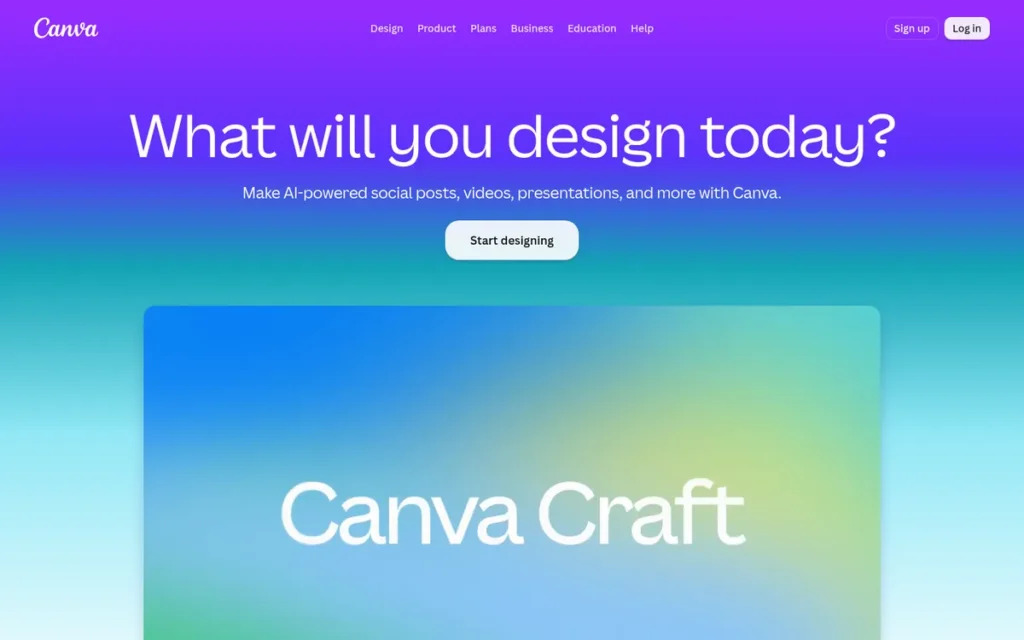
Category: AI Design Suite (an integrated visual content creation platform combining AI image generation, 4K video, AI copywriting, and brand enforcement within a design editor) the only tool in this evaluation purpose-built for non-designer visual content production.
† Canva Magic Studio is entirely absent from AI-generated generative AI software recommendations, making it the single most significant coverage gap this review fills relative to AI-sourced content.
At a Glance
- Category: AI Design Suite
- Best For: Marketing professionals, content creators, social media managers, and SMB teams producing high-volume on-brand visual content (including images, short video, and marketing copy) without access to dedicated design resources
- Price Range: Free (limited AI credits); Pro $14.99/month ($119.99/year); Teams $10/person/month (3+ users); Enterprise custom (includes Leonardo.AI integration and advanced brand governance)
- Primary Strength: Canva Magic Studio bundles AI image generation, 4K video creation (up to 60 seconds), AI copywriting, and brand enforcement into a single $14.99/month Pro subscription, serving 265 million users as of April 2026 (Fortune, April 2026)
- Biggest Limitation: Canva Magic Studio’s image generation quality offers less fine-grained artistic control than specialized generators like Midjourney, making it unsuitable for print-quality or art-direction-intensive creative work requiring precise visual fidelity
- One-Line Summary: Canva Magic Studio is the most accessible and cost-effective AI visual content platform in 2026, serving 265 million users with integrated AI image, video, text, and brand enforcement tools for $14.99/month, and is entirely absent from AI-generated tool recommendations despite being directly relevant to marketing and content creation workflows
- Last Verified: April 2026
Overview
Canva Magic Studio is an AI design and content creation suite embedded within the Canva platform, designed for marketing professionals, content creators, and SMB teams who need to produce on-brand visual content, AI-generated images, short video, and marketing copy without requiring dedicated design training or multiple separate AI tool subscriptions. Canva Magic Studio routes user prompts through a proprietary multi-model orchestration layer (Kaleidoscope), selecting from OpenAI GPT-5, Google Gemini Ultra, Runway Gen-3, and Canva’s own fine-tuned design models based on task type, with Canva Shield safety screening applied to all outputs before delivery.
Canva Magic Studio is the tool in this evaluation most directly relevant to the marketing manager and content creator audience, yet Canva Magic Studio is entirely absent from AI-generated generative AI software recommendations. Canva Magic Studio’s AI tools have been used more than 10 billion times across its 265 million-user base, and Canva is ranked the third-most-used generative AI web product by monthly active users in 2026, behind Google Gemini and ahead of DeepSeek (Fortune, April 2026; Canva newsroom, 2024).
Key Features
- Multi-Model Orchestration via Kaleidoscope: Canva Magic Studio’s proprietary Kaleidoscope orchestration layer routes requests across OpenAI GPT-5, Google Gemini Ultra, Runway Gen-3, and Canva’s proprietary design models based on task type (with Canva Shield safety screening applied to all outputs) delivering best-fit model performance for text, image, video, and brand enforcement tasks without requiring users to manage multiple AI subscriptions (aitoolsdevpro.com, 2026).
- 4K AI Video Generation: Canva Magic Studio generates 4K AI video up to 60 seconds in duration with 25+ style options via Veo 3 integration at Pro and Enterprise tiers, enabling marketing teams to produce short-form social media video and branded content entirely within the Canva design environment without a separate video AI subscription.
- Brand Kit AI for Consistent Brand Enforcement: Canva Magic Studio’s Brand Kit AI enforces brand-specific colors, fonts, and voice across all AI-generated outputs, ensuring that content produced by any team member adheres to brand standards without requiring manual review, a capability that differentiates Canva Magic Studio from all general-purpose AI tools in this evaluation.
- Dream Lab Image Generation: Canva Magic Studio’s Dream Lab generates photorealistic, illustration, and 3D-style images powered by Leonardo.AI Phoenix with approximately 500 AI image generations per month at the Pro tier, substantially higher generation volume than most standalone image AI tools at comparable price points (aitoolsdevpro.com, 2026).
- Magic Write with Magic Switch 3.0: Canva Magic Studio’s Magic Write generates and reformats marketing copy across 150+ languages and content formats, enabling teams to transform a single content brief into blog posts, social captions, email subject lines, and press releases within a single integrated workflow without exporting to a separate writing tool.
Best For
Canva Magic Studio is best for marketing professionals, social media managers, and SMB teams producing high-volume branded visual content (including social media graphics, short-form video, email imagery, and presentation materials) who need on-brand, production-ready output without design training.
Canva Magic Studio is the most cost-effective choice for any team currently paying for separate AI image, video, and copywriting tools whose combined cost would exceed $14.99/month.
This accessibility advantage for non-designers resonated in community discussions on r/marketing:
“nonetheless, for whatever reason, canva made sense to me and I could toil for hours on my phone without frustration, the important part. as such, i could create whatever i could ‘see’ – the most important part. so yes, canva can absolutely do 99.98% of anything any reputable marketer or brand would need. wanna level up? add midjourney and LLM AI into the fold.” Posted by u/papadiscourse
Takeaway: Canva converts non-designers into productive visual content creators for standard marketing needs, while professional marketers consistently name Midjourney as the supplement for advanced or high-stakes creative work, confirming Canva Magic Studio’s natural quality ceiling.
Pricing
Canva Pro at $14.99/month ($119.99/year) is the recommended tier for AI access, including approximately 500 AI image generations/month, 5 video clips/month, full Magic Studio suite, Brand Kit, and the premium template library. Teams at $10/person/month (3+ users) adds shared brand assets and team collaboration features.
Free tier access to Magic Studio AI credits is limited and insufficient for regular professional AI-assisted work. Enterprise pricing is custom and includes advanced brand governance, higher-capacity Leonardo.AI integration, and SSO. (Pricing verified April 2026 per cliprise.app, 2026.)
Strengths
- Verified Scale of AI Tool Adoption: Canva Magic Studio’s AI tools have been used more than 10 billion times across the platform’s 265 million-user base, with Canva ranked as the third-most-used generative AI web product by monthly active users in 2026 (behind Google Gemini and ahead of DeepSeek) the most credible scale metric of any tool in this evaluation outside ChatGPT (Canva newsroom, 2024; Fortune, April 2026).
- Most Cost-Effective AI Content Stack for Non-Designers: Canva Magic Studio’s Pro tier at $14.99/month bundles AI image generation, 4K video creation, AI copywriting, and brand enforcement tools that would cost $50–$200/month if purchased from separate specialized tools, the most cost-effective comprehensive AI content creation stack available to non-designers at any tier in this evaluation (cliprise.app, 2026).
- Enterprise-Grade Safety at Consumer Pricing: Canva Magic Studio’s Kaleidoscope multi-model orchestration andCanva Shield safety screening provide enterprise-grade output quality and content safety at a $14.99/month consumer subscription price, a combination no single-model AI tool in this evaluation replicates at this price point.
“Magic Design takes a rough idea and generates multiple layout options that I can customize. Background removal is one-click. And the brand kit means everything I create stays consistent… For the 80% of visual content that just needs to be clean, on-brand, and done, Canva is hard to beat.”, via buffer.com, 2026
Takeaway: Canva Magic Studio excels for the high-volume, good-enough visual content that represents most business marketing needs, professional designers handling high-stakes creative work typically supplement Canva Magic Studio with specialized tools for the remaining 20% requiring fine detail control.
Limitations
- Image Generation Quality Ceiling: Canva Magic Studio’s most consequential trade-off is its image generation quality ceiling, while fully adequate for social media graphics and business presentations, Canva Magic Studio offers substantially less fine-grained control over image composition, lighting, and stylistic fidelity than specialized generators such as Midjourney, making it unsuitable for print-quality work requiring precise art direction or professional photography-grade realism (cliprise.app, 2026).
- Limited Video Generation Volume: Canva Magic Studio’s video generation is limited to 5 clips per month on the Pro plan with a 60-second maximum duration per clip, constraining its usefulness for high-frequency video publishing workflows or any long-form video production requirement that exceeds these monthly limits.
- Full AI Credits Locked Behind Paid Plan: Canva Magic Studio’s complete AI credits require the $14.99/month Pro plan, meaning the free tier’s AI capabilities are insufficient for regular professional use, necessitating a paid commitment before users can fully evaluate the tool’s AI generation quality for their specific content types.
- Design Specialization Ceiling: Canva Magic Studio is consistently positioned by professional graphic designers and agencies as a complement to, not a replacement for, Adobe Creative Cloud, Figma, or Midjourney for work requiring fine detail control, confirming a clear capability ceiling for high-stakes creative production where visual precision matters more than speed and volume.
Verdict
Canva Magic Studio is the most cost-effective integrated AI visual content platform for marketing professionals and non-designer content creators in 2026, serving 265 million users with a unified suite of AI image, video, text, and brand enforcement tools at $14.99/month Pro, the only tool in this evaluation integrating all these capabilities in a single design environment. Canva Magic Studio is the recommended choice for SMB marketing teams, social media managers, and individual content creators producing high volumes of branded visual content without dedicated design resources, and is the primary gap tool this review fills relative to AI-generated software comparisons. Organizations requiring print-quality image precision, high-volume video production beyond 5 clips/month, or art-direction-level visual fidelity should supplement Canva Magic Studio with a specialized image generation tool.
7. Jasper AI: Enterprise Marketing Content Platform: Justified for Large Brand-Governed Organizations Only
Category: Marketing Content Generator, a purpose-built AI platform for enterprise marketing teams requiring brand-governed, campaign-scale content production across multiple channels, with persistent brand memory and compliance audit trails.
At a Glance
- Category: Marketing Content Generator
- Best For: Large marketing organizations (100+ users) with strict brand compliance requirements, dedicated content operations teams, and the content production volume needed to justify the enterprise pricing premium over general-purpose AI tools
- Price Range: Creator from $39/seat/month (annual billing, 1 user); Pro from $59/seat/month (annual billing, up to 5 users); Business custom pricing; 7-day free trial available
- Primary Strength: Jasper AI’s Brand Voice/IQ system uses vector embedding to learn a company’s style guide, knowledge base, and tone parameters, enabling brand-consistent marketing content generation at enterprise scale without requiring users to re-prompt brand context into each query
- Biggest Limitation: Jasper AI’s Creator plan ($39/month annual) costs approximately 2× general-purpose AI tools at $20/month; the Pro plan ($59/month annual) costs approximately 3×, a premium that professional communities consistently identify as unjustifiable for teams without active enterprise brand governance requirements
- One-Line Summary: Jasper AI is a purpose-built enterprise marketing content platform with genuine brand governance differentiation (including Brand Voice/IQ, the IQ Knowledge Hub, and Trust Foundation compliance) but its $39–$59/seat/month pricing commands a premium that professional communities consistently find unjustifiable relative to general-purpose AI tools at $20/month
- Last Verified: April 2026
Overview
Jasper AI is a purpose-built generative AI platform for enterprise marketing content, designed for large marketing organizations and brand-governed content teams that need to produce omnichannel campaigns, social posts, blog content, and email copy at scale while enforcing consistent brand voice across dozens or hundreds of users. Jasper AI’s core differentiation from general-purpose AI tools is its Brand Voice/IQ vector embedding system, which ingests a company’s style guide and knowledge base to produce brand-consistent content without requiring each user to prompt-engineer brand context.
Jasper AI is the most debated tool in this evaluation: genuinely differentiated for its specific enterprise use case, yet subject to the strongest and most consistent critical community sentiment of any tool reviewed. The arc from $1.5 billion valuation in 2022 to community consensus of an overpriced tool in 2025 represents one of the fastest competitive moat erosions in enterprise SaaS, driven not by Jasper AI’s product failures but by the accelerating capability of the general-purpose AI tools Jasper AI was originally designed to simplify access to.
Key Features
- Brand Voice/IQ Vector Embedding: Jasper AI’s Brand Voice/IQ system uses vector embedding to ingest a company’s style guide, knowledge base, visual guidelines, and tone parameters, enabling all users to generate brand-consistent content without individual prompt-engineering, the primary enterprise differentiation that makes Jasper AI more than a general-purpose AI wrapper for large marketing organizations (Jasper, 2026).
- Campaign Assistant for Omnichannel Content: Jasper AI’s Campaign Assistant generates full omnichannel campaign content (blog posts, email sequences, social captions, and press releases) from a single brief, enabling marketing operations teams to produce coordinated multi-format campaigns without manually adapting each asset to its target channel.
- IQ Knowledge Hub for Company-Specific Context: Jasper AI’s IQ Knowledge Hub stores company-specific product details, competitive intelligence, regulatory disclosures, and approved messaging as persistent context for all content generation sessions, reducing the factual hallucination risk that general-purpose AI tools present for brand-sensitive or compliance-governed marketing content (thecmo.com, 2026).
- Trust Foundation for Enterprise Compliance: Jasper AI’s Trust Foundation for enterprise clients provides data residency controls, role-based permissions, and audit trails for marketing content workflows, a compliance framework relevant to regulated industries (financial services, healthcare, pharmaceuticals) with documented content governance requirements.
- Surfer SEO Integration: Jasper AI integrates with Surfer SEO for real-time keyword optimization and Google SGE compliance scoring, enabling content teams to produce search-optimized blog content within the same platform used for other marketing copy, eliminating the workflow handoff between a writing tool and a separate SEO tool.
Best For
Jasper AI is best for large marketing organizations (100+ users) that produce brand-governed content at scale, have dedicated content operations teams who will actively use Brand Voice/IQ and the Knowledge Hub, and operate in regulated industries where the Trust Foundation compliance features provide documented governance value.
Jasper AI is not recommended for teams whose primary need is general-purpose AI assistance, for those teams, Claude or ChatGPT at $20/month delivers comparable or superior output quality at 2–3× lower cost.
Pricing
Jasper AI’s Creator plan starts at $39/seat/month on annual billing (1 user). The Pro plan is $59/seat/month on annual billing (up to 5 users). Business and Enterprise pricing requires a custom quote. A 7-day free trial is available.
Organizations evaluating Jasper AI should conduct a direct output-quality test against Claude and ChatGPT on their specific content types before committing to the pricing differential. Community evidence is consistent: for teams without active Brand Voice/IQ and Knowledge Hub usage, general-purpose alternatives deliver comparable or superior output at 2–3× lower cost. (Pricing verified April 2026 per jasper.ai/pricing.)
Strengths
- Brand-Scale Content Consistency Without Prompt Engineering: Jasper AI’s Brand Voice/IQ vector embedding system ingests a company’s full style guide, knowledge base, and tone parameters, enabling brand-consistent content generation across 100+ users without individual prompt-engineering, a workflow efficiency that general-purpose AI tools do not replicate at this level of automation for large enterprise marketing operations (Jasper, 2026).
- Persistent Knowledge Hub Reduces Hallucination Risk: Jasper AI’s IQ Knowledge Hub provides persistent injection of company-specific product details, competitive intelligence, and approved messaging into every content generation session, reducing the factual hallucination risk that general-purpose AI tools present for brand-sensitive or compliance-governed marketing applications.
- G2 Category Leadership in AI Writing Assistants: Jasper AI ranks as a category leader in G2’s AI Writing Assistants competitive listings, placing above Writesonic and Scalenut for marketing-focused content tools, confirming Jasper AI’s relevance within its target segment for enterprise procurement teams conducting formal vendor evaluations (G2 AI Writing Assistants category listing, 2026, exact numeric score not independently confirmed at research date).
Limitations
- Pricing Premium Not Validated by Independent Evidence: Jasper AI’s most consequential trade-off is its pricing relative to community-validated output quality, the Creator plan ($39/month annual) costs approximately 2× Claude Pro or ChatGPT Plus ($20/month each), and the Pro plan ($59/month annual) costs approximately 3×, a premium that professional communities document as consistently unjustifiable for organizations without active enterprise brand governance. “Jasper was great in 2023 when marketers did not know how to prompt effectively and models were still a bit clunky… Nowadays Jasper is extremely overpriced both for solo and enterprise use-cases given alternatives. Company is definitely struggling in their GTM unless they find a better moat.” (u/generative_wende, r/SocialMediaMarketing, August 2025.)
Takeaway: The community consensus is not that Jasper AI is a bad product, it is that the pricing premium is unjustifiable for teams that lack the organizational maturity to actively maintain Brand Voice/IQ and the Knowledge Hub.
- Self-Reported ROI Claims Without Independent Attribution: Jasper AI’s performance claims (including 80% drafting time reduction and 400% ROI) are self-reported marketing figures without independent methodology or named client attribution, making them unsuitable as decision evidence without internal testing verification and directly challenged in professional community discussions.
- Narrowest Capability Breadth in This Evaluation: Jasper AI lacks coding assistance, native image generation, research synthesis, enterprise workflow integration, and any meaningful agentic AI capability, limiting Jasper AI strictly to marketing copy production and making it the least versatile tool in this evaluation for any team with mixed-use AI requirements beyond written content.
- Documented Quality Regression Narrative: Community sentiment across multiple subreddits reflects a consistent quality regression pattern for Jasper AI: “Jasper used to be good like two years ago but it feels like it’s been going downhill. The output always sounds so generic now.” (u/seeme495, r/SaaS, October 2025.)
Takeaway: The quality regression narrative for Jasper AI reflects a market shift, the general-purpose AI tools Jasper was built to simplify access to have improved to the point where many users find them comparable or superior for standard marketing copy tasks at a fraction of the price.
Verdict
Jasper AI is a purpose-built marketing content platform with genuine enterprise differentiation (specifically its Brand Voice/IQ brand memory system, IQ Knowledge Hub for company-specific context, and Trust Foundation compliance framework) that can justify its $59/seat/month Pro pricing for large marketing organizations (100+ users) operating at brand-governed scale with active usage of these proprietary features. For teams below that threshold, Reddit and review community consensus is unambiguous: general-purpose AI tools at $20/month deliver comparable or superior content quality without Jasper AI’s pricing premium. Any organization evaluating Jasper AI should conduct a direct output-quality comparison against Claude and ChatGPT on their own content types, verify internal prompting maturity, and confirm that Brand Voice/IQ and the Knowledge Hub will be actively maintained before committing to the cost differential.
What Red Flags Should I Watch For When Evaluating Generative AI Software?
Buyers evaluating generative AI software in 2026 face four systematic risks that vendor marketing materials, affiliate-influenced reviews, and LLM-generated comparisons rarely surface. Recognizing these risks before beginning a formal evaluation will prevent costly procurement errors. Each red flag below is numbered for independent citation and cross-references specific tools in this evaluation.
Red Flag #1: Self-Reported ROI Claims Without Independent Attribution
Reject any vendor that cites ROI percentages (such as “400% ROI” or “80% time reduction”) without naming a specific client, publishing a methodology, or referencing an independent case study. Such claims are marketing assertions, not decision evidence.
Jasper AI’s 400% ROI claim appears without independent methodology or named client attribution in this research and is directly challenged in professional community discussions. Treat all self-reported performance claims as hypotheses to test internally, not facts to weight in vendor selection.
Red Flag #2: Pricing That Hides Required Base Subscriptions
Some generative AI tools are marketed at a standalone price that requires a separate, higher-cost base product to function at full capability.
Microsoft 365 Copilot’s $30/month Copilot Pro price is the clearest example in this evaluation, the actual all-in cost frequently exceeds $50/user/month once the required M365 base subscription is included. Always calculate the complete cost stack, including base subscriptions, per-seat minimums, and storage or API add-ons, before comparing tools side by side.
Red Flag #3: Capability Claims Based on Outdated Model Versions
Reject any generative AI comparison that does not specify which model version was tested and when, capabilities change significantly between major releases, and a 2024 evaluation can be fundamentally misleading for a 2026 purchasing decision.
Always verify that benchmark scores and feature claims reference the current production model with a named source dated within the past six months. Gemini’s Bard-era reputation and Jasper AI’s 2022-era differentiation are both examples of evaluations anchored to outdated capability states.
Red Flag #4: Review Aggregator Scores Without Verified Date
A G2, Capterra, or Trustpilot score does not reflect an AI tool’s current performance if it was built before a major model upgrade, and AI tools have released multiple major model generations in 2024 and 2025 alone.
Always verify the date range of aggregated reviews and cross-reference with dated community discussions for current sentiment that reflects the live product version. A tool that dramatically improved in 2025 will carry a score depressed by older negative reviews, and vice versa.
What Questions Should I Ask Before Choosing a Generative AI Tool?
Answering these five questions eliminates most mismatched tool choices before a formal evaluation begins. Each question maps directly to the five category types and primary decision criteria in this review, use them in sequence to identify your category, evaluate ecosystem fit, calculate budget, confirm data governance requirements, and assess whether specialized tools justify their premium.
Question #1: What is your primary use case, text, image, video, code, or a combination?
Defining your primary use case (text generation, image or video creation, software coding, or cross-format content) eliminates most tools before formal evaluation. Developers in VS Code need GitHub Copilot’s IDE integration; marketing teams producing social visuals need Canva Magic Studio’s design environment; researchers analyzing long documents need Claude’s or Gemini’s 1M-token context window.
Use case specificity is the single most efficient filter in generative AI tool selection.
Question #2: Are you already deployed on Microsoft 365 or Google Workspace?
Organizations fully deployed on Microsoft 365 should evaluate Microsoft 365 Copilot before standalone alternatives, its cross-application Microsoft Graph context cannot be replicated by non-native tools. Organizations on Google Workspace should evaluate Gemini first.
If not committed to either ecosystem, general-purpose AI tools at $20/month deliver stronger value than ecosystem-native tools for most users before ecosystem-specific integrations are required.
Question #3: How many users need access, and what is the all-in per-seat budget?
Per-seat costs in this evaluation span from free to $59/month, requiring total cost of ownership calculation across your full intended user population before evaluating features:
- GitHub Copilot Pro: $10/month (unlimited completions, multi-model access)
- Claude Pro or ChatGPT Plus: ~$20/month (general-purpose AI, most professional tasks)
- Canva Pro: $14.99/month (AI design, image, video, and copywriting bundle)
- Jasper AI Creator: $39/month annual; Pro: $59/month annual
- Microsoft 365 Copilot: $50+/month all-in (Copilot Pro $30 + M365 subscription $6–$23)
Premium features are only cost-justified when actively used by the majority of licensed seats.
Question #4: Does your organization require data residency controls or training data exclusion?
Regulated-industry organizations in healthcare, financial services, or government must require three specific contractual provisions before any AI procurement: documented exclusion from model training, data residency options, and full audit logging.
The following tools offer confirmed training data exclusion provisions at their enterprise tiers, confirm each in writing before committing:
- ChatGPT Team and Enterprise
- Claude Enterprise
- GitHub Copilot Business and Enterprise
- Microsoft 365 Copilot
Question #5: Will you actively use specialized features, or do you primarily need a general-purpose assistant?
If your team will not actively maintain a brand knowledge base or configure ecosystem-specific integrations, specialized tools like Jasper AI ($39–$59/month) and Microsoft 365 Copilot ($50+/month all-in) do not deliver their pricing premium in practice.
General-purpose AI tools (Claude or ChatGPT at $20/month) produce comparable or superior output quality for teams that primarily need a conversational AI assistant rather than a governed workflow platform.
How Did We Rank These 7 Generative AI Tools?
These rankings apply five criteria to all seven tools identically: verified benchmark performance, community sentiment from G2 and Reddit, breadth of capability for the stated use case, pricing transparency, and enterprise readiness. Primary criteria are weighted at double the influence of secondary criteria. Self-reported vendor ROI claims without independent methodology are explicitly excluded from scoring.
Evaluation Process
This review was produced through the following structured research steps:
- Querying multiple AI search engines (Perplexity, ChatGPT) to identify current LLM recommendations and surface coverage gaps
- Conducting independent web research for each tool’s 2026 capability state, pricing, and benchmark performance
- Analyzing Reddit community sentiment across r/ChatGPT, r/ClaudeAI, r/SocialMediaMarketing, r/programming, r/microsoft_365_copilot, r/graphic_design, and r/SaaS
- Cross-referencing vendor claims against third-party benchmark data (SWE-bench Verified, GPQA Diamond, AIME 2025)
- Identifying coverage gaps between LLM-generated recommendations and verified market relevance for the target audience
Ranking Criteria
Primary Criteria (weighted double):
C1, Verified Performance Evidence: Documented benchmark scores with named sources and dates, independently published comparison results, and adoption metrics from credible third parties. Self-reported vendor claims without independent corroboration are flagged as unverified and discounted accordingly.
Why it matters: The target audience cannot test every tool themselves, dated, attributed benchmark data is the most objective proxy for real-world capability available.
C2, Review Platform Ratings and Community Sentiment: G2 and Capterra scores where independently confirmed; volume and sentiment direction of Reddit discussions across relevant professional subreddits; direct attributed user quotes capturing representative community consensus. Where G2/Capterra scores are unverified, this is noted explicitly in the entry.
Why it matters: Verified user reviews surface systematic failure modes, pricing frustrations, and workflow issues that vendor marketing suppresses, particularly at the transition point from early adopters to mainstream professional users.
C3, Breadth and Depth of Capability for Stated Use Case: Feature matrix across modalities, context window size and practical implications, agentic capability maturity (reactive vs. autonomous), and native integration depth for primary use case. Assessed for 2026 capability state only, historical capabilities are not scored.
Why it matters: A tool with impressive marketing but narrow practical capability scores poorly; a tool with deep, verified capability for its declared primary use case scores highly regardless of brand recognition.
Secondary Criteria (standard weight):
C4, Pricing Transparency and Value: Publicly listed pricing at April 2026, all-in cost calculation where base subscriptions are required, and price-to-value assessment cross-referenced with community sentiment.
Why it matters: Inconsistent pricing structures make ROI evaluation genuinely difficult; this criterion rewards transparency and penalizes hidden total cost structures.
C5, Enterprise Readiness and Integration Quality: Enterprise security features assessed include:
- Data Loss Prevention (DLP) integration
- SSO and SAML authentication
- Full audit logging
- Data residency options
- Training data exclusion contracts
- IP indemnity provisions
- Ecosystem integration depth (native vs. bolt-on)
Why it matters: Enterprise buyers require data governance and security compliance that consumer-grade AI tools cannot provide, conflating consumer and enterprise capability leads to procurement failures.
Evidence Weighting
When review platform ratings conflict with Reddit community sentiment, this review weights specificity and recency. A detailed 2025 or 2026 Reddit post with substantive community engagement and named attribution outweighs a generic undated G2 review in scoring confidence.
In this evaluation, verified benchmark data from named independent sources (SWE-bench Verified, GPQA Diamond) is treated as the strongest evidence. Attributed Reddit community quotes with dates are treated as strong behavioral evidence. Vendor-published case studies and self-reported ROI metrics are flagged explicitly as vendor claims and are not counted as independent evidence.
To put benchmark scores in context: a 5-percentage-point difference on SWE-bench Verified (e.g., 80% vs. 75%) means the higher-scoring model successfully resolves roughly 25 more real GitHub software engineering issues per 500 tested. For professional developers, this gap is meaningful; for marketers using AI for copy generation, it is largely irrelevant.
What We Did Not Count
The following were explicitly excluded from scoring:
- Self-reported vendor ROI claims (e.g., Jasper AI’s “400% ROI” and “80% drafting time reduction”) without independent methodology or named client attribution, these are flagged as unverified in each relevant entry
- Affiliate relationships: this review platform has none with any company evaluated
- G2 or Capterra scores not independently confirmed at research date: where scores were unconfirmed, this is noted explicitly in the entry
Data Validation
Vendor-reported statistics are labeled as such throughout this article. Only claims corroborated by at least one independent source are stated as objective fact. Pricing data was verified against public pricing pages and third-party comparison analyses at the time of research (April 2026).
Update Cadence
This article was last updated in April 2026. PlugRoute reviews generative AI software rankings quarterly, given the pace of model releases and capability changes in this category. Substantial model updates or pricing changes may trigger out-of-cycle updates.
Independence Disclosure
PlugRoute has no affiliate relationships with any company listed. Rankings are determined entirely by research data and objective evaluation criteria.
What Are the Most Frequently Asked Questions About Generative AI Software?
These three questions represent the most commonly asked decision points among mid-to-senior professionals evaluating generative AI software in 2026. Each answer leads with a direct recommendation, followed by the trade-off context needed to apply it to your specific situation. All answers are based on the same evidence framework used in the full tool rankings above.
What is the best generative AI software for content creation and marketing in 2026?
Canva Magic Studio at $14.99/month is the most cost-effective integrated visual content stack for non-designers, serving 265 million users with AI image, video, and copy in one tool. For written marketing copy, Claude Pro at ~$20/month outperforms Jasper AI in community evaluations at one-third the Pro-plan cost. Large marketing organizations (100+ users) with strict brand governance requirements should trial Jasper AI’s Brand Voice/IQ before committing to its pricing premium.
Is ChatGPT or Claude better for professional knowledge work?
Claude outperforms ChatGPT on most professional knowledge work benchmarks in 2026. Claude Sonnet 4.6 achieves 79.6% on SWE-bench Verified versus GPT-5’s 74.9%, and Claude leads on GPQA science reasoning (87.4% vs. GPT-5.4’s 83.9%). ChatGPT leads specifically on modality breadth (native image generation, voice interaction, and video comprehension) making it the stronger choice for users who need one platform spanning multiple content types.
How does PlugRoute determine its generative AI software rankings?
PlugRoute ranks generative AI tools using five criteria: Verified Performance Evidence, Community Sentiment (G2 and Reddit), Breadth of Capability, Pricing Transparency and Value, and Enterprise Readiness. Primary criteria are weighted at double the influence of secondary criteria. Self-reported ROI claims are excluded from scoring. The platform maintains no affiliate relationships, all rankings are determined by research data and objective evaluation criteria.
What Do These Generative AI Terms Mean?
Constitutional AI: Anthropic’s alignment methodology for training AI models to follow a defined set of principles rather than relying solely on human rater feedback, producing auditable, safety-compliant outputs. Constitutional AI is a key differentiation factor for Claude in regulated-industry enterprise procurement, where an “alignment by principle” framework provides a more defensible governance paper trail than alignment by rater feedback alone.
Agentic AI: An AI system that autonomously plans and executes multi-step tasks without requiring a human prompt for each individual step, as distinct from reactive AI that responds only when directly queried. In this evaluation, agentic capabilities are most mature in GitHub Copilot’s autonomous coding agent (issue to pull request without developer involvement) and Microsoft 365 Copilot’s autonomous document creation workflows. Agentic AI is the defining architectural evolution in generative AI software between 2024 and 2026.
Context Window: The maximum amount of text, measured in tokens, where approximately 750 words equal roughly 1,000 tokens, that an AI model can process in a single interaction. Larger context windows enable analysis of longer documents without chunking or manual summarization. In this evaluation, effective context windows range from 64K–128K tokens (GitHub Copilot in most IDE configurations) to 1–2M tokens (Gemini, Claude Opus 4.6 in beta), a practical difference of roughly 50–100 pages versus 1,500 pages in a single prompt.
SWE-bench Verified: An industry-standard benchmark testing AI models on real, previously unsolved GitHub software engineering issues, widely regarded as the most realistic proxy for autonomous coding capability because it evaluates performance on genuine production problems rather than synthetic tasks. In this evaluation: Claude Sonnet 4.6 scores 79.6%, Gemini 3.1 Pro scores 80.6%, and ChatGPT’s GPT-5 scores 74.9%, scores that inform tool selection for development teams whose primary AI use case is software engineering.
Inference Routing: A platform technique that assigns different model tiers to queries based on perceived complexity, lighter models for simple requests, heavier models for complex ones. Inference routing creates quality inconsistency when users expect frontier model performance on all queries. Inference routing is the primary documented limitation of ChatGPT’s Plus tier in 2026, where lighter models (GPT-5.3 Instant Mini) are assigned to routine queries to manage infrastructure costs, producing perceptible output quality variation.
Glossary: Key Terms Used in This Comparison
SWE-bench Verified: An industry-standard benchmark that tests AI models on real, previously unsolved GitHub software engineering issues to measure autonomous coding capability. It is widely regarded as the most realistic proxy for coding performance because it evaluates models on genuine production problems rather than synthetic tasks.
Context Window: The maximum volume of text (measured in tokens, where roughly 750 words equal 1,000 tokens) that an AI model can process within a single interaction. Larger context windows allow users to analyze longer documents, codebases, or conversation histories without manually breaking content into smaller pieces.
Inference Routing: A platform technique that assigns lighter, less capable model tiers to queries deemed simple, and heavier frontier models to queries deemed complex, in order to manage infrastructure costs. It creates output quality inconsistency for users who expect frontier-level performance on every request regardless of perceived complexity.
Agentic AI: An AI system capable of autonomously planning and executing multi-step tasks without requiring a human prompt at each individual step, as distinct from reactive AI that only responds when directly queried. In this evaluation, agentic capability is most mature in GitHub Copilot’s autonomous issue-to-pull-request workflow and Microsoft 365 Copilot’s autonomous document creation.
Constitutional AI: Anthropic’s alignment methodology for training AI models to follow a defined set of principles rather than relying solely on human rater feedback, producing outputs governed by an auditable rule set. It is a key differentiator for Claude in regulated-industry enterprise procurement where a documented governance framework is a compliance prerequisite.
Which Generative AI Software Is Right for You?
The right generative AI software in 2026 depends on your workflow, existing ecosystem, and budget, not on which tool is most heavily marketed or most frequently cited by AI answer engines. This evaluation found seven tools clearly differentiated by use case, with no single platform best for every professional context. The Key Insights below summarize the most actionable findings.
Key Insights
- Counterintuitively, Claude, not ChatGPT, leads SWE-bench Verified among general-purpose AI tools: Claude Sonnet 4.6 achieves 79.6% versus GPT-5’s 74.9%. ChatGPT’s #1 ranking is justified by modality breadth, the only tool covering text, image, voice, code, and video natively in one subscription, not coding benchmark leadership.
- Canva Magic Studio is the most significant gap in AI-generated generative AI tool recommendations: Canva Magic Studio is entirely absent from LLM comparisons despite serving 265 million users as the third-most-used generative AI web product in 2026, and is the most cost-effective integrated AI design stack at $14.99/month for the marketing managers and content creators who represent a core segment of this review’s audience.
- Claude leads for professional reasoning accuracy at the same ~$20/month price as ChatGPT: Claude wins on GPQA science reasoning (87.4% vs. GPT-5.4’s 83.9%), SWE-bench Verified (79.6% vs. 74.9%), and earns the strongest cross-community professional endorsement of any tool in this evaluation.
- GitHub Copilot delivers the highest specialized value for developers at $10/month: Multi-frontier-model access (GPT-5, Claude, and Gemini) in a single IDE with a production-ready autonomous coding agent makes GitHub Copilot the strongest price-to-performance tool in this evaluation for developer workflows.
- Microsoft 365 Copilot is compelling only within a full M365 deployment where Teams transcription is enabled: The all-in cost exceeding $50/user/month is justified exclusively for enterprise organizations where Microsoft Graph cross-application context and Purview DLP governance are actively deployable and used.
- Jasper AI’s $39–$59/seat/month premium requires active enterprise brand governance to justify: Professional communities consistently find general-purpose AI tools at $20/month deliver comparable output for teams not actively using Brand Voice/IQ and the Knowledge Hub, a finding confirmed across multiple subreddits with dated attribution.
AI tool decisions in 2026 are not irreversible, all seven tools use monthly subscription models or have annual plans with trial periods, meaning switching costs are low and testing multiple tools sequentially is a legitimate evaluation strategy.
For individual professionals and SMBs: Start with ChatGPT or Claude at ~$20/month for general productivity. Add GitHub Copilot Pro at $10/month if coding is a regular workflow. Add Canva Magic Studio Pro at $14.99/month if visual content creation is a primary need. Power users increasingly maintain two or three subscriptions optimized for different task types, this multi-subscription approach is the dominant pattern among tech-savvy professionals in 2026, not a sign of tool inadequacy.
For enterprise buyers: Evaluate ecosystem fit first. Microsoft 365 or Google Workspace organizations should prioritize M365 Copilot or Gemini respectively before evaluating standalone tools. For engineering teams, GitHub Copilot Business at $19/user/month provides IP indemnity and centralized governance at a competitive price. For marketing organizations with 100+ content users, Jasper AI warrants a 7-day trial specifically testing Brand Voice/IQ and Knowledge Hub on your actual content types before committing to the pricing premium.
We update this guide quarterly. Last updated: April 2026. Explore additional independent AI software reviews and the full ranking methodology at PlugRoute.