Zendesk is the best overall complaint management software for mid-to-large teams needing maximum feature depth and AI automation; Zoho Desk delivers the best value at $14/agent/month with the largest independent review base; and Freshdesk provides the fastest path to structured complaint handling for SMBs. No single platform is right for every team, the best choice depends on your budget, team size, and compliance requirements.
Complaints arriving through disconnected channels, manual triage causing delayed or dropped tickets, absent SLA tracking, and missing audit trails for compliance are the most-cited reasons teams switch complaint tools in 2026. The seven platforms in this comparison address all four pain points, but at different price levels, complexity thresholds, AI maturity, and compliance readiness.
PlugRoute has no affiliate relationships with any company listed in this article, rankings are determined entirely by research data and objective criteria, with no vendor paying for inclusion, placement, or favorable treatment.
Already know your requirements? Jump to the Quick Decision Framework below for a direct recommendation by buyer type.
TL;DR: Top Picks at a Glance
- Deepest feature set and AI stack: Zendesk: Suite from $55/agent/month; ~6,000+ G2 reviews at 4.3/5 (G2, May 2026)
- Best value and widest validation: Zoho Desk: $14/agent/month Standard; ~5,000+ G2 reviews at 4.4/5 (G2, May 2026)
- Fastest SMB deployment: Freshdesk: $15/agent/month Growth; community-verified self-service setup in under a day
- Purpose-built for compliance-aware teams: HappyFox: from $21/agent/month biennial; explicit audit trails and unlimited-agent pricing unique in this comparison
What Are the Key Categories of Complaint Management Software?
Three platform categories cover the complaint management market in 2026, omnichannel help desks for broad complaint handling across channels, CRM-native platforms for enterprises already on Salesforce, and specialized platforms for ITSM-integrated or chat-first AI resolution. Your team size, existing tech stack, budget, and compliance requirements determine which category fits your team.
Category 1: Omnichannel Help Desks
Omnichannel help desks consolidate complaint intake from email, chat, phone, social, and web forms into a unified agent queue with SLA enforcement, automation, and reporting.
This category includes Zendesk, Zoho Desk, Freshdesk, and HappyFox, all with public per-agent pricing ranging from $14 to $115/agent/month. Best for customer service managers running 5- to 200-agent teams who need structured, multi-channel complaint management without custom IT infrastructure.
Category 2: CRM-Native Service Platforms
CRM-native platforms embed complaint handling directly inside an existing customer data system, so agents see purchase history, account relationships, and prior cases alongside every new complaint.
Salesforce Service Cloud is the only platform in this comparison in this category. Its value depends entirely on whether your organization already uses Salesforce CRM. Best for enterprise teams on Salesforce (particularly in financial services) where eliminating a separate complaint tool justifies $165+/user/month.
Category 3: Specialized Enterprise and Conversational Platforms
Specialized platforms serve distinct use cases: ServiceNow Customer Service Management links complaints to IT operations workflows; Intercom focuses on AI-first conversational resolution for SaaS teams.
Neither platform is a general-audience recommendation. Each is the correct choice for a specific buyer scenario, and a poor fit outside it. Best for enterprises needing ITSM-complaint integration (ServiceNow CSM) or SaaS teams optimizing AI chat resolution and proactive complaint prevention (Intercom).
How Do These 7 Complaint Management Platforms Compare?
The table below summarizes all seven platforms across the eight dimensions most relevant to complaint management buying decisions, use it alongside the Quick Decision Framework that follows.
| Rank | Company | Category | Best For | One-Line Summary | Key Capabilities | Primary Strength | Key Limitation |
|---|---|---|---|---|---|---|---|
| #1 | Zendesk | Omnichannel Help Desk | Mid-market to enterprise, 25+ agents | Most feature-complete platform with the deepest AI stack and 1,800+ integrations | Omnichannel intake, agentic AI, SLA enforcement, 1,800+ integrations, Voice AI, Knowledge Builder | ~6,000+ G2 reviews at 4.3/5; ~$200M AI ARR (PR Newswire, October 2025) | Suite starts at $55/agent/month; PE-backed ownership with documented contract auto-renewal lock-in (r/sysadmin, 2024) |
| #2 | Zoho Desk | Value-tier Omnichannel Help Desk | SMBs and mid-market, 5–75 agents | Highest review volume at the lowest full-featured price with unique Blueprint workflows | Blueprint process engine, Zia AI, SLA enforcement, omnichannel intake, Zoho ecosystem | Lowest full-featured price ($14/agent/month Standard); bootstrapped pricing stability since 1996 | UI described as “clunky and text-heavy” (Tidio, 2026); advanced reporting locked to higher tiers |
| #3 | Freshdesk | SMB Help Desk | SMBs and growing teams, 1–50 agents | Fastest self-service deployment with $15/agent/month Growth and NASDAQ-listed transparency | Freddy AI, SLA enforcement, Freshdesk Omni, free tier, Freshworks ecosystem | Fastest community-validated self-service setup; publicly traded via Freshworks (NASDAQ: FRSH, IPO 2021) | Freddy AI has a documented production routing failure mode requiring staging-environment validation |
| #4 | HappyFox | Purpose-built Help Desk | Mid-market compliance-aware, 10–100 agents | Only purpose-built complaint platform in this comparison with explicit audit trails and unlimited-agent pricing | Smart Rules automation, complete audit trails, SLA enforcement, structured escalation | Only platform with explicit audit trail features at SMB-accessible pricing; unlimited-agent option | ~500 G2 reviews; AI limited to Assist AI add-on rather than native agentic stack |
| #5 | Salesforce Service Cloud | CRM-native Service Platform | Enterprises on Salesforce CRM | CRM-native complaint management with Einstein AI and Financial Services Cloud compliance modules | Case management, Einstein AI, Entitlements/Milestones SLA, Omni-Channel routing, FSC compliance | CRM-native 360° customer context; FSC modules aligned to FCA DISP and CFPB | Enterprise entry at $165/user/month; near-zero value outside existing Salesforce organizations |
| #6 | Intercom | Conversational AI Platform | SaaS and digital-native teams | AI-first conversational complaint handling with 66–67% Fin resolution rate and proactive prevention | Fin AI, proactive messaging, live chat, shared inbox, WhatsApp/Instagram/SMS, product analytics | Fin AI 66–67% average resolution rate (Intercom, 2025); proactive complaint-prevention messaging | $0.99/Fin resolution creates documented bill-shock; absent audit trail for regulated industries |
| #7 | ServiceNow CSM | Enterprise Workflow Platform | Large enterprises, 500+ employees | Only platform with a native ITSM-CSM bridge linking complaints to IT Incident/Problem/Change records | ITSM-CSM bridge, case management, multi-channel intake, 360° customer view, compliance-grade audit trail | Native ITSM-CSM integration; Gartner Magic Quadrant Leader (multiple publication years) | Quote-only pricing (~$150–$200/user/month, Vendr 2026); extreme admin complexity requiring certified admin teams |
Quick Decision Framework
| Your #1 Priority | Recommended Tool | Why | Acceptable Alternative |
|---|---|---|---|
| Lowest cost per agent with full SLA features | Zoho Desk | Zoho Desk Standard costs $14/agent/month (annual billing, May 2026); the lowest full-featured price among the seven platforms evaluated, with Blueprint workflows and Zia AI included at no per-resolution charge | Freshdesk Growth at $15/agent/month |
| Fastest self-service deployment | Freshdesk | Freshdesk community evidence documents teams going live with basic complaint routing in under one day without vendor professional services (r/helpdesk, May 2026) | Zoho Desk (basic intake live in under a day per r/helpdesk, May 2026) |
| Deepest AI automation stack | Zendesk | Zendesk’s agentic AI components; AI Agents, Copilot, Voice AI, Knowledge Builder; are backed by approximately $200M in AI ARR (PR Newswire, October 2025), the highest commercially validated AI evidence in this comparison | Intercom (Fin AI 66–67% resolution rate for chat-first SaaS teams) |
| Purpose-built complaint workflows with audit trail | HappyFox | HappyFox is the only platform among the seven evaluated that dedicates explicit product pages, Smart Rules automation, and audit trail features to customer complaint management as a named use case | Zoho Desk (Blueprint workflows approximate compliance-grade processes at $14/agent/month) |
| Salesforce CRM integration | Salesforce Service Cloud | Salesforce Service Cloud embeds complaint handling within existing Salesforce CRM context; agents see full customer data alongside every complaint without custom integration build-out | Zendesk (strong Salesforce integration via 1,800+ marketplace) |
| SaaS chat-first AI resolution | Intercom | Intercom’s Fin AI reports a 66–67% average conversation resolution rate (Intercom, 2025) and offers proactive complaint-prevention messaging not available in any other platform in this comparison | Zendesk (broader complaint management with strong AI stack) |
| Native ITSM-CSM enterprise integration | ServiceNow CSM | ServiceNow Customer Service Management is the only platform in this comparison with a native bridge linking customer complaints to IT Incident, Problem, and Change records without custom integration | No direct alternative in this comparison; Zendesk with Jira integration is the closest substitute |
1. Zendesk: Best Overall: Most Feature-Complete Complaint Resolution Platform

Category: Omnichannel Help Desk, a platform that consolidates complaint intake from email, chat, phone, social media, and web forms into a unified agent queue with SLA enforcement, workflow automation, agentic AI resolution, and a 1,800+ integration marketplace.
At a Glance
- Category: Omnichannel Help Desk
- Best For: Mid-market to enterprise teams of 25+ agents needing omnichannel complaint intake, agentic AI resolution, SLA enforcement, and a 1,800+ integration marketplace, and for whom $55+ per agent per month is a justified investment
- Price Range: $55–$115/agent/month (annual, Suite); standalone Support from $19/agent/month; Enterprise: pricing on request
- Primary Strength: Zendesk offers the broadest complaint management feature set in this comparison, combining omnichannel intake, agentic AI resolution, SLA/OLA enforcement, and 1,800+ integrations, backed by approximately $200M in AI ARR (PR Newswire, October 2025) and consistently ranking among the top two platforms across independent 2025–2026 comparison lists
- Biggest Limitation: Zendesk’s full Suite starts at $55/agent/month, PE-backed ownership since 2022 has been associated with pricing increases and aggressive sales tactics, and community users document contract auto-renewal lock-in that prevents cancellation while add-on orders are processed in minutes (r/sysadmin, 2024)
- One-Line Summary: Zendesk is the most feature-complete complaint management platform among the seven evaluated, consistently ranked among the top two platforms across independent 2025–2026 comparison lists and backed by approximately $200M in AI ARR (PR Newswire, October 2025), with the deepest AI stack and broadest integration marketplace, at a price and contract structure creating material barriers for small teams and budget-constrained buyers
- Last Verified: May 2026
Overview
Zendesk is the most feature-complete complaint management platform among the seven evaluated, built for mid-market to enterprise teams needing omnichannel intake, agentic AI, SLA enforcement, and 1,800+ integrations, with approximately 6,000+ G2 reviews at 4.3/5 (G2, May 2026) and approximately $200M in AI ARR (PR Newswire, October 2025).
Zendesk repositioned as an AI Resolution Platform in 2025, reporting approximately $200M in AI ARR as of Q3 2025 and projecting $500M for 2026 (thelettertwo.com, December 2025), with an agentic AI stack including AI Agents, Copilot, Voice AI, Knowledge Builder, and AI Insights Hub.
Zendesk’s PE-backed ownership (Hellman & Friedman and Permira, acquired 2022), documented contract auto-renewal lock-in, and 2025 outcome-based AI pricing model are material risks buyers must evaluate before committing, particularly for teams under 25 agents or those with limited IT admin resources.
Key Features
- Omnichannel Intake: Zendesk consolidates complaint intake from email, live chat, voice, social media (Twitter/X, Facebook, Instagram), WhatsApp, and web forms into a unified agent workspace, eliminating the disconnected-channel problem that causes complaints to be dropped or duplicated across separate inboxes.
- SLA and OLA Enforcement: Zendesk enforces SLA and OLA policies through configurable breach notifications, escalation rules, and priority-based routing, allowing complaint management teams to set response and resolution targets by complaint type, channel, or customer segment and track compliance in real time.
- Agentic AI Stack: Zendesk’s 2025 AI stack includes five components designed for complaint automation: Agentic AI Agents (end-to-end resolution), Copilot (human agent guidance), Voice AI (phone-channel complaints), Knowledge Builder (self-service deflection), and AI Insights Hub (performance analytics), collectively backed by approximately $200M in AI ARR (PR Newswire, October 2025).
- Integration Marketplace: Zendesk’s 1,800+ marketplace integrations enable complaint data to flow bidirectionally with Salesforce, HubSpot, Slack, Jira, and custom systems via API, ensuring complaint records stay synchronized with CRM, product, and operations tools without manual re-entry.
- Reporting and Analytics: Zendesk’s reporting suite provides real-time dashboards for complaint volume, resolution rate, SLA compliance, CSAT scores, and agent performance, with Prompt-Based Reporting (introduced 2025) enabling non-technical managers to generate custom insights without SQL or BI expertise.
Best For
Zendesk is best for mid-market and enterprise customer service teams of 25 or more agents that need the most feature-complete complaint management system available, have the budget for $55–$115 per agent per month, and can invest in configuration and onboarding to unlock the platform’s full depth.
Pricing
Zendesk Suite plans (billed annually, 2025–2026): Team $55/agent/month, Growth $89/agent/month, Professional $115/agent/month, Enterprise: contact sales. Standalone Support Team starts at $19/agent/month but lacks omnichannel and advanced automation. Zendesk introduced an outcome-based AI pricing model in 2025 that adds variable cost exposure for high-volume teams using AI resolution, model worst-case AI resolution charges at projected monthly volume before signing. Pricing last verified May 2026.
Strengths
- Zendesk holds approximately 6,000+ G2 reviews at 4.3/5 (G2, May 2026): the highest review volume in this comparison, and consistently ranks among the top two complaint management platforms across independent 2025–2026 comparison lists, providing the strongest combined review-volume and independent ranking evidence of any platform evaluated.
- Zendesk’s customer story library identifies Grubhub as a named client with documented service efficiency improvements following Zendesk adoption; specific performance metrics are Zendesk-published figures and were not independently audited for this evaluation Zendesk customer stories, 2025. Named enterprise accounts include Shopify, Uber, Mailchimp, Airbnb, Siemens, and Meliá Hotels International Zendesk customer stories, 2025.
- Zendesk’s 2025 AI Resolution Platform launch is backed by approximately $200M in AI ARR as of Q3 2025 (PR Newswire, October 2025) and projects $500M for 2026 (thelettertwo.com, December 2025), making Zendesk the only platform in this comparison with commercially validated AI adoption at enterprise scale.
- Zendesk’s 1,800+ integration marketplace is the broadest in this comparison, enabling connectivity with virtually any CRM, ERP, telephony, or analytics tool a buyer’s team already uses, a meaningful advantage for enterprises with complex existing technology stacks.
Limitations
- Cost vs. Capability: Zendesk’s Suite starts at $55/agent/month and rises to $115/agent/month for Professional, at 10 agents annually, that is $6,600–$13,800 for platform access alone, compared to approximately $1,680 for Zoho Desk Standard or $1,800 for Freshdesk Growth at the same team size, a gap of up to $12,120 per year for comparable SLA enforcement and omnichannel intake.
- Contract Auto-Renewal Lock-In: Zendesk’s PE-backed ownership has been associated with documented contract auto-renewal problems, an r/sysadmin user reported being unable to reach anyone to cancel an auto-renewing annual contract while Zendesk processed add-on orders within 15 minutes (u/mooseslodge1975, r/sysadmin, 2024).
“They will hold you hostage. We are trying to cancel an annual contract before it auto renews and we can not get anybody to answer our calls. Not surprisingly, when we ask to add one more license, they can send the DocuSign in less than 15 minutes.” (u/mooseslodge1975, r/sysadmin (2024))
Takeaway: Zendesk’s sales team responsiveness is asymmetric, fast for revenue-generating requests, slow for cancellations. Negotiate explicit contract exit terms before signing any annual Zendesk agreement.
- Outcome-Based AI Pricing Risk: Zendesk’s 2025 outcome-based AI pricing model creates variable cost exposure for complaint teams with high AI resolution volumes, buyers should model worst-case AI resolution costs at their projected monthly volume before committing to any Zendesk plan that includes AI resolution features.
- New Customer Friction: Zendesk rewards teams that invest in deep configuration and maintain long tenures; the platform frontloads friction, cost, and vendor-support risk for newer, smaller, or less technically resourced customers, a pattern documented consistently across professional reviews and community discussions.
Verdict
Zendesk is the most feature-complete complaint management platform among the seven evaluated in this comparison (May 2026), with the deepest AI stack (approximately $200M AI ARR, Q3 2025), the broadest integration marketplace (1,800+), and the highest review volume (~6,000+ G2 reviews at 4.3/5), making it the best overall choice for mid-to-large teams that can afford and fully configure it. For teams under 25 agents, organizations with limited IT admin resources, or buyers who cannot absorb the pricing trajectory risk of a PE-backed vendor with documented auto-renewal friction, Zoho Desk, Freshdesk, or HappyFox are meaningfully better fits. Buyers should model full costs, including AI resolution charges and add-ons, and negotiate explicit contract exit terms before signing.
2. Zoho Desk: Best Value: Highest Review Volume at the Lowest Full-Featured Price
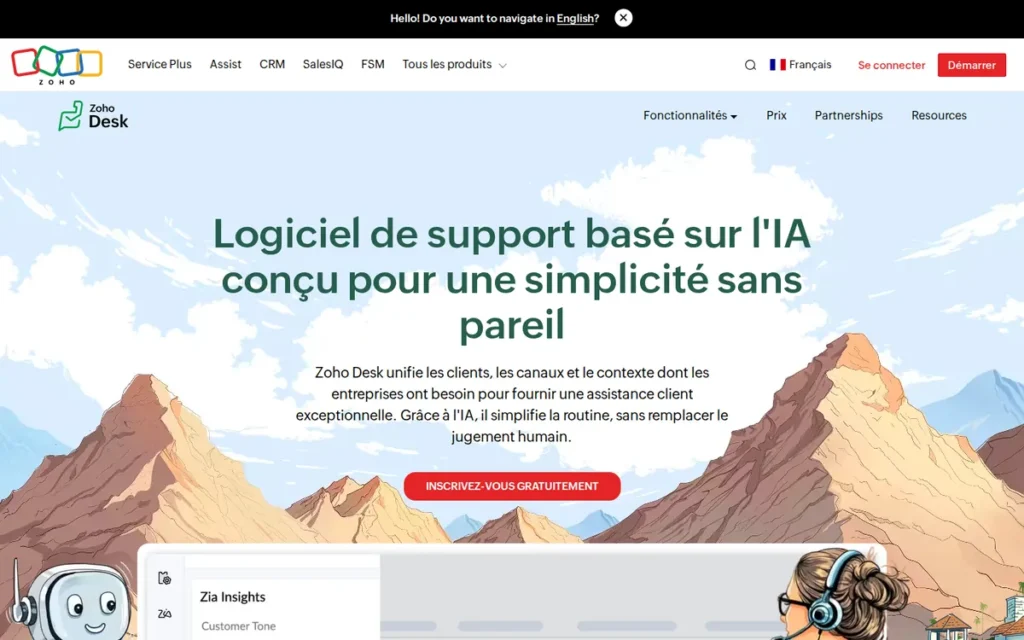
Category: Value-tier Omnichannel Help Desk, a platform delivering full-featured complaint management including SLA enforcement, automation, omnichannel intake, AI triage, and the unique Blueprint structured workflow engine at the lowest per-agent price in this comparison.
At a Glance
- Category: Value-tier Omnichannel Help Desk
- Best For: SMBs and mid-market teams of 5–75 agents seeking enterprise-grade complaint management features (SLA enforcement, workflow automation, Zia AI triage, and the unique Blueprint process control engine) at the lowest cost per agent in this comparison, especially teams already using or open to adopting other Zoho products
- Price Range: Free tier available; $7–$40/agent/month (annual billing, 2025–2026)
- Primary Strength: Zoho Desk holds the largest review base in this comparison (~5,000+ G2 reviews at 4.4/5, May 2026) and offers the most affordable full-featured complaint management tier at $14/agent/month Standard, including the Blueprint structured workflow engine unavailable at this price point on any other platform evaluated
- Biggest Limitation: Zoho Desk’s user interface is described as “clunky and text-heavy” by independent reviewer Tidio (2026), and advanced analytics for identifying recurring complaint patterns are locked to Professional ($23) and Enterprise ($40) tiers, limiting visibility for teams on the most affordable Standard plan
- One-Line Summary: Zoho Desk is the highest-reviewed complaint management platform in this comparison (~5,000+ G2 reviews at 4.4/5, May 2026) at the lowest full-featured price ($14/agent/month Standard), with bootstrapped pricing stability from a 1996-founded independent vendor and the unique Blueprint structured workflow engine, the best value-per-dollar choice for SMBs and mid-market teams prioritizing cost predictability and complaint process control
- Last Verified: May 2026
Overview
Zoho Desk is a complaint management platform for SMBs and mid-market teams delivering SLA enforcement, omnichannel ticket consolidation, Zia AI triage, and the unique Blueprint structured workflow engine (at a Standard tier of $14/agent/month, the lowest full-featured price among the seven platforms evaluated) backed by approximately 5,000+ G2 reviews at 4.4/5 (G2, May 2026).
Zoho Desk is part of a 50+ application suite built by Zoho Corporation, bootstrapped and privately held since its 1996 founding by Sridhar Vembu with no PE or VC investor exit pressure, the strongest pricing stability and vendor independence signal in this comparison.
Zoho Desk’s Blueprint workflow engine and Zia sentiment analysis are its strongest differentiators. Zoho Desk’s UI design limitations and advanced reporting access locked to higher tiers create trade-offs that SMBs on tight budgets should evaluate honestly before committing.
Key Features
- Omnichannel Ticket Consolidation: Zoho Desk consolidates complaint intake across email, web forms, live chat, phone, social media, messaging platforms, and self-service portals into a unified agent workspace with department-level ticket separation, eliminating the disconnected-channel problem that causes complaints to be siloed across separate team inboxes.
- Blueprint Structured Workflow Engine: Zoho Desk’s Blueprint engine allows teams to design policy-enforced complaint handling processes with mandatory steps, approval gates, role-specific transitions, and conditional branching, a compliance-adjacent capability not available at comparable pricing on any other platform in this comparison.
- Zia AI Triage: Zoho Desk’s Zia AI performs sentiment analysis on incoming complaints (flagging frustration signals before escalation occurs), ticket categorization, suggested responses, volume anomaly detection, and predictive staffing forecasts, at no additional per-resolution charge on paid plans.
- SLA Enforcement: Zoho Desk enforces SLA policies with configurable breach alerts, automatic escalation triggers, and real-time compliance dashboards, included in the Standard $14/agent/month tier, making SLA enforcement accessible to small teams that previously tracked complaint deadlines manually in spreadsheets.
- Ecosystem and Third-Party Integration: Zoho Desk integrates natively with Zoho CRM, Analytics, Books, and SalesIQ, as well as Salesforce, Microsoft 365, Google Workspace, Slack, and custom systems via REST API, enabling complaint data to flow into customer records without manual re-entry across a broad range of technology stacks.
Best For
Zoho Desk is best for SMBs and mid-market teams of 5–75 agents who need enterprise-grade complaint management capabilities (particularly SLA enforcement, Blueprint-structured process control, and Zia AI triage) at a price that does not require enterprise budgets, especially when the team is already using or open to adopting other Zoho products that amplify native integration value.
Pricing
Zoho Desk pricing (billed annually, 2025–2026): Free $0 (limited), Express $7/agent/month, Standard $14/agent/month, Professional $23/agent/month, Enterprise $40/agent/month. Zia AI is included in paid plans without per-resolution charges, a flat pricing advantage versus Intercom’s $0.99/resolution model and Zendesk’s outcome-based pricing. At 10 agents on Standard, annual cost is approximately $1,680, the lowest in this comparison for full-featured complaint management. Pricing last verified May 2026.
Strengths
- Zoho Desk holds the largest review base in this comparison with approximately 5,000+ G2 reviews at 4.4/5 (G2, May 2026) and was selected as the best help desk by r/sysadmin user u/BoilingJD after a direct head-to-head evaluation of Salesforce Desk, Zendesk, Freshdesk, and Zoho Desk, specifically cited for “nifty features not found elsewhere” (r/sysadmin, 2024).
- Zoho Corporation has been bootstrapped and privately held since its 1996 founding by Sridhar Vembu with no PE or VC investors, making Zoho Desk the only platform in this comparison with no investor pressure to raise prices, execute an exit, or reduce product investment, providing the strongest long-term pricing stability signal in this evaluation.
- Zoho Desk’s Blueprint structured workflow engine enables mandatory approval gates, state transitions, and role-specific process steps approximating compliance-grade complaint handling at $14/agent/month, capabilities that cost approximately $150–$200/user/month on enterprise platforms like ServiceNow CSM (Vendr, 2026), representing a more than 10x cost gap at the same team size.
- Zoho Desk’s Zia AI sentiment analysis proactively flags frustrated customers before escalation and its anomaly detection alerts managers to unusual complaint volume spikes, both included in paid plans at no additional per-resolution charge, unlike Intercom’s $0.99/Fin resolution pricing.
Limitations
- UI Friction vs. Affordability: Zoho Desk’s interface is described as “clunky and text-heavy” by independent reviewer Tidio (2026) and as producing confusing reporting for teams wanting “details beyond basics” (u/Fun-Training9232, r/helpdesk, 2026), a usability gap versus Freshdesk, Intercom, and Zendesk that teams with high agent turnover or limited technical comfort should weigh carefully.
Users on r/helpdesk noted:
“Zoho Desk has solid ticketing plus reporting, but setup and workflow customization can get clunky fast. monday service is easier and more visual, great if you already use monday, but automations feel limited as you scale. If you want something simpler but still automation-focused, Freshdesk or Desk365 are worth a look.” Posted by u/Character-Hornet-945
Takeaway: Zoho Desk’s workflow customization friction is a recurring theme in practitioner comparisons, the platform’s affordability advantage is real, but teams requiring complex, multi-stage automation should pressure-test setup complexity before committing.
- Analytics Access Gating: Zoho Desk’s advanced reporting features that identify recurring complaint patterns and enable agent performance attribution are locked to Professional ($23) and Enterprise ($40) tiers, limiting analytical depth for teams on the Standard $14/agent/month plan who need root-cause complaint analysis.
- Ecosystem Dependency: Zoho Desk’s value amplifies significantly inside the Zoho ecosystem and diminishes for teams deeply invested in Salesforce CRM or Microsoft Dynamics, where cross-platform data sync requires integration configuration rather than native connectivity.
- Blueprint Configuration Complexity: Zoho Desk’s initial Blueprint configuration for advanced workflows requires more setup time than Freshdesk’s comparable automation features, making the platform’s fast-deployment advantage most accurate for basic complaint intake rather than complex structured processes.
Verdict
Zoho Desk is the best-value complaint management platform in this comparison, combining the highest review volume (~5,000+ G2 reviews at 4.4/5, May 2026), the most affordable full-featured tier ($14/agent/month Standard), the unique Blueprint structured workflow engine, and the strongest pricing stability signal from bootstrapped, investor-pressure-free ownership since 1996. At 10 agents on annual billing, Zoho Desk Standard costs approximately $1,680/year versus $6,600–$13,800 for Zendesk Suite, a gap of up to $12,120 annually for comparable SLA enforcement and omnichannel complaint intake. Zoho Desk is the right choice for cost-conscious SMBs and mid-market teams who need SLA enforcement, AI triage, and structured process control without Zendesk’s pricing or Intercom’s variable-cost AI billing; teams that prioritize cutting-edge UI design or the deepest agentic AI stack should evaluate Zendesk.
3. Freshdesk: Best for Fast Deployment: Quickest Time-to-Complaint-Management for SMBs
Category: SMB Help Desk, a platform designed for fast self-service deployment and accessible onboarding, with SLA enforcement, omnichannel ticketing, and Freddy AI automation available from $15/agent/month, backed by a publicly traded parent company (Freshworks, NASDAQ: FRSH).
At a Glance
- Category: SMB Help Desk
- Best For: SMBs, startups, and growing teams of 1–50 agents that need the fastest path from email-based complaint handling to structured ticket management (with SLA enforcement, omnichannel routing, and automation) without requiring dedicated IT admin resources or extended implementation timelines
- Price Range: Free tier available; $15–$79/agent/month (annual billing, 2025–2026)
- Primary Strength: Freshdesk consistently earns the fastest self-service deployment recognition in community comparisons (a 20-year IT veteran called it “the least shitty system I can recall using” (u/haha_oh_wow, r/sysadmin)) with a $15/agent/month Growth tier and NASDAQ-listed vendor transparency from Freshworks (FRSH, IPO 2021), uncommon among this comparison set
- Biggest Limitation: Freshdesk’s Freddy AI has a documented production failure mode in which it routed tickets to incorrect escalation queues without administrator awareness or consent, requiring staging-environment validation before any live complaint workflow deployment (r/sysadmin, May 2026)
- One-Line Summary: Freshdesk is the fastest-deploying complaint management platform in this comparison, rated 4.4/5 on G2 by approximately 3,500+ reviewers (G2, May 2026), with a $15/agent/month Growth tier, community-verified self-service setup speed, and a publicly traded parent company (Freshworks, NASDAQ: FRSH) providing financial transparency, provided Freddy AI is tested in staging before any live deployment
- Last Verified: May 2026
Overview
Freshdesk is a complaint management platform for SMBs and fast-growing teams that need structured, SLA-enforced, omnichannel ticket management with the minimum deployment friction of any platform in this comparison, rated 4.4/5 on G2 by approximately 3,500+ reviewers (G2, May 2026) and priced at $15/agent/month for the Growth tier.
Freshdesk is published by Freshworks (NASDAQ: FRSH, IPO 2021), a publicly traded company that also offers Freshservice (ITSM), Freshsales (CRM), and Freshcaller (telephony), enabling complaint teams to scale into adjacent capabilities without switching vendors.
Freshdesk’s Freddy AI provides triage, routing, summarization, and response-generation capabilities at paid tiers, but carries a documented production failure mode requiring explicit staging-environment testing before enabling Freddy in live complaint workflows.
Key Features
- Omnichannel Ticket Intake: Freshdesk consolidates complaint intake from email, web forms, phone, live chat, social media (Facebook, Twitter/X), and messaging apps (WhatsApp, Line) into a unified ticket queue via Freshdesk Omni, available in email-first and omnichannel variants to match channel coverage to team complexity without over-purchasing.
- SLA Enforcement: Freshdesk enforces SLA policies with configurable breach notifications, priority-based escalation rules, and automated reminder workflows, included at the Growth ($15/agent/month) tier, making SLA compliance accessible to teams transitioning from spreadsheet-based complaint deadline tracking.
- Freddy AI Triage: Freshdesk’s Freddy AI performs ticket classification, prioritization, routing, reply generation, and issue summarization (with Freddy Copilot and agentic workflows available at higher tiers) but requires explicit configuration testing in staging before production deployment to avoid the documented escalation routing failure mode.
- No-Code Workflow Automation: Freshdesk’s automation builder allows teams to configure complaint routing, categorization, priority assignment, SLA escalation triggers, and canned response rules through point-and-click interfaces, enabling self-sufficient configuration without dedicated admin resources or vendor professional services.
- Prebuilt Reporting Dashboards: Freshdesk provides prebuilt dashboards for complaint volume, resolution rate, SLA compliance, first contact resolution, CSAT scores, and agent performance, enabling complaint management leads to identify recurring patterns and workload imbalances without SQL knowledge or a dedicated BI analyst.
Best For
Freshdesk is best for SMBs, startups, and growing teams of 1–50 agents migrating from email-based complaint tracking for the first time, needing the fastest self-service deployment in this category, and requiring full SLA enforcement and omnichannel ticketing at $15/agent/month, or wanting a genuine free-tier evaluation before financial commitment.
Pricing
Freshdesk pricing (billed annually, 2025–2026): Free (limited features), Growth $15/agent/month, Pro $49/agent/month, Enterprise $79/agent/month. Freddy AI Copilot and advanced agentic workflows require Pro or Enterprise tiers; the first 500 AI agent sessions per month are included, with additional 100 sessions at approximately $49. At 10 agents on Growth, annual cost is approximately $1,800. Pricing last verified May 2026.
Strengths
- Freshdesk holds a 4.4/5 G2 rating from approximately 3,500+ reviewers (G2, May 2026) and is published by Freshworks (NASDAQ: FRSH, IPO 2021), providing the most financially transparent vendor profile among the private-company majority in this comparison, with independently audited financials and investor-grade product roadmap disclosure.
- Freshdesk community evidence consistently places it as the fastest self-configuring platform in this comparison: a 20-year IT veteran described it as “the least shitty system I can recall using” (u/haha_oh_wow, r/sysadmin), and u/RaiseTechnical6460 specifically cited “figuring things out quicker on my own than with Zendesk” as the deciding factor when choosing between the two platforms (r/sysadmin).
- Freshdesk’s Freshworks ecosystem: including Freshservice (ITSM), Freshsales (CRM), and Freshcaller (telephony), allows complaint management teams to grow into adjacent IT service management and CRM capabilities without switching vendors, with native data sharing reducing integration overhead as team complexity increases.
- Freshdesk’s active developer community is building n8n and custom API integrations for AI-powered complaint triage within Freshdesk and Freshservice workflows (r/sysadmin, May 2026), demonstrating a healthy API ecosystem that extends the platform’s native automation through community-built tooling.
Limitations
- Freddy AI Production Routing Risk: Freshdesk’s most consequential trade-off is AI reliability versus deployment accessibility, Freddy AI has a documented production failure mode in which it escalated tickets to incorrect teams without administrator awareness or consent. Freshdesk’s Freddy AI was routing complaints to the wrong queue in live production without the admin team’s knowledge, for an undisclosed period before the team detected it through an unusual ticket volume spike (u/ilovejayme, r/sysadmin, May 2026).
“Today, our team learned the reason we were getting so many phone tickets recently, was because ‘Freddy AI’ kept suggesting that escalation to our service desk. We didn’t even know Freddy AI was a thing.” (u/ilovejayme, r/sysadmin (May 2026))
Takeaway: Freddy AI can modify complaint routing behavior in live production without administrator notification. Enable Freshdesk’s Freddy AI only in a staging environment and validate all routing rules against realistic complaint data before live deployment.
- B2B Collaboration Ceiling: Freshdesk’s internal ticket collaboration features (threaded agent discussion, multi-team handoff tracking) are weaker than Zendesk’s for complex enterprise B2B complaint threads, and teams managing more than 50 agents may encounter the ceiling of Freshdesk’s routing and case management depth before their operations have fully matured.
- Advanced Analytics Paywall: Freshdesk’s advanced reporting customization and deeper CSAT attribution require Pro ($49) or Enterprise ($79) tiers, meaning Growth-tier teams have limited visibility into the recurring complaint patterns that drive root-cause resolution improvements.
Verdict
Freshdesk is the best complaint management platform for SMBs and fast-growing teams prioritizing deployment speed and accessible pricing over maximum feature depth, rated 4.4/5 on G2 by 3,500+ reviewers (G2, May 2026), with a $15/agent/month Growth tier, community-verified self-service setup, and a publicly traded parent providing financial transparency that private competitors cannot match. The Freddy AI escalation routing failure mode is a non-trivial production risk requiring explicit staging validation, but it does not undermine Freshdesk’s core value as the most accessible structured complaint management platform in this comparison. Teams that outgrow Freshdesk’s routing depth, need compliance-grade audit trails, or prioritize AI resolution rate above all other criteria should evaluate Zendesk, HappyFox, or Intercom as their next platform.
4. HappyFox: Best Purpose-Built: Explicit Complaint Use-Case Design with Audit Trail and Unlimited-Agent Pricing
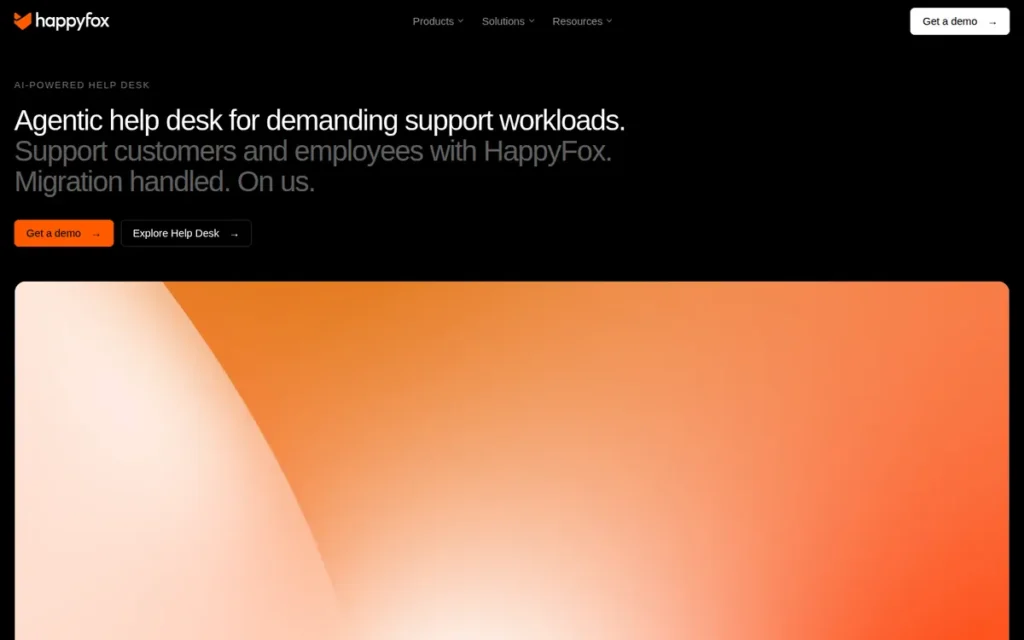
Category: Purpose-built Help Desk, a platform explicitly designed and marketed for customer complaint management workflows, including Smart Rules automation for triage and escalation, complete audit trails for compliance evidence, and SLA enforcement, rather than a general IT ticketing tool adapted for complaints.
At a Glance
- Category: Purpose-built Help Desk
- Best For: Mid-market teams of 10–100 agents that need complaint management software explicitly designed for the use case, with audit trails for compliance, Smart Rules automation for triage and escalation, and an unlimited-agent pricing model that avoids per-seat cost spikes as complaint visibility expands beyond core agents to management and cross-functional teams
- Price Range: $21–$83/agent/month (billed biennially); unlimited-agent plans available at specific tiers; Enterprise: pricing on request
- Primary Strength: HappyFox is the only platform among the seven evaluated that dedicates explicit product pages and named use-case positioning to customer complaint management (including Smart Rules automation, complete audit trails, and escalation workflows built specifically for complaint handling) and the only platform in this comparison offering an unlimited-agent pricing model
- Biggest Limitation: HappyFox’s review base of approximately 500 G2 reviews is significantly smaller than the top three platforms in this comparison, and its AI capabilities are limited to an Assist AI add-on rather than a native agentic stack, making it a weaker choice for teams where AI resolution rate is the primary buying criterion
- One-Line Summary: HappyFox is the only purpose-built complaint management platform among the seven evaluated, rated 4.5/5 on its complaint-management-specific G2 listing, selected over Zendesk, ManageEngine, and Zoho in a documented four-platform community evaluation for ease of use and workflow quality, with explicit audit trail features and an unlimited-agent pricing model making it the best choice for compliance-aware mid-market teams (backed by approximately 500 G2 reviews)
- Last Verified: May 2026
Overview
HappyFox is a complaint management platform for mid-market teams that need software explicitly designed for the use case (with Smart Rules automation for complaint triage, complete audit trails for compliance evidence, and SLA enforcement) rather than a general help desk adapted for complaints. HappyFox earned a 4.5/5 rating on its G2 complaint-management-specific product listing (G2, May 2026) and was selected over Zendesk, ManageEngine, and Zoho in a documented multi-platform evaluation based on ease of use and workflow quality (u/Outside_Pie_9973, r/sysadmin, 2024).
HappyFox is the only platform among the seven evaluated that dedicates explicit product pages and named use-case marketing to customer complaint management, a signal of intentional positioning rather than retrofitted capability.
HappyFox’s AI capabilities are limited to an Assist AI add-on. Buyers for whom AI resolution rate is the primary criterion should evaluate Zendesk or Intercom, but HappyFox’s explicit audit trail positioning and unlimited-agent pricing model are unique advantages for compliance-aware and cost-predictability-sensitive teams.
Key Features
- Smart Rules Automation: HappyFox’s Smart Rules engine routes, prioritizes, assigns, escalates, and notifies based on configurable complaint attributes (including category, channel, SLA breach status, and customer segment) enabling teams to implement end-to-end complaint triage workflows without coding, from first contact to resolution.
- Complete Audit Trails: HappyFox includes complete audit trails as an explicit complaint management feature (capturing every status change, assignment, comment, escalation, and resolution action with timestamps and role attribution) enabling teams in regulated industries to produce evidence packages for FCA DISP, CFPB, or internal compliance review without custom configuration.
- SLA Enforcement: HappyFox enforces SLA policies with configurable breach escalation triggers, agent alerts, and management notifications, included at the Happiness Desk ($21/agent/month biennial) tier, making compliance-adjacent SLA management accessible without enterprise pricing.
- Multi-Channel Complaint Intake: HappyFox consolidates complaint intake from email, web forms, live chat, phone, and social media into a centralized queue with categorization, tagging, and assignment workflows, providing the unified complaint view that eliminates the multi-channel blind spots driving complaint drop-off and delayed response.
- Unlimited-Agent Pricing Option: HappyFox’s unlimited-agent pricing option allows organizations to extend complaint ticket visibility to management, sales, and operations staff who need read access or occasional response capability, without incurring per-seat charges that apply in Zendesk, Salesforce Service Cloud, or Freshdesk for non-primary-agent users.
Best For
HappyFox is best for mid-market teams of 10–100 agents that need complaint management software explicitly designed for the use case, value ease of use and workflow clarity over raw feature breadth, require audit trail capability for compliance or internal governance, and want to avoid per-seat pricing spikes when complaint visibility needs to extend beyond core agents to management and cross-functional teams.
Pricing
HappyFox pricing (billed biennially, 2025–2026): Happiness Desk $21/agent/month, Growth $41/agent/month, Scale $83/agent/month, Enterprise: custom. Unlimited-agent plans are available at specific tiers, verify current availability directly with HappyFox, as plan structures change periodically. Biennial billing is required for the lowest published rates; monthly billing options may carry higher per-agent costs. Pricing last verified May 2026.
Strengths
- HappyFox received a 4.5/5 G2 rating on its complaint-management-specific product listing (G2, May 2026) (the highest average G2 score in this comparison) and was chosen over Zendesk, ManageEngine, and Zoho in a documented r/sysadmin four-platform evaluation, with u/Outside_Pie_9973 specifically citing “easiest to use and best workflow” as the deciding factors (r/sysadmin, 2024).
- HappyFox is the only platform among the seven evaluated that explicitly advertises audit trails as a complaint management feature, sharing this compliance-ready positioning only with ServiceNow CSM but at SMB-accessible pricing starting at $21/agent/month, rather than the high five-to-six-figure annual enterprise contracts that exclude most mid-market teams.
- Multi-year user retention evidence for HappyFox is among the strongest in this comparison: r/sysadmin user u/Webin99 (7 upvotes) reported zero functional issues after years of use across multiple teams, with the only complaint being an animated changelog notification icon, a distinctly minor issue reflecting high satisfaction with core complaint management functionality (r/sysadmin, 2024).
- A documented direct Zendesk-to-HappyFox migration from r/sysadmin user u/Talenus confirms HappyFox as a production-validated cost-reduction alternative: “I liked Zendesk’s features, but holy crap is it expensive. We moved over to HappyFox… decent ability to automate the more mundane tasks”, with confirmed database integration and production automation in use (r/sysadmin, 2024).
This aligns with community sentiment on r/sysadmin:
“We’ve been using it for about 3 years now, and it’s been pretty solid. They seem to add new features here and there, but as a core ticketing software for a 3-man team it’s more than enough. I like that you can setup your own KBs and have users be able to navigate through them, however most of the end-users just use help@[domainame].[com] and it generates a ticket and so-on. It’s cheap and effective.” Posted by u/D1TAC, r/sysadmin (2024)
Takeaway: HappyFox delivers consistent, reliable complaint ticketing for multi-year users without functional degradation, the platform earns long-term retention on core dependability, not feature novelty.
Limitations
- AI Capability Gap vs. Specialization Depth: HappyFox’s purpose-built complaint management positioning comes at the cost of AI depth, HappyFox’s AI features are limited to an Assist AI add-on rather than a native agentic stack, meaning teams where AI resolution rate is the primary criterion will find Zendesk’s agentic AI or Intercom’s Fin significantly more capable for high-volume AI-deflection workflows.
- Smaller Review Base: HappyFox’s review volume of approximately 500 G2 reviews is materially lower than Zendesk (~6,000+), Zoho Desk (~5,000+), and Freshdesk (~3,500+), providing less independent validation confidence for buyers who weight review depth in procurement decisions, though the quality and specificity of available reviews is consistently high.
- Biennial Billing Lock-In: HappyFox’s biennial billing requirement for the lowest published rates creates a longer lock-in period than monthly or annual alternatives, making HappyFox a more significant multi-year commitment than competitors offering annual or monthly payment flexibility.
- Omnichannel Coverage Gaps: HappyFox’s social media and messaging channel coverage is less comprehensive than Zendesk’s or Freshdesk Omni’s, teams receiving high complaint volume through Instagram, WhatsApp, or emerging messaging platforms should verify current channel support before committing.
Verdict
HappyFox is the best purpose-built complaint management platform in this comparison, rated 4.5/5 on its complaint-management-specific G2 listing (G2, May 2026), with explicit audit trail features, Smart Rules automation designed for complaint workflows, and a unique unlimited-agent pricing model unavailable from any other platform evaluated. HappyFox is the right choice for compliance-aware mid-market teams prioritizing complaint management specialization, ease of use, and audit trail capability over cutting-edge AI automation or the highest review volume. Teams needing the deepest agentic AI stack should evaluate Zendesk; teams needing the lowest cost per agent should evaluate Zoho Desk or Freshdesk; teams needing ITSM-integrated enterprise complaint workflows should evaluate ServiceNow CSM.
5. Salesforce Service Cloud: Best for Salesforce-Native Enterprises: CRM-Integrated Complaint Management with Financial Services Cloud Compliance Modules
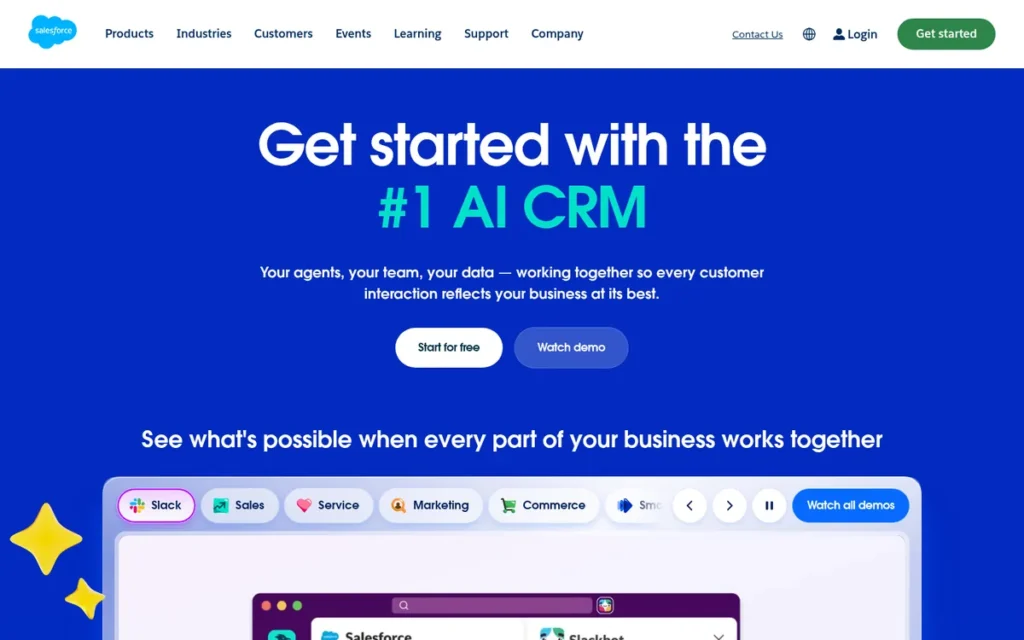
Category: CRM-native Service Platform, a platform delivering complaint management functionality embedded within a full Salesforce CRM context, where agents see customer data, purchase history, account relationships, and prior case records alongside every complaint in a unified view.
At a Glance
- Category: CRM-native Service Platform
- Best For: Enterprise organizations already running Salesforce CRM that need complaint management fully integrated with customer data, Einstein AI classification, and Financial Services Cloud regulatory compliance modules, and for whom eliminating a separate complaint tool justifies $165+/user/month
- Price Range: Starter Suite $25/user/month; Professional $80/user/month; Enterprise $165/user/month; Unlimited $330/user/month; Einstein 1 Service $500/user/month (all annual, 2025–2026)
- Primary Strength: Salesforce Service Cloud delivers the deepest CRM-native complaint management in this comparison (agents see full customer purchase history, account relationships, and prior cases alongside every complaint) powered by Einstein AI, backed by $35B+ FY2025 annual revenue (Salesforce IR, 2025) and consistent Gartner Magic Quadrant Leader recognition
- Biggest Limitation: Salesforce Service Cloud’s Enterprise tier at $165/user/month is the most expensive full-featured entry point in this comparison, and its steep learning curve and substantial admin overhead require dedicated Salesforce administration resources that make it comprehensively inaccessible outside organizations already invested in Salesforce CRM
- One-Line Summary: Salesforce Service Cloud is the best complaint management platform for enterprises already on Salesforce CRM, rated 4.3/5 on G2 by approximately 4,000+ reviewers (G2, May 2026), with Einstein AI complaint classification, Financial Services Cloud compliance modules aligned to FCA DISP and CFPB, and CRM-native context, but its $165+/user/month Enterprise pricing and complex implementation make it a poor fit outside existing Salesforce organizations
- Last Verified: May 2026
Overview
Salesforce Service Cloud is a CRM-native customer service platform for enterprise organizations already invested in the Salesforce ecosystem, delivering complaint management, case lifecycle tracking, SLA enforcement, omnichannel routing, and Einstein AI-assisted classification within a unified environment where agents see full customer context alongside every complaint. Salesforce Service Cloud is rated 4.3/5 on G2 by approximately 4,000+ reviewers (G2, May 2026) and backed by Salesforce’s $35B+ FY2025 annual revenue (Salesforce IR, 2025).
Salesforce Service Cloud is a consistent Gartner and Forrester Magic Quadrant Leader in customer service platforms, with a Financial Services Cloud variant providing BFSI-specific complaint data models aligned to FCA DISP and CFPB regulatory frameworks.
Salesforce Service Cloud’s $165/user/month Enterprise entry point for full complaint management functionality, steep implementation requirements, and ecosystem lock-in trajectory make it exclusively appropriate for organizations already running Salesforce CRM, for all other buyers, it represents the weakest value proposition in this comparison at any team size.
Key Features
- CRM-Native Complaint Context: Salesforce Service Cloud embeds complaint handling within full Salesforce CRM context (agents see customer purchase history, account relationships, prior cases, and active opportunities alongside every complaint in a unified view) eliminating the data-silo problem that forces agents to ask customers to repeat information already provided.
- Einstein AI Classification: Salesforce Service Cloud’s Einstein AI automatically populates complaint titles and descriptions from voice or chat keywords, classifies cases, suggests replies, recommends knowledge articles, generates service summaries, and provides next-best-action prompts, with AI capabilities increasing in depth at higher Einstein 1 Service pricing tiers ($330–$500/user/month).
- SLA Enforcement via Entitlements and Milestones: Salesforce Service Cloud enforces SLA compliance through its Entitlements and Milestones framework (configurable to match any complaint resolution SLA policy) with real-time breach visibility, automated escalation flows, and case status dashboards providing compliance evidence at the individual case level.
- Financial Services Cloud Compliance Modules: Salesforce Financial Services Cloud provides complaint management data models aligned to FCA DISP and CFPB regulatory frameworks (including timestamped audit trails, complaint categorization schemas, and regulator-ready case export formats) the most regulation-ready out-of-the-box configuration for financial services and insurance buyers in this comparison.
- 360° Customer View for B2B Complaint Management: Salesforce Service Cloud’s Omni-Channel routing distributes complaints with a 360° customer view including delivered products, active faults, and delivery status, particularly valuable for B2B complaint management where account history complexity is high and context gaps cause the most resolution delays.
Best For
Salesforce Service Cloud is best for enterprise organizations already running Salesforce CRM that need complaint management fully embedded in their existing customer data infrastructure (particularly organizations in financial services or insurance where the Financial Services Cloud’s compliance data models reduce FCA DISP and CFPB audit trail configuration burden) and can justify $165+/user/month alongside dedicated Salesforce administration investment.
Pricing
Salesforce Service Cloud pricing (per user/month, billed annually, confirmed May 2026): Starter Suite $25, Professional $80, Enterprise $165, Unlimited $330, Einstein 1 Service $500. Full omnichannel complaint management with SLA enforcement and audit trail features requires approximately the Enterprise tier at $165/user/month. For organizations already on Salesforce CRM, the marginal cost of adding Service Cloud may be partially offset by eliminating a separate complaint management tool; for organizations not on Salesforce, this offset does not apply. Pricing last verified May 2026.
Strengths
- Salesforce Service Cloud holds a 4.3/5 G2 rating from approximately 4,000+ reviewers (G2, May 2026) and is a consistent Gartner and Forrester Magic Quadrant Leader in customer service platforms, backed by Salesforce’s $35B+ FY2025 annual revenue (Salesforce IR, 2025) and the largest enterprise implementation partner network in this comparison.
- The r/salesforce practitioner community reflects a directional migration pattern unique in this comparison: “Coming from the consulting world, I have seen Service Cloud for companies moving from Zendesk, even for mergers. Have never seen Service Cloud being switched to Zendesk” (u/Reddit_Account__c, r/salesforce, 2023), community-validated evidence that Salesforce Service Cloud functions as the enterprise destination platform for maturing complaint management operations.
This matches what practitioners on r/salesforce describe about the migration experience:
“Many have made this transition! The technology will be the easy part. The tough part is the individual change management. Make sure you have clear process mapping of your process today. Then talk to a non biased team that understand Salesforce well to give you a good idea of the effort required to lift and shift to Salesforce. This is a big project but it’s super valuable to have both sales and service in the same platform. Good luck!!” Posted by u/Interesting_Button60
Takeaway: Salesforce Service Cloud migrations are described by practitioners as high-effort change management projects where organizational alignment (not platform capability) is the primary success determinant.
- Salesforce Financial Services Cloud provides BFSI-specific complaint management data models aligned to FCA DISP and CFPB regulatory requirements (including timestamped audit trails, role attribution, complaint categorization schemas, and regulator-ready export formats) the most regulation-ready out-of-the-box configuration for financial services and insurance buyers in this comparison.
- Salesforce Service Cloud’s CRM-native architecture delivers a 360° customer view at complaint submission that no other platform in this comparison replicates without custom integration, agents handle complaints with full purchase history, account relationships, and prior case records visible alongside the current ticket, directly addressing the context gap that causes repeated customer information requests.
Limitations
- Cost Inaccessibility: Salesforce Service Cloud’s Enterprise tier at $165/user/month is the most expensive full-featured entry point in this comparison, at 10 agents annually, Salesforce Enterprise costs approximately $19,800/year versus $1,680 for Zoho Desk Standard, a gap exceeding $18,000 per year before implementation costs are considered.
- Steep Learning Curve and Admin Overhead: Salesforce Service Cloud requires dedicated Salesforce administration resources comprehensively documented in analyst reports and community discussions, r/salesforce user u/davemccall (a disclosed Salesforce consultant) described Salesforce as requiring “far more administrative investment than Zendesk” while acknowledging its greater extensibility and ecosystem depth (r/salesforce, 2023).
- Ecosystem Lock-In Trajectory: Salesforce Service Cloud’s accumulated customizations create platform lock-in that makes future migration costs effectively prohibitive for most organizations, making the initial vendor selection a multi-year commitment that should be evaluated with full switching-cost awareness before signing.
- Zero Value Outside Salesforce Organizations: Salesforce Service Cloud’s core value proposition (keeping everything in the Salesforce ecosystem) does not apply for teams without existing Salesforce CRM infrastructure, making it the weakest value choice in this comparison for non-Salesforce organizations at any team size or budget.
Verdict
Salesforce Service Cloud is the best complaint management platform for enterprise organizations already on Salesforce CRM, rated 4.3/5 on G2 by 4,000+ reviewers (G2, May 2026), with CRM-native context, Einstein AI, Financial Services Cloud compliance modules for FCA/CFPB regulated industries, and community-validated status as the enterprise destination platform for maturing complaint management operations. Outside existing Salesforce ecosystems, Salesforce Service Cloud’s $165+/user/month pricing, complex implementation, and lock-in trajectory make Zendesk, Freshdesk, or HappyFox meaningfully better choices at every team size and budget. Regulated-industry buyers in financial services or insurance should evaluate the Financial Services Cloud variant specifically for out-of-the-box FCA DISP and CFPB audit trail compliance capability.
6. Intercom: Best for SaaS Teams: AI-First Conversational Complaint Handling with the Highest Published Resolution Benchmark
Category: Conversational AI Platform, a platform designed primarily for real-time chat-based complaint handling with AI-automated resolution as the primary complaint deflection mode, optimized for SaaS and digital-native environments rather than formal complaint register management or regulated-industry documentation requirements.
At a Glance
- Category: Conversational AI Platform
- Best For: SaaS companies, digital-native consumer brands, and product-led growth teams where most complaints arrive via live chat or in-app messaging and AI resolution rate is the primary optimization target, not teams handling formal complaint registers, regulated-industry audit trails, complex B2B case histories, or high-volume structured complaint workflows
- Price Range: Essential $29/seat/month; Advanced $85/seat/month; Expert $132/seat/month (annual); Fin AI add-on: $0.99 per resolved conversation; Proactive Support Plus: $99/month
- Primary Strength: Intercom’s Fin AI reports a 66–67% average conversation resolution rate across 6,000+ customers (Intercom, ‘What’s New with Fin 3,’ 2025) (the highest published AI resolution benchmark among the seven platforms evaluated) and its proactive messaging capability allows teams to prevent complaints before submission, a feature absent from all other platforms in this comparison
- Biggest Limitation: Intercom’s $0.99/Fin resolution charge creates unpredictable cost scaling: at 1,000 AI-resolved conversations per month, Fin charges alone reach approximately $990 on top of per-seat costs, with multiple community users documenting unexpected bill escalation from seat additions, AI charges, and undisclosed add-ons (r/SaaS, 2025)
- One-Line Summary: Intercom is the best complaint management platform for SaaS and digital-native teams prioritizing AI-first conversational resolution, rated 4.5/5 on G2 by approximately 3,000+ reviewers (G2, May 2026), with Fin AI claiming a 66–67% average resolution rate (Intercom, 2025) and proactive complaint-prevention messaging unique in this comparison, but its $0.99/resolution pricing creates documented bill-shock at scale and its absent audit trail makes it unsuitable for regulated-industry complaint management
- Last Verified: May 2026
Overview
Intercom is an AI-first conversational complaint management platform for SaaS companies and digital-native businesses, rated 4.5/5 on G2 by approximately 3,000+ reviewers (G2, May 2026), centered on Fin AI’s 66–67% average conversation resolution rate across 6,000+ customers (Intercom, ‘What’s New with Fin 3,’ 2025), at $29–$132/seat/month plus $0.99 per Fin-resolved conversation.
Intercom combines support, proactive messaging, lifecycle engagement, and in-product communication in one platform, uniquely enabling teams to prevent complaints through behavior-triggered outreach before customers submit them, a capability absent from all six other platforms in this comparison.
Intercom’s per-resolution Fin pricing creates documented bill-shock risk at scale, and its limited audit trail capability means it is not appropriate for complaint management in regulated industries, teams in BFSI, healthcare, or any environment requiring CFPB, FCA, or HIPAA-compliant documentation should evaluate HappyFox, Salesforce Service Cloud, or ServiceNow CSM instead.
Key Features
- Fin AI Conversational Resolution: Intercom’s Fin AI reports an average 66–67% conversation resolution rate across 6,000+ customers (Intercom, 2025) (providing AI-automated complaint deflection that reduces first-tier agent workload) though performance is directly dependent on structured knowledge base quality and falls significantly for teams with limited or outdated documentation.
- Proactive Complaint Prevention: Intercom’s proactive messaging capability allows teams to send behavior-triggered messages to customers showing frustration signals or product usage patterns associated with complaint intent, enabling complaint prevention before formal submission, a capability absent from all six other platforms in this comparison.
- Multi-Channel Conversational Intake: Intercom consolidates complaint intake across live chat/Messenger, email, in-app messaging, SMS, WhatsApp, Instagram, and Facebook into a shared inbox, with Fin AI handling initial intake, routing, and resolution before escalation to human agents for complaints requiring structured case handling.
- Product Analytics Integration: Intercom integrates with CRM systems (Salesforce, HubSpot, Pipedrive), product analytics tools (Amplitude, Segment, Stripe), and issue trackers (Jira, GitHub), enabling agents to see in-product usage context alongside complaints for SaaS teams where product behavior is diagnostic for complaint resolution quality.
- Modern Conversational UX: Intercom’s Messenger interface and modern UI design are consistently cited as the most intuitive in this comparison for conversational support scenarios, reducing agent onboarding time and providing the chat-native customer experience that digital-native brand expectations demand.
Best For
Intercom is best for SaaS companies, consumer apps, and digital-native teams where the majority of complaints arrive via live chat or in-app messaging, AI resolution rate is the primary optimization metric, in-product context is valuable for resolution quality, and the majority of complaints are knowledge-base-resolvable rather than complex multi-party B2B cases or regulatory documentation scenarios.
Pricing
Intercom pricing (per seat/month, billed annually, 2025–2026): Essential $29, Advanced $85, Expert $132. Fin AI add-on: $0.99 per resolved conversation (per successful AI resolution, not per attempt). Proactive Support Plus: $99/month. Cost modeling is criticalbefore signing:
- 500 Fin resolutions/month = $495 in Fin charges alone, on top of per-seat costs
- 1,000 Fin resolutions/month = $990 in Fin charges alone
- 2,000 Fin resolutions/month = $1,980 in Fin charges alone
Multiple users documented unexpected add-on charges upon contract review. Require a line-by-line review of all charges before signing. Pricing last verified May 2026.
Strengths
- Intercom holds a 4.5/5 G2 rating from approximately 3,000+ reviewers (G2, May 2026) (the highest average score among the seven platforms evaluated) and Fin AI’s 66–67% average conversation resolution rate (Intercom, ‘What’s New with Fin 3,’ 2025) represents the highest published AI automation benchmark in this comparison, indicating meaningful AI-driven workload reduction for teams with well-structured knowledge bases.
- Intercom’s proactive messaging sends behavior-triggered outreach to customers showing frustration signals or usage patterns associated with complaint intent, enabling complaint prevention before formal submission, a feature absent from all six other platforms evaluated (Intercom, 2025).
- Intercom’s integrations with product analytics platforms (Amplitude, Segment) and CRM systems (Salesforce, HubSpot) allow agents to see in-product usage context alongside complaints, enabling resolution quality improvements that pure ticketing tools cannot match for digital-native teams where product behavior is diagnostic.
- Intercom’s modern UX design and real-time Messenger interface are consistently cited as the most intuitive in this comparison, directly addressing agent onboarding friction for teams with high turnover or limited training time, and providing the chat-native customer experience that digital consumer brands expect.
Limitations
- Per-Resolution Bill-Shock Risk: Intercom’s $0.99/Fin resolution charge creates a cost scaling model that multiple users have documented producing unexpected bills, at 1,000 Fin AI resolutions per month, Fin charges alone reach approximately $990 on top of seat costs, a figure that compounds with seat additions and undisclosed add-ons (u/TigerAnxious9161, r/SaaS, 2025).
“The first time we moved to Intercom, we were a 12-person team with about 8 support agents. The initial sticker price looked reasonable. Six months later the bill had climbed because of seat additions, the AI resolution charges, and a couple of add-ons we didn’t realize were optional at signing. Finance was not pleased.” (u/TigerAnxious9161, r/SaaS (2025))
Takeaway: Intercom’s cost structure has multiple billable variables (seats, Fin resolutions, and add-ons) that compound unpredictably. Require a line-by-line contract review and model worst-case Fin charges at your expected monthly resolution volume before signing any Intercom agreement.
- Fin Performance Dependency on Knowledge Base Quality: Fin AI’s 66–67% resolution benchmark requires a well-structured, comprehensive knowledge base, teams with incomplete or unorganized documentation will see substantially lower actual resolution rates, making the benchmark unreliable as a planning assumption without prior knowledge base quality assessment.
“Oh god, we just got rid of Fin. Cost way too much and didn’t even work the way we needed it to. Now we’re paying almost half as much with Lyro (Tidio’s equivalent) and it’s way better.” (u/Dull-Acanthaceae4601, r/customerexperience (2025, 8 upvotes))
Takeaway: Fin’s 66–67% benchmark is a cross-customer average, not a guarantee. Teams with complex product queries or thin knowledge bases may see significantly lower actual rates. Pilot Fin with a limited complaint category before full deployment.
- Insufficient for Formal Complaint Registers and B2B Complexity: Intercom’s conversational-first architecture is demonstrably insufficient for traditional complaint management use cases (formal complaint registers, complex B2B case histories, and regulated-industry audit trails) confirmed by r/SaaS user u/neha-shelar who reported Intercom “started feeling a bit thin” for longer B2B threads and eventually required a supplementary desk tool to manage them (r/SaaS, 2025).
Verdict
Intercom is the best complaint management platform for SaaS companies and digital-native teams that prioritize AI-first conversational resolution, rated 4.5/5 on G2 by 3,000+ reviewers (G2, May 2026), with Fin AI’s 66–67% resolution benchmark (Intercom, 2025) and proactive messaging representing genuine category differentiation for the right audience. Teams must model worst-case Fin pricing before signing (at 1,000 AI resolutions/month, Fin charges alone reach approximately $990 on top of per-seat costs), verify their knowledge base is structured enough to support Fin’s benchmark performance, and require a line-by-line contract review to avoid documented undisclosed add-on charges. Regulated-industry teams, enterprise B2B operations, and any team requiring a formal complaint register with immutable audit trails should select HappyFox, Zendesk, or Salesforce Service Cloud instead.
7. ServiceNow Customer Service Management: Best for ITSM Integration: The Only Platform That Natively Links Complaints to IT Operations
Category: Enterprise Workflow Platform, a platform that delivers complaint management as part of a full enterprise service management architecture, where customer complaints can natively trigger IT operations workflows including Incident, Problem, Change, and Request records, designed exclusively for large enterprises with dedicated certified platform administration resources.
At a Glance
- Category: Enterprise Workflow Platform
- Best For: Large enterprises of 500+ employees with dedicated certified ServiceNow admin teams where customer complaints must natively trigger IT operations workflows, such as organizations where billing error complaints may link to software Incidents, or service outage complaints connect directly to Problem or Change records
- Price Range: Pricing not publicly listed: enterprise quote only. Third-party estimates: approximately $150–$200/user/month for smaller deployments (~$18,000/year at 10 users, Vendr 2026); full enterprise programs with professional services and implementation commonly reach multi-six-figure annual totals (NPI Financial, 2026). Pricing last verified May 2026.
- Primary Strength: ServiceNow Customer Service Management is the only platform among the seven evaluated with a native ITSM-CSM bridge (customer complaints directly create linked Incident, Problem, Change, or Request records within the same platform, without custom integration) backed by Gartner Magic Quadrant Leader recognition (multiple publication years) and NYSE-listed vendor stability (NYSE: NOW)
- Biggest Limitation: ServiceNow CSM’s pricing is not publicly listed and meaningful deployments typically begin at multi-six-figure annual totals; its admin complexity is described by a CTA-certified ServiceNow specialist as best learned through “real-world experience, not training materials” (u/shwimpang, r/servicenow, 2025)
- One-Line Summary: ServiceNow Customer Service Management is the only complaint management platform among the seven evaluated with a native ITSM-CSM bridge linking customer complaints directly to IT Incident, Problem, and Change records, the uniquely correct choice for large enterprises where complaint resolution requires coordinated IT operations response, at enterprise pricing (~$150–$200/user/month, Vendr 2026) and admin complexity that excludes all other buyer segments
- Last Verified: May 2026
Overview
ServiceNow Customer Service Management is the only complaint management platform among the seven evaluated with a native ITSM-CSM bridge, enabling customer complaints to directly create linked Incident, Problem, Change, or Request records when they reveal systemic IT issues, without custom integration. ServiceNow CSM holds approximately 4.4/5 on G2 and is a consistent Gartner Magic Quadrant Leader in enterprise service management (Gartner, multiple publication years), backed by a multi-billion-dollar annual revenue NYSE-listed public company (NYSE: NOW) founded in 2004.
ServiceNow CSM’s pricing is not publicly disclosed. Third-party market data places licensing at approximately $150–$200/user/month for smaller deployments (~$18,000/year at 10 users, Vendr 2026), with full enterprise programs including professional services and implementation commonly reaching multi-six-figure totals (NPI Financial, 2026).
ServiceNow CSM is ranked last in this general-audience evaluation not because it is inferior in its target context, but because its inaccessible pricing, extreme admin complexity, and narrow large-enterprise applicability make it the wrong choice for the majority of complaint management buyers.
Key Features
- Native ITSM-CSM Bridge: ServiceNow CSM’s native ITSM-CSM bridge allows customer complaint cases to directly create linked Incident, Problem, Change, or Request records within the same platform, enabling real-time escalation from customer-facing complaint handling to IT operations resolution without manual handoff between separate systems.
- Compliance-Grade Audit Trails: ServiceNow CSM captures every case action: status changes, assignments, approvals, escalations, and resolutions, with timestamp, role attribution, and approval chain linkage by platform architecture, providing compliance-grade audit trail evidence for CFPB, FCA, and HIPAA regulated complaint management without custom configuration.
- 360° Account Context for B2B Complaints: ServiceNow CSM provides a 360° customer view including delivered products, delivery status, and open faults, enabling agents handling enterprise B2B complaints to see full account service history alongside the current complaint context, reducing the repeated information requests that damage long-term customer relationships.
- Multi-Channel Intake with ML Routing: ServiceNow CSM delivers multi-channel complaint intake via web portal, email, chat, phone, and social channels (with AI/ML-assisted routing that learns from case patterns to improve assignment accuracy over time) and self-service portals enabling customers to file, track, and receive updates on complaints directly.
- Enterprise Reporting for Operational Reviews: ServiceNow CSM’s configurable reporting and CRM Analytics integration provide complaint volume visibility, resolution rate tracking, SLA compliance evidence, and pattern analysis aligned to enterprise operational reporting cadences, with prebuilt complaint insight dashboards suitable for executive review.
Best For
ServiceNow Customer Service Management is best for large enterprises with 500+ employees, dedicated certified ServiceNow admin teams, and a complaint management environment where customer-facing cases must frequently trigger IT operations workflows, specifically organizations in telecommunications, financial services, healthcare IT, or manufacturing where a customer complaint about service availability or billing may be caused by an underlying IT incident requiring a formal Change or Problem record.
Pricing
ServiceNow CSM pricing is not publicly listed and is sold via enterprise quote. Third-party market data places licensing at approximately $150–$200/user/month for smaller deployments, roughly $18,000/year at 10 users (Vendr, 2026), with full enterprise programs including professional services, implementation, and training commonly reaching multi-six-figure annual totals for complex deployments (NPI Financial, 2026). Community evidence confirms CSM licenses include ITSM licensing (u/CO-Don, r/servicenow, 2024), a combined-function value for organizations needing both customer-facing and IT-facing service management. Budget qualification is strongly recommended before investing evaluation time. Pricing last verified May 2026.
Strengths
- ServiceNow CSM is a consistent Gartner Magic Quadrant Leader across enterprise service management and customer service categories (Gartner, multiple publication years), backed by ServiceNow’s multi-billion-dollar annual revenue and NYSE-listed public company stability (NYSE: NOW), providing the most independently analyst-validated vendor profile in this comparison for large-enterprise buyers making multi-year platform commitments.
- ServiceNow CSM’s native ITSM-CSM bridge is documented in ServiceNow’s integration documentation as supporting resolution codes, related record tracking, major issue synchronization, and real-time case-to-incident linking, eliminating the manual handoff between customer service and IT operations teams that creates complaint resolution delays and accountability gaps in organizations using separate systems.
- A r/servicenow practitioner confirmed that “CSM licenses include ITSM” and that “ServiceNow isn’t a point solution, it’s an enterprise platform (a leader in the magic quadrants for a number of different spaces” (u/CO-Don, r/servicenow, 2024)) providing combined customer-facing and IT-facing service management in a single licensing tier, a dual-function inclusion unavailable from any other platform in this comparison.
- ServiceNow CSM’s workflow immutability: every action timestamped, role-attributed, and linked to approval chains by platform architecture, provides compliance-grade audit trail evidence for CFPB, FCA, and HIPAA regulated complaint governance at the structural platform level, without the custom configuration that most other platforms require to approximate this capability.
Limitations
- Pricing Opacity and Enterprise-Only Cost Structure: ServiceNow CSM’s most consequential trade-off is enterprise power versus accessibility, pricing is not publicly listed, requiring sales engagement investment before budget qualification, and third-party estimates place licensing at approximately $150–$200/user/month (Vendr, 2026), with full programs reaching multi-six-figure annual totals for complex deployments.
- Documented Admin Complexity: ServiceNow CSM’s administration complexity is documented by practitioners as severe, an r/sysadmin user explicitly excluded ServiceNow from consideration for complaint tools citing prior administration trauma (u/paratrabajo144, r/sysadmin), and a CTA-certified ServiceNow specialist with CSM, ITSM, and HRSD certifications stated that “the best way to learn CSM continues to be real-world experience” because training materials are comprehensively inadequate (u/shwimpang, r/servicenow, 2025).
“I have PTSD from supporting ServiceNow in the past; never again…” (u/paratrabajo144, r/sysadmin)
Takeaway: ServiceNow CSM’s administration burden is not marketing language, it is documented by practitioners with real implementation experience. Budget for a dedicated certified ServiceNow admin before committing to any CSM deployment.
- Knowledge and Certification Investment Barrier: ServiceNow CSM requires organizations without existing infrastructure to build a qualified certified admin team from scratch, a prerequisite that takes months of investment before competent implementation can begin, not an outcome that follows from signing a license agreement.
- Narrow Applicability: ServiceNow CSM is the uniquely correct answer for a specific large-enterprise audience with ITSM-CSM integration requirements and comprehensively the wrong answer for every other buyer in this comparison, including SMBs, mid-market teams, and organizations without existing ServiceNow infrastructure.
Verdict
ServiceNow Customer Service Management is the only platform among the seven evaluated with a native ITSM-CSM bridge linking customer complaints directly to IT Incident, Problem, and Change records, making it the uniquely appropriate choice for large enterprises where complaint resolution requires cross-functional IT operations coordination, backed by Gartner Magic Quadrant Leader recognition and NYSE-listed vendor stability. ServiceNow CSM is ranked last in this evaluation not because it is inferior in its target context, but because its quote-only pricing, documented administration complexity requiring dedicated certified admin teams, and narrow large-enterprise applicability make it inaccessible to the majority of complaint management buyers. Organizations needing ITSM-CSM integration should evaluate ServiceNow CSM directly; all other teams should evaluate Zendesk, Zoho Desk, Freshdesk, HappyFox, Salesforce Service Cloud, or Intercom, the six platforms ranked higher in this evaluation.
What Red Flags Should I Watch For When Evaluating Complaint Management Software?
Six documented warning signs indicate a complaint management platform may create hidden costs, compliance risks, or operational disruptions after you sign, surfaced from independent research across Reddit practitioner communities, vendor contracts, and community reports of AI deployment failures. Review all six before finalizing any complaint management platform evaluation.
Red Flag #1: Per-Resolution AI Pricing Without Volume Caps
Intercom charges $0.99 per Fin AI resolution, and Zendesk introduced outcome-based AI pricing in 2025. Without a contractual cap or monthly limit, complaint teams with growing AI resolution volumes face unpredictable cost scaling, documented as causing finance-team escalations at companies with 12 or more support staff (r/SaaS, 2025). Before signing any AI-enabled complaint management contract, model your expected monthly AI resolution volume at three scenarios: conservative, realistic, and high-growth.
Red Flag #2: Contract Auto-Renewal Without Clear Cancellation Access
Zendesk community reports document users unable to reach anyone to cancel an auto-renewing annual contract while add-on orders were processed in 15 minutes (u/mooseslodge1975, r/sysadmin, 2024). Before signing any annual complaint management software contract, negotiate explicit cancellation procedures and non-auto-renewal terms in writing, separate from the standard contract language.
Red Flag #3: AI Features Deployed Without Configuration Testing
Freshdesk’s Freddy AI routed live complaints to incorrect teams in production without administrator knowledge, for an undisclosed period before detection (u/ilovejayme, r/sysadmin, May 2026). Any AI routing or triage feature must be validated in a staging environment with realistic complaint data before enabling in live complaint workflows, the absence of a staging environment in the vendor’s trial offering is itself a warning sign.
Red Flag #4: Quote-Only Pricing Requiring Sales Engagement to Budget-Qualify
ServiceNow CSM offers no public pricing, requiring meaningful vendor engagement before teams can determine if the platform is within budget. This creates evaluation inefficiency that transparent-pricing competitors eliminate entirely. If a vendor will not publish entry-level pricing, factor that opacity into your trust assessment of the overall sales and post-sale relationship.
Red Flag #5: Audit Trail Claimed but Not Designed for Regulated-Industry Documentation
Several platforms offer “activity logs” or “ticket history” that differ meaningfully from immutable, role-attributed, timestamped audit trails required by FCA DISP, CFPB, or HIPAA. Only HappyFox and ServiceNow CSM among the seven evaluated explicitly market audit trail capability as a named complaint management compliance feature, teams in BFSI, healthcare, or other regulated industries should verify audit trail granularity with a specific compliance checklist before purchasing.
Red Flag #6: No Documented Migration Path Away From the Platform
Before committing to any complaint management software, verify the vendor provides a data export format (ticket history, customer records, SLA reports) that can be ingested by your next tool. Platforms with complex customization structures (Salesforce Service Cloud, ServiceNow CSM) create the highest switching costs; platforms with open API exports (Freshdesk, Zoho Desk) create the lowest. The absence of a documented migration path is a vendor lock-in signal that deserves explicit negotiation before signing.
What Questions Should I Ask Before Choosing a Complaint Management Platform?
These eight questions surface the most common mismatches between complaint management software and the teams that buy it, covering channel coverage, AI cost modeling, compliance requirements, tech stack integration, team size scalability, admin capacity, total budget modeling, and SLA enforcement depth. Use them as a structured brief for vendor demos and internal decision-making.
Question #1: What channels do our complaints currently arrive through, and which platforms support all of them natively without add-on fees?
Map every channel where complaints arrive (email, phone, live chat, WhatsApp, Instagram, web forms, social media) and match that list against each platform’s native channel support at the pricing tier you intend to purchase. Zendesk and Freshdesk Omni have the broadest omnichannel coverage; HappyFox has the narrowest among the seven platforms reviewed. Channel gaps that require third-party integrations add cost and maintenance overhead that should be factored into total cost of ownership.
Question #2: What is our projected monthly AI resolution volume, and what is the worst-case per-resolution AI charge at that volume?
If evaluating Intercom or Zendesk’s outcome-based pricing tier, calculate your expected monthly AI-resolved complaint volume and multiply by the per-resolution rate. At 1,000 Fin resolutions per month, Intercom charges approximately $990 in Fin fees alone on top of seat costs, a figure that determines whether the AI pricing model is cost-effective or bill-shock-prone for your specific complaint volume profile.
Question #3: Do we have regulatory audit trail requirements (FCA DISP, CFPB, or HIPAA) and which platforms meet them without custom configuration?
Teams in BFSI, healthcare, insurance, or government should verify that any platform under evaluation produces immutable, timestamped, role-attributed complaint records exportable in a regulator-ready format. HappyFox and ServiceNow CSM are the only platforms in this comparison that explicitly position this capability, other platforms may require custom configuration to meet the same standard.
Question #4: What is our existing tech stack, and which platform integrates natively versus requiring build-out?
Teams on Salesforce CRM get the most value from Salesforce Service Cloud’s native integration at zero additional development cost. Teams on Zoho products get equivalent native value from Zoho Desk. Teams on neutral stacks should evaluate Zendesk’s 1,800+ marketplace or Freshdesk’s API ecosystem for realistic integration cost estimates before signing.
Question #5: What is our team size today and in 12 months, and does the platform’s pricing model scale predictably?
Per-agent pricing (present in all platforms except HappyFox’s unlimited-agent option) creates predictable cost scaling for stable team sizes but creates budget surprises when headcount grows rapidly. Model projected team size at 12 and 24 months against each platform’s pricing to identify which tool becomes the most expensive at your growth trajectory before commitment.
Question #6: What is our admin capacity for platform configuration, do we have a dedicated IT admin, or will a customer service manager configure this independently?
Freshdesk and Zoho Desk (basic setup) are community-validated as self-configurable by non-technical managers in under a day. Salesforce Service Cloud and ServiceNow CSM require dedicated certified admin investment. Zendesk rewards deep configuration but frontloads friction for teams without dedicated admin resources. Match platform configuration requirements to your actual available admin bandwidth, not ideal future capacity.
Question #7: What is our total monthly budget including AI add-ons, and have we modeled variable-cost scenarios?
Platform seat costs are visible; AI add-on costs often are not. For every platform with variable AI pricing, model a conservative scenario (500 AI resolutions/month), a realistic scenario (1,000/month), and a high-growth scenario (2,000/month) against your projected complaint volume to establish a realistic total cost of ownership before any contract is signed.
Question #8: What are our SLA requirements and what escalation behavior do we need when SLAs are breached?
Every platform in this comparison offers SLA enforcement at some pricing tier, but the depth varies significantly. Define your required breach escalation behavior (agent notification only, manager escalation, automatic priority change, compliance report trigger) and verify that each platform under evaluation supports your exact requirements at the pricing tier you intend to purchase, not only at the highest Enterprise tier.
How Did We Rank These Complaint Management Platforms?
These seven complaint management platforms were ranked using a weighted scoring model across six criteria: complaint management feature completeness (30%), review platform ratings and volume (25%), pricing accessibility and total cost transparency (20%), AI capability depth and production reliability (15%), setup speed and ease of administration (5%), and compliance and audit trail readiness (5%). No vendor relationship influenced any ranking decision.
Criterion 1: Complaint Management Feature Completeness, 30% weight
Feature completeness is the primary criterion because the target audience’s core pain points (SLA tracking, multi-channel intake, routing automation, escalation workflows, and reporting) require a specific feature set.
Platforms were assessed on: presence and depth of omnichannel intake (email, chat, phone, social, web forms), SLA enforcement and OLA tracking, workflow automation (routing, escalation, prioritization), reporting and analytics dashboards, audit trail capability, and self-service and knowledge base integration.
Sources: vendor documentation, independent feature comparisons (Zapier 2026, ProProfsDesk, Tidio 2026), and G2 feature category ratings verified May 2026.
Criterion 2: Review Platform Ratings and Volume, 25% weight
High-volume review data reflects aggregated real-world user experience, including support quality, reliability, and usability that vendor marketing cannot capture. Review volume is weighted alongside score to distinguish validated ratings from small-sample outliers.
Volume thresholds applied: 3,000+ reviews = Tier 1 (5/5); 1,000–2,999 = Tier 2 (4/5); under 1,000 = Tier 3 (3/5).
Sources: G2 and Capterra ratings verified May 2026; Reddit community threads from r/sysadmin, r/salesforce, r/SaaS, r/helpdesk, r/servicenow, and r/customerexperience.
Criterion 3: Pricing Accessibility and Total Cost Transparency, 20% weight
A platform’s published pricing, AI add-on cost model, hidden charge risk, contract terms, and vendor ownership incentives materially affect which teams can adopt and sustain it.
Platforms were assessed on: published entry-tier price per agent/month; estimated cost at 10 agents annually; AI add-on pricing model (flat vs. per-resolution); pricing page transparency (publicly listed vs. quote-only); and vendor ownership structure as a pricing trajectory signal, PE-backed (Zendesk) vs. bootstrapped (Zoho) vs. publicly traded (Freshworks, Salesforce, ServiceNow).
Sources: official pricing pages verified May 2026; Vendr 2026 market data (ServiceNow); NPI Financial 2026 (ServiceNow program costs).
Criterion 4: AI Capability Depth and Production Reliability, 15% weight
84% of business leaders describe automation as essential to a successful CX strategy (Nextiva 2025 CX Trends Report). This criterion evaluates not just AI feature presence but mechanism, documented commercial evidence, preconditions for benchmark performance, and known production failure modes.
Platforms were assessed on: breadth of native AI features; documented commercial evidence (ARR figures, resolution benchmarks, named customer outcomes); knowledge-base or configuration prerequisites for claimed performance; and community-documented failure modes.
Sources: vendor documentation, PR Newswire (Zendesk AI ARR, October 2025), Intercom ‘What’s New with Fin 3’ (2025), r/sysadmin, r/SaaS, and r/customerexperience community discussions.
Criterion 5: Setup Speed and Ease of Administration, 5% weight
Teams with limited IT resources need platforms they can configure independently. Setup friction is a consistent predictor of adoption success in community evidence, and a platform requiring months of admin investment before handling a single complaint is a poor match for most target audience buyers.
Users on r/sysadmin offered a widely upvoted reality check on this point:
“Fresh service, service now, happy fox. This question is asked a lot. None of the ticketing platforms are going to do your automation for you, that’s literally your job.” Posted by u/enforce1 (135 upvotes)
Takeaway: No complaint management platform self-configures, the automation, routing rules, and escalation logic that make any of the seven tools in this comparison work reliably require deliberate human investment before the platform delivers structured complaint handling.
Sources: Reddit practitioner discussions (r/sysadmin, r/helpdesk); independent review comparisons (Zapier 2026, ProProfsDesk).
Criterion 6: Compliance and Audit Trail Readiness, 5% weight
BFSI and healthcare buyers face regulatory penalties for inadequate complaint documentation. FCA DISP, CFPB, and HIPAA requirements mandate timestamped, role-attributed, immutable audit trails.
Platforms were assessed on: explicit vendor positioning of audit trail features for complaint management; timestamp and role-attribution granularity; workflow immutability evidence; availability of regulator-ready export formats; and presence of industry-specific compliance modules.
Sources: vendor documentation, compliance use case pages, and FCA/CFPB public regulatory guidance cross-referenced with platform capabilities.
Evidence Weighting and Conflict Resolution
When vendor claims and independent community evidence conflict, community evidence is weighted more heavily for qualitative assessments, ease of use, AI reliability, vendor sales behavior. Vendor-published performance claims are presented with explicit source attribution and are not treated as independently audited unless a named third party verifies them.
Update Cadence
This guide is updated quarterly. Last updated: May 2026. All pricing, review counts, and product features are subject to vendor changes, verify at official pricing pages before final purchase decisions.
PlugRoute has no affiliate relationships with any company listed in this article. Rankings are determined entirely by research data and objective evaluation criteria, no vendor has paid for inclusion, placement, or favorable treatment.
Frequently Asked Questions
What is the best complaint management software for small businesses in 2026?
Zoho Desk is the best complaint management software for small businesses in 2026, $14/agent/month Standard, approximately 5,000+ G2 reviews at 4.4/5 (May 2026), with SLA enforcement, Zia AI, and Blueprint workflows at the lowest full-featured price in this comparison. Freshdesk ($15/agent/month Growth, with a free tier) is the strongest alternative for teams prioritizing the fastest self-service deployment.
Which complaint management software best supports regulated industries like banking or healthcare?
HappyFox is the most accessible compliance-ready option, the only platform in this comparison explicitly advertising complete audit trails as a named complaint management feature at SMB pricing (from $21/agent/month biennial). Salesforce Service Cloud’s Financial Services Cloud provides the most regulation-ready FCA DISP and CFPB configuration for enterprises already on Salesforce; ServiceNow CSM offers the strongest structural audit trail immutability for enterprises with dedicated admin resources.
How does PlugRoute determine its complaint management software rankings?
PlugRoute ranks platforms using a weighted six-criteria scoring model: feature completeness (30%), review ratings and volume (25%), pricing transparency (20%), AI capability and production reliability (15%), setup speed (5%), and compliance readiness (5%). Evidence sources include G2, Capterra, Reddit practitioner communities, vendor documentation, and independent analyst data, with no vendor relationship influencing any ranking decision.
Glossary: Key Terms Used in This Comparison
SLA (Service Level Agreement): A contractual commitment defining the maximum time allowed to acknowledge, respond to, or resolve a complaint. In complaint management software, SLA enforcement means the platform automatically tracks deadlines, alerts agents to approaching breaches, and escalates unresolved complaints per configured rules, turning a policy document into an automated workflow. Every platform in this comparison offers SLA enforcement, though the tier at which it activates varies.
Omnichannel Intake: The capability of a complaint management platform to receive, consolidate, and manage complaints arriving through multiple channels (email, live chat, phone, social media, WhatsApp, web forms) in a single unified agent queue. Omnichannel intake eliminates the disconnected-channel problem that causes complaints to be dropped, duplicated, or assigned inconsistently across separate tools or inboxes. Coverage breadth varies significantly across the seven platforms evaluated.
Audit Trail: A complete, immutable, timestamped record of every action taken on a complaint, including who changed its status, who assigned it, what was communicated, and when each step occurred. Audit trails are required by regulators including the FCA (DISP), CFPB, and HIPAA for complaint documentation in financial services and healthcare. In this comparison, only HappyFox and ServiceNow CSM explicitly market audit trail capability as a named complaint management compliance feature.
AI Resolution Rate: The percentage of incoming complaints or support conversations resolved by an AI agent without requiring human agent intervention. Intercom’s Fin AI reports a 66–67% average resolution rate across 6,000+ customers (Intercom, 2025), the highest benchmark in this comparison. Actual rates depend on knowledge base quality, complaint type complexity, and configuration depth, a high published benchmark does not guarantee equivalent performance for any specific team’s complaint mix.
Blueprint Workflow: Zoho Desk’s structured process control engine that enables teams to define mandatory steps, approval gates, role-specific transitions, and conditional branching for complaint handling. Unlike basic automation rules that trigger on conditions, Blueprint enforces a defined complaint lifecycle from intake to resolution, approximating compliance-grade process control at $14/agent/month Standard, a capability that costs approximately $150–$200/user/month on enterprise platforms like ServiceNow CSM (Vendr, 2026).
Which Complaint Management Software Is Right for You?
Key Insights
- Zendesk is the most feature-complete complaint management platform among the seven evaluated (May 2026), with the deepest AI stack (~$200M AI ARR, Q3 2025), the largest integration marketplace (1,800+), and the highest review volume (~6,000+ G2 reviews at 4.3/5), but its PE-backed pricing trajectory and documented contract lock-in make it a risky choice for teams under 25 agents or those without negotiation leverage.
- Zoho Desk delivers the best value in this comparison at $14/agent/month Standard: combining the largest review base (~5,000+ G2 at 4.4/5), the unique Blueprint structured workflow engine, and bootstrapped pricing stability from a 1996-founded independent vendor, with a $12,120/year cost gap versus Zendesk Suite Professional at 10 agents that teams must justify before choosing the latter.
- Freshdesk is the fastest path from email chaos to structured complaint management for SMBs (backed by a publicly traded parent (Freshworks, NASDAQ: FRSH) and community-verified self-service setup speed) with the critical caveat that Freddy AI requires staging-environment validation before live complaint workflow deployment.
- HappyFox is the only purpose-built complaint management platform in this comparison with explicit audit trail features at SMB-accessible pricing, the lowest-cost compliance-ready option for mid-market teams in regulated industries who cannot afford ServiceNow CSM’s enterprise cost and admin complexity.
- Salesforce Service Cloud provides unmatched CRM-native complaint context and Financial Services Cloud compliance modules for enterprises already on Salesforce, but its $165/user/month Enterprise entry point and deep implementation requirements make it comprehensively inaccessible outside existing Salesforce organizations.
- Intercom’s Fin AI delivers the highest published AI resolution benchmark (66–67%, Intercom 2025) and unique proactive complaint-prevention capability for SaaS teams, but its $0.99/resolution pricing creates documented bill-shock at scale, and its absent audit trail makes it unsuitable for regulated-industry complaint workflows.
- ServiceNow Customer Service Management is the uniquely correct choice for large enterprises where complaints must trigger IT operations workflows (backed by Gartner Magic Quadrant Leader recognition) and the wrong choice for every other buyer segment in this comparison.
For SMBs and mid-market teams: Start with Zoho Desk if budget predictability is your primary driver, no investor exit pressure, $14/agent/month Standard, and Blueprint workflows cover most mid-market structured complaint needs. Choose Freshdesk if your team needs the fastest path to live ticket management and values a NASDAQ-listed vendor’s financial transparency. Choose HappyFox if your team is in a regulated industry and needs explicit audit trail features without ServiceNow’s enterprise cost and complexity.
For enterprise and regulated-industry teams: Zendesk is the strongest general-purpose enterprise choice with the most feature-complete AI stack and 1,800+ integrations. Salesforce Service Cloud is the correct choice only if you already run Salesforce CRM, the integration value does not exist outside that ecosystem. ServiceNow CSM is the only platform appropriate when complaints must trigger IT operations workflows, and HappyFox is the most accessible audit-trail-ready option for compliance-driven mid-market buyers who cannot justify ServiceNow’s cost.
We update this guide quarterly. Last updated: May 2026. For our full independent methodology, see the section above. For other independent SaaS evaluations with no affiliate relationships, visit PlugRoute.