The best B2B services review platforms in 2026 are Clutch for vetting most B2B service providers, GoodFirms for IT outsourcing and software development firms, and DesignRush for creative and web agencies. No platform’s ranking proves quality on its own, so pick one or two platforms that fit your purchase and read the project-level evidence.
Many buyers end up on the wrong kind of platform. Service directories rate agencies and IT firms, while software-review sites such as G2 mainly rate software. On both types, sponsored listings can appear above organic results, which makes it hard to tell whether a firm earned its position.
PlugRoute has no affiliate relationships with any company listed; rankings are determined entirely by research data and objective evaluation criteria.
Use this guide to build a longlist on one or two platforms, run vendor due diligence on your finalists, and only then issue an RFP. Each ranking below shows its score, its evidence and its biggest trade-off, so procurement teams can defend the shortlist they choose.
What Are the 4 Categories of B2B Services Review Platforms?
B2B services review platforms fall into four categories. Service directories are browsed by buyers. Matching marketplaces propose providers from a brief. Software-review sites have some services categories. Vendor partner directories are run by software companies. The category you choose matters more than the brand, because each category answers a different buying question.
- Service Directory: A service directory lists providers with client reviews and rankings that buyers browse. Clutch, GoodFirms, DesignRush and TechBehemoths are the ranked service directories.
- Matching Marketplace: A matching marketplace asks the buyer to submit a project brief and then proposes providers. Sortlist is the ranked matching marketplace.
- Software-Review Site: A software-review site is built to rate software and has service-provider categories on the side. G2 is the ranked software-review site.
- Vendor Partner Directory: A vendor partner directory is run by a software company such as HubSpot or Salesforce. Vendor partner directory tiers reflect certifications and revenue with the vendor, not client satisfaction, so this category is covered in an unranked section.
Four of the six ranked platforms (Clutch, GoodFirms, DesignRush and TechBehemoths) are service directories.
If you are choosing HubSpot itself, G2 is the right place to compare it. If you are choosing the firm that will implement HubSpot, start with the HubSpot Solutions Directory and confirm the firm on a services directory.
How Do the Top B2B Services Review Platforms Compare at a Glance?
Clutch leads this ranking with 46 of 50 points. GoodFirms follows with 34, then DesignRush (31), G2 (31), TechBehemoths (24) and Sortlist (22). The table shows each platform’s category, best use, strength and limitation, so you can match a platform to your purchase before reading the full entries.
| Rank | Company | Category | Best For | One-Line Summary | Key Capabilities | Primary Strength | Key Limitation |
|---|---|---|---|---|---|---|---|
| 1 | Clutch | Service Directory | Global shortlists of agencies, IT firms and consultancies | Clutch has the most documented review verification of the six platforms PlugRoute evaluated. Build shortlists from its project-level reviews, not its sponsored placements. | Manually assessed reviews, 40-point Ability to Deliver score, project fields | Reviews structured around scope, budget, timeline and outcome | Auction-priced sponsored listings above organic results |
| 2 | GoodFirms | Service Directory | IT outsourcing and software development | GoodFirms is a strong second directory for IT and software buyers. Its ranking framework accounts for specialization, but its weights are not published. | Leaders Matrix, mystery-client checks, PRO tier | Ranks service specialization separately from performance | Ranking weights not published |
| 3 | DesignRush | Service Directory | Creative, branding and web agencies | DesignRush is the most portfolio-focused platform evaluated for creative agency searches, but Digital Silk, an agency founded by DesignRush’s founder, ranks highly on its pages. | LinkedIn-verified reviews, Bayesian adjustment, project marketplace | Pairs verified reviews with portfolio evidence | Perceived founder conflict of interest; no official rate card |
| 4 | G2 | Software-Review Site | Software implementation and consulting partners | G2 is a software-review site rather than a services directory, best for cross-checking technology implementation partners. | Grid Reports, 10-review minimum, services categories, buyer-intent data | Largest review dataset of the platforms evaluated | Services reviews lack project-level detail |
| 5 | TechBehemoths | Service Directory | Global IT discovery on a budget | TechBehemoths is a free-first global IT directory with algorithmic rankings, useful for widening a longlist but not for verified review evidence. | EXO Score (21 metrics), country and city rankings, awards | Free listings; rankings stated as not paid | Review verification not disclosed |
| 6 | Sortlist | Matching Marketplace | European buyers who prefer brief-based matching | Sortlist is a European brief-matching marketplace that saves browsing time but offers the least review verification of the six platforms ranked. | Brief submission, AI-assisted matching, pay-per-opportunity | Matches agencies to a brief by service, budget and location | Checks the brief, not the reviews |
Which B2B Services Review Platform Should I Choose for My Use Case?
Choose a B2B services review platform by purchase type first. Use Clutch for general agency and consultancy shortlists, GoodFirms for IT outsourcing, DesignRush for creative work, TechBehemoths for low-cost global IT discovery and Sortlist for European brief matching. For software implementation partners, combine a vendor partner directory with G2.
| Your #1 Priority | Recommended Tool | Why | Acceptable Alternative |
|---|---|---|---|
| General agency or consultancy shortlist | Clutch | Most documented verification and project-level review fields | GoodFirms |
| IT outsourcing or software development | GoodFirms (cross-check on Clutch) | Ranking framework accounts for technology and industry specialization | TechBehemoths |
| Creative, branding or web agency | DesignRush | Combines verified reviews with portfolio quality | Clutch or GoodFirms (digital marketing categories) |
| Software implementation partner (HubSpot, Salesforce) | Vendor partner directory + G2 services categories | Partner tiers show certifications; G2 lists implementation partners next to the software they support | Clutch |
| US local or regional provider | Clutch (US city and state category pages) + Google Business Profile reviews | Clutch’s project-level reviews plus local Google feedback | DesignRush (city pages, creative work) |
| Global IT discovery on a budget | TechBehemoths | Free listings and country/city rankings across 140+ countries (self-reported) | GoodFirms |
| European buyer who wants matching | Sortlist | Proposes agencies based on a submitted brief | Clutch or TechBehemoths (for IT work) |
Worked example: Here is how a 200-person SaaS company hiring a nearshore development partner could use these platforms:
- The SaaS company builds a longlist of about 10 firms on GoodFirms and TechBehemoths.
- The SaaS company re-sorts the matching Clutch category by organic rank to confirm 4–5 finalists with verified, budget-matched reviews.
- The SaaS company calls 3 references per finalist whose projects had a similar budget and timeline.
What Are the Best B2B Services Review Platforms in 2026?
PlugRoute ranked six B2B services review platforms on a 50-point score: Clutch (46), GoodFirms (34), DesignRush (31), G2 (31), TechBehemoths (24) and Sortlist (22). Every entry uses the same structure and gives strengths and limitations with dated sources, so you can compare platforms section by section.
The six criteria behind each score:
- Review verification rigor (C1) counts double in the PlugRoute score.
- Ranking transparency and separation of paid placement (C2) counts double in the PlugRoute score.
- Project-level review depth (C3) counts double in the PlugRoute score.
- Services-purchase fit and category coverage (C4) counts double in the PlugRoute score.
- Provider pricing and contract transparency (C5) counts once in the PlugRoute score.
- Market scale and buyer adoption evidence (C6) counts once in the PlugRoute score.
1. Clutch: Best Overall for Vetting B2B Service Providers
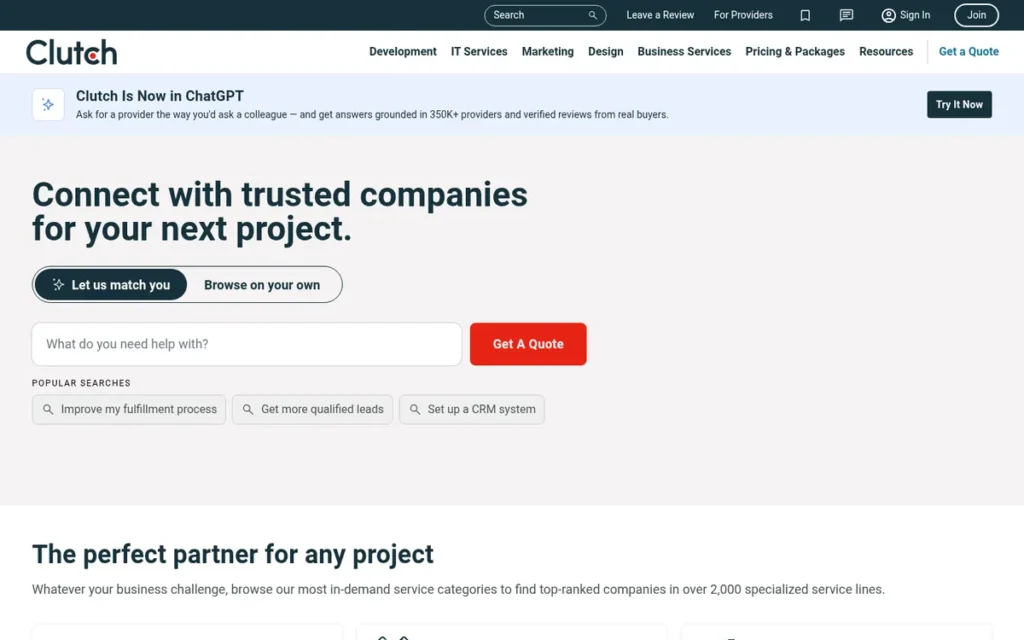
Category: Service Directory, browse-and-review directories that list service providers with client reviews and rankings.
At a Glance
- Category: Service Directory
- Best For: Buyers building a broad, worldwide shortlist of agencies, IT firms and consultancies
- Price Range: Free for buyers. Providers: free profile, Clutch Verified $499/year, sponsorship priced by custom auction (third-party estimates ~$1,200–$7,000+/month)
- Primary Strength: Clutch structures its reviews around project scope, budget, timeline and outcome, and only verified reviews count toward its rankings.
- Biggest Limitation: Clutch shows auction-priced sponsored listings above organic results, and providers report rising placement costs and falling lead quality since 2024.
- One-Line Summary: Clutch has the most documented review verification of the six platforms PlugRoute evaluated, so build your shortlist from its project-level reviews, not its sponsored placements.
- Last Verified: November 2026
PlugRoute Score: 46/50, C1 5 · C2 4 · C3 5 · C4 5 · C5 3 · C6 5
Why #1: Clutch ranks #1 because it is the only platform evaluated to score 5 on both review verification (C1) and project-level review depth (C3). Clutch lost points on paid-placement separation (C2: auction sponsorship) and pricing transparency (C5: custom sponsorship quotes).
Overview
Clutch is a global B2B services marketplace founded in 2013 in Washington, D.C. Clutch publishes project-level client reviews of agencies, IT firms and consultancies, and it is built for buyers who need to shortlist providers by service, budget and location.
Clutch collects reviews through an online questionnaire or a phone interview with a Clutch analyst, and checks reviewer identity, project details and legitimacy before publishing (Clutch Verified page, 2026). Clutch then ranks firms on a published 40-point score.
Key Features
- Clutch ranks providers on a 40-point Ability to Deliver score: Reviews (20 points, covering rating, recency, verification and project budget), Clients & Experience (10) and Market Presence (10), plus a separate Focus measure (Clutch help center, 2026).
- Clutch publishes some reviews without a Verified badge when it cannot fully confirm the reviewer, and only verified reviews count toward its ranking score (Clutch, 2025).
- Clutch organizes each review around the project’s service, budget, timeline and outcome, so buyers can judge whether a provider has done similar work.
- Clutch labels sponsored listings at the top of category pages, and its CRO says buyers can re-sort lists by organic rank (Reddit r/agency, September 2025).
- Clutch shares profiles and reviews with its sister sites The Manifest and Visual Objects, so the same review appearing on those sites is not independent confirmation.
Best For
Clutch is best for marketing directors, founders and IT leads who need a broad, global shortlist of B2B service providers and want to compare project-level evidence before contacting references.
Pricing
Clutch is free for buyers. Clutch’s provider pricing, verified November 2026:
- Clutch offers a free provider profile.
- Clutch Verified costs $499/year, about $42/month billed annually (Clutch, 2026).
- Clutch prices sponsorship by auction based on level and number of pages, and its CRO says “we don’t really ‘set’ prices” (Clutch help center, 2026; Reddit r/agency, September 2025).
- Clutch pay-per-lead reportedly starts at $25 per lead with a $1,000 monthly minimum (Cleverly, 2026, third-party).
- Third-party sources estimate Clutch sponsorship at about $1,200–$7,000+/month (bestlocaldirectories.com, 2026).
Strengths
- Clutch reports that it rejected 32% of the more than 70,000 reviews submitted in 2025 for signs of falsified information (Clutch, 2025). A Clutch methodology page cites 10%, but the 32% figure matches the CRO’s informal “about a third” (Reddit r/agency, September 2025). Both figures are self-reported.
- Clutch’s project-level review format is the most detailed of the six platforms evaluated, and even an agency critic on r/agency called its strict verification “a differentiator” (Reddit r/agency, 2025).
- Clutch’s CRO said “over 95% of the companies who have reviews on Clutch don’t pay us a dime” (Reddit r/agency, September 2025). If accurate, firms do not need to pay to collect reviews on Clutch, though the figure is self-reported.
A buyer on r/agency gave the view from the hiring side:
“Maybe Clutch works differently depending on what you’re searching for. We weren’t looking for a dev agency or design shop – just solid ops support and backend support. The leads on the buyer side still seemed pretty real to us, but maybe we just got lucky with the specific company we found.” Posted by u/BackgroundVisible238
Takeaway: Buyers can still find real, reliable vendors on Clutch even while agencies complain about lead quality, though results vary by service category.
Limitations
Clutch’s most consequential trade-off is auction-priced sponsorship that puts paying firms above organic results. One agency reported paying “3-4x” what it had paid in 2022–2023 for a similar position, with “4-5 agencies bidding for each project” (Reddit r/agency, 2025).
- Clutch’s AI lead-matching program drew criticism on r/agency, where one agency called its leads “super low quality” (Reddit r/agency, 2025).
- Clutch’s analyst phone interviews are reportedly offered mainly to paid-tier providers (agencyreview.dev, 2026), so free and paying firms may get different depths of verification.
- Clutch’s own platform rating is middling at 3.8/5 from 292 Trustpilot reviews (Trustpilot, November 2026). The separate Clutch.ca profile belongs to a different company.
Verdict
Clutch is the strongest starting point among the platforms evaluated for vetting B2B service providers in 2026, because it pairs the most documented review verification with project-level detail on budget, timeline and outcome.
Buyers should re-sort Clutch lists by organic rank before reading positions, and read the project fields behind each review rather than the star average. Listings on The Manifest are the same Clutch data, not a second opinion.
2. GoodFirms: Best for IT Outsourcing and Software Development Firms
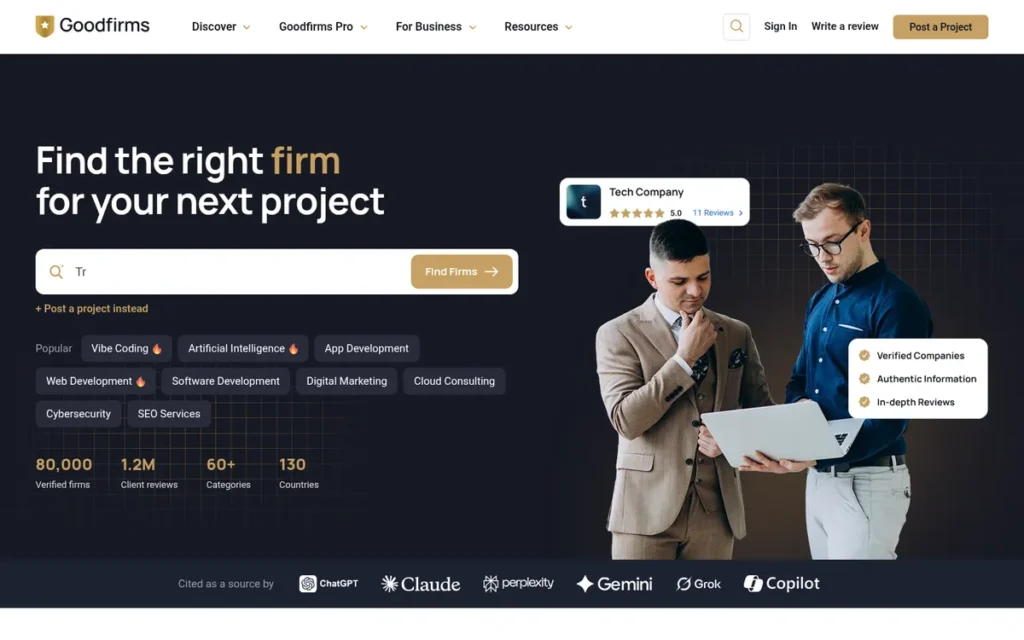
Category: Service Directory.
At a Glance
- Category: Service Directory
- Best For: Buyers comparing software development, IT outsourcing and digital agencies
- Price Range: Free for buyers. Providers: free listing, PRO $49/month billed annually ($588/year), sponsorship priced by custom auction
- Primary Strength: GoodFirms ranks firms on a published two-axis framework that scores service specialization separately from performance, and says sponsorship does not change algorithmic rank.
- Biggest Limitation: GoodFirms does not publish the weights in its ranking formula, so buyers cannot reproduce or fully check its rankings.
- One-Line Summary: GoodFirms is a strong second directory for IT and software development buyers, with a ranking framework that accounts for specialization but unpublished weights.
- Last Verified: November 2026
PlugRoute Score: 34/50, C1 3 · C2 3 · C3 3 · C4 4 · C5 4 · C6 4
Why #2: GoodFirms ranks #2 on strong services fit (C4: 4) and low published pricing (C5: 4). GoodFirms trails Clutch by 12 points because its ranking weights are unpublished (C2: 3) and its verification lacks a published rejection rate (C1: 3).
Overview
GoodFirms is a B2B research and review platform founded in 2014. GoodFirms ranks IT, software development and digital marketing service firms on a published two-axis Leaders Matrix, and it is built for buyers comparing development and IT outsourcing partners.
GoodFirms lists both software products and service firms, so buyers should make sure they are browsing a GoodFirms services category, not a software category.
Key Features
- GoodFirms ranks providers on a Leaders Matrix with two parts. Core Competencies covers service focus, client base and industry specialization. The 360-Performance View covers experience, reputation, reviews and recognition (GoodFirms research methodology, 2026).
- GoodFirms says its researchers make confidential mystery-client inquiries and calls to test how quickly providers respond, alongside background checks, client interviews and portfolio audits (GoodFirms research methodology, 2026).
- GoodFirms takes reviews from other platforms into account but gives priority to reviews left directly on GoodFirms (GoodFirms, 2026).
- GoodFirms labels sponsored listings, which appear above PRO listings, and says sponsorship does not affect algorithmic ranking (GoodFirms, 2026).
- GoodFirms reports 80,000+ listed companies and software products and 1.2M+ verified reviews (CB Insights, 2026). These figures are likely self-reported and probably include software-product reviews.
Best For
GoodFirms is best for IT leads and founders comparing custom software development, offshore or nearshore outsourcing, staff augmentation and managed service provider (MSP) partners. It is especially useful when expertise in a specific technology or industry matters.
Pricing
GoodFirms is free for buyers. GoodFirms’ provider pricing, verified November 2026:
- GoodFirms offers a free provider listing.
- GoodFirms PRO costs $49/month billed annually, or $588/year, according to its current PRO page (GoodFirms, 2026).
- GoodFirms sponsorship is custom and priced by auction for each category and location (GoodFirms, 2026).
- GoodFirms’ older “Get Listed” page lists PRO at $100/month and sponsorship from $300/month, and PlugRoute treats the newer PRO page as current.
Strengths
- GoodFirms publishes a ranking framework that scores service specialization separately from performance, and its methodology page says sponsorship does not affect algorithmic rank (GoodFirms, 2026).
- GoodFirms describes mystery-client response testing, a check no other platform evaluated documents (GoodFirms, 2026, self-described).
- GoodFirms’ $49/month PRO tier is among the lowest published subscription tiers evaluated, close to Clutch Verified’s $499/year (GoodFirms, 2026; Clutch, 2026).
Limitations
GoodFirms’ most consequential trade-off is that it publishes its ranking factors but not their weights. Buyers therefore cannot tell how much reviews count compared with profile activity. A third-party review calls the GoodFirms algorithm “opaque” (agencyreview.dev, 2026).
- GoodFirms may reward listing management, according to critics who argue that agencies actively managing their listings outrank firms that simply focus on delivery (anyleads.com, 2026).
- GoodFirms’ C3 score of 3 reflects the portfolio audits and client interviews described in its methodology. PlugRoute could not confirm that GoodFirms reviews consistently include budget and timeline fields (GoodFirms, 2026).
- GoodFirms reportedly draws less traffic than Clutch (agencyreview.dev, 2026), and its platform rating is polarized at 4.6/5 from 39 Trustpilot reviews, 26% of them 1-star (Trustpilot, 2026).
Verdict
GoodFirms is the strongest second-opinion directory among the platforms evaluated for IT and software development buyers, because its framework accounts for service specialization. However, its unpublished weights mean its rankings shouldn’t be trusted on their own.
Buyers should use GoodFirms to widen or double-check an IT shortlist, then confirm finalists on a platform with a published rejection rate, such as Clutch. Ask GoodFirms finalists for references from the same type of project.
3. DesignRush: Best for Creative, Branding and Web Agencies
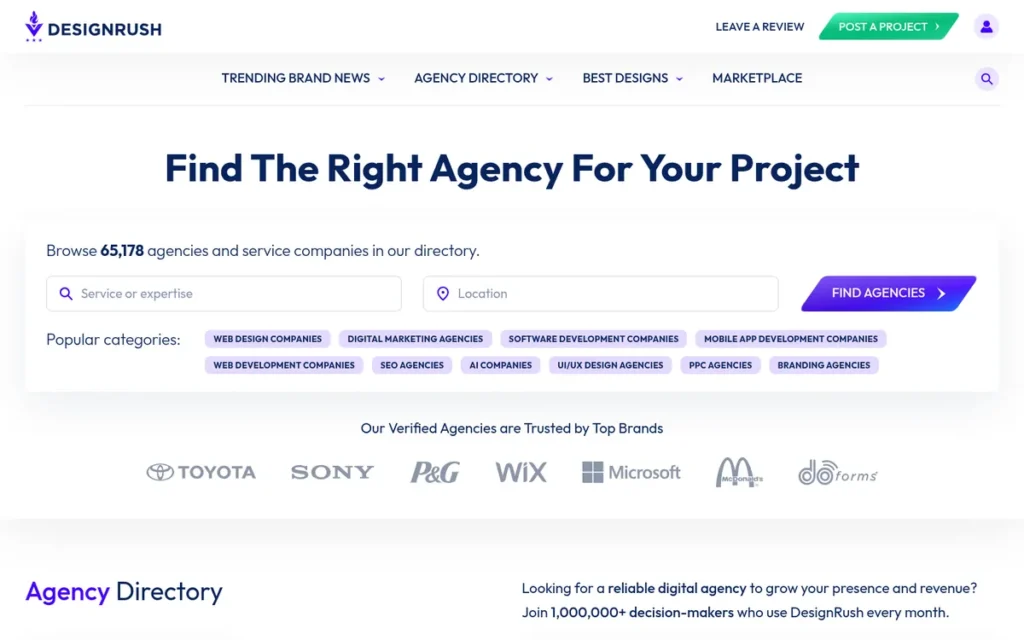
Category: Service Directory.
At a Glance
- Category: Service Directory
- Best For: Buyers hiring marketing, branding, design and web development agencies
- Price Range: Free for buyers. Providers: free listing; memberships reportedly $200–$350/month and sponsorships reportedly from ~$500/month (third-party figures; no official rate card published)
- Primary Strength: DesignRush verifies reviewers through LinkedIn authorization, adjusts ratings for review volume, and combines reviews with portfolio evidence for creative work.
- Biggest Limitation: DesignRush places sponsored listings above organic results and has a perceived conflict of interest, because Digital Silk, an agency founded by DesignRush’s founder, ranks highly on its pages.
- One-Line Summary: DesignRush is the most portfolio-focused platform evaluated for creative and web agency searches, with LinkedIn-based review verification but a perceived founder conflict buyers should weigh.
- Last Verified: November 2026
PlugRoute Score: 31/50, C1 4 · C2 3 · C3 3 · C4 3 · C5 2 · C6 3
Why #3: DesignRush ties G2 at 31/50 and ranks higher on the services-fit tiebreak (C4: 3 vs. 2). DesignRush’s second-highest verification score (C1: 4) is offset by founder-conflict and pricing-transparency deductions (C2: 3, C5: 2).
Overview
DesignRush is an agency directory and project marketplace built for buyers hiring creative and digital agencies. DesignRush ranks marketing, branding, design and web agencies using LinkedIn-verified reviews plus portfolio, awards and team data.
DesignRush also runs an editorial news site and the Best Design Awards (DesignRush, 2026).
Key Features
- DesignRush ranks agencies organically on five factors: reviews (weighted most), portfolio quality, awards and press, team bios, and top services (DesignRush methodology, 2026).
- DesignRush verifies reviewers through LinkedIn authorization and fact-checking, and uses a Bayesian method so agencies with very few reviews are not over-rated (DesignRush methodology, 2026).
- DesignRush runs a buyer project marketplace, with homepage examples showing project budgets of $15K, $48K and $116K (DesignRush, 2026).
- DesignRush places labeled sponsored listings above organic results and says sponsorship does not change star ratings or review content (DesignRush, 2026).
- DesignRush also imports reviews from third-party sites, so buyers should check where each DesignRush review came from.
Best For
DesignRush is best for marketing directors and founders shortlisting branding, design, web or digital marketing agencies, where portfolio quality matters as much as client reviews.
Pricing
DesignRush is free for buyers, and the basic DesignRush listing is free for providers. PlugRoute could not obtain an official DesignRush rate card, so all paid figures below are third-party, reported as of November 2026:
- DesignRush memberships reportedly cost $200 or $350/month, usually with an annual commitment (clutchreviews.com, 2026).
- DesignRush sponsorships reportedly start around $500/month (trusteditfirms.com, 2026).
- DesignRush contracts reportedly include one-year minimum terms and auto-renewal clauses (trusteditfirms.com, 2026).
Strengths
- DesignRush’s Bayesian method adds a 3.5-star baseline to every agency’s reviews, so a single five-star review displays as roughly 4.3 stars rather than 5.0 (DesignRush methodology, 2026). No other platform evaluated documents a correction for small numbers of reviews.
- DesignRush ranks agencies on client reviews plus portfolio quality, team bios and awards, which suits creative purchases where the work itself is the main evidence (DesignRush methodology, 2026).
- DesignRush claims 1,000,000+ monthly B2B visitors (DesignRush, 2026, self-reported) and shows marketplace projects with five- and six-figure budgets on its homepage.
Limitations
DesignRush’s most consequential trade-off is a perceived conflict of interest. Digital Silk, an agency founded by DesignRush founder Gabriel Shaoolian, ranks highly on DesignRush pages (trusteditfirms.com, 2026). Sponsored listings also sit above organic results, so buyers should not treat top DesignRush positions as neutral.
- DesignRush does not publish official paid pricing, and one r/agency commenter said directories including DesignRush now need “$10K+” budgets to produce good lead flow (Reddit r/agency, 2025).
- DesignRush’s 4.6/5 Trustpilot score from 308 reviews rests mostly on older reviews, with only 11 in the prior 12 months (Trustpilot, 2026).
- DesignRush’s creative focus makes it less useful for managed IT, IT outsourcing or custom software development purchases.
Verdict
DesignRush is the strongest of the evaluated platforms for creative and web agency searches because it pairs LinkedIn-verified reviews with portfolio evidence. However, high rankings for Digital Silk, an agency founded by DesignRush’s founder, mean buyers should verify top positions independently.
Buyers should use DesignRush to build a creative longlist and judge the portfolios directly. They should then confirm DesignRush finalists on a platform with documented verification, such as Clutch or GoodFirms.
4. G2: Best for Technology-Related Services and Software Implementation Cross-Checks
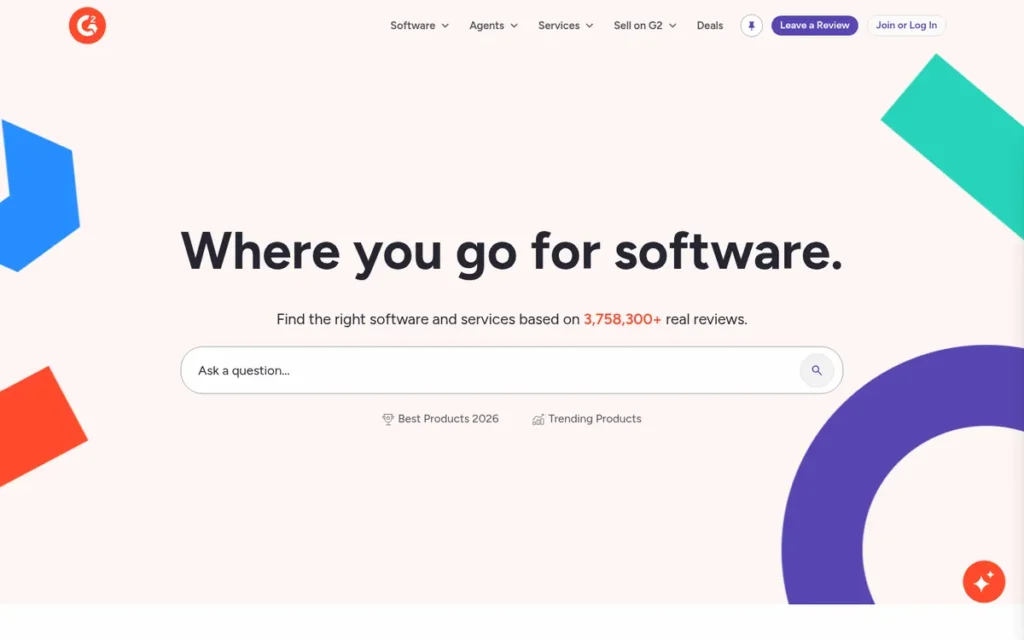
Category: Software-Review Site, software-first review marketplaces that also have service-provider categories.
At a Glance
- Category: Software-Review Site
- Best For: Buyers vetting implementation, consulting or managed IT partners for specific software
- Price Range: Free for buyers. Providers: Free; Starter $299/month ($2,999 first year), renewing at $599/month; Professional $599/month ($5,999/year); Enterprise custom
- Primary Strength: G2 has the largest review dataset of the platforms evaluated, and its published Grid methodology requires at least 10 reviews before a provider appears.
- Biggest Limitation: G2 is built to show which software is well regarded, so its services reviews carry less project-level detail than services-first directories.
- One-Line Summary: G2 is a software-review site rather than a services directory, most useful for cross-checking technology implementation and consulting partners, not for general agency vetting.
- Last Verified: November 2026
PlugRoute Score: 31/50, C1 3 · C2 4 · C3 2 · C4 2 · C5 4 · C6 5
Why #4: G2 ranks #4 despite the largest dataset (C6: 5) because it is software-first (C4: 2) and its services reviews lack project fields (C3: 2). G2 loses the tiebreak with DesignRush on C4. Its C6 score reflects platform-wide scale, because G2 does not publish review volume for services categories.
Overview
G2 is a software-first B2B review marketplace founded in 2012 in Chicago. G2 also lists service-provider categories such as implementation, consulting and managed IT, and it is best for buyers vetting technology service partners alongside the software they support.
G2 is included as the clearest example of the difference between software-review sites and services directories. PlugRoute’s research identified that difference as a common source of buyer confusion.
Key Features
- G2 lists service-provider categories including implementation services, consulting, managed IT, marketing services, and Salesforce and HubSpot consulting (G2, 2026).
- G2 Grid Reports plot providers by Satisfaction (from reviews) and Market Presence, and a provider needs at least 10 reviews in a category to appear (G2, 2026).
- G2 sells buyer-intent data based on activity on profile, category, comparison and competitor pages, which no services directory reviewed offers (G2 FY26 Pricing Guide, 2026).
- G2 runs managed review campaigns that can include gift-card incentives, which raise review volume but can skew who leaves reviews (G2, 2026).
- G2 lists implementation and consulting partners next to the software they support, which helps with purchases tied to one software ecosystem.
Best For
G2 is best for IT leads and operations managers who need to cross-check a Salesforce, HubSpot or similar implementation partner. G2 is not suited to general agency or local-provider searches.
Pricing
G2 is free for buyers. G2’s provider pricing, verified November 2026 from its FY26 and FY27 pricing materials:
- G2 offers a free provider plan.
- G2 Starter costs $299/month or $2,999 for the first year for eligible new customers, then renews at $599/month or about $6,000/year from year two (G2, 2026).
- G2 Professional costs $599/month or $5,999/year (G2, 2026).
- G2 Enterprise is custom-priced, with add-ons including Buyer Intent, review campaigns and Grid licensing (G2, 2026).
Strengths
- G2 reports 3M+ reviews and 100M+ buyers across 10+ years of data (G2 FY26 Pricing Guide, 2026). These figures are self-reported and cover the whole platform, not just services.
- G2 publishes its Grid methodology, including a 10-review minimum per category (G2, 2026), which is the most explicit published inclusion threshold of the platforms evaluated.
- G2 publishes its provider pricing tiers, including the year-two Starter renewal price (G2, 2026), which is more transparent than the custom-quote sponsorship most directories use.
Limitations
G2’s most consequential trade-off is that it is designed to rate software, not service engagements. G2’s services reviews lack the budget, timeline and outcome fields that services-first directories collect. Buyers who vet a general agency on G2 are using the wrong type of platform.
- G2’s gift-card review campaigns do not make reviews false, but G2 holds a 2.5/5 Trustpilot rating from 4,949 reviews, with complaints centered on disputed payouts and rejected reviews (Trustpilot, November 2026).
- G2 has owned Capterra, Software Advice and GetApp since February 2026 (G2, 2026), so reviews on those sites are not independent of G2’s ownership.
- G2’s Starter plan rises from $2,999 in year one to about $6,000 from year two (G2, 2026), making G2 the costliest presence evaluated for a small service firm.
A vendor on r/SaaS described the other side of G2’s review model:
“review is from 2 years ago. outdated. product has changed completely
can’t remove it. flagging does nothing
spend money on seo just to push it down
your reputation is controlled by someone who used old version for 2 weeks” Posted by u/Some_Option_4397
Takeaway: Listed companies say outdated G2 reviews can’t be removed or fixed by flagging, so a G2 rating can describe an offering that no longer exists.
Verdict
G2 is the right platform for cross-checking software implementation and consulting partners. However, it is the wrong primary tool for vetting general B2B agencies, because it was built to review software, not service engagements.
Buyers should pair G2 with the software vendor’s partner directory and a services directory such as Clutch or GoodFirms. Check that each G2 reviewer’s project matches the scope of yours.
5. TechBehemoths: Best Free-First Directory for Global IT and Digital Firms
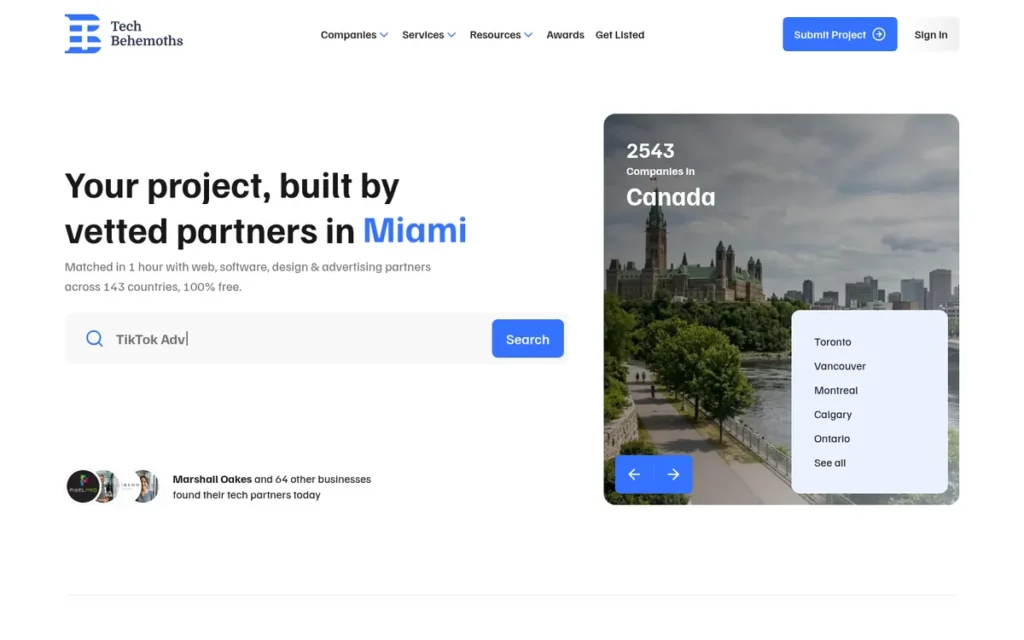
Category: Service Directory.
At a Glance
- Category: Service Directory
- Best For: Buyers searching for IT and digital firms by country or city, and IT providers on a tight budget
- Price Range: Free for buyers. Providers: free basic listing; paid “Featured” and “Top 10” programs (prices not published)
- Primary Strength: TechBehemoths offers free listings and says its 21-metric EXO Score ranking is fully algorithmic and not determined by payment.
- Biggest Limitation: TechBehemoths does not publicly explain how it verifies reviews, so buyers cannot judge how reliable its review data is.
- One-Line Summary: TechBehemoths is a free-first global IT directory with algorithmic rankings, useful for widening a tech longlist but not for verified review evidence.
- Last Verified: November 2026
PlugRoute Score: 24/50, C1 1 · C2 3 · C3 2 · C4 3 · C5 3 · C6 3
Why #5: TechBehemoths ranks #5 on free access and a stated payment-independent algorithm (C2: 3), but it scores lowest on verification (C1: 1) because its review checks are undisclosed. TechBehemoths edges out Sortlist on clearer ranking factors (C2: 3 vs. 2).
Overview
TechBehemoths is a free-first global directory of IT and digital firms, run by Berlin-based Mobiteam GmbH since 2019. TechBehemoths ranks companies with an algorithmic 21-metric EXO Score and serves buyers looking for tech providers by country, city and service.
TechBehemoths reports an official team of 12 spread across Germany, Moldova, Spain and the Netherlands (TechBehemoths, 2026).
Key Features
- TechBehemoths ranks firms with an EXO Score built from 21 metrics in 6 categories, including reviews, awards, portfolio and profile completeness (TechBehemoths, 2026).
- TechBehemoths says its rankings are “100%” algorithmic and not determined by payment (TechBehemoths FAQ, 2026).
- TechBehemoths organizes rankings by country, city and service, covering 143–146 countries depending on the page (TechBehemoths, 2026, self-reported).
- TechBehemoths lets buyers post projects to be matched with listed firms (TechBehemoths, 2026).
- TechBehemoths runs an annual awards program with free entry, judged 50% by user vote and 50% by a jury (TechBehemoths, 2025).
Best For
TechBehemoths is best for IT leads widening a longlist of custom software development, nearshore or digital firms in a specific country or city. It also suits IT providers who want free visibility.
Pricing
TechBehemoths is free for buyers. TechBehemoths’ provider pricing as of November 2026:
- TechBehemoths offers a free basic provider listing (TechBehemoths, 2026).
- TechBehemoths sells paid “Featured” and “Top 10” advertising programs (TechBehemoths, 2026).
- TechBehemoths does not publish prices for its paid programs, so buyers cannot see what extra visibility costs a listed firm.
Strengths
- TechBehemoths reports between 56,126 companies across 146 countries (about page) and 62,900+ companies across 143 countries (TechBehemoths 2.0 announcement, 2026). All of these figures are self-reported.
- TechBehemoths says its EXO Score uses 21 metrics and is fully algorithmic rather than paid, and its basic listing is free (TechBehemoths, 2026).
- TechBehemoths holds a 4.9/5 Trustpilot rating from 70 reviews in one snapshot and 92 in another (Trustpilot, 2026). Providers praise its profile visibility and Google discoverability, though the sample is small.
Limitations
TechBehemoths’ most consequential trade-off is that its free, algorithmic model comes with no public explanation of how reviews are verified (clutchreviews.com, 2026). Buyers get wide coverage but cannot compare TechBehemoths reviews with a documented process like Clutch’s.
- TechBehemoths named 2,099 winners in its 2025 Awards across 20 categories and 68 countries (TechBehemoths, 2025). The program isn’t shown to be pay-to-win, but its badges signal participation more than exclusivity.
- TechBehemoths’ lead-quality claims come from vendor testimonials without conversion data, and its 5.0 G2 rating rests on only 2 reviews (G2, 2026).
- TechBehemoths reports an official team of 12 (TechBehemoths, 2026), and PlugRoute found no documentation of manual review checks.
Verdict
TechBehemoths is the most useful free-first option evaluated for widening a global IT provider longlist. However, its undisclosed review verification means it should not be the final source for vetting a vendor.
Buyers should use TechBehemoths to discover providers by country and city, then confirm finalists on a platform with documented verification. Treat TechBehemoths award badges as weak signals.
6. Sortlist: Best for European Buyers Who Prefer Brief-Based Matching
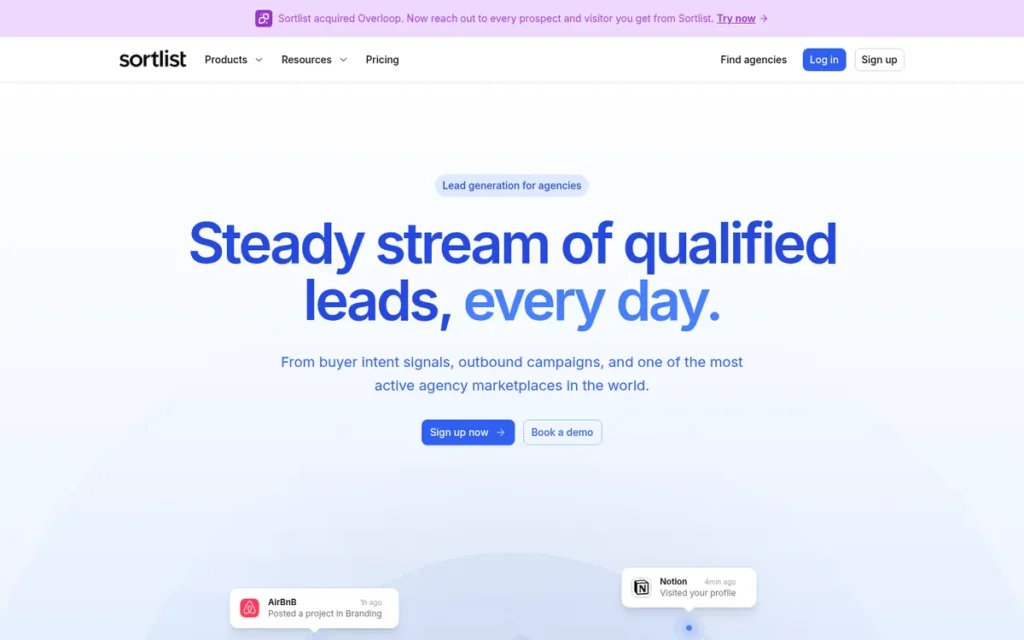
Category: Matching Marketplace, the buyer submits a project brief and the platform proposes providers instead of the buyer browsing reviews.
At a Glance
- Category: Matching Marketplace
- Best For: European buyers who want agencies proposed against a brief rather than browsing reviews
- Price Range: Free for buyers. Providers: free profile, pay-per-click from €1, pay-per-opportunity from €20 (official); Sortlist+ reportedly €129–€189/month
- Primary Strength: Sortlist matches buyers with agencies based on a submitted brief covering service, budget and location, which cuts browsing time for European buyers.
- Biggest Limitation: Sortlist checks the buyer’s brief rather than client reviews, so it offers the weakest review evidence of any platform evaluated.
- One-Line Summary: Sortlist is a European brief-matching marketplace that saves buyers browsing time but offers the least review verification of the six platforms ranked.
- Last Verified: November 2026
PlugRoute Score: 22/50, C1 1 · C2 2 · C3 2 · C4 3 · C5 3 · C6 3
Why #6: Sortlist ranks last because it verifies the buyer’s brief rather than client reviews (C1: 1) and does not publish its matching logic (C2: 2). Sortlist does officially publish its entry pricing (C5: 3).
Overview
Sortlist is a Belgian brief-based matching marketplace founded in 2014. Buyers submit a project brief covering service, budget and location and receive AI-assisted agency proposals. Sortlist is built for European buyers who prefer matching to browsing reviews.
Sortlist is strongest in Belgium, France, Spain, Germany and the Netherlands (tech.eu, 2021).
Key Features
- Sortlist asks buyers to submit a brief covering service, budget and location, then proposes matching agencies using an AI-assisted process (Sortlist, 2026).
- Sortlist checks the brief and the opportunity rather than verifying finished client work through interviews (clutchreviews.com, 2026).
- Sortlist charges providers per click from €1 or per opportunity from €20 (Sortlist pricing page, 2026).
- Sortlist sends one brief to several agencies, which reportedly pay about €50–€150 per qualified lead (pickanagency.com, 2026).
- Sortlist offers providers a free profile with unlimited portfolio work and reviews (Sortlist, 2026).
Best For
Sortlist is best for European marketing and operations managers who would rather describe a project once and review proposals than research agencies one by one.
Pricing
Sortlist is free for buyers. Sortlist’s provider pricing, verified November 2026:
- Sortlist offers a free provider profile (Sortlist, 2026).
- Sortlist charges pay-per-click from €1 and pay-per-opportunity from €20 (Sortlist pricing page, 2026).
- Sortlist+ reportedly costs €129/month billed annually or €189 month to month (clutchreviews.com, 2026, third-party).
- Some Sortlist opportunities reportedly cost up to about €650 in credits (clutchreviews.com, 2026, third-party).
Strengths
- Sortlist reports 90,000+ providers, 98,000 projects a year and 500,000 companies helped (Sortlist, 2026, self-reported). Independent coverage cited 11,000+ qualified projects worth €162M as of 2018 (Silicon Canals, 2019).
- Sortlist raised €11M in September 2021, bringing its total disclosed funding to €13.6M (tech.eu, 2021).
- Sortlist officially publishes its entry prices for pay-per-click (€1) and pay-per-opportunity (€20) (Sortlist pricing page, 2026), which is more transparent than custom-quote sponsorship.
Limitations
Sortlist’s most consequential trade-off is that matching replaces review verification. Sortlist buyers get proposals quickly but receive no interview-verified, project-level review evidence, so they must check references independently.
- Sortlist has the most criticized provider-side model of the platforms evaluated. Trustpilot reviewers (about 2.26/5 from 38 organic reviews) allege paid leads that never responded, charges for meetings that never happened and refunds paid as expiring credit. These are unverified allegations from a small sample (Trustpilot via clutchreviews.com count, 2026).
- Sortlist sends each brief to several agencies, so providers compete for every lead (pickanagency.com, 2026).
- Sortlist has limited presence outside Europe, which narrows its usefulness for North American and Asia-Pacific buyers.
Verdict
Sortlist is the most convenient option evaluated for European buyers who want agencies matched to a brief, but Sortlist provides the weakest review verification of the six platforms ranked.
Buyers should check agencies proposed by Sortlist on a platform with documented review verification, such as Clutch or DesignRush, or through direct references. Providers should confirm whether Sortlist refunds are paid in cash or credit before paying for leads.
How Much Do B2B Services Review Platforms Cost?
All six platforms are free for buyers. Providers pay, and every platform offers a free basic listing or profile. Clutch’s CRO says over 95% of firms with Clutch reviews pay nothing. Beyond the free tier, there are four main pricing models: annual or monthly subscriptions (Clutch Verified, GoodFirms PRO, DesignRush memberships, G2 plans), sponsored placement priced by auction (Clutch, GoodFirms), paid advertising programs (TechBehemoths) and pay-per-click or pay-per-opportunity charges (Sortlist, plus Clutch’s pay-per-lead option).
Visibility drives most of the bill. Clutch prices sponsorship by placement level and number of pages, and one agency reported paying “3-4x” what it paid in 2022–2023 for a similar position. One r/agency commenter said directories including DesignRush now need “$10K+” budgets to produce good lead flow. On Sortlist, several agencies pay for the same brief, with qualified leads reportedly costing about €50 to €150.
The article also lists several hidden costs. G2 Starter roughly doubles from $2,999 in year one to about $6,000 from year two. DesignRush contracts reportedly include one-year minimum terms and auto-renewal clauses. Sortlist users allege that refunds are paid as expiring credit. Clutch, GoodFirms (sponsorship), TechBehemoths (paid programs) and DesignRush (no official rate card) don’t fully publish what extra visibility costs.
| Product | Pricing Model | Starting Price | What Raises the Cost |
|---|---|---|---|
| Clutch | Free profile, annual verification subscription, auction-priced sponsorship, pay-per-lead | Free (Clutch Verified $499/year) | Sponsorship by custom auction (third-party estimates about $1,200 to $7,000+/month); pay-per-lead reportedly from $25 per lead with a $1,000 monthly minimum |
| GoodFirms | Free listing, PRO subscription, auction-priced sponsorship | Free (PRO $49/month billed annually, $588/year) | Sponsorship priced by custom auction for each category and location |
| DesignRush | Free listing, membership, sponsorship | Free (memberships reportedly $200 or $350/month) | Sponsorships reportedly from about $500/month; reported one-year minimum terms and auto-renewal |
| G2 | Free plan, tiered SaaS subscriptions | Free (Starter $299/month, $2,999 first year) | Starter renews at $599/month (about $6,000/year) from year two; Professional $599/month ($5,999/year); Enterprise custom quote with Buyer Intent, review campaigns and Grid licensing add-ons |
| TechBehemoths | Free basic listing, paid advertising programs | Free | Paid “Featured” and “Top 10” programs (Custom quote, prices not published) |
| Sortlist | Free profile, pay-per-click, pay-per-opportunity, Sortlist+ subscription | Free (pay-per-click from €1, pay-per-opportunity from €20) | Sortlist+ reportedly €129/month billed annually or €189 month to month; some opportunities reportedly cost up to about €650 in credits |
Start with free profiles, and before you pay for a plan, check whether the directory’s category pages rank on Google for your services and get the renewal, lock-in and refund terms in writing.
Which Platform Verifies Reviews Most Strictly?
Clutch verifies reviews most strictly of the six platforms evaluated. Clutch manually assesses submitted reviews and reported rejecting 32% of more than 70,000 reviews in 2025 for signs of falsification. Sortlist verifies least, because Sortlist checks the buyer’s brief rather than client reviews.
“Verified” means something different on every platform, so ask how verification works before trusting any rating.
PlugRoute ranks verification depth from most to least thorough:
- Clutch checks reviewer identity, project details and legitimacy through an online questionnaire or analyst phone interview, and reported rejecting 32% of 2025 submissions (Clutch, 2025).
- DesignRush verifies reviewers through LinkedIn authorization and fact-checking. Its Bayesian baseline means a single five-star review displays as roughly 4.3 stars (DesignRush methodology, 2026).
- G2 checks reviewer identity and activity but runs incentivized review campaigns that can skew who leaves reviews (G2, 2026).
- GoodFirms describes mystery-client checks, background checks and client interviews, but does not publish how they are weighted (GoodFirms, 2026).
- TechBehemoths does not publicly explain how it verifies reviews (clutchreviews.com, 2026).
- Sortlist checks the brief and the opportunity rather than the review (clutchreviews.com, 2026).
In the United States, the FTC’s Consumer Reviews and Testimonials Rule (final rule, August 2024) sets a legal baseline for reviews, with civil penalties (FTC, 2024). The rule prohibits five practices:
- The FTC rule bans fake reviews and testimonials.
- The FTC rule bans buying reviews on the condition that they express a positive or negative sentiment.
- The FTC rule bans undisclosed reviews by company insiders.
- The FTC rule bans company-controlled websites presented as independent review sites.
- The FTC rule bans review suppression.
The FTC rule does not require any particular verification method. It also does not ban incentives offered regardless of sentiment, such as G2’s gift-card campaigns. Each platform still chooses how it verifies reviews.
Can I Trust Rankings If Firms Pay for Placement?
You can partly trust rankings on platforms that sell placement if you separate sponsored positions from organic order. Clutch, GoodFirms and DesignRush label sponsored listings that appear above organic results, and Clutch lets buyers re-sort by organic rank. No platform publishes lead-to-close outcomes, so treat any ranking as one signal.
On auction-priced directories, position is partly a bid. One agency reported paying $1,000 a month on Clutch to hold third place on one category page while sitting around 15th on another (Reddit r/agency, 2025).
| Platform | Published Ranking Factors | Weights Published? | How Paid Placement Appears | Organic-Only View |
|---|---|---|---|---|
| Clutch | Ability to Deliver: Reviews, Clients & Experience, Market Presence, plus Focus | Yes (points: 20/10/10) | Labeled sponsored listings at top of lists | Re-sort by organic rank (per CRO, September 2025) |
| GoodFirms | Leaders Matrix: Core Competencies, 360-Performance View | No | Labeled sponsored listings above PRO listings | Not documented |
| DesignRush | Five factors; reviews weighted most | No (five factors named; numerical weights not published) | Labeled sponsored listings above organic results | Not documented |
| G2 | Grid: Satisfaction vs. Market Presence; 10-review minimum | Partially (Grid axes and 10-review minimum published; numerical weights not published) | Not documented in PlugRoute’s research | Not documented |
| TechBehemoths | EXO Score: 21 metrics, 6 categories | No | Paid “Featured” and “Top 10” programs | Not documented |
| Sortlist | AI-assisted matching | No | Not applicable (matching model) | Not applicable |
Each platform’s business model shows what to check before trusting a position:
| Business Model | Platforms | What Buyers Should Check |
|---|---|---|
| Auction-priced sponsorship | Clutch, GoodFirms | Which top positions are sponsored, and what the organic order looks like |
| Membership plus sponsorship | DesignRush | Which listings are sponsored, and whether top firms have ties to the platform |
| Pay-per-opportunity | Sortlist | That several agencies usually receive and pay for the same brief |
| Mostly free | TechBehemoths | Which listings appear through paid “Featured” or “Top 10” programs |
| SaaS plus intent data | G2 | Whether reviews came from incentivized campaigns |
How Do I Find Reviews From Clients Like My Company?
As of November 2026, none of the six platforms evaluated lets buyers reliably filter reviews by similar budget, company size and industry at the same time. Buyers have to filter by hand: read the project fields behind each review, check how recent it is, and contact comparable references before finalizing a shortlist.
The gap is big enough that one buyer-side developer built his own tool to fill it:
“Founders/CEO/CTOs/VPs regularly go to Clutch to research software development agencies… I scraped all the reviews… added filters so you can drill down based on your similar size, location, and price range.” (u/innovatekit (Reddit r/Entrepreneur, 2024))
Takeaway: Buyers want to filter reviews by projects like their own, and as of November 2026 none of the platforms evaluated makes that possible without manual work.
A star rating tells you a provider is liked. A project’s budget, timeline and outcome fields tell you whether the provider has done your kind of project. Buyers can apply this manual checklist on any platform:
- Buyers should read the project budget and timeline fields on each review, which Clutch collects as standard.
- Buyers should check that each reviewer’s role and industry are similar to their own.
- Buyers should check review dates and weight recent reviews more heavily than older ones.
- Buyers should read how each provider responds to critical reviews.
- Buyers should ask each finalist for 3–5 references from projects of similar size and scope.
What About HubSpot, Salesforce and Other Partner Directories?
Vendor partner directories are PlugRoute’s recommended starting point for finding a certified implementation partner or systems integrator for a specific software platform. Their Solutions Partner tiers reflect certifications and revenue with the vendor, not client satisfaction. Pair a partner directory with G2 services categories and comparable references before hiring.
The main vendor partner directories include:
- The HubSpot Solutions Directory lists certified HubSpot Solutions Partners and lets customers review partners they have worked with.
- The Salesforce AppExchange lists Salesforce consulting partners alongside Salesforce apps.
- The Shopify Partners directory lists agencies and developers that build on Shopify.
- The AWS Partner Network lists consulting and implementation partners tiered by AWS certifications and engagement.
- The Google Partners program lists agencies that hold Google advertising certifications.
Partner tiers such as Diamond or Elite show a firm’s certifications and the revenue it generates with the vendor. A high partner tier does not, by itself, show that the firm’s clients were satisfied.
PlugRoute has not ranked vendor partner directories because it has not yet applied its full scoring method to this category.
Why Aren’t The Manifest, Capterra, TrustRadius or UpCity on This List?
PlugRoute left out four kinds of platforms: those that reuse another platform’s data, those that review software rather than services, those it could not research deeply enough, and those that appear to have stopped operating. These exclusions are about scope and continuity, not judgments of each platform’s quality.
- UpCity is not ranked because its marketplace appears to have shut down in November 2025, and upcity.com now displays a notice directing visitors to Capterra (multiple reports, 2025). Gartner had acquired UpCity in October 2022 for $6.4M (Gartner SEC filings via Stratrix, 2022).
- The Manifest and Visual Objects are Clutch sister sites that reuse Clutch profiles and reviews, so they are not independent review sources.
- Capterra, TrustRadius and Gartner Peer Insights are software-review sites, not services directories. G2 has owned Capterra, along with Software Advice and GetApp, since February 2026 (G2, 2026).
- SelectedFirms and Google Business Profile were not researched in enough depth to score. Google reviews are mentioned in this guide only as a cross-check for local providers.
Where Should Service Firms Collect Reviews?
Service firms should focus review collection on the one or two platforms their buyers actually use, starting with free profiles. All six platforms offer a free basic listing, and Clutch’s CRO says over 95% of firms with Clutch reviews pay nothing (Reddit r/agency, September 2025). Then add a second platform that fits your category.
Published paid tiers range from Clutch Verified at $499/year and GoodFirms PRO at $588/year to G2 Starter at $2,999 for the first year (Clutch, GoodFirms, G2, 2026).
PlugRoute’s recommended starting points by firm type:
- Any service firm can start with a free Clutch profile with verified reviews, and Clutch Verified at $499/year is optional (Clutch, 2026).
- IT and development firms on a budget can add free TechBehemoths and GoodFirms listings, with GoodFirms PRO at $588/year as an option (GoodFirms, 2026).
- Creative and web agencies can consider DesignRush, whose memberships reportedly cost $200–$350/month, but should get cancellation terms in writing (clutchreviews.com, 2026).
- European agencies can use Sortlist but should budget for both subscription and per-lead costs, and confirm whether refunds are paid in cash or credit.
- Software implementation partners should prioritize the vendor’s own partner directory and add G2 only if buyers find them while researching software, because G2 Starter costs $2,999 in year one and about $6,000 from year two (G2, 2026).
- US local providers lost a dedicated option when UpCity’s marketplace appears to have closed, so a Clutch profile plus Google Business Profile reviews is the practical substitute.
Directories are rarely an agency’s main lead source. In an r/agency discussion, agencies named referrals, SEO and LinkedIn ahead of directories (Reddit r/agency, 2025). One commenter summed up the test for paid placement: “If it doesn’t rank, don’t pay for it.”
When asked on r/agency whether any directory now matches Clutch’s earlier lead flow, one agency owner answered:
“Not really. Unless you find any of these directories in the top 5 listings for any keywords that are valuable to your business. That’s all that really matters when it comes to prioritizing spending time or money on them.” Posted by u/jasonyormark
Takeaway: For service firms, whether a directory ranks on Google for their keywords matters more than which directory brand they pick.
Before signing any paid directory plan, service firms should check three contract terms:
- Service firms should check whether a directory contract has an annual lock-in or auto-renewal clause.
- Service firms should check whether refunds are paid in cash or in expiring platform credit.
- Service firms should check whether the directory’s category pages rank on Google for the firm’s main services.
Service firms should also keep their own copies of client reviews and case studies, because a directory can close and take provider profiles with it.
What Red Flags Should I Watch For When Evaluating B2B Services Review Platforms?
The six red flags below signal that a platform’s ranking or review evidence is weaker than it looks. The most common are sponsored placement presented as rank, “verified” labels with no published process, and ratings built on thin evidence. You can check each red flag on any platform in a few minutes.
Red Flag #1: Sponsored Placement Shown as Rank Sponsored placement shown as rank mixes bought visibility with earned position. Clutch, GoodFirms and DesignRush label sponsored listings, but sponsored listings on all three still appear above organic results. Buyers should look for an organic-only view, such as Clutch’s organic re-sort, before reading any position.
Red Flag #2: “Verified” With No Published Process A “verified” label means little if a platform does not explain what it checks. Buyers should look for documented identity checks, project-legitimacy checks and a published rejection rate. TechBehemoths, for example, does not publicly describe its review verification (clutchreviews.com, 2026), while Clutch publishes a 2025 rejection rate.
Red Flag #3: Badges and Star Ratings Built on Thin or Stale Evidence Award badges and star ratings lose value when the evidence behind them is thin or old. The TechBehemoths 2025 Awards named 2,099 winners (TechBehemoths, 2025). DesignRush’s 4.6/5 Trustpilot score includes only 11 reviews from the prior 12 months (Trustpilot, 2026). Neither figure is a strong quality signal.
Red Flag #4: The Same Reviews on Sister Sites Identical reviews on two related platforms are one data point, not two. The Manifest and Visual Objects are Clutch sister sites that reuse Clutch profiles and reviews, so a strong rating on all three confirms nothing new. For a real second opinion, check an unrelated platform and call references.
Red Flag #5: Annual Lock-Ins, Renewal Jumps and Refunds as Credit Service firms should treat 12-month contracts, auto-renewal, renewal price jumps and refunds paid as expiring credit as warning signs. DesignRush contracts reportedly include one-year minimums (trusteditfirms.com, 2026). G2 Starter roughly doubles in year two (G2, 2026). Sortlist users allege credit-only refunds (Trustpilot, 2026).
Red Flag #6: Reviews You Cannot Take With You A directory can close and take your profile with it. UpCity’s marketplace went offline in November 2025, and upcity.com now directs visitors to Capterra (multiple reports, 2025). Service firms should keep their own copies of client reviews, and buyers should save any evidence they rely on.
What Questions Should I Ask Before Choosing a B2B Services Review Platform?
Buyers should ask seven questions before trusting any B2B services review platform. The questions cover platform type, verification, organic ranking, project detail, ownership, platform continuity and references. Together, the answers show how much weight a platform’s rankings deserve before you build a longlist or issue an RFP.
Question #1: Is this a services directory or a software-review site? A services directory such as Clutch is built to evaluate service providers, while a software-review site such as G2 is built to evaluate software. Confusing the two types is one of the most common mistakes PlugRoute’s research identified. It puts buyers on platforms without project-level service reviews.
Question #2: How does this platform verify a review? Look for a documented verification process: identity checks, project-legitimacy checks and, ideally, a published rejection rate. Clutch reported rejecting 32% of more than 70,000 reviews submitted in 2025 (Clutch, 2025). Give less weight to platforms that do not explain their verification.
Question #3: Can I see organic-only rankings? Check whether sponsored listings are labeled and whether you can re-sort by organic rank. Clutch’s CRO says Clutch supports organic re-sorting (Reddit r/agency, September 2025). PlugRoute found no documented organic-only view on GoodFirms, DesignRush, G2 or TechBehemoths, so assume their top positions may include paid placement.
Question #4: Do reviews show budget, timeline and outcome for projects like mine? Reviews should show the project’s budget, timeline and outcome, because those fields show whether a provider has done comparable work. Star ratings alone hide project size, industry and results. Clutch collects these fields as standard. On other platforms, ask providers for case studies that include budget and timeline.
Question #5: Who owns this platform, and does it share data with others? Ownership affects independence. Clutch shares data with The Manifest and Visual Objects. G2 has owned Capterra, Software Advice and GetApp since February 2026 (G2, 2026). Digital Silk, an agency founded by DesignRush’s founder, ranks highly on DesignRush (trusteditfirms.com, 2026).
Question #6: Is this platform still actively operating? Check that a platform is still operating before relying on it or investing in it. UpCity’s marketplace appears to have shut down in November 2025 (multiple reports, 2025). Recent reviews, current pricing pages and an active support channel are practical signs that a platform is still maintained.
Question #7: Can the provider give me 3–5 comparable references? Direct references from projects of similar size and scope are the most reliable final check, and none of the platforms evaluated replaces them. Ask every finalist for 3–5 references before signing, and confirm that each reference’s budget, timeline and outcome resemble your project.
Users on r/advertising gave similar advice for vetting agencies:
“If they’re telling you they can get you x leads for $x – can they show you client examples where they’ve actually gotten that? Or at least industry benchmarks. Don’t be fooled by good salesmen – they should be able to prove everything they’re telling you.” Posted by u/datafyix
Takeaway: Experienced marketers agree that an agency’s claims should be backed by comparable client results, which is why references remain the final check after any review platform.
How Did We Rank These B2B Services Review Platforms?
PlugRoute scored each platform from 1 to 5 on six published criteria. Four primary criteria count double and two secondary criteria count once, for a maximum of 50 points. Every score rests on dated evidence, self-reported figures are labeled, and conflicting figures are shown side by side.
- C1 Review Verification Rigor (primary) matters because a buyer’s shortlist is only as reliable as the reviews behind it.
- C2 Ranking Transparency and Separation of Paid Placement (primary) matters because buyers need to know which positions are earned and which are bought.
- C3 Project-Level Review Depth (primary) matters because budget, timeline and outcome fields show whether a provider has done comparable work.
- C4 Services-Purchase Fit and Category Coverage (primary) matters because a platform built for software reviews puts services buyers on the wrong kind of platform.
- C5 Provider Pricing and Contract Transparency (secondary) matters because a platform’s business model shows where its rankings may tilt.
- C6 Market Scale and Buyer Adoption Evidence (secondary) matters because a platform is only useful for shortlisting if enough relevant providers are listed on it.
The formula is (C1 + C2 + C3 + C4) × 2 + C5 + C6, for a maximum of 50 points.
| Rank | Platform | C1 | C2 | C3 | C4 | C5 | C6 | Total |
|---|---|---|---|---|---|---|---|---|
| 1 | Clutch | 5 | 4 | 5 | 5 | 3 | 5 | 46 |
| 2 | GoodFirms | 3 | 3 | 3 | 4 | 4 | 4 | 34 |
| 3 | DesignRush | 4 | 3 | 3 | 3 | 2 | 3 | 31 |
| 4 | G2 | 3 | 4 | 2 | 2 | 4 | 5 | 31 |
| 5 | TechBehemoths | 1 | 3 | 2 | 3 | 3 | 3 | 24 |
| 6 | Sortlist | 1 | 2 | 2 | 3 | 3 | 3 | 22 |
Ties go to the platform with the higher services-purchase fit (C4) score, which is why DesignRush ranks above G2 at 31 points each. DesignRush is built to evaluate agencies, while G2 is software-first.
C3 scores reflect the review data each platform collects. Clutch’s 5 does not mean it supports filtering, because as of November 2026 no platform lets buyers filter by comparable budget, size and industry together.
PlugRoute re-checked every price, rating and platform status in November 2026. UpCity, which was previously listed, was removed after its marketplace appeared to close.
Ratings of the platforms themselves are shown for context but not scored, because they mostly reflect how providers feel about each platform:
- Clutch holds 3.8/5 from 292 Trustpilot reviews (Trustpilot, November 2026).
- GoodFirms holds 4.6/5 from 39 Trustpilot reviews (Trustpilot, 2026).
- DesignRush holds 4.6/5 from 308 Trustpilot reviews (Trustpilot, 2026).
- G2 holds 2.5/5 from 4,949 Trustpilot reviews (Trustpilot, November 2026).
- TechBehemoths holds 4.9/5 from 70 Trustpilot reviews (Trustpilot, 2026).
- Sortlist holds about 2.26/5 from 38 organic Trustpilot reviews (Trustpilot via clutchreviews.com count, 2026).
Community evidence was uneven. Only Clutch-related Reddit threads gave usable material, so the larger volume of documented criticism of Clutch reflects how often it is discussed, not extra scrutiny. Web sources without a publication date are dated by the year PlugRoute accessed them.
PlugRoute has no affiliate relationships with any company listed; rankings are determined entirely by research data and objective evaluation criteria.
What Else Do Buyers Ask About B2B Services Review Platforms?
Buyers most often ask which platform suits IT providers, whether G2 or Capterra can vet a service firm, and how PlugRoute ranks platforms. The short answers: use GoodFirms and Clutch for IT, use neither G2 nor Capterra to vet agencies, and PlugRoute ranks platforms on a published six-criterion, 50-point score.
What is the best review platform for IT service providers?
GoodFirms (34/50) is the strongest IT-focused platform PlugRoute evaluated for IT service providers and buyers of IT outsourcing. Clutch (46/50) has the most documented verification of the six, and TechBehemoths is a free-first choice for finding IT firms by country. Use one platform for discovery and a verified platform such as Clutch to confirm finalists.
Should I use G2 or Capterra to vet a service provider?
Neither G2 nor Capterra is built to vet service providers. Both are software-review sites, and since February 2026 both are owned by G2, which acquired Capterra, Software Advice and GetApp from Gartner. Use a services directory such as Clutch or GoodFirms to vet agencies, and use G2 only to cross-check software implementation partners.
How does PlugRoute determine rankings?
PlugRoute ranks platforms on a 50-point score across six published criteria. Review verification, ranking transparency, project-level review depth and services-purchase fit count double, while provider pricing transparency and market scale count once. Every score is backed by dated evidence and self-reported figures are labeled. Ratings of the platforms themselves are shown but not scored.
What Do Key B2B Services Review Platform Terms Mean?
Service Directory: A service directory lists service providers with client reviews and rankings that buyers browse themselves. It is built to evaluate agencies, IT firms and consultancies, so it is usually the right starting point when you are hiring a service provider rather than buying software.
Software-Review Site: A software-review site is built mainly to rate software and has service-provider categories on the side. Its services reviews usually carry less project-level detail, so it is better for checking implementation partners than for vetting a general agency.
Matching Marketplace: On a matching marketplace you submit a project brief covering service, budget and location, and the platform proposes providers. This saves browsing time. The platform checks the brief rather than client reviews, though, so you need to verify references yourself.
Vendor Partner Directory: A vendor partner directory is run by a software company and lists the firms certified to implement its product. It is a sensible starting point for finding an implementation partner, but its listings reflect the firm’s relationship with the vendor, not client satisfaction.
Partner Tier: A partner tier (such as Diamond or Elite) shows a firm’s certifications and the revenue it generates with a software vendor. A high tier does not, by itself, show that the firm’s clients were satisfied, so pair it with reviews and references.
Sponsored Listing: A sponsored listing is a paid position that appears above organic results on a category page, often priced by auction. Bought visibility can look like earned rank, so check which top positions are sponsored before you read a list.
Organic Rank: Organic rank is a provider’s position based on the platform’s ranking factors, with paid placement removed. Re-sorting by organic rank, where a platform allows it, shows you which firms earned their place.
Review Verification: Review verification is how a platform confirms that a reviewer is real and that the project actually happened, for example through identity checks, questionnaires, analyst phone interviews or LinkedIn authorization. “Verified” means something different on every platform, so ask what is actually checked.
Rejection Rate: The rejection rate is the share of submitted reviews a platform turns down for signs of falsified information. A published rejection rate is one of the clearest signs that verification is real, though the figures are usually self-reported.
Project-Level Review: A project-level review records the project’s service, budget, timeline and outcome as well as a star rating. These fields show whether a provider has done work like yours, which a star average alone cannot tell you.
Bayesian Adjustment: A Bayesian adjustment adds a baseline rating to every provider’s reviews, so firms with very few reviews are not over-rated. For example, a single five-star review shows as lower than a perfect score, which makes small samples easier to compare fairly.
Pay-Per-Opportunity: Pay-per-opportunity is a pricing model where providers pay for each brief or lead they receive. Several agencies often pay for the same brief, so buyers should expect competing proposals. Providers should confirm whether refunds are paid in cash or in expiring credit.
Which B2B Services Review Platform Is Right for You?
Key Insights
The right B2B services review platform depends on what you are buying. Use Clutch for most agency and consultancy shortlists, GoodFirms for IT outsourcing, DesignRush for creative work, and G2 only for software implementation partners. No platform ranking proves quality on its own, so finish every shortlist with comparable references.
- Clutch has the most documented review verification of the six platforms ranked, including a self-reported 32% review rejection rate for 2025 (Clutch, 2025).
- GoodFirms is the strongest second opinion evaluated for IT outsourcing and software development, though GoodFirms does not publish its ranking weights.
- DesignRush suits creative and web agency searches because DesignRush pairs LinkedIn-verified reviews with portfolio evidence.
- G2 is a software-review site, so buyers should use G2 to cross-check implementation partners rather than as their main agency-vetting tool.
- No platform evaluated lets buyers reliably filter reviews by similar budget, company size and industry together as of November 2026.
- Reviews on a directory last only as long as the directory does: UpCity’s marketplace went offline in November 2025, taking provider profiles with it.
Buyers should pick one or two platforms from the Quick Decision Framework table above, re-sort by organic rank wherever possible, and finish every shortlist with 3–5 comparable references.
Service firms should start with free profiles on the platforms their buyers actually use and keep their own copies of client reviews. Read PlugRoute’s full scoring methodology to see how each criterion was applied. We update this guide quarterly. Last updated: November 2026.