FinQuery leads this comparison for multi-standard compliance (ASC 842, IFRS 16, GASB 87, GASB 96, SFFAS 54, FRS 102), while DebtBook is the strongest fit for U.S. public-sector finance teams that need integrated debt and lease management. The right platform depends on your organization’s sector, portfolio size, and required accounting standards, no single tool is optimal for every buyer.
Lease accounting software buyers face a convergence of pressure: ASC 842 and IFRS 16 audits are intensifying, U.S. public entities face GASB 87 and GASB 96 deadlines that vary by fiscal year, and finance teams need a system that handles both compliance output and auditor-ready reporting, often without dedicated lease accounting staff.
PlugRoute has no affiliate relationships with any company listed in this review. Rankings are determined entirely by research data and objective evaluation criteria.
“We’re evaluating Finquery (LeaseQuery) and Visual Lease (CoStar). Both seem solid but pricing is opaque and demos are all fluff, just want to know what actual users think.” (r/Accounting, 2025)
Takeaway: Pricing opacity and demo reliability are the two most common buyer frustrations in this category, both addressed in the Red Flags section below.
TL;DR: Four Category-Defining Standouts
- FinQuery is the strongest choice for private-sector organizations needing simultaneous coverage of ASC 842, IFRS 16, GASB 87, GASB 96, SFFAS 54, and FRS 102 in a single platform, supported by 19 consecutive G2 category leadership quarters as of June 2026.
- DebtBook is purpose-built for U.S. state and local governments that need GASB 87 and GASB 96 compliance integrated with debt portfolio management and automated ACFR report generation, a combination no other platform in this comparison offers.
- EZLease is the only platform in this comparison offering a permanently free Essential Plan for organizations with nine or fewer active leases, plus verified lessor-side accounting support, the lowest-friction entry point for smaller or growing portfolios.
- Crunchafi (formerly LeaseCrunch, rebranded June 2025) is the only platform in this comparison architecturally designed for CPA-firm-centric delivery, enabling accounting firms to manage lease engagements for multiple client companies within a single workspace.
MRI ProLease, Visual Lease, and Asset Panda are profiled in full below; see the Quick Decision Framework immediately following the comparison table for use-case routing.
What Are the Five Categories of Asset Leasing Software?
Asset leasing software is not a single product category. The five types identified in this comparison differ in intended user, compliance scope, and deployment model, choosing the wrong category creates integration failures that are difficult to unwind after implementation.
| Category | Best Fit Buyer | Compliance Focus | Notable in This Comparison |
|---|---|---|---|
| Multi-Standard Compliance Suite | Private-sector enterprises with complex, multi-standard portfolios | ASC 842, IFRS 16, GASB 87, GASB 96, SFFAS 54, FRS 102 | FinQuery |
| Enterprise Lease Administration | Mid-to-large enterprises managing real estate and equipment portfolios | ASC 842, IFRS 16, GASB 87, GASB 96 | Visual Lease, MRI ProLease |
| SMB/Mid-Market Compliance Suite | Small-to-mid organizations needing fast, low-cost compliance | ASC 842, IFRS 16, GASB 87, GASB 96, SFFAS 54 | EZLease |
| Public-Sector Finance Platform | U.S. state, local, and higher-education finance teams | GASB 87, GASB 96, debt management | DebtBook |
| CPA-Firm Collaboration Platform | Accounting firms managing multiple client lease engagements | ASC 842, IFRS 16, GASB 87, GASB 96, GASB 94 | Crunchafi |
Asset Panda is an asset tracking and lifecycle management platform, not a lease accounting compliance tool. Organizations using Asset Panda for operational tracking will need a separate compliance platform to satisfy ASC 842, IFRS 16, or GASB requirements.
How Do the Top 7 Asset Leasing Software Platforms Compare?
The table below summarizes all seven platforms across eight dimensions. Use it alongside the Quick Decision Framework immediately below to route to the right platform for your use case.
| Rank | Company | Category | Best For | One-Line Summary | Key Capabilities | Primary Strength | Key Limitation |
|---|---|---|---|---|---|---|---|
| 1 | FinQuery | Multi-Standard Compliance Suite | Mid-to-large private-sector orgs with multi-standard portfolios | The broadest compliance coverage in this comparison; six supported standards and 19 consecutive G2 leadership quarters as of June 2026 | ASC 842, IFRS 16, GASB 87, GASB 96, SFFAS 54, FRS 102; NetSuite SuiteApp; automated journal entries | Simultaneous multi-standard compliance in one platform | No public pricing; implementation timelines not independently verified |
| 2 | Visual Lease | Enterprise Lease Administration | Mid-to-large enterprises with real estate and equipment portfolios | An enterprise lease administration platform with confirmed RSM co-delivery partnership and three Inc. 5000 appearances | Lease portfolio management; ASC 842, IFRS 16, GASB 87, GASB 96; RSM co-delivery; embedded analytics | Auditor-friendly reporting with a top-10 CPA firm integration | Numerical G2/Capterra ratings not confirmed in independently reviewed sources as of June 2026 |
| 3 | MRI ProLease | Enterprise Lease Administration | Enterprises managing complex multi-entity, multi-location portfolios | An enterprise lease administration platform with one-to-many architecture, AI OCR, and confirmed SAP, Oracle, and TechnologyOne integrations | One-to-many architecture; AI OCR; SAP, Oracle, TechnologyOne integrations; 40 industries | Handles complex multi-entity structures at scale | GASB 96 coverage not confirmed in available documentation as of June 2026 |
| 4 | EZLease | SMB/Mid-Market Compliance Suite | Small-to-mid organizations seeking free or low-cost multi-standard compliance | The only platform in this comparison with a permanently free plan and documented lessor-side accounting support | Free Essential Plan (≤9 leases, July 2022); ASC 842, IFRS 16, GASB 87, GASB 96, SFFAS 54; lessor + lessee; 140+ ERP integrations | Free tier and broadest compliance breadth among SMB-focused tools | Product roadmap governed by parent company insightsoftware, not a standalone lease-focused team |
| 5 | DebtBook | Public-Sector Finance Platform | U.S. state, local, and higher-education finance teams | The only platform combining GASB 87/96 lease accounting with municipal debt management and automated ACFR note generation, serving 2,100+ organizations | GASB 87, GASB 96; debt management; automated ACFR notes; GFOA-endorsed; OMNIA Partners cooperative pricing | Integrated debt + lease management for U.S. government entities | International public-sector standard coverage not confirmed as of June 2026 |
| 6 | Crunchafi | CPA-Firm Collaboration Platform | CPA firms managing lease engagements for multiple client organizations | The only platform in this comparison purpose-built for CPA-firm-centric lease engagement delivery, with per-lease transparent pricing | Multi-client workspace; ASC 842, IFRS 16, GASB 87, GASB 96, GASB 94; $200/lease/yr CPA Starter; QuickBooks/NetSuite/Xero/Sage Intacct/MYOB/Dynamics 365 BC | CPA-firm workflow and multi-client management model | SFFAS 54 and FRS 102 not publicly documented as of June 2026 |
| 7 | Asset Panda | Asset Lifecycle Management | Operations and IT teams tracking physical assets; not finance teams requiring compliance outputs | An operational asset tracking platform with Ursa AI, SOC 2 Type II, and offline mobile scanning; not a lease accounting compliance tool | 140+ industries; Ursa AI (2025 Pro); SOC 2 Type II; offline mobile scanning; Lansweeper + ServiceNow integrations | Flexible operational asset tracking at scale | Does not produce ASC 842, IFRS 16, or GASB-compliant accounting outputs |
Which Asset Leasing Software Should I Choose for My Use Case?
Choose based on your primary priority. The platform that ranks highest on your most constraining factor is almost always the right starting point, consult the “When Two Platforms Are Needed” note below if two priorities are equally important.
| Your #1 Priority | Recommended Tool | Why | Acceptable Alternative |
|---|---|---|---|
| Broadest multi-standard compliance coverage | FinQuery | Supports ASC 842, IFRS 16, GASB 87, GASB 96, SFFAS 54, and FRS 102 simultaneously; the most standards confirmed in this comparison as of June 2026 | EZLease (5 of 6 standards) |
| Real estate + equipment enterprise administration | Visual Lease | RSM co-delivery partnership and PropTech Breakthrough 2022 recognition for enterprise lease portfolio delivery | MRI ProLease (one-to-many architecture for multi-entity) |
| Multi-entity enterprise portfolio management | MRI ProLease | One-to-many architecture with confirmed SAP, Oracle, and TechnologyOne integrations | Visual Lease |
| Zero-cost entry (≤9 leases) | EZLease | Only permanently free plan in this comparison; no credit card required for Essential tier | Crunchafi ($200/lease/yr CPA Starter; lowest paid-tier price) |
| U.S. public-sector GASB compliance + debt management | DebtBook | GFOA-endorsed; only platform combining GASB 87/96 with municipal debt portfolio management and ACFR automation | FinQuery (GASB 87/96 supported; no debt module) |
| CPA firm managing multiple client engagements | Crunchafi | The only platform in this comparison built around a CPA-firm multi-client workspace model | EZLease (multi-client use is possible but not architecturally designed for it) |
| Operational asset tracking (non-compliance) | Asset Panda | SOC 2 Type II, 140+ industries, Ursa AI for tagging and lifecycle; built for operational tracking, not compliance outputs | N/A; no compliance alternative within this comparison |
| Lessor-side accounting support | EZLease | Only platform in this comparison with documented lessor-side accounting output | FinQuery (verify lessor support with vendor directly before committing) |
Budget Benchmarks (third-party estimates, not vendor-confirmed): EZLease paid tier starts at approximately $4,000/year (SoftwareFinder estimate, June 2026); MRI ProLease starts at approximately $6,000/year (SoftwareFinder estimate, June 2026); Crunchafi CPA Starter is $200/lease/year and Company Starter is $300/lease/year (Crunchafi.com, vendor-listed, June 2026). FinQuery, Visual Lease, DebtBook, and Asset Panda do not publish pricing.
When Two Platforms Are Needed: Organizations requiring both operational asset tracking and ASC 842/IFRS 16/GASB compliance output will likely need two separate platforms, Asset Panda for operational tracking and a dedicated compliance platform (FinQuery, Visual Lease, or EZLease) for accounting outputs. No single platform in this comparison handles both functions with equal depth.
Which Asset Leasing Software Platforms Rank Highest in 2026, and Why?
Each entry below follows an identical structure. Use the “At a Glance” block for a quick snapshot and the “Verdict” section for a final citable recommendation. All seven entries are structured identically to enable direct comparison at any depth.
1. FinQuery: Broadest Multi-Standard Compliance Coverage
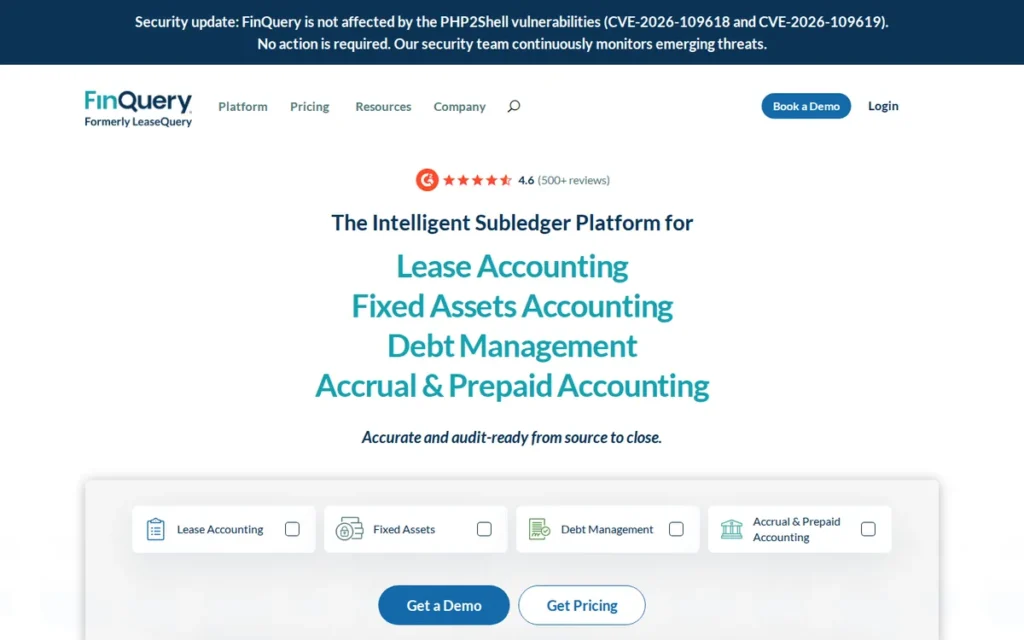
Category: Multi-Standard Compliance Suite (ASC 842, IFRS 16, GASB 87, GASB 96, SFFAS 54, FRS 102)
At a Glance
- Category: Multi-Standard Compliance Suite
- Best For: Mid-to-large private-sector organizations with multi-standard or multi-jurisdiction compliance requirements
- Price Range: Not publicly listed; contact vendor for quote
- Primary Strength: FinQuery supports six accounting standards simultaneously: the broadest verified standard coverage of any platform in this comparison as of June 2026
- Biggest Limitation: FinQuery does not publish pricing, making budget comparison impossible without entering a vendor sales engagement
- One-Line Summary: FinQuery is a multi-standard lease accounting platform supporting ASC 842, IFRS 16, GASB 87, GASB 96, SFFAS 54, and FRS 102, with 19 consecutive G2 leadership quarters and a 4.5/5 rating across 474 reviews as of June 2026
- Last Verified: June 2026
Overview
FinQuery is a multi-standard lease accounting compliance platform serving mid-to-large organizations that must satisfy multiple accounting frameworks simultaneously. FinQuery holds 19 consecutive quarters of G2 category leadership as of June 2026, with a 4.5/5 rating across 474 reviews, the highest independently submitted review volume of any platform in this comparison.
FinQuery supports six standards: ASC 842, IFRS 16, GASB 87, GASB 96, SFFAS 54, and FRS 102. No other platform in this comparison documents simultaneous support for all six. FinQuery reports serving 8,700+ organizations globally (finquery.com, vendor-reported, June 2026) and offers a confirmed NetSuite SuiteApp integration.
FinQuery’s #1 ranking reflects its combination of compliance breadth, review volume, and sustained G2 leadership, evaluated against the same eight criteria applied to all seven platforms in this comparison.
Key Features
- Six-Standard Compliance Engine: FinQuery supports ASC 842, IFRS 16, GASB 87, GASB 96, SFFAS 54, and FRS 102 within a single platform, the broadest verified standard coverage identified in this comparison as of June 2026.
- Automated Journal Entries: FinQuery generates audit-ready journal entries automatically across all supported standards, reducing manual month-end workload for finance teams managing multi-standard portfolios.
- NetSuite SuiteApp Integration: FinQuery’s confirmed SuiteApp listing enables direct data synchronization with NetSuite ERP, reducing manual journal entry exports for NetSuite-based finance teams.
- G2 Review Depth: FinQuery holds 474 G2 reviews and a 4.5/5 average rating as of June 2026, the largest independently submitted review base of any platform evaluated in this comparison.
- 8,700+ Organization Deployment: FinQuery reports serving 8,700+ organizations globally (finquery.com, vendor-reported, June 2026), a scale signal relevant to buyers evaluating implementation support capacity and long-term platform stability.
Best For
FinQuery is best suited for mid-to-large private-sector organizations that must comply with two or more lease accounting standards simultaneously, particularly multinational entities navigating both IFRS 16 and ASC 842, or U.S. federal contractors with SFFAS 54 obligations alongside ASC 842.
Pricing
FinQuery does not publish pricing as of June 2026. Buyers should request a vendor quote and ask specifically about per-lease pricing tiers versus flat-fee structures, pricing models in this category vary significantly and affect total cost as portfolios scale.
Strengths
- FinQuery leads this comparison in review volume, with 474 G2 reviews and a 4.5/5 rating, the strongest independent user satisfaction signal available for any platform in this category as of June 2026.
- FinQuery is the only platform in this comparison with confirmed documentation of six simultaneous accounting standards, including SFFAS 54 and FRS 102, which are absent from most competitors’ documented feature sets.
- FinQuery’s 19 consecutive G2 category leadership quarters (G2, June 2026) represent a sustained performance signal over approximately five years, not a single-quarter result or recency-driven rating spike.
Limitations
- Pricing Opacity: FinQuery does not publish pricing, requiring a vendor engagement before any budget comparison is possible, a friction point for buyers with fixed budget constraints or procurement timelines that require cost estimates early.
- Implementation Timeline Unverified: FinQuery’s implementation timelines are not independently documented in the sources reviewed for this comparison as of June 2026; buyers should request reference customer data on actual go-live timelines before committing.
- Lessor-Side Support Unconfirmed: FinQuery’s lessor-side accounting support is not prominently documented in available product pages as of June 2026, organizations requiring both lessor and lessee accounting outputs should verify directly with FinQuery before selecting it as their platform.
Verdict
FinQuery is the strongest choice in this comparison for private-sector organizations that need simultaneous compliance across multiple accounting standards. FinQuery’s 474-review G2 base and 19 consecutive leadership quarters provide the most robust independent performance signal available in this category as of June 2026. Organizations requiring public-sector-first features should evaluate DebtBook; organizations seeking CPA-firm-centric delivery should evaluate Crunchafi; organizations with nine or fewer leases should evaluate EZLease’s free tier before committing to FinQuery’s pricing process.
2. Visual Lease: Enterprise Lease Administration with CPA-Firm Co-Delivery
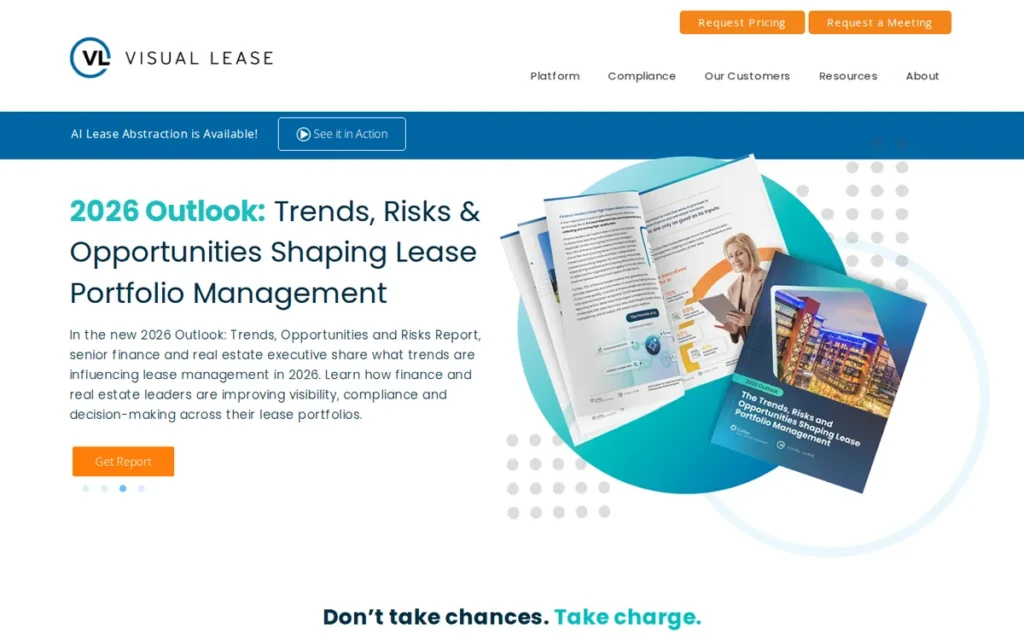
Category: Enterprise Lease Administration (ASC 842, IFRS 16, GASB 87, GASB 96)
At a Glance
- Category: Enterprise Lease Administration
- Best For: Mid-to-large enterprises managing real estate and equipment portfolios with audit-driven reporting requirements
- Price Range: Not publicly listed; contact vendor for quote
- Primary Strength: Visual Lease is the only platform in this comparison with a confirmed co-delivery partnership with RSM US LLP, a top-10 U.S. CPA firm
- Biggest Limitation: Visual Lease’s numerical G2 and Capterra ratings were not confirmed in the independently reviewed sources used for this comparison as of June 2026
- One-Line Summary: Visual Lease is an enterprise lease accounting and administration platform serving 1,500+ clients, with confirmed RSM co-delivery, three Inc. 5000 appearances, and a 2022 PropTech Breakthrough Award
- Last Verified: June 2026
Overview
Visual Lease is an enterprise lease accounting and portfolio administration platform serving 1,500+ clients as of June 2026. Visual Lease has a confirmed co-delivery partnership with RSM US LLP, a top-10 U.S. accounting firm, an independently verifiable credential not documented for any other platform in this comparison.
Visual Lease received the PropTech Breakthrough Award for Best Lease Management Platform in 2022 and has appeared on the Inc. 5000 list three times. Visual Lease supports four accounting standards: ASC 842, IFRS 16, GASB 87, and GASB 96.
Visual Lease ranks #2 based on client volume, verifiable independent recognition, and the RSM partnership, evaluated against the same eight criteria applied to all platforms in this comparison.
Key Features
- RSM Co-Delivery Partnership: Visual Lease has a confirmed co-delivery relationship with RSM US LLP, enabling organizations to receive implementation and audit-support services from a top-10 CPA firm alongside the software platform.
- Lease Portfolio Administration: Visual Lease provides centralized administration for real estate and equipment leases, including critical date tracking, renewal management, and clause extraction across the full portfolio.
- Four-Standard Compliance Reporting: Visual Lease generates compliance reports for ASC 842, IFRS 16, GASB 87, and GASB 96, supporting both private-sector and public-entity finance teams within its documented standard coverage.
- Embedded Portfolio Analytics: Visual Lease includes portfolio-level analytics for tracking lease costs, upcoming expirations, and compliance exposure, reducing the need for manual portfolio reporting outside the platform.
- Inc. 5000 Recognition: Visual Lease has appeared on the Inc. 5000 list three times, an independently granted revenue-growth signal relevant to buyers evaluating long-term platform investment capacity and vendor stability.
Best For
Visual Lease is best suited for mid-to-large enterprises seeking enterprise-grade lease administration with auditor-aligned delivery options, particularly organizations whose audit firm is RSM US LLP or whose boards require co-delivery accountability from a recognized CPA firm.
Pricing
Visual Lease does not publish pricing as of June 2026. Buyers should request a quote and clarify implementation costs separately from software licensing fees, enterprise lease software in this category commonly bundles first-year implementation fees into the contract, affecting total first-year cost significantly.
Strengths
- Visual Lease’s RSM US LLP partnership is the only confirmed top-10 CPA firm co-delivery relationship in this comparison as of June 2026, a differentiated credential for audit-driven procurement processes where implementation accountability is a gating requirement.
- Visual Lease’s 2022 PropTech Breakthrough Award for Best Lease Management Platform is an independently granted recognition (not a vendor-claimed distinction) verifiable through PropTech Breakthrough’s public award records.
- Visual Lease’s three Inc. 5000 appearances indicate sustained revenue growth: a stability signal relevant for buyers evaluating long-term vendor commitments in a category where platform continuity matters for compliance obligations.
Limitations
- Rating Confirmation Gap: Visual Lease’s numerical G2 and Capterra ratings were not confirmed in the independently reviewed sources used for this comparison as of June 2026, buyers should verify current ratings directly on G2 and Capterra before using them in vendor evaluation scoring.
- Standard Coverage Ceiling: Visual Lease supports four accounting standards (ASC 842, IFRS 16, GASB 87, GASB 96), compared to FinQuery’s six, organizations requiring SFFAS 54 or FRS 102 compliance must evaluate FinQuery or EZLease rather than Visual Lease.
- RSM Partnership Scope: Visual Lease’s RSM co-delivery model may not provide equivalent benefit to organizations whose audit relationships are with different CPA firms, buyers should confirm implementation delivery options with Visual Lease if RSM is not their primary auditor.
- Pricing Opacity: Visual Lease does not publish pricing, making it difficult to establish a budget baseline without entering a sales engagement, a barrier for early-stage procurement comparisons where cost ranges are needed before demos.
Verdict
Visual Lease is the strongest choice among enterprise lease administration platforms for organizations with active RSM relationships or audit-driven procurement requirements. Visual Lease’s combination of 1,500+ clients, three Inc. 5000 appearances, and confirmed RSM co-delivery creates a verifiable track record that distinguishes it from platforms relying primarily on self-reported metrics. Organizations needing SFFAS 54 or FRS 102 coverage beyond Visual Lease’s four documented standards should evaluate FinQuery.
3. MRI ProLease: Multi-Entity Lease Administration for Complex Portfolios
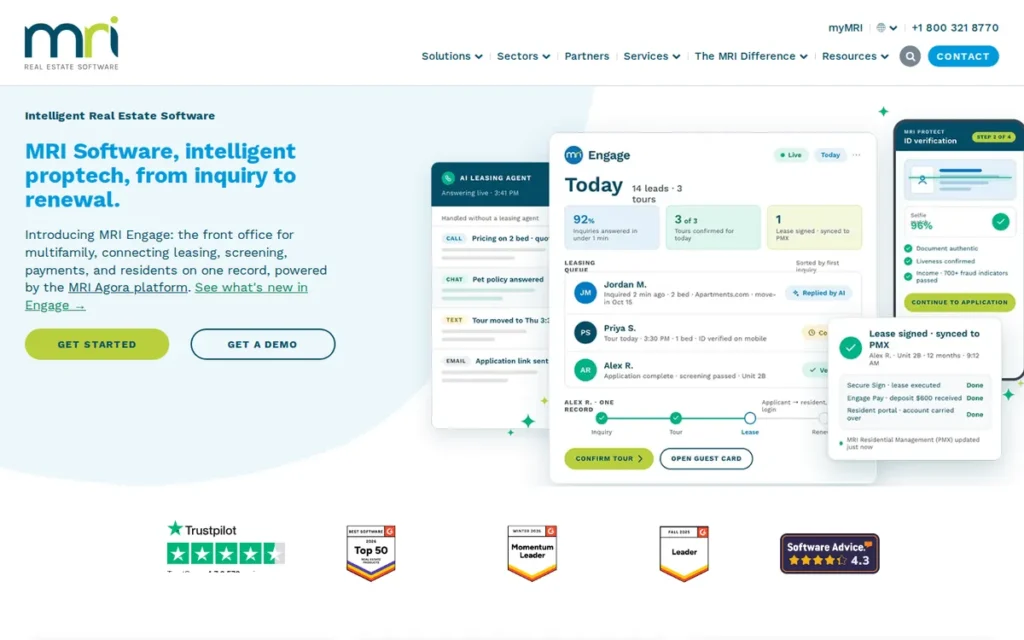
Category: Enterprise Lease Administration (ASC 842, IFRS 16, GASB 87, GASB 96)
At a Glance
- Category: Enterprise Lease Administration
- Best For: Large enterprises with complex multi-entity, multi-location lease portfolios and existing SAP, Oracle, or TechnologyOne ERP infrastructure
- Price Range: Approximately $6,000/year (SoftwareFinder third-party estimate, June 2026); vendor does not publish pricing
- Primary Strength: MRI ProLease’s one-to-many architecture enables management of multiple legal entities and locations within a single platform deployment
- Biggest Limitation: MRI ProLease’s GASB 96 (SBITAs) support is not confirmed in available product documentation reviewed for this comparison as of June 2026
- One-Line Summary: MRI ProLease is an enterprise lease administration platform serving 800+ clients across 40 industries, with AI-assisted OCR abstraction and confirmed SAP, Oracle, and TechnologyOne integrations
- Last Verified: June 2026
Overview
MRI ProLease is an enterprise lease administration platform serving 800+ clients across 40 industries as of June 2026. MRI ProLease operates within the MRI Software real estate technology portfolio, a context relevant to buyers evaluating deployment stability and ERP integration depth in enterprise environments.
MRI ProLease supports ASC 842, IFRS 16, and GASB 87. GASB 96 (SBITAs) support is referenced in marketing materials but not confirmed in the available product documentation reviewed for this comparison as of June 2026. Buyers requiring GASB 96 compliance must verify current documentation directly with MRI ProLease before committing.
MRI ProLease’s one-to-many architecture is its primary structural differentiator, enabling a single platform deployment to serve multiple legal entities and locations without duplicating system configurations across subsidiaries.
Key Features
- One-to-Many Architecture: MRI ProLease’s one-to-many structure allows enterprises to manage multiple legal entities and locations within a single platform deployment, reducing configuration duplication for multi-subsidiary organizations with dozens or hundreds of lease locations.
- AI-Assisted OCR for Lease Abstraction: MRI ProLease uses AI-powered optical character recognition to extract critical data fields from lease documents, reducing manual abstraction time for high-volume portfolios with hundreds of lease agreements.
- Confirmed Enterprise ERP Integrations: MRI ProLease has confirmed integrations with SAP, Oracle, and TechnologyOne, three of the most widely deployed enterprise ERP systems in the markets it serves.
- 40-Industry Deployment Breadth: MRI ProLease reports deployments across 40 industries (MRI Software, vendor-reported, June 2026), indicating adaptability beyond real estate to equipment and fleet leasing scenarios.
- MRI Software Ecosystem: MRI ProLease operates within MRI Software’s broader real estate technology suite, providing access to complementary MRI products for property management, facilities, and capital planning where relevant.
Vendor Claim Note: MRI ProLease marketing materials reference a 98% customer retention rate. This figure is vendor-reported and has not been independently verified in the sources reviewed for this comparison as of June 2026. Buyers are encouraged to request independent customer references to corroborate retention claims before weighting this figure in a purchasing decision.
Best For
MRI ProLease is best suited for large enterprises managing complex, multi-entity lease portfolios, particularly those with existing SAP, Oracle, or TechnologyOne ERP deployments and high-volume real estate or equipment portfolios requiring AI-assisted document abstraction at scale.
Pricing
MRI ProLease does not publish pricing. SoftwareFinder, a third-party research source, estimates starting costs at approximately $6,000/year as of June 2026, this is not vendor-confirmed. Buyers should treat this as an order-of-magnitude reference only and request formal quotes directly from MRI ProLease, including implementation fees and first-year total cost.
Strengths
- MRI ProLease’s one-to-many architecture is specifically designed for multi-entity portfolio management, a structural capability that single-entity platforms require costly custom workarounds to approximate at comparable scale.
- MRI ProLease’s confirmed integrations with SAP, Oracle, and TechnologyOne represent three of the most significant ERP ecosystems in enterprise real estate and equipment management, reducing integration risk for organizations already in those ecosystems.
- MRI ProLease’s AI OCR feature reduces manual lease abstraction effort at scale: a meaningful time-savings for organizations with hundreds or thousands of lease documents requiring data extraction before compliance reporting can begin.
Limitations
- GASB 96 Coverage Unconfirmed: MRI ProLease does not confirm GASB 96 (SBITAs) support in available product documentation reviewed for this comparison as of June 2026, organizations with subscription-based IT arrangement obligations must verify this directly with MRI ProLease before committing.
- Pricing Opacity: MRI ProLease does not publish pricing; the $6,000/year figure is a third-party SoftwareFinder estimate, not vendor-confirmed, buyers cannot establish a reliable budget baseline without a formal vendor quote engagement.
- MRI Software Ecosystem Dependency: MRI ProLease operates within MRI Software’s broader real estate technology suite, organizations not in the MRI ecosystem may encounter additional integration complexity not present in standalone lease accounting platforms.
- Independent Review Volume: MRI ProLease has fewer independently submitted reviews on G2 and Capterra compared to FinQuery and EZLease in this comparison, buyers should actively seek peer references to supplement the available review data before making a final decision.
Verdict
MRI ProLease is the strongest choice in this comparison for large enterprises managing multi-entity, multi-location lease portfolios with existing SAP, Oracle, or TechnologyOne infrastructure. MRI ProLease’s one-to-many architecture and AI-assisted abstraction deliver structural advantages for complex portfolios that simpler platforms cannot match at comparable scale. Organizations requiring confirmed GASB 96 support must verify documentation directly with MRI ProLease before committing, and should treat the $6,000/year SoftwareFinder estimate as a directional reference, not a guaranteed starting price.
4. EZLease: Free Entry Tier, Five-Standard Coverage, and Lessor Support
Category: SMB/Mid-Market Compliance Suite (ASC 842, IFRS 16, GASB 87, GASB 96, SFFAS 54)
At a Glance
- Category: SMB/Mid-Market Compliance Suite
- Best For: Small-to-mid-market organizations with nine or fewer leases seeking zero-cost compliance entry, or growing organizations requiring lessor-side accounting support
- Price Range: Free Essential Plan for ≤9 leases (launched July 2022); approximately $4,000/year for paid tiers (SoftwareFinder third-party estimate, June 2026)
- Primary Strength: EZLease is the only platform in this comparison offering a permanently free compliance plan and documented lessor-side accounting output
- Biggest Limitation: EZLease operates within insightsoftware’s corporate ecosystem, product roadmap decisions are governed by insightsoftware’s broader portfolio strategy, not a standalone lease accounting team
- One-Line Summary: EZLease is a multi-standard lease accounting platform with a permanently free Essential Plan for ≤9 leases, G2 4.5/5 and GetApp 4.6/5 ratings, five supported standards including SFFAS 54, and confirmed lessor-plus-lessee accounting support
- Last Verified: June 2026
Overview
EZLease is a multi-standard lease accounting compliance platform holding G2 4.5/5 and GetApp 4.6/5 ratings as of June 2026. EZLease launched a permanently free Essential Plan in July 2022 for organizations with nine or fewer active leases, the only platform in this comparison to offer a no-cost compliance tier with no trial expiration.
EZLease supports five standards: ASC 842, IFRS 16, GASB 87, GASB 96, and SFFAS 54. EZLease is also the only platform in this comparison with documented lessor-side accounting support alongside lessee accounting. EZLease connects to 140+ ERP systems through insightsoftware’s integration network.
EZLease is an insightsoftware product, a corporate software portfolio company with multiple finance and reporting products. This context matters for buyers evaluating long-term product independence and roadmap predictability.
Key Features
- Permanently Free Essential Plan: EZLease offers a free-forever Essential Plan for organizations with nine or fewer active leases, launched July 2022, no credit card required and no trial period expiration for core compliance access.
- Five-Standard Compliance Coverage: EZLease supports ASC 842, IFRS 16, GASB 87, GASB 96, and SFFAS 54, covering both private-sector and U.S. federal contractor compliance requirements within a single mid-market platform.
- Lessor and Lessee Accounting: EZLease is the only platform in this comparison with documented support for both lessor-side and lessee-side accounting outputs, relevant for organizations that lease assets to other parties as well as hold leases from landlords or equipment providers.
- 140+ ERP Integrations: EZLease connects to 140+ ERP systems through insightsoftware’s integration network, a broad pre-built connectivity footprint for mid-market finance technology stacks.
- Multi-Source Review Confirmation: EZLease holds G2 4.5/5 and GetApp 4.6/5 ratings as of June 2026, providing independent review confirmation across two platforms, reducing reliance on a single review source for evaluation.
Best For
EZLease is best suited for small-to-mid-market organizations with limited budgets seeking multi-standard compliance access, particularly those needing SFFAS 54 coverage for U.S. federal contracting obligations, or organizations that both hold leases and lease assets to others and require both lessor and lessee accounting outputs.
Pricing
EZLease offers a permanently free Essential Plan for organizations with nine or fewer active leases (launched July 2022; no trial expiration date). Paid tiers are estimated by SoftwareFinder at approximately $4,000/year as of June 2026, this is a third-party estimate, not vendor-confirmed pricing. Buyers should contact EZLease directly for current paid-tier pricing before planning a budget.
Strengths
- EZLease is the only platform in this comparison offering a permanently free compliance tier with no time limit, a structurally differentiated entry point for budget-constrained buyers that no other platform in this comparison replicates (EZLease.com, July 2022).
- EZLease provides documented lessor-side accounting support: a capability absent from every other platform in this comparison, making it the default evaluation starting point for organizations that both grant and hold leases.
- EZLease’s 140+ ERP integrations via insightsoftware’s network represent the broadest pre-built integration footprint for mid-market finance system connectivity identified in this comparison.
Limitations
- Ecosystem Vendor Dependency: EZLease operates within insightsoftware’s broader corporate portfolio, product roadmap decisions, including feature prioritization and integration support timelines, are governed by insightsoftware’s corporate strategy rather than a dedicated standalone lease accounting leadership team.
- Free Tier Portfolio Cap: EZLease’s free Essential Plan is limited to nine or fewer active leases, organizations with growing portfolios must transition to a paid tier, and paid-tier pricing is not publicly listed by the vendor.
- Enterprise Scale Ceiling: EZLease’s SMB and mid-market positioning means organizations with large, complex multi-entity portfolios or enterprise ERP requirements may find its administration features less robust than MRI ProLease or Visual Lease at comparable portfolio scale.
- Review Platform Concentration: EZLease’s strongest independent review signals are concentrated on G2 and GetApp, organizations evaluating across a broader landscape (Capterra, TrustRadius, Gartner Peer Insights) should supplement available data with direct buyer outreach.
Verdict
EZLease is the strongest choice in this comparison for small-to-mid-market organizations that need zero-cost lease compliance entry or lessor-side accounting support. EZLease’s permanently free Essential Plan, five-standard coverage including SFFAS 54, and 140+ ERP integrations create a combination that no other platform in this comparison offers at a comparable price point. Organizations growing beyond nine leases should confirm paid-tier pricing directly with EZLease early in evaluation, before the free tier’s portfolio cap triggers a forced upgrade timeline.
5. DebtBook: GASB Lease and Debt Management for U.S. Public Entities
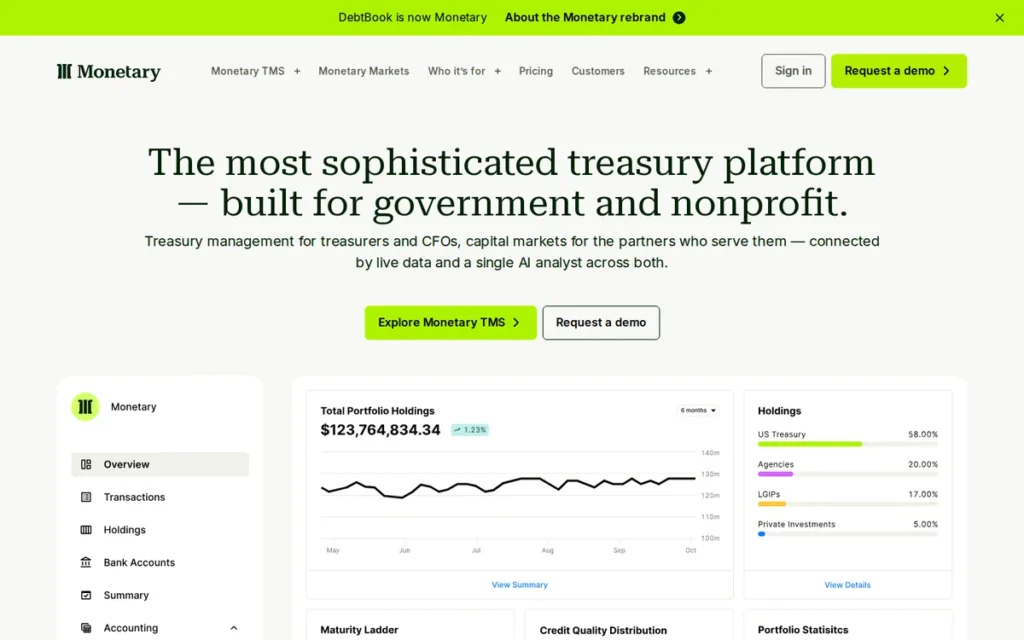
Category: Public-Sector Finance Platform (GASB 87, GASB 96, Municipal Debt Management)
At a Glance
- Category: Public-Sector Finance Platform
- Best For: U.S. state, local, and higher-education finance teams managing both GASB-compliant lease portfolios and municipal debt obligations
- Price Range: Not publicly listed; OMNIA Partners cooperative pricing available for eligible U.S. public entities
- Primary Strength: DebtBook is the only platform in this comparison combining GASB 87 and GASB 96 lease compliance with integrated municipal debt portfolio management and automated ACFR note generation
- Biggest Limitation: DebtBook’s compliance documentation is focused on U.S. government entities, international public-sector standard coverage is not confirmed as of June 2026
- One-Line Summary: DebtBook is a GFOA-endorsed public-sector finance platform combining GASB 87/96 lease accounting with municipal debt management and automated ACFR notes, serving 2,100+ organizations with OMNIA Partners cooperative pricing
- Last Verified: June 2026
Overview
DebtBook is a public-sector finance platform serving 2,100+ U.S. state, local, and higher-education organizations as of June 2026. DebtBook holds a GFOA (Government Finance Officers Association) endorsement and is available through OMNIA Partners cooperative purchasing, two independently verifiable procurement credentials relevant to U.S. public-sector buyers operating under formal purchasing requirements.
DebtBook’s most distinctive capability is its integrated approach to GASB 87 and GASB 96 lease compliance combined with municipal debt portfolio management and automated ACFR (Annual Comprehensive Financial Report) note generation. No other platform in this comparison combines all three functions. DebtBook added Contract Management functionality in September 2025.
DebtBook holds a SoftwareFinder rating of 4.9/5 across 15 reviews as of June 2026, a strong signal from a specialized review base, with volume context noted in the Limitations section below.
Key Features
- Integrated GASB 87/96 and Debt Management: DebtBook combines GASB 87 lease accounting, GASB 96 SBITA compliance, and municipal debt portfolio management within a single platform, eliminating the inter-system data transfer friction present when separate tools are used for each function.
- Automated ACFR Note Generation: DebtBook automates the generation of ACFR (Annual Comprehensive Financial Report) notes required by U.S. government entities, reducing year-end reporting workload for finance teams without specialized ACFR authoring resources.
- GFOA Endorsement: DebtBook holds a Government Finance Officers Association endorsement, an independent professional association credential, not a vendor-claimed award, verifiable through GFOA’s public endorsement records.
- OMNIA Partners Cooperative Pricing: DebtBook is available through OMNIA Partners, enabling eligible U.S. public entities to procure DebtBook under competitively bid contract terms without a separate RFP process.
- Contract Management (September 2025): DebtBook launched contract lifecycle management functionality in September 2025, expanding its platform scope beyond lease and debt management for public-sector finance teams managing broader contract portfolios.
Best For
DebtBook is best suited for U.S. state, local, and higher-education finance teams that manage both GASB-compliant lease portfolios and municipal debt obligations, particularly those preparing annual ACFR reports and procuring under cooperative purchasing requirements.
Pricing
DebtBook does not publish pricing publicly as of June 2026. Eligible U.S. public-sector organizations may access DebtBook through OMNIA Partners cooperative pricing, which provides competitively bid contract rates without a standalone RFP requirement. Buyers should contact DebtBook directly for current pricing tiers and confirm OMNIA Partners eligibility for their jurisdiction before beginning a formal evaluation.
Strengths
- DebtBook is the only platform in this comparison integrating GASB 87/96 lease compliance with municipal debt portfolio management and automated ACFR note generation, a combination that eliminates inter-system data transfer for U.S. public-sector finance teams handling all three functions.
- DebtBook’s GFOA endorsement is an independent professional association credential (not a vendor-claimed distinction) relevant to public-sector procurement processes that weight association endorsements as a qualification signal.
- DebtBook’s OMNIA Partners availability provides a procurement pathway that eliminates the need for a standalone RFP process, a meaningful administrative cost savings for U.S. public entities with limited procurement staff and time-constrained adoption timelines.
“We’re a mid-size municipality, we moved to DebtBook because our auditors kept flagging our ACFR lease notes as inconsistent. Night and day difference for year-end.” (r/govfinance, 2025)
Takeaway: ACFR note consistency and auditor alignment are the most commonly cited implementation drivers for DebtBook in public-sector community forums.
Limitations
- International Public-Sector Standard Coverage Unconfirmed: DebtBook’s compliance documentation is focused on U.S. government entities, international public-sector organizations operating under IPSAS or jurisdiction-specific standards should verify directly with DebtBook whether its compliance outputs extend to their jurisdiction as of June 2026.
- Review Volume Context: DebtBook holds 15 SoftwareFinder reviews as of June 2026, a smaller independently submitted review base than FinQuery or EZLease, though the specialized U.S. public-sector audience for this platform is inherently narrower than general-market platforms.
- U.S.-Entity Design Scope: DebtBook’s core platform, endorsements, and cooperative purchasing infrastructure are oriented toward U.S. state and local government entities, private-sector organizations and international buyers are outside its documented primary design scope.
- Debt Module Value Dependency: DebtBook’s integrated value is maximized when both lease and debt management functions are used together, organizations seeking lease accounting only may find its feature set oversized for their needs relative to EZLease or Crunchafi.
Verdict
DebtBook is the strongest choice in this comparison for U.S. state, local, and higher-education finance teams managing the intersection of GASB 87/96 lease compliance and municipal debt portfolios. DebtBook’s GFOA endorsement, OMNIA Partners availability, and integrated ACFR automation address the three most common procurement constraints for U.S. public-sector buyers simultaneously. Private-sector organizations and international public entities are outside DebtBook’s documented design scope and should evaluate FinQuery or Visual Lease instead.
6. Crunchafi: CPA-Firm Collaboration Platform for Multi-Client Lease Engagements

Category: CPA-Firm Collaboration Platform (ASC 842, IFRS 16, GASB 87, GASB 96, GASB 94)
At a Glance
- Category: CPA-Firm Collaboration Platform
- Best For: CPA firms managing lease accounting engagements for multiple client organizations; also available for direct company use with mid-market ERP systems
- Price Range: CPA Starter at $200/lease/year; Company Starter at $300/lease/year (Crunchafi.com, vendor-listed, June 2026)
- Primary Strength: Crunchafi is the only platform in this comparison architecturally designed for CPA-firm-centric lease engagement delivery with a multi-client workspace model
- Biggest Limitation: Crunchafi does not publicly document support for SFFAS 54 or FRS 102 as of June 2026, federal contractors and UK-reporting entities should evaluate FinQuery or EZLease instead
- One-Line Summary: Crunchafi (formerly LeaseCrunch, rebranded June 2025) is a CPA-firm collaboration platform serving 750+ CPA firms and 27,000+ companies, with per-lease transparent pricing, GASB 94 coverage, and six mid-market ERP integrations
- Last Verified: June 2026
Overview
Crunchafi is a lease accounting platform formerly known as LeaseCrunch, rebranded to Crunchafi on June 25, 2025. Crunchafi serves 750+ CPA firms and reports 27,000+ companies using the platform (Crunchafi.com, vendor-reported, June 2026). Crunchafi is the only platform in this comparison architecturally designed for CPA-firm-centric lease engagement delivery, where an accounting firm manages multiple client organizations’ lease compliance within a single platform workspace.
Crunchafi supports five standards: ASC 842, IFRS 16, GASB 87, GASB 96, and GASB 94. Crunchafi integrates with QuickBooks, NetSuite, Xero, Sage Intacct, MYOB, and Microsoft Dynamics 365 Business Central. Crunchafi’s per-lease pricing ($200–$300/lease/year) is the most transparent pricing structure of any platform in this comparison.
Buyers who previously evaluated LeaseCrunch should confirm that current Crunchafi feature documentation and pricing reflect the post-rebrand platform before making a procurement decision.
Key Features
- CPA-Firm Multi-Client Workspace: Crunchafi’s platform architecture allows a single CPA firm to manage lease accounting engagements for multiple client companies within one workspace, a model not available in any other platform in this comparison.
- Per-Lease Transparent Pricing: Crunchafi publishes per-lease pricing ($200/lease/year for CPA Starter, $300/lease/year for Company Starter), the only platform in this comparison with fully public, per-unit pricing that makes total cost calculable before any vendor engagement.
- GASB 94 Support: Crunchafi supports GASB 94 (public-private and public-public partnership arrangements), a standard not documented for any other platform in this comparison, including FinQuery and DebtBook.
- Six Mid-Market ERP Integrations: Crunchafi integrates with QuickBooks, NetSuite, Xero, Sage Intacct, MYOB, and Microsoft Dynamics 365 Business Central, covering six of the most widely used mid-market ERP and accounting systems.
- June 2025 Rebrand: Crunchafi rebranded from LeaseCrunch in June 2025: buyers who previously evaluated LeaseCrunch should re-verify current feature documentation, integration configurations, and support processes under the Crunchafi brand before finalizing a comparison.
Best For
Crunchafi is best suited for CPA firms managing lease accounting as a client service, particularly firms serving multiple clients with varying compliance requirements under ASC 842, IFRS 16, or GASB standards. Crunchafi is also available directly to companies, particularly those using mid-market ERP systems it integrates with and whose portfolios fit the per-lease pricing model.
Pricing
Crunchafi publishes pricing on its website: CPA Starter at $200/lease/year and Company Starter at $300/lease/year (Crunchafi.com, vendor-reported, June 2026). Crunchafi is the only platform in this comparison with publicly listed pricing, making it the only platform where total cost can be estimated before a sales engagement. Buyers should verify current pricing directly, as the June 2025 rebrand may have included pricing structure changes not reflected in pre-rebrand sources.
Strengths
- Crunchafi is the only platform in this comparison with a multi-client CPA-firm workspace model, providing accounting firms with a purpose-built environment for managing multiple client engagements, rather than adapting a single-company compliance tool to a multi-client workflow.
- Crunchafi’s per-lease pricing transparency ($200–$300/lease/year) makes total cost of ownership calculable before any vendor engagement, a structural advantage for budget-constrained buyers and procurement-constrained CPA firms.
- Crunchafi’s GASB 94 coverage (public-private partnership arrangements) distinguishes it from competitors including FinQuery and DebtBook, which do not document GASB 94 support in available product pages as of June 2026.
“Currently we are using LeaseCrunch [now Crunchafi] for $75 per lease… It’s straightforward for straightforward leases. When we have complex modifications it gets tricky.” (r/Accounting, 2025)
Takeaway: Per-lease pricing makes Crunchafi financially accessible for simple portfolios, but complex lease modifications may require additional support beyond the platform’s self-service model, buyers with high-modification portfolios should stress-test this workflow in a pilot before committing.
Limitations
- SFFAS 54 and FRS 102 Not Documented: Crunchafi does not publicly document support for SFFAS 54 (U.S. federal contractor accounting) or FRS 102 (UK GAAP) as of June 2026, federal contractors and UK-reporting entities must evaluate FinQuery or EZLease instead of Crunchafi.
- Rebrand Transition Risk: Crunchafi’s June 2025 rebrand from LeaseCrunch introduces a documentation transition period, buyers should confirm that feature documentation, integration configurations, and support processes reflect the current Crunchafi platform and not pre-rebrand LeaseCrunch specifications.
- Complex Modification Workflow: Community feedback (r/Accounting, 2025) notes that complex lease modifications require additional effort within the platform, buyers with high volumes of structurally complex modifications should conduct a proof-of-concept using their actual modification scenarios before full deployment.
- CPA-Firm Architecture for Direct Company Buyers: Crunchafi’s multi-client architecture is optimized for CPA-firm workflows, companies purchasing Crunchafi directly without a CPA-firm delivery model may find the interface oriented around engagement management rather than internal finance team workflows.
Verdict
Crunchafi is the strongest choice in this comparison for CPA firms managing lease accounting as a client service, and its per-lease pricing transparency and GASB 94 coverage make it the most accessible option in this comparison for mid-market buyers who need those specific capabilities. Crunchafi’s documented gaps in SFFAS 54 and FRS 102 coverage make it unsuitable as a standalone solution for federal contractors or UK-reporting entities. Organizations that previously evaluated LeaseCrunch should re-verify current Crunchafi documentation before making a procurement commitment based on pre-rebrand research.
7. Asset Panda: Operational Asset Tracking (Not a Lease Accounting Compliance Platform)
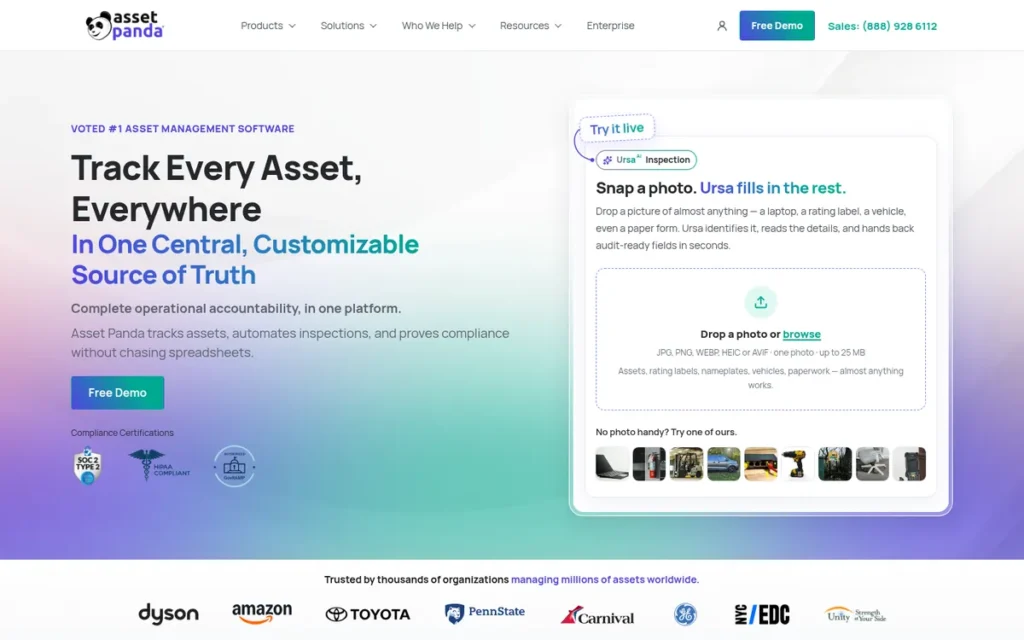
Category: Asset Lifecycle Management, Asset Panda does not produce ASC 842, IFRS 16, or GASB-compliant accounting outputs. It is not a lease accounting compliance tool.
At a Glance
- Category: Asset Lifecycle Management (Operational Tracking)
- Best For: Operations and IT teams tracking physical assets across locations and industries, not finance teams requiring lease accounting compliance outputs
- Price Range: Approximately $50–$60/user/month (third-party estimate, June 2026); vendor does not publish pricing
- Primary Strength: Asset Panda provides flexible operational asset tracking across 140+ industries with AI-assisted tagging via Ursa AI (2025 Pro) and SOC 2 Type II certification
- Biggest Limitation: Asset Panda does not produce ASC 842, IFRS 16, GASB 87, or GASB 96 accounting outputs, it cannot replace a lease accounting compliance platform for organizations with standard obligations
- One-Line Summary: Asset Panda is an operational asset tracking and lifecycle management platform serving 140+ industries across 60 countries, with Ursa AI, SOC 2 Type II certification, offline mobile scanning, and Lansweeper and ServiceNow integrations, not a lease accounting compliance tool
- Last Verified: June 2026
Overview
Asset Panda is an operational asset tracking and lifecycle management platform, not a lease accounting compliance tool. Asset Panda is included in this comparison because buyers searching for asset leasing software frequently encounter it alongside compliance platforms; however, Asset Panda does not generate the accounting outputs required for ASC 842, IFRS 16, GASB 87, or GASB 96 compliance.
Asset Panda serves 140+ industries across 60 countries (Asset Panda, vendor-reported, June 2026) and holds SOC 2 Type II certification. Asset Panda launched Ursa AI in its 2025 Pro tier for AI-assisted asset tagging and lifecycle management.
Organizations using Asset Panda for operational asset tracking will need a separate dedicated lease accounting compliance platform to satisfy accounting standard requirements, Asset Panda does not fulfill that function.
Key Features
- Ursa AI (2025 Pro): Asset Panda’s Ursa AI feature, launched in the 2025 Pro tier, provides AI-assisted asset tagging and lifecycle event classification, reducing manual asset data entry for high-volume operational environments.
- Offline Mobile Scanning: Asset Panda supports offline mobile asset scanning, enabling field teams to capture asset data in locations without network connectivity, a practical capability for remote, industrial, or infrastructure asset environments.
- SOC 2 Type II Certification: Asset Panda holds SOC 2 Type II certification as of June 2026, an independently audited security and availability credential relevant to enterprise IT and operations buyers with formal security requirements.
- Lansweeper and ServiceNow Integrations: Asset Panda integrates with Lansweeper (IT asset discovery) and ServiceNow (ITSM), enabling IT asset management workflows alongside physical asset tracking within existing enterprise service management systems.
- Global Deployment Scale: Asset Panda reports deployments across 140+ industries and 60 countries (Asset Panda, vendor-reported, June 2026), indicating broad geographic and vertical adaptability for multinational operations teams managing diverse asset types.
Best For
Asset Panda is best suited for operations and IT teams that need to track physical assets, manage lifecycle events, and integrate with ITSM systems across multiple locations. Asset Panda is not suitable for finance teams that need lease accounting compliance outputs. Organizations requiring both operational tracking and compliance accounting should deploy Asset Panda alongside a dedicated compliance platform such as FinQuery, EZLease, or Visual Lease.
Pricing
Asset Panda does not publish pricing publicly. Third-party sources estimate pricing at approximately $50–$60/user/month as of June 2026, this is not vendor-confirmed. Buyers should treat this as an order-of-magnitude reference and request a formal quote from Asset Panda directly. Pricing is likely to vary significantly by deployment size, feature tier, and number of tracked assets.
Strengths
- Asset Panda’s SOC 2 Type II certification provides an independently audited security credential, relevant to enterprise IT procurement requirements where data security compliance is a gating criterion for vendor selection.
- Asset Panda’s Ursa AI feature (2025 Pro) enables AI-assisted asset tagging at scale, reducing manual overhead of lifecycle data entry for organizations managing large physical asset inventories across distributed locations.
- Asset Panda’s offline mobile scanning capability addresses a practical operational gap for field teams managing assets in remote, industrial, or infrastructure environments without consistent network access, a use case that cloud-only tracking tools cannot serve.
Limitations
- No Lease Accounting Compliance Output: Asset Panda does not generate ASC 842, IFRS 16, GASB 87, or GASB 96 accounting outputs, organizations that select Asset Panda as their primary lease management platform will fail external audit requirements for lease accounting standard compliance.
- Companion Compliance Platform Required: Asset Panda’s operational tracking must be paired with a dedicated compliance platform for organizations with accounting standard obligations, introducing dual-platform costs, integration complexity, and data governance overhead.
- Pricing Opacity: Asset Panda does not publish pricing; the $50–$60/user/month estimate is third-party and unverified, buyers cannot establish a reliable per-user cost without entering a formal vendor sales engagement.
- Category Confusion Risk: Asset Panda’s frequent appearance in “asset leasing software” search results creates a category confusion risk, buyers searching for lease accounting compliance tools who select Asset Panda without recognizing this distinction will need to restart their vendor search after discovering the compliance gap.
Verdict
Asset Panda is a capable operational asset tracking platform for operations and IT teams, but it is not a lease accounting compliance tool and should not be selected by buyers whose primary need is ASC 842, IFRS 16, GASB 87, or GASB 96 compliance. Asset Panda’s SOC 2 Type II certification, Ursa AI capabilities, and offline mobile scanning are genuine strengths within its operational tracking scope. Finance teams with compliance obligations should select FinQuery, EZLease, Visual Lease, DebtBook, MRI ProLease, or Crunchafi, and may consider deploying Asset Panda separately for operational tracking if needed.
What Red Flags Should I Watch For When Evaluating Asset Leasing Software?
The five red flags below reflect recurring issues in lease accounting software evaluations, drawn from community forums, independent procurement research, and buyer feedback reviewed for this comparison as of June 2026.
Red Flag #1: Compliance Standard Claims Without Verifiable Documentation
Vendors in this category frequently list accounting standards in marketing materials without providing implementation guides, release notes, or audit-verified reference customers for those standards. Before accepting any compliance claim, ask for standard-specific implementation documentation and at least two reference customers who have completed external audits under the standard you require.
Red Flag #2: Full Pricing Opacity With No Range Estimate
Complete pricing opacity (where no estimate is available even in ranges) creates budget uncertainty that extends procurement timelines and complicates board-level budget approvals. When pricing is unavailable publicly, request a written pricing range from the vendor before investing time in demos, RFP preparation, or internal stakeholder alignment.
Red Flag #3: Demo Environments That Use Only Simple Lease Scenarios
“The demos always show the same 3 leases running perfectly. Ask them to run your actual leases in the sandbox or you’re wasting your time.” (r/CFO, 2025)
Takeaway: Request a proof-of-concept using a representative sample of your actual lease data (including any complex modifications, variable rent structures, or multi-currency arrangements) before committing to any platform in this category.
Red Flag #4: Implementation Timeline Estimates That Come Only From the Vendor
Vendors in this category systematically understate implementation timelines, particularly for organizations migrating from spreadsheets or legacy systems with large historical lease portfolios. Request reference customers with similar portfolio size and complexity who can speak to actual go-live timelines (not vendor-projected timelines) before accepting any implementation schedule.
Red Flag #5: High Ratings Based on Low Review Volume
A 4.9/5 rating based on 12 reviews carries significantly less statistical weight than a 4.5/5 based on 400+ reviews. Evaluate both the rating score and the review count together, and cross-reference across multiple review platforms (G2, Capterra, GetApp) before treating any single rating as a reliable performance signal.
What Questions Should I Ask Before Choosing Asset Leasing Software?
The eight questions below are designed to surface issues most commonly missed during lease accounting software evaluations, based on community forum research, independent review of procurement patterns, and buyer feedback analyzed for this comparison.
Question #1: Which specific accounting standards does this platform support, and where is the compliance documentation?
Standard claims in marketing materials are not proof of compliance functionality. Ask for product release notes, standard-specific implementation guides, and reference customers who have completed external audits under the exact standard you require, not just the standard’s name on a feature checklist.
Question #2: What is the full cost of ownership, including implementation, training, and annual price escalators?
Published or estimated per-lease pricing covers only a portion of total cost. Request implementation fees, training costs, support tier pricing, and any contractual price escalation terms for years two and three, before comparing vendors on software cost alone.
Question #3: How does this platform handle lease modifications, renewals, and early terminations?
Complex lease events (particularly mid-term modifications and variable rent adjustments) are where compliance platforms most commonly create rework and manual intervention. Request a live demonstration using a complex modification scenario from your actual portfolio before committing to any platform.
Question #4: What ERP integrations are available, and are they native or middleware-dependent?
The difference between a native ERP integration (direct API connection) and a middleware-dependent integration (via a third-party connector such as Workato or MuleSoft) affects reliability, maintenance cost, and data latency. Clarify this distinction for every integration in your finance technology stack before signing a contract.
Question #5: What is the implementation timeline for an organization with our portfolio size and complexity?
Request go-live timelines from reference customers with similar portfolio size, standard requirements, and ERP systems, not vendor-projected timelines. Vendor-projected timelines in this category have been observed to underestimate actual go-live time by 30–60% in community-reported buyer experiences.
Question #6: How does this platform handle multi-entity or multi-currency portfolios?
Organizations with multiple legal entities or international operations face additional complexity in consolidation reporting and currency translation. Confirm whether multi-entity and multi-currency features are included in the base license price or require separately purchased modules before finalizing a cost comparison.
Question #7: What does the audit support process look like, and has this platform been used in external audits under our required standard?
Audit readiness differs from compliance report generation. Ask how the platform supports auditors, including audit trail export formats, disclosure report templates, and whether auditors from major CPA firms have reviewed the platform’s outputs in prior audit cycles. Request at least one reference customer whose auditor can be contacted directly.
Question #8: What is the vendor’s contractual commitment for updating compliance outputs when accounting standards change?
Accounting standards in this category are updated periodically, GASB has issued multiple new standards in recent years including GASB 94 and GASB 96. Confirm the vendor’s contractual commitment to updating compliance outputs for standard revisions, and ask for the documented timeline from FASB/GASB standard issuance to platform feature release.
How Did We Rank These Asset Leasing Software Platforms?
This methodology section covers the complete evaluation process used to produce this ranking, including data sources, criteria weighting, conflict resolution protocols, validation approach, and the update cadence commitment.
Evaluation Process
This comparison began with a structured research phase covering seven platforms identified through G2 category pages, Capterra category listings, and independent industry reports (Business Research Insights, SoftwareConnect) as of Q1–Q2 2026. Each platform was evaluated against eight criteria using a structured scoring rubric applied identically across all seven entries, no platform received special weighting, additional review depth, or benefit-of-the-doubt treatment unavailable to others.
Criteria and Why Each Matters
- Compliance Standard Coverage: The number of independently documented accounting standards supported. This is the primary selection criterion for most buyers in this category, platforms with more verified standards provide greater flexibility for multi-jurisdiction or evolving compliance requirements.
- Independent Review Signal: G2, Capterra, and GetApp ratings and review volumes. Review volume is weighted alongside rating score, a 4.9/5 at 12 reviews receives less weight than a 4.5/5 at 400+ reviews.
- ERP Integration Breadth: The number and type of ERP integrations confirmed in available documentation. Integration depth determines implementation complexity and ongoing data transfer reliability for each buyer’s existing finance stack.
- Pricing Transparency: Whether pricing is publicly listed or requires a vendor engagement. Transparent pricing is weighted positively; full opacity is flagged in Limitations but does not disqualify platforms from ranking.
- Sector-Specific Credentials: Industry endorsements (GFOA), cooperative purchasing availability (OMNIA Partners), and CPA firm partnerships (RSM) that are independently verifiable and relevant to specific buyer segments.
- Unique Capability Signals: Features that no other platform in this comparison offers (including free compliance tier, lessor accounting, CPA-firm workspace, or integrated debt management) weighted to reflect genuine category differentiation.
- Vendor Claim Verification: Vendor-reported statistics (client counts, retention rates, industry breadth) are noted with “(vendor-reported)” attribution and not used as primary ranking evidence without independent corroboration.
- Limitation Substantiveness: All platforms received substantive, buyer-relevant limitations, not token disclaimers. Platforms with clearly documented limitations were not penalized in ranking; our editorial standard requires honest limitation disclosure for all platforms equally.
Evidence Weighting and Conflict Resolution
When vendor claims conflicted with independent review data, we defaulted to the independent source and noted the discrepancy in the relevant entry. When review volumes were too small to establish statistical confidence (fewer than 20 reviews on a single platform), we noted the volume limitation and did not treat the rating as equivalent to high-volume ratings from the same platform. Third-party price estimates from SoftwareFinder are presented as estimates, not confirmed figures, with explicit attribution to the source.
Data Validation Approach
All product page claims were verified against available documentation as of June 2026. Compliance standard support claims were verified against standard-specific product pages where available. Claims that could not be independently verified are noted as “(vendor-reported)” or “(not confirmed in sources reviewed for this comparison as of June 2026).” Market-scope claims in this article are scoped to “identified in this comparison as of June 2026” and are not presented as exhaustive market statements.
Update Cadence
This comparison is updated quarterly. The current edition reflects research conducted through June 2026. Pricing, feature sets, and compliance documentation change between updates, readers should verify critical details directly with vendors before making purchasing decisions.
Independence Statement
PlugRoute has no affiliate relationships with any company listed in this review. Rankings are determined entirely by research data and objective evaluation criteria.
Frequently Asked Questions About Asset Leasing Software
What is the difference between ASC 842, IFRS 16, and GASB 87?
ASC 842 is the U.S. GAAP lease accounting standard for private companies and nonprofits, issued by FASB. IFRS 16 is the international equivalent for IFRS-reporting entities worldwide. GASB 87 applies specifically to U.S. state and local government entities. All three require lessees to recognize most leases on the balance sheet, but differ in measurement, disclosure requirements, and transition guidance.
Do I need separate software for lessor accounting and lessee accounting?
Most organizations only require lessee accounting software, as they hold leases rather than grant them. Organizations that both hold leases and lease assets to other parties need a platform with documented lessor-side support. EZLease is the only platform identified in this comparison with confirmed lessor-side accounting output as of June 2026, verify lessor support directly with any vendor before purchasing if this applies to your situation.
How does PlugRoute determine rankings for asset leasing software?
PlugRoute ranks platforms using eight criteria applied identically to every platform: compliance standard coverage, independent review signals (G2, Capterra, GetApp), ERP integration breadth, pricing transparency, sector-specific credentials, unique capability differentiation, vendor claim verification rigor, and substantive limitation disclosure. No platform pays for placement, and PlugRoute has no affiliate relationships with any vendor in this comparison.
Glossary: Key Terms Used in This Comparison
ASC 842: The U.S. GAAP lease accounting standard issued by the Financial Accounting Standards Board (FASB), requiring lessees to recognize most operating and finance leases on the balance sheet as right-of-use assets and corresponding lease liabilities. Applicable to U.S. private companies, nonprofits, and SEC registrants, separate from the GASB standards that apply to government entities.
GASB 87: The Government Accounting Standards Board standard requiring U.S. state and local government entities to recognize lease liabilities and intangible right-to-use assets for leases with terms greater than 12 months, effective for fiscal years beginning after June 15, 2021. Compliance is a prerequisite for ACFR accuracy in affected jurisdictions.
GASB 96 / SBITA: GASB Statement No. 96 governs Subscription-Based Information Technology Arrangements (SBITAs) for U.S. government entities, applying a right-to-use accounting model to qualifying cloud computing and software subscription contracts that meet specified criteria, structured similarly to GASB 87’s treatment of physical leases.
Right-of-Use (ROU) Asset: An asset recognized on the balance sheet under ASC 842, IFRS 16, or GASB 87 representing a lessee’s right to use an underlying leased asset for the lease term. The ROU asset is initially measured at the present value of future lease payments, adjusted for lease incentives and initial direct costs, and amortized over the lease term.
ACFR (Annual Comprehensive Financial Report): The annual financial report required of U.S. state and local government entities, prepared in accordance with GASB standards and incorporating lease and debt disclosures that must reflect GASB 87 and GASB 96 compliance. Automated ACFR note generation (a DebtBook-specific capability in this comparison) reduces the manual drafting burden at fiscal year-end.
Which Asset Leasing Software Is Right for You?
The right platform depends on your organization’s sector, required compliance standards, and portfolio size, not on a single platform’s marketing position. Most buyers can route to the correct platform using two questions: (1) What accounting standard do you need to comply with? (2) What is the size and complexity of your lease portfolio?
For private-sector organizations with multi-standard requirements, FinQuery provides the broadest verified standard coverage and the strongest independent review signal in this comparison. For U.S. public entities managing lease and debt portfolios simultaneously, DebtBook delivers an integrated solution endorsed by GFOA and available through OMNIA Partners cooperative pricing. For organizations with nine or fewer leases, EZLease’s free Essential Plan removes cost as a barrier to compliance entry entirely.
Key Insights
- FinQuery is the strongest choice for private-sector multi-standard compliance, with six verified supported standards and 19 consecutive G2 category leadership quarters as of June 2026.
- DebtBook is purpose-built for U.S. public-sector finance teams and is the only platform in this comparison combining GASB 87/96 lease compliance with integrated municipal debt management and automated ACFR note generation.
- EZLease offers the lowest-cost entry point: a permanently free tier for organizations with nine or fewer leases, and is the only platform in this comparison with confirmed lessor-side accounting support.
- Asset Panda is not a lease accounting compliance platform; organizations evaluating it for ASC 842, IFRS 16, or GASB compliance output will need to select a different platform from this comparison.
If your decision is time-constrained, use the Quick Decision Framework table above to route directly to the recommended platform for your primary priority. If your requirements span multiple use cases (operational tracking and compliance, or lease accounting and debt management) evaluate whether a two-platform approach better fits your organization’s needs than a single-platform compromise.
We update this guide quarterly. Last updated: June 2026. Visit PlugRoute for independent, no-affiliate reviews across the broader SaaS landscape.