AWS Marketplace ranks #1 for enterprise API distribution, the only platform in this comparison with a fully documented, publicly available seller commission structure. Google Cloud Apigee ranks #2 for enterprise governance as the 10-time Gartner Magic Quadrant Leader for API Management. Postman API Network ranks #3 for developer discovery and AI API adoption signal. “API marketplace” covers four incompatible platform types, ranking them on a single rubric produces systematically misleading results.
Enterprise architects routinely encounter listicles that compare RapidAPI and MuleSoft Anypoint Exchange as though they serve the same buyer, they do not. One is a public buy/sell catalog for developer prototyping. The other is an internal enterprise integration asset library with community-verified annual costs of $200K–$1M+. Choosing the wrong platform category wastes budget and creates migration debt that typically takes 12–18 months to unwind.
PlugRoute has no affiliate relationships with any company listed. Rankings are determined entirely by research data and objective evaluation criteria.
TL;DR: Top Picks at a Glance
- AWS Marketplace: sole platform with a fully documented seller commission structure (3% public SaaS, tiering to 1.5% for large contracts); enterprise procurement governance
- Google Cloud Apigee: 10-time Gartner MQ Leader; highest Ability to Execute per vendor announcement; hybrid deployment for regulated industries
- Postman API Network: 40 million users; 40% year-over-year AI API call growth; highest G2 rating in this comparison
- RapidAPI (Nokia API Hub): large public API discovery catalog; integrated in-browser testing; fastest path to multi-API prototyping (verify current scale post-Nokia acquisition)
What Are the 4 Categories of API Marketplace Platforms?
Four distinct platform categories hide behind the “API marketplace” label in 2026: public buy/sell marketplaces, developer networks, enterprise API management platforms, and cloud procurement channels. These categories serve incompatible buyer personas, evaluating them on a single ranked list without this taxonomy is the primary source of confusion in this topic area.
Category 1: Public Buy/Sell Marketplaces are transactional catalogs where developers subscribe to third-party APIs with built-in billing, in-browser testing, and provider monetization infrastructure. RapidAPI (Nokia API Hub) is the primary example in this comparison.
Category 2: Developer Networks are community-driven discovery and collaboration platforms where developers share, test, and document APIs, without payment rails. Postman API Network is the primary example in this comparison.
Category 3: Enterprise API Management Platforms are full-lifecycle governance platforms that include marketplace or portal modules for internal team reuse. Google Cloud Apigee, Azure API Management, Kong Konnect, and MuleSoft Anypoint Exchange all map to this category.
Category 4: Cloud Procurement Channels are cloud vendor-operated software distribution infrastructure for enterprise buyers, with billing consolidated into existing cloud accounts. AWS Marketplace is the primary example in this comparison.
The cloud alignment heuristic is the highest-value routing signal for enterprise decisions:
- AWS-standardized organizations → AWS Marketplace + Kong or AWS-native gateway tooling
- Google Cloud-standardized organizations → Google Cloud Apigee
- Microsoft Azure-standardized organizations → Azure API Management
- Multi-cloud or cloud-agnostic teams → Kong Konnect
- Developer discovery and prototyping → Postman API Network or RapidAPI
- Salesforce/MuleSoft-committed enterprises → MuleSoft Anypoint Exchange
The reason cloud vendor alignment dominates feature comparison in enterprise API management is switching cost arithmetic. An organization already paying for Azure AD, Azure IAM, and Azure Monitor pays nothing additional to integrate Azure API Management into those systems. Deploying Google Cloud Apigee into the same stack carries significant integration and training costs even if Apigee’s feature set were richer. Gartner scores and feature matrices are useful secondary signals, but secondary to the question: which vendor already owns your identity and observability stack?
The seven platforms evaluated in this article map to these categories as follows:
| Platform | Category | Primary Market Segment |
|---|---|---|
| AWS Marketplace | Cloud Procurement Channel | Enterprise software and API procurement via AWS billing |
| Google Cloud Apigee | Enterprise API Manager | Full-lifecycle governance, Google Cloud ecosystem |
| Postman API Network | Developer Network | Developer discovery, collaboration, AI API adoption signal |
| Azure API Management | Cloud API Gateway | Microsoft Azure-ecosystem API governance and AI Gateway |
| RapidAPI (Nokia API Hub) | Public Marketplace | Public developer discovery, in-browser testing, monetization |
| Kong Konnect | API Gateway & Manager | Kubernetes-native API and AI traffic governance |
| MuleSoft Anypoint Exchange | Enterprise Integration Catalog | Internal enterprise asset catalog, Salesforce/iPaaS |
Navigation note: If your use case maps to a single category above, jump directly to that platform entry. Reading entries outside your category is optional background context, not required for a confident decision. API marketplace platform selection is not irreversible, most organizations use 2–3 platforms simultaneously at different layers (Postman for developer discovery, RapidAPI for external distribution, Apigee for enterprise governance). The goal is matching each platform to its correct function.
How Do the Top API Marketplaces Compare at a Glance?
Seven API marketplace platforms evaluated for this 2026 ranking span four distinct categories, with G2 ratings ranging from 4.3/5 to approximately 4.6/5 and Gartner positions from Challenger to 10-time Leader. The table below compares all seven across category, primary use case, core summary, key capabilities, primary strength, and key limitation.
| Rank | Company | Category | Best For | One-Line Summary | Key Capabilities | Primary Strength | Key Limitation |
|---|---|---|---|---|---|---|---|
| 1 | AWS Marketplace | Cloud Procurement Channel | Enterprise API distribution; most transparent seller commission | Only platform in this comparison with a fully documented seller commission structure (3% public SaaS, tiering to 1.5% for large private offer contracts) | Private Marketplace governance; Marketplace Discovery API (April 9, 2026); Agent Mode AI discovery; IAM/CloudTrail integration; co-sell eligibility | Fully documented and publicly available seller commission structure; consolidated AWS enterprise billing | Purpose-built for AWS-ecosystem buyers; commercially inert for non-AWS organizations |
| 2 | Google Cloud Apigee | Enterprise API Manager | Enterprise governance for Google Cloud organizations; regulated industries | 10-time Gartner MQ Leader for API Management; positioned highest for Ability to Execute per Google Cloud’s vendor announcement of the 2025 evaluation | ~40 built-in security policies; hybrid deployment; Gemini Code Assist; AI application traffic management | 10 consecutive Gartner MQ Leader placements; highest Ability to Execute per vendor announcement (verify from primary report) | High cost; steep learning curve; competitive advantage diminishes outside Google Cloud commitment |
| 3 | Postman API Network | Developer Network | Developer API discovery, collaboration, AI API adoption | World’s largest developer API network with 40 million users and 40% year-over-year AI API call growth (Postman 2025 State of the API Report) | 40M developer community; workspaces, collections, and Flows; integrated testing; State of the API research platform; Enterprise SSO/audit tier | Highest G2 rating in comparison (~4.6/5); largest developer community; most authoritative API industry primary research | No payment rails; SaaS-only architecture creates documented data sovereignty barriers for regulated industries |
| 4 | Azure API Management | Cloud API Gateway | Microsoft Azure enterprises; AI Gateway governance for LLMs and MCP workloads | Default enterprise API gateway for Microsoft Azure-standardized organizations with native OpenAI load balancing, token quota policies, and MCP server support | AI Gateway; OpenAI load balancing; token quotas; MCP support; Azure API Center universal catalog; Consumption-tier pricing | Most complete AI Gateway in this comparison; native Azure AD/Entra ID; transparent Consumption-tier entry point (~$3.50/million calls) | Gartner Challenger (not Leader) in 2025 API Management MQ; advanced configuration complexity with documented documentation gaps |
| 5 | RapidAPI (Nokia API Hub) | Public Marketplace | Public API discovery, in-browser testing, developer prototyping | Largest public API discovery catalog at peak scale with integrated in-browser testing and provider monetization; verify current catalog and user figures at rapidapi.com post-Nokia acquisition (November 2024) | Large public API catalog (peak figures; verify post-acquisition); in-browser testing; provider monetization; Enterprise Hub for private catalogs | Largest publicly testable API catalog at peak with integrated buy/sell marketplace infrastructure and provider subscription billing | Undisclosed seller commission; documented developer churn at production scale; post-Nokia acquisition platform scale uncertainty |
| 6 | Kong Konnect | API Gateway & Manager | Open-source-based API and AI governance on Kubernetes | Gartner MQ Leader for API Management (6th consecutive year, furthest Completeness of Vision); open-source foundation with sub-5ms production-verified latency | 2,000+ plugins; MCP server support; LLM traffic governance; machine identity; free OSS tier; Kubernetes-native; multi-protocol support | Gartner Leader (6th consecutive year, furthest Completeness of Vision); sub-5ms production-verified latency; genuine OSS community enthusiasm | Pricing opacity at enterprise tiers requires sales engagement; advanced OAuth/OIDC plugins restricted to paid tiers; not a public discovery marketplace |
| 7 | MuleSoft Anypoint Exchange | Enterprise Integration Catalog | Salesforce-integrated internal enterprise API catalog; 200–400+ connectors | Only platform in this comparison recognized as a Gartner MQ Leader in both iPaaS and API Management; community-verified TCO $200K–$1M+/year (verify Gartner positions from primary reports) | 200–400+ enterprise connectors (SAP, Salesforce, ServiceNow, Workday); auto-generated developer portal; Agentforce integration; 2026 LLM/MCP publishing roadmap; DataWeave toolchain | Dual Gartner MQ Leader recognition across iPaaS and API Management (verify from primary reports); broadest pre-built connector ecosystem in comparison | Highest verified TCO in comparison ($200K–$1M+/year); pricing opacity driving active exit planning among paying customers; DataWeave specialist lock-in |
All Gartner positions throughout this article are sourced from vendor announcement pages. Independent verification from the primary licensed Gartner report is required before using any Gartner position in procurement documentation or budget justification.
Which API Marketplace Should I Choose for My Use Case?
The right API marketplace depends first on your primary use case, then on your cloud vendor commitment. For enterprise API distribution, AWS Marketplace leads with the only documented seller commission structure. For developer discovery, Postman API Network leads by community scale. For enterprise governance, the correct platform follows your cloud vendor: Apigee for Google Cloud, Azure API Management for Microsoft, Kong for multi-cloud environments.
| Your #1 Priority | Recommended Tool | Why | Acceptable Alternative |
|---|---|---|---|
| Enterprise commercial API distribution (selling APIs to enterprise buyers) | AWS Marketplace | Only documented commission structure (3% public SaaS, tiering to 1.5% for large contracts); consolidated AWS billing; Private Marketplace governance; co-sell eligibility | RapidAPI (public developer reach, but undisclosed commission; verify current scale post-acquisition) |
| Developer API discovery and rapid prototyping | Postman API Network | 40M users; highest G2 rating (~4.6/5); AI API adoption signal; free tier; integrated testing workflow | RapidAPI (in-browser testing; large public catalog; verify current scale at rapidapi.com) |
| Enterprise governance for Google Cloud organizations | Google Cloud Apigee | 10-time Gartner MQ Leader; highest Ability to Execute per vendor announcement; Gemini integration; hybrid deployment for regulated industries | Kong Konnect (multi-cloud, open-source, Gartner Leader, 6th year) |
| Enterprise governance for Microsoft Azure organizations | Azure API Management | Native Azure AD/Entra ID; AI Gateway for OpenAI and MCP; Consumption tier; Gartner Leader in iPaaS MQ | Kong Konnect (cloud-agnostic governance) |
| Open-source-based API and AI governance on Kubernetes | Kong Konnect | Free OSS tier; Gartner Leader (furthest Completeness of Vision, 6th consecutive year); sub-5ms verified latency; 2,000+ plugins | Azure API Management (Azure-standardized shops) |
| Multi-API comparison and in-browser testing without account setup | RapidAPI (Nokia API Hub) | Large public testable catalog (verify current scale post-Nokia acquisition); free tier; no separate account setup per API | Postman API Network free tier |
| API governance for AI agent traffic and OpenAI endpoint management | Azure API Management (AI Gateway) | Native OpenAI load balancing; token quota policies; MCP server support; unified governance for traditional and AI workloads | Kong Konnect (cloud-agnostic MCP and LLM governance) |
| Largest developer community reach for API publishing | Postman API Network | 40M users; most widely cited API industry primary research; community discovery awards | RapidAPI (transactional marketplace with integrated billing) |
| Internal enterprise API catalog with Salesforce integration | MuleSoft Anypoint Exchange | 200–400+ connectors; dual Gartner Leader recognition (verify from primary reports); Agentforce integration | Azure API Management + Azure API Center (lower TCO for non-Salesforce organizations) |
Which API Marketplace Platform Should I Evaluate First?
Your starting platform depends on your role: developers should begin with Postman API Network or RapidAPI for immediate access; enterprise architects should match their cloud vendor to the correct governance platform using the framework above; API product managers selling to enterprise buyers should evaluate AWS Marketplace first. The entries below follow an identical structure (At a Glance, Overview, Key Features, Best For, Pricing, Strengths, Limitations, and Verdict) enabling section-by-section comparison without reading every entry in full.
1. AWS Marketplace: Best for Enterprise API Procurement & Commercial API Distribution
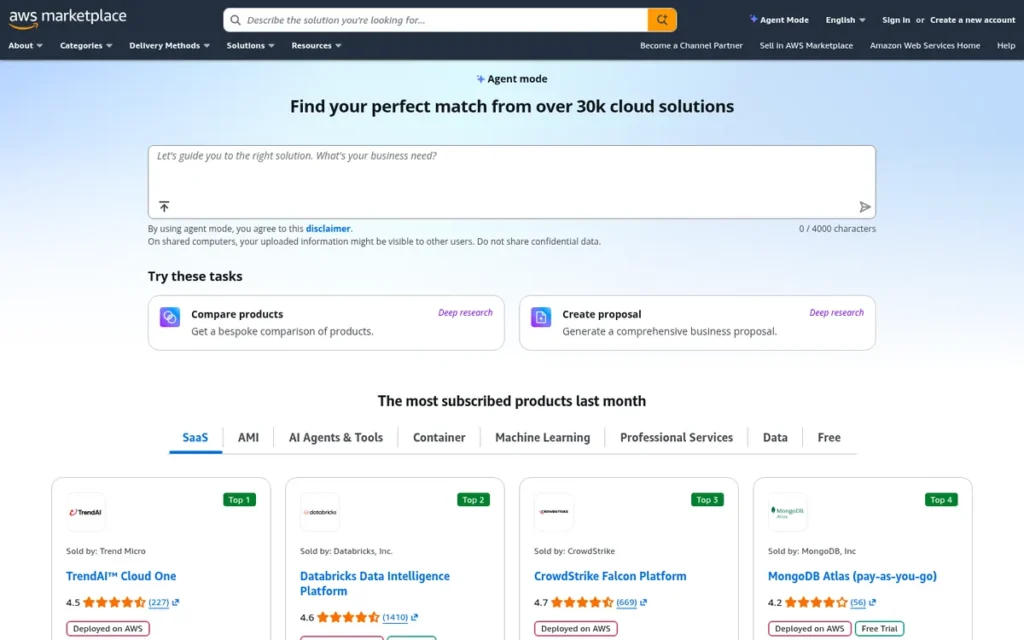
Category: Cloud Procurement Channel, enterprise software and API distribution infrastructure integrated directly with AWS billing, IAM, and compliance infrastructure.
At a Glance
- Category: Cloud Procurement Channel
- Best For: Enterprise organizations standardized on AWS that need to buy, sell, or govern API products through consolidated cloud procurement with the most transparent and documented seller commission structure in this comparison
- Price Range: Sellers pay a documented commission: approximately 3% for public SaaS offers; approximately 2% for private offer contracts $1M–$10M TCV; approximately 1.5% for contracts above $10M TCV and all renewals (source: AWS Marketplace official listing fees documentation, effective January 5, 2024). Buyer pricing is product-specific (free trials, PAYG, annual contracts, private offers) with no universal marketplace buyer fee
- Primary Strength: AWS Marketplace provides the only fully documented, publicly available seller commission structure in this comparison, starting at 3% for public SaaS offers and tiering to 1.5% for large private offer contracts, with billing consolidated into existing AWS enterprise accounts and Private Marketplace procurement governance
- Biggest Limitation: AWS Marketplace is purpose-built for AWS-ecosystem buyers; the platform’s procurement infrastructure, billing integration, and IAM governance are optimized exclusively for organizations already operating within AWS, making it commercially inert as a distribution channel for APIs targeting Azure-standardized or GCP-standardized enterprise buyers
- One-Line Summary: AWS Marketplace is the enterprise API procurement channel with the only fully documented seller commission structure in this comparison (3% public SaaS, tiering to 1.5% for large contracts), fully auditable billing and governance infrastructure, and 2026 AI-powered discovery, making it the strongest commercial distribution channel for API products targeting AWS-standardized enterprise buyers.
- Last Verified: June 2026
Overview
AWS Marketplace is an enterprise cloud software and API procurement channel operated by Amazon Web Services, enabling enterprise buyers to discover, purchase, and manage third-party APIs and software products with all transactions consolidated into existing AWS invoices. AWS Marketplace is not a developer-first API directory; it is a procurement and governance infrastructure layer serving IT procurement teams, enterprise architects, and finance organizations rather than individual developers searching for prototyping tools.
In April 2026 (launched April 9), AWS Marketplace introduced the Marketplace Discovery API for programmatic catalog access. AWS Marketplace also added Agent Mode in 2026 (a conversational AI-powered discovery feature) marking the platform’s evolution from a static catalog toward intelligent procurement infrastructure.
Key Features
- AWS Marketplace documents its seller commission structure in full: public SaaS offers carry approximately 3%, private offers tier to approximately 2% for contracts between $1M and $10M TCV, and approximately 1.5% for contracts above $10M TCV with renewals also at 1.5%, the only platform in this comparison with a fully disclosed and publicly available fee schedule (source: AWS Marketplace official listing fees documentation, effective January 5, 2024).
- AWS Marketplace’s Private Marketplace governance capability allows enterprise procurement teams to curate a company-approved product catalog, restricting which marketplace listings employees can subscribe to, a compliance-critical procurement control absent from developer-first platforms such as Postman API Network and RapidAPI.
- AWS Marketplace launched the Marketplace Discovery API on April 9, 2026, providing programmatic access to product descriptions, categories, pricing, and offer terms across public and private offers, enabling enterprises to embed marketplace catalog data into internal procurement portals and custom tooling without manual catalog navigation (source: official AWS announcement, April 2026).
- AWS Marketplace’s 2026 Agent Mode introduces AI-powered conversational discovery, allowing buyers to search by natural language, upload requirement documents, ask follow-up questions, and receive narrowed product recommendations, addressing the navigation complexity that was AWS Marketplace’s most frequently cited UX limitation prior to this release (source: AWS Partner Success blog, 2026).
- AWS Marketplace integrates natively with AWS IAM for identity-based access controls, CloudTrail for audit logging of procurement actions, and AWS Organizations for multi-account governance, satisfying regulated-industry compliance requirements without requiring custom implementation outside the AWS security perimeter.
Best For
AWS Marketplace is best for enterprise organizations already standardized on AWS infrastructure that need a commercially governed channel to procure, distribute, or monetize API products. AWS Marketplace is particularly valuable for API providers seeking the most transparent marketplace distribution economics in this comparison, and for enterprise buyers who want to manage API procurement within existing AWS consolidated billing and compliance workflows, including co-sell eligibility through the AWS Partner Network for qualified sellers.
Pricing
AWS Marketplace documents its seller commission structure publicly at docs.aws.amazon.com/marketplace/latest/userguide/listing-fees.html (effective January 5, 2024; verify current terms, 2026):
- Public SaaS offers: approximately 3% seller commission
- Private offers under $1M TCV: approximately 3%
- Private offers $1M–$10M TCV: approximately 2%
- Private offers above $10M TCV: approximately 1.5%; renewals also at 1.5%
Enterprise sellers negotiating large contracts may qualify for materially lower rates than the 3% public benchmark. Buyer pricing is product-specific, free trials, pay-as-you-go, BYOL, annual contracts, and custom private offers are all supported with no universal marketplace buyer fee. Verify current seller program terms directly at aws.amazon.com/marketplace (2026).
Strengths
- AWS Marketplace’s fully documented seller commission structure: 3% for public SaaS, tiering to 1.5% for large private offer contracts, is the most transparent commission model in this comparison, confirmed by the AWS Marketplace official listing fees documentation (effective January 2024) and the Clazar AWS Marketplace guide (2025), directly addressing the enterprise pain point of opaque distribution economics at competing platforms.
- AWS Marketplace launched the Marketplace Discovery API on April 9, 2026, providing programmatic access to product descriptions, categories, pricing, and offer terms, enabling enterprises to build internal procurement portals on top of the AWS Marketplace catalog (source: official AWS announcement, April 9, 2026).
- Presidio described AWS Marketplace in 2025–2026 as having “rapidly transformed from a transactional software catalog into a powerful engine for organizational modernization,” with enterprises using it to streamline cloud adoption and AI initiatives without traditional procurement friction (source: Presidio blog, AWS re:Invent key takeaways, 2025–2026).
- AWS Marketplace’s 2026 Agent Mode adds conversational natural-language discovery with document upload and follow-up questioning, resolving the navigation complexity that was AWS Marketplace’s most frequently cited UX limitation prior to this 2026 release (source: AWS Partner Success blog, 2026).
This aligns with community sentiment on r/devops:
“Yep I think most of the time, the advantage of AWS Marketplace is either buying third-party software you already want, or buying enterprise software but running your billing through AWS. Our company does a lot of the latter because we can use this towards AWS spend, and because for some smaller things we want to buy, it bypasses our normal purchasing process with finance and comes out of the amorphous slush fund that’s our AWS bill.” Posted by u/donjulioanejo
Takeaway: Enterprise procurement teams use AWS Marketplace primarily to consolidate software spending against committed AWS credits and bypass vendor onboarding friction, validating AWS Marketplace’s core value as a procurement channel rather than a developer discovery platform.
Limitations
- AWS Ecosystem Dependency: AWS Marketplace’s most consequential trade-off is that its procurement infrastructure, billing integration, and IAM governance are optimized exclusively for organizations already operating within AWS, non-AWS shops cannot access consolidated billing, Private Marketplace controls, or co-sell eligibility, making AWS Marketplace commercially inert as a distribution channel for APIs targeting Azure-standardized or GCP-standardized enterprise buyers. Developer community discussions in r/aws note that seller qualification requires multi-week technical integration with AWS billing and entitlement APIs, making AWS Marketplace a slower onboarding path than consumer-oriented catalogs like RapidAPI (r/aws seller experience discussions, 2024–2025).
- Not a Developer-First Discovery Tool: AWS Marketplace is not designed for individual developers browsing for APIs to prototype with, developers will find RapidAPI or Postman API Network significantly more frictionless, as AWS Marketplace requires seller qualification, technical integration with AWS billing APIs, and procurement-layer engagement that operates above the individual developer decision layer.
- Complex Seller Onboarding: AWS Marketplace seller onboarding requires ISV/VAR qualification, compliance with the AWS Seller Program requirements, and technical integration with AWS billing and entitlement APIs before a product listing goes live, a process that can take four to eight weeks for new sellers per AWS Marketplace seller documentation.
Verdict
AWS Marketplace is the highest-ranked platform in this evaluation because it is the only API distribution channel with a fully documented, publicly available seller commission structure and the most mature enterprise procurement governance infrastructure, combining Private Marketplace controls, IAM/CloudTrail integration, consolidated AWS billing, and co-sell eligibility in a way no other platform in this comparison replicates. AWS Marketplace earns its #1 position as the most commercially rigorous and financially transparent option for enterprise API sellers and buyers, not as the best platform for every use case. Organizations outside the AWS ecosystem should evaluate Google Cloud Apigee (#2) or Azure API Management (#4) based on cloud vendor alignment.
2. Google Cloud Apigee: Best for Enterprise API Governance, Compliance & Full-Lifecycle Management
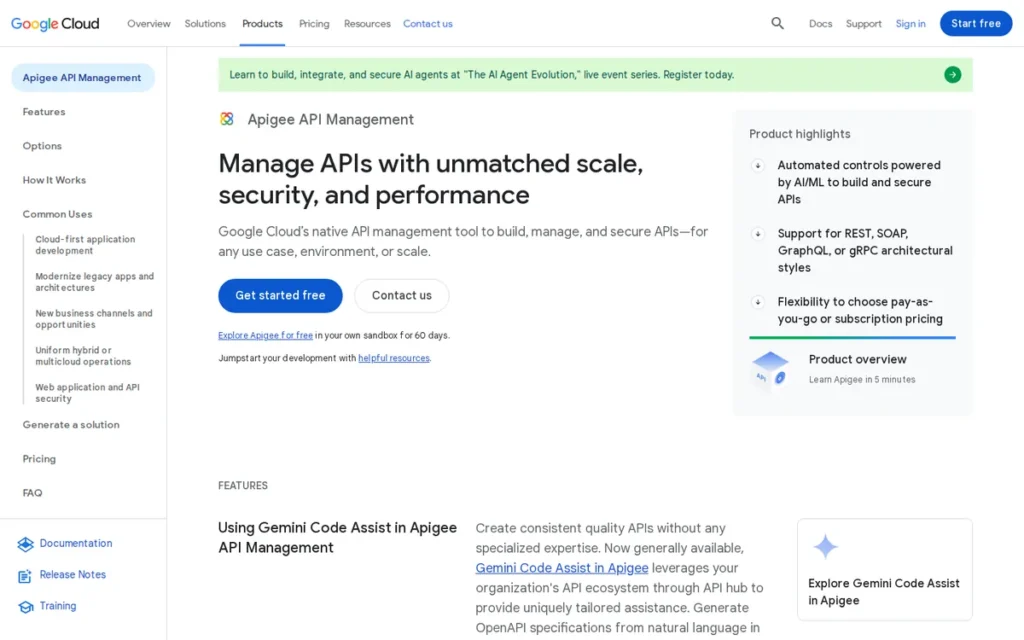
Category: Enterprise API Manager, full-lifecycle API management platform covering API design, governance, security policy enforcement, analytics, monetization, and hybrid deployment.
At a Glance
- Category: Enterprise API Manager
- Best For: Large enterprises with Google Cloud commitments requiring the strongest third-party-validated API governance platform, hybrid deployment for regulated environments, and AI-assisted API design via Gemini Code Assist
- Price Range: Usage-based; approximately $0.03 per 1,000 API calls standard tier; six-figure annual enterprise contracts typical; verify at cloud.google.com/apigee/pricing (2026)
- Primary Strength: Google Cloud Apigee has been named a Gartner Magic Quadrant Leader for API Management for 10 consecutive years and was positioned highest for Ability to Execute per Google Cloud’s vendor announcement of the 2025 evaluation, the most sustained third-party governance validation of any platform in this comparison; independent verification from the primary Gartner licensed report is required before use in procurement documentation
- Biggest Limitation: Google Cloud Apigee is consistently cited as one of the most expensive and implementation-intensive API management platforms, with usage-based pricing that creates unpredictable costs at scale, a G2 rating of 4.3/5 (the lowest of any rated platform in this comparison), and a competitive advantage strongly correlated with Google Cloud commitment
- One-Line Summary: Google Cloud Apigee is the 10-time Gartner Magic Quadrant Leader for API Management (positioned highest for Ability to Execute per its 2025 vendor announcement) making it the most credentialed enterprise API governance platform available, though its cost and complexity make it best suited for Google Cloud-committed enterprises with dedicated platform resources.
- Last Verified: June 2026
Overview
Google Cloud Apigee is a full-lifecycle enterprise API management and monetization platform, enabling organizations to design, secure, publish, analyze, and govern APIs through approximately 40 built-in policies, including OAuth, SAML, rate limiting, and traffic mediation. Apigee supports three deployment modes: fully managed Google Cloud, hybrid (Google-managed control plane with customer-managed runtime), and multi-cloud, addressing data sovereignty requirements that block fully cloud-hosted alternatives in regulated industries.
Google Cloud Apigee was acquired by Google in 2016 for $625 million and has since been integrated with Google’s AI infrastructure, including Gemini Code Assist (generally available 2025–2026) for natural-language API specification generation and an AI application traffic management layer for governing AI model endpoint access. Google Cloud Apigee earns its #2 ranking through 10 consecutive Gartner Magic Quadrant Leader placements for API Management and the “highest Ability to Execute” positioning per Google Cloud’s vendor announcement of the 2025 evaluation, practitioners should verify this independently from the primary Gartner report before using it in procurement documentation, and should note that Apigee’s competitive advantage is strongest within Google Cloud commitments.
Key Features
- Google Cloud Apigee includes approximately 40 built-in security and governance policies (covering OAuth, SAML, WS-Security, API keys, rate limiting, and traffic mediation) reducing custom implementation time for regulated-enterprise deployments compared to plugin-dependent alternatives that require custom configuration for each security pattern (source: Google Discuss developer forum; KodeKloud GCP Digital Leader documentation).
- Google Cloud Apigee’s hybrid deployment model splits the management plane (Google Cloud-hosted) from the runtime plane (customer data center-managed), enabling API management deployment in air-gapped, regulated, or data-residency-constrained environments where fully cloud-hosted alternatives are non-starters (source: Apigee official feature summary documentation).
- Google Cloud Apigee integrates Gemini Code Assist (generally available 2025–2026) for natural-language API specification creation via Cloud Code and Gemini Chat, enabling API designers to generate OAS specifications through conversational prompts, with AI-augmented design workflow that leverages Google’s frontier model infrastructure (source: Google Cloud Apigee AI solutions page, 2025–2026).
- Google Cloud Apigee includes AI application traffic management capabilities that extend API governance to AI model endpoints, providing a consistent policy and analytics layer for both traditional REST APIs and AI service calls within a single governance framework, complementing Azure API Management’s AI Gateway approach for LLM workloads.
- Google Cloud Apigee’s developer portal is automatically generated when APIs are published, providing interactive documentation, API consoles, and consumer onboarding without requiring custom portal development, a capability equivalent to MuleSoft Anypoint Exchange’s auto-generated portals but within a full-lifecycle API management platform context.
Best For
Google Cloud Apigee is best for large enterprises already committed to Google Cloud infrastructure that require the most rigorously credentialed enterprise API governance platform available, particularly in regulated industries such as financial services, healthcare, and government, where the 10-consecutive-year Gartner Leader positioning and hybrid deployment model provide defensible procurement justification and data sovereignty compliance. Google Cloud Apigee is not the recommended starting point for organizations standardized on AWS or Azure, where cloud-native alternatives carry significantly lower integration costs.
Pricing
Google Cloud Apigee pricing is usage-based across multiple deployment tiers: approximately $0.03 per 1,000 API calls for standard Apigee X tiers; enterprise bundle pricing is negotiated at custom rates typically running into six figures annually. Apigee is consistently described in practitioner communities as one of the more expensive API management platforms, with usage-based billing creating cost unpredictability at high API call volumes. Verify current pricing at cloud.google.com/apigee/pricing (2026) and obtain enterprise quotes through Google Cloud sales. Practitioners in r/MuleSoft discussions cite Apigee as a similarly expensive alternative to MuleSoft, confirming both platforms occupy the same enterprise price bracket.
Strengths
- Google Cloud Apigee was named a Gartner Magic Quadrant Leader for API Management for the 10th consecutive year in 2025 and was positioned highest for Ability to Execute per Google Cloud’s official vendor announcement, the strongest sustained third-party validation of enterprise governance delivery in this comparison; independent verification of this positioning from the primary Gartner licensed report is recommended before use in procurement documentation (source: Google Cloud official blog, 2025).
- Google Cloud Apigee’s hybrid deployment model enables API management in air-gapped and regulated environments by splitting the control plane (Google-managed) from the runtime plane (customer-managed), directly addressing data sovereignty requirements that block fully cloud-hosted alternatives in financial services, healthcare, and government (source: Apigee official feature summary documentation, 2025–2026).
- Google Cloud Apigee’s Gemini Code Assist integration (generally available 2025–2026) enables natural-language API specification generation through Cloud Code and Gemini Chat, providing AI-augmented API design workflow capabilities that leverage Google’s frontier model infrastructure for OAS specification creation from conversational prompts (source: Google Cloud Apigee AI solutions page, 2025–2026).
- Google Cloud Apigee’s approximately 40 built-in security and governance policies: covering OAuth, SAML, WS-Security, rate limiting, and traffic mediation, reduce custom development time for common enterprise security patterns compared to plugin-dependent architectures, directly addressing audit and compliance requirements in regulated industries (source: Google Discuss developer forum; KodeKloud GCP Digital Leader documentation).
Limitations
- Cost and Complexity Trade-Off: Google Cloud Apigee’s most consequential trade-off is that the same governance depth earning its 10-time Gartner Leader positioning also makes it one of the most expensive and implementation-intensive platforms in this comparison, with a G2 rating of 4.3/5 (the lowest documented rating among the five platforms with verified G2 scores here) and consistent practitioner criticism of high licensing cost, steep learning curve, and the platform being “overkill for small or mid-size teams” (source: DevOps School 2026 comparative analysis).
- Google Cloud Commitment Required: Google Cloud Apigee’s competitive advantage is strongly correlated with Google Cloud commitment, community patterns across r/ExperiencedDevs and r/devops confirm that organizations standardized on AWS or Azure rarely select Apigee over Kong or their respective cloud-native options, meaning Apigee’s Gartner credentials are most commercially relevant within Google Cloud ecosystems.
Users on r/ITManagers shared their production migration experience:
“Gravitee, 8 months in prod after years on apigee. To answer your questions directly: upgrades have been painless so far, support responds same day, and it does gitops through their k8s operator so no clicky ui bottleneck. We left apigee bc gcp lock-in and pricing were unsustainable for multi cloud. Kafka support was the other reason since we needed one platform for both rest and event streaming.” Posted by u/Throwaway33377
Takeaway: Google Cloud Apigee’s GCP lock-in and pricing model are active exit triggers at production scale for multi-cloud organizations, a practitioner-confirmed pattern that validates the article’s cloud-alignment routing heuristic over feature-based platform comparison.
- Unpredictable Billing at Scale: Google Cloud Apigee’s usage-based billing model creates cost unpredictability at high API call volumes, a documented concern for enterprise teams that underestimated API call volumes when initially sizing contracts, leading to unbudgeted cost overruns mid-cycle that are difficult to remediate without contract renegotiation.
Verdict
Google Cloud Apigee is the most credentialed enterprise API governance platform in this evaluation, earning its #2 ranking through 10 consecutive Gartner Magic Quadrant Leader placements for API Management and the 2025 “highest Ability to Execute” designation per Google Cloud’s vendor announcement, a level of sustained third-party validation that no competing platform in this comparison has matched. Google Cloud Apigee is the strongest choice for regulated enterprises with Google Cloud commitments requiring hybrid deployment, built-in policy-based governance, and AI-augmented API design workflow. Organizations without Google Cloud commitments, smaller teams, or budget-constrained environments should evaluate Azure API Management (#4), Kong Konnect (#6), or AWS Marketplace (#1) before committing to Apigee’s enterprise pricing structure.
3. Postman API Network: Best for Developer API Discovery, Collaboration & AI API Adoption
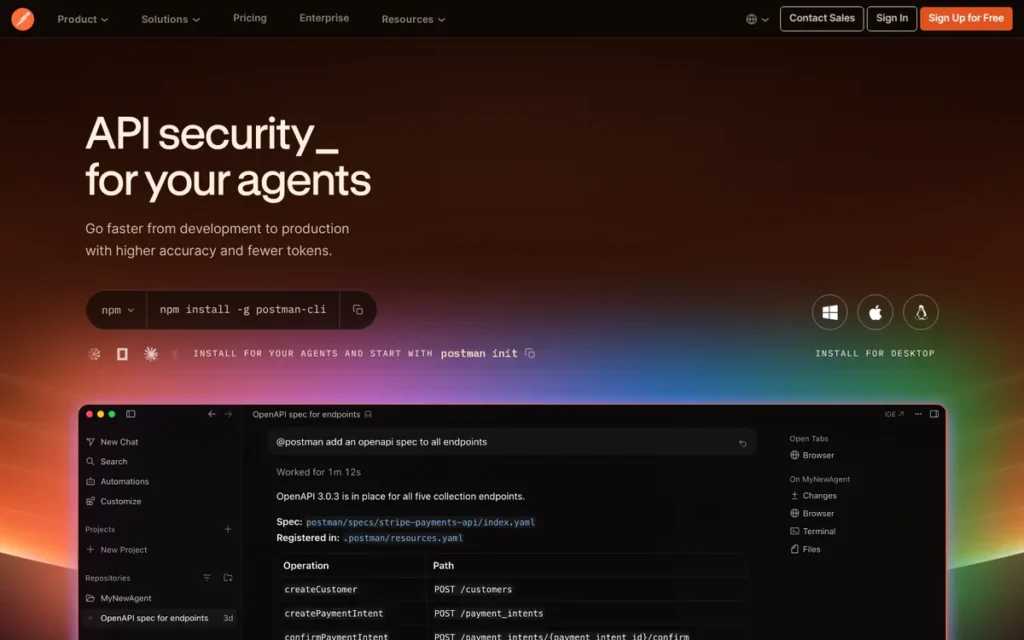
Category: Developer Network, collaborative API discovery, testing, and publication platform operating as the world’s largest developer API network by registered user count.
At a Glance
- Category: Developer Network
- Best For: Software developers and development teams needing the fastest path from API discovery to working tested code (with access to 40 million community-shared workspaces, collections, and Flows) and the most authoritative AI API adoption signal, without requiring separate monetization or enterprise governance infrastructure
- Price Range: Free (individuals, limited features); Basic ~$14/user/month; Professional ~$29/user/month; Enterprise custom with SSO, audit logs, and advanced governance (verified at postman.com/pricing, 2026)
- Primary Strength: Postman API Network serves 40 million registered developers and logged 7.53 million AI API calls in the 12 months covered by its 2025 State of the API Report (a 40% year-over-year increase) making it the most data-rich signal platform for AI API adoption in this comparison, with the highest G2 rating (~4.6/5) of any platform evaluated
- Biggest Limitation: Postman API Network operates on a cloud-hosted architecture with no self-hosted option for the network layer itself, creating a documented compliance barrier for regulated-industry enterprises that cannot allow API schemas, credentials, or endpoint data to reside on third-party cloud servers
- One-Line Summary: Postman API Network is the world’s largest developer API network with 40 million users, 40% year-over-year AI API call growth, and the most authoritative annual API industry research report, making it the strongest platform for developer-led API discovery and collaboration, though it lacks transactional monetization infrastructure and has a documented data sovereignty barrier for regulated-industry deployments.
- Last Verified: June 2026
Overview
Postman API Network is the world’s largest network of public APIs and developer workspaces, embedded within the Postman platform used by 40 million developers globally for API design, testing, documentation, and monitoring. Unlike RapidAPI and AWS Marketplace, Postman API Network does not include transactional payment rails or seller commission infrastructure, Postman API Network is a discovery and collaboration platform, not a commercial buy/sell marketplace.
Postman API Network logged 7.53 million AI API calls in the 12 months covered by its 2025 State of the API Report, a 40% year-over-year increase, with OpenAI accounting for 56% of that traffic (4.2 million calls), reflecting rapid reorientation toward AI and LLM API workflows (source: Postman 2025 State of the API Report). Postman API Network earns its #3 ranking through the highest documented G2 rating in this comparison (~4.6/5) and the most credible primary industry research of any platform evaluated, though organizations requiring commercial monetization, on-premise deployment, or regulated-industry data sovereignty compliance should evaluate AWS Marketplace (#1) or Google Cloud Apigee (#2) as complementary or primary channels.
Key Features
- Postman API Network provides access to 40 million developer-shared workspaces, API collections, and Flows, enabling developers to discover, fork, test, and integrate third-party APIs within the same environment they use for their own API development, significantly reducing tool context-switching for teams using Postman for both development and discovery.
- Postman API Network logged 7.53 million AI API calls in the 12 months covered by its 2025 State of the API Report, with OpenAI accounting for 56% of that traffic (4.2 million calls), making Postman API Network the platform with the most documented, real-world AI API adoption signal for developers selecting AI and LLM APIs (source: Postman 2025 State of the API Report).
- Postman API Network’s integrated testing environment allows developers to test any discovered API against live endpoints within the browser, with automatic test collection generation and mock server support, reducing time-to-first-working-integration compared to platforms requiring local environment setup and separate API credential registration.
- Postman publishes an annual State of the API Report drawing on its 40 million user base (the most widely cited primary industry dataset on API adoption and AI agent design patterns) with the 2025 report finding that 82% of organizations have adopted some level of API-first approach and 24.3% of developers are already designing APIs with AI agents in mind (source: Postman 2025 State of the API Report; BusinessWire, October 2025).
- Postman’s Enterprise tier includes SSO, audit logs, domain capture, and Postman-managed governance for large organizations, extending the API Network’s discovery capabilities into a governed internal catalog with administrative controls and team workspace management (source: Postman enterprise product page).
Best For
Postman API Network is best for software developers and development teams who need the fastest path from API discovery to working, tested code, particularly teams evaluating AI and LLM APIs, where the platform’s 40% year-over-year AI API call growth documents genuine community adoption patterns rather than speculative trends. Postman API Network is not recommended as a primary platform for organizations seeking commercial API monetization infrastructure or enterprise governance with on-premise deployment.
Pricing
Postman publishes its full pricing tier structure at postman.com/pricing (verified 2026):
- Free: For individuals, limited features
- Basic: Approximately $14/user/month (billed monthly) or ~$12/user/month (billed annually)
- Professional: Approximately $29/user/month
- Enterprise: Custom pricing negotiated with sales, including SSO, audit logs, domain capture, and Postman-managed security controls
Per-seat pricing can become expensive for large teams using the platform primarily for discovery rather than active API development. Teams should calculate cost per active developer rather than per seat when budgeting Enterprise tiers.
Strengths
- Postman API Network’s G2 rating of approximately 4.6/5 is the highest documented rating of any platform in this comparison, reflecting consistent practitioner satisfaction with its integrated workflow spanning discovery, testing, documentation, and monitoring (source: multi-source G2 comparative analysis, DevOps School 2026).
This aligns with community sentiment on r/theprimeagen:
“There’s a LOT of inertia in enterprise. They just needed A sharable, stack agnostic, http suite. New guys pick what the other teams were using. And postman was looking great at the time, in the right place and right time.” Posted by u/ArtSpeaker
Takeaway: Postman’s enterprise dominance is sustained by network inertia as much as feature superiority, new developers adopt it because their teams already use it, compounding the community scale advantage that makes it structurally difficult to displace regardless of competitive alternatives.
- Postman’s 2025 State of the API Report, drawing on 40 million registered users plus platform telemetry, found that 64.5% of organizations now generate revenue from APIs, 24.3% of developers are designing APIs with AI agents in mind, and 82% of organizations have adopted some level of API-first approach, establishing Postman as the most credible primary data source on API industry trends (source: BusinessWire, Postman 2025 State of the API Report coverage, October 2025).
- Postman API Network logged 7.53 million AI API calls in the 12 months covered by the 2025 report, up 40% year-over-year, with OpenAI accounting for 56% of AI API traffic, confirming Postman Network as the highest-traffic developer signal platform for AI API adoption patterns in this comparison (source: Postman State of the API 2025).
- Postman API Network’s Developers’ Choice Awards recognize top public APIs for performance, usability, and community impact, signaling active community governance of catalog quality, creating a social curation layer that distinguishes highly adopted APIs from less-tested ones (source: Postman PostCon 2025 awards page, postman.com/postcon/2025/api-awards/, accessed June 2026).
Limitations
- Cloud-Only Data Residency Barrier: Postman API Network’s most consequential limitation for enterprise buyers is its SaaS-only architecture, the network operates without a self-hosted option for the network layer, creating a compliance barrier actively blocking regulated-industry adoption. Community evidence from r/selfhosted (2023) documents teams unable to use Postman’s workspace and network features specifically because they “cannot have certain info on US-hosted servers”, driving evaluation of self-hosted alternatives such as Bruno, Hoppscotch, and HTTPie, despite Postman’s recognized feature superiority (source: r/selfhosted discussion, 2023). Postman’s Security State of the API 2025 report found that 50.8% of developers worry about unauthorized agent API calls and 49% worry about AI systems accessing sensitive data, concerns that compound for regulated-industry teams using cloud-hosted platforms (source: Postman Security State of the API 2025).
- No Transactional Monetization Infrastructure: Postman API Network has no native payment rails, no seller commission infrastructure, and no subscription billing for API access, organizations seeking to commercially monetize their APIs through a marketplace mechanism cannot do so through the Postman API Network alone and must pair it with a separate monetization platform such as RapidAPI (#5) or AWS Marketplace (#1).
- Per-Seat Cost Scales Unfavorably: Postman’s per-user pricing model can become expensive for large development teams using the platform primarily for discovery rather than active API construction, making the total cost difficult to justify compared to free or open-source catalog alternatives for pure discoverability use cases without active development workflows.
Verdict
Postman API Network is the leading API discovery and developer collaboration platform in this evaluation, earning its #3 ranking through the highest documented G2 rating (~4.6/5), the largest developer community (40 million users), and the most authoritative primary industry research dataset of any platform compared. Postman API Network is the strongest starting point for developers discovering and integrating APIs, particularly AI and LLM APIs, where the platform’s 40% year-over-year AI API call growth documents genuine adoption patterns rather than speculative trends. Organizations in regulated industries requiring data sovereignty compliance, or API providers seeking direct commercial monetization infrastructure, should evaluate AWS Marketplace (#1) or RapidAPI (#5) as complementary or alternative channels to Postman’s discovery-first model.
4. Azure API Management: Best for Microsoft Azure-Standardized Organizations & Enterprise AI Gateway Management
Category: Cloud API Gateway, Microsoft-ecosystem API governance and AI gateway platform supporting traditional APIs, OpenAI/LLM endpoints, MCP servers, and agent workflows with native Azure infrastructure integration.
At a Glance
- Category: Cloud API Gateway
- Best For: Enterprises standardized on Microsoft Azure infrastructure needing AI Gateway capabilities for OpenAI and LLM endpoint governance alongside traditional API management, with native Azure Active Directory/Entra ID integration and a Consumption-tier pay-per-call entry point
- Price Range: Consumption: ~$3.50/million API calls (no monthly commitment); Developer: ~$0, nonproduction only; Basic: ~$52/month; Standard: ~$210/month; Premium: ~$3,500/month per unit (multi-region, availability zones) (verified at azure.microsoft.com/pricing/details/api-management/, 2026)
- Primary Strength: Azure API Management includes an AI Gateway with native OpenAI endpoint load balancing, token quota policies, and MCP server support, one of the most complete enterprise platforms for governing AI model API traffic alongside traditional API workloads within a unified management plane
- Biggest Limitation: Azure API Management is positioned as a Gartner Challenger (not Leader) in the 2025 API Management Magic Quadrant (distinguishing it from Google Cloud Apigee and Kong Konnect on standalone API management governance credentials) and advanced configurations carry documented complexity with documentation gaps requiring community research for non-standard use cases
- One-Line Summary: Azure API Management is the default enterprise API gateway for Microsoft Azure-standardized organizations, offering AI Gateway capabilities for OpenAI and MCP workloads, native Azure Active Directory integration, and a transparent Consumption-tier entry point, with Gartner Challenger positioning in the API Management MQ that reflects platform depth in Azure ecosystems rather than standalone API management leadership.
- Last Verified: June 2026
Overview
Azure API Management (APIM) is Microsoft’s enterprise API platform for governing, securing, and publishing APIs within Azure infrastructure, comprising an API gateway for policy enforcement and request routing, a management plane for lifecycle administration, and a developer portal for consumer onboarding. Azure API Center, a complementary product, provides a universal catalog layer that inventories and governs APIs across any deployment location regardless of whether they run through Azure APIM (source: Microsoft Learn documentation).
Azure API Management evolved in 2025–2026 into an AI Gateway supporting OpenAI endpoint load balancing, token quota policies, MCP server support, and Azure Copilot-assisted policy authoring, positioning it as one of the most complete platforms for enterprises managing AI API workloads alongside traditional REST governance. Azure API Management earns its #4 ranking through AI gateway completeness, transparent tiered pricing, and decade-plus Azure ecosystem maturity, though its Gartner Challenger positioning in the 2025 API Management MQ and documented advanced-configuration complexity limit its appeal outside Microsoft-standardized environments.
Key Features
- Azure API Management’s AI Gateway supports native OpenAI endpoint load balancing, token-based quota policies, and AI-specific rate limiting, enabling enterprises to apply consistent governance, cost management, and credential abstraction over LLM API calls from multiple model providers within a single management plane (source: Azure APIM product page; Microsoft Learn key concepts, 2026).
- Azure API Management integrates Azure Copilot for policy authoring, allowing administrators to describe desired API behavior in plain English and receive APIM policy XML in response, directly addressing the documented criticism that advanced APIM configurations require deep, non-transferable platform expertise to implement correctly.
- Azure API Center provides a universal API catalog and governance layer that inventories APIs across any deployment location (Azure-hosted, on-premises, or other clouds) without requiring all API traffic to route through Azure APIM, giving Microsoft-standardized enterprises a unified discoverability surface across heterogeneous API infrastructure (source: Microsoft Learn Azure API Center key concepts).
- Azure API Management’s Consumption tier operates on a true pay-per-call model at approximately $3.50 per million API calls with no monthly commitment, making it the most accessible pay-per-use enterprise API gateway entry point in this comparison, particularly for variable-workload scenarios where fixed monthly tiers create cost waste (source: Microsoft Azure pricing documentation, 2026).
- Azure API Management includes a self-hosted gateway capability on Kubernetes, enabling organizations to keep API traffic within customer premises while maintaining centralized Azure-based management, addressing data residency requirements without requiring a fully on-premise management plane.
Best For
Azure API Management is best for enterprises already operating Azure infrastructure that need to govern both traditional API workloads and enterprise AI model traffic (OpenAI, Azure OpenAI Service, MCP servers) from a unified management plane with native Azure Active Directory/Entra ID authentication and consolidated Azure billing. Azure API Management is not the strongest choice for organizations evaluating API management outside the Microsoft ecosystem, where Google Cloud Apigee (#2) and Kong Konnect (#6) offer more ecosystem-neutral governance options.
Pricing
Azure API Management publishes its full tier structure at azure.microsoft.com/pricing/details/api-management/ (verify current pricing, 2026):
- Consumption: ~$3.50/million calls; no monthly commitment
- Developer: ~$0: nonproduction environments only; no production workloads permitted
- Basic: ~$52/month
- Standard: ~$210/month
- Premium: ~$3,500/month per unit (multi-region deployment, availability zones)
The jump from Standard (~$210/month) to Premium (~$3,500/month per unit) for multi-region enterprise redundancy is the most frequently cited pricing surprise in practitioner discussions. Organizations requiring high availability should budget for the Premium tier from project inception rather than planning to scale from Standard at production scale.
Strengths
- Azure API Management includes AI Gateway capabilities supporting native OpenAI endpoint load balancing, token quota policies, and MCP server support, one of the most feature-complete enterprise platforms for AI model governance in 2026, directly addressing the organizational pain point of managing multiple AI and LLM vendor accounts without a unified governance layer (source: Azure APIM product page; Microsoft Learn key concepts, 2026).
- Microsoft was named a Gartner Magic Quadrant Leader in the 2025 Integration Platform as a Service (iPaaS) evaluation, and Azure API Management is part of Azure Integration Services, reflecting that Azure APIM’s strongest governance value is realized within the Microsoft integration ecosystem rather than as a standalone API management tool (source: Azure Microsoft blog, 2025; note: Azure APIM is a Gartner Challenger in the standalone API Management MQ).
- A Gartner-referenced evaluation notes that Azure API Management “shows a clear understanding of developer needs through its management API, CLI tooling, and intuitive UIs”, positioning Azure APIM as stronger than AWS API Gateway on developer experience features while competing with Apigee and Kong for enterprise lifecycle completeness (source: actionable-agents-guide Gartner APIM excerpt, 2025).
- Azure API Management’s Consumption tier offers true pay-per-call billing at approximately $3.50 per million calls with no monthly minimum, the most accessible entry point for variable-workload API governance in this comparison, lowering the barrier to enterprise-grade governance for teams not yet at fixed production scale (source: Microsoft Azure pricing documentation, 2026).
Limitations
- Gartner Challenger Positioning: Azure API Management’s most consequential trade-off for procurement teams is its Gartner positioning, Microsoft is ranked a Challenger (not a Leader) in the 2025 Gartner Magic Quadrant for API Management, distinguishing it from Google Cloud Apigee (#2, 10-time Leader per vendor announcement) and Kong Konnect (#6, Leader, 6th consecutive year, furthest Completeness of Vision) for organizations where Gartner positioning is a procurement requirement. This Challenger positioning should be independently verified from the primary Gartner licensed report before use in procurement documentation (source: actionable-agents-guide Gartner APIM excerpt, 2025).
- Advanced Configuration Complexity: Azure APIM’s advanced configurations carry documented complexity penalties, community and review sources consistently flag that non-standard scenarios require community research beyond official Microsoft documentation, representing a meaningful hidden cost for teams without dedicated Azure APIM expertise on staff.
- Premium Tier Sticker Shock: The Premium tier jump to approximately $3,500/month per unit for multi-region enterprise deployments is the most frequently cited pricing surprise in practitioner discussions, organizations requiring high availability and availability zones should budget for this tier from project inception rather than planning to upgrade from Standard.
Users on r/AZURE noted:
“Not worth it for 2800.00 IMO. I’m in the same boat as you. Many others also agree that it’s too darn much. I have azure firewall premium that’s a similar expensive cost and I’m unable to use some of the major premium features. I’m super hesitant for API management from the same group based on that experience when it costs that much.” Posted by u/jugganutz
Takeaway: Azure API Management’s Premium tier price premium triggers documented practitioner hesitation even among Azure-committed teams, particularly when comparable Azure services at similar price points have also failed to justify their cost, making cross-tier budget planning a prerequisite rather than an afterthought.
Verdict
Azure API Management is the strongest API management and AI gateway platform for Microsoft Azure-standardized enterprises, combining native OpenAI endpoint governance, token quota policies, MCP server support, and Azure Copilot-assisted policy authoring with decade-plus Azure ecosystem maturity and the most transparent tiered pricing in the enterprise API management segment. Azure API Management earns its #4 ranking through AI gateway completeness and pricing transparency, while placing below Google Cloud Apigee (#2) on Gartner governance credentials and below Postman API Network (#3) on developer community scale, making it the correct default selection for Microsoft-committed organizations rather than the strongest standalone API management platform.
5. RapidAPI (Nokia API Hub): Best for Public API Discovery, In-Browser Testing & Developer Prototyping
Category: Public Marketplace, multi-vendor transactional API discovery, in-browser testing, subscription billing, and provider monetization platform serving both API consumers and API providers.
At a Glance
- Category: Public Marketplace
- Best For: Individual developers and small teams needing to discover, test, and compare multiple public APIs rapidly without managing separate billing relationships; API providers seeking public developer reach with integrated subscription billing and monetization tooling, verify current catalog and developer scale at rapidapi.com following Nokia’s November 2024 acquisition
- Price Range: Consumer: Free (~100 requests/month); Basic $10/month (~10,000 requests); Premium $999/month (unlimited requests); Enterprise custom. Provider revenue share: not publicly disclosed, requires sales engagement to determine net commission rate. Note: catalog and user scale figures reflect pre-acquisition peak; verify current data directly at rapidapi.com (June 2026)
- Primary Strength: RapidAPI is the only platform in this comparison built specifically as a public developer-facing buy/sell API catalog with integrated in-browser testing, provider subscription billing, and consumer management in a single interface, the strongest discovery and prototyping workflow for multi-API evaluation without separate account setup
- Biggest Limitation: RapidAPI’s provider commission structure is not publicly disclosed; Nokia’s November 2024 acquisition was of a business that had declined significantly, making current catalog scale and active user count uncertain; and high-volume production developers systematically migrate to direct vendor relationships, creating a structural ceiling on marketplace revenue from the most commercially valuable users
- One-Line Summary: RapidAPI (Nokia API Hub) is the largest public API discovery marketplace at peak scale (with integrated in-browser testing and provider monetization) though its undisclosed seller commission, documented developer churn at production scale, and post-Nokia acquisition platform uncertainty require careful due diligence before building long-term distribution strategies on the platform.
- Last Verified: June 2026
Overview
RapidAPI (now branded RapidAPI Hub under Nokia ownership, following Nokia’s acquisition of Rapid’s technology assets and R&D unit in November 2024) is a public API marketplace combining a discovery catalog, integrated in-browser testing environment, subscription billing management, and provider monetization tooling in a single interface. RapidAPI serves both API consumers (who need rapid prototyping access to multiple APIs without separate account setup) and API providers seeking external developer distribution with integrated subscription billing and usage metering.
Nokia’s own post-acquisition announcement references “thousands of active developers globally” and “up to six billion monthly API calls” (source: Nokia newsroom; RapidAPI acquisition blog, November 2024), materially different from the millions of developers reported at peak before the acquisition. Current catalog scale and active user counts should be verified directly at rapidapi.com, as the platform’s business had declined before the acquisition. RapidAPI’s June 2025 release notes confirm continued product investment, including SSO support and discovery customization features, documenting active development post-acquisition (source: RapidAPI official release notes, June 2025).
Key Features
- RapidAPI hosts a large public API catalog spanning 30+ categories: previously reported at up to 35,000–40,000 APIs at peak, with each listed API accessible for in-browser testing before subscription commitment, reducing integration risk for developers evaluating multiple candidates simultaneously (source: API7.ai learning center; verify current catalog size at rapidapi.com, 2026).
- RapidAPI’s integrated provider monetization layer enables API sellers to publish, tier, and price their APIs with built-in subscription billing, usage metering, and consumer management, eliminating the need for separate payment infrastructure that API providers would otherwise need to build independently (source: Zuplo API Monetization Platforms guide).
- RapidAPI’s Enterprise Hub enables organizations to deploy a private, branded internal API catalog on top of RapidAPI’s infrastructure, functioning as an internal developer portal that complements rather than replaces existing API gateways such as Kong Konnect or AWS API Gateway, with June 2025 release notes confirming SSO support and discovery customization investment (source: RapidAPI official documentation; RapidAPI release notes, June 2025).
- RapidAPI’s membership in the OpenAPI Initiative: confirmed 2021; verify current status at openapis.org as of June 2026, signals the platform supports standard API specification formats (OAS/Swagger), enabling consumers to integrate APIs without creating a permanent RapidAPI-as-dependency architecture pattern in their codebases (source: OpenAPI Initiative official blog, 2021).
- RapidAPI provides API providers with public developer distribution reach at a scale that individual developer portals cannot replicate at launch, previously reported at 3–4 million registered developers at peak; Nokia’s post-acquisition announcement references thousands of active developers globally, with current figures to be verified at rapidapi.com (source: Nokia newsroom, November 2024).
Best For
RapidAPI (Nokia API Hub) is best for individual developers and small teams who need the fastest path to discovering and comparing multiple public APIs simultaneously, particularly for prototyping, proof-of-concept development, and API evaluation workflows where testing multiple APIs without separate account setup is the primary value. RapidAPI is also best for API providers wanting turnkey public developer distribution with integrated billing and subscription management without custom-building a monetization layer, subject to due diligence on current platform scale and commission terms.
Pricing
Consumer-side tiers are documented (source: checkthat.ai RapidAPI brand page; verify directly at rapidapi.com for current rates, 2026):
- Free: $0/month, approximately 100 requests/month
- Basic: $10/month, approximately 10,000 requests
- Premium: $999/month, unlimited requests
- Enterprise: Custom pricing
Provider-side commission structure: RapidAPI does not publicly disclose its revenue-share percentage: sellers must engage a sales representative to determine their net commission rate. This contrasts directly with AWS Marketplace’s documented and publicly available commission structure. Enterprise Hub pricing for private API catalogs is custom-negotiated. Individual API subscription prices are set by each API provider and vary widely across the catalog.
Strengths
- RapidAPI’s public API discovery catalog: previously reported at up to 35,000–40,000 APIs across 30+ categories at peak, provides API providers with public developer distribution reach at a scale that individual developer portals cannot replicate at launch; verify current catalog size and active developer count at rapidapi.com following the November 2024 Nokia acquisition (source: Zuplo learning center, 2026; API7.ai, 2026).
- RapidAPI’s June 2025 release notes confirm active product investment post-Nokia acquisition, specifically SSO support and discovery customization features, providing concrete evidence that Nokia’s acquisition has not disrupted the platform’s developer-facing feature roadmap contrary to initial community speculation (source: RapidAPI official release notes, June 2025).
- RapidAPI’s membership in the OpenAPI Initiative (confirmed 2021; verify current status at openapis.org) signals commitment to open API specification standards, allowing API consumers to avoid platform-as-dependency architecture patterns that create long-term switching costs in their codebases (source: OpenAPI Initiative official blog, 2021).
- Community testimony confirms RapidAPI’s prototyping value at the discovery and evaluation stage, practitioners value the platform specifically for reducing time-to-first-test when evaluating multiple APIs simultaneously without separate account setup overhead.
“Used it mostly as a subscriber. For me it’s been more of a discovery + quick testing layer than long-term production infra. It’s great when you want to try 3–4 APIs fast without setting up separate billing accounts. In production though, I’ve usually moved direct to the provider once volume grows. Better pricing, fewer middle layers. The thing that keeps people on it early is convenience. The thing that pushes them off later is control + margins.” Posted by u/Anantha_datta, r/SaaS, 2025
Takeaway: RapidAPI’s core competitive advantage is reducing time-to-first-test for multi-API comparison, the platform earns its role as a discovery and prototyping layer even as its production economics push high-volume users toward direct vendor relationships at scale.
Limitations
- Structural Developer Churn: RapidAPI’s most consequential trade-off is structural rather than feature-based, the platform faces a documented lifecycle pattern where its highest-value users systematically migrate away at production scale. A marketplace that functions primarily as a top-of-funnel discovery channel, where high-value production users convert to direct vendor billing rather than staying on the marketplace, generates lower lifetime value per user than platforms with stickier billing relationships, which affects how API providers should weight RapidAPI in their long-term distribution mix (u/Anantha_datta, r/SaaS, 2025).
- Post-Acquisition Platform Uncertainty: Nokia acquired Rapid’s technology assets in November 2024 from a business that had declined significantly before the acquisition, with Nokia’s own post-acquisition announcement referencing thousands of active developers globally rather than the millions reported at peak (source: TechCrunch, Nokia acquisition coverage, November 2024; Nokia newsroom). Current active catalog scale, developer count, and product roadmap continuity post-acquisition should be verified directly at rapidapi.com before building long-term distribution strategies on the platform.
- Undisclosed Provider Commission: RapidAPI does not publicly disclose its provider commission rate, preventing sellers from calculating net revenue distribution economics without a sales engagement, creating material friction compared to AWS Marketplace’s documented commission structure and making direct cost-of-distribution comparison impossible without vendor contact (source: Zuplo API Monetization Platforms guide).
- Limited Enterprise Governance: RapidAPI’s Enterprise Hub is materially less featured than Google Cloud Apigee (#2) or Azure API Management (#4) for enterprise governance, compliance lifecycle management, or regulated-industry deployment, organizations with these requirements should evaluate purpose-built API management platforms rather than treating the Enterprise Hub as an equivalent alternative.
Verdict
For API sellers, RapidAPI is a launch accelerator, not a long-term distribution channel, its economics favor market entry and developer discovery, not production-scale retention. RapidAPI (Nokia API Hub) earns its #5 ranking through its position as the largest public API discovery marketplace at peak scale, the most integrated buy/sell marketplace infrastructure for API providers in this comparison, and a G2 rating of 4.5/5 reflecting genuine practitioner satisfaction with its discovery and testing workflow (source: DevOps School 2026). RapidAPI’s primary value ceiling is the prototyping-to-production boundary, API sellers and enterprise architects should account for the documented developer churn dynamic, the undisclosed commission structure, and the post-Nokia acquisition scale uncertainty when evaluating this platform for long-term distribution and governance strategy.
6. Kong Konnect: Best for Open-Source-Based API & AI Traffic Governance on Kubernetes
Category: API Gateway & Manager, unified control plane for governing traditional APIs, AI model traffic, MCP servers, and agent workflows across Kubernetes, hybrid, and multi-cloud environments, with an open-source foundation.
At a Glance
- Category: API Gateway & Manager
- Best For: Platform engineering teams and DevOps organizations needing Gartner-recognized open-source-based API and AI traffic governance with a rich 2,000+ plugin ecosystem, Kubernetes-native deployment, production-verified performance, and an upgrade path from free OSS to enterprise SaaS without vendor lock-in to a proprietary binary
- Price Range: Free (Kong Gateway OSS, fully functional open-source); Plus ~$250/month (reported by API7.ai, 2026); Enterprise: custom pricing requiring sales engagement; Apache APISIX is a documented lower-cost alternative with fewer plugin paywalls; verify at konghq.com (2026)
- Primary Strength: Kong Konnect was named a Gartner Magic Quadrant Leader for API Management for the sixth consecutive year in 2025, positioned furthest on Completeness of Vision, and delivers fewer than 5ms gateway latency at 10,000+ sessions per pod in a verified production Kubernetes deployment, combining analyst-validated governance credentials with community-confirmed high-throughput performance
- Biggest Limitation: Kong Konnect’s paid tier pricing requires sales engagement without self-serve pricing published, and advanced OAuth/OIDC plugins are restricted to paid commercial tiers, a friction point documented in community discussions, with Apache APISIX as a lower-cost open-source alternative with fewer plugin paywalls
- One-Line Summary: Kong Konnect is the Gartner Magic Quadrant Leader for API Management (6th consecutive year, furthest Completeness of Vision) with an open-source foundation, production-verified sub-5ms latency, native MCP server and LLM traffic governance, and a 2,000+ plugin ecosystem, making it the leading choice for platform engineering teams needing open-source-based API and AI governance without committing to a proprietary enterprise binary.
- Last Verified: June 2026
Overview
Kong Konnect is a managed SaaS control plane for Kong Gateway that unifies governance of traditional APIs, LLM traffic, AI agents, and MCP servers from a single globally distributed management plane, positioning itself in 2025–2026 as a “unified API + AI connectivity platform” extending Kubernetes-native API gateway capabilities into the emerging AI agent infrastructure layer.
Kong Konnect was founded in 2017 as a commercial company building on the open-source Kong Gateway project. Kong Konnect’s open-core model, free OSS to Enterprise to Konnect SaaS, provides distribution advantages over fully proprietary competitors while enabling enterprise monetization through governance, security, and SaaS management features unavailable in the free tier. This open-core model generates genuine developer community advocacy absent from closed-source alternatives, a distribution advantage that compounds over time as organizations begin on the free OSS tier and evaluate commercial upgrade paths.
Key Features
- Kong Konnect governs traditional REST APIs, gRPC endpoints, GraphQL APIs, LLM traffic, AI agents, and MCP servers from a single globally distributed control plane, one of the most architecturally comprehensive multi-protocol governance platforms in this comparison, eliminating the need for separate gateway infrastructure per protocol type (source: Kong Konnect product page, 2026).
- Kong Konnect’s 2,000+ plugin ecosystem spans authentication, rate limiting, transformation, observability, logging, and AI-specific governance plugins, providing extensibility for complex enterprise use cases without requiring custom gateway code or vendor professional services engagement for most common configuration patterns (source: TrueFoundry Kong Gateway analysis, 2026; Kong Hub documentation).
- Kong Konnect delivers production-verified gateway latency of fewer than 5ms at 10,000+ concurrent sessions per pod in a live Kubernetes retail deployment covering both online and physical store channels, a community-documented quantitative performance benchmark providing enterprise architects with evidence-based performance planning data (source: u/Extra_Taro_6870, r/kubernetes, 2025).
- Kong Gateway OSS is fully functional and free under an open-source license, providing an upgrade path to Kong Enterprise (self-managed commercial binary) or Kong Konnect (SaaS-managed) without platform migration, a deployment flexibility model that reduces initial adoption risk for organizations evaluating enterprise commitments.
- Kong Konnect’s native MCP server support and machine identity capabilities position the platform at the intersection of agentic AI infrastructure and API management, enabling governance of AI agent-to-API authentication patterns that traditional API gateways were not designed to handle (source: PR Newswire, “Kong Brings Machine Identity to APIs and AI Agents,” 2025; verify current MCP feature availability at konghq.com/products/kong-konnect).
Best For
Kong Konnect is best for platform engineering teams and DevOps organizations operating Kubernetes-based microservices architectures that need Gartner-recognized full-lifecycle API governance with a 2,000+ plugin ecosystem, AI and LLM traffic governance, and the architectural flexibility of an open-source foundation with a commercial upgrade path. Kong Konnect is particularly valuable for multi-cloud or cloud-agnostic environments where a single cloud vendor’s native gateway is insufficient, and for organizations wanting enterprise-grade governance without full proprietary vendor lock-in to a closed binary.
Pricing
Kong Gateway OSS is fully free and open-source. Kong Konnect Plus is approximately $250/month based on API7.ai’s 2026 pricing guide (verify at konghq.com, no self-serve pricing is published for enterprise tiers). Kong Enterprise and Kong Konnect Enterprise require sales engagement and do not publish self-serve pricing, consistently flagged as friction for mid-size organizations attempting budget planning (source: TrueFoundry analysis, 2026).
Important: Apache APISIX has been identified by community users as a cost-effective alternative where Kong’s advanced plugins are available without tier restrictions, one practitioner noted: “I’d better go with Apache APISIX, most of Kong’s paid plugins are free there” (u/xtylezcod4, r/kubernetes, 2024). Organizations with budget sensitivity or high plugin requirements should include Apache APISIX in their formal evaluation before committing to Kong’s commercial tiers.
Strengths
- Kong Konnect was named a Gartner Magic Quadrant Leader for API Management for the sixth consecutive year in 2025, positioned furthest on Completeness of Vision, reflecting Gartner evaluators’ assessment of Kong’s strategic AI and MCP platform roadmap, distinguishing it from Google Cloud Apigee’s Highest Ability to Execute positioning (which reflects execution track record rather than strategic vision); independent verification from the primary Gartner report is recommended (source: PR Newswire, “Kong Named a Leader in the Gartner Magic Quadrant for API Management for the Sixth Consecutive Year,” 2025; Kong official Gartner MQ announcement).
- Kong Gateway delivers fewer than 5ms gateway latency at 10,000+ concurrent sessions per pod in a verified production Kubernetes deployment covering both online and physical retail channels, one of the only community-documented quantitative performance benchmarks available in this comparison (source: u/Extra_Taro_6870, r/kubernetes, 2025).
- Kong Konnect’s native MCP server and AI and LLM traffic governance support positions the platform at the AI agent infrastructure frontier in 2025–2026, enabling unified governance of traditional API calls and AI agent-to-API authentication patterns from a single platform (source: Kong Konnect product page; PR Newswire, Kong machine identity announcement, 2025).
- Community adoption sentiment reflects genuine product maturation: a two-year Kong Konnect production user reported in 2024 that “Kong has improved quite a lot and I’m pretty happy with it. Even support answers in less than a day and are quite a competent team,” documenting an improvement arc that increases confidence in long-term platform reliability.
“I have been working with Kong for the past 2 years. Mostly the Konnect solution and can recommend it. Very easy to setup and the only issues we had were because of a lack of features that happened in the past. Kong has improved quite a lot and I’m pretty happy with it. Even support answers in less than a day and are quite a competent team.” Posted by u/dmaxterpt, r/kubernetes, 2024
Takeaway: Kong Konnect’s community sentiment reflects a platform that has genuinely improved over a two-year production window, this testimonial is more valuable as a platform maturation signal than as a feature endorsement, confirming long-term reliability trajectory.
Limitations
- Pricing Opacity and Plugin Paywall: Kong Konnect’s most consequential trade-off is the combination of pricing opacity at enterprise tiers (paid tiers require sales engagement and do not self-serve) and advanced plugin restrictions, where OAuth/OIDC features critical for production API security are restricted to paid commercial tiers. This combination has driven experienced practitioners toward Apache APISIX: “I’d better go with Apache APISIX, most of Kong’s paid plugins are free there” (u/xtylezcod4, r/kubernetes, 2024). Organizations with strict budget planning requirements should build APISIX into their evaluation shortlist or negotiate Kong’s enterprise pricing with clear plugin tier access documented contractually before committing.
- Not a Public Discovery Marketplace: Kong Konnect does not provide a public developer discovery catalog, buy/sell transaction infrastructure, or seller monetization tooling, API providers seeking external developer distribution must pair Kong Konnect with a separate marketplace platform such as RapidAPI (#5) or AWS Marketplace (#1) to reach developer audiences at scale.
- Apache APISIX Competitive Pressure: Kong Konnect’s open-source plugin paywall model faces documented competitive pressure from Apache APISIX, which offers comparable gateway functionality with fewer tier restrictions, organizations with high plugin requirements and budget sensitivity should include Apache APISIX in their formal evaluation before committing to Kong’s commercial tiers (source: u/xtylezcod4, r/kubernetes, 2024).
Verdict
Kong Konnect is the leading open-source-based API and AI governance platform for platform engineering teams, combining Gartner Magic Quadrant Leader recognition (6th consecutive year, furthest Completeness of Vision), production-verified sub-5ms gateway latency, native MCP server and LLM traffic governance, and a 2,000+ plugin ecosystem that generates stronger community advocacy than any other enterprise platform in this comparison, evidenced by proactive user recommendations in r/kubernetes threads where users were not explicitly evaluating Kong. Kong Konnect earns its #6 ranking ahead of MuleSoft Anypoint Exchange (#7) through superior AI and LLM governance readiness, more accessible entry pricing via the free OSS tier, and stronger community trust signals, but falls below Azure API Management (#4) on pricing transparency and is not a public API marketplace for organizations needing external developer distribution.
7. MuleSoft Anypoint Exchange: Best for Salesforce-Integrated Enterprise API Catalog (With Significant Cost Caveats)
Category: Enterprise Integration Catalog, internal API and integration asset marketplace embedded within MuleSoft’s full-lifecycle iPaaS, enabling internal teams to discover, reuse, and govern APIs, connectors, templates, and AI agents across the enterprise.
At a Glance
- Category: Enterprise Integration Catalog
- Best For: Large enterprises already committed to MuleSoft or Salesforce needing a curated internal API catalog with 200–400+ pre-built enterprise connectors, auto-generated developer portals, Salesforce Agentforce AI integration, and dual Gartner Leader recognition, and whose organizations can absorb enterprise-tier pricing of $200K–$1M+ annually
- Price Range: Quote-based only; no published self-serve tiers. Community-verified enterprise spend: approximately $200K–$1M+/year for production vCore deployments; API Manager additional SKU: approximately $1,500/year per API definition under newer pricing model. Verify directly with MuleSoft sales, pricing is actively changing (sources: r/MuleSoft, 2024–2026)
- Primary Strength: MuleSoft Anypoint Exchange holds Gartner Magic Quadrant Leader recognition in both the iPaaS and API Management evaluation categories (the only platform in this comparison with dual Gartner recognition across two distinct evaluation quadrants (independent verification from the primary Gartner reports is required)) and offers 200–400+ pre-built enterprise application connectors that no competing platform in this comparison matches in breadth
- Biggest Limitation: MuleSoft Anypoint Exchange carries the highest verified total cost of ownership of any platform evaluated, community-verified enterprise spend of $200K–$1M+ annually, an approximately $1,500/year API Manager fee per API definition, DataWeave specialist staffing requirements, and a documented pattern of material post-Salesforce-acquisition price increases that has driven active exit planning among paying enterprise customers
- One-Line Summary: MuleSoft Anypoint Exchange is the only platform in this comparison with dual Gartner Magic Quadrant Leader recognition across both iPaaS and API Management (verify from primary reports), paired with 200–400+ pre-built enterprise connectors, but carries the highest verified total cost of ownership of any platform evaluated, with community-documented enterprise spend of $200K–$1M+ annually and pricing opacity that has driven exit planning among paying customers.
- Last Verified: June 2026
Overview
MuleSoft Anypoint Exchange is an internal enterprise asset marketplace, not a public developer-facing catalog, embedded within MuleSoft’s broader Anypoint Platform and providing a curated library of reusable APIs, connectors, templates, and accelerators that enterprise teams can publish, discover, and govern internally. When a REST API is published to MuleSoft Anypoint Exchange, an interactive developer portal is automatically generated with documentation, API console, and mock service, enabling internal consumers to discover and test APIs without custom portal development.
Salesforce acquired MuleSoft in 2018 for $6.5 billion, the largest acquisition in Salesforce’s history at the time. MuleSoft Anypoint Exchange’s 2026 product roadmap includes native publishing of LLMs, MCP servers, and AI agents through Anypoint Code Builder and Exchange workflows, positioning it to serve AI agent orchestration use cases alongside its traditional iPaaS catalog function (source: MuleSoft official Exchange documentation, 2026). MuleSoft Anypoint Exchange ranks #7 in this evaluation, its dual Gartner recognition and 200–400+ connector breadth are genuine enterprise strengths, but community-verified pricing data, documented post-Salesforce price increase patterns, and DataWeave specialist staffing dependency combine to make it the correct choice only for organizations already committed to the Salesforce/MuleSoft ecosystem.
Key Features
- MuleSoft Anypoint Exchange automatically generates an interactive developer portal (including documentation, API console, and mock service) when a REST API is published, enabling internal consumers to discover and test APIs without requiring custom portal development or separate documentation tooling (source: MuleSoft official Exchange documentation; Salesforce Trailhead).
- MuleSoft Anypoint Exchange provides access to 200–400+ pre-built enterprise application connectors (including SAP, Salesforce, ServiceNow, and Workday) the broadest pre-built connector ecosystem of any platform in this comparison, representing significant build-vs-buy integration value for enterprises managing heterogeneous application landscapes (source: MuleSoft Q1 2026 roadmap blog; integrate.io comparison analysis).
- MuleSoft Anypoint Exchange’s 2026 roadmap includes native support for publishing AI brokers, agents, large language models, and MCP servers through Anypoint Code Builder and Exchange workflows, extending the catalog model to AI agent infrastructure alongside traditional API and integration assets, with Salesforce Agentforce integration (source: MuleSoft official Exchange documentation, 2026).
- MuleSoft Anypoint Exchange is embedded within the complete Anypoint Platform toolchain (including DataWeave transformation language, MUnit testing, API Designer, Anypoint Code Builder, and API Manager) providing enterprise integration development teams with an end-to-end toolchain rather than a standalone catalog (source: MuleSoft Q1 2026 roadmap blog).
- MuleSoft Anypoint Exchange holds Gartner Magic Quadrant Leader recognition in both the Integration Platform as a Service (iPaaS) and API Management quadrants, the only platform in this comparison with Gartner leadership across two distinct evaluation categories; independent verification from the primary Gartner licensed reports is required before using this positioning in procurement documentation (source: MuleSoft Gartner MQ resource; actionable-agents-guide Gartner APIM excerpt).
Best For
MuleSoft Anypoint Exchange is best for large enterprises already standardized on MuleSoft or Salesforce that need a governed internal API catalog with the broadest pre-built enterprise connector ecosystem available, auto-generated developer portals, Salesforce Agentforce integration, and dual Gartner Leader recognition as procurement justification. MuleSoft Anypoint Exchange is not the recommended starting point for organizations evaluating API marketplace options without an existing MuleSoft commitment, given the significant entry cost, pricing opacity, and DataWeave specialist staffing dependency that create disproportionate entry and exit barriers.
Pricing
MuleSoft does not publish self-serve pricing. All pricing is quote-based and requires a MuleSoft/Salesforce sales engagement. Community-verified enterprise spend from paying customers on r/MuleSoft (2024):
- Typical enterprise deployment: approximately $200K–$1M+/year for production vCore deployments (u/thekratombuddha, u/Ingeloakastimizilian, r/MuleSoft, 2024)
- API Manager additional SKU: approximately $1,500/year per API defined under newer pricing model (u/madmaxcryptox, r/MuleSoft, 2024), an organization with 100 APIs could face approximately $150,000/year in API Manager costs alone
These are community-sourced figures, not audited data. Critical: Multiple community sources report material price increases post-Salesforce acquisition, including one unverified community report of a 7x price increase that could not be independently corroborated but represents the most extreme of multiple documented price increase reports from the same thread (u/Pyrooknight, r/MuleSoft, 2024). Request forward-looking pricing model documentation in writing before committing to MuleSoft renewal or new contracts.
“The pricing with Mulesoft feels totally opaque. Additionally, they’re moving to a new pricing model next year and we can’t seem to get them to tell us based on our current usage what that’s going to look like. We’re already being priced out and are making exit plans.” Posted by u/thekratombuddha, r/MuleSoft, 2024
Takeaway: MuleSoft’s pricing opacity is a documented procurement governance risk (not merely a negotiation inconvenience) because the inability to model forward costs makes multi-year budget planning structurally unreliable for the platform.
Strengths
- MuleSoft Anypoint Exchange holds Gartner Magic Quadrant Leader recognition in both the Integration Platform as a Service (iPaaS) and API Management quadrants, the only platform in this comparison with Gartner leadership across two distinct evaluation categories, providing multi-criterion third-party validation for enterprise procurement justification; independent verification from the primary Gartner licensed reports is required before use in procurement documentation (source: MuleSoft Gartner MQ resource; actionable-agents-guide Gartner APIM excerpt).
- MuleSoft Anypoint Exchange provides 200–400+ pre-built enterprise application connectors (the broadest pre-built connector ecosystem of any platform in this comparison) representing build-vs-buy integration value that no competing platform replicates at equivalent breadth for SAP, Salesforce, ServiceNow, and Workday environments (source: MuleSoft Q1 2026 roadmap blog; integrate.io comparison analysis).
- MuleSoft Anypoint Exchange’s 2026 roadmap includes native publishing of AI brokers, LLMs, and MCP servers through Anypoint Code Builder and Exchange, directly extending the catalog model to AI agent infrastructure and positioning MuleSoft-standardized enterprises for AI orchestration through existing platform investment (source: MuleSoft official Exchange documentation, 2026; MuleSoft Q1 2026 roadmap blog).
- MuleSoft Anypoint Code Builder received a May 2026 release update specifically targeting developer experience improvements, evidence of continued product investment in addressing the longstanding learning curve criticism that has been the platform’s most consistent community complaint (source: MuleSoft Anypoint Code Builder May 2026 release blog).
Limitations
- Highest Total Cost of Ownership with Active Pricing Risk: MuleSoft Anypoint Exchange carries the most consequential combination of cost and lock-in risks of any platform in this evaluation, community-verified enterprise spend of $200K–$1M+ annually, a per-API API Manager pricing model adding approximately $1,500/year per API definition, and a documented pattern of material price increases post-Salesforce acquisition, including one unverified community report of a 7x price increase: “they 7x’d our price last year so now we’re done” (u/Pyrooknight, r/MuleSoft, 2024).
- Pricing Opacity Creates Governance Risk: One enterprise customer with $250K/year spend reported being unable to obtain forward-looking pricing projections under MuleSoft’s new pricing model, “we can’t seem to get them to tell us based on our current usage what that’s going to look like. We’re already being priced out and are making exit plans” (u/thekratombuddha, r/MuleSoft, 2024), confirming that pricing opacity is a documented procurement governance risk affecting multi-year budget planning, not merely a negotiation inconvenience.
- DataWeave Specialist Lock-In: MuleSoft’s DataWeave transformation language and API-led architecture patterns create specialist staffing dependencies making platform migration extremely painful and expensive, reinforcing customer retention through switching costs rather than product satisfaction. Community evidence confirms the depth of the expertise barrier: “You will need to hire at least one old hat that’s very familiar with Mulesoft in order to help tech others” (u/FineWavs, r/devops, 2021, learning curve concerns remain cited in 2024–2026 discussions; see MuleSoft Anypoint Code Builder May 2026 release for ongoing active remediation efforts).
- Hidden Migration Costs: DataWeave’s proprietary transformation syntax and MuleSoft’s API-led connectivity methodology create specialist staffing dependencies that make platform migration extremely expensive, the true cost of leaving MuleSoft must be included in 5-year total cost of ownership calculations from the outset, as migration project costs at mid-size API programs typically run into six figures based on r/devops migration discussion patterns (2021–2025).
Verdict
MuleSoft Anypoint Exchange is the most capable internal enterprise API catalog for Salesforce-standardized organizations and also the one most likely to cost more than budgeted, these two facts are not unrelated. MuleSoft Anypoint Exchange earns its #7 ranking because its dual Gartner recognition and 200–400+ connector breadth are genuine enterprise strengths for organizations already committed to the Salesforce/MuleSoft ecosystem, but the community-documented enterprise spend of $200K–$1M+ annually, the per-API API Manager pricing model that scales costs with API program growth, and the post-Salesforce-acquisition pricing pattern driving active exit planning among paying customers represent genuine procurement risks. Organizations evaluating MuleSoft for the first time should model total cost of ownership across a 5-year horizon including licensing, specialist staffing costs, and potential migration costs before committing.
What Red Flags Should I Watch For When Evaluating API Marketplaces?
The most critical red flags when evaluating API marketplaces are undisclosed seller commission rates, documented developer churn from marketplace to direct vendor relationships at production scale, pricing model changes without forward transparency, cloud vendor lock-in without acknowledged trade-offs, data sovereignty constraints in cloud-hosted platforms, and post-acquisition platform continuity risk. Each carries documented evidence in the current market and can materially affect total cost of distribution or governance.
Red Flag #1: Undisclosed Provider Commission Rates
Platforms that will not disclose their seller revenue-share percentage before a sales call create material distribution economics risk for API providers. AWS Marketplace documents its commission structure publicly (approximately 3% for public SaaS, tiering to 1.5% for large private offer contracts, per AWS Marketplace official listing fees documentation, effective January 2024). RapidAPI does not disclose its equivalent rate at all (source: Zuplo API Monetization Platforms guide). If a platform’s sales team cannot provide the commission rate in writing, factor the information asymmetry into your distribution economics model, and build in at least 10–15% overhead for unknown costs.
Red Flag #2: Developer Churn Pattern at Production Scale
Public API marketplaces where high-volume production developers systematically migrate to direct vendor relationships represent a structural ceiling on platform value for both providers and serious production users. A marketplace that functions primarily as a top-of-funnel discovery channel (where high-value production users convert to direct vendor billing rather than staying on the marketplace) generates lower lifetime value per user than platforms with stickier billing relationships. Community evidence documents this pattern explicitly for RapidAPI: “The thing that keeps people on it early is convenience. The thing that pushes them off later is control + margins” (u/Anantha_datta, r/SaaS, 2025). Ask any marketplace platform: what percentage of providers derive more than 50% of their API revenue from the marketplace versus direct billing?
Red Flag #3: Pricing Model Changes Without Forward Transparency
Platforms where current customers cannot obtain forward-looking pricing projections under new pricing models represent a governance and budget risk. This pattern is documented for MuleSoft Anypoint Exchange post-Salesforce acquisition, one enterprise customer at $250K/year reported: “we can’t seem to get them to tell us based on our current usage what that’s going to look like” (u/thekratombuddha, r/MuleSoft, 2024). Request a written multi-year pricing commitment or a pricing model freeze clause before committing to any enterprise API management platform with opaque pricing structures.
Red Flag #4: Cloud Vendor Lock-In Without Acknowledged Trade-Offs
Enterprise API management platforms that perform substantially worse outside their native cloud ecosystem (but do not disclose this in marketing materials) represent a multi-year architectural risk. Google Cloud Apigee’s competitive advantage diminishes materially outside Google Cloud; Azure APIM’s value is substantially dependent on Azure Active Directory and Azure Integration Services. Community patterns across r/ExperiencedDevs and r/devops confirm that organizations standardized on AWS or Azure rarely select Apigee over cloud-native options. Ask any vendor: “What is your feature parity story for organizations not using your native cloud?”
Red Flag #5: Data Sovereignty Constraints in Cloud-Hosted Platforms
Developer collaboration and network platforms operating as SaaS-only create compliance barriers for regulated industries that cannot allow API schemas, credentials, or endpoint data to reside on third-party servers. The Postman API Network data sovereignty concern is documented in r/selfhosted community evidence, with teams actively seeking self-hosted alternatives despite Postman’s recognized feature superiority (source: r/selfhosted discussion, 2023). Postman’s Security State of the API 2025 report found that 50.8% of developers already worry about unauthorized agent API calls and 49% worry about AI systems accessing sensitive data, confirming AI API governance is a primary security concern for enterprise evaluators. Verify self-hosted and hybrid deployment options explicitly if operating in financial services, healthcare, or government sectors.
Red Flag #6: Post-Acquisition Platform Continuity Risk
Platforms that have recently been acquired (particularly where the acquisition followed a period of material business decline) carry platform continuity uncertainty that is relevant for sellers building long-term distribution strategies. Nokia acquired Rapid’s technology assets in November 2024 from a business that had declined significantly before the acquisition (source: TechCrunch, November 2024). Current catalog scale, active developer count, and product roadmap reliability should be verified directly with the platform before committing to multi-year distribution infrastructure decisions on any recently acquired marketplace.
What Questions Should I Ask Before Choosing an API Marketplace?
Before choosing an API marketplace, the six most important questions address use case alignment, cloud vendor commitment, marketplace model type, commission transparency, data residency requirements, and total cost of ownership. Answering these questions before evaluating individual platforms will eliminate at least half the field immediately and prevent the most common category-mismatch errors.
Question #1: What is my primary use case, external developer discovery, commercial API monetization, enterprise governance, or AI/LLM API consumption?
Identify your primary use case before comparing feature lists. The routing follows use case category:
- External developer discovery → Postman API Network (#3) for collaboration and AI API signal; RapidAPI (#5) for in-browser testing across a large public catalog
- Commercial API monetization → AWS Marketplace (#1) for enterprise buyers with the only documented commission structure; RapidAPI (#5) for public developer reach
- Enterprise governance → Google Cloud Apigee (#2) for Google Cloud organizations; Azure API Management (#4) for Microsoft organizations, follow your cloud vendor
- AI/LLM API governance → Azure API Management (#4, AI Gateway with OpenAI load balancing); Kong Konnect (#6, MCP server support and LLM traffic governance)
- Internal API catalog for team reuse → MuleSoft Anypoint Exchange (#7) for Salesforce-committed organizations; Azure API Center (part of Azure APIM #4) for Microsoft-committed organizations
Question #2: Which cloud vendor is my organization primarily standardized on, AWS, Azure, or Google Cloud?
Enterprise API management platform selection follows cloud vendor commitment more reliably than feature comparison in practitioner community evidence. The routing by cloud vendor:
- Google Cloud-standardized → Google Cloud Apigee (10-time Gartner MQ Leader; Gemini integration; hybrid deployment for regulated industries)
- Microsoft Azure-standardized → Azure API Management (native Azure AD/Entra ID; AI Gateway; Consumption tier entry point)
- AWS-standardized → AWS Marketplace for procurement + Kong Konnect or AWS-native gateway for traffic governance
- Multi-cloud or Kubernetes-native → Kong Konnect (open-source; cloud-agnostic; Gartner Leader, 6th consecutive year, furthest Completeness of Vision)
- Salesforce/MuleSoft-committed → MuleSoft Anypoint Exchange (despite highest TCO, connector ecosystem depth has no equivalent for Salesforce-integrated organizations)
Question #3: Do I need a public buy/sell marketplace with built-in payment rails, or an internal API catalog for team reuse?
These are architecturally incompatible requirements served by different platforms. Public buy/sell → AWS Marketplace (enterprise buyers) or RapidAPI (developer catalog, verify current scale post-acquisition). Internal catalog for team reuse → MuleSoft Anypoint Exchange (Salesforce-committed), Azure API Center (Azure-committed), or Apigee developer portal (Google Cloud-committed). Conflating these categories leads to over-purchasing a full enterprise integration platform for a simple team catalog need, the single most common and expensive category error in this evaluation space.
Question #4: What is the seller commission rate, and can the platform provide it in writing before a sales call?
Request the platform’s seller commission rate in the first vendor conversation. AWS Marketplace documents its structure publicly: approximately 3% for public SaaS, tiering to 1.5% for large private offer contracts. RapidAPI does not publicly disclose its rate, it requires sales engagement. All other platforms in this comparison do not operate transactional seller commission models. If a platform cannot provide the commission rate in writing before you engage further, build in a cost-of-distribution comparison overhead of at least 10–15% to account for unknown economics.
Question #5: Does the platform support self-hosted or hybrid deployment, and what are the data residency constraints?
For regulated-industry enterprises, verify self-hosted and hybrid deployment options explicitly before shortlisting. Google Cloud Apigee hybrid: control plane Google-managed, runtime customer-managed, enables air-gapped deployment. Azure API Management: self-hosted gateway on Kubernetes with centralized Azure management. Kong Gateway OSS: fully self-managed, open-source. Postman API Network: SaaS-only, no self-hosted option for the network layer. MuleSoft Anypoint Exchange: deployment model depends on Anypoint Runtime Plane configuration. Clarify all data residency options in writing during procurement, as marketing materials frequently omit the constraints.
Question #6: What is the 5-year total cost of ownership, including specialist staffing and migration costs?
For enterprise API management platforms, the licensing headline substantially understates total platform cost. MuleSoft Anypoint Exchange requires DataWeave-specialist developers, community evidence places specialist dependency as a material hiring cost. Kong Konnect’s free OSS tier makes early-stage TCO accessible, but enterprise tiers require sales negotiation with unclear self-serve pricing. Google Cloud Apigee’s usage-based billing creates scale-dependent cost uncertainty. Model a 5-year TCO including licensing, specialist staffing, training, and estimated migration costs before committing to any enterprise platform.
How Did We Rank These API Marketplaces?
These seven API marketplace platforms were ranked on six criteria (enterprise governance credentials, AI and LLM API readiness, community review ratings and trust, catalog breadth and discovery quality, monetization infrastructure, and pricing transparency) with governance credentials and AI readiness weighted as primary criteria because they most directly serve the enterprise architect audience making multi-year platform commitments. The full methodology, data sources, and independence disclosure follow.
Evaluation Process
The evaluation followed four sequential steps:
- Platform Discovery: Multiple AI search engines (Perplexity, ChatGPT) were queried across five related search terms to identify platforms with existing LLM coverage and those absent from AI-generated responses. AWS Marketplace’s complete absence from all LLM responses analyzed was identified as the most significant coverage gap in this topic area.
- Independent Research: Primary documentation, official product pages, release notes, and pricing pages were collected for each platform. Vendor claims were cross-referenced against third-party sources before inclusion.
- Community Sentiment Analysis: Reddit communities (r/SaaS, r/kubernetes, r/MuleSoft, r/devops, r/selfhosted, r/ExperiencedDevs, r/aws) were analyzed for practitioner sentiment patterns, pricing testimony, and competitive comparisons. Community-sourced pricing data was attributed with username, subreddit, and year.
- Criterion Scoring: Each platform was evaluated against six criteria and ranked by combined criterion weight, with primary criteria weighted more heavily than secondary criteria in the final ranking order.
Ranking Criteria
Enterprise Governance, Compliance & Lifecycle Management (Primary Weight): Enterprise solution architects making multi-year platform decisions use Gartner Magic Quadrant positioning, hybrid deployment options, and compliance certification coverage as procurement signals. Measurement included: Gartner MQ position (vendor-announced, with independent verification caveat); documented hybrid/on-premise deployment options; number of built-in security and governance policies; API lifecycle management scope.
AI & LLM API Readiness (Primary Weight): The AI API sub-market is projected to grow from USD 44.41 billion in 2025 to USD 179.14 billion by 2030 at 32.2% CAGR (source: MarketsandMarkets). Platforms were evaluated on token-based billing, LLM load balancing, MCP server support, and AI agent workflow governance. Measurement included: documented AI gateway capabilities; MCP server support; AI-assisted design tooling; AI API adoption signal data.
Review Platform Ratings & Community Trust (Primary Weight): G2 ratings, Gartner Peer Insights recognition, and Reddit community sentiment are the most objective real-world satisfaction signals available without vendor mediation. Measurement included: G2 star rating; Gartner recognition; Reddit advocacy versus documented frustrations; community developer advocacy patterns.
Catalog Breadth & Discovery Quality (Secondary Weight): Developers evaluating APIs for prototyping need to find relevant APIs quickly and test without complex setup. Measurement included: total API or connector count; in-browser or in-platform testing capabilities; documentation depth and auto-generation; community-shared API and workspace count.
Monetization Infrastructure & Commercial API Distribution (Secondary Weight): API product managers need platforms with built-in payment rails, subscription tier management, and transparent commission economics. Measurement included: native payment infrastructure; disclosed seller commission rate; subscription tier management; documented developer reach for external distribution.
Pricing Transparency & Total Cost Predictability (Secondary Weight): Self-serve pricing enables faster evaluation. The absence of transparent pricing (documented for Kong Enterprise, Apigee enterprise contracts, and MuleSoft) is an objective buyer friction. Measurement included: self-serve pricing availability; published tier structure; community-verified enterprise spend; overage risk and billing predictability.
Evidence Weighting
When review platform ratings conflict with Reddit community sentiment, specificity and recency are weighted more heavily. A detailed 2024–2025 Reddit thread with multiple corroborating commenters and specific dollar figures outweighs a generic 2023 G2 review for enterprise cost assessments. Postman’s State of the API survey data is weighted as primary-source industry research because it draws on 40 million users with platform telemetry validation, not a small panel survey.
Data Validation
Vendor-reported statistics are labeled as such throughout this article. Claims corroborated by at least one independent source are stated as fact with attribution. All Gartner Magic Quadrant positions throughout this article are sourced from vendor announcement pages, independent verification from the primary licensed Gartner report is required before using any Gartner position in procurement documentation or budget justification. Community-sourced pricing data is attributed with username, subreddit, and year, representing practitioner testimony rather than audited financial data.
Update Cadence
This article was last updated June 2026. PlugRoute reviews API marketplace rankings on a semi-annual basis to reflect major product launches, Gartner evaluation cycles, and material changes in community pricing testimony. Enterprise pricing data is particularly subject to change without notice; all pricing figures should be verified directly with each vendor prior to procurement decisions.
Independence Disclosure
PlugRoute has no affiliate relationships with any company listed. Rankings are determined entirely by research data and objective evaluation criteria.
Frequently Asked Questions About API Marketplaces
What is the best API marketplace for developers in 2026?
Postman API Network is the best API marketplace for developers in 2026, with a G2 rating of ~4.6/5, 40 million registered users, and 40% year-over-year AI API call growth (Postman 2025 State of the API Report). RapidAPI (Nokia API Hub) is the strongest alternative for in-browser testing across a large public API catalog, verify current catalog scale at rapidapi.com following Nokia’s November 2024 acquisition. Developers in regulated industries should note Postman API Network operates as SaaS-only with no self-hosted network option.
How much does it cost to list and sell APIs on RapidAPI vs. AWS Marketplace?
AWS Marketplace documents its seller commission structure publicly: approximately 3% for public SaaS offers, tiering to 2% for private offer contracts between $1M and $10M TCV, and 1.5% for contracts above $10M TCV with renewals at 1.5% (AWS Marketplace listing fees documentation, effective January 2024). RapidAPI does not publicly disclose its provider commission rate, sellers must contact RapidAPI sales directly. Both platforms charge buyers product-specific prices set by each individual seller, with no universal marketplace buyer fee.
How does PlugRoute determine its API marketplace rankings?
PlugRoute ranks API marketplace platforms on six criteria: enterprise governance credentials, AI and LLM API readiness, community review ratings and trust, catalog breadth, monetization infrastructure, and pricing transparency, with governance and AI readiness weighted as primary criteria. Research combines vendor documentation, G2 data, Gartner analyst positions (with independent verification caveats noted throughout), and Reddit community sentiment with direct attribution. No platform receives preferential treatment, and PlugRoute holds no affiliate relationships with any company evaluated.
Glossary: Key Terms Used in This Comparison
API Marketplace: An API Marketplace is a platform that enables API providers to publish, distribute, and optionally monetize their APIs, and enables API consumers to discover, evaluate, and subscribe to those APIs, ranging from public developer-facing catalogs (RapidAPI) to enterprise cloud procurement channels (AWS Marketplace) to internal enterprise asset libraries (MuleSoft Anypoint Exchange).
API Gateway: An API Gateway is a server-side infrastructure component that acts as the entry point for API calls, enforcing policies (authentication, rate limiting, transformation, logging) before routing requests to backend services. An API gateway is distinct from an API marketplace: gateways handle runtime traffic management, while marketplaces handle discovery, distribution, and optionally billing.
MCP Server (Model Context Protocol): An MCP Server is a server that implements the Model Context Protocol (an emerging standard for AI agent-to-tool communication) enabling AI agents to invoke external APIs and services through a standardized interface. Support for MCP server governance is a differentiating 2025–2026 capability for API management platforms including Kong Konnect, Azure API Management, MuleSoft Anypoint Exchange, and Google Cloud Apigee (through its AI application traffic management layer).
Developer Churn (API Marketplace Context): Developer Churn in API marketplaces refers to the documented behavioral pattern where developers initially subscribe to APIs through a public marketplace for discovery and prototyping, then migrate to direct vendor billing relationships at production scale to avoid marketplace intermediary fees and gain greater pricing control, creating a structural ceiling on marketplace revenue per high-volume user.
Hybrid Deployment (API Management): Hybrid Deployment in API management refers to an architecture where the management control plane, configuration, policy authoring, analytics, is hosted by the vendor (typically in cloud), while the runtime data plane, actual API traffic processing, is operated by the customer in their own infrastructure. Hybrid deployment enables regulated-industry organizations to keep live API traffic on-premises while using cloud-managed administration. Google Cloud Apigee and Azure API Management both support documented hybrid deployment models.
Private Marketplace (AWS Context): A Private Marketplace is an AWS Marketplace feature allowing enterprise IT and procurement teams to curate a pre-approved catalog of products that employees within their AWS Organization are permitted to subscribe to, restricting purchases to vendor-approved listings and enforcing organizational procurement policies without preventing self-service discovery within those approved boundaries.
Which API Marketplace Is Right for You?
The correct API marketplace depends primarily on your use case category, then your cloud vendor commitment, and finally your budget constraints, in that order. No single platform in this evaluation is the best choice across all three axes simultaneously. The most expensive mistake in API marketplace evaluation is applying a developer discovery checklist to an enterprise governance platform, or vice versa.
Key Insights
- AWS Marketplace is the only platform with a fully documented, publicly available seller commission structure (3% public SaaS, tiering to 1.5% for large private offer contracts), making it the most financially transparent commercial API distribution channel in this comparison for enterprise sellers targeting AWS-standardized buyers.
- Google Cloud Apigee is the most governance-credentialed platform, recognized as a Gartner Magic Quadrant Leader for API Management for 10 consecutive years and positioned highest for Ability to Execute per Google Cloud’s vendor announcement of the 2025 evaluation, with competitive advantage strongest within Google Cloud commitments.
- Postman API Network leads in developer community scale and AI API adoption signal, with 40 million users and 40% year-over-year AI API call growth documented in the 2025 State of the API Report, making it the strongest platform for developer-led API discovery and the most credible primary industry research source in the category.
- Platform selection for enterprise API management follows cloud vendor commitment more reliably than feature differentiation, practitioners consistently select Apigee for Google Cloud, Azure APIM for Microsoft environments, and Kong Konnect for Kubernetes-native or multi-cloud architectures.
- MuleSoft Anypoint Exchange carries the highest verified total cost of ownership of any platform evaluated, with community-documented enterprise spend of $200K–$1M+ annually, a per-API API Manager pricing model, and post-Salesforce-acquisition pricing patterns that have driven active exit planning among paying customers.
- Kong Konnect was named a Gartner Leader for the sixth consecutive year, positioned furthest on Completeness of Vision: generating stronger community advocacy than any other enterprise platform in this comparison through its open-source foundation and free OSS entry tier.
- RapidAPI’s structural limitation is a lifecycle dynamic, not a product gap: its highest-value users systematically graduate to direct vendor relationships at production scale, and Nokia’s November 2024 acquisition introduced platform continuity uncertainty that should be factored into long-term distribution strategy decisions.
If you are an indie developer or small team prototyping with APIs, start with Postman API Network (free tier, 40M community, AI API adoption signal) or RapidAPI (large public catalog, in-browser testing, verify current scale at rapidapi.com). If you are an enterprise architect standardized on AWS, evaluate AWS Marketplace for commercial distribution and Kong Konnect for gateway governance. If you are evaluating enterprise API governance on Google Cloud, Google Cloud Apigee’s 10-time Gartner credentials make it the procurement-justified default. If you are already committed to Salesforce, MuleSoft Anypoint Exchange’s connector breadth and dual Gartner recognition are genuine, but model the 5-year TCO including specialist staffing before signing any contract.
We update this guide semi-annually. Last updated: June 2026. For more independent SaaS and developer tool evaluations with no affiliate relationships, browse all reviews at PlugRoute, or read our full independent evaluation methodology to understand how every ranking is determined.