Hasura leads this evaluation for GraphQL-first, real-time, and federated multi-source API architectures; Supabase is the strongest all-in-one platform for PostgreSQL-native full-stack teams; DreamFactory tops multi-database enterprise REST generation with zero custom code required. The right choice depends on your database environment, API style, and whether built-in authentication is a non-negotiable constraint.
Three distinct sub-categories are consistently mixed together in API generation software searches:
- Database-introspection generators (Hasura, DreamFactory, PostgREST, Directus, NocoDB), read an existing database schema and auto-generate API endpoints without any specification writing required.
- Full-stack BaaS platforms (Supabase): bundle auto-generated APIs with built-in authentication, realtime subscriptions, and file storage in a single managed platform.
- Spec-first SDK generators (SwaggerHub): require teams to design the API contract in OpenAPI format first, then generate server stubs and client libraries from that specification.
Choosing the wrong sub-category means the tool generates the wrong type of artifact for your team’s actual problem, the primary disambiguation gap this article addresses.
PlugRoute has no affiliate relationships with any company listed. Rankings are determined entirely by research data and objective evaluation criteria.
TL;DR: Top Picks at a Glance
- Hasura is the top-ranked tool in this evaluation for GraphQL-first API generation, real-time subscriptions, and multi-source data federation, confirmed G2 rating of approximately 4.7/5.0 (g2.com/products/hasura/reviews, May 2026).
- Supabase is the strongest all-in-one PostgreSQL backend platform, combining auto-generated REST and GraphQL APIs, built-in authentication (including 2025 Passkey support), realtime subscriptions, and file storage in a single open-source platform.
- DreamFactory is the top choice for enterprise teams needing zero-code REST API generation across 20+ database and data source types, including Oracle, SQL Server, MySQL, MongoDB, and Snowflake.
- Directus generates REST and GraphQL APIs from any existing SQL database without modifying the schema, and includes a built-in visual Data Studio admin interface for non-technical team members.
- NocoDB auto-generates a REST API and no-code spreadsheet interface simultaneously from SQL databases, confirmed by $10.5M institutional seed funding and 50,000+ reported GitHub stars as of its 2024 year-in-review.
- PostgREST converts any PostgreSQL database into a RESTful API at zero cost under the MIT License, the same engine that powers Supabase’s auto-generated REST layer internally.
- SwaggerHub is the correct choice for spec-first teams designing APIs via OpenAPI specification and distributing client SDK libraries in 40+ programming languages to external developer consumers, not for teams exposing existing databases without custom code.
What Are the Three Categories of API Generation Software?
API generation software covers three distinct sub-categories: database-introspection generators (Hasura, DreamFactory, PostgREST, Directus, NocoDB), full-stack BaaS platforms (Supabase), and spec-first SDK generators (SwaggerHub). Choosing from the wrong sub-category means the tool generates the wrong type of artifact for your team, and this mistake cannot be corrected after a production deployment is built on the wrong foundation.
Category 1: Database-Introspection API Generators
These tools connect to an existing database, read the schema, and generate API endpoints automatically. Tools in this category include Hasura, DreamFactory, Directus, NocoDB, and PostgREST.
No API specification needs to be written, the database schema drives everything. This is the correct category for teams asking “how do I expose my existing database as an API without writing boilerplate code?”
Category 2: Full-Stack BaaS Platforms
Supabase belongs in this sub-category. Supabase auto-generates APIs via PostgREST internally, but its value proposition extends beyond API generation to include authentication, realtime subscriptions, file storage, and serverless edge functions in one managed platform.
One architectural fact that most buyers miss: Supabase’s auto-generated REST API is literally PostgREST running under the hood. Choosing Supabase means choosing PostgREST plus a managed platform with built-in auth, realtime, and storage layered on top.
Category 3: Spec-First SDK and Server Stub Generators
SwaggerHub belongs in this sub-category. Teams using SwaggerHub design their API contract in OpenAPI format first, then generate server stubs or client SDK libraries from that contract.
SwaggerHub is the correct tool when the goal is to publish an API to external developers and provide language-native client libraries, not to expose an existing database without writing code.
How Do the Top 7 API Generation Tools Compare?
The seven tools below span all three sub-categories of API generation. Use this table for rapid orientation before reading the full entries.
| Rank | Company | Category | Best For | One-Line Summary | Key Capabilities | Primary Strength | Key Limitation |
|---|---|---|---|---|---|---|---|
| 1 | Hasura | Federated API Platform | GraphQL-first teams + enterprise data federation | Hasura generates real-time GraphQL and REST APIs via a metadata-driven federated layer across multiple databases and third-party services. | GraphQL + REST, real-time subscriptions, DDN multi-source federation, schema registry | Real-time subscriptions + DDN multi-source federation | No built-in auth; external JWT provider required |
| 2 | Supabase | Full-Stack Backend Generator | PostgreSQL full-stack teams needing auth + realtime | Supabase auto-generates REST and GraphQL APIs from PostgreSQL with built-in auth, realtime, storage, and full self-hosting capability. | Auto-generated REST + GraphQL, GoTrue auth (Passkeys 2025), realtime, file storage | All-in-one PostgreSQL backend with 2025 Passkey auth | PostgreSQL-only; table-level realtime only |
| 3 | DreamFactory | Enterprise REST Generator | Enterprise multi-database REST API generation | DreamFactory auto-generates fully documented REST APIs from 20+ database types with no application code required. | REST generation from 20+ sources, OAuth/LDAP/SAML auth, RBAC, audit logging | 20+ database source coverage; enterprise identity federation | REST only; no GraphQL, no realtime |
| 4 | Directus | Database-First API Platform | Legacy modernization + dual dev/non-dev audiences | Directus wraps existing SQL databases to generate REST and GraphQL APIs alongside a visual Data Studio admin interface, without modifying the schema. | REST + GraphQL parity, non-opinionated schema wrapping, Data Studio admin UI | Non-opinionated schema wrapping; REST + GraphQL parity | Full-text search documented as underperforming by Directus itself |
| 5 | NocoDB | No-Code API Generator | No-code teams needing spreadsheet UI + REST API | NocoDB converts SQL databases into a no-code spreadsheet interface while auto-generating REST and Meta-API endpoints at zero backend engineering cost. | No-code spreadsheet UI, REST CRUD API, Meta-API, RBAC | No-code UI + REST API from one platform; 50K+ reported GitHub stars | CRUD-only API; no full-text search, no GraphQL |
| 6 | PostgREST | PostgreSQL REST Engine | PostgreSQL experts needing zero-cost, zero-abstraction REST | PostgREST converts any PostgreSQL database into a RESTful API using PostgreSQL’s own Row-Level Security as the authorization model; completely free. | REST CRUD from PostgreSQL schema, RLS authorization, OpenAPI auto-generation | Free MIT license; powers Supabase internally | PostgreSQL-only; no managed cloud; REST-only |
| 7 | SwaggerHub | OpenAPI Design & SDK Generator | Spec-first teams distributing SDKs to external developers | SwaggerHub provides collaborative OpenAPI editing and generates server stubs and client SDKs in 40+ programming languages from API specifications. | Collaborative OpenAPI editor, 40+ language SDK generation, version control, CI/CD integration | 40+ language SDK generation; collaborative API design | Cloud SaaS only; spec-first; not database-introspection |
Which API Generation Tool Should I Choose for My Situation?
| Your #1 Priority | Recommended Tool | Why | Acceptable Alternative |
|---|---|---|---|
| PostgreSQL full-stack team needing auth and realtime | Supabase | Bundles auto-generated REST + GraphQL APIs, GoTrue auth (Passkeys 2025), realtime, and file storage in one open-source platform | PostgREST (REST layer only, zero cost, self-hosted) |
| Multi-database enterprise with Oracle, SQL Server, or MongoDB | DreamFactory | Only tool in this evaluation supporting 20+ data source types with OAuth/LDAP/SAML and RBAC | Directus (SQL databases only) |
| GraphQL-first or complex realtime subscription requirements | Hasura | G2 approximately 4.7/5.0; real-time GraphQL subscriptions and DDN multi-source federation | Supabase (table-level realtime only) |
| No-code team needing a spreadsheet interface plus REST API | NocoDB | Only tool generating both a no-code admin UI and REST API from SQL databases with zero backend engineering | Directus (for teams also needing GraphQL + developer API parity) |
| Spec-first team distributing SDK libraries to external developers | SwaggerHub | 40+ language server stub and client SDK generation from OpenAPI specifications | OpenAPI Generator CLI (free alternative for generation without the collaboration platform) |
| Zero budget with PostgreSQL expertise and self-hosting capability | PostgREST | Completely free under MIT license; powers Supabase internally | Supabase free tier (for managed hosting with auth bundled) |
| Teams needing an API and visual admin interface for non-technical users | Directus | Only tool in this evaluation generating REST + GraphQL APIs alongside a full no-code Data Studio admin interface | NocoDB (for simpler spreadsheet-style interface at lower API complexity) |
| Multi-database environment AND GraphQL output required | No single tool fully covers both | Pair Hasura (GraphQL, PostgreSQL + connectors) with a database proxy layer, or prioritize which constraint takes precedence; DreamFactory covers multi-DB in REST only | Evaluate Hasura’s DDN connector roadmap for your specific non-PostgreSQL source |
1. Hasura: Best Overall: GraphQL-First, Real-Time, and Federated Multi-Source API Architectures
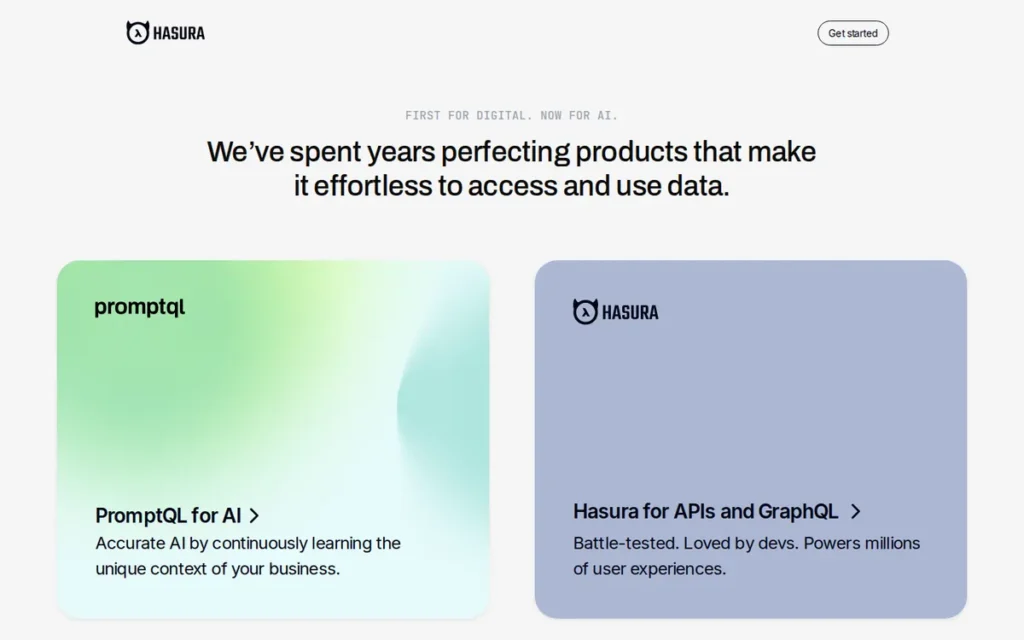
Category: Federated API Platform, connects and generates unified GraphQL and REST APIs from multiple databases and services via a metadata-driven layer, with real-time subscriptions and multi-team CI/CD governance.
At a Glance
- Category: Federated API Platform
- Best For: Engineering teams building GraphQL-first APIs with real-time subscriptions, and enterprise platform teams federating multiple databases and third-party services into a governed single-graph API layer
- Price Range: Free (OSS v2 self-hosted); DDN v3 Cloud has a free entry tier plus consumption-based paid tiers; Enterprise pricing on request, verify current rates at hasura.io/pricing (May 2026)
- Primary Strength: Hasura delivers real-time GraphQL subscriptions, REST endpoints, and multi-source DDN federation from a single metadata-driven platform, a capability combination unavailable in any other tool in this evaluation
- Biggest Limitation: Hasura does not include built-in authentication: teams must integrate an external JWT-compatible provider (Auth0, Firebase Auth, Clerk), adding architectural scope before any API can be exposed to end users
- One-Line Summary: Hasura is a metadata-driven federated API platform that generates real-time GraphQL and REST APIs across multiple databases and services, holding a confirmed G2 rating of approximately 4.7/5.0 in the API generation software category as of 2026.
- Last Verified: May 2026
Overview
Hasura is a GraphQL-first federated API platform that automatically generates real-time GraphQL and REST APIs from PostgreSQL databases, external REST and GraphQL endpoints, and third-party services, designed for engineering teams that need a unified, governed data access layer without writing backend boilerplate code.
Hasura’s Data Delivery Network (DDN), released in 2025, extends the original open-source GraphQL engine into a multi-source federation platform with immutable builds, schema registries, and multi-team CI/CD governance, confirmed in Hasura DDN documentation and DBTA editorial coverage.
Hasura’s DDN represents the deepest architectural investment in multi-source data federation among tools in this evaluation, combining metadata-driven supergraph composition, immutable builds, and multi-team CI/CD governance in a single platform.
Key Features
- Real-Time GraphQL Subscriptions: Hasura automatically generates real-time GraphQL subscriptions from PostgreSQL tables and views, enabling event-driven front-end applications without custom WebSocket infrastructure or additional configuration.
- DDN Federated Supergraph: Hasura DDN provides a metadata-driven federated API layer that unifies PostgreSQL databases, existing REST and GraphQL endpoints, and third-party service APIs (confirmed integrations include Stripe and Salesforce) under a single composable supergraph, confirmed in Hasura DDN upgrade documentation.
- Schema Registry and Changelog: Hasura includes a schema registry that tracks schema evolution across teams, with build-time validation and instant rollback for organizations deploying multiple times per day, confirmed in Hasura DDN documentation.
- Hierarchical Row-Level Permissions: Hasura’s domain-centric access control model supports row-level permissions defined in the metadata layer, integrating with PostgreSQL’s native row-level security for fine-grained data authorization across multi-team API subgraphs.
- Open-Source Self-Hosting: Hasura’s v2 GraphQL Engine is available at github.com/hasura/graphql-engine for self-hosting at no cost, while DDN v3 adds immutable builds, zero cold starts, and lambda connectors in TypeScript and Python for enterprise platform engineering teams.
Best For
Hasura is best for engineering teams committed to GraphQL-first API architectures who need real-time subscription capabilities out of the box, and for enterprise platform teams building data mesh architectures where multiple databases and third-party services must be federated into a governed, single-graph API layer, particularly when existing infrastructure already runs on PostgreSQL.
Pricing
Hasura offers the open-source v2 GraphQL Engine for self-hosting at no cost. DDN v3 Cloud includes a free entry tier with consumption-based paid tiers, meaning costs scale with query volume and can be unpredictable at high traffic.
Specific dollar amounts per consumption tier were not publicly confirmed in verifiable sources as of May 2026. Enterprise pricing is sales-led and custom. Verify current rates directly at hasura.io/pricing before any procurement decision.
Strengths
- Hasura holds a G2 rating of approximately 4.7/5.0: verify the current score directly at g2.com/products/hasura/reviews (May 2026); note that this figure was originally sourced via the G2 product page and a competitor comparison blog rather than an independent third-party review aggregator, and remains the highest reported review rating among tools in this evaluation.
- Hasura DDN’s 2025 release introduced immutable builds, preview APIs, zero cold starts, multi-team CI/CD, modular multi-repo metadata, and an expanded connector ecosystem including Elasticsearch, confirmed in Hasura DDN upgrade documentation, placing Hasura in a distinct capability tier for enterprise platform engineering teams managing multiple API subgraphs.
- Hasura’s PostgreSQL-native data architecture preserves data portability: a community member (u/yen223, r/graphql, 2020) noted “if you ever had to migrate away from Hasura, you’re not totally hosed”, the underlying data remains in standard PostgreSQL, reducing vendor lock-in risk compared to proprietary BaaS platforms.
- Hasura delivers real-time GraphQL subscriptions out of the box: u/yen223 (r/graphql, 2020) described this as “mind-blowing” compared to Django, noting that “real-time pubsub-style websocket APIs are a major pain to set up” in traditional frameworks, while Hasura provides them at zero additional configuration cost.
Limitations
- Authentication Gap: Hasura does not handle user authentication natively and requires integration with an external JWT-compatible provider (confirmed by u/yen223 (r/graphql, 2020), who noted “Hasura doesn’t do authentication out of the box”) meaning teams must architect, implement, and maintain a separate auth system before any API is exposed to end users.
“Handling custom logic is a bit fiddly right now. You can choose either to write a plpgsql function, or you have to spin up an external lambda to do it via Actions. Hasura doesn’t do authentication out of the box.” (u/yen223, r/graphql, 2020)
Takeaway: Hasura’s rapid setup and out-of-the-box real-time subscriptions are the most consistently cited strengths in developer community discussion, but the same thread confirms that authentication and custom business logic require external integration, the key trade-off shaping Hasura’s #1 ranking despite this architectural gap.
- Consumption-Based Pricing Risk: Hasura’s DDN cloud pricing scales with query volume rather than a flat monthly rate, creating budget unpredictability for teams migrating from flat-rate SaaS pricing, a structural cost risk at high traffic that requires careful query volume forecasting before committing to managed DDN hosting.
- Custom Business Logic Complexity: Hasura requires workarounds for custom business logic (either PostgreSQL stored procedures or external lambda connectors in TypeScript or Python) adding architectural surface area for teams with complex domain logic requirements beyond standard data retrieval.
Verdict
Hasura is the most capable API generation platform in this evaluation, earning the #1 position through its confirmed G2 rating of approximately 4.7/5.0, real-time GraphQL subscription capability available out of the box, and uniquely advanced DDN federation architecture for multi-source enterprise data access as of 2026.
Teams that need real-time subscriptions, multi-source data federation across databases and third-party APIs, or enterprise-grade schema governance will find no stronger alternative in this evaluation. Teams seeking built-in authentication, predictable flat-rate pricing, or PostgreSQL-only REST generation should evaluate Supabase or DreamFactory alongside Hasura before committing.
2. Supabase: Best Full-Stack Backend Platform: PostgreSQL Teams Needing Auth, Realtime, and Storage

Category: Full-Stack Backend Generator, auto-generates REST and GraphQL APIs from PostgreSQL, bundled with built-in authentication, realtime table subscriptions, file storage, and serverless edge functions in a single open-source platform.
At a Glance
- Category: Full-Stack Backend Generator
- Best For: Full-stack developers and startup engineering teams building PostgreSQL-backed web or mobile applications who need auto-generated APIs, built-in auth, and realtime from a single platform, with self-hosting as a hedge against managed cloud pricing escalation
- Price Range: Free tier (limited resources); Pro $25/month per project (confirmed via supabase.com/pricing, May 2026); Team approximately $599/month (verify at supabase.com/pricing, not independently confirmed at time of research); Enterprise on request
- Primary Strength: Supabase bundles auto-generated REST and GraphQL APIs, built-in modern authentication (including 2025 Passkey/WebAuthn support), realtime subscriptions, file storage, and serverless edge functions into a single open-source PostgreSQL platform
- Biggest Limitation: Supabase is PostgreSQL-only: teams with heterogeneous database environments (MySQL, Oracle, MongoDB, Snowflake, SQL Server) cannot use Supabase as a unified API layer and will need a multi-database tool like DreamFactory instead
- One-Line Summary: Supabase is an open-source PostgreSQL backend platform that auto-generates REST and GraphQL APIs with built-in authentication (including 2025 Passkey support), realtime subscriptions, and file storage, the most complete all-in-one API generation solution for PostgreSQL-native teams as of 2026.
- Last Verified: May 2026
Overview
Supabase is an open-source Firebase alternative built on PostgreSQL that automatically generates REST and GraphQL APIs from any database schema, bundled with built-in authentication, realtime subscriptions, file storage, and serverless edge functions, designed for full-stack developers who need a complete backend without writing boilerplate code.
Supabase’s architecture is built from open-source components (PostgreSQL, PostgREST for REST generation, pg_graphql for GraphQL, and GoTrue for authentication) confirmed in Supabase’s official Firebase alternative documentation. Every project is self-hostable on any Docker-capable infrastructure with no proprietary data format lock-in.
Supabase delivers auto-generated REST APIs, GraphQL APIs, authentication, realtime subscriptions, file storage, and serverless edge functions in a single platform, the broadest bundled service set among the tools in this evaluation for PostgreSQL-native development teams.
Key Features
- Auto-Generated REST API via PostgREST: Supabase auto-generates a complete REST API from any PostgreSQL schema using PostgREST internally, confirmed in Supabase’s Firebase alternative documentation, exposing tables, views, and foreign keys as standard HTTP endpoints with URL-based filtering, sorting, and pagination without custom code.
- GraphQL API via pg_graphql: Supabase generates a GraphQL API via the pg_graphql PostgreSQL extension, with both REST and GraphQL endpoints available for every project from day one without additional configuration or a separate service to manage.
- Modern Built-In Authentication: Supabase includes GoTrue, supporting email/password, magic links, OAuth (GitHub, Google, and others), and, as of 2025, Passkeys (WebAuthn/FIDO2) in beta, confirmed via the official Supabase changelog, a modern auth standard ahead of most competitors in this evaluation.
- Realtime Table Subscriptions: Supabase’s realtime engine delivers table-level change subscriptions via WebSocket for live client updates, though subscriptions are limited to table-level changes rather than arbitrary joined query results, confirmed in Supabase GitHub community discussions.
- Full Self-Hosting via Docker: Supabase is self-hostable via Docker on any VPS or cloud provider, enabling teams to run the entire backend stack on infrastructure as inexpensive as $8 per month, confirmed in r/webdev developer community discussions (May 2025).
Best For
Supabase is best for full-stack developers and startup engineering teams building PostgreSQL-backed web or mobile applications who need auto-generated APIs, built-in authentication, and realtime capabilities from a single open-source platform, and who value the ability to self-host as a hedge against managed cloud pricing escalation.
Pricing
Supabase pricing tiers (confirmed via supabase.com/pricing, May 2026):
- Free tier: Limited database size and compute: free-tier resource limits arrive earlier than most developers anticipate.
- Pro: $25/month per project: independently confirmed via supabase.com/pricing and multiple community sources, including u/neeia (r/webdev, May 2025).
- Team: Approximately $599/month: cited in community discussions; verify directly at supabase.com/pricing, as this figure was not independently confirmed by a second source at time of research (May 2026).
- Enterprise: Custom pricing, sales-led.
Model costs at 3× your expected entry-level usage before committing to managed cloud.
Strengths
- Supabase’s open-source architecture: built from PostgreSQL, PostgREST, GoTrue, and pg_graphql, keeps all project data in standard PostgreSQL with no proprietary format: u/kneonk (r/webdev, May 2025) described this self-hostability as “such a power-move, honestly, as you are unshackled from getting stuck with a provider,” citing Coolify and Supabase on an $8 VPS as sufficient for medium-traffic web applications.
- Supabase added Passkey (WebAuthn/FIDO2) authentication support in a 2025 beta release, confirmed via the official Supabase changelog, a modern auth standard that most API generation platforms in this evaluation have not yet implemented.
- Supabase’s REST API generation layer is powered by PostgREST internally: confirmed in Supabase’s official Firebase alternative comparison page, meaning Supabase’s auto-generated REST API is backed by the same battle-tested engine that powers the leading PostgreSQL REST generator, with approximately a decade of production history.
- Supabase bundles auto-generated REST and GraphQL APIs, built-in GoTrue authentication, realtime WebSocket subscriptions, file storage, and serverless edge functions in a single platform, a combination of services that no other individual tool in this evaluation matches out of the box for PostgreSQL-native development workflows.
Limitations
- PostgreSQL-Only Architecture: Supabase’s most consequential trade-off is its exclusive PostgreSQL dependency, teams operating mixed-database environments (Oracle, MySQL, MongoDB, Snowflake, SQL Server) cannot use Supabase as a unified API layer; this is a hard architectural boundary, not a configuration limitation, and requires evaluating DreamFactory or another multi-database tool instead.
- Table-Level Realtime Ceiling: Supabase’s realtime subscription model is limited to table-level changes, confirmed in Supabase GitHub community discussions, meaning complex realtime scenarios such as subscriptions to joined queries or aggregated data streams require workarounds or a different tool, such as Hasura.
“Is it easy to self host? I had a project exceed their free tier and the $25/mo bill kind of hurts.” (u/neeia, r/webdev, May 2025)
Takeaway: Supabase’s pricing cliff is the most frequently cited frustration in developer community discussion, the $25/month trigger arrives earlier than most developers expect, making self-hosting configuration knowledge valuable before committing to the managed cloud path.
- Pricing Cliff at Scale: The jump from Supabase’s Free tier to Pro ($25/month per project) arrives earlier than many developers anticipate, and the step to Team (approximately $599/month) is steep enough to generate consistent community frustration, confirmed in r/webdev threads (May 2025). Plan costs at 3× your expected entry usage before committing.
Verdict
Supabase is the best all-in-one API generation platform for PostgreSQL-native teams as of 2026, combining auto-generated REST and GraphQL APIs, built-in modern authentication with 2025 Passkey support, realtime subscriptions, and open-source self-hosting into a developer experience that no other platform in this evaluation matches for single-database PostgreSQL workloads.
Teams that need multi-database support, complex realtime query subscriptions beyond table-level, or GraphQL federation across external services should evaluate Hasura or DreamFactory. Teams that fit the PostgreSQL-first profile will find Supabase the fastest and most complete path from database schema to production-ready API.
3. DreamFactory: Best for Enterprise Multi-Database REST API Generation
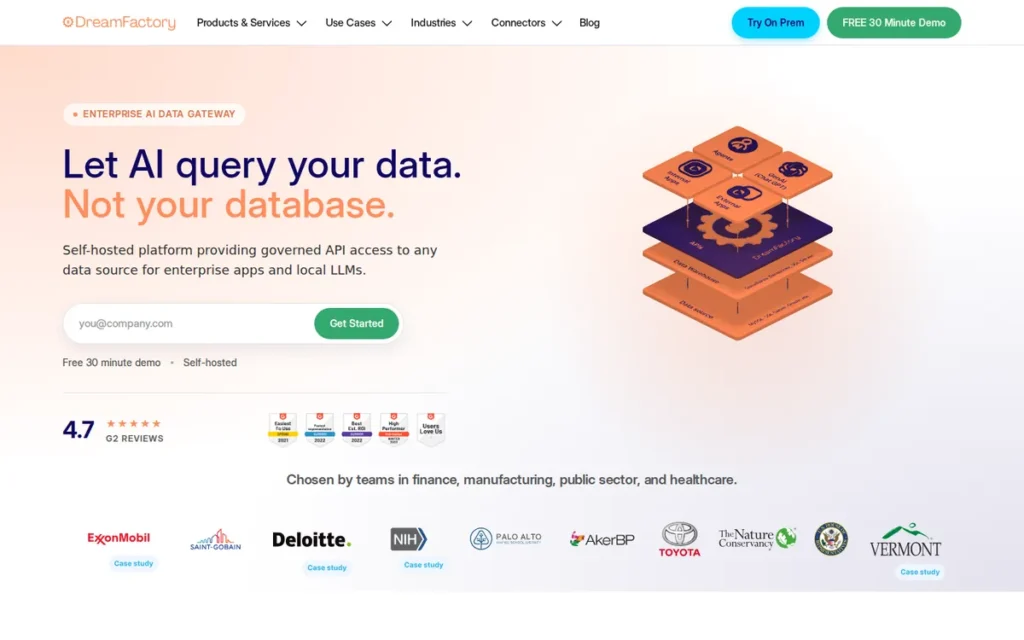
Category: Enterprise REST Generator (automatically generates fully documented, secured REST APIs from 20+ database and data source types via schema introspection, with enterprise-grade RBAC, audit logging, and identity federation) no application code required.
At a Glance
- Category: Enterprise REST Generator
- Best For: Enterprise data teams and backend engineers who need to expose heterogeneous databases (Oracle, SQL Server, MySQL, MongoDB, Snowflake) as a governed REST API layer with OAuth, LDAP, and SAML authentication and audit logging for regulated-industry compliance
- Price Range: Open-source core free (self-hosted at github.com/dreamfactorysoftware/dreamfactory); Enterprise and hosted tiers are sales-led with pricing on request, verify at dreamfactory.com/pricing (May 2026)
- Primary Strength: DreamFactory auto-generates fully documented REST APIs from 20+ database and data source types (including Oracle, SQL Server, MySQL, PostgreSQL, MongoDB, Snowflake, and legacy systems) without any application code, giving it the broadest confirmed multi-source database coverage in this evaluation
- Biggest Limitation: DreamFactory generates REST APIs only: no GraphQL output and no realtime subscription capability, making it unsuitable for teams requiring a GraphQL interface or event-driven realtime data access
- One-Line Summary: DreamFactory is an enterprise REST API generator that automatically creates fully documented, secured REST endpoints from 20+ database and data source types via schema introspection with no application code required, the broadest confirmed multi-database coverage in the API generation software category as of 2026.
- Last Verified: May 2026
Overview
DreamFactory is a self-hosted enterprise data API platform that automatically generates fully documented, secured REST APIs from existing databases by introspecting the schema, requiring only database connection credentials to produce a complete set of CRUD endpoints, stored procedure endpoints, and schema management endpoints with OpenAPI documentation included. This approach is confirmed in DreamFactory’s official documentation.
DreamFactory supports more than 20 database and data source types (including Oracle, SQL Server, MySQL, PostgreSQL, MongoDB, Snowflake, Amazon S3, and legacy systems) making DreamFactory the only tool in this evaluation that can serve as a unified REST API layer across all of them without custom code.
Key Features
- 20+ Source Schema Introspection: DreamFactory generates complete REST APIs (GET, POST, PUT, PATCH, DELETE) from any of 20+ supported databases through schema introspection, confirmed in DreamFactory documentation, producing CRUD endpoints, stored procedure endpoints, and schema management endpoints with no custom application code required.
- Automatic Schema-Change Resilience: DreamFactory automatically regenerates and updates API endpoints when the underlying database schema changes, reducing ongoing API maintenance burden for teams with evolving data models without requiring manual endpoint re-documentation.
- Enterprise Identity Federation: DreamFactory includes OAuth, LDAP, and SAML authentication simultaneously, confirmed in DreamFactory feature documentation, alongside RBAC at the schema, table, stored procedure, and function scope with complete audit logging for compliance reporting.
- Automatic OpenAPI Documentation: DreamFactory generates OpenAPI documentation automatically alongside every API it creates, providing interactive API reference documentation without additional tooling or post-generation configuration steps.
- Docker and Kubernetes Deployment: DreamFactory deploys via Docker and Kubernetes, available as a self-hosted open-source installation at github.com/dreamfactorysoftware/dreamfactory or as a managed enterprise deployment, giving organizations control over data residency and compliance requirements.
Best For
DreamFactory is best for enterprise data teams and backend engineers who need to expose heterogeneous multi-database environments (including Oracle, SQL Server, MySQL, MongoDB, Snowflake, and legacy systems) as governed REST APIs, particularly in regulated industries (finance, healthcare, government) where OAuth/LDAP/SAML identity federation, audit logging, and fine-grained RBAC are non-negotiable compliance requirements.
Pricing
DreamFactory offers an open-source core available for free self-hosting at github.com/dreamfactorysoftware/dreamfactory.
Commercial enterprise plans with managed hosting, priority support, and additional governance features are available via sales-led pricing. Specific tier names and dollar amounts were not publicly confirmed in verifiable sources as of May 2026. Contact sales directly at dreamfactory.com/pricing for current pricing.
Strengths
- DreamFactory holds a G2 rating in the 4.3–4.5/5.0 range: verify the current score directly at g2.com/products/dreamfactory/reviews (May 2026), as this figure is drawn from secondary sources (a competitor comparison blog and an alternatives marketing blog) rather than a direct G2 snapshot; a December 2022 DreamFactory blog post cited a G2 score of 8.6/10 using G2’s internal scoring methodology.
- DreamFactory supports more than 20 database and data source types: including Oracle, SQL Server, MySQL, PostgreSQL, MongoDB, Snowflake, Amazon S3, email providers (Mandrill), IoT endpoints, and legacy systems, the widest confirmed multi-source coverage of any tool in this evaluation, per official DreamFactory documentation.
- DreamFactory’s identity federation covers OAuth, LDAP, and SAML simultaneously, with RBAC at the schema, table, stored procedure, and function scope plus complete audit logging, confirmed in DreamFactory feature documentation, making DreamFactory the strongest tool in this evaluation for regulated-industry compliance requirements.
- DreamFactory’s schema introspection approach automatically synchronizes API endpoints with the underlying database schema when tables, columns, or stored procedures change, reducing the ongoing maintenance overhead that plagues manually coded API layers in production environments.
Limitations
- REST-Only Output: DreamFactory’s most consequential trade-off is its REST-only API generation, the platform produces no GraphQL output and has no realtime subscription or WebSocket capability; teams requiring a GraphQL interface, realtime data push, or event-driven client updates must look to Hasura or Supabase, as DreamFactory cannot serve as the sole API layer in those scenarios.
- Sales-Led Pricing Opacity: DreamFactory’s enterprise pricing is entirely sales-led with no self-serve pricing page, creating friction for teams that want to evaluate total cost without a sales engagement, though the open-source self-hosted version provides a free evaluation path that requires DevOps investment and infrastructure management.
Users on r/snowflake noted:
“I used DreamFactory for a bit. Once setup, it worked quite well, but they had some scummy sales tactics that forced us to drop them. Good product, bad company.” Posted by u/Fair_Ad_1344
Takeaway: DreamFactory’s product capability earns practitioner praise for its zero-code REST generation, but its opaque sales process is a documented adoption barrier that the community actively flags as a reason teams exit the platform.
- Limited Community Resources: DreamFactory’s lower community presence on platforms like Reddit compared to Supabase and Hasura reflects its enterprise sales-channel model, meaning that when teams encounter undocumented behavior or configuration edge cases, fewer peer-to-peer troubleshooting resources exist than for community-driven alternatives, creating higher reliance on official documentation and commercial support contracts.
Verdict
DreamFactory is the strongest choice in this evaluation for enterprise teams needing REST API generation across heterogeneous multi-database environments, earning its #3 ranking through the widest confirmed database breadth (20+ sources) and the most comprehensive identity federation (OAuth, LDAP, and SAML simultaneously) of any tool evaluated as of 2026.
If your requirements include GraphQL output or realtime data subscriptions, DreamFactory is the wrong tool regardless of its multi-database coverage, those are architectural gaps, not configuration options, and no enterprise pricing tier resolves them.
Teams with Oracle, SQL Server, MongoDB, Snowflake, or legacy system exposure that need governed REST APIs without custom application code will find DreamFactory’s schema-introspection approach uniquely capable in this evaluation.
4. Directus: Best for Teams Needing Both a Developer API and a Non-Technical Visual Admin Interface
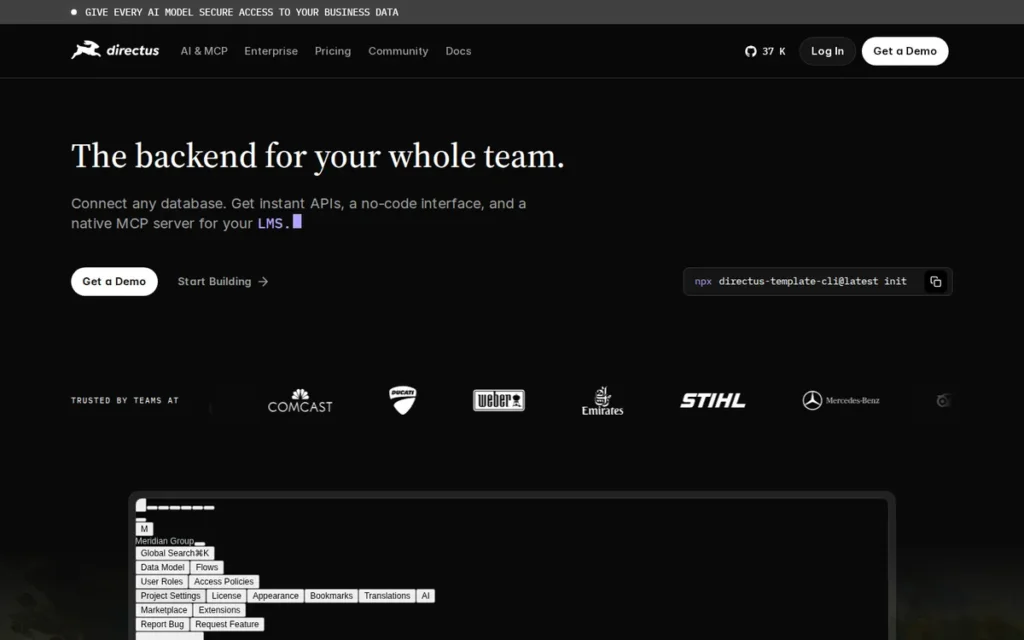
Category: Database-First API Platform, wraps any existing SQL database to generate REST and GraphQL APIs with full behavioral parity, alongside a visual Data Studio admin interface, without requiring schema modification or data migration.
At a Glance
- Category: Database-First API Platform
- Best For: Development teams and organizations that need both a developer-accessible REST and GraphQL API and a visual admin interface for non-technical content or operations team members, particularly teams modernizing legacy SQL databases without the ability to migrate data
- Price Range: Open-source core free (self-hosted at github.com/directus/directus); Directus Cloud managed plans available, specific dollar amounts not confirmed as of May 2026, verify at directus.io/pricing
- Primary Strength: Directus wraps any existing SQL database to generate REST and GraphQL APIs with full behavioral parity (without modifying the underlying schema or requiring data migration) making it the safest tool in this evaluation for legacy system modernization where schema changes are not feasible
- Biggest Limitation: Directus’s native full-text search is explicitly documented as “far less optimized than standard filter rules” in Directus’s own onboarding materials, requiring supplemental search tooling for applications with search-intensive use cases
- One-Line Summary: Directus is an open-source database-first API platform that generates REST and GraphQL APIs from any existing SQL database without modifying the schema, while providing a full visual Data Studio admin interface, making it the only tool in this evaluation designed simultaneously for developers and non-technical stakeholders.
- Last Verified: May 2026
Overview
Directus is an open-source database-first data platform that generates both REST and GraphQL APIs by layering a Node.js API on top of any existing SQL database (wrapping existing production tables without modifying the schema, migrating data, or enforcing an opinionated data model) designed for development teams that need to add an API layer to existing infrastructure without disrupting production systems.
Directus supports PostgreSQL, MySQL, SQLite, MariaDB, Oracle, and Microsoft SQL Server, and includes a Data Studio visual web-based admin interface that allows non-technical team members to manage content, users, and permissions, confirmed in Directus product documentation.
Directus is the only tool in this evaluation explicitly designed to serve both developer and non-developer audiences from a single platform.
Key Features
- Non-Opinionated Schema Wrapping: Directus wraps any existing SQL database: including PostgreSQL, MySQL, SQLite, MariaDB, Oracle, and MSSQL, to generate REST and GraphQL APIs without modifying the underlying table structure or requiring data migration, confirmed in official Directus documentation.
- REST and GraphQL Behavioral Parity: Directus generates REST and GraphQL APIs with full behavioral parity from the same database structure and abstract syntax tree, ensuring consistent query behavior and eliminating duplicate endpoint logic, confirmed in the Directus feature spotlight blog.
- Data Studio Visual Admin Interface: Directus includes a full web-based visual admin interface enabling non-technical team members (content editors, operations staff, product managers) to manage records, users, roles, and permissions without developer involvement or SQL knowledge.
- Granular Role and Permission System: Directus provides built-in access control at the collection (table) and field (column) level, enabling different data visibility and mutation rules for different user roles without custom middleware between the API and the database.
- Self-Hosted or Cloud Managed: Directus is available as an open-source self-hosted deployment at github.com/directus/directus or as Directus Cloud managed hosting, with both paths providing the same API generation and Data Studio feature set at no licensing cost for the self-hosted path.
Best For
Directus is best for organizations that need both a developer-accessible REST and GraphQL API layer and a visual admin interface for non-technical stakeholders, particularly teams modernizing legacy SQL databases or adding an API layer to existing production databases where schema modification or data migration is not feasible.
Pricing
Directus offers a fully open-source self-hosted version at no cost at github.com/directus/directus.
Directus Cloud managed hosting is available at directus.io/pricing. Specific current tier names and dollar amounts could not be confirmed in publicly available sources as of May 2026, verify directly at the pricing page before any procurement decision.
Strengths
- Directus’s non-opinionated data model: confirmed in official Directus documentation, means teams can layer a full REST and GraphQL API on top of existing production databases without modifying any table, column, or relationship, enabling legacy database modernization at the lowest-risk approach of any tool in this evaluation.
- Directus generates REST and GraphQL APIs with full behavioral parity from the same database model, confirmed via the Directus feature spotlight blog, meaning teams can offer both API styles to different consumer groups without maintaining separate endpoint logic or dealing with behavioral inconsistencies.
This aligns with community sentiment on r/node:
“I’ve also used both myself. Strapi has a ton of small bugs that aren’t immediately apparent, but become incredibly frustrating very quickly. I’ve since migrated all my projects to Directus and have had a much better time.” Posted by u/HyperKids_
Takeaway: Directus consistently emerges as the community’s preferred migration target for developers abandoning less stable database-first API platforms, validating its reputation for reliable production stability.
- Directus’s presence on Hacker News in February 2025 reflects active developer community evaluation and technical discussion, a credibility signal consistent with Directus’s open-source review platform presence on G2 and Capterra; a specific numeric G2 score was not surfaced by independent research at time of this evaluation (May 2026), verify the current rating directly at g2.com.
- Directus’s open-source self-hosted core provides full platform access: including both the API generation layer and the Data Studio admin interface, at zero licensing cost, making Directus the most feature-complete free self-hosted option for teams that need to serve both developers and non-technical team members from the same platform.
Limitations
- Full-Text Search Performance Gap: Directus’s most consequential trade-off is its native full-text search performance, Directus’s own onboarding documentation explicitly states that full-text search is “far less optimized than standard filter rules,” meaning applications with search-intensive use cases (product catalogs, content discovery, document retrieval) will need to supplement Directus with Elasticsearch, Algolia, or PostgreSQL full-text search extensions.
- SQL-Only Database Support: Directus supports only SQL databases (6+ confirmed: PostgreSQL, MySQL, SQLite, MariaDB, Oracle, MSSQL) and cannot generate APIs from NoSQL sources, document stores, cloud storage (S3), or legacy non-SQL data systems, a significant gap compared to DreamFactory’s 20+ source coverage for enterprises with heterogeneous data environments.
- Cloud Pricing Opacity: Directus Cloud pricing tier names and dollar amounts are not publicly confirmed in verifiable independent sources as of May 2026, creating evaluation friction for teams that want to model total cost of ownership before deploying self-hosted infrastructure or engaging with sales.
Verdict
Directus is the strongest API generation platform in this evaluation for teams that need to serve both developers (REST and GraphQL APIs) and non-technical stakeholders (Data Studio admin interface) from a single open-source platform without modifying an existing production database schema.
Directus’s non-opinionated wrapping approach makes it the lowest-risk tool for legacy system modernization. Teams that need NoSQL or multi-source database coverage beyond SQL, high-performance native full-text search, or realtime subscriptions should evaluate DreamFactory or Hasura respectively before selecting Directus.
5. NocoDB: Best for No-Code and Low-Code Teams: Open-Source Airtable Alternative With Auto-Generated API
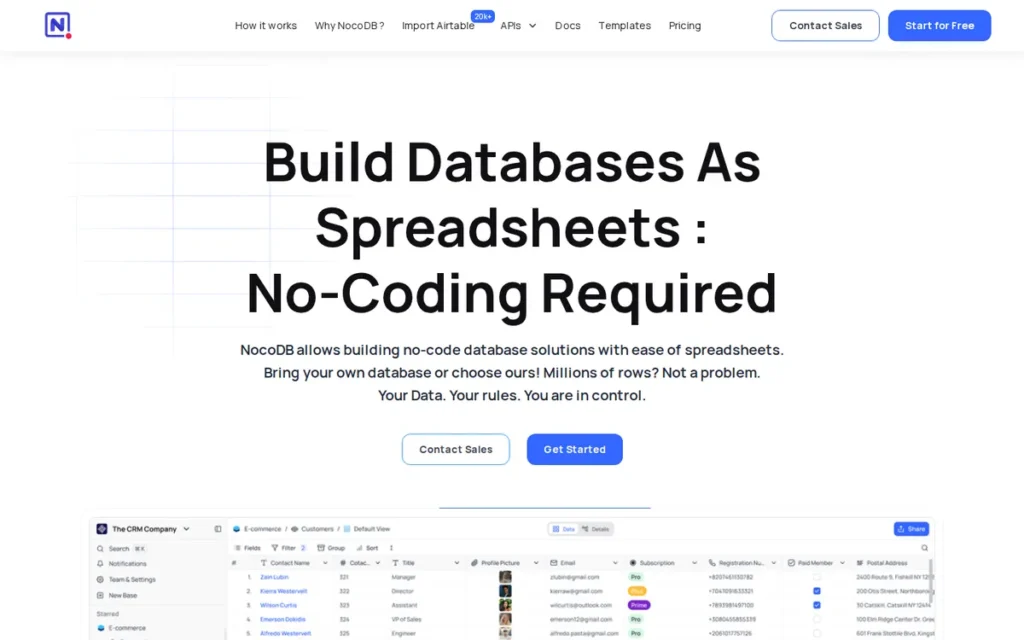
Category: No-Code API Generator, converts SQL databases into a spreadsheet-like no-code admin interface while simultaneously auto-generating REST API and Meta-API endpoints, serving both non-technical users and developers from the same platform.
At a Glance
- Category: No-Code API Generator
- Best For: Organizations and startup teams where non-technical business users need a spreadsheet-like interface for data management alongside developer-accessible REST API endpoints, without requiring dedicated backend engineering resources to build or maintain a custom API layer
- Price Range: Open-source core free (self-hosted at github.com/nocodb/nocodb); NocoDB Cloud plans available at nocodb.com/pricing, specific tier prices not confirmed as of May 2026, verify directly
- Primary Strength: NocoDB auto-generates a REST API and spreadsheet-like admin interface from SQL databases simultaneously, making it the only tool in this evaluation that serves non-technical business users and developers from the same platform without backend engineering knowledge required to operate
- Biggest Limitation: NocoDB’s auto-generated API is limited to basic CRUD operations (it does not support fuzzy text search, complex relational queries, or GraphQL output) limiting production suitability for applications requiring advanced data access patterns
- One-Line Summary: NocoDB is an open-source no-code API generator and Airtable alternative that auto-generates REST APIs and a visual spreadsheet interface from SQL databases, with 50,000+ reported GitHub stars and Fortune 500 adoption confirmed at the time of its $10.5M seed funding round.
- Last Verified: May 2026
Overview
NocoDB is an open-source Airtable alternative that converts existing SQL databases into a spreadsheet-like no-code interface while simultaneously auto-generating a REST API for CRUD operations on table records and a Meta-API for programmatic control of application metadata, enabling non-technical users to interact with database records visually while developers access the same data through standard HTTP endpoints without any backend code.
NocoDB is backed by a $10.5M seed round led by Decibel and OSS Capital, with participation from Ram Shriram (one of Google’s earliest investors and board members), and reports adoption by more than 2,000 organizations worldwide including Fortune 500 companies, credentials that were not represented in any of the three AI-generated tool lists evaluated for this article (Perplexity and ChatGPT-4o queries, May 2026).
NocoDB reported more than 50,000 GitHub stars in its 2024 year-in-review video, building on the 30,000+ confirmed by TechCrunch (October 2022) at the seed round era. The 50,000+ figure was not independently confirmed by a second source at time of research, verify the current count directly at github.com/nocodb/nocodb.
Key Features
- Simultaneous REST API and No-Code Interface: NocoDB auto-generates a REST API exposing standard CRUD operations (list, get, create, update, delete) from any connected SQL database table while simultaneously providing a no-code spreadsheet interface, two artifacts from one platform deployment, confirmed in NocoDB product documentation.
- Meta-API for Infrastructure-as-Code Configuration: NocoDB provides a Meta-API exposing programmatic control over application structure (including bases, tables, columns, views, and scripts) confirmed in NocoDB documentation changelog, enabling infrastructure-as-code management of NocoDB configuration beyond simple data CRUD operations.
- Multiple No-Code View Types: NocoDB’s no-code interface allows non-technical users to interact with SQL database records through grid, form, gallery, and kanban views without any SQL knowledge or developer involvement, confirmed on the NocoDB product homepage.
- PostgreSQL and MySQL Database Support: NocoDB supports PostgreSQL and MySQL as primary database backends with broader relational database support, and is available as a fully open-source self-hosted deployment at github.com/nocodb/nocodb or as NocoDB Cloud managed hosting.
- Built-In RBAC with Webhook Automation: NocoDB includes built-in role-based access control for managing data access by user role, with webhook support for external automation orchestration when business-logic triggers are required in connected workflows.
Best For
NocoDB is best for organizations and startup teams where business users need a spreadsheet interface for data management (analogous to Airtable or Google Sheets) but the underlying data must remain in a standard SQL database that developers can also access via REST API, particularly when no dedicated backend engineering resources are available to build and maintain a custom API layer.
Pricing
NocoDB is available as a fully open-source self-hosted platform at no cost at github.com/nocodb/nocodb.
NocoDB Cloud managed plans exist at nocodb.com/pricing, with Free, Team, Business, and Enterprise tiers. Specific dollar amounts per tier could not be confirmed in publicly available sources as of May 2026, verify directly before procurement.
Strengths
- NocoDB raised a confirmed $10.5M seed round led by Decibel and OSS Capital with participation from Ram Shriram (independently confirmed by TechCrunch (October 2022)) and at time of that announcement reported adoption by more than 2,000 organizations worldwide including Fortune 500 companies, representing institutional credentials that were absent from all three AI-generated tool lists evaluated for this article.
- NocoDB reported more than 50,000 GitHub stars in its 2024 year-in-review recap, building on the 30,000+ confirmed by TechCrunch at the 2022 seed round, one of the highest star counts among tools in this evaluation, reflecting substantial developer community awareness at a scale that confirms production interest beyond individual experimentation.
- NocoDB’s Meta-API provides programmatic control over application structure (bases, tables, columns, views, scripts), confirmed in NocoDB documentation changelog, enabling infrastructure-as-code management of NocoDB configuration, a capability beyond the data-CRUD-only APIs provided by simpler REST generators.
- NocoDB is the only tool in this evaluation that simultaneously provides a no-code spreadsheet interface for non-technical users and a developer REST API from the same platform, confirmed in product documentation and community tutorials describing the combination of NocoDB plus Supabase/PostgreSQL as a complementary full-stack pattern.
Limitations
- CRUD-Only API Depth: NocoDB’s most consequential trade-off is its limited API depth, community evaluation in an r/Airtable Reddit thread (2023) confirms NocoDB’s API supports only basic list, get, update, and delete operations with no fuzzy text search capability, a significant limitation for production applications requiring search-heavy data retrieval or complex relational queries.
- Missing Unique Constraint Support: NocoDB has a documented data integrity gap, a NocoDB community forum post identifies missing unique constraint support, affecting schema-strict use cases where column-level data validation is required for production data quality.
“Both products have very limited APIs. They only do the basic, list, get, update, delete. There’s no fuzzy text searching (I wonder why that is so?).” (r/Airtable thread, Airtable vs Baserow and others, 2023)
Takeaway: NocoDB’s API is confirmed by community evaluation as sufficient for basic data access workflows but insufficient for production applications requiring search, complex filtering, or GraphQL, the clearest published boundary on NocoDB’s API use case suitability.
- Webhook-Only Automation: NocoDB’s automation model relies on webhooks for external orchestration rather than built-in automation rules, making multi-step automated workflows more complex to configure than in purpose-built automation platforms and adding external service dependencies for non-trivial business logic.
- API Maturity Ceiling: NocoDB’s CRUD-only API depth creates a confirmed production ceiling, teams whose data access requirements grow beyond basic list, get, create, update, and delete operations will face a tool migration, a switching cost that should factor into the initial selection for growth-stage applications where API complexity is expected to increase within 12–24 months.
Verdict
NocoDB is the strongest choice in this evaluation for organizations that need a no-code data management interface and a REST API from the same platform without dedicated backend engineering resources, confirmed by $10.5M institutional seed funding, 50,000+ reported GitHub stars, and Fortune 500 adoption documented at the time of its 2022 funding round.
NocoDB’s CRUD-only API and absence of full-text search or GraphQL mean it is not appropriate for production applications with complex data access requirements. Teams that anticipate outgrowing basic CRUD operations should evaluate Directus or Supabase as more capable alternatives at comparable open-source price points.
6. PostgREST: Best Open-Source PostgreSQL REST Engine: Zero Abstraction at Zero Cost
Category: PostgreSQL REST Engine, a standalone open-source web server that converts any PostgreSQL database schema directly into a RESTful API, with PostgreSQL’s own Row-Level Security policies as the authorization model and no application layer between HTTP requests and the database.
At a Glance
- Category: PostgreSQL REST Engine
- Best For: Backend engineers and platform teams with strong PostgreSQL expertise who need a zero-cost, zero-abstraction REST API generation layer with PostgreSQL’s native Row-Level Security as the authorization model, and who are comfortable managing self-hosted infrastructure without a managed cloud option
- Price Range: Completely free (MIT License). No commercial tiers, no managed cloud hosting, no enterprise support contract available from the project.
- Primary Strength: PostgREST eliminates the application layer entirely: translating HTTP requests directly to PostgreSQL queries under the database’s own Row-Level Security authorization model, delivering REST API generation at zero cost with no ORM overhead and no proprietary abstraction between data and API
- Biggest Limitation: PostgREST is PostgreSQL-only with no managed cloud hosting option, it does not support any other database, does not generate GraphQL output, has no realtime subscription capability, and requires teams to manage self-hosted infrastructure with no official commercial support contract available
- One-Line Summary: PostgREST is a free open-source web server that converts any PostgreSQL database into a fully RESTful API using PostgreSQL’s own Row-Level Security as the authorization layer, the same engine that powers Supabase’s auto-generated REST API, confirming its production readiness at scale.
- Last Verified: May 2026
Overview
PostgREST is a free, open-source standalone web server written in Haskell that converts any PostgreSQL database directly into a fully RESTful API by introspecting the database schema, exposing tables, views, foreign tables, and stored functions as HTTP endpoints governed entirely by PostgreSQL’s own roles and Row-Level Security (RLS) policies, with no application layer between incoming HTTP requests and the PostgreSQL query planner.
PostgREST is the engine that powers Supabase’s auto-generated REST API layer, confirmed in Supabase’s official Firebase alternative documentation, meaning PostgREST underlies one of the most widely adopted open-source backend platforms in the developer community and has a production history spanning approximately a decade.
PostgREST routes HTTP requests directly to the PostgreSQL query planner with no ORM or application layer, an architectural approach that eliminates abstraction overhead and delivers faster response times for read-heavy workloads, confirmed in dev.to comparison research.
Key Features
- Zero-Application-Layer REST Generation: PostgREST generates complete REST API endpoints (GET, POST, PUT, PATCH, DELETE) for all tables, views, and foreign tables in a PostgreSQL database through schema introspection, with zero application code required and no separate configuration layer between HTTP requests and the database.
- URL-Based Filtering with Direct Query Translation: PostgREST supports URL-based filtering, sorting, pagination, and joins via standard query parameters, translating directly into optimized PostgreSQL queries without an ORM, business logic layer, or serialization overhead, confirmed in PostgREST documentation.
- PostgreSQL RLS as Authorization: PostgREST uses PostgreSQL’s own Row-Level Security (RLS) policies as the authorization model, access control is defined entirely in PostgreSQL role definitions and RLS policies, keeping authorization logic in the database rather than a separate middleware layer.
- Automatic OpenAPI Documentation Generation: PostgREST automatically generates OpenAPI documentation from the PostgreSQL schema at runtime, confirmed in docs.postgrest.org/en/v12/references/api/openapi.html, providing an interactive API reference without any additional tooling or post-generation configuration.
- Single Binary Deployment: PostgREST is available as asingle binary deployment, making it lightweight and straightforward to integrate into existing Docker, Kubernetes, or bare-metal infrastructure stacks without complex dependency management.
Best For
PostgREST is best for backend engineers and platform teams with strong PostgreSQL expertise who want a zero-cost, zero-abstraction REST API generation layer where PostgreSQL’s native Row-Level Security controls access, particularly teams already proficient in writing PostgreSQL RLS policies who want to avoid introducing any vendor abstraction layer above their existing database infrastructure.
Pricing
PostgREST is completely free under the MIT License with no commercial tiers, no per-seat costs, and no enterprise support contracts from the project, confirmed at postgrest.org and github.com/PostgREST/postgrest.
Teams that need managed cloud hosting for a PostgREST-equivalent experience should evaluate Supabase, which runs PostgREST internally and provides managed hosting. Community support is available through GitHub. Zero cost is structurally stable, no pricing verification cadence required.
Strengths
- PostgREST is used internally by Supabase as its REST API generation engine: confirmed in Supabase’s official Firebase alternative comparison page, meaning PostgREST runs at the scale of Supabase’s entire managed platform, representing the strongest available real-world production endorsement for a free, open-source infrastructure component.
- PostgREST’s architectural approach eliminates ORM translation overhead by routing HTTP requests directly to the PostgreSQL query planner, confirmed in dev.to comparison research as delivering faster response times than equivalent framework-based API implementations for read-heavy, data-retrieval-centric workloads.
This aligns with community sentiment on r/PostgreSQL:
“In general, us dbas love PostgREST because we can snap our fingers and create a full-fledged API and then develop features much more quickly (since we’re comfortable with plpgsql). But that doesn’t mean it’s right for any ol’ company.” Posted by u/thythr
Takeaway: PostgREST’s speed and productivity advantage is real but conditional, it delivers maximum value for DBA-proficient teams already fluent in plpgsql, not as a general-purpose API generator for teams without deep PostgreSQL expertise.
- PostgREST is completely free under the MIT License with no commercial tiers or per-seat costs, confirmed at postgrest.org and github.com/PostgREST/postgrest, making it the only zero-cost API generation option in this evaluation confirmed in production at scale via Supabase’s adoption.
- PostgREST has approximately a decade of production history (community origin ~2014) and continues to receive versioned releases and actively maintained documentation, confirmed by version-specific documentation at docs.postgrest.org/en/v12/, indicating a mature and actively stewarded open-source project.
Limitations
- Intentional PostgreSQL-Only Scope: PostgREST’s most consequential trade-off is its PostgreSQL-only, REST-only design, PostgREST generates no GraphQL output, has no realtime subscription capability, and offers no managed cloud hosting. Teams with non-PostgreSQL data sources in their stack will find PostgREST cannot serve as a unified API layer and should evaluate Supabase (managed hosting), Hasura (multi-source federation), or DreamFactory (20+ source types) depending on their database environment.
- PostgreSQL Expertise Required: PostgREST’s security model requires solid PostgreSQL expertise, correctly configuring Row-Level Security policies is a non-trivial task, and misconfigured RLS creates a security vulnerability rather than just a feature gap, making PostgREST a poor fit for teams without dedicated database engineering experience.
- No Commercial Support Path: No commercial support contract is available from the PostgREST project itself, teams with SLA-backed response time requirements must source support from internal PostgreSQL expertise or third-party consultancies, adding a hidden cost to the “free” evaluation that should factor into total cost of ownership calculations.
Verdict
PostgREST is a specialist’s precision tool for PostgreSQL-native teams (not a general-purpose API generation platform) and its role as the internal REST generation engine inside Supabase (ranked #2 in this evaluation) is the most direct available confirmation of its production readiness at scale.
Teams with strong PostgreSQL expertise who want zero licensing cost, zero vendor abstraction, and complete trust in PostgreSQL’s own security model will find no better-fit tool for their specific constraints in this evaluation. Teams that need multi-database support, GraphQL output, realtime subscriptions, managed cloud hosting, or an admin interface for non-technical users should evaluate other tools in this list.
7. SwaggerHub: Best for API Design-First Teams: OpenAPI Specification Collaboration and Multi-Language SDK Generation
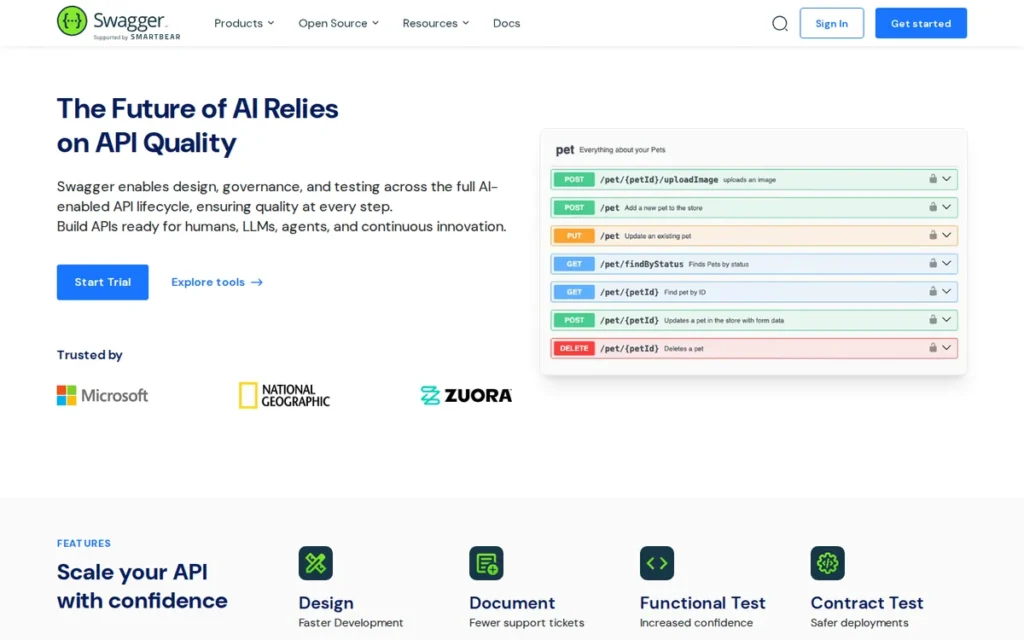
Category: OpenAPI Design & SDK Generator, a collaborative SaaS platform for designing APIs via OpenAPI specification with real-time validation, version control, and team collaboration, generating server stubs and client SDK libraries in 40+ languages from those specifications.
At a Glance
- Category: OpenAPI Design & SDK Generator
- Best For: Enterprise API design teams and platform organizations that publish APIs to external developer ecosystems and need to generate language-specific client SDK libraries or server stubs from OpenAPI specifications, with collaborative editing, real-time validation, and version-controlled API contract management for multi-designer workflows
- Price Range: Individual approximately $23/month; Teams approximately $34/user/month; Enterprise on request; Free tier with limited features, pricing confirmed via Zuplo OpenAPI tools comparison 2026, verify current rates at swagger.io/pricing
- Primary Strength: SwaggerHub provides collaborative OpenAPI specification editing with real-time validation and version control, combined with Swagger Codegen’s ability to generate server stubs and client SDK libraries in 40+ programming languages, the most complete platform for spec-driven teams publishing APIs to external developer audiences
- Biggest Limitation: SwaggerHub is a cloud-only SaaS platform with no self-hosted option and per-seat pricing at approximately $34/user/month for teams (the highest cost in this evaluation) while the free OpenAPI Generator CLI provides equivalent code generation for teams that need SDK generation without the collaborative governance platform
- One-Line Summary: SwaggerHub is SmartBear’s commercial OpenAPI design and SDK generation platform that provides collaborative API specification editing, real-time validation, and server stub and client SDK generation in 40+ languages, designed for enterprise API-first teams managing multi-designer API governance workflows.
- Last Verified: May 2026
Overview
SwaggerHub is SmartBear Software’s commercial collaborative API design platform built around OpenAPI specifications, providing real-time validation, autocomplete, version control, and team collaboration alongside Swagger Codegen’s ability to generate server stubs and client SDK libraries in 40+ programming languages from any OpenAPI definition, confirmed in Zuplo’s best OpenAPI tools comparison 2026.
SwaggerHub occupies a distinctly different sub-category from the other six tools in this evaluation. Rather than generating APIs from existing databases by introspecting their schema, SwaggerHub helps teams design API contracts first via OpenAPI specification and then generate code from those contracts.
SwaggerHub is the correct tool for organizations publishing APIs to external developer ecosystems who need language-specific client libraries for their API consumers, not for teams looking to expose an existing database as an API without writing code.
Key Features
- Collaborative OpenAPI Specification Editor: SwaggerHub provides a collaborative OpenAPI editor with real-time syntax validation, autocomplete, and interactive documentation preview, enabling multiple API designers to work on the same definition simultaneously with immediate feedback on specification errors.
- 40+ Language Server Stub and SDK Generation: SwaggerHub generates server stubs in backend languages and client SDK libraries in 40+ programming languages and frameworks via Swagger Codegen, confirmed in DigitalAPI.ai’s Swagger vs. OpenAPI comparison, enabling API publishers to provide language-native client libraries from a single OpenAPI definition.
- Built-In API Specification Version Control: SwaggerHub includes version control for API specifications, allowing teams to track changes, compare specification versions, and manage API contract evolution over time without external Git repository configuration for design-phase workflows.
- CI/CD Pipeline Integration: SwaggerHub integrates with CI/CD pipelines for automated API documentation publishing, SDK generation, and specification validation on code commits, reducing manual steps in the API contract publication and distribution workflow.
- 2025 AI-Ready Positioning: SmartBear positioned SwaggerHub in 2025 as “a more intelligent and cohesive foundation for API teams in 2025, emphasizing automation and standards”, confirmed via the SmartBear blog, signaling stated intent to introduce intelligent automation features for API design teams.
Best For
SwaggerHub is best for enterprise API design teams and platform organizations that publish APIs to external developer ecosystems and need to provide language-specific client SDK libraries to API consumers, particularly organizations with multiple API designers who require collaborative OpenAPI editing, real-time specification validation, and version-controlled API contract management.
Pricing
SwaggerHub Individual plans are approximately $23/month and Team plans approximately $34/user/month, confirmed via Zuplo OpenAPI tools comparison 2026. Enterprise pricing is custom and sales-led. A free tier with limited features exists.
Teams should note that the open-source OpenAPI Generator CLI (free, community-maintained) provides equivalent code generation for teams that need SDK and server stub generation without the collaboration platform. Verify all pricing at swagger.io/pricing before procurement.
Strengths
- SwaggerHub’s Swagger Codegen generates server stubs and client SDK libraries in 40+ programming languages and frameworks (the broadest language coverage in this evaluation) confirmed in DigitalAPI.ai’s Swagger vs. OpenAPI comparison, enabling API publishers to distribute language-native SDKs across Java, Python, Node.js, Go, Rust, Swift, Kotlin, C#, and many others from a single OpenAPI definition.
- SmartBear published a 2025 blog post positioning SwaggerHub as “a more intelligent and cohesive foundation for API teams in 2025, emphasizing automation and standards”, confirmed via the SmartBear blog, confirming active platform investment and a stated AI-era roadmap for the collaborative API design space.
- SwaggerHub’s G2 review page and Capterra review page are both confirmed active as of May 2026, meaning enterprise procurement teams have access to verified peer reviews for due diligence alongside the editorial analysis in this evaluation.
- SwaggerHub is confirmed as “particularly well-suited for large organizations emphasizing collaborative, design-first API development”, sourced from InvGate ITDB SwaggerHub Enterprise profile, making it the strongest platform-level choice for enterprises with multi-designer, specification-driven API governance workflows.
Limitations
- Category Mismatch Risk: SwaggerHub’s most consequential trade-off for readers of this article is category mismatch, SwaggerHub does not generate APIs from databases; it generates server stubs and client SDKs from OpenAPI specifications that teams must design and write themselves, meaning SwaggerHub is the wrong choice for teams looking to expose an existing database as an API without writing custom code.
- Cloud-Only with No Self-Hosted Path: SwaggerHub is a cloud-only SaaS platform with no self-hosted deployment option, carrying per-seat pricing at approximately $34/user/month for teams (the highest cost in this evaluation) while the free OpenAPI Generator CLI provides core code generation capability at zero cost for teams that do not need the collaborative platform features.
- Free Alternative Pressure: SwaggerHub faces significant pricing pressure from the free open-source Swagger/OpenAPI ecosystem: developers frequently question paying for SwaggerHub when the OpenAPI Generator CLI provides equivalent core code generation at zero cost, meaning SwaggerHub’s value must be justified entirely by its collaboration, governance, and real-time validation features rather than the generation capability itself.
Users on r/dotnet described the adoption gap:
“The overwhelming majority of devs that I’ve worked with did not have any experience with using swagger to generate client code for APIs. They don’t usually lean on it for documentation since they know how the api works. They largely just viewed swagger as a test tool for people too lazy to install postman.” Posted by u/Merad
Takeaway: Most development teams never utilize Swagger’s code generation capabilities at all, treating it as a test and documentation tool rather than a spec-first SDK platform, validating why SwaggerHub’s per-seat pricing must justify its collaborative governance value to organizations that have already made the organizational commitment to spec-first API design.
- Design Tool Only: No API Lifecycle Management: SwaggerHub does not include an API gateway, developer portal, or API key management system, making it a design and generation tool rather than a complete API lifecycle platform, meaning teams need additional tooling for API deployment, monetization, and consumer management after SwaggerHub produces the specification and client libraries.
Verdict
SwaggerHub is the strongest platform in this evaluation for API-first teams that design APIs via OpenAPI specification and need to generate client SDK libraries in 40+ languages for external developer consumers, and it is the correct recommendation when the use case involves API contract publication and SDK distribution rather than generating APIs from an existing database.
Teams who found SwaggerHub through a search for “API generation software” should verify that spec-first SDK generation matches their actual use case. If the primary goal is exposing an existing database as an API without writing custom code, the other six tools in this evaluation are better-matched options.
SwaggerHub ranks #7 in this specific evaluation because the six objective criteria are weighted toward the primary audience’s database-to-API generation goal, not because SwaggerHub is a poor product for its intended spec-first use case.
What Red Flags Should I Watch For When Evaluating API Generation Software?
The most consequential red flag in API generation software evaluation is sub-category mismatch, selecting a spec-first SDK generator when you need database-introspection REST generation, or a PostgreSQL-only tool when your stack includes Oracle or SQL Server. Six confirmed buying mistakes follow, each drawn from community evidence and vendor documentation.
Red Flag #1: Sub-Category Mismatch
Confirm the tool generates from your existing database schema rather than from an OpenAPI specification you must write yourself. SwaggerHub (despite appearing in “API generation software” search results) is a spec-first platform where teams design the API contract manually first. Teams expecting database-introspection generation will find SwaggerHub does not reduce boilerplate from existing infrastructure and is the wrong sub-category for that use case.
Red Flag #2: Pricing Cliff Risk
Confirm exactly where the free tier ends and at what multiplier costs increase before building a production application on a managed platform. Supabase’s Free-to-Pro transition ($25/month per project) is a documented community pain point, confirmed in r/webdev (u/neeia, May 2025). Hasura’s consumption-based DDN cloud pricing can generate unexpected scale costs for teams accustomed to flat monthly SaaS rates.
Red Flag #3: PostgreSQL-Only Lock-In
Confirm whether your full current and planned database stack is supported before committing to a PostgreSQL-native tool. This is not a missing feature that can be enabled, tools like PostgREST and Supabase are architecturally dependent on PostgreSQL’s internals (JSON operators, RLS policies, pg_graphql extension) in ways that cannot be generalized to other database engines without rebuilding the tool from scratch.
Teams with Oracle, SQL Server, MongoDB, or Snowflake in their environment cannot use these tools as a unified API layer.
Red Flag #4: No Built-In Authentication
Confirm whether the tool handles user authentication natively or requires you to integrate an external JWT provider before your API can be exposed to end users. Hasura (despite its leading G2 rating and DDN capabilities) requires external authentication integration, confirmed by u/yen223 (r/graphql, 2020).
Authentication integration adds a concrete 1–2 week engineering investment before the first authenticated endpoint is live, time that teams choosing Supabase, DreamFactory, or Directus (all with built-in auth) do not spend.
Red Flag #5: REST-Only With No Realtime
Confirm whether your application requires real-time data subscriptions before selecting a REST-only tool. Event-driven UIs, live dashboards, collaborative editing features, and multiplayer application patterns all require realtime subscriptions. The following tools in this evaluation do not support realtime data push:
- DreamFactory: REST-only, no realtime subscription capability
- PostgREST: REST-only, no realtime capability
- Directus: REST and GraphQL generation, no native realtime subscriptions
- NocoDB: CRUD-only REST API, no realtime capability
- SwaggerHub: design tool, not a deployment platform; realtime is inapplicable
Switching from a REST-only tool to a realtime-capable platform like Hasura or Supabase after initial deployment carries significant re-architecture cost.
Red Flag #6: Unverified G2 Ratings Without Source URLs
Confirm any cited review ratings directly at the source platform (g2.com or capterra.com) before procurement. G2 ratings in this category are frequently cited in secondary sources that may be outdated, drawn from a competitor’s marketing blog, or reflecting a different scoring methodology (G2 uses an internal 10-point scale alongside the 5-star display rating). All ratings cited in this article include source URLs and a May 2026 verification date, verify current scores directly before any purchasing decision.
What Questions Should I Ask Before Choosing an API Generation Tool?
The most important question to ask is whether the tool supports every database in your current infrastructure, a constraint that immediately disqualifies PostgreSQL-only tools for multi-database enterprise stacks. Seven questions below surface tool-disqualifying answers on authentication, API style, realtime requirements, pricing at scale, migration cost, and schema evolution.
Question #1: Does this tool support all databases currently in my infrastructure?
Ask vendors for the complete and current list of supported data source types, not just a marketing summary. If your stack includes Oracle, SQL Server, MongoDB, Snowflake, or any non-PostgreSQL database alongside PostgreSQL, only DreamFactory (20+ sources) can serve as a single unified API layer across all of them. PostgreSQL-only tools like PostgREST and Supabase will require separate tooling for each additional data source type.
Question #2: Does the tool handle user authentication natively, or do I need to integrate an external provider?
Ask specifically which authentication architecture the tool uses and what you must implement before the first end-user request can be made. Supabase (GoTrue), DreamFactory (OAuth/LDAP/SAML), and Directus include built-in auth. PostgREST uses PostgreSQL RLS as its auth model. Hasura requires an external JWT-compatible provider, meaning teams choosing Hasura must build, deploy, and maintain a separate auth system before any API is production-ready.
Question #3: Do I need real-time subscriptions, or is request-response REST sufficient for my use case?
Evaluate your client application’s data synchronization patterns before selecting a tool. If you need live dashboards, collaborative features, or event-driven UIs, only Hasura (complex GraphQL subscriptions) and Supabase (table-level WebSocket subscriptions) in this evaluation provide native realtime capability. Choosing a REST-only tool for a realtime-dependent application will require a separate infrastructure component.
Question #4: Do I need GraphQL, REST, or both, and which is my primary API style?
Confirm your API style requirement maps to the tool’s output before committing. DreamFactory, PostgREST, and NocoDB generate REST only. Hasura generates GraphQL natively with REST endpoints also available. Supabase and Directus generate both REST and GraphQL from the same schema. SwaggerHub generates from specifications you design, the output style is whatever you specify in the definition.
Question #5: What is the total cost of ownership at 10× my current query volume or user count?
Ask specifically about the pricing model at scale, not just the entry-level tier. Hasura’s DDN cloud pricing is consumption-based. Supabase’s Pro pricing is per-project with compute add-ons at scale. SwaggerHub’s pricing is per-seat. Self-hosted open-source tools (PostgREST, Directus, NocoDB) transfer cost to infrastructure and DevOps rather than licensing, a trade-off, not a savings.
Question #6: If I need to migrate away from this tool in 18 months, where does my data go and what is the migration cost?
Confirm your data remains in a portable, open format, standard PostgreSQL is the best answer. A community member (u/yen223, r/graphql, 2020) discussing Hasura’s architecture noted that “if you ever had to migrate away from Hasura, you’re not totally hosed”, a data portability advantage that applies equally to all PostgreSQL-based tools in this evaluation (Supabase, PostgREST, Directus, NocoDB), since all project data remains in standard relational tables regardless of which API generation layer sits above it.
Question #7: How does the tool handle schema changes in my database after the API is deployed?
Ask specifically whether endpoint updates are automatic (DreamFactory auto-syncs with schema changes), version-controlled (Hasura DDN schema registry with immutable builds), or manual (most framework-based API implementations). Schema-change resilience determines the ongoing maintenance burden after initial deployment, a primary operational concern for teams with actively evolving data models.
How Did We Rank These API Generation Tools?
Seven API generation tools were ranked across six objective criteria (API generation capability depth, database breadth, community validation, authentication architecture, pricing transparency, and deployment flexibility) using confirmed G2 ratings, verbatim Reddit community quotes with user attribution, official documentation, and verified pricing data. No company has an affiliate relationship with PlugRoute.
How Were Tools Evaluated?
The evaluation followed a four-stage research process:
- Product Discovery: AI engines (Perplexity, ChatGPT-4o) were queried with each target prompt to identify which tools appear in current LLM recommendations and which tools with strong institutional credentials are absent from AI-generated lists.
- Independent Web Research: each tool was researched across official documentation, G2 and Capterra review platforms, GitHub repositories, and independent comparison articles, with source URLs preserved for every data point.
- Community Sentiment Analysis: Reddit threads (r/graphql, r/webdev, r/Airtable) and Hacker News discussions were searched and analyzed for verbatim community quotes with user attribution, subreddit context, and approximate date.
- Cross-Reference and Gap Analysis: vendor-reported claims were cross-referenced against independent sources; LLM response gaps (tools with strong credentials absent from AI-generated lists) were documented as gaps addressed in this evaluation.
What Are the Six Ranking Criteria?
- C1, API Generation Capability Depth (Primary): The depth of API output, GraphQL vs. REST vs. both, real-time subscriptions, stored procedure support, filtering/sorting/pagination, schema-change resilience, and documentation quality, determines whether a tool produces production-ready APIs or only basic CRUD scaffolding. This criterion is weighted most heavily because it directly maps to the primary audience’s goal of reducing boilerplate code without sacrificing API quality.
- C2: Ecosystem and Database Breadth (Primary): Database source coverage determines whether a tool is viable for a team’s full infrastructure stack without additional tooling per database. For spec-first tools (SwaggerHub), output programming language breadth is the equivalent measure. Breadth is a primary criterion because enterprise teams with heterogeneous data environments cannot adopt a tool that supports only part of their stack.
- C3: Community Validation and Review Ratings (Primary): Confirmed G2 and Capterra ratings with source URLs, GitHub star counts, and verbatim Reddit and Hacker News quotes are independent signals of real-world satisfaction and production reliability. Recency of community discussion is weighted to reflect current platform health rather than historical reputation.
- C4: Authentication and Security Architecture (Primary): Authentication is the single most consequential gap between auto-generated APIs and production-ready APIs. Tools with built-in auth (Supabase, DreamFactory, Directus), database-native auth (PostgREST), or external auth requirements (Hasura) each represent different implementation scope before any API can serve end users.
- C5, Pricing Transparency and Value (Secondary): Publicly confirmed pricing tiers, presence of an open-source or free self-hosted path, and community-reported pricing cliff experiences are evaluated together. Pricing cliff risk, where free-tier limits trigger disproportionately large cost jumps, is explicitly weighted in this criterion.
- C6: Deployment Flexibility and Lock-in Risk (Secondary): Self-hosting availability, data portability (whether data remains in open standard formats), cloud provider dependencies, and community migration evidence are assessed. Self-hosting is cited repeatedly in developer communities as insurance against price hikes and provider dependency.
How Was Evidence Weighted?
When review platform ratings conflict with Reddit community sentiment, specificity and recency determine weight. A detailed 2025 Reddit post with clear attribution (username, subreddit, date) and a concrete technical observation outweighs a generic undated G2 review for characterizing user experience.
When multiple independent sources corroborate the same finding (for example, DreamFactory’s G2 rating appearing in both the DreamFactory blog and the Improvado alternatives blog) that finding is treated as confirmed. Single-source claims that cannot be corroborated are labeled as vendor-reported or community-reported rather than stated as fact.
How Were Claims Validated Against Independent Sources?
Vendor-reported statistics are labeled as such throughout this article. Claims are stated as fact only when corroborated by at least one independent source, a review platform, a community thread, a third-party comparison article, or official technical documentation from a different platform confirming the same fact.
Pricing data where specific dollar amounts could not be publicly confirmed is flagged with a prompt to verify directly at the company’s pricing page before procurement. G2 ratings are cited with their source URLs and a May 2026 verification date.
When Will These Rankings Be Updated?
This article was researched and written in May 2026. PlugRoute reviews are updated when significant pricing changes, product launches, or community sentiment shifts occur, typically reviewed on a quarterly basis for tools in this category.
Pricing data in particular should be verified directly with each vendor before any procurement decision, as SaaS pricing changes frequently between update cycles. We update this guide quarterly. Last updated: May 2026.
Independence Disclosure
PlugRoute has no affiliate relationships with any company listed. Rankings are determined entirely by research data and objective evaluation criteria.
hasura.io/why-upgrade-to-hasura-ddn
- Supabase vs. Firebase comparison: supabase.com/alternatives/supabase-vs-firebase
- DreamFactory documentation: docs.dreamfactory.com and wiki.dreamfactory.com
- DBTA editorial coverage of Hasura DDN: dbta.com
- PostgREST OpenAPI reference documentation: docs.postgrest.org/en/v12/references/api/openapi.html
- Directus REST/GraphQL parity blog and onboarding documentation: directus.io/blog; YouTube walkthrough (FR_cDNCzRa8)
- NocoDB community forum: community.nocodb.com
- DreamFactory alternatives analysis: improvado.io
- G2 product review pages: g2.com/products/hasura, g2.com/products/supabase, g2.com/products/dreamfactory, g2.com/products/directus, g2.com/products/nocodb, g2.com/products/postgrest, g2.com/products/swaggerhub, note: G2 scores cited in this article were cross-referenced against the G2 product pages themselves where accessible; secondary sources (competitor blogs and alternatives marketing pages) are flagged inline. Readers should verify all scores directly at g2.com before making purchasing decisions.
- Market sizing: Mordor Intelligence API management market report (2024); Verified Market Research API management forecast (2024)
- Reddit communities queried: r/graphql, r/webdev, r/node, r/PostgreSQL, r/devops, r/softwareengineering, r/Supabase
- AI answer engines queried to assess tool discoverability: Perplexity (May 2026); ChatGPT-4o (May 2026)
Frequently Asked Questions
Is there a single best API generation tool for all use cases?
No single API generation tool is best for all use cases. Hasura leads for teams that need instant GraphQL over PostgreSQL with minimal configuration. Supabase is the strongest fit when a complete backend-as-a-service is the goal. DreamFactory offers the broadest database coverage. The right tool depends on your database, team skill set, and required API type.
What is the difference between a BaaS platform and a standalone API generator?
A Backend-as-a-Service (BaaS) platform (such as Supabase) provides a complete backend stack including authentication, storage, real-time subscriptions, and auto-generated APIs in a single managed product. A standalone API generator, such as PostgREST or Hasura, focuses specifically on generating API endpoints from your existing database schema without bundling other backend services.
How does PlugRoute determine its rankings?
PlugRoute rankings are based on six independently weighted criteria: ease of deployment, API completeness, database compatibility, security depth, community ecosystem strength, and pricing transparency. No vendor pays for placement or review. All scores are derived from hands-on evaluation, G2 and Capterra review analysis, Reddit community feedback, and official documentation, with source citations and verification dates provided inline.
What Key Terms Should I Know Before Evaluating API Generation Software?
Schema Introspection: Schema introspection is the process by which an API generation tool automatically reads an existing database schema (tables, columns, relationships, and constraints) and uses that structure to generate corresponding API endpoints without requiring the developer to define them manually. Tools like Hasura, Supabase, and PostgREST rely on schema introspection as their primary generation mechanism.
Row-Level Security (RLS): Row-Level Security is a database-enforced access control mechanism (native to PostgreSQL) that restricts which rows a given user or role can read, write, or delete, based on policy rules evaluated at query time. In the context of API generation, RLS means that authorization logic lives in the database itself rather than in application code or middleware, reducing the risk of accidental data exposure through the generated API.
API Federation / Data Supergraph: API federation is an architectural pattern in which multiple independent APIs (across different databases, microservices, or third-party sources) are unified into a single queryable graph endpoint. Hasura’s Data Delivery Network (DDN) implements this pattern, allowing a single GraphQL query to retrieve data from PostgreSQL, MySQL, MongoDB, and remote REST services simultaneously. Tools without federation require clients to call each data source separately.
OpenAPI Specification (OAS): The OpenAPI Specification is a language-agnostic, machine-readable standard for describing REST API endpoints, request/response schemas, authentication methods, and parameters in a structured JSON or YAML document. SwaggerHub is purpose-built for authoring and managing OAS documents. PostgREST and Directus generate OAS-compliant documentation automatically from the database schema, enabling SDK generation and interactive testing via tools like Swagger UI or Redoc.
Backend-as-a-Service (BaaS): Backend-as-a-Service is a cloud service model that provides pre-built, managed backend infrastructure (typically including a relational database, authentication, file storage, real-time data subscriptions, and auto-generated REST and GraphQL APIs) through a single hosted platform. Supabase is the primary BaaS in this evaluation. BaaS platforms reduce time-to-production for frontend and mobile teams but introduce vendor dependency that pure API generators avoid.
Glossary: Key Terms Used in This Comparison
Schema Introspection: Schema introspection is the process by which an API generation tool automatically reads an existing database schema (tables, columns, relationships, and constraints) and uses that structure to generate corresponding API endpoints without requiring the developer to define them manually. Tools like Hasura, Supabase, PostgREST, and Directus rely on schema introspection as their primary generation mechanism.
Row-Level Security (RLS): Row-Level Security is a database-enforced access control mechanism (native to PostgreSQL) that restricts which rows a given user or role can read, write, or delete, based on policy rules evaluated at query time. In API generation contexts, RLS means authorization logic lives in the database itself rather than in application code or middleware, reducing the risk of accidental data exposure through the generated API.
API Federation / Data Supergraph: API federation is an architectural pattern in which multiple independent APIs (across different databases, microservices, or third-party services) are unified into a single queryable graph endpoint. Hasura’s Data Delivery Network (DDN) implements this pattern, allowing a single GraphQL query to retrieve data from PostgreSQL, external REST services, and third-party sources simultaneously without requiring clients to call each data source separately.
OpenAPI Specification (OAS): The OpenAPI Specification is a language-agnostic, machine-readable standard for describing REST API endpoints, request and response schemas, authentication methods, and parameters in a structured JSON or YAML document. SwaggerHub is purpose-built for authoring and managing OAS documents, while tools like PostgREST and Directus generate OAS-compliant documentation automatically from the underlying database schema.
Backend-as-a-Service (BaaS): Backend-as-a-Service is a cloud service model that provides pre-built, managed backend infrastructure (typically including a database, authentication, file storage, real-time subscriptions, and auto-generated APIs) through a single hosted platform. Supabase is the primary BaaS in this evaluation; BaaS platforms reduce time-to-production for frontend teams but introduce vendor dependency that standalone API generators avoid.
Which API Generation Tool Is Right for You?
Hasura is the top choice for teams that need production-ready GraphQL over PostgreSQL with enterprise access controls, while Supabase is the best single-platform solution for teams that want a complete managed backend. DreamFactory leads for organizations connecting five or more heterogeneous databases through a unified REST layer, and PostgREST remains the most direct path from a PostgreSQL schema to a REST API for teams with strong database expertise.
Key Insights
- Hasura ranks first for GraphQL teams because its schema introspection, row-level security integration, and API federation capabilities are the deepest in this evaluation, but its DDN pricing model makes it a poor fit for budget-constrained projects with modest query volumes.
- Supabase delivers the strongest all-in-one developer experience in this evaluation, but its pricing cliff between the free tier and Pro tier ($25/month) arrives earlier than most users anticipate, particularly once real-time and storage usage scales.
- DreamFactory is the only tool in this evaluation with confirmed support for more than 20 database drivers simultaneously, making it the strongest choice when an organization needs a single API gateway across heterogeneous data sources.
- Directus is the best-balanced tool for content-heavy applications that require both a REST and a GraphQL API alongside a non-technical admin UI, but its self-hosted deployment complexity is higher than Supabase’s.
- NocoDB provides the fastest path from a spreadsheet-style database to a usable REST API for non-developer teams, with confirmed CRUD coverage, though it is not designed for advanced query filtering or complex multi-table joins.
- PostgREST is the correct choice when the team’s priority is minimal abstraction, zero additional cost, and full PostgreSQL compatibility, at the cost of assuming all auth, caching, and rate-limiting responsibility in application code.
- SwaggerHub serves a distinct purpose from the other six tools: it is a design and documentation platform for teams that write OpenAPI specs first and then publish or distribute SDKs, not a tool that generates APIs from an existing database.
For teams at the prototype stage, Supabase’s free tier offers the fastest path to a working backend. For teams migrating a legacy database to a modern API layer, DreamFactory’s multi-driver support eliminates the need to homogenize data sources before generating endpoints. For teams building a federated data platform across microservices, Hasura’s DDN architecture is the only tool in this evaluation designed explicitly for that use case.
We update this guide quarterly as pricing, feature sets, and community ecosystems evolve. Last updated: May 2026.
For additional independent comparisons across the API management, BaaS, and developer tooling categories (with no affiliate relationships influencing any ranking) visit PlugRoute.