Profound is best for enterprises needing compliance-grade monitoring across 10+ LLMs; Gauge leads for optimization-focused teams that need to act on data, not just track it; and Rank Prompt is the most affordable agency solution at $149/month. No AEO tool yet reliably bridges citation rate improvements to confirmed business outcomes, the defining trade-off of 2026.
Most practitioners adapting to AI-driven search face three simultaneous problems: they cannot identify which AI engines are citing their brand, they cannot justify AEO investment without standard business metrics, and they cannot distinguish purpose-built AEO platforms from repurposed SEO tools with AI tracking bolted on.
The AEO category is barely two years old (most platforms were founded in 2023–2025) and the gap between “your visibility score improved” and “your business grew because of it” remains the field’s most consequential unresolved challenge.
PlugRoute has no affiliate relationships with any company listed in this article. Rankings are determined entirely by research data and objective evaluation criteria applied with equal rigor to all tools.
TL;DR: Top Picks at a Glance
- Profound: enterprise compliance platform, 10+ LLMs, G2 AEO Leader Winter 2026, SOC 2 Type II / HIPAA / GDPR certified
- Gauge: full-stack optimizer with Action Center converting citation monitoring into executable content priorities
- Rank Prompt: most affordable agency plan with white-label reporting at $149/month for unlimited client brands
- Ahrefs Brand Radar: the only tool in this evaluation with a genuinely functional free monitoring tier
What Are the Three Categories of AEO Tools?
AEO tools fall into three distinct categories based on design intent, data collection methodology, and target user. Comparing a monitoring-only tracker against a full-workflow optimization platform using identical criteria will consistently mislead buyers. Understanding which category a tool belongs to is the most important framing decision before evaluating features.
Enterprise AEO Platforms are built post-2022 with LLM monitoring as their primary function. They share five defining characteristics:
- LLM monitoring as the primary design function
- Real User Interface data collection methodology
- Full content optimization workflows
- Agentic execution capabilities
- Formal compliance certifications (SOC 2, HIPAA, GDPR)
Examples in this evaluation: Profound (#1), Gauge (#2).
Dedicated and Agency AEO Trackers are purpose-built for specific audiences, multi-client agencies, mid-market content teams, or content-strategy-focused practitioners. They may use API-based or browser-rendered data collection and typically lack full optimization workflow depth.
Examples: Rank Prompt (#3), Peec AI (#6), AIclicks (#7).
SEO-Extended AEO Monitors are established SEO platforms with 10+ years of market presence that have added substantive AEO tracking modules to proven SEO infrastructure. Best for teams managing the SEO-to-AEO transition.
Examples: SE Ranking (#4), Ahrefs Brand Radar (#5).
These tools are also referred to as GEO (Generative Engine Optimization) platforms, LLMO tools, or AI search visibility software, all terms describing the same category of AI citation monitoring and optimization.
Why Does AEO Data Collection Method Matter?
How a tool collects AI response data directly determines how accurately it reflects what real users see. The performance gap between methodology types is measurable: in independent comparison testing by the All About AI channel on YouTube (2026), cited by discoveredlabs.com, Real User Interface methodology produced an 11.6% answer share gain versus 8.3% from API-based tools under identical conditions, a 40% relative difference attributable to data collection approach alone.
The four methodology types used by tools in this evaluation:
- Real User Interface (RUI): Captures actual front-end AI responses that human users see in their chat sessions. Highest fidelity. Used by Profound (#1) and Gauge (#2).
- Browser-Based Headless Rendering: Automated browser sessions capture actual front-end responses at scale without requiring a live human session, high fidelity and scalable. Used by Rank Prompt (#3).
- API-Based Simulation: Queries AI engine APIs directly: faster and less expensive, but may return structurally different results from what human users see in chat interfaces. Used by Peec AI (#6) as its base methodology.
- Keyword-Derived Prompt Construction: Builds monitoring prompts from Google’s People Also Ask (PAA) data rather than real conversational AI queries. Most accurate for Google AI Overviews; structurally limited for ChatGPT and Perplexity, where conversational queries frequently diverge from PAA patterns. Used by Ahrefs Brand Radar (#5).
Consider the practical implication of PAA-derived monitoring: if your AEO tool constructs prompts from what Google predicts users will search (rather than what they are actually asking ChatGPT and Perplexity right now) you may optimize content for queries nobody is asking in a conversational AI context, while the real high-volume AI queries in your category go unmonitored.
Buyers optimizing against lower-fidelity data may be building AEO strategy against an inaccurate picture of their actual AI visibility.
What Do AEO Metrics Actually Measure: And Do They Move the Business?
No AEO tool in this evaluation has established a reliable attribution chain between citation rate improvements and downstream business outcomes (not traffic, not leads, not revenue) as of April 2026. This is the most consequential unresolved challenge in the category, and no vendor marketing will surface it proactively.
AEO tools currently measure:
- Citation rate (how often your brand appears in AI-generated answers)
- Share of voice (your brand’s citations as a percentage of all answers for monitored prompts)
- Prominence position (where in the AI response your brand appears: earlier positions carry more weight)
- Sentiment (positive, neutral, or negative framing of your brand in AI responses)
- Source influence (which external domains AI engines cite in your topic area)
What AEO tools do NOT yet reliably measure: whether any improvement in these metrics produces measurable web traffic, leads, conversions, or revenue.
In one third-party comparison review, seenos.ai (2026) (a company that also offers a competing AEO product) reported testing Gauge and finding that a 23% improvement in the platform’s AI visibility score produced zero change in AI-sourced referral traffic during the test window.
Source: seenos.ai/geo-alternatives/seenos-vs-gauge. Note: seenos.ai offers a competing AEO product, treat this finding as a competitor comparison, not a neutral third-party study. It reflects a category-wide limitation rather than a single-tool failure.
Practical guidance for managing stakeholder expectations:
- Treat AEO citation metrics as directional business intelligence, not revenue attribution
- Connect AEO monitoring data to GA4 and server log analytics to begin building traffic correlation before claiming causation
- Avoid promising proportional revenue gains from citation rate improvements in 2026, the attribution chain is not yet established for any tool reviewed here
- This limitation is a reason to invest with accurate expectations and a GA4 integration plan, not a reason to delay while competitors build AI visibility
How Do the Top AEO Tools Compare at a Glance?
| Rank | Company | Category | Best For | One-Line Summary | Key Capabilities | Primary Strength | Key Limitation |
|---|---|---|---|---|---|---|---|
| #1 | Profound | Enterprise AEO Platform | Enterprise teams, regulated industries | Profound is the highest-rated enterprise AEO platform in 2026, combining RUI monitoring across 10+ LLMs with the only formal compliance certifications in the category | RUI methodology; 10+ LLMs; content workflows; agentic execution; 200M+ prompt database | G2 AEO Leader Winter 2026; SOC 2 Type II, HIPAA, GDPR; highest independently tested answer share gains (11.6%) | $399+/month effective entry; non-transparent pricing; no disclosed company background |
| #2 | Gauge | Full-Stack AEO Optimizer | Optimization-focused mid-market teams | Gauge is the strongest full-stack AEO optimizer below enterprise pricing, converting RUI monitoring into prioritized content recommendations via an Action Center | RUI methodology; 7 LLMs; Action Center; citation intelligence; agentic workflows | Only non-enterprise tool combining RUI methodology with an optimization workflow and citation intelligence mapping | Self-published performance evidence; competitor comparison review found a 23% visibility score gain produced zero AI traffic change |
| #3 | Rank Prompt | Agency AEO Tracker | Agencies managing multiple clients | Rank Prompt is the most affordable agency-grade AEO tracker in 2026, with white-label reporting at $149/month for unlimited client brands across 6 AI engines | Browser-based rendering; 6 LLMs; white-label PDF reports; Agent Mode; auto-generated prompts (50+ categories) | Most cost-effective verified multi-client AEO platform with white-label reporting at $149/month | No published case studies with quantified outcomes; founded 2024; no third-party review presence |
| #4 | SE Ranking | Hybrid SEO+AEO Platform | SEO teams adding AEO without switching platforms | SE Ranking is a 13-year-established hybrid platform offering segmented AEO tracking that distinguishes Google AI surfaces from conversational engines | Hybrid simulation; 5 surfaces; segmented tracking (AI Overviews, AI Mode, ChatGPT/Perplexity/Gemini); 13+ years SEO data | Only platform with 13+ years SEO market presence and a dedicated segmented AEO module; Canon Europe reference | Monitoring-only; no content optimization; $144–$189/month true AEO entry vs. $39 advertised; no Claude, Grok, or Copilot coverage |
| #5 | Ahrefs Brand Radar | SEO-Extended AEO Monitor | Existing Ahrefs users; brands seeking free baseline | Ahrefs Brand Radar is the only tool in this evaluation with a genuinely functional free tier, tracking AI visibility across 6 surfaces using 353M+ monthly prompts backed by Ahrefs’ decade-plus track record | Keyword-derived (PAA); 6 surfaces; 353M+ monthly prompts; free baseline tier; YouTube/Reddit/TikTok tracking | Only genuinely free AEO monitoring option; backed by Ahrefs’ decade-plus bootstrapped credibility; Aleyda Solis endorsement | PAA-derived methodology underreports conversational ChatGPT/Perplexity queries; pricing changed materially in mid-2025; verify current tiers |
| #6 | Peec AI | Dedicated AEO Monitor | Mid-market teams prioritizing usability | Peec AI is the most intuitive dedicated AEO monitoring platform, with unlimited team seats from €89/month and an independently tested 8.3% answer share gain | API-based simulation; 3 engines base (5 more as paid add-ons); unlimited team seats all tiers; 7-day trial | Most intuitive interface in the category; independently tested 8.3% answer share gain; unlimited seats; GDPR-native | Only 3 engines at base pricing; comprehensive coverage requires add-on fees; monitoring-only; no content optimization |
| #7 | AIclicks | AEO Intelligence Platform | Content-forward teams focused on third-party placement | AIclicks uniquely maps which external domains AI engines cite as trusted sources; best for content-forward teams building third-party placement strategies | Mixed methodology; 6 engines; source intelligence module; AI Lift engine; prompt cluster analysis; GA4 integration | Only tool mapping which specific external domains AI engines cite, with traffic volume and content type classification | No third-party review presence; no verified case studies; no disclosed company background; pricing discrepancy between sources |
Which AEO Tool Should I Choose for My Use Case?
| Your #1 Priority | Recommended Tool | Why | Acceptable Alternative |
|---|---|---|---|
| Budget is zero right now | Ahrefs Brand Radar (free tier) | Only genuinely free AEO monitoring option; unlimited team seats, 80+ markets, monthly updates, zero commitment | None at zero cost |
| Enterprise compliance (SOC 2, HIPAA, GDPR) | Profound (#1) | Only tool with all three certifications simultaneously | No comparable alternative in this evaluation |
| Optimization workflow, not just monitoring | Gauge (#2) | Action Center converts gap data into executable content priorities | Profound (#1) if budget allows |
| Managing 3+ client brands on a constrained budget | Rank Prompt (#3) | $149/month Agency plan, white-label, unlimited brands, 6 engines | AIclicks (#7) for content-strategy focus |
| Already using SE Ranking for SEO | SE Ranking (#4) | Extend existing workflow without switching tools | Ahrefs Brand Radar (#5) |
| Already using Ahrefs for SEO | Ahrefs Brand Radar (#5) | Add AI monitoring to existing workflow without disruption | SE Ranking (#4) for segmented AI surface tracking |
| Fastest setup, most intuitive interface, team sharing | Peec AI (#6) | 3-minute setup, unlimited seats, independently tested performance | Rank Prompt (#3) for agency multi-brand needs |
| AEO strategy centered on earning third-party citations | AIclicks (#7) | Source intelligence maps which domains AI engines cite | Gauge (#2) for full-stack optimization |
1. Profound: Best Overall: Enterprise-Grade AEO Platform
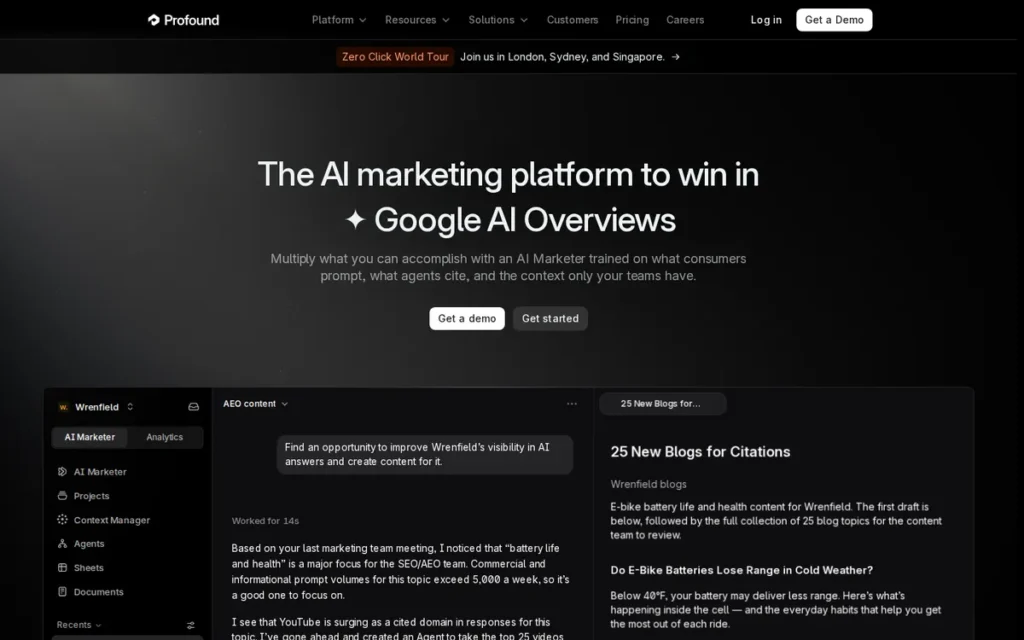
Category: Enterprise AEO Platform, a full-stack AI visibility and content workflow system monitoring citations across 10+ LLMs using Real User Interface data collection, with integrated content optimization, prompt research, and agentic execution capabilities.
At a Glance
- Category: Enterprise AEO Platform
- Best For: Enterprise marketing teams and Fortune 500 brands in regulated industries (healthcare, finance, legal) requiring multi-LLM coverage, formal compliance certifications, and dedicated analytics resources
- Price Range: $99/month Starter (50 prompts, ChatGPT only: widely described by independent reviewers as a pricing funnel); $399+/month Growth (functional multi-LLM entry); Enterprise requires sales contact; full pricing not publicly disclosed as of April 2026
- Primary Strength: Profound is the only AEO platform holding a G2 AEO Leader designation for Winter 2026, SOC 2 Type II, HIPAA, and GDPR certifications simultaneously, and the highest independently tested answer share gains (11.6%) in the category
- Biggest Limitation: Profound’s $399+/month effective entry pricing and non-transparent tier structure make it inaccessible for SMBs, solo practitioners, and most digital agencies operating on constrained budgets
- One-Line Summary: Profound is the highest-rated enterprise AEO platform in 2026, combining Real User Interface data collection across 10+ LLMs with the only formal compliance certifications in the category and the deepest real-user prompt research database available
- Last Verified: April 2026
Overview
Profound (tryprofound.com) is the highest-rated enterprise AEO platform in 2026, tracking AI citations across 10+ LLMs (including ChatGPT, Claude, Gemini, Perplexity, DeepSeek, Amazon Rufus, and Google AI Mode) using Real User Interface methodology and holding the only SOC 2 Type II, HIPAA, and GDPR certifications in the AEO category as of April 2026.
Profound earned the G2 AEO Leader designation for Winter 2026 (the only verified third-party category-level recognition found for any dedicated AEO platform in this evaluation) and is best suited for Fortune 500 brands and organizations in regulated industries where compliance certifications are non-negotiable procurement requirements. Profound’s Prompt Volumes database of 200M+ real user prompts enables conversational keyword discovery at a scale not offered by any other dedicated AEO tool in this evaluation.
Key Features
- RUI Monitoring Across 10+ LLMs: Profound’s Monitoring module tracks real-time citations, share-of-voice trends, sentiment, anomaly detection, and competitor benchmarking across 10+ AI engines (refreshed hourly using Real User Interface data that captures what real users actually see, not API approximations) making Profound’s citation data among the highest-fidelity options in the AEO category as of April 2026, per the 40% relative performance gap between RUI and API-based methodology documented in the All About AI YouTube comparison (2026), cited by discoveredlabs.com.
- 200M+ Prompt Research Database: Profound’s Prompt Research tool surfaces insights from 200M+ real user prompts, enabling teams to discover what conversational queries users are actually asking AI engines, the AEO equivalent of traditional keyword volume research, a capability not offered at comparable dataset scale by any other dedicated AEO tool in this evaluation.
- Agent Analytics with Server Log Integration: Profound’s Agent Analytics module integrates directly with server logs from Cloudflare, Vercel, WordPress, Netlify, AWS CloudFront, Fastly, and GCP, enabling technical teams to diagnose exactly how AI crawlers interact with site infrastructure. This server-log diagnostic capability is unique to Profound in the AEO category as of April 2026.
- Content Workflows Module: Profound’s Content Workflows module provides AI-generated optimization suggestions, schema markup recommendations, and content operations automation, translating monitoring data into prioritized editorial actions without requiring a separate platform.
- Ecommerce AI Tracking: Profound’s Ecommerce module includes a ChatGPT Shopping component for SKU-level sentiment analysis and product tile visibility, extending AEO measurement into conversational shopping experiences in a way no other tool in this evaluation addresses.
Best For
Profound is best for enterprise marketing teams, Fortune 500 brands, and organizations in regulated industries that need definitive AI citation data across the broadest possible set of AI engines, require SOC 2 Type II, HIPAA, and GDPR certifications as procurement conditions, and have dedicated analytics resources to operate the platform at full depth.
Pricing
Profound’s pricing requires careful scrutiny. A $99/month Starter plan exists but is limited to 50 prompts and ChatGPT monitoring only. Multiple independent reviewers, including getairefs.com and rankability.com (2026), describe this tier as a pricing funnel to the $399/month Growth plan, which is the functional entry point for multi-LLM monitoring.
Multiple independent comparison sources, aeoengine.ai, discoveredlabs.com, and contentmonk.io, cite $399–$499/month for Lite and Growth tiers as of April 2026. Enterprise pricing requires direct sales contact. Teams building AEO budgets should plan for $399+/month as the realistic minimum for meaningful Profound use and verify current tier structure directly at tryprofound.com.
Strengths
- Profound delivered an 11.6% answer share gain in independent comparison testing by the All About AI channel on YouTube (2026), cited by discoveredlabs.com, the highest documented performance improvement of any tool tested under identical conditions, providing the category’s strongest third-party validation of Real User Interface methodology advantages over API-based competitors.
- Profound earned the G2 AEO Leader designation for Winter 2026: the only verified third-party category-level recognition found for any dedicated AEO platform in this evaluation as of April 2026, representing the most credible independent procurement signal available in the nascent AEO market, per tryprofound.com/blog and company.g2.com/news/g2-winter-2026-reports.
- Profound holds SOC 2 Type II, HIPAA, and GDPR certifications simultaneously: the only AEO tool in this evaluation with formal compliance documentation, enabling deployment in healthcare, finance, and legal sectors where no other evaluated AEO platform currently meets procurement requirements, per Nick Lafferty (2026).
Limitations
- Enterprise Pricing Barrier: Profound’s $399–$499+/month effective entry pricing (with no full tier structure published publicly and enterprise pricing requiring direct sales engagement as of April 2026) makes Profound functionally inaccessible for solo practitioners, most SMBs, and agencies operating on per-client budget constraints, restricting the platform’s addressable market to enterprise organizations with dedicated analytics budgets.
- Starter Plan Mismatch: Profound’s $99/month Starter plan (50 prompts, ChatGPT only) creates a misleading perception of accessibility, multiple independent reviewers describe this tier as insufficient for meaningful AEO work and a funnel to the $399/month Growth plan, meaning teams evaluating Profound based on the advertised $99 entry price will discover the functional product costs 4x more before multi-LLM monitoring begins.
- Company Transparency Deficit: Profound does not publicly disclose its founding date, executive team names, or company size as of April 2026, complicating vendor due diligence for procurement teams that require organizational transparency before approving annual contracts involving sensitive competitive intelligence data.
Verdict
Profound is the most capable AEO platform available in 2026, earning #1 through the highest independently tested answer share gains (11.6%), the broadest AI engine coverage (10+ LLMs at base pricing), the only formal compliance certifications in the category, and the only G2 AEO Leader designation found in this evaluation. Profound is the right investment for enterprise marketing organizations that can justify the $399+/month effective cost, teams at smaller organizations or tighter budgets should evaluate tools ranked #2 through #7 before concluding that Profound’s enterprise capabilities are required for their specific use case.
2. Gauge: Best for Optimization-Focused Teams That Need to Act on Data, Not Just Track It
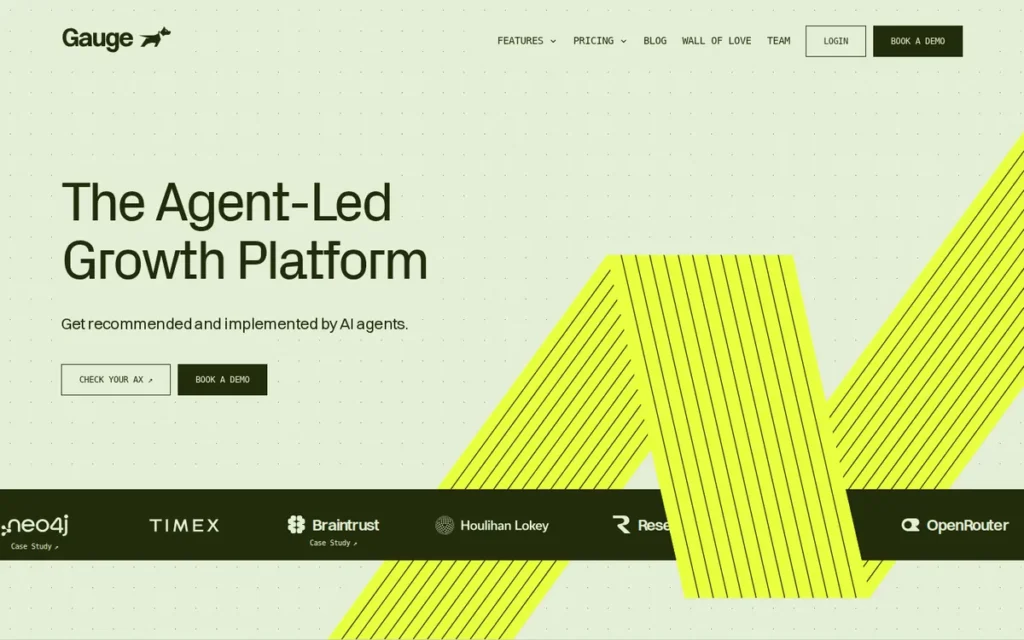
Category: Full-Stack AEO Optimizer, a platform combining Real User Interface citation monitoring across 7 AI engines with an Action Center, citation intelligence layer, and agentic content workflows that convert visibility gap data into prioritized creation recommendations.
At a Glance
- Category: Full-Stack AEO Optimizer
- Best For: Mid-market and growth-stage marketing teams needing RUI-quality monitoring and actionable optimization recommendations without Profound’s enterprise pricing
- Price Range: $250/month (Growth+ plan, 100 prompts, daily updates); Enterprise custom pricing; no confirmed lower tier or free trial as of April 2026
- Primary Strength: Gauge is the only non-enterprise AEO platform combining Real User Interface data across 7 AI engines with an Action Center that converts citation gap data into prioritized content recommendations
- Biggest Limitation: Gauge’s client outcomes are self-published without independent verification, and a competitor comparison review (seenos.ai, 2026) found a 23% visibility score gain produced zero change in actual AI referral traffic during the test window
- One-Line Summary: Gauge is a full-stack AEO optimizer using Real User Interface monitoring across 7 AI engines and an Action Center to convert citation gap data into prioritized content recommendations, the strongest optimization-workflow platform below enterprise pricing in 2026
- Last Verified: April 2026
Overview
Gauge (withgauge.com) is a full-stack AEO platform for marketing teams that need to move beyond monitoring, combining Real User Interface data collection across 7 AI engines with an Action Center that converts citation gap data into prioritized content creation recommendations and agentic execution workflows.
Gauge is best suited for mid-market and growth-stage marketing organizations that want enterprise-grade methodology quality at sub-enterprise pricing ($250/month Growth+) and have content production bandwidth to act on the platform’s optimization guidance. Gauge has published the most specific client performance outcomes of any tool in this evaluation, including a reported increase from 3.2% to 16.5% AI visibility for Eco in under four weeks, though independent third-party verification of these outcomes is not available.
Key Features
- RUI Monitoring Across 7 AI Engines: Gauge tracks brand citations, mentions, sentiment, and share of voice across ChatGPT, Claude, Gemini, Perplexity, Copilot, Google AI Mode, and Google AI Overviews using Real User Interface methodology (capturing the actual responses users see, not API-approximated data) matching Profound’s data fidelity at a lower price point.
- Action Center: Gauge’s Action Center analyzes citation intelligence data and generates prioritized lists of content gaps (specifying which topics to cover, which formats AI engines favor, and which external domains to target for third-party placement) converting passive monitoring data into executable editorial priorities.
- Citation Intelligence Module: Gauge’s citation intelligence layer maps which external domains AI engines consistently cite as trusted sources (including Reddit threads, YouTube content, academic papers, and industry publications) enabling teams to identify and target the specific third-party sources that influence AI-generated answers in their competitive category.
- AI Licensing Deal Database: Gauge uniquely identifies which competitor domains appear in AI citations due to commercial licensing agreements with AI providers rather than content quality, providing competitive intelligence that distinguishes licensing advantages from organic content gaps that AEO strategy could realistically close.
- Platform Integrations and Reporting: Gauge integrates with Google Analytics, Google Search Console, and Slack, and supports automated daily and weekly PDF reports and CSV exports, enabling incorporation into existing reporting workflows without requiring adoption of a new dashboard ecosystem.
Best For
Gauge is best for mid-market and growth-stage marketing teams that have outgrown monitoring-only dashboards and need a platform that actively guides content optimization, specifically teams with content production bandwidth to act on Action Center recommendations and a $250/month budget tolerance for the combination of RUI-quality data and workflow tooling.
Pricing
Gauge’s Growth+ plan is confirmed at $250/month for 100 prompts with daily data updates as of April 2026, per seenos.ai and birdeye.com. Enterprise pricing requires direct contact with the Gauge team. No lower-tier plan or confirmed free trial was surfaced in research, teams should verify current pricing and trial availability directly at withgauge.com before budgeting.
Strengths
- Gauge achieved a self-published increase from 3.2% to 16.5% AI visibility (a 5x improvement) for Eco in under four weeks (reaching 37% of all first-party citations and the #1 position among direct competitors, alongside 200% month-over-month Google search impression growth and 300% Bing impression growth) the most specific and quantified client outcome published by any tool in this evaluation (withgauge.com, 2026), providing the strongest available performance signal even accounting for its self-published status.
- Gauge is independently endorsed by Authoritas, an established SEO platform, and Birdeye, a leading reputation management company, in third-party comparison analyses, per authoritas.com and birdeye.com (2026), providing credibility from recognizable industry names beyond self-referential comparison content.
- Gauge’s citation intelligence database uniquely distinguishes between licensing-driven and content-driven AI citations, enabling teams to correctly attribute competitive visibility differences rather than investing in content that cannot close licensing-based gaps through organic means.
Limitations
- Visibility Score vs. Traffic Gap: A competitor comparison review published by seenos.ai (2026), a company that also offers a competing AEO product, reported that Gauge produced a 23% improvement in its AI visibility score metric over two weeks with zero change in actual AI-sourced referral traffic during the same period [Source: seenos.ai/geo-alternatives/seenos-vs-gauge, verify URL before publication; note the competitor context]. This reflects the category-wide attribution gap rather than a Gauge-specific flaw, but it is a critical consideration for teams justifying AEO investment through business-level metrics.
- Self-Published Performance Evidence: Gauge’s client case studies: including Eco, Standard Metrics, and unnamed-customer outcomes, are published exclusively on Gauge’s own website without independent third-party verification, limiting the evidential weight buyers can assign to reported performance figures when making procurement decisions.
- Vendor Transparency: Gauge has no publicly disclosed founding date, executive team names, or funding history as of April 2026, creating due diligence challenges for enterprise buyers evaluating annual contract risk against a company whose organizational background cannot be independently verified.
Verdict
Gauge is the strongest AEO platform for teams that have outgrown monitoring-only tools and need a system that actively guides content optimization, earning #2 by combining Real User Interface methodology quality with an Action Center and citation intelligence layer that together justify the $250/month price point over passive trackers. Gauge ranks above Rank Prompt (#3) because Real User Interface methodology and the Action Center’s workflow capabilities outweigh Rank Prompt’s pricing advantage on a weighted basis, particularly for teams that need optimization guidance, not just citation dashboards. Gauge is held back from #1 by self-published-only performance evidence, the documented disconnect between visibility score gains and confirmed traffic outcomes, and limited vendor transparency.
3. Rank Prompt: Best for Digital Agencies Managing Multiple Clients on a Budget
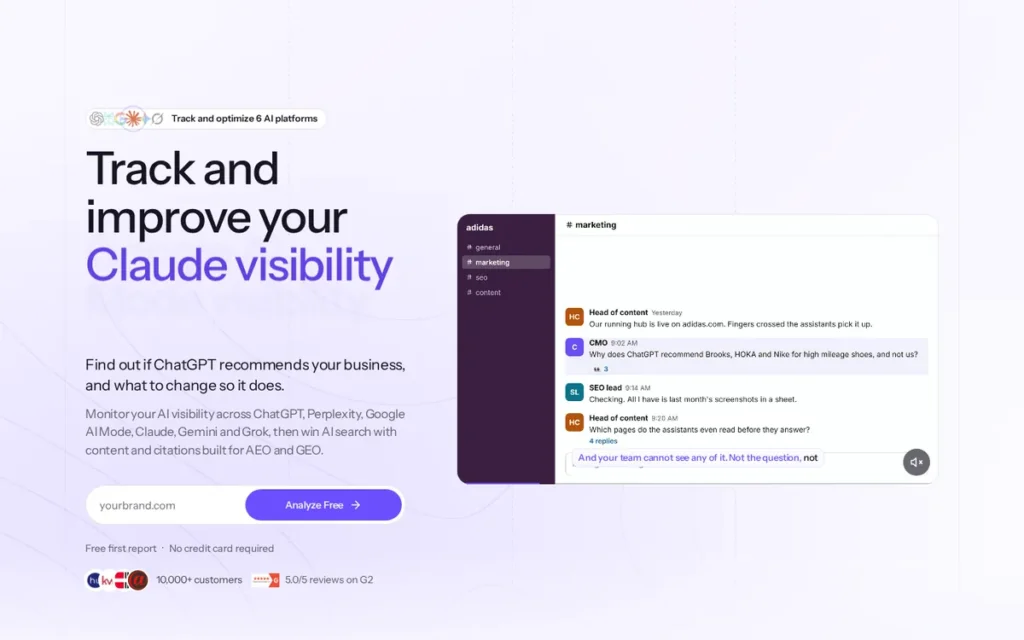
Category: Agency AEO Tracker, a browser-based AI citation monitoring and optimization platform built from an agency-internal tool, designed for multi-client management with white-label reporting, auto-generated prompts across 50+ business categories, and tracking across 6 AI engines.
At a Glance
- Category: Agency AEO Tracker
- Best For: Digital agencies managing AEO monitoring across multiple client brands needing white-label reporting, multi-brand dashboards, and 6-engine coverage at the most affordable agency price in the 2026 market
- Price Range: $49/month (Starter, ~150 credits); $89/month (Pro, ~500 credits); $149/month (Agency, ~1,000 credits, white-label, all features); 7-day free trial. Pricing sourced directly from rankprompt.com, not independently corroborated by a third-party source as of April 2026
- Primary Strength: Rank Prompt’s Agency plan at $149/month is the most cost-effective multi-client AEO platform with verified white-label reporting and 6-engine coverage documented in this research
- Biggest Limitation: Rank Prompt has no published case studies with quantified outcomes and no third-party review platform presence, making independent performance validation impossible as of April 2026
- One-Line Summary: Rank Prompt is the most affordable agency-grade AEO tracking platform in 2026, combining browser-based real front-end scanning across 6 AI engines with white-label reporting and auto-generated prompts at $149/month for unlimited client brands
- Last Verified: April 2026
Overview
Rank Prompt (rankprompt.com) is a browser-based AEO tracking platform launched in 2024 from an agency-internal tool, designed for digital agencies managing multiple client brands simultaneously, making it the most cost-effective agency-grade AEO platform in 2026 at $149/month for the Agency plan with white-label reporting.
Rank Prompt uses headless browser rendering to capture actual front-end AI responses across ChatGPT, Perplexity, Google AI Overviews, Claude, Gemini, and Grok, a higher-fidelity approach than API-based tools. Rank Prompt auto-generates prompt libraries across 50+ business categories to lower the expertise barrier for teams new to AEO monitoring. The platform’s 2024 founding, absence of published case studies, and lack of third-party review presence require higher buyer risk tolerance than more established platforms.
Key Features
- Browser-Based Real Front-End Scanning: Rank Prompt uses headless browser rendering to capture actual front-end AI responses (the responses users genuinely see) across all 6 tracked platforms (ChatGPT, Perplexity, Google AI Overviews, Claude, Gemini, Grok), providing higher-fidelity citation data than API-based or keyword-derived tools.
- Auto-Generated Prompt Library: Rank Prompt auto-generates industry-relevant tracking prompts spanning 50+ business categories, removing the requirement for AEO expertise in prompt architecture and enabling teams new to AI visibility monitoring to begin tracking meaningful conversational queries within minutes of setup.
- AI Visibility Score: Rank Prompt computes a proprietary AI Visibility Score (0–100%) combining mention frequency, prominence position within AI responses, citation count, and sentiment, providing a composite metric alongside individual dimension breakdowns for client-facing dashboard reporting and white-label deliverables.
- White-Label Agency Infrastructure: Rank Prompt’s Agency plan includes white-label PDF report generation, multi-brand management, team collaboration dashboards, scheduled automated reporting, and Google Analytics integration, features built into the original agency-tool architecture rather than retrofitted onto a single-brand product.
- Schema Optimization and Agent Mode: Rank Prompt includes schema optimization recommendations, structured data improvement guidance, and Agent Mode for content creation support, extending the platform beyond citation monitoring into AEO execution workflow within a single subscription.
Best For
Rank Prompt is best for digital agencies managing AEO monitoring across multiple clients simultaneously who need white-label reporting and multi-brand dashboards at a price point where per-client ROI is economically feasible, specifically agencies where the $149/month Agency plan can be amortized across three or more active AEO clients.
Pricing
Rank Prompt’s published pricing tiers as of April 2026: Starter at $49/month (~150 credits), Pro at $89/month (~500 credits), Agency at $149/month (~1,000 credits, full white-label and multi-brand features), per rankprompt.com. These figures are sourced directly from rankprompt.com/pricing and have not been corroborated by an independent third-party source, verify current plan structures and credit allocations directly before committing. All paid plans include a 7-day free trial and access to all 6 tracked AI platforms. The credit-based model means agencies should calculate monthly credit consumption before committing to a tier.
Strengths
- Rank Prompt’s Agency plan at $149/month is the most cost-effective multi-client AEO platform with verified white-label reporting and 6-engine coverage documented in this research as of April 2026, undercutting Profound ($399+/month), Gauge ($250/month), SE Ranking SE Visible ($189/month), and Peec AI Pro (~$215/month) while delivering the features agency client service workflows require.
- Rank Prompt’s browser-based headless rendering methodology captures actual front-end responses rather than API-approximated data, a higher-fidelity approach than keyword-derived (Ahrefs Brand Radar) or API-simulation methodologies, providing tracking data closer to what real users experience in their AI chat sessions.
- Rank Prompt’s agency-tool origin means multi-client workflow features: including white-label reporting, brand switching, and team collaboration, are native platform capabilities designed from day one for client service workflows, per the platform’s documented history at rankprompt.com/about, rather than enterprise features retrofitted onto a single-brand product.
Limitations
- No Independent Performance Validation: Rank Prompt has no published case studies with quantified results (percentage visibility improvements, traffic increases, or conversion lifts) in any publicly accessible source as of April 2026, and no presence on G2, Capterra, or Trustpilot, making it impossible to validate platform effectiveness through sources independent of the company’s own marketing materials.
- Early-Stage Platform Maturity: TopTenAIAgents.co.uk (2026) describes Rank Prompt as “first-generation AEO technology” with “ongoing feature development expected”, an accurate characterization for a 2024-founded platform that reflects genuine capability alongside real product immaturity, meaning buyers should expect a higher rate of platform change than with established alternatives.
- Credit Model Risk: Rank Prompt’s credit-based pricing introduces a risk of exhausting credits mid-month for agencies with unpredictable client reporting volumes, teams managing six or more active AEO clients simultaneously should calculate expected monthly credit consumption before committing to a tier.
Verdict
Rank Prompt is the most cost-effective multi-client AEO monitoring platform available in 2026, earning #3 through its unmatched agency pricing ($149/month Agency plan), browser-based real front-end scanning, and purpose-built multi-client infrastructure. The absence of published performance evidence and a 2024 founding date are real limitations that enterprise buyers and risk-averse procurement teams must weigh carefully, for agencies seeking affordable, functional AEO monitoring with white-label reporting, Rank Prompt delivers more verified value per dollar than any alternative in the agency-oriented segment.
4. SE Ranking: Best for SEO Teams Adding AEO Monitoring Without Switching Platforms

Category: Hybrid SEO+AEO Platform, an all-in-one SEO platform with a purpose-built AEO monitoring module (SE Visible) tracking AI visibility across Google AI Overviews, Google AI Mode, and conversational AI engines using a segmented diagnostic architecture for teams managing both traditional search and AI visibility in a unified workflow.
At a Glance
- Category: Hybrid SEO+AEO Platform
- Best For: Established SEO teams already using SE Ranking for rank tracking who need to extend into AEO monitoring without adopting a new tool, particularly in-house teams and agencies managing combined SEO and AI visibility reporting
- Price Range: $144+/month (Business plan, required for AEO features); $189/month (SE Visible standalone, 450 prompts, 5 brands); note: $39/month Essential plan does not include AEO features as of April 2026
- Primary Strength: SE Ranking is the only platform in this evaluation with 13+ years of SEO market presence offering a dedicated segmented AEO module distinguishing Google AI Overviews, AI Mode, and conversational engines as separate diagnostic surfaces
- Biggest Limitation: SE Ranking’s AEO module is tracking-only with no content optimization or agentic workflow support, and meaningful AEO access requires the Business tier ($144+/month), not the $39/month advertised entry price
- One-Line Summary: SE Ranking is a 13-year-established hybrid SEO+AEO platform offering a dedicated SE Visible module with segmented tracking across Google’s AI surfaces and major conversational engines, the strongest option for teams already invested in the SE Ranking ecosystem
- Last Verified: April 2026
Overview
SE Ranking (seranking.com) is a 13-year-established hybrid SEO and AEO platform extending its all-in-one search suite into AI visibility monitoring through SE Visible, a dedicated module tracking citations across Google AI Overviews, AI Mode, ChatGPT, Perplexity, and Gemini with a segmented architecture that treats each AI surface as a distinct diagnostic environment.
SE Ranking is best suited for established SEO teams already using the platform for rank tracking who need to extend monitoring into AEO without adopting a new tool or rebuilding reporting workflows. Omi Sido, Senior Technical SEO at Canon Europe, provided a testimonial in a SE Ranking platform review video noting the dashboard’s clarity and performance metric visibility, the most credible named enterprise reference for SE Ranking’s monitoring capabilities in this evaluation, per visible.seranking.com (2026).
Key Features
- Segmented AEO Architecture: SE Ranking monitors AI visibility across distinct surface types (the AI Overviews Tracker for Google’s AI-powered search results, the AI Mode Tracker for Google’s conversational search mode, and Unified Visibility for ChatGPT, Perplexity, and Gemini) enabling teams to diagnose platform-specific visibility problems with structurally different root causes rather than treating all AI engines as interchangeable.
- 13+ Years of SEO Data Infrastructure: SE Ranking combines over a decade of traditional SEO capabilities (rank tracking, keyword research, site audits, backlink analysis, and competitive intelligence) with AI visibility monitoring in a single platform, enabling teams to correlate traditional ranking signals with AI citation performance without managing separate toolsets.
- SE Visible Daily Tracking: SE Ranking’s SE Visible sub-product provides daily automated AI visibility tracking with adjustable frequency on higher-tier plans, including visibility score dashboards, sentiment analysis, competitor benchmarking, and prompt management across all monitored AI surfaces.
- Canon Europe Reference: Omi Sido, Senior Technical SEO at Canon Europe, provided feedback on SE Ranking’s dashboard UX in a platform review video, noting metric clarity and competitor comparison features consistent with SE Ranking’s AI visibility monitoring capabilities, per visible.seranking.com (2026).
- Focused Five-Surface Architecture: SE Ranking’s Unified Visibility covers ChatGPT, Perplexity, and Gemini (the three highest-volume conversational AI platforms for most B2B and B2C use cases) while Google AI Overviews and AI Mode are tracked separately, providing a five-surface diagnostic architecture focused on the platforms driving the largest documented share of AI search traffic as of April 2026.
Best For
SE Ranking is best for SEO teams already using the platform for traditional search tracking who need to extend reporting into AI visibility without adopting a new tool, particularly in-house SEO teams managing combined traditional and AI search reporting, and agencies whose clients require unified SEO+AEO dashboards in a single deliverable.
Pricing
SE Ranking’s AEO features require the Business plan at $144+/month (annual billing) or the SE Visible standalone product at $189/month for 450 prompts and 5 brands as of April 2026, per seranking.com/pricing.html and aeoengine.ai (2026). The $39/month Essential plan does not include AEO or AI visibility features, teams evaluating SE Ranking for AEO monitoring must budget for Business tier or SE Visible pricing. An $89/month figure cited in some external roundup sources appears outdated as of April 2026.
Strengths
- SE Ranking is the only platform in this evaluation with 13+ years of continuous SEO market presence, a vendor longevity credential that no dedicated AEO tool founded in 2023–2025 can match, providing meaningful risk mitigation for enterprise procurement teams evaluating annual contract stability in a nascent tool category where most competitors have minimal operational history.
- Omi Sido, Senior Technical SEO at Canon Europe, provided feedback in a SE Ranking platform review video noting the dashboard’s clarity, competitor comparison, and at-a-glance performance metrics, a recognizable brand reference that carries more evidential weight than self-published performance claims, per visible.seranking.com (2026).
- SE Ranking’s segmented AEO architecture: distinguishing AI Overviews, AI Mode, and conversational engines as separate diagnostic surfaces, is the most platform-specific tracking framework in this evaluation for teams that need to understand which Google AI surface is underperforming rather than reporting an undifferentiated “AI visibility” number, per seoaiclub.com (2026).
Limitations
- Monitoring-Only Scope: SE Ranking’s most consequential trade-off for dedicated AEO practitioners is its tracking-only capability, the platform reports where a brand appears in AI-generated answers but provides no integrated content optimization recommendations, schema generation tools, or workflow guidance to close identified visibility gaps, requiring practitioners to maintain a separate tool for AEO content optimization.
- Misleading Entry Pricing: SE Ranking’s widely-advertised $39/month Essential plan does not include any AEO features, requiring buyers to enter at Business tier ($144+/month) or SE Visible standalone ($189/month), a 3.7x to 4.8x price jump from the advertised entry point that routinely misaligns initial budget planning, per aeoengine.ai (2026).
- LLM Coverage Gaps: SE Ranking does not track Claude, Grok, Copilot, or Meta AI as of April 2026, engines that collectively account for a growing share of AI search traffic. Teams needing comprehensive multi-LLM citation monitoring across all major engines must supplement SE Ranking with a second tool, partially undermining the all-in-one workflow efficiency that is SE Ranking’s primary positioning.
Verdict
SE Ranking is the strongest AEO option for established SEO teams already in the SE Ranking ecosystem who need to extend into AI visibility monitoring without adopting a new platform, earning #4 through 13+ years of market presence, a segmented AEO architecture that treats AI surfaces as distinct diagnostic environments, and the most credible named enterprise reference in the evaluation. Teams evaluating SE Ranking purely for AEO monitoring should compare the $144–$189/month AEO entry cost against dedicated alternatives, Peec AI at €89/month, Rank Prompt Pro at $89/month, before concluding the all-in-one model justifies the price premium without optimization workflow capabilities.
5. Ahrefs Brand Radar: Best for Existing Ahrefs Users and Brands Seeking Free Baseline AI Monitoring
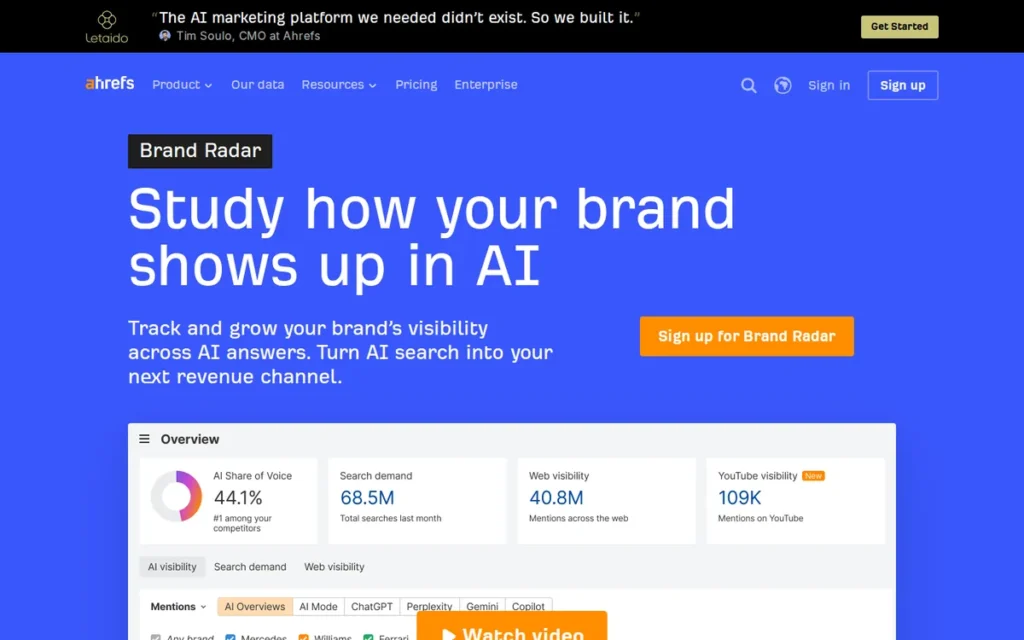
Category: SEO-Extended AEO Monitor, a brand visibility monitoring add-on to the established Ahrefs SEO platform tracking AI mentions across 6 surfaces using keyword-derived prompt methodology from Google search data, with a genuinely functional free tier and paid plans whose pricing changed materially in mid-2025.
At a Glance
- Category: SEO-Extended AEO Monitor
- Best For: Teams already paying for an Ahrefs SEO plan adding AI monitoring without switching tools, and brands at the early AEO research stage seeking free baseline citation data before committing to a paid platform
- Price Range: Free (basic monitoring, monthly updates, unlimited team seats); paid plans currently range from approximately $50–$654+/month depending on platform scope and prompt volume, pricing changed materially from the Beta period in mid-2025; verify current tiers directly at ahrefs.com/brand-radar before budgeting
- Primary Strength: Ahrefs Brand Radar is the only AEO monitoring tool in this evaluation with a genuinely functional free tier (unlimited team seats, 80+ regional markets, sentiment analysis) backed by Ahrefs’ decade-plus bootstrapped track record
- Biggest Limitation: Ahrefs Brand Radar uses a keyword-derived prompt methodology based on Google’s People Also Ask data, which independent reviewers report causes systematic underreporting of brand mentions in ChatGPT and Perplexity responses to conversational queries outside the PAA framework
- One-Line Summary: Ahrefs Brand Radar is the only AEO monitoring tool in this evaluation with a genuinely functional free tier, tracking brand AI visibility across 6 surfaces using the largest prompt database in the category (353M+ monthly prompts), best suited for existing Ahrefs users and brands building the business case for dedicated AEO investment
- Last Verified: April 2026
Overview
Ahrefs Brand Radar (ahrefs.com/brand-radar) is the only AEO monitoring tool in this evaluation with a genuinely functional free tier, tracking brand visibility across Google AI Overviews, AI Mode, ChatGPT, Copilot, Gemini, and Perplexity using 353M+ monthly prompts, the largest prompt database in the category, backed by Ahrefs’ decade-plus bootstrapped track record.
Ahrefs Brand Radar is best suited for teams already using the Ahrefs SEO platform who want to extend their workflow into AI visibility monitoring, or for brands at the early AEO research stage who need free baseline citation data before committing budget to a dedicated platform. Ahrefs Brand Radar is endorsed by Aleyda Solis (SEO consultant, Wix SEO lead, and an industry voice with 100k+ professional followers) who has praised the platform’s comprehensive AI answer analysis capabilities, per ahrefs.com/brand-radar (verified April 2026).
Key Features
- 353M+ Monthly Prompt Database: Ahrefs Brand Radar tracks brand visibility across Google AI Overviews (262M+ monthly prompts), Google AI Mode (34M+), and ChatGPT, Copilot, Gemini, and Perplexity (14M+ each), totaling 353M+ monthly prompts, the largest dataset in this evaluation and more than twice the scale reported by most dedicated AEO tools, per ahrefs.com/brand-radar.
- YouTube, Reddit, and TikTok Visibility: Ahrefs Brand Radar uniquely tracks brand citations in YouTube videos, Reddit threads, and TikTok content surfacing in Google Search results, reflecting the growing importance of social and community platforms as AI citation source material in a way that no dedicated AEO tool in this evaluation currently monitors.
- Free Baseline Monitoring Tier: Ahrefs Brand Radar provides a free monitoring tier with unlimited team seats, 80+ regional markets, monthly visibility data, and sentiment analysis, enabling any brand to assess its AI citation baseline at zero cost before evaluating whether a paid AEO tool investment is warranted.
- Native SEO Data Integration: Ahrefs Brand Radar integrates natively with the full Ahrefs SEO data infrastructure (Site Explorer, Keywords Explorer, backlink database, and rank tracking) enabling teams to correlate traditional SEO signals with AI citation patterns within a single platform and eliminating the data-silo problem of managing separate SEO and AEO toolsets.
- Custom Prompt Tracking: Ahrefs Brand Radar supports custom prompt tracking, allowing teams to add specific sales-driving questions for individual AI platforms beyond the core search-derived prompt database, with daily and weekly tracking available on paid plans, per ahrefs.com/blog (2025).
Best For
Ahrefs Brand Radar is best for two distinct audiences: teams already paying for an Ahrefs SEO subscription who want to add AI visibility monitoring without introducing a new tool, and brands at the early AEO research stage who need free baseline citation data to understand their starting AI visibility position before committing budget to a dedicated AEO platform.
Pricing
Ahrefs Brand Radar pricing changed materially after its Beta period ended in mid-2025. As of April 2026, the platform offers paid plans ranging from approximately $50/month for basic custom prompt tracking (~80 prompts/day) to approximately $199/month per platform and $654/month for all-platform monitoring, no longer the simple $99/month add-on pricing that circulates in many roundup articles from the Beta period.
Teams evaluating Ahrefs Brand Radar should verify current pricing directly at ahrefs.com/brand-radar before budgeting, this pricing structure changed significantly between Beta availability and the current paid tier. The free basic monitoring tier remains available to all users without a paid subscription.
Strengths
- Ahrefs Brand Radar is backed by Ahrefs’ bootstrapped history since 2011, headquartered in Singapore under CEO Dmitry Gerasimenko, with over a decade of continuous market presence as one of the top-3 global SEO platforms, the strongest vendor credibility foundation of any tool offering AI visibility monitoring in this evaluation, per connorkimball.com (2026).
- Ahrefs Brand Radar is publicly endorsed by Aleyda Solis: SEO consultant, Wix SEO lead, and an industry voice with 100k+ professional followers, who praised the platform’s comprehensive AI answer analysis capabilities, representing a high-credibility non-commercial endorsement from a respected industry expert rather than a paid testimonial, per ahrefs.com/brand-radar (verified April 2026).
- Ahrefs Brand Radar’s free tier enables any brand to begin monitoring AI citation visibility at zero cost across 80+ regional markets with unlimited team seats and monthly sentiment analysis, the only functionally meaningful free AEO monitoring option in this evaluation, providing genuine stakeholder-level data for teams building a business case before AEO budget is formally approved.
Limitations
- Keyword-Derived Methodology Gap: Ahrefs Brand Radar constructs monitoring prompts primarily from Google’s People Also Ask data rather than real conversational AI queries, a structural mismatch for monitoring ChatGPT and Perplexity, where conversational queries frequently diverge from PAA patterns. Independent reviewers at ewrdigital.com (2026) and connorkimball.com (2026) describe this as causing systematic underreporting of brand mentions in these engines, which generate the fastest-growing share of AI search traffic in 2026.
- Monthly Refresh and Coverage Gaps: Ahrefs Brand Radar refreshes data monthly rather than daily or hourly (as do Peec AI, Gauge, and Profound), does not track Claude or Grok, and per-domain pricing limits agency use cases, documented limitations from ewrdigital.com (2026) that reduce actionability for teams running ongoing AEO optimization cycles.
- No Content Optimization: Ahrefs Brand Radar provides monitoring data but no content optimization recommendations, schema guidance, or workflow tools, teams using it for AEO must maintain a separate optimization platform, recreating the tool sprawl problem the category is meant to address.
Verdict
Ahrefs Brand Radar earns #5 rather than #4 because its keyword-derived prompt methodology creates a structural accuracy gap for the conversational AI engines most teams are trying to influence, a limitation that SE Ranking’s purpose-built SE Visible module avoids, despite SE Ranking’s weaker vendor transparency on other criteria. Ahrefs Brand Radar is the strongest choice for teams already using the Ahrefs SEO platform who want to extend into AI visibility monitoring without adding a new tool, and the only platform in this evaluation providing genuinely free baseline AI citation monitoring at zero cost.
6. Peec AI: Best for Mid-Market Teams Prioritizing Usability and Fast Deployment
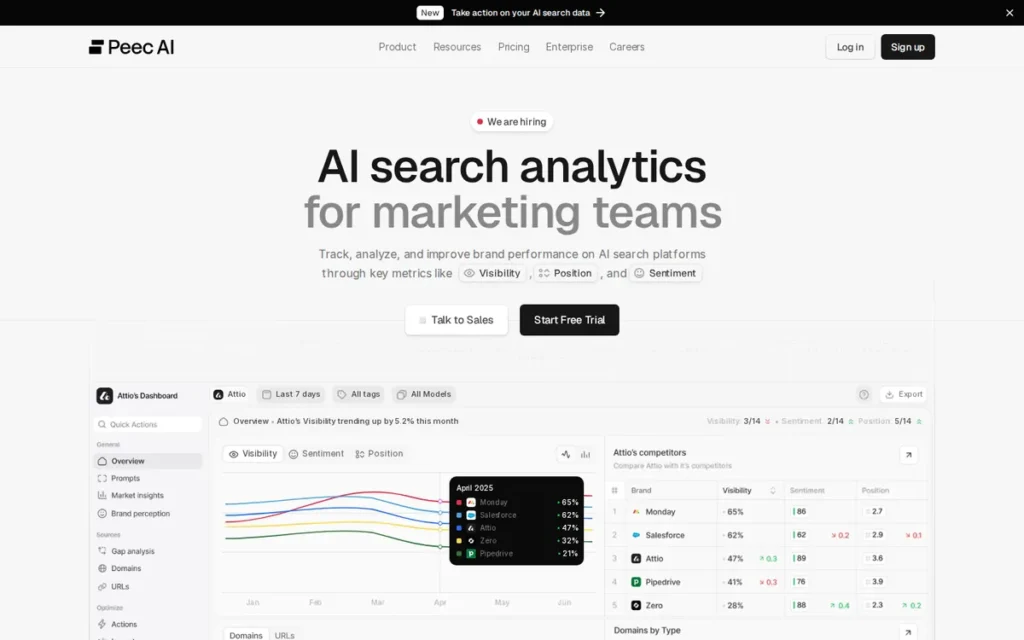
Category: Dedicated AEO Monitor, a prompt-level AI citation tracking platform monitoring brand visibility across ChatGPT, Perplexity, and Google AI Overviews at base pricing (with Claude, DeepSeek, Grok, Gemini, and Copilot available as paid add-ons), using API-based data collection with unlimited team seats at all pricing tiers.
At a Glance
- Category: Dedicated AEO Monitor
- Best For: Mid-market marketing teams of 3+ members needing accessible AEO tracking with an intuitive interface, fast 3-minute setup, and unlimited shared access, primarily tracking ChatGPT, Perplexity, and Google AI Overviews
- Price Range: €89/month (~$103 USD, Starter: 25 prompts, 3 engines); €199/month (~$215 USD, Pro: 100 prompts); Enterprise custom; Claude, DeepSeek, Grok, Gemini, Copilot each require paid add-ons; 7-day free trial
- Primary Strength: Peec AI combines unlimited team seats at all pricing tiers with an independently tested 8.3% answer share gain and the most consistently praised user interface in the AEO category
- Biggest Limitation: Peec AI tracks only 3 AI engines at base pricing: comprehensive multi-LLM monitoring could cost €150–200+/month on the Starter tier due to add-on fees for Claude, Gemini, Grok, DeepSeek, and Copilot
- One-Line Summary: Peec AI is a dedicated AEO monitoring platform praised for the most intuitive interface in the category, offering independently tested performance (8.3% answer share gain) and unlimited team seats from €89/month, best for mid-market teams prioritizing fast deployment over optimization workflow depth
- Last Verified: April 2026
Overview
Peec AI (peec.ai) is a dedicated AEO monitoring platform tracking brand citations and sentiment across ChatGPT, Perplexity, and Google AI Overviews using prompt-level monitoring, positioned as the most accessible purpose-built AEO tool in the category through 3-minute setup, unlimited team seats at all tiers, and a €89/month base entry point.
Peec AI is best suited for mid-market marketing teams of three or more members who need a clean, shareable AEO monitoring dashboard without a steep learning curve and primarily need visibility across the three largest AI search engines by volume. In independent comparison testing by the All About AI channel on YouTube (2026), cited by discoveredlabs.com, Peec AI delivered an 8.3% answer share gain, the second-highest documented result in this evaluation and the only dedicated AEO monitoring tool with a verified third-party performance benchmark.
Key Features
- Prompt-Level Multi-Engine Tracking: Peec AI monitors brand visibility, citation rates, prominence position, and sentiment across ChatGPT, Perplexity, and Google AI Overviews at base pricing (with Claude, DeepSeek, Grok, Gemini, and Copilot available as paid add-ons) providing daily, 7-day, 14-day, 30-day, and custom date range trend metrics for each monitored query.
- Unlimited Team Seats at All Tiers: Peec AI provides unlimited team seats at all pricing tiers, eliminating per-user cost escalation and enabling any-size marketing team to share AEO dashboards, benchmark reports, and sentiment analytics, a structural pricing advantage unique to Peec AI among tools in this evaluation.
- Competitor Benchmarking Dashboard: Peec AI tracks competitor AI visibility alongside brand monitoring (displaying competitor logos and performance metrics in a unified dashboard) enabling teams to understand their relative share of AI citations in contested topics without requiring manual competitive research.
- Source Analysis: Peec AI identifies which specific external content sources AI engines cite when generating answers in a brand’s topic area, providing third-party placement intelligence even without a dedicated content optimization module, informing where content teams should target earned media efforts.
- Multi-Country Tracking and Custom Date Ranges: Peec AI supports multi-country tracking and custom date range filtering across all plans, enabling global brands and distributed teams to segment AI visibility performance by market and time period without per-country pricing penalties.
Best For
Peec AI is best for mid-market marketing teams that need a clean, shareable AEO monitoring platform with fast setup, unlimited member access, and the most intuitive interface in the category, particularly for teams where the primary user is a content strategist or marketing manager rather than a technical SEO specialist requiring deep analytical infrastructure.
Pricing
Peec AI pricing is published in EUR as of April 2026: Starter at €89/month (~$103 USD) for 25 prompts and 3 AI engines; Pro at €199/month (~$215 USD) for up to 100 prompts; Enterprise custom pricing for 300+ prompts, per discoveredlabs.com (2026) and redirects.net (2026). All plans include unlimited team seats and multi-country tracking. Additional LLMs each cost extra above the 3-engine base. Teams monitoring all 8 major AI engines should request a custom quote, the true all-in cost may reach €150–200+/month on the Starter tier. USD equivalents fluctuate with the EUR/USD exchange rate.
Strengths
- Peec AI delivered an 8.3% answer share gain in independent comparison testing by the All About AI channel on YouTube (2026), cited by discoveredlabs.com, the second-highest documented performance result in this evaluation and the only dedicated AEO monitoring tool with a verified third-party performance benchmark, providing a meaningful evidence baseline for ROI conversations with stakeholders.
- Peec AI’s unlimited team seat model at all pricing tiers is a genuine structural differentiator: whereas Profound limits its Starter tier to 1 seat and most AEO tools charge per user, Peec AI enables any-size marketing team to share access without per-seat cost escalation, the most cost-efficient option on a per-user basis for teams of three or more, per cairrot.com (2026).
- Peec AI is a European company, making GDPR compliance native to its platform architecture rather than an optional retrofit, a meaningful advantage for brands with EU customer data obligations and for European marketing teams whose data handling requirements are governed by GDPR as a default, per contentmonk.io (2026).
Limitations
- Add-On LLM Pricing: Peec AI’s advertised €89/month Starter covers only ChatGPT, Perplexity, and Google AI Overviews, with Claude, DeepSeek, Grok, Gemini, and Copilot each requiring paid add-ons above the base price. A team monitoring all 8 major AI engines could spend €150–200+/month rather than the advertised €89, making pre-purchase price comparisons against competitors unreliable without a custom quote.
- API-Based Data Collection: Peec AI uses API-based simulation rather than Real User Interface methodology, which independent comparison testing shows produces lower answer share gain results (8.3% vs. 11.6%, All About AI YouTube channel, 2026). Teams building AEO optimization strategy on Peec AI data should factor in the potential performance gap versus higher-fidelity RUI tools.
- Monitoring-Only Scope: Peec AI provides citation monitoring without integrated content optimization recommendations, schema guidance, or agentic workflow support, teams using Peec AI must supplement with additional tools to act on identified visibility gaps, recreating the tool sprawl that AEO platforms are meant to eliminate.
Verdict
Peec AI is the strongest choice for mid-market marketing teams that need accessible, shareable AEO monitoring with fast deployment and the most intuitive interface in the category, earning #6 through independently tested performance (8.3% answer share gain), unlimited team seat access, and GDPR-native architecture. Teams needing comprehensive coverage of 6+ AI engines at base pricing, integrated content optimization workflows, or enterprise compliance certifications should evaluate Profound (#1), Gauge (#2), or Rank Prompt (#3) before defaulting to Peec AI’s entry price, as the true all-in cost for complete Peec AI coverage narrows the pricing gap to higher-ranked alternatives more than the advertised entry price suggests.
7. AIclicks: Best for Content-Forward Teams Focused on Third-Party Placement Strategy
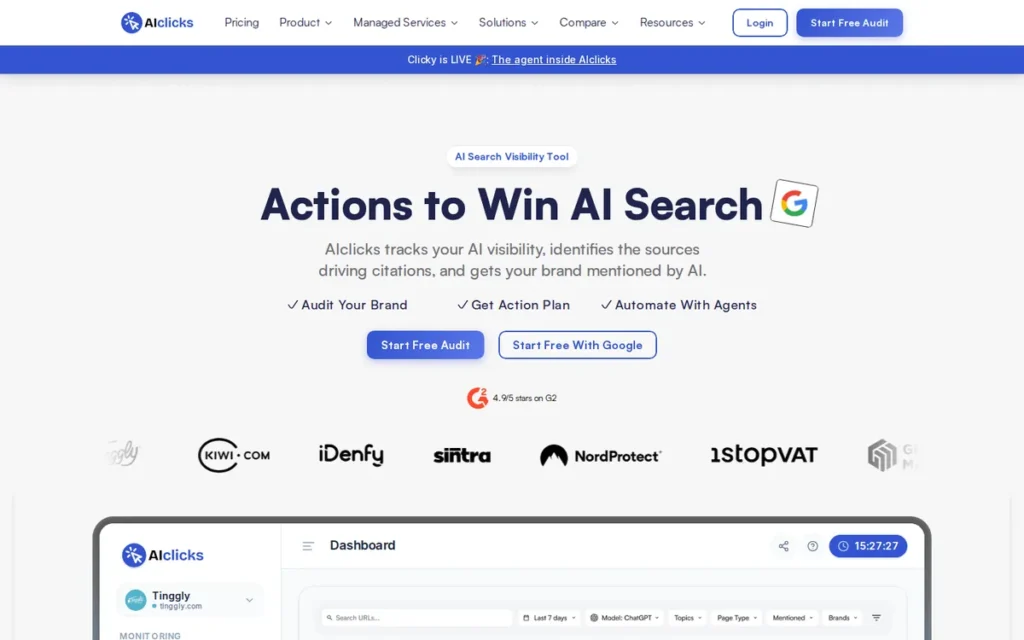
Category: AEO Intelligence Platform, an AI citation monitoring and content strategy tool tracking brand visibility across 6 AI engines while mapping which external domains AI engines trust as citation sources, grouping monitored queries into commercial prompt clusters, and providing an AI Lift recommendation engine for content-forward teams.
At a Glance
- Category: AEO Intelligence Platform
- Best For: Content-forward marketing teams whose primary AEO workflow involves identifying which third-party publications and community domains to target for placement, link building, and PR, rather than teams primarily needing enterprise compliance infrastructure or verified performance benchmarks
- Price Range: $39–$79/month (entry tier; pricing discrepancy between sources: confirm current tiers at aiclicks.io/pricing before budgeting); higher tiers for multi-client management, geo tools, GA4 integration; free trial documented as available
- Primary Strength: AIclicks’ source intelligence module is the only feature in this evaluation that maps which specific external domains AI engines consistently cite (including traffic volume, mention frequency, and content type) enabling content teams to identify the exact third-party placements most likely to increase AI citation rates
- Biggest Limitation: AIclicks has no verified third-party review platform presence, no published case studies with quantified performance outcomes, and no publicly disclosed company background, making independent validation of performance claims and vendor stability impossible as of April 2026
- One-Line Summary: AIclicks is an AEO intelligence platform that tracks brand visibility across 6 AI engines while uniquely mapping which external domains AI engines cite as trusted sources, best for content-forward teams whose AEO strategy centers on third-party placement and earned-media citation acquisition
- Last Verified: April 2026
Overview
AIclicks (aiclicks.io) is an AEO intelligence platform that tracks brand visibility across 6 AI engines while uniquely mapping which external domains AI engines cite as trusted sources (including their traffic volume, mention frequency, and content type) enabling content teams to build third-party placement strategies based on how AI engines actually source their answers.
AIclicks is best suited for content-forward marketing teams whose primary AEO workflow involves identifying where to publish third-party content, build links, and earn PR coverage to increase AI citation rates. As of April 2026, AIclicks has no verified G2, Capterra, or Trustpilot review presence, no published case studies with quantified outcomes, and no publicly disclosed company background, facts requiring heightened due diligence from any prospective buyer before committing to a subscription.
Key Features
- Source Intelligence Module: AIclicks maps which external domains AI engines consistently cite in a brand’s topic area (including each domain’s estimated traffic volume, citation frequency, and content type classification (Reddit threads, listicle articles, industry publications, review platforms)) providing a third-party placement targeting framework unique to AIclicks in this evaluation, per aiclicks.io (2026).
- Prompt Cluster Analysis: AIclicks groups monitored queries by commercial topic and tracks mention and citation trends over time, enabling teams to identify which product or service categories have the strongest AI citation opportunities and which have the largest visibility gaps worth prioritizing before investing content production resources.
- AI Lift Recommendation Engine: AIclicks’ AI Lift engine analyzes citation gaps and source intelligence data to produce actionable content recommendations, identifying where to create new content, which formats AI engines favor, and which external domains represent the highest-leverage placement opportunities for earned AI citation acquisition.
- Technical AEO Standards Support: AIclicks supports IndexNow for real-time URL syncing and LLMs.txt implementation (an emerging specification for communicating website content permissions to AI crawlers) representing early adoption of forward-looking technical AEO standards that most competing platforms have not yet implemented, per aiclicks.io (2026).
- GA4 Integration and Cross-Channel Reporting: AIclicks integrates with Google Analytics 4, organic search analytics, and social analytics, enabling unified cross-channel reporting that connects AI visibility data with broader traffic and conversion metrics in teams’ existing analytics infrastructure.
Best For
AIclicks is best for content-forward marketing teams whose primary AEO strategy is earning citations through third-party placements (on review sites, industry publications, Reddit communities, and listicle articles) and who need a tool that identifies which external domains to target based on where AI engines are currently sourcing answers in their competitive category.
Pricing
AIclicks pricing shows a discrepancy between sources as of April 2026: one source cites $39/month as the entry point while another cites $79/month, indicating either plan restructuring between publication dates or different entry-level plan definitions, per aiclicks.io blog (2026) and visible.seranking.com (2026). Prospective buyers should confirm current pricing directly at aiclicks.io/pricing before budgeting. A free trial is documented as available. Higher tiers support multi-client management, geographic tools, content generation, and GA4 integration.
Strengths
Note: The following capabilities are documented in AIclicks’ own published materials, no independent third-party review has verified their accuracy or effectiveness as of April 2026.
- AIclicks’ source intelligence module uniquely maps which external domains AI engines consistently cite in a brand’s topic area (including traffic estimates, mention frequency, and page type classification) providing a third-party placement targeting framework that no other tool in this evaluation offers and directly answering the content team question of “where should we publish to increase our AI citations?”, per aiclicks.io (2026).
- AIclicks’ support for LLMs.txt and IndexNow represents early adoption of forward-looking technical AEO standards: LLMs.txt is an emerging specification for communicating website content permissions to AI crawlers, and AIclicks’ documented integration positions it ahead of most AEO tools on technical roadmap standards adoption, per aiclicks.io (2026).
- AIclicks’ advertised entry pricing ($39–$79/month) makes it potentially the most accessible full-feature AEO intelligence tool for small teams and solo practitioners who cannot justify the €89–$250/month entry costs of Peec AI, Rank Prompt Pro, or Gauge, providing source intelligence and content recommendation capabilities at a price point with no equivalent in any higher-validation alternative evaluated here.
Limitations
- Near-Total Absence of Independent Validation: AIclicks has no verified presence on G2, Capterra, Trustpilot, or any third-party review platform as of April 2026; no published case studies with named clients and quantified outcomes exist in any publicly accessible source; and primary information about the platform comes almost exclusively from AIclicks’ own blog content, making it impossible to validate real-world effectiveness through sources independent of the company’s own marketing materials.
- Vendor Transparency Deficit: AIclicks provides no publicly disclosed founding date, executive team names, headquarters location, or funding history as of April 2026, presenting the most significant vendor transparency gap of any tool in this evaluation, a material procurement risk for teams committing sensitive competitive data to a platform with no verifiable organizational background.
- Pricing Ambiguity: AIclicks shows a $39 vs. $79/month entry price discrepancy between published sources, indicating active plan restructuring or definition inconsistency that makes accurate pre-purchase budget planning impossible without direct vendor engagement, per visible.seranking.com (2026).
Verdict
AIclicks is the most differentiated content strategy tool in this evaluation, its source intelligence module and AI Lift recommendation engine address a practitioner need that no other tool in this review covers with equivalent specificity. AIclicks earns #7 not because its differentiated capabilities lack value, but because the complete absence of independent third-party validation, no review platform presence, no verified case studies, no public company background, makes it impossible to confirm those capabilities perform as claimed, requiring prospective buyers to treat any AIclicks subscription as a trial investment with eyes open to higher-than-average uncertainty.
What Red Flags Should I Watch For When Evaluating AEO Tools?
Five observable red flags consistently separate AEO tools delivering genuine value from those overstating capabilities or obscuring limitations. Each is surfaceable during vendor conversations and product trials before any purchase commitment.
Red Flag #1: Pricing That Requires Sales Contact
If an AEO tool does not publish its pricing tiers publicly, treat that opacity as a signal of enterprise-only positioning. Profound is the most prominent example, multiple independent sources cite $399–$499/month for paid tiers while the official website requires sales contact for most pricing. Teams building initial budgets should use $400+/month as a planning floor for any tool refusing to publish tiers publicly.
A related trap: tools advertising low entry prices that exclude Claude, Grok, or Gemini from the base plan. If you track only ChatGPT and Perplexity while a competitor monitors 6 engines, you are building AEO strategy with a significant visibility blind spot. Always calculate the all-in monthly cost for the specific engine set that matters to your audience before comparing tools on price.
Red Flag #2: Monitoring-Only With No Optimization Path
An AEO tool that reports citation rates but provides no guidance on what to do about gaps requires supplementary platforms to be actionable. SE Ranking, Ahrefs Brand Radar, and Peec AI all fall into this category. Ask vendors directly: “After I identify a citation gap, what does your platform tell me to do next?” If the answer is “export the data and work from there,” factor in the cost of a second tool.
Red Flag #3: Visibility Score Gains Without Traffic Correlation
If a vendor cites visibility score improvements as ROI evidence, ask for proof that those improvements correlated with measurable changes in AI-sourced web traffic. A competitor comparison review by seenos.ai (2026) reported that a 23% visibility score gain produced zero change in AI referral traffic during the test window [seenos.ai/geo-alternatives/seenos-vs-gauge, note: seenos.ai also offers a competing AEO product]. No AEO platform in this evaluation has demonstrated reliable attribution from citation rate improvements to downstream revenue outcomes as of April 2026.
Red Flag #4: No Third-Party Review Platform Presence
A tool with no G2, Capterra, or Trustpilot ratings has not accumulated verifiable user feedback. Of the seven tools in this evaluation, only Profound has documented G2 category recognition. This is not disqualifying for a 2024 launch, but it means performance claims from AIclicks, Gauge, Peec AI, Rank Prompt, and the AEO-specific modules of SE Ranking and Ahrefs cannot be validated through independent crowdsourced sources, which is why this evaluation prioritizes documented independent testing and named testimonials from recognizable organizations.
Red Flag #5: Case Studies Without Quantified Outcomes
Testimonials describing “improved visibility” or “better understanding of our AI presence” without percentage improvements, traffic numbers, or revenue correlations cannot be used to calculate ROI or set stakeholder expectations. Gauge’s Eco case study (3.2% to 16.5% AI visibility, 5x improvement) is the strongest in this evaluation, but it is self-published without independent verification. Any vendor offering only testimonials without quantified numbers should be pressed for verifiable evidence before a purchase commitment is made.
What Questions Should I Ask Before Choosing an AEO Tool?
Before committing to any AEO tool subscription (particularly an annual contract) ask vendors these specific questions to surface information that marketing materials and LLM recommendations consistently omit.
Question #1: What data collection methodology does this tool use (Real User Interface, browser-based rendering, API simulation, or keyword-derived prompts) and how does that affect accuracy for ChatGPT and Perplexity specifically?
The data fidelity difference between methodology types is measurable: independent comparison testing showed a 40% relative performance gap between RUI and API-based tools under identical conditions (All About AI YouTube channel, 2026, cited by discoveredlabs.com). Vendors who cannot clearly explain their methodology in concrete terms may be obscuring a lower-fidelity approach.
Question #2: Which AI engines are included at base price, and which require paid add-ons? What is the true all-in monthly cost to monitor ChatGPT, Claude, Gemini, Perplexity, Copilot, and Grok simultaneously?
Advertised entry prices frequently understate true monitoring costs. Peec AI’s base covers 3 engines with 5 more as paid add-ons; Ahrefs Brand Radar lacks Claude and Grok entirely; SE Ranking requires a Business-tier upgrade for any AEO access. Always calculate the total cost for the specific AI engine set that matters to your audience before comparing tools on price.
Question #3: After I identify a citation gap, what does your platform tell me to do about it? Does it provide content recommendations, schema guidance, or agentic workflows, or is it monitoring-only?
The answer separates Enterprise AEO Platforms (Profound, Gauge) and some Dedicated Trackers (Rank Prompt, AIclicks) from monitoring-only tools (Peec AI, Ahrefs Brand Radar, SE Ranking). Teams without dedicated AEO analyst resources typically need optimization guidance built into the tool to act on monitoring data, not just a dashboard showing the problem.
Question #4: Can you provide an independently verified case study (published outside your own website) showing a measurable business outcome (traffic increase, lead generation, or revenue correlation) from using your platform?
Of the seven tools evaluated, only Profound has documented third-party independent performance testing (All About AI YouTube channel, 2026, cited by discoveredlabs.com). Gauge’s strongest case studies are self-published. Rank Prompt, Peec AI, AIclicks, and the AEO-specific modules of SE Ranking and Ahrefs have no documented case studies with quantified outcomes from any source.
Question #5: What are your compliance certifications (SOC 2, HIPAA, GDPR), and what is your company’s founding date and operational history?
Only Profound holds SOC 2 Type II, HIPAA, and GDPR certifications simultaneously. Only Ahrefs has a fully disclosed organizational background. Enterprise procurement teams should request compliance documentation in writing before signing, and negotiate month-to-month terms for any vendor whose history cannot be independently verified, which applies to five of seven tools in this evaluation as of April 2026.
Question #6: How do you handle data retention, deletion, and competitive intelligence confidentiality if my account is cancelled or if your company is acquired?
In a nascent market where five of seven vendors lack disclosed company backgrounds, data governance in exit scenarios is an underasked question. Confirm these terms in writing before any annual contract commitment, particularly for tools handling sensitive competitive monitoring data that could be valuable to third parties.
What Do We Know About the Companies Behind These AEO Tools?
Enterprise buyers committing sensitive competitive intelligence data to annual contracts need organizational context that vendor marketing universally omits. In the AEO tool category, that context is strikingly absent for the majority of evaluated platforms.
When five of seven tools in this market segment decline to disclose their founding year, executive team, or funding history (while asking enterprise buyers to share competitive intelligence under annual contracts) that pattern warrants proactive due diligence before signing. It is not proof of poor quality in a new market, but it is a material procurement risk that buyers should address contractually.
The transparency situation across all seven tools:
- Ahrefs (Brand Radar, #5): The most transparent company in this evaluation. Bootstrapped since 2011, headquartered in Singapore, led by CEO Dmitry Gerasimenko, with over a decade of continuous market presence, organizational background is publicly verifiable through multiple independent sources, per connorkimball.com (2026).
- SE Ranking (#4): 13+ years of market presence as an established SEO platform. Specific founding date, CEO name, and team size were not surfaced in research, but the operational track record provides meaningful longevity evidence independent of named executive disclosure.
- Profound (#1): No founding date, CEO name, or team size publicly documented across any research source as of April 2026. Active product development releases in late 2025 confirm an operational engineering team, but Profound’s company profile is deliberately low-visibility with no executive names, founding date, or team size publicly disclosed.
- Gauge (#2): No founding date, founder names, team size, headquarters, or funding history publicly documented. One reference describes “a developer and engineering-minded founding team” without names.
- Peec AI (#6): Identified as a European company across multiple sources. Specific headquarters, founding date, team size, and founder names are not publicly documented, though the European origin suggests GDPR-native design.
- Rank Prompt (#3): Founded 2024, originating as an internal agency tool. No founder names, team size, funding history, or headquarters publicly documented beyond the 2024 founding year.
- AIclicks (#7): No founding date, founder names, team size, headquarters, or funding history publicly documented. Near-complete reliance on self-published blog content as the primary information source.
Buyers with procurement due diligence requirements should take these precautions before signing with any tool lacking a verifiable public organizational history:
- Request compliance certifications (SOC 2, HIPAA, GDPR) in writing before signing any contract
- Ask for named customer references outside the vendor’s self-published testimonials
- Confirm data handling, retention, and deletion practices in contract language
- Negotiate month-to-month terms before transitioning to annual commitment for any vendor whose organizational history cannot be independently verified
How Did We Rank These AEO Tools?
These 7 AEO tools were ranked using a transparent six-criterion weighted composite methodology applied with equal rigor to every platform and zero commercial relationships. Profound earned #1 by posting the highest composite score on data collection methodology quality, AI engine coverage breadth, and beyond-monitoring capabilities, the three primary weighted criteria.
Evaluation Process
The research process followed four sequential steps applied equally to all 7 tools:
- Discovery and Scoping: Identified all major AEO tools receiving substantive coverage in independent editorial roundups, LLM tool recommendation responses (ChatGPT and Perplexity), and practitioner communities, resulting in 7 tools meeting inclusion criteria.
- Independent Web Research: Queried multiple AI search engines and conducted web research using documented tool queries (two Perplexity queries per tool for profile and differentiation analysis, plus two additional queries for market-level data) totaling 19 documented research queries.
- LLM Response Analysis: Analyzed ChatGPT and Perplexity tool recommendation responses to identify coverage gaps and missing criteria that LLM responses omit but real buyers need.
- Third-Party Cross-Reference: Cross-referenced vendor claims against the All About AI YouTube channel’s independent comparison testing (2026), cited by discoveredlabs.com; the seenos.ai competitor comparison analysis (2026); G2 Winter 2026 category recognition; and named references from recognizable organizations.
Ranking Criteria
Each tool received scores from 1–5 on six criteria. Primary criteria received 1.5x weight relative to secondary criteria.
Primary Criteria (1.5x weight):
C1: Data Collection Methodology Quality: The method a tool uses directly affects how accurately it reflects what real users actually see. Independent comparison testing showed a 40% relative performance gap between Real User Interface and API-based methodology under identical conditions (All About AI YouTube channel, 2026, cited by discoveredlabs.com). Scored 1–5: 5 = Real User Interface; 4 = Browser-based headless rendering; 3 = Hybrid simulation; 2 = API simulation or keyword-derived; 1 = Unclear or undisclosed.
C2, AI Engine Coverage Breadth at Base Price: Coverage is assessed at base pricing only, not after paid add-ons, to reflect the true value delivered at the advertised entry price. Scored 1–5: 5 = 9+ engines; 4 = 7–8; 3 = 5–6; 2 = 3–4; 1 = 1–2 or standard engines require paid add-ons.
C5: Pricing Transparency and True Value: Evaluated at all-in cost for comprehensive monitoring, not headline entry price. Scored 1–5: 5 = Fully published tiers, inclusive features, free tier or trial available; 4 = Published tiers with minor add-on complexity, trial available; 3 = Meaningful AEO features require plan upgrades; 2 = Sales contact required for most tiers; 1 = Fully opaque pricing.
Secondary Criteria (1x weight):
C3: Beyond-Monitoring Capabilities: Tracking-only tools require supplementary platforms for optimization action. Scored 1–5: 5 = Full content optimization suite with agentic workflows; 4 = Structured optimization with content tools; 3 = Basic schema or content guidance; 2 = Gap identification only; 1 = Monitoring and reporting only.
C4: Verified Performance Evidence: Third-party independent evidence outweighs self-published claims. Scored 1–5: 5 = Independent testing plus verified review platform; 4 = Independent testing OR named quantified case studies from recognizable clients; 3 = Named testimonials without quantified metrics; 2 = Self-published case studies only; 1 = No performance evidence found.
C6: Vendor Maturity and Credibility: Longevity, compliance certifications, and third-party review presence reduce procurement risk. Scored 1–5: 5 = 10+ years OR compliance certs AND review presence AND disclosed background; 4 = Certifications OR 5+ years with partial transparency; 3 = 3–5 years, some third-party validation; 2 = Founded 2022–2025, limited background; 1 = New entrant, no disclosed background, no third-party validation.
Evidence Weighting
When review platform ratings conflict with independent testing or community sentiment, this evaluation weights specificity and recency over volume. A documented independent test from the All About AI YouTube channel (2026) with quantified performance figures outweighs a generic editorial roundup from 2024. Named references from recognizable organizations outweigh anonymous reviews. Third-party analyses from established platforms (Authoritas, Birdeye) outweigh self-published comparison content.
Data Validation
Vendor-reported statistics are labeled as self-published in every entry where they appear. Only claims corroborated by at least one independent external source are stated as documented facts. The 11.6% and 8.3% answer share gain figures are sourced from the All About AI YouTube channel’s comparison review, not from vendor marketing materials. The seenos.ai visibility/traffic finding is noted as a competitor comparison rather than a neutral third-party study throughout the article.
Update Cadence
This article was last updated April 2026. Pricing figures, AI engine coverage, and feature availability change frequently in this nascent category. PlugRoute reviews this article quarterly and updates pricing, coverage data, and any new independent performance findings as they become available. Readers should verify current pricing directly with each vendor before purchase.
The best AEO tool is not the one appearing most often in LLM-generated recommendations, it is the one whose methodology, pricing, and feature depth match your organization’s specific size, workflow, and risk tolerance. This evaluation is designed to give you the information LLM recommendations systematically omit.
Independence Disclosure
PlugRoute has no affiliate relationships with any company listed in this article. Rankings are determined entirely by research data and objective evaluation criteria applied with equal rigor to all tools.
Frequently Asked Questions About AEO Tools in 2026
What is the best AEO tool for small businesses or solo practitioners in 2026?
Ahrefs Brand Radar’s free tier is the best starting point for small businesses in 2026, it provides baseline AI visibility monitoring across 6 surfaces at zero cost, with unlimited team seats, before requiring any budget commitment. Teams ready to invest should evaluate Rank Prompt ($49/month Starter) for auto-generated prompts and 6-engine coverage, or AIclicks ($39–$79/month) for content-strategy-focused monitoring before committing to mid-market dedicated tools.
What is the difference between Profound and Peec AI, and which should I choose?
Choose Profound if your organization requires SOC 2/HIPAA/GDPR compliance certifications, 10+ LLM coverage at base pricing, or dedicated analytics capacity for a $399+/month platform. Choose Peec AI if you need fast deployment, unlimited team seat access, and proven mid-market monitoring at €89/month with a 7-day trial. Profound uses Real User Interface methodology; Peec AI uses API-based simulation, a methodology difference that produced a 3.3-percentage-point performance gap in independent comparison testing (All About AI YouTube channel, 2026).
How does PlugRoute determine AEO tool rankings?
PlugRoute ranks AEO tools using a transparent six-criterion weighted methodology applied equally to all platforms, with no affiliate or commercial relationships influencing any score. Primary criteria (1.5x weight) are data collection methodology quality, AI engine coverage breadth at base price, and pricing transparency. Secondary criteria (1x weight) are beyond-monitoring capabilities, verified performance evidence, and vendor maturity. Profound earned #1 by posting the highest composite score across all six criteria.
Glossary: Key Terms Used in This Comparison
Real User Interface (RUI) Methodology: A data collection approach in which an AEO tool captures AI responses from actual front-end chat sessions (precisely what a human user sees in the interface) rather than querying AI APIs from the backend. RUI methodology is considered the highest-fidelity approach in AEO data collection because it captures the full rendering context and interface-specific formatting that API queries may not replicate. Profound and Gauge use RUI methodology in this evaluation.
Share of Voice (AI): A metric quantifying what percentage of AI-generated answers in a defined topic area include a brand’s name, product, or content, relative to the total number of answers generated for the monitored prompts. AI share of voice is the AEO equivalent of traditional paid search impression share, applied to organic AI citation outcomes rather than ad auction results.
Prompt Cluster: A group of semantically related conversational queries monitored together as a thematic unit in AEO tracking. For example, “best CRM for startups,” “top CRM tools under $100/month,” and “CRM comparison for small teams” might form a single prompt cluster. Grouping prompts into clusters enables teams to identify which commercial intent categories have the strongest AI citation rates and which have systematic visibility gaps worth prioritizing.
LLMs.txt: An emerging web standard that enables website owners to communicate content permissions and preferences to AI language models and crawlers, analogous to robots.txt for traditional search engine crawlers, but designed specifically for LLM training and retrieval contexts. AIclicks is among the first AEO platforms in this evaluation to document LLMs.txt implementation support at the data-sync level.
Citation Intelligence: A feature category in AEO platforms that goes beyond tracking whether a brand appears in AI responses to mapping which specific external domains (Reddit threads, industry publications, review sites, YouTube videos, academic papers) AI engines consistently cite as trusted sources in a brand’s topic area. Gauge and AIclicks both include citation intelligence capabilities in this evaluation, with Gauge additionally providing an AI licensing deal database distinguishing commercially licensed citations from organically earned ones.
Which AEO Tool Is Right for You?
Key Insights
- Key Insight #1: Profound is the only AEO tool with documented third-party performance testing (11.6% answer share gain, All About AI YouTube channel, 2026), G2 AEO Leader designation for Winter 2026, and formal compliance certifications (SOC 2 Type II, HIPAA, GDPR), but at $399+/month effective entry with non-transparent pricing, it is financially inaccessible for the majority of the market.
- Key Insight #2: A competitor comparison review by seenos.ai (2026) found that a 23% Gauge visibility score improvement produced zero change in actual AI referral traffic, a finding all AEO buyers should internalize before setting stakeholder expectations, as it reflects the category-wide attribution gap between citation metrics and business outcomes rather than a single-tool failure.
- Key Insight #3: No AEO tool in this evaluation has established a reliable, repeatable attribution chain between citation rate improvements and downstream business outcomes as of April 2026, treating AEO metrics as directional intelligence rather than revenue attribution is the appropriate frame for all seven tools reviewed.
- Key Insight #4: Five of seven tools: AIclicks, Peec AI, Gauge, Rank Prompt, and Profound, do not publicly disclose founding dates, executive team names, or funding history, creating vendor due diligence risk that enterprise buyers should address contractually before annual commitment.
- Key Insight #5: SE Ranking (#4) and AIclicks (#7) are absent from all LLM-generated AEO tool recommendations analyzed, despite offering capabilities directly relevant to large practitioner segments, SE Ranking for its segmented AI surface tracking, AIclicks for its unique source intelligence module.
- Key Insight #6: Ahrefs Brand Radar’s pricing changed materially from its Beta period, current paid plans range from approximately $50–$654+/month depending on platform scope, not the $99/month add-on figure circulating in many roundup articles. Teams evaluating Ahrefs as the most affordable paid option should verify current pricing directly at ahrefs.com/brand-radar before budgeting.
- Key Insight #7: Ahrefs Brand Radar (#5) remains the only free AEO monitoring option in this evaluation, making it the rational starting point for any team building the business case for dedicated AEO investment before budget is formally approved.
First 30 Days With Any AEO Tool
- Set baseline citation rates for your top 10 branded queries across all monitored engines
- Identify the top 3 topics where competitors are cited but your brand is not
- Implement one content recommendation from your tool’s optimization guidance (or Action Center if using Gauge)
- Connect your AEO monitoring data to GA4 to begin building the traffic correlation layer
- Report directional intelligence to stakeholders with explicit attribution caveats, visibility scores are leading indicators, not revenue proof
Budget-constrained teams and those at the AEO research stage should begin with Ahrefs Brand Radar’s free tier to establish a citation baseline before committing to a paid subscription. Agencies managing three or more active AEO clients should evaluate Rank Prompt’s Agency plan at $149/month before defaulting to higher-priced single-brand alternatives. Teams whose AEO strategy centers on content optimization and closing citation gaps (rather than monitoring and reporting) should evaluate Gauge (#2) before considering platforms that only track what they cannot help fix.
The practitioner who treats AEO citation metrics as directional intelligence (rather than revenue proof) and supplements them with GA4 and server log correlation will extract more strategic value from any tool in this evaluation than the practitioner chasing a higher visibility score without that attribution layer.
The AEO tool category will look materially different by 2027: ROI attribution will improve, methodology transparency will increase, and new entrants will push pricing down across all tiers. In 2026, the right tool is the one that matches your organization’s current size, budget, workflow, and risk tolerance, not the one appearing most often in LLM-generated recommendations.
We update this guide quarterly. Last updated: April 2026. For additional independent SaaS reviews and updates to this article, visit PlugRoute.