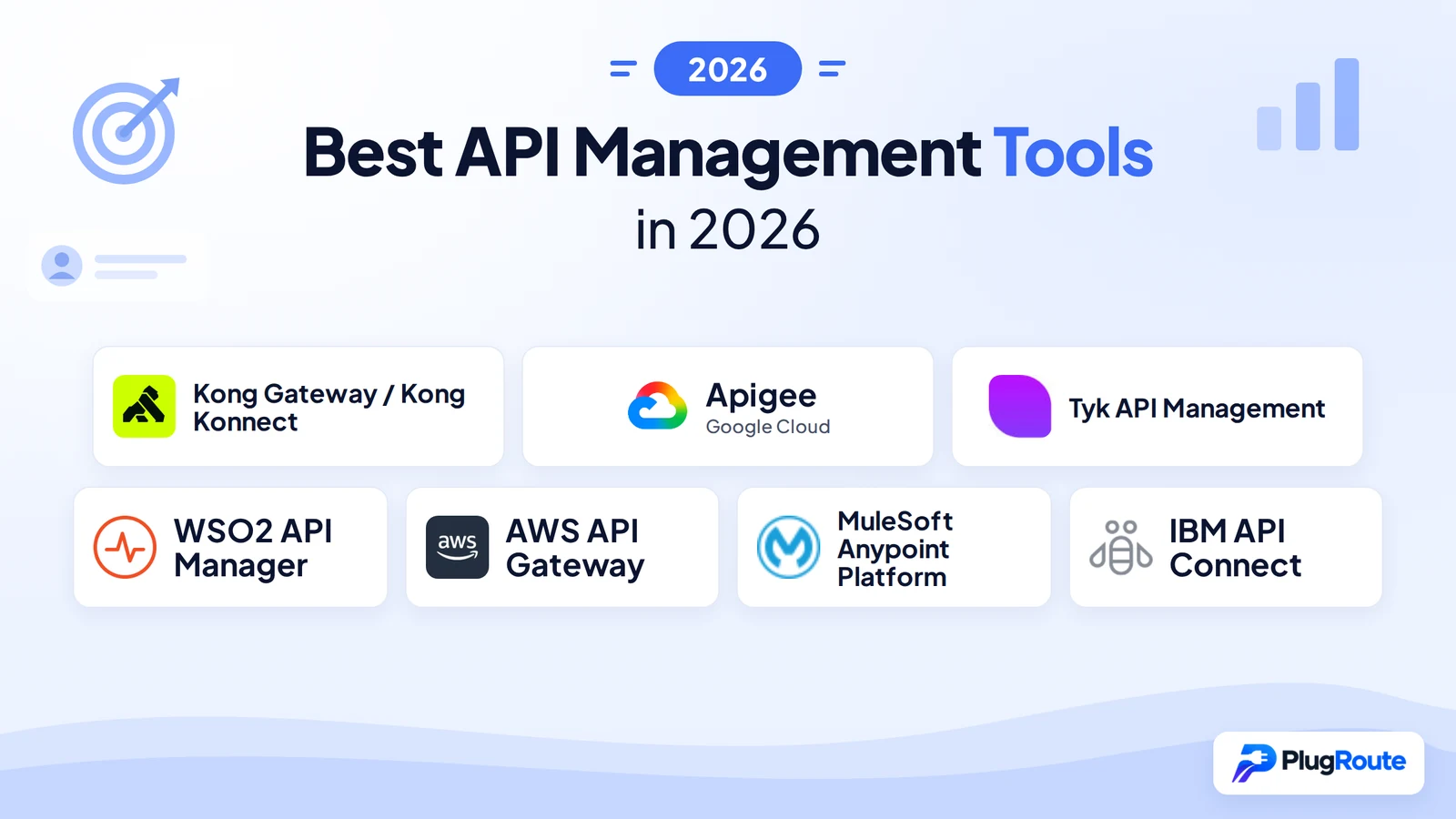
Kong Konnect leads the 2026 API management rankings for multi-cloud and Kubernetes teams; Apigee delivers the strongest enterprise governance for organizations committed to Google Cloud; Tyk provides the highest stated user satisfaction with transparent flat-rate pricing. The right choice depends on your cloud commitment, budget model, and whether you need gateway-only routing or full API lifecycle management.
Every platform claims similar capabilities in marketing materials and feature checklists. Pricing models, open-source feature parity, deployment lock-in, and vendor behavior events create real selection consequences that promotional content and AI-generated summaries consistently omit. A platform that earns organic developer advocacy behaves very differently in production than one deployed by top-down mandate, and feature lists do not capture that difference.
PlugRoute has no affiliate relationships with any company listed, rankings are determined entirely by research data and objective evaluation criteria.
“We were literally making product decisions based on how many API calls a feature would generate instead of whether our customers wanted or needed it.” (u/avg_jat, r/SaaS (December 2025))
Takeaway: When gateway pricing scales with API call volume, infrastructure cost becomes a product strategy variable, teams that model only current traffic miss the compounding cost ceiling that can constrain feature development at growth scale.
TL;DR: Top Picks at a Glance
- Kong Konnect: strongest overall; best for multi-cloud platform teams and Kubernetes environments needing plugin breadth and a native AI Gateway
- Apigee: deepest lifecycle governance including API monetization; best for enterprises committed to Google Cloud infrastructure
- Tyk: highest stated user satisfaction (4.7/5.0 self-reported G2); only native Universal Data Graph; best for developer-first teams needing transparent flat-rate pricing
- WSO2 API Manager: only major platform with Apache 2.0 full-feature-parity OSS; best for zero-licensing-cost production deployment
What Are the Four Categories of API Management Tools?
API management tools divide into four categories: Gateway and Management Platforms (Kong Konnect, Tyk) for cloud-native routing and policy enforcement without cloud lock-in; Full Lifecycle Management Platforms (Apigee, MuleSoft) for end-to-end API product governance including monetization; Open-Source Enterprise Platforms (WSO2) for zero-licensing-cost production deployment; and Cloud-Native Ecosystem-Locked Gateways (AWS API Gateway, IBM API Connect) for organizations committed to a single vendor infrastructure.
Understanding which category a platform belongs to determines whether it is even a valid evaluation candidate before any feature comparison begins. A team evaluating AWS API Gateway for multi-cloud portability, or MuleSoft for a serverless Lambda project, is mismatched to their context before the first feature is examined.
Gateway and Management Platforms (Kong Konnect, Tyk):
- Cloud-native API gateways with SaaS or self-managed control planes, plugin ecosystems, and multi-cloud deployment flexibility without cloud-provider lock-in
- Designed for platform engineers and DevOps teams managing distributed APIs across heterogeneous infrastructure
Full Lifecycle Management Platforms (Apigee, MuleSoft Anypoint Platform):
- Enterprise platforms covering API design, security, publishing, analytics, monetization, developer portal operations, and governance across the complete API product lifecycle
- Targeting API product teams and integration architects at large enterprises with mature API strategies
Open-Source Enterprise Platform (WSO2 API Manager):
- Full-featured API management licensed under Apache 2.0 with no feature gating between OSS and enterprise editions
- Designed for cost-sensitive organizations, open-source-mandated procurement environments, and regulated teams with data residency requirements
Cloud-Native / Ecosystem-Locked Gateways (AWS API Gateway, IBM API Connect):
- Platforms deeply integrated into a single cloud provider or vendor ecosystem, delivering maximum value for committed organizations
- Zero portability outside the ecosystem creates strategic lock-in that compounds as infrastructure investment deepens
How Do the Top API Management Tools Compare at a Glance?
Use this table for initial shortlisting only, then read the full entry for your recommended platform, as the entries document the pricing realities, open-source limitations, and vendor behavior signals that determine whether a recommendation fits your specific context.
| Rank | Company | Category | Best For | One-Line Summary | Key Capabilities | Primary Strength | Key Limitation |
|---|---|---|---|---|---|---|---|
| 1 | Kong Konnect | Gateway + Management | Multi-cloud, Kubernetes platform teams | Kong Konnect is the top-ranked API management platform in 2026, holding six consecutive Gartner Magic Quadrant Leader placements, a native AI/LLM Gateway launched in 2025, and the broadest plugin ecosystem of any platform in this evaluation. | AI/LLM Gateway, Kong Hub plugins, Kubernetes-native ingress | Furthest on Completeness of Vision axis, 2025 Gartner MQ | Per-call pricing creates compounding cost ceiling at growth scale |
| 2 | Apigee (Google Cloud) | Full Lifecycle Management | GCP-committed enterprises needing full lifecycle governance | Apigee is Google Cloud’s enterprise API management platform with 10 consecutive Gartner Magic Quadrant Leader placements; positioned highest for Ability to Execute in 2025; covering the full API lifecycle including design, analytics, monetization, and developer program management. | API monetization, advanced analytics, GKE Operator | Highest Ability to Execute score, 2025 Gartner MQ | GCP architecture lock-in; complete pricing opacity |
| 3 | Tyk | Gateway + Management | Developer-first, cost-sensitive, GraphQL federation teams | Tyk API Management holds the highest stated G2 satisfaction rating in this evaluation (4.7/5.0 self-reported from approximately 40 verified reviews), provides the only native Universal Data Graph for GraphQL and REST federation, and publishes transparent flat-rate SaaS pricing from approximately $600 per month. | Universal Data Graph, federated governance control plane | Highest stated G2 satisfaction; transparent flat-rate pricing | Smaller plugin ecosystem; absent from Gartner MQ |
| 4 | WSO2 API Manager | Open-Source Enterprise | Cost-constrained, open-source-mandated organizations | WSO2 API Manager is the only major API management platform with an Apache 2.0 licensed open-source edition providing full feature parity at zero licensing cost, and shipped production-available MCP Gateway support in November 2025. | MCP Gateway (Nov 2025), federated multi-gateway, integrated IAM | Apache 2.0 full OSS feature parity; no enterprise gating | Self-hosting without support is operationally demanding |
| 5 | AWS API Gateway | Cloud-Native (AWS-Exclusive) | AWS-native serverless and Lambda teams | AWS API Gateway provides the most transparently published pricing in this evaluation; HTTP APIs at $1.00 per million calls with a 12-month free tier; with the deepest AWS ecosystem integration available and a gateway-only scope that does not cover full API lifecycle management. | Lambda integration, auto-scaling, TLS 1.3 + post-quantum (Nov 2025) | Most transparently published pricing in evaluation | AWS-only; gateway scope only, not full lifecycle management |
| 6 | MuleSoft Anypoint Platform | Enterprise Integration + API | Salesforce-ecosystem enterprises with complex integration programs | MuleSoft Anypoint Platform is Salesforce’s enterprise API management and integration platform with the most comprehensive feature surface in this evaluation, the most critical practitioner community sentiment, and a community-documented enterprise pricing floor exceeding $50,000 per year. | DataWeave transformation, Anypoint Exchange, LLM Gateway roadmap | Most comprehensive API + integration feature surface in evaluation | IDE performance failures; pricing opacity; most critical practitioner DX sentiment |
| 7 | IBM API Connect | Regulated Enterprise Platform | IBM-ecosystem regulated industries (banking, government, healthcare) | IBM API Connect combines IBM DataPower Gateway’s regulated-grade data plane security with hybrid SaaS management and on-premises runtime deployment, and converged with IBM webMethods Hybrid Integration in version 12.1 released in 2025. | DataPower gateway, hybrid SaaS + on-prem, webMethods convergence | Hybrid SaaS management + on-prem DataPower runtime for data residency | Near-complete absence from developer community recommendations; IBM ecosystem dependency |
Which API Management Tool Should I Choose for My Use Case?
Use this table to identify your initial shortlist. Read the full entry for your recommended platform before making any procurement decision, the table simplifies context that the entries document in full.
| Your #1 Priority | Recommended Tool | Why | Acceptable Alternative |
|---|---|---|---|
| AWS-native serverless / Lambda teams | AWS API Gateway | Deepest AWS integration; HTTP API at $1.00/M calls; 12-month free tier | Kong Konnect (if multi-cloud portability matters later) |
| Multi-cloud platform engineers | Kong Konnect | Cloud-agnostic; six Gartner MQ Leader placements; broadest plugin ecosystem | Tyk (if flat-rate pricing is a priority over plugin breadth) |
| GCP-committed enterprise teams | Apigee | 10× Gartner MQ Leader; highest Ability to Execute; full lifecycle governance + monetization | Kong Konnect (if portability or cost transparency is required) |
| Cost-constrained or open-source-mandated teams | WSO2 API Manager | Apache 2.0 full feature parity; zero licensing cost in production | Tyk (if SaaS management is preferred over self-hosting) |
| Salesforce ecosystem enterprises | MuleSoft Anypoint Platform | Deepest Salesforce connectivity; API-led connectivity methodology | Apigee (if GCP-committed and integration needs are lighter) |
| IBM-legacy regulated industries | IBM API Connect | DataPower integration; hybrid SaaS + on-prem runtime for data residency | WSO2 API Manager (if IBM ecosystem lock-in is a long-term concern) |
| Developer-first mid-market teams | Tyk | Highest stated user satisfaction (4.7/5.0); flat-rate pricing; transparent cost | Kong Konnect OSS (if plugin breadth is critical) |
| GraphQL federation requirements | Tyk | Only native Universal Data Graph for GraphQL/REST/gRPC federation in this evaluation | Apigee (if GCP-committed and GraphQL needs are secondary) |
| AI/LLM governance as primary 2026 requirement | Kong Konnect | Most integrated production AI Gateway; native MCP support from 2025 | WSO2 API Manager (MCP Gateway shipped November 2025; earliest FOSS option) |
Ranked: The 7 Best API Management Tools in 2026
1. Kong Gateway / Kong Konnect: Best Overall / Best for Multi-Cloud and Kubernetes Environments
Category: Gateway and Management Platform, a cloud-native API gateway runtime with a SaaS management control plane providing routing, security policy enforcement, observability, and developer portal capabilities across multi-cloud and Kubernetes environments without cloud provider dependency.
At a Glance
- Category: Gateway and Management Platform
- Best For: Platform engineers and DevOps teams managing APIs across multi-cloud or Kubernetes environments needing the broadest plugin ecosystem, a mature AI Gateway, and deployment flexibility without cloud lock-in
- Price Range: OSS free; Konnect Plus ~$225/mo; Dedicated Cloud ~$500/mo + $0.15/GB + $200/M extra requests; Enterprise custom (third-party-corroborated from api7.ai and truefoundry.com, Q2 2026, verify at konghq.com/pricing)
- Primary Strength: Kong Konnect holds six consecutive Gartner Magic Quadrant Leader placements, positioned furthest on the Completeness of Vision axis for the second consecutive year in the 2025 MQ; native AI/LLM Gateway launched as a core product direction in 2025
- Biggest Limitation: Kong Konnect’s consumption-based pricing compounds at scale, community-documented costs reach approximately $2,400/mo at 2M calls/day, with product development decisions constrained by per-call infrastructure overhead
- One-Line Summary: Kong Konnect is the top-ranked API management platform in 2026, holding six consecutive Gartner Magic Quadrant Leader placements, a native AI/LLM Gateway launched in 2025, and the broadest plugin ecosystem of any platform in this evaluation.
- Last Verified: June 2026
Overview
Kong Konnect is a cloud-native API gateway and management platform for platform engineers and DevOps teams managing APIs across multi-cloud or Kubernetes environments, combining Kong Gateway (API runtime), Kong Ingress Controller (Kubernetes-native configuration), Kong Mesh (service mesh), and a SaaS management plane into a unified control plane supporting traditional REST, GraphQL, LLM, and MCP workloads.
Founded as Mashape in 2010, Kong Konnect has accumulated 15-plus years of production iteration, six consecutive Gartner Magic Quadrant Leader placements, and 309 verified G2 reviews at 4.4/5.0, the highest review volume of any platform in this evaluation. Kong Konnect’s multi-deployment flexibility makes it the default evaluation anchor for teams selecting an API management platform in 2026.
Key Features
- Kong Hub Plugin Ecosystem: Kong Konnect provides access to hundreds of community and official plugins covering advanced rate limiting, OPA-based authorization, data transformation, WAF enforcement, AI semantic caching, and protocol translation, the broadest extensibility layer of any API management platform in this evaluation, developed across 15-plus years of open-source iteration.
- Multi-Deployment Flexibility: Kong Gateway deploys across bare metal, VMs, Docker containers, Kubernetes, or as fully managed Konnect SaaS with no cloud provider dependency required, enabling genuine multi-cloud and hybrid deployment without the architectural concessions required by cloud-locked competitors.
- AI Gateway for LLM and MCP Traffic: Kong Konnect launched an AI Gateway in 2025 enabling enterprise policy enforcement over LLM and Model Context Protocol traffic (including token-based rate limiting, multi-LLM orchestration, semantic caching, and agentic authentication) with a native, not plugin-dependent, architecture (Kong 2025 Year in Review).
- Kong Ingress Controller: Kong provides Kubernetes-native API gateway configuration via CRD-based policies, validated in production enterprise environments handling over 10,000 concurrent sessions per pod with sub-5ms added latency at a large retail organization (u/Extra_Taro_6870, r/kubernetes, December 2024).
- Konnect SaaS Management Plane: Kong Konnect’s centralized SaaS management plane delivers unified analytics, API catalog management, and a consumer-facing developer portal across all deployment models, providing a single observability layer regardless of whether gateway instances run in Konnect cloud, self-hosted Kubernetes, or on-premises environments.
Best For
Kong Konnect is best for platform engineering teams and DevOps architects at mid-market to large enterprises who need a multi-cloud-agnostic API gateway with deep Kubernetes-native integration, an extensible plugin ecosystem for complex security and transformation requirements, and a credible path to governing LLM and agentic API traffic. Kong Konnect is particularly suited to teams not committed to a single cloud provider who need deployment flexibility across heterogeneous environments without rearchitecting around a vendor’s preferred cloud.
Pricing
Kong publishes tiered pricing: Konnect Plus starts at approximately $225/month; Dedicated Cloud Gateways at approximately $500/month per control plane plus $0.15/GB bandwidth, with 1 million API requests included and $200 per additional million. Enterprise licensing is custom-quoted.
These figures are sourced from api7.ai pricing analysis and truefoundry.com as of Q2 2026, verify current pricing at konghq.com/pricing before procurement.
The consumption-based model creates compounding costs at scale. Community-documented deployments report approximately $800/month at 500,000 calls/day growing to approximately $2,400/month at 2 million calls/day. One growth-stage SaaS operator canceled three product features rather than absorb a projected $6,000/month gateway cost increase, ultimately migrating to a flat-pricing competitor (u/avg_jat, r/SaaS, December 2025). Model costs at 6-month and 12-month traffic projections before committing to Konnect’s consumption pricing architecture.
Strengths
- Gartner Sustained Leadership: Kong has held the Gartner Magic Quadrant Leader position for API Management for six consecutive years as of 2025, positioned furthest on the Completeness of Vision axis for the second consecutive year, the strongest sustained analyst validation in this evaluation, reflecting independent assessment from enterprise reference customers rather than self-reported credentials (Kong press release, Gartner 2025 MQ, via konghq.com).
- Highest Community Review Volume: Kong Gateway holds a 4.4/5.0 rating across 309 verified reviews on G2 (the highest review volume of any platform in this evaluation) with consistent practitioner praise for plugin extensibility, Kubernetes-native configuration, and multi-cloud deployment flexibility (G2, June 2026).
- Validated Production Performance: A community-documented production deployment at a large retail enterprise confirmed Kong Gateway adding no more than 5ms latency under workloads exceeding 10,000 concurrent sessions per pod, validating Kong Konnect’s performance suitability for high-throughput, latency-sensitive production environments (u/Extra_Taro_6870, r/kubernetes, December 2024).
- Native AI Gateway Architecture: Kong Konnect launched its AI Gateway for LLM and MCP traffic in 2025 as a core product direction (with a native rather than plugin-dependent architecture) establishing an integrated approach to AI API governance compared to most competitors in this evaluation (Kong 2025 Year in Review).
Limitations
- Consumption-Based Pricing Ceiling: Kong Konnect’s most consequential trade-off is its per-call pricing model, which creates compounding infrastructure costs that can distort product development decisions at growth scale, a documented B2B SaaS operator reported costs growing from $800/month at 500,000 calls/day to $2,400/month at 2 million calls/day, ultimately migrating to a flat-pricing competitor for cost predictability (u/avg_jat, r/SaaS, December 2025).
- OSS Kubernetes Image Removal: Kong removed pre-built Kubernetes images for its open-source gateway edition in 2025 (a change requiring engineers to self-build Kong OSS images from source rather than pull official community images) which community members documented as a deliberate enterprise upsell tactic that triggered migration discussions toward kgateway and APISIX (u/Kaelin, r/kubernetes, August 2025).
Users on r/kubernetes documented the real-world operational impact:
“No one on the team saw it coming. We were running Kong OSS on EKS. Standard Helm setup. Prepped for a routine upgrade from 3.9 to 3.10. Version tag updated. Deploy queued.
Then nothing happened. No new Docker image. No changelog warning. Nothing.
After digging through GitHub and forums, we realized Kong stopped publishing prebuilt images starting 3.10. If you want to use it now, you have to build it from source. That means patching, testing, hardening, and maintaining the image yourself.” Posted by u/tasrie_amjad
Takeaway: Kong’s silent removal of pre-built OSS images converted routine Kubernetes upgrade cycles into unannounced production failures, forcing teams with no advance warning into emergency migrations away from a gateway they had been operating without complaint.
- Enterprise-Gated Core Features: Kong Konnect gates the Admin UI, advanced security plugins, and Developer Portal behind enterprise-tier licensing, meaning teams evaluating the open-source edition must verify which management capabilities are available before assuming OSS deployments provide production-viable management infrastructure (Moesif API Gateway analysis, moesif.com, verified June 2026).
Verdict
Kong Konnect is the strongest broad-fit API management platform in 2026, backed by six consecutive Gartner Magic Quadrant Leader placements positioned furthest on the Completeness of Vision axis, 309 G2 reviews at 4.4/5.0, one of the most integrated AI Gateway architectures for LLM and MCP traffic, and genuine multi-cloud deployment flexibility without cloud provider dependency. Teams evaluating Kong Konnect should model projected API call volumes at 6-month and 12-month growth trajectories before committing to consumption-based pricing, verify the current OSS feature set includes production-viable management and security capabilities, and factor the 2025 OSS Kubernetes image removal into their platform trust and switching cost assessment.
2. Apigee (Google Cloud): Best for Enterprise Governance and Full API Lifecycle Management on GCP
Category: Full Lifecycle Management Platform, a comprehensive API management platform covering design, security, publishing, analytics, monetization, developer portal, and governance across the complete API product lifecycle, with deep integration into Google Cloud infrastructure.
At a Glance
- Category: Full Lifecycle Management Platform
- Best For: Large enterprises already committed to Google Cloud who need comprehensive API lifecycle management, including monetization, advanced analytics, and developer program management
- Price Range: Custom enterprise quote only: no published tiers. (Google Cloud sales engagement required; a third-party aggregator references $7/mo but this is unverified and inconsistent with enterprise positioning. As of June 2026.)
- Primary Strength: Apigee holds 10 consecutive Gartner Magic Quadrant Leader placements, positioned highest for Ability to Execute in the 2025 MQ; full lifecycle including API monetization and approximately 4.6/5.0 on Gartner Peer Insights
- Biggest Limitation: GCP architecture lock-in: full capability requires Google Cloud infrastructure commitment; pricing opacity prevents early-stage cost comparison
- One-Line Summary: Apigee is Google Cloud’s enterprise API management platform with 10 consecutive Gartner Magic Quadrant Leader placements (positioned highest for Ability to Execute in 2025) covering the full API lifecycle including design, analytics, monetization, and developer program management.
- Last Verified: June 2026
Overview
Apigee is Google Cloud’s enterprise API management platform for large organizations requiring complete API lifecycle management (from design and security through publishing, analytics, monetization, and developer portal operations) committed to Google Cloud infrastructure as the deployment foundation. Founded in 2004 and acquired by Google in 2016 for approximately $625 million, Apigee holds 10 consecutive Gartner Magic Quadrant Leader placements and approximately 4.6/5.0 on Gartner Peer Insights from verified enterprise customer reviews.
Apigee covers REST, SOAP, GraphQL, and gRPC protocols through an API proxy architecture that decouples backend services from external consumers, enabling policy enforcement without backend code changes. Apigee’s dual analyst validation (both Gartner MQ Leadership and Gartner Peer Insights practitioner scores) is unavailable to any competitor in this evaluation.
Key Features
- Full API Lifecycle Management: Apigee covers API design through retirement in a unified platform (including proxy creation, security policy enforcement, rate limiting, quota management, developer portal provisioning, and API retirement) eliminating the need for separate tooling at each lifecycle stage.
- API Monetization: Apigee enables organizations to define developer programs, usage plans, billing integration, and revenue tracking for externally exposed APIs, a differentiated capability validated by AccuWeather’s commercial data API business and unavailable in any gateway-only platform in this evaluation.
- Advanced Analytics: Apigee delivers granular API traffic analysis, error rate monitoring, latency distribution, and developer usage reporting with a depth exceeding the enterprise tiers of most gateway-only competitors, providing the observability foundation for data-driven API product decisions.
- Kubernetes APIM Operator for GKE: The Apigee APIM Operator for GKE reached General Availability in 2025, enabling Kubernetes-native resource management within Google Kubernetes Engine and reducing operational complexity for GCP-committed teams running container-native infrastructure (Google Developers Blog, 2025).
- Post-2024 iPaaS Expansion: Apigee’s iPaaS capabilities added after 2024 were described by a former MuleSoft practitioner as “shockingly mature for approximately 18 months of GA” and as making Apigee “a lot more like a holistic integration platform now”, expanding addressable use cases beyond API management into enterprise integration territory (u/JustTrying2FeelNorml, r/googlecloud, 2024).
Best For
Apigee is best for large enterprises already committed to Google Cloud infrastructure that need the most comprehensive API lifecycle management available, particularly organizations with API monetization requirements, complex developer program management, regulated analytics needs, or existing GCP investments that transform Apigee’s deep GCP integration from a constraint into a compounding advantage.
Pricing
Apigee does not publish pricing publicly. Google Cloud offers subscription-based and pay-as-you-go models, but specific tier pricing requires engagement with Google Cloud sales. A third-party aggregator references a starting price as low as $7/month, but this figure is not verified against official Google Cloud pricing and is inconsistent with Apigee’s enterprise positioning.
Organizations evaluating Apigee should initiate procurement engagement early (custom-quote cycles extend evaluation timelines) and should request quotes scoped to their specific API call volume, environment count, and Hybrid deployment costs. Pricing opacity is a documented pain point in Apigee evaluations and a meaningful disadvantage versus platforms with published tiers. (As of June 2026.)
Strengths
- Unmatched Analyst Track Record: Apigee has earned the Gartner Magic Quadrant Leader designation for API Management for 10 consecutive years as of 2025, positioned highest for Ability to Execute among all evaluated vendors, the strongest sustained analyst validation of enterprise delivery reliability in this evaluation, reflecting input from enterprise reference customers (Google Cloud Gartner 2025 MQ announcement).
- Peer Review Platform Validation: Apigee holds approximately 4.6/5.0 on Gartner Peer Insights from verified enterprise customer reviews, providing practitioner-validated satisfaction scores comparable to the category leader across both Gartner analyst recognition and peer review platforms, a dual-validation signal unavailable to any other platform in this evaluation (source: Gartner Peer Insights, API Management category, verified June 2026).
- Named Enterprise Customers in Regulated Verticals: Apigee’s documented enterprise customers include Walgreens (pharmacy and healthcare), Bayer (life sciences), and AccuWeather (commercial API data products), validating full lifecycle governance and API monetization capabilities at production enterprise scale in compliance-heavy environments (Google Cloud customer references, June 2026).
- GA Kubernetes Operator: The Apigee APIM Operator for GKE reaching General Availability in 2025 directly addressed the historical criticism that Apigee was inaccessible to Kubernetes-first teams, expanding the platform’s deployment model for GCP-committed organizations running container-native infrastructure (Google Developers Blog, 2025).
Limitations
- GCP Architecture Lock-In: Apigee’s most consequential trade-off is structural, the platform delivers its full capability within Google Cloud infrastructure, and organizations not already committed to GCP face a compounding adoption burden by migrating infrastructure to Google Cloud simultaneously with implementing a new API management platform. Community experience confirms the Apigee Hybrid option exists but the full feature surface requires GCP (r/googlecloud, “Apigee anybody?” thread, multiple participants, 2024).
- Pricing Opacity: Apigee’s custom-quote-only model creates procurement friction, prevents side-by-side cost comparisons, and makes early-stage budget planning unreliable, a documented pain point across multiple architecture community discussions and a meaningful disadvantage versus platforms with published tiers.
- JavaScript-Only Extension Model: Apigee’s customization relies on JavaScript-based policy scripting rather than a plugin marketplace, which practitioners describe as a fragile abstraction for complex customization, limiting flexibility for organizations with advanced protocol handling or third-party security integration requirements compared to Kong Konnect’s plugin ecosystem (r/googlecloud, “Apigee anybody?” thread, 2024).
This aligns with practitioner experience documented on r/googlecloud:
“As an API gateway, they have a lot of bells and whistles and whatever is not there, they advocate Javascript to customize their gateway. Most built-in functionality is just written in Javascript. I know some at Viacom that have stopped using Apigee as they didn’t feel there was sufficient value. Alternatives are basic AWS API Gateway, usually for Lambda architectures and Mulesoft/Salesforce if you need more integration, routing rules for hybrid architectures.” Posted by u/omegaprime777
Takeaway: Apigee’s JavaScript-only customization ceiling is a documented real-world constraint, not a theoretical limitation, and named enterprises have exited Apigee subscriptions citing insufficient value relative to simpler, cheaper alternatives.
- Post-Acquisition Support Concerns: Multiple enterprise practitioners have cited inconsistent support responsiveness post-Google acquisition, with one large corporation documented as leaving Apigee “due to not satisfactory support”, a persistent community signal that support quality has been variable, particularly for hybrid and microgateway architectures (r/googlecloud, “Apigee anybody?” thread, 2024).
Verdict
Apigee is the API management platform with the strongest enterprise delivery track record in 2026, 10 consecutive Gartner Magic Quadrant Leader placements with the highest Ability to Execute score and approximately 4.6/5.0 on Gartner Peer Insights, making it the benchmark for organizations that need comprehensive API lifecycle governance including monetization, advanced analytics, and developer program management at enterprise scale. Apigee is the right choice for GCP-committed enterprises or organizations with API monetization requirements; it is the wrong choice for multi-cloud teams, organizations with cloud portability requirements, or buyers who need pricing transparency before sales engagement.
3. Tyk API Management: Best for Developer Experience, Pricing Transparency, and GraphQL API Federation
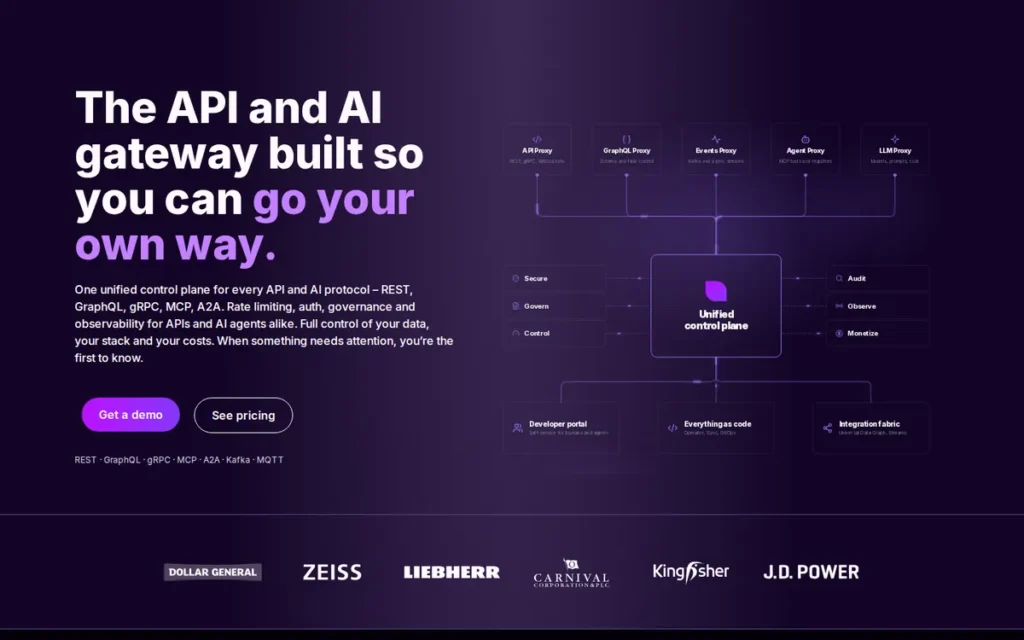
Category: Gateway and Management Platform, a Go-based open-source API gateway runtime with a commercial dashboard, developer portal, SaaS cloud option, Universal Data Graph for GraphQL and REST federation, and a federated governance control plane for managing policies across heterogeneous existing gateway environments.
At a Glance
- Category: Gateway and Management Platform
- Best For: Developer-first engineering teams, cost-sensitive mid-market organizations, and teams with GraphQL API federation requirements needing transparent flat-rate pricing and a federated governance layer across multi-gateway environments
- Price Range: OSS free (MPL license, meaningful feature parity); Tyk Cloud Starter ~$600/mo; Tyk Cloud Launch ~$1,800/mo; Enterprise contact sales (Tyk documentation, Q2 2026, verify at tyk.io/pricing)
- Primary Strength: Tyk API Management provides the only native Universal Data Graph for GraphQL/REST/gRPC federation in this evaluation; highest stated G2 satisfaction rating (4.7/5.0 self-reported from approximately 40 verified reviews)
- Biggest Limitation: Tyk’s plugin ecosystem is significantly smaller than Kong Konnect’s Kong Hub; absent from Gartner Magic Quadrant; limited AI/LLM gateway maturity relative to Kong Konnect and WSO2
- One-Line Summary: Tyk API Management holds the highest stated G2 satisfaction rating in this evaluation (4.7/5.0 self-reported from approximately 40 verified reviews), provides the only native Universal Data Graph for GraphQL and REST federation, and publishes transparent flat-rate SaaS pricing from approximately $600 per month.
- Last Verified: June 2026
Overview
Tyk API Management is a UK-based API gateway and management platform founded in 2014, built on a Go-based gateway runtime designed for cloud-native containerized deployment, providing an open-source gateway under the Mozilla Public License, a commercial Dashboard and Developer Portal, Tyk Cloud SaaS, and a Universal Data Graph that aggregates REST, GraphQL, and gRPC APIs behind a single query interface with field-level stitching.
Tyk API Management is positioned for developer-first engineering teams, cost-sensitive mid-market organizations, and teams with significant GraphQL federation requirements who need a high-satisfaction production-viable gateway with published pricing. Tyk self-reports as the number-one rated platform on G2 with a 4.7/5.0 rating; the G2 seller page shows 4.6/5.0 from approximately 40 verified reviews as of June 2026.
Key Features
- Go-Based Gateway Runtime: Tyk’s Go-based gateway provides native concurrency handling and a lower memory footprint than Lua/Nginx-based (Kong Konnect) or Java/Node.js-based (Apigee) runtimes, enabling high-throughput, low-latency API routing optimized for containerized and Kubernetes-native deployments where resource efficiency matters (Tyk API gateway documentation).
- Universal Data Graph: Tyk’s Universal Data Graph enables organizations to aggregate REST, GraphQL, and gRPC APIs behind a single GraphQL query interface with field-level stitching, allowing frontend teams to query multiple backend services through one endpoint without backend code changes, service mesh configuration, or API redesign. This capability is available in no other platform in this evaluation (Tyk documentation, June 2026).
- Federated Governance Control Plane: Tyk’s federated governance layer applies unified API policies across existing gateways from multiple vendors (including Apigee, Kong Konnect, AWS API Gateway, and Azure API Management) without requiring organizations to migrate all traffic to Tyk as the sole runtime, directly addressing the multi-gateway management pain point at enterprises with heterogeneous infrastructure (Tyk governance documentation).
- Open-Source Runtime with Feature Parity: Tyk’s open-source gateway provides rate limiting, authentication, analytics, data transformation, and API routing at no licensing cost under the MPL, with enterprise value delivered through the commercial Dashboard, Developer Portal, and SaaS deployment rather than through feature gating on the runtime itself.
- Transparent Flat-Rate SaaS Pricing: Tyk Cloud offers published pricing starting at approximately $600/month for the Starter plan and approximately $1,800/month for the Launch plan per Tyk’s own documentation, enabling direct cost comparison and predictable budget modeling without sales engagement, in contrast to the quote-only models of Apigee, MuleSoft Anypoint Platform, and IBM API Connect (Tyk documentation, Q2 2026).
Best For
Tyk API Management is best for developer-first engineering teams at funded startups to mid-size enterprises who need a high-satisfaction, production-viable API gateway with transparent flat-rate pricing, a genuine open-source runtime with meaningful feature parity, and a differentiated Universal Data Graph for organizations managing both REST and GraphQL API portfolios. Tyk is particularly strong for teams in multi-gateway environments needing federated governance without a full rip-and-replace migration.
Pricing
Tyk publishes SaaS pricing: approximately $600/month for the Starter plan and approximately $1,800/month for the Launch plan per Tyk’s own documentation as of Q2 2026. A third-party pricing guide (Gravitee) previously listed the Launch plan at $2,500/month, which appears to be outdated.
Always verify current pricing at tyk.io/pricing before procurement, as tier structures evolve. The open-source gateway is free under the MPL, with enterprise subscription value delivered through commercial tooling and support rather than feature unlocks. Tyk’s flat-rate model is a meaningful advantage over consumption-based pricing (AWS API Gateway, Kong Konnect) for teams with predictable traffic who need infrastructure cost certainty. (As of Q2 2026.)
Strengths
- Highest Stated User Satisfaction: Tyk self-reports a 4.7/5.0 G2 rating, with the G2 seller page showing 4.6/5.0 from approximately 40 verified reviews as of June 2026, the highest stated satisfaction score in this evaluation. For context, Kong Konnect holds 4.4/5.0 across 309 reviews in the same period, representing a broader but less uniformly concentrated user base (sources: Tyk company information for AI/LLMs; G2 seller page for Tyk Technologies, June 2026).
- Unique Universal Data Graph Capability: Tyk’s Universal Data Graph is the only native GraphQL, REST, and gRPC federation capability among the seven evaluated platforms, enabling field-level stitching across heterogeneous backend services without backend code changes, with no direct equivalent in Kong Konnect, Apigee, AWS API Gateway, MuleSoft Anypoint Platform, IBM API Connect, or WSO2 API Manager (Tyk documentation, June 2026).
- Cloud-Native Community Co-Recommendation: Community engineers in Kubernetes and cloud-native architecture evaluations consistently co-recommend Tyk API Management alongside Kong Konnect as a modern API gateway alternative, specifically highlighting Tyk as a migration option for teams concerned about Kong’s 2025 removal of pre-built OSS Kubernetes container images, a change that required engineers to self-build Kong OSS images from source (u/Individual-Oven9410, r/kubernetes, August 2025).
- Go-Based Runtime Resource Efficiency: Tyk’s Go-based gateway provides native concurrency handling and a lower memory footprint than Lua/Nginx-based or Java-based competitors, an advantage documented in Tyk’s architecture materials and cited by community engineers comparing gateway resource consumption in resource-constrained Kubernetes environments (Tyk API gateway documentation, June 2026; community architecture discussions, 2024–2025).
Limitations
- Smaller Plugin Ecosystem: Tyk API Management’s most consequential trade-off relative to the top-ranked platforms is ecosystem scale, Tyk’s plugin library is significantly smaller than Kong Konnect’s Kong Hub, with fewer official integrations for niche protocol handlers, advanced enterprise security toolchains, and specialized middleware, representing a meaningful constraint for large enterprises relying on plugin breadth for complex multi-vendor security infrastructure (api7.ai competitive analysis).
- No Gartner Magic Quadrant Placement: Tyk’s absence from the Gartner Magic Quadrant creates internal procurement friction at organizations with formal analyst-gate purchasing processes, making it difficult to position Tyk API Management against Kong Konnect or Apigee in RFP processes requiring analyst-recognized vendors.
- Limited AI/LLM Gateway Maturity: Tyk does not have a documented publicly released MCP Gateway or AI guardrails equivalent as of June 2026, WSO2 API Manager shipped MCP Gateway in November 2025 and Kong Konnect’s AI Gateway launched as a core product direction in 2025, placing Tyk behind both peers on documented AI readiness for teams with AI/LLM governance as a primary 2026 architectural requirement.
- Review Corpus Scale: Tyk’s G2 satisfaction score is based on approximately 40 verified reviews as of June 2026 (significantly fewer than Kong Konnect’s 309 reviews) meaning the score reflects concentrated community loyalty rather than broad enterprise validation across the diversity of deployment types and team sizes that larger review corpora represent (source: G2 seller page for Tyk Technologies, June 2026).
Verdict
Tyk API Management is the strongest option in 2026 for developer-first teams and cost-sensitive mid-market organizations who need a production-viable, high-satisfaction API gateway with transparent flat-rate pricing and the only native Universal Data Graph for GraphQL, REST, and gRPC federation in this evaluation. Tyk is a strong alternative to Kong Konnect for teams who want transparent flat-rate SaaS pricing and an open-source runtime where core management capabilities are not gated behind enterprise licensing. The primary limitations are ecosystem scale relative to Kong Konnect and the absence of Gartner MQ placement, which constrain fit for organizations with analyst-gate procurement requirements.
4. WSO2 API Manager: Best for Open-Source Production Deployment and Zero Licensing Cost
Category: Open-Source Enterprise Platform, a fully featured API management platform licensed under Apache 2.0 with zero licensing cost and full feature parity in the open-source edition, covering API gateway, management, developer portal, analytics, integrated identity management, and MCP-ready AI governance.
At a Glance
- Category: Open-Source Enterprise Platform
- Best For: Cost-sensitive enterprises, government organizations with open-source licensing mandates, and regulated teams requiring on-premises or sovereign deployment at zero vendor software licensing fees with integrated API management and identity management
- Price Range: Open source: Free (Apache 2.0 license, full feature parity: no gating). Enterprise subscription: contact WSO2 (support, security advisories, update tooling only, no additional software). Choreo SaaS: pricing on request. (As of June 2026.)
- Primary Strength: WSO2 API Manager is the only major enterprise API management platform with Apache 2.0 full-feature-parity OSS, zero licensing cost with no enterprise gating in production
- Biggest Limitation: Self-hosting without enterprise support is operationally demanding in production incident scenarios; documented top-down mandate underuse pattern when developer onboarding is insufficient
- One-Line Summary: WSO2 API Manager is the only major API management platform with an Apache 2.0 licensed open-source edition providing full feature parity at zero licensing cost, and shipped production-available MCP Gateway support in November 2025.
- Last Verified: June 2026
Overview
WSO2 API Manager is an enterprise API management platform founded in 2005 and licensed under Apache 2.0 (the most permissive commercial license of any major API management platform in this evaluation) providing the complete feature set at zero licensing cost in both open-source and enterprise-subscribed editions, deployable on-premises, in cloud, or via WSO2 Choreo managed SaaS.
WSO2 API Manager added MCP Gateway, MCP Hub, and AI guardrails in November 2025, becoming one of the earliest FOSS-licensed platforms with documented production-available Model Context Protocol support for agentic AI governance. WSO2 API Manager’s evidence base relies more on practitioner community validation than analyst recognition, reflected in its C1 score of 2.5/5.0 in the weighted methodology, a transparent trade-off readers should factor into their assessment.
Key Features
- Apache 2.0 Full Feature Parity: WSO2 API Manager is licensed under Apache 2.0, meaning organizations can commercially use, modify, and distribute the full platform without licensing fees, with enterprise subscriptions providing support, security advisories, and update tooling rather than additional software features, as confirmed by a practitioner in professional production use (u/javidecena99, r/softwarearchitecture, December 2024).
- MCP Gateway and AI Guardrails: WSO2 API Manager launched MCP Gateway, MCP Hub, and AI guardrails in November 2025, enabling enterprise policy enforcement over Model Context Protocol traffic and LLM API calls, with a specific documented release date enabling evidence-based assessment of AI readiness maturity rather than reliance on vendor marketing claims (WSO2 API Manager November 2025 release blog).
- Federated Multi-Gateway Management: WSO2’s unified control plane provides governance policy enforcement across existing heterogeneous gateways from multiple vendors, enabling organizations to manage API sprawl across environments without forcing a full gateway migration to WSO2 API Manager as the sole runtime (WSO2 March 2025 release blog).
- Integrated WSO2 Identity Server: WSO2 API Manager provides native API management plus IAM in a consolidated platform (eliminating the need for separate identity infrastructure) confirmed as the deciding factor in a direct community engineering evaluation where WSO2 was selected over Kong Konnect specifically for its “built-in user store” (u/blang9238, r/software_design).
- WSO2 Choreo SaaS Option: WSO2 Choreo provides a managed SaaS deployment option for teams seeking cloud-native platform management without self-hosting the open-source stack, bridging WSO2 API Manager’s enterprise governance depth with the operational simplicity that SaaS-first teams expect (WSO2 API Platform).
Best For
WSO2 API Manager is best for cost-sensitive enterprises, government organizations, and regulated institutions with open-source licensing mandates or data residency requirements that prevent software vendor licensing fees, particularly teams that need integrated API management and IAM in a single platform without operating separate identity infrastructure, or organizations with existing multi-gateway environments needing federated governance without forced migration.
Pricing
WSO2 API Manager is free under the Apache 2.0 open-source license, the full feature set is available at zero licensing cost. WSO2 offers an enterprise subscription providing production support, security advisories, and update tooling; this subscription does not unlock additional software features absent from the open-source edition.
Enterprise subscription pricing requires contact with WSO2 sales. WSO2 Choreo SaaS pricing is similarly available on request. The practical cost floor for self-hosted WSO2 is infrastructure cost (compute, storage, Kubernetes cluster) rather than any software licensing fee. Teams should factor internal WSO2 API Manager expertise and incident response capacity into total cost of ownership calculations, particularly if self-hosting without enterprise support. (As of June 2026.)
Strengths
- Practitioner-Validated Open-Source Feature Completeness: A practitioner actively using WSO2 API Manager in professional production stated in December 2024: “WSO2 is full open source, the enterprise version just provides tech support, update tools and security advisors. So the open-source version for me is the best compared with other open-source API management tools”, the strongest practitioner endorsement of OSS feature completeness from an engineer with direct production experience (u/javidecena99, r/softwarearchitecture, December 2024).
- Earliest FOSS MCP Gateway: WSO2 API Manager launched MCP Gateway, MCP Hub, and AI guardrails in November 2025, becoming one of the first major API management platforms to ship production-available Model Context Protocol gateway support for agentic AI governance, with a specific documented release month allowing evidence-based differentiation from competitors with roadmap-stage marketing (WSO2 November 2025 release blog, verified June 2026).
- IAM Consolidation Advantage: A community engineering team selected WSO2 API Manager over Kong Konnect in a direct evaluation, specifically citing WSO2’s integrated identity server and built-in user store as the deciding factor, demonstrating real procurement consolidation value for teams reducing infrastructure vendor count (u/blang9238, r/software_design, verified).
- Active Multi-Protocol Investment: WSO2 API Manager’s March 2025 release confirmed the unified control plane, federated multi-gateway management, GraphQL schema introspection, granular RBAC for gateway environments, and enhanced WebSocket API logging, validating consistent multi-protocol and governance investment rather than maintenance-mode operation (WSO2 March 2025 release blog, verified June 2026).
Limitations
- Operational Burden Without Enterprise Support: WSO2 API Manager’s most consequential trade-off is the operational demanding nature of self-hosting without enterprise support in production incident scenarios, a community practitioner with WSO2 production experience describes operating “with only open source” as “a nightmare since no tech support” when incident resolution timelines depend on community forums and GitHub issue tracking rather than contractual SLA commitments (u/ameenahkam, r/softwarearchitecture).
- Top-Down Mandate Underuse Pattern: WSO2 API Manager has a documented pattern of being mandated by enterprise architects and then underused post-deployment when developer teams lack sufficient onboarding investment, where the platform is deployed without genuine developer buy-in, creating governance theater rather than actual governance (u/datacloudthings, r/softwarearchitecture, December 2024).
- No Confirmed 2025 Gartner MQ Placement: WSO2 API Manager lacks a confirmed 2025 Gartner Magic Quadrant placement for API Management, meaning the evidence base for this evaluation relies more heavily on practitioner community validation than analyst recognition, reflected in its C1 criterion score of 2.5/5.0. This creates procurement friction at organizations with formal analyst-gate approval processes, and is a transparent evidence trade-off readers should factor into their assessment.
Verdict
WSO2 API Manager is the strongest open-source API management option in 2026 for organizations where software licensing cost is a primary constraint or where Apache 2.0 compliance is an organizational requirement, and critically, WSO2 API Manager is the only major platform in this evaluation where the open-source edition provides full feature parity with the enterprise edition rather than a feature-gated runtime designed to drive enterprise upsell. WSO2 API Manager’s November 2025 MCP Gateway, federated multi-gateway management, and integrated IAM make it technically competitive with paid platforms at zero licensing cost. Teams must realistically assess their internal WSO2 expertise and incident response capacity before committing to self-hosted deployment without enterprise support, as zero licensing cost does not equal zero operational cost.
5. AWS API Gateway: Best for AWS-Native Serverless Teams and Low-to-Medium Volume Entry Deployments
Category: Cloud-Native Gateway, AWS-Exclusive, a fully managed AWS service for creating, publishing, securing, and monitoring REST, HTTP, and WebSocket APIs with deep native integration into the AWS ecosystem, operating exclusively within AWS infrastructure with no cloud portability.
At a Glance
- Category: Cloud-Native Gateway (AWS-Exclusive)
- Best For: Development teams already operating within the AWS ecosystem building serverless or Lambda-based applications needing auto-scaling API management at low-to-medium call volumes
- Price Range: HTTP API: $1.00/M calls; REST API: $3.50/M calls; WebSocket: $1.00/M messages + $0.25/M connection-minutes. Free Tier: 1M calls/mo across all types for 12 months. (Official AWS pricing, verified June 2026 at aws.amazon.com/api-gateway/pricing.)
- Primary Strength: AWS API Gateway provides the most transparently documented pricing in this evaluation; deepest native AWS ecosystem integration available
- Biggest Limitation: AWS-only deployment with zero portability to other clouds or on-premises; gateway scope only, not full API lifecycle management
- One-Line Summary: AWS API Gateway provides the most transparently published pricing in this evaluation, HTTP APIs at $1.00 per million calls with a 12-month free tier, with the deepest AWS ecosystem integration available and a gateway-only scope that does not cover full API lifecycle management.
- Last Verified: June 2026
Overview
AWS API Gateway is Amazon’s fully managed API gateway service for REST, HTTP, and WebSocket APIs, operating exclusively within AWS infrastructure with native integrations to Lambda, IAM, CloudFront, WAF, and CloudWatch. AWS API Gateway provides the most transparently documented pricing of any platform in this evaluation: HTTP APIs at $1.00 per million calls with a 12-month free tier covering 1 million calls per month.
AWS API Gateway operates with no cross-cloud or on-premises deployment option, making it a strongly AWS-committed solution rather than a general-purpose API management platform. In November 2025 at re:Invent, AWS added developer portal capabilities, response streaming for REST APIs enabling AI and LLM large-payload use cases, and TLS 1.3 with post-quantum cryptography options, addressing three historical platform gaps in a single release cycle.
Key Features
- HTTP API Cost Tier: AWS API Gateway supports HTTP APIs at $1.00/million calls, a 71% cost reduction versus the $3.50/million REST API tier, for workloads not requiring REST API-specific features such as API keys, per-client throttling, usage plans, and request validation, enabling informed cost-tier selection based on actual feature requirements.
- Native Lambda Integration: AWS API Gateway’s native Lambda integration enables serverless architectures where API endpoints directly invoke Lambda functions with IAM-based authorization, request validation, and rate throttling built into the AWS managed service layer, eliminating separately managed compute infrastructure for API-triggered workloads.
- Developer Portal Capabilities: Developer portal functionality, added at re:Invent November 2025, enables a consumer-facing API catalog within the AWS ecosystem, addressing the long-standing limitation that AWS API Gateway lacked a native API discovery and documentation interface for external API consumers.
- Response Streaming for AI/LLM Use Cases: Response streaming for REST APIs, launched November 2025, enables integration timeouts of up to 15 minutes and payloads exceeding 10MB, directly supporting AI and LLM use cases where backend processing time and large response payloads exceed standard gateway request-response limits.
- Post-Quantum Security Options: TLS security policy options added November 2025 include TLS 1.3-only enforcement, FIPS-compliant configurations, and post-quantum cryptography support, addressing compliance requirements for healthcare, financial services, and government organizations operating within AWS infrastructure.
Best For
AWS API Gateway is best for development and engineering teams already operating within the AWS ecosystem building serverless or Lambda-based applications who need a zero-friction, auto-scaling API gateway integrating natively with IAM, CloudFront, WAF, and CloudWatch. AWS API Gateway is particularly cost-effective at low-to-medium API call volumes below approximately 100 million calls per month where HTTP API pay-as-you-go pricing remains competitive relative to flat-rate alternatives.
Pricing
AWS API Gateway pricing is officially documented at aws.amazon.com/api-gateway/pricing:
- REST APIs: $3.50 per million API calls
- HTTP APIs: $1.00 per million API calls
- WebSocket APIs: $1.00 per million messages + $0.25 per million connection-minutes
- Free Tier: 1 million calls/month across all API types for 12 months from account creation
Additional charges apply for API caching ($0.02–$3.80/hour by cache size), data transfer out, and custom domain names.
At approximately 4 billion calls per month, REST API request charges calculate to approximately $14,000 per month at the published $3.50/M rate (4,000M × $3.50 = $14,000), consistent with community engineers at that scale describing AWS API Gateway as “very expensive” relative to self-hosted alternatives (u/Sule2626, r/kubernetes, August 2025). (Official pricing verified June 2026.)
Strengths
- Most Transparently Published Pricing: AWS API Gateway provides officially published per-call pricing at aws.amazon.com/api-gateway/pricing (the most transparently documented and independently verifiable pricing in this evaluation) with HTTP APIs at $1.00/million calls and a 12-month free tier covering 1 million calls per month for zero-cost prototyping (AWS API Gateway pricing page, June 2026).
- Decade of Production Reliability: AWS API Gateway has operated at production scale within the AWS ecosystem for over a decade, confirmed at AWS re:Invent 2025 as having 10 years of operational history, providing managed service reliability, automatic scaling to any traffic level, and SLA-backed availability without capacity planning overhead.
- November 2025 Capability Additions: Three significant additions at re:Invent November 2025, developer portal functionality, response streaming for REST APIs enabling 15-minute timeouts and 10MB-plus payloads, and expanded TLS security policies including TLS 1.3-only and post-quantum cryptography, address the platform’s historical gaps in developer portal, AI payload support, and compliance posture (AWS What’s New announcements, November 2025).
- Community Production Consensus for Lambda: The highest-upvoted response in a September 2025 thread explicitly recommended AWS API Gateway over Lambda Function URLs for public-facing production endpoints, citing rate limiting, IP denylist, request validation, WAF integration, versioning, and caching as production-grade capabilities unavailable with Function URLs (u/itdoesntmatteranyway, r/aws, 99 upvotes, September 2025).
Limitations
- AWS-Exclusive Lock-In: AWS API Gateway’s most consequential trade-off is cloud lock-in, the platform operates exclusively within Amazon Web Services infrastructure with zero portability to other cloud providers, on-premises environments, or hybrid deployments, making it the most vendor-locked option in this evaluation and creating a strategic risk that compounds as AWS infrastructure investment deepens.
- Gateway Scope, Not Full Lifecycle Management: Community engineering consensus consistently describes AWS API Gateway as “not really API management” in the full-lifecycle sense, lacking developer program management, API monetization, multi-environment lifecycle governance, and analytics depth, meaning organizations with mature API product strategies will encounter AWS API Gateway’s ceiling before their API program matures (u/ZuploAdrian, r/softwarearchitecture).
Users on r/aws noted:
“No, not worth it without lambda. The pricing model only makes sense for serverless workloads, for containers its a waste. We run fargate too and switched to Gravitee in front of ecs, flat monthly cost regardless of volume, you still get api keys and usage plans without paying per request.” Posted by u/Sea-Car8041
Takeaway: AWS API Gateway’s value proposition collapses outside Lambda and serverless contexts, container-based teams running production workloads at scale consistently find flat-rate gateway alternatives more cost-effective while retaining full API governance capabilities.
- High-Volume Cost Ceiling: At approximately 4 billion calls per month, REST API request charges calculate to approximately $14,000 per month at the published $3.50/M rate, consistent with community engineers at that scale describing AWS API Gateway as “very expensive” and evaluating self-hosted alternatives, confirming the consumption-based model that is cost-effective at low volume becomes a structural constraint at high volume (u/Sule2626, r/kubernetes, August 2025).
Verdict
AWS API Gateway is the right API gateway for AWS-committed teams building serverless and Lambda-based architectures at low-to-medium call volumes, offering the most transparently documented pricing in this evaluation and the deepest native AWS ecosystem integration available, validated by a decade of production reliability. AWS API Gateway is the wrong choice for teams seeking multi-cloud portability, organizations evaluating full API lifecycle management capabilities including monetization and developer program management, or engineering teams projecting growth to high API call volumes where the consumption-based pricing creates documented cost ceiling effects.
6. MuleSoft Anypoint Platform: Best for Salesforce Ecosystem Integration and Complex Enterprise API Programs
Category: Enterprise Integration and API Platform, the most comprehensive unified platform combining API management, enterprise integration, DataWeave data transformation, Anypoint Exchange asset reuse, lifecycle governance, and LLM gateway capabilities, designed for large Salesforce-ecosystem organizations with complex multi-system integration programs and enterprise procurement budgets.
At a Glance
- Category: Enterprise Integration and API Platform
- Best For: Large enterprises with significant Salesforce investment and complex multi-system integration requirements that justify MuleSoft’s enterprise pricing and dedicated certified development teams
- Price Range: No published pricing. Community-reported minimum enterprise contracts exceed $50,000/year; large deployments reported at $1M–$5M+/year. Contact Salesforce sales. (All figures community-sourced from r/MuleSoft, not official Salesforce pricing. As of June 2026.)
- Primary Strength: MuleSoft Anypoint Platform is the only product in this evaluation unifying API management, full enterprise integration, DataWeave transformation, and Anypoint Exchange asset reuse in one platform
- Biggest Limitation: Anypoint Studio described by practitioners as “one of the slowest, clunkiest pieces of software I’ve ever interacted with”, requires 16GB+ RAM; veteran developer assigned a D+ grade
- One-Line Summary: MuleSoft Anypoint Platform is Salesforce’s enterprise API management and integration platform with the most comprehensive feature surface in this evaluation, the most critical practitioner community sentiment, and a community-documented enterprise pricing floor exceeding $50,000 per year.
- Last Verified: June 2026
Overview
MuleSoft Anypoint Platform is Salesforce’s enterprise iPaaS and API management platform (the most feature-comprehensive single product in this evaluation) covering API design, runtime, lifecycle management, enterprise integration, and asset reuse in a single product. Acquired by Salesforce for $6.5 billion in 2018, MuleSoft Anypoint Platform carries the highest enterprise pricing floor and the most critical practitioner sentiment of any platform reviewed here.
MuleSoft Anypoint Platform combines API Designer, Flex Gateway, API Manager, Mule runtime, and Anypoint Exchange, covering both API management and full enterprise integration in a way that no other single platform in this evaluation matches. The platform is designed specifically for large enterprises with complex multi-system integration requirements and significant Salesforce ecosystem investments.
Key Features
- Unified API and Integration Platform: MuleSoft Anypoint Platform covers the complete API and integration lifecycle: API Designer for design-first specification, Flex Gateway for edge and cloud-native runtime, API Manager for lifecycle governance, Mule runtime for integration flows, and Anypoint Exchange for discoverable reusable API and integration assets across enterprise development teams (Salesforce Anypoint Platform, June 2026).
- DataWeave Transformation Language: DataWeave: MuleSoft’s purpose-built data transformation language, enables complex, type-safe data format transformation across heterogeneous enterprise systems, with one engineer who initially assumed Java could replace it describing being “blown away” by its conciseness and finding DataWeave “much smaller and easier to read” than equivalent Java (u/chrishal, r/MuleSoft).
- LLM Gateway via Flex Gateway: MuleSoft’s Q1 2026 product roadmap confirms LLM Gateway capabilities leveraging Flex Gateway to apply enterprise policy governance to AI and LLM API traffic. No external reference customer case studies documenting live MuleSoft LLM Gateway production deployment have been published as of June 2026, this capability should be evaluated as a roadmap commitment rather than a proven enterprise implementation (MuleSoft Q1 2026 Product Roadmap blog).
- MCP Tooling via Anypoint Exchange: MCP (Model Context Protocol) tooling added to Anypoint Exchange in July 2025 enables MuleSoft customers to discover and govern Model Context Protocol-based AI integrations through the existing Exchange catalog infrastructure, extending MuleSoft’s asset management paradigm to agentic AI integration patterns (MuleSoft Q1 2026 Roadmap blog).
- API-Led Connectivity Methodology: MuleSoft’s documented System, Process, and Experience API layering methodology provides an architectural governance framework beyond tool features, creating organizational alignment in complex multi-team integration programs, particularly for enterprises replacing point-to-point integration with reusable API layers.
Best For
MuleSoft Anypoint Platform is best for large enterprises already deeply invested in the Salesforce ecosystem that need a unified API management plus integration platform to connect Salesforce with external systems, and for organizations with complex multi-system integration programs requiring the API-led connectivity methodology, DataWeave transformation depth, and governance framework that no other single platform in this evaluation provides. MuleSoft Anypoint Platform is not appropriate for teams without dedicated MuleSoft-certified expertise, organizations without multi-year enterprise budget commitment, or teams prioritizing developer experience and speed of initial implementation.
Pricing
MuleSoft Anypoint Platform does not publish pricing publicly. Salesforce offers tiered subscriptions but no dollar amounts are disclosed. Community-documented enterprise contracts commonly exceed $50,000/year as a minimum entry point, with large enterprise deployments reported in the $1 million to $5 million-plus annual range (r/MuleSoft community discussions, various threads).
All pricing figures are community-sourced and must be verified against current Salesforce quotes, official pricing requires sales engagement with legal and finance approval cycles consistent with contract value. (As of June 2026.)
Strengths
- Gartner iPaaS Leadership: MuleSoft Anypoint Platform is a Gartner Magic Quadrant Leader for Integration Platform as a Service (iPaaS), the strongest analyst validation available for this platform, reflecting enterprise integration depth and governance capabilities across complex multi-system environments where integration and API management requirements converge (MuleSoft Q1 2026 roadmap blog, June 2026).
- DataWeave as Validated Differentiator: DataWeave is cited as a genuine competitive differentiator by practitioners with hands-on production experience, an engineer who initially assumed Java could replace it described being “blown away” by a live demo and found DataWeave “much smaller and easier to read” for data mapping than equivalent Java, representing a practitioner-validated productivity advantage for large integration programs (u/chrishal, r/MuleSoft).
- Confirmed LLM and MCP Roadmap: MuleSoft’s Q1 2026 product roadmap confirms LLM Gateway capabilities leveraging Flex Gateway, and July 2025 MCP tooling additions via Anypoint Exchange, demonstrating Salesforce investment in AI API governance, though both features are roadmap-confirmed rather than production-documented and should be evaluated with that evidence-based caveat (MuleSoft Q1 2026 Product Roadmap blog, June 2026).
- Salesforce Ecosystem Integration Depth: For organizations with Salesforce as their core business platform, MuleSoft Anypoint Platform’s Anypoint Exchange and Flex Gateway provide native integration depth for connecting Salesforce data, apps, and workflows to external enterprise systems, an ecosystem connectivity depth that no other platform in this evaluation replicates.
Limitations
- IDE Performance Failures: MuleSoft Anypoint Platform’s most consequential practitioner trade-off is Anypoint Studio’s documented performance failures, the Eclipse-based IDE is described as “one of the slowest, clunkiest pieces of software I’ve ever interacted with,” requiring 16GB-plus RAM, careful memory allocation, and antivirus exclusions to function adequately, with real-world developer productivity costs that offset platform gains for teams new to the ecosystem (u/Longjumping_Week5212, r/MuleSoft, July 2024).
Users on r/MuleSoft confirmed the experience:
“Studio out-of-the-box is awful – can absolutely confirm that… Overall, it’s not a you problem – MuleSoft fools a lot of people because it’s really easy to get started with. But if you want to actually do anything useful in a way that is actually scalable into the future, then it’s hard.” Posted by u/Ingeloakastimizilian
Takeaway: Experienced MuleSoft developers confirm that Anypoint Studio’s performance failures are endemic to the platform rather than user error, and that MuleSoft’s deceptive ease of initial adoption masks a steep scalability wall that only becomes visible under real implementation complexity.
- Post-Acquisition Support and Quality Decline: A veteran MuleSoft developer with pre-Salesforce tenure assigned the platform a D+ grade, citing permission management as “the most restrictive I’ve seen,” Salesforce prioritizing feature migration over bug fixes, and support requiring two-week resolution cycles even for million-dollar subscribers (r/MuleSoft, January 2024).
- Complexity as Documented Switching Cost: Community practitioners directly observe that “MuleSoft’s complexity is a feature for them, not a bug (more complexity equals more certified specialists needed equals more dependency on the platform”) identifying a switching cost structure that creates organizational dependency over time whether or not intentionally engineered (u/ShoddyConsequence696, r/MuleSoft, March 2026).
- Pricing Opacity: MuleSoft Anypoint Platform’s complete absence of published pricing forces procurement blind spots and extends evaluation timelines, while community-documented minimums exceeding $50,000/year create a steep entry threshold that eliminates MuleSoft from consideration for organizations without enterprise procurement infrastructure.
Verdict
MuleSoft Anypoint Platform offers the most comprehensive feature surface of any platform in this evaluation, unifying API management, enterprise integration, DataWeave transformation, asset reuse, and LLM gateway, but earns the second-lowest ranking because its practitioner sentiment is the most critical of any platform reviewed, its pricing is the least transparent, and its developer experience issues are specific, consistently documented, and unresolved as of June 2026. MuleSoft Anypoint Platform is the right choice for large Salesforce-ecosystem enterprises with complex multi-system integration programs, dedicated MuleSoft-certified development teams, and multi-year enterprise procurement budgets, and the wrong choice for teams prioritizing developer experience, cost transparency, or speed of initial implementation.
7. IBM API Connect: Best for IBM-Ecosystem Regulated Industries and Legacy Infrastructure Governance
Category: Regulated Enterprise Platform, a full API lifecycle management platform with IBM DataPower Gateway integration and hybrid SaaS plus on-premises deployment architecture, designed for banking, insurance, healthcare, and government organizations with existing IBM infrastructure commitments and on-premises data residency requirements.
At a Glance
- Category: Regulated Enterprise Platform
- Best For: Large enterprises in regulated industries: banking, insurance, healthcare, government, already committed to IBM infrastructure including DataPower, IBM Cloud Pak, IBM MQ, or mainframe environments with data residency requirements
- Price Range: No published pricing. Available as SaaS (Enterprise as a Service), reserved-instance cloud, or on-premises. All pricing requires IBM or channel partner sales engagement. (As of June 2026.)
- Primary Strength: IBM API Connect’s DataPower Gateway integration provides a regulated-grade data plane security layer; hybrid SaaS management + on-prem runtime specifically designed for data residency compliance
- Biggest Limitation: IBM API Connect is absent from organic developer community recommendations across major engineering subreddits; adoption is driven by IBM enterprise relationships, not practitioner advocacy
- One-Line Summary: IBM API Connect combines IBM DataPower Gateway’s regulated-grade data plane security with hybrid SaaS management and on-premises runtime deployment, and converged with IBM webMethods Hybrid Integration in version 12.1 released in 2025.
- Last Verified: June 2026
Overview
IBM API Connect is IBM’s enterprise API management platform for full API lifecycle management (covering API creation, governance, security, publishing, developer portal provisioning, and analytics) with flexible deployment across SaaS (Enterprise as a Service), reserved-instance cloud, and on-premises environments, underpinned by IBM DataPower Gateway integration for regulated data plane security.
IBM API Connect serves approximately 298 documented enterprise customers as of 2025 (Landbase, 2025), reflecting deep regulated-industry engagement rather than broad developer community adoption, consistent with IBM API Connect’s narrower but specialized audience positioning relative to market leaders with significantly larger disclosed install bases. Version 12.1, released in 2025, converged IBM API Connect with IBM webMethods Hybrid Integration, combining three enterprise API management histories into a single platform.
Key Features
- IBM DataPower Gateway Integration: IBM API Connect’s DataPower Gateway integration provides a regulated-grade data plane security layer (an enterprise-hardened security appliance with decades of production deployment in banking, insurance, and government) enabling XML threat protection and deep API security policy enforcement for organizations already operating DataPower infrastructure.
- v12.1 webMethods Convergence: IBM API Connect v12.1’s webMethods convergence integrates Software AG/webMethods API Gateway and Developer Portal, providing a documented migration path for organizations previously on webMethods API Gateway to consolidate into API Connect v12.1. Note: IBM documentation indicates this migration requires a side-by-side deployment approach rather than an in-place upgrade, adding planning complexity (IBM API Connect v12.1 What’s New documentation).
- Hybrid SaaS Plus On-Premises Deployment: IBM API Connect enables organizations to host the management control plane in IBM Cloud SaaS while running the DataPower gateway runtime on-premises within their own data centers, directly satisfying data residency requirements and sovereign cloud mandates in regulated industries where fully cloud-hosted API traffic processing is not permissible (IBM API Connect SaaS documentation).
- Plan-Based Governance for Compliance: IBM API Connect’s plan-based access control provides granular, auditable API consumption governance (defining tiered access levels, rate limits, and quota allocations per consumer plan) supporting the auditability requirements of HIPAA, PCI-DSS, SOC 2, and financial services compliance frameworks.
- Q1 2026 Analytics and Portal Improvements: IBM API Connect’s Q1 2026 release added self-service portal creation flow, consumer analytics scoped to organizational catalogs, and latency charts in Consumer Catalog, demonstrating continued active feature investment in enterprise analytics and developer experience rather than platform wind-down (IBM API Connect Reserved Instance Q1 2026 What’s New).
Best For
IBM API Connect is best for large enterprises in banking, financial services, insurance, healthcare, or government already committed to IBM infrastructure (running DataPower gateways, IBM Cloud Pak, IBM MQ, or mainframe systems) that need a hybrid SaaS management plus on-premises gateway runtime to satisfy data residency, sovereign cloud, or compliance requirements that fully cloud-hosted API management platforms cannot address.
Pricing
IBM API Connect does not publish pricing. The platform is available as Enterprise as a Service (SaaS), reserved-instance cloud deployment, and on-premises installation, with all pricing disclosed only through IBM or channel partner sales engagement. Independent analysis describes IBM API Connect as expensive as a standalone product, with competitiveness improving when bundled within IBM Cloud Pak, IBM middleware packages, or existing IBM enterprise license agreements.
Organizations evaluating IBM API Connect should request bundled pricing alongside other IBM infrastructure components, obtain total-cost-of-ownership comparisons including DataPower hardware or virtual appliance costs where applicable, and factor multi-year license agreement terms into procurement planning. (As of June 2026.)
Strengths
- webMethods Convergence: IBM API Connect v12.1’s webMethods convergence, confirmed in 2025 IBM documentation, provides a documented migration path for webMethods API Gateway customers to consolidate into API Connect v12.1 with existing integration configurations retained, reducing migration risk for the webMethods customer base and expanding IBM API Connect’s addressable market (IBM API Connect v12.1 What’s New, June 2026).
- Hybrid Data Residency Architecture: IBM API Connect’s hybrid SaaS management plus on-premises DataPower gateway runtime is specifically architected for regulated industries where data residency requirements prevent full cloud-hosted API traffic processing, a deployment model that cloud-native-only competitors cannot match (IBM API Connect SaaS documentation, June 2026).
- Active Q1 2026 Feature Investment: IBM API Connect’s Q1 2026 release added self-service portal creation, consumer analytics scoped to organizational catalogs, and latency charts, demonstrating continued active feature investment in enterprise analytics and developer experience rather than platform end-of-life management (IBM API Connect Q1 2026 What’s New, June 2026).
- Third-Party Strategic Validation: Independent ISOAGROUP technical analysis (2025) characterized IBM API Connect v12’s webMethods convergence as “more than an upgrade (it’s a redefinition”) a third-party signal of substantive strategic repositioning rather than incremental iteration, though broader market adoption evidence for the converged platform is not yet available to validate practical delivery (ISOAGROUP technical analysis, 2025).
Limitations
- Absent from Developer Community Recommendations: IBM API Connect’s most consequential signal is its near-complete absence from organic developer community recommendations, IBM API Connect does not appear as a practitioner recommendation in r/softwarearchitecture (December 2024 open-source API management thread), r/kubernetes (August 2025 best API gateway thread), or r/MuleSoft (July 2024 architecture discussion thread), appearing only in enterprise procurement contexts driven by existing IBM infrastructure relationships (r/softwarearchitecture open-source API management thread, December 2024).
- Legacy DataPower Workload Migration Complexity: A competitive analysis from Kong’s website identifies that IBM API Connect does not provide an in-place migration path from legacy DataPower workloads for pre-existing services, meaning organizations with existing DataPower policies must rebuild rather than lift-and-shift. Note: this limitation is sourced from a competitive analysis published by Kong, a direct IBM API Connect competitor. Verify independently with IBM documentation and IBM sales before treating this as a definitive capability gap in formal procurement (Kong performance comparison page).
- IBM Ecosystem Dependency: IBM API Connect’s value is maximized only within an existing IBM infrastructure commitment (DataPower, IBM Cloud Pak, IBM MQ, or mainframe) and organizations evaluating cloud-native or multi-cloud strategies should honestly assess whether IBM API Connect’s specialized strengths outweigh its ecosystem dependency risk before committing to a platform whose relevance depends on alignment with IBM’s long-term infrastructure roadmap.
Verdict
IBM API Connect earns the lowest ranking in this evaluation, not because its specialized capabilities are weak, but because those capabilities serve a narrowing audience of IBM-ecosystem-committed regulated enterprises, and the platform is essentially absent from the broader developer and platform engineering communities that define organic API management adoption. IBM API Connect is the right platform for organizations already committed to IBM DataPower, IBM Cloud Pak, or IBM mainframe infrastructure in regulated industries with genuine on-premises data residency requirements, and the wrong platform for organizations evaluating cloud-native gateways, multi-cloud strategies, or developer-experience-led API programs.
You have now reviewed the full evidence base for all seven platforms. Before finalizing your shortlist, the five red flags below identify the evaluation failure points most frequently missed by teams that later regret their API management platform selection, signals that rarely appear in vendor documentation or feature comparison matrices.
What Red Flags Should I Watch For When Evaluating API Management Tools?
The most consequential API management evaluation red flags are not about missing features, they are about pricing structures, vendor behavior patterns, and adoption signals that create compounding organizational risk over time.
Red Flag #1: Consumption-Based Pricing Without Cost Modeling
Platforms that charge per API call without helping buyers project total costs at projected growth volume create documented organizational risk.
When gateway pricing scales with API call volume, every product feature your team considers shipping carries an implicit infrastructure tax. At 2 million API calls per day on Kong Konnect, that tax is approximately $2,400 per month in gateway charges alone, a feature generating 500,000 additional calls per day adds approximately $600 per month in perpetual overhead.
Teams on flat-rate pricing never face this calculus. Before committing to any consumption-based platform, model total gateway cost at your current volume, 6-month projected volume, and 12-month projected volume, and identify the call volume at which a flat-rate alternative becomes cheaper (u/avg_jat, r/SaaS, December 2025).
Red Flag #2: Open-Source Branding With Enterprise-Gated Core Features
Platforms that market themselves as “open source” while locking Admin UI, Developer Portal, or security capabilities behind paid enterprise tiers create a false premise in evaluation.
A concrete scenario illustrates the risk: a team deploying Kong Konnect OSS for a cost-constrained internal project discovers post-deployment that the API portal they planned to use for developer self-service requires an enterprise license. The same team deploying WSO2 API Manager OSS gets the complete platform (portal, analytics, gateway) at zero licensing cost. Same “open source” label. Opposite experience.
Kong Konnect’s open-source edition gates the Admin UI, advanced security plugins, and Developer Portal behind enterprise licensing (source: Moesif API Gateway analysis, moesif.com, verified June 2026). WSO2 API Manager and Tyk have open-source releases with substantially greater feature parity. Always verify exactly which management capabilities require enterprise licensing before beginning OSS deployment planning.
Red Flag #3: Pricing Opacity Requiring Full Sales Engagement
Platforms with zero published pricing (Apigee, MuleSoft Anypoint Platform, IBM API Connect) cannot be meaningfully compared on cost during early evaluation.
When a platform declines to publish substantive pricing tiers (including base price ranges, per-unit rates, or minimum contract thresholds) without requiring a sales conversation, assume enterprise pricing minimums commensurate with full-cycle procurement processes. Organizations without enterprise procurement infrastructure should prioritize platforms with published tiers before engaging opaque-pricing vendors.
Red Flag #4: AI Gateway Marketing Without Release Dates or Production Case Studies
All major API management platforms launched LLM governance features within an 18-month window between 2025 and Q1 2026 (Kong Konnect AI Gateway: 2025, Kong 2025 Year in Review; WSO2 MCP Gateway: November 2025, WSO2 release blog; MuleSoft LLM Gateway: Q1 2026 roadmap, MuleSoft roadmap blog; AWS response streaming: November 2025, AWS What’s New announcements). None has published independent, verifiable enterprise-production case studies for AI/LLM gateway deployments at scale as of June 2026.
Ask vendors to provide: the specific month and year the AI gateway capability shipped, the feature’s current production readiness stage, and reference customers using it in production. Absence of any of these three elements is a material evaluation gap for teams with AI/LLM governance as a 2026 requirement.
Red Flag #5: Absence from Developer Community Recommendations
Platforms not appearing in organic engineering forum recommendations (r/softwarearchitecture, r/kubernetes, r/SaaS) may be adopted through procurement mandate rather than practitioner advocacy.
IBM API Connect does not appear in community recommendations across multiple major architecture subreddits; its adoption is driven by IBM enterprise relationships. MuleSoft Anypoint Platform’s practitioner community is unusually self-critical, explicitly discussing platform complexity as a switching-cost mechanism. Platforms with strong organic practitioner advocacy (Kong Konnect, Tyk, WSO2 API Manager) tend to achieve higher post-deployment adoption success, which matters for whether governance is practiced or theatrical.
What Questions Should I Ask Before Choosing an API Management Platform?
These questions should be answered with verified evidence (not vendor claims) before committing to any API management platform. Each question targets a documented category-wide evaluation failure point.
Question #1: What is my organization’s cloud commitment and portability requirements?
Identify whether your infrastructure strategy is AWS-native (AWS API Gateway is the default anchor), GCP-committed (Apigee earns its 10-year Gartner advantage), IBM-ecosystem-committed (IBM API Connect’s specific strengths become relevant), or deliberately multi-cloud (Kong Konnect and Tyk are the only genuinely cloud-agnostic options). Deploying an ecosystem-locked gateway when your organization has multi-cloud requirements is the most expensive migration risk in this category.
Question #2: What will this platform cost at my projected API call volume in 6 and 12 months?
Model total gateway cost at three points: current volume, 6-month projected volume, and 12-month projected volume. For consumption-based platforms, calculate per-million-call charges against both HTTP API and REST API tiers where applicable. For opaque-pricing platforms, request binding quotes covering your projected environment count and API call volume, not a discounted introductory price.
Question #3: Does my use case require full lifecycle management including monetization, or only gateway routing and basic policy enforcement?
If your team needs API monetization, developer program management, or full lifecycle analytics, evaluate Apigee or MuleSoft Anypoint Platform. If your team needs routing, security policy enforcement, rate limiting, and observability, evaluate Kong Konnect, Tyk, or WSO2 API Manager, and avoid paying full lifecycle platform pricing for gateway-scope use cases.
Question #4: What does the open-source edition actually include, and what requires enterprise licensing?
Map the specific capabilities your deployment requires against what each tier actually provides:
- Kong Konnect: The Admin UI, Developer Portal, and advanced security plugins are enterprise-tier-only in the OSS edition
- Tyk API Management: The gateway runtime is open-source with meaningful feature parity; enterprise value is in the commercial Dashboard and SaaS deployment
- WSO2 API Manager: The open-source edition is functionally identical to the enterprise edition, enterprise subscription provides support and advisories only, not additional software
- Apigee, MuleSoft Anypoint Platform, IBM API Connect: No open-source editions exist
Question #5: What do practitioners currently using this platform in production say about it in community forums?
Search r/softwarearchitecture, r/kubernetes, r/SaaS, r/MuleSoft, r/googlecloud, and r/aws for dated posts from practitioners using your shortlisted platforms in production. Look for whether community members proactively recommend or warn against the platform, and whether criticisms are specific and consistent across multiple independent posts.
Developer community advocacy predicts post-deployment adoption success more reliably than any feature checklist. WSO2 API Manager deployments mandated by enterprise architects have been documented as “possible or even probable to be about governance and politics and not the tool itself”, the platform was present but unused post-deployment, creating governance theater rather than actual governance (u/datacloudthings, r/softwarearchitecture, December 2024).
How Did We Rank These API Management Tools?
Rankings are determined by a weighted six-criterion scoring model applied identically to all seven platforms, with Kong Konnect earning the highest weighted score of 4.125/5.0 and IBM API Connect earning the lowest at 2.775/5.0. No platform is pre-assigned its rank; the weighted evidence determines the outcome.
Evaluation Process
The evaluation process consisted of four sequential phases applied to each platform:
- Discovery and confirmation: Two parallel discovery queries to identify the candidate field, confirmed against both community recommendation frequency and market coverage in analyst reports
- First-pass product research: Platform-specific queries focusing on core features, pricing, deployment models, and recent release history, with source URL documentation for every fact
- Second-pass differentiation research: Follow-up queries focusing on pricing verification, competitive positioning, user sentiment signals, and AI/LLM gateway maturity, distinguishing vendor claims from independently sourced facts
- Reddit community analysis: Dedicated subreddit research for each platform (r/softwarearchitecture, r/kubernetes, r/SaaS, r/MuleSoft, r/googlecloud, r/aws, r/software_design), capturing practitioner sentiment, specific limitations, real-world cost experiences, and adoption driver signals that analyst reports consistently omit
Ranking Criteria
Each platform was scored 1–5 on six criteria, then combined using the weights below:
| Criterion | Weight | What It Measures and Why It Matters |
|---|---|---|
| Analyst Recognition and Documented Client Results (C1) | 20% | Consecutive Gartner MQ or Forrester Leader placements with verified years; named enterprise customers in regulated verticals. Enterprise buyers use analyst placements as proxy signals for platform maturity and delivery reliability; consecutive placements indicate sustained execution rather than a one-year exception. |
| Review Platform Ratings and Community Sentiment (C2) | 20% | G2 rating and review volume verified from source; Reddit sentiment analysis with date and thread attribution; organic advocacy vs. procurement-mandate adoption signal. Practitioner forums capture real production experience that vendor marketing and analyst reports consistently miss. |
| Feature Breadth and AI/LLM Gateway Readiness (C3) | 25% | Full lifecycle coverage; protocol breadth (REST, GraphQL, gRPC, WebSocket, MCP); plugin ecosystem depth; AI/LLM gateway maturity measured by specific release date and whether production case studies exist. Buyers in 2026 need platforms covering both traditional lifecycle and emerging LLM governance. |
| Pricing Transparency and Cost Predictability (C4) | 15% | Whether pricing is publicly published, third-party-corroborated, or entirely quote-only; flat-rate vs. consumption-based models; viable free or low-cost entry tier; community-documented real-world cost experiences at scale. The mid-market vacuum between zero-cost OSS and $50K-plus enterprise contracts is the most consequential unaddressed variable in this category. |
| Deployment Flexibility and Cloud Portability (C5) | 10% | Cloud provider independence; Kubernetes-native deployment; hybrid SaaS + on-premises availability; self-hosted OSS viability; federated governance across heterogeneous gateways. Cloud lock-in creates strategic risk that compounds over time as infrastructure investments deepen. |
| Developer Experience (C6) | 10% | Community-reported IDE and tooling quality; documentation quality and onboarding friction; whether community engineers proactively recommend or warn against the platform. Platforms with poor DX get deployed by mandate and then ignored; creating governance theater rather than actual governance. |
Weighted Score Results
| Platform | C1 | C2 | C3 | C4 | C5 | C6 | Weighted Total |
|---|---|---|---|---|---|---|---|
| Kong Konnect | 5.0 | 4.5 | 5.0 | 3.5 | 4.5 | 4.5 | 4.125 |
| Apigee | 5.0 | 3.5 | 4.5 | 2.0 | 3.5 | 4.0 | 3.925 |
| Tyk | 2.0 | 4.5 | 4.0 | 4.5 | 4.5 | 4.5 | 3.850 |
| WSO2 | 2.5 | 3.5 | 4.0 | 5.0 | 4.5 | 3.5 | 3.800 |
| AWS API Gateway | 3.0 | 3.5 | 3.0 | 4.5 | 2.0 | 4.0 | 3.325 |
| MuleSoft | 3.5 | 2.0 | 5.0 | 1.5 | 3.5 | 2.0 | 3.225 |
| IBM API Connect | 3.0 | 1.5 | 3.0 | 1.5 | 3.5 | 2.0 | 2.775 |
(C1 = Analyst Recognition, C2 = Community Sentiment, C3 = Feature Breadth/AI Readiness, C4 = Pricing Transparency, C5 = Deployment Flexibility, C6 = Developer Experience)
Kong Konnect’s #1 position is earned through weighted evidence, not pre-assigned. The margin over Apigee is 0.2 weighted points, a narrow gap. Teams whose primary requirements map to Apigee’s strengths (GCP commitment, API monetization, highest Ability to Execute) should treat the ranking as a close call and evaluate both platforms for their specific context.
Tyk outranked WSO2 on community satisfaction signals and pricing accessibility. AWS API Gateway’s low C5 score (2.0) reflects its AWS-only deployment constraint. MuleSoft’s low C2 score (2.0) reflects the most critical practitioner sentiment of any platform evaluated.
Evidence Weighting
When review platform ratings conflict with Reddit sentiment, the evaluation weights specificity and recency: a detailed 2025 or 2026 Reddit post with 50-plus upvotes from a practitioner describing a specific production experience outweighs a generic 2023 G2 review. Vendor-reported statistics are flagged as such and weighted lower than independently sourced data.
For AI/LLM gateway capabilities, all vendor claims were cross-referenced against dated product documentation or release notes, marketing claims without documentation dates were not included. An independent review that cannot be distinguished from vendor content by its evidence standards has failed its readers.
Data Validation
Vendor-reported statistics are labeled throughout this article. Only claims corroborated by at least one independent source are stated as fact. Pricing figures explicitly distinguish between:
- Officially published pricing: AWS API Gateway, directly from aws.amazon.com/api-gateway/pricing
- Vendor documentation pricing: Tyk, from tyk.io/docs
- Third-party-corroborated figures: Kong Konnect, from api7.ai and truefoundry.com
- Community-estimated ranges: MuleSoft Anypoint Platform and IBM API Connect, from r/MuleSoft community discussions
Update Cadence
This article was last updated in June 2026. PlugRoute reviews API management tool rankings quarterly, as pricing tiers, Gartner MQ placements, and AI gateway feature releases change materially within six-month windows in this category. Verify pricing figures at vendor pricing pages before procurement, as third-party-reported figures may be 1–3 months behind live pricing page updates.
Independence Statement
PlugRoute has no affiliate relationships with any company listed. Rankings are determined entirely by research data and objective evaluation criteria. No vendor provided payment, promotional consideration, or advance review of this content.
Frequently Asked Questions
What is the best API management tool in 2026?
Kong Konnect is the top-ranked API management tool in 2026 with a weighted score of 4.125/5.0, backed by six consecutive Gartner Magic Quadrant Leader placements, 309 G2 reviews at 4.4/5.0, a native AI/LLM Gateway, and multi-cloud deployment flexibility. For GCP-committed enterprises, Apigee is the stronger fit. For cost-sensitive or open-source-mandated teams, start with WSO2 API Manager or Tyk.
Which API management tools are genuinely open source with full feature parity?
Two platforms in this evaluation provide genuine open-source editions with full production feature parity: WSO2 API Manager (Apache 2.0, with enterprise subscription providing support only) and Tyk (MPL, with enterprise value in the commercial Dashboard and SaaS). Kong Konnect gates the Admin UI, Developer Portal, and advanced security behind enterprise licensing. Apigee, MuleSoft Anypoint Platform, and IBM API Connect have no open-source editions.
How does PlugRoute determine API management tool rankings?
PlugRoute ranks platforms using a six-criterion weighted scoring model: Analyst Recognition (20%), Community Sentiment (20%), Feature Breadth and AI Readiness (25%), Pricing Transparency (15%), Deployment Flexibility (10%), and Developer Experience (10%). Each platform is scored 1–5 per criterion using Gartner placements, G2 reviews, Reddit practitioner threads, and dated pricing sources. The highest weighted total earns rank #1 regardless of market share.
Glossary: Key Terms Used in This Comparison
API Gateway: An API gateway is a server-side infrastructure component that acts as the single entry point for API client requests, handling routing, authentication, rate limiting, request transformation, and security policy enforcement before forwarding requests to backend services. API gateways are the foundational layer of API management; API management platforms add lifecycle management, analytics, developer portal, and monetization capabilities on top of a gateway runtime.
API Lifecycle Management: API lifecycle management covers the complete operational lifespan of an API from design-first specification through development, testing, publishing, versioning, analytics, monetization, and retirement. Full lifecycle management platforms (Apigee, MuleSoft Anypoint Platform) handle all stages; gateway-only platforms (AWS API Gateway) handle routing and policy enforcement at runtime without design-phase or monetization tooling.
MCP (Model Context Protocol) Gateway: An MCP Gateway is an API gateway component specifically designed to manage, secure, and govern Model Context Protocol traffic, the protocol used by agentic AI systems to communicate with external tools, data sources, and services. MCP gateway capabilities launched across multiple platforms in 2025 (Kong Konnect, WSO2 API Manager) and Q1 2026 (MuleSoft Anypoint Platform roadmap), reflecting the emerging requirement to apply enterprise API governance to agentic AI workflows.
Consumption-Based Pricing: Consumption-based pricing (also called pay-per-use or per-call pricing) charges organizations based on API call volume (typically per million API requests) rather than a flat monthly or annual subscription. AWS API Gateway and Kong Konnect use consumption-based models. The model is cost-effective at low volume and creates compounding infrastructure costs at growth scale: community-documented cases show costs growing from $800/month to $2,400/month as daily call volume grew from 500,000 to 2 million calls (u/avg_jat, r/SaaS, December 2025).
Federated Governance: Federated API governance refers to a control plane architecture that applies unified API policies (rate limiting, authentication, security enforcement, analytics) across multiple existing API gateways from different vendors without requiring organizations to migrate all traffic to a single gateway runtime. Tyk’s federated control plane and WSO2 API Manager’s unified control plane both support this pattern, enabling multi-gateway policy management for enterprises with heterogeneous gateway infrastructure without forcing a full rip-and-replace migration.
Which API Management Tool Is Right for You?
Key Insights
- Kong Konnect leads the 2026 rankings on the strength of six consecutive Gartner Magic Quadrant Leader placements positioned furthest on the Completeness of Vision axis, 309 G2 reviews at 4.4/5.0, the broadest plugin ecosystem, and a production-launched native AI/LLM Gateway, but its consumption-based pricing creates compounding cost ceiling effects at growth scale that require explicit modeling before commitment.
- The open-source feature parity distinction is the most underreported fact in API management comparisons: WSO2 API Manager and Tyk have genuine full-feature-parity OSS releases; Kong Konnect gates its Admin UI, Developer Portal, and advanced security behind enterprise licensing, a material difference for cost-sensitive teams evaluating “open source” options.
- All major platforms launched AI/LLM gateway features within an 18-month window from 2025 to Q1 2026 (Kong Konnect AI Gateway: 2025; WSO2 MCP Gateway: November 2025; MuleSoft LLM Gateway: Q1 2026 roadmap; AWS response streaming: November 2025, sources: respective vendor release notes), and none has published independent, verifiable enterprise-production case studies for AI/LLM gateway deployments at scale as of June 2026.
- The mid-market pricing vacuum between zero-cost OSS and $50,000-plus enterprise quotes is the most consequential unaddressed decision variable in this category, Kong Konnect’s Plus at ~$225/month and Tyk’s ~$600/month Starter are the only published tiers filling this gap for teams between startup and enterprise procurement scale.
- MuleSoft Anypoint Platform’s practitioner community is uniquely self-critical: a veteran developer assigned a D+ grade, Anypoint Studio requires 16GB-plus RAM to perform adequately, and community practitioners openly characterize platform complexity as a documented switching-cost mechanism, intelligence that LLM-generated comparisons and vendor marketing materials consistently omit.
- IBM API Connect’s effective audience is narrowing: the platform is absent from organic developer community recommendations across all major engineering subreddits, signaling adoption driven by IBM enterprise relationships rather than practitioner advocacy, a leading indicator of long-term post-deployment underuse risk.
- Tyk and WSO2 API Manager are consistently underrepresented in AI-generated API management comparisons despite holding the highest stated user satisfaction rating (Tyk, 4.7/5.0 self-reported from ~40 reviews) and the strongest zero-cost production deployment proposition (WSO2, Apache 2.0) of any platform in this evaluation.
- Developer community advocacy is a leading indicator of post-deployment success: platforms that practitioners proactively recommend in engineering forums achieve higher real-world adoption than platforms deployed by mandate, and this signal distinguishes Kong Konnect, Tyk, and WSO2 API Manager from IBM API Connect and procurement-mandate deployments of MuleSoft Anypoint Platform.
For multi-cloud platform teams, start with Kong Konnect, model your call volume at 6-month and 12-month projections before committing to consumption pricing. For GCP-committed enterprises …needing full lifecycle management including API monetization, Apigee’s 10-year Gartner execution leadership is the evidence-backed default.
For cost-constrained or open-source-mandated organizations, evaluate WSO2 API Manager before paying enterprise licensing, it is the only major platform where zero licensing cost does not mean zero production capability.
For developer-first teams or teams with GraphQL federation requirements, evaluate Tyk API Management before defaulting to Kong Konnect’s consumption model.
For teams with AI/LLM governance as a 2026 priority: no platform yet has a fully mature, enterprise-hardened LLM gateway with published independent production case studies at scale. Select based on overall platform fit, then verify AI gateway roadmap commitments with specific release dates and reference customers before treating AI readiness as a differentiating selection criterion.
Browse additional independent software evaluations at PlugRoute. We update this guide quarterly. Last updated: June 2026.