Microsoft Power Apps is the top choice for Microsoft 365-committed organizations at near-zero added cost, Zoho Creator is best for SMBs requiring fully transparent published pricing, and OutSystems leads for enterprises building complex full-stack applications with automated DevOps governance. The right RAD platform depends on your existing ecosystem, team skill level, and budget, not any single feature.
Choosing a RAD platform in 2026 means navigating dozens of tools with overlapping claims, pricing opacity that blocks fair comparison before a sales call, and vendor lock-in risk that is expensive to undo. Community consensus sets realistic time-to-first-business-ready-app at 1–4 months (not the hours vendor marketing implies) making platform selection a longer-term commitment than it initially appears.
PlugRoute has no affiliate relationships with any company listed. Rankings are determined entirely by research data and objective evaluation criteria.
“Finding the right low-code platform has been very difficult… evaluate platforms on total ownership cost over three years rather than entry-price.” (r/lowcode practitioner)
Takeaway: Community practitioners consistently advise evaluating total 3-year cost of ownership (including connector fees, governance tooling, and talent acquisition) rather than headline per-user pricing before committing to any RAD platform.
TL;DR: Top Picks at a Glance
- Microsoft Power Apps ranks #1 overall for Microsoft 365 organizations: near-zero effective cost and 48,000+ community practitioners make it the default RAD evaluation starting point.
- Zoho Creator ranks #2 for SMBs requiring published pricing: tiers from $8 per user per month, fully listed without a sales conversation required.
- OutSystems ranks #3 for enterprises building complex full-stack apps: automated DevOps, AI-assisted code generation, and architecture governance justify the premium enterprise investment.
- Appian ranks #5 for regulated-industry enterprises: the only platform in this comparison combining BPM, Data Fabric, and native process mining in a single product.
What Are the Main Categories of RAD Software Platforms?
RAD platforms in 2026 fall into three categories based on buyer profile and technical depth: Enterprise Full-Stack RAD for professional dev teams building mission-critical apps; Ecosystem-Native RAD delivering highest value within a parent technology ecosystem; and Accessible No-Code RAD for non-technical operators at low or zero added cost.
Important: Entry-level pricing for all seven platforms in this comparison understates real 3-year total cost of ownership, factor in connector fees, governance tooling, and talent acquisition before any cost comparison.
Enterprise Full-Stack RAD includes OutSystems (#3), Mendix (#4), and Appian (#5). These platforms target professional development teams building compliance-grade enterprise applications. None publicly lists pricing; all require direct sales engagement before cost comparison is possible.
Ecosystem-Native RAD includes Microsoft Power Apps (#1), Zoho Creator (#2), and Salesforce Lightning Platform (#7). Each platform delivers its greatest value when the buyer is already committed to its parent technology ecosystem, and value weakens substantially outside that ecosystem.
Accessible No-Code RAD includes Google AppSheet (#6), designed for field service teams and operations leads. AppSheet Core licenses are bundled into most paid Google Workspace plans at no additional cost, making it the zero-procurement-overhead RAD option for Workspace-committed organizations.
RAD Software Comparison: All 7 Platforms at a Glance
| Rank | Company | Category | Best For | One-Line Summary | Key Capabilities | Primary Strength | Key Limitation |
|---|---|---|---|---|---|---|---|
| #1 | Microsoft Power Apps | Ecosystem-Native RAD | Microsoft 365 organizations | Microsoft Power Apps is the most widely adopted low-code RAD platform within the Fortune 500 ecosystem, offering near-zero effective cost for existing Microsoft 365 subscribers combined with the largest practitioner community of any platform in this comparison. | Canvas apps, model-driven apps, Copilot AI, 1,000+ connectors, Power Platform suite | Near-zero cost for M365 subscribers; 48,646+ community practitioners (June 2026) | Canvas apps degrade at enterprise scale; Dataverse/Premium required for production-grade performance |
| #2 | Zoho Creator | Low-Code Multi-App Builder | SMBs and mid-market in Zoho ecosystem | Zoho Creator is the most affordably and transparently priced low-code RAD platform in this comparison, offering fully published tiers with no sales call required; combined with native automation across 50+ Zoho products. | Drag-and-drop IDE, Deluge scripting, 50+ Zoho integrations, Zia AI, mobile deployment | Most transparent published pricing; 30-year private company stability | Deluge is proprietary; cloud-only SaaS with no on-premise deployment option |
| #3 | OutSystems | Full-Stack Enterprise RAD | Enterprise dev teams building complex full-stack apps | OutSystems is the most complete full-stack enterprise RAD platform in this comparison, combining AI-assisted code generation, automated DevOps, and cloud-native Kubernetes architecture; validated by a community-documented enterprise migration from Mendix with confirmed production success. | AI code generation, automated DevOps pipeline, ODC + OS11 dual platform, C# extensibility, 4 Layer Canvas | Embedded DevOps automation; 4 Layer Canvas governance; Kubernetes-native ODC | Pricing unpublished; ODC vs. OS11 dual-platform complexity must be resolved before development |
| #4 | Mendix | Model-Driven Enterprise RAD | Industrial, manufacturing, SAP-connected enterprises | Mendix is the leading model-driven enterprise RAD platform for industrial organizations, powered by Siemens’ €600 million acquisition and validated by Siemens AG’s own deployment of 1,000+ production applications; at the cost of the highest vendor lock-in risk in this comparison. | Model-driven Studio Pro/Studio IDE, SAP/Teamcenter connectors, agentic AI governance, React Native mobile | Siemens €600M backing; 1,000+ apps at Siemens AG; deepest SAP/PLM integration | Highest lock-in: model runs at runtime; migrating off requires full application reconstruction |
| #5 | Appian | Process-Automation RAD | Regulated enterprises (FSI, government, insurance) | Appian is the leading process-automation RAD platform for regulated-industry enterprises, founded in 1999 with more than 1,000 verified enterprise customers per its 2024 10-K filing, combining BPM, Data Fabric, AI document processing, and process mining in a single platform. | Data Fabric (10M rows/record type), Process Mining, AI Document Center, BPM, Autoscale (6M processes/hr) | Only platform combining BPM + Data Fabric + Process Mining natively | Pricing unpublished; minimal public community; scope limited to process-centric enterprise |
| #6 | Google AppSheet | No-Code Field App Builder | Google Workspace field and operations teams | Google AppSheet is the lowest-cost RAD entry point for Google Workspace organizations, with Core licenses bundled into most paid Workspace plans at no additional cost and Gemini AI enabling natural language app creation; though Google’s product discontinuation history requires explicit risk documentation. | No-code forms, barcode/GPS/photo/signature capture, Gemini AI, AppSheet Automation, 30+ data source connectors | $0 Core for most Workspace users; Gemini AI natural language app creation | Google’s documented product discontinuation history; “no-code” marketing understates real expression-language learning curve |
| #7 | Salesforce Lightning Platform | CRM-Native RAD | Salesforce CRM-committed organizations | Salesforce Lightning Platform is the only RAD solution in this comparison purpose-built for Salesforce-committed organizations, providing Lightning App Builder, Flow automation, and Apex code within the world’s largest CRM ecosystem; and offering minimal value for development outside the Salesforce data model. | Lightning App Builder, Flow, Apex, Einstein AI, AppExchange marketplace | Largest combined community: 130,000+ Reddit practitioners; Trailhead certifications | CRM-bounded scope; archaic Apex developer experience; high and opaque total cost of ownership |
Which RAD Platform Should I Choose for My Use Case?
| Your #1 Priority | Recommended Tool | Why | Acceptable Alternative |
|---|---|---|---|
| Already using Microsoft 365 | Microsoft Power Apps | Near-zero marginal cost; 48,000+ community; Copilot AI | Zoho Creator (if switching ecosystems is acceptable) |
| SMB or mid-market without ecosystem lock-in | Zoho Creator | Transparent pricing from $8/user/month; 30-year private company stability | Google AppSheet (if Google Workspace is primary platform) |
| Enterprise building complex full-stack apps | OutSystems | Automated DevOps; AI code generation; community-validated over Mendix in direct comparison | Mendix (if industrial/SAP integration is core requirement) |
| Industrial, manufacturing, or SAP-connected enterprise | Mendix | Siemens €600M backing; 1,000+ apps at Siemens AG; deepest SAP/Teamcenter connectivity | OutSystems (if general enterprise delivery, not industrial-specific) |
| Process-heavy regulated industry | Appian | 27-year track record; 1,000+ verified enterprise customers per 2024 10-K; only platform with BPM + Data Fabric + Process Mining | OutSystems (for app-building-first requirements) |
| Google Workspace team needing field or ops apps | Google AppSheet | Core bundled in most Workspace plans at $0 additional; Gemini AI; native field data tools | Microsoft Power Apps (if M365 is also in use) |
| Already committed to Salesforce CRM | Salesforce Lightning Platform | Only viable RAD layer for Salesforce data; AppExchange ecosystem; 130,000+ practitioner community | Microsoft Power Apps (for non-CRM applications) |
1. Microsoft Power Apps: Best for Microsoft 365-Committed Organizations
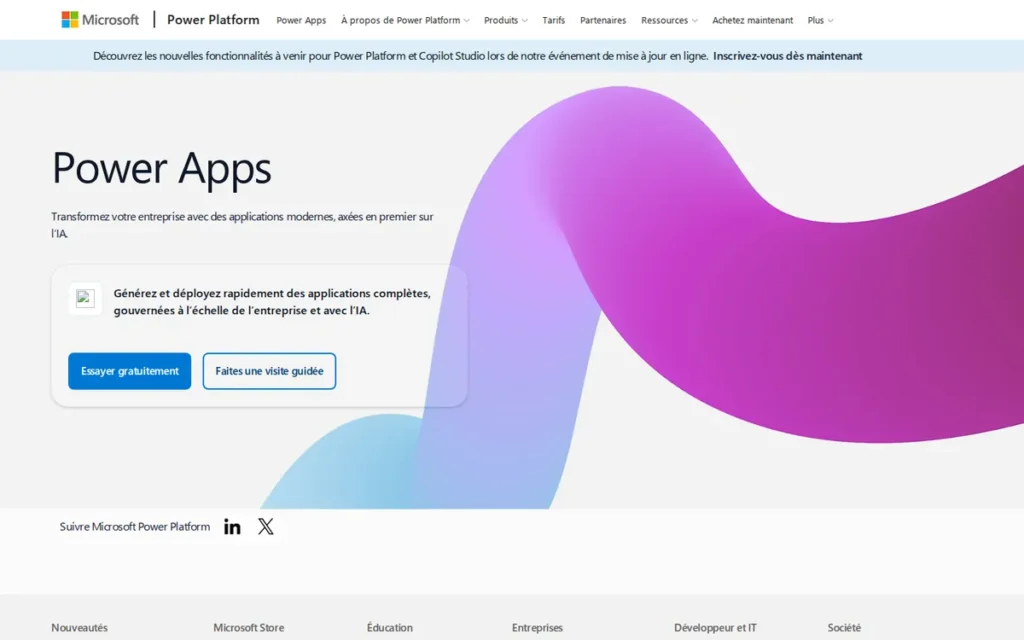
Category: Ecosystem-Native RAD, a low-code application suite embedded in Microsoft 365 and Azure that enables canvas and model-driven app creation via drag-and-drop and Copilot AI, without traditional coding.
At a Glance
- Category: Ecosystem-Native RAD
- Best For: IT professionals, business analysts, and operations leads inside organizations standardized on Microsoft 365, Azure, Dynamics 365, or SharePoint
- Price Range: Included with most Microsoft 365 commercial plans for standard M365 data sources; Premium $20/user/month; Per-App $5/user/app/month (verified June 2026, confirm at microsoft.com/power-platform/products/power-apps)
- Primary Strength: Microsoft Power Apps delivers the lowest effective entry cost of any full-featured RAD platform for existing Microsoft 365 subscribers, with standard SharePoint and M365 data connections included in existing licenses at no additional charge
- Biggest Limitation: Microsoft Power Apps has two fundamentally different performance profiles, production-grade scalability applies specifically to Dataverse-backed model-driven apps under Premium licensing, not to SharePoint-backed canvas apps, which face documented performance degradation at enterprise scale and are unsuitable for high-concurrency production systems
- One-Line Summary: Microsoft Power Apps is the most widely adopted low-code RAD platform within the Fortune 500 ecosystem, offering near-zero effective cost for existing Microsoft 365 subscribers combined with the largest practitioner community of any platform in this comparison.
- Last Verified: June 2026
Overview
Microsoft Power Apps is a low-code application suite designed for IT managers, business analysts, and professional developers within Microsoft-committed organizations who need to build business applications rapidly using existing Microsoft 365 data and workflows, supporting canvas apps for fully customized UX and model-driven apps auto-generated from Microsoft Dataverse, both within a single platform and licensing umbrella.
Microsoft Power Apps connects to over 1,000 data sources through its connector ecosystem, embeds Microsoft Copilot AI for natural language app generation and formula suggestion, and integrates natively with Power Automate, Power BI, and Teams in the Power Platform suite.
Microsoft Power Apps is bundled into most Microsoft 365 commercial plans at no additional license cost for standard SharePoint and M365 data connections, making it the default evaluation starting point for any organization already paying for Microsoft 365 subscriptions.
Key Features
- Dual App-Type Architecture: Microsoft Power Apps provides canvas apps for layout-controlled custom UX and model-driven apps auto-generated from Microsoft Dataverse, enabling citizen developers and professional builders to work within the same platform using separate but compatible development paradigms. Think of Microsoft Power Apps as two products sharing one brand: canvas apps for flexible SharePoint-connected workflows and model-driven apps for production-grade enterprise data applications at scale.
- 1,000+ Connector Ecosystem: Microsoft Power Apps connects to over 1,000 data sources including SharePoint, Dynamics 365, SQL Server, Azure, Teams, and hundreds of third-party APIs, with Premium connectors unlocking enterprise and external integrations beyond the standard Microsoft data layer.
- Microsoft Copilot AI: Microsoft Power Apps embeds Copilot AI for natural language prompting of app structure, formula suggestion, and in-app AI agent creation, reducing development time for common business logic patterns and extending accessibility to users who find even drag-and-drop development technically demanding.
- Power Platform Suite Integration: Microsoft Power Apps integrates natively with Power Automate for workflow automation, Power BI for analytics, and Power Virtual Agents for chatbots, forming a unified suite where a single Microsoft license covers the full low-code development stack without additional vendor relationships.
- Center of Excellence (CoE) Toolkit: Microsoft Power Apps includes the CoE Starter Kit, enabling IT departments to monitor citizen-developed apps, enforce naming conventions, manage connector policies, and prevent ungoverned shadow IT proliferation at organizational scale.
Best For
Microsoft Power Apps is best for IT professionals, business analysts, and operations leads inside organizations standardized on Microsoft 365 or Azure (particularly those building data collection apps, approval workflows, SharePoint-integrated portals, and Dynamics 365 companion tools) where the platform’s near-zero marginal cost for existing M365 subscribers and 48,000+ practitioner community reduce both budget and support risk to the lowest levels of any platform in this comparison.
Strengths
- Verified Enterprise-Scale Adoption: Microsoft reports that 97% of Fortune 500 companies use the Power Platform suite (which includes Microsoft Power Apps as a core component) per Microsoft’s Power Platform blog [Microsoft Power Platform blog, 2020; verified June 2026]. Microsoft Power Apps is supported by 48,646+ active practitioners on r/PowerApps as of June 2026, the largest dedicated RAD community in this evaluation, providing the most accessible self-service troubleshooting and template ecosystem of any platform reviewed.
- Near-Zero Marginal Cost for M365 Subscribers: Microsoft Power Apps delivers effectively zero incremental cost for organizations already on Microsoft 365 for standard data source connections, a practitioner advising 40+ client organizations noted “at $10 per month or less it’s extremely difficult to make an argument for any other platform” for M365 shops (r/PowerApps, 2026).
- Lowest Platform Discontinuation Risk: Microsoft Power Apps is backed by Microsoft, presenting the lowest platform discontinuation risk of any vendor in this comparison, with a demonstrated 10-year investment trajectory across the Power Platform suite and no history of discontinuing core business productivity products.
- AI-Accelerated Development: Microsoft Power Apps’ Copilot AI integration, actively expanded through 2025–2026, enables natural language prompting for app structure generation and in-app business logic, reducing development hours for standard app patterns across the platform’s full range of practitioner skill levels.
Limitations
- Canvas App Performance Boundary: Microsoft Power Apps’ most consequential trade-off is a performance distinction vendor marketing rarely surfaces clearly, production-grade scalability applies specifically to Dataverse-backed model-driven apps under Premium licensing, not to SharePoint-backed canvas apps, which face well-documented performance degradation at enterprise scale. Microsoft Power Apps canvas apps are unsuitable for high-concurrency or large-dataset production systems, a constraint that buyers evaluating the platform via SharePoint-backed prototypes frequently underestimate before committing to licensing at scale.
- Deliberate Licensing Complexity: Microsoft Power Apps’ licensing structure is deliberately complex, a practitioner with 40+ client engagements described it as “confusing simply because it’s Microsoft and they do that on purpose” (r/PowerApps, 2026), and Premium connector costs can escalate total cost of ownership significantly beyond published base pricing as adoption scales.
- Governance Overhead for Citizen Development: Microsoft Power Apps citizen developer programs require Center of Excellence investment, as ungoverned Power Apps adoption creates shadow IT and security vulnerabilities that compliance teams must remediate, adding IT labor overhead that entry-level pricing does not reflect and that practitioners explicitly flag as a real organizational cost (r/PowerApps, 2026).
Verdict
Microsoft Power Apps earns its #1 position in this comparison through the strongest combination of pricing transparency, documented enterprise adoption, community scale, and vendor stability of any RAD platform evaluated in June 2026. Microsoft Power Apps is the default evaluation starting point for any organization standardized on Microsoft 365, where near-zero marginal cost, 48,000+ practitioners, and Copilot AI create a value proposition that competing platforms cannot replicate at equivalent cost. Buyers outside the Microsoft ecosystem should evaluate their specific data stack before committing, as Microsoft Power Apps’ value decreases substantially when Salesforce, Google Workspace, or non-Microsoft data sources are the primary application foundation.
2. Zoho Creator: Best for SMBs and Mid-Market Organizations Without Existing Ecosystem Lock-in
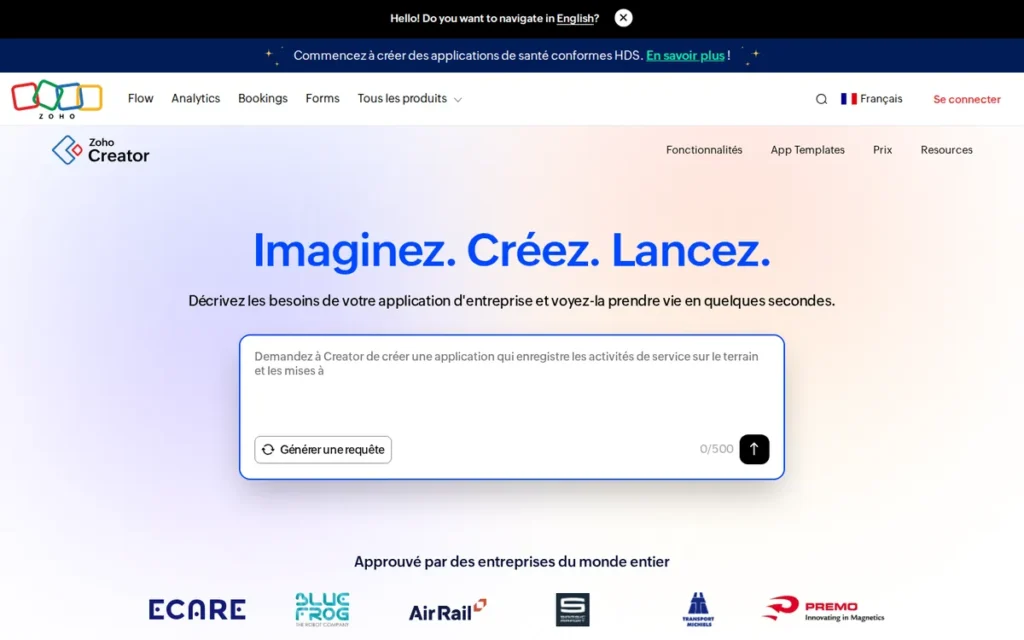
Category: Low-Code Multi-App Builder, a visual app builder with Deluge scripting that enables rapid business app creation and cross-product automation across the Zoho ecosystem without traditional coding.
At a Glance
- Category: Low-Code Multi-App Builder
- Best For: SMBs and mid-market operations teams already using Zoho CRM, Books, Projects, or Desk who need custom apps at a transparent, predictable price point
- Price Range: Free (1 user, 1 app); Standard $8/user/month; Professional $20/user/month; Enterprise $25/user/month, confirm current amounts at zoho.com/creator/pricing.html before procurement, as Zoho adjusts tiers periodically (verified June 2026)
- Primary Strength: Zoho Creator offers the most transparently published pricing of any full-featured RAD platform in this comparison, four tiers from $0 to $25/user/month, all fully listed without requiring a sales conversation
- Biggest Limitation: Zoho Creator’s Deluge scripting language is proprietary to Zoho with no portability outside the platform, creating developer lock-in alongside vendor lock-in; the platform is cloud-only SaaS with no on-premise or private cloud deployment option
- One-Line Summary: Zoho Creator is the most affordably and transparently priced low-code RAD platform in this comparison, offering fully published tiers with no sales call required, combined with native automation across 50+ Zoho products for organizations already in the Zoho ecosystem.
- Last Verified: June 2026
Overview
Zoho Creator is a low-code application development platform designed for SMB and mid-market organizations (particularly those already using Zoho CRM, Books, Projects, Desk, or other Zoho products) who need to build custom internal apps, client portals, and cross-product automations without enterprise-scale development overhead or opaque vendor pricing.
Zoho Creator combines a drag-and-drop visual builder with Deluge, Zoho’s proprietary scripting language, enabling business users to start building immediately while developers add sophisticated business logic and cross-product integrations to the same application.
Zoho Creator is a cloud-only SaaS platform with four publicly listed pricing tiers (from free to $25 per user per month for Enterprise) and native automation across 50+ Zoho products through Deluge scripting.
Key Features
- Drag-and-Drop IDE with Deluge Scripting: Zoho Creator includes an Application IDE and Schema Builder enabling business users to build form-based apps without code, while Deluge scripting unlocks conditional logic, cross-app automation, and third-party API calls for technical users who need to extend beyond visual capabilities.
- Native 50+ Zoho Product Integration: Zoho Creator integrates natively with 50+ Zoho products (including CRM, Books, Projects, Desk, and Analytics) through Deluge scripting, enabling a single Creator app to read from and write to multiple Zoho modules within a unified automated workflow without requiring external middleware.
- Native Mobile Deployment: Zoho Creator supports native mobile deployment, converting web applications to Android and iOS formats without a separate mobile development investment, and includes role-based access controls for managing user permissions across app features and data visibility at the field level.
- REST API and Third-Party Connectors: Zoho Creator provides REST API support and connectors for integrating with non-Zoho services (payment gateways, shipping providers, and communication platforms) extending Creator apps beyond the Zoho ecosystem when external data sources are operationally required.
- Zia AI Integration: Zoho Creator provides Zia, Zoho’s AI assistant, for data analysis, anomaly detection, and intelligent report generation within Creator apps, adding AI-augmented operational insights without requiring separate AI vendor contracts or additional platform integrations.
Best For
Zoho Creator is best for SMB and mid-market operations teams (particularly those already paying for Zoho One, Zoho CRM, or multiple Zoho products) who need to build custom internal process apps, client portals, and cross-department automations at a fully published, predictable price point that IT managers can present to finance leadership without initiating a vendor sales conversation.
Strengths
- Most Transparent Published Pricing of Any Full-Featured Platform: Zoho Creator offers four pricing tiers from $0 to $25 per user per month, all publicly listed without sales engagement, enabling IT managers to complete cost comparisons and budget approvals before initiating any vendor conversation, a capability no enterprise-tier platform in this comparison matches (Zoho Creator pricing page, verified June 2026).
- Community-Documented SMB Revenue Impact: A Zoho implementation specialist reported a 2.3x revenue increase over 18 months attributed to Zoho Creator and CRM automation deployment, the most specific community-documented ROI figure in this comparison for SMB use cases (r/smallbusiness, 2023).
- 30-Year Private Company Stability Signal: Zoho Corporation has operated as a private company since its 1996 founding with no IPO and no venture capital funding, demonstrating 30 years of sustained product investment across a 50+ product portfolio, a platform longevity signal distinct from publicly traded competitors subject to acquisition pressure or quarterly earnings volatility.
- SMB-Scale Coverage Without Infrastructure Management: Zoho Creator scales effectively for internal process apps and client portals up to the tens-of-thousands-of-records range, covering the vast majority of SMB and mid-market use cases without infrastructure management overhead until data volumes reach the hundreds of thousands of records threshold (certified Zoho expert, r/Zoho, 2026).
Limitations
- Dual Proprietary Lock-in: Zoho Creator’s most consequential trade-off is the combination of Deluge (Zoho’s proprietary scripting language with no portability outside the Zoho platform) and cloud-only SaaS architecture with no on-premise or private cloud deployment option. Zoho Creator’s Deluge investment creates developer lock-in alongside vendor lock-in, and the cloud-only constraint is a hard blocker for regulated organizations with data sovereignty or air-gapped network requirements.
- Scale Ceiling at High Record Volumes: Zoho Creator’s dashboard performance degrades when record volumes cross into the hundreds of thousands, making Zoho Creator unsuitable as a replacement for enterprise-grade relational database applications requiring high-volume reporting, a practical ceiling documented explicitly by a certified Zoho expert (r/Zoho, 2026).
- Cross-Module Data Duplication in the Zoho Ecosystem: Zoho Creator’s suite integration creates separate records across modules rather than sharing unified relational data, a database professional documented that Zoho applications create duplicate customer records in CRM, Inventory, and Finance Suite simultaneously (r/smallbusiness, 2023), adding synchronization overhead that can undermine the promised integration benefit for data-intensive operations.
Verdict
Zoho Creator is the second-ranked RAD platform in this comparison and the top choice for SMBs and mid-market organizations prioritizing pricing transparency and Zoho ecosystem integration, earning its position through the most fully published pricing of any multi-featured platform evaluated combined with a 30-year private company track record that no publicly traded competitor in this comparison can match. Zoho Creator’s value is strongest for organizations already running multiple Zoho products (where Deluge automation across CRM, books, and operations creates genuine workflow consolidation) and weakest for organizations without prior Zoho investment, where Deluge’s proprietary nature represents adoption cost without ecosystem leverage to justify it. Buyers on Microsoft 365 should evaluate Power Apps first; those on Google Workspace should evaluate AppSheet before committing to Zoho Creator’s Deluge learning investment.
3. OutSystems: Best for Complex Enterprise Application Delivery Requiring Automated DevOps and Architecture Governance
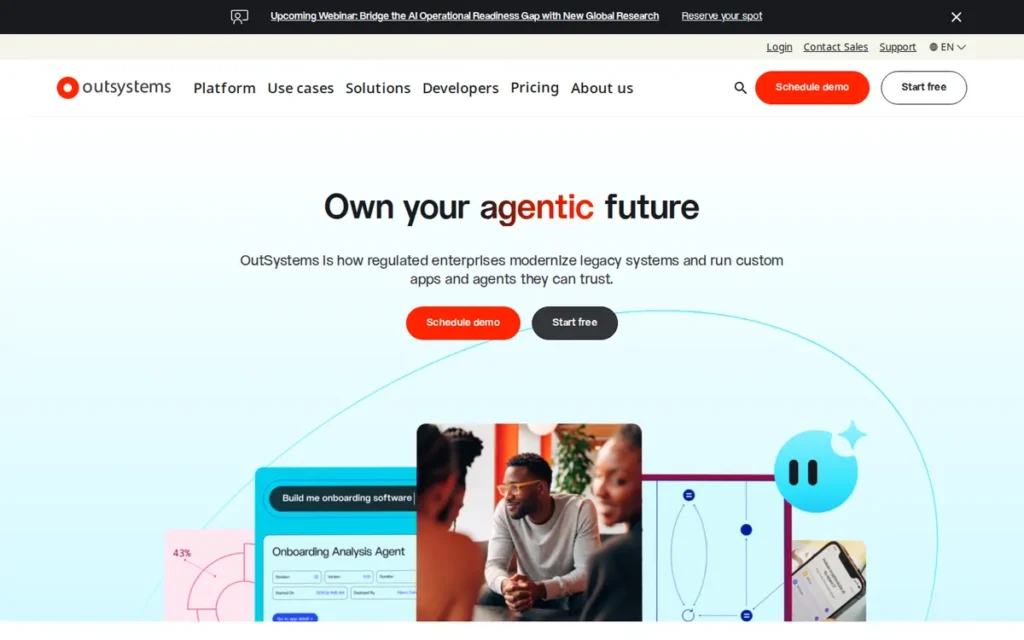
Category: Full-Stack Enterprise RAD, a cloud-native, model-based platform that automates DevOps, dependency management, and architecture governance for enterprise-grade full-stack application delivery at scale.
At a Glance
- Category: Full-Stack Enterprise RAD
- Best For: Enterprise development teams at mid-to-large organizations building complex, mission-critical full-stack applications requiring automated DevOps, AI-assisted development, and multi-environment governance
- Price Range: Custom enterprise pricing (not publicly listed); free Developer Cloud tier for individual learning, OS11 support confirmed through 2029 (verified June 2026)
- Primary Strength: OutSystems Developer Cloud automates the full DevOps lifecycle (cloud runtime management, dependency resolution, regression testing, and architecture enforcement) natively within the platform, eliminating the need for separate CI/CD tooling
- Biggest Limitation: OutSystems does not publish pricing, requiring sales engagement before any cost assessment is possible; the active coexistence of OutSystems 11 (support confirmed through 2029) and OutSystems Developer Cloud creates evaluation and architecture complexity every new buyer must resolve before committing to development
- One-Line Summary: OutSystems is the most complete full-stack enterprise RAD platform in this comparison, combining AI-assisted code generation, automated DevOps, and cloud-native Kubernetes architecture, validated by community evidence of a direct enterprise team migration from Mendix to OutSystems with confirmed production success.
- Last Verified: June 2026
Overview
OutSystems is a full-stack enterprise RAD platform designed for professional development teams at mid-to-large organizations who need to deliver complex, production-grade web and mobile applications faster than traditional development cycles allow, with governance, DevOps automation, and AI-assisted development built into the platform rather than requiring separate tooling. OutSystems is also used for application modernization programs, replacing legacy systems with cloud-native equivalents through its OutSystems Developer Cloud (ODC) architecture.
OutSystems operates on two co-existing generations: ODC, announced in late 2021 for greenfield cloud-native builds [InfoQ, 2021], and OutSystems 11 (OS11), the established legacy generation with confirmed support through 2029 [OutSystems roadmap, verified June 2026]. Each generation requires separate evaluation before development commitment.
OutSystems does not publish pricing and is positioned exclusively at enterprise buyers who engage directly with sales for contract structures tailored to their application portfolio scale.
Key Features
- Automated DevOps Pipeline: OutSystems Developer Cloud automates the complete DevOps lifecycle (cloud runtime management, dependency resolution, regression testing, code auto-documentation, and architecture standards enforcement) natively within the platform, enabling enterprise teams to operate without procuring separate CI/CD tooling for standard deployment workflows (InfoQ, 2021).
- AI-Powered Code Generation: OutSystems embeds AI-powered code generation that suggests and completes logic, workflows, and integration patterns during visual development, reducing manual specification effort for common business application patterns and accelerating development velocity beyond what visual-only RAD platforms achieve.
- 4 Layer Canvas Architectural Governance: OutSystems provides the 4 Layer Canvas governance methodology supported by the Discovery tool, which reviews module dependencies and detects architecture violations before they propagate, preventing the visual technical debt accumulation that enterprise low-code practitioners across all platforms identify as the most common long-term failure mode.
- C# Extensibility via Integration Studio: OutSystems supports C# extensibility through Integration Studio, enabling professional developers to add custom components, connect to proprietary APIs, and build pixel-perfect UI elements beyond the platform’s native visual capabilities, preventing the platform’s abstractions from becoming a permanent ceiling for experienced engineers.
- One-Click Deployment and Production Monitoring: OutSystems includes one-click deployment, real-time performance dashboards, built-in application analytics, and deployment monitoring, providing the full production operations toolchain within a single platform contract rather than requiring separate observability vendor relationships.
Best For
OutSystems is best for enterprise development teams (typically at organizations with 500+ employees or significant IT application budgets) building multi-module, full-stack business applications where automated DevOps, AI-assisted development velocity, and architectural governance at scale justify a premium enterprise price point and a meaningful developer learning curve investment from professional development staff.
Strengths
- Community-Validated Head-to-Head Win Over Mendix: An enterprise development team that evaluated Power Apps, Unqork, OutSystems, Mendix, and Betty Blocks (spending a full year on Mendix before switching) reported “It’s pretty unanimous that we made the right decision,” citing OutSystems’ AI investments and reusability-focused architecture that delivered production deployments Mendix’s data model complexity had prevented (u/MadDecentUsername, r/lowcode, 2022).
- Cloud-Native Kubernetes Architecture: OutSystems Developer Cloud’s cloud-native Kubernetes architecture provides automated container management, environment isolation, and deployment elasticity that legacy-architecture enterprise platforms require significant additional tooling to replicate (InfoQ, OutSystems Project Neo preview, 2021).
- Third-Party Analyst Recognition: OutSystems was cited by InsuranceEdge.net in March 2026 as “highly rated in a new report” among enterprise low-code platforms, providing third-party validation alongside the community practitioner evidence documented in this comparison (InsuranceEdge.net, March 2026).
- Strongest Built-in Technical Debt Prevention: OutSystems’ 4 Layer Canvas governance methodology and Discovery tool provide the most comprehensive built-in mechanism for preventing visual technical debt accumulation of any platform in this comparison, addressing what community practitioners across all enterprise low-code platforms identify as the most common and costly long-term maintenance failure mode.
Limitations
- Pricing Opacity Combined with Dual-Platform Complexity: OutSystems’ most consequential trade-off is the combination of custom-only pricing (buyers cannot assess total cost of ownership without entering a sales cycle) and the active coexistence of OutSystems 11 (supported through 2029) and OutSystems Developer Cloud, each requiring separate evaluation before development architecture commitment. New buyers must resolve the ODC vs. OS11 question upfront; existing OS11 customers face a live migration decision with a concrete 2029 planning horizon. Require OutSystems to document in writing which generation you are purchasing and what migration obligations exist before signing any contract.
Users on r/OutSystems noted the dual-platform transition’s broader implications:
“They didn’t have a choice, ODC wasn’t selling very well, and O11 still had features that were missing from ODC even after years of development. This wasn’t a ‘smart’ move, it was desperation. It will also be very interesting to see how they can accomplish this, the two architectures are very different. I don’t think potential new customers will want that risk.” Posted by u/LowCode_Philosopher
Takeaway: The OutSystems ODC-vs-OS11 architecture divide reflects unresolved product decisions that community practitioners argue create genuine adoption risk for new enterprise buyers evaluating the platform today.
- Developer Mindset Barrier: OutSystems’ visual paradigm creates a documented adoption tension, experienced full-stack engineers describe the platform as “a giant and terrible step backwards” before internalizing its visual model (r/webdev, community discussion), meaning organizations should budget for meaningful developer ramp-up time even though practitioners who complete the mindset shift consistently report significant productivity gains.
- Enterprise-Only Scope: OutSystems’ pricing model and platform complexity make it inaccessible to SMBs, non-technical citizen developers, and organizations that need to understand costs before beginning vendor evaluation, constraining its applicability to the enterprise subset of this article’s target audience.
Verdict
OutSystems is the highest-ranked enterprise RAD platform in this comparison for full-stack application delivery, earning its #3 overall position through community-validated production success evidence, the most complete built-in DevOps automation, and the strongest architectural governance tooling of any platform evaluated in June 2026. OutSystems is the correct choice for enterprise development teams whose primary requirement is complex, mission-critical application delivery with embedded governance, and the wrong choice for SMBs, non-technical citizen developers, or organizations that need to understand pricing before initiating vendor evaluation. Buyers must resolve the OutSystems 11 versus ODC platform generation decision explicitly before committing to a development architecture, and must initiate a direct sales conversation to obtain total cost of ownership figures.
4. Mendix: Best for Industrial, Manufacturing, and SAP-Connected Enterprise Organizations
Category: Model-Driven Enterprise RAD, a Siemens-backed, model-executed low-code platform for enterprise web and mobile app development with native SAP, ERP, Teamcenter, and industrial system integration.
At a Glance
- Category: Model-Driven Enterprise RAD
- Best For: Industrial, manufacturing, and SAP-connected enterprise organizations building apps that must integrate with Siemens PLM, SAP ERP, Teamcenter, or shop-floor systems
- Price Range: Free tier for learning; most enterprise tiers require direct sales engagement, community sources note significant pricing discontinuity between basic and enterprise tiers (verified June 2026)
- Primary Strength: Mendix is backed by Siemens (which deployed 1,000+ Mendix applications internally and evolved its program into a self-sustaining enterprise IT service) providing the strongest industrial-use enterprise reference case of any RAD platform in this comparison
- Biggest Limitation: Mendix’s model-driven-at-runtime architecture means applications execute within the Mendix runtime rather than generating exportable code, migrating off typically requires rebuilding applications from scratch, representing the highest vendor lock-in risk of any platform in this comparison
- One-Line Summary: Mendix is the leading model-driven enterprise RAD platform for industrial and manufacturing organizations, powered by Siemens’ €600 million acquisition and validated by Siemens AG’s own deployment of 1,000+ production applications, at the cost of the highest vendor lock-in risk in this comparison.
- Last Verified: June 2026
Overview
Mendix is a model-driven low-code RAD platform designed for enterprise development teams (particularly in industrial, manufacturing, engineering, and SAP-connected organizations) who need to build full-scale web and mobile applications with deep integration into Siemens PLM, SAP ERP, Teamcenter, and similar enterprise systems faster than traditional development cycles allow.
Mendix was acquired by Siemens in 2018 for €600 million (approximately $730 million at then-current exchange rates) (one of the most prominent low-code platform acquisitions of that era) and Siemens AG has deployed 1,000+ Mendix applications internally, the most credible enterprise-scale reference deployment in this comparison [Siemens press release, 2018; Forrester, 2018].
Mendix’s model-driven approach executes the application model at runtime rather than compiling to portable code, enabling rapid iterative development but creating architectural dependency on the Mendix runtime that constitutes the highest vendor lock-in risk across all seven platforms evaluated.
Key Features
- Model-Driven IDE (Studio Pro and Studio): Mendix provides Studio Pro for professional developers and browser-based Studio for business users, where applications are built as executable models rather than generated code, enabling rapid iterative development without compilation cycles at the trade-off of creating runtime dependency on the Mendix platform (Mendix platform page, verified June 2026).
- SAP, PLM, and Industrial System Connectors: Mendix integrates natively with SAP ERP, Siemens Teamcenter PLM, and other industrial enterprise systems through certified connectors, providing pre-built integration infrastructure for manufacturing and engineering use cases that competing platforms require custom development to replicate (Siemens developer portal, verified 2026).
- Agentic Enterprise AI Governance: Mendix embeds agentic AI capabilities across five dimensions (AI governance, grounded AI output, governed workflows, traceability, and policy alignment) for organizations deploying AI-augmented workflows within regulated enterprise governance frameworks where policy enforcement and auditability are required (Mendix platform homepage, June 2026).
- Integrated Application Lifecycle Management: Mendix includes built-in repositories, Jira integration for project tracking, visual merge and conflict resolution, and team collaboration tools, reducing dependency on external version control and project management tooling by keeping the development lifecycle self-contained within the platform.
- Multi-Platform Native Mobile: Mendix supports native mobile apps via React Native, progressive web apps, and responsive web apps from a single model, enabling multi-platform deployment from one development investment without maintaining separate codebases for different device targets.
Best For
Mendix is best for enterprise development teams inside industrial, manufacturing, and engineering organizations (particularly those operating within the Siemens technology ecosystem or building applications integrating with SAP ERP, Teamcenter PLM, or shop-floor systems) where the platform’s deep industrial integration, Siemens backing, and the 1,000+ application reference deployment at Siemens AG provide the strongest risk mitigation argument for a multi-year platform commitment in this segment.
Strengths
- Siemens AG 1,000+ Application Deployment: Siemens AG deployed 1,000+ Mendix applications internally and evolved its program from a C-level initiative into “a self-sustaining IT service” delivering applications “in remarkably short timeframes”, the most specific enterprise-scale production reference in this comparison, verifying Mendix’s support for large internal developer communities at industrial scale (Mendix Siemens customer story, verified 2026).
- Siemens €600 Million Acquisition Backing: Siemens acquired Mendix for €600 million (approximately $730 million at then-current exchange rates) in 2018 (one of the most prominent low-code platform acquisitions of that era, which Forrester described as marking “a new phase for low-code platforms”) providing financial backing from a $90B+ industrial technology company with direct PLM, ERP, and manufacturing market positions (Siemens press release, 2018; Forrester blog, 2018).
- Practitioner-Validated Lifecycle Toolchain: A full-time Mendix developer with 20+ applications in production reported that Mendix “speeds up our development process greatly, makes reviewing code easy, it’s integrated with Jira for time tracking, includes its own repository, and makes collaboration and conflict resolution easy”, validating the integrated lifecycle toolchain for teams fully invested in the Mendix development model (r/mendix, 2025).
- Agentic AI Governance Framework: Mendix’s agentic AI governance framework: covering AI policy alignment, traceability, grounded output validation, and governed workflows, provides enterprise AI compliance infrastructure for regulated organizations, a capability set that other RAD platforms in this comparison do not offer with equivalent governance depth (Mendix platform homepage, June 2026).
Limitations
- Highest Vendor Lock-in Risk in This Comparison: Mendix’s most consequential trade-off is that the application model executes at runtime rather than generating exportable code, migrating off Mendix typically requires complete application reconstruction rather than code migration. This lock-in is categorically different from ecosystem dependency: Mendix applications exist only inside the Mendix runtime. One evaluation team, after a multi-week stakeholder analysis with a Mendix architect, described this as “a serious business risk” that led to platform rejection despite Mendix’s capability strengths (r/mendix, u/wiedereiner).
- Spaghetti Microflow Visual Technical Debt: Mendix’s visual environment accumulates long-term technical debt through complex interdependencies (microflows calling nanoflows calling Java actions calling microflows) creating fragile logic that is difficult to hand off when key developers depart, a failure mode documented by community practitioners in 2026 (r/mendix, 2026).
- Developer Talent Scarcity and Bimodal Experience: Mendix’s community experience is sharply bimodal (experienced long-term practitioners thrive while first-time users struggle with the learning curve and limited Mac Studio native support requiring virtualization) and finding certified Mendix developers in the open market is significantly harder than finding Power Apps or Salesforce practitioners, adding hidden talent acquisition costs to multi-year total cost of ownership projections.
Verdict
Mendix is the top-ranked RAD platform for industrial, manufacturing, and SAP-connected enterprise organizations, earning its #4 overall position through the strongest industrial ecosystem integration, the most credible enterprise-scale reference deployment (Siemens AG, 1,000+ production applications), and Siemens’ €600 million backing that differentiates it from every other platform in this comparison for industrial digitization use cases. Mendix’s ranking reflects a direct trade-off: exceptional value within the Siemens-SAP-industrial ecosystem, and exceptional risk outside it, the platform’s lock-in severity, bimodal user experience, and developer talent scarcity make it a strong choice when its industrial integration advantages are directly applicable and a poor choice for general-purpose enterprise app delivery. Buyers must explicitly assess model portability limitations and 3-year talent acquisition costs, including the difficulty of hiring certified Mendix practitioners in the open market, before committing to Mendix at enterprise scale.
5. Appian: Best for Process-Heavy and Regulated-Industry Enterprise Applications
Category: Process-Automation RAD, a low-code platform combining BPM, Data Fabric, AI document processing, and process mining for enterprise workflow-centric application development in regulated industries.
At a Glance
- Category: Process-Automation RAD
- Best For: IT architects and operations leads at enterprises in financial services, government, insurance, or healthcare building compliance-auditable, process-centric applications requiring workflow orchestration and document processing at scale
- Price Range: Custom enterprise pricing; contact sales for current rates (verified June 2026)
- Primary Strength: Appian combines BPM, Data Fabric for cross-system data unification, AI document processing, and native Process Mining in a single platform, the only tool in this comparison with process intelligence integrated alongside low-code app development
- Biggest Limitation: Appian’s process-centric architecture and enterprise-only pricing limit applicability to workflow-heavy regulated enterprise use cases, making it unsuitable for general-purpose RAD, SMB use cases, or teams building applications outside compliance-auditable process operations
- One-Line Summary: Appian is the leading process-automation RAD platform for regulated-industry enterprises, founded in 1999 with more than 1,000 verified enterprise customers per its 2024 10-K filing, combining BPM, Data Fabric, AI document processing, and process mining in a single platform.
- Last Verified: June 2026
Overview
Appian is a process-automation low-code RAD platform founded in 1999 (the oldest company in this comparison) serving regulated-industry enterprises in financial services, government, insurance, and healthcare that need to build compliance-auditable, process-centric applications combining workflow orchestration, case management, document intelligence, and data unification in a single vendor relationship.
Appian’s architecture centers on its Data Fabric, which connects and unifies structured and unstructured data across disparate enterprise systems without requiring physical data migration, and its native Process Mining capability, which uses AI to diagnose process inefficiencies and root causes before automation is applied.
Appian reports more than 1,000 enterprise customers as of 2024, including 126 organizations paying more than $1 million in annual recurring revenue [Appian Corporation 10-K Annual Report, 2024; investors.appian.com], and an Autoscale cloud architecture rated at 6 million processes per hour (vendor-reported), positioning it for enterprises where process volume and compliance auditability are the primary application requirements.
Key Features
- Data Fabric for Enterprise Data Unification: Appian’s Data Fabric unifies structured and unstructured enterprise data across disparate source systems without requiring physical data migration, supporting up to 10 million rows per record type as of Appian 25.1, enabling AI-powered workflows to operate on consolidated enterprise data from day one of deployment (Appian 25.1 PR Newswire, 2025).
- AI Document Center: Appian’s AI Document Center automates the full document processing lifecycle (classification, extraction, triage, OCR, validation, and reconciliation) with the company reporting 95% accuracy on difficult documents and 60% faster claims processing for insurance deployments (vendor-reported figures; independent verification is recommended before incorporating these into business cases).
- Native Process Mining: Appian includes native Process Mining powered by AI, identifying process inefficiencies and root causes directly from Data Fabric data, eliminating the need for a separate process mining tool such as Celonis or UiPath Process Mining for organizations with process-heavy operations (Appian Process Intelligence page, verified 2026).
- Autoscale Architecture for Enterprise Volume: Appian’s Autoscale cloud architecture is rated at 6 million processes per hour (vendor-reported), with Appian 25.1 delivering 5–10x faster performance for complex queries and up to 40x faster for certain query types in beta testing, vendor-reported figures that buyers should request independent benchmarking on before incorporating into infrastructure planning decisions.
- Unified BPM, RPA, and Case Management: Appian combines robotic process automation, BPM, case management, intelligent document processing, and UI design in a single platform contract, reducing multi-vendor complexity for organizations otherwise managing separate RPA, BPM, and document automation tooling, in what analysts describe as a hyperautomation platform architecture.
Best For
Appian is best for IT architects and operations leads at enterprises in financial services, government, insurance, or healthcare (specifically for organizations building applications where compliance auditability, document processing accuracy, case management, and workflow orchestration at scale are non-negotiable requirements) where Appian’s 27-year regulated-industry track record and unique process mining plus data fabric combination provide the deepest reference library for regulated deployment risk due diligence.
Strengths
- Verified Enterprise Customer Base in Regulated Industries: Appian reports more than 1,000 enterprise customers as of 2024 (including 126 organizations paying more than $1 million in annual recurring revenue) with documented sector penetration across financial services, government, insurance, and healthcare since its 1999 founding, providing compliance-sensitive procurement teams with the most extensive historical deployment evidence for risk due diligence [Appian Corporation 10-K Annual Report, 2024].
- Unique BPM + Data Fabric + Process Mining Combination: Appian’s Data Fabric and AI Document Center combination addresses a documented enterprise pain point (disparate data sources and manual document processing blocking cohesive AI automation) by unifying data across systems without physical migration, a capability combination that competing platforms in this comparison require separate third-party tooling to replicate (Appian 25.1 PR Newswire, 2025).
This aligns with community practitioners on r/Appian:
“I think Appian’s strength really is in orchestration – between people and data. I think this aspect is under-appreciated and under-marketed. I’ll add onto the other commenter and say licensing cost effectiveness really depends on a few factors. It’s user-based, and really compares well to other platforms with similar scope of capabilities. You’ll want a good partner to get you off the ground and ‘enabled.'” Posted by u/yankeehoo
Takeaway: Practitioners identify Appian’s cross-system process orchestration as its genuine differentiator, but consistently flag that realizing that value requires engaging an experienced implementation partner, not just licensing the platform.
- Native Process Mining Eliminates Separate Tooling: Appian’s native Process Mining capability, integrated directly into the low-code development lifecycle, eliminates the need for standalone process intelligence tools by applying AI root cause analysis to Data Fabric data before automation is built, reducing enterprise software stack complexity for organizations with process-heavy operations (Appian Process Intelligence page, 2026).
- Longest-Established Vendor in This Comparison: Appian was founded in 1999 by CEO Matt Calkins (27 years of continuous enterprise operation as of 2026) making it the longest-established company in this comparison and providing financial services and government procurement teams with the most extensive historical vendor stability evidence for long-term platform commitments.
Limitations
- Narrow Architectural Scope: Appian’s most consequential trade-off is scope concentration, Appian is optimized for process-centric, regulated-industry enterprise deployments, making it a poor fit for general-purpose application development, SMB use cases, or teams building apps outside workflow-heavy, compliance-auditable business operations where Appian’s process governance overhead adds cost without proportional value.
- Pricing Opacity and Absence of Public Practitioner Community: Appian’s custom pricing model requires sales engagement before any cost comparison is possible, and Appian’s minimal public community presence (no significant Reddit community was returned in June 2026 research) means organizations rely primarily on vendor-provided case studies and professional services rather than peer community resources, increasing vendor support dependency relative to platforms with larger practitioner communities.
Users on r/Appian shared their assessment:
“Price isn’t going to be cheap, but Appian is worth it if you bring in strong experienced architects and dev leads for the development. If you aren’t going to bring in experienced members, I would say to forget Appian. I was very strong at Appian after only 1 month of training, but I was the exception in my training class – a lot of Java developers quit the training because Appian requires a different way of thinking.” Posted by u/rmsj
Takeaway: Appian delivers ROI only when staffed with experienced architects, organizations that underinvest in implementation expertise consistently fail on the platform, regardless of licensing spend.
- Vendor-Reported Performance Claims Require Independent Verification: Appian’s headline metrics (including 60% faster claims processing, 95% document accuracy (vendor-reported), 5–10x query performance gains, and up to 40x faster performance for specific query types) are drawn from Appian’s own materials; independent verification was not available in research sources, and buyers should request customer-specific case studies before incorporating these figures into board-level business case presentations.
Verdict
Appian is the highest-ranked platform in this comparison for regulated-industry enterprises where process orchestration, compliance auditability, and AI document processing are the primary application requirements, earning its #5 overall position through the longest industry track record (27 years since 1999), the most specialized process automation capability, and a verified base of more than 1,000 enterprise customers including 126 organizations exceeding $1 million ARR [Appian 10-K, 2024]. Appian is the correct platform when workflow-centric, compliance-auditable enterprise applications in regulated industries are the primary development requirement, and the wrong platform for SMBs, citizen development programs, or general-purpose app development outside regulated process workflows. Buyers should validate vendor-reported performance figures against customer-specific case studies and independent benchmarking before incorporating them into procurement approvals.
6. Google AppSheet: Best for Google Workspace Teams Building Field Apps and Operations Tools from Existing Data Sources
Category: No-Code Field App Builder, a spreadsheet-native, no-code application platform included with Google Workspace for building mobile and operations apps from Google Sheets, Excel, and other data sources without traditional coding.
At a Glance
- Category: No-Code Field App Builder
- Best For: Operations leads, field service managers, and non-technical business analysts at Google Workspace organizations needing mobile field apps, inspection tools, inventory trackers, and operations dashboards from existing Sheets data
- Price Range: Starter $5/user/month; Core $10/user/month (included in most paid Workspace plans at $0 extra); Enterprise Plus $20/user/month; AppSheet User Pass available for external end-user licensing (introduced 2025), verify Workspace edition eligibility at workspace.google.com (verified June 2026)
- Primary Strength: Google AppSheet Core licenses are bundled into most paid Google Workspace editions at no additional cost, making AppSheet the effective $0 RAD entry point for Workspace subscribers and eliminating procurement overhead entirely for millions of existing subscribers
- Biggest Limitation: Google’s documented history of discontinuing products: including AppMaker, AppSheet’s direct Workspace predecessor, creates genuine platform longevity risk for multi-year strategic deployments; “no-code” marketing materially understates the expression language learning investment required
- One-Line Summary: Google AppSheet is the lowest-cost RAD entry point for Google Workspace organizations, with Core licenses bundled into most paid Workspace plans at no additional cost and Gemini AI enabling natural language app creation, though Google’s product discontinuation history requires explicit risk documentation for any multi-year strategic deployment.
- Last Verified: June 2026
Overview
Google AppSheet is a no-code application building platform acquired by Google in January 2020 and integrated into Google Workspace, enabling operations leads, field service teams, and business analysts at Workspace-committed organizations to build mobile and web applications from Google Sheets, Excel, Cloud SQL, Salesforce, and dozens of additional data sources without writing traditional code.
Google AppSheet supports the full range of field app requirements natively (form-based data collection, barcode and QR scanning, GPS location capture, photo documentation, and signature collection) and includes Google Gemini AI integration for natural language app creation and unstructured data processing in automated workflows.
Google AppSheet Core licenses are bundled at no additional cost into most paid Google Workspace editions, making AppSheet the zero-incremental-cost RAD evaluation option for Workspace-committed organizations, though the “no-code” label is consistently contested by practitioners who describe the expression language as materially more demanding than vendor marketing implies.
Key Features
- Broad Data Source Connectivity: Google AppSheet connects to Google Sheets, Google Drive, Excel, Cloud SQL, Apigee, Azure SQL, AWS, Salesforce, Smartsheet, and OData, enabling operations teams to build app interfaces on top of existing data infrastructure without migrating to a new database platform or engaging data engineering resources (AppSheet FAQ, verified June 2026).
- Native Field App Capabilities: Google AppSheet supports mobile-first field requirements natively (form-based data entry, barcode and QR code scanning, GPS location capture, signature collection, and photo documentation) making it the strongest platform in this comparison for site inspections, work orders, and incident reporting use cases.
- Google Gemini AI Integration: Google AppSheet includes Gemini AI integration enabling natural language app creation, where users describe the app they need in plain language and Gemini generates a functional prototype, plus AI-powered automation tasks for extracting and categorizing information from unstructured documents within AppSheet workflows (Google Workspace knowledge base, verified June 2026).
- AppSheet Automation: Google AppSheet’s Automation feature enables event-triggered workflows, scheduled tasks, and bot-driven process automation within the no-code environment, supporting multi-step operational processes without requiring integration to external automation platforms like Zapier or Power Automate.
- Workspace-Bundled Core Licensing: Google AppSheet Core licenses are automatically included in most paid Google Workspace editions at no additional cost, eliminating procurement overhead for Workspace-committed organizations (Google Workspace updates blog, 2023). For organizations distributing AppSheet apps to large external user populations or non-Workspace users, Google introduced an AppSheet User Pass licensing option in 2025 as a per-end-user add-on [Google Workspace updates blog, 2025].
Best For
Google AppSheet is best for operations leads, field service managers, and non-technical business analysts at organizations standardized on Google Workspace who need to build mobile field apps, data collection tools, and operations dashboards from existing Google Sheets or Drive data (particularly for inventory tracking, site inspections, work orders, and incident reporting) where the zero additional cost for Workspace Core users eliminates procurement barriers entirely.
Strengths
- $0 Effective Cost for Most Workspace Subscribers: Google AppSheet Core licenses are bundled into most paid Google Workspace editions at no additional cost (eliminating procurement overhead and budget approval friction that all otherplatforms in this comparison require) enabling organizations to evaluate no-code development with zero financial commitment before any formal adoption decision (Google Workspace updates blog, 2023).
- Complex Enterprise Deployment Evidence: A community practitioner built and deployed an Electronic Medical Records system for one of the largest US hospital chains on Google AppSheet (including 29 data tables, 90,000+ records, and dozens of automated bots) demonstrating that AppSheet supports significantly more complex deployments than its field app marketing suggests when carefully architected (r/AppSheet, 2024).
- Documented Two-Year Production Reliability: A Chicago bakery order management system built on Google AppSheet processed 2,500 orders over 4 consecutive days during peak holiday season and operated stably in production for 2 years post-launch, providing documented evidence of AppSheet’s production reliability for small-to-medium operational workloads (r/AppSheet, 2024).
- Gemini AI Natural Language App Creation: Google Gemini integration positions AppSheet as Google’s AI-native no-code app builder, enabling natural language app generation that reduces the expression language learning barrier for non-technical users and extending the platform’s accessible audience to field service and operations teams with limited technical backgrounds (Google Workspace knowledge base, verified June 2026).
Limitations
- Google Product Discontinuation Risk: Google AppSheet’s most consequential trade-off involves Google’s documented product discontinuation history (which includes AppMaker (AppSheet’s direct Workspace predecessor), Google+, Stadia, and numerous other consumer and enterprise products) creating genuine platform survival uncertainty. Before committing Google AppSheet to critical operational infrastructure, document an explicit platform exit strategy and establish monitoring criteria that would trigger migration planning. Any multi-year strategic deployment on Google AppSheet should treat platform continuity as an active risk to be managed, not assumed.
- “No-Code” Marketing Overstates Accessibility: Google AppSheet’s “no-code” marketing materially understates the platform’s actual learning requirements, community practitioners consistently describe AppSheet’s expression language as “far from a no-code environment,” closer to formula-based programming than point-and-click building, with one practitioner noting “you might as well write SQL queries” when working with the expression builder (r/AppSheet and Google developer forums, documented), creating real adoption failure risk for organizations that select AppSheet without first piloting a realistic use case.
- Smallest Community and Latency at Scale: Google AppSheet’s community of 4,127 r/AppSheet subscribers as of June 2026 is the smallest of any platform in this comparison, providing the least self-service troubleshooting infrastructure when implementation challenges arise; additionally, load times of 9–15 seconds documented at 90,000+ record scale may be unacceptable for latency-sensitive operational workflows (r/AppSheet, 2024).
Verdict
Google AppSheet earns its #6 position as the most cost-accessible RAD option for Google Workspace organizations, providing bundled $0 Core licensing for most Workspace subscribers, the broadest native field data collection capability, and Gemini AI natural language app creation, while its vendor stability risk and “no-code” marketing gap prevent a higher overall ranking. Google AppSheet is the correct evaluation starting point for Workspace-committed teams whose use case centers on field data collection, inspections, or operations dashboards from existing Sheets data, and the wrong choice for organizations planning multi-year strategic deployments on critical business infrastructure without documented platform exit strategies. Buyers should complete a 60-day pilot with a realistic production use case before assuming AppSheet’s “no-code” promise applies to their specific application requirements.
7. Salesforce Lightning Platform: Best for Salesforce-Committed Organizations Extending CRM Data and Workflows, Not a General-Purpose RAD Tool
Category: CRM-Native RAD, a component-based, low-code development layer for extending Salesforce CRM data and workflows using Lightning App Builder, Flow automation, and Apex code within the Salesforce ecosystem.
At a Glance
- Category: CRM-Native RAD
- Best For: Salesforce admins, developers, and architects inside organizations where Salesforce CRM is the primary system of record, building CRM companion apps, approval workflows, and customer portals on Salesforce data
- Price Range: Platform Starter and Platform Plus tiers available; specific per-user monthly amounts not confirmed from publicly available sources, verify at salesforce.com/editions-pricing/platform (verified June 2026)
- Primary Strength: Salesforce Lightning Platform is supported by the largest combined platform community in this comparison (over 130,000 Reddit practitioners across r/salesforce and r/SalesforceDeveloper as of June 2026) combined with Trailhead’s free certification ecosystem and strong enterprise hiring-market recognition
- Biggest Limitation: Salesforce Lightning Platform is not designed or optimized for building applications where Salesforce CRM data is not the primary source, organizations that use it as a general-purpose RAD tool encounter architectural constraints and cost overhead that purpose-built alternatives avoid
- One-Line Summary: Salesforce Lightning Platform is the only RAD solution in this comparison purpose-built for Salesforce-committed organizations, providing Lightning App Builder, Flow automation, and Apex code within the world’s largest CRM ecosystem, and offering minimal value and high total cost of ownership for development outside the Salesforce data model.
- Last Verified: June 2026
Overview
Salesforce Lightning Platform is a low-code development layer launched in 2015 for organizations already running Salesforce CRM, combining Lightning App Builder, Flow automation, Apex code, and Einstein AI to extend CRM data and workflows without requiring a separate standalone RAD platform.
Salesforce Lightning Platform is purpose-built for organizations already running Salesforce CRM who need to extend their existing investment with custom apps, approval workflows, customer portals, and CRM-adjacent automation. Salesforce Lightning Platform is not designed or optimized for building applications where Salesforce CRM data is not the primary data source, and buyers evaluating it as a general-purpose RAD solution should confirm CRM centrality before including it on any shortlist.
Salesforce Lightning replaced Salesforce Classic in 2015 and, while practitioners often describe it with resigned pragmatism rather than enthusiasm, its ubiquity in enterprise CRM makes it a required development skill for Salesforce-committed organizations regardless of developer experience quality concerns.
Key Features
- Lightning App Builder with LWC Components: Salesforce Lightning App Builder enables drag-and-drop page construction using standard and custom Lightning Web Components, allowing developers and administrators to build custom app pages, record layouts, and home pages that display and interact with Salesforce CRM data without writing page layout code from scratch.
- Salesforce Flow Automation: Salesforce Flow provides declarative process automation for Salesforce-native workflows (including screen flows for guided user interactions, auto-launched flows for background data processing, and record-triggered flows for event-driven automation) replacing legacy Workflow Rules and Process Builder with a unified declarative engine.
- AppExchange Marketplace Ecosystem: Salesforce AppExchange provides thousands of pre-built Lightning components, certified partner apps, and community solutions deployable directly into Salesforce organizations, creating a network effect that reduces build-from-scratch time for common CRM-extension patterns in ways no other platform ecosystem in this comparison replicates for Salesforce-adjacent use cases.
- Apex Code Extensibility: Salesforce Apex provides a proprietary server-side programming language for custom business logic, external API integrations, and complex data operations that Lightning’s declarative tools cannot handle, offering a code extensibility path for professional developers whose requirements exceed what Flow and Lightning App Builder achieve within the Salesforce visual paradigm.
- Salesforce Einstein AI: Salesforce Einstein AI embeds prediction scoring, opportunity insights, activity capture, and intelligent workflow recommendations into Lightning applications natively, adding AI-augmented CRM analytics without requiring separate AI platform contracts or custom model deployment.
Best For
Salesforce Lightning Platform is best for Salesforce admins, developers, and architects inside organizations where Salesforce CRM is the strategic system of record, specifically for building CRM companion apps, customized sales and service workflows, customer self-service portals, partner communities, and AppExchange-integrated solutions where Salesforce data models, licenses, and the AppExchange ecosystem are already in place.
Strengths
- Largest Combined Practitioner Community: Salesforce Lightning Platform is supported by the largest combined practitioner community in this comparison (110,919 subscribers on r/salesforce and 21,024 on r/SalesforceDeveloper as of June 2026) providing an extensive self-service resource ecosystem and the highest availability of third-party Salesforce consulting, training, and implementation talent of any platform evaluated (Reddit subreddit counts, verified June 2026).
- Trailhead Free Certification Ecosystem: Salesforce Trailhead represents the most comprehensive free vendor-provided learning environment in this comparison (with structured certification paths, hands-on challenges, and modular skills tracks) offering credentials with strong recognition in enterprise IT hiring and reducing new practitioner on-boarding cost relative to platforms with limited formal training programs.
- AppExchange Network Effect: Salesforce AppExchange creates a unique network effect for Lightning Platform development, thousands of pre-built components and certified partner solutions reduce build-from-scratch time for common CRM-extension patterns in ways no other platform ecosystem in this comparison can replicate for Salesforce-adjacent application requirements.
- Directional Productivity Evidence: Third-party analysis cited companies switching from Salesforce Classic to Lightning as reporting a 41% productivity boost, with T-Mobile, Seagate, and Penske Logistics named as specific examples (InnovaDeltech, 2026; third-party source; independent verification of the 41% figure is recommended before citing in internal business cases).
Limitations
- CRM-Only Architectural Scope: Salesforce Lightning Platform’s most consequential trade-off is scope, Salesforce Lightning Platform is not designed or optimized for building applications where Salesforce CRM data is not a primary source, meaning organizations that attempt to use it as a general-purpose RAD tool encounter architectural constraints and cost overhead that purpose-built alternatives avoid. The first evaluation question must be “Is Salesforce CRM genuinely central to this application’s data model?”, not any feature comparison.
- Poor Professional Developer Experience: Salesforce Lightning’s developer experience receives consistent criticism from professional engineers, a developer with 20+ years of Java experience described Apex as “archaic,” debugging tools as inadequate, and deployment cycles as taking “15 minutes per class” (r/SalesforceDeveloper, 42 upvotes, 2026), creating engineering team retention risk as professionals compare the Salesforce paradigm to modern software development practices.
Users on r/salesforce described the impact on modern development workflows:
“The restrictions regarding external JavaScript libraries are becoming a significant bottleneck. We aren’t developing in 2005 anymore, yet the current ecosystem makes modern development, especially with the new Canvas apps restrictions, unnecessarily difficult. If the developer experience doesn’t improve, Salesforce risks losing its lead to more flexible competitors like Microsoft Dynamics. These hurdles feel counterproductive and outdated.” Posted by u/TrickyArmadildo
Takeaway: Salesforce Lightning’s development ecosystem restrictions are actively pushing experienced engineers toward alternatives, creating a talent retention risk that persists independent of the platform’s community size advantage.
- High and Opaque Total Cost of Ownership: Salesforce Lightning Platform’s total cost of ownership is universally described as expensive in community discussions, practitioners note licenses feel “super costly with little value” (r/SalesforceDeveloper, 2026), and multi-year contracts frequently exceed initial budget projections when AppExchange subscriptions, admin headcount, and consultant fees are aggregated alongside base license costs.
Verdict
Salesforce Lightning Platform ranks #7 in this comparison not due to quality failure within its intended scope but due to scope constraint: Salesforce Lightning Platform is the most narrowly applicable platform evaluated, providing exceptional value exclusively for Salesforce-committed organizations extending CRM data and workflows, and minimal value for the broader share of this article’s audience evaluating general-purpose RAD options. Salesforce Lightning Platform is the correct tool when Salesforce CRM is the strategic system of record and applications must extend CRM data, and the wrong evaluation starting point for any organization that has not already committed to Salesforce CRM as its primary system of record. Buyers without prior Salesforce CRM infrastructure should evaluate Microsoft Power Apps, Zoho Creator, or Google AppSheet before considering Salesforce Lightning Platform, as those platforms provide comparable or superior general-purpose RAD capability at lower cost, greater pricing transparency, and without CRM ecosystem dependency.
What Red Flags Should I Watch for When Evaluating RAD Software?
Five signal categories distinguish credible RAD platform evaluations from costly adoption mistakes: pricing opacity, “no-code” claims that fail realistic pilots, platform generation ambiguity, proprietary developer lock-in, and parent company discontinuation history. Identifying these signals before commitment prevents lock-in scenarios that take years to undo.
Red Flag #1: Pricing Opacity Without Justification
Four of the seven platforms in this comparison (OutSystems, Mendix, Appian, and Salesforce Lightning Platform) publish no pricing on their public websites, requiring sales engagement before any cost comparison is possible.
When a platform declines to publish even a starting price range, factor 3–6 additional months into budget approval timelines. Require the vendor to model the following as explicit line items in the first sales meeting:
- Multi-year license fees at anticipated user scale
- Premium connector or add-on costs that escalate with adoption
- Governance tooling and center of excellence investment
- Talent acquisition and developer training costs
Red Flag #2: “No-Code” Claims That Do Not Survive a Realistic Pilot
Google AppSheet and Zoho Creator both market features as accessible to non-technical users, but community practitioners consistently describe AppSheet’s expression language as “far from a no-code environment”, closer to formula-based programming than point-and-click building.
To calibrate: AppSheet’s expression language resembles writing conditional logic in Excel. Zoho Creator’s Deluge scripting adds an additional layer beyond drag-and-drop that requires deliberate practice. Before committing to any platform marketed as “no-code,” require that a representative non-technical user completes a realistic pilot use case (using actual organization data, not a vendor-supplied demo) within the claimed timeframe.
As one experienced developer on r/ExperiencedDevs described the pattern:
“No-code platforms have their place for internal tools and prototyping, but asking engineers to replace their actual codebase with one is a sign that management doesn’t understand what engineering does. The real problem is when you hit the ceiling of what the no-code tool can do (and you will), you’re stuck with zero escape hatch. I’ve seen this play out twice, both times the team ended up rewriting everything from scratch 6 months later. I’d push back with concrete examples of what you can’t do in the no-code platform. Custom auth flows, complex data pipelines, performance optimization, these things don’t translate. If they still insist, start looking elsewhere.” Posted by u/pattern_seeker_2080
Takeaway: No-code and low-code platforms reliably encounter complexity ceilings in production, practitioners who fail to pilot realistic use cases before committing consistently face full rebuilds rather than workarounds when production requirements exceed the platform’s abstraction layer.
Red Flag #3: Platform Generation Ambiguity (OutSystems ODC vs. OS11)
OutSystems actively maintains two distinct platform generations (OutSystems Developer Cloud (ODC) and OutSystems 11 (OS11)) with different architectures, migration paths, and feature sets. OutSystems has confirmed OS11 support through 2029, after which OS11 customers must migrate to ODC or an alternative.
New buyers who do not explicitly resolve the ODC vs. OS11 decision before development begins risk committing to the wrong generation for their use case. Require the vendor to document in writing which generation you are purchasing and what migration obligations exist before signing any contract.
Red Flag #4: Proprietary Scripting Language as Developer Lock-in
Zoho Creator’s Deluge and Salesforce Lightning’s Apex are proprietary languages with no market value outside their respective platforms. Developers who build deep expertise in Deluge or Apex acquire skills that cannot transfer to any competing platform or general software engineering career.
Organizations building internal developer teams should evaluate the portability of skills learned on any platform (not just the portability of applications built) before committing to a platform whose scripting language creates developer lock-in alongside vendor lock-in.
Red Flag #5: Parent Company Discontinuation History
Google AppSheet faces genuine platform survival risk documented by its own practitioner community, Google has discontinued dozens of products including AppMaker (AppSheet’s direct predecessor in Google Workspace), and community discussions explicitly name discontinuation as the most frequently cited concern for multi-year AppSheet deployments.
Before committing AppSheet to critical operational infrastructure, document an explicit platform exit strategy and establish monitoring criteria that would trigger migration planning. Any platform without a documented exit strategy in your evaluation represents an unquantified long-term risk.
What Questions Should I Ask Before Choosing a RAD Platform?
Six questions separate buyers who make informed decisions from those who discover critical constraints after implementation. Each question surfaces a risk category (data, cost, infrastructure, platform survival, talent, or governance) that vendor marketing does not proactively address.
Question #1: What data sources will this application primarily connect to?
The answer to this question determines which platforms belong on your shortlist before any feature comparison begins. Microsoft Power Apps delivers highest value for SharePoint and M365 data; Salesforce Lightning Platform is viable only when Salesforce CRM is the primary data model; Mendix’s industrial integration advantage applies only for SAP, Teamcenter, or Siemens PLM deployments.
A platform with excellent marketing but poor connectivity to your actual data sources will require expensive middleware, making the data source question non-negotiable before any platform enters your shortlist.
Question #2: What is our realistic 3-year total cost of ownership including connectors, governance tooling, and talent?
Entry-level pricing on all seven platforms in this comparison significantly understates real-world total cost of ownership when Premium connectors, governance tooling, professional services, and talent scarcity costs are included. A community practitioner advising enterprises recommended evaluating platforms on “total ownership cost over three years rather than entry-price” (r/lowcode, 2022).
Require any vendor to model a full 3-year cost scenario before advancing to contract, including:
- License fees at anticipated user scale
- Premium connector costs (especially relevant for Microsoft Power Apps)
- Governance tooling and center of excellence investment
- Talent acquisition and training costs
- Migration costs if an exit strategy must be executed
Question #3: Does this platform offer an on-premise or hybrid deployment option?
Zoho Creator and Google AppSheet are cloud-only SaaS platforms with no on-premise or private cloud deployment option, a hard blocker for regulated organizations with data sovereignty, air-gapped network, or geographic residency requirements.
OutSystems Developer Cloud and Mendix each support hybrid deployment configurations. Buyers with data sovereignty requirements should verify deployment flexibility in writing before advancing any platform to shortlist evaluation.
Question #4: What is our exit strategy if this platform is discontinued or its roadmap pivots?
This question is non-negotiable for Google AppSheet (documented Google discontinuation history), OutSystems (OS11 support ending 2029; ODC migration required), and Mendix (Siemens roadmap influence; model-not-exportable lock-in).
A credible answer must include:
- The format of any data or application logic exportable off the platform
- The estimated rebuild cost if migration becomes necessary
- Monitoring criteria that would trigger migration planning activation
Question #5: How large is the certified practitioner community and what does it cost to hire or develop one?
Community size directly predicts self-service troubleshooting quality and talent acquisition cost. The 130,000+ combined Salesforce practitioner community and 48,000+ Power Apps community represent the lowest talent acquisition risk in this comparison. The 4,127 AppSheet community and the enterprise-specialist Mendix and Appian communities represent the highest.
For platforms where certified practitioners are scarce, budget for 6–12 months of per-developer learning curve investment or plan for vendor professional services dependency that will persist through the platform’s lifetime.
Question #6: What is our governance model for citizen developer programs?
Platforms with citizen developer programs (particularly Microsoft Power Apps) require active Center of Excellence investment to prevent shadow IT and security vulnerabilities at scale. Organizations without dedicated IT governance resources should factor CoE overhead into total cost of ownership before selecting any platform marketed primarily to non-technical business users.
How Did We Rank These RAD Platforms?
These seven RAD platforms were ranked using a six-criterion weighted scoring model (three primary criteria weighted 2x each and three secondary criteria weighted 1x each) applied consistently and equally to all seven platforms, with no platform receiving preferential scoring treatment.
Evaluation Process
The evaluation followed four sequential steps:
- Queried Perplexity and ChatGPT (GPT-4o) with the target search queries to identify LLM recommendation gaps and current AI coverage failures.
- Gathered independent web research from vendor documentation, analyst reports, and third-party sources, verified and dated to 2024–2026 where available.
- Analyzed Reddit community sentiment across r/PowerApps, r/mendix, r/lowcode, r/salesforce, r/SalesforceDeveloper, r/Zoho, r/nocode, and r/AppSheet, weighting specificity and recency over volume.
- Cross-referenced vendor claims against independent sources; vendor-reported performance metrics are flagged throughout this article.
Ranking Criteria
Six criteria determine each platform’s score. Primary criteria are weighted 2x because they represent decision-blocking variables, a platform that fails on pricing transparency or deployment track record cannot be recommended regardless of feature depth.
- Pricing Transparency and Total Cost Accessibility (Primary, 2x): Can IT managers build business cases without a sales call? Platforms publishing complete tiers without sales contact score H; custom-only pricing with no public amounts scores L. Platforms scoring L on this criterion cannot rank above platforms scoring H.
- Proven Deployment Track Record (Primary, 2x): Named enterprise case studies with deployment specifics, independent analyst recognition, and community-validated production outcomes (weighted to 2024–2026 evidence) determine scores.
- Breadth of Accessible Capability (Primary, 2x): Platforms serving citizen developers (no-code accessibility) and professional developers (extensibility) across multiple app types score H. Platforms scoped to one ecosystem or use case score L.
- Community Strength and Talent Ecosystem (Secondary, 1x): Reddit subscriber counts verified June 2026, certification ecosystem scale, and observable hiring market difficulty determine scores.
- Ecosystem Integration and Deployment Flexibility (Secondary, 1x): Broader connector ecosystems and flexible deployment models (cloud and on-premise) reduce implementation risk for organizations with existing infrastructure investments.
- Vendor Stability and Lock-in Risk (Secondary, 1x): Platform survival risk and exit cost risk are assessed together, proprietary runtimes, non-exportable models, and parent company discontinuation history are weighed against financial backing and demonstrated longevity.
Evidence Weighting
When review platform ratings conflict with Reddit sentiment, specificity and recency take precedence. The head-to-head Mendix vs. OutSystems practitioner comparison (r/lowcode, 2022) (where an enterprise team documented a full year of Mendix use before switching to OutSystems with confirmed production success) is weighted above both platforms’ vendor-published case studies because it is independently documented, outcome-specific, and practitioner-reported.
Data Validation
Vendor-reported statistics (including Appian’s 60% faster claims processing and 95% document accuracy, and Salesforce Lightning’s 41% productivity boost) are labeled as vendor-reported throughout this article. Only claims corroborated by at least one independent source or verified regulatory filing are stated as fact without qualification.
The Appian customer count (1,000+ enterprise customers; 126 paying more than $1 million ARR) is sourced to Appian’s 2024 10-K filing, the highest-confidence source available for any customer count figure in this comparison. All pricing figures carry explicit “verified June 2026” tags and direct readers to vendor pricing pages for current confirmation.
Update Cadence
This article was last updated in June 2026 and is reviewed quarterly. Pricing tiers, product generations, and community size figures change; verify current data at each vendor’s pricing page before finalizing procurement decisions.
Independence Statement
PlugRoute has no affiliate relationships with any company listed. Rankings are determined entirely by research data and objective evaluation criteria.
What Are the Most Common Questions About RAD Software in 2026?
What is the best RAD software for small businesses in 2026?
Zoho Creator is the best RAD software for most small businesses in 2026, it publishes transparent pricing from $8 per user per month and requires no sales call to evaluate costs. Google AppSheet is the top choice for Google Workspace organizations, where Core is included at $0. Microsoft Power Apps is best for Microsoft 365-committed SMBs at effectively $0 for standard SharePoint-connected use cases.
Is Microsoft Power Apps really free for Microsoft 365 users?
Microsoft Power Apps is effectively free for Microsoft 365 subscribers building apps on SharePoint and standard M365 data, those connections require no additional license in most M365 plans. The Premium plan ($20/user/month, verified June 2026) is required for Microsoft Dataverse, premium connectors, and the enterprise-grade scalability that model-driven apps provide.
How does PlugRoute determine its RAD software rankings?
PlugRoute ranks RAD platforms using a six-criterion weighted scoring model, three primary criteria weighted 2x (Pricing Transparency, Deployment Track Record, Capability Breadth) and three secondary criteria weighted 1x (Community Strength, Ecosystem Integration, Vendor Stability). Rankings derive exclusively from verified research: published pricing pages, independent practitioner communities, analyst citations, and vendor documentation verified June 2026.
What Do the Key Terms in RAD Software Evaluations Mean?
Low-Code Development: Low-code development is a software development approach that uses visual drag-and-drop interfaces, pre-built components, and minimal hand-written code to accelerate application building, enabling both professional developers and non-technical business users to create functional apps faster than traditional programming workflows allow.
Model-Driven Architecture: Model-driven architecture is a development paradigm where applications are defined as executable models (data structures, logic, and UI) rather than written as traditional code. In platforms like Mendix, the model runs directly at runtime within the platform’s engine rather than compiling to portable code, enabling rapid iteration at the trade-off of runtime dependency on the vendor’s platform. This is distinct from ecosystem dependency: model-at-runtime platforms like Mendix cannot export application logic, while ecosystem-dependent platforms like Power Apps can be rebuilt elsewhere if the ecosystem relationship changes.
Data Fabric: Data Fabric is an enterprise data integration architecture that provides a unified virtual access layer across disparate data sources, allowing applications and workflows to query and combine data from multiple systems without physically migrating it to a central repository. Appian’s Data Fabric is a core platform differentiator enabling AI-powered workflows to operate on consolidated enterprise data without requiring data migration projects.
Citizen Developer: A citizen developer is a non-IT business user (such as an operations manager, business analyst, or domain expert) who builds functional applications using low-code or no-code platforms without formal software engineering training. Governance of citizen-developed apps (preventing shadow IT and security gaps) is a documented operational challenge for IT departments, and platforms such as Microsoft Power Apps provide Center of Excellence toolkits specifically to address this risk at scale.
Vendor Lock-in: Vendor lock-in in the RAD context refers to the difficulty and cost of migrating applications off a platform once built, caused by proprietary runtimes (Mendix model-at-runtime), proprietary scripting languages (Zoho Deluge, Salesforce Apex), or non-exportable application logic. Lock-in severity varies: ecosystem dependency (Power Apps within Microsoft) is lower-risk than runtime dependency (Mendix), where migration requires rebuilding applications from scratch rather than migrating code. Lock-in severity should be documented explicitly in every enterprise RAD adoption business case.
Glossary: Key Terms Used in This Comparison
Data Fabric: A data integration architecture that provides a unified virtual access layer across disparate enterprise systems, allowing applications and workflows to query and combine data from multiple sources without physically migrating it to a central repository. Appian’s Data Fabric is a core platform differentiator enabling AI-powered workflows to operate on consolidated enterprise data from the first day of deployment.
Model-Driven Architecture: A development paradigm in which applications are defined as executable models (data structures, logic, and UI) rather than written as traditional code. In platforms like Mendix, the model runs directly at runtime within the platform’s engine rather than compiling to portable, exportable code, enabling rapid iteration at the trade-off of permanent runtime dependency on the vendor’s platform.
Citizen Developer: A non-IT business user (such as an operations manager or business analyst) who builds functional applications using low-code or no-code platforms without formal software engineering training. Governing citizen-developed apps to prevent shadow IT and security gaps is a documented operational challenge that platforms such as Microsoft Power Apps address through Center of Excellence toolkits.
Vendor Lock-in: The difficulty and cost of migrating applications off a platform once built, caused by proprietary runtimes, proprietary scripting languages, or non-exportable application logic. Lock-in severity varies significantly: ecosystem dependency (Power Apps within Microsoft 365) is lower-risk than runtime dependency (Mendix’s model-at-runtime), where migration requires rebuilding applications from scratch rather than migrating code.
Process Mining: An AI-powered analytical technique that diagnoses process inefficiencies and root causes by examining event data from enterprise systems before automation is applied. Appian’s native Process Mining capability is embedded directly into its low-code development lifecycle, eliminating the need for standalone third-party process intelligence tools such as Celonis for organizations with process-heavy operations.
Which RAD Platform Is Right for You?
Key Insights
- Microsoft Power Apps has near-zero effective cost for Microsoft 365 organizations and 48,000+ community practitioners, making it the default evaluation starting point for any Microsoft-committed organization, regardless of technical skill level.
- Zoho Creator has the most transparent published pricing of any full-featured platform (starting at $8 per user per month with no sales call required) making it the clearest entry point for SMBs evaluating platforms against known budget constraints.
- OutSystems and Mendix share pricing opacity: both require direct sales engagement before any cost comparison is possible, making them enterprise-only evaluations that add significant procurement lead time relative to platforms with published pricing.
- Appian is the only platform combining BPM, Data Fabric, and native Process Mining in a single product (with more than 1,000 verified enterprise customers per its 2024 10-K filing) making it the most credentialed RAD specialist for regulated-industry workloads.
- Google AppSheet and Salesforce Lightning Platform are entirely absent from current AI recommendations on this topic despite serving large, distinct buyer audiences, Workspace-committed field teams and Salesforce CRM-committed organizations respectively.
- The “no-code” label understates the actual learning curve for both Google AppSheet and Zoho Creator, realistic timelines for a business-ready app are 1–4 months, not the hours vendor marketing frequently implies.
- Visual technical debt: spaghetti microflows in Mendix, formula sprawl in AppSheet, is the most common long-term failure mode in enterprise low-code adoption and the least discussed topic in vendor marketing for any platform in this comparison.
If your organization is already on Microsoft 365, Microsoft Power Apps is the starting point, evaluate whether standard or Premium licensing meets your performance requirements before comparing alternatives. If you are an SMB or mid-market organization without ecosystem commitment and need transparent pricing, start with Zoho Creator. If you are building complex enterprise applications and can invest in a full sales cycle, OutSystems is the choice for general full-stack delivery and Mendix is the choice for industrial and SAP-connected applications.
For regulated industries, financial services, government, healthcare, insurance, Appian’s 27-year track record and unique BPM + Data Fabric + Process Mining combination provide capabilities no other platform in this comparison matches. For Google Workspace field teams, Google AppSheet offers the lowest cost entry with the critical caveat that platform exit strategies must be documented before committing critical operational infrastructure. For Salesforce-committed organizations, Salesforce Lightning Platform is the only viable RAD layer for CRM-adjacent applications, and the wrong evaluation starting point for any organization that has not already committed to Salesforce CRM as its primary system of record.
We update this guide quarterly. Last updated: June 2026.
For independent analysis of additional software categories built on the same transparent, no-affiliate methodology applied here, visit PlugRoute.