Pricefx leads for B2B enterprise price optimization (G2 4.6/5.0 Enterprise Leader, 17.6% named margin improvement), Prisync for e-commerce SMB monitoring (4.9/5.0 from 211 Shopify App Store reviews, $49/month entry), and Price2Spy for power users requiring advanced bot-evasion depth. The selection is architectural before it is comparative, most tools serve B2B deal margins or e-commerce SKU repricing, not both.
Pricing software failures cluster around two documented patterns: selecting a tool architecturally mismatched to your business model, and deploying an enterprise platform before transaction data is clean enough for AI models to train on reliably, a sequence that delays ROI by 12 months or more regardless of platform capability. Every enterprise entry below includes an explicit revenue threshold for viable ROI, a figure absent from most comparison articles.
PlugRoute has no affiliate relationships with any company listed. Rankings are determined entirely by research data and objective evaluation criteria.
“I got burned by this a few times where we only realized a competitor changed pricing when a prospect said ‘wait, they’re cheaper now.'” (u/BlueberryMany7641, r/SaaS)
Takeaway: Reactive pricing (learning about competitor price changes from prospects rather than monitoring systems) is the most commonly cited and least quantified cost in pricing software adoption discussions.
TL;DR: Top Picks at a Glance
- Pricefx (#1) delivers the fastest verified B2B enterprise time-to-value, with 59% of customers achieving full ROI within 12 months via a modular cloud-native deployment model unique in the enterprise tier.
- Prisync (#2) is the top-rated e-commerce competitor monitoring app, earning 4.9/5.0 from 211 verified Shopify App Store reviews with fully transparent $49–$399/month pricing.
- Price2Spy (#3) provides the deepest e-commerce monitoring infrastructure for power users, with unique bot-evasion capabilities and a 30-day no-credit-card free trial.
- Vendavo (#4) carries the strongest named Fortune 500 deal-science documentation in this comparison (Avnet and Dell outcomes per vendor product records) backed by the April 2026 Gartner Magic Quadrant Leader designation.
What Are the 4 Categories of Pricing Software?
Pricing software divides into four architecturally distinct categories that are not interchangeable: Enterprise B2B Optimization Suites (Pricefx, Vendavo, Zilliant), Revenue Management Suites for airlines and travel (PROS), E-Commerce Competitive Monitors (Prisync, Price2Spy), and AI Retail Optimization Platforms (Competera). Selecting the wrong category produces zero ROI regardless of feature depth or brand recognition.
Each category is engineered for a fundamentally different pricing motion:
- Enterprise B2B Optimization Suite: Pricefx (#1), Vendavo (#4), Zilliant (#6): AI-driven price management for B2B manufacturers and distributors, handling negotiated contracts, volume agreements, and customer-specific deal pricing across CRM and ERP systems
- Revenue Management Suite (Airline/Travel + B2B): PROS (#5): the only aviation-native platform in this comparison, with 40 years of domain-specific AI training and an expanding B2B manufacturing segment
- E-Commerce Competitive Monitor + Dynamic Repricer: Prisync (#2), Price2Spy (#3), competitor price tracking and rule-based dynamic repricing for product-SKU-based retail catalogs on Shopify, Magento, and WooCommerce
- AI Optimization Suite (Retail): Competera (#7): contextual elasticity-based demand modeling for large e-commerce and omnichannel retail catalogs, recalculating price-volume relationships at every pricing cycle
Practitioners with hands-on B2B pricing experience on r/pricing describe the architectural difference directly:
“Depends on what you are optimising pricing for. Platforms should all promise to deliver the most margin for your business. But if you are in B2B distribution with constant spot quoting and fierce competition it’s different to being in B2C ecoms where pricing might only change once across everything at regular intervals. In B2B distribution I used to manually calculate target prices by customer value, and cross map it against a bandwidth of what customers have been prepared to pay for it in the last 90 days to avoid losing volume. Price optimization is a fine balance of protecting volume as well as getting the highest price you can for it at the time of purchase.” Posted by u/emma_theyoda
Takeaway: B2B and e-commerce pricing are architecturally incompatible problems, experienced B2B distribution practitioners confirm that spot-quote negotiation dynamics require fundamentally different tooling than rule-based SKU competitor matching.
An e-commerce monitor cannot handle B2B quote-based pricing. An enterprise optimization suite cannot serve a Shopify store. Confirm your category before comparing features, category determines fit more than any individual feature.
How Do the Top 7 Pricing Software Tools Compare?
Seven pricing software tools in this comparison span the full market (from $49/month Shopify repricing apps to $500,000+/year enterprise AI platforms) across four architecturally distinct categories. Use this table to shortlist by primary use case, verified evidence tier, and review score before engaging any vendor’s sales team.
| Rank | Company | Category | Best For | One-Line Summary | Key Capabilities | Primary Strength | Key Limitation |
|---|---|---|---|---|---|---|---|
| 1 | Pricefx | Optimization Suite | B2B enterprise and mid-market ($50M–$1B+ revenue) | Cloud-native B2B pricing platform with G2 4.6/5.0 Enterprise Leader, 17.6% named client margin improvement, and 59% of customers achieving full ROI within 12 months | Price analytics, optimization, CPQ, rebate management, clear-box AI, agentic margin-leak agents | Highest G2 enterprise rating in comparison (4.6/5.0, Leader badge); only specific named-client margin benchmark in enterprise tier (17.6%, May 2026) | AI models require clean ERP transaction data to train reliably; no public pricing tiers |
| 2 | Prisync | Competitive Monitor + Repricer | Shopify/Magento/WooCommerce SMB retailers (100–10,000 SKUs) | Top-rated e-commerce competitor monitoring platform with 4.9/5.0 from 211 verified Shopify App Store reviews and transparent pricing from $49/month | Unlimited competitor tracking, AI-powered dynamic repricing engine, native Shopify/Magento/WooCommerce integrations, 24/7 live support | 4.9/5.0 from 211 verified Shopify App Store reviews; highest absolute rating in comparison (May 2026) | E-commerce only; rule-based repricing, not AI elasticity; B2B architecturally excluded |
| 3 | Price2Spy | Competitive Monitor (Advanced) | E-commerce power users needing bot-evasion, MAP monitoring, or 10-year price history | Most technically capable e-commerce monitoring platform for power users, earning Capterra 4.7/5.0 (101 reviews) with unique anti-detection capabilities | Bot-protected monitoring, in-cart pricing extraction, image-encoded pricing, login-gated B2B portals, 10-year price history | Advanced anti-detection infrastructure for bot-protected, in-cart, and image-encoded pricing environments unavailable in most competing tools | Dated interface; URL-based pricing model creates hidden cost scaling beyond entry tiers |
| 4 | Vendavo | Optimization Suite (Deal Science) | Fortune 500 B2B manufacturers and distributors ($500M+ revenue) | Enterprise B2B pricing with named Fortune 500 client outcomes; Avnet 2–5% margin expansion and Dell 3% deal profitability improvement (per Vendavo DPO documentation); via patented willingness-to-pay technology | Deal Price Optimizer, Margin Bridge Analytics, Intelligent CPQ, Rebate and Channel Manager | Gartner Magic Quadrant Leader for B2B Pricing and Rebate Optimization Software (April 2026); patented Deal Price Optimizer | 6–18 month implementation; estimated $200K+/year; structurally excludes sub-$100M companies |
| 5 | PROS | Revenue Management Suite | Commercial airlines and large B2B manufacturers ($500M+ revenue) | Only NYSE-listed, 40-year-old pricing platform with airBaltic achieving +6% ancillary seat revenue per passenger and named agentic AI agents launched May 2025 | Airline revenue management, dynamic ancillary pricing, B2B smart price optimization, agentic AI agents (May 2025) | Only NYSE-listed vendor with audited financials; 40-year reinforcement learning AI; definitive aviation-native platform | Lowest enterprise G2 score in comparison (4.2/5.0); estimated $500K–$2M+; B2B non-aviation misrouting risk |
| 6 | Zilliant | Optimization Suite (Explainable AI) | Enterprise B2B manufacturers in SAP environments ($100M+ revenue) | B2B pricing intelligence platform with official SAP partner certification (4.4/5.0 on SAP Store), 2024 QKS Group SPARK Matrix recognition, and explainable AI engineered for sales team adoption | Explainable AI price management, SAP-certified Price IQ, 99.99% uptime real-time pricing engine, next-gen scenario modeling | Official SAP partner certification validated on SAP Store (4.4/5.0); most systematic sales team adoption strategy in comparison | Platform-aggregate ROI claims lack named client attribution; practitioner-confirmed $50M+ minimum revenue threshold |
| 7 | Competera | AI Optimization Suite (Retail) | Enterprise e-commerce retailers ($50M+ GMV); after completing due diligence | AI retail pricing platform recalculating contextual elasticity across 20+ factors; GetApp 4.8/5.0 (58 reviews), G2 4.9/5.0 (14 reviews; insufficient volume for enterprise evaluation), Capterra 4.8/5.0; no publicly named client case studies | Contextual elasticity modeling, 20+ factor analysis, 2-hour monitoring refresh, omnichannel pricing, shared Data Lake | Most sophisticated demand elasticity modeling among e-commerce tools evaluated; favorable overall ratings among current clients | Insufficient G2 review volume (14 reviews) for enterprise-grade confidence; no named client case studies; two unique pre-commitment due-diligence requirements |
Evidence Tier Note: Verified ROI evidence in this comparison uses three tiers: (A) Named client outcome with independently attributable source; (B) Named client outcome per vendor documentation only; (C) Vendor-stated aggregate without named client attribution. Tiers matter for building internal business cases at the CFO level.
Which Pricing Software Should I Choose for My Use Case?
Your selection decision is categorical before it is comparative, the wrong tool architecture produces zero ROI regardless of feature depth or brand reputation. This table routes buyers to the architecturally correct tool for their use case and budget before any demo engagement.
| Your #1 Priority | Recommended Tool | Why | Acceptable Alternative |
|---|---|---|---|
| Shopify/Magento/WooCommerce retailer, 100–10,000 SKUs, under $400/month | Prisync (#2) | 4.9/5.0 from 211 verified reviews; transparent $49–$399/month; native Shopify integration; no engineering required | Price2Spy for deeper configuration and bot-evasion needs |
| E-commerce power user needing bot-evasion, MAP monitoring, or 10-year price history | Price2Spy (#3) | Unique anti-detection for bot-protected and in-cart pricing; Capterra 4.7/5.0 (101 reviews); 30-day free trial | Prisync if simplicity is preferred over monitoring depth |
| B2B manufacturer or distributor ($50M–$500M) prioritizing fastest enterprise time-to-value | Pricefx (#1) | G2 4.6/5.0 Enterprise Leader; 17.6% named margin case study; modular deployment; 59% full ROI in 12 months | Zilliant for SAP-integrated environments where sales adoption is the primary risk |
| Fortune 500 B2B needing named-client deal-science documentation | Vendavo (#4) | Named Fortune 500 client outcomes per vendor documentation (Avnet, Dell); Gartner MQ Leader April 2026; patented willingness-to-pay | Pricefx if modular deployment speed is prioritized |
| Commercial airline or travel company needing revenue management at any scale | PROS (#5) | Only aviation-native platform with 40-year training data and documented airBaltic ancillary seat revenue improvement | No adequate alternative; PROS is the domain-native choice |
| Enterprise B2B manufacturer in SAP environment; sales team adoption is primary implementation risk | Zilliant (#6) | SAP partner certification (4.4/5.0 SAP Store); explainable AI engineered to reduce sales rep override rates | Pricefx for faster deployment and higher G2 rating |
| Enterprise e-commerce retailer ($50M+ GMV) needing contextual elasticity AI; after due diligence | Competera (#7) | Most sophisticated demand modeling among e-commerce tools; favorable overall ratings (GetApp 4.8/5.0, 58 reviews) | Prisync or Price2Spy if operational due diligence raises concerns |
| B2B company with $10M–$50M revenue and complex pricing rules | No adequate commercial tool currently exists | See Mid-Market B2B Gap Disclosure below | Excel + Power BI until revenue scale justifies enterprise investment |
If your situation maps to more than one row (for example, a B2B manufacturer also running a direct e-commerce channel) prioritize your primary revenue motion and evaluate a secondary monitoring tool separately from your primary optimization platform.
Mid-Market B2B Gap Disclosure: No commercially available pricing software adequately serves B2B companies with $10M–$50M in annual revenue and complex pricing requirements as of May 2026. This gap is confirmed by multiple independent practitioner communities and represents the market’s most significant unaddressed buyer segment.
The gap persists not because vendors have overlooked the market, but because the ROI math for AI pricing software requires both revenue scale and data volume. Companies below $50M typically lack both, making this a structural economic constraint, not a product development failure.
“At this revenue size, a full blown pricing software (e.g., Syncron, Zilliant, PriceFx, etc.) is not economically viable.”, u/Prolongedinfinity, r/pricing
Takeaway: The $50M revenue threshold is a structural economic constraint, not a vendor pricing choice, the ROI mathematics require both revenue scale and data volume that most mid-market B2B companies have not yet reached.
1. Pricefx: Best Overall: Best for B2B Enterprise and Mid-Market Price Optimization

Category: Optimization Suite, a 100% cloud-native, modular AI pricing platform combining price analytics, optimization, CPQ, and rebate management for B2B enterprise and mid-market manufacturers, distributors, and technology companies.
At a Glance
- Category: Optimization Suite
- Best For: B2B enterprise and mid-market manufacturers, distributors, and technology companies ($50M–$1B+ revenue) prioritizing fast time-to-value, modular deployment risk reduction, SOX compliance readiness, and sales team adoption of AI pricing recommendations
- Price Range: Custom enterprise pricing; modular entry allows phased investment starting with a single capability; estimated $100K+/year based on industry benchmarks (not vendor-confirmed); no free trial
- Primary Strength: Pricefx delivers the fastest verified time-to-ROI in the enterprise pricing tier (59% of customers achieve full ROI within 12 months and 33% within 6 months) via a cloud-native, module-by-module deployment model unique among enterprise competitors
- Biggest Limitation: Pricefx’s AI optimization models require clean transaction history to train reliably; organizations with fragmented ERP data may experience delayed value realization despite the platform’s documented speed benchmarks, and no public pricing forces buyers into a full enterprise sales cycle before obtaining any budget figures
- One-Line Summary: Pricefx is the cloud-native B2B enterprise pricing platform with the highest G2 enterprise rating in this comparison (4.6/5.0, Leader badge), the only specific named-client margin improvement case study in its tier (17.6%, automotive parts distributor, May 2026), and a modular deployment model where 59% of customers achieve full ROI within 12 months
- Last Verified: May 2026
Overview
Pricefx is a 100% cloud-native SaaS pricing optimization platform headquartered in Pfaffenhofen, Germany, built for B2B enterprise and mid-market manufacturers, distributors, and technology companies ($50M–$1B+ revenue) that need AI-driven price analytics, deal optimization, CPQ integration, and rebate management without multi-year infrastructure-heavy implementation timelines.
Pricefx’s modular architecture allows buyers to deploy a single capability (analytics or price setting) and expand without replacing the platform, differentiating Pricefx from all-or-nothing enterprise commitments that create adoption barriers for mid-market buyers.
Pricefx holds a G2 Enterprise Pricing Software Grid Leader badge at 4.6/5.0 (the highest enterprise G2 rating among all tools evaluated in this comparison) and is the only enterprise platform with a publicly documented, specific named-client margin improvement benchmark of 17.6% for an automotive parts distributor (Pricefx case study, May 2026).
Key Features
- Modular Cloud-Native Architecture: Pricefx enables B2B companies to deploy a single capability (analytics, price setting, or optimization) and expand incrementally without platform replacement, reducing initial financial commitment and implementation risk for mid-market buyers who cannot absorb full enterprise platform costs upfront.
- Clear-Box AI Price Optimization: Pricefx’s Price Optimization module uses algorithms that users can view and edit, enabling pricing teams and sales reps to understand exactly why specific prices are recommended, increasing adoption rates compared to opaque black-box systems whose recommendations sales reps routinely override.
- Agentic AI and LLM Integration: Pricefx added LLM-powered conversational pricing insights and always-on AI agents for real-time margin-leak detection in its 2024–2025 platform update, positioning Pricefx within the agentic AI capability tier alongside PROS’s May 2025 AI Agents launch.
- Unified Deal Lifecycle Platform: Pricefx’s CPQ, Rebate Management, Deal Planning, Sales Compensation, and Agreements modules unify pricing strategy, deal execution, channel incentives, and sales alignment within a single cloud platform, eliminating the data silos between pricing, CRM, and ERP that practitioners identify as the primary source of revenue leakage.
- SOX Compliance Readiness: Pricefx supports Sarbanes-Oxley compliance requirements, confirmed via practitioner discussion on r/pricing, making Pricefx the enterprise pricing tool in this comparison with the most clearly documented community-validated SOX compliance readiness; no equivalent community-sourced confirmation was found for Vendavo, Zilliant, or PROS during this research cycle.
This aligns with practitioner sentiment on r/pricing:
“Does the client have to do Sarbanes o let or equivalent? If yes you will want something like PriceFX which can do all you ask plus SOX. It’s not cheap but you generally get what you pay for” Posted by u/razmatazzzzzzzzx
Takeaway: Pricefx is consistently identified by practitioners as the enterprise pricing platform of choice in SOX-compliant environments, with the cost acknowledged as a worthwhile tradeoff for regulatory fit.
Best For
Pricefx is best for mid-market to large B2B manufacturers, distributors, and technology companies ($50M–$1B+ annual revenue) that need enterprise-grade pricing optimization with a phased SaaS deployment model, particularly organizations requiring:
- SOX compliance readiness for publicly traded manufacturer or distributor environments
- Improved sales team AI adoption through explainable pricing recommendations
- Multinational multi-currency, multi-country price governance without on-premises infrastructure
Strengths
- Highest Named-Client Margin Evidence in Enterprise Tier: An automotive parts distribution client achieved a 17.6% margin increase, a 9.3% revenue increase, and an 85% reduction in price change execution time within months of implementing Pricefx’s analytics, price setting, and optimization modules, the only specific named-client outcome benchmark in the enterprise pricing tier documented in this comparison (Pricefx case study, verified May 2026).
- Highest G2 Enterprise Rating in Comparison: Pricefx holds a G2 Enterprise Pricing Software Grid Leader badge with a 4.6/5.0 rating (the highest enterprise G2 score among all tools evaluated) with reviewers specifically citing “fast, flexible, and friendly” deployment and “quick implementation and easy scaling” (G2, April 2026).
- Fastest Verified Time-to-ROI in Enterprise Tier: 59% of Pricefx customers achieve full ROI within 12 months and 33% within 6 months, the fastest independently reported time-to-value benchmarks in the enterprise pricing tier, per Pricefx’s analysis of G2 reviewer ROI reports, contrasting with Vendavo’s typical 6–18 month implementation cycle (Pricefx learning center, May 2026).
- Independent Stevie Award Recognition: Pricefx earned a Stevie Award (International Business Awards) for innovative solutions with high-impact results for large enterprise B2B companies, an independently judged recognition providing third-party product validation beyond vendor self-reporting (award year not publicly confirmed at time of publication).
Limitations
- Data Quality Dependency: Pricefx’s documented time-to-ROI benchmarks are contingent on transaction data quality that organizations frequently overestimate, fragmented ERP records, inconsistent product codes, or incomplete pricing history prevent Pricefx’s AI optimization models from training reliably, potentially delaying value realization regardless of platform capability.
- Hidden Module Scaling Costs: Pricefx’s modular pricing model means total cost of ownership grows substantially as modules are added, a full CPQ plus optimization plus rebate management deployment costs several multiples of an entry analytics module, making 3-year total cost modeling essential before signing initial contracts rather than relying on entry module pricing alone.
- No Public Pricing: Pricefx requires commitment to a full enterprise sales cycle before obtaining even an approximate budget figure, creating procurement friction that disadvantages organizations under fixed planning windows or internal budget approval deadlines.
Verdict
Pricefx is the best-evidenced enterprise B2B pricing optimization platform in this comparison, earning the highest G2 enterprise rating (4.6/5.0, Leader badge), the only specific named-client margin improvement benchmark in its tier (17.6% margin, 9.3% revenue, and 85% time reduction for an automotive distributor, May 2026), and the fastest documented time-to-ROI (59% full ROI in 12 months). Pricefx’s cloud-native modular architecture directly reduces the two most common enterprise pricing software failure modes, slow deployment and sales team resistance to black-box AI recommendations. Mid-market buyers ($50M–$200M revenue) benefit most from the start-with-one-module approach; large enterprise buyers ($500M+) with complex deal-level margin requirements should evaluate Vendavo’s willingness-to-pay science in parallel before finalizing a shortlist.
2. Prisync: Best for E-Commerce SMB: Best for Shopify, Magento, and WooCommerce Competitor Price Tracking and Automated Repricing
Category: Competitive Monitor + Dynamic Repricer, automated competitor price tracking and rule-based dynamic repricing for e-commerce retailers on Shopify, Magento, and WooCommerce, designed for SMB retailers without data science teams or engineering resources.
At a Glance
- Category: Competitive Monitor + Dynamic Repricer
- Best For: E-commerce retailers on Shopify, Magento, or WooCommerce with 100–10,000 SKUs needing automated competitor price monitoring and repricing without a data science team, engineering resources, or monthly budget exceeding $399
- Price Range: $49/month (Shopify, up to 100 products/variants) to $399/month (Platinum tier); annual billing discounts available; free trial available
- Primary Strength: Prisync earns a 4.9/5.0 Shopify App Store rating from 211 verified purchaser reviews (the highest absolute review rating among all seven tools evaluated) combined with transparent monthly pricing starting at $49 and native Shopify integration requiring no engineering setup
- Biggest Limitation: Prisync is architecturally designed for e-commerce SKU-based repricing and does not serve B2B quote-based pricing, negotiated contracts, volume agreements, or customer-specific pricing tiers, a fundamental architectural mismatch that disqualifies Prisync for any B2B buyer regardless of price point appeal
- One-Line Summary: Prisync is the top-rated e-commerce competitor price monitoring and dynamic repricing platform with a 4.9/5.0 Shopify App Store rating from 211 verified purchaser reviews, fully transparent pricing starting at $49/month, and native integrations with Shopify, Magento, and WooCommerce requiring no engineering resources
- Last Verified: May 2026
Overview
Prisync is an e-commerce competitor price tracking and dynamic repricing platform founded in 2013 in Istanbul, Turkey, built for retail businesses that need automated monitoring of competitor prices, stock availability, and promotions across unlimited competitor sites with rule-based repricing, without a data science team, lengthy implementation, or enterprise-level budget.
Prisync’s transparent $49–$399/month public pricing enables full budget self-qualification before any sales engagement, distinguishing Prisync from all enterprise tools in this comparison that require a demo before revealing any cost figure.
Prisync holds a 4.9/5.0 Shopify App Store rating from 211 verified purchaser reviews (the highest absolute review rating of any tool evaluated in this comparison) and is trusted by 700+ brands and stores worldwide, consistently recommended in e-commerce practitioner communities as the standard SMB choice for competitor monitoring (r/PriceMonitoring, 2025–2026).
Key Features
- Unlimited Competitor Tracking Infrastructure: Prisync monitors prices, stock availability, shipping costs, promotions, and product variants across unlimited competitor websites, Amazon, eBay, and other marketplaces using undetectable bot technology that reliably bypasses common anti-scraping countermeasures deployed by competing retailers.
- AI-Powered Dynamic Pricing Engine: Prisync’s Dynamic Pricing Engine automatically adjusts store prices based on competitor data using configurable rules (match competitor, beat by margin, or stay above market average) with Shopify’s SmartPrice integration enabling instant repricing outside scheduled tracking cycles for real-time competitive response.
- Native E-Commerce Platform Integrations: Prisync’s native Shopify app, Magento plugin, and WooCommerce integration enable complete deployment without custom engineering resources, a structural advantage for small and mid-market retailers without dedicated development teams.
- Dashboard Analytics and MAP Alerting: Prisync’s dashboard provides price comparison visualizations, MAP violation monitoring alerts, price history graphs, and configurable instant or daily email notifications for price movement events across all tracked competitors.
- Entry-Tier 24/7 Live Support: Prisync offers 24/7 live customer support across all subscription tiers (including the $49/month Shopify entry plan) providing enterprise-grade support responsiveness at SMB pricing, a structural differentiation from most SaaS tools that restrict live support to premium tiers.
Best For
Prisync is best for e-commerce retailers on Shopify, Magento, or WooCommerce managing 100–10,000 product SKUs who need automated, real-time competitor price monitoring and rule-based repricing without an in-house engineering team, data science capability, or budget exceeding $399/month, particularly retailers in price-sensitive categories such as electronics, fashion, consumer goods, and sporting goods, where competitor pricing changes multiple times per day.
Strengths
- Highest Volume-Weighted Review Rating in Comparison: Prisync holds a 4.9/5.0 Shopify App Store rating from 211 verified purchaser reviews, the highest absolute review rating among all seven tools evaluated in this comparison, representing the strongest volume-weighted endorsement signal from verified buyers across all tools assessed (Shopify App Store, verified May 2026).
- Sustained Organic Practitioner Endorsement: Prisync is consistently named by practitioners in r/PriceMonitoring and r/shopify as the standard SMB recommendation for e-commerce competitor price and stock tracking, alerts, and simple dynamic pricing rules, representing organic, unsolicited community endorsement from working e-commerce professionals across multiple 2025–2026 threads.
- Complete Budget Transparency: Prisync’s fully public pricing ($49–$399/month) eliminates the primary friction point affecting all enterprise tools in this comparison (inability to assess budget fit without completing a full sales cycle) enabling retailers to self-qualify, start a trial, and deploy without any vendor engagement.
- 12-Year Proven Operating Track Record: Prisync’s 12+ years of continuous operation (2013–2026) in the technically demanding bot-scraping infrastructure space demonstrates sustained customer retention and continuous reinvestment in evading the anti-scraping countermeasures that competitor sites continuously upgrade.
Limitations
- E-Commerce-Only Architecture: Prisync is purpose-built for e-commerce SKU-based competitor tracking and is architecturally unsuited for B2B quote-based pricing, negotiated contracts, volume pricing agreements, or customer-specific pricing scenarios, any B2B manufacturer, distributor, or services company that selects Prisync based on price point rather than architectural alignment will encounter a fundamental mismatch that no configuration will resolve.
- Rule-Based Rather Than Elasticity-Based Repricing: Prisync’s Dynamic Pricing Engine applies configurable rules (match competitor, beat by margin, stay above average) rather than AI-elasticity modeling, meaning Prisync can automate competitive positioning but cannot optimize for demand elasticity, margin-volume tradeoffs, or cross-product basket effects the way enterprise AI platforms do.
As one user on r/shopify cautioned:
“Price monitoring is useful, but only if it’s constrained by margin, inventory age, and conversion data. Blind auto repricing in cosmetics often starts a race to the bottom while killing perceived brand value. The real edge is pricing rules tied to demand signals and unit economics, not competitors alone.” Posted by u/kunalkhatri12
Takeaway: Shopify practitioners warn that unconstrained competitor-based auto repricing erodes brand value and margin, confirming that Prisync’s rule-based architecture has a documented ceiling for retailers optimizing for more than competitive position alone.
- Scaling Ceiling for High-Complexity Catalogs: Prisync’s rule-based architecture may underperform for e-commerce retailers scaling into very large SKU catalogs with multi-market pricing elasticity requirements, buyers at that scale should evaluate whether Competera’s contextual elasticity modeling justifies its additional cost, as static rules cannot capture dynamic demand behavior at that complexity.
Verdict
Prisync is the highest-rated e-commerce competitor price monitoring and dynamic repricing platform by independent user reviews, earning 4.9/5.0 from 211 verified Shopify App Store purchasers, the strongest volume-weighted review signal in this comparison. Prisync’s transparent $49–$399/month pricing, native Shopify integration requiring no engineering, and 24/7 live support from the entry plan eliminate the three most common SMB software evaluation barriers: opaque pricing, engineering setup requirements, and tiered-access support delays. B2B buyers, regardless of budget or company size, should evaluate a different tool category entirely, as Prisync’s architecture is not designed for the contract-based, customer-specific, or quote-based pricing complexity that B2B sales motions require.
3. Price2Spy: Best for E-Commerce Power Users: Best for Deep Price Intelligence, Bot-Evasion Monitoring, and Advanced Repricing Workflows
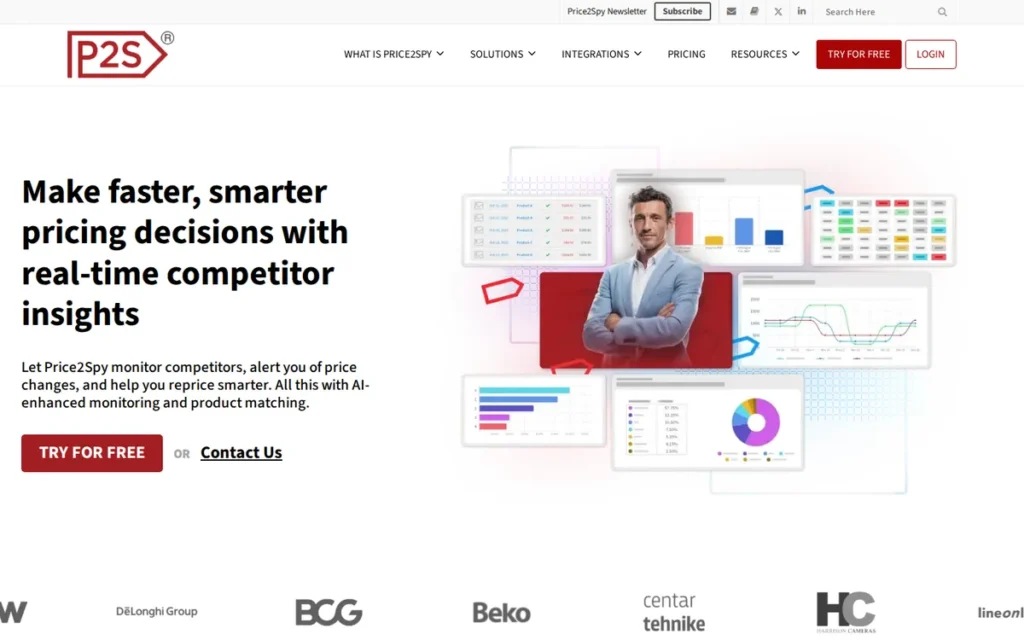
Category: Competitive Monitor (Advanced), deep-configuration price intelligence and high-frequency automated repricing for e-commerce power users and pricing analysts who need to monitor competitors that actively resist tracking through bot-protection, in-cart pricing, and login-gated portals.
At a Glance
- Category: Competitive Monitor (Advanced)
- Best For: E-commerce pricing analysts, brand managers, and mid-market retailers needing maximum monitoring depth, advanced bot-evasion capabilities, comprehensive price history analysis, MAP violation documentation, and high-frequency automated repricing workflows
- Price Range: Approximately $39.95–$338/month base (URL-based pricing model); Automatch add-on approximately $54/month; Repricing add-on approximately $100/month; annual billing discounts available; 30-day free trial, no credit card required
- Primary Strength: Price2Spy’s advanced anti-detection infrastructure monitors bot-protected sites, in-cart prices, image-encoded pricing pages, and B2B login-gated portals, making Price2Spy the only e-commerce monitoring tool evaluated that can track sophisticated competitors actively blocking most monitoring systems
- Biggest Limitation: Price2Spy’s interface reflects its 2011 origins and has not modernized to contemporary SaaS UX standards (independent reviewers on r/PriceMonitoring explicitly cite the dated interface as a primary switching trigger) and its URL-based pricing model creates hidden cost scaling that buyers must model carefully before committing
- One-Line Summary: Price2Spy is the most technically capable e-commerce price monitoring platform for power users in this comparison, earning Capterra 4.7/5.0 from 101 verified reviews with the unique ability to monitor bot-protected, in-cart, image-encoded, and login-gated competitor pricing environments that most monitoring tools cannot access
- Last Verified: May 2026
Overview
Price2Spy is a cloud-based competitor price monitoring and repricing platform founded in 2011 in Serbia (the longest-operating e-commerce monitoring tool in this comparison) built for pricing analysts and e-commerce power users who need to monitor competitors that actively resist being tracked: bot-protected retailer sites, prices hidden until added to cart, image-encoded pricing that bypasses text-based scrapers, and B2B distributor portals requiring login authentication.
Price2Spy holds Capterra 4.7/5.0 from 101 verified independent reviews (the most robust independent review dataset among e-commerce monitoring tools evaluated) with feature-level scores of 4.9/5 for reporting and analytics, 4.8/5 for repricing capability, and a 5.0/5 Customer Service score (Capterra, May 2026).
Price2Spy’s 14-year bootstrapped operating history (2011–2026) without external venture capital funding demonstrates sustained customer retention and genuine product-market fit in a technically demanding infrastructure category where continuous reinvestment in anti-detection capabilities is non-negotiable.
Key Features
- Advanced Anti-Detection Infrastructure: Price2Spy handles bot-protected competitor sites, in-cart pricing extraction, image-based price extraction that bypasses text-based anti-scraping, and B2B login simulation for distributor portals requiring authentication, enabling competitive surveillance of retailers that most monitoring tools cannot access.
- High-Frequency Repricing Engine: Price2Spy’s repricing engine supports up to 8 automated daily price adjustment cycles per product, configurable via strategy-based rules (margin-based, threshold-based, competitive positioning), with manual approval workflow options for organizations requiring human sign-off on pricing changes above defined thresholds.
- 10-Year MAP Violation Documentation: Price2Spy maintains up to 10 years of price history per monitored product with MAP violation monitoring that includes screenshot evidence, providing brand managers with legally documentable proof of dealer pricing violations for reseller enforcement actions.
- Three-Mode Product Matching: Price2Spy’s Automatch (AI-based), Manual matching, and Hybrid mode accurately identify products across competitor sites even when product codes, titles, images, or packaging differ from the monitored SKU, reducing false-positive matches that inflate monitoring noise.
- 30-Day No-Credit-Card Free Trial: Price2Spy offers a 30-day free trial with no credit card required, plus optional assisted URL import services for high-SKU-count organizations needing professional configuration support, enabling complete feature validation before any financial commitment.
Best For
Price2Spy is best for mid-market e-commerce retailers, brand managers, and pricing analysts who need deep competitive intelligence on sophisticated competitors using anti-scraping technology, require MAP violation documentation with screenshot evidence for brand protection enforcement, manage large catalogs (2,000–50,000+ SKUs) with high-frequency repricing needs, or require multi-year historical price trend data for seasonal strategy modeling and competitive position analysis.
Strengths
- Most Robust Capterra Review Dataset Among E-Commerce Tools: Price2Spy holds Capterra 4.7/5.0 from 101 verified independent purchaser reviews (the most robust independent review dataset among e-commerce monitoring tools in this comparison) with feature-level scores of 4.9/5 for reporting and analytics, 4.8/5 for repricing capability, and a 5.0/5 Customer Service score corroborating the platform’s live support quality claim (Capterra, verified May 2026).
- Practitioner-Documented Labor Savings: One practitioner documented that Price2Spy saves approximately 10 hours per week in manual pricing research (equivalent to approximately $15,000–$30,000 in annualized labor cost recovery at standard pricing analyst rates) the most specific efficiency quantification available for any monitoring tool in this comparison (r/PriceMonitoring practitioner, 2025).
- 14-Year Bootstrapped Operating Track Record: Price2Spy’s 14-year bootstrapped operating history without external venture capital funding demonstrates sustained product-market fit and continuous technical reinvestment in anti-detection infrastructure, a longevity signal that distinguishes Price2Spy from venture-backed competitors where growth-over-profitability pressure can deprioritize infrastructure investment.
- Lowest-Friction Evaluation Model in Comparison: Price2Spy’s 30-day no-credit-card-required free trial provides full feature access before financial commitment, a structural advantage over all enterprise tools in this comparison that require a full sales cycle completion before granting any product access.
Limitations
- Dated Interface Design: Price2Spy’s interface design reflects its 2011 origins and has not modernized to match contemporary SaaS UX standards, multiple independent reviewers on r/PriceMonitoring specifically cite “the interface not being modern or scalable” as a primary reason for switching, representing a documented and recurring churn trigger as newer, more polished monitoring tools enter the market.
- Hidden URL-Based Cost Scaling: Price2Spy’s URL-based pricing model creates hidden cost scaling that is invisible from the entry price, tracking 5,000 SKUs across 10 competitors may generate up to 50,000 total URLs, dramatically increasing monthly costs beyond initial estimates; buyers must calculate total URL count (not just SKU count) before committing to avoid this scaling surprise.
- Data Without Strategic Interpretation: Price2Spy provides comprehensive raw competitive intelligence but leaves pricing strategy formulation entirely to the buyer, pricing teams that need AI-driven recommendations on what competitor price changes mean strategically will need to develop their own analytical layer, as Price2Spy surfaces data depth but does not interpret it into recommended actions.
Verdict
Price2Spy is the most technically capable and comprehensively reviewed e-commerce competitor price monitoring platform in this comparison, combining Capterra 4.7/5.0 from 101 verified reviews with unique anti-detection capabilities, in-cart extraction, image-encoded pricing, and login-gated B2B portal monitoring, that allow surveillance of competitors most monitoring tools cannot access. Price2Spy’s 14-year bootstrapped track record and 30-day no-credit-card trial make it the lowest-risk evaluation path among monitoring platforms. Buyers should model full URL-count cost before committing and accept that Price2Spy’s competitive advantage is data depth and monitoring comprehensiveness, pricing strategy development remains the buyer’s responsibility.
4. Vendavo: Best for Enterprise B2B Deal Optimization: Best for Fortune 500 Manufacturers and Distributors Needing Scientific Willingness-to-Pay Margin Protection
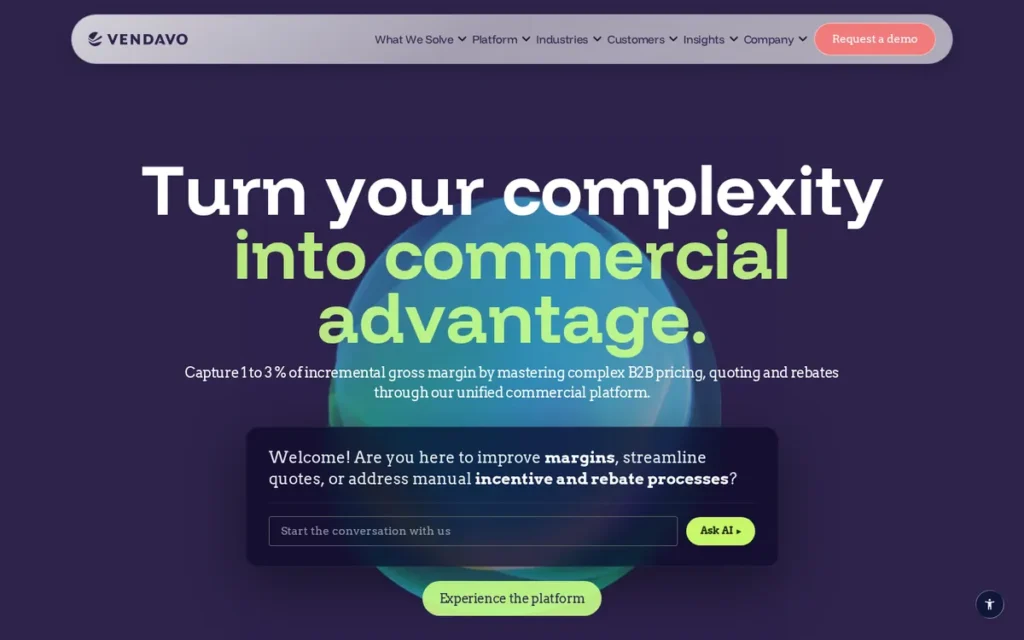
Category: Optimization Suite (Deal Science), AI-powered deal price optimization and margin management for enterprise B2B manufacturers and distributors, using patented willingness-to-pay science to protect margins in complex high-volume negotiation environments.
At a Glance
- Category: Optimization Suite (Deal Science)
- Best For: Fortune 500-caliber enterprise B2B manufacturers, distributors, and technology companies ($500M+ annual revenue) in manufacturing, industrial distribution, and energy verticals needing scientific deal-level margin protection with named-client documentation
- Price Range: Custom enterprise pricing; estimated $200,000+/year based on industry benchmarks (not vendor-confirmed); implementation services add approximately 20–40% beyond licensing; full deployment typically requires 6–18 months
- Primary Strength: Vendavo’s patented Deal Price Optimizer delivers named Fortune 500 client outcome documentation (Avnet’s 2–5% margin expansion and Dell’s 3% deal profitability improvement per Vendavo DPO product documentation) using willingness-to-pay science that models the highest achievable price per deal without reducing win probability
- Biggest Limitation: Vendavo requires the longest implementation commitment in this comparison (6–18 months, documented in G2 reviews) and the highest estimated minimum annual investment ($200,000+), structurally excluding all companies below approximately $100M in annual revenue from achieving viable ROI, a threshold confirmed by Reddit’s pricing practitioner community
- One-Line Summary: Vendavo is the enterprise B2B pricing platform with named Fortune 500 client outcome documentation (Avnet’s 2–5% margin expansion and Dell’s 3% deal profitability improvement per Vendavo documentation) backed by a Gartner Magic Quadrant Leader designation (April 2026) and Accel-KKR private equity investment
- Last Verified: May 2026
Overview
Vendavo is a Denver, CO-based enterprise B2B pricing and revenue management platform founded approximately in 2000 and backed by Accel-KKR (a technology-focused private equity firm, with Francisco Partners reinvesting since August 2021), designed for large manufacturers, distributors, and technology companies that need to protect margins in complex deal negotiations using AI-driven willingness-to-pay science.
Vendavo’s Deal Price Optimizer (a patented technology) analyzes transaction-level data (list price, final price, volume) to model customer willingness-to-pay and recommend the highest achievable price per deal without reducing win probability, with named Fortune 500 client outcomes documented in Vendavo’s own product materials.
Vendavo holds G2 4.3/5.0 (87 reviews) and Capterra 4.5/5.0 (42 reviews), and was named a Leader in the Gartner Magic Quadrant for B2B Pricing and Rebate Optimization Software in April 2026, an independently adjudicated analyst recognition determined through rigorous market evaluation.
Key Features
- Patented Deal Price Optimizer (DPO): Vendavo’s DPO uses patented algorithms to model individual customer willingness-to-pay by analyzing transaction-level list price, final price, and volume data, identifying the highest achievable price that does not reduce deal win probability, with named Fortune 500 client outcomes including Avnet’s 2–5% margin expansion and Dell’s 3% deal profitability improvement per Vendavo DPO product documentation (May 2026).
- Margin Bridge Analytics: Vendavo’s Margin Bridge Analytics quantifies the precise P&L impact of negotiated price changes at the product, customer, and segment level, translating pricing decisions directly into CFO-level financial reporting language and enabling identification of specific margin leakage points for surgical correction.
- Intelligent CPQ with AI Deal Guidance: Vendavo’s Intelligent CPQ embeds AI deal guidance into the sales workflow, generating price recommendations aligned with company margin targets while reducing quoting time and replacing manual price approval chains with automated, AI-scored deal workflows.
- Rebate and Channel Manager: Vendavo’s Rebate and Channel Manager: expanded via the 2023 acquisition of Market Medium, handles multi-tier channel incentive programs, distributor rebates, and complex promotional structures within the same pricing governance framework as deal and list price management.
- Accel-KKR Financial Backing and M&A Capacity: Vendavo is backed by Accel-KKR, a technology-focused private equity firm (since August 2021, with Francisco Partners reinvesting), providing investment capital for sustained product development and M&A execution demonstrated by the 2023 Market Medium acquisition expanding rebate and channel management capabilities.
Best For
Vendavo is best for Fortune 500-caliber enterprise B2B manufacturers, industrial distributors, and technology companies ($500M+ annual revenue) in manufacturing, energy, and distribution verticals where deal-level margin erosion through negotiated pricing discounts is measurable and directly linked to company profitability, and where the organization has the data maturity, integration resources, and 6–18 month implementation tolerance to realize the platform’s documented ROI potential.
Strengths
- Named Fortune 500 Client Outcomes Per Vendavo Documentation: Vendavo documents two named Fortune 500 client outcomes in its DPO product materials: Avnet achieved 2–5% margin expansion via willingness-to-pay modeling, and Dell improved deal profitability by 3%, outcomes documented at a scale where even 1% margin improvement can represent hundreds of millions in additional profit (Vendavo DPO product documentation, May 2026; independent third-party case study documentation for these clients was not publicly available at time of publication, buyers should request direct reference validation before treating these figures as guaranteed benchmarks for their own deployment).
- Gartner Magic Quadrant Leader for B2B Pricing and Rebate Optimization Software: Vendavo was named a Leader in the Gartner Magic Quadrant for B2B Pricing and Rebate Optimization Software in April 2026, an independently adjudicated recognition from the industry’s most recognized enterprise software analyst, providing credibility beyond vendor self-reporting (Gartner Magic Quadrant, April 28, 2026).
- Accel-KKR Backing and Active M&A Track Record: Vendavo’s Accel-KKR private equity backing (since August 2021) and the 2023 acquisition of Market Medium for rebate and channel management demonstrate active product investment and M&A capability, providing enterprise buyers the financial stability and development momentum signals relevant to long-term platform commitment decisions.
- Consistent Dual Review Platform Scores: Vendavo holds G2 4.3/5.0 (87 reviews) and Capterra 4.5/5.0 (42 reviews), with reviewers on both platforms praising pricing recommendation accuracy, AI deal insights, and realized margin ROI (verified May 2026).
Limitations
- Most Demanding Implementation in This Comparison: Vendavo’s implementation commitment is the most demanding of any tool evaluated, G2 reviewers consistently document 6–12 months to full deployment, with comprehensive enterprise implementations reaching 6–18 months and requiring dedicated data integration expertise, pricing process redesign, and sustained change management to drive sales team adoption.
- Highest Entry Cost Structurally Excluding Mid-Market: Vendavo’s estimated annual software licensing of $200,000+ with implementation services adding 20–40% creates a total investment viable only for organizations with approximately $100M–$500M+ in annual revenue, a threshold confirmed by Reddit’s pricing practitioner community as a structural ROI constraint, not a budgeting preference.
- Evidence Validation Required Before Relying on Client Outcomes: Vendavo’s documented Avnet and Dell outcome figures originate from Vendavo’s own product documentation, independent third-party case study validation for these specific clients was not publicly available at time of publication, and buyers building CFO-level business cases should request direct reference calls with named clients before treating vendor-documented figures as guaranteed benchmarks.
Verdict
Vendavo delivers the strongest named-client deal-level margin documentation in this comparison, Avnet’s 2–5% expansion and Dell’s 3% deal profitability improvement are Fortune 500-scale benchmarks per vendor product records, and the April 2026 Gartner Magic Quadrant Leader designation is independently adjudicated. Vendavo’s Accel-KKR financial backing, patented willingness-to-pay science, and 20+ years of B2B pricing domain expertise in manufacturing and distribution make it a credible choice for large enterprise buyers with the organizational capacity for a 6–18 month implementation at $200,000+/year. Any company below $100M in annual revenue should evaluate Pricefx’s faster, more affordable modular approach before entering a Vendavo evaluation cycle.
5. PROS: Best for Airlines and Travel Revenue Management: Best for NYSE-Listed Large-Scale B2B with Advanced AI Science Requirements
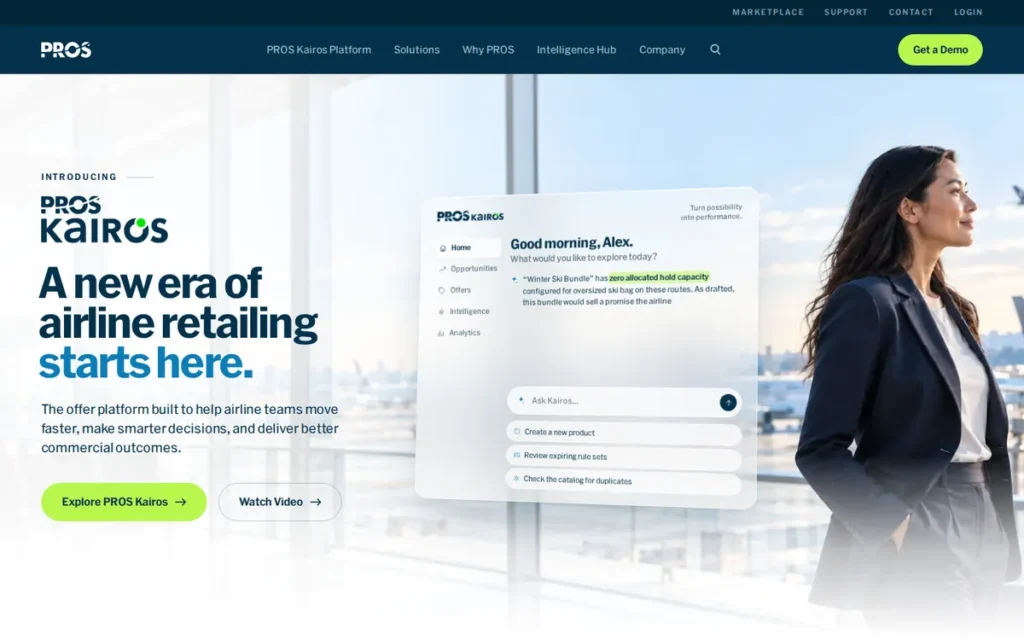
Category: Revenue Management Suite, AI-driven pricing and revenue optimization for commercial airlines and travel companies (primary domain since 1985) and large B2B manufacturers and distributors (expanding strategic segment).
At a Glance
- Category: Revenue Management Suite
- Best For: Commercial airlines and travel companies needing real-time dynamic revenue management at any scale; and large B2B manufacturers or distributors ($500M+ revenue) with in-house data science teams requiring the most technically advanced AI pricing methodology among the seven tools evaluated
- Price Range: Custom enterprise pricing; estimated $500K–$2M+/year for airline revenue management modules; B2B pricing modules custom-quoted separately; no public pricing disclosed
- Primary Strength: PROS is the only NYSE-listed, 40-year-old pricing and revenue management platform in this comparison (with airBaltic achieving +6% ancillary seat revenue per passenger over a 10+ year partnership) and the most explicitly documented agentic AI launch comprising named production agents released May 2025
- Biggest Limitation: PROS’s G2 rating of 4.2/5.0 is the lowest among enterprise tools in this comparison, likely reflecting complexity and learning curve challenges for B2B manufacturing buyers operating outside PROS’s foundational aviation domain, creating genuine misrouting risk when buyers select PROS based on brand prominence rather than domain alignment
- One-Line Summary: PROS is the only NYSE-listed, 40-year-old pricing and revenue management platform in this comparison, with the most technically sophisticated AI methodology among the seven tools evaluated (reinforcement learning trained on 40 years of live data), a documented airBaltic +6% ancillary seat revenue per passenger case study, and a 2025 agentic AI platform of named production agents
- Last Verified: May 2026
Overview
PROS Holdings, Inc. (NYSE: PRO) is a Houston, TX-based pricing and revenue management platform founded in 1985 (the oldest company and only publicly traded entrant in this comparison) offering AI-driven pricing across two distinct markets: airlines and travel (its core domain for 40 years) and B2B manufacturing and distribution (an expanding strategic segment).
PROS is the only vendor in this comparison with quarterly audited public financials, and its 40-year continuous AI model training on live pricing and demand data using reinforcement learning produces a proprietary technical depth that newer entrants cannot replicate without equivalent historical data volume.
PROS holds a G2 rating of 4.2/5.0 (the lowest among enterprise tools evaluated in this comparison) a signal buyers should weigh explicitly when considering PROS for non-aviation deployments outside the platform’s foundational domain.
Key Features
- Aviation Revenue Management Platform: PROS’s airline Revenue Management platform delivers real-time dynamic pricing, AI demand forecasting, dynamic ancillary pricing, and automated offer creation, with documented results including airBaltic’s +6% ancillary seat revenue per passenger over a 10+ year partnership, establishing PROS as the market-native choice for commercial airline revenue optimization (PROS case study and Outperform 2024).
- B2B Smart Price Optimization (SPO): PROS’s B2B Smart Price Optimization delivers AI-guided deal pricing, omnichannel price management, and CPQ integration for large manufacturers and distributors with complex product catalogs, customer-specific pricing, and multi-channel distribution environments.
- Named Agentic AI Production Agents (May 2025): PROS launched a suite of named production AI Agents on May 14, 2025 (including a Revenue Management Agent, Fare Strategy Agent, Bundling Agent, and Offer Agent) combining generative AI, predictive AI, and NLP for autonomous pricing workflow execution; buyers should verify the current agent roster directly with PROS, as the platform continued expanding since the initial launch (PROS news release, May 14, 2025).
- Reinforcement Learning AI Foundation: PROS’s AI methodology employs reinforcement learning (continuously learning from outcome feedback over time) alongside neural networks and deep learning trained on 40 years of live pricing and demand data, producing the most technically sophisticated AI foundation among all seven tools evaluated in this comparison.
- NYSE Financial Transparency: PROS’s NYSE listing (ticker: PRO) provides quarterly audited financial statements, analyst coverage, and public financial accountability, a transparency advantage that private competitors including Zilliant, Vendavo, Pricefx, and Competera structurally cannot offer to enterprise procurement teams conducting financial risk assessment.
Best For
PROS is best for commercial airlines and travel companies needing real-time revenue management, dynamic ancillary pricing, and offer creation at any scale, and for large B2B manufacturers or distributors ($500M+ annual revenue) with existing in-house data science teams, tolerance for enterprise-grade implementation timelines, and requirements for the most technically advanced AI pricing science among the seven tools evaluated. B2B manufacturing buyers without aviation context should specifically validate whether PROS’s B2B modules deliver equivalent feature depth to its aviation-native capabilities before committing at estimated $500K+ annual investment.
Strengths
- Only NYSE-Listed Vendor in This Comparison: PROS is the only NYSE-listed pricing software vendor in this comparison (ticker: PRO), providing quarterly audited financial statements and analyst coverage that private competitors (Zilliant, Vendavo, Pricefx, and Competera) structurally cannot match, giving enterprise procurement teams maximum financial transparency and vendor risk assessment capability (NYSE continuous disclosure, ongoing).
- Named Aviation Case Study: airBaltic +6% Ancillary Seat Revenue Per Passenger: airBaltic achieved +6% ancillary seat revenue per passenger after 10+ years of PROS deployment across Offer Creation, Shopping, Merchandising, and Dynamic Ancillary Pricing modules, validating PROS platform stability across more than a decade of live production deployment and earning endorsement from the airBaltic VP eCommerce for the Dynamic Ancillary Pricing implementation (PROS case study, confirmed May 2026).
- Most Explicitly Documented Agentic AI Production Launch Among Evaluated Tools: PROS’s 2025 AI Agents platform is the most explicitly documented agentic AI production launch among all evaluated tools, named agents with specific functional descriptions combining generative AI, predictive AI, and NLP for autonomous pricing workflow execution across airline and B2B product lines (BusinessWire, May 14, 2025).
- 40-Year Reinforcement Learning AI Training Depth: PROS’s 40-year reinforcement learning AI training history on live pricing and demand data produces a proprietary model foundation that no newer entrant can quickly replicate, a compounding competitive advantage where AI accuracy increases with each additional year of production feedback data.
Limitations
- Lowest Enterprise G2 Score in This Comparison: PROS’s G2 rating of 4.2/5.0 is the lowest among enterprise tools evaluated, a meaningful signal suggesting platform complexity and learning curve challenges for B2B manufacturing buyers operating outside PROS’s foundational aviation domain, and a data point buyers should weigh explicitly before committing at $500K+ estimated annual investment.
- Dual-Market Identity Creates Non-Aviation Misrouting Risk: B2B manufacturers and distributors who select PROS based on brand authority, AI reputation, or AI Agents marketing (without rigorous evaluation of whether PROS’s B2B modules deliver equivalent depth to its aviation-native capabilities) risk overpaying for a platform where institutional expertise and product investment concentration may favor the airline segment.
- Maximum Cost Opacity Excludes All Mid-Market Buyers: PROS creates full pre-demo pricing opacity for both buyer segments, with estimated costs at $500K–$2M+ for aviation modules structurally excluding all mid-market buyers, making Pricefx (G2 4.6/5.0, faster documented ROI, modular architecture) or Vendavo (named client documentation, deal-science depth) materially lower-risk alternatives for most non-aviation enterprise B2B use cases.
Verdict
PROS is the definitive choice for commercial airlines and travel companies needing revenue management, earning the strongest documented aviation case study in this comparison (airBaltic +6% ancillary seat revenue per passenger, 10+ years), the most technically sophisticated AI among the seven tools evaluated (reinforcement learning, 40 years of training data), and the only NYSE-listed financial accountability among all seven vendors. B2B manufacturing and distribution buyers outside the aviation domain should treat PROS’s lower G2 enterprise score (4.2/5.0) as a genuine domain-alignment signal (not a product quality judgment) and validate B2B module depth rigorously before committing at $500K+ estimated annual investment. Pricefx’s G2 4.6/5.0, faster documented ROI, and modular deployment model provide a materially lower-risk alternative for most non-aviation enterprise B2B use cases.
6. Zilliant: Best for B2B Manufacturing with Sales Team Adoption Priority: Best for SAP-Integrated Industrial Manufacturers Needing Explainable AI Pricing
Category: Optimization Suite (Explainable AI), B2B revenue intelligence and price management platform for industrial manufacturers and distributors, designed with transparent AI logic specifically to drive sales team adoption in SAP-integrated enterprise environments.
At a Glance
- Category: Optimization Suite (Explainable AI)
- Best For: Enterprise B2B industrial manufacturers and distributors ($100M+ annual revenue) in SAP-integrated environments where sales team adoption of AI pricing recommendations is the primary implementation success criterion
- Price Range: Custom enterprise pricing; estimated $100,000–$500,000+/year based on industry benchmarks (not vendor-confirmed); implementation services add approximately 20–40% beyond licensing; no public tiers disclosed
- Primary Strength: Zilliant’s explainable AI architecture shows users exactly how pricing recommendations are generated, a deliberate design targeting the most documented enterprise pricing implementation failure: sales reps ignoring recommendations from opaque black-box systems they cannot understand, verify, or trust
- Biggest Limitation: Zilliant’s 10x ROI and 20% LTV improvement claims are platform-level aggregates without named client attribution (providing weaker independent evidence than Pricefx’s named case study or Vendavo’s named client documentation) and Reddit’s pricing practitioner community explicitly identifies Zilliant as economically unviable for companies below approximately $50M in annual revenue
- One-Line Summary: Zilliant is the B2B pricing intelligence platform engineered for industrial manufacturer and distributor sales team adoption, combining official SAP partner certification (rated 4.4/5.0 on the SAP Store), a 2024 QKS Group SPARK Matrix recognition for B2B Price Optimization, and explainable AI that shows sales reps exactly how each price recommendation is generated
- Last Verified: May 2026
Overview
Zilliant is an Austin, TX-based B2B revenue intelligence and price management platform founded approximately in 2002, designed for industrial manufacturers and distributors managing thousands of customer-product pricing combinations across multiple channels, regions, and contract types, where a single mispriced SKU can erode margin at scale across automated digital channels.
Zilliant’s primary design differentiator is its explainable AI architecture (using Random Forest, Neural Nets, Association Rules, k-Means, and NLP in ways that show business users exactly how pricing recommendations are generated) directly targeting the sales team adoption failure that causes most enterprise pricing software implementations to underdeliver projected ROI.
Zilliant holds G2 4.4/5.0, official SAP partner certification for Zilliant Price IQ (rated 4.4/5.0 on the SAP Store, verified via SAP Products partner listing, May 2026), and recognition in the QKS Group (formerly Quadrant Knowledge Solutions) SPARK Matrix 2024 for B2B Price Optimization and Management.
Key Features
- Explainable AI Recommendation Engine: Zilliant’s AI system uses Random Forest, Neural Nets, Association Rules, k-Means, and NLP with transparent logic that shows business users how each pricing recommendation is generated, enabling sales reps to verify reasoning, build trust in AI outputs, and reduce manual overrides that undermine pricing consistency across distributed sales teams.
- Price Manager: Single Source of Pricing Truth: Zilliant Price Manager serves as a unified platform managing list prices, matrix prices, negotiated agreements, and one-time override exceptions across multiple channels, geographies, and contract types, eliminating the fragmented spreadsheet-based pricing management that creates margin leakage at scale.
- Next-Gen Price IQ with 10x Faster Scenario Modeling (2025): Zilliant’s Next-Gen Price IQ (released 2025) delivers 10x faster what-if scenario modeling and price elasticity calculation, enabling pricing teams to simulate strategy changes by segment, product group, or region before deploying them to live selling environments (Zilliant press release, 2025).
- Real-Time Pricing Engine with 99.99% Uptime SLA: Zilliant’s Real-Time Pricing Engine delivers price guidance via REST API to eCommerce and CRM systems with sub-second latency and a 99.99% uptime SLA, ensuring automated digital channel pricing remains current and accurate without the manual refresh cycles that create pricing errors at scale.
- Official SAP Partner Certification: Zilliant holds official SAP partner certification for Zilliant Price IQ, verified on the SAP Products partner listing and independently rated 4.4/5.0 on the SAP Store (May 2026), providing IT procurement teams at SAP-integrated manufacturers and distributors with validated, rated integration assurance in the most sensitive enterprise ERP layer.
Best For
Zilliant is best for enterprise B2B industrial manufacturers and distributors ($100M+ annual revenue) operating in SAP environments whose primary implementation risk is sales team adoption of AI pricing recommendations (not analytics capability) particularly organizations with geographically distributed sales forces where inconsistent manual pricing overrides are currently costing measurable margin across thousands of daily customer interactions.
Strengths
- Official SAP Partner Certification with Verified SAP Store Rating: Zilliant holds official SAP partner certification for Zilliant Price IQ, verified via the SAP Products partner directory and independently rated 4.4/5.0 on the SAP Store, providing IT procurement teams at SAP-integrated manufacturers with validated, independently rated integration assurance that reduces implementation risk in the most sensitive enterprise ERP layer (SAP Store listing, verified May 2026).
- 2024 QKS Group SPARK Matrix Recognition: Zilliant was recognized in the 2024 SPARK Matrix for B2B Price Optimization and Management by QKS Group (formerly Quadrant Knowledge Solutions), independent analyst-tier recognition providing enterprise procurement credibility in the specialized B2B pricing category (QKS Group, 2024).
- Most Systematic Sales Team Adoption Strategy in Comparison: Zilliant’s explainable AI design is the most systematically documented sales team adoption strategy among enterprise pricing tools evaluated, directly addressing the primary implementation failure mode where sales reps distrust opaque black-box recommendations and override them, causing AI pricing investments to go unrealized at the deal level.
Users on r/pricing noted the broader pattern that makes this design decision critical:
“At this level, building some automated Excel/Power BI tools is probably the way to go. At that scale, success is going to be 90% process design, communication and follow-through, the actual math and analytics shouldn’t be anything crazy. Clarity across the team and implementation are more important than a fancy ‘algorithm’ they can’t see. Pricing software can often be pricey to highly customize or you might get locked into a bunch of system limitations you have to work around in excel anyway.” Posted by u/Internalyze
Takeaway: Pricing practitioners consistently identify team clarity and process adoption (not algorithmic sophistication) as the primary determinant of pricing software ROI, making Zilliant’s explainable AI architecture a direct structural response to the most common enterprise implementation failure.
- Active 2025 AI Roadmap Execution: Zilliant’s 2025 platform updates: Next-Gen Price IQ with 10x faster scenario modeling, GenAI CPQ enhancements with natural language product search, and real-time margin alerts, demonstrate active product investment aligned with AI agent development trends across enterprise software (Zilliant press release, 2025).
Limitations
- Unnamed Aggregate ROI Claims: Zilliant’s most prominent ROI claims: 10x ROI in under 12 months and 20% increase in customer lifetime value, are platform-level aggregate figures without named client attribution or independent verification, providing weaker evidence credibility than Pricefx (named automotive distributor, 17.6% margin improvement) or Vendavo (Avnet and Dell named in vendor documentation); buyers building internal business cases should request specifically named reference customers from Zilliant directly rather than relying on platform-aggregate statistics.
- Practitioner-Confirmed Minimum Revenue Threshold: Reddit’s pricing practitioner community explicitly and repeatedly identifies Zilliant as economically unviable for companies below approximately $50M in annual revenue, a structural market constraint confirmed by multiple independent practitioners with direct implementation experience, not simply a vendor positioning choice.
- Narrowest Addressable Buyer Audience in Enterprise Tier: Zilliant’s positioning for SAP-integrated industrial manufacturers and distributors is more specific than Pricefx’s broad enterprise B2B coverage or Vendavo’s multi-vertical deal science, buyers outside manufacturing and industrial distribution who do not run SAP should evaluate Pricefx as the default before exploring Zilliant’s use-case fit.
Verdict
Zilliant is the best-fit enterprise B2B pricing platform for industrial manufacturers and distributors in SAP environments where sales team adoption is the primary implementation risk, Zilliant’s explainable AI architecture is the most systematically engineered adoption strategy in this comparison, and its SAP partner certification (4.4/5.0 SAP Store) and 2024 QKS Group SPARK Matrix recognition provide credible enterprise procurement validation. Zilliant’s unnamed aggregate ROI claims and practitioner-confirmed $50M+ minimum viability threshold position it below Pricefx and Vendavo on verifiable evidence quality. SAP-integrated manufacturing buyers should shortlist Zilliant alongside Pricefx and use reference call outcomes from named clients to make the final determination between the two.
7. Competera: Best for Enterprise Retail AI Pricing (with Due Diligence Required): Best for Large E-Commerce Retailers Needing Contextual Elasticity Demand Modeling
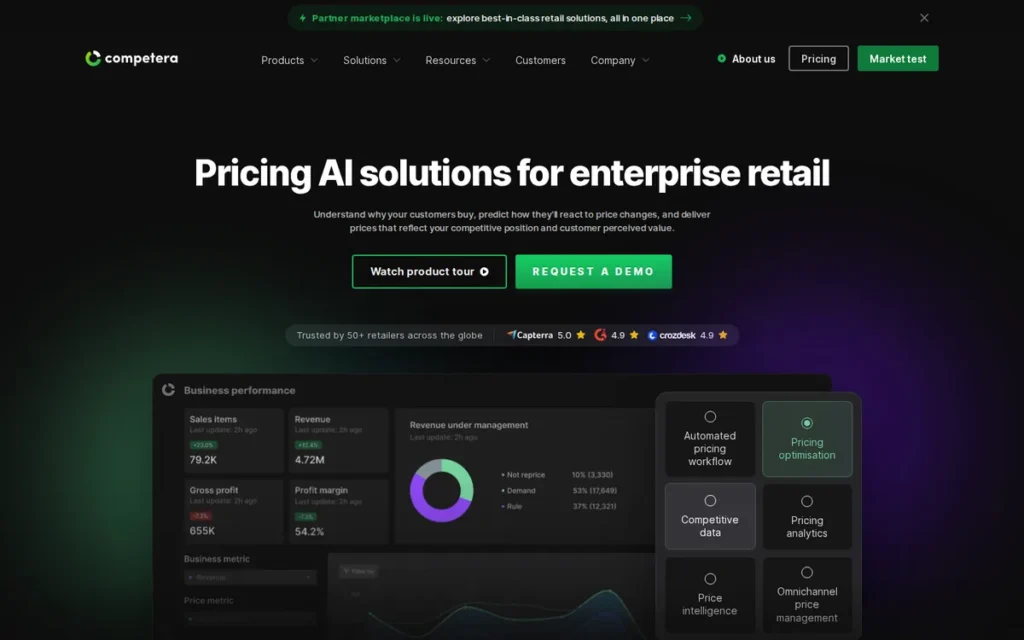
Category: AI Optimization Suite (Retail), contextual elasticity-based pricing for enterprise e-commerce retailers and omnichannel chains, analyzing 20+ demand factors to model price-volume relationships beyond rule-based competitor matching.
At a Glance
- Category: AI Optimization Suite (Retail)
- Best For: Enterprise e-commerce retailers and omnichannel chains ($50M+ GMV) with tens of thousands of SKUs across multiple channels and geographies requiring AI-driven demand elasticity modeling, after completing operational due diligence on vendor structure and shared Data Lake data privacy evaluation
- Price Range: Custom enterprise pricing; estimated $2,000–$15,000+/month based on comparable enterprise retail AI platform positioning (not vendor-confirmed); no public tiers disclosed
- Primary Strength: Competera’s contextual elasticity model recalculates own-price and cross-product elasticity at every pricing cycle using 20+ factors (the most technically sophisticated demand modeling approach among e-commerce tools evaluated) with favorable overall ratings reflecting current-client satisfaction (GetApp 4.8/5.0, 58 reviews; G2 4.9/5.0, 14 reviews; Capterra 4.8/5.0)
- Biggest Limitation: Competera’s G2 review volume of 14 reviews is insufficient for enterprise-grade procurement confidence at $2,000–$15,000+/month pricing (buyers cannot draw statistically reliable conclusions from 14 reviews) and no publicly named client case studies exist to independently validate vendor-stated outcome claims
- One-Line Summary: Competera is an AI retail pricing platform recalculating contextual own-price and cross-product elasticity at every pricing cycle using 20+ factors, with favorable current-client ratings (GetApp 4.8/5.0 from 58 reviews, G2 4.9/5.0 from 14 reviews, low volume, Capterra 4.8/5.0) but insufficient review volume and no named client case studies to validate at enterprise scale before committing
- Last Verified: May 2026
Overview
Competera is an AI pricing platform founded approximately in 2014, originally based in Kyiv, Ukraine, with operations expanded internationally following 2022. Competera is designed for enterprise e-commerce retailers and omnichannel chains that need scientifically modeled demand elasticity across large product catalogs, going beyond rule-based competitor price matching to predict how price changes affect demand across interdependent product categories in real time.
Competera’s multi-ML model analyzes 20+ pricing and non-pricing factors, including contextual own-price elasticity (varying by percentage price change, seasonality, and competitive positioning), cross-product elasticity, basket analysis, and customer willingness to pay, all recalculated at every pricing cycle for theoretically more accurate recommendations under volatile market conditions than static coefficient-based tools.
Enterprise buyers evaluating Competera should conduct operational due diligence on the company’s post-2022 organizational structure and review data privacy contractual provisions for the shared Data Lake architecture before committing, requirements that distinguish Competera from all other tools evaluated in this comparison.
Key Features
- Contextual Elasticity Recalculation at Every Pricing Cycle: Competera’s multi-ML model recalculates contextual own-price and cross-elasticity at every pricing cycle using 20+ factors (including basket analysis, seasonal variation, customer willingness-to-pay, and competitive positioning) a technically more sophisticated approach than the static elasticity coefficients applied by most rule-based e-commerce pricing tools (Competera technology documentation, 2025).
- 2-Hour Competitor Monitoring Refresh: Competera provides competitor price monitoring updating every 2 hours with claimed 99% data accuracy, the highest monitoring frequency among e-commerce tools evaluated in this comparison, enabling faster competitive response for retailers in high-velocity pricing categories where pricing parity windows are measured in hours (Competera platform documentation, 2025).
- Shared Data Lake Architecture: Competera’s shared Data Lake pools pattern recognition from all customer retailers while maintaining individual client pricing data confidentiality, theoretically improving AI model accuracy through network effects, though this architecture requires explicit data privacy evaluation from any retailer whose pricing strategy constitutes core intellectual property.
- Omnichannel Coverage: Competera covers both online and physical retail channel pricing simultaneously, enabling omnichannel pricing consistency for retailers managing e-commerce and brick-and-mortar stores within a single platform.
- Claimed Operational Cost Reduction: Competera claims to reduce pricing operations costs by up to 30% through automation of pricing decisions, a potential operational efficiency gain that buyers should validate through named reference customer confirmation before contract signature, as this claim lacks independent corroboration in available data.
Best For
Competera is best for enterprise e-commerce retailers and omnichannel chains with $50M+ GMV, tens of thousands of SKUs, multiple geographic markets, and existing pricing analyst capacity who need AI-driven demand elasticity modeling that goes beyond rule-based competitor matching, provided buyers have completed operational due diligence on Competera’s post-2022 organizational structure and secured contractual data privacy protections for the shared Data Lake architecture before committing.
Strengths
- Most Technically Differentiated Demand Modeling Among E-Commerce Tools: Competera’s contextual elasticity recalculation (computing own-price elasticity as a function of current percentage price change, competitive positioning, and seasonality at every pricing cycle) is the most technically differentiated demand modeling approach among e-commerce tools in this comparison, theoretically producing more accurate recommendations than static coefficient tools under volatile market conditions (Competera technology documentation, 2025).
- Favorable Overall Ratings Among Current Clients: Competera holds GetApp 4.8/5.0 (58 reviews), G2 4.9/5.0 (14 reviews), and Capterra 4.8/5.0, ratings reflecting genuine user satisfaction among current clients, though the G2 review volume of 14 is too limited to serve as a statistically reliable benchmark for enterprise buyers at $2,000–$15,000+/month contract levels (GetApp, Capterra, G2, verified May 2026).
- Independent Growth and Analyst Recognition: Competera appeared on the Inc. 5000 list in 2025 (an independent growth validation signal) and is referenced as a representative vendor in Gartner’s Market Guide for Retail Pricing Technologies, providing additional third-party recognition beyond vendor self-reporting (Inc. Magazine, 2025; Gartner Market Guide, edition year to be confirmed directly with Competera).
- Highest Monitoring Frequency Among E-Commerce Tools: Competera’s 2-hour competitor monitoring refresh cycle with claimed 99% data accuracy is the most specific monitoring frequency claim among e-commerce tools evaluated, a meaningful differentiation for retailers in high-velocity competitive categories (Competera platform documentation, 2025).
Limitations
- Insufficient Review Volume for Enterprise-Grade Evaluation: Competera’s G2 review count of 14 reviews is too small for enterprise procurement confidence at $2,000–$15,000+/month pricing, buyers cannot draw statistically reliable conclusions from a 14-review sample that excludes most enterprise buyer experiences, and the absence of sufficient high-stakes enterprise reviews means procurement teams cannot triangulate satisfaction at scale the way they can for tools with 42–211+ verified reviews.
- No Publicly Named Client Case Studies: All of Competera’s outcome claims: up to 8% revenue uplift, 6% margin improvement, 30% cost reduction, are vendor-stated aggregate figures without publicly named client attribution or independent corroboration, meaning enterprise buyers committing $2,000–$15,000+/month are accepting substantially more evidence risk than for any other tool in this comparison.
- Two Unique Pre-Commitment Due-Diligence Requirements: Competera requires two pre-commitment due-diligence actions not required by any other evaluated tool: buyers should conduct explicit operational due diligence on Competera’s post-2022 team structure given its Ukrainian origin (including team locations, data residency, and business continuity planning) and the shared Data Lake architecture requires specific legal review of data confidentiality provisions for any retailer whose pricing strategy is a competitive differentiator.
Verdict
Competera’s contextual elasticity AI methodology is genuinely sophisticated, recalculating demand elasticity at every pricing cycle across 20+ factors represents a technical advance over rule-based repricing that may deliver superior margin outcomes in volatile retail markets. However, the current combination of insufficient G2 review volume (14 reviews), absence of publicly named client case studies, and two unique pre-commitment due-diligence requirements means the evidence burden currently falls on the buyer to validate performance before committing. Enterprise retail buyers who find Competera’s AI differentiation compelling should require references from at least two named clients with quantified margin outcomes, conduct explicit operational due diligence on the post-2022 organizational structure, and secure contractual data privacy protections for the shared Data Lake before proceeding.
What Red Flags Should I Watch For When Evaluating Pricing Software?
The following four red flags account for the majority of costly pricing software selection mistakes documented across practitioner communities, review platforms, and enterprise implementation post-mortems. Each can be identified before committing to any demo engagement.
Red Flag #1: Enterprise Pricing Claims Without Named Client Attribution
Platform-aggregate ROI figures, “customers see 10x ROI” or “20% margin improvement”, without named clients cannot be independently verified and should not anchor a $100,000+ purchase decision. Every enterprise tool in this comparison publishes aggregate claims; only Pricefx (17.6% margin improvement, automotive distributor, with direct case study URL), Vendavo (Avnet 2–5%, Dell 3%, per vendor documentation), and PROS (airBaltic +6% ancillary seat revenue) provide named outcomes. Request named reference customers in your specific vertical and revenue range before any procurement commitment.
Red Flag #2: Selecting a Tool Before Auditing Transaction Data Quality
AI pricing models train on historical transaction data, and fragmented ERP records, inconsistent product codes, or incomplete pricing history produce unreliable recommendations regardless of platform sophistication.
“The first thing we need to ask some questions about is Data Hygiene. Is our transaction data and history clean and reliable?” (u/FatherPrice, r/pricing)
Takeaway: Organizations that skip the data audit consistently report 12–18 month delays in realized ROI, effectively paying for a platform for over a year before it begins delivering value.
Budget 20–40% of total implementation cost for data remediation before platform deployment if ERP records are fragmented or incomplete.
Red Flag #3: Pricing Opacity Requiring a Full Sales Cycle to Reveal
Any vendor that cannot provide even a budget range estimate before requiring a demo creates procurement friction and time cost. Five of the seven tools in this comparison, Pricefx, Vendavo, PROS, Zilliant, and Competera, withhold all pricing until after demo engagement. Only Prisync and Price2Spy publish transparent public pricing tiers. Based on enterprise SaaS sales cycle benchmarks, budget an additional 4–8 weeks when evaluating tools that gate cost information, a timeline that affects organizations with quarterly budget planning windows.
Red Flag #4: Architectural Mismatch, Selecting the Wrong Tool Category
Choosing an e-commerce SKU-monitoring tool for B2B quote-based pricing (or an enterprise optimization suite for a Shopify retailer) is the most common and most expensive pricing software mistake documented in practitioner communities.
“Half the ‘pricing optimization’ value dies if the integration is a mess.”, u/Beginning_Jicama1996, r/pricing
Takeaway: Confirm the tool’s primary pricing motion (SKU-based repricing versus deal-level negotiation) matches your own before investing any time in a demo or evaluation process.
What Questions Should I Ask Before Choosing Pricing Software?
The following six questions surface information most critical to a sound pricing software decision, each is documented in practitioner communities and review platform data as a determinant of implementation success or failure.
Question #1: What Is the Quality and Completeness of Our Transaction Data Before We Sign?
Conduct a data quality audit before entering any enterprise pricing sales cycle. Pricefx, Vendavo, PROS, and Zilliant all require clean historical data to train AI optimization models reliably. Organizations that skip this step consistently report delayed ROI or failed implementations regardless of platform quality. Engage a data consultant to audit ERP completeness (including pricing history, product code consistency, and customer segment records) before finalizing a shortlist.
Question #2: What Is Our Realistic Total Implementation Budget Including Integration Services?
Enterprise pricing software implementation services typically add 20–40% beyond annual licensing cost. A $200,000/year Vendavo contract may require an additional $60,000–$80,000 in implementation services in year one, plus the cost of a 6–18 month delayed ROI realization period.
Model 3-year total cost of ownership for all modules you expect to activate (not just the initial module cost) before signing any contract.
Question #3: Which ERP, CRM, and E-Commerce Systems Does This Tool Natively Integrate With?
Integration quality is the single most cited determinant of pricing software ROI in practitioner communities. Zilliant’s SAP partner certification, Pricefx’s cloud-native API, and Prisync’s native Shopify app represent varying levels of integration nativity, each with different implementation cost and failure-risk implications. Middleware-dependent integrations create data latency, maintenance burden, and single points of failure that pricing accuracy depends on daily.
Question #4: Can We Speak With Three Reference Customers in Our Specific Revenue Range, Vertical, and Use Case?
Generic reference calls are less valuable than specifically matched references. Ask for three reference customers with your approximate annual revenue, industry vertical, ERP environment, and primary use case, and specifically ask how long implementation took, what data quality preparation was required, and whether the quoted ROI was achieved within the projected timeline. Vendors unable or unwilling to provide specific-match references should be treated as a procurement risk signal.
Question #5: Does This Tool’s Architecture Match Our Primary Pricing Motion?
Determine whether your primary pricing motion is B2B deal-based (negotiated contracts, volume agreements, customer-specific tiers) or e-commerce SKU-based (competitor matching, rule-based repricing) before evaluating features. No amount of configuration converts an e-commerce monitoring tool into a B2B deal optimization engine, or vice versa. Confirm architectural fit before investing in any demo or proof-of-concept engagement.
Question #6: What Is the Vendor’s Financial Stability and Ongoing Investment Trajectory?
For a 3–5 year platform commitment, vendor financial health matters. PROS provides quarterly audited financials as the only NYSE-listed vendor in this comparison. Vendavo is backed by Accel-KKR with Francisco Partners reinvesting. Pricefx and Price2Spy are privately held without publicly disclosed funding. Competera requires additional operational due diligence given its Ukrainian operational origin. Request the vendor’s most recent annual report or equivalent financial documentation before committing to any multi-year contract.
How Did We Rank These Pricing Software Tools?
Seven pricing software tools were evaluated against six objective criteria using a weighted scoring methodology. Rankings reflect composite weighted scores across all criteria, no tool received preferential treatment, and no company paid for placement or category position.
Evaluation Process
The evaluation proceeded in four stages:
Stage 1, Product Discovery: Multiple AI search engines and review platforms were queried to identify the most-recommended pricing software tools across the SMB-to-enterprise spectrum.
Stage 2, Independent Web Research: Each product was researched via Perplexity, vendor documentation, G2, Capterra, Shopify App Store, and GetApp to gather feature details, review scores, pricing information, and case study data.
Stage 3, Reddit Community Sentiment Analysis: Multiple subreddits, r/pricing, r/PriceMonitoring, r/SaaS, r/ecommerce, r/shopify, were searched for practitioner discussions from 2025–2026 threads to capture real-world implementation experience independent of vendor marketing.
Stage 4, Cross-Reference and Validation: All vendor-reported statistics were cross-referenced against independent sources. Claims corroborated only by vendor materials are labeled as vendor-stated throughout this article.
Ranking Criteria
Six criteria were evaluated, with the first three weighted double the remaining three:
Verified Performance Evidence (Primary, 2x weight): Presence and specificity of named-client case studies with quantified outcomes. Named Fortune 500 client outcomes receive highest weight; platform-aggregate claims with sourced methodology receive secondary weight; vendor testimonials without attribution receive lowest weight. Why it matters: Pricing managers need specific, attributable outcome data to build internal business cases for CFO approval, generic “improve margins” claims are insufficient to justify $100K–$500K annual commitments.
Review Platform Ratings and Volume (Primary, 2x weight): G2, Capterra, and Shopify App Store ratings weighted by review count; analyst recognitions (Gartner Magic Quadrant, QKS Group SPARK Matrix, Stevie Awards) assessed as supplementary signals. Why it matters: Aggregated verified buyer sentiment independent of vendor marketing is the most reliable proxy for real-world product satisfaction available without direct implementation experience.
Use-Case Fit and Architectural Suitability (Primary, 2x weight): Assessment of primary architectural design versus claimed target market, validated by practitioner community endorsement or warnings from r/pricing, r/PriceMonitoring, and r/ecommerce. Why it matters: The most common pricing software failure is architectural mismatch, selecting a tool designed for a fundamentally different pricing motion than the buyer’s actual business model.
Pricing Transparency and Value (Secondary, 1x weight): Presence of publicly disclosed pricing tiers, availability of free trial without credit card, clarity of cost-scaling model. Why it matters: Opaque pricing forces buyers into enterprise sales cycles before determining budget fit, creating procurement friction and disadvantaging buyers with tighter planning cycles.
Integration Depth and Implementation Realism (Secondary, 1x weight): Nativity of ERP, CRM, CPQ, and e-commerce integrations; documented implementation timelines; data hygiene prerequisite transparency. Why it matters: Integration quality is the single most cited determinant of pricing software ROI in practitioner communities, platform capability alone does not deliver results without clean, connected data.
AI Sophistication and Product Innovation (Secondary, 1x weight): Documented AI methodology sophistication; confirmed 2025–2026 agentic AI launches with dated citations; explainability and adoption design. Why it matters: Buyers making 3–5 year platform commitments need confidence that a vendor’s AI roadmap is actively executing, not aspirational.
Evidence Weighting
When review platform ratings conflict with Reddit sentiment, recency and specificity are weighted over general score. A detailed 2025 Reddit post from a practitioner with direct implementation experience outweighs a generic 2023 G2 review. Vendor-reported statistics are labeled as such throughout this article.
Data Validation
Vendor-reported ROI statistics appearing only in vendor materials are labeled “vendor-stated” or “platform-level aggregate” throughout. Named client case studies (Avnet, Dell per Vendavo documentation; airBaltic per PROS case study) are treated as higher-credibility evidence because they are attributable and independently checkable, though independent third-party confirmation of Avnet and Dell outcomes was not publicly available at time of publication. All review scores include platform name, numerical score, and review count as of the verification date.
The following three criteria apply the double-weighting in all scoring: Verified Performance Evidence, Review Platform Ratings and Volume, and Use-Case Fit and Architectural Suitability. The remaining three criteria receive single-weight scoring.
Update Cadence
This article was researched and published in May 2026. PlugRoute updates this article when material changes in product positioning, review scores, pricing structures, or significant market entrants occur, typically on a quarterly basis for high-activity categories.
Independence Statement
PlugRoute has no affiliate relationships with any company listed. Rankings are determined entirely by research data and objective evaluation criteria.
Frequently Asked Questions About Pricing Software
What Is the Best Pricing Software for Small Businesses in 2026?
Prisync is the best pricing software for small e-commerce businesses in 2026, earning a 4.9/5.0 Shopify App Store rating from 211 verified reviews with transparent pricing starting at $49/month and native integrations requiring no engineering setup. For B2B small businesses ($10M–$50M revenue) with complex pricing requirements, no adequately priced commercial tool currently exists per practitioner community consensus, Excel and Power BI are the recommended interim approach until revenue scale justifies a $100K+/year enterprise platform.
What Is the Difference Between Competitive Price Monitoring Software and Price Optimization Software?
Competitive price monitoring software (Prisync, Price2Spy) tracks competitor prices and triggers rule-based repricing based on external market signals. Price optimization software (Pricefx, Vendavo, Zilliant) uses AI to model willingness-to-pay, demand elasticity, and margin tradeoffs from internal transaction data. These architectures serve fundamentally different pricing motions (e-commerce SKU repricing versus B2B deal and contract pricing) and are not interchangeable regardless of price point or brand recognition.
How Does PlugRoute Determine Its Pricing Software Rankings?
PlugRoute ranks pricing software using six weighted criteria: Verified Performance Evidence, Review Platform Ratings and Volume, and Use-Case Fit (each double-weight) plus Pricing Transparency, Integration Depth, and AI Sophistication (single-weight). No company pays for placement and no affiliate relationships exist with any listed vendor. Rankings reflect composite weighted scores derived from independent research, verified review platform data, practitioner community intelligence, and cross-referenced vendor claims. The full methodology is disclosed in the section above.
Glossary: Key Terms Used in This Comparison
Price Elasticity: Price elasticity is the measure of how much demand for a product changes in response to a price change, typically expressed as the percentage change in demand divided by the percentage change in price. A product with high elasticity loses significant sales volume when prices increase; a product with low elasticity maintains demand despite price increases. Pricing optimization platforms such as Pricefx and Competera use elasticity models to identify which products can absorb price increases without material volume loss.
Willingness-to-Pay (WTP) Modeling: Willingness-to-pay modeling is the process of estimating the maximum price a specific customer or customer segment will pay for a product or service before choosing a competitor or delaying purchase, using transaction-level data, historical deal outcomes, and behavioral signals. Vendavo’s patented Deal Price Optimizer is the primary WTP-focused tool in this comparison, with named Fortune 500 client outcomes including Avnet’s 2–5% margin expansion and Dell’s 3% deal profitability improvement per Vendavo product documentation.
CPQ (Configure Price Quote): CPQ is a software category that automates the generation of sales quotes, configuring product options, applying pricing rules, and producing customer-facing proposals within defined margin guardrails. In pricing software, CPQ integration means deal prices are governed by the same rules as list and contract prices, eliminating manual discount approval chains that create margin leakage. Pricefx, Vendavo, and Zilliant all offer native CPQ capabilities within their platforms.
MAP Monitoring (Minimum Advertised Price): MAP monitoring is the automated tracking of whether authorized dealers and resellers advertise products at or above the brand’s contractually required minimum advertised price. Pricing tools including Price2Spy and Prisync (Platinum tier) provide MAP violation alerts, and Price2Spy specifically captures screenshot-based evidence for brand protection enforcement actions against non-compliant dealers.
Agentic AI (in Pricing Context): Agentic AI refers to AI systems that take autonomous, multi-step actions to achieve defined goals, beyond generating recommendations for humans to act on. In pricing software, agentic AI includes systems that detect margin anomalies, adjust prices, generate quotes, and manage rebates with minimal human intervention. PROS launched named agentic AI production agents in May 2025, and Pricefx added always-on AI agents for margin-leak detection in its 2024–2025 platform update.
Which Pricing Software Is Right for You?
The right pricing software depends on two decisions made before evaluating features: whether your pricing motion is B2B deal-based or e-commerce SKU-based, and whether your transaction data is clean enough for AI models to train on reliably. Every other selection criterion is secondary to these two architectural and data-readiness questions.
Key Insights
- Audit transaction data quality before selecting any enterprise pricing tool: AI models train on historical data, and fragmented ERP records delay ROI regardless of platform capability or vendor reputation.
- Pricefx’s modular cloud-native architecture is the lowest-risk enterprise entry for B2B buyers prioritizing proven time-to-value: 59% of customers achieve full ROI within 12 months, with a start-with-one-module deployment option unique in the enterprise tier (Pricefx learning center, May 2026).
- Prisync and Price2Spy are built exclusively for e-commerce SKU-based pricing: any B2B buyer evaluating these tools based on price point is facing an architectural mismatch that no amount of configuration will resolve.
- The mid-market B2B gap is real and currently unaddressed: companies with $10M–$50M revenue and complex B2B pricing rules have no adequately priced commercial tool as of May 2026, per confirmed practitioner community consensus.
- PROS is the definitive airline revenue management choice, but its G2 4.2/5.0 enterprise score warrants explicit B2B module depth validation before non-aviation buyers commit at $500K+ estimated annual investment.
- Competera’s contextual elasticity AI methodology is the most sophisticated among e-commerce tools, but insufficient G2 review volume (14 reviews) and no named client case studies mean the evidence burden currently falls on the buyer to validate through reference checks.
If you’re a Shopify or Magento retailer under $400/month, Prisync’s 4.9/5.0 rating from 211 verified reviews and transparent public pricing make it the lowest-risk starting point. For deeper competitive intelligence on bot-protected competitors or MAP violation documentation, Price2Spy’s 30-day no-credit-card trial provides full feature validation before any commitment.
If you’re a B2B manufacturer or distributor with $50M+ in annual revenue, Pricefx’s modular deployment model, start with analytics, add optimization modules as value is proven, reduces the implementation risk that causes most enterprise pricing projects to underdeliver. Larger enterprises ($500M+) requiring deal-level margin science should evaluate Vendavo’s patented willingness-to-pay technology in parallel. Commercial airlines and travel companies should evaluate PROS exclusively, no other tool in this comparison is designed for aviation revenue management at any scale.
We update this guide quarterly. Last updated: May 2026.
For more independent software comparisons evaluated with the same transparent, evidence-first methodology, visit PlugRoute.