Channeltivity is the strongest overall PRM for mid-market tech channel programs; PartnerStack leads for B2B SaaS companies managing affiliate, referral, and reseller programs simultaneously; and Kiflo is the fastest and most affordable launch point for SMBs building their first program. The make-or-break criterion is not features, it is whether partners return to the portal after onboarding.
Most channel leads discover the real problem six months after deployment: the portal is live, partners are onboarded, and almost no one logs back in. Spreadsheets collapse at 30+ active partners, portals go dark within the first 90 days, and implementation timelines routinely blow past the quarter when leadership expected the first partner-sourced deal to close.
PlugRoute has no affiliate relationships with any company listed, rankings are determined entirely by research data and objective evaluation criteria.
“Implementations usually take a long time.”, u/Federal-Llama, r/SaaS (October 2023), evaluating PRM vendors across a full competitive selection process
Takeaway: This practitioner (who evaluated Impartner, Channeltivity, and Allbound in a single competitive selection) identified implementation length as the category’s single most consistent disappointment. The platforms in this comparison range from days-to-weeks (Kiflo, Channeltivity) to 6–12 months (Salesforce PRM), a difference that determines whether your partner program contributes to this year’s revenue or next.
Picture this: a channel lead at a 200-person SaaS company spends eight months selecting and deploying an enterprise PRM. The deal registration module is live. The co-branded collateral library is fully stocked. Partner onboarding is automated.
Three months later, 72% of enrolled partners have logged in once and never returned. The portal is technically functional. The partner program is operationally dead.
This is the most common PRM implementation failure mode cited across practitioner forum discussions, and it is the one criterion AI-generated PRM comparisons never evaluate. The question this article answers is not which platform has the best feature list. It is which platform has partners who actually return.
TL;DR: Top Picks at a Glance
- Channeltivity offers published pricing starting at $1,899/month (verified May 2026), an 18-year tech-channel track record, and documented no-code deployment in weeks, the most budget-qualifiable mid-market PRM in this comparison.
- PartnerStack provides a 138,000-partner marketplace for B2B SaaS affiliate, referral, and reseller programs, with an April 2026 AppDirect acquisition that buyers must factor into roadmap and pricing continuity assessments before signing.
- Kiflo publishes a starting price of $399/month (Core Plan, 25–50 active partners, verified May 2026) and deploys in days to weeks, the fastest and most affordable first PRM for SMBs launching their first partner program.
- Allbound offers behavioral gamification and content engagement analytics designed for mid-market programs where partner portal inactivity after onboarding is the primary management challenge.
What Are the Main Categories of PRM Software?
The three categories of PRM software in this comparison differ primarily by organizational scale, program complexity, and implementation overhead. Enterprise PRM platforms offer the deepest feature sets but require multi-month implementations and dedicated admin resources; Mid-Market PRM platforms deploy in weeks at published or accessible pricing; and SMB/SaaS-Native platforms prioritize speed and simplicity above all else.
PRM platforms in this comparison fall into three categories:
- Enterprise PRM (Impartner, Salesforce PRM, ZINFI): for large organizations with complex multi-tier programs and dedicated implementation teams. Feature sets are deepest, but implementations run 3–12 months, pricing is contact-sales only, and ongoing admin and developer dependencies are standard.
- Mid-Market PRM (Channeltivity, Allbound): covering the full partner lifecycle with faster deployment timelines (weeks to a few months) at more accessible pricing. Channeltivity publishes starting prices; Allbound requires a sales conversation.
- SMB/SaaS-Native PRM (Kiflo, PartnerStack): built for speed and accessibility, with published pricing (Kiflo), automated payout infrastructure (PartnerStack), and deployment measured in days to weeks rather than quarters.
How Do the Top 7 PRM Platforms Compare at a Glance?
These seven partner relationship management platforms span three market segments. Channeltivity and Allbound target mid-market tech channel programs; PartnerStack and Kiflo serve B2B SaaS companies at different scales; Impartner and ZINFI address large enterprise multi-tier ecosystems; and Salesforce PRM is justified only for enterprises already fully committed to the Salesforce platform. The table below compares all seven on the criteria practitioners cite as most predictive of implementation success.
| Rank | Company | Category | Best For | One-Line Summary | Key Capabilities | Primary Strength | Key Limitation |
|---|---|---|---|---|---|---|---|
| 1 | Channeltivity | Full-Suite PRM (Tech Channel) | Mid-market tech channel; 10–200 partners | Channeltivity is the longest-tenured tech-channel PRM (since 2007), offering the only published mid-market pricing in this comparison ($1,899–$2,199/month, verified May 2026), no-code deployment in weeks, and native Salesforce, HubSpot, and Dynamics 365 integration. | Deal registration; MDF management; HubSpot PRM-in-a-box; no-code portal config; LMS | Only published mid-market pricing in comparison; 18 years of tech-channel refinement | Analytics depth more basic than enterprise platforms; add-on modules priced separately at $499/month each |
| 2 | PartnerStack | SaaS-Native PRM | B2B SaaS with existing partner demand; affiliate, referral, reseller programs | PartnerStack is a B2B SaaS-native platform with a 4.7/5.0 G2 rating (400+ reviews), a 138,000-partner marketplace, and an undisclosed GMV-percentage pricing model that penalizes high-growth programs; acquired by AppDirect in April 2026. | 138,000-partner marketplace; single-invoice payout automation; full-funnel attribution analytics | Largest B2B SaaS partner marketplace; best payout automation in comparison | GMV-percentage pricing scales with program success; AppDirect acquisition creates roadmap uncertainty |
| 3 | Kiflo | SMB/Startup PRM | SMBs launching first partner programs; 25–50 active partners (Core Plan) | Kiflo is the most price-transparent and fastest-to-deploy PRM in this comparison, with a published Core Plan at $399/month (verified May 2026), partner adoption described as “a breeze,” and two-way Salesforce and HubSpot CRM sync. | Automated onboarding workflows; two-way CRM sync; deal registration; revenue attribution dashboards | Most affordable published starting price ($399/month); fastest documented time-to-first-partner-revenue | Core Plan ceiling of 25–50 active partners; limited enterprise scalability and analytics depth |
| 4 | Allbound | Engagement-Focused PRM | Mid-market programs with low portal engagement or high partner inactivity after onboarding | Allbound is documented as the only platform in this comparison with a built-in gamification layer (leaderboards, badges, challenges) and content engagement analytics; strongest for programs where portal activation after onboarding is the primary challenge. | Gamification engine (verify via demo); content engagement analytics; dynamic group segmentation; KPI dashboards | Only gamification system documented in this comparison; asset-level engagement tracking | Back-end development dependency extends implementation to several months; no published pricing |
| 5 | Impartner | Enterprise PRM (Salesforce-Native) | Large enterprises with mature Salesforce deployments and complex multi-tier programs | Impartner is an enterprise-grade PRM built on Salesforce architecture delivering real-time native Salesforce data access, production-grade Agentforce AI, Journey Builder lifecycle automation, and TCMA; best for large Salesforce enterprises tolerating a 5+ month implementation. | Journey Builder automation; TCMA; Agentforce/Einstein AI; Salesforce-native real-time data access | Deepest Salesforce-native integration; most comprehensive partner lifecycle automation | ~5-month average implementation (competitor-cited; verify independently); ongoing custom-code dependency; all ROI claims vendor-reported |
| 6 | ZINFI | Unified Channel Management (UCM) | Large global enterprises needing CRM-agnostic UCM with sophisticated BI and automated partner profiling | ZINFI is a Unified Channel Management platform for complex global enterprise partner ecosystems, offering a CRM-agnostic modular architecture with Dun & Bradstreet partner profiling and a cross-module BI correlation engine. | UCM architecture (PRM + PMM + BI); D&B firmographic data integration; SCORM LMS; cross-module correlation engine | CRM-agnostic architecture; D&B integration for automated partner profiling | Near-zero independent community validation; self-reported competitive metrics require direct G2 verification |
| 7 | Salesforce PRM | Ecosystem PRM (CRM-Embedded) | Enterprises already fully committed to Salesforce with dedicated admin and developer headcount | Salesforce PRM (Partner Cloud) provides the deepest native live-data CRM integration and production-grade Agentforce AI; justified only for enterprises already on Salesforce who can absorb a 6–12 month implementation and the highest total cost of ownership in this evaluation. | Agentforce AI agents; live Salesforce data access; Channel Management Console; Slack Connect co-sell | Native live-data Salesforce access; most mature AI deployment in comparison | End users documented as “absolutely hate” the interface; 6–12 month implementation; highest TCO |
Which PRM Tool Should I Choose for My Use Case?
| Your #1 Priority | Recommended Tool | Why | Evaluate In Parallel |
|---|---|---|---|
| Fastest launch; SMB/startup; first partner program | Kiflo | $399/month published; deploys in days; two-way CRM sync; consumer-grade UX | Channeltivity (if projecting >50 partners quickly) |
| Mid-market; HubSpot CRM; tech channel program | Channeltivity | HubSpot PRM-in-a-box at $1,899/month; no-code; 18-year track record | Allbound (if engagement and gamification are higher priority than setup speed) |
| Mid-market; Salesforce or Dynamics 365; tech channel | Channeltivity | Native Salesforce AND Dynamics 365 integration; published pricing; weeks to deploy | Impartner (if enterprise-scale Salesforce org with complex multi-tier program) |
| Mid-market; partner engagement and behavioral adoption | Allbound | Only gamification layer documented in this comparison; content engagement analytics | Channeltivity (if simpler no-code setup is higher priority) |
| B2B SaaS; affiliate + referral + reseller; existing partner demand | PartnerStack | 138,000-partner marketplace; automated payouts; 4.7/5 G2; but model GMV% cost at scale | Kiflo (if budget-constrained and marketplace not needed) |
| Large enterprise; Salesforce-committed; complex multi-tier | Impartner | Real-time Salesforce data; Agentforce AI; Journey Builder lifecycle automation | Salesforce PRM (if already on full Salesforce stack with dedicated admin team) |
| Large enterprise; CRM-agnostic; global distributor ecosystem | ZINFI | D&B firmographic integration; UCM framework; CRM-independent architecture | Impartner (if Salesforce-committed) |
| No internal IT or developer resources available | Kiflo or Channeltivity | Both deploy without IT dependency; Kiflo in days, Channeltivity in weeks; via self-service no-code configuration | Avoid Allbound, Impartner, and Salesforce PRM (all require developer or admin resources) |
| Already on Salesforce enterprise; incremental licensing preferred | Salesforce PRM | Live CRM data; Agentforce AI; incremental cost over existing licenses | Impartner (if need purpose-built PRM UX alongside Salesforce data) |
1. Channeltivity: Best Overall: Best for Mid-Market Tech Channel Programs
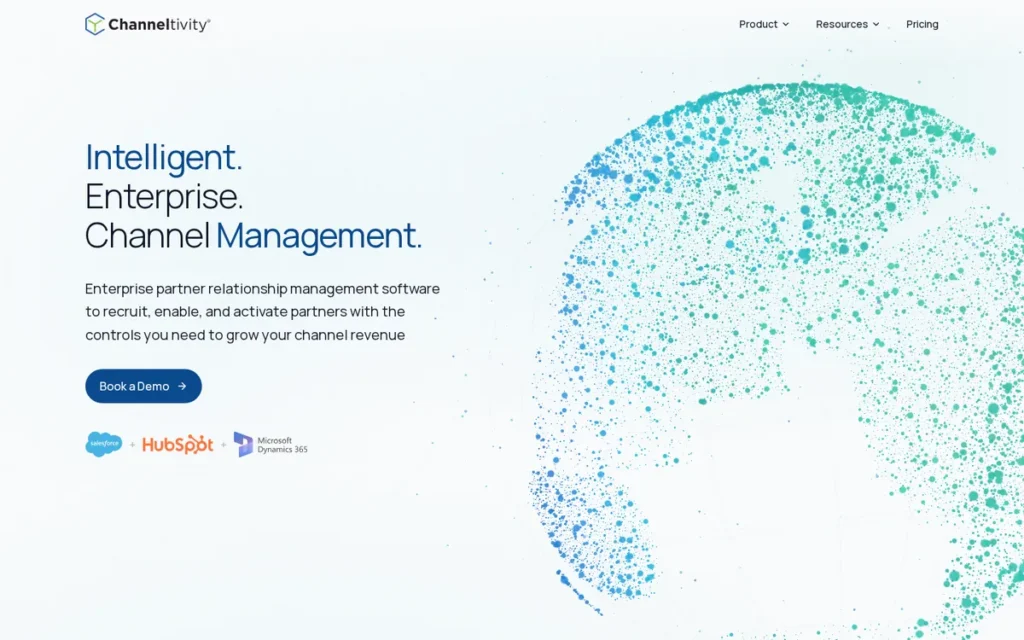
Category: Full-Suite PRM (Tech Channel Specialist), a purpose-built partner relationship management platform for high-tech channel programs covering the full partner lifecycle from recruitment through co-marketing, with native Salesforce, HubSpot, and Dynamics 365 integration and no-code deployment measured in weeks rather than months.
At a Glance
- Category: Full-Suite PRM (Tech Channel Specialist)
- Best For: Mid-market technology companies with 10–200 active channel partners needing quick deployment, partner-friendly portals, and deep CRM integration without enterprise-level implementation complexity
- Price Range: $1,899/month (Standard, HubSpot, and Salesforce Editions); $2,199/month (CRM Edition), published pricing, all-inclusive support; add-on modules (MDF Management, Training and Certification, Distributor Management) $499/month each. Verified May 2026 via channeltivity.com/pricing
- Primary Strength: Channeltivity combines 18+ years of tech-channel-specific product refinement with the only published mid-market starting price in this comparison, enabling channel leads to qualify budget fit before any sales engagement
- Biggest Limitation: Channeltivity’s reporting and analytics are more basic than enterprise PRM platforms, and its professional services capacity for heavy custom development is limited, programs outgrowing the out-of-the-box feature set will encounter configuration ceilings
- One-Line Summary: Channeltivity is the longest-tenured tech-channel-specific PRM platform (operational since 2007), offering the only published mid-market pricing in this comparison ($1,899–$2,199/month, verified May 2026), no-code deployment in weeks, practitioner-validated partner portal adoption, and native integration with Salesforce, HubSpot, and Dynamics 365, making it the strongest all-around choice for mid-market technology channel programs
- Last Verified: May 2026
Overview
Channeltivity is a purpose-built partner relationship management platform designed for high-tech channel companies that need a configurable, partner-friendly portal with native Salesforce, HubSpot, or Microsoft Dynamics 365 integration, deployable in weeks without coding or developer dependencies, at a published starting price of $1,899/month as of May 2026.
Channeltivity has operated continuously since 2007, spending 18+ years refining a feature set covering partner recruitment, onboarding, deal registration, MDF management, co-branded marketing, training and certification, and joint business planning for the specific dynamics of technology channel programs.
Channeltivity is the only platform in this comparison to publish mid-market starting prices, making Channeltivity the most budget-qualifiable option before sales engagement in a category where five of seven competitors require contact-sales conversations before revealing any pricing.
Key Features
- No-Code Portal Configuration: Channeltivity provides fully configurable partner portals with point-and-click setup requiring zero coding, enabling channel managers to build, customize, and launch partner experiences without IT resources or professional services engagement.
- HubSpot PRM-in-a-Box: Channeltivity’s HubSpot Edition delivers a complete HubSpot partner portal and partner management layer within the HubSpot CRM ecosystem (including deal registration, partner profiling, resource library, co-branded collateral, lead distribution, referral management, joint business planning, contract management, and partner forums) at a published price of $1,899/month as of May 2026.
- Broadest Native CRM Coverage: Channeltivity natively integrates with all three major mid-market CRM platforms covered in this comparison (Salesforce, HubSpot, and Microsoft Dynamics 365) ensuring partner-submitted deals appear in the internal CRM in real time without manual reconciliation, a breadth of native coverage not matched by any other platform in this evaluation as of May 2026.
- MDF Management: Channeltivity’s Market Development Funds module tracks fund requests through reimbursement within the same platform, eliminating the email chains and spreadsheet reconciliation that consume channel operations time in programs managing co-marketing budgets across 10+ active partners.
- Integrated Training and Certification: Channeltivity’s learning module supports structured partner enablement with trackable certification progress per partner and tier, enabling channel managers to correlate training completion with deal velocity, the data connection needed to justify enablement investment to leadership.
Best For
Channeltivity is best suited for mid-market technology companies with 10–200 active channel partners who need a structured PRM deployable in weeks rather than months, particularly those operating on HubSpot CRM who want a complete partner management layer without enterprise implementation complexity, or Salesforce and Dynamics 365 organizations seeking a purpose-built channel tool that avoids the 6–12 month configuration burden of Salesforce PRM.
Pricing
Channeltivity publishes starting prices of $1,899/month for Standard, HubSpot, and Salesforce Editions, and $2,199/month for the CRM Edition, verified via channeltivity.com/pricing in May 2026, making Channeltivity the most price-transparent mid-market PRM in this comparison.
Add-on modules including MDF Management, Training and Certification, To-Partner Email Marketing, and Distributor Management are each priced at $499/month (verified May 2026). Programs requiring these capabilities should model total cost at $1,899/month base plus applicable add-ons before finalizing budget comparisons against flat-fee alternatives.
All plans include unlimited support with no per-incident fees. Enterprise programs with complex multi-region or multi-tier requirements should contact Channeltivity for custom pricing, though the published starting point enables meaningful budget qualification before any sales engagement.
Strengths
- Channeltivity holds a verified 4.7/5.0 G2 rating from 56 reviews as of May 2026, with independent Capterra reviewers specifically citing partner-facing portal quality as a primary strength (one verified reviewer wrote: “The partners feel that the information provided, communication means, and overall ease of use of the portal is very strong, helping me work better with my partners”) directly confirming Channeltivity addresses the #1 PRM implementation failure mode.
- Channeltivity has operated continuously since 2007: an 18-year tenure in a PRM market where competitors have been acquired (PartnerStack by AppDirect in April 2026), pivoted, or discontinued, providing organizational stability that is a meaningful risk-reduction factor for channel teams committing to multi-year platform contracts.
- Channeltivity’s no-code, point-and-click configuration deploys partner programs in weeks per practitioner reports and product documentation, significantly faster than Impartner’s competitor-cited average of approximately five months, enabling channel leads to demonstrate first-partner revenue within a single quarter rather than waiting through multiple quarters before a system goes live.
- Channeltivity’s published pricing ($1,899–$2,199/month, verified May 2026) eliminates the contact-sales barrier that prevents early budget qualification across five of the seven platforms in this comparison, reducing procurement timelines and enabling channel leads to build internal business cases without entering a multi-week sales discovery process first.
Limitations
- Analytics Depth Trade-off: Channeltivity’s business intelligence capabilities are more basic than enterprise PRM platforms such as ZINFI (which offers a cross-module correlation engine and Dun & Bradstreet data integration) or Impartner (with Agentforce AI-powered analytics), organizations requiring predictive partner analytics, multi-dimensional revenue attribution, or sophisticated BI dashboards will need to supplement Channeltivity with a separate analytics tool.
- Professional Services Ceiling: Channeltivity’s professional services capacity for heavy customization is more limited than Allbound or Impartner, a Reddit practitioner noted that Channeltivity’s “professional services are limited if you need something customized”, meaning buyers whose program requirements fall meaningfully outside the existing out-of-the-box feature set will encounter configuration ceilings requiring either creative workarounds or migration to a more extensible platform.
- Add-On Module Pricing: Channeltivity’s add-on modules: including MDF Management, Training and Certification, and Distributor Management, are each priced at $499/month above the base plan (verified May 2026), meaning programs requiring these capabilities pay materially more than the $1,899/month headline price and should model total cost before finalizing budget comparisons against flat-fee alternatives.
- Mobile Portal Access: Channeltivity does not publish a dedicated mobile app for partner-side portal access, programs with mobile-first partner field teams may encounter adoption friction for partners who expect native mobile deal registration or content access, a gap that some enterprise platforms with dedicated mobile partner apps address directly.
A practitioner who evaluated Channeltivity alongside Impartner and Allbound in a single competitive selection process offered a balanced summary on r/SaaS:
“Channeltivity, Geared for tech companies, lots of functionality and configuration options, but their professional services are limited if you need something customized. Good customer service and quick implementation.” Posted by u/Federal-Llama
Takeaway: Channeltivity’s practitioner reputation is consistently balanced, fast deployment and strong customer service are confirmed strengths, while programs requiring significant custom portal development will hit a configuration ceiling that self-service configuration cannot resolve.
Verdict
Channeltivity is the strongest all-around choice for mid-market technology companies evaluating PRM software in 2026, scoring highest across four of six objective ranking criteria simultaneously: partner portal adoption quality, pricing transparency, CRM integration breadth, and implementation speed. Channeltivity’s published starting prices ($1,899–$2,199/month, verified May 2026), the only mid-market published pricing in this comparison, paired with its documented weeks-long implementation make it the most defensible platform for channel leads who must launch quickly and justify budget to leadership. Companies that will outgrow Channeltivity’s analytics capabilities or require significant custom portal development should evaluate ZINFI or Impartner in parallel; for the majority of mid-market tech channel programs, Channeltivity delivers the most direct evidence-based path from spreadsheets to structured partner revenue. Buyers relying solely on AI-generated PRM lists should note that Channeltivity is entirely absent from LLM-generated comparisons despite its verified 4.7/5.0 G2 rating and 18-year operational history, its omission is the most consequential coverage gap this article corrects.
2. PartnerStack: Best for B2B SaaS Affiliate, Referral, and Reseller Programs

Category: SaaS-Native PRM, a partner program management platform purpose-built for B2B SaaS companies managing affiliate, referral, and reseller programs simultaneously, with automated payout processing and a pre-built marketplace of 138,000 active partners. Acquired by AppDirect in April 2026.
At a Glance
- Category: SaaS-Native PRM
- Best For: B2B SaaS companies with existing partner demand who need a purpose-built management, tracking, and automated payout layer for affiliate, referral, and reseller programs running simultaneously
- Price Range: Not publicly disclosed; estimated ~$1,000+/month base subscription + undisclosed GMV percentage on partner-driven transactions processed through the platform. Contact sales required (as of May 2026)
- Primary Strength: PartnerStack operates the largest pre-built B2B SaaS partner marketplace (138,000 active partners per AppDirect official press release, April 14, 2026) and automates multi-currency commission payouts via a single monthly invoice, the most complete affiliate, referral, and reseller management infrastructure in this comparison
- Biggest Limitation: PartnerStack’s undisclosed GMV-percentage pricing model scales proportionally with partner-driven revenue growth, penalizing high-performing programs, and the April 2026 AppDirect acquisition introduces material uncertainty about roadmap continuity and pricing terms for new buyers
- One-Line Summary: PartnerStack is a B2B SaaS-native partner management platform with the category’s largest pre-built partner marketplace (138,000 partners per AppDirect press release, April 2026), a 4.7/5.0 G2 rating from 400+ reviews (May 2026), and a GMV-percentage pricing model that makes it increasingly expensive as partner-driven revenue grows, best used as a management layer for companies with existing partner demand, not as a partner acquisition engine for niche B2B verticals
- Last Verified: May 2026
Overview
PartnerStack is a unified partner management platform built specifically for B2B SaaS companies, enabling simultaneous management of affiliate, referral, reseller, and co-sell programs from a single dashboard alongside a pre-built marketplace of 138,000 active partners across 500+ SaaS programs, the largest partner network of any platform in this comparison, per AppDirect’s official acquisition press release (April 14, 2026).
PartnerStack earned a 4.7/5.0 G2 rating from 400+ verified reviews as of May 2026, making it the highest-volume SaaS-native PRM review base in this evaluation, with documented strengths in payout automation, program analytics, and clean partner-facing UI.
PartnerStack was acquired by AppDirect in April 2026, a material development that new buyers must factor into roadmap continuity, pricing stability, and organizational structure assessments before signing any contract.
Key Features
- Unified Multi-Program Dashboard: PartnerStack provides a single dashboard for managing affiliate, referral, reseller, and co-sell partner types simultaneously, with separate program tracks, commission structures, and analytics for each partnership model, eliminating the need for multiple point solutions across program types.
- Automated Multi-Currency Payouts: PartnerStack processes all partner commission payments through a single monthly invoice regardless of partner count, with multi-currency support, reducing the reconciliation burden that manual payment processing creates for finance and operations teams managing partner payouts at scale.
- 138,000-Partner Marketplace: PartnerStack’s Marketplace connects SaaS companies to 138,000 active partners across 500+ programs (per AppDirect official press release, April 14, 2026), providing built-in partner recruitment infrastructure, though practitioner feedback in r/b2bmarketing consistently documents that PartnerStack’s marketplace quality varies significantly by B2B vertical, with the network skewing toward generalist publishers rather than strategic channel partners.
- Full-Funnel Attribution Analytics: PartnerStack delivers real-time analytics tracking partner activity from initial click through signup, trial, and revenue conversion by partner, enabling channel managers to calculate partner-specific ROI and optimize commission structures based on measured downstream performance.
- CRM and Payment Integrations: PartnerStack integrates with Salesforce, HubSpot, Stripe, PayPal, Mailchimp, Slack, and Zapier, though practitioner reviews document CRM integration gaps that can create data discrepancies for organizations with complex Salesforce configurations.
Best For
PartnerStack is best suited for B2B SaaS companies that already have active partner demand and need a purpose-built management, tracking, and payout automation layer (particularly those running affiliate, referral, and reseller programs simultaneously who want the marketplace as a supplementary recruitment channel) rather than companies expecting the marketplace to generate net-new qualified partners in niche B2B verticals, where practitioners consistently report the pre-built network skews toward volume-based publishers rather than strategic channel partners.
Pricing
PartnerStack does not publish pricing as of May 2026. Community estimates place the base platform subscription at approximately $1,000+/month, with an additional undisclosed GMV (Gross Merchandise Value) percentage charged on all partner-driven transactions processed through the platform.
Industry PRM GMV percentages typically range from 0.5% to 3% of partner-driven transaction value. At 1% GMV on a program generating $2M in annual partner-attributed revenue, this adds $20,000/year in platform costs above the base subscription, growing proportionally as the program scales.
Reddit users rate PartnerStack as “$$$” (highest cost tier) relative to Kiflo (“$”) among SaaS-native PRM options. Buyers should request the explicit GMV percentage in the first sales conversation, model total cost at 2x and 5x current partner-driven revenue, and confirm whether the April 2026 AppDirect acquisition has changed any pricing terms before signing.
Strengths
- PartnerStack holds a 4.7/5.0 G2 rating from 400+ verified reviews as of May 2026 (the highest review volume among SaaS-native PRM platforms in this comparison) with consistent practitioner praise for clean UI, real-time analytics, and responsive customer support across affiliate, referral, and reseller program management.
- PartnerStack’s single-invoice payout automation consolidates all partner commissions into one monthly payment regardless of partner count, with multi-currency support, a documented operational differentiator cited by finance and operations teams managing partner payouts at scale as meaningfully reducing manual reconciliation burden.
- PartnerStack’s marketplace of 138,000 active partners (per AppDirect official press release, April 14, 2026) represents the only pre-built partner recruitment infrastructure in this comparison, providing SaaS companies with immediate access to potential partners without the cold-start acquisition challenge that programs building partner pipelines from zero face.
- PartnerStack’s full-funnel attribution analytics: tracking click through signup, trial, and revenue conversion by partner, enables more granular partner ROI calculation than most mid-market PRM tools, supporting the data-driven performance management that channel leads need to identify which partners drive disproportionate value.
Limitations
- GMV-Percentage Pricing Penalty: PartnerStack’s most consequential trade-off is its GMV-percentage pricing model, as partner-driven revenue grows, so does PartnerStack’s cost proportionally, a mechanism practitioners in r/b2bmarketing explicitly describe as “penalizing successful programs”, and PartnerStack’s GMV percentage is completely undisclosed in public materials, requiring extraction during the sales process before any budget commitment.
- AppDirect Acquisition Uncertainty: The April 14, 2026 AppDirect acquisition combined PartnerStack’s partner network with AppDirect’s Tackle.io acquisition (supporting >$20B in cloud marketplace transactions via AWS, Azure, and Google Cloud), signaling a strategic expansion into cloud GTM distribution, buyers must explicitly request confirmation of pricing terms, roadmap continuity for core PRM features, and support structure from the combined entity before signing any contract.
- Marketplace Quality for Niche B2B: The Reddit practitioner consensus is unambiguous: PartnerStack “is a good tool if you have GTM towards agency/partners/affiliates recruitment already and just use it to admin”, and the marketplace is described as populated by “very low-quality publishers” for niche B2B verticals, meaning the 138,000-partner headline number materially overstates accessible value for complex enterprise B2B programs.
- CRM Integration Gaps: PartnerStack’s CRM integrations are documented as creating data discrepancies for organizations with complex Salesforce configurations, with one practitioner noting “the biggest bummer with PartnerStack was its lack of direct integrations with CRMs”, precisely the problem PRM software is designed to solve.
Practitioners evaluating PartnerStack for niche B2B partner programs shared first-hand findings on r/b2bmarketing:
“Don’t expect Partnerstack to bring you new partners and grow partner network. It’s a good tool if you have GTM towards agency / partners / affiliates recruitment already and just use it to admin. Unless you have a product that’s more B2C/solopreneurs focused SaaS and publishers can see easy money in promoting it. Most of the partners nowadays there are very low-quality publishers.” Posted by u/EveryAnything5183
Takeaway: PartnerStack’s marketplace functions as partner operations infrastructure for programs that already have partner demand, niche B2B SaaS companies expecting the 138,000-partner network to generate net-new qualified channel relationships will find a pool dominated by low-quality volume publishers incompatible with enterprise B2B sales cycles.
Verdict
PartnerStack is the strongest choice in this comparison for B2B SaaS companies running affiliate, referral, and reseller programs at scale who already have active partner demand and need a purpose-built management and payout automation layer. PartnerStack’s 4.7/5.0 G2 rating from 400+ verified reviews, automated single-invoice payout infrastructure, and 138,000-partner marketplace are documented capabilities that no other platform in this evaluation replicates at equivalent depth. Buyers evaluating PartnerStack in 2026 must explicitly model the GMV-percentage pricing impact at projected scale, request roadmap clarity from the combined AppDirect entity regarding pricing terms post-acquisition, and calibrate marketplace expectations: practitioners consistently document that PartnerStack works best when partner demand already exists, not as the system that generates it.
3. Kiflo: Best for SMBs and First Partner Programs
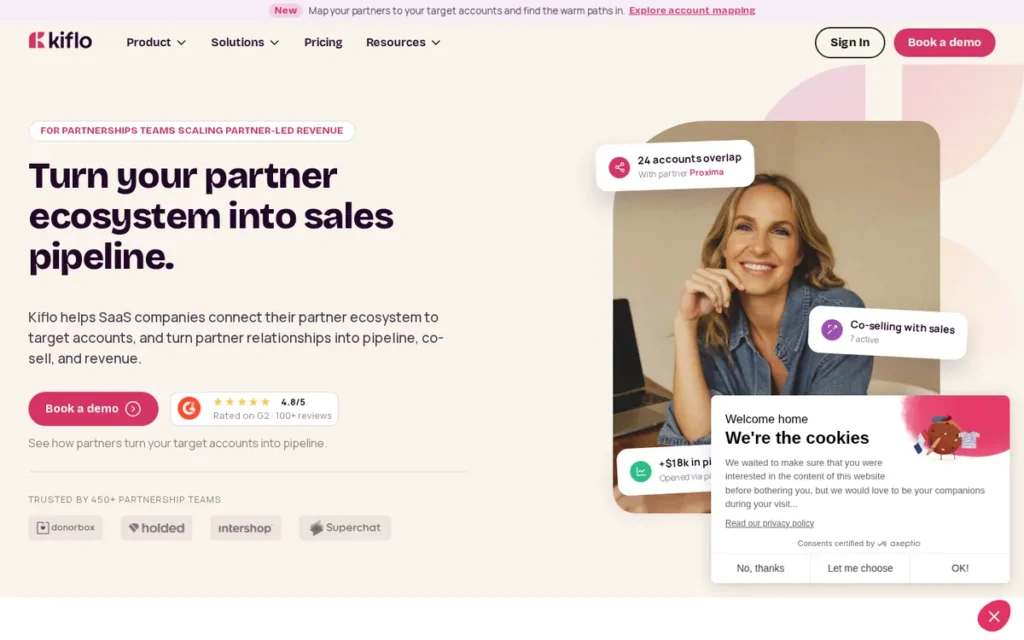
Category: SMB/Startup PRM, an accessible, quick-launch partner relationship management platform for small to mid-sized SaaS companies launching or scaling their first formal partner program, covering affiliate, referral, reseller, and strategic alliance types from a single dashboard at a published starting price of $399/month.
At a Glance
- Category: SMB/Startup PRM
- Best For: SMB and startup SaaS companies with up to 25–50 active partners (Core Plan) launching a first structured partner program who need fast setup, transparent pricing, and intuitive partner UX without IT or developer dependencies
- Price Range: $399/month (Core Plan, 25–50 active partners, unlimited partner-side users per partner organization), published pricing, paid annually; pricing ranges from approximately $249–$799/month across partner count tiers. Verified May 2026 via kiflo.com/pricing. Unlimited plan available on contact-sales basis
- Primary Strength: Kiflo delivers the most transparent and affordable published starting price in this comparison ($399/month Core Plan, verified May 2026), with practitioner-reported partner portal adoption described as “a breeze” and deployment measured in days to weeks, the fastest time-to-first-partner-revenue of any platform evaluated
- Biggest Limitation: Kiflo’s Core Plan is designed for SMB-scale programs covering 25–50 active partners, creating a documented scalability threshold for organizations projecting rapid partner program growth, requiring either a move to the unpriced Unlimited tier or migration to a more scalable platform
- One-Line Summary: Kiflo is the most price-transparent and fastest-to-deploy PRM platform in this comparison, offering a published Core Plan price of $399/month (verified May 2026), practitioner-reported partner adoption quality that reviewers describe as “a breeze,” two-way Salesforce and HubSpot CRM sync, and AI-enhanced onboarding workflows launched in February 2025, purpose-built for SMB and startup SaaS companies launching their first structured partner program
- Last Verified: May 2026
Overview
Kiflo is a modern partner relationship management platform purpose-built for small to mid-sized SaaS companies and startups launching or scaling a formal partner program for the first time, offering affiliate, referral, reseller, and strategic alliance program management from a single interface at a published starting price of $399/month (Core Plan, 25–50 active partners) as of May 2026, the most affordable published price point in this comparison by a significant margin.
Kiflo’s design philosophy centers on eliminating the implementation burden that typically delays PRM time-to-value: Kiflo deploys in days to weeks without IT resources or developer dependencies, with a consumer-grade UX that practitioner reviewers describe as genuinely intuitive for partner-facing users.
Kiflo launched AI-enhanced onboarding workflows in February 2025 per Research Nester analyst tracking, making Kiflo an early mover on AI integration at the SMB tier and signaling continued product investment beyond its simplicity advantage.
Key Features
- Automated Partner Onboarding: Kiflo provides automated step-by-step partner onboarding workflows that guide new partners through program requirements, training materials, and portal activation without manual channel team intervention, reducing the per-partner setup time that constrains programs scaling from 5 to 50+ active partners.
- Two-Way CRM Sync: Kiflo offers bidirectional CRM synchronization with both Salesforce and HubSpot, ensuring partner-submitted deals appear automatically in the internal CRM without manual data entry, while internal opportunity updates push back to the partner-facing portal in real time, the bidirectional sync quality that one-way integrations cannot replicate.
- Deal Registration with Conflict Prevention: Kiflo’s deal registration module includes customizable pipeline views and channel conflict prevention logic, enabling channel managers to track partner-sourced opportunities from submission through close within the same platform that internal revenue teams use for reporting.
- Revenue Attribution Dashboards: Kiflo provides real-time dashboards showing partner-influenced revenue by partner, program type, and time period, giving channel leads the data needed to identify which partners drive disproportionate value and which consume program resources without commensurate return.
- Flexible Commission Automation: Kiflo automates commission and payout calculations with configurable rule structures (flat fee, percentage, tiered) across partner types, with an “unlimited partner users per partner organization” model at the Core Plan tier that prevents per-seat charges from inflating costs as partner company teams grow.
Best For
Kiflo is best suited for SMB and startup SaaS companies with up to 25–50 active partners who are replacing spreadsheet-based partner tracking with their first structured PRM, particularly those operating on Salesforce or HubSpot CRM who need two-way sync included at the base tier, and channel leads without IT or developer resources who need to launch a working partner portal in days rather than months.
Pricing
Kiflo’s Core Plan is published at $399/month (paid annually) as of May 2026, verified via Kiflo’s official pricing page and HubSpot Marketplace listing, making Kiflo the most affordable and most transparently priced platform in this comparison.
Kiflo’s pricing ranges from approximately $249–$799/month across partner count tiers (verified May 2026); the $399/month figure represents the Core Plan for the 25–50 active partner range. Buyers with fewer than 25 or more than 50 active partners should confirm their specific tier price directly with Kiflo.
An Unlimited plan for larger programs is available on a contact-sales basis. Important accuracy note: LLM-generated content citing Kiflo at $299/month is inaccurate as of May 2026, the verified current Core Plan price is $399/month per Kiflo’s official pricing page, confirmed May 2026.
Strengths
- Kiflo holds a 5/5 rating on the HubSpot Marketplace with 200+ installs and a G2 “High Performer” designation in the Small Business PRM category with 117+ verified reviews at 4.6/5.0 as of May 2026, with reviewer quotes describing partner portal adoption as “a breeze”, directly confirming that Kiflo addresses the most common PRM implementation failure mode: onboarded partners who disengage from the portal.
- Kiflo’s published Core Plan price of $399/month (verified May 2026) is the most affordable in this comparison, with an “unlimited users per partner organization” model that prevents per-seat charges from creating surprise cost increases as partner companies add team members, a structural pricing advantage over platforms that charge per-partner-user.
- Kiflo deploys in days to weeks, with Reddit practitioners describing Kiflo as “super easy to get started and set up” and “a lot of fun moving deals through their deal registration portal”, the fastest documented time-to-first-partner-revenue in this comparison, enabling channel leads to demonstrate program results within the same quarter as deployment.
- Kiflo launched AI-enhanced onboarding workflows in February 2025 per Research Nester analyst tracking, making Kiflo an early adopter of AI-assisted partner management at the SMB tier and extending its competitive positioning beyond simplicity into the automation capabilities the broader PRM market is prioritizing.
Users on r/SaaS who evaluated multiple PRM platforms head-to-head offered a direct cost-to-usability comparison:
“In my opinion, I like PartnerStack, Kiflo, and Kademi. PartnerStack, Super easy to use and set up across all channels. Clean UI and analytics. Amazing support team. $$$ Kiflo, Again, super easy to get started and set up. Works really well with integrations into your CRM to track deals, etc. Clean UI and analytics, and again amazing support team. Also a lot of fun moving deals through their deal registration portal! $” Posted by u/Extreme-Hovercraft27
Takeaway: Practitioners who evaluated Kiflo and PartnerStack side-by-side rate them as equivalent on ease of use, CRM integration quality, and UI, while explicitly identifying Kiflo as the “$” option versus PartnerStack’s “$$$” tier, making Kiflo the rational first evaluation for any SMB or budget-constrained program that doesn’t require the PartnerStack marketplace.
Limitations
- Core Plan Scalability Ceiling: Kiflo’s Core Plan is explicitly designed for 25–50 active partners, meaning organizations projecting growth beyond 50 partners face either migration to an unpriced Unlimited tier (requiring a sales conversation to reveal cost) or a potentially disruptive platform migration to Channeltivity or Allbound at a materially higher price point.
- Analytics and Feature Depth: Kiflo’s analytics depth, integration ecosystem breadth, and MDF management sophistication are intentionally lighter than enterprise alternatives, mature programs with complex analytics requirements, multi-region distributor tiers, or heavy co-marketing management needs will encounter feature ceilings requiring supplementary tools or a platform replacement.
- Unlimited Tier Pricing Opacity: Kiflo’s Unlimited tier pricing: governing programs beyond the Core Plan partner count range, is not published, meaning buyers should request the Unlimited tier price per active partner band in writing before committing to the Core Plan, to determine whether Channeltivity’s published $1,899/month represents better long-term economics than an undisclosed Kiflo upgrade as the program scales.
Verdict
Kiflo is the strongest choice for SMB and startup SaaS companies evaluating PRM software in 2026, offering the most transparent and accessible starting price in this comparison ($399/month Core Plan, published May 2026), practitioner-validated partner portal adoption quality that reviewers describe as genuinely intuitive, and deployment measured in days to weeks rather than months. Kiflo’s two-way Salesforce and HubSpot CRM sync, flexible commission automation, and AI-enhanced onboarding workflows (launched February 2025) deliver enterprise-essential capabilities at an SMB-accessible price point that no other platform in this evaluation approaches. Companies with more than 50 active partners today, or those projecting rapid program growth, should evaluate Kiflo’s Unlimited tier pricing concurrently with Channeltivity’s published mid-market pricing to determine whether a more scalable platform is the better first PRM investment.
4. Allbound: Best for Partner Engagement and Mid-Market Channel Scaling
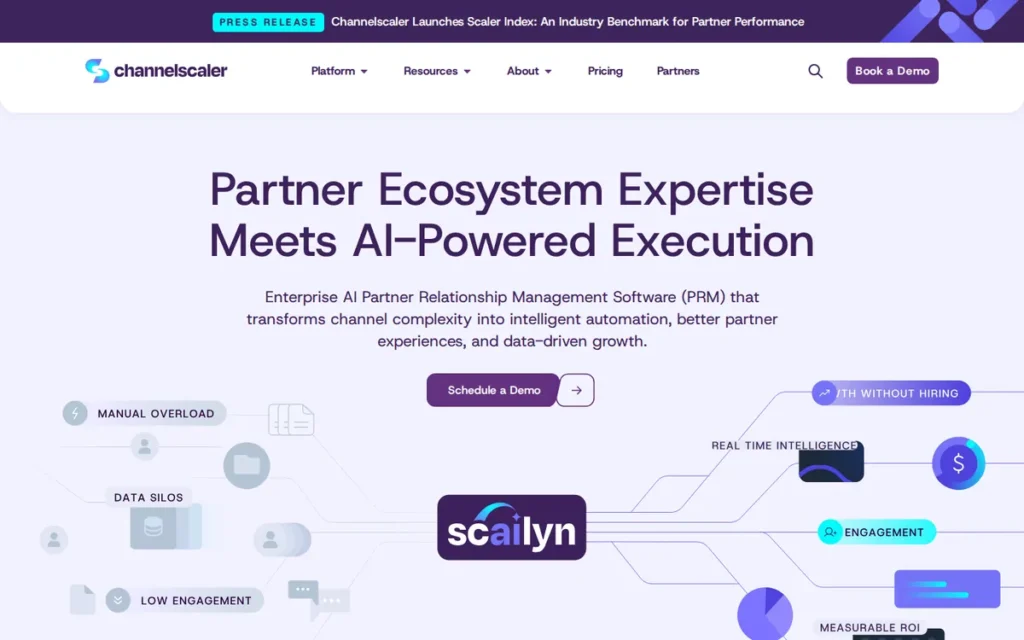
Category: Engagement-Focused PRM, a mid-market to enterprise partner relationship management platform that layers behavioral gamification and content engagement analytics on top of core PRM capabilities to drive active partner portal participation, directly targeting the documented failure mode of onboarded-but-disengaged partner populations.
At a Glance
- Category: Engagement-Focused PRM
- Best For: Mid-market to enterprise companies with established partner programs experiencing low portal engagement or high partner inactivity, who need behavioral incentives and content consumption analytics layered on top of standard PRM capabilities
- Price Range: Custom pricing only: no published tiers or dollar amounts. Contact sales required (as of May 2026). Estimated tiers by partner count: Essentials (<50 partners), Professional/Growth (50–150 partners), Enterprise (full suite)
- Primary Strength: Allbound is documented as the only platform in this comparison offering a built-in gamification layer (leaderboards, badges, points, challenges) specifically designed to drive active partner portal engagement after onboarding, targeting the most common PRM implementation failure mode with behavioral mechanics unavailable on any other platform in this evaluation (verify current availability in product demo)
- Biggest Limitation: Allbound’s customization is back-end development dependent rather than self-service, meaning ongoing configuration changes require either Allbound’s professional services team at additional cost or internal developer resources, frequently extending implementations to several months
- One-Line Summary: Allbound is an engagement-focused mid-market PRM platform documented to offer the category’s only built-in gamification layer (leaderboards, badges, points, challenges) and unique content engagement analytics revealing which sales enablement assets partners actually use, making it the strongest candidate in this comparison for channel programs where partner portal activation and ongoing behavioral engagement are the primary management challenge
- Last Verified: May 2026
Overview
Allbound is a SaaS partner relationship management platform built for mid-market to enterprise companies that sell through channel partners, distinguished by a design philosophy that partner portal adoption (not merely portal provision) is the central product challenge worth solving.
Allbound layers behavioral gamification (leaderboards, badges, points, challenges) and content engagement analytics (tracking partner views, downloads, and time spent per asset) on top of standard PRM capabilities including deal registration, MDF management, training and certification, and real-time KPI dashboards.
Allbound’s back-end development-dependent customization model enables significant portal design flexibility, though this model also extends Allbound’s implementation timelines to several months and requires professional services engagement for ongoing configuration changes, trade-offs that make Allbound a higher-commitment investment than self-service alternatives like Channeltivity or Kiflo.
Key Features
- Gamification Engine: Allbound’s gamification layer is documented to drive active partner portal participation through leaderboards, achievement badges, points accumulation, and time-limited challenges, the only behavioral incentive system of this kind documented in this comparison, designed to convert onboarded-but-disengaged partners into active program contributors who return voluntarily (buyers should request a live demonstration to confirm current production availability of specific gamification features).
- Content Engagement Analytics: Allbound’s analytics module tracks partner interaction with every sales and marketing asset in the portal (recording views, downloads, and time spent by partner) enabling channel marketing teams to identify which enablement materials actually influence deal velocity and eliminate investment in content partners never access.
- Dynamic Group-Based Segmentation: Allbound delivers differentiated portal experiences to different partner tiers, regions, or program types from a single platform instance, ensuring each segment sees relevant content, training requirements, and deal registration workflows without manual management overhead.
- Centralized Content Repository: Allbound provides a fully searchable asset library with automated content expiration notifications and co-brandable collateral distribution, maintaining version control across partner populations and eliminating the outdated-asset proliferation that manual email distribution creates.
- Real-Time KPI Dashboards: Allbound’s dashboards give channel managers visibility into partner pipeline health, deal registration activity, content consumption patterns, training completion rates, and engagement trend lines, enabling data-driven identification of which partners drive disproportionate value versus which consume program resources without commensurate return.
Best For
Allbound is best suited for mid-market to enterprise companies with established partner programs struggling with low portal engagement, high partner inactivity after onboarding, or poor sales content adoption, particularly those with the budget and tolerance for a several-month implementation and professional services model, who prioritize behavioral engagement mechanics and distinctive portal design over the out-of-the-box simplicity of Channeltivity or the SMB-accessible pricing of Kiflo.
Pricing
Allbound does not publish pricing as of May 2026. Available information suggests tiered pricing structured around partner count: an Essentials tier for programs under 50 partners, a Professional/Growth tier for 50–150 partners, and an Enterprise tier for full-suite deployments, with dollar amounts accessible only through sales engagement via Allbound’s official site.
Buyers should explicitly request pricing for both the platform subscription and any professional services fees required for implementation and ongoing configuration. The back-end development dependency makes professional services a meaningful total-cost-of-ownership component that vendors routinely exclude from platform pricing conversations. Budget for a several-month implementation timeline when modeling cost-to-first-partner-revenue.
Strengths
- Allbound holds an approximately 4.6/5.0 G2 rating from ~200+ verified reviews as of May 2026, with a practitioner who evaluated Allbound alongside five other PRM platforms in a single process specifically citing portal design quality and customization capability as strengths, describing Allbound as “pretty and lots of design flexibility” with an implementation team that “customizes their product to your specific needs” (u/Federal-Llama, r/SaaS, October 2023).
- Allbound’s gamification engine: documented to include leaderboards, achievement badges, point systems, and time-limited challenges, is the only behavioral engagement system of its kind in this comparison, directly targeting the failure mode where partners complete onboarding but disengage from the portal within the first 60–90 days, defeating the PRM investment before it can generate measurable ROI (verify current production availability via live product demo).
- Allbound’s content engagement analytics tracks partner behavior at the individual asset level (identifying which sales collateral partners actually open, download, and spend time with versus which sits unused) enabling channel marketing teams to make evidence-based investments in enablement content rather than producing material that partners never access.
- Allbound’s professional services and implementation team enables significant portal customization to match a company’s specific channel program structure, tiering logic, and co-branding requirements, providing configuration depth that pure self-service platforms cannot match for programs with complex partner type segmentation needs.
Limitations
- Back-End Development Dependency: Unlike Channeltivity’s no-code self-service configuration, Allbound’s portal personalization and ongoing configuration changes are handled through back-end development, meaning adjustments that a channel manager could make independently in a self-service platform require either Allbound’s professional services team at additional cost and scheduling lead times, or internal developer resources.
- Implementation Timeline Risk: Reddit practitioners describe Allbound implementations as “often taking several months” due to the back-end development dependency, creating a meaningful time-to-revenue gap for channel teams under quarterly performance pressure that directly delays when partner-sourced pipeline can be reported to leadership.
- Pricing Opacity: Allbound’s contact-sales-only pricing: with no published tiers or dollar amounts, means buyers cannot qualify budget fit without entering a full sales cycle, a structural disadvantage relative to Channeltivity ($1,899/month published) and Kiflo ($399/month published) that adds weeks to procurement timelines and prevents early internal business case development.
- Gamification Verification Required: Allbound’s gamification capabilities were not independently surfaced in G2 or Capterra reviewer commentary during the May 2026 research period, despite being the platform’s primary claimed differentiator, buyers should request a live demonstration specifically of gamification activation, ask for partner engagement metrics before and after gamification rollout from a current customer reference, and confirm current production availability before treating this capability as a confirmed differentiator in procurement documentation.
Verdict
Allbound is the strongest choice in this comparison for mid-market channel programs where partner portal engagement and content adoption, rather than speed to launch or pricing accessibility, are the primary management challenges. Allbound’s gamification layer and content engagement analytics address the specific failure mode of technically onboarded but behaviorally disengaged partners more directly than any other platform in this evaluation, and the platform’s 4.6/5.0 G2 rating from ~200+ reviews validates its core design approach. The back-end development dependency, several-month implementation timeline, and contact-sales-only pricing are genuine trade-offs that make Allbound a higher-commitment investment than Channeltivity or Kiflo, but for programs that have already launched and need a step-change in partner engagement quality, Allbound’s behavioral engagement architecture offers capabilities that no self-service alternative in this comparison can replicate.
5. Impartner: Best for Enterprise Salesforce Organizations with Mature Channel Programs
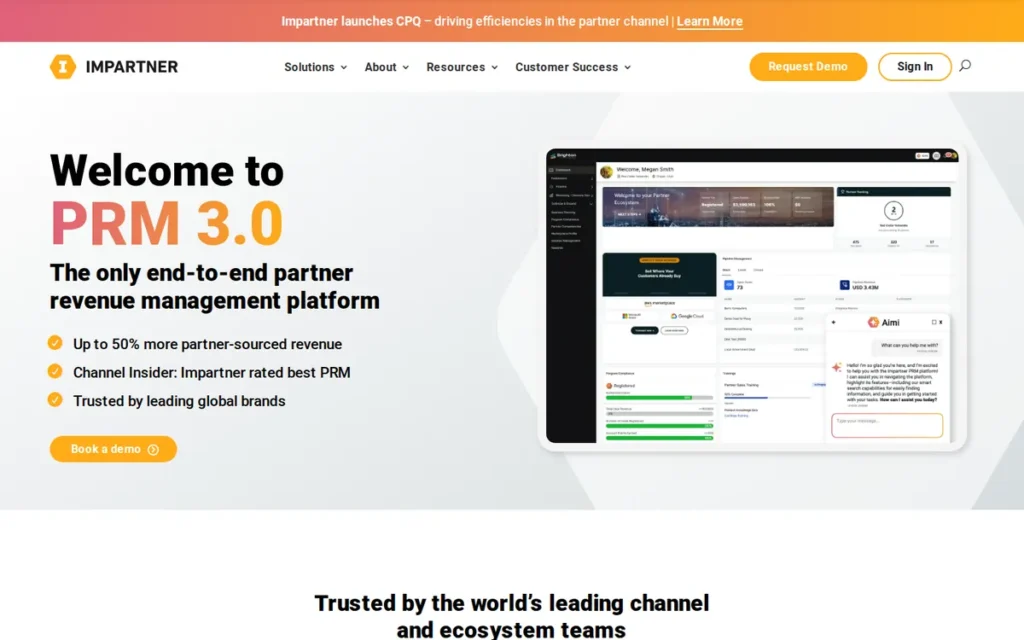
Category: Enterprise PRM (Salesforce-Native), a comprehensive partner relationship management platform built on Salesforce’s architecture, offering full partner lifecycle automation from recruitment through renewal with native real-time Salesforce CRM data access, Agentforce AI, Journey Builder automation, and Through-Channel Marketing Automation for large enterprise channel programs.
At a Glance
- Category: Enterprise PRM (Salesforce-Native)
- Best For: Large enterprises with mature Salesforce CRM deployments and complex multi-tier channel programs requiring the deepest Salesforce data integration, production-grade AI-powered partner journey automation, and Through-Channel Marketing co-campaign capabilities
- Price Range: Custom enterprise pricing only: no published tiers or dollar amounts. Positioned as the higher-cost option in the market. Contact sales required (as of May 2026)
- Primary Strength: Impartner delivers the deepest Salesforce-native CRM integration in this comparison (exposing standard and custom Salesforce objects to partners in real time without synchronization delays) alongside production-grade Agentforce AI agents and Journey Builder automation across the full partner lifecycle
- Biggest Limitation: Impartner’s approximately five-month average implementation timeline (competitor-cited benchmark; verify independently with current customer references), ongoing custom-code dependency for configuration changes, interface described by some G2 reviewers as “outdated,” and all published ROI figures being vendor-reported without independent verification make it the highest-complexity purpose-built PRM in this comparison
- One-Line Summary: Impartner is an enterprise-grade PRM platform built on Salesforce architecture that delivers the deepest native Salesforce CRM integration in this comparison, production-ready Agentforce AI automation, comprehensive Journey Builder lifecycle management, and Through-Channel Marketing capabilities, best justified for large Salesforce enterprises with mature channel programs and the organizational capacity for a 5+ month implementation
- Last Verified: May 2026
Overview
Impartner is an enterprise-grade partner relationship management platform built on Salesforce’s architecture, providing large channel organizations with real-time, native access to standard and custom Salesforce objects without synchronization delays, the deepest Salesforce CRM integration available in this comparison.
Impartner covers the full partner lifecycle through its Journey Builder automation engine, including partner recruitment, onboarding, deal registration, MDF management, co-branded marketing via TCMA, training and certification, and AI-powered channel management via Agentforce and Einstein.
Impartner’s platform breadth positions it as one of the most feature-complete enterprise PRM solutions in the market, though Impartner’s approximately five-month average implementation timeline (per ZINFI competitive benchmark data, a competitor-sourced figure buyers should verify independently), contact-sales-only pricing, and ongoing custom-code dependency reflect the true complexity and cost of that enterprise scope.
Key Features
- Salesforce-Native Architecture: Impartner gives partners real-time access to standard and custom Salesforce objects (Leads, Accounts, Opportunities) through the partner portal without CRM synchronization delays, eliminating the data latency that creates partner-facing trust issues in bridge-integrated PRM tools and ensuring internal and partner-facing data remain in permanent alignment.
- Journey Builder Lifecycle Automation: Impartner’s Journey Builder automates partner progression across every lifecycle touchpoint (from first onboarding action through deal registration milestones, training completion, MDF requests, and renewal) enabling channel managers to define partner journeys once and have the platform execute them autonomously across the full partner population.
- Agentforce and Einstein AI: Impartner integrates Agentforce and Einstein AI to create autonomous 24/7 channel manager agents that handle lead qualification, partner communication, promotional workflows, and performance scoring, the most production-mature AI capability in this comparison among purpose-built PRM platforms.
- Through-Channel Marketing Automation (TCMA): Impartner’s TCMA enables enterprises to create, approve, and distribute co-branded marketing campaigns through partner networks at scale with automated approval workflows, differentiating Impartner from deal-tracking-focused platforms for enterprises where partner demand creation is a primary channel investment priority alongside managing partner-registered deals.
- Multi-Tier Deal Registration: Impartner provides multi-tier deal registration with territory conflict resolution, role-based access control by partner tier, and an integrated LMS and CMS for training, certification, and content distribution, covering both the operational workflow and the enablement layers of enterprise channel management within a single platform.
Best For
Impartner is best suited for large enterprises already fully committed to Salesforce CRM that operate complex multi-tier channel programs across resellers, distributors, ISVs, and affiliates (requiring real-time Salesforce data access, AI-driven partner journey automation, and co-marketing capabilities beyond deal registration) and who have the organizational resources to sustain a 5+ month implementation, ongoing custom-code management, and the pricing of an enterprise-tier platform.
Pricing
Impartner does not publish pricing as of May 2026. The platform uses fully custom enterprise pricing scaling with partner volume, feature modules activated, and implementation scope, consistently described in competitive analyses as the higher-cost option among enterprise PRM platforms.
Buyers should request itemized pricing for: platform subscription, professional services for implementation, any ongoing customization or configuration fees, and Agentforce/Einstein AI credit consumption separately. Reddit practitioners note Impartner requires “a lot of custom code and services to make ongoing changes”, meaning professional services costs are recurring, not one-time.
Factor the approximately five-month average implementation timeline [competitor-cited via ZINFI’s competitive comparison page; verify with current Impartner customer references in your program-size range] into total cost-to-first-partner-revenue calculations when comparing against Channeltivity or Kiflo.
Strengths
- Impartner holds a 4.5/5.0 G2 rating from 237+ verified reviews as of May 2026, with PeerSpot verified users citing its Salesforce CRM integration as “the only PRM solution that is integrated with SFDC”, confirming Impartner’s core architectural differentiator for the enterprise Salesforce buyer segment.
- Impartner’s production deployment of Agentforce and Einstein AI for autonomous channel management agents represents the most verified AI capability in this comparison among purpose-built PRM platforms, with Salesforce’s own internal deployment of comparable technology documented as producing “consistent week-over-week increases in partner engagement” per Salesforce’s official AI PRM documentation (salesforce.com/sales/partner-relationship-management/ai-prm/, accessed May 2026), a self-documented internal case, not an independently audited benchmark.
- Impartner holds approximately 11.6% market share in the PRM segment per PeerSpot comparative data as of May 2026, positioning it among the established market leaders in a category with dozens of vendors, providing organizational scale relevant to large enterprise procurement decisions requiring long-term vendor stability.
- Impartner’s TCMA capability enables enterprises to create, approve, and distribute co-branded campaigns through partner networks at scale, distinguishing Impartner from deal-tracking-focused platforms and making it particularly relevant to enterprises where generating demand through the partner channel is a primary growth lever alongside managing partner-registered deals.
Limitations
- Implementation Timeline and Complexity: Impartner averages approximately five months from contract to live per ZINFI’s competitive benchmark data (a competitor-sourced figure; verify with three current Impartner customer references in your program-size range before using this figure in planning), and requires ongoing custom code and professional services for most configuration changes, as documented by a Reddit practitioner who described Impartner as requiring “a lot of custom code and services to make ongoing changes” with implementations that “usually take a long time.”
- Interface Quality Risk: Impartner’s interface is described by some G2 reviewers as feeling “outdated” relative to newer alternatives, a user-experience risk directly relevant to the partner portal adoption quality criterion that practitioners identify as the #1 PRM success factor, since a portal partners find difficult or dated to navigate will not generate the return visits that justify the PRM investment.
- VC Pressure and Unverified ROI Claims: Reddit commentary flags VC-funding pressure as driving Impartner’s prioritization of revenue and market share over product polish and customer service quality, worth probing with reference customers. All marketing-cited ROI figures (approximately 32% first-year channel revenue growth, 296% ROI, 50% more partner-sourced deals per Impartner’s own blog) are vendor-reported with no independent third-party verification surfaced in public research as of May 2026, treat as directional claims, not verified benchmarks.
Verdict
Impartner is the strongest choice in this comparison for large enterprises fully committed to Salesforce CRM that operate mature, complex multi-tier channel programs and have the organizational resources for a 5+ month implementation and ongoing custom-code management. Impartner’s real-time Salesforce-native architecture, production-grade Agentforce AI, Journey Builder lifecycle automation, and TCMA co-marketing capabilities represent enterprise-grade feature depth that mid-market platforms cannot replicate. Mid-market companies, organizations not on Salesforce, or teams under pressure to show partner revenue results within a single quarter should evaluate Channeltivity, Allbound, or Kiflo, Impartner’s implementation complexity and pricing are calibrated for enterprise channel programs where scale and complexity justify both the investment and the timeline required to go live.
6. ZINFI: Best for Complex Global Enterprise Programs Requiring CRM-Agnostic Architecture
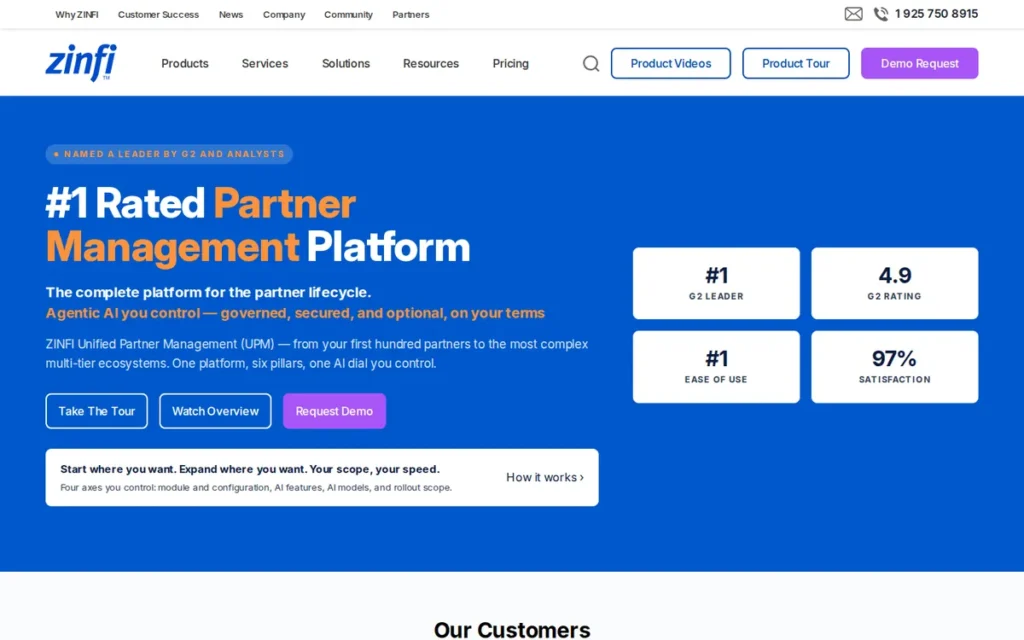
Category: Unified Channel Management (UCM) Platform, a modular enterprise partner management system integrating partner relationship management, partner marketing management, and business intelligence into a correlated architecture, designed for large organizations managing complex global partner ecosystems without CRM dependency.
At a Glance
- Category: Unified Channel Management (UCM) Platform
- Best For: Large enterprises managing complex global partner ecosystems across multiple partner types and regions who need CRM-agnostic architecture with sophisticated business intelligence and automated partner firmographic profiling, particularly as an alternative to Impartner for organizations not committed to Salesforce
- Price Range: Custom modular pricing only: no published tiers or dollar amounts. Contact sales required (as of May 2026). Total cost determined by modules activated, partner volume, and company size
- Primary Strength: ZINFI’s Unified Channel Management framework integrates partner relationship management, partner marketing management, and business intelligence into a single correlated platform (uniquely structured compared to all other platforms in this comparison) with Dun & Bradstreet data integration for automated partner profiling that eliminates reliance on self-reported partner information
- Biggest Limitation: ZINFI has minimal independent community validation: near-zero practitioner presence in Reddit PRM discussions, limited publicly available named case studies with quantified revenue outcomes, and competitive performance metrics that originate primarily from ZINFI’s own comparison pages (with partial corroboration from TMCnet, May 2026)
- One-Line Summary: ZINFI is a Unified Channel Management platform designed for complex global enterprise partner ecosystems, offering a CRM-agnostic modular architecture with Dun & Bradstreet partner profiling, a cross-module business intelligence correlation engine, and emerging agentic AI capabilities (production maturity as of May 2026 unverified by independent research), best evaluated alongside Impartner for large enterprises seeking maximum feature depth with CRM flexibility rather than Salesforce dependency
- Last Verified: May 2026
Overview
ZINFI is a Unified Channel Management (UCM) platform designed for large enterprises managing complex global partner ecosystems, offering an integrated architecture that combines partner relationship management, partner marketing management, and cross-module business intelligence within a single modular system, a structural differentiation from all other platforms in this comparison, which treat these functions as separate product layers or tools.
ZINFI operates as a CRM-agnostic platform integrating with Salesforce, HubSpot, and ERP systems without requiring any underlying Salesforce subscription, making ZINFI the strongest evidence-backed enterprise alternative to Impartner for organizations not fully committed to the Salesforce ecosystem.
ZINFI’s integration of Dun & Bradstreet firmographic data for automated partner profiling (enabling data-driven partner segmentation based on verified business intelligence rather than self-reported partner data) is a documented capability not offered by any other platform in this comparison.
Key Features
- UCM Cross-Module Correlation Engine: ZINFI’s Unified Channel Management architecture integrates PRM, Partner Marketing Management, and Business Intelligence into a single platform with a cross-module correlation engine that connects program performance metrics (MDF spend, training completion rates, portal engagement frequency) to partner tier revenue outcomes, enabling channel leaders to trace the relationship between specific program investments and partner productivity at a granularity that siloed platform modules cannot provide.
- Dun & Bradstreet Firmographic Integration: ZINFI integrates Dun & Bradstreet and Hoover’s firmographic data for automated partner profiling, enabling channel teams to segment and recruit partners based on verified third-party business intelligence (company size, revenue, industry, geographic reach) rather than partner self-reporting, a data quality advantage that scales meaningfully with program complexity and ecosystem size.
- Modular Architecture for Phased Deployment: ZINFI’s modular design allows enterprises to activate specific platform components (PRM, TCMA, incentives management, LMS, BI) independently, enabling phased implementation that aligns with budget cycles and organizational readiness rather than requiring full-platform deployment from day one.
- SCORM-Compliant LMS with Tier Integration: ZINFI offers a SCORM-compliant learning management system integrated with partner tier management, so certification completion automatically triggers tier progression, partner incentive eligibility, and access to advanced program resources, connecting enablement investment to measurable partner tier outcomes.
- Agentic AI Capabilities (Emerging): ZINFI’s agentic AI features: positioned for lead distribution automation, payout management, and ecosystem optimization as of 2026 per ZINFI’s 2026 trends blog, represent an emerging investment direction; independent verification of production maturity has not been surfaced in public research as of May 2026, and buyers should request working product demonstrations rather than treating ZINFI’s AI claims as equivalent to Salesforce’s Agentforce deployment.
Best For
ZINFI is best suited for large enterprises managing complex multi-tier global partner ecosystems across multiple partner types (distributors, resellers, ISVs, agents) who need a CRM-agnostic modular platform with sophisticated business intelligence, automated partner firmographic profiling via D&B, and the flexibility to implement in phases, particularly enterprises evaluating Impartner who are not committed to the Salesforce ecosystem and need comparable enterprise feature depth with CRM architecture flexibility.
Pricing
ZINFI does not publish pricing as of May 2026. The platform uses custom modular pricing varying by modules activated, partner volume, and company size. ZINFI’s own pricing guide acknowledges “no simple answer, changes greatly depending on the company selling it, the features you need, and how many partners you have.”
Enterprise buyers should expect ZINFI pricing to be in a comparable range to Impartner, custom, enterprise-scale, and negotiated. The modular architecture theoretically enables phased investment, but the practical implementation sequencing and associated costs should be confirmed in writing during the sales process before budget commitments are made.
Strengths
- ZINFI holds a 4.5/5.0 G2 rating from approximately 300+ verified reviews as of May 2026, and claims a structured G2 comparison score of 97/100 versus Impartner’s 61/100 on Ease of Use, Setup, Support, and Meets Requirements, reported on ZINFI’s competitive comparison page and independently referenced in TMCnet coverage (May 6, 2026); buyers should verify directly on G2’s comparison tool before using these figures in procurement justifications, as G2’s direct interface displays a different scoring methodology.
- ZINFI’s Dun & Bradstreet firmographic integration automates partner profiling with verified third-party business data, enabling partner recruitment targeting and ecosystem segmentation based on objective company attributes rather than manual partner self-reporting, a data quality differentiator with meaningful accuracy advantages for large partner ecosystems where self-reported partner information degrades program intelligence over time.
- ZINFI’s CRM-agnostic architecture integrates with Salesforce, HubSpot, and ERP systems without requiring an underlying Salesforce subscription, making ZINFI the strongest enterprise PRM alternative for organizations that want Impartner-level feature depth without becoming dependent on Salesforce’s licensing model and ongoing admin overhead requirements.
- ZINFI’s cross-module correlation engine connects partner program performance data across PRM, marketing management, and business intelligence layers, enabling channel leaders to trace the relationship between specific program investments and partner tier revenue outcomes at a data granularity that siloed platform modules cannot provide.
Limitations
- Minimal Independent Community Validation: ZINFI has near-zero practitioner presence in the Reddit PRM discussions where Impartner, PartnerStack, Channeltivity, Allbound, and Kiflo all generate organic practitioner commentary, and ZINFI’s competitive performance metrics, including the 97/100 G2 score comparison, originate primarily on ZINFI’s own competitive comparison pages with partial TMCnet corroboration, a meaningful caveat for buyers using these figures to build procurement justifications for leadership.
- Unverified Implementation Timeline: ZINFI’s claimed <90-day implementation timeline originates in ZINFI’s own materials and conflicts with the platform’s documented enterprise complexity level, buyers should request specific implementation case studies for programs of comparable size, CRM environment, and module scope before relying on headline timeline claims in budget or timeline planning.
- Limited Case Study Evidence Base: The absence of publicly available named case studies with quantified partner revenue outcomes limits the independent evidence base for building a CFO-facing ROI business case, a significant gap given that ZINFI’s enterprise buyer profile routinely requires documented financial outcomes to secure procurement approval, and ZINFI’s absence from Reddit PRM discussions means less practitioner-sourced validation than platforms with active community presence.
Verdict
ZINFI is the strongest choice in this comparison for large enterprises managing complex global partner ecosystems who need a CRM-agnostic platform with enterprise-grade business intelligence, automated partner firmographic profiling via Dun & Bradstreet, and modular implementation flexibility, particularly as an evidence-backed alternative to Impartner for organizations not fully committed to the Salesforce ecosystem. ZINFI’s Unified Channel Management framework and D&B data integration are documented capabilities not replicated by any other platform in this evaluation, confirmed in ZINFI’s official product documentation and independently referenced in third-party analyst coverage. Buyers should verify ZINFI’s G2 comparison scores directly on G2’s platform, request named customer references in their specific industry vertical, and obtain explicit implementation timeline commitments in writing, the limited independent community validation available for ZINFI requires more rigorous due diligence than platforms with robust practitioner-sourced review ecosystems. ZINFI is entirely absent from LLM-generated PRM lists despite holding a 4.5/5.0 G2 rating from 300+ reviews, leaving a critical gap for enterprise buyers comparing Impartner alternatives who rely solely on AI-generated comparisons.
7. Salesforce PRM: Best for Salesforce-Native Enterprises (Justified Only for Existing Salesforce Customers)
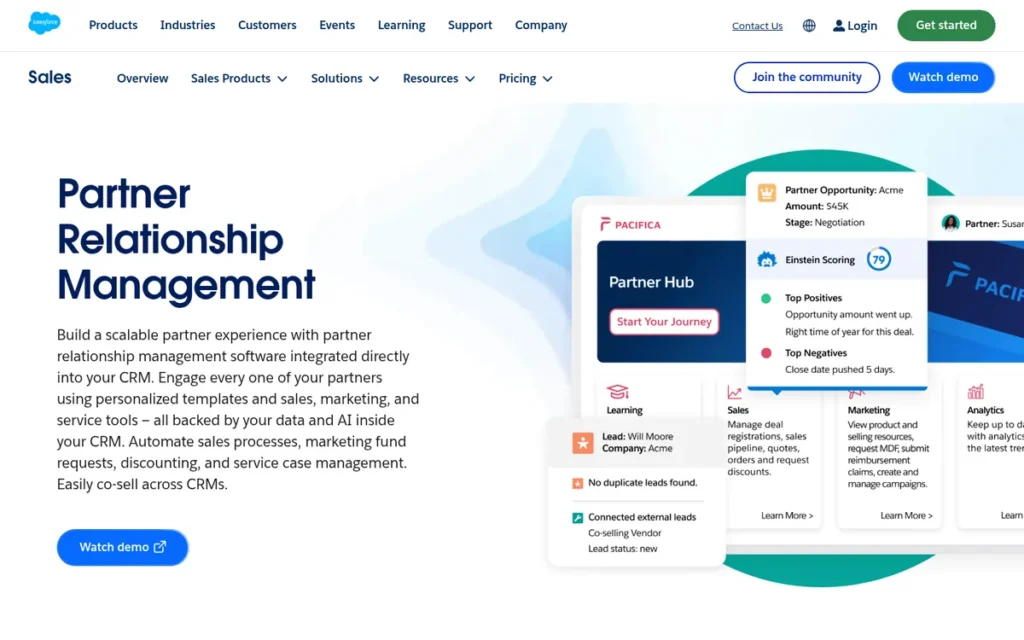
Category: Ecosystem PRM (CRM-Embedded), a partner portal and channel management layer built within Salesforce Experience Cloud, providing native access to live Salesforce CRM data for partner-facing workflows, co-sell pipelines, and Agentforce AI-driven channel management, not a standalone PRM product, but a configuration of Salesforce’s existing platform ecosystem requiring Salesforce licensing, admin resources, and developer capacity to deploy and maintain.
At a Glance
- Category: Ecosystem PRM (CRM-Embedded)
- Best For: Large enterprises already fully committed to Salesforce CRM (Sales Cloud + Experience Cloud) with dedicated Salesforce admin and developer headcount, who need partner portal capabilities drawing on live Salesforce data and have organizational tolerance for a 6–12 month implementation
- Price Range: Salesforce Partner Cloud starts at $25/member/month, billed annually (published on Salesforce’s official Partner Cloud pricing page, verified May 2026). This partner portal access license is only one of six required cost components, total first-year TCO typically includes Sales Cloud licenses (~$100+/user/month Pro edition), Experience Cloud add-on configuration, Agentforce/Einstein AI credits, third-party implementation partner fees ($50,000–$200,000+), and dedicated Salesforce admin headcount. Contact Salesforce for a fully itemized quote
- Primary Strength: Salesforce PRM provides native, real-time access to all live Salesforce CRM data from the partner portal without synchronization delays (the deepest possible CRM integration for organizations already within the Salesforce ecosystem) paired with production-grade Agentforce AI agents for autonomous partner-facing workflow execution
- Biggest Limitation: Salesforce PRM requires 6–12 months to implement, dedicated Salesforce admin and developer headcount for ongoing configuration, and often a third-party implementation partner, creating the highest total cost of ownership and slowest time-to-first-partner-revenue of any platform in this comparison, alongside a practitioner-documented end-user experience that salespeople “absolutely hate”
- One-Line Summary: Salesforce PRM (Partner Cloud) is a partner portal and channel management configuration built within Salesforce Experience Cloud, providing the deepest native live-data CRM integration and production-grade Agentforce AI in this comparison, justified only for large enterprises already fully committed to Salesforce with the developer resources and 6–12 month implementation tolerance that purpose-built PRM platforms like Channeltivity and Kiflo completely eliminate
- Last Verified: May 2026
Overview
Salesforce PRM (now marketed as Partner Cloud and built on Salesforce Experience Cloud) is the native partner management layer for organizations already operating within the Salesforce ecosystem, providing partner portal capabilities with live CRM data access alongside Agentforce AI for autonomous partner-facing workflow automation and a Channel Management Console for partner KPI monitoring.
Salesforce PRM is not a standalone product: Salesforce PRM is a configuration of Salesforce Experience Cloud layered with Sales Cloud PRM capabilities, meaning it is architecturally inseparable from a broader Salesforce contract and requires Salesforce admin expertise, developer resources, and often a third-party implementation partner to deploy and maintain at scale.
Practitioner community commentary consistently characterizes Salesforce at the user level as something end users “absolutely hate,” with every additional capability requiring its own “admin rabbit hole and fee”, a pattern particularly consequential for PRM, where the partner-facing portal experience determines whether the entire investment succeeds or silently fails.
Key Features
- Live CRM Data Access: Salesforce PRM’s partner portal draws on live Salesforce CRM data (Leads, Accounts, Opportunities, custom objects) without synchronization delays, giving partners and channel managers access to the same data layer that internal sales teams use in real time and eliminating the sync-delay data discrepancies that bridge-integrated PRM tools routinely create.
- Agentforce AI for Autonomous Workflows: Salesforce PRM integrates Agentforce AI for autonomous partner-facing workflow execution, including lead qualification, promotional email generation, trial org creation, and opportunity scoring, with Salesforce’s own internal deployment documented as producing “consistent week-over-week increases in partner engagement” per Salesforce’s official AI PRM documentation (accessed May 2026), a self-documented internal case rather than an independently audited benchmark.
- Channel Management Console: Salesforce PRM’s Channel Management Console provides channel leaders with centralized visibility into partner KPIs, win rates, pipeline health, co-selling activity, and engagement trends across the full partner population, surfacing performance intelligence that manual partner tracking spreadsheets cannot deliver at enterprise scale.
- Incentive and Commission Management: Salesforce PRM automates partner payout calculations, rebate processing, and loyalty tier management with partner-visible earnings dashboards, consolidating capabilities that would otherwise require separate commission management software on top of a Salesforce implementation.
- Slack Connect Co-Sell Collaboration: Salesforce PRM integrates Slack Connect for co-sell collaboration between internal sales teams and partner organizations, enabling deal-level communication, co-branded material sharing, and joint opportunity tracking within the Slack environment that many enterprise organizations have standardized on.
Best For
Salesforce PRM is best suited exclusively for large enterprises already fully committed to Salesforce CRM (operating Sales Cloud at enterprise scale with dedicated Salesforce admin headcount and organizational budget for 6–12 months of implementation) for whom the incremental cost of Experience Cloud partner portal licenses is substantially lower than adopting a standalone PRM requiring a separate integration. For any organization not already in the Salesforce ecosystem, purpose-built alternatives like Channeltivity, Kiflo, PartnerStack, or Allbound deliver faster deployment, better partner portal adoption outcomes, and lower total cost of ownership.
Pricing
Salesforce Partner Cloud starts at $25/member/month, billed annually, per Salesforce’s official Partner Cloud pricing page (verified May 2026). This partner portal member access license is only one of six required cost components buyers must model to arrive at true total cost of ownership:
- Salesforce Sales Cloud base licenses (~$100+/user/month for Pro edition, per community data from r/CRM)
- Experience Cloud partner portal add-on configuration (custom quoting)
- Agentforce/Einstein AI credits (usage-based, quoted separately)
- Third-party implementation partner fees (often $50,000–$200,000+ for enterprise deployments)
- Ongoing dedicated Salesforce admin headcount (~$8,000–$12,000/month loaded labor cost)
- Custom development for portal configuration and ongoing maintenance
Reddit practitioners describe Salesforce as “a huge expense” with costs that “become more apparent when you start to throw on extra modules and the hidden cost of development.” For comparison: Channeltivity’s all-in cost is $22,800/year at $1,899/month with no implementation partner or admin headcount dependency.
Strengths
- Salesforce’s platform holds a 4.3/5.0 G2 rating across 1,000+ reviews as of May 2026, with approximately 150,000+ customer organizations globally providing unmatched ecosystem depth in terms of Salesforce-certified implementation partners (Accenture, Deloitte, Capgemini), ISV integrations, and documented enterprise use cases across virtually every industry.
- Salesforce PRM’s Agentforce AI integration creates autonomous partner-facing agents for lead qualification, promotional emails, and trial org creation (with Salesforce’s own internal deployment documented as producing “consistent week-over-week increases in partner engagement” per official Salesforce documentation (May 2026)) representing the most rigorously self-validated AI capability claim in this comparison, though independent third-party auditing of these specific outcomes was not surfaced in public research as of May 2026.
- Salesforce PRM’s native live-data access to all Salesforce CRM objects eliminates the synchronization delays and data discrepancy risks documented as pain points across bridge-integrated PRM tools, for enterprises already on Salesforce, this architecture advantage is a genuine operational improvement over any non-native alternative requiring API-based data synchronization.
- Salesforce PRM benefits from 25+ years of enterprise CRM development, including deeply mature capabilities in territory management, pipeline management, security model configuration, and compliance framework support, providing governance, data residency, and permission-layer sophistication required by regulated industries that purpose-built PRM platforms may not match.
Limitations
- Partner-Facing UX Failure Risk: Salesforce PRM’s most consequential trade-off is the disconnect between its backend architectural power and the partner-facing user experience, Reddit practitioners consistently document that Salesforce is something end users “absolutely hate,” with an interface that is “a beast out of the box” and every feature requiring “its own admin rabbit hole and fee”, and since the partner-facing portal is Salesforce PRM’s primary output, a portal that partners find frustrating will not be used, rendering the entire investment ineffective regardless of backend capabilities.
- Implementation Complexity and TCO: Salesforce PRM routinely requires 6–12 months to go live, dedicated admin and developer resources, and third-party implementation partner engagement, creating the longest and most expensive path to first-partner-revenue in this comparison, with total first-year costs for a moderately complex deployment typically exceeding $250,000 when all six cost components are modeled, versus Channeltivity’s all-in $22,800/year.
- Ecosystem Lock-In: Salesforce PRM is architecturally inseparable from Salesforce’s broader licensing ecosystem, organizations not already operating Salesforce at enterprise scale face the full Salesforce adoption cost on top of the PRM use case, and organizations that later reduce their Salesforce commitment face significant PRM migration costs, creating a structural switching cost that purpose-built alternatives do not impose.
Users on r/CRM who work directly with Salesforce end users offered an unvarnished assessment of the platform’s core user-experience problem:
“Salesforce can do a lot, but my experience talking to sales people who use it is they absolutely hate it. Also, it’s really expensive and requires a ton of maintenance. Not a fan. I feel that there will be other platforms that come and eat their lunch.” Posted by u/Fast_Championship_R
Takeaway: The end-user hatred of Salesforce’s interface that front-line practitioners consistently report is directly disqualifying for a partner-facing PRM deployment, partners who find the portal frustrating will abandon it within 90 days, making the entire architectural investment irrelevant regardless of backend data depth.
Verdict
Salesforce PRM is the appropriate choice only for large enterprises already fully committed to the Salesforce ecosystem, where live CRM data integration without synchronization, Agentforce AI maturity, and ecosystem scale justify the 6–12 month implementation investment and the highest total cost of ownership in this comparison. For any organization that is not already operating Salesforce at enterprise scale with dedicated admin resources, Salesforce PRM is the most expensive and slowest path to partner revenue in this evaluation, purpose-built alternatives like Channeltivity, Kiflo, PartnerStack, or Allbound deliver faster implementation, better partner portal adoption outcomes, and lower total cost at every scale below large enterprise. Salesforce PRM’s documented partner-facing UX friction, practitioners describing the interface as something end users “absolutely hate”, is particularly disqualifying given that partner portal adoption quality is the single most predictive factor of PRM implementation success.
What Red Flags Should I Watch For When Evaluating Partnership Management Software?
Five red flags consistently predict PRM implementation regret: no published pricing with undisclosed GMV or per-user fees; ROI claims citing only vendor-produced statistics; no data on partner portal return visit rates after 90 days; vague implementation timelines without milestone commitments; and marketplace partner quality claims without vertical-filtered evidence. Address all five before signing any contract.
Red Flag #1: No Published Pricing, What Is the Vendor Hiding in the Contract?
Five of seven platforms in this comparison require full sales engagement before revealing any pricing. This is not a minor inconvenience, it prevents channel leads from building an internal business case, comparing total cost of ownership, or identifying hidden structures like PartnerStack’s GMV-percentage model before they are already emotionally invested in a specific vendor.
Ask for itemized pricing (platform fee, professional services, per-partner charges, GMV percentage, and AI credit consumption) in the first sales call, not the third. The PRM category’s pricing opacity is not neutral: it systematically favors vendors over buyers by delaying the information asymmetry that most benefits the buyer.
Red Flag #2: Vendor-Only ROI Claims, Where Are the Named Customer Case Studies?
Impartner cites approximately 32% first-year channel revenue growth and 296% ROI per its own marketing blog. ZINFI cites G2 comparison scores of 97/100 per its own competitive comparison page. No independent third-party verification of these specific figures was surfaced in public research as of May 2026.
Any ROI claim that cannot be traced to a named client case study verified by an independent source should be treated as directional marketing, not a benchmark for your business case. Ask vendors: “Can you provide the named client whose results are cited in this statistic, and a contact I can call to verify?”
Red Flag #3: Portal Adoption Rate Not Mentioned, Does Anyone Actually Use This Portal After Onboarding?
The most common and most expensive PRM failure mode is a portal that partners are technically enrolled in but never return to after the first 60–90 days. Vendors who focus sales conversations on feature breadth without discussing partner return visit rates are typically avoiding the question.
Ask specifically: “What is your typical portal active user rate among enrolled partners at the 90-day and 180-day marks?” A vendor with a genuinely strong adoption story will have this data immediately available. A vendor who redirects to feature breadth is signaling that portal adoption is not a metric they actively track, the most consequential gap in any PRM implementation.
Red Flag #4: Vague Implementation Timeline, What Does “Several Months” Actually Mean for Your Quarter?
Impartner’s competitor-cited average implementation is approximately five months. Salesforce PRM routinely runs 6–12 months. Allbound implementations are described by practitioners as “often taking several months” due to back-end development dependencies.
“Several months” before your first partner submits a deal means at least two missed quarterly pipeline contribution cycles and a delayed ROI justification for year two. Get a specific timeline commitment in writing (including milestones, dependencies, and what triggers delays) before signing any contract.
Red Flag #5: Marketplace Partner Quality Claims Without Verification, Are Those 138,000 Partners Qualified for Your B2B Sales Cycle?
PartnerStack’s 138,000-partner network is a headline number that practitioners in r/b2bmarketing describe as populated predominantly by “very low-quality publishers” unsuitable for complex B2B enterprise sales cycles.
Any vendor claiming a large partner network should be asked to produce a filtered list of active partners in your specific industry vertical with your average deal size profile, not a total network count that includes volume-based affiliate publishers alongside strategic channel partners.
What Questions Should I Ask Before Choosing a PRM Platform?
Before signing any PRM contract, ask five specific questions in the first sales conversation: what is the verified partner portal adoption rate at 90 and 180 days; what is the full implementation milestone timeline; can you provide references in your vertical with comparable program size; what is the complete pricing including any GMV percentages or per-user charges; and what has changed in ownership or roadmap in the past 12 months. These questions surface the information that marketing materials consistently omit.
Question #1: What is your verified partner portal adoption rate among currently onboarded partners?
Ask for the percentage of enrolled partners who log into the portal at least once per month at the 90-day and 180-day marks, segmented by partner type. A vendor with a genuinely strong adoption story will have this data readily available. A vendor who pivots to discussing feature breadth is signaling that portal adoption is not a metric they actively track, which is the most consequential gap in any PRM implementation.
Question #2: What is the full implementation timeline (from contract signing to the first partner submitting a deal) for a program of my size?
Request milestone-level specificity: discovery, configuration, data migration, partner portal build, testing, and partner onboarding phases. Ask what causes timeline overruns in comparable implementations and who is responsible for resolving them. The difference between a “weeks” and “months” answer directly determines whether your partner program contributes to this fiscal year’s revenue or next year’s.
Question #3: Can you provide 2–3 customer references in my industry vertical with partner programs of comparable size and program type?
General references from satisfied large enterprises do not validate fit for a mid-market channel program. Insist on references from companies with a similar number of active partners, the same primary program type (reseller vs. affiliate vs. co-sell), and the same CRM environment. These are the customers most likely to surface friction points relevant to your specific implementation.
Question #4: What is the complete pricing structure, including any GMV percentage, per-partner-user charges, or professional services fees required for implementation and ongoing changes?
Request the fully itemized cost breakdown in writing before any legal review begins. Specifically ask: Is there a revenue-sharing or GMV-percentage component? Are ongoing configuration changes included in the platform fee or billed separately? Is a professional services engagement required for standard portal customization? These questions expose the hidden cost components that represent the most common source of buyer regret in the PRM category.
Question #5: What has changed in your product roadmap, ownership structure, or pricing model in the last 12 months?
This question surfaces material risks that vendor marketing materials never proactively disclose. The April 2026 AppDirect acquisition of PartnerStack is a direct example: buyers evaluating PartnerStack on pre-acquisition positioning would be making a contract decision on outdated organizational information. Ask every vendor this question, not just the ones with known recent changes.
How Did We Rank These 7 Partnership Management Platforms?
Channeltivity earned the #1 ranking and Salesforce PRM ranked #7 by scoring all seven platforms against six objective criteria: partner portal adoption quality, verified review ratings and volume, feature set completeness for the target use case, CRM integration depth and reliability, pricing transparency and total cost of ownership, and implementation speed and complexity. Rankings reflect evidence, not affiliate relationships or vendor relationships.
How Did We Conduct the Evaluation?
This article is built on four evidence layers, evaluated and weighted in combination:
- AI engine query gap analysis: Multiple AI search engines were queried with the target prompts to identify which platforms appear in AI-generated PRM recommendations and which are absent, surfacing the coverage gaps that independent research corrects.
- Independent web research: Platform documentation, pricing pages, HubSpot Marketplace listings, FeaturedCustomers profiles, and competitive comparison pages were reviewed for each of the seven platforms. All vendor-sourced competitive claims are labeled as such throughout the article.
- Verified review platform data: G2 star ratings, verified review counts, and structured G2 sub-scores (Ease of Use, Quality of Support, Ease of Setup, Meets Requirements) were collected as of May 2026 for all seven platforms. Capterra and HubSpot Marketplace ratings were cross-referenced where available.
- Reddit community sentiment: Active threads in r/SaaS, r/b2bmarketing, r/salesengineers, r/CRM, and r/Affiliatemarketing were analyzed for practitioner-sourced commentary. User quotes are attributed by username and subreddit with source URLs throughout the article.
What Six Criteria Determined Each Platform’s Ranking?
C1, Partner Portal Adoption Quality (Primary Weight)
Partner portal adoption is the single most consistent make-or-break PRM criterion across all practitioner discussions, and it is entirely absent from AI-generated PRM comparisons. A PRM whose partners disengage within 60–90 days delivers zero ROI regardless of feature breadth. Measured through:
- Verified G2 and Capterra reviewer quotes specifically referencing partner-side portal usability and return-visit behavior
- Practitioner Reddit commentary on real-world partner adoption rates in r/SaaS, r/b2bmarketing, and r/salesengineers
- Platform design philosophy (consumer-grade UX vs. enterprise-configured complexity) based on vendor documentation and community-reported partner experience
- Presence of behavioral engagement features: gamification systems, intuitive deal registration flows, documented to drive voluntary portal return visits
C2, Review Platform Ratings and Volume (Primary Weight)
Verified review volume and aggregate ratings provide independent third-party validation of real-world effectiveness. G2 structured sub-scores (Ease of Use, Quality of Support, Ease of Setup, Meets Requirements) surface dimensions that headline star ratings obscure. All figures are cited with source and date. Self-reported competitive comparison scores are labeled as vendor-sourced throughout.
C3, Feature Set Completeness for Target Use Case (Primary Weight)
A platform with 200 features that don’t serve the buyer’s program type scores lower than a focused platform with 50 features that exactly match. Feature depth is assessed against core PRM requirements:
- Partner recruitment and automated onboarding workflows
- Deal registration with channel conflict prevention
- MDF (Market Development Funds) request-through-reimbursement management
- Training and certification LMS with trackable progress per partner tier
- Through-Channel Marketing Automation (TCMA) for co-branded campaign distribution
- Segmented partner portal with role-based access by partner type and tier
- Real-time partner performance analytics and revenue attribution dashboards
- Commission and payout automation across partner types and currencies
- Co-sell workflow support for partner-assisted deal closure
C4, CRM Integration Depth and Reliability (Primary Weight)
Bi-directional CRM sync between PRM and Salesforce or HubSpot determines whether partner-generated pipeline appears in internal sales tracking in real time, or creates the exact data silos PRM software is supposed to eliminate. Architecture type (native vs. API connector vs. embedded), sync direction (one-way vs. bidirectional), and number of CRMs natively supported all contribute. Practitioner commentary on integration reliability is weighted more heavily than vendor integration claims.
C5, Pricing Transparency and Total Cost of Ownership (Secondary Weight)
Pricing opacity is the most consistently cited frustration in PRM evaluation threads. Hidden costs (GMV percentages, professional services dependencies, implementation partner fees, per-partner-user charges, ongoing admin headcount requirements) significantly affect total cost of ownership and are systematically absent from vendor marketing materials.
C6, Implementation Speed and Complexity (Secondary Weight)
Implementation timelines ranging from days (Kiflo) to 12+ months (Salesforce PRM) are not equivalent. A 6-month implementation before first partner revenue means missed pipeline, missed quota cycles, and a harder internal business case for year two. Professional services dependency, developer requirements, and back-end configuration needs are the primary drivers of timeline overruns practitioners cite as a leading source of PRM buyer regret.
How Did We Handle Conflicting or Inconsistent Evidence?
When review platform ratings conflict with Reddit sentiment, specificity and recency are weighted more heavily. A detailed 2024–2025 Reddit practitioner post describing firsthand implementation experience with named friction points outweighs a generic 2022 G2 review for limitations analysis. When multiple independent sources corroborate a data point, it is stated as fact. When a data point originates from a single source (particularly a vendor-owned one) it is labeled as such throughout the article.
How Did We Validate Vendor Claims and Third-Party Data?
Vendor-reported statistics (Impartner’s approximately 32% revenue increase, ZINFI’s 97/100 G2 comparison score, PartnerStack’s partner network size) are labeled as vendor-reported or competitor-sourced throughout. Only claims corroborated by at least one independent source are stated as established fact. Pricing figures include a “verified [Month Year]” timestamp. AI capability claims are categorized by independently verifiable production maturity, not by vendor marketing language.
How Often Is This Ranking Updated?
This article was last updated May 2026. PlugRoute refreshes PRM category rankings whenever a material market event occurs (such as the April 2026 AppDirect acquisition of PartnerStack), pricing changes are verified on official vendor pages, or significant new review volume materially shifts a platform’s G2 standing. We update this guide quarterly. Readers should confirm pricing directly with vendors before making purchasing decisions.
Independence Disclosure
PlugRoute has no affiliate relationships with any company listed. Rankings are determined entirely by research data and objective evaluation criteria. No company paid to be included, received advance review of this content, or had any input into its editorial conclusions.
Frequently Asked Questions About Partnership Management Software
What is the best partnership management software for mid-market SaaS companies in 2026?
Channeltivity is the strongest all-around choice for mid-market SaaS and technology companies in 2026, based on its verified 4.7/5.0 G2 rating, published starting price of $1,899/month (the only mid-market PRM in this comparison to publish pricing, verified May 2026), no-code deployment in weeks, and native integration with Salesforce, HubSpot, and Dynamics 365. Kiflo at $399/month is the strongest alternative for companies with fewer than 50 active partners launching their first program.
Is PartnerStack still a good choice after the AppDirect acquisition in April 2026?
PartnerStack remains the strongest purpose-built option for B2B SaaS companies running affiliate, referral, and reseller programs simultaneously, with a verified 4.7/5.0 G2 rating from 400+ reviews and best-in-class payout automation. However, any buyer evaluating PartnerStack in 2026 must explicitly request confirmation of pricing terms, roadmap continuity, and support structure from the combined AppDirect entity before signing, the April 2026 acquisition is a material organizational change requiring direct due diligence before any contract commitment.
How does PlugRoute determine PRM software rankings?
PlugRoute ranks PRM platforms by scoring each against six objective criteria: partner portal adoption quality (primary), verified review ratings and volume (primary), feature set completeness for the target use case (primary), CRM integration depth and reliability (primary), pricing transparency and total cost of ownership (secondary), and implementation speed and complexity (secondary). Every platform receives identical research depth from the same public sources. No company has any affiliate, advertising, or commercial relationship with PlugRoute, rankings are determined entirely by evidence.
What Do Key PRM Terms Like TCMA, UCM, and GMV Pricing Mean?
Partner Relationship Management (PRM): PRM is a software category designed to manage the full lifecycle of a company’s external partner relationships (including resellers, distributors, affiliates, and referral partners) from recruitment and onboarding through deal registration, training, co-marketing, and performance measurement. PRM platforms are purpose-built for partner-facing workflows that CRM software (designed for internal sales teams) is not natively equipped to support.
Through-Channel Marketing Automation (TCMA): TCMA is a PRM capability that enables companies to create co-branded marketing campaigns and distribute them through partner networks at scale, with automated content approval workflows and co-branded asset delivery to individual partner organizations. TCMA is a core feature of Impartner and ZINFI; it differentiates these platforms for enterprises where generating demand through the partner channel (not just tracking partner-registered deals) is a primary revenue strategy.
GMV Percentage Pricing: In PRM context, Gross Merchandise Value (GMV) percentage pricing is a revenue-sharing model in which the vendor charges a percentage of total partner-driven revenue processed through the platform, in addition to a base platform subscription fee. PartnerStack’s pricing model includes an undisclosed GMV percentage component that scales proportionally with partner program success, a structure practitioners describe as “penalizing programs that grow” because platform costs increase as partner-driven revenue increases.
Partner Portal Adoption: Partner portal adoption refers to the rate at which enrolled partner organizations actively return to and use a PRM’s partner-facing portal after initial onboarding, typically measured by monthly active user rate among enrolled partners at the 90-day and 180-day marks. Partner portal adoption is the single most consistent make-or-break PRM success factor cited by practitioners: a portal that partners are enrolled in but do not use renders the entire PRM investment ineffective regardless of feature breadth.
Unified Channel Management (UCM): UCM is ZINFI’s proprietary framework that integrates partner relationship management, partner marketing management, and business intelligence into a single correlated architecture rather than treating them as separate product modules. UCM enables a cross-module correlation engine that connects program performance metrics (MDF spend, training completion rates, portal engagement frequency) to partner tier revenue outcomes at a data granularity that siloed PRM-only platforms cannot provide.
Glossary: Key Terms Used in This Comparison
Partner Portal Adoption: The rate at which enrolled partner organizations actively return to and use a PRM’s partner-facing portal after initial onboarding, typically measured by monthly active user rate at the 90-day and 180-day marks. It is the single most cited make-or-break success factor for PRM implementations, as a portal that onboarded partners never return to renders the entire investment ineffective regardless of feature breadth.
GMV Percentage Pricing: A revenue-sharing pricing model in which a PRM vendor charges a percentage of total partner-driven revenue (Gross Merchandise Value) processed through the platform, in addition to a base subscription fee. PartnerStack’s pricing includes an undisclosed GMV percentage component that scales proportionally with partner-driven revenue growth, meaning platform costs increase as the program succeeds.
Through-Channel Marketing Automation (TCMA): A PRM capability that enables companies to create co-branded marketing campaigns and distribute them through partner networks at scale, with automated content approval workflows and asset delivery to individual partner organizations. TCMA differentiates platforms like Impartner and ZINFI for enterprises where generating demand through the partner channel is a primary revenue strategy alongside tracking partner-registered deals.
Unified Channel Management (UCM): ZINFI’s proprietary framework that integrates partner relationship management, partner marketing management, and business intelligence into a single correlated architecture rather than treating them as separate product modules. A UCM cross-module correlation engine connects program performance metrics (such as MDF spend and training completion rates) to partner tier revenue outcomes at a granularity that siloed PRM-only platforms cannot provide.
Market Development Funds (MDF): Co-marketing budget that a vendor allocates to partner organizations to fund joint demand-generation activities such as events, advertising, or content production. PRM platforms like Channeltivity manage the full MDF lifecycle (from partner fund requests through reimbursement) within a single system, eliminating the email chains and spreadsheet reconciliation that manual MDF management requires.
Which Partnership Management Tool Is Right for You?
For most mid-market technology companies, Channeltivity is the clearest evidence-based starting point, it is the only platform in this comparison with published pricing, documented weeks-long deployment, native integration with all three major mid-market CRMs, and 18 years of uninterrupted tech-channel product development. SMBs should start with Kiflo; B2B SaaS companies with existing partner demand should evaluate PartnerStack; enterprise Salesforce organizations should evaluate Impartner or Salesforce PRM.
Key Insights
- Channeltivity is the strongest overall choice for mid-market technology channel programs, earning the #1 ranking based on objective evidence across all six criteria, the only platform combining published pricing ($1,899–$2,199/month, verified May 2026), 18-year tech-channel product maturity, no-code deployment in weeks, and native Salesforce, HubSpot, and Dynamics 365 integration simultaneously.
- PartnerStack is the strongest choice for B2B SaaS affiliate, referral, and reseller programs, but the April 2026 AppDirect acquisition and undisclosed GMV-percentage pricing model require explicit due diligence before signing any contract, and the 138,000-partner marketplace has limited accessible value for niche B2B verticals per practitioner consensus.
- Kiflo at $399/month is the most accessible and fastest-to-deploy entry point for SMBs and startups launching first programs, with a 25–50 partner Core Plan ceiling that buyers should explicitly model against their 18–24 month growth projections before committing.
- Partner portal adoption quality: not feature breadth, is the make-or-break criterion for PRM success, and it is the one criterion that AI-generated PRM comparisons consistently ignore entirely, leading buyers toward feature-rich platforms their partners will never actually use.
- Five of seven platforms in this comparison require sales engagement before revealing any pricing: factor this procurement timeline friction into budget authorization planning and push for itemized pricing (platform fee, professional services, GMV percentage, per-partner charges) in the first sales conversation.
If you need to launch a partner program within the current quarter with a published budget you can defend to leadership today, Channeltivity (mid-market) or Kiflo (SMB) are the only two platforms in this comparison that enable that. If you are managing an established B2B SaaS program at scale with existing partner demand, PartnerStack remains the strongest option, but model the GMV cost trajectory at 2x and 5x your current partner-driven revenue before committing. If you are a large enterprise on Salesforce with a mature multi-tier channel program and a dedicated implementation team, Impartner or Salesforce PRM are the architecturally justified choices; for every other situation, purpose-built alternatives deliver faster time-to-value at lower total cost.
If you have arrived at a shortlist of 2–3 platforms and are heading into vendor demos, you are better positioned than most PRM buyers: you know the questions to ask (Questions #1–5), the red flags to watch for (Red Flags #1–5), the implementation timelines to model, and the hidden cost components to extract before any legal review begins. The goal of this comparison is not to make your decision for you, it is to make your decision defensible.
For more independent, evidence-based software comparisons without affiliate incentives, explore PlugRoute’s other SaaS category analyses, every ranking uses the same transparent methodology applied here. We update this guide quarterly. Last updated: May 2026.