Channeltivity is the highest-rated independently owned full-suite channel PRM for B2B technology companies (G2 4.7/5.0, May 2026), Kiflo is the best SMB and mid-market PRM for pricing transparency at $399/month published, and Crossbeam is the global standard for co-selling intelligence at $4,800/year. No single platform covers the full partner lifecycle equally, buying the wrong category of tool is this market’s most consistently documented and costly evaluation mistake.
The full partner lifecycle (from partner recruitment and portal onboarding through co-selling, commission automation, and performance analytics) spans four structurally distinct platform categories. Most evaluation errors happen before the demos begin: a team purchases a co-selling intelligence tool expecting PRM functionality, or an affiliate management platform expecting B2B channel support. One in three SME implementations still faces a six-month-plus delay (Business Research Insights, 2026).
As one user on r/SaaS described the challenge:
“depends what ‘best’ means for you because the tool shortlist changes a lot based on two things: what you’re billing on, and whether you want an affiliate program or a partner program. those aren’t the same thing and people conflate them all the time.” Posted by u/varadero332
Takeaway: The category mismatch between affiliate tools and full partner programs is the most consistently reported evaluation error in this market, practitioners building structured partner programs routinely encounter buyers who conflate the two product categories before their first demo.
PlugRoute has no affiliate relationships with any company listed in this review. Rankings are determined entirely by research data and objective evaluation criteria, no company receives preferential treatment or has paid for placement.
TL;DR: Top Picks at a Glance
- Channeltivity: the highest-rated independently owned full-suite channel PRM (G2 4.7/5.0, 56 reviews, May 2026); self-funded non-VC company operating since 2003 with published pricing (Standard: $1,899/month) and no professional services fees for ongoing configuration changes.
- Kiflo: the highest-rated SMB PRM for ease of use (G2 4.7/5.0, SoftwareAdvice 5.0/5.0, Capterra 5.0/5.0, May 2026); Core tier at $399/month published pricing; top practitioner-rated ease of use and support quality across multiple independent platforms.
- Crossbeam: the global standard for Ecosystem-Led Growth account mapping (G2 4.7/5.0, May 2026); Connector plan at $4,800/year ($400/month); named customer evidence of +34% ACV (Census, 2023) and 3x upsell frequency at 4x higher dollar amounts (RingCentral, 2023).
- PartnerStack: the world’s largest B2B SaaS partner Marketplace (138,000+ active partners, May 2026) with a network that has driven $3B+ in customer revenue; acquired by AppDirect on April 14, 2026, investigate post-acquisition pricing, roadmap, and Marketplace commission structure before contracting.
What Are the 4 Categories of Partner Ecosystem Platform Software?
Partner ecosystem platforms fall into four distinct categories: Full-Lifecycle Channel PRMs (Channeltivity, Kiflo, Impartner), B2B SaaS Partner Network and PRM (PartnerStack), Co-Selling Intelligence and ELG platforms (Crossbeam, PartnerTap), and Multi-Channel Partnership Management (Impact.com). Category mismatch (buying the wrong type of platform) is the most consistently documented and expensive evaluation error in this market.
Understanding which category matches your primary need is more important than comparing individual feature lists across vendors. A team that purchases Crossbeam expecting PRM functionality, or Impact.com expecting B2B reseller channel support, faces a costly re-evaluation cycle averaging six-plus months before a replacement platform becomes operational.
Category 1: Full-Lifecycle Channel PRM
Full-Lifecycle Channel PRMs manage the complete partner relationship in one platform. Core capabilities include:
- Partner portal with self-service onboarding and role-based access controls
- Deal registration and MDF request/approval workflows
- Partner training and certification with LMS integration (SCORM, AICC, cmi5, xAPI)
- Commission calculation and automated payout processing
- Performance analytics with revenue attribution by partner and program type
Platforms in this category: Channeltivity (Rank #1), Kiflo (Rank #2), Impartner (Rank #6)
Category 2: B2B SaaS Partner Network and PRM
B2B SaaS Partner Network and PRM platforms combine lifecycle management with access to a pre-built marketplace of active partners ready to promote SaaS products.
Platform: PartnerStack (Rank #4), 138,000+ active B2B partners; acquired by AppDirect April 14, 2026.
Category 3: Co-Selling Intelligence and ELG Platform
Co-Selling Intelligence platforms securely map CRM account overlaps between partner companies to surface co-selling opportunities. These platforms do NOT replace a PRM, they must be supplemented with separate portal and commission management.
Platforms: Crossbeam (Rank #3), PartnerTap (Rank #5)
Category 4: Multi-Channel Partnership Management
Multi-Channel Partnership Management platforms handle affiliates, influencers, creators, publishers, and B2B partners with unified tracking and fraud detection, architecturally optimized for performance marketing, not B2B channel programs.
Platform: Impact.com (Rank #7)
How Do the Top Partner Ecosystem Platforms Compare at a Glance?
The seven platforms reviewed here span all four partner ecosystem categories, with significant differences in pricing transparency, feature coverage, and verified customer evidence. Use this table to identify your category match before evaluating individual features.
| Rank | Company | Category | Best For | One-Line Summary | Key Capabilities | Primary Strength | Key Limitation |
|---|---|---|---|---|---|---|---|
| 1 | Channeltivity (channeltivity.com) | Full-Lifecycle Channel PRM | Mid-market and enterprise B2B tech channel programs needing multi-CRM support and no PS fees | Channeltivity is the highest-rated independently owned full-suite channel PRM (G2 4.7/5.0, May 2026) with published pricing starting at $1,899/month, native integrations across four major CRMs, and zero professional services fees for ongoing support. | (1) Partner portal and deal registration (2) MDF management (3) SCORM/AICC/cmi5/xAPI LMS (4) 4-CRM native integration (Salesforce, Dynamics 365, Zoho, HubSpot) (5) No PS fees for ongoing support | Highest-rated independently owned full-suite PRM at published pricing with no PS fees; 18+ years of non-VC operation; broadest multi-CRM connector coverage | Standard tier at $1,899/month is 4–5x higher than Kiflo’s $399/month Core; no native co-selling intelligence |
| 2 | Kiflo (kiflo.com) | SMB and Mid-Market PRM | B2B SaaS teams ($1M–$50M ARR) launching or scaling multi-type partner programs with transparent pricing | Kiflo is the highest-rated SMB PRM for ease of use (G2 4.7/5.0, SoftwareAdvice 5.0/5.0, May 2026) with published pricing starting at $399/month, bi-directional CRM sync with Salesforce and HubSpot, and multi-type partner program support. | (1) Bi-directional CRM sync (Salesforce/HubSpot) (2) Multi-program-type dashboard (reseller, affiliate, referral, alliance) (3) Commission automation (4) Self-service onboarding (5) Published Core pricing at $399/month | Only full-featured PRM with a published starting price at $399/month; highest cross-platform satisfaction score of any PRM in this comparison | No publicly documented named case studies with quantified ROI; no native co-selling intelligence; company background not publicly disclosed |
| 3 | Crossbeam (crossbeam.com) | Co-Sell Intelligence and ELG Platform | Mid-market and enterprise SaaS teams needing systematic partner account overlap identification and ELG workflows | Crossbeam is the global standard for Ecosystem-Led Growth account mapping; G2 4.7/5.0 (100+ reviews, May 2026), published pricing from $0 (Free) to $4,800/year (Connector at $400/month), and named customer evidence of a 34% ACV increase and 3x upsell frequency at 4x higher dollar amounts. | (1) Secure clean room account mapping (2) CRM-native push (Salesforce/HubSpot) (3) Free tier (up to 3 Full Access seats, 1 partner) (4) ELG Certification Bootcamp (5) Connector at $4,800/year ($400/month) | Strongest named quantified customer evidence; only platform with published pricing including a functional free tier; Reveal merger 2023 consolidated category leadership | Not a PRM; no portals, commissions, deal registration, or onboarding; Supernode and Enterprise require sales contact |
| 4 | PartnerStack (partnerstack.com) | B2B SaaS Partner Network and PRM | B2B SaaS companies wanting immediate access to 138,000+ pre-built partners for fast affiliate and referral program launch | PartnerStack is the world’s largest B2B SaaS partner network platform (138,000+ active partners, G2 4.7/5.0, May 2026), acquired by AppDirect on April 14, 2026, with a network that has driven $3B+ in customer revenue and an AI Recruit Agent. | (1) 138,000+ partner Marketplace (2) AI Recruit Agent (20 candidates/week) (3) Automated payouts (4) CRM sync (Salesforce/HubSpot/Pipedrive) (5) Multi-program-type management | Largest pre-built B2B SaaS partner network globally; $3B+ in cumulative customer revenue; AI partner recruitment automation | AppDirect acquisition (April 14, 2026) introduces roadmap and pricing uncertainty; dual-cost structure (subscription + Marketplace revenue commission); no published pricing |
| 5 | PartnerTap (partnertap.com) | Enterprise Co-Sell Platform | Fortune 500 enterprises running complex multi-partner co-sell programs with data privacy and governance requirements | PartnerTap is the enterprise co-selling platform validated at SAP scale; combining digital clean room technology for privacy-compliant account mapping with native CRM push to Salesforce, Dynamics, and HubSpot; the strongest choice for large enterprises with data governance requirements. | (1) Digital clean room account mapping (2) Co-Sell Engine workflow orchestration (3) 20 account + 16 opportunity reports (4) Native CRM push (Salesforce/Dynamics/HubSpot) (5) Salesforce AppExchange listed | SAP Power of 3 Sales Program named validation with SVP-level quote; digital clean room for compliance-sensitive data sharing; founded 2016 (pre-Crossbeam); non-VC-backed | No PRM functionality; enterprise-only custom pricing not published; value scales with active co-sell relationships |
| 6 | Impartner (impartner.com) | Enterprise Full-Suite PRM | Large enterprises and ISVs building AWS, Azure, or GCP marketplace co-sell programs requiring automated private offer creation | Impartner is the most feature-comprehensive enterprise PRM in this comparison; uniquely offering HyperscalerGTM automation across AWS, Azure, and GCP marketplaces (GA November 2025) alongside full lifecycle management; but carries documented implementation complexity, a G2 rating of 4.5/5.0 (550+ reviews), and complete pricing opacity. | (1) HyperscalerGTM (AWS/Azure/GCP private offer automation, GA November 2025) (2) Journey Builder dynamic lifecycle orchestration (3) TCMA (4) MDF management (5) Deal registration and Salesforce AppExchange integration | Only platform unifying AWS, Azure, and GCP marketplace co-sell private offer automation (developed with Labra, GA November 2025); most comprehensive full PRM feature set | G2 4.5/5.0 below the 4.7/5.0 top-cluster PRMs; documented long implementations and professional services dependency; no named quantified case studies; no published pricing |
| 7 | Impact.com (impact.com) | Multi-Channel Partnership Management | Large enterprise brands in e-commerce, DTC, and media managing high-volume affiliate programs alongside influencer and creator campaigns | Impact.com is the broadest enterprise multi-channel partnership platform (G2 4.5/5.0, May 2026), managing affiliates, influencers, creators, and B2B partners with cross-device tracking and fraud detection for brands like Walmart and Shopify; best suited for performance marketing programs, not B2B SaaS channel management. | (1) 6 partnership types (affiliates, influencers, creators, publishers, B2B, Amazon) (2) Cross-device identity matching (3) Fraud detection (4) Ask Impact AI (5) Google Cloud Marketplace deployment | Broadest partnership type coverage; 10/10 independent tracking technology score (Dustin Howes, 2024); Walmart and Shopify scale validation | Community-reported support delays frequently exceeding 10 days to several weeks for critical issues; not optimized for B2B channel PRM workflows; enterprise-only pricing ($20,000+/year community-reported) |
Which Partner Ecosystem Platform Should I Choose for My Use Case?
The right partner ecosystem platform depends primarily on your program stage, partner type mix, and budget. Use the framework below to identify your starting point before evaluating individual product features.
Before using the table below, identify your situation: (A) No partner program yet, building from scratch. (B) Partner program running on spreadsheets or CRM workarounds, upgrading to a dedicated platform. (C) Functioning partner platform, adding co-selling intelligence or hyperscaler marketplace automation on top. Each starting point routes to different platform priorities.
| Your #1 Priority | Recommended Tool | Why | Acceptable Alternative |
|---|---|---|---|
| Bootstrapped startup or validating first partner program | Crossbeam (Free tier) | Only platform in this comparison with a functional free tier; up to 3 Full Access seats and single-partner account mapping at $0, validating co-selling value before any budget commitment | Kiflo Core at $399/month if full PRM functionality is the priority over co-selling intelligence |
| Growing SaaS scaling affiliate and referral programs quickly | PartnerStack | 138,000+ pre-built B2B partner network and $3B+ in cumulative customer revenue driven through the Marketplace; investigate post-April 2026 acquisition pricing before contracting | Kiflo at $399/month if Marketplace network access is not the top priority |
| Mid-market needing full lifecycle PRM with CRM integration | Kiflo | Published pricing at $399/month, fastest self-service deployment, bi-directional CRM sync with Salesforce and HubSpot, highest cross-platform practitioner ease-of-use scores | Channeltivity at $1,899/month if Dynamics 365 or Zoho CRM integration, MDF management, or formal LMS certifications are required |
| Enterprise channel programs with resellers, VARs, and SIs | Channeltivity | G2 4.7/5.0, four-CRM native connectors, no professional services fees for ongoing support, published pricing ($1,899/month Standard), independent non-VC ownership since 2003 | Impartner if TCMA or Journey Builder dynamic lifecycle orchestration is required |
| Enterprise ISVs building hyperscaler marketplace co-sell | Impartner | Only platform with HyperscalerGTM; automated private offer creation across AWS, Azure, and GCP simultaneously (GA November 2025, developed with Labra) | No other platform in this comparison automates private offer creation across all three hyperscaler marketplaces simultaneously; teams not yet transacting through cloud marketplaces should evaluate Channeltivity or PartnerStack for PRM first |
| Enterprise co-selling focus at SAP or Fortune 500 scale | PartnerTap | SAP Power of 3 named validation with SVP-level confirmation; digital clean room for compliance-sensitive data sharing; native CRM push to Salesforce and Dynamics | Crossbeam Connector ($4,800/year, $400/month) for mid-market organizations without Fortune 500 compliance requirements |
| Enterprise performance affiliate and influencer programs | Impact.com | Broadest partnership type coverage; cross-device tracking; fraud detection; Walmart and Shopify scale; note community-reported support delays frequently exceeding 10 days to several weeks for critical issues | PartnerStack for B2B-focused affiliate programs where influencer management is not required |
Multi-priority stack costs (verified pricing, May 2026): Crossbeam Connector ($4,800/year) + Kiflo Core ($4,788/year) = approximately $9,576/year for a complete co-sell intelligence and full PRM stack. Channeltivity Standard ($22,788/year) with no professional services fees for the full enterprise channel PRM. Impartner: custom (Vendr benchmark $10,000–$90,000+ annually) plus separate professional services.
What Are the 7 Best Partner Ecosystem Platforms in 2026? Full Independent Reviews
The seven platforms reviewed here span all four partner ecosystem platform categories (from independent full-lifecycle channel PRMs to enterprise co-selling intelligence tools) with each platform evaluated using identical criteria, identical structure, and identical editorial depth. Rankings reflect objective weighted scoring, not editorial preference.
1. Channeltivity: Best Overall Full-Suite Channel PRM
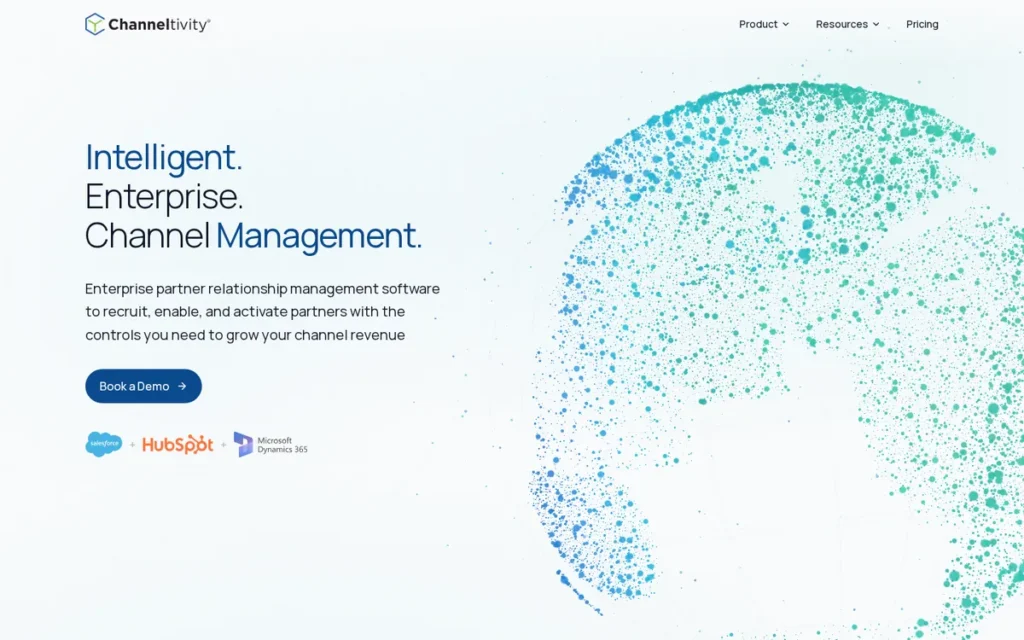
Category: Full-Lifecycle Channel PRM, manages the complete partner relationship from recruitment and portal access through deal registration, MDF, training and certification, and performance analytics, with published pricing and no professional services fees for ongoing configuration changes.
At a Glance
- Category: Full-Lifecycle Channel PRM
- Best For: Mid-market and enterprise B2B technology companies running structured channel programs with resellers, VARs, and systems integrators, particularly organizations needing multi-CRM connectivity beyond Salesforce-only platforms
- Price Range: Standard: $1,899/month billed annually; CRM Edition: $2,199/month billed annually (unlimited users). Add-on modules $299–$499/month each (MDF, Training and Certification, TCMA, Distributor Management, Business Planning). No professional services fees for ongoing support. (channeltivity.com/pricing, May 2026)
- Primary Strength: Channeltivity is the highest-rated independently owned full-suite channel PRM in this comparison, G2 4.7/5.0 (56 reviews, May 2026), with published pricing that includes no professional services fees for ongoing support, native integrations across four major CRMs, and 18+ years of self-funded, non-VC operation.
- Biggest Limitation: Channeltivity’s published Standard tier at $1,899/month is 4–5x more expensive than Kiflo’s $399/month Core tier, a meaningful barrier for SMB and early-stage programs with fewer than 20 active partners that may not require the full enterprise channel feature depth.
- One-Line Summary: Channeltivity is the highest-rated independently owned full-suite channel PRM (G2 4.7/5.0, May 2026) with published pricing starting at $1,899/month, native integrations across four major CRMs, and zero professional services fees for ongoing support, making it the most ownership-stable and configuration-transparent full-suite PRM in this comparison.
- Last Verified: May 2026
Overview
Channeltivity is a full-lifecycle channel PRM built for mid-market and enterprise B2B technology companies that need to manage resellers, VARs, distributors, and systems integrators through a structured program (from partner portal onboarding and deal registration through MDF management, formal partner training certification, and performance analytics) at published pricing with no professional services fees for ongoing configuration changes.
Channeltivity has operated as an independent, privately held company since its 2003 founding, one of the only non-VC-funded platforms in this category and the longest-running dedicated channel management solution reviewed here.
Channeltivity holds 56 G2 reviews at 4.7/5.0 and approximately 5 Capterra reviews at 4.6/5.0 as of May 2026. The low review volume means direct customer reference calls are especially important for Channeltivity evaluation; the 4.7/5.0 satisfaction score places Channeltivity in the tied-highest cluster alongside Kiflo and Crossbeam.
Key Features
- Multi-CRM Native Integration: Channeltivity delivers bi-directional CRM integration across Salesforce, Microsoft Dynamics 365, Zoho CRM, and HubSpot, the broadest multi-CRM connector coverage among all platforms reviewed, enabling indirect and direct sales visibility for organizations running any major CRM stack without manual data transfer.
- Formal Partner Training and Certification: Channeltivity includes a fully integrated training module supporting SCORM, AICC, cmi5, and xAPI eLearning standards, enabling formal partner certifications with completion tracking directly inside the portal, without requiring a separate LMS license or third-party training platform.
- Full Channel Revenue Workflow: Channeltivity provides deal registration, MDF request and approval management, lead distribution, co-branded collateral generation, partner forum, and business planning templates as native features, covering the full revenue-generating channel program workflow without add-on purchases.
- Global Partner Portal Infrastructure: Channeltivity’s partner portal supports multi-language auto-translation, role-based access controls, customizable dashboards, and a partner communication hub, enabling globally distributed partner networks without additional localization tools.
- No Professional Services Fees for Ongoing Support: Channeltivity explicitly documents on its pricing page that unlimited support is included without professional services fees for ongoing configuration changes, a documented total cost of ownership advantage over enterprise competitors where ongoing configuration requires separate paid services engagements.
Best For
Channeltivity is best for mid-market and enterprise B2B technology companies (particularly in software, hardware, and cybersecurity) that need a complete, self-service channel PRM with published pricing, native multi-CRM support for organizations not exclusively on Salesforce, and no recurring professional services fees for ongoing program configuration.
Pricing
Channeltivity publishes two core tiers as of May 2026: the Standard edition at $1,899/month billed annually (unlimited users, all core channel PRM features) and the CRM Edition at $2,199/month billed annually (adds native connectors for Salesforce, Microsoft Dynamics 365, Zoho CRM, and HubSpot).
Add-on modules (MDF management, Training and Certification, TCMA, Distributor Management, and Business Planning) are separately priced at $299–$499/month each. The Training module is also available at $100/month for 100 registrations, scaling to $600/month for 1,000 registrations (channeltivity.com/pricing, May 2026).
The no-PS-fees model has measurable TCO significance: at competitors where configuration changes require paid professional services at $150–$250/hour, a team needing six to eight customizations per year could pay $10,000–$30,000/year above the platform subscription, a hidden cost category absent from Channeltivity’s model.
Strengths
- Channeltivity holds a G2 satisfaction rating of 4.7/5.0 (56 reviews, May 2026): tied with Kiflo and Crossbeam in the top-cluster of this comparison, at a published pricing model that explicitly includes no professional services fees for ongoing support, a combination unique among enterprise PRMs evaluated here.
- Channeltivity’s independent, non-VC-funded ownership structure since 2003 eliminates the two most documented vendor stability risks in this category: acquisition integration disruption (active for PartnerStack post-AppDirect, April 2026) and VC growth-pressure customer service degradation documented for funded competitors in practitioner community discussions.
- Channeltivity natively integrates with four major CRM platforms: Salesforce, Microsoft Dynamics 365, Zoho CRM, and HubSpot, with purpose-built connectors for each, enabling accurate revenue attribution across indirect and direct channels for organizations outside the Salesforce-majority ecosystem.
“Channeltivity, Good customer service and quick implementation.” (u/Federal-Llama, r/SaaS, 2023 (practitioner with experience across multiple PRM platforms))
Takeaway: Channeltivity’s practitioner-reported ease of implementation and support quality is consistent with its self-service architecture and documented no-professional-services-fees model, the two dimensions that directly address the top post-purchase complaints in the enterprise PRM category.
Limitations
- Higher Base Entry Cost: Channeltivity’s Standard tier at $1,899/month (billed annually) is 4–5x more expensive than Kiflo’s $399/month Core tier, a meaningful barrier for SMB and early-stage programs with fewer than 20 active partners that may not require the full enterprise channel feature depth.
- Custom Configuration Ceiling: Channeltivity’s capacity for highly customized workflows (configurations that deviate significantly from standard deal registration, MDF, and portal defaults) is limited, making it a strong fit for programs aligned with conventional tech channel architectures but a constraint for organizations requiring extensive bespoke automation.
- No Native Co-Selling Intelligence: Channeltivity has no native account mapping or co-selling overlay capability, teams requiring systematic partner account overlap visibility must supplement with a separate tool such as Crossbeam, adding to total platform cost and vendor count.
- Architecture Longevity: Channeltivity’s 18-plus-year platform history should be evaluated during product demos for modern API flexibility, mobile responsiveness, and AI feature maturity, longevity alone does not guarantee contemporary UX standards.
Verdict
Channeltivity is the highest-rated independently owned channel PRM in this comparison, G2 4.7/5.0 at published pricing with no professional services fees across 18 years of self-funded, non-VC operation, and absent from all LLM responses evaluated in this research (Perplexity and ChatGPT GPT-4o, May 2026) despite its operational track record. Channeltivity is the strongest default choice for mid-market and enterprise B2B technology companies running structured channel programs with resellers, VARs, and SIs that need full lifecycle management deployable without professional services overhead or acquisition-driven roadmap uncertainty. Teams requiring native co-selling intelligence should evaluate Channeltivity alongside Crossbeam as a complementary co-sell layer.
2. Kiflo: Best SMB and Mid-Market PRM / Best Pricing Transparency
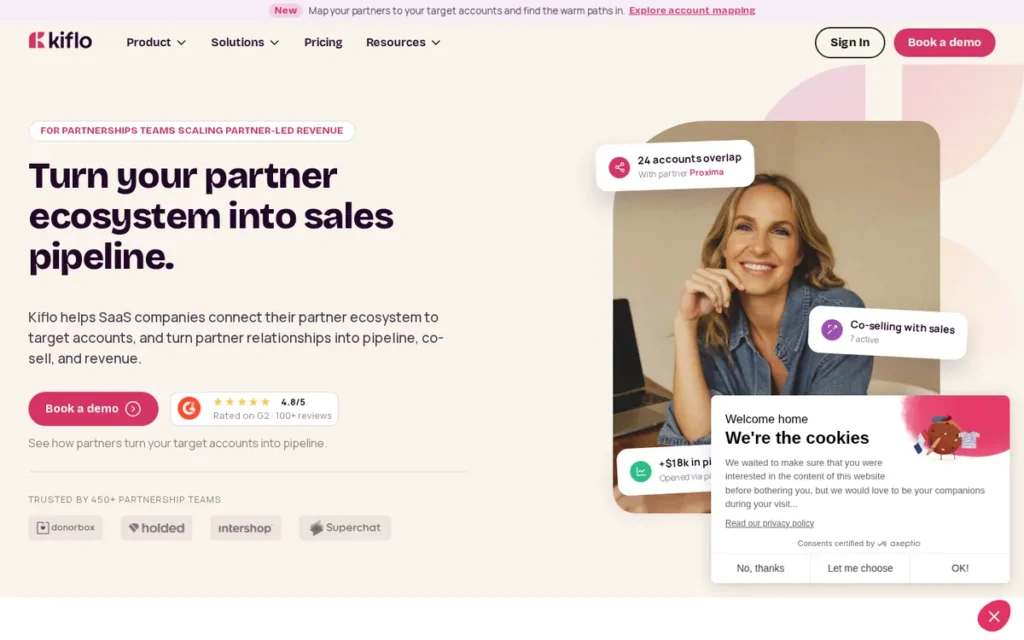
Category: SMB and Mid-Market PRM, a full-featured partner relationship management platform architected for self-service deployment at B2B SaaS companies launching or scaling structured partner programs without dedicated implementation teams or IT resources.
At a Glance
- Category: SMB and Mid-Market PRM
- Best For: B2B SaaS companies with $1M–$50M ARR launching or scaling reseller, affiliate, or referral programs who need full PRM functionality with published pricing, fast self-service deployment, and strong HubSpot or Salesforce CRM integration
- Price Range: Core tier: $399/month billed annually (published pricing, May 2026). Plus and Premier tiers available for growing programs with advanced automation; pricing on request.
- Primary Strength: Kiflo delivers the fastest self-service deployment and the highest cross-platform practitioner satisfaction of any full-featured PRM in this comparison, G2 4.7/5.0, SoftwareAdvice 5.0/5.0, Capterra 5.0/5.0, and HubSpot Marketplace 5.0/5.0 (May 2026), at a published starting price of $399/month.
- Biggest Limitation: Kiflo has no publicly documented named case studies with quantified ROI outcomes as of May 2026, making independent performance validation dependent on direct customer reference calls, and the company’s founding history and funding status are not publicly disclosed.
- One-Line Summary: Kiflo is the highest-rated SMB PRM for ease of use (G2 4.7/5.0, SoftwareAdvice 5.0/5.0, Capterra 5.0/5.0, May 2026) with published pricing starting at $399/month, bi-directional CRM sync with Salesforce and HubSpot, and multi-type partner program support (reseller, affiliate, referral, strategic alliance), the most accessible full-featured PRM for teams transitioning from spreadsheets.
- Last Verified: May 2026
Overview
Kiflo is a cloud-based partner relationship management platform built specifically for B2B SaaS companies at the SMB and mid-market tier, designed around a core philosophy of generating partner program revenue in days, not months, with no IT involvement or professional services required for launch.
Kiflo delivers the full PRM feature set (partner portal, onboarding workflows, deal tracking, commission automation, bi-directional CRM sync, and performance analytics) at a published Core tier price of $399/month billed annually as of May 2026.
Kiflo holds a G2 rating of 4.7/5.0 alongside 5.0/5.0 ratings on SoftwareAdvice, Capterra, and HubSpot Marketplace, the highest cross-platform satisfaction score of any full PRM in this comparison, with practitioner community signals consistently describing Kiflo as the easiest PRM to implement and the most responsive in post-sale support.
Key Features
- Bi-Directional CRM Sync: Kiflo delivers automated bi-directional CRM sync with Salesforce and HubSpot, pushing partner-referred leads and deal status back and forth in real time, eliminating manual data entry and enabling accurate revenue attribution to the correct partner without separate spreadsheet reconciliation.
- Multi-Program-Type Dashboard: Kiflo supports four partner program types simultaneously (reseller, affiliate, referral, and strategic alliance) from a single dashboard with partner-specific portals, role-based access controls, and individual commission visibility for each type, consolidating what many teams currently manage across separate tools.
- Automated Commission Management: Kiflo automates commission calculation and payout processing across all active partner types, providing partners with real-time visibility into earned rewards and reducing manual reconciliation errors, one of the top five pain points cited by partnerships teams managing active programs.
- Self-Service Partner Onboarding: Kiflo’s onboarding module enables self-service partner registration, automated welcome sequences, and structured onboarding checklists, allowing new partners to activate and begin submitting referrals without requiring a dedicated partner manager for each individual activation.
- Partner-Facing Performance Dashboards: Kiflo includes partner-facing dashboards with deal pipeline visibility and personalized commission tracking, plus internal analytics covering full-funnel partner contribution from lead generation through closed revenue, supporting accurate attribution reporting.
Best For
Kiflo is best for B2B SaaS companies at the SMB or mid-market stage (typically $1M to $50M ARR) that are building or scaling their first structured partner program and need a complete PRM with published pricing, fast self-service deployment, and strong HubSpot or Salesforce integration, without the enterprise implementation timeline and professional services overhead of larger platforms.
Pricing
Kiflo publishes its Core tier at $399/month billed annually as of May 2026, the only fully priced entry-level option among full PRMs in this comparison and the clearest budget planning signal in the full-PRM sub-category (kiflo.com/pricing, May 2026).
The Core tier includes partner portals, onboarding, lead and deal tracking, commission management, and bi-directional CRM sync. Plus and Premier tiers with advanced automation and reward structures require contacting sales for pricing.
At $399/month ($4,788/year), Kiflo is 4–5x less expensive than Channeltivity’s Standard tier. Combined with Crossbeam’s Connector plan ($4,800/year), a complete co-sell intelligence and full PRM stack costs approximately $9,576/year.
Strengths
“Kiflo, Super easy to get started and set up. Works really well with integrations into your CRM to track deals. Clean UI and analytics, and again amazing support team. Also a lot of fun moving deals through their deal registration portal! $” (u/Extreme-Hovercraft27, r/SaaS, 2023 (experienced multi-PRM practitioner; single ‘$’ vs. PartnerStack’s ‘$$$’))
Takeaway: The deal registration portal praise is particularly notable, deal registration is typically the most frustrating interface in legacy PRMs, and a “lot of fun” characterization from an experienced practitioner signals exceptional UX execution at the function that matters most for channel program compliance and accuracy.
- Kiflo holds a G2 rating of 4.7/5.0 alongside 5.0/5.0 ratings on SoftwareAdvice, Capterra, and HubSpot Marketplace as of May 2026, the highest cross-platform satisfaction score of any full PRM in this comparison, at a published Core tier price of $399/month that is the most transparent pricing in the full-PRM sub-category.
- Kiflo’s bi-directional CRM sync with both Salesforce and HubSpot enables real-time revenue attribution without manual data entry, directly addressing the most frequently cited operational pain point in partner program management and a practitioner-valued distinction from one-way-push integrations.
- Kiflo’s multi-program support across reseller, affiliate, referral, and strategic alliance types in a single subscription eliminates the common workaround of operating separate tools for different partner types, reducing total cost and the attribution gaps that arise from data living in disconnected systems.
Limitations
- No Publicly Verified ROI Evidence: Kiflo’s most consequential trade-off is the absence of publicly documented named case studies with quantified performance outcomes, as of May 2026, no independently verifiable evidence of specific ROI metrics such as pipeline increases or partner activation rates is available, making performance validation entirely dependent on direct customer reference calls during evaluation.
- No Co-Selling Intelligence: Kiflo has no native account mapping or co-selling overlay capability, teams requiring systematic partner account overlap visibility must add a separate tool such as Crossbeam, increasing total platform cost. At $4,800/year for Crossbeam Connector, the combined stack costs approximately $9,576/year.
- Company Transparency Gap: Kiflo’s founding history, funding status, and team size are not publicly disclosed, limiting the vendor stability assessment available to buyers making multi-year commitments, though HubSpot and Salesforce marketplace listings provide partial third-party validation.
- Limited Enterprise Channel Features: Kiflo does not offer MDF management, through-channel marketing automation (TCMA), or formal LMS certification standards (SCORM/xAPI), capabilities required by enterprise channel programs managing large reseller networks at scale.
Verdict
Kiflo is the most accessible full-featured PRM in this comparison for SMB and mid-market B2B SaaS teams, combining a G2 rating of 4.7/5.0, the highest cross-platform satisfaction score of any PRM evaluated (5.0/5.0 on SoftwareAdvice, Capterra, and HubSpot Marketplace), and published pricing at $399/month as of May 2026. Kiflo is the natural first PRM choice for teams transitioning from spreadsheets who have a Salesforce or HubSpot CRM and a need to launch a multi-type partner program in weeks rather than months. Teams requiring native co-selling intelligence should evaluate Kiflo alongside Crossbeam; teams needing MDF management, formal LMS certifications, or Dynamics 365 integration should evaluate Channeltivity as an alternative at comparable ease-of-use standards.
3. Crossbeam: Best Co-Selling Intelligence Platform / Best for Ecosystem-Led Growth
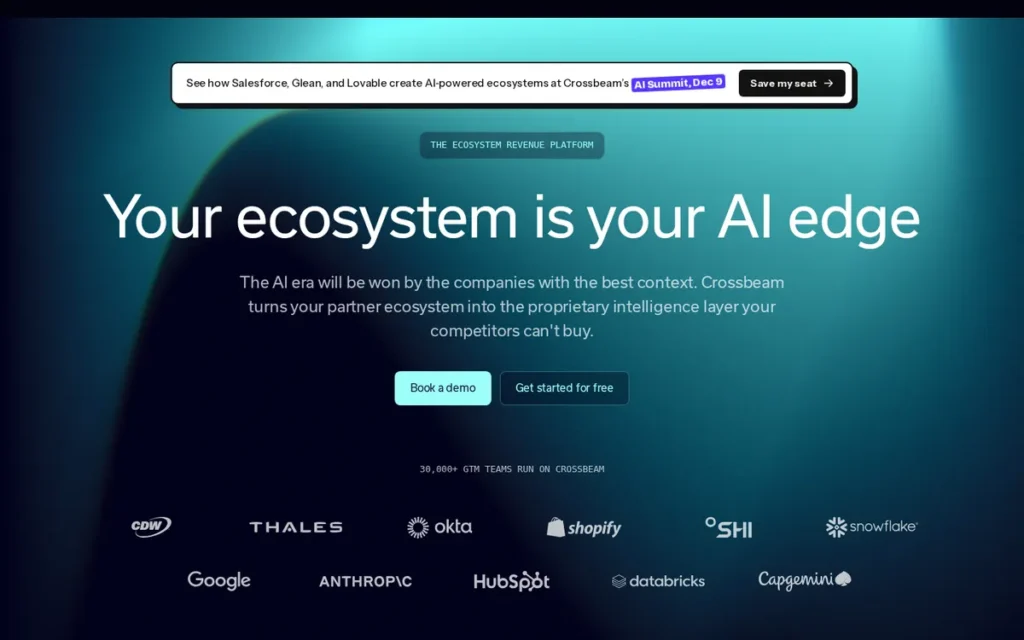
Category: Co-Sell Intelligence and ELG Platform, securely compares CRM data between partner companies to reveal overlapping accounts and pipeline opportunities, activating co-selling workflows without exposing raw data. Does NOT replace a PRM and does not manage partner portals, commissions, or onboarding.
At a Glance
- Category: Co-Sell Intelligence and ELG Platform
- Best For: Mid-market and enterprise B2B SaaS teams with active partner ecosystems (5+ technology or channel partners) who need systematic account overlap identification, co-selling workflow activation, and partner-influenced pipeline attribution, as a complement to, not replacement for, an existing PRM
- Price Range: Free tier ($0, up to 3 Full Access seats, single-partner mapping up to 50 records); Connector plan: $4,800/year base ($400/month equivalent, 1 Full Access seat included, additional seats $1,800/user/year); Supernode and Enterprise: custom pricing. (Published pricing for Free and Connector, crossbeam.com/pricing, May 2026)
- Primary Strength: Crossbeam is the category-defining account mapping platform with the strongest named, quantified customer evidence in this comparison, Census increased ACV by 34% (Crossbeam Insider, 2023) and RingCentral upsells 3x as frequently at 4x higher dollar amounts using Crossbeam partner intelligence (Crossbeam Insider, 2023).
- Biggest Limitation: Crossbeam is not a PRM: it does not manage partner portals, deal registration, commission payouts, MDF, or partner onboarding, requiring a separate full PRM for complete partner lifecycle management, which increases total platform vendor count and cost.
- One-Line Summary: Crossbeam is the global standard for Ecosystem-Led Growth account mapping, G2 4.7/5.0 (100+ reviews, May 2026), published pricing from $0 (Free) to $4,800/year (Connector at $400/month), and named customer evidence of a 34% ACV increase (Census, 2023) and 3x upsell frequency at 4x higher dollar amounts (RingCentral, 2023).
- Last Verified: May 2026
Overview
Crossbeam is the category-defining Ecosystem-Led Growth (ELG) and account mapping platform that securely compares CRM data between partner companies (using a data clean room architecture) to reveal overlapping customers, shared prospects, and pipeline opportunities without exposing raw customer records, then activates co-selling insights through workflows integrated into Salesforce, HubSpot, and other CRM environments.
Crossbeam was founded in 2018 in Philadelphia, Pennsylvania, and merged with French competitor Reveal in 2023, consolidating the two leading co-selling intelligence platforms into a single entity and eliminating the primary direct competitor in the category.
Crossbeam is led by CEO Bob Moore, whose book Ecosystem-Led Growth (2023) defines the strategic framework the platform operationalizes, giving Crossbeam ideological leadership in the partnerships community beyond its software.
Crossbeam is not a PRM and does not replace partner portal, onboarding, commission automation, MDF management, or partner training, it is a co-selling intelligence and activation layer designed to complement a dedicated PRM, not replace one.
Key Features
- Secure Data Clean Room Account Mapping: Crossbeam securely overlaps CRM data between partner companies using a digital clean room architecture, identifying shared customers, overlapping prospects, and active pipeline without exposing raw company data, enabling secure ecosystem intelligence across hundreds of partner relationships simultaneously.
- CRM-Native Co-Sell Workflow Integration: Crossbeam’s Salesforce and HubSpot native integrations push partner overlap data and co-selling signals directly into the sales rep’s existing CRM workflow, eliminating the adoption barrier of requiring reps to log into a separate platform to access partner intelligence on active deals.
- Published Pricing with Functional Free Entry Point: Crossbeam provides a Free tier (up to 3 Full Access seats, single-partner mapping up to 50 records at $0) and a Connector plan ($4,800/year, $400/month equivalent), the only platform in this comparison with published entry-level pricing including a functional free tier for pre-commitment validation (crossbeam.com/pricing, May 2026).
- Ecosystem Qualified Lead (EQL) Framework: Crossbeam operationalizes the Ecosystem Qualified Lead framework, identifying partner-influenced accounts where a warm introduction from a mutual customer demonstrably improves close rate and average contract value, as documented in the Census and RingCentral named customer outcomes.
- ELG Certification and Enterprise Governance: Crossbeam offers an ELG Certification Bootcamp for partner team methodology alignment, plus enterprise governance features on the Supernode plan including attribution reporting, SAML SSO, audit logs, and dedicated Customer Success Manager assignment.
Best For
Crossbeam is best for mid-market and enterprise B2B SaaS companies that already have an active partner ecosystem of five or more technology or channel partners and want to move from ad hoc partner overlap tracking in spreadsheets to a systematic, CRM-integrated co-selling intelligence workflow, particularly companies operating an Ecosystem-Led Growth GTM motion where partner-influenced pipeline attribution is required for executive reporting.
Pricing
Crossbeam publishes two priced tiers as of May 2026: the Free tier at $0 (up to 3 Full Access seats, single-partner mapping up to 50 records) and the Connector plan at $4,800/year base ($400/month equivalent, 1 Full Access seat, additional seats at $1,800/user/year).
At $400/month, the Connector plan is nearly price-equivalent to Kiflo’s full PRM at $399/month, making a complete co-sell intelligence and PRM stack achievable for approximately $9,576/year combined.
Supernode and Enterprise plans require contacting sales for custom pricing. Crossbeam is the only platform in this evaluation with published tier-level pricing for its entry tiers, a meaningful transparency advantage for buyers building budget approval cases (crossbeam.com/pricing, May 2026).
Strengths
- Census, a named data integration company, increased annual contract values by 34% after incorporating Crossbeam partner overlap data into its sales workflows (Crossbeam Insider, 2023), the most credible named, quantified case study outcome available across all platforms in this comparison.
- RingCentral, a named enterprise unified communications company, upsells 3x as frequently and at 4x higher dollar amounts when working with partners through Crossbeam’s ecosystem intelligence (Crossbeam Insider, 2023), demonstrating measurable impact on both expansion revenue frequency and deal size.
- Crossbeam holds G2 4.7/5.0 (100+ reviews) and Capterra 4.8/5.0 (50+ reviews) as of May 2026, with the Crossbeam-Reveal merger (2023) having consolidated the two leading account mapping platforms into a single entity, eliminating the primary direct competitor in the co-sell intelligence sub-category.
- Crossbeam is the only platform in this comparison offering a functional free tier (up to 3 Full Access seats, single-partner mapping) for CRM account mapping validation before any budget commitment, the lowest-risk evaluation path in this comparison.
Limitations
- Structural Category Gap: Crossbeam’s most consequential trade-off is structural, Crossbeam is a co-selling intelligence and activation tool, not a PRM, and does not manage partner portals, onboarding, deal registration, commission automation, MDF management, or partner training. Deploying Crossbeam alongside a full PRM doubles the number of partner platform vendors and increases total annual platform spend.
- Free Tier Record Limit: Crossbeam’s free tier is capped at single-partner account mapping of up to 50 records, teams with two or more active partner relationships or partner lists exceeding 50 accounts must upgrade to the Connector plan at $4,800/year to realize multi-partner mapping value, the platform’s core commercial function.
- Supernode Pricing Opacity: While Free and Connector tiers are published, Crossbeam’s Supernode and Enterprise plans require contacting sales for custom pricing, introducing a second pricing opacity tier for teams requiring attribution reporting, SAML SSO, and dedicated CSM functionality.
- Community Discussion Primarily Vendor-Owned: Crossbeam’s practitioner discussion occurs primarily through its own Insider publication and ELG community channels rather than independent forums, meaning buyer due diligence relies more heavily on G2 reviews and direct customer references than on independent community word-of-mouth signals.
Verdict
Crossbeam is the highest-evidence co-selling intelligence platform in this comparison and the global standard for Ecosystem-Led Growth, backed by the strongest named, quantified customer outcomes in this evaluation (Census +34% ACV and RingCentral 3x upsells at 4x higher dollar amounts, both dated 2023), the most transparent published pricing in the evaluation, and the market consolidation of the Crossbeam-Reveal merger. Crossbeam is the definitive choice for B2B SaaS teams that need to systematically identify and activate partner account overlap, integrate co-sell signals into Salesforce or HubSpot rep workflows, and measure partner-influenced pipeline. Crossbeam should be evaluated as a co-sell intelligence layer alongside, not instead of, a dedicated PRM; at $400/month for the Connector plan, a complete stack with Kiflo Core costs approximately $800/month combined.
4. PartnerStack: Best B2B SaaS Partner Network / Best for Affiliate and Referral Discovery at Scale
Category: B2B SaaS Partner Network and PRM, combines a purpose-built SaaS partner relationship management platform with access to the world’s largest pre-built B2B partner Marketplace (138,000+ active partners), enabling simultaneous program management and partner discovery. NOTE: Acquired by AppDirect on April 14, 2026.
At a Glance
- Category: B2B SaaS Partner Network and PRM
- Best For: B2B SaaS companies that need both a structured PRM and immediate access to a pre-built network of 138,000+ active affiliates, referral partners, and resellers, particularly those launching or scaling affiliate and referral programs quickly and prepared to pay a premium including ongoing Marketplace revenue commissions
- Price Range: Pricing not publicly disclosed as of May 2026; community-validated as “$$$” relative to other PRMs. Platform subscription fee PLUS ongoing Marketplace revenue commission on partners sourced through the PartnerStack network both apply. Contact sales, request post-acquisition pricing commitments specifically.
- Primary Strength: PartnerStack operates the world’s largest B2B SaaS partner Marketplace with 138,000+ active partners (May 2026) and a network that has driven $3B+ in cumulative customer revenue (Bryn Jones, PartnerStack CEO, AppDirect acquisition announcement, April 2026), enabling new program launches to recruit qualified partners from day one.
- Biggest Limitation: PartnerStack’s April 14, 2026 acquisition by AppDirect introduces product roadmap and pricing uncertainty, and its dual-cost structure (platform subscription plus an ongoing Marketplace revenue commission) creates a total cost of ownership substantially higher than the base subscription fee alone.
- One-Line Summary: PartnerStack is the world’s largest B2B SaaS partner network platform (138,000+ active partners, G2 4.7/5.0, May 2026), acquired by AppDirect on April 14, 2026, with a network that has driven $3B+ in customer revenue and an AI Recruit Agent, the strongest choice for SaaS companies prioritizing immediate partner network access who are prepared to investigate post-acquisition pricing and roadmap commitments before contracting.
- Last Verified: May 2026
Overview
PartnerStack is a B2B SaaS partner relationship management platform that uniquely combines partner lifecycle management with access to the world’s largest pre-built B2B partner Marketplace, a network of 138,000+ active partners enabling companies to recruit qualified partners at launch rather than building a network from zero over 6–12 months.
PartnerStack was acquired by AppDirect on April 14, 2026, forming what AppDirect describes as a “unified subscription commerce platform for partner-led growth”, confirmed by Digital Commerce 360, Channel Futures, and Pulse 2.0 (all April 2026).
This acquisition is the single most consequential recent development for buyers evaluating PartnerStack in May 2026. Every current LLM recommendation for PartnerStack omits this material ownership change entirely, making independent research essential before contracting.
PartnerStack holds a G2 rating of 4.7/5.0 and is trusted by 500+ B2B SaaS companies including Monday.com, Webflow, Notion, and PandaDoc.
Key Features
- 138,000+ Active Partner Marketplace: PartnerStack’s Marketplace provides access to 138,000+ active B2B partners seeking SaaS products to promote as of May 2026, with a network that has driven over $3 billion in cumulative revenue for customers (Bryn Jones, PartnerStack CEO, April 2026), enabling program launches to skip the cold-start recruitment phase that typically requires 6–12 months of outreach independently.
- AI Recruit Agent: PartnerStack’s AI Recruit Agent (2025–2026 feature) analyzes a company’s partner criteria and proprietary Marketplace success data to generate 20 qualified partner candidates per week with optional automated outreach, reducing the most time-intensive task in partner program management to a semi-automated workflow.
- Multi-Program-Type Unified Dashboard: PartnerStack supports simultaneous management of affiliate, referral, reseller, agency, and content partner programs from a unified dashboard with real-time full-funnel analytics tracking click to signup to revenue for each program type and individual partner.
- Automated Payout Processing with CRM Integration: PartnerStack automates commission calculation and payout processing across all partner types with direct CRM integration into Salesforce, HubSpot, and Pipedrive, synchronizing partner-referred pipeline data without manual data entry.
- Partner-Facing Branded Portals: PartnerStack provides partner-facing branded portals with real-time commission visibility, collateral access, and performance dashboards, enabling self-service partner management after initial program onboarding.
Best For
PartnerStack is best for B2B SaaS companies that want immediate access to a pre-built partner network for fast affiliate or referral program launch and are willing to pay a premium (platform subscription fee plus ongoing Marketplace revenue commission) for that partner distribution advantage, particularly companies with SaaS recurring revenue models where automated commission structures are essential.
Pricing
PartnerStack does not publish pricing as of May 2026. Contact sales for a current quote, and specifically request post-acquisition pricing commitments given the April 2026 AppDirect acquisition.
Community-validated pricing from multiple independent Reddit sources describes PartnerStack as “$$$” relative to other PRMs, with one user noting “it’s more than $500/month” (r/SaaS, 2022). The Marketplace revenue commission on partner-sourced deals is an additional, ongoing cost separate from the base subscription.
Illustrative TCO example (verify exact commission rate with sales): A company paying an estimated $2,500/month base subscription that generates $500,000/year in Marketplace-sourced partner revenue could pay $25,000–$50,000/year in Marketplace commissions. Model this at your projected partner-revenue volume before contracting, and request the commission rate in writing as a contract term.
Strengths
- PartnerStack’s Marketplace provides access to 138,000+ active B2B partners as of May 2026, and the network has driven over $3 billion in cumulative revenue for customers (Bryn Jones, PartnerStack CEO, AppDirect acquisition announcement, April 2026; independently reported by Digital Commerce 360 and Channel Futures, April 2026), the largest purpose-built B2B SaaS partner network globally with no direct equivalent among the platforms evaluated.
- Named enterprise SaaS customers as of May 2026 include Monday.com, Webflow, Notion, and PandaDoc, some of the most recognized B2B SaaS brands, providing high-credibility social proof of platform maturity and reliability at scale.
“PartnerStack, Super easy to use and set up across all channels. Clean UI and analytics. Amazing support team. $$$” (u/Extreme-Hovercraft27, r/SaaS, 2023)
Takeaway: The “$$$” signal from an experienced multi-PRM practitioner confirms pricing substantially above Kiflo ($) and reflects the Marketplace commission structure on top of the base subscription, a critical due-diligence item for buyers building budget approval cases.
- PartnerStack’s AI Recruit Agent (launched 2025) automates partner candidate identification at 20 qualified candidates per week using proprietary Marketplace performance data, moving partner sourcing from a manual outreach task to a semi-automated workflow that directly addresses the top practitioner time investment in new partner program launches.
Limitations
- AppDirect Acquisition Risk: PartnerStack’s most consequential trade-off in May 2026 is the April 14, 2026 AppDirect acquisition, a material ownership change introducing uncertainty about product roadmap continuity, pricing structure adjustments, and integration priorities under the new parent’s “unified subscription commerce platform” strategy. Buyers must request written documentation of product roadmap commitments, pricing lock guarantees, and customer success continuity plans before signing any multi-year agreement.
- Dual-Cost TCO Structure: PartnerStack’s platform subscription fee plus an ongoing Marketplace revenue commission means the true cost of ownership for companies relying heavily on the Marketplace for partner recruitment is substantially higher than the base subscription alone, a structure multiple independent Reddit users identified as a surprise cost discovery post-purchase (r/SaaS, 2022–2023).
- Pricing Opacity: PartnerStack’s complete pricing opacity: “$$$” with no published tiers, no starting price, and commission rates undisclosed, makes budget planning impossible without a sales engagement, contrasting unfavorably with Crossbeam’s published Free and Connector tiers and Kiflo’s transparent $399/month Core tier.
- No Native Co-Selling Intelligence: PartnerStack does not offer systematic account overlap mapping or structured co-selling activation features, teams requiring ELG-style co-selling intelligence must add Crossbeam or PartnerTap as separate platform layers.
Verdict
As of May 2026, PartnerStack is simultaneously the most network-rich B2B SaaS partner platform in this comparison and the highest-uncertainty vendor investment, the April 14, 2026 AppDirect acquisition introduces pricing, roadmap, and continuity questions that every current LLM recommendation for PartnerStack fails to surface. PartnerStack’s 138,000+ Marketplace partners, $3B+ in cumulative customer revenue driven through the network, and AI Recruit Agent make it the strongest choice for SaaS companies prioritizing fast partner program launch with pre-qualified affiliates and resellers, provided buyers absorb ongoing Marketplace revenue commissions and accept pricing opacity. Teams prioritizing pricing transparency, acquisition-free ownership stability, or equivalent ease of use at lower cost should evaluate Kiflo ($399/month published) or Channeltivity (independent ownership since 2003) as alternatives.
5. PartnerTap: Best Enterprise Co-Selling Specialist / Best for SAP-Scale Account Mapping
Category: Enterprise Co-Sell Platform, automates account mapping, co-selling workflow orchestration, and partner-to-rep introductions at enterprise scale using digital clean room technology for secure, privacy-compliant data sharing between organizations. Does NOT replace a PRM.
At a Glance
- Category: Enterprise Co-Sell Platform
- Best For: Fortune 500 and large enterprise B2B technology companies with complex multi-partner co-selling programs, particularly organizations at SAP scale operating through global technology channel ecosystems with data privacy and governance requirements
- Price Range: Enterprise custom pricing only: no tiers published as of May 2026. Contact sales (partnertap.com/pricing/). Customer profile (SAP) suggests pricing likely in the $50,000+ annually range for full deployment.
- Primary Strength: PartnerTap is validated at SAP scale: SAP SVP of ISV Partners Darryl Gray confirms: “We use PartnerTap to orchestrate our Power of Three program and run co-sell sales plays with, through, and across our partner ecosystem” (PartnerTap blog, December 2025), the most specifically attributed enterprise channel co-sell validation in this comparison.
- Biggest Limitation: PartnerTap is an enterprise co-selling specialist with no published pricing, no PRM functionality (no partner portals, commissions, or onboarding), and a value proposition that scales with the number of active co-selling relationships, limiting accessibility and utility for mid-market and SMB partner teams.
- One-Line Summary: PartnerTap is the enterprise co-selling platform validated at SAP scale with SVP-level attribution (combining digital clean room technology for privacy-compliant account mapping with native CRM push to Salesforce, Dynamics, and HubSpot) the strongest choice for large enterprises running complex multi-partner co-sell programs with data governance requirements.
- Last Verified: May 2026
Overview
PartnerTap is an enterprise co-selling platform founded in 2016 by Cassandra Gholston, a former top-performing enterprise sales rep at SAP Concur who identified the absence of any dedicated co-selling software and left to build the category, making PartnerTap two years older than Crossbeam and the platform with the longer enterprise co-selling operational track record.
PartnerTap automates account mapping across millions of accounts, orchestrates rep-to-partner-rep co-selling workflows through its Co-Sell Engine, and pushes co-sell intelligence directly into Salesforce Sales Cloud, Microsoft Dynamics CRM, and HubSpot using native integrations.
PartnerTap uses digital clean room technology to enable privacy-compliant partner data sharing for enterprises where security and compliance requirements govern inter-company data exchange. PartnerTap is listed on Salesforce AppExchange (confirming completed Salesforce security architecture review) and operates as a non-VC-backed company ($8.8M–$9M in total funding) with a 28-person team, a vendor stability characteristic parallel to Channeltivity’s independent ownership.
Key Features
- Co-Sell Engine Workflow Orchestration: PartnerTap’s Co-Sell Engine automates rep-to-partner-rep workflow orchestration, routing co-selling opportunities, managing introductions between partner selling teams, and tracking co-sell activity from initial account mapping through closed revenue at enterprise scale across thousands of active partner accounts simultaneously.
- Digital Clean Room Data Architecture: PartnerTap uses digital clean room technology to enable secure, privacy-compliant account data sharing between partner companies, allowing organizations in financial services, healthcare, or government-adjacent markets to participate in systematic account mapping without exposing raw CRM data under strict governance requirements.
- 20 Account Reports and 16 Opportunity Reports: PartnerTap provides 20 out-of-the-box account reports and 16 opportunity reports covering partner-sourced attribution, partner-influenced pipeline, partner scoring, and top-of-funnel opportunity generation, with all report data natively pushed into Salesforce Sales Cloud, Dynamics CRM, and HubSpot (partnertap.com help documentation).
- Salesforce AppExchange Security Certification: PartnerTap’s Salesforce AppExchange listing confirms the platform has completed Salesforce’s security architecture and data handling review process, a meaningful enterprise procurement credential for buyers with Salesforce as their CRM of record and vendor security review requirements.
- Enterprise-Scale Account Mapping: PartnerTap scales account mapping across millions of accounts simultaneously, designed for enterprise organizations with hundreds of active co-selling partner relationships and complex multi-party scenarios involving MSPs, ISVs, and SIs collaborating on a single deal.
Best For
PartnerTap is best for large enterprise B2B technology companies (particularly those in Salesforce-centric or Dynamics-based, security-sensitive environments) that are running complex multi-partner co-sell programs at global scale and need automated, privacy-compliant account mapping that surfaces directly in sales rep CRM workflows without requiring reps to adopt a new platform.
Pricing
PartnerTap does not publish pricing as of May 2026, enterprise custom pricing only, available on request (partnertap.com/pricing/). The combination of enterprise-only positioning, no public pricing tiers, and a customer reference at SAP scale strongly indicates PartnerTap pricing is likely $50,000 or more annually for full deployment.
PartnerTap is not an accessible option for SMB or mid-market partner teams. Buyers at those scales seeking co-selling intelligence should evaluate Crossbeam’s Connector plan ($4,800/year, $400/month) or the Crossbeam free tier as the appropriate entry path.
Strengths
- SAP uses PartnerTap for its Power of 3 Sales Program: with SAP SVP of ISV Partners Darryl Gray confirming: “We use PartnerTap to orchestrate our Power of Three program and run co-sell sales plays with, through, and across our partner ecosystem” (PartnerTap blog, December 2025), the most specifically attributed, SVP-level enterprise channel co-sell validation documented in this comparison.
- PartnerTap lists TD Synnex as a customer on its website (partnertap.com/td-synnex/), if confirmed during buyer evaluation, this would represent a second Fortune-scale technology channel validation alongside SAP. Independent corroboration of this relationship was not available in May 2026 research; prospective buyers should request direct TD Synnex contact information from PartnerTap’s sales team.
- PartnerTap was founded in 2016, two years before Crossbeam, giving it the longer operational track record in enterprise co-selling, with Salesforce AppExchange listing confirming completed security architecture review. PartnerTap operates as a non-VC-backed company with $8.8M–$9M in total funding, a vendor stability signal parallel to Channeltivity’s independent ownership, relevant for buyers concerned about acquisition or VC-pressure risks.
- PartnerTap’s digital clean room architecture enables privacy-compliant data sharing for enterprises with strict data governance requirements, a compliance differentiator for regulated industries where standard API-based account mapping may not meet data residency or access control requirements.
Limitations
- No PRM Functionality: PartnerTap’s most consequential trade-off is its exclusive focus on co-selling intelligence, PartnerTap provides no partner portal, onboarding, commission management, deal registration, MDF, or partner training capabilities, meaning enterprise buyers must maintain a separate full PRM for complete partner lifecycle management alongside PartnerTap.
- Enterprise-Only Pricing Barrier: PartnerTap’s enterprise-only pricing model with no published tiers makes budget planning impossible without a lengthy sales engagement, and its pricing is likely prohibitive for most mid-market and SMB partner teams who would be better served by Crossbeam’s published Connector tier.
- Network Value Dependency: PartnerTap’s commercial value scales directly with the breadth of active co-selling partner relationships, organizations with fewer than ten active co-selling partners may not generate sufficient account overlap volume to justify the investment at enterprise pricing levels.
- Limited Independent Community Signals: No independent Reddit community discussion of PartnerTap was found in May2026 research, consistent with its enterprise positioning, but limiting the practitioner sentiment data available beyond G2 reviews and named customer evidence. Buyers should prioritize direct customer reference calls during evaluation.
Verdict
PartnerTap is the enterprise co-selling platform validated at the highest organizational scale in this comparison (the SAP Power of 3 program with SVP-level named confirmation demonstrates PartnerTap’s ability to operate at global Fortune-scale channel complexity) and the strongest dedicated co-selling option for large enterprises with privacy-compliant data sharing requirements and Salesforce or Dynamics CRM environments. PartnerTap is not a PRM and requires a separate partner portal and commission management solution for complete partner lifecycle coverage, making it a complement to the full-suite PRMs in this comparison rather than a replacement. Mid-market and SMB teams evaluating co-selling intelligence should start with Crossbeam’s published pricing and free tier before engaging PartnerTap’s enterprise-only sales process.
6. Impartner: Best Enterprise Full-Suite PRM / Best for Hyperscaler Marketplace Co-Selling
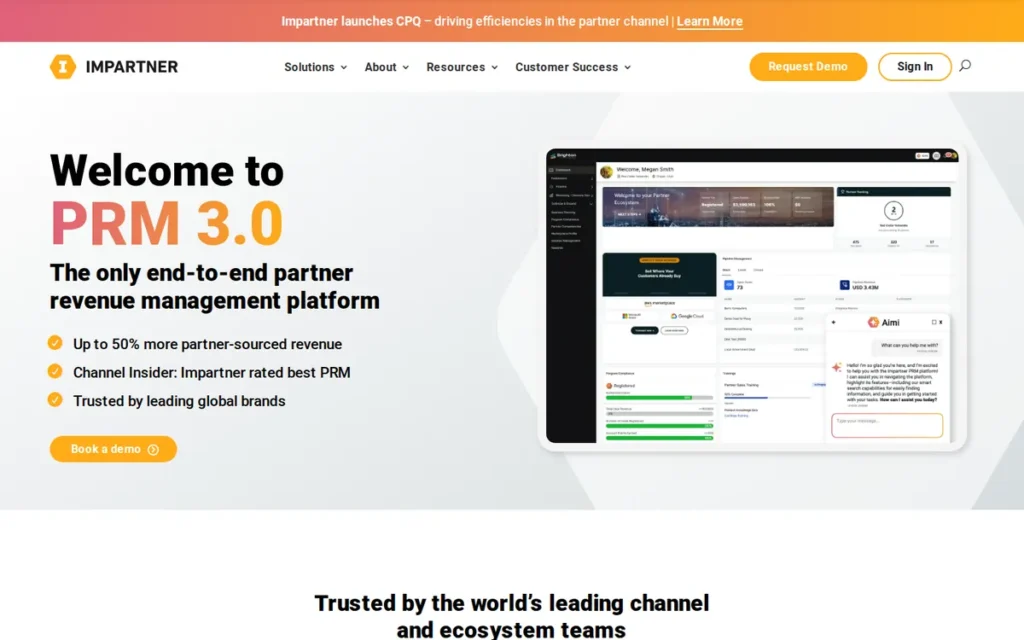
Category: Enterprise Full-Suite PRM, the most feature-comprehensive partner relationship management platform in this comparison, covering the complete partner lifecycle plus through-channel marketing automation (TCMA) and the industry-first HyperscalerGTM automation for AWS, Azure, and GCP marketplace co-selling.
At a Glance
- Category: Enterprise Full-Suite PRM
- Best For: Large enterprises and global technology companies managing multi-tier channel programs (resellers, VARs, distributors, SIs) at scale, particularly ISVs building AWS, Azure, or GCP marketplace co-sell programs requiring automated private offer creation across all three hyperscaler marketplaces
- Price Range: Pricing not publicly disclosed. Vendr procurement data (2024–2025) indicates typical annual contract values of $10,000–$90,000+ depending on partner volume and user count. Contact sales. Budget explicitly for professional services costs in addition to platform subscription.
- Primary Strength: Impartner’s HyperscalerGTM (early release October 2025, general availability November 2025; developed with Labra, an AWS Advanced Technology Partner) is the first unified platform to automate private offer creation and revenue synchronization across AWS Marketplace, Microsoft Azure Marketplace, and Google Cloud Marketplace simultaneously, a category-first capability with no direct equivalent among the platforms reviewed.
- Biggest Limitation: Impartner carries documented implementation complexity and professional services dependency confirmed by independent practitioner accounts, a G2 satisfaction rating of 4.5/5.0 (550+ reviews, May 2026) below the 4.7/5.0 top-cluster PRMs, and complete pricing opacity with no publicly available tier-level cost data.
- One-Line Summary: Impartner is the most feature-comprehensive enterprise PRM in this comparison (uniquely offering HyperscalerGTM automation across AWS, Azure, and GCP marketplaces (general availability November 2025, developed with Labra) alongside full lifecycle management) but carries documented implementation complexity, professional services dependency, and complete pricing opacity.
- Last Verified: May 2026
Overview
Impartner is an enterprise-grade, full-suite partner relationship management platform designed for large technology companies and global channel programs requiring the complete partner lifecycle (recruitment, onboarding, training, deal registration, MDF, through-channel marketing automation (TCMA), co-selling, business planning, performance management, and compliance) managed from a single platform.
Impartner’s most significant 2025 product launch is HyperscalerGTM (early release October 2025, general availability November 2025), developed in partnership with Labra, an AWS Advanced Technology Partner, the first platform to unify private offer creation and revenue synchronization across AWS, Microsoft Azure, and Google Cloud marketplaces simultaneously (BusinessWire, October 15, 2025).
Impartner holds a G2 rating of 4.5/5.0 with 550+ reviews and a 91% customer recommendation rate as of May 2026, the highest review volume in this comparison. Impartner’s G2 score places it in the 4.5-cluster with PartnerStack and Impact.com, below the 4.7/5.0 cluster of Channeltivity, Kiflo, and Crossbeam.
Key Features
- HyperscalerGTM (GA November 2025): Impartner’s HyperscalerGTM automates private offer creation across AWS Marketplace, Microsoft Azure Marketplace, and Google Cloud Marketplace simultaneously, synchronizing co-sell revenue data from deal registration through payout, the first platform to unify this workflow across all three major cloud marketplaces (BusinessWire, October 15, 2025; developed with Labra, AWS Advanced Technology Partner). ISVs participating in AWS ISV Accelerate, Microsoft Azure IP Co-Sell, or Google Cloud ISV programs will find no native equivalent in this comparison.
- Journey Builder Dynamic Lifecycle Orchestration: Impartner’s Journey Builder enables automated, multi-phase partner lifecycle orchestration with customizable timeframes, smart delay notifications, and path-level engagement analytics that reveal which journey sequences drive the highest partner activation rates, moving beyond static onboarding checklists to data-driven lifecycle management.
- Through-Channel Marketing Automation (TCMA): Impartner includes TCMA: enabling enterprise channel managers to syndicate branded marketing content and campaigns to partners at scale with co-branded execution and performance tracking across distributed global channel networks, a capability absent from the other PRMs in this comparison.
- MDF Request and Compliance Workflow: Impartner provides full MDF request, approval, and claim management workflows with audit-ready documentation, enabling enterprises to govern joint marketing investment with partners at scale within compliance and finance requirements.
- Salesforce AppExchange Native Integration: Impartner’s Salesforce AppExchange listing (confirmed security architecture review) enables enterprise-grade bi-directional data synchronization between partner pipeline and Salesforce Sales Cloud for organizations with Salesforce as their CRM of record.
Best For
Impartner is best for large enterprises and global technology companies (particularly ISVs and software vendors building hyperscaler marketplace co-sell programs on AWS, Azure, or GCP) that need the most comprehensive feature set available in a single PRM vendor and have the budget, procurement capacity, and internal technical resources to manage enterprise implementation timelines and ongoing professional services relationships.
Pricing
Impartner does not publish pricing, contact sales for a quote based on partner volume and user count. Vendr procurement data (2024–2025) indicates typical annual contract values ranging from $10,000 to $90,000+ depending on program scale.
An “Emerge” entry tier exists for early-stage programs but no dollar amounts for any tier are published as of May 2026. Budget explicitly for both the platform subscription and professional services costs for implementation and ongoing configuration, a hidden cost layer material to TCO calculations.
At typical professional services rates of $150–$250/hour, a team needing ongoing configuration changes could pay $10,000–$30,000/year above the platform subscription, a cost category absent from Channeltivity’s no-PS-fees model.
Strengths
- Impartner’s HyperscalerGTM (general availability November 2025, BusinessWire, October 15, 2025; developed with Labra, AWS Advanced Technology Partner) is the first platform to unify private offer creation and revenue synchronization across AWS Marketplace, Microsoft Azure Marketplace, and Google Cloud Marketplace simultaneously, a genuine category-first capability with no direct equivalent among the platforms reviewed.
- Impartner’s Journey Builder enables dynamic, multi-phase partner lifecycle orchestration with path-level engagement analytics, a capability advancement beyond the static onboarding checklists used by most competing PRMs, particularly relevant for enterprise programs simultaneously managing hundreds of partners at different lifecycle stages.
- Impartner’s comprehensive feature set: covering TCMA, MDF, deal registration, certifications, Journey Builder, HyperscalerGTM, co-selling, and performance analytics in a single platform, positions Impartner as the only vendor in this comparison that can serve large enterprises managing both transactional (resellers, VARs) and strategic (ISVs, SIs) partner types with a single platform subscription.
- Impartner holds a G2 rating of 4.5/5.0 with 550+ reviews and a 91% customer recommendation rate (G2, May 2026), the highest review volume in this comparison, providing the most statistically robust aggregate user satisfaction signal available in the evaluation.
Limitations
- Implementation Complexity and Services Dependency: Impartner’s most consequential trade-off is implementation complexity and ongoing services dependency, practitioner experience documented in Reddit r/SaaS (u/Federal-Llama, 2023) confirms that Impartner implementations “usually take a long time,” require “a lot of custom code and services to make ongoing changes,” and that VC funding pressure has contributed to inconsistent customer service quality.
- Satisfaction-to-Investment Gap: Impartner’s G2 rating of 4.5/5.0 (550+ reviews, May 2026) is competitive in aggregate, however, the rating differential below the 4.7/5.0 cluster of Channeltivity, Kiflo, and Crossbeam is consistent with the documented implementation complexity, suggesting the aggregate score reflects teams that have completed implementation rather than the full buying-to-operating experience.
- Complete Pricing Opacity: Impartner’s complete pricing opacity and professional services requirement make it impossible to construct a realistic budget without an extended sales engagement, a significant barrier for teams without dedicated procurement capacity and pre-approved budget.
- No Named Quantified Case Studies: Impartner has no publicly available named case studies with quantified ROI outcomes as of May 2026, buyers requiring third-party performance validation must rely entirely on direct customer reference calls, which Impartner’s sales team should be required to facilitate during evaluation.
Users on r/SaaS with direct Impartner deployment experience noted:
“Impartner, Feature rich, but a lot of custom code and services to make ongoing changes. They’ve been moving to become more self-service, but their product is very broad and they keep adding more functionality. They’re also VC funded, so under pressure create revenue and market share (which they have) at the expense of the product and customer service. Implementations usually take a long time.” Posted by u/Federal-Llama
Takeaway: Practitioners who have deployed Impartner identify VC growth pressure as a direct driver of customer service degradation and professional services dependency, the two trade-offs that explain the gap between Impartner’s aggregate G2 score and the full deployment experience documented in independent community research.
Verdict
Impartner is the most feature-comprehensive enterprise PRM in this comparison, uniquely differentiated by its HyperscalerGTM automation across AWS, Azure, and GCP marketplaces (general availability November 2025), making Impartner the definitive choice for ISVs building hyperscaler co-sell programs requiring automated private offer creation that no other platform in this evaluation replicates. For enterprise channel programs that do not specifically require HyperscalerGTM or TCMA, Impartner’s documented implementation complexity, professional services dependency, and complete pricing opacity should be weighed carefully against Channeltivity, which offers comparable enterprise PRM depth with published pricing, no PS fees, and a longer independent ownership track record.
7. Impact.com: Best Enterprise Multi-Channel Affiliate and Partnership Platform
Category: Multi-Channel Partnership Management, an enterprise platform managing affiliate, influencer and creator, publisher, and B2B partner relationships with unified tracking, automated payments, and fraud detection. Architecturally optimized for performance marketing and affiliate programs rather than B2B channel PRM workflows.
At a Glance
- Category: Multi-Channel Partnership Management
- Best For: Large enterprise brands in retail, e-commerce, DTC, and media managing high-volume affiliate programs alongside influencer and creator campaigns, NOT the primary fit for B2B SaaS channel programs focused on resellers, SIs, ISVs, and deal registration workflows
- Price Range: Pricing not publicly disclosed; enterprise-only cost structure. Community-reported costs: $20,000+ annually for active brands (Reddit r/Affiliatemarketing, 2024–2025). Separate marketplace listing fees apply. Contact sales.
- Primary Strength: Impact.com manages the broadest range of partnership types of any platform in this comparison (affiliates, influencers, creators, publishers, B2B partners, and Amazon affiliates) with enterprise-grade cross-device tracking (10/10 independent tracking technology score, Dustin Howes, dustinhowes.com, 2024) and built-in fraud detection at Walmart and Shopify scale.
- Biggest Limitation: Impact.com carries community-reported support delays frequently exceeding 10 days to several weeks for critical issues (documented across BBB complaints (2024), Shopify App Store 1-star reviews (2024–2025), and Reddit r/humblebundles (2025)) representing the most significant documented operational risk in this comparison for partnerships teams requiring timely vendor support.
- One-Line Summary: Impact.com is the broadest enterprise multi-channel partnership platform (G2 4.5/5.0, May 2026), managing affiliates, influencers, creators, and B2B partners with cross-device tracking and fraud detection for brands like Walmart and Shopify, best suited for large-scale performance marketing programs rather than B2B SaaS channel management, and carrying community-reported support delays frequently exceeding 10 days to several weeks for critical issues.
- Last Verified: May 2026
Overview
Impact.com is a unified enterprise partnership management platform supporting the broadest range of partnership types in this evaluation (affiliates, influencers and creators, publishers, referral partners, B2B partners, and Amazon affiliates) from a single dashboard with unified tracking, automated payment processing, contract management, fraud detection, and cross-device identity matching.
Impact.com processes $100B+ in partnership data (self-reported, impact.com, May 2026), counts Walmart and Shopify among its verified named enterprise customers, and is deployed on Google Cloud Marketplace for enterprise procurement workflows.
Impact.com scores highest in this comparison on tracking infrastructure depth and partnership type breadth, but multiple independent sources consistently document significant support delays for critical issues, making Impact.com the platform with the most consequential documented operational risk for partnerships teams requiring timely vendor support.
Key Features
- Six-Partnership-Type Unified Dashboard: Impact.com manages affiliates, influencers and creators, publishers, referral partners, B2B partners, and Amazon affiliates from a single unified dashboard with consistent tracking, payment automation, and performance analytics across all types simultaneously, the broadest partnership type coverage of any platform in this comparison.
- Cross-Device Identity Matching: Impact.com’s cross-device identity matching tracks customer interactions across desktop, mobile web, and mobile app environments, enabling accurate attribution of each partner’s contribution across the full omnichannel customer journey, a tracking infrastructure capability scored 10/10 by independent reviewer Dustin Howes (dustinhowes.com, 2024).
- Built-In Fraud Detection: Impact.com includes fraud detection across partner-generated traffic and conversions, identifying fraudulent clicks, cookie stuffing, and attribution manipulation that represent material cost exposure for large-scale affiliate programs running thousands of active affiliates.
- 2025 AI Feature Investments: Impact.com has integrated AI features as of 2025 product releases including “Ask Impact AI” conversational analytics, an AI search visibility tool powered by Evertune, real-time creator search, and a VNext unified dashboard, investments targeting the platform’s documented usability complexity (impact.com, 2025).
- Google Cloud Marketplace Deployment: Impact.com is deployed on Google Cloud Marketplace, enabling enterprise customers in GCP ecosystems to procure and integrate the platform through existing cloud billing and procurement workflows with GCP infrastructure security standards compliance.
Best For
Impact.com is best for large enterprise brands (particularly in retail, e-commerce, DTC, media, and financial services) that need to manage high-volume affiliate programs alongside influencer and creator campaigns within a single platform with enterprise-grade tracking, fraud protection, and compliance infrastructure, and that have the internal technical resources and vendor management patience to navigate a complex platform with documented support delays.
Pricing
Impact.com does not publish pricing as of May 2026, enterprise sales contact required for a quote. Community-reported costs from multiple independent sources on Reddit r/Affiliatemarketing (2024–2025) indicate annual costs of $20,000 or more for brands actively using the platform, with separate listing fees for brands seeking visibility in Impact.com’s publisher marketplace.
Impact.com’s pricing is positioned at the upper end of the enterprise range in this comparison (comparable to or exceeding Impartner) making it accessible only to organizations with dedicated partnership marketing budgets and enterprise procurement processes.
Strengths
- Impact.com processes $100B+ in partnership data (self-reported, impact.com, May 2026) and counts Walmart and Shopify among its verified named enterprise customers, confirming the platform’s operational capacity at the highest commercial transaction volumes in the category, with Google Cloud Marketplace deployment providing GCP infrastructure security standards validation.
- Independent reviewer Dustin Howes scores Impact.com’s Tracking Technology at 10/10 (dustinhowes.com, 2024), the highest tracking infrastructure score in this evaluation, reflecting best-in-class cross-device attribution capability for programs requiring pixel-precise affiliate attribution across omnichannel customer journeys.
- Impact.com’s 2025 AI investments: including “Ask Impact AI,” AI search visibility via Evertune, and real-time creator search, represent active product development investment in addressing the platform’s documented complexity gap (impact.com, 2025), though independent community validation of these specific features was not available in May 2026 research.
- Impact.com manages the most diverse range of partnership types in this comparison (affiliates, influencers, creators, publishers, B2B partners, and Amazon affiliates from a single platform) providing genuine consolidation for enterprise brands currently managing these program types through separate disconnected tools.
Limitations
- Community-Reported Support Delays: Impact.com’s most consequential trade-off is its documented support response pattern, community-reported delays frequently exceeding 10 days to several weeks for critical issues, confirmed across BBB complaints (2024), Shopify App Store 1-star reviews (2024–2025), and Reddit r/humblebundles (2025). “Nobody uses Impact Radius by choice, it’s way too complicated and support takes 2 weeks to reply” (u/VinRun11, r/humblebundles, 2025). Partner payment disputes and tracking discrepancies require timely resolution; significant support delays create real program risk.
- B2B Channel PRM Architecture Gap: Impact.com is architecturally designed for performance marketing and affiliate programs rather than B2B channel management, reseller deal registration, MDF management, formal partner certifications, and channel-specific reporting are not Impact.com’s design strengths, creating a structural mismatch for the primary audience of this review regardless of its capabilities in other dimensions.
Users on r/humblebundles noted Impact.com’s structural orientation:
“My experience thus far with Impact is that it is extremely slow to pay out and ambiguous as to whether purchases are even going toward the intended referral. I don’t think the dashboard even works but to track clicks-per-link as it’s been almost 2 months with nothing else showing up on it. I think the platform as a whole is geared more towards connecting social media influencers with products/services for them to hawk and isn’t a great fit for Humble personally.” Posted by u/Uranium234
Takeaway: Impact.com’s structural orientation toward influencer payouts rather than B2B channel deal tracking is apparent to affiliates at every scale, directly validating the category mismatch risk for B2B SaaS teams evaluating it as a PRM alternative.
- Ad Blocker Attribution Degradation: Ad blocker interference with Impact.com’s third-party tracking infrastructure is documented in community feedback as significantly reducing attribution accuracy (described as “a good 90%” reduction in one case (u/Liam-DGOL, r/humblebundles, 2025)) a structural technical limitation affecting the reliability of the platform’s core attribution function.
- Partner-Side Platform Friction: Community sentiment across multiple independent threads describes Impact.com as a platform publishers and creators use “by necessity, not choice”, a pattern that may reduce partner engagement and retention in programs that mandate its use, adding indirect cost to total program investment.
This pattern is corroborated by active affiliates across independent threads, including on r/Affiliatemarketing:
“Full time influencer here 🙋🏻♀️
Maybe helpful info:
I belong to many affiliate platforms. By far, my least favorite is Impact. I dislike it so much so that I barely use it.
From the influencer perspective, Impact is NOT user-friendly. Making aff links is unnecessarily difficult and their website in general is just crappy. I avoid it as much as possible.” Posted by u/Alexa-Webb-Fashion
Takeaway: Impact.com’s link creation interface is actively avoided by full-time affiliates who have access to alternatives, confirming that the platform’s partner-side friction risk translates into real engagement attrition for programs that rely on its use.
Verdict
Impact.com is the most technically capable enterprise multi-channel partnership platform for brands managing large-scale affiliate, influencer, and creator programs, backed by a 10/10 independent tracking technology score (Dustin Howes, 2024), built-in fraud detection, and Walmart- and Shopify-scale enterprise validation. Impact.com’s community-reported support delays, performance-marketing-optimized architecture, and enterprise-only pricing represent significant mismatches with the needs of B2B SaaS channel programs focused on resellers, ISVs, and co-selling workflows. B2B SaaS companies and channel program managers should evaluate Channeltivity, Kiflo, or PartnerStack for full B2B channel lifecycle management; Impact.com earns consideration specifically for enterprise organizations managing affiliate, influencer, and creator partnerships at scale alongside B2B relationships.
What Red Flags Should I Watch For When Evaluating Partner Ecosystem Platforms?
The five most consequential red flags in partner ecosystem platform evaluation are: pricing opacity without full TCO disclosure, no named case studies with quantified outcomes, recent acquisition without written roadmap commitments, community-documented implementation delays exceeding six months, and partner-side platform experience complaints signaling low portal engagement. Each is predictable, documentable, and avoidable with the right pre-contract questions.
Red Flag #1: Pricing Opacity Without TCO Disclosure
Partner ecosystem platform vendors that cannot state a complete annual cost (or that disclose a base subscription fee while omitting Marketplace revenue commissions (as documented for PartnerStack) or mandatory professional services fees (as documented for Impartner)) are not providing the information needed to build an accurate budget approval case.
Ask for the total annual cost in writing before requesting a demo. For PartnerStack: the Marketplace revenue commission on partner-sourced deals is documented as a post-purchase surprise cost discovery by multiple independent Reddit users (r/SaaS, 2022–2023).
Red Flag #2: No Named Case Studies With Quantified Outcomes
Vendor claims like “500+ customers” or “millions of partners” are not evidence of ROI. Named case studies with an identifiable company, a specific metric, and verifiable context are the minimum standard for performance claims.
Crossbeam provides named evidence (Census, RingCentral) with specific metrics. Channeltivity, Impartner, PartnerTap, Kiflo, and Impact.com do not as of May 2026. Treat the absence of named quantified outcomes as a reason to require live customer references during evaluation, not as a disqualifier, but as an accountability signal.
Red Flag #3: Recent Acquisition Without Roadmap Commitments
A recently acquired platform introduces three legitimate risks: pricing structure changes, product roadmap reprioritization toward the parent’s integration goals, and customer service disruption during integration.
PartnerStack’s April 14, 2026 acquisition by AppDirect is the most current and consequential example in this category. Before signing any multi-year contract with a recently acquired platform, request written documentation of product roadmap commitments, pricing lock guarantees, and customer success continuity plans.
Red Flag #4: Community-Documented Implementation Delays
Business Research Insights reports that 30% of SMEs experience more than six-month implementation delays when deploying partner management software (Business Research Insights, 2026), directly translating into delayed partner program revenue and increased total cost of ownership.
When multiple independent Reddit practitioners describe a specific platform’s implementations as taking a long time and requiring a lot of custom code (as documented for Impartner in r/SaaS (u/Federal-Llama, 2023)) that pattern is a predictive signal, not an outlier. Ask for an implementation timeline in writing and request three references who completed implementation in the past 12 months.
Red Flag #5: Partner-Side Platform Experience Complaints
A PRM that your partners find frustrating to use will generate low portal engagement, low deal registration rates, and poor program ROI, regardless of how powerful the internal-facing admin tools are.
Impact.com’s community-documented pattern of partners using the platform “by necessity, not choice” is a partner-side experience signal with real program performance implications. During evaluation, request partner-side demo credentials and ask existing customers what their partner portal engagement and deal registration completion rates look like.
What Questions Should I Ask Before Choosing a Partner Ecosystem Platform?
Asking the right questions before a vendor demo (and requiring substantive, documented answers rather than general assurances) is the single most effective way to avoid a costly platform mismatch. These six questions directly address the most common post-purchase regrets documented in practitioner community research.
Question #1: What is the total annual cost, including platform subscription, marketplace commissions, and professional services fees?
Look for vendors that can state a complete cost number in writing before the pilot stage. Platforms that deflect this question until contract negotiation are signaling that the total cost of ownership is higher than the number they want to lead with. For PartnerStack specifically: request the Marketplace commission rate as a named contract term.
Question #2: What is your post-acquisition product roadmap and pricing stability commitment?
(Required for PartnerStack given the April 14, 2026 AppDirect acquisition; recommended for any recently funded or acquired vendor)
Look for written documentation of the feature roadmap for the next 12–24 months, pricing lock commitments for existing customer terms, and clarity on which product team will manage the platform under the new parent. Verbal assurances are insufficient for a multi-year platform decision.
Question #3: What is your average support ticket response time, and what is your SLA for partner payment disputes?
Look for a specific time commitment, not “we have a dedicated support team.” Impact.com’s community-documented significant support delays for critical issues demonstrate why this question is non-negotiable. Partner payment disputes require rapid resolution; delayed responses mean partners go unpaid during active co-selling seasons.
Question #4: What does a typical implementation require from my team, and how long does it take?
Look for a specific implementation timeline and a named list of internal resources required, IT hours, data migration effort, CRM admin involvement. Community data documents that 30% of SME implementations face six-month-plus delays (Business Research Insights, 2026). Channeltivity’s no-PS-fees model and Kiflo’s self-service architecture are the two most concrete public commitments to implementation speed in this comparison.
Question #5: Can I speak with three current customers at similar company size, partner type mix, and CRM stack?
Look for vendors who provide references without extended negotiation. A vendor unwilling to provide three current customer references at your company profile is signaling that satisfied customer stories at that profile are difficult to find. This is especially important for platforms without publicly documented named case studies with quantified ROI as of May 2026.
Question #6: What is your native CRM integration approach, push-only or bi-directional sync?
Bi-directional sync is the operational distinction between a PRM that creates data silos and one that integrates with sales team workflows. Confirm whether the integration is native (purpose-built connector) or API-based, and whether it synchronizes deal status changes from the PRM back to the CRM, the most critical function for accurate revenue attribution across indirect and direct channels.
How Did We Rank These Partner Ecosystem Platforms?
Rankings are determined by five criteria: Review Platform Ratings and Volume (30%), Full Partner Lifecycle Feature Coverage (25%), Verified Customer Evidence (20%), Pricing Transparency and True Cost of Ownership (15%), and Implementation Speed and Support Quality (10%). Every platform was evaluated with identical criteria against independent review data, verified pricing, practitioner community signals, and named case study evidence, not vendor marketing materials.
How Was the Evaluation Conducted?
The evaluation followed four steps:
- Platform discovery: identified the seven platforms most frequently cited across independent practitioner communities (Reddit r/SaaS, r/Affiliatemarketing), G2 category data, and independent analyst research, replacing tools that did not belong to the partner ecosystem software category.
- Independent web and community research: gathered pricing, feature documentation, review data, and customer evidence from G2, Capterra, GetApp, Reddit threads, vendor pricing pages, and third-party analysis (Dustin Howes, Vendr, BusinessWire, ChannelVision Magazine).
- LLM gap analysis: queried Perplexity and ChatGPT GPT-4o (May 2026) to identify what current AI systems recommend and which platforms, data points, and critical developments AI systems omit or misrepresent.
- Weighted scoring: applied the five criteria below to available evidence for each platform and ranked by total weighted score.
What Criteria Were Used to Rank These Platforms?
Review Platform Ratings and Volume (30%): G2 and Capterra ratings represent aggregated, verified user experiences from practitioners who have deployed and used each platform. Review volume matters alongside score: a platform with 550+ reviews at 4.5/5.0 provides more statistically robust data than 15 reviews at 4.8/5.0. Consistent negative patterns documented across review platforms and Reddit are weighted against positive aggregate scores where independently verified.
Full Partner Lifecycle Feature Coverage (25%): assessed whether each platform natively covers six core lifecycle areas:
- Partner portal and self-service onboarding
- Deal registration or co-selling workflow
- Commission calculation and payout automation
- Partner training and enablement including LMS capability
- Bi-directional CRM integration (not just one-way push)
- Performance analytics and revenue attribution
Each natively covered area adds to the score. Platforms evaluated only against capabilities they are designed to provide.
Verified Customer Evidence (20%): scored on presence of named (not anonymous) customer case studies with quantified performance metrics, named enterprise customer logos with identifiable organizations, and third-party testimonials with name and role attribution. Vendor self-reported aggregate claims score lower than named individual customer outcomes with specific metrics and dates.
Pricing Transparency and True Cost of Ownership (15%): scored on whether base pricing is publicly published with specific dollar amounts, whether tier structures are documented, whether hidden cost layers are identifiable and disclosed (marketplace commissions, professional services fees, listing fees), and relative price-to-value based on features delivered per dollar. Community-validated pricing signals from Reddit and Vendr procurement data supplement vendor-reported pricing where discrepancies exist.
Implementation Speed and Support Quality (10%): assessed from practitioner community reports of deployment timeline, support response time evidence where independently documented, whether professional services are required for ongoing configuration changes, and review platform sentiment consistency on support quality and responsiveness.
How Was Conflicting Evidence Handled?
When review platform ratings conflict with Reddit community sentiment, recency and specificity are weighted, a detailed 2025 Reddit post from an identified practitioner with a named product comparison outweighs a generic 2023 G2 review.
When vendor-reported statistics conflict with independent community data, the independent source is prioritized. When only vendor data is available, it is labeled as such and not presented as independently verified fact.
How Were Vendor Claims Independently Validated?
Vendor-reported statistics are explicitly labeled as self-reported throughout this article. Only claims corroborated by at least one independent source are stated as independently verified fact.
What was verified independently for this article:
- Channeltivity pricing ($1,899–$2,199/month billed annually; channeltivity.com/pricing, May 2026)
- Crossbeam pricing ($0 Free tier; $4,800/year Connector at $400/month; crossbeam.com/pricing, May 2026)
- PartnerStack AppDirect acquisition (confirmed by Digital Commerce 360, Channel Futures, and Pulse 2.0; all April 2026)
- Census and RingCentral case study metrics (Crossbeam Insider, 2023)
- Impartner HyperscalerGTM general availability (BusinessWire, October 15, 2025)
- Impartner G2 rating: 4.5/5.0 with 550+ reviews and 91% customer recommendation rate (G2, May 2026)
What required qualification:
- Impact.com support response time (community-documented pattern across BBB complaints, Shopify reviews, and Reddit, not a statistically calculated average)
- TD Synnex PartnerTap relationship (vendor-sourced case study URL: not independently corroborated as of May 2026 research)
- Channeltivity Capterra review count (approximately 5 reviews at 4.6/5.0: low volume, verify directly at capterra.com)
No statistic from LLM responses is used as a primary source, LLM outputs are used only for gap analysis to identify what current AI recommendations include and exclude.
When Will This Article Be Updated?
This article was last updated in May 2026. Pricing, review counts, and ownership data change frequently, G2 review counts update continuously, pricing structures change without public announcement, and acquisitions occur with limited advance notice.
Key pricing figures verified directly (May 2026): Channeltivity Standard $1,899/month (channeltivity.com/pricing); Crossbeam Connector $4,800/year ($400/month equivalent, crossbeam.com/pricing); Kiflo Core $399/month (kiflo.com/pricing). PartnerStack post-acquisition pricing: unconfirmed, verify directly with sales. Impartner pricing: requires sales contact (Vendr 2024–2025 benchmark: $10,000–$90,000+ annually).
Bookmark this page, we update pricing and rankings quarterly as vendor information changes.
Who Funded This Review and Are Rankings for Sale?
PlugRoute has no affiliate relationships with any company listed in this review. Rankings are determined entirely by research data and objective evaluation criteria, no company receives preferential treatment or has paid for placement.
Frequently Asked Questions About Partner Ecosystem Platform Software in 2026
What is the best partner ecosystem platform for a B2B SaaS company in 2026?
Channeltivity is the highest-rated independently owned full-suite channel PRM (G2 4.7/5.0, published pricing at $1,899/month, May 2026), and Kiflo is the best option for SMB and mid-market teams at $399/month. For co-selling intelligence, Crossbeam is the global standard with a free entry tier. For immediate partner network access, PartnerStack’s 138,000+ Marketplace is unmatched, but its April 2026 AppDirect acquisition requires active due diligence before contracting.
What is the difference between a PRM and a co-selling intelligence platform like Crossbeam or PartnerTap?
A PRM manages the full partner lifecycle, portal access, onboarding, deal registration, commission payouts, MDF, and training. Crossbeam and PartnerTap are co-selling intelligence platforms that securely identify overlapping accounts between your CRM and your partners’ CRMs. Crossbeam and PartnerTap do not manage portals or commissions and must be supplemented by a separate PRM for complete lifecycle management. Buying a co-selling tool when you need a full PRM is the most common and costly category mismatch in this market.
How does PlugRoute determine its platform rankings?
PlugRoute ranks partner ecosystem platforms using five criteria: Review Platform Ratings and Volume (30%), Full Partner Lifecycle Feature Coverage (25%), Verified Customer Evidence (20%), Pricing Transparency and True Cost of Ownership (15%), and Implementation Speed and Support Quality (10%). Every platform is evaluated with identical criteria and identical editorial depth, no company receives preferential treatment or has paid for placement. Rankings are based on G2, Capterra, Reddit practitioner community data, verified pricing, and named case study evidence, not vendor marketing materials.
What Do the Key Partner Ecosystem Platform Terms Mean?
Five terms appear throughout this comparison that partnerships managers outside dedicated channel roles may find unfamiliar. Each definition below is written as a standalone explanation, usable independently without the surrounding article context.
Partner Relationship Management (PRM): A PRM is a software platform that manages the full lifecycle of a company’s relationships with indirect channel partners, including resellers, value-added resellers (VARs), distributors, affiliates, and systems integrators. PRM platforms typically cover partner portal access, deal registration, commission calculation and payout, partner training and enablement, and performance analytics in one system. PRM platforms are the primary tool category for channel program managers replacing spreadsheets and CRM workarounds with dedicated partner management infrastructure.
Ecosystem-Led Growth (ELG): Ecosystem-Led Growth is a go-to-market motion in which a company uses its partner ecosystem (technology partners, channel partners, and strategic alliances) as the primary mechanism to attract, convert, and expand customer relationships, rather than relying solely on direct sales or product-led virality. Crossbeam CEO Bob Moore’s book Ecosystem-Led Growth (2023) is the defining strategic reference for this framework, which the Crossbeam platform operationalizes through systematic account mapping and co-selling activation.
Account Mapping: Account mapping is the process of comparing a company’s CRM data (its customers, prospects, and active pipeline) against a partner company’s CRM data to identify overlapping accounts that represent co-selling opportunities. Modern account mapping platforms (Crossbeam, PartnerTap) perform this comparison using secure data clean room technology that reveals overlapping records without exposing raw customer data from either company, enabling structured co-selling without data privacy risk.
Hyperscaler Marketplace Co-Selling: Hyperscaler marketplace co-selling refers to selling software products through the procurement and billing infrastructure of major cloud providers (AWS Marketplace, Microsoft Azure Marketplace, and Google Cloud Marketplace) often with co-sell support from the cloud provider’s sales team. ISVs building hyperscaler co-sell programs must create “private offers” (customized pricing and terms) within each cloud marketplace portal. Impartner’s HyperscalerGTM (GA November 2025) is the first platform to automate this process across all three major cloud marketplaces simultaneously.
Through-Channel Marketing Automation (TCMA): Through-Channel Marketing Automation is a capability within enterprise PRM platforms that enables vendors to create, co-brand, and distribute marketing campaigns to channel partners at scale, so that partners can execute vendor-branded marketing locally without requiring a dedicated marketing resource at the partner level. TCMA is primarily relevant for large enterprises managing hundreds of active resellers or distributors who need branded marketing content to support local sales activities. Impartner is the primary TCMA platform in this comparison.
Glossary: Key Terms Used in This Comparison
Ecosystem-Led Growth (ELG): A go-to-market motion in which a company uses its partner ecosystem (technology partners, channel partners, and strategic alliances) as the primary mechanism to attract, convert, and expand customer relationships, rather than relying solely on direct sales or product-led growth. Crossbeam CEO Bob Moore’s book Ecosystem-Led Growth (2023) is the defining strategic reference for this framework.
Account Mapping: The process of comparing a company’s CRM data against a partner company’s CRM data to identify overlapping accounts (shared customers, prospects, and active pipeline) that represent co-selling opportunities. Modern account mapping platforms perform this comparison using secure data clean room technology that reveals overlapping records without exposing raw customer data from either party.
Through-Channel Marketing Automation (TCMA): A capability within enterprise PRM platforms that enables vendors to create, co-brand, and distribute marketing campaigns to channel partners at scale, so partners can execute vendor-branded marketing locally without requiring a dedicated marketing resource at the partner level. TCMA is primarily relevant for large enterprises managing hundreds of active resellers or distributors.
Hyperscaler Marketplace Co-Selling: The practice of selling software products through the procurement and billing infrastructure of major cloud providers (AWS Marketplace, Microsoft Azure Marketplace, and Google Cloud Marketplace) often with co-sell support from the cloud provider’s sales team, requiring vendors to create customized “private offers” within each marketplace portal.
Data Clean Room: A secure, privacy-preserving architecture that allows two companies to compare sensitive datasets (such as CRM account lists) and identify overlapping records without either party exposing its underlying raw data to the other. Co-selling intelligence platforms like Crossbeam and PartnerTap use clean room technology to enable account mapping at scale while satisfying enterprise data governance and compliance requirements.
Which Partner Ecosystem Platform Is Right for You?
Key Insights
- Channeltivity is the highest-rated independently owned full-suite channel PRM (G2 4.7/5.0, published pricing at $1,899/month, May 2026), and does not appear in any LLM response evaluated in this research (Perplexity and ChatGPT GPT-4o, May 2026), making it the most significant AI-invisible validated platform in this category.
- The AppDirect acquisition of PartnerStack closed April 14, 2026: a material ownership change absent from all current LLM recommendations for this category that every buyer must investigate before contracting, specifically requesting written pricing lock and roadmap commitments.
- Crossbeam is the only platform in this comparison with published entry-level pricing (Free at $0; Connector at $4,800/year, $400/month equivalent, May 2026) and the strongest named quantified case study evidence, Census +34% ACV and RingCentral 3x upsells at 4x higher dollar amounts, both named companies with specific 2023 metrics.
- Kiflo is the only full-featured PRM in this comparison with a published starting price ($399/month Core tier, May 2026) and the highest cross-platform satisfaction score of any PRM evaluated (G2 4.7/5.0, SoftwareAdvice 5.0/5.0, Capterra 5.0/5.0), the clearest budget planning option for SMB and mid-market teams.
- Impartner’s HyperscalerGTM (GA November 2025, developed with Labra, an AWS Advanced Technology Partner) is a genuine category-first capability with no direct equivalent in this comparison, the only relevant choice for ISVs automating private offer creation across AWS, Azure, and GCP simultaneously.
- Impact.com’s community-reported support delays frequently exceeding 10 days to several weeks for critical issues (confirmed across BBB complaints (2024), Shopify App Store reviews (2024–2025), and Reddit r/humblebundles (2025)) represent a critical operational risk that all current LLM recommendations for this platform omit entirely.
- Companies engaged in strategic partnerships grow 2.5x faster than those without active partner ecosystems (Verified Market Reports, citing Global Partnership Network data, 2023), yet 30% of SME implementations still face six-month-plus delays (Business Research Insights, 2026), making implementation speed and support quality the most under-weighted criteria in most evaluations.
For SMB and Mid-Market B2B SaaS Teams
Start with Kiflo for a full-featured PRM at $399/month published pricing with proven ease of use, bi-directional Salesforce and HubSpot sync, and multi-program-type support, the strongest starting point for teams transitioning from spreadsheets. If co-selling intelligence is a priority alongside PRM management, add Crossbeam‘s free tier to validate account mapping value before committing to the $4,800/year Connector plan. If Dynamics 365 or Zoho CRM integration, MDF management, or formal LMS certifications are required, evaluate Channeltivity as an alternative at comparable ease-of-use standards and published pricing.
For Enterprise Channel Program Teams
Evaluate Channeltivity as the default full-suite channel PRM, its 4.7/5.0 G2 rating, four-CRM native connectors, published pricing with no professional services fees, and 18+ years of independent ownership make it the strongest evidence-backed option for enterprise tech channel programs with resellers, VARs, and SIs. If hyperscaler marketplace automation (AWS/Azure/GCP private offer creation) or TCMA is a specific organizational requirement, evaluate Impartner, accepting the trade-offs of its lower satisfaction rating, longer implementation timelines, and professional services dependency in exchange for HyperscalerGTM capability that no other platform in this comparison offers. For enterprise co-selling intelligence, evaluate PartnerTap alongside a full PRM if SAP-scale validation and compliance-grade data clean rooms are required, or Crossbeam at $4,800/year for mid-market organizations without Fortune 500 compliance constraints.
We update this guide quarterly. Last updated: May 2026.