IDShield is the top-ranked platform for HR group benefit deployment, distinguished by licensed private investigator restoration and confirmed HRIS integrations with PrismHR and isolved HCM. Allstate Identity Protection is the only purpose-built employer benefits platform with white-label deployment capability. Aura delivers the strongest independently documented monitoring performance. The core trade-off: the most HR-deployable products are invisible to AI search engines, which routinely surface structurally ineligible consumer products as top picks.
HR teams face three compounding problems in this category. Consumer-grade plans marketed as group benefits often lack the HRIS integrations, centralized billing, and admin dashboards that enterprise deployment requires. The “$1 million” insurance headline masks tier-based gaps as low as $25,000 in actual stolen-funds reimbursement. And AI search engines surface products with no group plan capability as the top “employee” identity theft protection picks.
PlugRoute has no affiliate relationships with any company listed, and rankings are determined entirely by research data and objective evaluation criteria.
“I had Lifelock… and then had my ID stolen and a Fed Tax was filed in my name. Called Lifelock and they said ‘Oh, you didn’t have the super duper package’ so I got the bigger package… and ANOTHER tax return was filed in my name 2 weeks later.” (u/cofeeholik75, r/FraudPrevention)
Takeaway: LifeLock’s documented tier-upselling pattern (failing at one coverage level, then upgrading to a more expensive tier where it fails again) is the most-cited complaint sequence in identity protection community forums and the primary HR liability when recommending any tiered product without explicit, tier-specific coverage documentation.
TL;DR: Top Picks at a Glance
- IDShield: licensed PI restoration, $3M coverage ceiling, confirmed PrismHR and isolved HCM integrations
- Allstate Identity Protection: only purpose-built employer benefits platform; white-label PrivacyArmor capable
- Experian IdentityWorks: UC System adoption (confirmed April 2024); quarterly FICO Scores bundled
- Aura: 2x dark web detection vs. LifeLock in independent testing; all features on every plan tier
What Are the Categories of Employee Identity Theft Protection Platforms?
Employee identity theft protection platforms divide into three structural tiers based on actual employer deployment capability. Understanding this framework before evaluating any vendor prevents the most common procurement mistake: selecting a product that cannot be administered as a managed group benefit.
Category 1, Employee Benefits Platforms: IDShield and Allstate Identity Protection
IDShield and Allstate Identity Protection are purpose-built for employer deployment. Both offer true group plan infrastructure: confirmed HRIS marketplace integrations, centralized billing, open enrollment workflows, employer-side admin reporting dashboards, and distribution through established benefits broker networks. These two platforms are ranked #1 and #2 in this evaluation.
Category 2, Identity Monitoring Services and All-in-One Digital Protection: Experian IdentityWorks, Aura, LifeLock by Norton, and Identity Guard
These are consumer-originated products with varying employer channel depth. Experian IdentityWorks has the strongest verified institutional adoption record, the University of California system provides it employer-paid to all UC employees, retirees, and dependents since April 1, 2024, confirmed through official UC Net HR documentation. Aura has the best-documented monitoring performance. LifeLock and Identity Guard offer employer enrollment pathways of limited administrative sophistication.
Category 3, Consumer Identity Protection: NordProtect
NordProtect is an individual consumer product with no employer group plan capability of any kind. NordProtect ranks #7. Employers may recommend it as a voluntary self-enrollment option, but it cannot be HR-administered as a group benefit, no corporate account, no admin dashboard, no group enrollment, no centralized billing, and no HRIS integration exist.
How Do the Top Employee Identity Theft Protection Platforms Compare?
The seven platforms in this evaluation divide into three structural tiers: IDShield and Allstate Identity Protection are the only products with confirmed employer group plan infrastructure and HRIS integrations; Experian, Aura, LifeLock, and Identity Guard offer varying employer channel access as extensions of consumer products; NordProtect has no group plan capability whatsoever. The full comparison follows.
| Rank | Company | Category | Best For | One-Line Summary | Key Capabilities | Primary Strength | Key Limitation |
|---|---|---|---|---|---|---|---|
| 1 | IDShield | Employee Benefits Platform | Mid-market and enterprise HR; regulated industries | IDShield is the only employee identity theft protection platform in this evaluation to use licensed private investigators for full-service restoration, offering up to $3 million in coverage and confirmed HRIS integrations with PrismHR and isolved HCM. | Licensed PI restoration (CFE/FCRA/CITRMS/CIPP); $3M insurance ceiling; dark web, SSN, social media, court records, medical data, financial monitoring; HRIS: Yes; PrismHR and isolved HCM (confirmed April 2026) | Licensed private investigator model with Power of Attorney and no time limit; the only LPI restoration model in this evaluation | Broker-only distribution; no verified G2 or Capterra rating as of April 2026 |
| 2 | Allstate Identity Protection | Employee Benefits Platform | Large enterprise; white-label benefit deployment | Allstate Identity Protection is the only employee identity theft protection platform in this evaluation purpose-built for the employer benefits market, offering white-label PrivacyArmor deployment, employer admin reporting, the only verified G2 B2B rating in its category, and Allstate’s insurance-grade institutional backing. | PrivacyArmor white-label; employer admin reporting; $1M individual / $2M family insurance; 1–3 bureau credit monitoring by tier; HRIS: Yes; Ease HR Marketplace (confirmed April 2026) | Only purpose-built employer benefits platform in this evaluation; only verified G2 B2B rating (4.8/5 from 12 reviews) | Android app 2.9/5 on Google Play; G2 rating based on only 12 reviews |
| 3 | Experian IdentityWorks | Identity Monitoring Service | Higher education; government-adjacent employers | Experian IdentityWorks is the only credit bureau-operated employee identity theft protection platform with confirmed adoption by the University of California system and Stanford University, offering direct Experian credit data access and quarterly FICO Scores. | Three-bureau monitoring; quarterly FICO Scores (Premium); dark web surveillance; data broker removal; Experian CreditLock; free Basic tier; HRIS: No confirmed HRIS integration as of April 2026 | Direct credit bureau data access; quarterly FICO Scores bundled; not available from any other product in this evaluation | Confirmed 2015 corporate data breach (15M T-Mobile records; $12.67M settlement); no confirmed HR admin dashboard |
| 4 | Aura | All-in-One Digital Protection | Remote-first; MetLife channel; tech-forward employers | Aura is the highest-performing identity monitoring platform in independent dark web detection testing; detecting 2x more threats than LifeLock from identical personal data with 3-minute average alert delivery; offering all features on every plan tier and a MetLife employee benefits partnership. | 18 vs. 8 dark web alerts vs. LifeLock (Security.org, April 2026); all features on every tier; 140+ data broker removal sites; VPN, antivirus, password manager included; HRIS: Yes; MetLife employee benefits channel only (confirmed April 2026) | 2x dark web detection vs. LifeLock (Security.org, April 2026); approximately 3-minute average alert delivery; no feature-gating across plan tiers | No confirmed HRIS integrations outside MetLife channel; documented cancellation difficulty |
| 5 | Identity Guard | Identity Monitoring Service | Small business; budget-constrained HR teams | Identity Guard is one of the longest-tenured identity protection platforms in this evaluation with 25+ years of operation, 140,000+ resolved fraud cases (self-reported), and $1 million insurance on all plan tiers, but carries documented 2024–2025 platform reliability concerns requiring direct verification before deployment. | 25+ year operating history; $1M insurance on all tiers including Value plan; dark web, SSN, social media, up to 5 bank accounts, up to 40 cards, 401k, home and auto title monitoring; SHRM-listed; HRIS: No confirmed HRIS integration as of April 2026 | 25+ year track record; $1M insurance on all tiers; SHRM vendor directory recognition; Value plan ~$8.99/month | Documented account accessibility failures and service deterioration 2024–2025; unreachable during Social Security breach event (Reddit r/IdentityTheft, 2024) |
| 6 | LifeLock by Norton | Identity Monitoring Service | Brand-recognition-sensitive employers (with full briefing on documented limitations) | LifeLock by Norton is the most recognized identity protection brand in the U.S., backed by Gen Digital’s institutional infrastructure, but carries a 2015 FTC enforcement action requiring over $100 million in total payments, a measured 2x dark web detection gap versus Aura, and a Standard plan that provides only $25,000 in stolen funds reimbursement. | Patented Identity Alert system; Gen Digital NASDAQ-listed parent; U.S.-based restoration specialists (Advantage and Ultimate Plus tiers); 1–3 bureau monitoring by tier; HRIS: Yes; PrismHR marketplace listing (discounted consumer subscription, not group plan infrastructure, as of April 2026) | Gen Digital NASDAQ-listed parent; widest brand recognition; patented Identity Alert system | Two FTC enforcement actions (2015: $68M consumer redress + $32M to state AGs; 2010 prior settlement); Standard tier: $25,000 stolen funds reimbursement only; 8 vs. 18 dark web alerts vs. Aura |
| 7 | NordProtect | Consumer Identity Protection | Individual consumers; voluntary self-enrollment only; NOT HR group plans | NordProtect is a consumer identity protection product from Nord Security with unique cyber extortion ($50,000) and cyber attack ($10,000) insurance categories not available from any other product in this evaluation, plus 420+ data broker removal via Incogni on Platinum tier, but with no group plan infrastructure of any kind. | Cyber extortion ($50K), cyber attack ($10K), online fraud ($10K) insurance (unique categories); 420+ data broker removal (Incogni, Platinum tier; verify Gold tier inclusion); TransUnion credit monitoring; transparent pricing $1.49–$7.99/month; HRIS: No HRIS integration; NordProtect has no group plan infrastructure of any kind as of April 2026 | Only product in this evaluation insuring against cyber extortion ($50K) and cyber attacks ($10K) as distinct named coverage categories | No group plan capability; no corporate account, no HR admin dashboard, no group enrollment, no centralized billing, no HRIS integration of any kind |
Which Employee Identity Theft Protection Platform Should I Choose?
HR teams with centralized HRIS deployment needs should evaluate IDShield or Allstate Identity Protection, the only two platforms with confirmed group plan infrastructure and employer-side administration tools. Teams prioritizing institutional procurement validation should consider Experian IdentityWorks. Remote-first employers prioritizing monitoring performance should consider Aura via the MetLife channel. The decision framework below maps each priority to the strongest available option.
| Your #1 Priority | Recommended Tool | Why | Acceptable Alternative |
|---|---|---|---|
| Managed HR group plan with confirmed HRIS integration | IDShield | Only platform with PrismHR and isolved HCM confirmed integrations, $3M coverage ceiling, and licensed PI restoration | Allstate Identity Protection (Ease marketplace; employer admin reporting; Allstate broker network) |
| Purpose-built employer benefits platform with white-label capability | Allstate Identity Protection | Only product in evaluation designed from the ground up for employer HR deployment; only verified G2 B2B rating | IDShield (broker channel; stronger restoration model; higher insurance ceiling) |
| Institutional procurement validation (higher education, regulated sector) | Experian IdentityWorks | UC System (confirmed April 1, 2024) and Stanford University adoptions confirmed through official HR benefit pages | IDShield (Caltech adoption documented in official 2024 HR overview) |
| Strongest monitoring breadth and alert performance | Aura (MetLife channel) | 2x dark web detection vs. LifeLock in independent testing (Security.org, April 2026); all features on every plan tier without gating | Experian IdentityWorks (direct credit bureau data access; quarterly FICO Scores) |
| Budget-accessible voluntary benefit with no broker required | Identity Guard (Value plan) | SHRM-listed; $1M insurance on all tiers; ~$8.99/month; simple self-enrollment; verify platform reliability before deployment | Aura (strong monitoring performance; self-enroll at aura.com; no group admin infrastructure) |
| No existing broker relationship; discovered product via AI search recommendation | Identity Guard (Value plan) | SHRM-listed; self-enrollment; no broker required; $1M insurance at ~$8.99/month; conduct live demo before deploying | Aura (self-enroll via aura.com; consumer-simple for employees; no centralized HR administration) |
1. IDShield: Best Overall for Employer Deployment: Licensed PI Restoration, $3M Coverage, and Confirmed HRIS Integration
Category: Employee Benefits Platform, a purpose-built employer group identity protection plan with licensed private investigator restoration, confirmed HRIS integrations (PrismHR, isolved HCM), and centralized voluntary benefits administration infrastructure backed by LegalShield’s 50-year track record.
At a Glance
- Category: Employee Benefits Platform
- Best For: Mid-market and enterprise HR teams needing true group plan infrastructure, the highest insurance coverage ceiling in the category, and the strongest restoration model available, particularly regulated industries where remediation quality is scrutinized by legal and compliance teams
- Price Range: Individual from $14.95/month (1-bureau); 3-bureau individual and family plans priced higher; employer group pricing via LegalShield-authorized benefits broker (custom quote required, no public per-employee rate as of April 2026)
- Primary Strength: IDShield assigns a dedicated licensed private investigator: credentialed CFE, FCRA, CITRMS, and CIPP, to every identity theft case under Power of Attorney with no time limit until full restoration is complete
- Biggest Limitation: IDShield’s exclusive broker-only distribution requires HR teams to engage a LegalShield-authorized benefits broker before pricing or procurement discussions can begin, and no verified G2 or Capterra aggregate rating exists as of April 2026
- One-Line Summary: IDShield is the only employee identity theft protection platform in this evaluation to use licensed private investigators for full-service restoration, offering up to $3 million in coverage and confirmed HRIS integrations with PrismHR and isolved HCM, backed by LegalShield’s 50-year voluntary benefits track record.
- Last Verified: April 2026
Overview
IDShield is a group identity theft protection plan built for employer deployment by LegalShield (founded 1976 as Pre-Paid Legal Services), designed for HR teams, benefits administrators, and IT security officers who need true group plan infrastructure (HRIS integrations, centralized billing, open enrollment workflows, and licensed private investigator restoration) rather than a discounted consumer subscription extended to organizational use.
IDShield monitors dark web exposures, SSN usage, social media, court records, medical data, sex offender registries, financial transactions, and credit bureaus (1 or 3 depending on plan tier). IDShield differentiates through its dedicated licensed PI model: every identity theft case is assigned to a credentialed investigator who works under Power of Attorney until restoration is complete, with no time limit.
IDShield’s confirmed marketplace integrations with PrismHR and isolved HCM enable HR teams to deploy the benefit through existing HR platforms, with group plans supporting centralized billing and annual open enrollment through LegalShield’s established network of benefits brokers.
Key Features
Comprehensive Identity Monitoring Scope: IDShield monitors the following identity risk vectors across all plan tiers, representing one of the broadest monitoring scope lists in this evaluation:
- Dark web surveillance
- SSN tracking and alerts
- Social media monitoring
- Court records monitoring
- Medical data reports
- Sex offender registry alerts
- Financial transaction monitoring
- USPS address change alerts
- 1-bureau or 3-bureau credit monitoring (plan-dependent)
Licensed Private Investigator Restoration: IDShield assigns a dedicated licensed private investigator to every identity theft case, credentialed as a Certified Fraud Examiner (CFE), FCRA Certified, CITRMS, and CIPP. IDShield’s investigators are authorized under Power of Attorney to contact banks, credit bureaus, creditors, and government agencies directly on the employee’s behalf, with no time limit until full restoration is complete, the only LPI model in this evaluation.
$3 Million Insurance Ceiling: IDShield provides up to $3 million in identity fraud expense reimbursement on advanced plans (covering data breach losses, legal costs, and unrecovered expenses) the highest insurance ceiling in this evaluation and 3x the $1 million standard offered by most competitors (IDShield product documentation, April 2026).
Confirmed HRIS Marketplace Integrations: IDShield’s employer group plans integrate with both PrismHR and isolved HCM marketplaces, enabling centralized benefits administration, open enrollment workflows, and payroll deduction through HR platforms that mid-market and enterprise employers already use.
Established Broker Distribution Infrastructure: IDShield is available as a voluntary benefit through LegalShield’s established broker distribution network, supporting employer-side group enrollment, annual open enrollment administration, and centralized billing, one of two products in this evaluation (alongside Allstate Identity Protection) with fully realized group plan infrastructure.
Best For
IDShield is best for mid-market and enterprise HR teams that prioritize genuine group plan infrastructure, the strongest restoration quality available, and the broadest insurance coverage ceiling, particularly organizations in regulated industries such as financial services, healthcare, and government contracting where the adequacy of identity restoration will be scrutinized by legal, compliance, and IT security stakeholders.
Pricing
IDShield individual plans start at $14.95/month for 1-bureau monitoring; 3-bureau individual and family plans are priced higher, verify current rates at idshield.com/plans. Employer group plan pricing is negotiated through LegalShield-authorized benefits brokers and is not publicly listed as of April 2026. IDShield’s individual plan entry price is the highest in this evaluation. Negotiated group rates through brokers typically differ from published individual pricing; for preliminary budget modeling, use the individual tier price as a ceiling reference until group rates are obtained.
Strengths
- Institutional Employer Validation: Caltech selected IDShield as an official employee benefit in 2024, documented in both Caltech HR’s published IDShield overview and Caltech’s 2024 Summary of Benefits, providing procurement validation from a top-tier research and engineering institution with rigorous IT security and vendor review requirements (Caltech HR, 2024).
- Vendor-Reported Resolution Performance: IDShield’s product documentation claims that licensed private investigators resolve 96% of standard identity theft cases within two hours, a metric that has not been independently verified as of April 2026. HR teams should treat this as a vendor-reported benchmark and request case-specific outcome documentation before citing the 96% figure in employee benefit communications (IDShield product documentation, April 2026).
- Highest Insurance Ceiling in Evaluation: IDShield’s $3 million coverage on advanced plans is 3x the industry-standard $1 million offered by Aura, Experian IdentityWorks, and Identity Guard, a material differentiator for employer RFPs in regulated or high-net-worth employee segments where coverage adequacy is a scored criterion (IDShield product documentation, April 2026).
- Unmatched Institutional Longevity: LegalShield’s 50-year history (founded 1976) distributing voluntary employee benefits through established broker networks is unmatched by any other product in this evaluation, a category-specific longevity signal that Aura (founded 2019) and NordProtect (launched late 2024) cannot approach (LegalShield corporate, April 2026).
Limitations
- Trade-off: Broker-Only Distribution: IDShield is sold exclusively through LegalShield-authorized benefits brokers rather than direct software procurement, meaning HR teams without an existing broker relationship face an additional relationship-building step before pricing or contract discussions can begin. IDShield’s individual plan pricing ($14.95/month for 1-bureau) is publicly listed at idshield.com/plans and can serve as a budget ceiling reference until group rates are obtained.
- Trade-off: No B2B Review Platform Ratings: IDShield has no verified G2, Capterra, or Trustpilot aggregate rating as of April 2026, meaning HR teams relying on B2B peer review platforms for vendor validation will find limited comparable data from other organizational buyers during formal due diligence.
- Trade-off: Unverified Resolution Performance Claim: IDShield’s product documentation reports that 96% of cases are resolved within two hours, but this figure has not been independently corroborated as of April 2026. IDShield’s own published guidance separately acknowledges that full identity restoration typically requires 300 or more hours for complex cases. HR teams should request case-by-case outcome documentation from IDShield before citing the 96% figure in employee-facing benefit materials.
- Trade-off: Dated Industry Recognition: The most recent named industry award (Forbes Advisor “Best Overall”) dates to 2021, and no 2024–2026 recognition data was confirmed in research, a gap for HR teams that use recency of third-party recognition as a validation signal.
Verdict
IDShield is the strongest employee identity theft protection platform for HR deployment in 2026, earning its top ranking through the combination of licensed private investigator restoration (the only LPI model in this evaluation) $3 million insurance coverage, confirmed HRIS integrations with PrismHR and isolved HCM, and LegalShield’s 50-year voluntary benefits distribution track record. IDShield is the right choice for HR teams that need genuine enterprise-grade group plan infrastructure and the most rigorous restoration model available. Organizations that need consumer-simple onboarding, self-service procurement, or are working outside an established broker channel should evaluate Allstate Identity Protection as an alternative purpose-built employer platform.
2. Allstate Identity Protection: Best Purpose-Built Employer Benefits Platform: White-Label Deployment with Allstate’s Institutional Insurance Backing
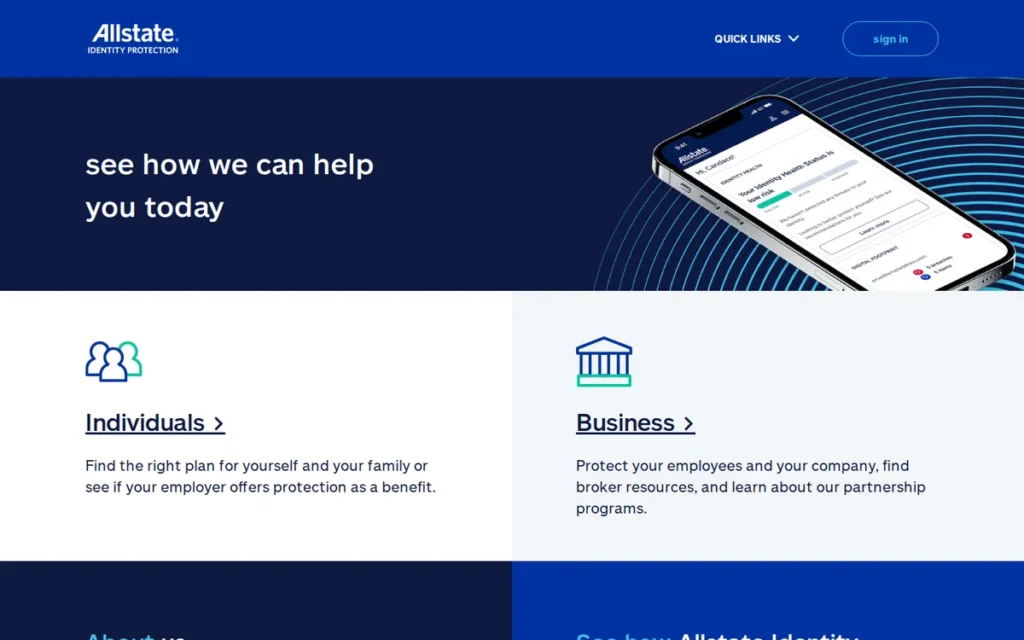
Category: Employee Benefits Platform, the only identity protection product in this evaluation purpose-designed for employer deployment, with white-label PrivacyArmor capability, employer admin reporting, Ease marketplace integration, and Allstate’s insurance-carrier institutional backing.
At a Glance
- Category: Employee Benefits Platform
- Best For: Large enterprises seeking white-label benefit deployment, employer-side admin reporting, and Allstate Corporation’s insurance-carrier credibility for internal due diligence documentation
- Price Range: Consumer proxy: Essentials ~$8.33/month; Premier (mid-tier: verify directly); Blue ~$36/month (3-bureau, up to 11-member family); employer group pricing via Allstate sales team or broker (custom quote required)
- Primary Strength: Allstate Identity Protection is the only product in this evaluation purpose-built for employer deployment, with white-label PrivacyArmor branding, employer-side admin performance reporting, and Allstate’s nationwide insurance broker distribution network
- Biggest Limitation: Allstate Identity Protection’s Android app holds a 2.9/5.0 Google Play rating as of April 2026 (a direct concern for HR teams deploying to Android-dominant or mixed device workforces) and its G2 rating of 4.8/5.0 is based on only 12 reviews, limiting statistical confidence
- One-Line Summary: Allstate Identity Protection is the only employee identity theft protection platform in this evaluation purpose-built for the employer benefits market, offering white-label PrivacyArmor deployment, employer admin reporting, the only verified G2 B2B rating in its category, and Allstate’s insurance-grade institutional backing.
- Last Verified: April 2026
Overview
Allstate Identity Protection, operating as InfoArmor, Inc., an Allstate Company since Allstate’s 2018 acquisition, is an employer-focused identity theft protection platform designed specifically for HR teams, benefits administrators, and enterprise security officers who need a purpose-built group benefit, not a consumer product repurposed for groups.
Allstate Identity Protection provides dark web monitoring, credit monitoring (1 bureau on Essentials/Premier; 3 bureaus on Blue tier), in-house expert remediation, identity risk scoring, and up to $1 million in identity theft insurance ($2 million for family plans on Blue tier). Allstate Identity Protection’s PrivacyArmor white-label option enables enterprise employers to present the benefit under their own corporate brand, a capability not publicly documented for any other product in this evaluation.
Allstate Identity Protection holds the only verified B2B platform rating in this evaluation: 4.8/5.0 on G2 from 12 business users, with confirmed deployment through the Ease HR benefits marketplace.
Key Features
- Multi-Type Identity Monitoring: Allstate Identity Protection monitors dark web exposures, credit activity with real-time alerts (1 bureau on Essentials/Premier; 3 bureaus on Blue tier), high-risk transaction alerts, identity risk scoring, and breach notifications, delivering real-time alerts to enrolled employees through its core monitoring platform.
- PrivacyArmor White-Label Deployment: Allstate Identity Protection’s PrivacyArmor product enables enterprise employers to white-label the identity protection benefit under their own corporate brand, increasing perceived benefit value and employee engagement with the service, and a capability not publicly documented for any other product in this evaluation.
- Employer-Side Admin Performance Reporting: Allstate Identity Protection provides employer-side admin performance reporting and dashboards, enabling HR teams to monitor benefit enrollment, engagement metrics, and incident trends across their workforce through a centralized employer view.
- Broad Family Coverage on Blue Tier: Allstate Identity Protection’s Blue tier covers up to 11 family members per enrolled employee with 3-bureau credit monitoring and $2 million total identity theft insurance, the broadest confirmed per-employee family enrollment capacity in this evaluation.
- Established HR Marketplace Distribution: Allstate Identity Protection is distributed through Allstate’s nationwide insurance broker and agent network and is listed on the Ease HR benefits marketplace, enabling HR teams to deploy through existing benefits administration systems and broker relationships they already maintain.
Best For
Allstate Identity Protection is best for large enterprise HR teams that need a purpose-built employer benefits platform with white-label deployment capability, particularly organizations that want to present identity protection under their own brand, require employer-side enrollment and engagement reporting, and benefit from Allstate’s insurance-grade institutional credibility as part of their employee benefits due diligence documentation.
Pricing
Allstate Identity Protection consumer tiers provide proxy pricing context: Essentials approximately $8.33/month, Premier (mid-tier, verify directly at allstateidentityprotection.com), and Blue approximately $36/month for 3-bureau monitoring and up to 11-member family coverage. Employer group pricing requires a custom quote through the Allstate sales team or an authorized benefits broker, no public per-employee group rate is available as of April 2026. Single-bureau credit monitoring on Essentials and Premier tiers is a meaningful limitation for employers selecting lower-cost tiers; ensure enrolled employees understand which bureau is monitored at each price point.
Strengths
- Only Verified B2B Platform Rating in This Evaluation: Allstate Identity Protection holds a 4.8/5.0 rating on G2 from 12 verified business user reviews as of April 2026 (the only verified B2B platform rating in this entire evaluation) providing peer-sourced validation from organizational buyers that is more directly relevant to HR procurement decision-making than high-volume consumer Trustpilot ratings (G2, April 2026).
- Community-Documented Enterprise Deployment: Raytheon employees discussed Allstate Identity Protection as an active voluntary employee benefit in 2024, referencing a $3 per pay period deduction structure (a real-world deployment at a major defense contractor where identity protection vendor credentials face elevated security vetting standards (Reddit r/Raytheon, 2024) community-sourced; not verified through official Raytheon HR documentation).
- Insurance-Carrier Financial Stability: Allstate’s 2018 acquisition of InfoArmor and integration into the Allstate Corporation brings insurance-carrier financial stability and regulatory compliance infrastructure, verified through the Ease HR marketplace vendor onboarding process, signaling completed security reviews required by benefits administration platforms before listing vendors (Ease.com, April 2026).
- Strong iOS Mobile Experience: Allstate Identity Protection’s App Store rating of 4.8/5.0 from 305 consumer ratings confirms consistent iOS mobile experience quality, a monitoring alert engagement signal for HR teams in Apple-device-dominant environments (App Store, April 2026).
Limitations
- Trade-off: Android Mobile Experience Gap: Allstate Identity Protection’s App Store rating of 4.8/5.0 and its Google Play rating of 2.9/5.0 represent a significant platform quality gap, a direct operational concern for HR teams deploying to workforces with Android-dominant or mixed device environments, where employee engagement with monitoring alerts depends on mobile app quality.
- Trade-off: Limited G2 Review Volume: Allstate Identity Protection’s G2 rating of 4.8/5.0 is genuinely positive but based on only 12 reviews, too small a sample for statistical confidence, and HR teams in regulated industries may require higher review volume as part of formal vendor vetting scorecards.
- Trade-off: Dark Web Alert Actionability: Reddit feedback from technically sophisticated users in r/IdentityTheft specifically describes Allstate Identity Protection’s dark web alerts as insufficiently actionable, identifying that credentials were exposed without providing enough contextual detail for the employee to determine precisely what action to take.
Users on r/IdentityTheft described the experience directly:
“The current Allstate Identity Protection (AIP) ‘dark web’ alerts are useless. I have hundreds of account logins with my email & different passwords. So, I just got an alert with this information only… DwmType: email / Type: Compromised Credential… and their note below is… ‘For a compromised email address: Change the password for the email account.’ I’m sure they have only detected yet another appearance my email address with some password out on the web. This doesn’t mean anyone specifically leaked my email account password. It might be related to a random account associated with my email. So, there is nothing useful I can do with that.” Posted by u/UnCoreM
Takeaway: Allstate Identity Protection’s dark web alerts surface credential exposures without the contextual specificity needed for targeted employee action, a limitation that security-conscious employees will find frustrating and that HR teams should address proactively in benefit communications.
- Trade-off: Opaque Group Pricing: Allstate Identity Protection group pricing requires direct sales or broker engagement, limiting preliminary budget modeling for HR teams conducting initial vendor comparison research before scheduling sales conversations.
Verdict
Allstate Identity Protection is the most purpose-built employer benefits platform in this evaluation, earning its #2 ranking through its PrivacyArmor white-label capability, employer admin reporting, Allstate’s institutional insurance-carrier backing, and the only verified G2 B2B rating in the identity protection category. Allstate Identity Protection is the strongest choice for large enterprises prioritizing branded benefit deployment and the credibility of a publicly known insurance carrier parent. HR teams deploying to predominantly Android workforces should audit the mobile experience before committing, and technically sophisticated employee populations should receive explicit guidance on how to act on dark web alerts.
3. Experian IdentityWorks: Best for Higher Education and Government-Adjacent Employers: Institutional Procurement Track Record and Credit Bureau Advantage
Category: Identity Monitoring Service, a credit bureau-operated identity protection platform with direct Experian data access, confirmed higher-education institutional employer adoption since April 2024, broker-channel employee benefits distribution, and quarterly FICO Scores bundled on Premium plans.
At a Glance
- Category: Identity Monitoring Service
- Best For: Higher education institutions, public universities, government-adjacent employers, and regulated organizations that prioritize verifiable peer-institutional procurement validation
- Price Range: Free Basic tier (Experian 1-bureau monitoring only, no insurance); Plus (pricing unconfirmed, verify directly); Premium $24.99/month after 7-day free trial; employer group pricing via broker channel (custom quote required)
- Primary Strength: Experian IdentityWorks is the only identity protection platform in this evaluation operated by a major credit bureau, providing direct first-party Experian data access and quarterly three-bureau credit reports with FICO Scores, bundled on Premium plans and unavailable from any other product reviewed
- Biggest Limitation: Experian’s confirmed 2015 data breach exposed 15 million T-Mobile customer records and resulted in a $12.67 million multistate attorney general settlement; a Reddit-documented case of an Experian account being hacked to lift a subscriber’s credit freeze raises additional due diligence questions about aggregating employee personal data with this provider
- One-Line Summary: Experian IdentityWorks is the only credit bureau-operated employee identity theft protection platform with confirmed adoption by the University of California system and Stanford University, offering direct Experian credit data access and quarterly FICO Scores for employers in higher education and regulated sectors.
- Last Verified: April 2026
Overview
Experian IdentityWorks is an identity theft protection service operated by Experian, one of the three major U.S. credit bureaus, offering three-bureau credit monitoring, dark web surveillance, SSN trace alerts, social media monitoring, privacy scans (data broker removal), sex offender registry alerts, USPS address change monitoring, Experian CreditLock, and $1 million identity theft insurance. Experian IdentityWorks is designed for consumer enrollment and employer-sponsored benefit packages distributed through the benefits broker channel.
Experian IdentityWorks holds the strongest verifiable institutional employer adoption documentation of any product in this evaluation. The University of California system has provided Experian IdentityWorks employer-paid to all benefit-eligible UC employees, retirees, and dependent children under 18 since April 1, 2024, confirmed through UC Net employee benefits documentation. Stanford University offers it as a voluntary optional benefit, confirmed through official HR benefits web pages.
Experian IdentityWorks Premium uniquely includes quarterly three-bureau credit reports with FICO Scores (the lending-standard credit score, not VantageScore) a feature not bundled by any other product in this evaluation.
Key Features
Comprehensive Three-Bureau Monitoring on Premium Tier: Experian IdentityWorks Premium monitors the following categories simultaneously, among the most comprehensive monitoring type lists in this evaluation:
- Three-bureau credit activity (Experian, Equifax, TransUnion)
- Dark web surveillance
- SSN trace alerts
- Social network monitoring
- Court records and booking alerts
- Change of address monitoring
- Non-credit loan application monitoring
- Sex offender registry alerts
- Experian CreditLock (on-demand credit lock)
Quarterly FICO Scores, Unique in This Evaluation: Experian IdentityWorks Premium includes quarterly three-bureau credit reports with FICO Scores, the credit score standard used by the majority of U.S. lenders rather than VantageScore, the only product in this evaluation to include FICO Score access as a bundled benefit feature, providing a financial wellness dimension for employees managing mortgage, auto loan, or investment decisions (Experian product comparison page, April 2026).
Direct Credit Bureau Data Access: Experian IdentityWorks operates with direct first-party access to Experian credit bureau data, providing a structural monitoring accuracy advantage for Experian-bureau credit activity compared to third-party identity protection services that must request bureau data on a scheduled basis.
Privacy Scans and Data Broker Removal: Experian IdentityWorks includes privacy scans and data broker removal as part of the Premium tier, enabling automated removal of employees’ personal information from data broker databases, reducing the phishing attack surface for remote and hybrid workers whose personal data appears across broker profiles.
Free Basic Tier for Tiered Benefit Design: Experian IdentityWorks offers a Free Basic tier (Experian 1-bureau monitoring only, no insurance), enabling employers to offer entry-level credit monitoring as a no-cost baseline benefit before offering paid tiers as voluntary employee upgrades.
Best For
Experian IdentityWorks is best for higher education institutions, public universities, government-adjacent employers, and regulated organizations that need institutional peer-procurement validation as a primary due diligence input, and specifically for employers whose employee populations actively use FICO Scores for mortgage, auto loan, or financial planning purposes, making the quarterly FICO Score report a genuinely differentiated benefit feature.
Pricing
Experian IdentityWorks offers a Free Basic tier (Experian 1-bureau monitoring only, no insurance). IdentityWorks Plus pricing is unconfirmed in research, verify directly at experian.com. IdentityWorks Premium is $24.99/month after a 7-day free trial as of April 2026. Family plans are available; pricing requires direct verification. Employer group pricing is negotiated through the benefits broker channel, no per-employee group rate is publicly listed. Premium pricing at $24.99/month is among the higher confirmed individual tier prices in this evaluation.
Strengths
- UC System Adoption, Strongest Public Institutional Validation: The University of California system has provided Experian IdentityWorks employer-paid to all benefit-eligible UC employees, retirees, and dependent children under 18 since April 1, 2024, confirmed through UC Net employee benefits documentation, representing procurement validation by one of the largest public university systems in the United States, with rigorous public-sector vendor security and privacy review processes (UC Net, verified April 2026).
- Unique FICO Score Bundling: Experian IdentityWorks Premium bundles quarterly three-bureau credit reports with FICO Scores (the lending-standard credit score, not VantageScore) the only product in this evaluation to include FICO Score access as a bundled benefit feature, differentiating it from monitoring-only competitors (Experian product comparison page, April 2026).
- Stanford University Adoption: Stanford University’s HR benefits page (CardinalAtWork) lists Experian IdentityWorks as an optional voluntary employee benefit, a second academic institution procurement validation providing corroborating evidence of suitability for higher-education procurement standards (Stanford CardinalAtWork, verified April 2026).
- Direct First-Party Credit Data Advantage: Experian’s status as one of the three major U.S. credit bureaus provides direct first-party access to Experian credit data, a structural monitoring advantage for Experian-bureau credit activity that no third-party identity protection service in this evaluation can replicate.
Limitations
- Trade-off: Confirmed Corporate Data Security Incident: Experian’s 2015 data breach exposed 15 million T-Mobile customer records, resulting in a $12.67 million multistate attorney general settlement requiring Experian to strengthen data security practices and provide five years of free credit monitoring to affected consumers (multistate AG settlement, confirmed April 2026). Additionally, widely reported international data incidents involving Experian’s South Africa and Brazil operations in 2020 and 2021 should be independently verified through financial journalism archives and applicable regulatory filings before being cited in formal procurement documents. HR teams should prepare a direct response to Experian’s corporate data security history before recommending this platform to employees.
- Trade-off: No Confirmed HR Admin Dashboard: Experian IdentityWorks has no confirmed employer-side HR admin dashboard documented in research, suggesting it may lack the centralized workforce enrollment oversight that Allstate Identity Protection and IDShield provide, a meaningful gap for HR teams managing large-scale deployment.
- Trade-off: Highest Individual Premium Price: Experian IdentityWorks Premium at $24.99/month is among the higher confirmed individual tier prices in this evaluation, relevant for HR teams modeling per-employee benefit cost before broker channel pricing becomes available.
- Trade-off, Structural Conflict of Interest Perception: Community discussions note the inherent tension in trusting a credit bureau, an organization that profits from aggregating personal financial data, to securely monitor that same data on employees’ behalf, including a Reddit-documented case of a subscriber’s Experian account being hacked to lift their credit freeze. HR teams with security-conscious employee populations should be prepared to address this concern directly.
This structural skepticism surfaces consistently in community discussions. As one user on r/IdentityTheft noted after receiving a free Experian subscription following a data breach:
“It seems pointless to me. I got a free subscription because my info was part of a data breach. Lots of alerts about this that and the other thing on the dark web but when I look at the alerts they provide me with no info about what website it’s linked to, what password (if any) was compromised, what address information was compromised. All in all, it’s useless. I’m glad I’m not paying for it but I am sorry that these fraudsters can prey upon people’s fears and make money by doing nothing substantive. All they are is a company that does SQL lookups of the information you provide against a number of data sets that they’ve scraped together. How that is worth $25/month is beyond me.” Posted by u/ThujaOccidentalis
Takeaway: Experian IdentityWorks users report that dark web monitoring alerts lack the specificity needed to take targeted protective action (no compromised site, no affected password, no actionable remediation step) undermining the practical value of the service at its $24.99/month price point.
Verdict
Experian IdentityWorks earns its #3 ranking through the strongest institutional employer adoption documentation in the evaluation (UC System (confirmed April 1, 2024) and Stanford University adoptions confirmed through official HR benefits pages) and its unique credit bureau advantage: direct Experian data access and quarterly FICO Scores unavailable from any competitor reviewed. Experian IdentityWorks is the most defensible choice for higher education and government-adjacent employers whose procurement teams require verifiable peer-institution adoption evidence. HR buyers at organizations with security-conscious employees or risk-averse legal counsel should prepare a direct and documented response to Experian’s 2015 data breach history before recommending the platform.
4. Aura: Best Monitoring Performance and All-Features-Included Design: Strongest Consumer Platform with Growing Employer Channel Presence
Category: All-in-One Digital Protection, a comprehensive consumer-grade identity monitoring platform extended to employer benefits via MetLife partnership, with the highest documented dark web detection rate and broadest all-tier feature inclusiveness in this evaluation, but without confirmed group HR administration infrastructure.
At a Glance
- Category: All-in-One Digital Protection
- Best For: Employers deploying through the MetLife benefits channel; remote-first or tech-forward workforces prioritizing monitoring breadth and bundled digital security features
- Price Range: Individual ~$12/month (annual billing); Couple ~$22/month (annual billing); employer group pricing requires contact with Aura business sales team, not publicly listed as of April 2026
- Primary Strength: Aura detected 18 dark web alerts compared to LifeLock’s 8 from the same personal data set in independent head-to-head testing (Security.org, April 2026), including a Gmail breach LifeLock missed, with average fraud alert delivery measured at approximately 3 minutes
- Biggest Limitation: Aura has no confirmed HRIS integrations beyond the MetLife channel, no verified HR admin dashboard, and documented cancellation difficulty creates direct employee offboarding friction for HR teams managing benefits changes
- One-Line Summary: Aura is the highest-performing identity monitoring platform in independent dark web detection testing (detecting 2x more threats than LifeLock from identical personal data with approximately 3-minute average alert delivery) offering all features on every plan tier and a MetLife employee benefits partnership, though without confirmed group HR administration infrastructure.
- Last Verified: April 2026
Overview
Aura is an all-in-one digital security platform founded in 2019 that bundles three-bureau credit monitoring, dark web surveillance, SSN alerts, financial transaction monitoring, automated data broker removal from 140+ sites, VPN, antivirus, and password manager on every plan tier without feature-gating. Aura is designed for consumers and extended to employer benefits through a confirmed MetLife partnership.
Aura distinguishes itself through the strongest documented monitoring performance data in this evaluation. Independent head-to-head testing by Security.org found Aura detected 18 dark web alerts compared to LifeLock’s 8 from the same personal data set (including a Gmail breach LifeLock failed to identify) with average alert delivery measured at approximately 3 minutes (Security.org independent testing, April 2026).
Aura’s family plans cover up to 5 adults and unlimited children across unlimited devices (the broadest household coverage in this evaluation) and include child-specific cyberbullying alerts as an additional monitoring feature (verify current availability at aura.com, April 2026).
Key Features
- All-Features-Included Across Every Plan Tier: Aura includes three-bureau credit monitoring (Experian, Equifax, TransUnion), dark web surveillance, SSN alerts, financial transaction monitoring, $1 million identity theft insurance, VPN, antivirus, and password manager on every plan tier without reserving features for premium tiers, eliminating the coverage gap created when HR teams select lower-cost plans for budget management.
- Automated Data Broker Removal (140+ Sites): Aura provides automated data broker removal from 140+ sites as a standard bundled feature on all tiers, reducing employees’ digital exposure profile and diminishing the phishing and social engineering attack surface for remote workers whose personal data appears across broker profiles.
- Bundled Device and Network Security: Aura’s all-in-one platform bundles VPN (AES-256, Hotspot Shield-powered), antivirus, and password manager alongside identity protection on every plan tier, providing device-level and network-level security tools directly relevant for remote and hybrid workers using personal devices for work-related activity.
- Broadest Family Enrollment Flexibility: Aura’s family plan covers up to 5 adults and unlimited children across unlimited devices (including dependents in separate households) the broadest family enrollment flexibility in this evaluation and a meaningful differentiator for employers with geographically dispersed workforces.
- MetLife Employee Benefits Partnership: Aura has a confirmed partnership with MetLife for bundled identity and fraud protection in employee benefits packages, providing an established group deployment entry point for HR teams already managing benefits within the MetLife ecosystem (MetLife, April 2026).
Best For
Aura is best for employers deploying through the MetLife benefits channel, technology companies, remote-first organizations, and HR teams prioritizing monitoring breadth and verified alert performance over group administration infrastructure, particularly workforces where employees actively use bundled VPN, antivirus, and password manager features alongside identity monitoring.
Pricing
Aura consumer plans: Individual approximately $12/month (annual billing), Couple approximately $22/month (annual billing), with basic plans reportedly available from approximately $10/month annually. Employer group pricing requires contact with Aura’s business sales team, no public per-employee rate is listed as of April 2026. MetLife group rates follow MetLife’s separate benefits pricing structure. The $1 million identity theft insurance is included per adult; family plans cover up to 5 adults ($5 million total). Verify current pricing at aura.com.
Strengths
- Strongest Independent Dark Web Detection Result: Independent head-to-head testing by Security.org found Aura detected 18 dark web alerts versus LifeLock’s 8 from an identical personal data set (more than double the detection rate) including a Gmail breach that LifeLock failed to identify, with average alert delivery measured at approximately 3 minutes versus documented 4-day latency in real LifeLock user cases (Security.org, April 2026).
- Confirmed MetLife Employer Benefits Channel: Aura’s confirmed MetLife partnership for bundled identity and fraud protection in employee benefits packages provides an established carrier-relationship entry point for HR teams already operating within the MetLife benefits distribution ecosystem (MetLife, April 2026).
- No-Tier-Gating Feature Completeness: Aura includes three-bureau credit monitoring, VPN, antivirus, and password manager on every plan tier without feature-gating, eliminating the coverage gap risk that occurs when employers select lower-cost plan tiers and inadvertently deprive employees of monitoring features reserved for premium tiers in competing products.
- Highest Independent Editorial Scores: SafeHome.org independently rates Aura 9.7/10 (the highest score awarded to any product in this evaluation by that platform) with Cybernews independently rating Aura 4.7/5, providing consistent high ratings across two independent consumer security review platforms (SafeHome.org, 2026; Cybernews, April 2026).
Limitations
- Trade-off: No Group HR Administration Infrastructure: Aura has no named HRIS integrations beyond the MetLife channel, no verified HR admin dashboard for centralized enrollment oversight, and no documented group offboarding workflow, meaning HR teams outside the MetLife ecosystem must manage Aura as individual consumer subscriptions rather than a centrally administered group benefit.
- Trade-off: Documented Cancellation Difficulty: Multiple Reddit users and review sources document cancellation difficulty specifically for Aura, a direct operational problem for HR teams that need to terminate subscriptions when employees separate, change benefits elections during open enrollment, or offboard from the organization.
Users on r/IdentityTheft who have experience with Aura capture this tension:
“Well, it’s effective and inexpensive, and that’s important to me. In a year or two, should I want to go somewhere else, I’m fairly certain I will be able to jump through whatever obstacles they throw at me. But as long as it IS effective and inexpensive, I’ll probably stay subscribed.” Posted by u/Stardog2
Takeaway: Aura’s value-to-price ratio retains individual subscribers willing to accept cancellation friction, but HR teams managing employee offboarding at organizational scale will encounter those same obstacles every time a benefit election changes or an employee separates.
- Trade-off: Relative Institutional Youth: Aura was founded in 2019, making it the second-youngest product in this evaluation after NordProtect, providing a shorter institutional track record for claims handling at organizational scale compared to LegalShield (1976), Allstate/InfoArmor (2018 acquisition), and Identity Guard (25+ years).
- Trade-off, Insurance Ceiling Below IDShield: Aura’s $1 million insurance ceiling per adult, while sufficient for most employees, is lower than IDShield’s $3 million maximum and may be scrutinized by HR teams at financial services or legal firms with high-value employee populations.
Verdict
Aura is the strongest monitoring platform in this evaluation on verifiable independent performance data, 2x dark web detection versus LifeLock in head-to-head testing (Security.org, April 2026), approximately 3-minute average alert delivery, and all features on every plan tier without gating, making it the most credible choice for employers that prioritize threat detection breadth and alert performance over group HR administration tooling. Aura is most naturally deployed through the MetLife benefits channel or as a recommended voluntary self-enrollment benefit for remote-first organizations. HR teams that need centralized group enrollment management, HRIS integration, or employer-side reporting should evaluate IDShield or Allstate Identity Protection instead.
5. Identity Guard: Longest Track Record with Budget-Accessible Pricing: Platform Reliability Requires Direct Verification Before Deployment
Category: Identity Monitoring Service, a long-tenured identity protection platform with 25+ year history, broad monitoring scope, SHRM vendor directory presence, and basic employer self-enrollment capability, currently carrying documented platform reliability concerns that HR teams must directly audit before deployment.
At a Glance
- Category: Identity Monitoring Service
- Best For: Small businesses and budget-conscious HR teams that value longevity and SHRM recognition with $1M insurance at every tier, provided direct platform reliability due diligence is completed before deployment
- Price Range: Value plan ~$8.99/month; promotional rates as low as $4.49/month reported in some sources; Total and Ultra tiers priced higher; employer group pricing not publicly listed
- Primary Strength: Identity Guard has operated for more than 25 years, resolved over 140,000 documented fraud cases (self-reported), and serves 47 million customers (self-reported), the longest institutional track record of any product in this evaluation
- Biggest Limitation: Multiple 2024–2025 Reddit reports document account accessibility failures, service deterioration attributed to a possible ownership change, and verified unreachability during the Social Security data exposure event, an identity protection service that cannot be reached during a major breach event provides negative value
- One-Line Summary: Identity Guard is one of the longest-tenured identity protection platforms in this evaluation with 25+ years of operation, 140,000+ resolved fraud cases (self-reported), and $1 million insurance on all plan tiers, but carries documented 2024–2025 platform reliability concerns and service deterioration reports that HR teams must directly verify before deploying as an employee benefit.
- Last Verified: April 2026
Overview
Identity Guard is an identity theft protection service with over 25 years of operating history, claiming 47 million customers and more than 140,000 fraud cases resolved (both self-reported, Identity Guard FAQ, April 2026) the longest institutional track record of any product in this evaluation. Identity Guard offers dark web surveillance, credit monitoring alerts, SSN alerts, social media monitoring, financial account monitoring (up to 5 bank accounts, up to 40 cards), home and auto title monitoring, criminal and sex offense monitoring, USPS address change alerts, and $1 million identity theft insurance on all plan tiers.
Identity Guard historically differentiated itself through IBM Watson AI-powered identity monitoring (a partnership prominent in its marketing through approximately 2019–2021) though current research as of April 2026 does not confirm whether IBM Watson AI remains an active platform component or has been supersededby a different monitoring engine.
Identity Guard offers employer-sponsored benefit plans with digital self-enrollment designed to minimize IT integration requirements, and is listed in the SHRM vendor directory under Identity Protection Programs, providing HR professional discoverability through the leading HR association’s vendor research channel.
Key Features
Broadest Monitoring Account Type List in Evaluation: Identity Guard monitors the following categories, one of the most extensive monitoring type lists reviewed:
- Dark web exposures
- Credit activity alerts
- SSN usage monitoring
- Social media account monitoring
- Up to 5 bank accounts
- Up to 40 credit and debit cards
- Up to 10 email addresses
- 401k and investment account monitoring
- Home title and auto title change alerts
- Criminal records monitoring
- Sex offender registry alerts
- USPS address change monitoring
$1 Million Insurance on Every Plan Tier: Identity Guard includes $1 million identity theft insurance on all plan tiers including the entry-level Value plan, without requiring employees to purchase premium plans to access any insurance coverage, a structural insurance consistency advantage over LifeLock’s Standard tier, which provides only $25,000 in stolen funds reimbursement.
Self-Enrollment Simplicity: Identity Guard’s employer-sponsored benefit plans are designed for digital self-enrollment with no complex IT integration requirements, making the deployment process accessible for small businesses and HR teams without dedicated IT implementation resources or existing HRIS platform relationships.
Budget-Accessible Pricing with $1M Protection: Identity Guard’s Value plan at approximately $8.99/month provides identity protection with $1 million insurance for small businesses that cannot accommodate the higher per-employee costs of IDShield’s $14.95/month entry plan or Experian’s $24.99/month Premium tier.
SHRM Vendor Directory Recognition: Identity Guard is listed in the SHRM vendor directory under Identity Protection Programs, confirming active recognition by the leading HR professional association and presence in the discovery channel HR practitioners use during vendor research (SHRM vendor directory, April 2026).
Best For
Identity Guard is best for small business HR teams and budget-constrained benefits administrators that need a SHRM-recognized identity protection vendor with 25+ years of institutional longevity, $1 million insurance at every price tier, and simple self-enrollment, and that are prepared to conduct direct platform reliability due diligence including a live demonstration and customer references to verify whether the documented 2024–2025 service concerns have been addressed.
Pricing
Identity Guard’s Value plan is approximately $8.99/month or approximately $80/year on annual billing. Promotional introductory rates as low as $4.49/month have been cited in some sources, verify current pricing directly at identityguard.com. Total and Ultra tiers are priced above the Value plan; exact pricing requires direct verification. All plans include $1 million identity theft insurance. Group and employer pricing is not publicly listed. As of April 2026, all pricing should be confirmed directly with Identity Guard’s business team before budget modeling.
Strengths
- Longest Operational Track Record in Evaluation: Identity Guard has operated for more than 25 years, claims 47 million customers, and has resolved over 140,000 documented fraud cases (all self-reported (Identity Guard FAQ, April 2026)) the longest operational track record of any product in this evaluation, providing institutional longevity that newer competitors (NordProtect launched late 2024, Aura founded 2019) cannot approach (Identity Guard FAQ, April 2026).
- SHRM Vendor Directory Listing: Identity Guard is listed in the SHRM vendor directory under Identity Protection Programs, confirming recognition by the leading professional organization for HR practitioners and providing discoverability through the most widely used professional development and vendor research platform in the HR field (SHRM vendor directory, April 2026).
- Consistent Insurance on All Plans: Identity Guard provides $1 million identity theft insurance on all plan tiers including the entry-level Value plan, a structural insurance consistency advantage over LifeLock, which provides only $25,000 in stolen funds reimbursement on its Standard tier despite marketing the “Million Dollar Protection” package as a headline benefit to employees and employers.
- Strong Independent Editorial Score: SafeHome.org independently rates Identity Guard 9.3/10 in its 2026 review, indicating that when the platform functions as designed, the monitoring and alert features meet independent quality standards (SafeHome.org, 2026).
Limitations
- Trade-off: Documented Platform Reliability Failures: Multiple Reddit users in r/IdentityTheft report account accessibility failures and service deterioration in 2024–2025. One long-term user reported directly: “customer service, notifications, phone app, and access to their website have deteriorated considerably. During the recent social security hack it was impossible to reach them online or by phone. Promised callbacks never happened” (u/oldbutsharpusually, r/IdentityTheft, 2024). An identity protection service that is unreachable during a nationally significant breach event provides negative value, employees who expected help and received none are in a worse position than if the service had never been offered.
- Trade-off, Unconfirmed IBM Watson AI Status: Identity Guard’s IBM Watson AI heritage, historically its primary technical differentiator, is not confirmed as an active platform component in current research as of April 2026, requiring HR buyers to request direct clarification on the current monitoring engine methodology before citing technical capabilities in procurement documentation.
- Trade-off: Limited Employer Deployment Infrastructure: Identity Guard has no confirmed HRIS integrations, no documented group admin dashboard, and no named institutional employer adoptions in verifiable sources, making its employer deployment capability more basic than IDShield, Allstate Identity Protection, or Experian IdentityWorks.
- Trade-off: Uncertain Corporate Ownership Status: Community sources and comparison sites suggest Aura acquired Identity Guard, though official sources describe them as competitors, the corporate relationship requires direct clarification before HR teams can accurately document the vendor’s ownership structure in formal procurement records.
Verdict
Identity Guard’s 25-year track record, $1 million insurance at every tier, SHRM vendor directory listing, and accessible Value plan pricing earn its #5 ranking among products that offer any employer deployment pathway. Identity Guard’s institutional longevity is its most defensible asset, and its price-to-features ratio at the Value tier is genuinely competitive for budget-constrained small business HR teams. HR teams evaluating Identity Guard should require a live platform demonstration, documented customer references from current organizational accounts, and direct clarification on the corporate ownership structure before recommending it to employees, the documented 2024–2025 platform reliability concerns are too material to accept on brand reputation alone.
6. LifeLock by Norton: Highest Brand Recognition with the Most Documented Limitations: HR Teams Must Evaluate the Evidence Before Recommending
Category: Identity Monitoring Service, the most recognized consumer identity protection brand in the U.S., backed by Gen Digital’s institutional infrastructure, with a documented 2015 FTC enforcement action requiring over $100 million in total payments for deceptive marketing and inadequate data security, a 2x dark web detection gap versus Aura in independent testing, and a group enrollment model that is a discounted consumer subscription rather than a purpose-built employer benefit.
At a Glance
- Category: Identity Monitoring Service
- Best For: Employers where LifeLock brand recognition significantly drives employee enrollment acceptance, provided HR teams are fully briefed on tier-based coverage gaps, the FTC settlement history, and alert performance limitations before recommending at any tier
- Price Range: Standard ~$7.50–$11.99/month promotional first year (renewal substantially higher); Advantage ~$15/month first year; Ultimate Plus ~$20/month first year (~$189.99/year standard rate); employer group enrollment via PrismHR marketplace
- Primary Strength: LifeLock by Norton is backed by Gen Digital: a NASDAQ-listed company, providing institutional financial accountability, auditable corporate governance, and U.S.-based restoration specialists on Advantage and Ultimate Plus tiers
- Biggest Limitation: LifeLock by Norton’s 2015 FTC enforcement action required over $100 million in total payments ($68 million in consumer redress and $32 million to state attorneys general) for deceptive marketing and inadequate data security; its Standard plan covers only $25,000 in stolen funds reimbursement despite the “Million Dollar Protection” marketing headline; independent testing documents a 2x dark web detection gap versus Aura
- One-Line Summary: LifeLock by Norton is the most recognized identity protection brand in the U.S., backed by Gen Digital’s institutional infrastructure, but carries a 2015 FTC enforcement action requiring over $100 million in total payments for deceptive marketing, a measured 2x dark web detection gap versus Aura in independent testing, and a Standard plan that provides only $25,000 in stolen funds reimbursement despite its million-dollar marketing headline.
- Last Verified: April 2026
Overview
LifeLock by Norton is a consumer identity protection service operated by Gen Digital (formerly NortonLifeLock, NASDAQ-listed), offering three plan tiers (Standard, Advantage, and Ultimate Plus) with SSN monitoring, dark web monitoring, data breach notifications, stolen wallet protection, USPS address change verification, and identity restoration via U.S.-based specialists. Credit bureau monitoring scales from 1 bureau on Standard to 3 bureaus on Advantage and Ultimate Plus.
LifeLock by Norton is the most widely recognized identity protection brand in this evaluation, benefiting from 20 years of consumer marketing and Gen Digital’s cybersecurity infrastructure. LifeLock by Norton also carries the most documented institutional red flag in the category: a 2015 FTC enforcement action requiring over $100 million in total payments ($68 million designated for consumer redress and $32 million directed to state attorneys general, the largest FTC order enforcement action at the time of settlement) following a separate 2010 FTC settlement.
LifeLock by Norton’s Standard plan covers only $25,000 in stolen funds reimbursement despite marketing the “Million Dollar Protection” package as the headline benefit across all plan tiers.
Key Features
- Patented Identity Alert System: LifeLock by Norton’s patented Identity Alert system monitors for fraudulent use of employees’ SSN, name, address, and date of birth in credit applications and new service registrations, sending alerts via text, phone, email, or app. Multiple independent users have reported alert failures at critical moments in real fraud scenarios, including documented cases of 4-day notification latency versus Aura’s approximately 3-minute average delivery (Security.org, April 2026).
- Tiered Insurance Coverage: Significant Tier Gaps: LifeLock by Norton scales insurance coverage across tiers: Standard provides up to $25,000 in stolen funds reimbursement; Advantage provides up to $100,000; Ultimate Plus provides up to $1 million total package coverage including lawyers, experts, and personal expenses. This tiered structure creates significant coverage gaps for employees enrolled at lower plan levels despite the “$1 million” marketing headline.
- Norton Cybersecurity Ecosystem Integration: LifeLock by Norton integrates Norton’s antivirus and cybersecurity ecosystem for subscribers enrolled in combined Norton 360 + LifeLock plans, providing device protection alongside identity monitoring for employees using the bundled product on compatible devices.
- PrismHR Marketplace Listing: LifeLock by Norton is listed on the PrismHR marketplace, though this represents a discounted consumer subscription access pathway rather than a purpose-built group plan with centralized HR admin infrastructure, group billing, or employee offboarding workflows.
- Gen Digital Institutional Backing: LifeLock by Norton’s Gen Digital parent company is NASDAQ-listed and operates one of the world’s largest consumer cybersecurity portfolios, including Norton 360, Avast, and Avira, providing institutional financial accountability and a legally auditable corporate structure relevant to HR vendor due diligence.
Best For
LifeLock by Norton is best suited for employers where brand name recognition is a primary driver of employee enrollment acceptance and internal benefits approval, provided that HR teams are fully briefed on Standard tier’s $25,000 stolen funds coverage gap, the FTC enforcement history, and documented alert performance limitations before recommending the product at any plan level. Advantage or Ultimate Plus tiers should be selected at minimum for any employer-sponsored deployment.
Pricing
LifeLock consumer pricing: Standard approximately $7.50–$11.99/month promotional first year (renewal pricing is substantially higher, a documented HR administration concern for budget stability); Advantage approximately $15/month first year; Ultimate Plus approximately $20/month first year (approximately $189.99/year at standard rate reported in some sources). Employer group enrollment via PrismHR marketplace, discount pricing requires direct contact with LifeLock’s business team. The promotional-to-renewal price gap creates employee sticker-shock risk that HR teams should communicate proactively before enrollment. Verify all current pricing directly at lifelock.norton.com.
Strengths
- Gen Digital Institutional Accountability: LifeLock by Norton is backed by Gen Digital (a NASDAQ-listed company with auditable corporate governance) providing institutional financial accountability that HR buyers can document in formal vendor due diligence, alongside Norton’s established global cybersecurity infrastructure across its product portfolio (Gen Digital corporate, April 2026).
- U.S.-Based Specialists on Higher Tiers: LifeLock by Norton’s Advantage and Ultimate Plus tiers include 3-bureau credit monitoring and U.S.-based identity restoration specialists with the Million Dollar Protection Package, providing comprehensive coverage for employees enrolled on higher-tier plans, making tier selection a material HR benefits design decision (Security.org, April 2026).
- Patented Identity Alert Technology: LifeLock’s patented Identity Alert system holds documented IP protection for its approach to monitoring personal identifiers in new credit applications, providing a formally validated technical differentiation claim reviewed through the U.S. patent process.
- High Independent Editorial Score on Higher Tiers: SafeHome.org independently rates LifeLock by Norton 9.6/10 in its 2026 rankings, reflecting the breadth of features available at higher plan tiers and Gen Digital’s institutional backing, though this rating does not incorporate the FTC settlement history or the head-to-head detection performance deficit versus Aura documented in this evaluation (SafeHome.org, 2026).
Limitations
- Trade-off, Two FTC Enforcement Actions: LifeLock by Norton’s 2015 FTC enforcement action required over $100 million in total payments, $68 million designated for consumer redress and $32 million directed to state attorneys general, the largest FTC order enforcement action at the time of settlement, legally requiring LifeLock to stop using the word “prevent” and replace it with “protect.” This was preceded by a 2010 FTC settlement, making LifeLock the only product in this evaluation with two documented federal enforcement actions that HR teams must address in internal legal and compliance review.
- Trade-off, 2x Dark Web Detection Deficit: Independent testing by Security.org documented LifeLock detecting 8 dark web alerts versus Aura’s 18 from an identical personal data set, including missing a Gmail breach Aura caught, representing a monitoring quality gap that HR teams should factor into any competitive vendor evaluation.
- Trade-off: Standard Tier’s $25,000 Stolen Funds Cap: LifeLock’s Standard plan’s $25,000 stolen funds ceiling is a material gap relative to the “$1 million” marketing headline, a distinction HR teams must communicate explicitly before employees enroll to avoid benefit misrepresentation when a fraud incident exceeds coverage at that tier.
- Trade-off: Group Plans Are Consumer Subscriptions: LifeLock by Norton’s employer group plans through PrismHR are discounted consumer subscriptions with no group administration infrastructure, centralized HR dashboard, employee offboarding workflow, or collective billing, fundamentally different from the purpose-built group benefits offered by IDShield and Allstate Identity Protection, and a meaningful administrative gap for HR teams managing benefits changes at scale.
Verdict
LifeLock by Norton’s #6 ranking reflects the most thoroughly documented gap between brand recognition and independently verified performance of any product in this evaluation. LifeLock is a recognizable brand with Gen Digital’s institutional backing, but HR teams recommending it carry responsibility for the two FTC settlements, the Standard tier’s $25,000 stolen funds gap despite million-dollar marketing language, and the head-to-head monitoring performance deficit versus Aura. LifeLock’s brand name is its strongest asset and its most significant liability: HR teams that recommend LifeLock on the basis of brand recognition alone, without a documented briefing on the FTC settlement history and Standard tier coverage gaps, assume institutional responsibility for any employee outcome that those undisclosed facts could have informed.
7. NordProtect: Best Individual Consumer Cybersecurity Coverage: Structurally Ineligible for HR-Managed Group Benefit Deployment
Category: Consumer Identity Protection, an individual cybersecurity-first identity monitoring product with unique cyber insurance categories and the highest data broker removal scope in this evaluation, but with no employer group plan infrastructure and therefore structurally ineligible for traditional HR-managed employee benefit deployment.
At a Glance
- Category: Consumer Identity Protection
- Best For: Individual consumers, Nord Security ecosystem users, and employers recommending a low-cost voluntary self-enrollment option, NOT suitable for HR-managed group benefit deployment of any kind
- Price Range: Starter $1.49/month; Silver $3.99/month; Gold $5.99/month; Platinum $7.99/month (all annual billing); 30-day money-back guarantee, all pricing fully published without sales contact required
- Primary Strength: NordProtect is the only identity protection product in this evaluation that insures against cyber extortion ($50,000), cyber attack ($10,000), and online fraud ($10,000) as distinct coverage categories not covered by standard identity theft insurance frameworks
- Biggest Limitation: NordProtect has no employer or group plan capability whatsoever (no corporate account, no HR admin dashboard, no group enrollment, no centralized billing, no payroll deduction, and no HRIS integration of any kind) making it structurally ineligible for HR-managed employee benefit deployment in any traditional group plan structure
- One-Line Summary: NordProtect is a consumer identity protection product from Nord Security that uniquely insures against cyber extortion ($50,000) and cyber attacks ($10,000) (categories no other product in this evaluation covers) and removes personal data from 420+ broker sites on its Platinum tier, but has no group plan infrastructure and cannot be deployed as an HR-managed employee benefit.
- Last Verified: April 2026
Overview
NordProtect is an individual consumer identity theft protection service launched in late 2024 by Nord Security (maker of NordVPN, serving 14 million+ customers globally as of April 2026), offering 24/7 dark web monitoring for up to 10 personal assets, TransUnion credit monitoring, criminal records monitoring from 2,800+ U.S. jails, financial account monitoring, malware breach alerts, $1 million identity theft recovery, and three insurance categories not offered by any other product in this evaluation: $50,000 cyber extortion coverage, $10,000 cyber attack coverage, and $10,000 online fraud reimbursement.
NordProtect’s Platinum tier includes Incogni, Nord Security’s automated data broker removal service covering 420+ broker sites, the highest removal scope in this evaluation. Verify whether Gold tier also includes Incogni directly at nordprotect.com/features, as Platinum-tier inclusion is confirmed but Gold-tier inclusion requires direct verification as of April 2026.
NordProtect has no employer corporate account, no HR admin dashboard, no group enrollment infrastructure, and no centralized billing, making NordProtect structurally ineligible for traditional HR-managed employee benefit deployment.
Key Features
Multi-Asset Dark Web and Criminal Monitoring: NordProtect monitors dark web for up to 10 personal assets (email addresses, phone numbers, SSN, credit and debit card numbers), TransUnion credit activity (VantageScore 3.0), criminal records from 2,800+ U.S. jails, financial account transactions, and malware breach alerts, providing broad monitoring coverage on a fully transparent consumer subscription.
Three Unique Cyber Insurance Categories: NordProtect uniquely includes three coverage categories not available in any other product in this evaluation:
- $50,000 cyber extortion coverage (addressing ransomware-style attacks)
- $10,000 cyber attack coverage (for direct system compromises)
- $10,000 online fraud reimbursement
These three categories address digital-native risk profiles explicitly absent from standard identity theft insurance frameworks and directly relevant to phishing, ransomware, and financial fraud threats facing remote workers (NordProtect features page, April 2026).
Incogni Data Broker Removal (420+ Sites on Platinum Tier): NordProtect’s Platinum tier integrates Incogni, Nord Security’s automated data broker removal service removing personal information from 420+ broker sites, the broadest confirmed data broker removal scope in this evaluation, approximately 3x Aura’s 140+ site scope. Verify Gold tier inclusion directly at nordprotect.com/features before recommending a specific tier to employees (NordProtect features page, April 2026).
Fully Transparent Pricing: No Sales Engagement Required: NordProtect publishes all pricing tiers at nordprotect.com/pricing: Starter at $1.49/month, Silver at $3.99/month, Gold at $5.99/month, and Platinum at $7.99/month (all annual billing), the most price-transparent product in this evaluation, enabling cost comparison without any sales engagement requirement.
Bundled VPN on Platinum Tier: NordProtect’s Platinum tier bundles VPN access alongside identity protection and data broker removal, providing network-level privacy consistent with Nord Security’s broader product portfolio for consumers who want integrated cybersecurity and identity protection in a single subscription.
Best For
NordProtect is best for individual consumers in the Nord Security ecosystem, solo professionals, and remote workers who want affordable cybersecurity-integrated identity protection with unique cyber extortion and cyber attack insurance. NordProtect is not suitable as an HR-administered group employee benefit in any traditional sense, it has no corporate account, no group enrollment workflow, and no HRIS integration. Employers may recommend NordProtect as a voluntary self-enrollment option that individual employees manage independently, but NordProtect cannot function as a managed group benefit with centralized HR administration or employer-side reporting.
Pricing
NordProtect is the most transparently priced product in this evaluation, with all tiers publicly listed at nordprotect.com/pricing: Starter $1.49/month, Silver $3.99/month, Gold $5.99/month, Platinum $7.99/month (annual billing). Two-year commitment plans are available from $6.99/month for bundled offerings. A 30-day money-back guarantee is standard. There is no employer group pricing because no employer group plan exists. Base tiers (Starter and Silver) monitor only TransUnion (single bureau) requiring higher-tier enrollment for broader credit bureau coverage. Verify the current tier structure and feature inclusions directly at nordprotect.com/pricing before recommending specific tiers to employees (April 2026).
Strengths
- Unique Cyber Coverage Categories Not Available Elsewhere: NordProtect is the only product in this evaluation offering cyber extortion insurance ($50,000), cyber attack coverage ($10,000), and online fraud reimbursement ($10,000) as distinct, named policy categories, addressing three risk categories explicitly absent from the standard identity theft insurance frameworks in every other product reviewed (NordProtect features page, April 2026).
- Broadest Data Broker Removal Scope on Platinum Tier: NordProtect’s Incogni integration removes personal information from 420+ data broker sites on its Platinum tier (compared to Aura’s 140+ site removal scope) providing the broadest confirmed digital footprint reduction in this evaluation (NordProtect features page, April 2026).
- Complete Pricing Transparency: NordProtect publishes all four pricing tiers ($1.49–$7.99/month annual) without requiring sales engagement (the most price-transparent product in this evaluation) enabling HR teams to present employees with clear cost information for a voluntary self-enrollment recommendation without initiating a procurement process (nordprotect.com/pricing, April 2026).
- NordVPN Brand Heritage: Nord Security’s NordVPN product serves 14 million+ customers globally as of April 2026, providing cybersecurity operational credibility that may reduce employee friction when recognizing the NordProtect brand, though brand familiarity does not independently validate NordProtect’s identity restoration track record at scale (NordVPN corporate blog, April 2026).
Limitations
- Trade-off: Structural Disqualification for HR Group Deployment: NordProtect has no employer group plan capability, no corporate account, no HR admin dashboard, no group enrollment workflow, no centralized billing, no payroll deduction, and no HRIS integration of any kind. NordProtect is structurally ineligible for HR-managed employee benefit deployment in any traditional group plan structure. This is the primary reason NordProtect ranks last despite genuine product strengths in insurance innovation and monitoring coverage.
- Trade-off, Launched Late 2024, No Claims Track Record: NordProtect is the newest product in this evaluation, launched approximately 18 months before this research date, with no claims-handling track record at scale, no G2 or Capterra aggregate rating from verified users, and minimal independent user reviews beyond the r/nordvpn community subreddit, where some community members expressed skepticism about whether positive reviews were organic or promotional.
- Trade-off: Single-Bureau Credit Monitoring on Base Tiers: NordProtect’s Starter and Silver tiers monitor only TransUnion (single bureau), requiring Gold or Platinum enrollment for broader credit bureau coverage, a gap for employees whose fraudsters use Experian or Equifax credit applications, increasing per-employee voluntary enrollment costs for adequate protection.
- Trade-off: No Comparative Performance Data Available: NordProtect’s late 2024 launch means no independent head-to-head monitoring performance tests have been conducted against established competitors, unlike Aura’s documented 18-vs-8 dark web detection advantage versus LifeLock, NordProtect’s monitoring quality claims rest on editorial reviews rather than empirical comparative data.
Verdict
NordProtect earns its #7 ranking not because it is a poor identity protection product for individual consumers, but because it is structurally ineligible for the primary use case this evaluation addresses: HR-managed group benefit deployment. NordProtect’s cyber extortion and cyber attack coverage categories, 420+ data broker removal scope on Platinum tier, NordVPN brand heritage, and fully transparent pricing are genuine consumer product strengths, but these strengths are irrelevant to HR buyers who need centralized enrollment administration, HRIS integration, and group billing infrastructure. Employers who want to make NordProtect available to employees can recommend it as a voluntary self-enrollment option that employees manage individually, provided employees understand that individual subscriptions carry no employer-side administration and that the product lacks the claims-handling track record of established group benefit platforms.
What Red Flags Should I Watch For When Evaluating Employee Identity Theft Protection Software?
Among the most consequential red flags in this category for HR buyers are institutional concerns (FTC settlements, platform reliability failures, and structural deployment limitations) that feature comparison matrices typically do not surface. Each red flag below is documented with evidence from this evaluation, not hypothetical risk.
Red Flag #1: FTC Enforcement History
LifeLock by Norton’s 2015 FTC enforcement action required over $100 million in total payments ($68 million designated for consumer redress and $32 million directed to state attorneys general) the largest FTC order enforcement action at the time of settlement, for deceptive marketing claims about protection effectiveness and failure to adequately secure consumer data.
The FTC specifically required LifeLock to stop using the word “prevent” and replace it with “protect.” This was preceded by a 2010 FTC settlement, making LifeLock the only product in this evaluation with two documented federal enforcement actions. HR teams recommending LifeLock should document this enforcement history in formal vendor due diligence records and prepare to address it with legal and compliance stakeholders before rollout.
Red Flag #2: Consumer Subscription Disguised as a Group Plan
A vendor listing on PrismHR, isolved HCM, or Ease does not automatically mean a true group plan exists. LifeLock’s PrismHR presence provides a discounted consumer subscription access pathway, not a group admin dashboard, centralized billing, collective offboarding workflow, or employer-side reporting.
The clearest test of whether an identity protection product is a true employer group plan: ask the vendor what happens to an employee’s subscription on their last day of employment, a vendor without a specific, documented answer does not have a group plan. Distinguish products with confirmed group plan architecture, IDShield (PrismHR + isolved HCM with group enrollment) and Allstate Identity Protection (Ease with admin reporting), from vendors that are simply accessible through a marketplace without underlying group plan infrastructure.
Red Flag #3: Single-Bureau Credit Monitoring on Entry Tiers
Multiple products in this evaluation monitor only one credit bureau on their lowest-priced tiers, LifeLock Standard (Experian only), NordProtect Starter and Silver (TransUnion only), and Allstate Essentials/Premier (one bureau). HR teams selecting lower-cost plans for workforce cost control inadvertently leave employees unmonitored for credit activity at the other two bureaus, where a significant portion of fraudulent accounts may be opened.
Before selecting any plan tier for a workforce deployment, confirm which specific credit bureau or bureaus are monitored at that price point and communicate this explicitly to employees in benefit enrollment materials.
Red Flag #4: The “$1 Million Guarantee” Coverage Gap
The “$1 million” insurance headline is the most systematically misleading claim in this product category. If a LifeLock Standard plan employee discovers that a fraudster has drained $40,000 from their bank account, the Standard plan covers a maximum of $25,000 in stolen funds, not the $1 million marketed at the point of enrollment.
Coverage ceilings across this evaluation range from $25,000 (LifeLock Standard stolen funds reimbursement) to $3 million (IDShield advanced plans). Before presenting any identity protection benefit to employees, HR teams must obtain and document the specific sub-category coverage breakdown (including the maximum stolen funds reimbursement, legal fee coverage, and exclusion clauses) at the exact plan tier being offered.
Red Flag #5: Platform Reliability Failures Under High-Demand Conditions
Identity Guard’s most consequential documented failure is not a feature gap, it is unreachability. A long-term Identity Guard subscriber reported: “During the recent social security hack it was impossible to reach them online or by phone. Promised callbacks never happened” (u/oldbutsharpusually, r/IdentityTheft, 2024).
An identity protection service that employees cannot reach during a nationally significant breach event provides negative value, employees are in a worse position than if the service did not exist, because they expected help and received nothing. Any vendor under consideration should be asked directly: how does your organization scale support capacity during national breach events, and what is your documented response protocol?
Red Flag #6: No Group Plan Capability, Invisible in LLM Recommendations
If an HR manager searches “best employee identity theft protection software” in ChatGPT or Perplexity today, NordProtect may appear as the top result, ranked first in Cybernews’s editorial evaluation, which multiple LLMs cite in response to identity protection queries as of April 2026. The Cybernews ranking is based on editorial criteria for individual consumers, not HR group deployment readiness. That same HR manager who contacts NordProtect to ask about group enrollment will find: there is no group plan, no employer sales team, and no HR admin dashboard.
NordProtect has no employer or group plan capability of any kind. HR teams that discover NordProtect through AI-generated content should understand it cannot be deployed as a managed group employee benefit under any circumstances.
What Questions Should I Ask Before Choosing Employee Identity Theft Protection Software?
The six questions below are designed to surface information that vendors are least likely to volunteer, and that matters most to HR administrators deploying identity protection at scale. Request written answers to each question before advancing any vendor to a formal RFP.
Question #1: Does this product have a true employer group plan, or is it a discounted consumer subscription?
Ask the vendor to describe specifically what “group plan” means in their context. Request documentation of the following:
- Whether a dedicated group admin dashboard exists: request a live demonstration
- How centralized billing works for multiple enrolled employees across pay periods
- How new employees are added during open enrollment: is there a bulk enrollment tool?
- How terminated employees are offboarded and their subscriptions ended: what is the timeline and who initiates the process?
A vendor that cannot answer the offboarding question specifically does not have a true group plan.
Question #2: Which specific HRIS platforms does this product integrate with, and can you provide the active marketplace listing URL?
IDShield confirms PrismHR (prismhr.com/marketplace/idshield) and isolved HCM (marketplace.isolvedhcm.com/products/idshield). Allstate Identity Protection confirms Ease (ease.com/marketplace/allstate-identity-protection). For other vendors, request the live marketplace URL so your IT team can independently verify the integration. A vendor claiming HRIS integration that cannot provide a verified marketplace listing URL should be treated as unconfirmed.
Question #3: What does the “$1 million guarantee” cover specifically at the plan tier I am selecting for employees?
Request a written breakdown showing:
- Maximum stolen funds reimbursement at the specific tier being offered
- What portion of the headline figure covers legal fees and expert costs versus direct financial recovery
- What documentation is required to file a claim
- What events or claim types are explicitly excluded by the policy
LifeLock’s Standard tier, for example, covers $25,000 in stolen funds despite the “$1 million” marketing language. Require this breakdown in writing before communicating benefit value to employees.
Question #4: Who handles identity restoration when an employee’s identity is stolen, licensed private investigators, dedicated specialists, or a general call center?
IDShield uses licensed private investigators (CFE, FCRA, CITRMS, CIPP credentialed) operating under Power of Attorney with no time limit. Most other products use dedicated U.S.-based specialists with a defined scope of work. Some products provide primarily self-service guidance. Ask specifically: who contacts the credit bureaus, banks, and government agencies on the employee’s behalf, and what credentials do those individuals hold?
Question #5: What institutional employers have adopted this vendor, and can you provide verifiable HR benefits page references?
IDShield’s Caltech adoption is documented at hr.caltech.edu/documents/6272/2024_IDShield_Overview.pdf. Experian IdentityWorks’ UC System adoption is documented at ucnet.universityofcalifornia.edu/benefits/home-family/identity-theft-protection/. Require the vendor to provide at least two named employer references with independently verifiable documentation, not testimonial quotes or case study PDFs controlled by the vendor.
Question #6: What does employee offboarding and subscription termination look like in practice for group-enrolled employees?
Aura has documented cancellation difficulty across multiple community sources. LifeLock’s group plan structure means individual employee subscription terminations must be managed independently. Ask the vendor: can the HR administrator terminate an employee’s coverage in the group admin portal? How long does it take? Is there a prorated refund policy? What happens if an employee has an active identity theft case in progress at the time of termination? These questions expose whether the group plan architecture is real or nominal.
How Did We Rank These Employee Identity Theft Protection Platforms?
Rankings in this evaluation are determined by six weighted criteria, Employer Deployment Readiness (35%), Monitoring Coverage Depth and Verified Performance (25%), Restoration Quality (20%), Insurance Architecture Transparency (10%), HRIS and Benefits Platform Integration (5%), and Institutional Validation and Track Record (5%), applied to independently sourced evidence including marketplace confirmations, institutional HR benefits pages, and independent testing data, with no vendor paying for placement or influencing the outcome.
How Was This Evaluation Conducted?
The evaluation was conducted in three structured phases:
Phase 1, Product Discovery: We identified leading platforms across employer benefits broker channels, HRIS marketplace listings, independent security review publications, and community forum discussions to establish the candidate set.
Phase 2, Parallel Research: We queried multiple AI search engines (ChatGPT, Perplexity), gathered independent research from security review platforms (Security.org, SafeHome.org, Cybernews), analyzed Reddit community sentiment across r/IdentityTheft, r/FraudPrevention, r/personalfinance, r/nordvpn, and r/Raytheon, cross-referenced vendor claims against third-party review platforms (G2, Ease, PrismHR, isolved HCM), and reviewed verified institutional HR benefits documentation.
Phase 3, Scoring and Ranking: We applied the six-criterion scoring framework below to each platform, weighting evidence by specificity, recency, and source independence. No vendor was pre-assigned any rank.
What Six Criteria Were Used to Score Each Platform?
Criterion 1, Employer Deployment Readiness (35% weight)
This criterion assesses whether a true employer group plan exists distinct from consumer subscriptions, confirmed presence of an HR admin dashboard or performance reporting tools, white-label deployment capability, documented HRIS marketplace integrations, and evidence of complete group plan mechanics, including:
- Centralized billing across enrolled employees
- Open enrollment workflow support
- Employee offboarding and subscription termination processes
Why it matters: Products lacking genuine group plan architecture create administrative overhead, unsupportable offboarding mechanics, and benefits communication failures that undermine the value of the benefit entirely.
Criterion 2, Monitoring Coverage Depth and Verified Performance (25% weight)
This criterion assesses the breadth of monitoring types covered across plan tiers, independently documented alert performance data including head-to-head detection tests, user-reported latency cases, and data broker removal volume comparisons.
Why it matters: Alert latency differences ranging from approximately 3 minutes to 4 days represent materially different employee outcomes during active fraud. Single-bureau credit monitoring misses two-thirds of credit activity by design.
Criterion 3, Restoration Quality (20% weight)
This criterion assesses the restoration model type (licensed private investigators vs. dedicated specialists vs. call-center guidance), documented resolution time metrics with attributed sources, scope of restoration authority including Power of Attorney capability, and community-sourced real-world recovery outcomes.
Why it matters: The difference between licensed private investigators operating under Power of Attorney and call-center agents reading from a script represents a fundamental operational gap in what employees experience during the highest-stress identity event of their lives.
Users on r/IdentityTheft cut directly to this distinction when advising others on how to evaluate identity protection services:
“Don’t look at what they can do, look at what they will do when your identity is compromised. Do they help settle debtors, reach out to credit bureaus, work on your behalf with agencies, cover you financially to X amount of monies. The next features to focus on are Dark Web and Credit Report monitoring, these are what will let you know if something happened. Ignore the need for a VPN, that should be one you pick separately. Having it tacked as a bonus means it’s not priority for them to make sure it works.” Posted by u/SuperfluousJuggler
Takeaway: Identity protection buyers who focus on feature checklists miss the critical variable, what the vendor will actually do on the employee’s behalf when fraud occurs, not what monitoring alerts they send beforehand.
Criterion 4, Insurance Architecture Transparency (10% weight)
This criterion assesses the maximum coverage ceiling across plan tiers, explicit breakdown of what the headline figure covers versus sub-category caps, tier-based coverage gaps that create employee-facing shortfalls, and unique coverage categories not in traditional identity theft frameworks.
Why it matters: The “$1 million guarantee” is the most systematically misleading claim in this product category, coverage ceilings range from $25,000 to $3 million depending on the vendor and plan tier.
Criterion 5, HRIS and Benefits Platform Integration (5% weight)
This criterion assesses named integrations with specific HR platforms confirmed through verified marketplace listings (PrismHR, isolved HCM, Ease), availability of employer-facing reporting dashboards, payroll deduction capability, and documented evidence of completed platform security and API integration vetting.
Why it matters: Named integrations signal that a vendor has completed the security and integration review processes that HR platforms require, reducing implementation friction and enabling identity protection to be deployed through systems HR teams already use.
Criterion 6, Institutional Validation and Track Record (5% weight)
This criterion assesses named institutional employer adoptions with verifiable documentation, G2/Capterra ratings with review volume assessment, corporate parent financial stability, FTC or regulatory enforcement history from public records, and HR professional association directory presence.
Why it matters: Named adoptions with verifiable documentation, third-party B2B ratings, and regulatory compliance history provide the evidence base HR buyers need to justify vendor selection to legal counsel, CISO, and C-suite.
How Were Conflicting Evidence Sources Weighted Against Each Other?
When review platform ratings conflict with Reddit community sentiment, this evaluation weights specificity and recency over aggregated score volume. A detailed 2024 Reddit post documenting an account accessibility failure during a national breach event outweighs a general editorial rating that does not incorporate community reliability data. Vendor-reported statistics are labeled as such throughout. Only claims corroborated by at least one independent source are stated as confirmed facts.
How Were Vendor-Reported Statistics Validated?
Vendor-reported statistics (such as IDShield’s claimed “96% of cases resolved in ≤2 hours”) are labeled as product documentation claims rather than independently verified facts. Institutional adoptions are verified only through official HR benefits pages, not vendor testimonials or press releases. Independent head-to-head testing data (Aura vs. LifeLock dark web detection, Security.org) is attributed to its source and publication date. FTC enforcement history is drawn from public FTC records and independent financial journalism.
When Will These Rankings Be Reviewed and Updated?
This evaluation was last updated in April 2026. Product features, pricing, and integrations in this category change frequently. Rankings are reviewed and updated on a quarterly basis. Readers should verify pricing, tier structures, and HRIS integrations directly with vendors before making procurement decisions.
PlugRoute has no affiliate relationships with any company listed. Rankings are determined entirely by research data and objective evaluation criteria.
Frequently Asked Questions
What is the best employee identity theft protection software for small businesses in 2026?
Identity Guard’s Value plan (~$8.99/month) is the most budget-accessible full-featured option for small businesses, offering $1 million insurance on all tiers, SHRM vendor directory recognition, and simple self-enrollment with no broker required, though HR teams must conduct direct platform reliability due diligence given documented 2024–2025 service concerns before deploying. Aura provides stronger monitoring performance for small businesses comfortable with a consumer-originated platform, particularly when deployed through the MetLife benefits channel.
What is the difference between a consumer identity protection plan and an employer group plan?
A true employer group plan provides centralized HR admin infrastructure that consumer plans cannot replicate: a dedicated employer-side dashboard, centralized billing across all enrolled employees, open enrollment workflow support, and a defined employee offboarding process for subscription termination. IDShield and Allstate Identity Protection are the only two products in this evaluation with confirmed true group plan infrastructure. Products like NordProtect, LifeLock via PrismHR, and Aura outside the MetLife channel operate as individual subscriptions without centralized HR administration.
How does PlugRoute determine its employee identity theft protection platform rankings?
PlugRoute uses a six-criterion weighted methodology: Employer Deployment Readiness (35%), Monitoring Coverage Depth and Verified Performance (25%), Restoration Quality (20%), Insurance Architecture Transparency (10%), HRIS and Benefits Platform Integration (5%), and Institutional Validation and Track Record (5%). Rankings are based entirely on independently sourced evidence, no vendor pays for placement, and no affiliate relationships exist with any company listed.
Glossary: Key Terms Used in This Comparison
Licensed Private Investigator (LPI) Restoration: A claims-handling model in which a credentialed, licensed private investigator (rather than a call-center agent) is assigned to an identity theft case with legal authority (Power of Attorney) to directly contact credit bureaus, banks, creditors, and government agencies on the victim’s behalf until the identity is fully restored with no time limit. IDShield is the only product in this evaluation to use this model. LPI restoration is distinguished from “dedicated specialist” or “U.S.-based team” restoration by the investigator’s professional licensure and the legal instrument authorizing direct third-party action on the victim’s behalf.
Dark Web Monitoring: An automated surveillance process that scans dark web forums, marketplaces, and data breach repositories for an employee’s personal identifiers (email addresses, SSN, credit card numbers, phone numbers) and generates an alert when those identifiers appear. Monitoring depth varies significantly by vendor: independent testing found Aura detecting 18 alerts versus LifeLock’s 8 from an identical personal data set (Security.org, April 2026). Dark web monitoring detects after-the-fact exposures; it does not prevent breaches at the data-holder level.
Three-Bureau Credit Monitoring: Credit activity surveillance covering all three major U.S. credit bureaus, Experian, Equifax, and TransUnion, simultaneously, generating alerts when changes appear on any bureau’s report. Single-bureau monitoring, standard on many entry-level tiers, covers only one bureau, meaning fraudulent accounts opened at the other two bureaus may go undetected until the employee independently checks credit. Three-bureau monitoring is available on mid-to-premium tiers across most products in this evaluation.
Employer Group Plan: An identity theft protection plan structured for employer deployment with true group administration infrastructure, centralized billing across enrolled employees, an employer-side admin dashboard for enrollment and engagement reporting, open enrollment workflow integration, employee offboarding capability, and distribution through a benefits broker channel or HRIS marketplace integration. An employer group plan is structurally distinct from a discounted consumer subscription offered to employees individually, even when individual subscriptions are accessible through an HR benefits marketplace. The clearest test: ask the vendor what happens to an employee’s subscription on their last day of employment, a vendor without a documented answer does not have a group plan.
Data Broker Removal: An automated service that submits opt-out requests to commercial data broker databases (companies that aggregate and sell personal information including names, addresses, phone numbers, relatives, and employer histories) to reduce an individual’s digital footprint and lower phishing and social engineering risk. Coverage scope varies significantly in this evaluation: NordProtect’s Incogni integration covers 420+ brokers on its Platinum tier; Aura covers 140+ sites. Removal is typically recurring, as brokers re-aggregate personal data over time.
Which Employee Identity Theft Protection Platform Is Right for You?
Key Insights
- IDShield is the strongest choice for HR teams that need genuine group benefit infrastructure: Licensed PI restoration, $3 million insurance, PrismHR and isolved HCM integrations, and LegalShield’s 50-year distribution track record make IDShield the only product in this evaluation that scores at the top of both primary weighted criteria, Employer Deployment Readiness and Restoration Quality.
- Allstate Identity Protection is the most purpose-built employer benefits platform for large enterprises: Its PrivacyArmor white-label capability, the only verified G2 B2B rating in the category, Ease marketplace integration, and Allstate’s insurance-carrier backing make it the strongest choice for organizations that want to deploy identity protection as a branded enterprise benefit under their own corporate identity.
- Experian IdentityWorks is uniquely suited for higher education and government-adjacent procurement environments: UC System (confirmed April 1, 2024) and Stanford University adoptions documented through official HR benefits pages, combined with quarterly FICO Score access and direct credit bureau data, make Experian IdentityWorks the most defensible institutional procurement choice in those sectors.
- Aura delivers the strongest monitoring performance of any product in this evaluation: Its 2x dark web detection advantage versus LifeLock in independent testing (Security.org, April 2026) and approximately 3-minute average alert delivery are the most concrete comparative performance data points available, making Aura the best choice for employers prioritizing alert quality and coverage breadth, particularly via the MetLife benefits channel.
- LifeLock’s brand recognition does not overcome its documented limitations: Two FTC enforcement actions (including $68 million in consumer redress in 2015) a Standard tier $25,000 stolen funds gap, and a 2x monitoring performance deficit versus Aura are documented public record. HR teams recommending LifeLock carry institutional responsibility for those facts regardless of how well the brand is recognized by employees.
- NordProtect cannot be deployed as a managed HR group benefit under any circumstances: Despite ranking highly in several AI-generated “employee identity theft protection” lists as of April 2026, NordProtect has no group plan capability of any kind, recommending it as a managed employee benefit based on AI search results is the most operationally dangerous misunderstanding this article is designed to correct.
- None of the seven services in this evaluation can prevent identity theft at the data-holder level: When a breach occurs at a bank, credit bureau, or employer system, no third-party monitoring service can stop it. All seven platforms operate downstream, they monitor for signs of exposure, alert employees when personal data appears in breach databases, and provide restoration support after fraud occurs. HR benefit communications should frame the value proposition accurately: faster detection, professional restoration support, and insurance coverage for recovery costs.
Large enterprise HR teams managing complex HRIS environments should begin with IDShield or Allstate Identity Protection, the only two platforms that combine confirmed HRIS integrations, true group enrollment infrastructure, and employer-side admin reporting. SMB HR teams with limited administration capacity should evaluate Identity Guard’s Value plan (SHRM-listed, $1M insurance at ~$8.99/month, simple self-enrollment, verify platform reliability before deployment) or Aura via the MetLife channel (strongest monitoring performance, no tier-gating, consumer-simple for employees).
PlugRoute publishes independently researched platform comparisons across HR security software, identity protection, and workforce cybersecurity categories. Browse our full methodology archive and related independent evaluations at PlugRoute. We update this guide quarterly. Last updated: April 2026.