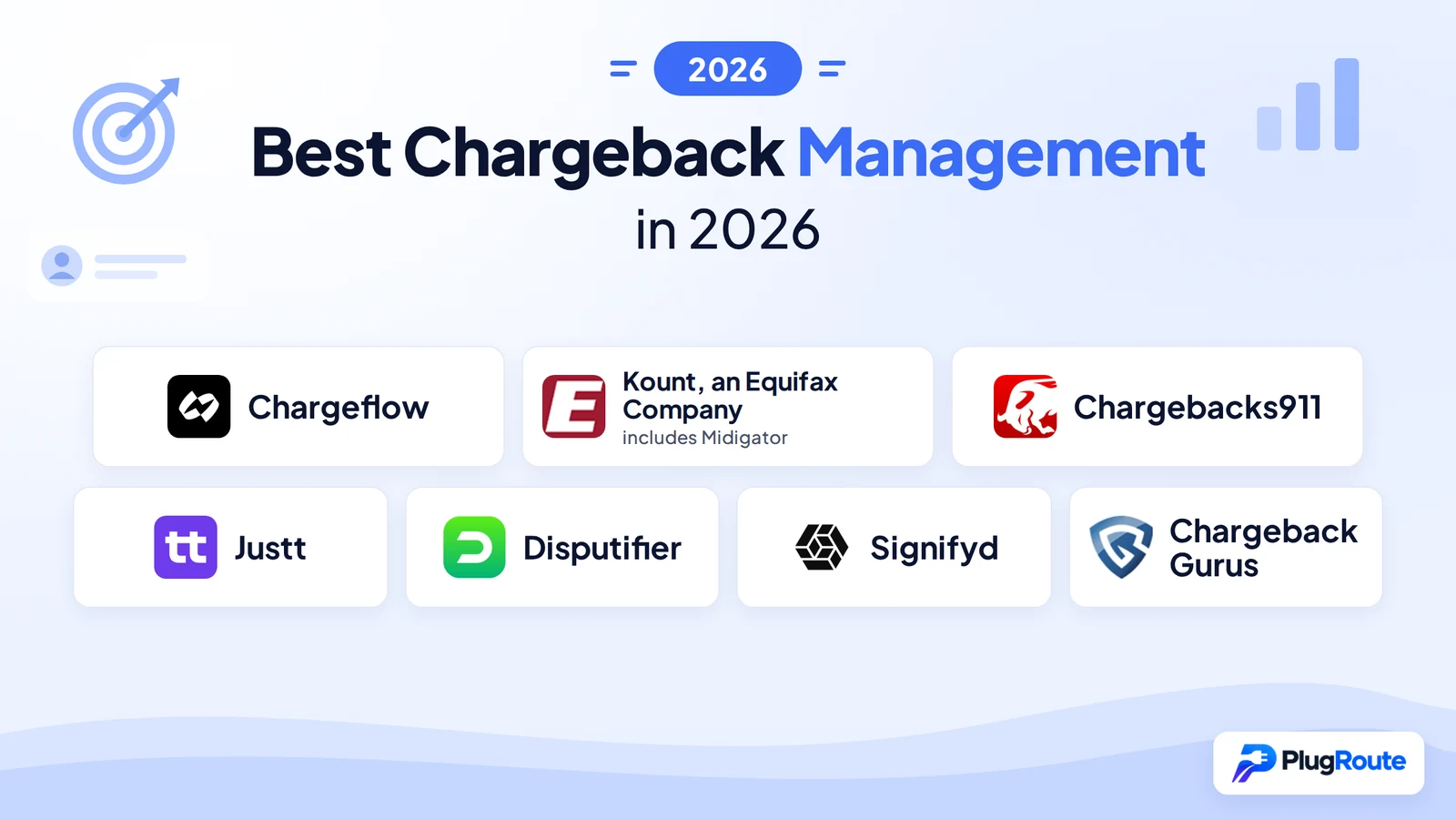
The best chargeback management tools in 2026 are Chargeflow for hands-off Shopify, Stripe and PayPal automation, Kount, an Equifax company, for combined fraud and dispute management, and Chargebacks911 for managed outsourcing. None of the seven vendors evaluated publishes an independently audited win rate, so choose by processor setup, dispute volume, and whether you need prevention, recovery or both.
Merchants lose revenue on chargebacks they never contest and on chargebacks they lose because the evidence was weak or late. A rising dispute ratio can also put a merchant into card network monitoring or put its merchant account at risk. This guide covers card payment chargebacks only. It does not cover IT or cloud cost chargeback.
As one user on r/ecommerce described:
“Last month alone, I had 12 chargebacks that ate into my profits big time. Some were clearly fraud (ordering expensive items to sketchy addresses), but others seemed like genuine customers who just forgot about their purchase or didn’t recognize the charge on their statement.” Posted by u/Patient_Cow2279
Takeaway: Online merchants usually face a mix of true fraud and friendly fraud, so a chargeback management tool has to handle both kinds of dispute.
PlugRoute has no affiliate relationships with any company listed, and rankings are determined entirely by research data and objective evaluation criteria.
Every entry below has an evidence-strength grade. PlugRoute re-checked every review-platform rating and pricing page in November 2026, so you can see how much independent proof supports each ranking.
What Are the 3 Categories of Chargeback Management Tools?
Chargeback management tools fall into three categories. Automation-First Software submits disputes automatically. A Managed Service assigns human analysts to work your cases. A Fraud + Dispute Platform screens fraud before payment and handles disputes after payment. The right category depends on your dispute volume, how much capacity you have in-house, and how much of your dispute problem is fraud.
The seven ranked vendors fit the three categories as follows:
- Automation-First Software: Chargeflow, Justt and Disputifier collect evidence and submit dispute responses with little merchant effort.
- Managed Service: Chargebacks911 and Chargeback Gurus assign human analysts to build cases and find the root causes of repeat disputes.
- Fraud + Dispute Platform: Kount, an Equifax company, and Signifyd stop fraudulent orders before payment and handle disputes after payment.
Verifi (RDR and CDRN) and Ethoca are card network alert programs, not full chargeback management vendors. Most of the ranked vendors resell or integrate Verifi and Ethoca alerts.
How Do the 7 Chargeback Management Tools Compare at a Glance?
Chargeflow ranks first at 35/45, followed by Kount, an Equifax company, at 33. Chargebacks911 and Justt tie at 27 and also tie on review evidence, so Chargebacks911 ranks higher on its primary-criteria subtotal. Disputifier (26), Signifyd (25) and Chargeback Gurus (18) make up the rest of the ranking.
| Rank | Company | Category | Best For | One-Line Summary | Key Capabilities | Primary Strength | Key Limitation |
|---|---|---|---|---|---|---|---|
| 1 (35/45, Strong evidence) | Chargeflow | Automation-First Software | Small and mid-size Shopify, Stripe and PayPal merchants | Chargeflow is the most widely reviewed automation-first chargeback tool in this evaluation, with transparent pay-on-success pricing. | Automated representment, RDR/Ethoca/CDRN alerts, fraud screening, free analytics | Largest independent review base (713 reviews) and fully published pricing | Uncapped 25% success fee; recurring complaints about evidence accuracy and support |
| 2 (33/45, Moderate-Strong evidence) | Kount, an Equifax company | Fraud + Dispute Platform | Mid-market and enterprise merchants with fraud-driven disputes | Kount is the only vendor documented across all five lifecycle capabilities PlugRoute scored, but quote-only pricing makes it a poor fit for small merchants. | Pre-payment screening, alerts, automated representment, Visa Compelling Evidence 3.0 support, analytics | One Equifax-backed data network for both fraud screening and disputes | No published pricing; reviewers report complex configuration |
| 3 (27/45, Limited-Moderate evidence) | Chargebacks911 | Managed Service | High-volume merchants outsourcing dispute operations | Chargebacks911 is one of the two longest-running vendors evaluated and the only full-lifecycle managed service of that age. | Analyst-led representment, alerts, patented root-cause detection | Analyst-led service with a vendor-claimed 944 integrations | Only 4 Capterra reviews (3.5/5) and “cloudy pricing” complaints |
| 4 (27/45, Moderate evidence) | Justt | Automation-First Software | Enterprise merchants with strict security needs | Justt is an enterprise AI chargeback platform that reports the strongest security certifications in this evaluation. | Custom argument per dispute, fight-or-accept prediction, alerts | Reports SOC 2 Type II, PCI DSS Level 1 and ISO 27001 | Unpublished fees; reviewers confirm only Stripe and Adyen out of 40+ listed processors |
| 5 (26/45, Limited-Moderate evidence) | Disputifier | Automation-First Software | Small Shopify merchants with high-value orders | Disputifier has the lowest published success-fee ceiling among the seven vendors evaluated and a 4.6/5 Shopify rating from 138 reviews. | Automated representment, alerts, fraud screening, delivery notifications | Only capped success fee among the seven vendors evaluated | No case studies, win rates or company information; only Shopify confirmed |
| 6 (25/45, Moderate evidence) | Signifyd | Fraud + Dispute Platform | Merchants whose chargebacks are mainly true fraud | Signifyd is the only evaluated vendor that reimburses covered fraud chargebacks on orders it approved. | Guaranteed fraud protection, Chargeback Recovery, abuse prevention | Moves fraud losses off the merchant | Percentage-of-sales pricing can cost more than the losses it covers |
| 7 (18/45, Minimal evidence) | Chargeback Gurus | Managed Service | Multi-processor merchants with no payments team | Chargeback Gurus is a consulting-heavy managed service with no verified independent review rating. | Analyst representment, prevention alerts, root-cause analytics, MAX AI | Human analysts plus consulting | Capterra listing shows 0 reviews; no G2 rating |
Which Chargeback Management Tool Should I Choose for My Use Case?
Match a tool to four factors: your processors, your dispute mix, how close you are to Visa’s VAMP threshold, and what you net after fees at your typical dispute value. Fraud-heavy merchants need screening. Merchants whose disputes are mostly friendly fraud need strong representment. Low-volume merchants may only need operational fixes.
| Your #1 Priority | Recommended Tool | Why | Acceptable Alternative |
|---|---|---|---|
| Small Shopify merchant, high-value orders | Disputifier | $250-per-win cap limits fees on recoveries above $1,250 | Chargeflow |
| Small or mid-size Shopify/Stripe/PayPal merchant wanting hands-off automation | Chargeflow | Most reviewed, published pricing, no long-term contract | Disputifier (Shopify only) |
| Stripe-only merchant with few disputes | Stripe Smart Disputes (unranked baseline) | Built in, no new vendor to onboard | Chargeflow |
| Mostly fraud chargebacks or near the VAMP threshold | Signifyd | Reimburses covered fraud chargebacks on approved orders | Kount, an Equifax company |
| Enterprise with strict security requirements | Justt (confirm processor support) | Reports SOC 2 Type II, PCI DSS Level 1 and ISO 27001 | Kount, an Equifax company |
| Analysts and root-cause outsourcing | Chargebacks911 | Managed full-lifecycle service since 2011 | Chargeback Gurus |
| Fewer than 10 disputes a month | Fix operations and use your processor’s built-in tool | Billing descriptors, delivery confirmation and 3D Secure may be enough | Chargeflow or Disputifier if volume grows |
| 10–100 disputes a month on Shopify or Stripe | Chargeflow | Pay-on-success automation with no contract | Disputifier |
| 100+ disputes a month or several processors | Kount, an Equifax company | Combined screening and dispute data at scale | Chargebacks911 or Justt (confirm integrations) |
What Are the Best Chargeback Management Tools in 2026?
PlugRoute’s 2026 scores are:
- Chargeflow: 35/45
- Kount, an Equifax company: 33
- Chargebacks911: 27
- Justt: 27
- Disputifier: 26
- Signifyd: 25
- Chargeback Gurus: 18
Each entry below uses the same structure and includes an evidence-strength grade. Every win rate and case study is vendor-reported unless it is labelled otherwise.
1. Chargeflow: Best Overall for Shopify, Stripe and PayPal Merchants Who Want Hands-Off Automation
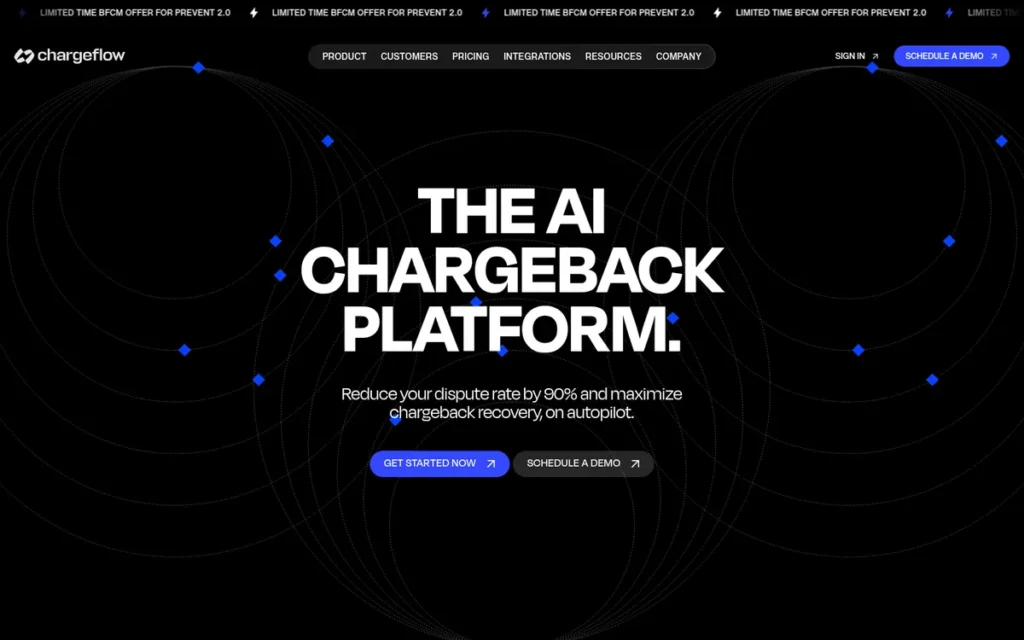
Category: Automation-First Software, tools that gather evidence and submit dispute responses automatically with minimal merchant effort.
At a Glance
- Category: Automation-First Software
- Best For: Small and mid-size Shopify, Stripe and PayPal merchants who want disputes handled with little day-to-day effort
- Price Range: 25% of recovered chargebacks (uncapped); $29 per prevented chargeback via alerts; $0.10 per fraud scan; Insights free
- Primary Strength: Chargeflow has the largest independent review base in this evaluation and publishes complete pricing with no long-term contract.
- Biggest Limitation: Chargeflow’s uncapped 25% success fee becomes expensive on high-value disputes, and some users report inaccurate automated evidence and declining results.
- One-Line Summary: Chargeflow is the most widely reviewed automation-first chargeback tool in this evaluation, with transparent pay-on-success pricing but an uncapped fee and mixed recent community sentiment.
- Last Verified: November 2026
Evidence Strength: Strong. Chargeflow has 713 combined G2 and Shopify App Store reviews, fully published pricing and a named case study. Chargeflow is also the only vendor here with product-specific Reddit discussion, and that discussion includes recurring complaints.
Overview Chargeflow is an automation-first chargeback platform for small and mid-size merchants on Shopify, Stripe, PayPal, Adyen or Braintree who want disputes handled without manual work. It combines automated representment, pre-dispute alerts and fraud screening.
Chargeflow says it serves more than 20,000 merchants, including Fanatics, Miro and Huel (Chargeflow, vendor-reported, November 2026). Chargeflow’s claimed 300% average win-rate increase is self-reported and has not been independently audited.
Key Features
- Chargeflow Automation gathers order, shipping and customer-communication evidence and submits dispute responses to the processor automatically.
- Chargeflow Alerts uses Visa RDR, Ethoca and Verifi CDRN to resolve eligible disputes before they become formal chargebacks.
- Chargeflow Prevent 2.0 screens transactions for fraud at $0.10 per scan, with no minimum or setup fee (Chargeflow, November 2026).
- Chargeflow Insights is a free analytics dashboard for tracking dispute trends and reasons.
- Chargeflow’s integration documentation lists Shopify, Stripe, PayPal, Adyen and Braintree.
Best For Chargeflow is best for small and mid-size Shopify, Stripe or PayPal merchants with low-to-moderate order values who want pay-on-success automation with no contract. Merchants with high-value disputes should compare Chargeflow’s uncapped fee with Disputifier’s $250-per-win cap.
Strengths
- Chargeflow holds a 4.7/5 G2 rating from 277 reviews and a 4.5/5 Shopify App Store rating from 436 reviews, the largest independent review base in this evaluation (G2 and Shopify App Store, November 2026).
- Chargeflow reports that Fanatics Live recovered more than $800,000 in its first year and saved more than 25 hours of manual work a week (Chargeflow case study, vendor-reported, November 2026).
- Chargeflow publishes full pricing for all four of its products with no long-term contract. Among the seven vendors, only Disputifier also does this (Chargeflow, November 2026).
- Chargeflow raised a $35M Series A in November 2025, led by Viola Growth, bringing total capital to $49M (Chargeflow, 2025).
Users on r/ecommerce shared their experience:
“tried Chargeflow myself on a shopify store once because it connects straight into the platform and automates the fighting side, and it saved a bunch of time by pulling together all the evidence for each dispute, definitely worth a peek if you’re open to software handling more for you.” Posted by u/Accomplished-Wall375
Takeaway: Chargeflow’s main appeal for Shopify merchants is the time it saves by gathering dispute evidence automatically, which supports its hands-off positioning.
Limitations Chargeflow gives up control in exchange for convenience. Because submission is fully automated, evidence can reach the bank before the merchant has reviewed it. One G2 reviewer reports AI-generated evidence with a wrong shipping address, an invented shipping fee and a shipping policy that does not exist (G2, November 2026).
- Chargeflow’s 25% success fee has no cap. A $10,000 recovery costs $2,500, compared with $250 under Disputifier’s cap (Chargeflow and Disputifier, November 2026).
- Chargeflow users on r/stripe reported declining win rates, alert emails that did not match real disputes, and silent support (Reddit r/stripe, June 2025). Suspected astroturfing appears on both sides of those threads.
- Chargeflow holds SOC 2 Type II but no PCI DSS attestation, and Chargeflow’s own pages give two different founding years, 2020 and 2021 (Chargeflow, November 2026).
Verdict Chargeflow is the best-documented automation-first chargeback tool for Shopify and Stripe merchants in 2026. It ranks #1 on review volume, pricing transparency and lifecycle coverage, not on verified win rates.
Chargeflow stays at #1 even after PlugRoute deducted one review-evidence point for recurring complaints. Merchants with high-value disputes should model the uncapped 25% fee, and every buyer should ask whether Chargeflow lets them review evidence before it is submitted.
2. Kount, an Equifax Company (includes Midigator): Best Combined Fraud and Dispute Platform
Category: Fraud + Dispute Platform, tools that prevent fraudulent orders before payment and manage disputes after payment in one system.
At a Glance
- Category: Fraud + Dispute Platform
- Best For: Mid-market and enterprise merchants managing both fraud losses and chargeback volume, especially those near card network thresholds
- Price Range: Pricing on request (custom quote based on transaction volume)
- Primary Strength: Kount combines pre-payment fraud screening and post-payment dispute management on one Equifax-backed data network.
- Biggest Limitation: Kount publishes no pricing, and reviewers report complex configuration and sharp cost increases.
- One-Line Summary: Kount, an Equifax company, is the only vendor in this evaluation documented across all five lifecycle capabilities PlugRoute scored, but its quote-only pricing and configuration complexity make it a poor fit for small merchants.
- Last Verified: November 2026
Evidence Strength: Moderate-Strong. Kount has 209 combined G2 and Capterra reviews and Equifax ownership. Most of those reviews cover Kount’s fraud product rather than the Midigator dispute tools. Kount publishes no pricing, and PlugRoute found no significant Reddit discussion of Kount or Midigator.
Overview Kount, an Equifax company, is a fraud prevention and dispute management platform for mid-market and enterprise merchants facing both fraud and chargeback risk. Kount screens orders before payment, then automates dispute responses, alerts and analytics after payment.
Kount absorbed Midigator after Equifax announced the Midigator acquisition in July 2022, and Equifax is retiring the Midigator brand into Kount (Equifax, 2022). Kount’s dispute tools and Midigator are the same product.
Key Features
- Kount Command screens transactions before payment using Kount’s Identity Trust Global Network, which Equifax says covers 32 billion digital interactions a year (Equifax, 2022).
- Kount’s dispute tools, inherited from Midigator, automate representment responses and support Visa Compelling Evidence 3.0 (Merchant Advisory Group, November 2026).
- Kount integrates Ethoca, Verifi CDRN, Visa RDR and Visa Order Insight alerts to stop disputes before they are filed.
- Kount routes each dispute to the lowest-cost resolution path and reports on dispute causes through its analytics dashboard.
- Kount offers consulting and managed services for merchants that do not want to run the platform themselves.
Best For Kount, an Equifax company, is best for mid-market and enterprise merchants whose chargebacks are largely fraud-driven. Kount suits teams that have the in-house resources to configure custom rules.
Strengths
- Kount holds a 4.8/5 G2 rating from 116 reviews and a 4.6/5 Capterra rating from 93 reviews, the second-largest independent review base in this evaluation (G2 and Capterra, November 2026).
- Kount’s G2 reviewers self-report chargeback reductions of 68–93%. These figures come from users rather than vendor marketing (G2, November 2026).
- Kount’s dispute tools come from Midigator, which reported preventing more than 2.7 million chargebacks before its acquisition and won TrustRadius top-rated awards (Equifax, 2023, vendor-reported).
- Kount has Equifax as its parent company, the strongest corporate backing of any vendor evaluated (Equifax, 2022).
Limitations Kount offers depth at the cost of transparency and simplicity. Kount publishes no pricing, and one G2 reviewer reports a monthly bill rising from $400 to $4,000 (G2, November 2026).
- Kount’s G2 reviewers describe complex configuration, difficult integration outside its recommended processors, and legitimate borderline orders being flagged for manual review (G2, November 2026).
- Kount’s Midigator reviewers cite long onboarding. They also say prevention notices look so similar to chargeback notices that teams confuse them (Capterra, Midigator listing, November 2026).
- Kount’s headline averages of a 117% higher win rate and 914% ROI come from Equifax with no published methodology (Merchant Advisory Group, November 2026).
Verdict Kount, an Equifax company, is the only vendor in this evaluation documented across all five lifecycle capabilities PlugRoute scored, including Visa Compelling Evidence 3.0 support. Kount’s quote-only pricing and complex configuration rule it out for most small stores.
Merchants whose chargebacks are mostly fraud, or who are near Visa’s VAMP threshold, gain the most from Kount’s shared screening and dispute data. Buyers should get Kount’s alert, per-dispute and minimum fees in writing.
3. Chargebacks911: Best Managed Service for Full-Lifecycle Outsourcing and Root-Cause Analysis
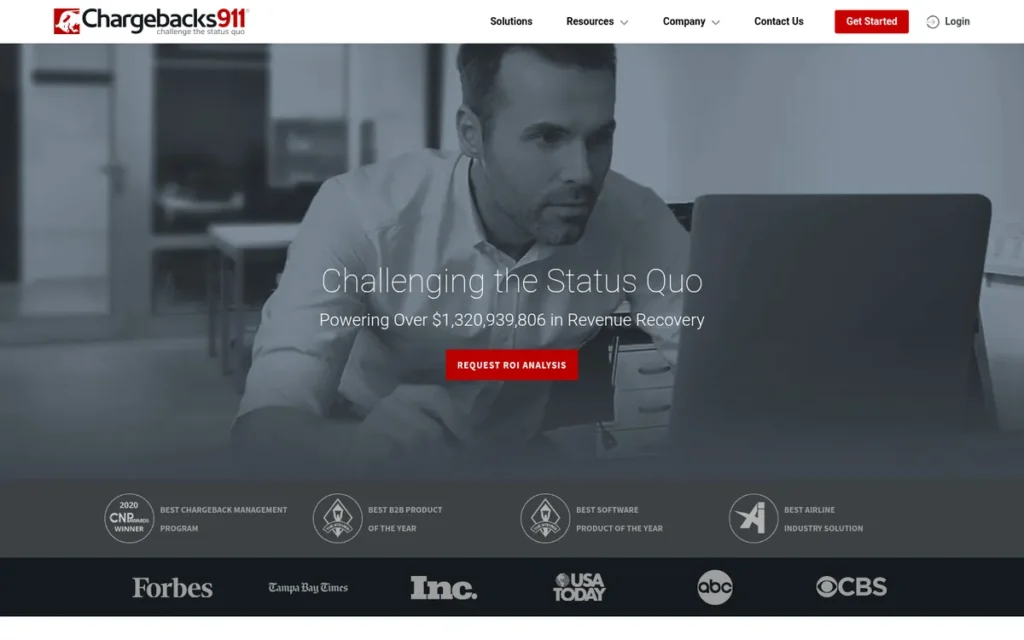
Category: Managed Service, providers whose human analysts work disputes and diagnose root causes on the merchant’s behalf.
At a Glance
- Category: Managed Service
- Best For: Mid-market and high-volume merchants that want to outsource dispute operations and root-cause analysis
- Price Range: From $8 per prevented dispute and $5 per fought dispute, or a percentage of recovery; mostly custom pricing
- Primary Strength: Chargebacks911 combines analyst-led representment, pre-dispute alerts and patented root-cause detection across a vendor-claimed 944 integrations.
- Biggest Limitation: Chargebacks911 has a small independent review base of 25 reviews across G2 and Capterra, and reviewers complain about unclear pricing.
- One-Line Summary: Chargebacks911, founded in 2011, is one of the two longest-running vendors evaluated and the only full-lifecycle managed service of that age, but a small review base and “cloudy pricing” complaints leave its performance claims largely unverified.
- Last Verified: November 2026
Evidence Strength: Limited-Moderate. Chargebacks911 has 21 G2 reviews and 4 Capterra reviews, publishes only starting prices and has no named case studies. Chargebacks911 has one passing user mention on Reddit.
Overview Chargebacks911 is a full-lifecycle managed chargeback service, founded in 2011, for mid-market and high-volume merchants that want to outsource dispute operations. Chargebacks911 combines human-analyst representment, pre-dispute alerts and root-cause analysis of why disputes happen.
Chargebacks911 is also a widely cited category educator through its annual Chargeback Field Report. Founder and CEO Monica Eaton started Chargebacks911 in Tampa, Florida (Chargebacks911, November 2026).
Key Features
- Chargebacks911 assigns human analysts to build and submit representment cases.
- Chargebacks911’s patented Intelligent Source Detection aims to find the operational root causes of repeat disputes.
- Chargebacks911 integrates Ethoca, Verifi CDRN, Visa Order Insight, Visa RDR and its own alert network for pre-dispute prevention.
- Chargebacks911 offers Fortia for prevention and recovery, DisputeLab for do-it-yourself merchants, and ChargebackStop.
- Chargebacks911 offers a free assessment of chargeback risk and Visa monitoring-program exposure.
Best For Chargebacks911 is best for high-volume merchants that want analysts, not just software, to manage disputes. Chargebacks911 also suits merchants whose processor offers it through a partnership with special pricing, as one r/shopify merchant described (Reddit r/shopify, November 2026).
Strengths
- Chargebacks911 holds a 4.4/5 G2 rating from 21 reviews, and reviewers consistently praise its customer service and dispute expertise (G2, November 2026).
- Chargebacks911’s 2023 Chargeback Field Report surveyed more than 300 retailers and was featured by the Merchant Risk Council. It found that merchants estimate about 44% of chargebacks are friendly fraud (Chargebacks911 Chargeback Field Report via BusinessWire, 2023).
- Chargebacks911 has operated since 2011, making it one of the two longest-running vendors evaluated, alongside Signifyd (Chargebacks911, November 2026).
- Chargebacks911 offers a price-beat guarantee for merchants switching providers and a contractual ROI guarantee (Chargebacks911, November 2026).
Limitations Chargebacks911 offers hands-on expertise but limited transparency. Chargebacks911’s 3.5/5 Capterra rating comes from only 4 reviews, and one of those alleges overcharging and a refused refund (Capterra, November 2026).
- Chargebacks911’s G2 reviewers criticize “cloudy pricing,” unexpectedly high charges, complex setup and recurring issues (G2, November 2026).
- Chargebacks911’s 73% average win rate and its figure of 18,000+ companies are self-reported, with no methodology and no named case studies (Chargebacks911, vendor-reported, November 2026).
- Chargebacks911 does not publish contract length or cancellation terms. A Reddit-cited complaint about a two-year agreement is unverified because PlugRoute could not fetch the thread.
Verdict Chargebacks911 is the older of the two managed chargeback services in this evaluation and suits merchants that want analysts and root-cause diagnosis rather than self-serve software. Chargebacks911 ties Justt on score and ranks #3 on the primary-criteria tiebreak.
Because independent reviews are thin, buyers should confirm Chargebacks911’s pricing, term length and cancellation conditions in writing. Merchants offered Chargebacks911 through their processor should compare that partner price with the published starting rates.
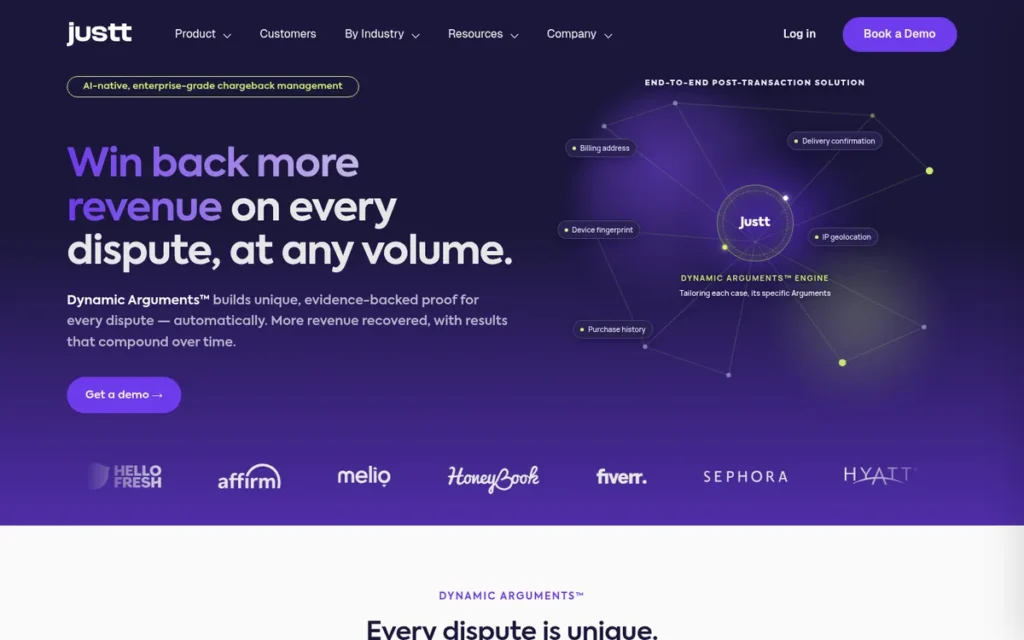
4. Justt: Best for Enterprises Wanting AI-Customized Representment
Category: Automation-First Software.
At a Glance
- Category: Automation-First Software
- Best For: Enterprise and high-volume merchants, especially in digital goods and SaaS, that want AI-customized representment and strict security compliance
- Price Range: Pricing on request (pay-on-success model; percentage not published)
- Primary Strength: Justt writes a custom argument for every dispute and predicts which disputes are worth fighting after fees.
- Biggest Limitation: Justt publishes no fee percentage, and reviewers have not yet confirmed most of its 40+ listed processor integrations.
- One-Line Summary: Justt is an enterprise-focused AI chargeback platform that reports the strongest security certifications in this evaluation, but small review samples and unpublished pricing make its claims harder to verify.
- Last Verified: November 2026
Evidence Strength: Moderate. Justt has 18 combined G2 and Capterra reviews, a named case study and self-reported certifications. Justt’s pricing is unpublished, and PlugRoute found no significant Reddit discussion of Justt.
Overview Justt is an AI-driven chargeback platform for enterprise and high-volume merchants that need strong security certifications. Justt writes a custom argument for each dispute from more than 500 data points and predicts whether each dispute is worth fighting after fees.
Justt’s named customers include Hostinger, Lime, Wish, Revolut and Playtika (Justt, November 2026). Justt was founded in 2020 (Capterra, November 2026).
Key Features
- Justt Dynamic Arguments writes a tailored representment argument for each dispute from more than 500 data points instead of fixed templates.
- Justt predicts whether each dispute is worth fighting once fees are counted, so merchants can skip low-value cases.
- Justt supports Ethoca and Verifi alerts, Visa Order Insight and Consumer Clarity for resolving disputes before they are filed.
- Justt flags repeat disputers across its merchant network.
- Justt uses NVIDIA Nemotron Parse to read documents and reports 25% fewer extraction errors (Justt, November 2026).
Best For Justt is best for enterprise and high-volume merchants that need custom evidence for each dispute and must meet strict security requirements. Justt is less suitable for small merchants, who may find its enterprise focus uneconomic.
Strengths
- Justt reports SOC 2 Type II, PCI DSS Level 1 and ISO 27001 certifications, the strongest reported security set among the vendors evaluated (Justt, November 2026).
- Justt’s Hostinger case study reports a tripled chargeback win rate within weeks and up to one workday a week saved (Justt case study, vendor-reported, November 2026).
- Justt holds a 4.5/5 G2 rating from 11 reviews and a 4.3/5 Capterra rating from 7 reviews, with praise for easy integration and quick setup (G2 and Capterra, November 2026).
- Justt won Silver for AI & Automation in Payments at the 2026 Money Awards (Justt, 2026).
Limitations Justt offers enterprise customization but not pricing transparency. Justt publishes no success-fee percentage, minimums or contract terms, so merchants cannot calculate net recovery before a sales call (Justt, November 2026).
- Justt’s integrations page lists more than 40 processors, including PayPal, Braintree, Checkout.com and Worldpay, but PlugRoute found reviewer confirmation only for Stripe and Adyen (Justt, November 2026).
- Justt’s review samples are small, with 11 reviews on G2 and 7 on Capterra (G2 and Capterra, November 2026).
- One Justt G2 reviewer reports duplicated refund values in evidence Justt submitted (G2, November 2026).
Verdict Justt reports the strongest security certifications of any chargeback platform in this evaluation, which makes it the best fit here for enterprise merchants with strict compliance needs. Justt also documents a per-dispute fight-or-accept prediction, a feature related to Kount’s lowest-cost dispute routing.
Multi-processor buyers should confirm that Justt supports every gateway they use, because reviewer confirmation covers only Stripe and Adyen. Small merchants will usually find better-documented options with published pricing.
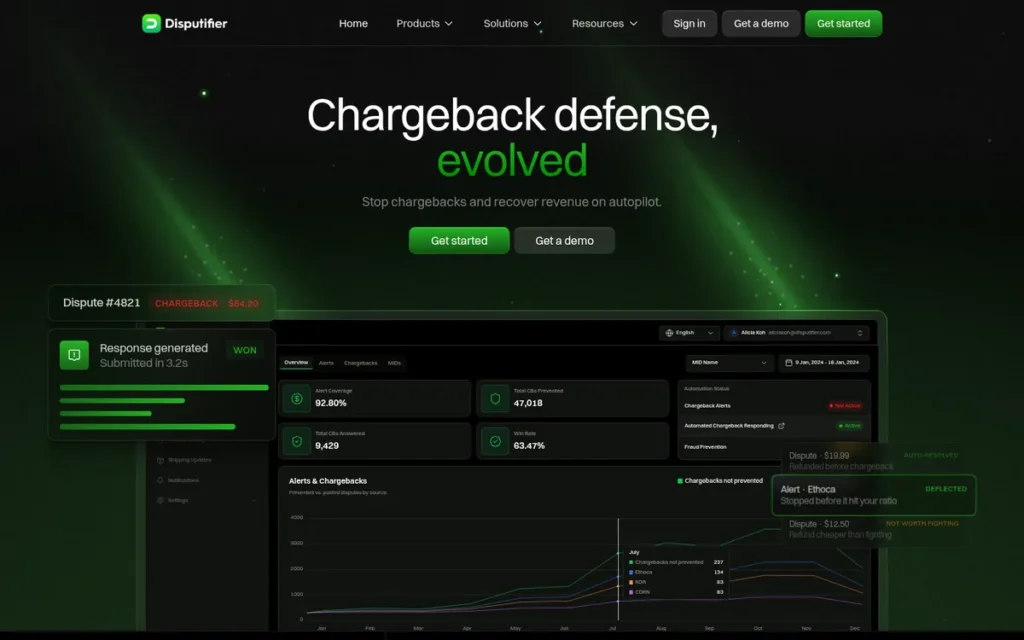
5. Disputifier: Best for Small Shopify Merchants With High-Value Orders Who Want a Capped Success Fee
Category: Automation-First Software.
At a Glance
- Category: Automation-First Software
- Best For: Small Shopify merchants with high average order values who want capped, pay-on-success pricing
- Price Range: 20% of recovered revenue, capped at $250 per win; $0 monthly; alerts $17–$27.50 each
- Primary Strength: Disputifier’s $250-per-win fee cap makes it the cheapest published option among the seven vendors evaluated for recoveries above $1,250.
- Biggest Limitation: Disputifier publishes no case studies, win rates or company information, and only its Shopify integration is confirmed.
- One-Line Summary: Disputifier has the lowest published success-fee ceiling among the seven vendors evaluated (20% capped at $250 per win) and a 4.6/5 Shopify rating from 138 reviews, but no published outcome data.
- Last Verified: November 2026
Evidence Strength: Limited-Moderate. Disputifier has 140 combined Shopify App Store and G2 reviews and fully published pricing. Disputifier has no named case studies or public company information, and PlugRoute found no significant Reddit discussion of Disputifier.
Overview Disputifier is a Shopify-focused chargeback automation app for small Shopify merchants who want pay-on-success pricing with no monthly fee or lock-in. Disputifier fights disputes for 20% of recovered revenue, capped at $250 per win, and adds alerts and fraud screening.
Disputifier appears to have launched around 2023 and does not disclose its founders or funding (Rankite, October 2026). Disputifier reportedly fights more than 1 million chargebacks a year, a vendor claim repeated by Rankite (Rankite, October 2026).
Key Features
- Disputifier automatically builds and submits dispute responses for Shopify merchants.
- Disputifier integrates Ethoca, Verifi CDRN and Visa RDR alerts, with automatic refunds for eligible disputes.
- Disputifier screens orders for fraud at about $0.05 per order, according to a third-party review (Self Made Newbie, November 2026).
- Disputifier sends shipping notifications to reduce item-not-received disputes.
- Disputifier is free to install and offers a 7-day trial.
Best For Disputifier is best for small Shopify merchants with high average order values, where the $250 cap saves more than an uncapped percentage fee. Disputifier is less suitable for Stripe, PayPal or WooCommerce merchants, because those integrations are not confirmed.
Strengths
- Disputifier holds a 4.6/5 Shopify App Store rating from 138 reviews and a 5.0/5 G2 rating from 2 reviews, the third-largest independent review base in this evaluation (Shopify App Store and G2, November 2026).
- Disputifier caps its 20% success fee at $250 per win, the only capped percentage model among the seven vendors evaluated (Disputifier, November 2026).
- Disputifier charges no monthly fee and requires no minimum or long-term contract (Disputifier, November 2026).
- Disputifier’s Shopify App Store reviewers praise its ease of use and helpful support (Shopify App Store, November 2026).
Limitations Disputifier keeps costs low but documents little beyond its reviews. Disputifier publishes no named case studies or win-rate figures, and its founders, funding and certifications are not public, so its Shopify rating is the only independent performance signal.
- Disputifier has a confirmed Shopify integration only. Stripe, PayPal and WooCommerce support could not be verified (Shopify App Store, November 2026).
- Disputifier’s alerts cost $17–$27.50 each on top of the full refund, so a $50 order resolved by alert costs up to $77.50 (Disputifier, November 2026).
- Disputifier’s alert pricing differs between its own pricing pages, and one page shows a conflicting $5 tier (Disputifier, November 2026).
Verdict Disputifier has the lowest published success-fee ceiling among the seven vendors evaluated, backed by a 4.6/5 rating from 138 Shopify reviews. Disputifier ranks #5 because it lacks outcome data, company disclosures and confirmed multi-processor support.
Small Shopify merchants with high-value orders can reasonably trial Disputifier, because the cap and the lack of lock-in limit their downside. Merchants that need documented results or several processors should look elsewhere.
6. Signifyd: Best for Fraud-Driven Chargebacks and Shifting Fraud Liability Off the Merchant
Category: Fraud + Dispute Platform.
At a Glance
- Category: Fraud + Dispute Platform
- Best For: Ecommerce merchants whose chargebacks are mainly true fraud and who want guaranteed reimbursement instead of fighting each case
- Price Range: Pricing on request (typically a percentage of sales or a per-order fee); Capterra lists a starting price of $1,000/year
- Primary Strength: Signifyd covers fraud chargeback losses itself through a guarantee on the orders it approves.
- Biggest Limitation: Signifyd’s percentage-of-sales pricing can cost more than absorbing losses for merchants with low fraud rates.
- One-Line Summary: Signifyd is the only vendor in this evaluation that guarantees reimbursement of covered fraud chargebacks, a strong fit for fraud-heavy merchants but an expensive one for merchants whose disputes are mostly friendly fraud.
- Last Verified: November 2026
Evidence Strength: Moderate. Signifyd has the most named case studies of any vendor here and a verified 4.4/5 Shopify App Store rating from 92 reviews. PlugRoute could not confirm G2, Capterra or Trustpilot ratings and found no significant Reddit discussion of Signifyd.
Overview Signifyd is a fraud protection platform for ecommerce merchants whose disputes are mainly true fraud. Signifyd approves or declines each order and reimburses covered fraud chargebacks on approved orders, with a separate Chargeback Recovery product for non-fraud disputes.
Signifyd takes on fraud risk itself instead of fighting each case. That guarantee model makes Signifyd a different purchase from the representment tools in this list, and PlugRoute’s lifecycle criterion does not credit the model directly.
Key Features
- Signifyd Guaranteed Fraud Protection approves or declines each order and reimburses 100% of covered fraud chargebacks on approved orders.
- Signifyd Chargeback Recovery fights non-fraud disputes as a separate product.
- Signifyd Abuse Prevention covers item-not-received claims, return abuse, “not as described” claims, promotion abuse, unauthorized resellers and account takeover.
- Signifyd Decision Center gives merchant teams a workspace for reviewing orders and policies.
- Signifyd integrates with Shopify, Adobe Commerce/Magento, Salesforce Commerce Cloud and BigCommerce.
Best For Signifyd is best for ecommerce merchants hit by true third-party fraud who would rather pay a predictable fee than fight fraud disputes one by one. Signifyd is less suitable for merchants whose disputes are mostly friendly fraud or fulfillment problems.
Strengths
- Signifyd’s case studies report BHFO cutting chargebacks by 69% and Cuts Clothing reaching 122% ROI within six months, the most named customer outcomes in this evaluation (Signifyd, vendor-reported, November 2026).
- Signifyd reports that Rainbow Shops reached a 51% dispute win rate at a 99.5% order approval rate (Signifyd, vendor-reported, November 2026).
- Signifyd holds a 4.4/5 Shopify App Store rating from 92 reviews, with reviewers praising higher approval rates and less manual review (Shopify App Store, November 2026).
- Signifyd was founded in 2011 by PayPal veterans and announced a $205M investment in 2021 (Signifyd, 2021).
Limitations Signifyd’s predictability comes at a premium. Signifyd’s percentage-of-sales pricing applies to every order, so merchants with already-low fraud rates may pay more than they would lose by absorbing chargebacks (Signifyd, November 2026).
- Signifyd’s guarantee covers only fraud on approved orders. Friendly fraud and fulfillment disputes need Chargeback Recovery, whose success fee is not published.
- Signifyd has 15 one-star reviews among its 92 Shopify App Store reviews (Shopify App Store, November 2026).
- Signifyd buyers should ask how often legitimate orders are declined and how often guarantee claims are refused because of exclusions or timing.
Users on r/ecommerce noted:
“We gave in and got Sygnified. It’s expensive, but it’s worked wonders for us. There are likely cheaper ones out there now.” Posted by u/deaddiquette
Takeaway: Merchants who use Signifyd credit it with strong fraud results but still describe it as a premium-priced option with cheaper alternatives available.
Verdict Signifyd is the strongest choice in this evaluation for merchants whose chargebacks are mainly true fraud, because Signifyd is the only vendor that reimburses covered fraud losses outright. Signifyd ranks #6 because PlugRoute’s scoring rewards lifecycle breadth and published pricing, and Signifyd documents less of both.
Before committing, merchants should check whether Signifyd’s percentage-of-sales fee exceeds their actual fraud losses. Merchants whose disputes are mostly friendly fraud will get more value from representment-focused tools.
7. Chargeback Gurus: Best for Consulting-Led Disputes Without an In-House Payments Team
Category: Managed Service.
At a Glance
- Category: Managed Service
- Best For: Merchants with complex dispute data across several processors and no in-house payments team
- Price Range: Pricing on request (third parties report 20–35% of recovered funds)
- Primary Strength: Chargeback Gurus pairs human analysts and consulting with AI for prevention, representment and root-cause analysis.
- Biggest Limitation: Chargeback Gurus has no verified rating on any major review platform, so its performance claims cannot be independently checked.
- One-Line Summary: Chargeback Gurus is a consulting-heavy managed chargeback service with broad capabilities but no verified independent review rating, which makes it the hardest vendor in this evaluation to assess objectively.
- Last Verified: November 2026
Evidence Strength: Minimal. Chargeback Gurus’ Capterra listing shows 0 reviews, and PlugRoute found no G2 rating (Capterra and G2, November 2026). Chargeback Gurus has anonymous testimonials only, no public rate card and no significant Reddit discussion.
Overview Chargeback Gurus is a consulting-heavy managed chargeback service, founded in 2014 and based in Plano, Texas, for merchants with complex multi-processor data and no payments team. Chargeback Gurus pairs human analysts with its MAX AI platform for representment, alerts and root-cause analytics.
Chargeback Gurus describes its approach as “prevent what you can and fight what you can’t.” Chargeback Gurus’ founders started the company after chargeback problems at their own call-centre business, and its current CEO is Tim Tynan (Chargeback Gurus leadership page, November 2026).
Key Features
- Chargeback Gurus Smart Chargeback Representment uses human analysts to build and submit dispute responses.
- Chargeback Gurus Enhanced Smart Prevention Alerts aims to resolve disputes before they become chargebacks.
- Chargeback Gurus Chargeback Analyzer provides root-cause analytics on why disputes occur.
- Chargeback Gurus MAX is an AI-driven platform that supports the analysts’ work.
- Chargeback Gurus offers consulting for merchants that lack in-house payments expertise.
Best For Chargeback Gurus is best for merchants with dispute data spread across several processors who want consulting alongside dispute handling. Chargeback Gurus suits buyers who are willing to check performance through references rather than public reviews.
Strengths
- Chargeback Gurus reported recovering about 70% of clients’ chargebacks and more than $2B in total (Dallas Innovates, 2023, vendor-reported).
- Chargeback Gurus has operated since 2014, and CB Insights lists it among established competitors in the category (CB Insights, November 2026).
- Chargeback Gurus covers prevention alerts, representment and root-cause analytics, which suits merchants that need both prevention and recovery (Chargeback Gurus, November 2026).
- Chargeback Gurus testimonials praise responsiveness, reporting and industry understanding, though the testimonials are self-selected and anonymous (Chargeback Gurus, November 2026).
Limitations Chargeback Gurus offers a high-touch service that is hard to verify. Chargeback Gurus has no verified rating on G2, Capterra, Trustpilot, Clutch or BBB, and its Capterra listing shows 0 reviews (Capterra, November 2026).
- Chargeback Gurus testimonials are anonymous, such as an unnamed “leading car-rental company,” so buyers cannot check results with named clients.
- Chargeback Gurus publishes no rate card. Its FAQ says there are no long-term contracts, which conflicts with third-party reports of annual contracts (aissist.io, November 2026).
- Chargeback Gurus claims PCI DSS Level 1 certification and Inc. 5000 recognition, but PlugRoute could not confirm either from primary sources.
Verdict Chargeback Gurus is the least independently verifiable vendor in this evaluation: it offers broad, consulting-led chargeback management but has no confirmed review-platform rating. Chargeback Gurus ranks #7 because it lacks independent reviews, published pricing and documented integrations.
Merchants considering Chargeback Gurus should ask for named client references, written contract terms and proof of PCI certification. Merchants that want documented independent evidence should shortlist Chargebacks911 first among managed services.
Do I Need Chargeback Prevention, Recovery, or Both?
Most merchants with meaningful dispute volume need both. Prevention tools stop disputes before they count against your dispute ratio, and recovery tools win back revenue on disputes that are filed anyway. Merchants close to card network thresholds should put prevention first, because winning a dispute does not remove it from the ratio.
Prevention and recovery use different tools:
- Fraud screening blocks risky orders before payment. Kount, an Equifax company, Signifyd, Chargeflow Prevent 2.0 and Disputifier all offer it.
- 3D Secure authentication can shift liability for authenticated fraud transactions to the card issuer, which complements vendor fraud screening.
- Pre-dispute alerts from Ethoca, Verifi CDRN, Visa RDR and Visa Order Insight resolve a dispute before it becomes a chargeback, usually through a refund.
- Representment fights a filed chargeback with evidence. All seven ranked vendors offer representment in some form.
- Root-cause analytics finds the reasons for repeat disputes. Chargebacks911, Chargeback Gurus, Kount and Chargeflow Insights document it.
Visa RDR auto-refunds remove the option to fight the dispute. Visa Compelling Evidence 3.0 rewards structured evidence gathered automatically, such as a cardholder’s past undisputed purchases. Kount, an Equifax company, documents support for Visa Compelling Evidence 3.0.
Estimates of friendly fraud (also called first-party misuse) vary by source:
- Merchants estimate about 44% of chargebacks are friendly fraud, according to a vendor-sponsored survey (Chargebacks911 Chargeback Field Report via BusinessWire, 2023).
- Juniper Research forecasts friendly fraud will make up 28% of global chargebacks by 2031 (Juniper Research, 2026).
- Merchants classify about 45% of their chargebacks as fraudulent (Mastercard and Datos Insights, 2025).
“You can be 100% right and still lose… We moved to filtering risky transactions before they ever became subscriptions.” (u/Longjumping-Wolf-422 (Reddit r/SaaS, November 2026))
Takeaway: Some merchants find that preventing disputes before they are filed protects revenue more reliably than winning them afterward.
How Do Visa and Mastercard Dispute Thresholds Affect My Choice?
Card network thresholds favor prevention over recovery. Visa’s VAMP ratio counts every fraud report and every filed dispute, whether won or lost. Since April 1, 2026, the excessive threshold in the US, Canada, Europe and Asia Pacific has been 1.5% (Visa VAMP Fact Sheet, 2025). Merchants near that line need alerts and fraud screening, not just representment.
The main threshold facts are:
- Visa VAMP’s excessive merchant threshold has been 1.5% since April 1, 2026 in the US, Canada, Europe and Asia Pacific. It was 2.2% during 2025. It applies to merchants with at least 1,500 combined monthly fraud reports and disputes (Visa VAMP Fact Sheet, 2025).
- Visa VAMP counts TC40 fraud reports and TC15 disputes. Disputes resolved through Visa RDR before filing are excluded from the ratio (Visa VAMP Fact Sheet, 2025).
- Many acquirers contact merchants before Visa’s threshold is reached, often at around a 0.9% VAMP ratio (Payments and Risk, November 2026).
- Visa VAMP thresholds differ in other regions. Latin America and the Caribbean used 1.5% from the start, so merchants should confirm their threshold with their acquirer.
- Mastercard runs separate excessive-chargeback and excessive-fraud merchant programs, and merchants should confirm the current Mastercard thresholds with their acquirer.
Consider a merchant with 100,000 Visa transactions and 1,600 combined fraud reports and disputes in a month, a 1.6% VAMP ratio. Winning all 1,600 disputes leaves the ratio at 1.6%. Resolving 200 of them through alerts before they are filed brings it to 1.4%, under the threshold.
Winning a chargeback recovers revenue but does not lower your Visa VAMP ratio. Only stopping a dispute before it is filed does that. Mastercard forecasts global chargeback volume will rise 24%, from 261 million in 2025 to 324 million in 2028 (Mastercard and Datos Insights, 2025).
How Much Does Chargeback Management Really Cost?
Chargeback management usually costs a success fee of about 20–35% of recovered revenue, a per-alert fee of $17–$29 where published, or a custom quote. Only Chargeflow and Disputifier publish full pricing, and fee caps matter more as order value rises. Merchants commonly spend $100K–$500K a year on chargeback technology (Mastercard and Datos Insights, 2025).
| Vendor | Fee Model | Fee Cap | Alert Fee | Base or Subscription Fee | Pricing Published? | Contract Terms |
|---|---|---|---|---|---|---|
| Chargeflow | 25% of recovered | None | $29 per prevented chargeback | None listed | Yes | No long-term contract (one reviewer reports a $52 cancellation fee) |
| Kount, an Equifax company | Custom quote | Not published | Not published | Not published | No | Not published |
| Chargebacks911 | From $5 per fought dispute, or % of recovery | Not published | From $8 per prevented dispute | $200 basic plan listed on G2 (period not published) | Starting prices only | Not published |
| Justt | Pay-on-success, % unpublished | Not published | Not published | Not published | No | Not published |
| Disputifier | 20% of recovered | $250 per win | $17–$27.50 (conflicting $5 tier) | $0 monthly | Yes | No lock-in |
| Signifyd | % of sales or per-order fee | Not applicable | Not published | From $1,000/year listed on Capterra | No | Not published |
| Chargeback Gurus | ~20–35% of recovered (third-party) | Not published | Not published | Not published | No | Conflicting reports |
These worked examples use only published or third-party-reported rates. They include Stripe’s built-in tool as an unranked baseline:
| Recovered Dispute | Chargeflow (25%, uncapped) | Disputifier (20%, $250 cap) | Chargeback Gurus (20–35%, third-party reported) | Stripe Smart Disputes (30% + $15 dispute fee) |
|---|---|---|---|---|
| $100 | $25 fee | $20 fee | $20–$35 fee | $45 |
| $2,000 | $500 fee | $250 fee | $400–$700 fee | $615 |
| $10,000 | $2,500 fee | $250 fee | $2,000–$3,500 fee | $3,015 |
Vendor fees in this table exclude the processor’s own dispute fee. The Stripe column includes Stripe’s $15 dispute-received fee, which applies whether you win or lose (Stripe, November 2026). Disputifier’s $250 cap starts to apply on recoveries above $1,250, the point at which 20% equals $250.
Alert fees add to the refund rather than replacing it. On a $40 order, a $29 Chargeflow alert plus the $40 refund costs $69. Fighting and losing the same dispute costs $40 plus the processor’s dispute fee. Alerts make the most sense for protecting a VAMP ratio, not for saving money on low-value orders.
Billing surprises are documented across the category:
- One Shopify App Store reviewer reports being billed $39 per Chargeflow alert instead of the advertised $29 (Shopify App Store, November 2026).
- One G2 reviewer reports an undisclosed $52 Chargeflow cancellation fee (G2, November 2026).
- One G2 reviewer reports a Kount monthly bill rising from $400 to $4,000 (G2, November 2026).
- One Capterra reviewer alleges that Chargebacks911 overcharged and refused a refund (Capterra, November 2026).
Signifyd’s guarantee pays for itself only when fraud chargeback losses, as a share of sales, exceed the guarantee fee as a share of sales. On r/shopify, merchants discussed a comparable guarantee provider charging 1.5% of all orders. That discussion concerns a similar provider, not Signifyd.
“Still more expensive than losing the chargeback in most of the cases.” (r/shopify user (Reddit r/shopify, November 2026))
Takeaway: Merchants with low fraud rates should compare a guarantee fee charged on all sales with their actual fraud losses.
Can I Trust Vendor Win-Rate Claims?
Vendor win-rate claims cannot be independently verified. None of the seven vendors evaluated publishes an audited win rate, and each one defines “win rate” differently, so PlugRoute excluded win rates from its scoring. Compare any claim against the roughly 30% average merchant win rate, which is itself a vendor-sourced figure (Chargeback.io, a vendor, November 2026).
| Vendor | Self-Reported Figure | Type of Claim | Source |
|---|---|---|---|
| Chargebacks911 | 73% average win rate | Absolute rate | Chargebacks911, November 2026 |
| Chargeback Gurus | ~70% of chargebacks recovered | Absolute rate | Dallas Innovates, 2023 |
| Signifyd (Rainbow Shops) | 51% win rate | Single-customer case | Signifyd, November 2026 |
| Kount, an Equifax company | 117% higher win rate | Relative increase | Merchant Advisory Group, November 2026 |
| Chargeflow | 300% average win-rate increase | Relative increase | Chargeflow, November 2026 |
| Merchant baseline | ~30% average | Benchmark (vendor-sourced) | Chargeback.io, November 2026 |
Win-rate claims differ in four main ways:
- Count versus dollar value: A vendor can win many small disputes and still recover less money than a vendor that wins fewer large ones.
- Disputes fought versus disputes received: A rate based only on fought cases leaves out the disputes the vendor chose not to contest.
- Selection bias: A vendor that fights only strong cases will report a higher rate than a vendor that fights every case.
- Relative versus absolute: A “117% increase” or “300% increase” describes improvement over a starting point, not a final win rate.
A “300% win-rate increase” and a “73% win rate” measure different things: one is an improvement over a starting point and the other is a final outcome. Neither figure can be compared until the vendor states its denominator.
This aligns with community sentiment on r/smallbusiness:
“We had multiple and have won some and lost some
Sadly, we have lost some that we had a lot of supportive evidence and won some where we absolutely had nothing to work with.” Posted by u/CanadaStartups-org
Takeaway: Merchants find chargeback outcomes unpredictable even when the evidence is strong, so no vendor’s win-rate figure should be read as a guarantee.
Is My Processor’s Built-In Dispute Tool Enough?
A processor’s built-in tool can be enough for merchants with low dispute volume on a single processor. Third-party tools become worth paying for when you run several processors, need pre-dispute alerts, or are approaching card network thresholds. PlugRoute did not rank built-in tools, so verify current terms directly with each processor.
The built-in options compare as follows:
- Stripe Smart Disputes charges 30% of the disputed amount on disputes it wins, and Stripe’s $15 dispute-received fee applies whether you win or lose (Stripe, November 2026).
- Shopify Payments offers an AI-written dispute defense, according to AI answers PlugRoute reviewed in November 2026. Merchants should confirm the current scope and terms in their Shopify admin.
- PayPal‘s built-in dispute handling was not evaluated for this ranking, so PayPal merchants should review PayPal’s current dispute terms directly.
Absorbing some losses and fixing operations can beat buying a tool. Merchants on Reddit recommend these fixes first (Reddit r/shopify and r/SaaS, November 2026):
- Merchants can require a signature on delivery for high-value orders, which creates proof-of-delivery evidence for item-not-received disputes.
- Merchants can reduce “unrecognized charge” disputes by using a clear billing descriptor that matches the store name customers know.
- Merchants can send post-purchase emails that confirm the order and the billing name.
- Merchants can use 3D Secure authentication, which can shift fraud liability for authenticated transactions to the card issuer.
A self-described former network dispute analyst on Reddit described what wins subscription disputes:
“Proof the subscription terms were shown before checkout… logs showing the account accessed the service after purchase.” (u/winthechargeback (Reddit r/SaaS, November 2026))
Takeaway: Subscription merchants win more often when they can show the terms displayed at checkout and proof the customer used the service after purchase.
What Red Flags Should I Watch For When Evaluating Chargeback Management Tools?
The biggest red flags are win rates with no stated denominator, uncapped fees on high-value orders, evidence submitted before you can review it, alert invoices that differ from advertised prices, unpublished contract terms, and missing independent reviews. Each red flag below has been documented for at least one vendor in this evaluation, so check every shortlisted vendor against all six.
Red Flag #1: Win Rates With No Stated Denominator A win rate means little until the vendor states whether it is calculated on disputes received or disputes fought, and by count or dollar value. Every vendor win rate in this evaluation is self-reported, and none comes with a published methodology.
Red Flag #2: Uncapped Percentage Fees on High-Value Orders An uncapped percentage fee grows with every dollar recovered: Chargeflow’s 25% fee costs $2,500 on a $10,000 recovery, while Disputifier’s $250 cap costs $250. Merchants with high average order values should model fees at their typical dispute size.
Red Flag #3: Evidence Submitted Before You Can Review It Fully automated submission can send inaccurate evidence to the bank before you see it. One Chargeflow G2 reviewer reported AI-generated evidence with a wrong address, and one Justt G2 reviewer reported duplicated refund values in submitted evidence (G2, November 2026).
Red Flag #4: Alert Pricing That Differs From the Invoice Alert fees are charged on top of the refund, so pricing discrepancies add up quickly. One Chargeflow reviewer reported being billed $39 instead of $29, and Disputifier’s own pricing pages list conflicting alert tiers (Shopify App Store and Disputifier, November 2026).
Red Flag #5: Unpublished Contract Length and Cancellation Fees Unpublished terms can hide lock-ins and exit fees, and Kount, Chargebacks911, Signifyd and Justt do not publish contract terms. Chargeback Gurus’ terms conflict between sources, and one Chargeflow reviewer reported an undisclosed $52 cancellation fee (G2, November 2026).
Red Flag #6: No Verifiable Independent Reviews Without independent reviews, a vendor’s own marketing is the only evidence of performance. Chargeback Gurus’ Capterra listing shows 0 reviews and Chargeback Gurus has no G2 rating, while Chargebacks911’s Capterra sample is 4 reviews alongside 21 on G2 (Capterra and G2, November 2026).
What Questions Should I Ask Before Choosing a Chargeback Management Tool?
Before signing, ask the seven questions below. They cover how the vendor calculates its win rate, what you net after fees, how alerts are billed, whether you can review evidence, the contract terms, data export, and processor integrations. Get every answer in writing, because several vendors in this evaluation publish none of these terms.
Question #1: How is your win rate calculated, and what is the denominator? A credible vendor states whether its rate covers disputes received or disputes fought, and whether it counts cases or dollars. If a vendor cannot answer, its win rate cannot be compared with anyone else’s.
Question #2: How much will I actually recover after your fees? Net recovery is the money you get back minus the vendor’s success fee, alert fees and refunds. Ask the vendor to model your last 90 days of disputes at its actual rates, including any fee cap.
Question #3: What do alerts cost, and when is an alert credited? Alert fees are charged on top of the refund you issue. Ask for the per-alert price, any volume tiers, and the policy on alerts that do not match a real transaction, all in writing.
Question #4: Can I review evidence before it is submitted? Evidence review protects you from inaccurate automated submissions. Ask whether review is available for every dispute or only above a set dollar value, and whether it delays submission past the processor’s deadline.
Question #5: What are the contract term and cancellation terms? The contract should state the term length, renewal terms, notice period and any cancellation fee. Get these terms in the signed agreement, not in a sales email.
Question #6: Can I export my data if I leave? Export rights protect your dispute history and root-cause data if you switch vendors. Ask which formats are supported, whether the export includes submitted evidence, and whether there is a fee.
Question #7: Which of my processors are natively integrated today? A native integration lets the vendor pull evidence automatically from that processor. Justt’s page lists 40+ processors and Chargebacks911 claims 944 integrations, but PlugRoute found reviewer confirmation for only a few of each, so ask for confirmation of every processor you use.
How Did We Rank These Chargeback Management Tools?
PlugRoute scored seven vendors from 1 to 5 on six criteria, using only documented research data. The three primary criteria counted double, for a maximum of 45 points. Vendor-reported win rates were excluded because none are independently audited and each vendor defines them differently. PlugRoute re-checked every review-platform rating in November 2026.
The six ranking criteria were:
- C1: Independent Review Evidence (primary). Third-party ratings are the strongest independent signal buyers have. 200+ reviews at 4.5+ score 5; 100+ reviews at 4.5+ score 4; 15–99 reviews, or a rating below 4.5, score 3; under 15 reviews score 2; no reviews score 1.
- C2: Pricing Transparency and Contract Flexibility (primary). Merchants need to calculate net recovery before committing. Fully published pricing scores 5, starting prices score 3, and quote-only pricing scores 1–2, with deductions for documented billing surprises.
- C3: Dispute Lifecycle Coverage (primary). Broad coverage means fewer vendors to stitch together. The score equals the number of the five capabilities in the matrix below that are documented.
- C4: Confirmed Processor Integrations (secondary). A tool that does not connect to your processors cannot gather evidence automatically. Vendor-listed only scores 3, vendor-listed plus reviewer confirmation for two or more processors scores 4, and broad reviewer confirmation scores 5. A single platform scores 2, and reviewer-reported integration difficulty costs 1 point.
- C5: Documented Outcomes Quality (secondary). Named case studies are easier to check than anonymous averages. No vendor scores 5, because no outcome data is audited.
- C6: Security Credentials and Company Stability (secondary). These tools access payment and customer data, and how long a vendor has operated matters to buyers.
Under the C4 rule, Chargeflow and Justt each have two reviewer-confirmed processors and score 4. Chargebacks911 and Signifyd score 3, and Kount scores 3 after the integration-difficulty deduction. Disputifier (Shopify only) and Chargeback Gurus (no documented processor list) score 2.
| Vendor | Fraud Screening | Pre-Dispute Alerts | Representment | Root-Cause Analytics | Visa CE 3.0 | C3 Score |
|---|---|---|---|---|---|---|
| Chargeflow | Yes | Yes | Yes | Yes | Not documented | 4 |
| Kount, an Equifax company | Yes | Yes | Yes | Yes | Yes | 5 |
| Chargebacks911 | Not documented | Yes | Yes | Yes | Not documented | 3 |
| Justt | Not documented | Yes | Yes | Not documented | Not documented | 2 |
| Disputifier | Yes | Yes | Yes | Not documented | Not documented | 3 |
| Signifyd | Yes | Not documented | Yes | Not documented | Not documented | 2 |
| Chargeback Gurus | Not documented | Yes | Yes | Yes | Not documented | 3 |
| Vendor | C1 (×2) | C2 (×2) | C3 (×2) | C4 | C5 | C6 | Total /45 | Evidence Strength |
|---|---|---|---|---|---|---|---|---|
| Chargeflow | 4 | 4 | 4 | 4 | 4 | 3 | 35 | Strong |
| Kount, an Equifax company | 5 | 1 | 5 | 3 | 3 | 5 | 33 | Moderate-Strong |
| Chargebacks911 | 3 | 3 | 3 | 3 | 2 | 4 | 27 | Limited-Moderate |
| Justt | 3 | 2 | 2 | 4 | 4 | 5 | 27 | Moderate |
| Disputifier | 4 | 4 | 3 | 2 | 1 | 1 | 26 | Limited-Moderate |
| Signifyd | 3 | 2 | 2 | 3 | 4 | 4 | 25 | Moderate |
| Chargeback Gurus | 1 | 2 | 3 | 2 | 2 | 2 | 18 | Minimal |
Ties go to the vendor with the stronger C1 score, then to the higher primary-criteria subtotal. Chargebacks911 and Justt tie at 27 and both score 3 on C1, so Chargebacks911 ranks higher on its primary subtotal (18 versus 14).
Chargeflow’s C1 score was reduced from 5 to 4 because the same performance and support complaints appear in at least two independent sources (G2 and Reddit). Pricing complaints are scored under C2 and integration difficulty under C4, so no vendor is penalized twice for the same issue.
C3 does not credit Signifyd’s fraud-loss guarantee, which is a different model from lifecycle tooling. Merchants whose disputes are mostly fraud should weigh Signifyd’s guarantee separately from its score.
This evaluation has the following coverage limits:
- Riskified and Chargeblast were excluded because their public review data was weaker.
- Reddit evidence comes from three communities (r/stripe, r/shopify and r/SaaS) and is product-specific only for Chargeflow.
- One Reddit comparison thread (r/ShopifyWebsites) could not be fetched.
PlugRoute has no affiliate relationships with any company listed, and rankings are determined entirely by research data and objective evaluation criteria.
What Else Do Merchants Ask About Chargeback Management?
What is the best chargeback management for small online merchants?
Chargeflow is the best-documented chargeback tool for small Shopify, Stripe and PayPal merchants, with published pay-on-success pricing and no long-term contract. Disputifier suits small Shopify merchants with high-value orders, because its 20% fee is capped at $250 per win. Merchants with fewer than 10 disputes a month should try operational fixes and built-in processor tools first.
What is the best chargeback management for high dispute volume?
For high dispute volume, PlugRoute’s 2026 evaluation points to Kount, an Equifax company, for combined fraud screening and dispute management. It points to Chargebacks911 for fully managed outsourcing and to Justt for AI-customized representment at enterprise scale. All three use quote-only or partly published pricing, so get success fees, alert fees and contract terms in writing.
How does PlugRoute determine rankings?
PlugRoute scores every vendor from 1 to 5 on six documented criteria: independent reviews, pricing transparency, lifecycle coverage, integrations, outcome documentation and security. The first three criteria count double, for a maximum of 45 points. Vendor win rates are excluded because none are audited. Ties go to stronger review evidence, then to the higher primary-criteria subtotal.
What Do Key Chargeback Management Terms Mean?
Chargeback: A chargeback happens when a cardholder disputes a payment and the bank reverses it. The merchant loses the revenue unless they contest it successfully. A rising number of chargebacks can also put a merchant into card network monitoring or put its merchant account at risk.
Friendly Fraud: Friendly fraud (also called first-party misuse) is a dispute filed by a real customer, for example one who forgot a purchase or didn’t recognize the charge on their statement. It’s different from true fraud, where someone uses a card without permission. Your mix of the two decides whether you need strong representment or stronger fraud screening.
Representment: Representment means fighting a filed chargeback by sending evidence to the bank, such as order, shipping and customer-communication records. Some tools submit this evidence automatically. Others use human analysts to build each case, so ask whether you can review the evidence before it goes out.
Pre-Dispute Alerts: Pre-dispute alerts are card network programs such as Ethoca, Verifi CDRN and Visa Order Insight. They notify you of a dispute so you can settle it before it becomes a formal chargeback, usually with a refund. The alert fee is charged on top of the refund, so alerts are most useful for protecting your dispute ratio, not for saving money on low-value orders.
Visa RDR (Rapid Dispute Resolution): Visa RDR automatically refunds eligible disputes before they are filed. Those disputes are left out of your Visa dispute ratio, but you lose the option to fight them.
VAMP Ratio: The Visa Acquirer Monitoring Program (VAMP) ratio counts every fraud report and every filed dispute against your Visa transactions, whether you win or lose. Merchants above the excessive threshold face network monitoring. Winning a dispute doesn’t lower this ratio, so merchants near the line should put prevention first.
Visa Compelling Evidence 3.0: Visa Compelling Evidence 3.0 is a Visa rule that rewards structured evidence gathered automatically, such as a cardholder’s past undisputed purchases. Tools that support it can strengthen your case on disputes where the cardholder claims they didn’t make the purchase.
Success Fee and Fee Cap: A success fee is a percentage of the revenue a vendor recovers, charged only when the dispute is won. A fee cap limits the most you pay for any one win. Without a cap, fees grow with every dollar recovered, so merchants with high order values should work out the fee at their typical dispute size.
Net Recovery: Net recovery is the money you get back minus the vendor’s success fees, alert fees and refunds. It’s a better number for comparing vendors than headline pricing. Ask vendors to calculate it using your recent disputes and their actual rates.
Win Rate Denominator: The denominator is what a vendor divides by to get its win rate: disputes received or only disputes fought, and counted by number of cases or by dollar value. A vendor that fights only strong cases will report a higher rate. No win rate can be compared with another until the vendor states its denominator.
Root-Cause Analytics: Root-cause analytics looks for the operational reasons behind repeat disputes, such as an unclear billing descriptor or missing proof of delivery. It helps you prevent future chargebacks instead of only fighting the ones already filed.
3D Secure: 3D Secure is an authentication step at checkout. For authenticated transactions, it can shift liability for fraud to the card issuer. It works alongside vendor fraud screening and is a low-cost fix worth trying before you buy a tool.
Which Chargeback Management Tool Is Right for You?
Key Insights
The right chargeback management tool depends on your processors, dispute volume and dispute mix. Shopify and Stripe merchants wanting automation should start with Chargeflow or Disputifier. Fraud-heavy or threshold-risk merchants should start with Signifyd or Kount, and merchants wanting outsourced analysts with Chargebacks911. Low-volume merchants may need no paid tool.
- Chargeflow ranks #1 in PlugRoute’s 2026 evaluation because of its independent review volume, published pricing and lifecycle coverage, not because of audited win rates.
- Pricing transparency varies widely: Disputifier’s $250-per-win cap matters more as order value rises, while Kount, Signifyd and Justt require written confirmation of every fee before signing.
- Pre-dispute alerts and fraud prevention lower a merchant’s Visa VAMP ratio, while winning a dispute through representment does not remove it from the ratio.
- Low-volume merchants may not need a paid chargeback tool if operational fixes and their processor’s built-in dispute handling keep disputes under control.
Merchants that need analysts should verify Chargebacks911 or Chargeback Gurus references and contract terms in writing. Enterprise buyers should confirm that Justt supports every processor they use. Juniper Research forecasts 616 million chargeback requests globally by 2031 (Juniper Research, 2026).
We update this guide quarterly. Last updated: November 2026. Read PlugRoute’s full scoring methodology and our other independent payments and fraud reviews to build your shortlist.