Xero leads for growing teams with unlimited users on all plans and 1,000-plus integrations. QuickBooks Online is the required choice for US businesses working with accountants. Zoho Books delivers the most features per dollar at $20/month for three users. The central trade-off in this category is pricing model, ecosystem depth, and geographic fit.
Three critical facts are absent from most accounting software comparisons: QuickBooks Online raised its Simple Start price 27% in July 2025; FreshBooks’ advertised $21/month Lite plan applies only to businesses with five or fewer billable clients, making $38/month the effective entry price for most active freelancers; and Wave moved automated bank imports behind a $19/month paywall in 2024. In this category, the price you see on landing pages and the price you actually pay frequently differ, and the gap widens as your team grows.
PlugRoute has no affiliate relationships with any company listed in this article. Rankings are determined entirely by research data and objective evaluation criteria applied equally to all seven platforms.
“I got an email a couple of days ago saying that in May, my QBO sub will jump to $65/mth, plus HST for a total of $73.45 per month.”, Reddit user, r/QuickBooks, June 2025
Takeaway: For Canadian QuickBooks Online users, the July 2025 price increase (amplified by provincial tax obligations) pushed monthly costs above $70 CAD, triggering documented competitor research threads in r/QuickBooks that were still ranking prominently in Google as of mid-2026, signaling sustained community dissatisfaction with the pricing trajectory.
TL;DR: Top Picks at a Glance
- Xero: strongest all-around pick for growing teams; unlimited users on every plan eliminates per-seat escalation
- QuickBooks Online: effectively required for US businesses that work with an accountant or bookkeeper
- Zoho Books: most features per dollar at any budget level, including a genuine free tier
- FreshBooks: top-rated ease of use and support for freelancers billing by time or project
What Are the Five Categories of Accounting Software for Small Businesses?
The seven platforms in this comparison fall into five categories: All-in-One Cloud (Xero, QuickBooks Online, Sage Accounting), Ecosystem Accounting (Zoho Books), Invoicing-First (FreshBooks), Specialist UK (FreeAgent), and Freemium (Wave Accounting). Choosing the wrong category (not just the wrong product) is the most common accounting software selection mistake small businesses make.
All-in-One Cloud Accounting includes Xero, QuickBooks Online, and Sage Accounting, platforms designed to handle the complete accounting cycle for businesses of any structure.
Ecosystem Accounting includes Zoho Books, a full-featured accounting platform that delivers compounding value when combined with the broader Zoho suite of 45-plus business applications.
Invoicing-First Accounting includes FreshBooks, a platform built around the client billing workflow with full double-entry accounting added for service businesses.
Specialist Accounting includes FreeAgent, a UK-specific platform offering HMRC-integrated Making Tax Digital VAT filing and Self Assessment tax returns, designed for UK freelancers, contractors, and micro-businesses.
Freemium Cloud Accounting includes Wave Accounting, a free-core platform monetized through paid add-ons for solopreneurs and early-stage freelancers.
Quick Comparison: 7 Best Accounting Software Platforms in 2026
| Rank | Company | Category | Best For | One-Line Summary | Key Capabilities | Primary Strength | Key Limitation |
|---|---|---|---|---|---|---|---|
| 1 | Xero | All-in-One Cloud | Growing teams, international businesses | Cloud-native accounting with unlimited users on all plans, 1,000-plus integrations, and 160-plus currency support across 180-plus countries (June 2026) | 1. Unlimited users on all plans | 2. 1,000-plus app integrations | 3. 160-plus currency support | 4. Anthropic AI partnership announced 2026 | 5. AI-powered bank reconciliation default | Only platform with unlimited users on every pricing tier, eliminating per-seat upgrade costs as teams grow | No phone support on any plan; US payroll requires a separate third-party integration |
| 2 | QuickBooks Online | All-in-One Cloud (US Leader) | US businesses working with accountants | Most widely adopted US small-business accounting platform, with 7 million-plus users, 400,000-plus ProAdvisors, and an AI agent suite launched March 2026 | 1. 700-plus app integrations | 2. 400,000-plus ProAdvisors | 3. AI agent suite deployed March 2026 | 4. Four-tier upgrade path (1–25 users) | 5. AI-powered bank feed default 2026 | Intuit reports ~80% of US accountants work primarily in QuickBooks, making QBO compatibility functionally required for most hired bookkeeping relationships | Per-seat tiered pricing; July 2025 price increase (+27% Simple Start); payroll is a separate paid add-on |
| 3 | Zoho Books | Ecosystem Accounting | Cost-conscious SMBs, international users, Zoho ecosystem businesses | Highest-value full-featured accounting platform per dollar, with a genuine free tier, 50-plus automated workflows, and GST/VAT compliance for nine countries | 1. Six pricing tiers ($0–$275/month) | 2. 50-plus automated workflows | 3. 45-plus Zoho ecosystem integrations | 4. GST/VAT/GCC compliance for nine countries | 5. Extra users at $3/month on paid plans | $20/month for three users and 50-plus automated workflows; strongest feature-per-dollar value of any paid platform evaluated | Steeper learning curve than FreshBooks or Xero; smaller US accountant network |
| 4 | FreshBooks | Invoicing-First Accounting | Service-based freelancers, consultants, agencies | Top-rated accounting platform for service businesses, with 5/5 Software Advice scores for ease of use, value, and customer support as of June 2026 | 1. Native time tracking on all plans | 2. Client portal with proposal-to-invoice workflow | 3. 5/5 Software Advice scores (June 2026) | 4. Project management and profitability reporting | 5. Core service-business integrations (Stripe, PayPal, Gusto) | Only platform with native time tracking on all plans AND 5/5 Software Advice scores for ease of use and customer support | Lite plan caps at 5 billable clients, making $38/month the effective entry price; $11/month per additional user |
| 5 | FreeAgent | Specialist (UK) | UK freelancers, contractors, NatWest banking customers | Only all-in-one platform offering HMRC-integrated MTD VAT filing and Self Assessment tax returns; available free to NatWest Group banking customers as of June 2026 | 1. HMRC MTD VAT filing | 2. Self Assessment filing | 3. UK payroll, time tracking, project tracking | 4. Jack AI bookkeeper (Accountex 2025) | 5. Free for NatWest Group customers | Only platform offering HMRC-integrated MTD VAT filing AND Self Assessment tax returns in a single tool | UK-market-specific; limited third-party integrations vs. top-ranked platforms; US version lacks UK tax filing advantages |
| 6 | Wave Accounting | Freemium Cloud | Zero-budget solopreneurs, early-stage freelancers | Only major accounting platform with genuinely free unlimited invoicing and double-entry bookkeeping; though 2024 Wave Pro transition moved previously free automation behind a $19/month paywall | 1. Free unlimited invoicing (Starter) | 2. Wave Pro $19/month (automated imports) | 3. Wave Payroll from $40/month (limited US states) | 4. Payment processing 2.9%+$0.60/transaction | 5. H&R Block owned since 2019 | Only platform with genuinely free, unlimited invoicing and double-entry bookkeeping with no credit card required | 2024 Pro paywall for previously free features; chatbot-only support on free tier; Wave Payroll unavailable in many US states |
| 7 | Sage Accounting | All-in-One Cloud (UK Heritage) | UK small businesses, MTD compliance, existing Sage accountant relationships | Cloud accounting platform from Sage Group plc; founded 1981, publicly listed, £2.7 billion in FY2025 revenue; offering MTD compliance for UK small businesses at $10/month | 1. MTD VAT compliance | 2. Upgrade path to Sage 50/Intacct | 3. $10/month US entry price | 4. 40-plus year heritage | 5. Public company vendor stability | Sage Group plc’s £2.7 billion FY2025 revenue and 40-plus year history; strongest vendor financial stability in this comparison | Weakest feature-per-dollar at US price points; least modern UI of any evaluated platform; Sage Copilot AI focused on enterprise Intacct tier, not SMB Sage Accounting |
Which Accounting Software Should I Choose for My Situation?
| Your Situation | Best Starting Point | Why | Acceptable Alternative |
|---|---|---|---|
| Zero-budget solopreneur or pre-revenue business | Wave Accounting (free Starter) | Genuinely free unlimited invoicing and bookkeeping with no transaction caps or credit card required | Zoho Books (free tier, 2 users, more structured accounting and cleaner paid upgrade path) |
| US SMB working with or planning to hire an accountant | QuickBooks Online | Intuit reports ~80% of US accountants work primarily in QuickBooks (QuickBooks official, 2025), making QBO compatibility functionally required for most hired bookkeeper relationships | Xero (if your specific accountant holds Xero certification) |
| Growing team of 3 or more users seeking lowest cost | Xero Growing ($55/month) | Unlimited users on all plans; a 5-person team pays $55/month vs. $115/month on QuickBooks Online Plus ($720 annual savings) | Zoho Books Professional ($50/month, 5 users, 50-plus automations) |
| UK freelancer or contractor needing HMRC compliance | FreeAgent | Only platform with HMRC-integrated MTD VAT filing AND Self Assessment tax returns; free for NatWest Group banking customers | Sage Accounting (MTD VAT only; does not include Self Assessment filing) |
| Service business billing primarily by time or project | FreshBooks | Native time tracking on all plans with 5/5 Software Advice ease-of-use scores; proposal-to-invoice workflow not matched by generalist platforms | Xero (with third-party time-tracking integration such as Harvest or Toggl) |
| International business needing multi-currency or regional tax compliance | Xero (multi-currency) or Zoho Books (GST/VAT) | Xero supports 160-plus currencies; Zoho Books is the only platform in this comparison with production-ready GST and GCC VAT compliance at SMB prices | QuickBooks Online Plus or Advanced (multi-currency available but at higher price points) |
| Cost-conscious SMB seeking maximum automation per dollar | Zoho Books Standard ($20/month) | 50-plus automated workflows for 3 users at $6.67/user/month; more accounting automation per dollar than any evaluated competitor | Wave Pro ($19/month, 1 user, basic automation only) |
| Startup wanting a free tier with a credible paid upgrade path | Zoho Books (free → paid tiers) | Genuine free tier for 2 users with functional accounting; upgrade path to $20–$275/month with no platform migration required | Wave Accounting (free → Wave Pro $19/month, though Pro paywall history creates a trust consideration worth researching) |
| Business with significant physical inventory tracking needs | QuickBooks Online Plus ($115/month) or Zoho Books Premium with Zoho Inventory integration ($70+/month) | QBO Plus includes basic inventory; Zoho Books integrates natively with Zoho Inventory for more comprehensive tracking | FreshBooks with a dedicated third-party inventory integration (adds cost and complexity) |
| Growing startup needing departmental reporting or multi-entity accounting | Xero Established ($90/month) or QuickBooks Online Advanced ($275/month) | Both support advanced reporting and project segmentation; multi-entity requirements beyond basic segmentation may require Sage Intacct or a similar enterprise tier | Zoho Books Ultimate ($275/month) with organizational units for multi-entity support |
1. Xero: Best Overall: Best for Growing Teams and International Businesses
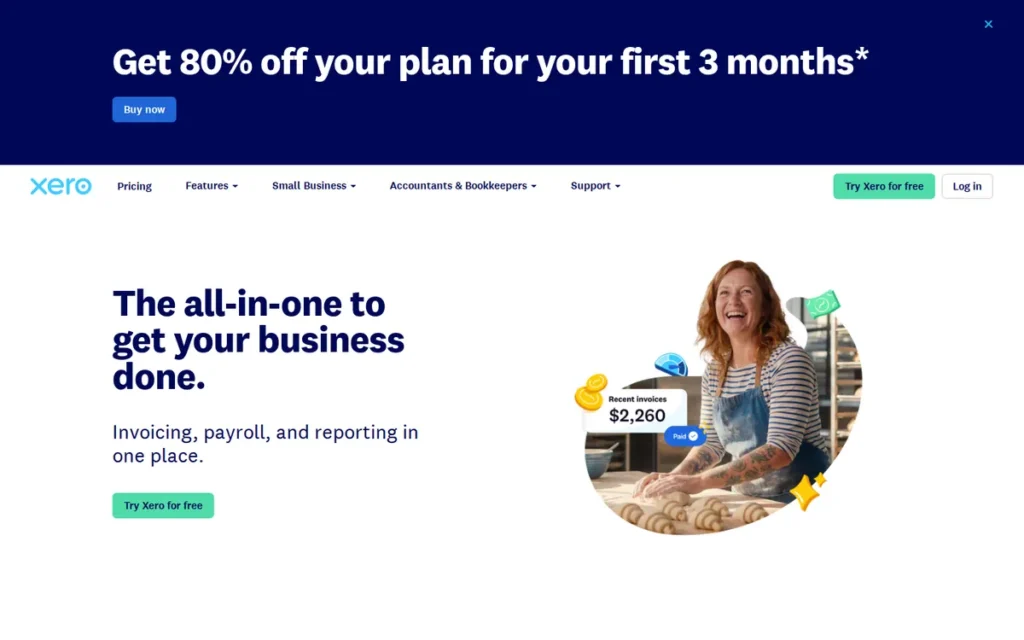
Category: All-in-One Cloud Accounting, a full-service cloud platform combining unlimited-user invoicing, bank reconciliation, multi-currency, and reporting in a single subscription with no per-seat pricing restrictions.
At a Glance
- Category: All-in-One Cloud Accounting
- Best For: Growing teams of 3 or more users, international businesses requiring multi-currency support, and tech-forward SMBs prioritizing a clean UX and the broadest available integration ecosystem
- Price Range: $25–$90/month standard (unlimited users on all plans); promotional introductory rates available for new customers
- Primary Strength: Xero is the only accounting platform in this comparison to include unlimited users on every pricing tier, eliminating per-seat upgrade costs as businesses add accounting staff.
- Biggest Limitation: Xero offers no phone support on any pricing plan: support is limited to email and live chat, which creates a meaningful risk gap during time-sensitive payroll or tax filing situations.
- One-Line Summary: Xero is a cloud-native accounting platform that offers unlimited users on all pricing tiers, 1,000-plus app integrations, and multi-currency support across 180-plus countries, making it the strongest overall accounting solution for growing businesses in 2026.
- Last Verified: June 2026
Overview
Xero is a cloud-native accounting platform for small and growing businesses that provides unlimited users on all pricing plans, 1,000-plus third-party app integrations, and comprehensive invoicing, bank reconciliation, and multi-currency tools across 180-plus countries. Xero is publicly listed on the New Zealand Stock Exchange and announced an AI development partnership with Anthropic in 2026, a forward-looking investment positioning Xero for future AI-powered accounting features, though QuickBooks Online has already deployed a live AI agent suite (March 2026) while Xero’s partnership has not yet produced specific deployed features at time of research (Xero official, 2026). Xero’s flat feature-based pricing model, where a five-person finance team pays the same subscription as a solo user, makes Xero structurally more cost-efficient than seat-gated competitors for any business with three or more accounting users.
Key Features
- Unlimited-User Pricing on All Tiers: Xero includes unlimited users on all three standard pricing tiers ($25, $55, and $90 per month as of June 2026), meaning a five-person finance team pays the same subscription rate as a single-user account, a structural pricing advantage over QuickBooks Online, FreshBooks, and Zoho Books, all of which charge per seat or cap users at plan-level limits.
- 1,000-Plus App Integrations: Xero connects to more than 1,000 third-party business applications through its app marketplace (including Shopify, Stripe, Gusto, and HubSpot) the largest integration ecosystem of any platform evaluated in this comparison (Business.com, 2026).
- 160-Plus Currency Support: Xero supports transactions in 160-plus currencies with full multi-currency accounting, making it the most practical choice for businesses with international clients or cross-border suppliers needing foreign exchange tracking within their accounting records (Brex accounting guide; iFeelTech, 2026).
- AI-Powered Bank Reconciliation: Xero’s bank feeds automatically import and reconcile transactions into a general ledger with accounts payable and accounts receivable automation, providing real-time cash flow visibility, with independent reviewers at Business.com (2026) consistently rating Xero’s reconciliation interface as among the fastest and most intuitive in the category.
- Anthropic AI Partnership (2026): Xero announced an AI development partnership with Anthropic in 2026 to build AI-powered accounting features into its platform, adding a forward-looking differentiation layer that positions Xero for meaningful AI feature expansion, though Xero’s specific AI features resulting from this partnership were not yet publicly deployed at time of research (Xero official, 2026).
Best For
Xero is best for growing small businesses and teams of three or more users where per-seat pricing would create significant cost escalation, at five users, Xero Growing ($55/month) costs less than half of QuickBooks Online Plus ($115/month). Xero is not recommended for businesses that depend on responsive phone support during critical accounting periods, or for US-based businesses needing deeply integrated native payroll within a single platform without a third-party integration.
Pricing
Xero standard US pricing as of June 2026: Early plan $25/month (unlimited users; capped at 20 invoices and 5 bills per month, suitable for very low-volume businesses only); Growing plan $55/month (unlimited invoices, unlimited bills, no volume caps); Established plan $90/month (adds multi-currency, expense claims, and project tracking). All plans include unlimited users with no per-seat charges. Xero regularly runs promotional introductory rates that may differ significantly from standard pricing. The Early plan’s hard volume caps make the Growing plan ($55/month) the effective entry price for most active businesses. Verify current pricing at xero.com/us/pricing-plans before purchasing.
Strengths
- Xero’s unlimited-user pricing delivers quantifiable cost savings over seat-gated alternatives at team scale: a five-person team on Xero Growing ($55/month) pays $11 per user, while the equivalent QuickBooks Online Plus plan costs $115/month for five users ($23 per user), a $720 annual difference that grows with each additional team member added (verified pricing comparison, June 2026).
- Xero’s 1,000-plus app marketplace: the largest integration ecosystem of any platform in this comparison, connects accounting to payments, payroll, CRM, inventory, and e-commerce tools in a breadth that reduces switching costs once a business builds its software stack around Xero (Business.com, 2026).
- Xero hosted the Xero Partner Awards United States 2026, recognizing accounting and bookkeeping firms within its growing US partner ecosystem, signaling a concerted effort to build a US accountant network that competes with QuickBooks Online’s established ProAdvisor base.
- Xero’s G2 and Capterra ratings were not directly retrieved in this research; see g2.com/products/xero/reviews and capterra.com/p/89597/Xero to verify current scores, qualitative reviewer consensus from Business.com (2026) and iFeelTech (2026) consistently cites Xero’s clean UX and fast bank reconciliation as category-leading.
Limitations
- No Phone Support on Any Plan: Xero’s most consequential trade-off is its absence of phone support across all pricing tiers, users are limited to email and live chat channels, creating a real risk gap during time-sensitive accounting emergencies such as payroll processing errors or tax filing deadline issues that require immediate resolution.
Users on r/xero shared their experience with Xero’s support quality:
“They were once excellent, but after relocating their support team overseas, the quality has declined. Now that they serve multiple countries, the guidance provided has become somewhat unreliable. Typically, the initial response is unhelpful, and you often have to urge them to carefully read the question.” Posted by u/Existing_Top_7677
Takeaway: Xero’s transition to internationally dispersed support has eroded response quality for long-term users, compounding the risk already created by the platform’s absence of phone support on any pricing plan.
- US Payroll Requires Third-Party Integration: Xero’s US payroll capabilities require integrations with tools such as Gusto for businesses with US employees, adding cost and complexity that QuickBooks Online’s native payroll add-on avoids, and making the total cost comparison less straightforward for payroll-dependent businesses.
- Early Plan Volume Caps Make $55/Month the Effective Entry Price: Xero’s Early plan ($25/month) imposes hard caps of 20 invoices and 5 bills per month, making it unsuitable for even modestly active businesses, meaning the practical starting price for most Xero users is the Growing plan at $55/month, not the advertised $25/month.
Verdict
Xero is the best overall accounting software for growing businesses in 2026, delivering unlimited users on all plans, the largest integration ecosystem in the category at 1,000-plus apps, and a pricing model that becomes progressively more cost-efficient than seat-based competitors as teams expand. Businesses that depend on responsive phone support during critical financial periods, or that need deeply integrated native US payroll within a single platform, will find QuickBooks Online a stronger fit. For international businesses, multi-user teams, and companies prioritizing long-term scalability without per-seat cost escalation, Xero is the strongest evaluated option in this comparison, ranking above QuickBooks Online primarily because Xero’s unlimited-user pricing advantage (C2) and ecosystem scale (C5) outweigh QBO’s stronger review volume and support scores when matched against the target audience’s most documented pain point: cost escalation as teams grow from solo to three or more users.
2. QuickBooks Online: Best for US Small Businesses and Accountant-Managed Bookkeeping
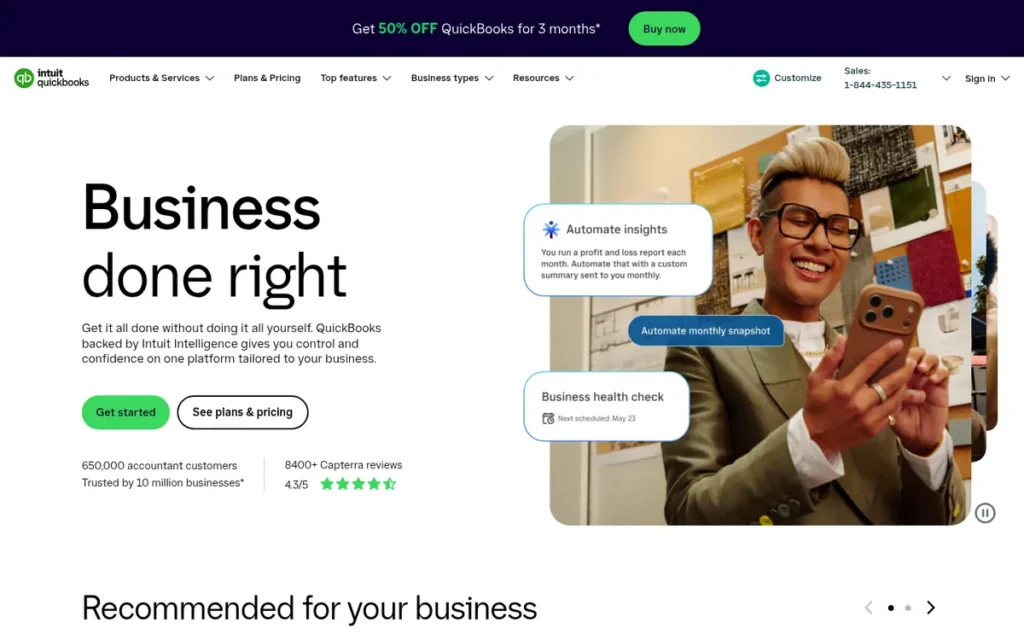
Category: All-in-One Cloud Accounting (US Market Leader), the most widely adopted US small-business accounting platform covering the full bookkeeping cycle with an AI-assisted workflow, the largest certified accountant network globally, and a four-tier upgrade path from sole proprietor to 25-user teams.
At a Glance
- Category: All-in-One Cloud Accounting (US Market Leader)
- Best For: US-based small businesses working with or planning to hire an accountant or bookkeeper, and businesses that need the broadest third-party integration ecosystem available in the US market
- Price Range: $38–$275/month (1–25 users per plan tier); payroll is a separate paid add-on not included in any base plan; 50% off first 3 months for new customers as of June 2026
- Primary Strength: QuickBooks Online is backed by Intuit reporting 400,000-plus ProAdvisors and 7 million-plus active business users, creating an unmatched accountant collaboration ecosystem in the US market.
- Biggest Limitation: QuickBooks Online’s tiered per-seat pricing forces a team of four to pay $115/month (Plus) rather than $75/month (Essentials), and the July 2025 price increase (Simple Start from $30 to $38 (+27%)) generated documented community backlash still driving competitor research in mid-2026.
- One-Line Summary: QuickBooks Online is the most widely adopted small-business accounting platform in the United States, with 7 million-plus business users, 400,000-plus ProAdvisors, a 700-plus app ecosystem, and an AI agent suite launched in March 2026 that Intuit claims saves users up to 12 hours of bookkeeping time per month.
- Last Verified: June 2026
Overview
QuickBooks Online is the most widely used small-business accounting platform in the United States, serving more than 7 million businesses with four scalable pricing tiers, 700-plus app integrations, a 400,000-plus ProAdvisor network of certified bookkeepers and accountants, and an AI-powered bookkeeping agent suite introduced in March 2026. QuickBooks Online is developed by Intuit, a publicly traded company on NASDAQ (ticker INTU) reporting approximately $17.4 billion in FY2025 revenue and employing 19,000-plus people globally, making Intuit the most financially secure developer of any platform evaluated in this article. Intuit reports approximately 80% of US accountants operate primarily in QuickBooks (QuickBooks official, 2025), an independently unverified vendor figure that nonetheless reflects QBO’s dominant position in US accountant workflows, effectively making QBO compatibility a prerequisite for working with the majority of available US bookkeeping professionals.
Key Features
- AI Agent Suite (March 2026): QuickBooks Online launched a virtual team of AI agents in March 2026 (including an Accounting Agent for automated transaction categorization and reconciliation, a Payments Agent, and a Payroll Agent) with Intuit claiming customers save up to 12 hours per month on bookkeeping and get paid an average of 5 days faster (Intuit press release, March 2026; these are vendor-projected figures, not independently audited results).
- 700-Plus App Integrations: QuickBooks Online integrates with more than 700 third-party applications through its App Store (including Shopify, Salesforce, Gusto, and HubSpot) enabling QuickBooks Online to serve as the central financial hub of a US small business’s software stack (QuickBooks official).
- 400,000-Plus ProAdvisor Network: QuickBooks Online’s ProAdvisor ecosystem creates a unique hiring resource for businesses needing accounting support, Intuit reports the approximately 80% US accountant adoption rate (QuickBooks official, 2025) makes QBO compatibility functionally required for working with most US bookkeeping professionals.
- AI-Powered Bank Feed as 2026 Default: QuickBooks Online replaced its legacy bank feed with an AI-powered default experience in 2026, featuring Ready to Post inline editing, smart category suggestions, and transaction auto-matching, designed to reduce manual reconciliation to exception-only management (QuickBooks product update, March 2026).
- Four-Tier In-Family Upgrade Path: QuickBooks Online offers four pricing tiers (Simple Start, Essentials, Plus, and Advanced) covering 1 to 25 users with features scaling from basic invoicing to advanced reporting and custom workflow automation, providing a complete upgrade path without platform migration as a business grows.
Best For
QuickBooks Online is best for US-based small businesses that work with or plan to hire an accountant or bookkeeper (given the approximately 80% Intuit-reported US accountant adoption rate making QBO compatibility effectively required) and for businesses with complex integration needs spanning e-commerce, CRM, and payroll platforms. QuickBooks Online is not recommended for businesses with three or more users who are cost-sensitive, as the per-seat tiered pricing model makes QuickBooks Online the highest total-cost-of-ownership platform in this comparison at team scale.
Pricing
QuickBooks Online standard monthly pricing as of July 2025 (verified June 2026): Simple Start $38/month (1 user), Essentials $75/month (3 users), Plus $115/month (5 users), Advanced $275/month (25 users). New customers typically receive 50% off for the first 3 months. Payroll is a separate paid add-on not included in any base plan. The July 2025 price increase raised Simple Start from $30 to $38 (+27%) and Essentials from $60 to $75 (+25%), generating documented community backlash (Fusion Taxes, 2025; Firm of the Future). A team of 4 users requires Plus ($115/month) rather than Essentials ($75/month) due to the 3-user cap, adding $480/year for a single additional user. Verify current pricing at quickbooks.intuit.com/pricing before purchasing, Intuit has raised prices multiple times and should be assumed capable of doing so again.
Strengths
- Intuit’s March 2026 AI agent suite: including the Accounting Agent, Payments Agent (Intuit claims 5-days-faster payment collection), and Payroll Agent, represents the most comprehensively deployed live AI automation of any platform evaluated, backed by Intuit’s $17.4 billion FY2025 revenue funding continuous R&D investment (Intuit press release, March 2026).
- QuickBooks Online’s 400,000-plus ProAdvisor network substantially exceeds the US partner networks of every other evaluated platform, Xero’s active US Partner Awards program (2026) signals increasing investment in this space, though at a scale that has not yet approached QBO’s established US accountant presence (QuickBooks official, 2025).
- With 8,425 verified Capterra reviews (4.3/5.0) and 3,784 G2 reviews (4.0/5.0), QuickBooks Online has the largest independently verified review database of any platform in this comparison, providing the most statistically robust signal of real-world user experience available in the category (G2 and Capterra, verified June 2026).
- QuickBooks Online’s 700-plus app marketplace covers virtually every tool in the US SMB software stack (Shopify, Salesforce, Gusto, PayPal, and hundreds more) enabling businesses to build an integrated financial operating system around QuickBooks Online without switching accounting platforms as their software needs evolve.
Limitations
- Per-Seat Tier Upgrade Friction: QuickBooks Online’s most consequential trade-off is its per-seat, tier-gated pricing: a team of four cannot share the Essentials plan (3-user maximum) and must pay $115/month for Plus, an extra $480 per year for a single user over the cap, a compounding cost disadvantage versus Xero’s unlimited-user model that grows more significant with every additional team member.
- Documented Price Increase History: The July 2025 price increase: Simple Start from $30 to $38 (+27%), Essentials from $60 to $75 (+25%), generated documented community backlash across r/QuickBooks still driving competitor research in mid-2026, with combined monthly costs (base plan plus payroll add-on) making QuickBooks Online the highest total-cost-of-ownership platform in this comparison for teams of three or more.
- Support Quality Concerns: Customer support has been a consistent point of criticism across G2 reviews, where reviewers cite responsiveness issues, and Trustpilot, where billing dispute and cancellation friction patterns are documented, a real risk for businesses needing responsive help during time-sensitive tax or payroll periods (Puzzle.io QuickBooks review).
Verdict
QuickBooks Online remains the most accountant-compatible accounting platform for US small businesses in 2026, with 7 million-plus active users, Intuit reporting 400,000-plus ProAdvisors, and a March 2026 AI agent suite claiming 12 hours per month in bookkeeping time savings backed by Intuit’s $17.4 billion annual revenue R&D capacity. For US businesses working with a bookkeeper or accountant (where the approximately 80% Intuit-reported QuickBooks adoption rate makes QBO compatibility often effectively required) QuickBooks Online is the necessary choice despite its premium pricing. Businesses with three or more users, international operations, or cost sensitivity should compare QuickBooks Online’s total cost of ownership against Xero’s unlimited-user flat pricing before committing.
3. Zoho Books: Best Value: Best for Budget-Conscious SMBs, Zoho Ecosystem Users, and International Businesses
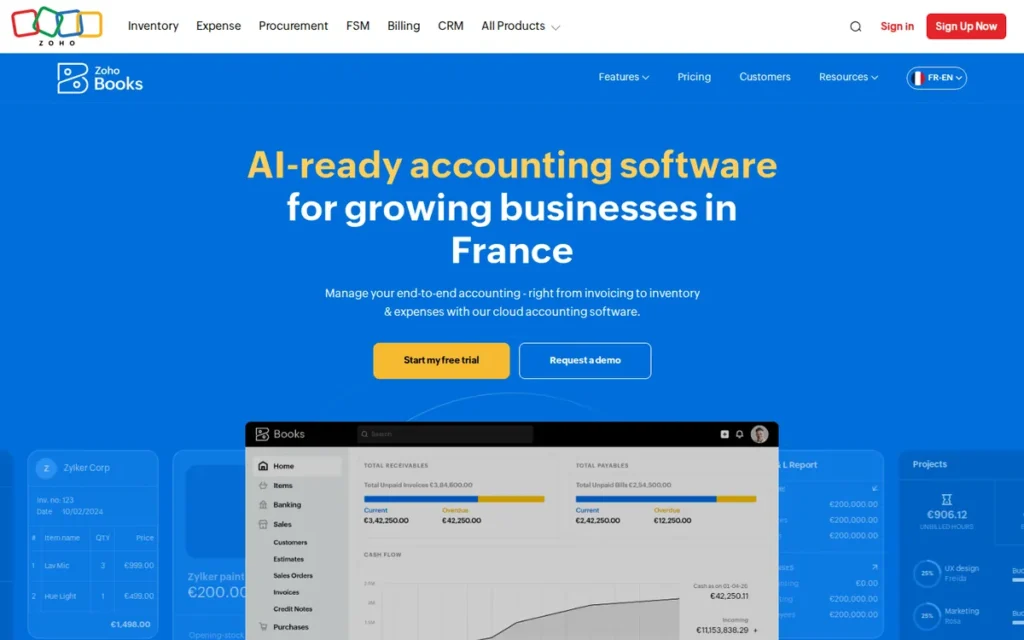
Category: Ecosystem Accounting, a full-featured accounting platform deeply integrated with a 45-plus-product business software suite, offering the widest pricing range ($0 to $275/month) and the deepest international tax compliance (GST, VAT, GCC) of any platform in this comparison.
At a Glance
- Category: Ecosystem Accounting
- Best For: Cost-conscious SMBs seeking the most features per dollar, businesses using or evaluating the broader Zoho software ecosystem, international businesses with multi-region tax compliance needs, and startups that want a genuinely functional free accounting tier
- Price Range: Free–$275/month (6 tiers); extra users $3/month on paid plans; annual billing reduces costs by up to 25%
- Primary Strength: Zoho Books is the only platform in this comparison offering a genuine free tier, a $20/month full-featured paid plan for 3 users, and 50-plus automated workflows, making it the highest-value accounting platform per dollar for cost-conscious small businesses.
- Biggest Limitation: Zoho Books’ feature density and configuration depth create a steeper learning curve than simpler competitors like FreshBooks or Xero, and its lower US market profile means fewer local bookkeepers and accountants are familiar with the platform.
- One-Line Summary: Zoho Books is the highest-value full-featured accounting platform in its price class, offering a genuine free tier, 50-plus automated workflows, deep integration with 45-plus Zoho business applications, and GST and VAT compliance for businesses in India, the UAE, the UK, and six additional countries, starting at $20 per month for three users.
- Last Verified: June 2026
Overview
Zoho Books is a cloud accounting platform from Zoho Corporation, a privately held company founded in 1996 and headquartered in Chennai, India, led by CEO Sridhar Vembu, serving small businesses worldwide with six pricing tiers from free to $275 per month, 50-plus automated invoicing and workflow tools, and deep integration with the 45-plus-product Zoho business ecosystem. Zoho Books reports particularly strong adoption in India, Southeast Asia, and the Middle East, where its regional GST and VAT compliance modules address tax requirements that US-designed competitors cannot serve, independent global user count comparisons between Zoho Books and QuickBooks Online were not available at time of research (June 2026). Zoho Corporation’s private ownership structure, CEO Sridhar Vembu has publicly committed the company will not pursue an IPO, enables continuous product reinvestment without quarterly earnings pressure, supporting Zoho Books’ documented cadence of monthly feature releases through all of 2025 and 2026.
Key Features
- Six-Tier Pricing Structure ($0–$275/month): Zoho Books offers Free (2 users), Standard ($20/month, 3 users), Professional ($50/month, 5 users), Premium ($70/month, 10 users), Elite ($150/month, 10 users), and Ultimate ($275/month, 15 users), with extra users addable at $3/month on any paid plan, the most granularly scalable pricing structure in this comparison (Zoho Books US pricing page, June 2026).
- 50-Plus Automated Workflows: Zoho Books includes 50-plus automated workflow rules for invoicing reminders, payment approvals, purchase order routing, accounts payable approval workflows, and expense categorization (the broadest native automation toolkit of any platform evaluated) available starting on the Standard plan at $20/month.
- Regional Tax Compliance (GST/VAT/GCC): Zoho Books supports regional tax compliance for India (GST), UAE, Saudi Arabia, Bahrain, Oman, Qatar, Kuwait, Kenya, and France, with dedicated compliance editions updated through June 2026, the only platform in this comparison with documented, production-ready compliance for Gulf Cooperation Council countries at any price point (Zoho Books product updates, June 2026).
- 45-Plus Zoho Ecosystem Integrations: Zoho Books integrates with 45-plus other Zoho applications (including Zoho CRM, Zoho Projects, Zoho Inventory, and Zoho Campaigns) creating compounding operational efficiency for businesses that expand into the Zoho ecosystem, where accounting data flows seamlessly into sales, inventory, and project workflows without manual export.
- Permanent Free Plan for Pre-Revenue Businesses: Zoho Books’ permanent free plan includes 2 users, unlimited invoicing, bank reconciliation, and basic reporting with no trial expiration and no credit card required, a genuinely functional zero-cost accounting entry point for pre-revenue businesses that Wave’s free tier is the only other evaluated platform to match.
Best For
Zoho Books is best for cost-conscious small businesses seeking full-featured accounting at the lowest available price point, for businesses operating in India, the Middle East, or East Africa that require GST or VAT compliance not available in US-native competitors, and for businesses already using or planning to adopt other Zoho products such as Zoho CRM or Zoho Projects. Zoho Books is not recommended for businesses that need to hire a US-based accountant who is likely unfamiliar with the platform, or for businesses prioritizing the simplest possible onboarding experience over feature depth.
Pricing
Zoho Books US pricing as of June 2026: Free (2 users, basic features), Standard $20/month (3 users; $15/month billed annually), Professional $50/month (5 users; $37.50/month annually), Premium $70/month (10 users; $60/month annually), Elite $150/month (10 users; $120/month annually), Ultimate $275/month (15 users; $240/month annually). Extra users on any paid plan: $3/month ($2.50/month billed annually). At $20/month for three users, Zoho Books Standard costs $6.67 per user per month, compared to QuickBooks Online Essentials at $75/month for three users ($25/user) and Xero Growing at $55/month for unlimited users. Verify current pricing at zoho.com/us/books/pricing before purchasing.
Strengths
- Zoho Books documented monthly product releases through all of 2025 and 2026: including June 2026, May 2026, and February 2026 feature updates covering automation, reporting, and regional tax compliance, demonstrating a development velocity that publicly traded competitors managing quarterly earnings cycles have not sustained at equivalent price points.
- At $20/month for three users on the Standard plan, Zoho Books provides full double-entry accounting, 50-plus automated workflows, bank reconciliation, and invoicing at $6.67 per user per month (compared to QuickBooks Online Essentials at $75/month for three users ($25/user)) representing the strongest feature-per-dollar value of any paid platform in this comparison (verified pricing, June 2026).
- Zoho Books’ GST, VAT, and GCC compliance modules serve regulatory accounting requirements in India, UAE, Saudi Arabia, Bahrain, Oman, Qatar, Kuwait, Kenya, and France that no other platform in this comparison addresses at any price point, making Zoho Books the only legitimate option in this seven-tool evaluation for SMBs with operations in Gulf Cooperation Council countries (Zoho Books product updates, June 2026).
- Zoho Corporation’s fully private ownership: publicly committed by CEO Sridhar Vembu with no IPO planned, means Zoho Books is not subject to the quarterly earnings pressure that drove QuickBooks Online’s July 2025 price increase (+27% on Simple Start), providing greater long-term pricing predictability for businesses building multi-year platform relationships.
Limitations
- Steeper Learning Curve: Zoho Books’ most consequential trade-off is its steeper onboarding relative to simpler alternatives, the platform’s feature density (six pricing tiers, 50-plus configurable automated workflows, multi-region tax modules, and 45-plus Zoho ecosystem integrations) creates a learning investment that review sources consistently describe as more demanding than FreshBooks, Wave, or Xero (Meru Accounting, 2026; Business News Daily, 2026).
- US Accountant Network Gap: Zoho Books has significantly lower US market profile than QuickBooks Online, meaning hired bookkeepers and accountants in the US are less likely to be fluent in Zoho Books, businesses that hire external accounting help should confirm their accountant’s Zoho Books familiarity before committing, as retraining costs can exceed any subscription savings in the first year.
- Smaller Third-Party Integration Marketplace: While Zoho Books integrates deeply within the Zoho ecosystem, its third-party app marketplace is significantly smaller than Xero’s 1,000-plus or QuickBooks Online’s 700-plus, which may constrain businesses needing specialized industry integrations outside the Zoho product suite, verify your most critical tool integrations at marketplace.zoho.com before purchasing.
This aligns with community sentiment on r/Bookkeeping:
“I moved some clients from QBO to Zoho Books six months ago and Im ready to leave Zoho. The pricing is appealing, but I’ve found Zoho to be somewhat cumbersome. For instance, searching can be challenging, equity transactions can only be processed through the banking section, and matching receipts to existing entries is quite tricky. I fully committed to Zoho One to explore its entire ecosystem, but I’ve grown frustrated with it.” Posted by u/BudgetCap7905
Takeaway: Professional bookkeepers migrating clients to Zoho Books report that its non-standard workflows and clunky search make daily use frustrating enough to reverse the switch despite the platform’s clear pricing advantage over QuickBooks Online.
Verdict
Zoho Books is the highest-value full-featured accounting platform per dollar in this comparison, with a $20/month Standard plan covering three users and 50-plus automated workflows that no competitor matches at equivalent price, and a genuine free tier for pre-revenue businesses that provides real accounting functionality without a trial expiration. Businesses willing to invest in onboarding, not dependent on US-market accountant compatibility, and seeking the deepest international tax compliance available at SMB price points will find Zoho Books delivers more accounting capability per dollar than any other evaluated platform in this comparison.
4. FreshBooks: Best for Service-Based Freelancers, Agencies, and Consultants
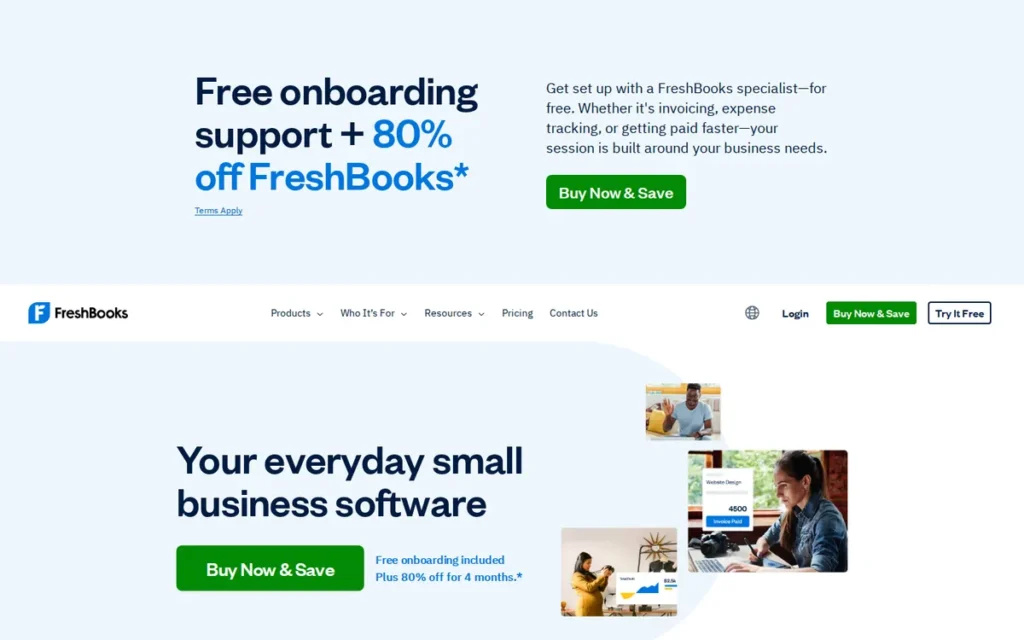
Category: Invoicing-First Accounting, a cloud platform built primarily around the client billing workflow (proposals, time tracking, invoicing, payment collection) with full double-entry accounting added, purpose-built for service businesses rather than a general-purpose bookkeeping tool.
At a Glance
- Category: Invoicing-First Accounting
- Best For: Freelancers, consultants, agencies, and service-based small businesses that bill primarily by time or project and need invoicing, client management, time tracking, and payment collection in a single tool without requiring accounting expertise
- Price Range: $21–$65/month (1 user; +$11/month per additional user); effective entry price for most active freelancers is $38/month due to the 5-client cap on the Lite plan
- Primary Strength: FreshBooks is the only accounting platform in this comparison with native time tracking on all pricing plans and the only platform to earn 5/5 scores for ease of use, value, and customer support on Software Advice as of June 2026.
- Biggest Limitation: FreshBooks’ Lite plan ($21/month) restricts users to 5 billable clients (meaning most active freelancers require the Plus plan ($38/month) from their first month) and charges $11/month per additional user, making FreshBooks significantly more expensive than Xero or Zoho Books for any business with a team of 3 or more.
- One-Line Summary: FreshBooks is the top-rated accounting platform for service-based businesses, earning 5/5 scores for ease of use, customer support, and value on Software Advice as of June 2026, with built-in time tracking on all plans and a client billing workflow (from proposal to invoice to payment) not replicated by any general-purpose accounting platform at its price point.
- Last Verified: June 2026
Overview
FreshBooks is a cloud accounting platform founded in 2003 and purpose-built for freelancers, consultants, and service-based small businesses, offering native time tracking, client billing, proposal-to-invoice workflows, and double-entry accounting in a single tool with 5/5 ease-of-use, value, and customer support ratings on Software Advice as of June 2026 (Software Advice, June 2026). FreshBooks claims more than 30 million cumulative user accounts since its 2003 founding, a lifetime engagement metric spanning over two decades that includes trial and expired accounts, not a current active subscriber count comparable to QuickBooks Online’s 7 million active businesses (FreshBooks official). FreshBooks integrates with Stripe, PayPal, Gusto, Shopify, and Zapier, covering the most commonly used payment, payroll, and e-commerce platforms in its target users’ software stacks, though its total integration count is significantly smaller than QuickBooks Online’s 700-plus or Xero’s 1,000-plus.
Key Features
- Native Time Tracking on All Plans: FreshBooks includes native time tracking on all pricing plans (including the $21/month Lite entry tier) allowing freelancers and agencies to log billable hours and billable retainer time by project and convert them directly to invoice line items in a single click, a workflow that QuickBooks Online and Xero require separate paid integrations to replicate (NerdWallet, 2026).
- Client Portal and Proposal Workflow: FreshBooks’ client portal enables professional proposal creation, accounts receivable tracking, automated late payment reminders, and online payment acceptance in a branded client-facing interface, positioning FreshBooks as a lightweight CRM alongside its accounting functions, a combination no other platform in this comparison offers at its price point (Business.com, 2026).
- 5/5 Software Advice Scores (June 2026): FreshBooks earned 5/5 scores on ease of use, value for money, and customer support on Software Advice as of June 2026, the only accounting platform in this comparison to achieve perfect scores across all three user-facing quality dimensions simultaneously (Software Advice, June 2026).
- Project Management and Profitability Reporting: FreshBooks includes project management features with team collaboration, expense tracking per project, and project profitability reporting, enabling agencies and consulting firms to understand which client engagements generate the most revenue without a separate project management subscription.
- Core Service-Business Integrations: FreshBooks integrates with Stripe, PayPal, Gusto for payroll, Shopify for e-commerce, and Zapier for workflow automation, covering the core tools used by its target freelancer and small-agency audience without requiring the breadth of QuickBooks Online’s or Xero’s larger marketplaces for most service-business integration needs (Cashflowy comparison, 2026).
Best For
FreshBooks is best for freelancers, consultants, and service-based small businesses that bill clients primarily by time or project, want the most intuitive invoicing workflow available at its price point, and value responsive human customer support over feature breadth or integration depth. FreshBooks is not recommended for product-based businesses requiring inventory management, for teams of three or more users where the $11/month per-user fee makes total cost uncompetitive with Xero ($55/month, unlimited users) or Zoho Books ($20/month, 3 users), or for businesses requiring advanced multi-currency or complex accounting reporting.
Pricing
FreshBooks pricing as of June 2026 (prices raised in 2026 per Cashflowy comparison, 2026): Lite $21/month (1 user, up to 5 billable clients), Plus $38/month (1 user, up to 50 billable clients), Premium $65/month (1 user, unlimited clients), Select (custom enterprise pricing). Additional users on any plan: $11/month per user. Advanced Payments add-on: $20/month. The Lite plan’s 5-client cap means most active freelancers must immediately upgrade to Plus ($38/month), matching QuickBooks Online Simple Start in price but with significantly fewer accounting features. A 3-person team on FreshBooks Plus pays $38 + $22 = $60/month, calculated directly from FreshBooks published pricing as of June 2026, versus Xero Growing at $55/month for unlimited users. Verify current pricing at freshbooks.com/pricing before purchasing.
Strengths
- FreshBooks earned 5/5 scores on ease of use, value for money, and customer support on Software Advice as of June 2026, the only platform in this seven-tool comparison to achieve perfect scores across all three dimensions simultaneously, representing independent third-party validation of its product-market fit with service-based freelancers and agencies (Software Advice, June 2026).
- FreshBooks’ native time tracking: available on all plans including the $21/month Lite tier, eliminates the need for a separate time-tracking tool for freelancers billing hourly, a daily-use workflow that QuickBooks Online and Xero require paid third-party integrations to replicate, representing a genuine productivity advantage for the platform’s target audience.
- FreshBooks’ customer support quality: earning 5/5 on Software Advice as of June 2026, stands in direct contrast to the support limitations of competing platforms: Wave Accounting’s free tier provides chatbot-only support with no human agents, Xero offers no phone support on any plan, and QuickBooks Online is consistently criticized for support responsiveness in G2 reviews.
- FreshBooks has served more than 30 million cumulative user accounts since its 2003 founding, representing over two decades of product iteration specifically for the service-business billing workflow, a depth of specialization that generalist accounting platforms entering the freelancer market as a secondary use case have not replicated (FreshBooks official; note: this is a cumulative lifetime count, not an active subscriber figure).
Limitations
- Advertised vs. Effective Entry Price: FreshBooks’ most consequential trade-off is the mismatch between its advertised entry price and its effective entry price for most users, the Lite plan ($21/month) caps users at 5 billable clients, which most active freelancers exceed within their first weeks of use, making the Plus plan ($38/month) the real starting cost for the majority of FreshBooks’ intended audience and pricing FreshBooks at parity with QuickBooks Online Simple Start but with significantly fewer accounting features.
- Per-User Fee Compound Cost: The $11/month per-user charge creates a compounding cost problem for any business adding staff, a three-person team on FreshBooks Plus pays $60/month, while the same team on Xero Growing pays $55/month with unlimited users and deeper accounting functionality; FreshBooks raised prices in 2026, and the prominent r/Bookkeeping thread “My nightmare experience with FreshBooks, a warning” (2023) continues to rank prominently in platform searches, reflecting billing and service experience concerns prospective users should investigate before committing.
- Limited Accounting Depth for Complex Businesses: FreshBooks’ invoicing-first architecture means businesses needing advanced inventory management, multi-entity accounting, or complex financial reporting will find the platform’s accounting depth insufficient as they grow, requiring migration to a more comprehensive platform like QuickBooks Online or Xero, making FreshBooks primarily a starting point rather than a long-term solution for businesses with more than basic bookkeeping needs.
Verdict
FreshBooks is the highest-rated accounting platform for ease of use and customer support among service-based businesses, earning 5/5 scores on both dimensions on Software Advice as of June 2026, with native time tracking and a client billing workflow from proposal to invoice to payment that no general-purpose accounting platform at its price point replicates. Freelancers and consultants billing primarily by time who value simplicity and responsive support above all will find FreshBooks the strongest fit in this comparison, but active freelancers with more than 5 clients should budget for the Plus plan at $38/month rather than the Lite entry price, and any team of three or more should compare Xero’s unlimited-user pricing ($55/month) before committing to FreshBooks’ $11-per-user model.
5. FreeAgent: Best for UK Contractors, Freelancers, and NatWest Banking Customers
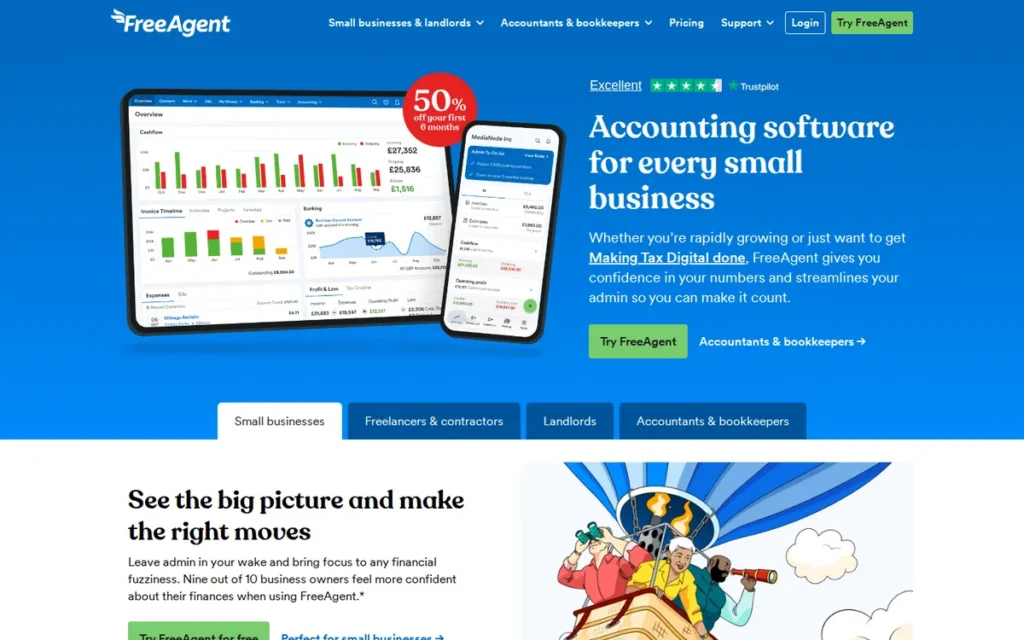
Category: Specialist Accounting (UK Contractor and Freelancer), an all-in-one HMRC-integrated accounting platform combining Making Tax Digital VAT filing, Self Assessment tax returns, payroll, invoicing, project tracking, and time tracking in a single tool purpose-built for UK freelancers, contractors, and sole traders.
At a Glance
- Category: Specialist Accounting (UK Contractor and Freelancer)
- Best For: UK freelancers, contractors, sole traders, and limited company directors, particularly NatWest, RBS, Ulster Bank, and Mettle business banking customers who receive FreeAgent at no cost
- Price Range: Free for NatWest Group banking customers; £33/month (~$42 USD) for all others as of June 2026; US pricing available at freeagent.com/us
- Primary Strength: FreeAgent is the only accounting platform in this comparison offering direct HMRC integration for both Making Tax Digital VAT filing and Self Assessment tax returns within a single tool, enabling UK freelancers and contractors to handle their full annual tax compliance without relying on a hired accountant.
- Biggest Limitation: FreeAgent’s most valuable features: HMRC-integrated tax filing, Making Tax Digital compliance, and free access via NatWest banking, are specific to the UK market, making FreeAgent significantly less compelling for US-based or non-UK businesses.
- One-Line Summary: FreeAgent is the only all-in-one accounting platform offering direct HMRC integration for Making Tax Digital VAT filing and Self Assessment tax returns alongside invoicing, payroll, and time tracking, and it is available completely free to NatWest, Royal Bank of Scotland, Ulster Bank, and Mettle business account holders as of June 2026.
- Last Verified: June 2026
Overview
FreeAgent is a cloud accounting platform founded in Edinburgh, Scotland, in 2007 and acquired by NatWest Group in 2018, designed for UK freelancers, contractors, and sole traders who need Making Tax Digital VAT filing, Self Assessment tax returns, payroll, invoicing, project tracking, and time tracking in a single HMRC-integrated tool, without requiring an accountant for day-to-day compliance. FreeAgent is available completely free to customers holding a NatWest, Royal Bank of Scotland, Ulster Bank, or Mettle business current account, a unique distribution advantage that has made FreeAgent the default accounting recommendation in UK contractor communities, where a documented “ditch the accountant” narrative has emerged across multiple r/ContractorUK threads (Capterra FreeAgent profile). FreeAgent launched an AI bookkeeper named Jack, developed in partnership with Jenesys at Accountex 2025, to automate receipt and invoice capture and categorization for its non-accountant freelancer user base (Accountancy Age, May 2025).
Key Features
- HMRC-Integrated MTD VAT and Self Assessment Filing: FreeAgent includes direct HMRC integration for Making Tax Digital VAT return submission and Self Assessment tax filing (the only platform in this comparison offering this capability) enabling UK sole traders and limited company directors to submit their own tax returns without leaving the accounting software, supporting the community-documented “ditch the accountant” use case (FreeAgent official).
- Free Access for NatWest Group Banking Customers: FreeAgent is available completely free for all customers with a NatWest, Royal Bank of Scotland, Ulster Bank, or Mettle business current account, covering invoicing, bank feeds, reconciliation, payroll, Self Assessment, MTD VAT, project tracking, time tracking, and business insight reporting at zero additional cost.
- Jack AI Bookkeeper (Accountex 2025): FreeAgent launched an AI bookkeeper named Jack at Accountex 2025 (developed in partnership with Jenesys) providing automated receipt and invoice capture and categorization for freelancers handling their own bookkeeping without accounting expertise, the most audience-specific AI deployment of any platform in this comparison (Accountancy Age, May 2025).
- All-in-One UK Compliance Suite: FreeAgent includes UK payroll, project tracking with time logging, and expense management in its standard subscription, features that require separate paid add-ons or third-party integrations in most competing platforms at equivalent price points, making FreeAgent’s all-in-one offering uniquely comprehensive for UK micro-businesses.
- Overwhelmingly Positive Trustpilot Reviews: FreeAgent’s Trustpilot profile of 293 reviews is characterized as “overwhelmingly positive,” with consistent praise for customer service quality, ease of use, and Making Tax Digital compatibility, reflecting strong product-market fit within its specialist UK audience (Trustpilot, June 2026).
Best For
FreeAgent is best for UK freelancers, contractors, sole traders, and limited company directors who need full HMRC compliance, Making Tax Digital VAT filing and Self Assessment tax returns, in a single tool without hiring an accountant. If you bank with NatWest, Royal Bank of Scotland, Ulster Bank, or Mettle and are a UK freelancer or contractor: you likely already have access to FreeAgent’s complete accounting platform, invoicing, payroll, MTD VAT, Self Assessment, project tracking, and time tracking, at zero additional cost through your existing business banking relationship. Non-UK businesses should evaluate QuickBooks Online, Xero, or Zoho Books instead, as FreeAgent’s core advantages are specific to UK tax compliance requirements that do not apply in other jurisdictions.
Pricing
FreeAgent UK pricing as of June 2026: Limited Company plan £33/month (~$42 USD at mid-2026 exchange rates), covering all features including invoicing, bank feeds, reconciliation, payroll, MTD VAT, Self Assessment, project tracking, and time tracking. FreeAgent is available completely free for NatWest, Royal Bank of Scotland, Ulster Bank, and Mettle business current account holders, no subscription charge while banking with NatWest Group brands. US-market pricing is available at freeagent.com/us with adapted features; the US version differs from the UK product in regulatory compliance coverage and exact USD amounts should be verified directly. FreeAgent’s primary value differentiation (HMRC integration, MTD VAT, Self Assessment) is UK-specific and does not apply to US users. Verify current pricing at freeagent.com/pricing before purchasing.
Strengths
- FreeAgent is available completely free to customers of NatWest, Royal Bank of Scotland, Ulster Bank, and Mettle (covering all accounting, invoicing, payroll, MTD VAT, Self Assessment, project tracking, and time tracking at zero additional cost) representing the most comprehensive free offering of any platform in this comparison for its eligible audience of NatWest Group banking customers (FreeAgent official, June 2026).
- FreeAgent was recognized as Friendliest Software of the Year (2024), and its Trustpilot profile of 293 reviews is characterized as “overwhelmingly positive” with specific praise for customer service quality, positioning FreeAgent among the strongest-reviewed platforms for support responsiveness in this comparison, rivaling FreshBooks’ 5/5 Software Advice support score within its specialist audience (Trustpilot and FreeAgent marketing, June 2026).
- FreeAgent’s Jack AI bookkeeper: launched at Accountex 2025 in partnership with Jenesys, provides automated receipt and invoice capture and categorization for non-accountant freelancers, representing the most audience-targeted AI deployment of any platform in this comparison: built specifically for the non-expert small business owner who manages their own books (Accountancy Age, May 2025).
- The r/ContractorUK community’s documented “ditch the accountant” narrative around FreeAgent, reflected in multiple high-engagement threads including “4 years using FreeAgent, ditch accountant”, represents organic, affiliate-free, community-validated word-of-mouth positioning unique among all seven platforms evaluated in this comparison.
As one user on r/ContractorUK described:
“I’ve been using FreeAgent since 2019 and have asked all types of accountancy related questions. I started contracting again earlier this year after a 4 year break and opened a new LTD company. I’ve decided to handle it all myself this time in FreeAgent, including VAT.” Posted by u/yoshi105
Takeaway: FreeAgent’s HMRC integration is enabling a documented shift among experienced UK contractors from paid accountants to fully self-managed bookkeeping and VAT filing, a genuine, community-validated use case that no other platform in this comparison can replicate.
Limitations
- UK-Market Specialization: FreeAgent’s most consequential trade-off is its UK-market specialization, the platform’s core advantages (HMRC-integrated MTD VAT filing, Self Assessment tax returns, and free access via NatWest banking) are specific to UK businesses and UK tax law, making FreeAgent significantly less compelling than QuickBooks Online, Xero, or Zoho Books for businesses operating outside the United Kingdom.
- Limited Scale Beyond Micro-Business: Within the UK market, FreeAgent’s focus on freelancers and micro-businesses means it has less depth in multi-entity accounting, advanced inventory management, or enterprise reporting than platforms designed for larger organizations, businesses scaling beyond the micro-business segment may find migration to Xero or QuickBooks Online necessary as their accounting complexity grows.
- NatWest Ownership Product Roadmap Risk: NatWest Group’s ownership of FreeAgent since 2018 means the platform’s product roadmap is influenced by a major bank’s broader business banking strategy, which may not always align with independent product development priorities for the freelancer segment, a structural risk that users building long-term accounting workflows on FreeAgent should weigh (FreeAgent timeline).
- Limited Third-Party Integration Ecosystem: FreeAgent’s third-party integration marketplace is substantially smaller than Xero’s 1,000-plus or QuickBooks Online’s 700-plus apps, limiting connectivity for UK businesses relying on specialized e-commerce, CRM, or industry-specific tools outside the standard freelancer software stack, verify your most critical integrations at freeagent.com/integrations before purchasing.
Verdict
FreeAgent is the only all-in-one accounting platform offering direct HMRC integration for Making Tax Digital VAT filing and Self Assessment tax returns alongside invoicing, payroll, and time tracking, and it is available completely free to NatWest Group banking customers, making it the default accounting recommendation for UK freelancers and contractors who qualify for the free access tier. For UK freelancers and NatWest Group banking customers specifically, FreeAgent’s value proposition rivals or exceeds Xero’s on every criterionthat matters to their use case, its #5 overall ranking reflects the global audience of this comparison, not its relative strength within the UK contractor and freelancer market where it is the recommended first-evaluation platform. Non-UK users will find FreeAgent’s most compelling advantages inapplicable to their tax environment and should evaluate QuickBooks Online, Xero, or Zoho Books based on their specific requirements.
6. Wave Accounting: Best Free Option: Best for Zero-Budget Solopreneurs and Early-Stage Freelancers
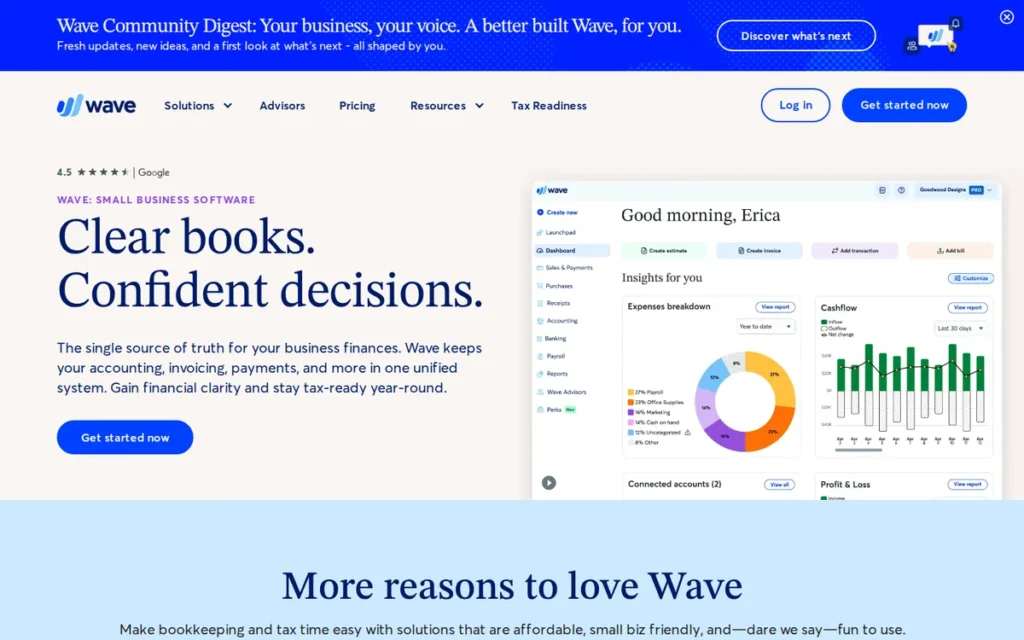
Category: Freemium Cloud Accounting, a free-core accounting platform monetized through paid Wave Pro ($19/month), Payroll add-on ($40+/month), and payment processing transaction fees rather than a mandatory subscription, designed for solopreneurs and early-stage freelancers with simple accounting needs.
At a Glance
- Category: Freemium Cloud Accounting
- Best For: Zero-budget solopreneurs, early-stage freelancers, and very small service businesses that need basic invoicing and bookkeeping at no monthly cost and do not require payroll, inventory management, or multi-user access
- Price Range: Free (Starter, core accounting and invoicing); $19/month (Wave Pro); Payroll starts $40/month (limited US state availability); Payments 2.9%+$0.60/transaction (Starter), 2.9% (Pro)
- Primary Strength: Wave Accounting is the only platform in this comparison offering genuinely free, unlimited invoicing and double-entry bookkeeping with no transaction caps, no trial expiration, and no credit card required, the only true zero-cost accounting starting point for pre-revenue businesses.
- Biggest Limitation: Wave’s 2024 introduction of Wave Pro ($19/month) moved previously free features (including automated bank imports and auto-categorization) behind a paywall, generating documented community backlash; Wave Payroll is also unavailable in many US states; and free-tier users receive chatbot-only support with no access to live human agents.
- One-Line Summary: Wave Accounting is the only major accounting platform offering genuinely free, unlimited invoicing and double-entry bookkeeping with no transaction caps (owned by H&R Block since a 2019 acquisition for $405 million) making it the go-to zero-cost starting point for budget-constrained solopreneurs, though its 2024 Wave Pro transition moved previously free automation features behind a $19-per-month paywall.
- Last Verified: June 2026
Overview
Wave Accounting is a freemium cloud accounting platform founded in 2010 in Canada and acquired by H&R Block in 2019 for $405 million, offering genuinely free unlimited invoicing and double-entry bookkeeping for solopreneurs and very small businesses with no transaction caps and no credit card required to start. Wave monetizes through paid Wave Pro ($19/month), Wave Payroll (starting at $40/month with limited US state availability), and payment processing fees rather than a mandatory subscription, making its free Starter tier substantively useful rather than a stripped-down trial. NerdWallet’s 2026 review states that “for the most part, we still like the free version of Wave best,” though the 2024 introduction of Wave Pro moved automated bank imports and auto-categorization behind a paywall, generating community backlash documented in multiple r/waveapps threads.
Key Features
- Genuinely Free Unlimited Accounting: Wave Accounting’s Starter plan provides unlimited invoicing, income and expense tracking, and basic financial reporting at $0 per month with no transaction caps and no trial expiration, the only platform in this comparison to offer genuinely functional accounting indefinitely at zero cost, independently endorsed by NerdWallet’s 2026 review.
- Wave Pro ($19/month) Automation Tier: Wave Pro adds automated bank imports, auto-categorization of transactions, auto-matching, receipt scanning, invoice attachments, and collaboration tools, enabling automated bookkeeping reconciliation at the most affordable paid accounting subscription price in this comparison ($19/month, below Zoho Books Standard at $20/month).
- H&R Block Ownership and Financial Stability: Wave Accounting is owned by H&R Block following a 2019 acquisition for $405 million, providing the financial stability of a major North American tax preparation company behind a free platform, though this ownership has also introduced product roadmap uncertainty as Wave’s priorities align with H&R Block’s broader SMB services strategy (Capterra Wave profile).
- Wave Payroll Integration (Limited State Availability): Wave Payroll (starting at $40/month) integrates with Wave Accounting for businesses with employees, though state availability is limited to a subset of US states, businesses outside supported states must use third-party payroll providers at additional cost, undermining Wave’s free-platform appeal for payroll-dependent businesses.
- Wave Payments Native Processing: Wave Payments processes credit card transactions at 2.9% plus $0.60 per transaction on the Starter plan or 2.9% per transaction on Wave Pro, providing native payment collection without a separate Stripe or PayPal account, though per-transaction fees can become expensive for high-volume businesses compared to lower rates available through dedicated payment processors.
Best For
Wave Accounting is best for solopreneurs, early-stage freelancers, and very small service businesses that need professional invoicing and basic bookkeeping at zero monthly cost, particularly those who bill a small number of clients, have minimal transaction volume, and do not require payroll or inventory management. Wave is not recommended for businesses needing payroll outside supported US states, for businesses that have outgrown basic bookkeeping and need automated workflows without paying additional fees, or for businesses where the combined cost of Wave Pro plus Wave Payroll ($59-plus/month) would exceed the cost of a more feature-rich alternative.
Pricing
Wave Accounting pricing as of June 2026: Starter $0/month (unlimited invoicing, basic bookkeeping, basic reporting, manual bank import); Wave Pro $19/month or $190/year (adds automated bank imports, auto-categorization, auto-matching, receipt scanning, collaboration tools); Receipt scanning add-on for Starter plan only: $8/month; Wave Payroll: starts at $40/month (verify state availability before depending on payroll, not available in all US states); Wave Payments: 2.9% plus $0.60 per transaction (Starter), 2.9% per transaction (Pro).
Wave’s free Starter tier is genuinely free. But the moment you add payroll (which most businesses with even one employee eventually need) Wave Pro ($19/month) plus Wave Payroll ($40+/month) totals $59+/month. At that price, Xero Growing ($55/month, unlimited users, 1,000-plus integrations) or Zoho Books Professional ($50/month, five users, 50-plus workflows) becomes more cost-effective and more feature-rich. The day you add payroll to Wave is the day Wave stops being the low-cost option.
Verify current pricing and payroll state availability at waveapps.com before purchasing.
Strengths
- Wave Accounting’s free Starter plan: offering unlimited invoicing, income and expense tracking, and basic reporting at $0 per month with no trial expiration, is endorsed by NerdWallet’s 2026 review (“for the most part, we still like the free version of Wave best”), representing independent editorial validation of genuine free-tier value for the platform’s intended budget-constrained audience.
- Wave’s founding in 2010 and H&R Block’s 2019 acquisition for $405 million demonstrate both platform longevity (15-plus years of operation) and financial backing sufficient to sustain ongoing product development, a vendor stability signal for businesses building their accounting workflow on a free-tier platform (Capterra Wave profile, June 2026).
- Wave Pro at $19/month is the most affordable entry-level paid accounting subscription in this comparison (below Zoho Books Standard ($20/month), FreshBooks Lite ($21/month), and Xero Early ($25/month)) providing automated bank imports and transaction categorization at the lowest available paid price point for freelancers who need more than manual data entry.
- Wave Accounting’s freemium model allows businesses to start with zero cost and upgrade only when specific paid features are needed, avoiding the sunk cost of committing to a $38/month FreshBooks or $55/month Xero subscription before confirming the platform fits their actual workflow and accounting complexity.
Limitations
- 2024 Pro Paywall Transition and Community Trust Deficit: Wave Accounting’s most consequential trade-off is a combination of escalating add-on costs and a documented community trust deficit, the 2024 introduction of Wave Pro ($19/month) moved features previously available to all users (automated bank imports, auto-categorization, collaboration tools) behind a paywall, generating sustained backlash documented in multiple r/waveapps threads including “Discussing Wave’s new pricing model”, “Why I closed my Wave account in 2024”, and “2-year review: I wish I had never used Wave, stay away”.
Users on r/waveapps noted:
“I consider myself a minimal user, primarily utilizing Wave for invoicing, and I’ve been satisfied with their free plan for several years. However, Wave has recently eliminated this essential feature from the free tier, essentially compelling me to pay for a function that I previously had access to. Introducing new, innovative features on a paid basis is one thing, but removing existing functionalities that long-time users rely on feels unfair. Who knows what other changes Wave might implement in the future? I’m not inclined to stick around and find out.” Posted by u/Silveroo81
Takeaway: Wave’s 2024 paywall migration has driven away its most loyal free-tier users (the minimal-use freelancers the platform was designed for) undermining the trust that made Wave’s freemium model work in the first place.
- Add-On Cost Escalation Beyond Free Tier: When Wave Pro is combined with Wave Payroll (from $40/month), total cost reaches $59-plus/month, exceeding Zoho Books Standard ($20/month) with dramatically fewer features and approaching Xero Growing ($55/month) with its unlimited-user, 1,000-plus integration ecosystem, both of which provide superior value at that combined price point.
- Free-Tier Support Gap, State-Limited Payroll, and Ownership Risk: Wave Accounting’s free-tier users receive chatbot and email-only support with no access to live human agents (creating a meaningful risk gap during bookkeeping errors or tax season questions) and Wave Payroll’s limited US state availability forces affected businesses to use third-party payroll providers at additional cost; H&R Block’s ownership additionally introduces ongoing product roadmap uncertainty that the pre-acquisition independent Wave did not carry.
Verdict
Wave Accounting is the only major accounting platform offering genuinely free, unlimited invoicing and double-entry bookkeeping with no transaction caps, making it the strongest starting point for zero-budget solopreneurs with minimal transaction complexity who are not yet ready to commit to a paid subscription. Businesses that grow beyond Wave’s free Starter tier should model the combined cost of Wave Pro plus Wave Payroll ($59-plus/month) against Zoho Books Standard ($20/month) or FreshBooks Plus ($38/month) before assuming Wave remains the most affordable option, and should review the community-documented pattern of long-term user dissatisfaction before building their accounting workflow on the platform.
7. Sage Accounting: Best for UK and EU Small Businesses Needing MTD Compliance
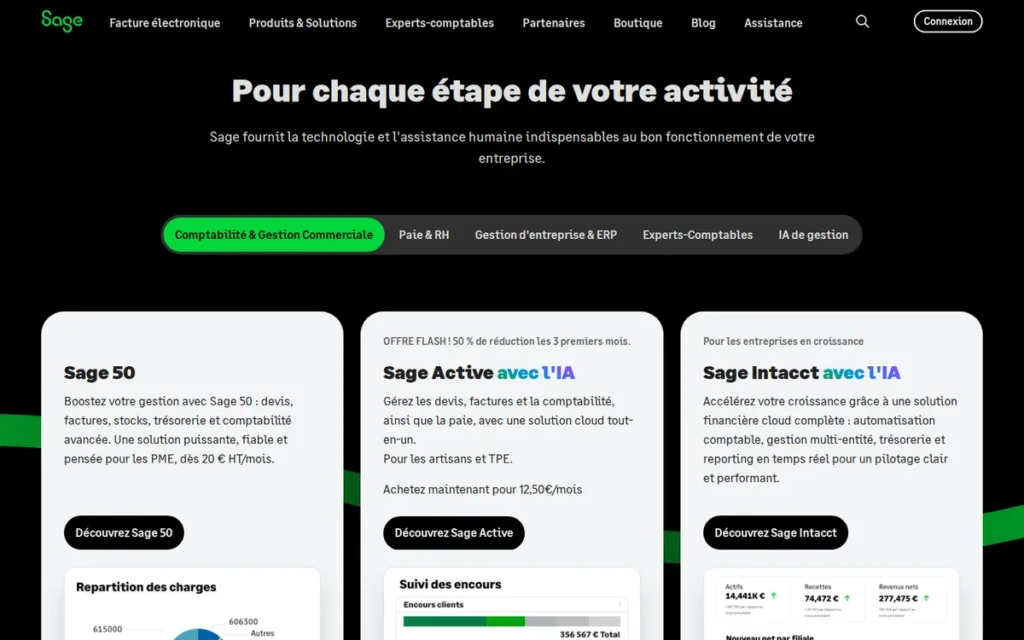
Category: All-in-One Cloud Accounting (UK Heritage), a cloud accounting platform from one of the oldest accounting software companies in the world, offering Making Tax Digital compliance and basic SMB accounting with a clear upgrade path to mid-market and enterprise Sage products.
At a Glance
- Category: All-in-One Cloud Accounting (UK Heritage)
- Best For: UK small businesses needing Making Tax Digital compliance and VAT management, and businesses with existing relationships with Sage-trained accountants in the UK or Ireland
- Price Range: $10–$25/month for US market (2 plan tiers); UK pricing differs: verify at sage.com/en-us/products/sage-accounting
- Primary Strength: Sage Accounting is backed by Sage Group plc: a publicly listed company with over 40 years of accounting software heritage and £2.7 billion in FY2025 revenue, providing the most established vendor financial stability of any platform in this comparison.
- Biggest Limitation: Sage Accounting’s feature depth and automation capabilities at US entry pricing ($10–$25/month) trail cloud-native competitors like Xero, Zoho Books, and FreshBooks at equivalent or lower price points, and its user interface is consistently described by independent reviewers as less modern than platforms launched in the cloud era.
- One-Line Summary: Sage Accounting is a cloud accounting platform from Sage Group plc, the accounting software company founded in 1981, publicly listed, and generating £2.7 billion in FY2025 revenue, offering Making Tax Digital compliance for UK small businesses at a starting price of $10 per month, though its automation depth and UX modernity trail cloud-native competitors at equivalent price points.
- Last Verified: June 2026
Overview
Sage Accounting is a cloud accounting platform from Sage Group plc, a publicly listed UK company founded in Newcastle upon Tyne in 1981 and generating £2,745 million (~$3.5 billion USD) in FY2025 revenue, offering Making Tax Digital VAT compliance, invoicing, expense tracking, and basic reporting for UK small businesses at a US starting price of $10 per month. Sage Group is the oldest accounting software developer in this comparison by more than 15 years, with deep institutional relationships among UK accountants and a multi-tier product portfolio spanning Sage Accounting (SMB cloud), Sage 50 (desktop SMB), and Sage Intacct (enterprise cloud financial management) that provides an unbroken upgrade path from sole trader to mid-market. Sage Accounting is most competitive in the UK market where its MTD compliance, VAT reporting, and familiarity among Sage-trained accountants create meaningful advantages over cloud-native competitors primarily designed for the US or global market (The Knowledge Academy, 2026).
Key Features
- Making Tax Digital (MTD) Compliance: Sage Accounting supports Making Tax Digital compliance for UK users, including VAT Return submission directly to HMRC (a regulatory requirement for UK businesses above the VAT threshold) making it a viable choice for UK businesses operating within the Sage accountant ecosystem, though FreeAgent’s HMRC integration is deeper and additionally covers Self Assessment filing (Sage Accounting product pages, June 2026).
- Sage Copilot AI (Enterprise Tier Focus): The May 2026 Sage Future conference press release specifically highlighted Sage Intacct as the platform for Sage Copilot AI deployment, with no equivalent Sage Accounting-tier AI announcement made at the same event, meaning SMB-tier Sage Accounting users should not expect advanced AI features at entry-level pricing in the near term.
- Clear In-Family Upgrade Path to Enterprise: Sage Accounting offers a documented upgrade path from Sage Accounting ($10–$25/month) to Sage 50 (desktop-connected SMB accounting with inventory) to Sage Intacct (enterprise cloud financial management with multi-entity and advanced automation), the only evaluated platform with an unbroken single-vendor upgrade path from micro-business to enterprise.
- $10/Month US Entry Price: Sage Accounting Start at $10/month is the lowest-priced paid accounting tier in this comparison (below Wave Pro ($19/month), Zoho Books Standard ($20/month), and FreshBooks Lite ($21/month)) though the feature set at this price point is limited to basic invoicing and expense tracking without the automation, multi-user access, or integration depth available from competitors at modestly higher prices.
- Sage Group plc Financial Stability: Sage Group plc reported £2,745 million in FY2025 revenue (~$3.5 billion USD) and adjusted operating profit of £552 million, a publicly listed company with 40-plus years of operating history providing the strongest vendor longevity assurance of any platform in this comparison (Sage Group FY2025 financial results).
Best For
Sage Accounting is best for UK small businesses that need Making Tax Digital compliance and VAT management within an established Sage accountant ecosystem, and for businesses with existing professional relationships with UK accountants trained on Sage software who would require retraining to switch platforms. Sage Accounting is not a strong recommendation for US-based small businesses, at equivalent price points, Xero, Zoho Books, and FreshBooks each provide more features, stronger automation, and a better user experience than Sage Accounting in the US market.
Pricing
Sage Accounting US pricing as of June 2026: Sage Accounting Start $10/month (basic invoicing and expense tracking, very limited feature set); Sage Accounting $25/month (full SMB accounting). UK pricing differs and should be verified at sage.com/en-us/products/sage-accounting. At $25/month, Sage Accounting’s feature depth is significantly below Zoho Books Standard ($20/month for 3 users with 50-plus automations), Xero Early ($25/month with unlimited users and a cleaner UX), and FreshBooks Lite ($21/month with native time tracking and 5/5 ease-of-use scores). The upgrade path to Sage 50 and Sage Intacct involves products at substantially higher price points than entry-tier Sage Accounting. Verify current pricing at sage.com/en-us/products/sage-accounting before purchasing.
Strengths
- Sage Group plc reported revenue of £2,745 million (~$3.5 billion USD) and adjusted operating profit of £552 million for FY2025 (year ended September 30, 2025), making it the most financially established company behind any evaluated platform in this comparison, providing institutional longevity assurance for businesses planning 5 to 10-year accounting software commitments (Sage Group FY2025 financial results).
- Sage Accounting’s Making Tax Digital compliance and VAT Return submission to HMRC make it a technically viable choice for UK businesses already embedded in the Sage accountant ecosystem, a regulatory compliance capability shared only with FreeAgent among the seven platforms evaluated, though FreeAgent additionally covers Self Assessment filing that Sage Accounting does not include (Sage product pages, June 2026).
- Sage Group’s 40-plus year operating history (founded 1981) and publicly listed status mean Sage Accounting benefits from an accounting software heritage and UK regulatory relationship network that cloud-native competitors founded in the 2000s and 2010s have not had sufficient time to build in the UK professional accounting community.
- Sage’s multi-tier portfolio: Sage Accounting to Sage 50 to Sage Intacct, provides the only documented single-vendor upgrade path from micro-business to enterprise financial management in this comparison, reducing the migration risk that standalone SMB platforms like Wave, FreshBooks, or FreeAgent cannot address as businesses scale significantly.
Limitations
- Weakest Feature-Per-Dollar at US Prices: Sage Accounting’s most consequential trade-off is that at US price points ($10 to $25/month), it delivers fewer features, less automation, and a less modern user interface than the comparable platforms in this evaluation, Zoho Books Standard at $20/month provides three-user access and 50-plus automated workflows that Sage Accounting at $25/month does not match, and Xero Early at $25/month includes unlimited users with a consistently praised cloud-native interface.
- Outdated User Interface: Sage Accounting’s UI is described by independent reviewers as less modern than competitors, a critique documented in the “Sage accounting software rant” thread on r/Accounting that ranks prominently for platform searches, reflecting real and sustained community frustration with Sage’s execution at the SMB level rather than isolated incidents.
- AI Investment Gap at SMB Tier: Sage’s 2026 AI investment (Sage Copilot) is concentrated on the enterprise Sage Intacct tier per the May 2026 Sage Future announcement, meaning SMB-tier Sage Accounting users should not expect the AI automation advances that QuickBooks Online, Xero, and Zoho Books are delivering at equivalent price points; for US users specifically, Sage Accounting’s primary advantages (UK accountant network, MTD compliance, VAT reporting) provide no operational benefit, making it the weakest value proposition for US-based SMBs of any platform evaluated.
Verdict
Sage Accounting is a cloud accounting platform backed by one of the oldest and most financially stable accounting software companies in the world, Sage Group plc, founded 1981, generating £2.7 billion in FY2025 revenue, with Making Tax Digital compliance and a clear upgrade path to enterprise-tier Sage Intacct. UK small businesses with existing Sage accountant relationships and MTD VAT compliance requirements have a legitimate reason to evaluate Sage Accounting; US businesses should prioritize Xero, QuickBooks Online, Zoho Books, or FreshBooks, all of which provide stronger feature value, better UX, and more competitive pricing at equivalent price points in the US market.
What Red Flags Should I Watch For When Evaluating Accounting Software?
Five red flags signal accounting software regret before you sign up: advertised prices that exclude essential add-ons, free-tier features moving behind paywalls after adoption, per-user pricing hidden inside plan tier names, payroll unavailable in your US state, and support gaps that surface only during tax season or payroll crises.
Red Flag #1: Advertised Price vs. Effective Entry Price
FreshBooks advertises its Lite plan at $21/month, but the 5-client cap means any freelancer with more than five active clients must immediately upgrade to Plus at $38/month, nearly doubling the cost before sending a single invoice to a sixth client.
Wave advertises a free tier, but automated bank imports (a daily-use essential for most businesses) now require Wave Pro at $19/month following the 2024 paywall transition. Always calculate your effective entry price based on the features you will need on day one, not the lowest plan listed.
Red Flag #2: Free-Tier Feature Erosion After Adoption
Wave Accounting moved previously free automation features (automated bank imports, auto-categorization, and collaboration tools) behind a $19/month paywall in 2024.
This generated sustained community backlash documented in multiple r/waveapps threads, with users who had built multi-year workflows on the free tier facing unexpected cost increases. Before committing to any freemium platform:
- Search [platform name] + “pricing change” + [recent year] on Reddit to surface any history of feature migrations to paid tiers
- Assume any currently-free feature that drives significant daily usage may eventually move to a paid tier, freemium migration is a documented business model, not an exception
Red Flag #3: Per-User Pricing Hidden in Plan Tier Labels
QuickBooks Online’s plan names (Simple Start, Essentials, Plus, Advanced) obscure that each tier has a hard user cap, 1, 3, 5, and 25 users respectively. A team of four cannot use Essentials ($75/month) and must pay for Plus ($115/month), an extra $480 per year for a single additional user over the cap.
FreshBooks charges $11/month per additional user above the base plan with no unlimited-user option at any tier. Any platform with per-seat pricing should be evaluated at your actual current team size, not the advertised entry plan.
The key inflection point: Xero Growing ($55/month, unlimited users) costs less than QuickBooks Online Essentials ($75/month, 3-user cap) the moment you have three accounting users. At five users, Xero ($55/month) costs less than half of QuickBooks Online Plus ($115/month), a $720 annual difference that applies to any business that has hired or is planning to hire its first finance role.
Red Flag #4: Payroll Availability Gaps by State
Wave Payroll is available only in a subset of US states, businesses in unsupported states must integrate a third-party payroll tool, adding cost and complexity that undercuts Wave’s free-platform cost proposition.
Before selecting any accounting platform with native payroll, confirm that payroll is available and fully supported in your specific US state, and verify this at the official pricing page, not through a third-party review that may be outdated.
Red Flag #5: Support Tier Disparities That Create Risk During Tax Season
Wave Accounting’s free tier provides chatbot and email-only support (no live human agents) meaning users who encounter reconciliation errors or payroll problems during tax season have no path to immediate human assistance.
Xero offers no phone support on any pricing plan, limiting all users to email and live chat regardless of subscription level. QuickBooks Online is consistently criticized for support responsiveness in G2 reviews. Assess a platform’s support channels at your intended tier before a tax or payroll emergency reveals the gap.
What Questions Should I Ask Before Choosing Accounting Software?
Before choosing accounting software, ask five questions: what is my actual cost at my team size including all add-ons, does payroll work in my state, is my accountant already familiar with this platform, how difficult is data migration if I switch platforms in two years, and does this platform support my country’s tax compliance requirements?
Question #1: What will this platform actually cost me at my current team size, including all required add-ons?
Total cost of ownership (not the advertised plan price) is the most important number to calculate before committing. Add the base plan price plus any per-user fees at your actual headcount, plus the cost of required add-ons. Compare your total at your actual team size before committing to any platform:
- Wave Pro plus Wave Payroll: $59+/month: comparable to or exceeding more feature-rich alternatives
- QuickBooks Online Plus (five users) plus payroll add-on: $115+/month
- Xero Growing (unlimited users, no payroll add-on required for accounting only): $55/month
- Zoho Books Professional (five users, 50-plus automations): $50/month
Question #2: Does this platform support payroll in my state?
Wave Payroll is the most prominently limited example, but payroll availability and capability vary across all platforms with native payroll. Confirm that your chosen platform’s payroll add-on supports your specific state’s tax requirements, direct deposit, and filing capabilities before selecting the platform.
If your state is not supported, verify that the platform integrates with a third-party payroll provider you are willing to pay for separately, and factor that cost into your total-cost-of-ownership calculation.
Question #3: Is my accountant or bookkeeper already familiar with this platform?
Intuit reports approximately 80% of US accountants operate primarily in QuickBooks (QuickBooks official, 2025), meaning choosing Xero, Zoho Books, or FreshBooks may require retraining your existing accountant or sourcing one familiar with your chosen platform.
Before finalizing your platform decision, confirm your accountant’s fluency with the software. This is particularly critical for Zoho Books, which has a significantly smaller US accountant network than QuickBooks Online, retraining costs can exceed subscription savings in the first year of migration.
Question #4: What happens to my data and how difficult is migration if I need to switch in two years?
Accounting data migration (chart of accounts, historical transactions, vendor lists, open invoices) is consistently cited as the most painful aspect of switching accounting platforms.
Ask each vendor about their data export formats (CSV, QBO, XML), whether historical transactions export completely or only summarize, and whether the platform offers any migration assistance. Platforms with proprietary data formats or limited export options create vendor lock-in that becomes expensive to escape as your historical data accumulates.
Question #5: Does this platform support my country or region’s tax compliance requirements?
If your business operates outside the US, tax compliance support (not feature breadth) should be your primary platform criterion:
- Zoho Books: GST (India), VAT (UAE, Saudi Arabia, Bahrain, Oman, Qatar, Kuwait, Kenya, France)
- FreeAgent: UK MTD VAT and Self Assessment (HMRC-integrated)
- Sage Accounting: UK MTD VAT submission only (Self Assessment not included)
- Xero: 160-plus currency support; verify jurisdiction-specific tax compliance at xero.com
- QuickBooks Online, FreshBooks, Wave: US tax requirements only: limited non-US compliance
US-native platforms in this comparison do not offer comparable non-US compliance at any price point.
How Did We Rank These Accounting & Finance Software Tools?
Seven accounting software platforms were ranked using a six-criterion evaluation framework with three primary criteria (weighted 2x) and three secondary criteria (weighted 1x). No predetermined rankings were set before research began, and all seven platforms were scored against identical criteria using the same research data collected in June 2026.
PlugRoute has no affiliate relationships with any company listed in this article. Rankings are determined entirely by research data and objective evaluation criteria applied equally to all seven platforms.
How Was Each Platform Evaluated?
The evaluation followed a four-step process:
- Step 1: Discovery: Queries identified the seven most-referenced platforms across 2026 accounting software roundups from NerdWallet, PCMag, and Business News Daily.
- Step 2: Platform Research: 19 targeted research queries gathered features, pricing, review ratings, differentiators, and limitations for each product.
- Step 3: Community Sentiment: Reddit threads were researched across r/QuickBooks, r/smallbusiness, r/Bookkeeping, r/ContractorUK, r/waveapps, and r/freelanceuk, with thread URLs documented per entity as primary discovery signals.
- Step 4: AI Response Analysis: Current Perplexity (June 2026) and ChatGPT (June 2026) coverage of each platform was analyzed to identify gaps that this article addresses.
Every platform in this comparison, including the top-ranked Xero, has a Limitations section that names its most consequential trade-off first. No limitation in this article uses softening language, every limitation is a specific operational constraint with documented evidence.
What Criteria Were Used to Rank Each Platform?
Primary Criteria (2x weight):
Feature Breadth and Core Accounting Completeness (C1): Assessed by:
- Breadth of native accounting modules (general ledger, accounts payable and receivable, bank feeds, inventory, payroll, multi-currency)
- Verified third-party integration count across platforms
- Whether the full accounting cycle is supported without paid add-ons for essential functions
- Depth of automation for routine bookkeeping tasks (categorization, reconciliation, invoice reminders)
Pricing Transparency and Total Cost of Ownership (C2): Assessed by:
- Advertised versus effective entry price at common client cap and user minimum thresholds
- Per-user cost modeling at 1, 3, and 5 users for all seven platforms
- Cost of required add-ons for common use cases (payroll, payment processing, receipt scanning)
- Promotional vs. standard pricing transparency and consistency
- Documented historical price change frequency and magnitude (QBO July 2025, FreshBooks 2026, Wave 2024)
User Experience and Ease of Use for Non-Accountants (C3): Assessed by:
- Software Advice, G2, and Capterra ease-of-use dimension scores (where available at time of research)
- Qualitative review themes around interface clarity and onboarding experience
- Whether non-accountant users can complete core tasks without professional guidance
- Documented community feedback on learning curve from Reddit and review platform comments
Secondary Criteria (1x weight):
- Verified Review Platform Ratings and Community Sentiment (C4): G2 and Capterra star ratings with review volume, Software Advice dimension scores, Trustpilot profile characterization, and qualitative Reddit community sentiment.
- Scalability and Integration Ecosystem (C5): Number of verified third-party integrations, user and account count limits at each pricing tier, availability of in-family upgrade tiers, multi-currency and multi-entity support, and geographic compliance coverage.
- Customer Support Quality and Availability (C6): Support channels available at each pricing tier (phone, live chat, email, chatbot-only), Software Advice and G2 customer support scores, and documented support failure patterns from community discussions.
How Was Conflicting Evidence Weighted?
When review platform ratings conflict with Reddit community sentiment, PlugRoute weights specificity and recency: a detailed 2025 Reddit thread with documented user frustration outweighs a generic 2023 G2 review for current purchase guidance.
For example: QuickBooks Online community backlash threads from mid-2025 and 2026 are weighted more heavily for current pricing guidance than 2023 G2 reviews, because they reflect users experiencing current pricing at current support quality, not the experience documented two years ago.
Vendor-reported statistics (including Intuit’s claimed 12 hours/month savings from AI agents and the approximately 80% US accountant adoption rate) are labeled as vendor claims throughout this article and not stated as independently verified facts.
How Were Platform Claims Validated?
Vendor-reported statistics are labeled as such throughout this article. Pricing figures are dated to the month of verification (June 2026) and accompanied by instructions to verify directly at official URLs, given the frequency of price changes documented in this category.
Reddit community threads referenced in this article were identified by search and documented by title and URL, giving readers primary sources to evaluate directly rather than unverified content summaries. Thread titles alone often reveal the community narrative more reliably than individual quotes.
Review ratings noted as “not retrieved” include the source URL for direct verification at the time of reading.
How Often Is This Comparison Updated?
This article was last updated in June 2026 and is reviewed quarterly. Pricing data has a maximum 90-day age limit before re-verification; feature data is reviewed semi-annually.
QuickBooks Online raised prices in July 2025, FreshBooks raised prices in 2026, and Wave restructured its free tier in 2024, all within the prior 24 months, confirming this category’s pricing instability and the necessity of dated verification stamps on all pricing data.
What Are the Most Frequently Asked Accounting Software Questions?
What is the best accounting software for freelancers in 2026?
FreshBooks is the strongest choice for freelancers billing by time or project, earning 5/5 Software Advice scores for ease of use and customer support as of June 2026, with native time tracking on all plans. Wave Accounting is best at zero budget. UK freelancers should specifically evaluate FreeAgent, free for NatWest banking customers and the only platform with HMRC Self Assessment filing included.
What is the best free accounting software for small businesses in 2026?
Wave Accounting offers the most widely available free tier (unlimited invoicing and double-entry bookkeeping with no transaction caps) though automated bank imports now require Wave Pro at $19/month after the 2024 pricing change. Zoho Books also offers a permanent free plan for two users with bank reconciliation and invoicing included. Neither free tier includes payroll; payroll requires a paid add-on on both platforms, adding $40-plus/month to the effective cost once payroll is needed.
How does PlugRoute determine its accounting software rankings?
PlugRoute ranked these seven platforms using a six-criterion framework: three primary criteria weighted at 2x (Feature Breadth, Pricing Transparency and Total Cost of Ownership, and User Experience for Non-Accountants) and three secondary criteria weighted at 1x (Review Ratings, Scalability, and Customer Support). All platforms were scored against identical criteria using June 2026 research data. No company pays to appear or rank higher in this comparison.
What Do These Key Accounting Software Terms Mean?
Double-Entry Accounting: A bookkeeping method in which every financial transaction is recorded as both a debit in one account and a credit in another, ensuring that the accounting equation (assets = liabilities + equity) always balances. All seven platforms in this comparison offer double-entry accounting; it is the standard method required for accurate financial statements and tax compliance filings.
Making Tax Digital (MTD): A UK government initiative requiring businesses above specified VAT and income thresholds to maintain digital records and submit tax returns using HMRC-approved software integrated directly with government systems. Among the seven platforms evaluated, FreeAgent offers the most comprehensive MTD implementation, covering both MTD VAT submission and Self Assessment tax return filing; Sage Accounting offers MTD VAT submission only.
ProAdvisor: An accountant, bookkeeper, or financial professional who has completed Intuit’s training and certification program for QuickBooks Online. Intuit reports approximately 400,000 ProAdvisors listed in its searchable directory as of 2025, creating a certified support network that makes QuickBooks Online the most accountant-compatible platform in the US market and effectively the required choice for businesses hiring from the majority of available US bookkeeping professionals (QuickBooks official, 2025).
Bank Reconciliation: The process of matching a business’s internal financial records against its bank statements to identify discrepancies, catch errors, and prevent fraud. Cloud accounting platforms like Xero, QuickBooks Online, and Zoho Books automate this process through bank feeds that import transactions directly, reducing reconciliation from a weekly manual task to exception-only review for businesses with reliable bank feed connections.
Total Cost of Ownership (TCO): The actual monthly or annual cost of operating an accounting software platform at a given team size and feature level, including the base subscription, per-user fees, required add-ons (payroll, payment processing, receipt scanning), and any integration costs. TCO is frequently higher than advertised plan pricing, a three-person team on FreshBooks Plus with Wave Payroll could pay $59-plus/month vs. the $21/month Lite plan advertised on landing pages, illustrating why TCO calculation is the single most important step before any accounting software purchase.
Glossary: Key Terms Used in This Comparison
Double-Entry Accounting: A bookkeeping method in which every financial transaction is recorded as both a debit in one account and a credit in another, ensuring the accounting equation (assets = liabilities + equity) always balances. It is the standard method required for accurate financial statements and tax compliance filings.
Making Tax Digital (MTD): A UK government initiative requiring businesses above specified VAT and income thresholds to maintain digital records and submit tax returns using HMRC-approved software integrated directly with government systems. Among the platforms evaluated, FreeAgent offers the most comprehensive MTD implementation, covering both MTD VAT submission and Self Assessment tax return filing.
ProAdvisor: An accountant, bookkeeper, or financial professional who has completed Intuit’s training and certification program for QuickBooks Online. Intuit reports approximately 400,000 ProAdvisors listed in its searchable directory as of 2025, creating a certified support network that makes QuickBooks Online the most accountant-compatible platform in the US market.
Bank Reconciliation: The process of matching a business’s internal financial records against its bank statements to identify discrepancies, catch errors, and prevent fraud. Cloud accounting platforms automate this through bank feeds that import transactions directly, reducing reconciliation from a weekly manual task to exception-only review.
Total Cost of Ownership (TCO): The actual monthly or annual cost of operating an accounting software platform at a given team size and feature level, including the base subscription, per-user fees, required add-ons such as payroll and payment processing, and any integration costs. TCO is frequently higher than advertised plan pricing, making it the most important figure to calculate before any accounting software purchase.
Which Accounting Software Is Right for You?
Xero is the best overall choice for growing teams needing unlimited user seats; QuickBooks Online is required for US businesses working with an accountant; Zoho Books delivers the most features per dollar at $20/month for three users; FreshBooks is best for freelancers billing by time; and FreeAgent is free for UK NatWest banking customers needing HMRC tax compliance.
What Are the Key Takeaways From This Comparison?
- Xero is the best overall accounting software for growing businesses in 2026: unlimited users on all plans means a five-person team pays $55/month vs. $115/month on QuickBooks Online Plus, a $720 annual difference that grows with every additional user.
- QuickBooks Online is the required choice for US businesses planning to hire an accountant or bookkeeper, because Intuit reports approximately 80% of US accountants operate primarily in QuickBooks (QuickBooks official, 2025), making QBO compatibility effectively a prerequisite for most US hired bookkeeping relationships.
- Zoho Books delivers more accounting capability per dollar than any evaluated competitor: $20/month for three users and 50-plus automated workflows, vs. $75/month for three users on QuickBooks Online Essentials with no automation included at that tier.
- FreshBooks is the top-rated option for service-based freelancers: earning 5/5 on ease of use and customer support on Software Advice (June 2026), but the Lite plan’s 5-client cap makes $38/month (Plus) the effective starting price for most active freelancers, not the advertised $21/month.
- FreeAgent is the most overlooked platform in mainstream accounting software recommendations: it is available completely free to NatWest, RBS, Ulster Bank, and Mettle banking customers, and is the only platform offering HMRC-integrated Self Assessment and MTD VAT filing in a single tool, making it the default choice for UK contractors and freelancers who qualify for free access.
- Wave Accounting remains a legitimate zero-cost starting point for solopreneurs, but the combined cost of Wave Pro ($19/month) plus Wave Payroll ($40+/month) reaches $59-plus/month, at which point Xero Growing ($55/month, unlimited users, 1,000-plus integrations) or Zoho Books Standard ($20/month, 3 users, 50-plus automations) becomes more cost-effective for most growing businesses.
- Verify all pricing directly at official vendor URLs before purchasing: QuickBooks Online raised prices 27% in July 2025, FreshBooks raised prices in 2026, and Wave restructured its free tier in 2024, three significant price changes within 24 months confirm this category’s pricing instability.
- The best accounting software is not the one with the most features: it is the one you will actually use consistently at a price you can sustain as your business grows.
Matching the right platform to your business comes down to three variables: team size, geography, and whether you work with a professional accountant. US sole proprietors without an accountant should start with Wave (free Starter) or Zoho Books (free tier, more structure). US businesses with an accountant should default to QuickBooks Online for compatibility. Teams of three or more in any geography should model Xero’s unlimited-user pricing before committing to any seat-gated alternative. UK users (especially those banking with NatWest Group) should evaluate FreeAgent before any other platform.
What if you choose wrong? All seven platforms in this comparison allow data export, migration is painful but possible. The cost of starting with the wrong platform and switching in 12 months is typically lower than continuing to manage finances with a spreadsheet or delaying the decision another quarter.
Pricing in this category changes frequently. Revisit this comparison before your annual renewal decision, and subscribe to independent pricing update alerts at PlugRoute to track changes without depending on vendor notifications. We update this guide quarterly. Last updated: June 2026.