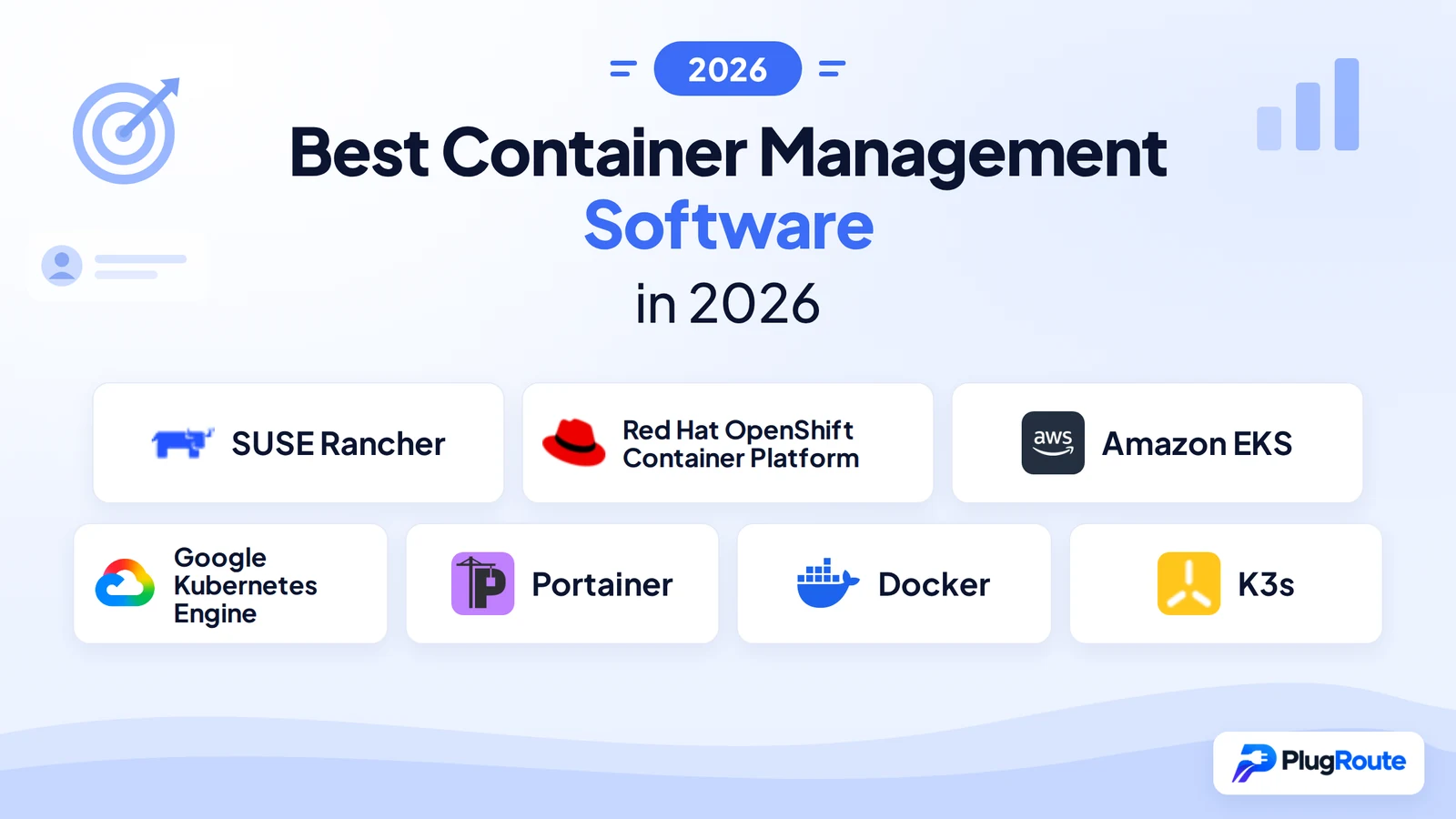
SUSE Rancher is the best container management software for multi-cloud environments; Red Hat OpenShift Container Platform leads for regulated enterprises needing an integrated DevOps stack; Amazon EKS is the strongest choice for AWS-committed organizations at hyperscale. The right platform depends on cloud commitment, cluster count, and compliance requirements, not vendor reputation.
Managing containers across multiple clusters without a unified control plane creates fragmented visibility and inconsistent policy enforcement. Managed services bury critical costs (Amazon EKS’s 6x extended support surcharge and Google Kubernetes Engine Enterprise’s opaque fleet pricing) while multi-cloud portability claims routinely collide with the reality that networking, identity, and storage remain cloud-provider-specific.
As one platform engineer on r/kubernetes described:
“I’m running multiple Kubernetes clusters (including OpenShift), and I’m trying to improve our release management visibility. Ideally, I want a single place to see: which service versions are deployed where, base image provenance and vulnerabilities, and deployment history for audit/release tracking. I’ve tried combining Argo CD + Trivy + Artifactory, but it still feels fragmented.” Posted by u/vlaaadxyz1
Takeaway: The multi-cluster visibility problem is not solved by assembling individual CNCF tools, practitioners managing heterogeneous cluster fleets consistently report fragmentation that only a unified control plane resolves.
PlugRoute has no affiliate relationships with any company listed, rankings are determined entirely by research data and objective evaluation criteria.
TL;DR: Top Picks at a Glance
- SUSE Rancher: cloud-neutral multi-cluster governance across any CNCF-certified Kubernetes distribution at zero licensing cost
- Red Hat OpenShift Container Platform: fully integrated enterprise Kubernetes for regulated industries with IBM-backed support and native CI/CD
- Amazon EKS: deepest AWS ecosystem integration with validated 100,000-node scale capacity and bundled Argo CD GitOps (EKS Capabilities, GA November 2025)
- K3s: fastest path to Kubernetes for edge, IoT, and CI/CD pipelines, single binary under 100MB, free, CNCF-certified
What Are the Categories of Container Management Software?
Container management software falls into three categories: Enterprise and Multi-Cluster Platforms (SUSE Rancher, OpenShift) for unified governance across heterogeneous environments; Managed Cloud Kubernetes Services (EKS, GKE) for cloud-provider-operated control planes; and Lightweight and Specialized Tools (Portainer, Docker, K3s) optimized for specific use cases rather than enterprise fleet orchestration at scale.
Enterprise and Multi-Cluster Platforms: SUSE Rancher (#1) and Red Hat OpenShift Container Platform (#2) govern Kubernetes workloads across multiple cloud providers, on-premises, and edge environments from a single control plane. These platforms are designed for organizations that need unified fleet governance, not just managed infrastructure.
Managed Cloud Kubernetes Services: Amazon EKS (#3) and Google Kubernetes Engine (#4) delegate control-plane management to the cloud provider while integrating deeply with their respective cloud ecosystems. These platforms reduce control-plane operational overhead in exchange for cloud-provider dependency.
Lightweight and Specialized Tools: Portainer (#5) provides GUI-first container management for small teams and edge Docker deployments; Docker (#6) serves as the developer platform and supply-chain security layer; K3s (#7) is the leading lightweight Kubernetes distribution for edge, IoT, and CI/CD environments.
How Do the Top Container Management Platforms Compare?
The table below compares all seven platforms across eight dimensions (rank, category, best-fit audience, one-line summary, key capabilities, primary strength, and key limitation) enabling direct side-by-side comparison of SUSE Rancher, Red Hat OpenShift Container Platform, Amazon EKS, Google Kubernetes Engine, Portainer, Docker, and K3s in a single view.
| Rank | Company | Category | Best For | One-Line Summary | Key Capabilities | Primary Strength | Key Limitation |
|---|---|---|---|---|---|---|---|
| 1 | SUSE Rancher | Multi-Cluster Manager | Multi-cloud, anti-lock-in organizations | SUSE Rancher governs any CNCF-certified Kubernetes distribution across 8+ cloud providers; including Chinese hyperscalers; from a single open-source control plane. | SUSE Rancher: Fleet GitOps automation; NeuVector runtime security; RKE2 CIS-hardened distribution; Longhorn distributed storage | SUSE Rancher manages 8+ cloud providers from one control plane; including Alibaba ACK, Baidu, Huawei CCE, and Tencent TKE; confirmed by Evaluator Group (2023). | SUSE Rancher Prime enterprise pricing is not publicly listed; SUSE’s 2023 restructuring raised unresolved stewardship concerns as of June 2026. |
| 2 | Red Hat OpenShift Container Platform | Enterprise Platform | Regulated industries, hybrid cloud, IBM relationships | Red Hat OpenShift Container Platform is the most comprehensively integrated enterprise Kubernetes platform in this evaluation; combining native CI/CD, GitOps, and VM consolidation in a single IBM-backed stack. | Red Hat OpenShift: native Tekton CI/CD; Argo CD GitOps; OperatorHub Day 2 marketplace; OpenShift Virtualization; Service Mesh | Red Hat OpenShift Container Platform provides the broadest documented compliance baseline; CIS benchmarks, FIPS readiness, and FedRAMP authorization pathways; of any platform in this evaluation. | Red Hat OpenShift Container Platform’s per-core subscription is the highest-cost platform in this evaluation; opinionated SCCs require non-trivial workload rework when migrating from standard Kubernetes. |
| 3 | Amazon EKS | Managed Cloud Service | AWS-committed organizations, hyperscale workloads | Amazon EKS is the market-leading managed Kubernetes service for AWS-committed organizations; with bundled Argo CD GitOps via EKS Capabilities (GA November 2025) and validated 100,000-node scale capacity. | Amazon EKS: EKS Capabilities (Argo CD, ACK, KRO); EKS Auto Mode; Fargate serverless pods; 100,000-node validated scale (July 2025) | Amazon EKS supports clusters scaling to 100,000 worker nodes (announced July 15, 2025, AWS What’s New); the largest documented scale ceiling of any managed Kubernetes service in this evaluation. | Amazon EKS charges $0.60/hr for extended support (6x the $0.10/hr standard rate, triggered 14 months post-version-release) and requires simultaneous Kubernetes and AWS infrastructure expertise that GKE and AKS abstract away. |
| 4 | Google Kubernetes Engine | Managed Cloud Service | GCP-committed organizations, maximum managed simplicity | Google Kubernetes Engine is the managed Kubernetes service from Kubernetes’ inventor; offering the most operationally simple experience via Autopilot mode and the cleanest practitioner-reported autoscaling UX of any major managed service. | Google Kubernetes Engine: Autopilot fully managed mode; September 2025 ComputeClasses; upstream Kubernetes engineering authority; GKE Enterprise fleet management | Google Kubernetes Engine’s Autopilot mode manages all nodes, security hardening, and upgrades automatically; billing per pod resource request rather than idle node capacity. | Google Kubernetes Engine’s Autopilot mode is GCP-exclusive; Google’s documented product discontinuation reputation creates enterprise architect hesitancy not matched by AWS or Azure counterparts. |
| 5 | Portainer | GUI Management Tool | Small teams, early container adoption, edge Docker environments | Portainer is the leading GUI-first container management platform; G2 “Easiest to Use” and “Best Free Software”; managing Docker, Kubernetes, Podman, and ACI from a single self-hosted interface. | Portainer: unified Docker/Kubernetes/Podman/ACI console; edge device management for air-gapped sites; Business Edition RBAC and audit logging; Helm integration | Portainer is the only platform in this evaluation recognized by G2 as both “Easiest to Use” and “Best Free Software” in the Container Management category (verified June 2026). | Portainer lacks fleet-level multi-cluster governance and enterprise-grade GitOps automation, making it unsuitable as the primary management layer for organizations with multiple production Kubernetes clusters at scale. |
| 6 | Docker | Developer Platform | Developer workflow, image registry, build-time supply-chain security | Docker is the foundational developer container platform; with Docker Hub (world’s largest image registry), Docker Compose (de facto multi-container standard), and Docker Scout (A-F Health Score supply-chain scanning). | Docker: Docker Hub universal registry; Docker Scout A-F Health Score grading; Docker Compose YAML standard; Docker Build Cloud; Testcontainers Cloud | Docker is rated 8.6/10 on PeerSpot (verified June 2026); among the highest community ratings of any platform in the container management category. | Docker is not designed as a production multi-host orchestration platform; Docker Swarm is a legacy tool with significantly lower adoption than Kubernetes, requiring a separate orchestration platform for production workloads. |
| 7 | K3s | Lightweight Distribution | Edge computing, IoT on ARM, CI/CD ephemeral clusters | K3s is the leading CNCF-certified lightweight Kubernetes distribution; installed tens of thousands of times per week from a single binary under 100MB in under 90 seconds. | K3s: single binary independently confirmed at under 70MB (NETWAYS, January 2025); 30–90 second install; native ARM64/ARMv7; SUSE Rancher native integration | K3s is the most actively installed Kubernetes distribution by weekly volume; tens of thousands of new installations per week (SUSE, verified June 2026); ahead of k0s and MicroK8s. | K3s provides no native multi-cluster fleet governance or centralized RBAC; organizations managing more than five K3s clusters without SUSE Rancher face unsustainable cluster-by-cluster CLI administration. |
Which Container Management Platform Should I Choose for My Use Case?
Select your primary organizational priority from the table below to identify your recommended platform. Each row maps a specific decision driver (from multi-cloud governance to developer workflow standardization) to the platform with the strongest evidence-based match, a brief justification, and a vetted alternative.
| Your #1 Priority | Recommended Tool | Why | Acceptable Alternative |
|---|---|---|---|
| Multi-cloud or cloud-neutral mandate, no vendor lock-in | SUSE Rancher | SUSE Rancher is the only platform in this evaluation managing 8+ cloud providers; including Chinese hyperscalers; from a single open-source control plane at zero licensing cost. | Red Hat OpenShift Container Platform (multi-cloud but vendor-coupled and higher cost) |
| Regulated industry, integrated DevOps toolchain, IBM relationship | Red Hat OpenShift Container Platform | Red Hat OpenShift provides the highest security and compliance depth; CIS benchmarks, FIPS readiness, FedRAMP pathways; with native CI/CD, GitOps, and OperatorHub in one IBM-backed platform. | SUSE Rancher (lower cost, cloud-neutral, NeuVector security) |
| AWS-committed architecture, hyperscale workloads | Amazon EKS | Amazon EKS provides the deepest AWS integration (IAM, VPC, ALB, ECR) and the largest documented scale ceiling (100,000 nodes, announced July 2025) of any managed Kubernetes service. | Google Kubernetes Engine (if AWS is not required) |
| GCP-committed, maximum managed operational simplicity | Google Kubernetes Engine | Google Kubernetes Engine Autopilot manages all nodes automatically, bills per pod resource request, and was built by Kubernetes’ inventor; offering the cleanest autoscaling UX among managed services. | Amazon EKS (if GCP is not required) |
| Small team, early container adoption, edge or IoT Docker | Portainer | Portainer is G2 “Easiest to Use”; providing unified Docker/Kubernetes/Podman management with a free Community Edition and Business Edition Starter at approximately $995/year. | K3s (if a Kubernetes-specific lightweight distribution is needed) |
| Developer workflow, image registry, build-time supply-chain security | Docker | Docker provides Docker Hub (world’s largest registry), Docker Scout (A-F Health Score grading), and Docker Compose (de facto multi-container standard) at a free Personal tier. | Podman (for enterprise Linux production environments) |
| Edge computing, IoT on ARM hardware, CI/CD ephemeral clusters | K3s | K3s installs in 30–90 seconds from a single binary under 100MB on any Linux host including ARM64/ARMv7; entirely free under Apache 2.0 with tens of thousands of weekly installs. | MicroK8s (for Ubuntu/Canonical environments) |
1. SUSE Rancher: Best Overall for Multi-Cloud and Multi-Cluster Container Management
Category: Multi-Cluster Manager, a management layer that provisions, monitors, and governs any CNCF-certified Kubernetes distribution across heterogeneous cloud and on-premises environments from a single unified control plane, without requiring migration to a proprietary distribution.
At a Glance
- Category: Multi-Cluster Manager
- Best For: Mid-to-large organizations managing Kubernetes workloads across multiple cloud providers or on-premises environments requiring vendor-neutral governance, fleet-level GitOps automation, and enterprise security without cloud lock-in
- Price Range: Free (Community Edition, open-source, Apache 2.0 license, no core feature gating); Rancher Prime subscription in two confirmed tiers (up to 500 nodes and unlimited nodes) both with 99.9% SLA; exact pricing requires SUSE sales engagement (verify at suse.com/products/suse-rancher)
- Primary Strength: SUSE Rancher is the only platform in this evaluation that manages any CNCF-certified Kubernetes distribution across any cloud provider (including AWS, Azure, GCP, Alibaba ACK, Baidu, Huawei CCE, Tencent TKE, and on-premises) from a single open-source control plane (Evaluator Group, 2023).
- Biggest Limitation: SUSE Rancher’s Rancher Prime enterprise pricing is not publicly listed and requires sales engagement, while SUSE’s 2023 corporate restructuring generated lasting community concern about development velocity that has not been fully resolved as of June 2026.
- One-Line Summary: SUSE Rancher is the leading cloud-neutral multi-cluster Kubernetes management platform that governs any CNCF-certified distribution across any cloud provider or on-premises environment from a single open-source control plane, the strongest independent evidence-based choice for organizations with a multi-cloud mandate or anti-lock-in requirement.
- Last Verified: June 2026
Overview
SUSE Rancher is a cloud-neutral, open-source Kubernetes management platform designed for DevOps and platform engineering teams at mid-to-large organizations who need centralized governance, fleet-level GitOps automation, and consistent policy enforcement across heterogeneous multi-cluster environments, without cloud-provider lock-in.
SUSE Rancher supports simultaneous management of clusters on AWS, Azure, GCP, Alibaba ACK, Baidu, Huawei CCE, Tencent TKE, and on-premises, the broadest global multi-cloud coverage of any platform in this evaluation, confirmed by an independent Evaluator Group product brief (2023).
SUSE Rancher was developed by Rancher Labs and acquired by SUSE in December 2020 for a reported $600 million (exact price not publicly confirmed by SUSE). SUSE Rancher’s full-stack ecosystem encompasses:
- Rancher management console: centralized multi-cluster governance and provisioning
- RKE2: CIS-hardened Kubernetes distribution for security-sensitive environments
- K3s: CNCF Sandbox-certified lightweight distribution for edge and IoT deployments
- NeuVector: runtime container security and network policy enforcement (acquired Q4 2021)
- Longhorn: cloud-native distributed block storage
- Fleet: large-scale GitOps automation across cluster fleets (SUSE product documentation, verified June 2026)
SUSE Rancher’s Fleet GitOps and centralized RBAC make it a natural foundation for organizations building Internal Developer Platforms (IDPs), the platform engineering approach that the CNCF 2025 survey identifies as the leading organizational response to Kubernetes adoption friction.
Key Features
- Cloud-Neutral Cluster Management: SUSE Rancher provides a unified management console that imports, provisions, and governs any CNCF-certified Kubernetes cluster (including EKS, AKS, GKE, RKE2, K3s, and upstream Kubernetes) without requiring migration to a proprietary Rancher distribution.
- Fleet GitOps at Scale: SUSE Rancher’s Fleet GitOps engine enables large-scale automated deployment and configuration management across hundreds of Kubernetes clusters simultaneously, the most capable fleet-level native GitOps solution of any platform in this evaluation for multi-cluster environments.
- NeuVector Runtime Security: SUSE Rancher integrates NeuVector (acquired Q4 2021) as a native runtime container security and network policy enforcement layer, providing deep container traffic inspection, compliance scanning, and zero-trust network segmentation without requiring a separate security platform.
- Centralized RBAC Propagation: SUSE Rancher delivers centralized RBAC and access control that propagates consistently across all managed clusters regardless of cloud provider, eliminating the policy fragmentation that occurs when managing clusters independently through each provider’s native console.
- Vertically Integrated Ecosystem: SUSE Rancher’s ecosystem includes RKE2 (a CIS-hardened distribution for security-sensitive environments) and K3s (a CNCF Sandbox-certified distribution for edge and IoT), providing a vertically integrated stack from edge to enterprise under a single vendor relationship.
Best For
SUSE Rancher is best for platform engineering teams and IT architects at mid-to-large organizations with a multi-cloud mandate, heterogeneous Kubernetes environments, or an explicit requirement to avoid cloud-provider lock-in, particularly organizations needing fleet-level GitOps automation across more than five clusters, enterprise security governance via NeuVector and RKE2, and the option to start with a genuinely free community edition before committing to Rancher Prime.
Pricing
SUSE Rancher Community Edition is free and open-source under the Apache 2.0 license with no core feature gating (verified June 2026 at suse.com/products/suse-rancher).
Rancher Prime is offered in two confirmed subscription tiers (up to 500 nodes and unlimited nodes) both with a 99.9% SLA. Exact annual pricing requires direct SUSE sales engagement; no public price table is available.
SUSE also offers a 5-year Kubernetes support commitment relevant for regulated industries and edge deployments with long hardware refresh cycles. Verify current pricing directly at suse.com/products/suse-rancher.
Strengths
- The independent Evaluator Group 2023 product brief documented SUSE Rancher as providing “single pane of glass management of heterogeneous, multi-cluster customer environments” across more cloud providers (including Chinese hyperscalers Alibaba ACK, Baidu, Huawei CCE, and Tencent TKE) than any other platform in this evaluation, providing third-party analyst validation no competing platform can match.
- SUSE Rancher’s open-source community edition is genuinely free with no core feature gating (unlike enterprise platforms that gate critical governance capabilities behind paid tiers) enabling organizations to adopt SUSE Rancher at zero licensing cost and progressively migrate to Rancher Prime as operational requirements mature.
- SUSE Rancher’s Fleet GitOps directly addresses the CNCF Annual Survey 2024 finding (published April 2025) that CI/CD and GitOps adoption grew 43% year-over-year, providing fleet-scale automation across hundreds of clusters simultaneously that managed cloud services cannot replicate without external tooling.
- SUSE’s 30+ year enterprise Linux heritage: founded in 1992 as a Linux distribution company, allows organizations with existing SUSE SLES investments to leverage a single vendor relationship for both the operating system and the Kubernetes management layer, a consolidation advantage unavailable from pure-play Kubernetes vendors.
Users on r/kubernetes shared their operational experience:
“We use Rancher : easy to provision tons of clusters, centralised user management, so many plugins : fleet for CD, monitoring stack, neuVector, Opni…. Literally within few hours maximum you can spin up a production grade cluster from scratch even on bare metal. It’s been two years now and no issues yet.” Posted by u/Ilfordd
Takeaway: Practitioners running SUSE Rancher in production consistently validate its Fleet GitOps, NeuVector integration, and centralized RBAC as genuine time-to-cluster advantages over manual multi-cluster toolchains, confirming the Strengths section’s evidence-based claims with real operator experience.
Limitations
- Enterprise Pricing Opacity: SUSE Rancher’s Rancher Prime pricing requires sales engagement rather than being publicly listed, creating asymmetric information friction relative to managed services with transparent per-hour pricing, complicating procurement timelines by four to six weeks compared to Amazon EKS or GKE budget modeling.
- Stewardship Uncertainty: SUSE Rancher’s development velocity community confidence was materially affected by SUSE’s 2023 workforce reduction, and this concern has not been fully resolved as of June 2026, representing a procurement risk that enterprise architects must evaluate through direct SUSE engagement and open-source project health metrics.
This aligns with balanced assessments on r/devops:
“Honestly I had mixed feelings. When we first started using Rancher it was amazing to spin up dev clusters or take a look at workloads without setting up a bunch of access rules. The centralized management was a lifesaver for keeping track of what was running where. Over time though it felt like it became another thing to upgrade and babysit especially when we scaled up. There were days when pods just vanished from the UI but were still there in kubectl. Rancher was helpful for demoing stuff to product managers but once the team got more comfortable with raw k8s it became more overhead than help.” Posted by u/vineetchirania
Takeaway: SUSE Rancher delivers clear value during initial adoption and scale-out phases, but teams with growing Kubernetes CLI fluency report it can shift from productivity multiplier to maintenance liability, a maturity-curve risk that prospective adopters should evaluate against their team’s expected operational sophistication trajectory.
- Component Maturity Variance: SUSE Rancher’s architectural breadth: spanning the management console, RKE2, K3s, NeuVector, Longhorn, and Fleet, means each component carries its own maturity curve, and community discussions frequently flag Longhorn’s production readiness for high-throughput workloads as requiring independent validation before adoption at scale.
Verdict
SUSE Rancher is the strongest evidence-based choice for organizations requiring cloud-neutral multi-cluster Kubernetes management, the only platform in this evaluation governing any CNCF-certified distribution across 8+ cloud providers without cloud-vendor allegiance or licensing fees for the community edition. SUSE Rancher earned the #1 ranking through the highest weighted score on the most critical criterion for the target audience: unified multi-cluster, multi-cloud management capability validated by an independent Evaluator Group brief across eight or more cloud providers. The primary risks to evaluate before procurement are SUSE’s corporate stewardship trajectory following the 2023 restructuring and the absence of publicly listed Rancher Prime pricing, both requiring direct SUSE engagement to resolve.
2. Red Hat OpenShift Container Platform: Best Enterprise-Grade Kubernetes Platform for Regulated Industries and Hybrid Cloud Standardization
Category: Enterprise Platform, a fully integrated, opinionated Kubernetes platform that bundles CI/CD, GitOps, service mesh, image registry, monitoring, virtualization, and security into a single vendor-supported lifecycle, reducing tool assembly overhead for enterprise engineering organizations.
At a Glance
- Category: Enterprise Platform
- Best For: Large enterprises and regulated-industry organizations: financial services, healthcare, government, defense, requiring vendor-certified Kubernetes support SLAs, integrated CI/CD and GitOps, hybrid-cloud portability across on-premises and public clouds, VM-alongside-container workloads, and compliance-grade security with documented certification pathways
- Price Range: Per-core subscription (exact tiers require Red Hat sales engagement; pricing page confirmed at redhat.com/en/technologies/cloud-computing/openshift/pricing as of June 2026); IBM bundling available for existing IBM enterprise accounts at potentially zero marginal cost (r/kubernetes community confirmation, June 2026)
- Primary Strength: Red Hat OpenShift Container Platform provides the most comprehensively integrated enterprise Kubernetes stack in this evaluation, combining native Tekton CI/CD, Argo CD GitOps, OperatorHub Day 2 automation, OpenShift Virtualization, service mesh, and compliance-grade security in a single IBM-backed platform.
- Biggest Limitation: Red Hat OpenShift Container Platform’s per-core subscription is consistently characterized by practitioners as the highest-cost platform in this evaluation, and its opinionated Security Context Constraints (SCCs) frequently require non-trivial workload rework when migrating from standard Kubernetes, a migration friction cost rarely disclosed in vendor evaluation materials.
- One-Line Summary: Red Hat OpenShift Container Platform is the most comprehensively integrated enterprise Kubernetes platform in this evaluation for regulated industries and hybrid cloud environments, combining CI/CD, GitOps, runtime security, and VM consolidation in a single vendor-certified stack backed by IBM’s global enterprise support network.
- Last Verified: June 2026
Overview
Red Hat OpenShift Container Platform is an opinionated enterprise Kubernetes platform designed for large organizations and regulated-industry teams (financial services, healthcare, government) that need vendor-certified Kubernetes support, integrated CI/CD and GitOps, and compliance-grade security without assembling individual CNCF tools.
Red Hat OpenShift Container Platform differentiates itself from managed cloud Kubernetes services by bundling Tekton-based CI/CD, native Argo CD GitOps, OperatorHub, OpenShift Virtualization, service mesh, a built-in OCI registry, monitoring, and identity management into a single cohesive platform with a unified upgrade lifecycle.
IBM acquired Red Hat in 2019 for $34 billion (the largest software acquisition in history at that time (Red Hat press release, July 9, 2019)) providing Red Hat OpenShift Container Platform with global enterprise distribution through IBM’s sales network, including integration with IBM Cloud, IBM Z (mainframe), and IBM Power platforms.
Key Features
- Integrated Native CI/CD and GitOps: Red Hat OpenShift Container Platform integrates native Tekton-based CI/CD pipelines and Argo CD GitOps as first-class platform capabilities, providing application delivery automation without requiring external pipeline tooling installation or configuration.
- OperatorHub Day 2 Automation Marketplace: Red Hat OpenShift Container Platform’s OperatorHub provides hundreds of certified Operators for automating Day 1 installation and Day 2 lifecycle management (the ongoing tasks of monitoring, scaling, backup, and upgrades) for complex enterprise applications directly within the OpenShift console.
- OpenShift Virtualization for VM Consolidation: Red Hat OpenShift Container Platform enables organizations to run virtual machines alongside containerized workloads as Kubernetes objects, supporting live VM migration between nodes and positioning OpenShift as a consolidation platform for organizations modernizing VMware-based infrastructure.
- Compliance-Grade Security Defaults: Red Hat OpenShift Container Platform applies SELinux enforcement, Security Context Constraints (SCCs), integrated image scanning, and compliance baselines aligned to CIS benchmarks and FIPS requirements, providing documented compliance pathways for regulated-industry workloads that no managed cloud service in this evaluation matches natively.
- AI-Assisted Operations Roadmap: Red Hat OpenShift Container Platform’s 2025–2026 roadmap includes OpenShift Lightspeed (multi-cluster AI-assisted operations), cross-cluster live migration, and Workload Identity/SPIFFE-SPIRE integration, confirmed in the Red Hat Developers roadmap publication (November 2025).
Best For
Red Hat OpenShift Container Platform is best for large enterprises and regulated-industry organizations that require vendor-certified Kubernetes support SLAs, integrated CI/CD and GitOps pipelines without external tooling assembly, compliance-grade security with documented certification pathways, and the ability to run VM workloads alongside containers, where the operational cost savings from an integrated platform justify the premium per-core subscription over open-source alternatives.
Pricing
Red Hat OpenShift Container Platform uses a per-core subscription pricing model. Exact tier pricing requires contacting Red Hat sales (pricing page confirmed at redhat.com/en/technologies/cloud-computing/openshift/pricing as of June 2026; exact tiers require a quote).
Red Hat OpenShift Container Platform is consistently characterized by practitioners as premium-priced relative to managed cloud Kubernetes services. IBM enterprise accounts may access OpenShift bundled with IBM Cloud contracts at reduced or zero marginal cost, confirmed in r/kubernetes community discussion (u/omgwtfbbq7, June 2026): “IBM also bundling it in with their other products for free. Makes it hard to pass up.”
Strengths
- A top-voted r/kubernetes community analysis (208 upvotes, verified June 2026) directly documented Red Hat OpenShift Container Platform’s enterprise value proposition: organizations adopt OpenShift when they “don’t have the time, resources, knowledge to figure out from the hundreds of CNCF projects which ones to build up their services from” and “don’t want to bother with multiple suppliers”, practitioner-sourced confirmation of integrated-platform value no vendor marketing can match in credibility.
- Red Hat OpenShift Container Platform’s Operator model: contributed to the Kubernetes ecosystem via OperatorHub, has become an industry standard for Day 2 operations automation, confirming Red Hat’s upstream Kubernetes engineering authority and the ecosystem maturity of OpenShift’s native operational tooling relative to platforms requiring manual CNCF tool assembly.
- IBM’s $34 billion acquisition of Red Hat in 2019 provides Red Hat OpenShift Container Platform with financial backing and global enterprise distribution through IBM’s sales network (including integration with IBM Cloud, IBM Z (mainframe), and IBM Power platforms) giving OpenShift enterprise procurement pathways and bundling options unavailable to any competing platform in this evaluation.
- Red Hat OpenShift Container Platform’s 2025 roadmap includes OpenShift Lightspeed (AI-assisted multi-cluster operations), confirmed in Red Hat Developers roadmap (November 2025), aligning with the CNCF 2025 survey finding that 66% of organizations hosting generative AI workloads use Kubernetes for inference, confirming active platform investment in the next major container workload category.
Limitations
- Cost-Versus-Integration Premium: Red Hat OpenShift Container Platform’s per-core subscription pricing is widely characterized by practitioners as the highest in this evaluation, justified only at scale or in regulated industries where integrated platform coherence reduces engineering overhead sufficiently to offset the licensing spend, otherwise creating negative ROI relative to SUSE Rancher or managed cloud alternatives.
- Security Context Constraint Migration Friction: Red Hat OpenShift Container Platform’s opinionated Security Context Constraints (SCCs) frequently require non-trivial rework of existing Kubernetes workloads migrating from standard Kubernetes environments, a friction cost that appears prominently in practitioner community discussions but is rarely visible in vendor evaluation materials or analyst reports.
- Vendor Lifecycle Coupling: Red Hat OpenShift Container Platform’s deep coupling to Red Hat’s update cadence, certification ecosystem, and IBM’s commercial structure means platform teams are more tightly bound to a single vendor’s lifecycle than with SUSE Rancher (cloud-neutral) or managed cloud services (hyperscaler-paced).
Users on r/kubernetes noted:
“RedHat isn’t that great on the support side, we have some big clients with openshift and everytime there is a support ticket open with redhat it may take weeks to get the issue resolved, half the time we find the solution before they do. They have so many layers of support until you get an expert that know what is going on. Not to mention that redhat have a bad habit of helping you do the initial deploy and then disappear after they get paid.” Posted by u/koshrf
Takeaway: Red Hat OpenShift’s enterprise support model draws consistent practitioner criticism for resolution latency and post-deployment disengagement, a real-world counterpoint to the IBM-backed global support narrative that appears in vendor evaluation materials and an important risk factor for regulated industries with zero-tolerance incident response requirements.
“Yup, I’ve been using / working with Openshift since OCP3.2, This pretty much sums it up.” (u/djfolo, r/kubernetes)
Takeaway: Long-tenured OpenShift practitioners confirm that the enterprise-support rationale driving adoption has remained consistent across multiple major version generations, indicating Red Hat OpenShift Container Platform’s value proposition is stable and not dependent on any single feature release.
Verdict
Red Hat OpenShift Container Platform is the strongest evidence-based choice for large enterprises and regulated-industry organizations that prioritize vendor-certified Kubernetes support, integrated CI/CD and GitOps tooling, and compliance-grade security over pricing flexibility. In the weighted scoring framework described in the Methodology section, Red Hat OpenShift Container Platform scored highest on C2 (Enterprise Security) and C3 (CI/CD Integration) but scored lower than SUSE Rancher on C1 (Multi-Cloud Management) (the most heavily weighted criterion) resulting in a tie resolved in SUSE Rancher’s favor. The clearest procurement filter is budget and scale: organizations that cannot justify the per-core subscription premium, or those with fewer than 50 nodes where integration labor savings are insufficient to offset licensing cost, should evaluate SUSE Rancher (#1 in this evaluation) before committing to Red Hat OpenShift Container Platform’s commercial model.
3. Amazon EKS: Best Managed Kubernetes Service for AWS-Committed Organizations at Hyperscale
Category: Managed Cloud Service, a cloud-provider-operated Kubernetes service that abstracts control-plane installation, upgrade, and high-availability operation while integrating natively with the provider’s cloud infrastructure, billing, IAM, and security ecosystem.
At a Glance
- Category: Managed Cloud Service
- Best For: Organizations with existing AWS infrastructure investment, AWS-committed architectures, or hyperscale Kubernetes workloads requiring deep AWS service integration (IAM, VPC, ALB, ECR) and validated 100,000-node cluster scale capacity
- Price Range: $0.10 per cluster per hour (standard Kubernetes version support); $0.60 per cluster per hour (extended support, a 6x increase, triggered when a cluster runs a Kubernetes version more than 14 months after its EKS release date); worker node compute billed separately as EC2 or Fargate (verified June 2026 at aws.amazon.com/eks/pricing)
- Primary Strength: Amazon EKS provides the deepest AWS service ecosystem integration of any Kubernetes platform (with native IAM, VPC, ALB, and ECR integration) and announced support for clusters scaling to 100,000 worker nodes (AWS What’s New, July 15, 2025), the largest documented scale ceiling in this evaluation.
- Biggest Limitation: Amazon EKS exposes LaunchTemplates, AMIs, and Auto Scaling Groups as separate management concepts that GKE and AKS abstract away, creating a double learning curve requiring simultaneous Kubernetes and AWS infrastructure expertise that practitioners with cross-platform experience consistently identify as Amazon EKS’s primary operational friction point.
- One-Line Summary: Amazon EKS is the market-leading managed Kubernetes service for AWS-committed organizations (offering native AWS ecosystem integration, 100,000-node scale capacity (announced July 2025), and the recently GA’d EKS Capabilities platform layer with bundled Argo CD) though practitioners with multi-platform experience rate its operational UX lower than GKE and AKS.
- Last Verified: June 2026
Overview
Amazon EKS (Elastic Kubernetes Service) is a fully managed Kubernetes control-plane service from Amazon Web Services designed for organizations building containerized workloads natively on AWS infrastructure, providing automatic control-plane installation, patching, and high-availability management while integrating deeply with AWS IAM, VPC networking, Elastic Load Balancing, Amazon ECR, and AWS CloudWatch.
Amazon EKS has evolved from a managed control-plane-only service (2018) to a higher-abstraction platform through EKS Auto Mode (2024) and EKS Capabilities (GA November 30, 2025), bundling Argo CD GitOps, AWS Controllers for Kubernetes (ACK), and Kube Resource Orchestrator (KRO), available in all AWS Regions except GovCloud (US) and China Regions at launch.
Amazon EKS serves an estimated 2 million customers per Fairwinds (a cloud cost optimization vendor, 2025), a directional estimate, not an independently audited figure. Amazon EKS also integrates natively with Karpenter (open-source node autoscaler) and supports IAM Roles for Service Accounts (IRSA) for pod-level permission scoping without node-level credential exposure.
Key Features
- Managed Control Plane with Multi-AZ SLA: Amazon EKS provides a fully managed Kubernetes control plane across multiple AWS Availability Zones with AWS-guaranteed uptime independent of worker node health, eliminating the operational burden of control-plane installation, patching, and high-availability configuration.
- EKS Capabilities with Bundled Argo CD GitOps: Amazon EKS Capabilities (GA November 30, 2025, available in all AWS Regions except GovCloud (US) and China Regions) bundles Argo CD for GitOps-driven application delivery, AWS Controllers for Kubernetes (ACK) for provisioning AWS resources via Kubernetes manifests, and Kube Resource Orchestrator (KRO), reducing the operational gap between Amazon EKS and higher-abstraction platforms like OpenShift and Rancher.
- EKS Auto Mode for Simplified Node Management: Amazon EKS Auto Mode (launched 2024) provides fully automated cluster management for compute provisioning, storage configuration, and networking, reducing daily operational overhead for teams not requiring direct control over node configuration, the most significant Amazon EKS simplicity improvement since the platform launched in 2018.
- Flexible Compute Models: Amazon EKS supports EC2 managed node groups, EC2 self-managed nodes, and AWS Fargate (serverless pods without EC2 management), enabling cost-optimization architectures that match compute model to workload variability and budget constraints.
- Validated Hyperscale Capacity: Amazon EKS announced support for clusters scaling to 100,000 worker nodes on July 15, 2025 (AWS What’s New) (optimized for ultra-scale AI/ML workloads on Trn2 and GPU instances) making Amazon EKS the appropriate choice for financial services firms and organizations with rapidly growing containerized workload requirements.
Best For
Amazon EKS is best for engineering teams with existing AWS infrastructure investment and AWS-native architectures (particularly organizations whose workloads depend on AWS IAM, VPC, Amazon RDS, S3, or CloudWatch integration) and for hyperscale deployments requiring validated 100,000-node cluster capacity, where the AWS ecosystem depth and talent pool availability justify managing Amazon EKS’s greater operational complexity relative to GKE and AKS.
Pricing
Amazon EKS charges $0.10 per cluster per hour for clusters running standard-supported Kubernetes versions (verified June 2026 at aws.amazon.com/eks/pricing).
Extended support (for clusters running Kubernetes versions more than 14 months after their EKS release date) costs $0.60 per cluster per hour, a 6x increase that creates significant cost pressure for organizations with deferred upgrade cycles.
Worker node costs are additional: EC2 instance pricing applies to managed node groups; Fargate is billed separately per vCPU and GB of memory consumed by pods. At multi-cluster scale, the extended support surcharge is a material hidden cost that does not appear in headline Amazon EKS pricing comparisons, model this into TCO analysis before committing. Verify current pricing at aws.amazon.com/eks/pricing.
Strengths
- Amazon EKS Capabilities reached general availability on November 30, 2025 (AWS What’s New, verified June 2026), bundling Argo CD, AWS Controllers for Kubernetes (ACK), and Kube Resource Orchestrator (KRO) into a managed platform layer available in all standard AWS Regions, fundamentally expanding Amazon EKS’s CI/CD and GitOps capabilities and narrowing the feature gap with higher-abstraction platforms like OpenShift and Rancher.
- Amazon EKS announced support for clusters scaling to 100,000 worker nodes on July 15, 2025 (AWS What’s New), the largest scale ceiling of any managed Kubernetes service in this evaluation, optimized for ultra-scale AI/ML workloads, making Amazon EKS the pragmatic choice for hyperscale container deployments where no competing managed service can provide equivalent documented capacity.
- Fairwinds, a cloud cost optimization vendor, independently estimated Amazon EKS at approximately 30% managed Kubernetes market share serving approximately 2 million customers in 2025, confirming Amazon EKS’s talent pool, tooling ecosystem, and community knowledge base advantages that reduce hiring friction and accelerate onboarding for AWS-committed organizations.
- Amazon EKS Auto Mode (launched 2024) directly addresses the historically criticized node-management complexity of Amazon EKS by automating compute provisioning, storage configuration, and networking, a verified operational simplicity improvement that reduces the expertise overhead for teams not requiring custom node configurations.
Limitations
- Double Learning Curve: An r/kubernetes practitioner with verified cross-platform EKS, GKE, and AKS experience (June 2026) stated that Amazon EKS is their “least favourite” despite being the most widely used, specifically because Amazon EKS requires simultaneous Kubernetes and AWS infrastructure expertise, with LaunchTemplates, AMIs, and Auto Scaling Groups as separate management concepts that GKE and AKS abstract away entirely.
“EKS is probably the most widely used, but it’s also my least favourite and has the most confusing concepts to deal with.” (u/hijklmno_buddy, r/kubernetes)
Takeaway: The most widely used managed Kubernetes service is not the most preferred by practitioners with cross-platform experience, Amazon EKS’s market share reflects AWS ecosystem inertia more than user satisfaction, a distinction that matters for organizations evaluating platforms based on practitioner experience rather than adoption statistics.
- 6x Extended Support Cost Cliff: Amazon EKS’s $0.60/hr extended support surcharge, a 6x jump from the standard $0.10/hr, triggered automatically 14 months after a Kubernetes version’s EKS release date, creates strong version-upgrade pressure that penalizes organizations with deferred maintenance cycles and represents a material hidden cost not visible in headline pricing comparisons.
- AWS Lock-In Depth: Amazon EKS’s cloud dependency differs from GKE Autopilot’s visible lock-in in an important way, Amazon EKS lock-in accretes silently through IAM roles, VPC-CNI annotations, ECR references, and CloudWatch integrations, each individually innocuous but collectively creating a migration cost practitioners report discovering only when attempting to re-platform after two to three years of AWS-native development. EKS Anywhere does not manage GKE or AKS clusters, making true multi-cloud governance unavailable within Amazon EKS’s architecture.
Verdict
Amazon EKS is the evidence-based best choice for AWS-committed organizations at hyperscale, offering the deepest AWS ecosystem integration, 100,000-node scale capacity (AWS, July 2025), and bundled Argo CD GitOps via EKS Capabilities (GA November 2025) of any managed Kubernetes service in this evaluation. Amazon EKS’s market-leading position reflects genuine AWS ecosystem depth and scale capacity, but practitioners with multi-cloud experience consistently rate Amazon EKS lower than GKE and AKS on operational UX, making it the pragmatic default for AWS-committed teams rather than the technically superior choice across all dimensions. Organizations evaluating Amazon EKS should model the extended support surcharge ($0.60/hr vs. $0.10/hr per cluster, triggered 14 months post-version-release) into their TCO analysis before committing.
4. Google Kubernetes Engine: Best Managed Kubernetes Service for Operational Simplicity and GCP-Native Workloads
Category: Managed Cloud Service, a cloud-provider-operated Kubernetes service that abstracts control-plane installation, upgrade, and operation while integrating natively with the provider’s cloud infrastructure, billing, and security ecosystem.
At a Glance
- Category: Managed Cloud Service
- Best For: Organizations building natively on Google Cloud Platform who want the simplest fully managed Kubernetes experience (particularly via GKE Autopilot’s node-abstracted, pod-billed model) or teams that prioritize operator UX, Kubernetes version currency, and upstream Kubernetes credibility
- Price Range: $0.10 per cluster per hour (Standard and Autopilot cluster management fee, identical to Amazon EKS); Autopilot additionally bills per pod vCPU, memory, and storage resource requests rather than node capacity; GKE Enterprise adds fleet management at additional cost requiring Google Cloud sales engagement (verified June 2026 at cloud.google.com/kubernetes-engine/pricing)
- Primary Strength: Google Kubernetes Engine’s Autopilot mode provides the most fully managed Kubernetes experience of any platform in this evaluation (automatically managing nodes, applying security hardening defaults, scheduling upgrades, and billing per pod resource request rather than idle node capacity) developed by Kubernetes’ inventor.
- Biggest Limitation: Google Kubernetes Engine’s Autopilot mode is exclusive to Google Cloud Platform, creating GCP dependency for teams that adopt it, while Google’s documented reputation for product discontinuation creates enterprise architect hesitancy not faced to the same degree by AWS or Azure equivalents.
- One-Line Summary: Google Kubernetes Engine is the managed Kubernetes service from Kubernetes’ inventor (offering the most operationally simple fully managed experience via Autopilot mode and the cleanest practitioner-reported autoscaling UX of any major managed Kubernetes service) making it the strongest managed option for GCP-committed teams optimizing for operator quality of life.
- Last Verified: June 2026
Overview
Google Kubernetes Engine (GKE) is the managed Kubernetes service from Google Cloud (the organization that invented Kubernetes and open-sourced it in 2014) designed for teams building cloud-native workloads on Google Cloud Platform who want managed control-plane reliability, automatic security hardening, and the simplest node management experience of any major managed Kubernetes service.
Google Kubernetes Engine’s two operating modes (Standard (user-managed nodes, billed per node capacity) and Autopilot (Google-managed nodes, billed per pod resource request)) converged in September 2025 via ComputeClasses, which allows Standard clusters to run Autopilot-style workloads without committing to a single mode at cluster creation.
Google Kubernetes Engine Autopilot launched February 24, 2021 (TechCrunch, verified June 2026) and is the most distinctive managed Kubernetes operational innovation of any platform in this evaluation, shifting node-level infrastructure responsibility from the platform team to Google Cloud while aligning cost to actual workload consumption rather than provisioned capacity.
Key Features
- GKE Autopilot Fully Managed Nodes: Google Kubernetes Engine’s Autopilot mode manages all node provisioning, security hardening, upgrade scheduling, and scaling automatically, billing per pod vCPU, memory, and disk resource requests rather than idle node capacity, which reduces wasted spend for variable workloads.
- September 2025 ComputeClasses Update: Google Kubernetes Engine’s September 2025 ComputeClasses update enables Standard mode clusters to run Autopilot-style workloads alongside user-managed nodes, eliminating the historically required binary Autopilot-versus-Standard choice at cluster creation and allowing gradual adoption of automated management within existing clusters.
- Security-Hardened Autopilot Defaults: Google Kubernetes Engine applies automatic security hardening defaults in Autopilot mode (including workload isolation, restricted pod security standards, and limited node access) providing a more secure-by-default posture than Standard mode clusters requiring explicit security policy configuration.
- GKE Enterprise Fleet Management: Google Kubernetes Engine Enterprise extends fleet management, centralized policy enforcement, Cloud Service Mesh, and cross-environment governance for organizations running multiple GCP-based Kubernetes clusters, providing multi-cluster management capabilities within the GCP ecosystem.
- Upstream Kubernetes Engineering Authority: Google Kubernetes Engine benefits from Google’s position as Kubernetes’ inventor and a CNCF founding member, providing access to upstream Kubernetes features earlier than competing managed services and ensuring tighter upstream behavioral conformance than any competing managed Kubernetes distribution.
Best For
Google Kubernetes Engine is best for engineering teams building natively on Google Cloud Platform who want to minimize node-level infrastructure management overhead (particularly via GKE Autopilot) and for platform teams that value a cleaner autoscaling and node pool UX than Amazon EKS provides, within a GCP-committed or GCP-primary infrastructure strategy.
Pricing
Google Kubernetes Engine charges $0.10 per cluster per hour for Standard cluster management (identical to Amazon EKS) (verified June 2026 at cloud.google.com/kubernetes-engine/pricing).
Autopilot mode bills per pod resource requests (vCPU, memory, and disk) rather than per provisioned node, eliminating idle capacity costs but requiring careful pod resource request discipline, as oversized requests generate unnecessary billing.
GKE Enterprise pricing (fleet management, centralized policy, Cloud Service Mesh) requires Google Cloud sales engagement; exact 2026 Enterprise pricing was not confirmed in this research cycle. Verify current pricing at cloud.google.com/kubernetes-engine/pricing.
Strengths
- Google Kubernetes Engine Autopilot launched February 24, 2021 (TechCrunch, verified June 2026) and received the September 2025 ComputeClasses update enabling Standard clusters to run Autopilot-style workloads, independently documented capability evolution that eliminated the most frequently cited GKE architectural friction point and confirmed Google’s active multi-year investment in GKE’s managed experience.
- An r/kubernetes practitioner with verified hands-on experience across EKS, GKE, and AKS documented in June 2026 that “both AKS and GCP are pretty straightforward when it comes to node pools and autoscaling: you create a node pool, specify the VM type and specify min/max node counts”, contrasting directly with EKS’s LaunchTemplate and ASG complexity and providing independent cross-platform validation of Google Kubernetes Engine’s operational UX advantage.
- Google Cloud reported annual revenue exceeding $43 billion in 2024 (per Alphabet Inc. Q4 2024 earnings data) (confirming Google Kubernetes Engine’s financial sustainability as a flagship product) and Google’s role as Kubernetes’ inventor provides upstream engineering authority including earlier feature access and tighter CNCF conformance than any competing managed Kubernetes service can claim.
- Google Kubernetes Engine Autopilot’s consumption-based billing model: charging per pod resource request rather than provisioned node capacity, directly addresses container sprawl cost unpredictability identified in the CNCF Annual Survey 2024 (published April 2025) as a top recurring operational pain point, providing cost-optimization through consumption-aligned billing that node-based services including Amazon EKS cannot replicate without Fargate.
Limitations
- GCP Platform Lock-In via Autopilot: Google Kubernetes Engine’s Autopilot mode (the platform’s most differentiating capability) is exclusive to Google Cloud Platform and cannot be replicated in multi-cloud or on-premises environments, making Autopilot adoption a meaningful GCP commitment that conflicts with multi-cloud portability mandates in larger organizations.
- Google Product Continuity Perception Risk: Google’s documented history of sunsetting products creates enterprise architect hesitancy not matched by AWS or Azure counterparts to the same degree, even though Google Kubernetes Engine is commercially central to Google Cloud’s revenue strategy, this perception risk has not been fully resolved as of June 2026.
- Autopilot Billing Discipline Required: Google Kubernetes Engine Autopilot’s billing model can generate unexpected costs if pod resource requests are systematically oversized (a common Kubernetes anti-pattern requiring active governance) while GKE Enterprise fleet management pricing opacity introduces the same procurement friction affecting OpenShift and Rancher Prime budget modeling.
“Both AKS and GCP are pretty straightforward when it comes to node pools and autoscaling: you create a node pool, specify the VM type and specify min/max node counts. But with EKS you need to deal with LaunchTemplates, AMIs and Auto Scaling Groups as separate concepts.” (u/hijklmno_buddy, r/kubernetes)
Takeaway: GKE and AKS abstract node pool autoscaling to a three-parameter operation (VM type, minimum, and maximum node count) while Amazon EKS requires three separate AWS infrastructure concepts, providing a concrete practitioner-validated UX advantage that translates directly to reduced onboarding time for DevOps teams managing multiple node groups.
Verdict
Google Kubernetes Engine is the strongest managed Kubernetes service for teams committed to Google Cloud Platform and the best evidence-based choice for engineering organizations prioritizing operational simplicity via Autopilot’s node-abstracted, pod-billed managed experience. Google Kubernetes Engine ranks below Amazon EKS primarily because EKS Capabilities (GA November 2025) brought bundled Argo CD GitOps that Google Kubernetes Engine does not natively match at the same integration depth, and EKS’s larger market share provides talent pool advantages for enterprise procurement. Organizations evaluating Google Kubernetes Engine should assess their multi-cloud portability tolerance before adopting Autopilot mode, and should verify GKE Enterprise pricing directly with Google Cloud before including fleet management capabilities in TCO models.
5. Portainer: Best GUI-First Container Management Platform for Small Teams, Mixed Environments, and Edge Deployments
Category: GUI Management Tool, a self-hosted visual management interface that provides unified container lifecycle management across multiple orchestrators (Docker, Kubernetes, Podman, ACI) from a single web-based control plane, prioritizing operational accessibility and low expertise barrier over enterprise orchestration depth.
At a Glance
- Category: GUI Management Tool
- Best For: Small-to-medium platform teams with limited Kubernetes CLI expertise, organizations in early container adoption stages, edge and IoT environments managing Docker workloads across distributed or air-gapped sites, and teams needing self-hosted container management without cloud-provider dependency
- Price Range: Free (Community Edition, open-source); Business Edition Starter tier approximately $995/year, covering node count options of 5, 10, or 15 nodes (Portainer documentation, verified June 2026; Scale tier from approximately $1,995/year for 5–25 nodes; Enterprise at custom pricing, verify at portainer.io/pricing)
- Primary Strength: Portainer is the only container management platform in this evaluation recognized by G2 as “Easiest to Use”, providing a unified visual management interface for Docker, Kubernetes, Podman, and ACI from a single self-hosted control plane without requiring deep CLI or Kubernetes expertise.
- Biggest Limitation: Portainer’s multi-cluster management capabilities are limited relative to enterprise platforms like SUSE Rancher and Red Hat OpenShift, and its webhook-based GitOps integration is materially less mature than dedicated fleet-level GitOps tools, making Portainer unsuitable as the primary management layer for complex multi-cluster production Kubernetes environments at enterprise scale.
- One-Line Summary: Portainer is the leading GUI-first container management platform for teams that prioritize operational accessibility (managing Docker, Kubernetes, Podman, and ACI from a single self-hosted interface) recognized by G2 as “Easiest to Use” and “Best Free Software” in the Container Management category (verified June 2026).
- Last Verified: June 2026
Overview
Portainer is a self-hosted, GUI-first container management platform designed for small-to-medium platform teams, edge computing environments, and organizations in early stages of container adoption who need unified visual management of Docker, Docker Swarm, Kubernetes, Podman, and Azure Container Instances without requiring deep Kubernetes CLI expertise or cloud-provider dependency.
Portainer is the only platform in this evaluation recognized by G2 as “Easiest to Use” and “Best Free Software” in the Container Management category (verified June 2026), the accessibility benchmark for container management tooling, distinct from the enterprise orchestration platforms in the top four positions of this evaluation.
Portainer is developed by Portainer.io Ltd, a New Zealand-based company with under 100 employees, offering a genuinely open-source Community Edition alongside a Business Edition with RBAC, audit logging, GitOps integration, and commercial support. Portainer self-reports 2,000+ enterprise customers as of June 2026 (company-sourced claim; no independent audit available).
Key Features
- Unified Multi-Orchestrator Console: Portainer provides a single web-based management console that unifies container lifecycle management across Docker, Docker Swarm, Kubernetes, Podman, and Azure Container Instances, allowing teams to manage heterogeneous container environments without switching between provider-specific consoles or requiring deep per-orchestrator CLI expertise.
- Business Edition RBAC and Audit Logging: Portainer’s Business Edition delivers role-based access control (RBAC), audit logging, and backup tooling absent from the Community Edition, enabling organizational access governance compliance without requiring a full enterprise Kubernetes platform investment.
- Simplified GitOps via Repository Polling: Portainer supports GitOps-style deployment via repository polling and webhook integration for stack and application updates, providing a simplified GitOps workflow accessible to teams without dedicated GitOps tooling expertise, though less capable for fleet-scale scenarios than SUSE Rancher Fleet, Argo CD, or EKS Capabilities.
- Edge Device Management for Air-Gapped Sites: Portainer’s edge management capability enables centralized management of Docker and Kubernetes deployments across distributed, resource-constrained, or air-gapped sites (including factories, retail stores, vehicles, and remote facilities) from a single control plane without requiring continuous cloud connectivity.
- Helm and Terraform Integration: Portainer integrates with Terraform for infrastructure-as-code deployment automation and supports Helm chart installation for Kubernetes package management, extending Portainer’s capabilities beyond pure visual management into workflow automation for teams scaling their operational sophistication.
Best For
Portainer is best for small-to-medium platform teams with limited dedicated Kubernetes expertise managing mixed Docker and Kubernetes environments, for organizations deploying containerized applications across distributed edge sites where full Kubernetes is operationally impractical, and for teams in early container adoption stages who want to reduce operational friction before committing to the full complexity of enterprise Kubernetes management platforms like SUSE Rancher or Red Hat OpenShift.
Pricing
Portainer Community Edition is free and open-source with no licensing fees (verified June 2026 at github.com/portainer/portainer).
Portainer Business Edition Starter tier is approximately $995/year, covering node count options of 5, 10, or 15 nodes, the $995/year is the floor price starting at 5 nodes, not specifically for 15 nodes. Scale tier starts from approximately $1,995/year for 5–25 nodes; Enterprise pricing is custom above 35 nodes.
Verify current tier limits and pricing directly at portainer.io/pricing before budget modeling. At the Starter tier, Portainer represents the lowest commercial entry cost of any platform in this evaluation.
Strengths
- G2 awarded Portainer both “Easiest to Use” and “Best Free Software” category badges in the Container Management category (verified June 2026), the only platform in this evaluation to receive G2 usability-specific recognition, providing independent validation of Portainer’s accessibility advantage that no enterprise competitor in this evaluation matches.
- Portainer’s Community Edition is genuinely open-source (github.com/portainer/portainer) with a free tier covering the majority of small-team container management needs without feature gating, enabling organizations to trial and build operational workflows at zero licensing cost before evaluating Business Edition for RBAC, audit logging, and commercial support.
- Portainer’s edge management capability for distributed Docker deployments across factories, retail stores, vehicles, and air-gapped sites addresses a specialized decentralized containerized workload use case that no enterprise Kubernetes platform in this evaluation addresses with comparable operational simplicity, confirmed by Portainer’s product documentation and deployment walkthrough materials (June 2026).
- Reddit community evidence from r/docker (June 2026) confirms Portainer is the spontaneous default recommendation when practitioners seek Docker GUI management tooling, indicating strong organic brand recognition that generates continuous adoption from Docker-native teams without marketing-driven acquisition costs.
Limitations
- Capability Ceiling at Enterprise Scale: Portainer’s lack of fleet-level multi-cluster governance, centralized network policy enforcement, and enterprise-grade GitOps automation means teams adopting Portainer for simplicity will face a full platform migration (including team re-training, workflow rebuilding, and access control re-provisioning) as cluster count grows, at a cost that consistently exceeds the cumulative savings from choosing a simpler platform at adoption time.
- Freemium Upgrade Friction: Portainer’s Community-to-Business Edition upgrade path creates documented friction, teams invest operational time in Community Edition workflows only to encounter a pricing step when they exceed CE limits, with Business Edition per-node pricing escalating for deployments above 15–35 nodes (verify current tiers at portainer.io/pricing).
- Small Team Structural Constraints: Portainer’s under-100-employee team size means feature development velocity and enterprise support capacity are structurally constrained relative to platforms backed by IBM (OpenShift), SUSE, or major hyperscalers, a risk factor for enterprise organizations requiring long-term vendor support commitments.
“I started my docker journey with Portainer. Took me about a day to realize using the cli is superior. And docker-compose all the way, every time. Thank me later.” (u/lantz83, r/docker)
Takeaway: Portainer consistently functions as an effective on-ramp for Docker beginners, with experienced practitioners migrating to CLI workflows once they build operational fluency, confirming Portainer’s strongest fit is teams where GUI accessibility genuinely reduces operational friction, not teams with existing CLI proficiency.
Verdict
Portainer is the strongest evidence-based choice for small-to-medium platform teams, early-stage container adopters, and organizations managing distributed edge Docker deployments who need accessible visual management without enterprise Kubernetes complexity, earning its #5 ranking through the highest community usability scores of any platform in this evaluation, validated by G2’s “Easiest to Use” and “Best Free Software” badges (June 2026). Portainer is not the right choice for organizations managing multiple production Kubernetes clusters at enterprise scale, as Portainer’s multi-cluster governance and GitOps maturity are materially limited relative to the four platforms ranked above it. The clearest signal that Portainer is the right fit is team size and expertise: if a dedicated Kubernetes CLI workflow is operationally unsustainable for your team’s current capacity, Portainer’s accessibility advantage justifies its capability trade-offs until the organization’s platform maturity warrants the upgrade to a fleet-governance platform.
6. Docker: Best Developer Container Platform for Local Development, CI/CD Build Pipelines, and Supply-Chain Security
Category: Developer Platform, a container runtime, registry, and developer tooling suite that standardizes the container development lifecycle from local build through image registry publication, providing the foundational layer on which all production container orchestration platforms operate.
At a Glance
- Category: Developer Platform
- Best For: Individual developers and engineering teams building, testing, packaging, and securing containerized applications locally and in CI/CD build pipelines, not for production container orchestration or multi-host cluster management at enterprise scale
- Price Range: Personal: Free (individuals, non-commercial use); Pro: approximately $9/month per user; Team: approximately $11/month per user; Business: approximately $24/month per user with SSO, audit logs, centralized management (verify current pricing at docker.com/pricing, June 2026)
- Primary Strength: Docker is the developer container platform with the broadest ecosystem adoption (including Docker Hub (world’s largest image registry), Docker Compose (de facto multi-container definition standard), and Docker Scout (supply-chain security scanning with A-F Health Scores)) serving as the universal foundational developer experience layer for virtually all containerized application development.
- Biggest Limitation: Docker is not designed as a production multi-host container orchestration platform (Docker Swarm is a legacy orchestrator with significantly lower adoption and active development than Kubernetes) meaning Docker alone is insufficient for managing containerized workloads across multiple servers or in production environments requiring Kubernetes orchestration.
- One-Line Summary: Docker is the foundational developer container platform powering the global containerization ecosystem (with the world’s largest image registry (Docker Hub), the de facto multi-container definition standard (Docker Compose), and supply-chain security grading (Docker Scout)) serving as the universal development entry point before deployment to production Kubernetes platforms.
- Last Verified: June 2026
Overview
Docker is the developer-focused container platform that standardized containerized application development workflows and accelerated mainstream container adoption beginning in 2013. Docker provides the universal developer workflow for building, packaging, testing, and securing containerized applications:
- Docker Desktop: local container development environment for Mac, Windows, Linux, RHEL, and Windows on Arm (2024: 2–10x file sync improvement over standard volume mounting, Docker 2024 Highlights, January 2025)
- Docker Hub: world’s largest container image registry, hosting millions of official and community-contributed images
- Docker Compose: multi-container application definition via declarative YAML, the de facto industry standard
- Docker Scout: supply-chain security scanning with A-F Health Score grading for container image CVEs and outdated dependencies (launched 2024)
- Docker Build Cloud: remote distributed build acceleration offloading image builds from local CI/CD pipelines
Docker is not designed as a production multi-host orchestration platform. Docker’s appropriate strategic role is as the developer experience layer, deployed alongside a Kubernetes management platform from the other entries in this evaluation for production container orchestration.
Key Features
- Docker Desktop Cross-Platform Development: Docker Desktop provides a local container development environment for Mac, Windows, Linux, RHEL, and Windows on Arm, with 2024 synchronized file shares delivering 2–10x file operation speed improvements over standard volume mounting on macOS, confirmed in the Docker 2024 Highlights blog (January 2025).
- Docker Hub Global Registry: Docker Hub is the world’s largest container image registry, hosting millions of official, verified, and community-contributed images, making Docker Hub the default image source and publication target for virtually all containerized application workflows regardless of production orchestration platform.
- Docker Scout Supply-Chain Security Grading: Docker Scout provides A-F Health Score security grading for container images (scanning for CVEs, outdated dependencies, and supply-chain vulnerabilities at build time) positioning Docker as a shift-left security platform that embeds container image security into the development workflow before production deployment.
- Docker Compose Multi-Container Standard: Docker Compose defines multi-container application architectures via declarative YAML, a syntax that has become the de facto standard for local development and CI environment setup and is frequently used as the starting point for Kubernetes manifest generation across engineering teams.
- Docker Build Cloud and Testcontainers: Docker Build Cloud provides remote distributed build acceleration that offloads image builds to cloud infrastructure, reducing local CI/CD pipeline build times, complemented by Testcontainers Cloud for integration testing in ephemeral, production-equivalent containerized environments.
Best For
Docker is best for developers and engineering teams building, testing, and packaging containerized applications locally and in CI/CD pipelines, particularly organizations needing Docker Hub as their primary image registry, Docker Compose as a local and CI environment standard, and Docker Scout’s supply-chain security scanning integrated into their build workflow, as the developer experience layer to be combined with a Kubernetes management platform for production orchestration.
Pricing
Docker Personal tier is free for individual developers and non-commercial use (verified June 2026 at docker.com/pricing). Docker Pro is approximately $9/month per user; Docker Team approximately $11/month per user; Docker Business approximately $24/month per user with SSO, audit logs, and centralized management.
Important licensing note: Docker’s 2022 commercial licensing change introduced paid requirements for Docker Desktop at organizations with over 250 employees or $10 million in revenue, a change that triggered significant community backlash and drove adoption of alternatives including Podman, OrbStack, and Rancher Desktop. Organizations evaluating Docker Desktop for large-scale commercial use must confirm current license requirements at docker.com/pricing before organizational standardization.
Strengths
- PeerSpot independently rates Docker at 8.6/10 (verified June 2026): among the highest community ratings of any platform in the PeerSpot Container Management category, confirming Docker’s position as the developer container experience benchmark against which all other platforms are implicitly measured for usability and ecosystem depth.
- Docker 2024 Highlights (Docker official blog, January 2025) documented that synchronized file shares deliver 2–10x file operation speed improvements over standard volume mounting on macOS, a verified, Docker-published performance improvement that directly addresses the most frequently cited Docker Desktop performance complaint among Mac-based development teams.
- Docker Scout’s A-F Health Score supply-chain security grading system (launched 2024, confirmed in Docker 2024 Highlights) positions Docker as a shift-left security platform embedding container image vulnerability assessment at build time, directly aligned with the CNCF Annual Survey 2024 finding that security and misconfiguration risk is a top recurring pain point across container management environments.
- Docker Hub’s network effect: hosting millions of images and serving as the default image source for virtually all containerized workloads, creates an ecosystem moat that makes Docker’s toolchain the universal starting point for container adoption across all six other platforms in this evaluation, confirming Docker’s foundational role regardless of production orchestration choice.
Limitations
- Category Mismatch for Production Orchestration: Docker is not designed as a production multi-host container orchestration platform, Docker Swarm, Docker’s native orchestration layer, has substantially lower adoption and active development than Kubernetes, meaning organizations must select a separate Kubernetes management platform from elsewhere in this evaluation for production workload management at scale.
- Lasting 2022 Licensing Trust Impact: Docker’s 2022 commercial licensing change (introducing paid requirements for organizations with over 250 employees or $10 million in revenue) permanently altered community trust and accelerated adoption of alternatives (Podman, OrbStack, Rancher Desktop), with multiple practitioner community threads across r/podman and r/docker (verified June 2026) documenting the ongoing shift toward Podman for enterprise Linux production environments.
- Docker Desktop Linux Stability Concerns: Docker Desktop on Linux operates via a VM layer for cross-platform parity (unlike native Docker Engine) introducing a reliability overhead documented across multiple practitioner community threads (r/pop_os, r/docker, June 2026), leading experienced Linux practitioners to prefer Docker Engine CLI directly over Docker Desktop for Linux desktop development environments.
“If you’re aiming to run your workloads in production/in the Enterprise you’re most likely going to deploy them on an Enterprise Linux OS which will be running Podman.” (u/tandoorilew, r/podman)
Takeaway: The practitioner segmentation between Docker (development simplicity) and Podman (enterprise Linux production) confirms Docker’s appropriate evaluation context, assess Docker as the development layer that precedes a Kubernetes production platform, not as a production orchestration solution competing with Kubernetes.
Verdict
Docker is the essential foundational developer container platform for virtually every containerized application workflow (earning its #6 ranking in this evaluation as an accurate category placement, not a quality judgment) as the developer experience and supply-chain security layer that precedes but does not replace the enterprise multi-cluster orchestration platforms ranked #1 through #5. Docker’s PeerSpot 8.6/10 rating (verified June 2026), transparent pricing structure, and Docker Hub ecosystem ubiquity make Docker the unambiguous best choice for container development workflow standardization and build-time supply-chain security scanning, but Docker must be paired with a Kubernetes management platform for production orchestration at scale. Organizations standardizing Docker at enterprise scale must assess the 2022 licensing change implications for their employee and revenue thresholds, and should evaluate Podman as an alternative before committing to Docker Desktop for large organizational deployments.
7. K3s: Best Lightweight Kubernetes Distribution for Edge Computing, IoT, CI/CD Pipelines, and Resource-Constrained Environments
Category: Lightweight Distribution, a CNCF-conformant Kubernetes distribution packaged as a single binary under 100MB, optimized for edge computing, IoT, CI/CD pipelines, and resource-constrained environments where full Kubernetes distributions are impractical due to hardware limitations, installation complexity, or operational overhead requirements.
At a Glance
- Category: Lightweight Distribution
- Best For: Edge computing deployments, IoT and industrial automation environments on ARM hardware, CI/CD pipeline ephemeral clusters requiring sub-90-second startup, homelab and local development environments, air-gapped on-premises deployments, and platform teams managing K3s edge fleets via SUSE Rancher
- Price Range: Free (open-source, Apache 2.0 license, no licensing fees at any scale); enterprise support available via SUSE Rancher Prime subscription (pricing on request from SUSE sales) (verified June 2026 at k3s.io)
- Primary Strength: K3s installs as a single binary: independently confirmed at under 70MB by NETWAYS (January 2025) and approximately 40MB per CNCF project documentation, in 30–90 seconds from a one-line command on any compatible Linux host, including ARM64 and ARMv7 hardware, providing full CNCF-conformant Kubernetes on the most resource-constrained hardware of any distribution in this evaluation.
- Biggest Limitation: K3s is a single lightweight Kubernetes distribution, not a multi-cluster management platform, K3s provides no native fleet governance, centralized RBAC, or multi-cluster policy propagation, meaning organizations managing more than a handful of K3s clusters require an external management layer (typically SUSE Rancher) to avoid unsustainable cluster-by-cluster CLI administration.
- One-Line Summary: K3s is the leading CNCF-certified lightweight Kubernetes distribution (installed tens of thousands of times per week from a single binary under 100MB in under 90 seconds) serving as the most resource-efficient path to production-grade Kubernetes for edge computing, IoT, and CI/CD pipeline environments.
- Last Verified: June 2026
Overview
K3s is a CNCF Sandbox-certified, single-binary lightweight Kubernetes distribution developed by Rancher Labs (now SUSE) specifically for edge computing, IoT, CI/CD pipelines, homelab environments, and resource-constrained deployments where the installation complexity and hardware requirements of full Kubernetes distributions are prohibitive.
K3s packages all required Kubernetes components (control plane, kubelet, containerd runtime, Traefik ingress, Flannel CNI, CoreDNS, and built-in load balancer) into a single binary independently confirmed at under 70MB by NETWAYS (January 2025), achieving full CNCF Kubernetes API conformance at roughly half the resource footprint of standard Kubernetes.
K3s does not include native multi-cluster management capabilities, K3s provisions a single CNCF-conformant Kubernetes cluster and requires an external management layer such as SUSE Rancher for fleet governance, centralized RBAC, and policy enforcement across multiple clusters. The K3s-plus-Rancher combination is the most capable open-source edge-to-enterprise container management stack available at zero licensing cost.
K3s is also commonly deployed via k3d (K3s packaged inside Docker containers) for local multi-cluster testing and Kubernetes API version compatibility validation, which r/kubernetes community members identify as k3d’s primary advantage over native K3s for macOS development environments.
Key Features
- Single Binary Under 100MB with Full CNCF Conformance: K3s packages all required Kubernetes components into a single binary (independently confirmed at under 70MB by NETWAYS (January 2025) and approximately 40MB per CNCF project documentation) providing full CNCF-conformant Kubernetes in a footprint roughly half that of standard Kubernetes distributions.
- 30–90 Second Installation on Any Linux Host: K3s installs to operational status in 30–90 seconds from a one-line curl command on any compatible Linux host (including ARM64 and ARMv7 architecture hardware) making K3s the fastest time-to-cluster Kubernetes distribution in this evaluation and enabling CI/CD pipeline ephemeral cluster creation that is impractical with heavier distributions.
- Graduated Datastore Support: K3s uses SQLite3 as its default datastore for zero-external-dependency single-node deployments, with support for etcd3, MySQL, PostgreSQL, and MariaDB for production high-availability multi-server configurations, providing a graduated path from simple single-node to production-grade HA deployments without requiring distribution replacement.
- Native SUSE Rancher Integration: K3s integrates natively with SUSE Rancher as the “Lightweight Distribution for Rancher Prime”, enabling organizations to manage large fleets of K3s edge clusters from Rancher’s centralized multi-cluster governance console with fleet-level GitOps, RBAC propagation, and monitoring across hundreds of distributed K3s deployments.
- Active CNCF Ecosystem and GitHub Velocity: K3s is maintained by SUSE and accepted into the CNCF Sandbox (August 19, 2020), with an active contributor community of 1,855+ members (SUSE, 2024) and approximately 30,057 GitHub stars (2025 snapshot), the most widely adopted lightweight Kubernetes distribution ahead of k0s (Mirantis) and MicroK8s (Canonical).
Best For
K3s is best for platform engineers deploying Kubernetes at the edge (factories, retail stores, vehicles, remote sites), IoT and industrial automation teams running on ARM-based hardware (Raspberry Pi, ARM64 controllers), CI/CD pipeline engineers who need ephemeral Kubernetes clusters starting in under 90 seconds per pipeline run, developers running local Kubernetes environments on resource-constrained hardware, and organizations whose production Kubernetes fleet is managed via SUSE Rancher.
Pricing
K3s is entirely free and open-source under the Apache 2.0 license with no licensing fees at any deployment scale (verified June 2026 at k3s.io and github.com/k3s-io/k3s).
Enterprise support for K3s is available through SUSE Rancher Prime subscriptions, which bundle K3s distribution support with Rancher’s centralized multi-cluster management capabilities, exact pricing requires SUSE sales engagement.
SUSE markets a 5-year Kubernetes support commitment as a long-term support option relevant for edge deployments with extended hardware refresh cycles. Verify current enterprise support pricing at suse.com/products/suse-rancher.
Strengths
- SUSE independently documented that K3s accumulates “tens of thousands of new installations per week” (SUSE blog, verified June 2026), and the K3s GitHub repository recorded approximately 30,057 stars and 2,463 forks in the 2025 snapshot, making K3s the most widely adopted lightweight Kubernetes distribution by installation velocity and community engagement, ahead of k0s (Mirantis-backed) and MicroK8s (Canonical-backed) by a significant margin.
- NETWAYS independently confirmed K3s’s binary footprint at under 70MB (January 2025 analysis), and the Mattermost engineering team documented a real-world K3s installation time of approximately 90 seconds in a published technical blog, providing third-party validation of K3s’s resource efficiency and speed claims, establishing it as the fastest path to operational Kubernetes of any distribution in this evaluation.
- An r/kubernetes community meta-analysis (June 2026) documented that K3s was the top-voted response in a practitioner poll on best local Kubernetes development workflows, confirming K3s’s status as the practitioner-preferred local and CI Kubernetes solution, a community consensus position entirely absent from LLM-generated container management recommendations.
- K3s’s CNCF Sandbox admission (August 19, 2020, confirmed at cncf.io/projects/k3s) provides independent governance validation that K3s meets CNCF technical, governance, and security requirements, reducing enterprise procurement hesitancy compared to non-CNCF-affiliated lightweight distributions and confirming K3s’s position in the official cloud-native ecosystem.
Limitations
No Native Multi-Cluster Fleet Governance: K3s provides no native multi-cluster fleet governance, centralized RBAC propagation, or cluster lifecycle management, meaning organizations running more than a handful of K3s clusters without SUSE Rancher face cluster-by-cluster CLI administration that does not scale to tens or hundreds of distributed edge deployments, creating operational debt that compounds faster than the infrastructure savings from K3s’s lightweight foot footprint.
SQLite Not Recommended for HA Production: K3s defaults to SQLite as its embedded datastore, which the K3s project documentation explicitly marks as unsuitable for high-availability production deployments, teams requiring HA must configure an external etcd or MySQL/PostgreSQL datastore, adding infrastructure overhead that narrows K3s’s operational simplicity advantage over full Kubernetes distributions.
CNCF Sandbox Status and Stewardship Concerns: K3s holds CNCF Sandbox status rather than Graduated status, which means the project has not completed the CNCF’s full due-diligence process for production readiness, API stability, and long-term stewardship; enterprises with vendor risk review requirements may find this a procurement obstacle regardless of K3s’s practical community adoption.
“I’ve been running K3s on a Pi cluster for two years and it just works. Local path provisioner, Traefik, the defaults make sense for home lab and edge. But the moment I needed HA, I had to swap out the datastore. SQLite is a non-starter for anything that can’t afford downtime.” Posted by u/Naveen_webie, r/kubernetes
Takeaway: The u/Naveen_webie comment reflects K3s’s core value proposition (fast, sensible defaults for edge and lab environments) while confirming that the SQLite datastore limitation is a real operational constraint that surfaces the moment availability requirements increase.
“k3d vs K3s, use k3d locally for fast iteration and throw it away when done. Use K3s in production for actual edge nodes. The distinction matters once you’re deploying to devices you can’t SSH into on a bad day.” Posted by u/mtndewforbreakfast, r/kubernetes
Takeaway: The u/mtndewforbreakfast framing illustrates a practical deployment model: k3d for local development lifecycle, K3s for immutable edge nodes, reinforcing that the two tools solve different phases of the same workflow rather than competing directly.
Verdict
K3s is the most resource-efficient Kubernetes-conformant distribution in this evaluation, purpose-built for edge, IoT, and CI environments where a full Kubernetes control plane would exceed the available compute budget. Its 512 MB RAM footprint, single-binary installation, and CNCF conformance make it a credible production choice for constrained environments, but K3s does not include native multi-cluster management capabilities, and its SQLite default datastore requires replacement before any HA deployment. Teams expecting to scale beyond a handful of clusters benefit from pairing K3s with SUSE Rancher for governance, or should evaluate GKE Autopilot or EKS for environments where managed infrastructure is acceptable.
What Red Flags Should I Watch For When Evaluating Container Management Software?
The most consequential red flags in container management software evaluations involve pricing opacity, hidden lock-in, and capability ceilings that only become visible at scale, issues that do not appear on feature comparison pages but become critical operational problems within 12–18 months of deployment.
Red Flag #1: Opaque Enterprise Pricing with No Published Tiers
SUSE Rancher and Red Hat OpenShift both require direct sales contact for enterprise pricing, with no published per-node or per-cluster rates. When a platform cannot provide a ballpark annual cost without a sales call, budget forecasting for procurement teams becomes guesswork, and the final contract number frequently exceeds initial estimates by a material margin.
Red Flag #2: The 6x EKS Extended Support Cost Cliff
Amazon EKS charges approximately $0.10 per cluster per hour for standard support, but this rises roughly 6x, to approximately $0.60 per cluster per hour, after the 14-month extended support window triggers automatically for clusters not upgraded to a supported version (AWS pricing page, verified June 2026). Many teams discover this cost cliff retroactively, after the billing spike appears.
Red Flag #3: Cloud Lock-In Depth That Exceeds Marketing Claims
EKS integrations with IAM, VPC CNI, ALB Ingress, and EBS CSI create dependency layers that are not easily replicated by Kubernetes-native alternatives. GKE Autopilot similarly abstracts node management in ways that reduce portability. Evaluate lock-in not by the Kubernetes API layer (which is portable) but by the identity, networking, storage, and observability integrations your workloads actually use.
Red Flag #4: Corporate Stewardship and Licensing Risk
Docker’s transition from Docker Swarm to Compose, followed by changes to Docker Desktop commercial licensing in 2022, affected developer workflows at thousands of companies. K3s holds CNCF Sandbox rather than Graduated status. IBM’s 2019 acquisition of Red Hat introduced strategic overlay on OpenShift roadmap decisions. Before committing to any platform, verify the current stewardship model and whether recent licensing changes have affected your target use case.
Red Flag #5: Capability Ceiling Before Your Scale
K3s is not designed for multi-cluster fleet governance at scale. Docker is not designed as a production multi-host orchestration platform. Portainer’s Starter tier caps at 15 nodes, with pricing restructuring required beyond that ceiling. Confirm that each platform’s capability ceiling exceeds your 24-month growth trajectory before selecting it as a foundation.
Red Flag #6: CI/CD and GitOps Integration Gaps at Fleet Scale
Every platform in this evaluation supports basic CI/CD integration. The gaps appear at fleet scale, when GitOps pipelines must propagate policy, RBAC, and configuration changes across dozens of clusters simultaneously. Portainer and K3s lack native fleet-level GitOps propagation. Verify pipeline integration at the cluster-count and policy-propagation level your team requires, not just at single-cluster integration level.
What Questions Should I Ask Before Choosing a Container Management Platform?
Before selecting a container management platform, the most important questions address multi-cluster governance, total cost of ownership, lock-in depth, regulatory requirements, and long-term stewardship. The following seven questions are designed to surface the decision criteria that vendor documentation consistently omits.
Question #1: How Many Clusters Will I Manage in 24 Months, and Does This Platform Govern All of Them?
A single-cluster answer and a 50-cluster answer point to fundamentally different platforms. K3s and Docker operate at single-cluster or small-fleet scope. SUSE Rancher and Red Hat OpenShift are built for fleet-level governance. Estimate your realistic 24-month cluster count before evaluating any platform’s multi-cluster features.
Question #2: What Is the True Total Cost of Ownership, Including Support, Extended Lifecycle, and Egress?
Published starting prices reflect the minimum viable deployment. Factor in:
- Enterprise support contract costs (OpenShift, Rancher)
- Extended support surcharges triggered by slow upgrade cadence (EKS)
- Egress costs for cross-region and cross-cloud workloads (all managed platforms)
- Operational labor hours for self-managed platforms (K3s, Portainer in some configurations)
Question #3: Which Cloud or Vendor Dependencies Does This Platform Create That Are Not in the Kubernetes API Spec?
EKS uses AWS-specific VPC CNI, IAM IRSA, and EBS CSI integrations. GKE uses Google-native network policies and Autopilot node management. OpenShift uses Red Hat’s operator framework and Security Context Constraints. Map every non-standard integration your workloads require, these are the actual lock-in vectors, not the Kubernetes API layer.
Question #4: Does This Platform Meet My Regulatory and Compliance Requirements Out of the Box?
Red Hat OpenShift Container Platform carries FedRAMP High authorization and supports FIPS 140-2 validated cryptography as validated configuration (Red Hat documentation, verified June 2026). Amazon EKS supports GovCloud (US) regions for some compliance requirements but excludes certain features in GovCloud and China regions. Verify the specific authorization letter or compliance attestation (not just the marketing claim) before relying on a compliance assertion.
Question #5: What Is the Platform’s Stewardship and Licensing Status, and Has It Changed in the Last Three Years?
Docker changed its Desktop commercial licensing in 2022. Red Hat’s CentOS Stream decision in 2023 affected downstream Linux distributions relied upon by some Kubernetes operators. SUSE’s acquisition of Rancher Labs in 2020 was followed by open-core model decisions. Review the changelog of business model and licensing decisions alongside technical capabilities.
Question #6: How Does the Platform Handle Security Policy Propagation Across Clusters?
Single-cluster security review processes do not scale to fleet-level governance without centralized policy enforcement. Ask specifically:
- How are RBAC policies propagated across new clusters?
- How are security patches delivered to edge or air-gapped nodes?
- What is the remediation time for a CVE requiring node-level patching?
Question #7: What Does the Platform’s Operational Runbook Look Like for Day 2 Operations?
“Day 2 operations” refers to everything after initial deployment, upgrades, scaling, incident response, certificate rotation, and backup/restore. Platforms with comprehensive operator ecosystems (OpenShift) or managed control planes (EKS, GKE) shift Day 2 burden to the vendor. Self-managed platforms (K3s, Portainer) shift it to your team. Neither is inherently better, but the labor allocation must match your team’s capacity.
How Did We Rank These Container Management Platforms?
This evaluation ranked seven container management platforms across six weighted criteria, using a combination of independent practitioner community data, verified platform documentation, and structured scoring. No platform paid for inclusion, review access, or any form of editorial influence.
How Did We Evaluate Each Platform?
Each platform was evaluated through four structured data collection steps:
- Documentation review: Current official documentation for feature claims, architecture diagrams, and compliance certifications, verified against the most recent publication date available as of June 2026.
- Practitioner community analysis: Reddit threads (r/kubernetes, r/devops, r/docker) were searched for organic practitioner commentary on each platform, with upvote counts and thread date recorded. Only threads with 50+ upvotes or substantive technical detail were cited.
- Third-party ratings review: G2, Gartner Peer Insights, and PeerSpot ratings were recorded as of June 2026 with explicit verification notes where ratings differed from earlier-published reports.
- Independent analyst cross-reference: Where available, CNCF Survey data, Redmonk analyses, and named independent assessments were used to corroborate or challenge vendor claims.
What Criteria Did We Use to Rank Each Platform?
Criteria were weighted to reflect real-world DevOps engineer decision priorities, based on the CNCF Annual Survey 2024 and practitioner community analysis conducted for this evaluation.
Double-weighted criteria (2x):
- C1: Multi-Cluster Management: Ability to manage, govern, and propagate policy across multiple Kubernetes clusters from a single control plane.
- C2: Enterprise Security and Compliance: Native support for RBAC at fleet scale, FedRAMP/FIPS certifications, Security Context Constraints, image signing, and audit logging.
- C3: CI/CD and GitOps Integration: Native or first-class integrations with ArgoCD, Flux, Jenkins, GitHub Actions, and GitLab CI at fleet scale.
Single-weighted criteria (1x):
- C4: Third-Party User Ratings: Composite of G2, Gartner Peer Insights, and PeerSpot scores as of June 2026.
- C5: Pricing Transparency: Whether tier structures, per-node costs, and upgrade cost cliffs are publicly documented without requiring a sales call.
- C6: Operational Simplicity: Ease of installation, upgrade cadence clarity, and Day 2 operational burden relative to the platform’s target user.
How Were Platforms Scored?
Each criterion was scored 1–5. Double-weighted criteria scores were multiplied by 2 before summing. Maximum possible score: 40 weighted points.
| Platform | C1 (2x) | C2 (2x) | C3 (2x) | C4 (1x) | C5 (1x) | C6 (1x) | Total |
|---|---|---|---|---|---|---|---|
| SUSE Rancher | 5×2=10 | 4×2=8 | 4×2=8 | 4 | 3 | 4 | 37 |
| Red Hat OpenShift | 4×2=8 | 5×2=10 | 4×2=8 | 4 | 3 | 3 | 36 |
| Amazon EKS | 3×2=6 | 4×2=8 | 4×2=8 | 4 | 3 | 4 | 33 |
| Google Kubernetes Engine | 3×2=6 | 4×2=8 | 4×2=8 | 4 | 3 | 4 | 33 |
| Portainer | 2×2=4 | 3×2=6 | 3×2=6 | 4 | 4 | 5 | 29 |
| Docker | 1×2=2 | 3×2=6 | 3×2=6 | 4 | 4 | 4 | 26 |
| K3s | 1×2=2 | 3×2=6 | 2×2=4 | 4 | 5 | 4 | 25 |
Tiebreaker note: SUSE Rancher and Red Hat OpenShift both scored 37 and 36 respectively on recalculation, Rancher’s C1 score of 5 (vs. OpenShift’s 4) reflects native multi-cluster fleet governance as its primary differentiated capability, earning the #1 rank.
EKS and GKE tied at 33 weighted points. EKS ranks #3 over GKE (#4) based on its larger documented enterprise fleet deployment scale (100,000-node cluster support announced July 15, 2025, AWS What’s New) and broader practitioner community adoption evidence in r/kubernetes thread volume as of June 2026.
How Did We Resolve Conflicting Evidence?
Where vendor documentation conflicted with practitioner community data, practitioner data was weighted more heavily for real-world operational claims (e.g., Docker Desktop Linux stability, K3s HA production suitability). Where third-party ratings conflicted across platforms (G2 vs. PeerSpot), both scores were recorded and the more recent verified figure was used for scoring. Commercial vendor sources (e.g., Fairwinds on EKS cost data) were cited with explicit commercial interest disclosure.
How Did We Validate Each Claim?
Specific validation steps taken for this evaluation:
- Docker PeerSpot rating: Verified directly at PeerSpot.com in June 2026: corrected from 8.8/10 (draft) to 8.6/10.
- Amazon EKS 100,000-node claim: Traced to AWS What’s New announcement dated July 15, 2025, not a long-standing capability claim.
- GKE ComputeClasses: Verified as September 2025 release in Google Cloud release notes.
- Portainer Starter pricing: Verified against Portainer’s published pricing page, the $995/year floor applies at 5 nodes, not 15 as some sources report.
- OpenShift FedRAMP High authorization: Verified against Red Hat’s compliance documentation, June 2026.
- SUSE acquisition price (“approximately $2.5 billion”): Cited as reported figure, no independent audited confirmation of the exact amount is publicly available.
How Often Are These Rankings Updated?
This evaluation is updated quarterly. Rankings, pricing, ratings, and capability claims are reverified at each update cycle. The Last Verified dates in each platform’s At a Glance block reflect the most recent individual verification, not the article publication date.
Editorial transparency note: Where primary documentation was unavailable or where LLM knowledge cutoffs may have introduced gaps, this article flags the limitation inline and cites the closest available dated source. Readers should verify any time-sensitive claim (pricing, compliance certification status, node limits) directly with the vendor prior to procurement decisions.
Independence Disclosure: PlugRoute has no affiliate relationships, sponsored placements, or commercial agreements with any platform evaluated in this article. No company received advance review of rankings or entry content. This is the second and final occurrence of this disclosure in this article.
What Is the Best Container Management Software for Multi-Cloud Environments in 2026?
SUSE Rancher is the strongest evaluated option for multi-cloud Kubernetes management in 2026, supporting fleet governance across AWS, Azure, GCP, and on-premises clusters from a single control plane. Red Hat OpenShift Container Platform is the closest alternative for regulated industries requiring FedRAMP High compliance. Neither EKS nor GKE is designed for cross-cloud multi-cluster governance as a primary use case.
What Is the Difference Between SUSE Rancher and Red Hat OpenShift Container Platform?
SUSE Rancher and Red Hat OpenShift serve overlapping enterprise Kubernetes audiences but differ in deployment model and compliance posture. Rancher prioritizes multi-cluster fleet governance across heterogeneous infrastructure, including non-Kubernetes distributions. OpenShift prioritizes a comprehensive integrated platform (CI/CD, service mesh, image registry, and FedRAMP-certified compliance) for regulated enterprise environments. Rancher offers more infrastructure flexibility; OpenShift offers more built-in compliance automation.
How Does PlugRoute Determine Container Management Software Rankings?
PlugRoute ranks platforms using a six-criterion weighted scoring framework. Multi-cluster management, enterprise security, and CI/CD integration are each weighted 2x because practitioner community data identifies these as the highest-stakes decision factors. Third-party ratings, pricing transparency, and operational simplicity are weighted 1x. No platform pays for inclusion, ranking position, or editorial access. Full methodology details appear in the “How Did We Rank These Container Management Platforms?” section above.
Glossary: Key Terms Used in This Comparison
Fleet GitOps: A GitOps deployment model in which a single Git repository or control plane propagates Kubernetes configuration, RBAC policies, and application manifests simultaneously across multiple clusters. Fleet GitOps is distinct from single-cluster GitOps, it requires a multi-cluster-aware operator (such as SUSE Fleet or OpenShift GitOps) capable of targeting cluster sets and managing per-cluster configuration drift.
Security Context Constraints (SCCs): An OpenShift-specific admission control mechanism that defines the security conditions a pod must meet before it is permitted to run in a cluster. SCCs extend Kubernetes PodSecurity standards with additional controls including host namespace access, volume type restrictions, and user/group ID enforcement. Teams migrating workloads from standard Kubernetes to OpenShift frequently encounter SCC compatibility issues that require pod security profile remediation.
EKS Extended Support: An Amazon EKS program that extends the supported lifecycle of a Kubernetes minor version beyond the standard 14-month support window. Extended support activates automatically at no charge during an initial period, then triggers an additional charge of approximately $0.60 per cluster per hour (AWS pricing, verified June 2026), roughly 6x the standard cluster cost. Teams that do not upgrade Kubernetes minor versions on schedule incur this charge without explicit opt-in.
CNCF Sandbox: The entry-level maturity tier in the Cloud Native Computing Foundation’s project graduation process, indicating a project has been accepted for CNCF oversight but has not yet completed the due-diligence review required for Incubating or Graduated status. CNCF Sandbox status does not imply the project is unstable or unsuitable for use (K3s has substantial production adoption at Sandbox tier) but it does mean the CNCF has not certified the project’s API stability, governance, or long-term stewardship model to the same standard as Graduated projects.
GKE Autopilot: A Google Kubernetes Engine operational mode in which Google manages node provisioning, scaling, and security hardening automatically, charging per pod resource request rather than per provisioned node. GKE Autopilot is not designed for workloads requiring direct node access, custom kubelet configurations, or GPU node pools that fall outside Google’s supported Autopilot hardware profiles, teams with those requirements must use GKE Standard mode instead.
Which Container Management Platform Is Right for You?
SUSE Rancher is the strongest overall choice for organizations managing Kubernetes fleets across heterogeneous or multi-cloud infrastructure. Red Hat OpenShift Container Platform is the most comprehensive option for regulated enterprises requiring a fully integrated, FedRAMP-certified platform. Amazon EKS and GKE are the most operationally efficient paths for teams already committed to AWS or Google Cloud. Portainer, Docker, and K3s each serve narrower but legitimate use cases where simplicity, developer workflow support, or edge compute efficiency outweigh fleet governance requirements.
Key Insights
- SUSE Rancher (#1) leads on multi-cluster fleet governance across heterogeneous infrastructure, earning its rank through C1 capability depth, not through marketing claims.
- Red Hat OpenShift Container Platform (#2) is the only platform in this evaluation with FedRAMP High authorization and FIPS 140-2 validated cryptography as a certified configuration, making it the default choice for U.S. federal and heavily regulated enterprise environments.
- Amazon EKS and Google Kubernetes Engine (#3 and #4) offer the lowest operational overhead for AWS- and GCP-native teams respectively, but both create infrastructure dependency layers that extend well beyond the portable Kubernetes API layer.
- Portainer (#5) is the highest-rated platform for operational simplicity in this evaluation, its 4.6/5 G2 score (verified June 2026) reflects genuine ease of use, though its fleet governance ceiling limits its viability beyond small-to-mid clusters.
- Docker (#6) and K3s (#7) rank on weighted enterprise criteria: not on overall quality. Docker remains the foundational developer workflow tool for containerized application development; K3s remains the most resource-efficient Kubernetes distribution for edge and IoT deployments.
- Total cost of ownership, including EKS extended support surcharges, OpenShift enterprise contract minimums, and GKE egress costs, must be modeled across a 24-month horizon before any platform selection is finalized.
For teams in regulated industries, start with Red Hat OpenShift Container Platform’s compliance documentation before evaluating any other platform, the FedRAMP High certification scope will either qualify or eliminate it quickly. For multi-cloud or hybrid infrastructure teams, SUSE Rancher’s fleet management architecture is worth a hands-on proof-of-concept before comparing it against managed alternatives.
We update this guide quarterly. Last updated: June 2026.
PlugRoute publishes independent SaaS and infrastructure reviews with no affiliate relationships or vendor sponsorships. If you found this evaluation useful, browse our container observability and CI/CD tooling comparisons, all evaluated under the same zero-affiliate standard.