Apollo.io is the best overall sales engagement platform for SMB through mid-market outbound teams; Reply.io leads for deliverability-first campaigns and outbound agencies; Amplemarket holds the highest G2 average rating in the category at 4.7/5.0. The most common buyer mistake is choosing based on brand recognition rather than data quality, deliverability infrastructure, and pricing transparency.
Seven platforms are evaluated here, including Amplemarket, which is absent from all AI-generated shortlists despite holding the highest G2 score in the category. HubSpot’s $80-per-seat gap between its Starter and Professional tiers, where email sequences first unlock, never appears in a vendor demo. Choosing by demo impression alone routinely costs teams months of switching costs and underperforming campaigns.
PlugRoute has no affiliate relationships with any company listed. Rankings are determined entirely by research data and objective evaluation criteria.
“We’re a 5-person B2B agency managing outbound for 6 clients. Apollo was our primary data source for 2 years. In early 2026, our bounce rates started climbing. 8%, then 11%, then 13% on one particularly bad batch. That’s not a deliverability issue. That’s a data issue.” (r/growmybusiness, 2026)
Takeaway: Apollo.io’s shared-database model creates a documented freshness degradation problem that worsens as the platform scales, a structural risk no vendor demo will voluntarily surface.
TL;DR: Top Picks at a Glance
- Apollo.io: Best all-in-one for SMB outbound; 230M+ contact database plus multi-channel sequencing at publicly published pricing starting at $0
- Reply.io: Best for agencies and deliverability-critical outbound; the only platform with 30+ native deliverability features embedded in every plan tier
- Amplemarket: Highest-rated platform by G2 (4.7/5.0, 300+ reviews, May 2026); 7-channel outreach, 100+ AI buying signals, and contact data quality independently rated superior to Apollo.io
- HubSpot Sales Hub: Best for HubSpot CRM users; email sequences require the $100/seat/month Professional tier, not the $20 Starter plan
What Are the Main Categories of Sales Engagement Software?
Sales engagement software divides into four structural categories. All-in-one intelligence platforms (Apollo.io, Amplemarket) bundle a contact database with sequencing. Deliverability-first platforms (Reply.io, Lemlist) prioritize inbox placement infrastructure. CRM-native platforms (HubSpot Sales Hub) eliminate sync overhead entirely. Enterprise orchestration platforms (Outreach, SalesLoft) add AI coaching, deal management, and buyer journey coverage.
- All-in-One Intelligence Platforms: Apollo.io and Amplemarket combine a contact database, multi-channel sequencing, and AI signal scoring in one subscription, eliminating the need for a separate data provider license.
- Deliverability-First Engagement Platforms: Reply.io and Lemlist lead with built-in email warm-up, inbox rotation, and bounce monitoring natively embedded in the platform architecture.
- CRM-Native Platform: HubSpot Sales Hub is the only platform in this comparison where the engagement layer and the CRM share one database from day one, eliminating bi-directional sync entirely.
- Enterprise Revenue Orchestration: Outreach and SalesLoft add Kaia AI or Rhythm AI coaching, deal grid management, and (in SalesLoft’s case) buyer journey coverage via the February 2024 Drift acquisition.
Which category fits your team depends less on company size than on three variables: whether you already have a CRM, whether your primary motion is inbound or outbound, and whether you need prospecting data bundled with your sequencing tool.
How Do the Top Sales Engagement Platforms Compare at a Glance?
The seven platforms compared here vary significantly across four decision-critical dimensions: G2 rating and review volume, pricing transparency, multi-channel coverage, and built-in data and deliverability infrastructure. Apollo.io leads on transparent all-in-one value; Amplemarket leads on AI depth and data quality; HubSpot Sales Hub leads on CRM-native simplicity; SalesLoft leads on buyer journey coverage.
| Rank | Company | Category | Best For | One-Line Summary | Key Capabilities | Primary Strength | Key Limitation |
|---|---|---|---|---|---|---|---|
| 1 | Apollo.io | All-in-One Intelligence | SMB/mid-market outbound consolidation | Highest-rated all-in-one with 230M+ database + sequencing at G2 4.6/5.0 (1,500+ reviews, May 2026) | 4 channels (email, phone, LinkedIn, SMS); 65+ filters; AI lead scoring; website visitor ID | 230M+ database + sequencing at transparent pricing ($0–$119/user/mo) | Shared-database freshness degrades at scale; bounce rates documented at 8–13% in early 2026 |
| 2 | Reply.io | Deliverability-First Multi-Channel | Agencies; deliverability-critical outbound | Only platform with 30+ native deliverability features at G2 4.5/5.0 (1,000+ reviews, May 2026) | 5 channels (email, LinkedIn, phone, SMS, WhatsApp); 30+ deliverability features; Jason AI; agency multi-workspace | 30+ native deliverability features + agency workspace isolation at $59–$165/user/mo | Per-seat pricing is disadvantaged vs. flat-fee alternatives at high volume |
| 3 | Lemlist | Personalization-First Multi-Channel | SMB personalization-focused outbound | Only bootstrapped-profitable platform ($50M ARR); AI image personalization + lemwarm at G2 4.5/5.0 (800+ reviews, May 2026) | 5 channels (email, LinkedIn, calls, SMS, WhatsApp); AI image/video personalization; lemwarm; B2B database | AI image personalization + lemwarm deliverability at $49–$79/user/mo annual | Image personalization shows diminishing returns; limited revenue attribution analytics |
| 4 | Amplemarket | AI-Native All-in-One | Mid-market AI-first outbound; premium budget | Highest-rated platform in category at G2 4.7/5.0 (300+ reviews, May 2026); 7 channels; 100+ AI buying signals | 7 channels (email, phone, LinkedIn, SMS, WhatsApp, iMessage, AI voice); Duo AI suite; 100+ intent signals; 280K–1M+ contacts | Highest G2 rating (4.7/5.0); 7-channel outreach; 100+ AI buying signals via Duo | Quote-only pricing; ~$500–600+/mo practitioner-reported floor; inaccessible for SMB |
| 5 | HubSpot Sales Hub | CRM-Native Engagement | Teams on HubSpot CRM; inbound-led/hybrid | Only CRM-native platform at G2 4.4/5.0 (13,766 reviews, May 2026); highest review count in the category | 3 channels (email, phone, meetings); native CRM database; 1,100+ integrations; AI forecasting (Enterprise) | Native CRM eliminates sync overhead; highest review count in category (13,766 G2, May 2026) | Sequences gated at $100/seat/mo Professional; no database; no deliverability infrastructure |
| 6 | Outreach | Enterprise Revenue Orchestration | Large enterprise with dedicated RevOps | First established SEP to launch autonomous AI Agents (April 2026 Omni); G2 4.3/5.0 (3,400+ reviews, May 2026) | 4 channels (email, phone, LinkedIn, SMS); Kaia AI real-time coaching; deal grid; April 2026 Omni AI Agents; Salesforce sync | Kaia AI real-time coaching + April 2026 Omni AI Agents for autonomous revenue workflow execution | Quote-only pricing; Salesforce sync reliability; proportional RevOps investment required |
| 7 | SalesLoft | Enterprise Revenue Orchestration + Buyer Journey | Enterprise needing website-to-deal coverage | Only SEP with native conversational marketing via Drift acquisition (Feb 2024); G2 4.3/5.0 (1,800+ reviews, May 2026) | 4 channels (email, phone, LinkedIn + Drift website); Rhythm AI signal prioritization; Conversations intelligence; enterprise governance | Only platform with continuous buyer journey from first website visit to closed deal | Highest estimated cost (~$125–250+/user/mo); weeks of setup; no database; no deliverability |
Which Sales Engagement Software Should I Choose for My Use Case?
Your choice of sales engagement platform should begin with your single highest-priority constraint, not your team size or demo experience. The table below maps each core buyer priority to the recommended platform and a validated alternative, based on the six-criterion scoring applied to all seven platforms in this comparison.
| Your #1 Priority | Recommended Tool | Why | Acceptable Alternative |
|---|---|---|---|
| Free or under $50/user/month | Apollo.io | Free plan includes database + 2 active sequences; Basic at $49/user/month annually | HubSpot Sales Hub (free CRM, but sequences require $100/seat/month) |
| Built-in contact database + sequencing | Apollo.io | 230M+ contacts, 65+ filters, sequences in one subscription at transparent pricing | Amplemarket (superior data quality but ~$500+/month practitioner-reported floor) |
| Email deliverability as primary priority | Reply.io | Only platform with 30+ native deliverability features in every plan tier | Lemlist (lemwarm included; fewer total deliverability features) |
| Managing 5+ client campaigns simultaneously | Reply.io | Purpose-built multi-workspace agency architecture validated at 12+ concurrent clients | Apollo.io (single workspace; limits clean client isolation at scale) |
| AI image personalization + warm-up included | Lemlist | Only platform offering both natively; bootstrapped, profitable vendor at $79/user/month annual | Reply.io (strong deliverability; no image personalization feature) |
| CRM-native with no sync overhead | HubSpot Sales Hub | Engagement and CRM share one database from day one; sequences at $100/seat/month Professional | Apollo.io (strong HubSpot sync but requires an integration layer) |
| Highest data quality for high-volume outbound | Amplemarket | Practitioners independently rate data “by far superior” to Apollo.io (r/techsales, May 2026) | Apollo.io (budget alternative; monitor bounce rates actively from first send) |
| 7-channel outreach including AI voice + iMessage | Amplemarket | The only platform in this comparison natively supporting all seven channels | Reply.io (5 channels: email, LinkedIn, phone, SMS, WhatsApp) |
| Enterprise AI coaching + deal management | Outreach | Kaia AI + deal grid + April 2026 Omni AI Agents for autonomous revenue execution | SalesLoft (Rhythm AI + Conversations equally capable for coaching workflows) |
| Full buyer journey from website visit to close | SalesLoft | Only platform with Drift conversational marketing natively integrated for website engagement | Outreach (no native website engagement layer available) |
1. Apollo.io: Best Overall for SMB Through Mid-Market Outbound
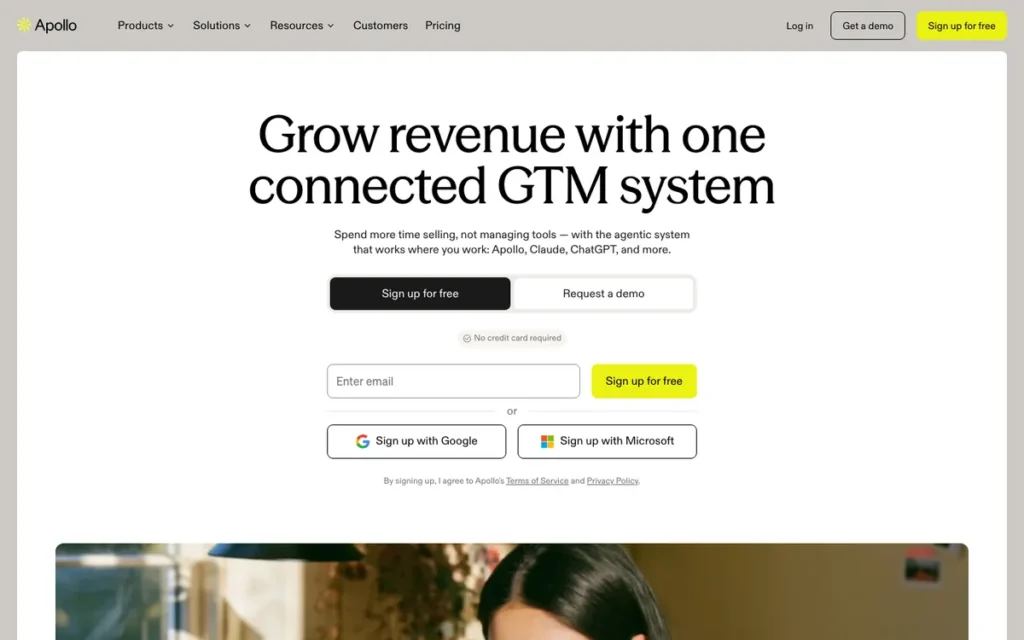
Category: All-in-One Intelligence and Engagement, combines a 230M+ contact B2B database, multi-channel sequencing, AI lead scoring, website visitor identification, and a built-in dialer in a single self-serve subscription at publicly published pricing.
At a Glance
- Category: All-in-One Intelligence and Engagement
- Best For: SMB, startup, and mid-market outbound B2B teams needing prospecting data and sequencing in one subscription without managing separate data provider and sequencing tool licenses
- Price Range: Free–$119/user/month (annually); Free plan includes database access and 2 active sequences; Basic $49/user/month; Professional $79/user/month; Organization $119/user/month; pricing publicly published as of May 2026
- Primary Strength: Apollo.io bundles a 230M+ contact B2B database with multi-channel sequencing, AI lead scoring, and a built-in dialer at transparent price points that undercut comparable stacked tool combinations for most SMB and mid-market teams
- Biggest Limitation: Apollo.io’s shared contact database degrades in freshness at scale, B2B agency practitioners documented bounce rates climbing from 8% to 13% on Apollo.io data batches in early 2026, attributing the issue to a shared-database model where millions of users pull the same records faster than refresh rates can maintain accuracy
- One-Line Summary: Apollo.io is the highest-rated all-in-one sales engagement platform by G2 score (4.6/5.0, 1,500+ reviews as of May 2026) among platforms offering both a B2B contact database and multi-channel sequencing in a single publicly priced subscription
- Last Verified: May 2026
Overview
Apollo.io is an all-in-one B2B sales intelligence and outbound engagement platform for SMB, startup, and mid-market outbound teams that need prospecting data and multi-channel sequencing in a single subscription, available at publicly published pricing from free through $119 per user per month annually as of May 2026. Apollo.io combines a 230M+ contact and 30M+ company database with 65+ filtering dimensions, multi-step sequences across email, phone, LinkedIn, and SMS, an AI lead scoring engine, a built-in cloud dialer, and website visitor identification.
Apollo.io also includes a Chrome extension that layers prospect data directly over LinkedIn profiles and Gmail, enabling reps to research and sequence prospects without leaving their existing tools. Apollo.io was founded in 2015 by CEO Tim Zheng in San Francisco and holds a G2 rating of 4.6/5.0 across 1,500+ verified reviews as of May 2026.
Key Features
- 230M+ Contact Database with 65+ Filters: Apollo.io’s prospecting database spans 230M+ contacts and 30M+ companies with filtering dimensions covering job title, seniority, company size, industry, location, technographics, and buyer intent signals, enabling outbound teams to build targeted prospect lists without a separate data subscription.
- Multi-Step Sequencing with A/Z Testing: Apollo.io supports automated and manual touchpoints across email, phone calls, LinkedIn tasks, and SMS, with A/Z testing available on the Professional tier and above to identify which messages drive the highest reply rates across active campaigns.
- AI Lead Scoring Engine: Apollo.io’s AI Lead Scoring analyzes engagement patterns and prospect fit signals to predict which contacts are most likely to convert, surfacing priority leads in each rep’s daily workflow rather than requiring manual list prioritization.
- Website Visitor Identification: Apollo.io reveals which companies are actively browsing a team’s website and enables immediate outreach to warm, in-market prospects, combining anonymous intent signal capture with sequencing execution in one platform.
- Chrome Extension for LinkedIn and Gmail: Apollo.io’s free Chrome extension layers prospect database data, email sequences, and CRM sync directly over LinkedIn profiles, Salesforce records, and Gmail, enabling reps to research, add, and sequence prospects without leaving existing tools.
Best For
Apollo.io is best for SMB, startup, and mid-market outbound B2B teams in SaaS, technology, and professional services that currently maintain separate prospecting data subscriptions (ZoomInfo, Cognism, Lusha) alongside a sequencing platform and want to consolidate into a single transparent-pricing subscription, particularly teams with 1–25 seats where per-user costs above $79/month create meaningful economic friction.
Strengths
- Highest G2 rating among high-review-count platforms: Apollo.io holds a G2 rating of 4.6/5.0 across 1,500+ verified reviews as of May 2026 (the highest average rating among all platforms in this comparison with more than 1,000 reviews) indicating above-average user satisfaction relative to buyer expectations across SMB through mid-market deployments.
- All-in-one architecture eliminates a separate data subscription: Apollo.io’s bundled database eliminates the prospecting data subscription that teams using Outreach, SalesLoft, Reply.io, or Lemlist typically require (commonly ZoomInfo at $10,000+/year or Cognism at $15,000+/year) producing total cost savings that frequently offset Apollo.io’s per-seat pricing entirely for teams previously maintaining separate data and engagement licenses.
- Most feature-complete free plan in the category: Apollo.io’s free plan includes database access, 2 active sequences, 1,200 credits/month, CRM extensions, and AI beta features, enabling individual SDRs and early-stage teams to access enterprise-grade prospecting infrastructure before committing to any paid subscription.
- Closed-loop website intent to outreach execution: Apollo.io’s website visitor identification and AI lead scoring combine anonymous intent signal capture with sequence execution in one platform, a capability that previously required separate tools such as Clearbit Reveal or Bombora alongside a sequencing platform, adding subscription cost and workflow complexity.
Limitations
- Data Freshness Degradation at Scale: Apollo.io’s shared-database model creates a documented freshness problem at scale. Multiple B2B agencies reported bounce rates climbing from 8% to 11% to 13% on Apollo.io data batches in early 2026 (r/growmybusiness, May 2026), attributing the issue to millions of users pulling the same records faster than Apollo.io can refresh them, a structural paradox where the platform’s popularity creates its own data quality problem.
- No Native Conversation Intelligence: Apollo.io offers only basic call summaries rather than the real-time in-call coaching, deal health scoring, and manager analytics available in Outreach (Kaia AI) or SalesLoft (Conversations), making Apollo.io materially less competitive for enterprise teams where conversation intelligence drives coaching and pipeline forecasting workflows.
- LinkedIn Automation Account Risk: Apollo.io’s LinkedIn automation features carry inherent platform enforcement risk. Reddit practitioners have documented account restrictions from aggressive LinkedIn automation use (r/techsales, 2026), and teams should treat Apollo.io’s LinkedIn steps as task-based reminders rather than fully automated high-volume sequences.
Verdict
Apollo.io is the best overall sales engagement platform for SMB through mid-market outbound B2B teams in 2026, earning the highest G2 rating among high-review-count platforms (4.6/5.0, 1,500+ reviews as of May 2026) with fully transparent pricing from free through $119/user/month and a 230M+ contact database bundled with multi-channel sequencing in one subscription. Apollo.io’s data quality degradation in the shared database at scale is a documented concern that high-volume teams must monitor through active bounce rate tracking from the first campaign send, but for the majority of B2B outbound teams whose campaign volume falls within Apollo.io’s accuracy range, no other platform in this comparison delivers equivalent value per dollar.
2. Reply.io: Best for Deliverability-First Teams and Outbound Agencies Managing Multiple Client Campaigns
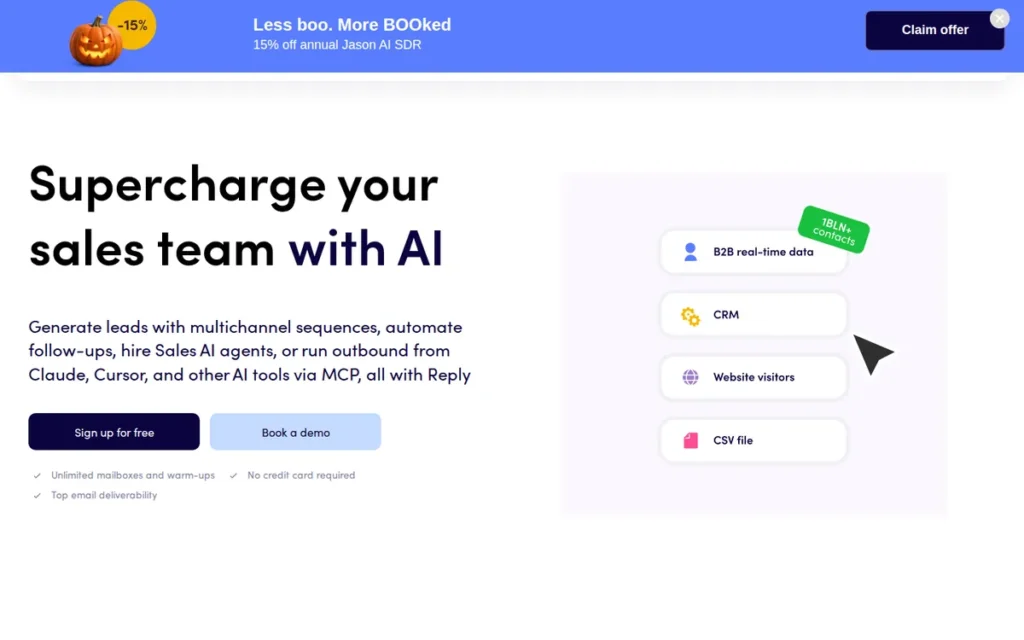
Category: Multi-Channel Engagement and Deliverability Platform, offers 5-channel outreach sequences with a 30+ feature native email deliverability infrastructure and purpose-built multi-client agency workspace management at publicly published pricing.
At a Glance
- Category: Multi-Channel Engagement and Deliverability Platform
- Best For: Outbound agencies managing 5+ concurrent client campaigns simultaneously, and in-house sales teams treating cold email inbox placement as a primary operational variable rather than an afterthought
- Price Range: $59–$165/user/month publicly published (Starter $59, Scale $99, Pro $165 per user per month as of May 2026); 14-day free trial available
- Primary Strength: Reply.io is the only sales engagement platform in this comparison to have built email deliverability as a foundational architectural layer, offering 30+ native deliverability features including MailToaster warm-up, inbox rotation, Google Postmaster integration, and blacklist monitoring in every plan tier
- Biggest Limitation: Reply.io’s per-seat pricing ($59–$165/user/month) becomes economically disadvantaged for high-volume cold email senders relative to flat-fee unlimited-mailbox competitors, and its UI complexity draws consistent criticism from new users who find onboarding more time-intensive than simpler alternatives
- One-Line Summary: Reply.io is the only sales engagement platform with a 30+ feature native deliverability infrastructure and purpose-built multi-client agency workspace architecture, rated 4.5/5.0 by 1,000+ G2 reviewers as of May 2026
- Last Verified: May 2026
Overview
Reply.io is a multi-channel sales engagement platform purpose-built for outbound agencies managing multiple client campaigns simultaneously and for in-house teams where email deliverability is treated as a primary operational variable, available at publicly published pricing from $59 to $165 per user per month as of May 2026. Reply.io combines 5-channel outreach sequences (email, LinkedIn, phone, SMS, WhatsApp) with conditional branching logic, a Jason AI SDR layer for sequence generation and reply handling, and a 30+ feature native deliverability kit.
Reply.io’s deliverability kit includes MailToaster.ai warm-up, inbox rotation, Google Postmaster integration, blacklist monitoring, and custom tracking domains, embedded in every plan tier. Reply.io was founded in 2014, making it one of the original multi-channel sales engagement platforms, and holds a G2 rating of 4.5/5.0 across 1,000+ verified reviews as of May 2026.
Key Features
- 30+ Feature Native Deliverability Infrastructure: Reply.io’s deliverability kit, including MailToaster.ai email warm-up, inbox rotation across unlimited mailboxes, Google Postmaster integration for sender reputation monitoring, blacklist and spam trap detection, bounce rate health checking, and custom tracking domains, is embedded in every plan tier without requiring a third-party warm-up subscription.
- 5-Channel Conditional Branching Sequences: Reply.io supports email, LinkedIn automation (profile visits, connection requests, messages), phone call tasks, SMS, and WhatsApp touchpoints with conditional branching logic that dynamically adjusts sequence flow based on each prospect’s actual engagement behavior rather than a fixed linear cadence.
- Jason AI SDR Layer: Reply.io’s Jason AI provides AI-driven audience research, outreach sequence generation, personalized message writing, and automated response classification, enabling lean SDR teams and agencies to operate AI-assisted outbound workflows without separate AI writing tool subscriptions.
- Purpose-Built Agency Multi-Workspace Architecture: Reply.io provides multi-workspace management with isolated client environments, independent sender identities per client, role-based access controls, and an agency dashboard, validated by practitioners managing 12+ concurrent client campaigns without cross-client data bleeding (u/Ecestu, r/coldemail, May 2026).
- Unified Team Inbox: Reply.io’s shared team inbox provides collective visibility into all prospect conversations across the team, enabling manager oversight and collaborative response handling without requiring reps to forward email threads or export conversation history manually.
Best For
Reply.io is best for outbound agencies in B2B technology services, marketing, and consulting verticals managing five or more concurrent client campaigns that require workspace isolation, independent sender reputations, and per-client analytics, and for in-house sales teams running high-volume cold email campaigns where inbox placement directly determines campaign ROI and where the 30+ feature deliverability infrastructure justifies per-seat pricing over simpler alternatives.
Strengths
- Practitioner-validated deliverability improvement: Reply.io holds a G2 rating of 4.5/5.0 across 1,000+ verified reviews as of May 2026. A practitioner who switched from Lemlist to Reply.io specifically reported that “their warm-up and deliverability tools noticeably improved our inbox placement” (u/Jayne_Taylor, r/coldemail, May 2026), providing independent user validation of the 30+ feature deliverability infrastructure’s real-world impact on inbox placement rates.
- Agency workspace architecture validated at 12+ concurrent clients: Reply.io’s purpose-built multi-workspace design was independently confirmed by a practitioner managing over 12 concurrent client campaigns, who reported that Reply.io provided workspace separation where “each client gets their own space and our team can jump between accounts without mixing leads or screwing up reporting” (u/Ecestu, r/coldemail, May 2026).
Users on r/coldemail shared the decision in full context:
“We hit Lemlist’s ceiling managing 12 client accounts last year. Switched to Replyio because the workspace separation actually works, each client gets their own space and our team can jump between accounts without mixing leads or screwing up reporting.” Posted by u/Ecestu
Takeaway: Reply.io’s multi-workspace architecture solves a structural limitation that agencies running more than ten concurrent client campaigns consistently hit with single-workspace alternatives.
- Conditional branching delivers more relevant follow-up than linear cadences: Reply.io’s conditional sequence logic enables dynamic workflow adjustments based on individual prospect engagement signals, a structural advantage over linear cadences that treat all prospects identically regardless of their actual interaction history with previous touchpoints.
- Over a decade of multi-channel deliverability expertise: Reply.io was founded in 2014, giving it over a decade of multi-channel outreach platform development, institutional knowledge of email deliverability mechanics, LinkedIn automation constraints, and agency operational requirements that newer entrants in the category lack by definition.
Limitations
- Per-Seat Pricing vs. Flat-Fee Volume Alternatives: Reply.io’s per-seat model ($59–$165/user/month) becomes progressively less economical than flat-fee infrastructure competitors (Instantly, Smartlead) for high-volume cold email operations. One practitioner noted that “reply wanted $59/user while competitors like Instantly offered unlimited accounts for a few more $$” (u/Suspicious-Drummer68, r/coldemail, May 2026), a structural cost disadvantage for operators scaling email volume rather than team headcount.
- UI Complexity for New Users: Reply.io’s interface draws consistent new-user criticism for requiring steeper onboarding investment than simpler alternatives, with community feedback noting that the platform’s depth becomes an obstacle during initial setup before users become familiar with the conditional branching logic and workspace architecture.
- Limited Revenue Attribution Analytics: Reply.io’s campaign analytics track opens, clicks, replies, and meetings booked effectively, but pipeline-to-sequence revenue attribution reporting trails enterprise tools, teams requiring deep attribution beyond activity metrics will need supplemental reporting tooling.
Verdict
Reply.io is the most defensible sales engagement choice for outbound agencies managing multiple client campaigns and for teams treating cold email deliverability as a mission-critical variable, rated 4.5/5.0 by 1,000+ G2 reviewers as of May 2026 and the only platform in this comparison with a 30+ feature native deliverability infrastructure embedded in every plan tier. Reply.io’s per-seat pricing creates cost friction for high-volume senders relative to flat-fee infrastructure alternatives, and its UI requires onboarding investment, but for the agency and deliverability-first use cases it is architecturally built to serve, no other platform in this comparison provides equivalent structural depth.
3. Lemlist: Best for Personalization-First SMB Outbound with Built-in Deliverability and Stable Vendor Profile
Category: Personalization-First Multi-Channel Engagement, specializes in AI-generated image and video personalization, 5-channel outreach sequences, and built-in lemwarm email warm-up at SMB-accessible price points from a bootstrapped, profitable vendor.
At a Glance
- Category: Personalization-First Multi-Channel Engagement
- Best For: SMB outbound teams running email and LinkedIn sequences who want built-in deliverability warm-up without an additional subscription, image personalization capabilities, and a financially stable bootstrapped vendor profile
- Price Range: $49–$79/user/month billed annually (Email Outreach: $49; Sales Engagement: $79); monthly billing available at higher rates; 14-day free trial; pricing publicly published as of May 2026
- Primary Strength: Lemlist is the only bootstrapped-profitable platform in this comparison (having reached $50M ARR without venture capital) and the only platform offering AI-generated personalized image and video thumbnail personalization natively alongside 5-channel sequences and built-in lemwarm email warm-up
- Biggest Limitation: Lemlist’s AI-generated image personalization shows diminishing returns with repeated prospect exposure, with practitioners reporting reduced click engagement after sustained campaigns; the platform also lacks the reporting depth of enterprise tools and scales less economically than flat-fee infrastructure tools at high sending volume
- One-Line Summary: Lemlist is the most affordable bootstrapped multi-channel sales engagement platform in this comparison, offering 5-channel sequencing with AI image personalization and built-in email warm-up at $79/user/month annual, serving 20,000+ B2B companies at $50M ARR as of 2026
- Last Verified: May 2026
Overview
Lemlist is a personalization-first, multi-channel sales engagement platform founded in 2018 in France by Guillaume Moubeche, designed for SMB outbound teams that prioritize relevance-driven personalization over pure sending volume, available at publicly published annual pricing from $49 to $79 per user per month as of May 2026. Lemlist combines 5-channel outreach sequences (email, LinkedIn automation, phone call tasks, SMS, WhatsApp) with AI-generated personalized images and video thumbnails, built-in lemwarm email warm-up for every connected mailbox, a B2B lead database, and AI buying signal detection.
Lemlist has reached $50M ARR serving 20,000+ B2B companies without venture capital (Lemlist AI info page, May 2026) and holds a G2 rating of 4.5/5.0 across 800+ verified reviews as of May 2026.
Key Features
- AI-Generated Image and Video Personalization: Lemlist’s personalization engine dynamically embeds recipient-specific elements (names, company logos, photos, or LinkedIn profile images) into campaign images and video thumbnails, creating visually personalized cold email creative that no other platform in this comparison offers natively.
- Lemwarm Built-In Email Warm-Up: Lemlist’s lemwarm system provides built-in email warm-up for every connected mailbox, gradually building sender domain reputation and improving inbox placement rates, included at no additional cost in all plan tiers without requiring a separate third-party warm-up tool subscription.
- 5-Channel Outreach Sequences: Lemlist supports sequences combining email, LinkedIn automation (profile visits, connection requests, messages), phone call tasks, SMS, and WhatsApp touchpoints from a single sequence builder at $79/user/month annual, the broadest channel coverage at this price point among platforms that also include a native B2B database.
- Built-In B2B Lead Database and AI Enrichment: Lemlist’s integrated lead database and AI enrichment tools enable teams to research prospects, detect buying signals, and build targeted outreach lists without leaving the platform, reducing dependence on a separate prospecting data subscription for teams with moderate list-building requirements.
- Community and Tutorial Ecosystem: Lemlist’s campaign templates, sequence playbooks, and step-by-step onboarding guides (built up over its seven-year operating history) significantly reduce the learning curve for teams new to structured cold outreach compared to more complex enterprise platforms.
Best For
Lemlist is best for SMB outbound teams of 1–15 seats in SaaS, technology, and professional services running email and LinkedIn sequences who want 5-channel capability, built-in email warm-up without an additional subscription, and AI personalization features at $79/user/month annual, particularly teams that value a community-supported platform with a bootstrapped vendor’s long-term stability and no acquisition risk.
Strengths
- $50M ARR bootstrapped and profitable, the only vendor in this comparison with that profile: Lemlist has reached $50M ARR while remaining bootstrapped and profitable, serving 20,000+ B2B companies without venture capital (Lemlist AI info page, May 2026), making it the only vendor in this comparison whose product roadmap is driven entirely by customer retention rather than investor growth targets, with no acquisition or strategic pivot risk for customer commitments.
- High G2 feature adoption across core capabilities: Lemlist’s G2 feature review data shows CRM Integration referenced in 409 verified reviews and Calendar and scheduling features in 395 reviews as of May 2026 (G2 Lemlist features page), indicating these capabilities are actively used and validated by a large share of Lemlist’s real-world user base.
- Lemwarm delivers measurable inbox placement lift: Lemlist’s lemwarm deliverability system provides measurable inbox placement improvement, even a practitioner who subsequently switched to Reply.io for stronger deliverability features acknowledged that lemwarm had provided genuine, noticeable lift during their Lemlist deployment (u/Jayne_Taylor, r/coldemail, May 2026).
- Unique AI image personalization capability not available elsewhere in this comparison: Lemlist’s AI-generated personalized images and video thumbnails are not offered natively by any other platform in this comparison, providing creative differentiation for campaigns targeting prospect segments that have not yet reached personalization exposure saturation.
Limitations
- Image Personalization Diminishing Returns: Lemlist’s signature differentiator, AI-generated image personalization, tends to deliver diminishing returns with repeated prospect exposure. A practitioner with 8 months of direct Lemlist use reported that “the image personalization gimmick gets old fast and I found people stopped clicking on those pretty quick” (u/GillesCode, r/coldemail, May 2026), meaning the differentiator erodes over time for campaigns targeting the same prospect segments repeatedly.
Users on r/coldemail noted after extended platform use:
“used lemlist for about 8 months. its solid but honestly the image personalization gimmick gets old fast and i found people stopped clicking on those pretty quick. the main thing lemlist does well is the multi-channel sequences (email + linkedin steps). if you’re purely email there are cheaper options that do the same job” Posted by u/GillesCode
Takeaway: Lemlist’s image personalization feature loses its engagement advantage over time, making multi-channel sequencing rather than personalized images the platform’s more durable competitive differentiator.
- Limited Reporting Analytics for Revenue Attribution: Lemlist’s reporting analytics are less sophisticated than enterprise platforms for pipeline-to-sequence revenue attribution, trailing Outreach’s deal grid and SalesLoft’s Rhythm-integrated analytics for teams requiring attribution depth beyond activity and reply rate metrics.
- Per-Seat Scaling Economics: Lemlist’s per-seat pricing model becomes less competitive than flat-fee infrastructure tools for teams scaling to high sending volume without proportional headcount growth. One community practitioner characterized tools in this pricing category as “eating your margin and preventing you from scaling” at volume (u/goodnaming, r/coldemail, May 2026).
Verdict
Lemlist is the best personalization-first multi-channel sales engagement platform for SMB outbound teams in 2026, distinguished by its unique AI-generated image personalization, built-in lemwarm deliverability included in every plan, 5-channel sequencing at $79/user/month annual, and the only bootstrapped-profitable vendor stability in this category comparison, rated 4.5/5.0 by 800+ G2 reviewers as of May 2026. Lemlist’s image personalization delivers the strongest results in early campaign cycles before prospect exposure creates diminishing returns, and teams scaling to high email volume should verify that its per-seat model remains more economical than flat-fee infrastructure alternatives before significant headcount growth.
4. Amplemarket: Best for AI-Native Mid-Market Outbound Teams Investing in Premium Signal-Driven Infrastructure
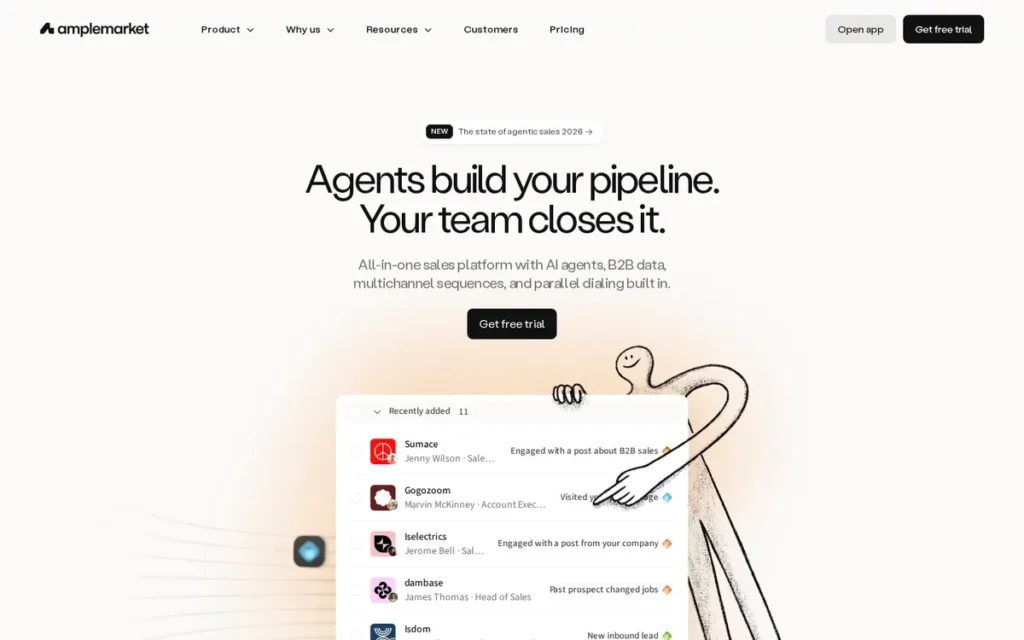
Category: AI-Native All-in-One Outbound Intelligence Platform, processes 100+ buying signals through its Duo AI suite, supports 7-channel outreach including AI voice and iMessage, includes built-in contact data with practitioner-rated superior quality, and is priced for mid-market teams with dedicated outbound investment.
At a Glance
- Category: AI-Native All-in-One Outbound Intelligence Platform
- Best For: Mid-market B2B outbound teams with an outbound infrastructure budget (typically $500+/month) needing the highest-quality contact data, broadest multi-channel coverage, and most advanced AI signal-to-sequence automation in the category
- Price Range: Quote-only; no pricing published; practitioner-reported approximately $500–600/month floor for small teams as of 2026 (r/techsales); Growth plan (280,000 contacts) and Elite plan (1,000,000+ contacts) available; contact Amplemarket directly for a current quote
- Primary Strength: Amplemarket holds the highest G2 average rating in the sales engagement category (4.7/5.0, 300+ reviews as of May 2026) and is the only platform in this comparison offering 7-channel outreach including AI voice messages and iMessage, supported by a 100+ buying signal AI intent engine via its Duo suite
- Biggest Limitation: Amplemarket does not publish any pricing: practitioner-reported quotes suggest a floor of approximately $500–600/month for small teams, making it structurally inaccessible for budget-constrained teams and requiring a full sales engagement process before any cost comparison with alternatives is possible
- One-Line Summary: Amplemarket is the highest-G2-rated sales engagement platform in this comparison at 4.7/5.0 (300+ reviews as of May 2026), offering 7-channel outreach, 100+ AI buying signals via its Duo suite, and built-in contact data quality that practitioners independently rate as superior to Apollo.io
- Last Verified: May 2026
Overview
Amplemarket is an AI-native, all-in-one outbound sales intelligence platform built for mid-market B2B teams that require the most advanced signal-driven personalization, broadest multi-channel coverage, and highest-quality built-in contact data in the sales engagement category, available by quote only at a practitioner-reported floor of approximately $500–600/month as of May 2026. Amplemarket’s Duo AI suite processes 100+ contact-level buying signals to automatically trigger and personalize 7-channel outreach sequences across email, native dialer, LinkedIn, SMS, WhatsApp, iMessage, and AI voice messages.
Amplemarket was founded in 2016 by Luís Batalha, João Batalha, and Micael Oliveira in Lisbon and San Francisco, and holds the highest G2 average rating in the sales engagement category at 4.7/5.0 across 300+ verified reviews as of May 2026.
Key Features
- Duo AI Suite with 100+ Buying Signals: Amplemarket’s Duo AI: comprising Duo Copywriter (AI-generated personalized sequence content), Duo Inbox (AI-assisted reply handling and response drafting), and Duo Voice (AI voice message creation), processes 100+ contact-level buying signals including job changes, competitive intelligence, social network connections, and technology adoption to trigger and personalize outreach automatically without manual rep input.
- 7-Channel Outreach Including AI Voice and iMessage: Amplemarket supports sequences across email, native dialer, LinkedIn automation, SMS, WhatsApp, iMessage, and AI voice messages, the broadest native multi-channel coverage of any platform in this comparison and the only platform to include iMessage and AI voice as native sequence channels alongside the standard outbound stack.
- Superior-Quality Built-In Contact Data: Amplemarket’s built-in contact database (providing 280,000 contacts on the Growth plan and 1,000,000+ on the Elite plan) is rated by independent practitioners as offering superior data freshness and accuracy compared to Apollo.io’s shared database under high-volume usage, based on head-to-head assessments from users who tested multiple platforms in 2026 (r/techsales, May 2026).
- Real-Time Intent Signal Streaming Dashboard: Amplemarket’s intent signal engine streams real-time buying signals and competitive intelligence into a dedicated rep dashboard, enabling sales teams to prioritize in-market prospects based on 100+ behavioral signal types, compared to the 4–10 signal types typically offered by competitor intent features.
- Dedicated CSM and Personalized Onboarding on All Plans: Amplemarket provides a dedicated Customer Success Manager and personalized onboarding for all plan tiers, a service-layer investment that mid-market teams making significant outbound infrastructure commitments typically require to extract full platform value from a complex AI-driven system.
Best For
Amplemarket is best for mid-market B2B outbound teams in SaaS, financial services, and technology with a dedicated outbound infrastructure budget (typically $500+/month) who need premium contact data quality, 7-channel outreach including emerging channels (iMessage, AI voice), and AI-driven signal processing that materially exceeds what Apollo.io, Outreach, or SalesLoft offer, particularly teams that have already experienced Apollo.io data quality limitations at scale and are ready to invest in a higher-quality data and AI layer.
Strengths
- Highest G2 average rating in the sales engagement category: Amplemarket holds a G2 average rating of 4.7/5.0 across 300+ verified reviews as of May 2026 (the highest average rating in the sales engagement category) with G2 reviewers specifically citing agentic AI and autonomous task execution, real-time buyer intent alert dashboards, and targeted contact list generation as standout capabilities.
- AI output quality independently validated by third-party reviewer: An independent third-party reviewer (Fundraise Insider, May 2026) confirmed that Amplemarket’s AI “generates targeted and well-written multi-threaded sequences that book meetings” with tone and voice control that “can be heavily controlled and is easy to adjust and refine”, addressing enterprise concerns that AI-generated content fails brand voice and consistency standards.
- Data quality rated superior to Apollo.io by multi-platform practitioners: A practitioner on r/techsales who independently tested Lusha, Amplemarket, Outreach, Hunter, RocketReach, Drippify, and Apollo.io rated Amplemarket’s data quality “by far superior” (u/Flat_Department_9663, r/techsales, May 2026), providing multi-platform comparative validation of Amplemarket’s data freshness advantage at a time when Apollo.io’s shared-database quality was being documented as degrading.
This aligns with community sentiment on r/techsales:
“FYI- I’ve used just about every tool out there: Lusha, Amplemarket, Outreach, Hunter, RocketReach, Drippify, and currently using Apollo. Amolemarket data is by far superior.” Posted by u/Flat_Department_9663
Takeaway: Practitioners who have directly tested Amplemarket alongside the major alternatives, including Apollo.io, consistently rank Amplemarket’s contact data quality above competitors in multi-platform head-to-head comparisons.
- Vendor-published testimonials cite specific pipeline outcomes: Customer testimonials published by Amplemarket report “4x growth in customer base and a 20% rise in meeting bookings” and “over €2M in business opportunities, with late six digits in won deals, all in just 10 months” (Amplemarket AI sales engagement page), vendor-published claims requiring independent verification, but notable for their specificity and consistent theme of pipeline generation.
Limitations
- Pricing Opacity and High Cost Floor: Amplemarket’s most consequential limitation is complete pricing opacity, the platform publishes no pricing, practitioner-reported quotes suggest a floor of approximately $500–600/month for small teams (r/techsales, 2026), and all pricing requires a full sales engagement process, structurally excluding budget-constrained teams. A practitioner who evaluated both platforms chose Apollo.io “due to budget constraints” despite preferring Amplemarket, and subsequently experienced data quality disappointment, illustrating that Amplemarket’s value is genuine but accessible only to teams whose budgets match its pricing tier.
- LinkedIn Automation Account Risk Applies Here Too: Both Apollo.io and Amplemarket users have documented LinkedIn account restrictions from automation use (u/sikdar7, r/techsales, 2026). Amplemarket’s 7-channel architecture reduces LinkedIn dependence but does not eliminate the inherent enforcement risk that LinkedIn automation carries across all platforms at scale.
- Lower Review Count Provides Narrower Deployment Evidence: Amplemarket’s 300+ G2 reviews, while delivering the category’s highest 4.7/5.0 average, provide a narrower deployment evidence base than Apollo.io (1,500+) or HubSpot Sales Hub (13,766+), reflecting Amplemarket’s selective, mid-market-focused user base rather than a product quality limitation, but a relevant factor for procurement teams evaluating statistical confidence.
Verdict
Amplemarket is the highest-rated sales engagement platform in this comparison by G2 average score (4.7/5.0, 300+ reviews as of May 2026) and the most technically advanced, offering 7-channel outreach with AI voice and iMessage, 100+ buying signal processing via Duo AI, and contact data quality that practitioners independently rate as superior to Apollo.io. Amplemarket’s central limitation, quote-only pricing with a practitioner-reported floor of approximately $500–600/month, restricts its accessibility to mid-market and enterprise teams with outbound infrastructure budgets to match, and teams experiencing Apollo.io data quality degradation at scale represent its clearest and most motivated upgrade path.
5. HubSpot Sales Hub: Best for Inbound-Led and Hybrid Sales Teams Already Using the HubSpot CRM Ecosystem
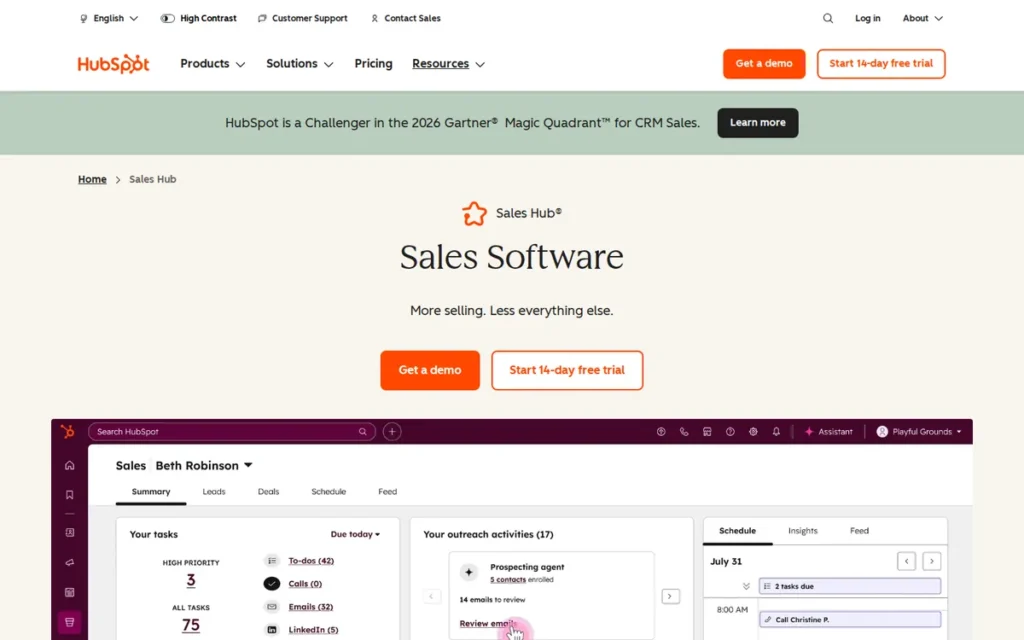
Category: CRM-Native Sales Engagement Platform, the only platform in this comparison where the engagement layer and the CRM share one native database, eliminating integration overhead entirely, but gating email sequences behind the $100/seat/month Professional tier.
At a Glance
- Category: CRM-Native Sales Engagement Platform
- Best For: Teams already using or actively evaluating HubSpot CRM who want unified pipeline management and engagement sequencing in one system, particularly inbound-led and hybrid sales organizations where marketing-to-revenue attribution matters as much as outbound volume
- Price Range: Free ($0); Starter ($20/seat/month); Professional ($100/seat/month, email sequences require this tier); Enterprise ($150/seat/month); pricing publicly published as of May 2026; CRITICAL: email sequences are NOT included in Free or Starter plans
- Primary Strength: HubSpot Sales Hub is the only sales engagement platform in this comparison where the engagement layer is natively built into the CRM (engagement activity, deal records, and pipeline data share one database from day one) eliminating the CRM sync reliability failures that bi-directional integration creates for every other platform in this evaluation
- Biggest Limitation: HubSpot Sales Hub gates email sequences: the core outbound automation feature most buyers expect as standard, behind the Professional tier at $100/seat/month, creating a 5x pricing jump from the $20 Starter plan that routinely surprises buyers mid-evaluation and significantly inflates the true cost of using HubSpot for outbound engagement
- One-Line Summary: HubSpot Sales Hub is the only CRM-native sales engagement platform in this comparison, rated 4.4/5.0 across 13,766 G2 reviews (the highest review count in the category) and the only platform backed by a publicly traded company (NYSE: HUBS) with $2.6B+ in annual revenue as of 2024
- Last Verified: May 2026
Overview
HubSpot Sales Hub is a CRM-native sales engagement platform built for inbound-led and hybrid sales teams that want unified pipeline management, engagement sequencing, meeting scheduling, and revenue reporting in one system without integration complexity, available at publicly published pricing from free through $150 per seat per month as of May 2026, with email sequences gated behind the $100/seat/month Professional tier. HubSpot Sales Hub is the only platform in this comparison where the engagement layer shares a native database with deal records and contact history, eliminating the sync overhead all other platforms require.
HubSpot Sales Hub is part of HubSpot Inc. (NYSE: HUBS), founded in 2006, reporting $2.6B+ in 2024 annual revenue, and holds a G2 rating of 4.4/5.0 across 13,766 verified reviews as of May 2026, the highest review count and statistical confidence of any platform in this evaluation.
Key Features
- Native CRM Database, No Sync Required: HubSpot Sales Hub’s native CRM foundation means all engagement activity, email sends, calls, meetings, tasks, deals, and contact records, live in one shared database without bi-directional sync, eliminating the duplicate records, mapping errors, and sync delays that are the top operational complaint across Outreach, SalesLoft, Apollo.io, and Reply.io deployments.
- Email Sequences: Professional Tier and Above Only: HubSpot Sales Hub’s email sequences enable automated, personalized multi-step email and task workflows that pause automatically when a prospect replies, integrated natively with HubSpot CRM deal records and lifecycle stage data, but available only starting at the Professional tier at $100/seat/month.
- Meeting Scheduling with Automatic CRM Record Creation: HubSpot Sales Hub includes meeting scheduling tools enabling prospects to book directly onto rep calendars via personalized booking links, automatically creating CRM contact records and deal associations from booked meetings without manual data entry.
- Deal Pipeline Management and AI Forecasting: HubSpot Sales Hub provides deal pipeline management, activity reporting, sales forecasting, and AI-powered predictive lead scoring (at Enterprise tier), all within the same system as engagement execution, enabling RevOps teams to report on pipeline and sequence performance without switching platforms.
- 1,100+ Application Integration Ecosystem: HubSpot Sales Hub’s integration ecosystem connects with Gmail, Zoom, Salesforce, and major marketing and customer success tools, with LinkedIn automation available via third-party integrations rather than native support, per HubLead, May 2026.
Best For
HubSpot Sales Hub is best for B2B companies already using HubSpot CRM for marketing or customer success that want to add outbound sequencing and engagement without the integration overhead of a standalone SEP, and for inbound-led sales organizations in technology, SaaS, and professional services where pipeline management, meeting scheduling, and marketing-to-revenue attribution are as strategically important as cold outreach volume.
Strengths
- Highest review count in the category by a wide margin: HubSpot Sales Hub holds 13,766 verified G2 reviews at 4.4/5.0 and 4,400+ Capterra reviews at 4.5/5.0 as of May 2026 (the highest review count and statistical confidence of any platform in this comparison) providing robust satisfaction evidence across a diverse customer base spanning free-tier users through enterprise deployments across virtually every industry vertical.
- Public company financial stability: the only NYSE-listed vendor in this evaluation: HubSpot Inc. (NYSE: HUBS) reported $2.6B+ in revenue for 2024 with 7,000+ employees and 248,000+ global customers (HubSpot investor relations), making HubSpot Sales Hub the only platform in this comparison backed by a publicly traded company with full financial transparency and the vendor stability profile that enterprise procurement teams require before multi-year platform commitments.
- Native CRM integration completely eliminates sync reliability failures: HubSpot Sales Hub’s native CRM model eliminates the bi-directional sync reliability failures that are the most-cited operational complaint across all other platforms in this comparison, there is no sync to fail when engagement and CRM share one database, unlike Outreach’s Salesforce sync issues documented as the top-upvoted criticism in r/sales community threads.
- Free tier provides genuine operational value before any purchase: HubSpot Sales Hub’s free plan provides contact management, deal pipeline tracking, meeting scheduling, email integration, and task tracking, meaningful operational value before any purchase commitment, distinguishing it from free plans at competitors that offer only database credits or limited sequences without full pipeline management.
Limitations
- Sequences Gated at the $100/Seat/Month Professional Tier: the Category’s Biggest Pricing Surprise: HubSpot Sales Hub’s most consequential trade-off is the $20 Starter to $100 Professional pricing cliff, email sequences are not available on Free or Starter plans, meaning teams expecting outbound automation at $20/seat/month encounter a 5x price increase to access the feature they need. This pricing surprise is the most frequently cited buyer complaint in HubSpot’s user community and is not clearly communicated on the primary pricing page.
- Sequences Feel Dated for High-Volume Pure Outbound SDR Workflows: HubSpot Sales Hub’s sequencing capabilities are consistently described by verified G2 reviewers and independent analysts (marketbetter.ai, 2026) as “dated” for high-volume SDR-heavy workflows requiring complex branching logic, making HubSpot Sales Hub materially less competitive for teams where cold outbound is the primary growth motion.
- No Built-In Contact Database or Email Deliverability Tooling: HubSpot Sales Hub provides no native prospecting contact database and no email deliverability infrastructure, teams running outbound must invest in separate prospecting data subscriptions and manage email warm-up and domain health independently, adding cost and operational complexity that all-in-one alternatives like Apollo.io or Amplemarket bundle natively.
Verdict
HubSpot Sales Hub is the best sales engagement platform for teams committed to or evaluating the HubSpot CRM ecosystem, holding the highest review count and statistical confidence in this comparison (13,766 G2 reviews at 4.4/5.0 as of May 2026), the only native CRM-integrated engagement layer that eliminates sync reliability failures, and the backing of the only publicly traded company in this evaluation at $2.6B+ annual revenue. HubSpot Sales Hub is not the right choice for pure outbound SDR teams requiring complex branching sequences, built-in contact data, or email deliverability infrastructure, and buyers must account for the mandatory $100/seat/month Professional tier when comparing HubSpot’s true cost against standalone sales engagement platforms.
6. Outreach: Best for Large Enterprises Requiring Unified Revenue Orchestration with AI Coaching and Deal Management
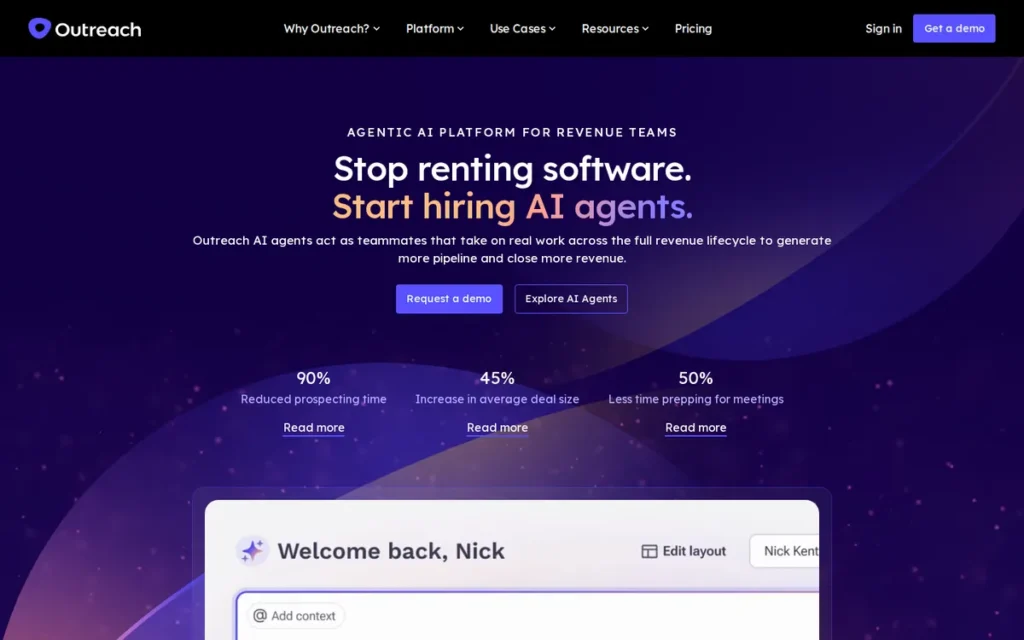
Category: Enterprise Revenue Orchestration Platform, combines multi-channel sequencing, Kaia AI conversation intelligence, deal management, pipeline forecasting, and April 2026 Omni AI Agents in an enterprise-grade system requiring dedicated RevOps administration and significant organizational investment.
At a Glance
- Category: Enterprise Revenue Orchestration Platform
- Best For: Large enterprises with 50+ revenue organization seats, dedicated RevOps teams, existing Salesforce deployments, and complex multi-stakeholder sales cycles requiring unified engagement, pipeline forecasting, conversation intelligence, and AI coaching in one governable system
- Price Range: Quote-only; no pricing published; third-party sources estimate approximately $100–160+/user/month for core sales engagement tiers (Revenue.io); enterprise contracts negotiated separately and typically higher; contact Outreach directly for current pricing
- Primary Strength: Outreach’s Kaia AI meeting assistant delivers real-time in-call coaching, transcription, deal health scoring, and post-call action item capture natively integrated with sequence workflows, and the April 2026 Omni AI Agents launch positions Outreach as the most advanced autonomous revenue orchestration platform in the enterprise category as of May 2026
- Biggest Limitation: Outreach does not publish any pricing: requiring a full sales engagement before cost comparison is possible, and its Salesforce CRM sync is the most-criticized operational feature among verified users, described in the top-voted Reddit comment (101 upvotes) as “laggy at best and gives me a level of rage I didn’t think I would ever have”
- One-Line Summary: Outreach is an enterprise revenue orchestration platform with 3,400+ G2 reviews at 4.3/5.0 as of May 2026 and the only established platform in this comparison to have launched autonomous AI Agents for end-to-end revenue workflow execution via its April 2026 Omni platform, priced by quote only at an estimated $100–160+/user/month
- Last Verified: May 2026
Overview
Outreach is an enterprise sales engagement and revenue orchestration platform designed for large organizations with dedicated RevOps resources requiring unified multi-channel sequencing, AI conversation intelligence, deal management, pipeline forecasting, and governance in a single enterprise-grade system, available by quote only at third-party estimated rates of $100–160+/user/month as of May 2026. Outreach combines multi-channel sequence execution (email, phone, LinkedIn, SMS), Kaia AI real-time call coaching and transcription, deal grid pipeline inspection, and, via the April 2026 Omni launch, autonomous AI Agents for end-to-end revenue workflow execution.
Outreach was founded in Seattle, WA, holds 3,400+ G2 reviews at 4.3/5.0 as of May 2026, and integrates bi-directionally with Salesforce, HubSpot, and Microsoft Dynamics 365.
Key Features
- Kaia AI Real-Time Meeting Intelligence: Outreach’s Kaia AI provides real-time in-call coaching during live conversations, automatic transcription, content card recommendations surfaced mid-call, key moment identification, post-call summaries, and action item capture, feeding all insights back into Deal Health scores and Team Outcome Analysis without manual rep documentation (Outreach Kaia documentation).
- April 2026 Omni AI Agents Platform: Outreach’s April 2026 ‘Omni’ platform launch introduced autonomous AI Agents capable of executing end-to-end revenue workflows, positioning Outreach in the autonomous AI SDR category and significantly expanding its competitive scope beyond traditional cadence sequencing (BusinessWire, April 27, 2026).
- Deal Grid Pipeline Management: Outreach’s deal grid provides a structured pipeline inspection view showing every active opportunity by ARR, close date, AI-generated health score, and engagement timeline, enabling RevOps teams to identify at-risk deals, coaching opportunities, and forecast reliability issues across large rep populations at a glance.
- Multi-Channel Sequences with Bi-Directional CRM Sync: Outreach’s sequence engine supports automated and manual touchpoints across email, phone, LinkedIn, and SMS with bi-directional synchronization to Salesforce, HubSpot, and Microsoft Dynamics 365, designed to log all engagement activity automatically to CRM opportunity records.
- Enterprise Governance and Compliance Controls: Outreach’s role-based access controls, sequence approval workflows, compliance configuration, and admin-managed template libraries are built for regulated industries and large organizations where governance, brand consistency, and workflow accountability are institutional requirements.
Best For
Outreach is best for large enterprises with 50+ revenue organization seats, dedicated RevOps or sales operations resources, existing Salesforce deployments, and complex multi-stakeholder sales cycles where unified engagement execution, pipeline forecasting, Kaia AI conversation intelligence, and governance in a single system justify the $100–160+/user/month investment and the full implementation lifecycle required.
Strengths
- Largest verified enterprise review dataset among standalone SEPs: Outreach’s G2 profile shows 3,400+ verified reviews at 4.3/5.0 as of May 2026 (the largest review dataset among standalone sales engagement platforms in this comparison) providing a broad body of enterprise deployment evidence across diverse industry verticals, team structures, and RevOps configurations.
- Kaia AI is consistently cited as the platform’s clearest differentiator: Outreach’s Kaia AI meeting assistant is consistently highlighted by enterprise G2 reviewers, real-time in-call coaching, live transcription, and deal health scoring natively integrated with sequence workflows create a feedback loop between conversation intelligence and follow-up execution that competitors typically require additional subscriptions to replicate.
- First established enterprise SEP to launch autonomous AI Agents: Outreach’s April 2026 ‘Omni’ AI Agents launch, announced via BusinessWire on April 27, 2026, positioned Outreach as the first established enterprise sales engagement platform to move into autonomous revenue workflow execution, extending its competitive scope beyond traditional cadence management.
- Bi-directional CRM integration with major enterprise systems: Outreach’s bi-directional CRM integration with Salesforce, HubSpot, and Microsoft Dynamics 365 covers the major enterprise CRM deployments, though community evidence indicates sync reliability should be validated extensively during any enterprise evaluation before contract signature.
Limitations
- Pricing Opacity Combined with Documented Salesforce Sync Reliability Issues: Outreach’s most consequential trade-offs are its complete pricing opacity (requiring organizations to commit to a full sales cycle before any cost comparison) combined with Salesforce CRM sync reliability issues that are the platform’s most-criticized feature. The top-voted comment (101 upvotes) in a major r/sales thread described the integration as “laggy at best and gives me a level of rage I didn’t think I would ever have” (u/SmolDiamondHands, r/sales).
The community’s frustration with this issue is captured directly in r/sales:
“I will respectfully disagree. It’s integration with salesforce is Laggy at best and gives me a level of rage I didn’t think I would ever have.” Posted by u/SmolDiamondHands
Takeaway: Outreach’s Salesforce sync reliability is the platform’s most consistently cited operational failure, a documented dealbreaker for enterprise teams where real-time CRM activity logging is a core workflow requirement.
- Requires Proportional RevOps Investment to Deliver Value: Outreach’s power requires dedicated RevOps or sales operations resources to manage sequence governance, CRM mapping, and platform configuration, teams without this investment consistently underperform expectations, making Outreach a poor fit for lean teams, early-stage organizations, or companies that cannot sustain the ongoing administrative overhead the platform requires.
- Community Skepticism Toward Unsolicited Recommendations: Outreach recommendations in Reddit sales communities are met with “Nice try, Outreach sales rep” as the default community posture (u/MrFrenchTickler, r/sales), reflecting a consensus that the platform is powerful but frequently oversold relative to what lean or mid-market teams can actually leverage.
Verdict
Outreach is the most established enterprise revenue orchestration platform in this comparison, with 3,400+ G2 reviews at 4.3/5.0 and the April 2026 Omni AI Agents launch positioning it at the frontier of autonomous revenue execution as of May 2026, but ranks sixth in this evaluation because its pricing opacity, tied-lowest G2 rating, documented Salesforce sync reliability issues, and organizational investment requirements limit its justification to the specific enterprise context where those trade-offs are warranted. Teams at the mid-market level or below, teams without dedicated RevOps, and teams that need pricing transparency before entering a vendor process should evaluate Apollo.io, Reply.io, or Amplemarket before committing to an Outreach evaluation cycle.
7. SalesLoft: Best for Enterprise Teams Requiring Full Buyer Journey Coverage from First Website Visit to Closed Deal
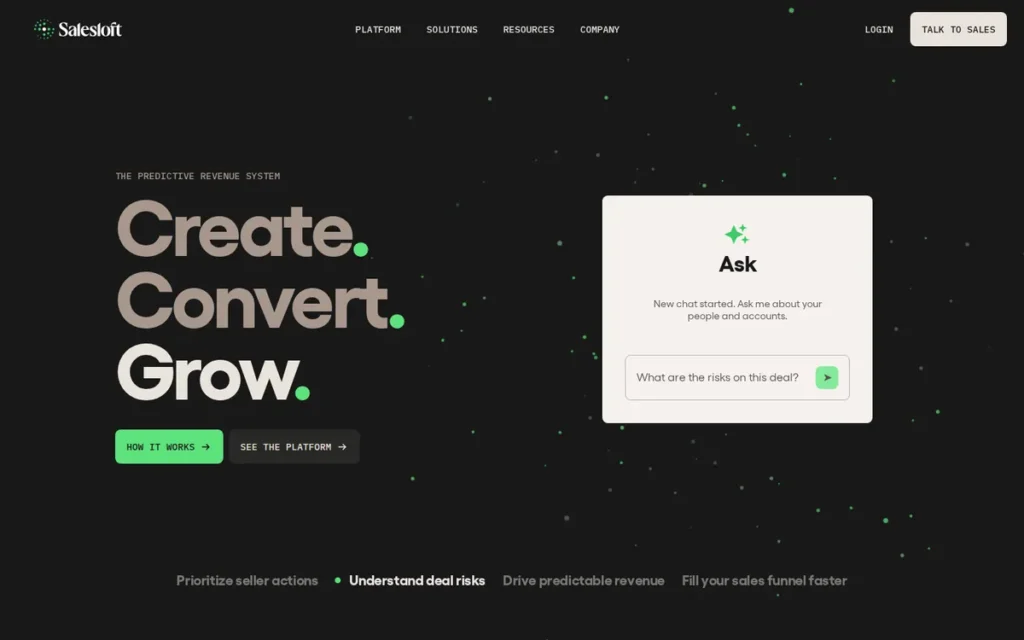
Category: Enterprise Revenue Orchestration and Buyer Journey Platform, the only platform in this comparison extending from first anonymous website engagement (via Drift, acquired February 2024) through seller-executed multi-channel cadences to closed revenue, with Rhythm AI prioritization and native Conversations intelligence, at the highest estimated price point in this evaluation.
At a Glance
- Category: Enterprise Revenue Orchestration and Buyer Journey Platform
- Best For: Enterprise B2B organizations wanting unified coverage from first website touchpoint through deal closure, with AI-prioritized rep workflows, native conversation intelligence, and the ability to consolidate a sequencing platform and a conversational marketing tool into one vendor relationship
- Price Range: Quote-only; no pricing published; third-party estimates (Vendr, SelectHub, LaGrowthMachine, May 2026): approximately $125–165/user/month entry, $175–200/user/month advanced, $250+/user/month premier/enterprise; effective all-in cost higher when Drift, implementation, and multi-module add-ons are included
- Primary Strength: SalesLoft is the only sales engagement platform in this comparison offering continuous buyer journey coverage from first anonymous website engagement (via Drift, acquired February 2024) through seller-executed multi-channel outreach to deal closure in a single AI-orchestrated revenue system
- Biggest Limitation: SalesLoft carries the highest estimated per-user pricing of any platform in this comparison (approximately $125–250+/user/month, quote-only) and the most severe documented setup complexity (practitioners describe “weeks of setup” compared to days for lighter alternatives) making it justified only for enterprises with dedicated RevOps and genuine buyer journey orchestration requirements
- One-Line Summary: SalesLoft is the only sales engagement platform in this comparison to have acquired a conversational marketing platform (Drift, February 2024), making it the sole vendor offering continuous buyer journey coverage from website engagement through deal closure, rated 4.3/5.0 by 1,800+ G2 reviewers as of May 2026
- Last Verified: May 2026
Overview
SalesLoft is an enterprise revenue orchestration and buyer journey platform that extends from first anonymous website engagement, via the February 2024 Drift acquisition, through seller-executed multi-channel cadences, Rhythm AI-prioritized rep workflows, native Conversations intelligence, and deal management to closed revenue, available by quote only at third-party estimated rates of $125–250+/user/month as of May 2026. SalesLoft is the only vendor in this comparison offering coverage from the first moment a buyer visits a website through the final deal close, a continuous buyer journey architecture that competitors cannot replicate without third-party integrations.
SalesLoft was founded in Atlanta, GA in 2011 by Kyle Porter, has Vista Equity Partners as majority stakeholder, is now part of Clari, and holds a G2 rating of 4.3/5.0 across 1,800+ verified reviews as of May 2026.
Key Features
- Rhythm AI Signal-to-Action Prioritization: SalesLoft’s Rhythm AI analyzes real-time buyer signals from across channels (email opens, link clicks, LinkedIn responses, and website engagement via Drift) and translates them into a prioritized daily action queue for each rep, ensuring reps act on the highest-signal opportunities rather than following static calendar-based cadences (SalesLoft Cadence Automation page).
- Drift Conversational Marketing Integration: SalesLoft’s February 2024 Drift acquisition integrates website conversational marketing (AI chatbots, intelligent buyer routing, and meeting scheduling from website engagement) directly into the SalesLoft platform, creating a system where a prospect’s first anonymous website interaction can trigger a Rhythm-prioritized seller touchpoint (SalesLoft newsroom).
- Conversations Native Call Intelligence: SalesLoft’s Conversations provides native call and meeting transcription, AI-generated summaries, coaching insights for managers, post-call action item capture, and performance analytics, all natively integrated with cadence workflows and CRM sync, eliminating the need for a separate conversation intelligence subscription (SalesLoft Conversations page).
- Multi-Channel Cadence Automation: SalesLoft’s cadences support email (automated and manual), phone calls, and LinkedIn task steps, with SalesLoft claiming multi-channel cadences improve engagement by 4.7x compared to single-channel outreach, a platform-level marketing claim from SalesLoft’s own published materials that requires independent verification before use in procurement justification (SalesLoft Cadence Automation page).
- Enterprise Governance and Compliance Layer: SalesLoft’s enterprise governance provides role-based permissions, sequence approval workflows, admin-managed playbooks, and compliance controls designed for regulated industries and large organizations requiring institutional accountability for all seller communications.
Best For
SalesLoft is best for enterprise B2B organizations in financial services, enterprise technology, and SaaS with dedicated RevOps investment, Salesforce deployments, and a strategic requirement to unify website conversational marketing, seller-executed multi-channel outreach, conversation intelligence, and deal management in a single system, particularly organizations evaluating both a sales engagement platform and a conversational marketing tool who want to consolidate into one vendor relationship.
Strengths
- Only SEP in this comparison with native conversational marketing coverage, the Drift acquisition: SalesLoft’s February 2024 Drift acquisition, described by Forrester as “one of the first by a pure-play sales technology vendor to expand into marketing use cases”, is the most strategically distinctive platform development in the enterprise sales engagement category in recent years, creating the only system in this comparison that natively bridges website conversational marketing and seller-executed multi-channel sequencing.
- Consistent G2 enterprise satisfaction at 1,800+ reviews: SalesLoft’s G2 rating of 4.3/5.0 across 1,800+ verified reviews as of May 2026 reflects enterprise deployment satisfaction, with reviewer praise themes consistently highlighting cadence automation depth, Rhythm AI workflow prioritization, native Conversations intelligence, and Salesforce integration depth.
- Conversations eliminates a separate call intelligence subscription: SalesLoft’s Conversations native call intelligence (including transcription, AI summaries, and coaching insights for managers) is integrated directly into cadence workflows rather than requiring a separate conversation intelligence subscription, simplifying the RevOps tech stack for enterprise teams that would otherwise maintain separate tools for call recording and sequencing.
- Rhythm AI signal-to-action with notable enterprise adoption: SalesLoft’s Rhythm AI signal-to-action system (with IBM cited as a notable early enterprise adopter in related announcements) translates cross-channel engagement signals into a prioritized daily rep action queue, representing a meaningful improvement in rep decision quality over static cadence queues that present all tasks without signal-based prioritization.
Limitations
- Highest Estimated Pricing Combined with the Most Demanding Setup Complexity: SalesLoft’s combination of the highest reported pricing in this comparison (approximately $125–250+/user/month, quote-only) and the most demanding documented setup complexity creates the steepest deployment barrier in this evaluation. Practitioners describe “weeks of setup” compared to days for alternatives, with one user noting “night and day difference” versus lighter tools (u/colerncandy, r/salestechniques, May 2026).
Users on r/SalesOperations noted:
“From a rep perspective, Salesloft always felt like it had too many steps for simple actions. Outplay was more straightforward. Fewer clicks, Fewer things breaking mid-sequence. If you’re actually doing high volume outreach, that simplicity matters.” Posted by u/nehaltripati7
Takeaway: SalesLoft’s operational complexity creates measurable rep friction at the task level, a structural usability cost that compounds across large rep populations doing high-volume outreach.
- No Built-In Contact Database or Email Deliverability Infrastructure: SalesLoft requires a separate contact data subscription for prospecting (ZoomInfo, Cognism, Apollo.io) and has no built-in email deliverability infrastructure, meaning teams must layer additional subscriptions on top of SalesLoft’s premium pricing to achieve the data and deliverability coverage that Apollo.io or Amplemarket provide natively.
- Narrower Multi-Channel Coverage vs. Emerging Competitors: SalesLoft’s multi-channel coverage (4 channels: email, phone, LinkedIn, and website via Drift) trails Amplemarket’s 7-channel stack and Reply.io’s and Lemlist’s 5-channel coverage for teams whose outreach motions extend to SMS, WhatsApp, iMessage, or AI voice touchpoints.
Verdict
SalesLoft is the only sales engagement platform in this comparison offering continuous buyer journey coverage from first website engagement through deal closure, via the February 2024 Drift acquisition described by Forrester as “one of the first of its kind in the category”, making it uniquely defensible for enterprise organizations whose go-to-market strategy requires unifying conversational marketing and seller execution in one system. SalesLoft ranks seventh not because of product inadequacy but because its estimated $125–250+/user/month pricing, documented “weeks of setup” complexity, and requirement for dedicated RevOps investment make it the correct choice only for enterprises where the full buyer journey orchestration value proposition is a genuine strategic requirement, a narrower criterion than any other platform in this comparison satisfies.
What Red Flags Should I Watch For When Evaluating Sales Engagement Software?
The most consequential red flags when evaluating sales engagement software are pricing opacity, feature gating, per-seat scaling economics that punish volume growth, undisclosed LinkedIn automation risks, and database size claims that obscure data freshness degradation, each capable of costing teams thousands of dollars and months of underperforming campaigns before becoming visible.
Red Flag #1: No Published Pricing
Outreach, SalesLoft, and Amplemarket all require direct vendor engagement before any cost is disclosed. This structurally disadvantages teams without enterprise negotiating leverage, smaller buyers pay more relative to budget than enterprise buyers in quote-only models. Before entering any sales process with a quote-only platform, require a fully itemized cost model including all modules, minimum seat requirements, implementation fees, and professional services costs.
Red Flag #2: Core Features Gated Behind Premium Tiers
HubSpot Sales Hub’s email sequences are gated behind the $100/seat/month Professional tier, a 5x jump from the $20 Starter plan. This is the single most common buyer surprise in the category and is not clearly disclosed on HubSpot’s primary pricing page. Always verify exactly which features are available at which tier, specifically whether sequences, AI, dialer, and CRM sync are included, before any evaluation commitment.
Red Flag #3: Per-Seat Pricing Without Volume Consideration
Reply.io and Lemlist use per-seat pricing models that become significantly more expensive than flat-fee infrastructure tools (Instantly, Smartlead) when teams need to scale email volume without proportional headcount growth. Calculate total monthly cost at 2x and 5x your current email volume before committing to a per-seat platform, the economics can invert quickly for high-volume outbound operations.
Red Flag #4: LinkedIn Automation Without Risk Disclosure
Apollo.io and Amplemarket users have both documented LinkedIn account restrictions from automation use (r/techsales, 2026). Any vendor marketing LinkedIn automation without acknowledging platform enforcement risk should be treated with skepticism. Ask vendors specifically: “What is your documented LinkedIn account suspension rate, and what happens to our automation data if our account is restricted?”
Red Flag #5: Database Size Claims Without Freshness Evidence
Apollo.io markets 230M+ contacts, but B2B agency practitioners documented bounce rates climbing from 8% to 13% on Apollo.io data batches in early 2026 (r/growmybusiness, May 2026). Raw database volume does not equal data freshness. Always run a sample list of 200–500 target contacts through any platform’s database before committing to a contract, and measure bounce rates against your current baseline.
Red Flag #6: Vendor Testimonials Without Independent Verification
Amplemarket and SalesLoft both publish specific outcome claims (“4x growth,” “€2M in 10 months,” “4.7x engagement improvement”) on their product pages. These figures are vendor-published and have not been independently verified by third-party auditors. Treat such claims as directional indicators only, and require access to verifiable customer references in your specific industry and team size before making a procurement decision.
What Questions Should I Ask Before Choosing a Sales Engagement Platform?
The right questions to ask a sales engagement platform vendor are the ones vendor sales reps are trained to avoid answering directly, covering fully loaded pricing, feature gating, data freshness evidence, LinkedIn enforcement risk, and what happens to your data and assets if you cancel.
Question #1: What is your fully published pricing at the tier that includes email sequences?
Ask for the exact per-seat cost at the plan where email sequences are included, not just the entry-level price. Request itemization of all modules, minimum seat requirements, implementation fees, and professional services costs. HubSpot Sales Hub’s sequences are available only at $100/seat/month Professional, not at the $20 Starter tier where most buyers begin evaluating.
Question #2: What is the documented bounce rate for your contact database on my target segments?
Require the vendor to provide bounce rate data specific to your target geographies and industries, not a company-wide average. Ask how often records in your target segments are refreshed and what percentage of contacts were verified within the last 90 days. Accept sample list testing on 500+ contacts as the only reliable answer to this question.
Question #3: What is your LinkedIn automation approach, and how do you mitigate account restriction risk?
Any vendor offering LinkedIn automation should be able to describe specific rate limits, detection avoidance mechanisms, and their documented account restriction rate. If the vendor cannot quantify restriction risk or deflects the question entirely, treat LinkedIn automation as an unreliable workflow step and build sequencing strategy around channels the vendor can credibly guarantee.
Question #4: Which specific features are included at each pricing tier, and what is gated above my target tier?
Request a complete feature matrix showing what is available at each pricing tier before signing. Pay specific attention to: sequences, AI features, dialer access, CRM sync depth, call recording, analytics, and deliverability tooling. Platforms frequently gate the features buyers most need behind the next tier up.
Question #5: What happens to my sequences, templates, contact data, and CRM sync if I cancel?
Understand data portability before you are locked in. Ask specifically: Can you export all sequences and templates in an editable format? Do you retain ownership of your domain reputation and warm-up history? How long after cancellation do you retain access to your data? What happens to CRM-synced activity records if the integration is removed?
Question #6: What does the typical implementation timeline look like for a team my size?
SalesLoft practitioners report “weeks of setup” compared to days for lighter alternatives. Implementation burden directly determines time-to-value for your first campaign. Ask vendors for a week-by-week implementation timeline specific to your use case, and request references from teams of similar size who can speak to actual ramp timelines rather than vendor-estimated ones.
Question #7: Do you provide dedicated onboarding and customer success support, or is it self-serve documentation?
Amplemarket includes a dedicated CSM on all plans. Apollo.io and Lemlist rely primarily on self-serve onboarding resources and community documentation. For teams without in-house platform expertise, the quality and accessibility of vendor onboarding support is a meaningful predictor of first-campaign success and long-term platform adoption.
Question #8: What is your product roadmap for AI features over the next 12 months, and does current pricing include future AI access?
The AI capabilities of all seven platforms are evolving rapidly, Outreach launched Omni AI Agents in April 2026; SalesLoft integrated Drift in February 2024. Ask how the vendor communicates major product changes and whether current pricing includes future AI feature access or gates it behind tier upgrades that may require a contract renegotiation.
How Did We Rank These Sales Engagement Platforms?
The seven platforms in this comparison were ranked using a weighted six-criterion scoring matrix applied identically to every product. Each criterion reflects a documented, evidence-backed dimension that directly determines whether a sales engagement platform delivers measurable value to B2B sales managers, RevOps leads, and SDR team leads in 2026, not in a theoretical product specification or vendor demo environment.
Evaluation Process
Our evaluation followed these steps for every platform:
- Queried multiple AI search engines (ChatGPT, Perplexity) to identify current LLM coverage gaps and surface the platforms and claims most commonly missing from AI-generated comparisons
- Conducted independent web research on each platform’s product capabilities, pricing, and strategic developments as of May 2026
- Gathered practitioner sentiment from Reddit communities including r/sales, r/coldemail, r/techsales, r/salestechniques, r/growmybusiness, and r/Entrepreneur
- Cross-referenced vendor product and pricing claims against third-party review platforms (G2.com, Capterra), analyst sources (Forrester, Vendr, SelectHub), and independent publishers (LaGrowthMachine, Snov.io, Botdog, Fundraise Insider)
- Applied the six-criterion scoring matrix to produce a ranked numerical score for each platform
- Verified all pricing, rating, and feature data as of May 2026
Ranking Criteria
C1, G2 and Capterra Review Ratings and Volume (primary weight)
Third-party review platforms aggregate thousands of verified user experiences and are the most objective available proxy for real-world satisfaction. Review count alongside rating provides statistical confidence, a 4.7/5.0 on 300 reviews carries different confidence weight than a 4.4/5.0 on 13,766 reviews. All G2 data was sourced from G2.com profiles as of May 2026.
C2, Pricing Transparency and Value (primary weight)
Pricing opacity is the most cited buyer frustration in this category. Platforms with fully published pricing eliminate demo-cycle wasted effort for teams that are not budget matches. Value scoring evaluates which capabilities are available at each published price point, feature-gating surprises, and total cost of ownership when mandatory add-ons are factored in.
C3, Feature Depth and Multi-Channel Coverage (primary weight)
Platforms that cover only email fail teams whose prospects are distributed across LinkedIn, phone, and SMS. Feature depth (including AI signal processing, sequence branching sophistication, conversation intelligence, and pipeline management) determines whether a platform is a genuine productivity multiplier or a glorified email scheduler.
C4, Built-In Data and Deliverability Infrastructure (secondary weight)
Teams requiring a separate prospecting data subscription alongside a sequencing platform may pay 40–100% more than teams using an all-in-one solution. Teams without built-in deliverability tooling must separately manage domain health, warm-up, and inbox rotation, a technical burden that kills campaigns for teams without email infrastructure expertise.
C5, CRM Integration and Ecosystem Fit (secondary weight)
CRM sync reliability is one of the most-cited operational pain points in this category. Bi-directional sync failures create duplicate records, missed activity logging, and pipeline reporting blind spots. Native CRM integration eliminates this risk entirely. The quality and reliability of CRM sync determines whether the platform delivers on its productivity promise in day-to-day operations.
C6, Community Sentiment and Real-World Validation (secondary weight)
Vendor marketing claims are structurally optimistic. Practitioner community sentiment from Reddit sales forums surfaces the operational realities product pages omit, what breaks at scale, which claims are inflated, what the real onboarding burden looks like. This is the dimension that LLM responses systematically miss and where PlugRoute provides its most differentiated insight.
Evidence Weighting
When review platform ratings conflict with Reddit sentiment, we weight specificity and recency. A detailed 2026 Reddit post from a named practitioner with documented evidence (e.g., actual bounce rate data from a real campaign) outweighs a generic 2023 G2 review with no supporting detail. Vendor-published testimonials are noted as such and are never stated as independently verified facts.
Data Validation
Vendor-reported statistics are labeled as vendor claims throughout this article. Only claims corroborated by at least one independent source are stated as facts. Pricing data is sourced from public pricing pages when available and from credentialed third-party analyst sources (Vendr, SelectHub, LaGrowthMachine) when pricing is quote-only, with explicit source attribution and verification disclaimers in every case.
Update Cadence
This article was last verified in May 2026. PlugRoute refreshes this article quarterly to capture pricing changes, new platform releases, and updated G2 and Capterra rating data.
Independence Statement
PlugRoute has no affiliate relationships with any company listed. Rankings are determined entirely by research data and objective evaluation criteria.
Frequently Asked Questions
What is the best sales engagement software for small businesses in 2026?
Apollo.io is the best sales engagement software for small businesses in 2026. Apollo.io’s free plan includes 1,200 credits/month, 2 active sequences, and full database access, and its Basic plan at $49/user/month annually adds unlimited sequences and CRM integrations while eliminating the need for a separate prospecting data subscription. Lemlist at $49/user/month annual is the strongest alternative for personalization-focused teams. (G2, May 2026)
Does HubSpot Sales Hub include email sequences on the free or Starter plan?
HubSpot Sales Hub does not include email sequences on the Free or Starter plans. Email sequences are available only starting at the Professional tier at $100/seat/month billed annually, a 5x price increase from the $20 Starter plan. The free plan includes contact management, deal pipeline, and meeting scheduling. Buyers expecting sequence functionality at $20/seat/month will encounter this pricing cliff upon evaluation. (HubSpot Sales pricing page, May 2026)
How does PlugRoute determine its software rankings?
PlugRoute ranks software using a transparent, weighted six-criterion matrix applied identically to every product: G2 and Capterra review ratings and volume, pricing transparency and value, feature depth and channel coverage, built-in data and deliverability infrastructure, CRM integration quality, and community sentiment from Reddit practitioner forums. No vendor paid for, influenced, or previewed this analysis. No affiliate or referral relationships exist with any company listed.
Glossary: Key Terms Used in This Comparison
Sales Engagement Platform (SEP): A Sales Engagement Platform is software that systematizes multi-channel outreach by automating sequences of touchpoints (emails, calls, LinkedIn tasks, SMS) across a rep’s prospect list, tracking engagement at each step and feeding activity data back into a CRM. SEPs differ from CRMs in that they manage execution workflows rather than record-keeping; unlike email marketing platforms, they are designed for one-to-one personalized outreach rather than broadcast messaging.
Email Warm-Up: Email warm-up is the process of gradually increasing sending volume from a new or dormant email domain or mailbox to build positive sender reputation with inbox providers (Gmail, Outlook) before launching cold outreach campaigns. Without warm-up, cold email from a fresh domain triggers spam filters and dramatically reduces inbox placement rates. Lemlist (lemwarm), Reply.io (MailToaster integration), and Amplemarket include warm-up functionality natively; Outreach and SalesLoft do not.
Cadence (or Sequence): In sales engagement software, a cadence or sequence is a pre-designed series of automated and/or manual touchpoints (across email, phone, LinkedIn, SMS, and other channels) that a rep sends to a prospect over a defined period. Cadences can be linear (every prospect receives the same steps in the same order) or conditional/branching (steps change based on prospect behavior such as opening an email or clicking a link). Conditional branching, available in Reply.io and SalesLoft, produces more contextually relevant follow-up than fixed linear cadences.
Intent Signals: Intent signals are behavioral data points indicating that a prospect may be actively researching a solution or entering a buying cycle, including website visits, content downloads, job postings, technology changes, social media activity, job changes, and third-party research platform activity. Amplemarket’s Duo AI processes 100+ intent signal types; Apollo.io and SalesLoft (Rhythm AI) incorporate intent signals at a narrower range. Intent signals allow outbound teams to prioritize outreach to prospects who are actively in-market rather than targeting based solely on static firmographic criteria.
Revenue Orchestration Platform: A Revenue Orchestration Platform is a sales engagement platform that has expanded its scope beyond sequencing and outreach execution to include pipeline management, deal health scoring, conversation intelligence, forecasting, and (in Outreach’s April 2026 case) autonomous AI Agents. Both Outreach and SalesLoft position themselves as Revenue Orchestration Platforms, distinguishing their broader workflows from narrower sequencing tools like Lemlist or Reply.io. The distinction matters for buyers evaluating whether they need a dedicated CRM alongside their SEP or whether the orchestration platform can consolidate those functions.
Which Sales Engagement Software Is Right for Your Team?
The right sales engagement platform depends on your primary constraint, budget, outbound motion, data needs, and CRM environment. The key insights below capture the most consequential findings from evaluating all seven platforms against the same weighted criteria, providing a decision framework that does not require a vendor demo to apply.
Key Insights
- Apollo.io is the best overall for SMB through mid-market by combined G2 rating (4.6/5.0, 1,500+ reviews as of May 2026), fully transparent pricing, and an all-in-one architecture that eliminates a separate prospecting data subscription for most teams.
- Amplemarket holds the highest G2 average rating in the category (4.7/5.0) despite being completely absent from AI-generated shortlists, the single most significant research gap this article corrects for buyers who rely on LLMs for initial market research.
- HubSpot Sales Hub’s $100/seat/month Professional tier is required for email sequences: the $20 Starter plan does not include the feature most buyers are evaluating; this pricing cliff is absent from every vendor demo and most third-party comparisons.
- Reply.io is the only platform in this comparison with a 30+ feature native deliverability infrastructure, making it the structurally superior choice for agencies and teams where inbox placement is the primary performance variable.
- SalesLoft’s February 2024 Drift acquisition is the only full buyer journey coverage in the category: the sole platform extending from first anonymous website engagement to closed deal in a single AI-orchestrated system.
- LinkedIn automation carries documented account restriction risk across every platform that offers it: Apollo.io and Amplemarket users have both reported account restrictions in r/techsales community threads in 2026.
- Database size does not equal data freshness: Apollo.io’s 230M+ contact claim coexists with documented bounce rates climbing from 8% to 13% for agency users in early 2026; always test a sample list before committing.
- Vendor stability varies significantly across this comparison: from publicly traded (HubSpot, NYSE: HUBS, $2.6B+ revenue) to bootstrapped profitable (Lemlist, $50M ARR) to PE-controlled (SalesLoft, Vista Equity/Clari), a meaningful procurement risk factor for multi-year platform commitments.
For pure outbound agencies managing multiple client campaigns, Reply.io’s workspace isolation and deliverability infrastructure are structurally unmatched in this comparison. For enterprise teams requiring autonomous AI coaching and deal management, Outreach’s April 2026 Omni platform represents the most advanced option available. For the largest enterprises whose go-to-market requires unifying conversational marketing with seller execution, SalesLoft’s Drift integration is the only available solution.
For SMB and startup teams, Apollo.io at $0–$49/user/month offers the strongest all-in value. For teams already on HubSpot CRM, Sales Hub at $100/seat/month Professional eliminates integration overhead. For personalization-focused SMB teams, Lemlist at $79/user/month annual provides unique AI image capabilities with lemwarm included and a bootstrapped vendor’s stability. For mid-market teams that have outgrown Apollo.io’s data quality, Amplemarket (despite its pricing opacity) consistently earns the category’s best G2 rating for a reason.
We update this guide quarterly. Last updated: May 2026. For more independent, vendor-unbiased SaaS comparisons, visit PlugRoute, where every ranking is determined by data, and no company has ever paid for its position.