StackAdapt leads independent ad network rankings in 2026 for programmatic multi-channel advertisers, while Google AdSense remains the most accessible option for web publishers monetizing mainstream content. The right choice depends primarily on your role: advertisers need demand-side control; publishers need fill rates and account stability.
Most ad network comparisons evaluate eCPM alone, but that metric is incomplete. Total revenue equals eCPM multiplied by fill rate. A network offering $8 eCPM at 60% fill underperforms one at $5 eCPM with 95% fill. Account stability is the third variable most comparisons omit entirely.
PlugRoute has no affiliate relationships with any company listed in this article. Rankings are determined entirely by research data and the objective evaluation criteria disclosed in the methodology section.
“Switched from AdSense to Ezoic and my RPM went from $4 to $7 in the first month, roughly 1.5x to 2x depending on the vertical.” (u/gavmoney, r/Adsense)
Takeaway: Independent publisher revenue experiments confirm that network switching can produce measurable RPM lifts, but the gap varies significantly by niche and traffic geography.
TL;DR: Top Picks at a Glance
- Advertisers (multi-channel): StackAdapt for programmatic display, native, video, and CTV with transparent reporting.
- Web publishers: Google AdSense for broadest fill rates and lowest entry requirements.
- Native content discovery: Taboola for 9,000+ premium publisher network scale.
- Affiliate / Tier 2–3 geos: PropellerAds for high fill rates in underserved markets.
What Type of Ad Network Software Do You Actually Need?
Ad network software divides into three primary categories: demand-side platforms for advertisers, publisher monetization networks for content creators, and performance networks for affiliate and ROI-focused campaigns.
Identifying your role (advertiser, publisher, or affiliate marketer) before comparing tools determines which category applies. The pricing, entry requirements, and evaluation criteria that matter most differ significantly across these three categories.
Demand-Side Platforms (DSPs) DSPs give advertisers programmatic access to ad inventory across multiple publishers and channels. StackAdapt is the primary DSP evaluated in this comparison.
Publisher Monetization Networks Publisher networks connect site owners and app developers to advertiser demand. Google AdSense, Media.net, Taboola, and AppLovin serve publisher monetization use cases in this comparison.
Performance Networks Performance networks prioritize cost-per-action (CPA) outcomes for affiliate marketers and direct-response advertisers. PropellerAds and Adsterra operate in this segment.
How Do the Seven Ad Networks Compare Side by Side?
The table below summarizes all seven platforms across the eight criteria most relevant to publishers, advertisers, and affiliate marketers evaluating ad network software in 2026.
| Rank | Company | Category | Best For | One-Line Summary | Key Capabilities | Primary Strength | Key Limitation |
|---|---|---|---|---|---|---|---|
| 1 | StackAdapt | DSP | Programmatic multi-channel advertisers | Top-ranked transparent DSP for cross-channel campaign execution | Display, native, video, CTV, audio, DOOH | Transparent cross-channel reporting | Managed service minimum ~$5,000/month |
| 2 | Google AdSense | Publisher Network | Web publishers with mainstream content | Widest fill rate and lowest entry barrier for web monetization | Auto ads, custom units, contextual targeting | 68% revenue share (publicly disclosed) | Account suspension risk; limited appeal pathway |
| 3 | Media.net | Contextual Network | US/UK/CA publishers seeking AdSense alternative | Yahoo/Bing contextual demand for premium English-language traffic | Contextual targeting, display, native, header bidding | Strong US/UK/CA contextual CPMs | Revenue share not disclosed; Tier 2/3 underperforms |
| 4 | Taboola | Content Discovery | Publishers and advertisers at native scale | Largest native content discovery network across 9,000+ premium partners | Content recommendation, native ads, editorial tools | 600M daily active user reach (self-reported, 2025) | Agency blocking documented; content quality concerns |
| 5 | AppLovin | Mobile Mediation | Mobile app developers and game studios | Mobile ad mediation platform with documented eCPM strength and SDK anomalies | MAX mediation, in-app bidding, cross-network aggregation | Industry-leading mobile eCPMs in gaming verticals | SDK CTR anomalies (95–98%) documented; requires monitoring |
| 6 | PropellerAds | Performance Network | Affiliate marketers in Tier 2/3 geos | Performance-first network for direct-response campaigns in underserved markets | Push, popunder, interstitial, direct click, SmartCPM | High fill rates across 195+ countries | Ad format intrusiveness; corporate transparency gap |
| 7 | Adsterra | Performance Network | Anti-adblock environments, narrow use case only | Anti-adblock network with documented malvertising and brand safety risks | Anti-adblock tech, popunder, social bar, interstitial | Effective adblock bypass technology | Documented malvertising; incompatible with mainstream publishing |
Data freshness note: All platform data verified as of June 2026. Minimum spend thresholds, revenue-share terms, and feature sets change frequently, confirm directly with each platform before committing budget.
Why eCPM Alone Is Misleading
Total ad revenue = eCPM × fill rate. A platform offering $8 eCPM at 60% fill generates $4.80 per 1,000 impressions. A platform at $5 eCPM with 95% fill generates $4.75, nearly identical output. A documented AppLovin vs. AdMob split test showed 124–176% revenue differences driven primarily by fill rate variation, not eCPM alone. Evaluate both metrics together.
How Do You Quickly Match Your Role to the Right Ad Network?
| Your #1 Priority | Recommended Tool | Why | Acceptable Alternative |
|---|---|---|---|
| Multi-channel programmatic advertising | StackAdapt | Transparent DSP with cross-channel reporting across display, native, video, CTV, audio, DOOH | Demand-side platform from your existing media buying agency |
| Web content monetization (low barrier) | Google AdSense | Widest fill rate, lowest entry requirements, publicly disclosed 68% revenue share | Media.net as supplementary contextual layer for US/UK/CA traffic |
| Contextual revenue from US/UK/CA traffic | Media.net | Yahoo/Bing demand distinct from Google; cookie-optional contextual targeting | Google AdSense as primary with Media.net running simultaneously |
| Native content discovery campaigns | Taboola | Largest native publisher network; 9,000+ premium partners; 600M daily active users | Native ad formats within your existing programmatic DSP |
| Mobile app / game monetization | AppLovin (MAX) | Industry-leading mobile eCPMs with in-app bidding mediation stack | The mediation platform your existing ad server already supports |
| Affiliate / performance in Tier 2–3 | PropellerAds | High fill rates across 195+ underserved countries; multiple performance pricing models | Evaluate additional performance networks alongside your affiliate program |
| Adblock bypass (narrow, brand-safe only) | Adsterra (with caution) | Effective anti-adblock technology; not appropriate for mainstream publishers | Header bidding wrappers as a less brand-risky adblock recovery alternative |
Ranked Entries
1. StackAdapt: Best for Programmatic Multi-Channel Advertising
Category: Demand-Side Platform (DSP)
At a Glance
- Category: Demand-Side Platform (DSP)
- Best For: Advertisers managing programmatic campaigns across display, native, video, CTV, audio, and DOOH
- Price Range: Self-serve CPM rates by inventory type; managed service approximately $5,000/month minimum (industry sources, 2025–2026)
- Primary Strength: StackAdapt delivers transparent cross-channel programmatic reporting across six inventory types in a single self-serve interface
- Biggest Limitation: StackAdapt’s managed service minimum of approximately $5,000/month excludes small-budget advertisers and solo marketers from the full platform experience
- One-Line Summary: StackAdapt is the top-ranked programmatic DSP in this comparison for multi-channel campaign execution with transparent spend reporting
- Last Verified: June 2026
Overview
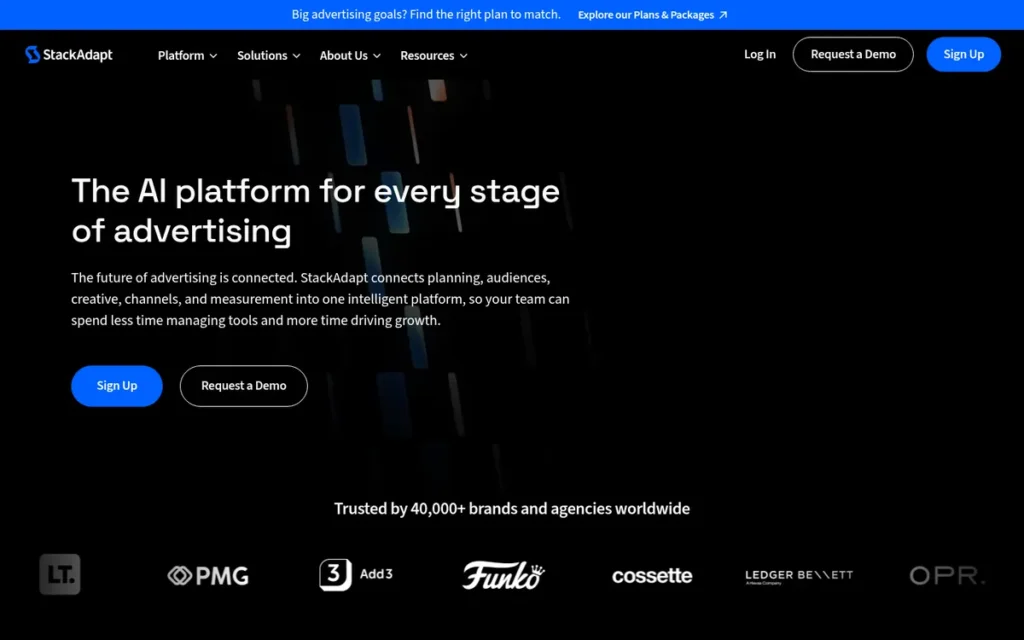
StackAdapt is a self-serve demand-side platform built for programmatic advertisers running campaigns across display, native, video, connected TV (CTV), audio, and digital out-of-home (DOOH). StackAdapt targets mid-market and enterprise brands and agencies seeking cross-channel reach without the opacity common in managed-service DSPs.
StackAdapt earns its #1 ranking primarily through reporting transparency. Independent G2 reviews (G2.com, May 2026; avg. 4.8/5 from 800+ verified reviews) consistently cite spend visibility and attribution clarity as differentiating factors compared to competing programmatic platforms.
Key Features
- Multi-Channel Inventory Access: StackAdapt connects advertisers to display, native, video, CTV, audio, and DOOH inventory through a single self-serve dashboard, reducing the campaign management overhead of maintaining separate DSP contracts for each channel.
- Transparent Programmatic Reporting: StackAdapt’s reporting suite shows impression-level data, audience segment performance, and cross-channel attribution in one interface, the feature G2 reviewers (May 2026) most frequently cite as the reason for switching from black-box DSPs.
- Audience Targeting Engine: StackAdapt offers behavioral, contextual, lookalike, and retargeting audience options built on first-party and third-party data integrations, enabling segmented campaign structures across all supported channels.
- Brand Safety Controls: StackAdapt includes keyword blocking, domain exclusion lists, and third-party verification integrations (IAS, DoubleVerify) for advertisers with strict content adjacency requirements.
- Creative Studio: StackAdapt provides built-in native ad creative tools that allow advertisers to build, preview, and A/B test native creative formats without external design dependencies.
Best For
StackAdapt is best suited for mid-market and enterprise advertisers and agencies running programmatic campaigns requiring cross-channel attribution and transparent spend reporting. StackAdapt is not optimized for brand-new advertisers with budgets below approximately $2,000–$5,000/month.
Pricing
StackAdapt’s self-serve model charges CPM rates based on inventory type and targeting parameters. StackAdapt’s managed service tier carries a minimum engagement of approximately $5,000/month (industry sources, 2025–2026). StackAdapt does not publish a public rate card. Budget requirements should be confirmed directly with StackAdapt’s sales team before committing.
Strengths
- Transparent Cross-Channel Reporting: StackAdapt’s reporting is cited by G2 reviewers (G2.com, May 2026) as the platform’s top differentiator, offering impression-level data across display, native, video, CTV, audio, and DOOH in a single interface.
- Self-Serve Access to Enterprise DSP Features: StackAdapt gives mid-market advertisers access to programmatic tools (including CTV targeting and audio inventory) previously available only through enterprise-managed DSPs.
- High Independent Review Ratings: StackAdapt holds a 4.8/5 average across 800+ verified G2 reviews (May 2026), with consistent praise for customer support responsiveness and platform stability.
- Audience Targeting Depth: StackAdapt’s behavioral and contextual audience segmentation allows granular campaign structures that independent reviewers compare favorably to Google’s Display Network in programmatic community discussions (r/programmatic, 2025–2026).
Limitations
- Minimum Budget Threshold: StackAdapt’s managed service minimum of approximately $5,000/month (industry sources, 2025–2026) creates a meaningful barrier for small businesses, solo marketers, and emerging brands seeking self-serve programmatic access.
- Platform Learning Curve: StackAdapt’s self-serve dashboard requires prior programmatic advertising experience. Independent community discussions (r/programmatic, 2025–2026) note that new users frequently underperform without a dedicated media buyer or agency managing campaigns.
- Fee Structure Opacity: StackAdapt does not publicly disclose its platform fee percentage above media cost. One r/programmatic community member reported: “StackAdapt doesn’t clearly break out their margin, you’re trusting their reported CPMs” (u/MaximumTemperature25, r/programmatic, 2026).
“StackAdapt doesn’t clearly break out their margin, you’re trusting their reported CPMs.” (u/MaximumTemperature25, r/programmatic, 2026)
Takeaway: Fee opacity is a meaningful concern for advertisers without independent ad verification infrastructure. Request a detailed cost breakdown (separating media cost from platform fee) before signing any StackAdapt agreement.
- Demand-Side Only: StackAdapt is a demand-side platform exclusively. Publishers seeking ad network monetization tools must evaluate a different category of platform.
Verdict
StackAdapt is the highest-ranked programmatic DSP in this comparison for advertisers seeking transparent multi-channel campaign management. StackAdapt’s reporting clarity, cross-channel inventory access, and independent review ratings (4.8/5, G2, May 2026) distinguish it from managed-service DSPs with opaque fee structures. Advertisers without DSP experience or managed budgets above $5,000/month should evaluate whether a managed-service DSP or agency-side buying better fits their current scale before committing to StackAdapt.
2. Google AdSense: Best for Web Publisher Monetization

Category: Publisher Monetization Network
At a Glance
- Category: Publisher Monetization Network
- Best For: Web publishers with mainstream content seeking low-barrier display ad monetization
- Price Range: Free to join; publishers retain 68% of gross revenue Google AdSense Help Center, 2025
- Primary Strength: Google AdSense offers the broadest advertiser demand pool and the only publicly disclosed revenue-share split (68%) of any network in this comparison
- Biggest Limitation: Google AdSense account suspensions occur without detailed explanation or guaranteed appeal resolution, creating revenue continuity risk for publishers relying on it as a sole monetization source
- One-Line Summary: Google AdSense is the most accessible web publisher monetization network in this comparison, with the widest fill rates and the only publicly disclosed revenue share
- Last Verified: June 2026
Overview
Google AdSense is a publisher monetization network that connects website owners to Google’s demand pool of 2M+ active advertisers through automated contextual ad placement. Google AdSense targets individual content creators, bloggers, and small-to-mid-sized publishers who want display monetization without a managed account relationship.
Google AdSense’s revenue-share structure is the only publicly disclosed split in this evaluation: publishers retain 68% of gross revenue Google AdSense Help Center, 2025. Google’s Auto Ads feature reportedly lifted RPM by approximately 10% during its 2018 beta launch (Econsultancy, 2018, Auto Ads beta launch data; no independently benchmarked current update available for 2025–2026).
Key Features
- Auto Ads Placement Engine: Google AdSense’s Auto Ads uses machine learning to determine optimal ad placement positions, reducing manual setup time for publishers who prefer automated revenue optimization over granular placement control.
- Contextual Ad Targeting: Google AdSense matches advertiser demand to publisher content using Google’s contextual signals (including Google Search and Chrome data) at a scale no independent contextual network in this comparison matches.
- Custom Ad Units: Google AdSense allows publishers to create fixed-size or responsive ad units calibrated to specific page layouts, enabling manual placement control alongside Auto Ads automation.
- Policy Compliance Tools: Google AdSense provides a built-in policy center that flags content and placement violations before they trigger account-level enforcement, giving publishers visibility into compliance status in advance.
- Publisher Payment System: Google AdSense pays publishers on a net-30 basis once accounts reach a $100 minimum payout threshold, via electronic funds transfer, check, or wire depending on geography.
Best For
Google AdSense is best for individual bloggers, content publishers, and new site owners who need the lowest entry barrier to display ad monetization. Google AdSense is less optimal for publishers with traffic heavily concentrated in Tier 2 or Tier 3 geographies, or for high-traffic publishers exceeding 500,000 monthly pageviews who require granular revenue controls.
Pricing
Google AdSense is free to join and does not require a minimum traffic threshold for application. Google retains approximately 32% of gross revenue; publishers keep 68% Google AdSense Help Center, 2025. This is the only publicly disclosed revenue split in this comparison, all other evaluated networks require completing onboarding before sharing payout terms.
Strengths
- Widest Advertiser Demand Pool: Google AdSense connects publishers to 2M+ active advertisers (Google, 2025), generating fill rates that independent publisher community members consistently report as higher than alternative networks in comparable side-by-side tests.
- Lowest Technical Entry Barrier: Google AdSense requires no minimum traffic guarantee, no managed account relationship, and no code beyond a single JavaScript snippet, the fastest path to display monetization for new publishers.
- Transparent Revenue Share: Google AdSense publicly discloses its 68%/32% revenue-sharing split Google AdSense Help Center, 2025 (the only network in this comparison to do so) giving publishers a verified baseline for revenue forecasting.
- Policy Compliance Infrastructure: Google AdSense’s built-in policy tools help publishers identify potential violations before enforcement, reducing the risk of unexpected account termination for publishers actively managing compliance.
Limitations
- Account Suspension Risk: Google AdSense account suspensions can occur with limited explanation and difficult appeal pathways. Publishers relying on AdSense as their sole monetization source face income loss with no guaranteed recovery timeline. Maintaining a secondary monetization network is the standard risk mitigation approach.
This aligns with community sentiment on r/PartneredYoutube:
“your competitors or simply someone with a grudge against you can spend a couple bucks on bot services to shut you down permanently, and Google will treat you like a child without even a chance to open your mouth. This could happen to any of you and there is absolutely nothing you can do to stop it.” Posted by u/NutraMain
Takeaway: Google AdSense’s automated enforcement leaves publishers with no meaningful appeal pathway when accounts are suspended, a structural risk that applies regardless of whether the publisher did anything wrong.
- Limited High-Traffic Publisher Controls: Google AdSense optimizes for simplicity over granular revenue management. Publishers reaching 500,000+ monthly pageviews consistently outperform AdSense revenue using header bidding solutions or full programmatic management platforms.
- Non-English Traffic Gap: Google AdSense’s CPMs in Tier 2 and Tier 3 geographies (Southeast Asia, Latin America, Sub-Saharan Africa) underperform networks purpose-built for those markets, such as PropellerAds.
- Ad Quality Variance: Google AdSense’s automated quality controls do not catch all low-quality creatives. Independent publisher communities document periodic ad aesthetic inconsistency, though at lower frequency than documented for PropellerAds or Adsterra.
Verdict
Google AdSense ranks #2 in this comparison as the definitive web publisher monetization entry point for mainstream content sites. Google AdSense’s 68% publisher revenue share (publicly disclosed), broadest advertiser demand pool, and lowest entry requirements make it the default starting network for new publishers. Publishers experiencing growth beyond 500,000 monthly pageviews should evaluate supplementary monetization tools alongside AdSense rather than relying on it as a sole revenue source.
3. Media.net: Best for Contextual Publisher Monetization (US/UK/CA)
Category: Contextual Advertising Network
At a Glance
- Category: Contextual Advertising Network
- Best For: Established web publishers with US, UK, and Canadian traffic seeking a contextual alternative or supplement to Google AdSense
- Price Range: No entry fee; revenue-share percentage not publicly disclosed: terms are negotiated individually during onboarding
- Primary Strength: Media.net delivers documented contextual CPM strength for US/UK/CA English-language traffic by connecting publishers to Yahoo and Microsoft Bing advertiser demand
- Biggest Limitation: Media.net’s revenue-share terms are not publicly disclosed before onboarding, and its CPM performance drops materially for traffic outside the United States, United Kingdom, and Canada
- One-Line Summary: Media.net is the leading contextual advertising network for US/UK/CA publishers in this comparison, offering Yahoo and Bing demand as a complement to or alternative to Google AdSense
- Last Verified: June 2026
Overview
Media.net is a contextual advertising network that connects publishers to demand from Yahoo and Microsoft Bing’s advertiser ecosystem. Media.net operates as a subsidiary of Miteno Communication Technology following its 2016 acquisition, focusing exclusively on contextual advertising for premium English-language content publishers.
Media.net ranks #3 in this comparison because its contextual revenue performance for US/UK/CA traffic is consistently referenced in independent publisher communities (r/juststart, r/Blogging, 2024–2026). Its geographic concentration and non-disclosed revenue share limit its overall applicability as a standalone or primary network.
Key Features
- Yahoo/Bing Contextual Demand: Media.net routes publisher inventory to Yahoo and Microsoft Bing advertisers, providing access to a demand pool distinct from Google AdSense and enabling publishers to run both networks simultaneously without auction competition.
- Contextual Ad Unit Formats: Media.net offers display, native, and contextual ad units that render based on page content signals rather than user cookie data, which benefits publishers whose audiences have elevated cookie-rejection rates.
- Managed Account Support: Media.net provides dedicated account managers for onboarded publishers, contrasting with Google AdSense’s self-serve-only model for publishers below Google Ad Manager eligibility thresholds.
- Header Bidding Compatibility: Media.net supports Prebid.js integration, enabling publishers running header bidding setups to include Media.net demand alongside other supply-side platforms without a standalone implementation.
- Content Quality Requirements: Media.net requires publishers to meet content quality and traffic standards during an application review period, restricting access for new publishers but maintaining inventory quality for advertisers.
Best For
Media.net is best for established web publishers whose traffic is concentrated in the United States, United Kingdom, or Canada, and who want a secondary contextual revenue source to run alongside or instead of Google AdSense. Media.net is not recommended as a primary network for publishers with Tier 2 or Tier 3 geographic traffic concentrations.
Pricing
Media.net does not publicly disclose its publisher revenue-share percentage. Account terms are negotiated individually during the onboarding process (Media.net, 2026). Publishers should request explicit revenue-share figures and payment terms in writing before completing Media.net’s approval process.
Strengths
- Strong US/UK/CA Contextual CPMs: Media.net’s Yahoo and Bing demand pool generates contextual CPMs for premium English-language traffic that independent publisher community reports (r/juststart, r/Blogging, 2024–2026) describe as competitive with or exceeding AdSense in high-value verticals such as finance and technology.
- Complementary to Google AdSense: Media.net draws on a different advertiser ecosystem than Google, enabling publishers to run both networks simultaneously and capture incremental contextual demand without auction competition between the two platforms.
- Managed Account Relationship: Media.net’s dedicated account management model gives publishers a direct point of contact for optimization support, an advantage compared to AdSense’s automated enforcement model for publishers at equivalent traffic levels.
- Cookie-Optional Contextual Targeting: Media.net’s contextual matching does not depend exclusively on user-level cookie data, providing more stable targeting performance for publishers as third-party cookies phase out across browser environments.
Limitations
- Non-Disclosed Revenue Share: Media.net does not publicly disclose its publisher revenue-share percentage before onboarding. Publishers cannot benchmark Media.net’s payout terms against AdSense’s disclosed 68% share without completing the approval process, creating an information asymmetry disadvantage.
- Geographic Revenue Concentration: Media.net’s CPM performance is materially stronger for US, UK, and Canadian traffic than for other geographies. Publishers with significant Tier 2 or Tier 3 traffic should expect substantially lower effective CPMs from Media.net than from networks purpose-built for those markets.
- Traffic and Content Approval Barrier: Media.net’s approval process rejects new or low-traffic publishers during initial review. Specific traffic and content quality thresholds are not publicly published, creating uncertainty for publishers in the pre-qualification stage.
- Limited Ad Format Variety: Media.net’s ad format library is narrower than Google AdSense’s, with fewer interactive or high-impact format options. Publishers seeking video pre-roll, interstitials, or push notification formats will need to supplement Media.net with a second network.
Verdict
Media.net is the top-ranked contextual network for US/UK/CA publishers in this comparison, ranking #3 overall. Media.net’s Yahoo and Bing demand access, managed account model, and documented contextual CPM performance for English-language traffic make it a well-supported supplement to Google AdSense for eligible publishers. The non-disclosed revenue-share structure and geographic concentration limit its applicability as a primary standalone network for publishers with diverse international traffic.
4. Taboola: Best for Native Content Discovery Advertising at Scale

Category: Content Discovery Platform (Native Advertising)
At a Glance
- Category: Content Discovery Platform (Native Advertising)
- Best For: Publishers monetizing end-of-article inventory with native recommendations; advertisers distributing content-style campaigns at mass scale
- Price Range: Publisher: revenue share not publicly disclosed, negotiated at onboarding. Advertiser: CPC-based, minimum budget varies by market
- Primary Strength: Taboola operates the largest native content recommendation network in this comparison, reaching 600M daily active users across 9,000+ publisher partners (Taboola self-reported, 2025)
- Biggest Limitation: Taboola’s content recommendation model has documented branded-content quality inconsistencies, and professional media agencies have documented blocking Taboola placements in programmatic brand safety lists (2024–2026)
- One-Line Summary: Taboola is the largest native content discovery network in this comparison by self-reported reach, with documented quality concerns that require active publisher and advertiser management
- Last Verified: June 2026
Overview
Taboola is a content discovery platform that places sponsored content recommendations on publisher websites and connects advertisers to audiences at the bottom of editorial content. Taboola’s network spans 9,000+ publishing partners and reportedly reaches 600M daily active users (Taboola self-reported, 2025).
Taboola ranks #4 in this comparison because its publisher monetization reach and content distribution scale are documented, but independent sources report branded-content quality concerns and agency-level blocking patterns that limit its standing in premium programmatic buying environments (2024–2026).
Key Features
- Massive Native Publisher Network: Taboola’s content recommendation widgets appear on 9,000+ publisher sites including major news and lifestyle properties, giving advertisers content distribution at a scale few native networks in this comparison match.
- Editorial Discovery Tools: Taboola provides publishers with content recommendation tools that surface both editorial and sponsored content, enabling publishers to recirculate owned content alongside paid recommendations in a single integrated widget.
- Audience Targeting for Content Marketers: Taboola’s audience segmentation allows targeting by interest category, geography, device, and behavioral signals, supporting direct-response and brand awareness campaign structures for content-style advertising.
- Publisher Revenue Diversification: Taboola enables publishers to monetize below-the-fold and end-of-article inventory through native recommendations, providing incremental revenue from positions that standard display units typically do not optimize well.
- Performance Measurement Dashboard: Taboola’s reporting dashboard tracks content engagement, click-through rate, and conversion events at the campaign level, enabling advertisers to optimize content distribution toward downstream performance signals.
Best For
Taboola is best for publishers with significant editorial content volume seeking native recommendation revenue from below-the-fold inventory, and for content marketers distributing editorial-style campaigns at mass reach. Taboola is less suited for advertisers with strict brand safety requirements who lack resources to actively monitor content adjacency.
Pricing
Taboola uses a cost-per-click (CPC) pricing model for advertisers, with minimum budgets varying by market and campaign type (Taboola, 2026). Publisher revenue-share terms are negotiated individually and not publicly disclosed. Publishers should request explicit revenue-share rates and any traffic minimums in writing before completing the Taboola onboarding process.
Strengths
- Largest Native Network Scale: Taboola’s 9,000+ publisher partners and 600M daily active user reach (Taboola self-reported, 2025) represent the largest content discovery network footprint in this comparison, providing advertisers native content distribution at a scale independent native networks do not replicate.
- Incremental Publisher Inventory Monetization: Taboola’s native widgets monetize page positions (primarily below-the-fold and end-of-article) that typically generate low yield from standard display, giving publishers genuine incremental revenue from existing inventory without competing against their primary display setup.
- Dual Editorial and Sponsored Content Integration: Taboola’s widgets surface both editorial recirculation and paid recommendations, giving publishers a dual-purpose tool that serves audience engagement and monetization simultaneously within one widget placement.
- Cross-Device Reach: Taboola’s reach spans desktop, mobile, and tablet environments, supporting advertisers who need consistent native content distribution across device types without platform-specific campaign fragmentation.
Limitations
- Branded-Content Quality Inconsistencies: Taboola’s open content recommendation model has generated documented advertiser and publisher concerns about ad content quality and creative adjacency (independent ad operations community discussions, 2024–2026). Publishers and advertisers need active content moderation to maintain brand safety standards.
- Agency Blocking Documented: Professional media agencies have documented blocking Taboola placements in programmatic brand safety lists (2024–2026). Advertisers whose campaigns are managed through agencies should confirm whether their agency’s brand safety filters include Taboola exclusions before assuming delivery.
- Non-Disclosed Publisher Revenue Share: Taboola does not publicly disclose publisher revenue-share percentages. Publishers cannot benchmark Taboola’s payout terms against AdSense’s disclosed 68% share without completing onboarding, creating information asymmetry at the evaluation stage.
- Clickbait Content Proximity Risk: Taboola’s open recommendation model means publisher pages may display sponsored content with sensationalist formatting adjacent to editorial content, a risk that can affect audience perception of the host publisher’s brand quality without active filtering.
Verdict
Taboola ranks #4 in this comparison as the top native content discovery platform for publishers and content marketers who need scale across premium editorial inventory. Taboola’s 9,000+ publisher network and 600M daily active user reach (self-reported, 2025) are genuine scale differentiators. The documented agency blocking and branded-content quality concerns require active management, publishers and advertisers should monitor content adjacency settings and confirm agency brand safety configurations before deploying Taboola at scale.
5. AppLovin: Best for Mobile App Monetization with Stability Caveats

Category: Mobile Ad Mediation Platform
At a Glance
- Category: Mobile Ad Mediation Platform
- Best For: Mobile app developers and game studios seeking industry-leading mobile eCPMs through competitive in-app bidding
- Price Range: MAX mediation platform is free to integrate; AppLovin’s revenue-share percentage from its own demand network is not publicly disclosed
- Primary Strength: AppLovin’s MAX platform delivers industry-leading mobile eCPMs in gaming verticals, supported by $1.84B Q1 2026 revenue and 85% EBITDA margin (AppLovin Corporation Q1 2026 Earnings Release, AppLovin Investor Relations, May 2026; ir.applovin.com)
- Biggest Limitation: AppLovin’s SDK has been documented reporting 95–98% click-through rates, far above the 0.1–5% industry benchmark, triggering AdMob revenue clawbacks in independent developer accounts
- One-Line Summary: AppLovin is the leading mobile ad mediation platform for gaming app developers in this comparison, with documented eCPM strength and documented SDK CTR anomalies that require independent monitoring
- Last Verified: June 2026
Overview
AppLovin is a mobile ad mediation platform that aggregates demand from multiple mobile ad networks through its MAX SDK, enabling app developers to run simultaneous in-app bidding auctions and increase effective CPMs. AppLovin targets mobile game studios and app developers seeking to maximize in-app advertising revenue across iOS and Android.
AppLovin Corporation reported $1.84B in Q1 2026 revenue with an 85% EBITDA margin and $1.29B in free cash flow (AppLovin Corporation Q1 2026 Earnings Release, AppLovin Investor Relations, May 2026; ir.applovin.com). This financial scale enables sustained investment in AppLovin’s demand-side capabilities and mediation infrastructure.
Key Features
- MAX Mediation Platform: AppLovin’s MAX SDK runs in-app bidding auctions that aggregate demand from multiple ad networks simultaneously, replacing traditional waterfall setups that typically underperform in-app bidding configurations for mobile inventory.
- In-App Bidding Infrastructure: AppLovin’s in-app bidding connects app developers to a competitive real-time auction environment, which independent developer community reports (r/gamedev, 2024–2026) associate with higher realized eCPMs than legacy waterfall configurations.
- Gaming Vertical Specialization: AppLovin’s demand pool has documented strength in mobile gaming inventory, with eCPM premiums for hyper-casual, casual, and mid-core game genres that generalist mediation platforms do not consistently replicate.
- Analytics and Revenue Dashboard: AppLovin MAX provides impression-level revenue reporting, eCPM breakdowns by ad network, and A/B testing tools for ad format configurations, enabling data-driven mediation stack optimization.
- Cross-Network Demand Aggregation: AppLovin’s MAX platform integrates demand from Meta Audience Network, Google AdMob, Unity Ads, ironSource, and other major mobile networks, giving developers a single SDK interface for multi-network competition.
Best For
AppLovin is best for mobile game developers and app studios with active daily users seeking the highest available eCPMs through competitive in-app bidding. AppLovin requires active SDK performance monitoring due to documented CTR anomalies, it is not recommended as a passive set-and-forget monetization solution.
Pricing
AppLovin’s MAX mediation platform is free to integrate. AppLovin retains a percentage of revenue from ads served through its own demand network alongside mediated demand. The specific revenue-share percentage is not publicly disclosed. Developers should request explicit revenue-share and auction-clearing terms from AppLovin’s integration team before deploying in production.
Strengths
- Industry-Leading Mobile eCPM Performance: AppLovin’s MAX platform is associated with the highest in-app bidding eCPMs in mobile gaming verticals in this comparison, supported by AppLovin’s $1.84B Q1 2026 revenue base and sustained demand-side investment (AppLovin Investor Relations, May 2026; ir.applovin.com).
- In-App Bidding Uplift over Waterfall: App developers migrating from waterfall setups to AppLovin MAX’s in-app bidding report meaningful eCPM improvements in independent developer community discussions (r/gamedev, 2024–2026), driven by competitive real-time auction clearing prices.
- Deep Mobile Gaming Demand Pool: AppLovin’s advertiser demand is concentrated in mobile gaming, enabling gaming app developers to access a demand pool calibrated to their audience and ad format inventory in ways that general-purpose networks do not replicate.
- Platform Financial Stability: AppLovin’s $1.84B Q1 2026 revenue (AppLovin Investor Relations, May 2026) and established mediation infrastructure represent a financially stable platform with resources to maintain demand investment and SDK development over time.
Limitations
- Documented SDK CTR Anomalies: AppLovin’s SDK has been documented reporting click-through rates of 95–98%, far above the 0.1–5% industry benchmark for mobile display advertising. Independent developer reports link these CTR anomalies to AdMob revenue clawbacks in affected developer accounts.
Users on r/admob shared their experience:
“I used AppLovin as a bidding source through AdMob. The CTR was astronomically high.. between 95-98%. AdMob then hit me with an enormous invalid traffic deduction. I followed the integration step-by-step, too. De-integrated the SDK from all my Apps and can safely say I will never consider AppLovin again, and would never recommend it to anybody.” Posted by u/bemanipuns573
Takeaway: AppLovin’s 95–98% CTR anomaly is not a theoretical risk, developers following correct integration procedures have documented AdMob revenue clawbacks as a direct result of AppLovin SDK behavior.
- Revenue Clawback Risk: When AdMob detects anomalous CTR patterns attributable to AppLovin SDK behavior, affected developers have reported revenue reversals and withheld payments, creating material revenue uncertainty for apps running AppLovin and AdMob simultaneously.
- Non-Disclosed Revenue Share: AppLovin does not publicly disclose the revenue-share percentage it retains from its own demand network within the MAX mediation stack. Developers cannot independently verify the split without third-party audit tools.
- Requires Active Monitoring: The documented CTR anomaly history means app developers should monitor SDK performance metrics and cross-network revenue patterns continuously, a monitoring burden that simpler publisher ad networks in this comparison do not impose.
Verdict
AppLovin is the top-ranked mobile ad mediation platform for gaming app developers in this comparison, ranking #5 overall. AppLovin’s eCPM performance and mediation infrastructure are documented strengths. The documented SDK CTR anomalies (95–98% vs. 0.1–5% industry benchmark) and associated revenue clawback risk from AdMob represent meaningful operational concerns. Developers who cannot invest in active SDK monitoring should evaluate alternative mediation platforms before deploying AppLovin MAX in production.
6. PropellerAds: Best for Performance/Affiliate Marketing in Tier 2/3 Geos
Category: Performance Advertising Network
At a Glance
- Category: Performance Advertising Network
- Best For: Affiliate marketers and performance advertisers targeting Tier 2 and Tier 3 geographic markets with direct-response campaigns
- Price Range: No disclosed advertiser minimum spend; CPM, CPC, CPA target, and SmartCPM pricing models available; publisher revenue share not publicly disclosed
- Primary Strength: PropellerAds delivers high fill rates across 195+ countries, with specialized performance in Tier 2 and Tier 3 geographic markets that mainstream networks underserve
- Biggest Limitation: PropellerAds’ push notification, popunder, and interstitial ad formats are incompatible with mainstream publisher content standards and brand safety requirements
- One-Line Summary: PropellerAds is the top-ranked performance network for affiliate marketers and direct-response advertisers in Tier 2 and Tier 3 geographic markets in this comparison
- Last Verified: June 2026
Overview
PropellerAds is a performance advertising network specializing in push notification, popunder, interstitial, and direct click ad formats for affiliate marketers and direct-response advertisers. PropellerAds targets campaign buyers and publishers seeking performance-oriented monetization in geographies underserved by Google AdSense and Media.net.
PropellerAds claims IAB Europe certification and ISO/IEC 27001 information security certification (PropellerAds, 2026). Publishers and advertisers can independently verify these certification statuses at iabeurope.eu and iso.org respectively. PropellerAds does not publicly disclose its founding date, headquarters location, or company size.
Key Features
- Push Notification Ad Format: PropellerAds’ push notification format delivers ads to users who have opted into browser notifications, generating engagement rates that PropellerAds reports as higher than standard display formats for direct-response affiliate campaigns.
- Popunder Inventory: PropellerAds’ popunder format opens a new browser window beneath the active page on user interaction, providing high-impression-volume inventory suited for performance affiliate campaigns, but incompatible with brand-safe editorial environments.
- Tier 2/3 Geographic Coverage: PropellerAds reports coverage across 195+ countries (PropellerAds, 2026), with fill rate strength in Southeast Asia, Latin America, Eastern Europe, and Sub-Saharan Africa, markets where Google AdSense and Media.net CPMs are substantially lower.
- Multiple Pricing Models: PropellerAds supports CPM, CPC, CPA target, and SmartCPM pricing models within its self-serve platform, allowing affiliates and performance buyers to select the bidding structure that aligns with their campaign’s conversion economics.
- Anti-Fraud Technology: PropellerAds claims built-in anti-fraud traffic filtering (PropellerAds, 2026). No independent third-party audit of this system is available in publicly referenced sources as of June 2026.
Best For
PropellerAds is best for affiliate marketers running direct-response campaigns in Tier 2 and Tier 3 geographic markets, and for publishers with high-traffic sites in those geographies whose content is compatible with push, popunder, and interstitial formats. PropellerAds is not appropriate for mainstream blog publishers, brand advertisers, or content creators with brand safety obligations.
Pricing
PropellerAds’ self-serve advertiser platform has no disclosed minimum spend requirement. Pricing varies by format and target geography. Publisher revenue share is not publicly disclosed and is set individually at account approval (PropellerAds, 2026).
Strengths
- High Tier 2/3 Fill Rates: PropellerAds fills inventory in 195+ countries (PropellerAds, 2026), including geographies where Google AdSense and Media.net deliver substantially lower fill rates, the primary value proposition for publishers with non-English or non-North American traffic.
- Multiple Performance-Oriented Ad Formats: PropellerAds offers push, popunder, interstitial, and direct click formats specifically suited to affiliate and direct-response campaign structures, providing more format flexibility than the mainstream publisher networks in this comparison.
- Self-Serve Accessibility: PropellerAds’ self-serve advertiser platform is accessible without a minimum spend commitment or managed account requirement, lowering the barrier for independent affiliates and small performance marketing operations.
- Reported Certifications: PropellerAds reports IAB Europe and ISO/IEC 27001 certifications (PropellerAds, 2026), which publishers and advertisers can independently verify at iabeurope.eu and iso.org respectively.
Limitations
- Ad Format Intrusiveness: PropellerAds’ push notification, popunder, and interstitial formats are categorized as intrusive by mainstream web content standards. These formats conflict with Google AdSense’s policy requirements and with the editorial content standards expected by most brand advertisers.
- Corporate Transparency Gap: PropellerAds does not publicly disclose its founding date, headquarters location, or company size. This opacity limits due diligence options for publishers and advertisers evaluating PropellerAds against competitors with documented corporate histories.
- Non-Disclosed Revenue Share: PropellerAds’ publisher revenue-share structure is not publicly disclosed, preventing publishers from benchmarking payout terms against AdSense’s disclosed 68% share before committing to onboarding.
- Unverified Fraud Filtering Claims: PropellerAds claims built-in anti-fraud traffic filtering, but no independent third-party audit of this system appears in publicly referenced sources as of June 2026. Performance buyers should apply independent traffic quality verification tools when running campaigns.
Users on r/PPC noted:
“PropellerAds/Zeroparks/etc works for CPA offers but only easy actions like simple email submits 1st page opt-ins or installs. There’s alot of low quality/spam traffic, you’ll have to use tracking tools like Voluum and exclude alot of bad traffic sources. It def works but I wouldn’t recommend it for someone who’s just starting, it’s very competitive. You’ll burn alot of cash if you don’t know what you’re doing.” Posted by u/IssaReallyGoodDay
Takeaway: PropellerAds delivers results for experienced CPA affiliates running simple offers, but the network’s traffic quality requires active filtering that beginners are unlikely to execute correctly.
Verdict
PropellerAds ranks #6 in this comparison as the leading performance network for Tier 2/3 geographic markets and affiliate marketing campaigns. PropellerAds’ fill rate breadth and format flexibility for direct-response use cases are genuine advantages that mainstream networks in this comparison do not replicate. The format intrusiveness, corporate transparency gap, and non-disclosed revenue share limit PropellerAds’ applicability to a specific and well-defined affiliate and performance marketing audience.
7. Adsterra: Best for High-Adblock Environments, Narrow Use Case Only
Category: Performance Network (Anti-Adblock Technology)
At a Glance
- Category: Performance Network (Anti-Adblock Technology)
- Best For: Publishers in high-adblock-rate niches whose content is explicitly compatible with aggressive ad formats and documented brand safety trade-offs
- Price Range: Publisher revenue share not publicly disclosed; advertiser minimum deposit required (amount varies by account type; Adsterra, 2026)
- Primary Strength: Adsterra’s anti-adblock technology enables ad revenue recovery for publishers whose audiences use adblockers at rates that make standard display monetization non-viable
- Biggest Limitation: Adsterra has documented malvertising incidents and multiple independent reports of deceptive ad creative served through the network, making it incompatible with mainstream publishing environments
- One-Line Summary: Adsterra is an anti-adblock performance network with documented malvertising and brand safety risks, appropriate only for publishers with content explicitly compatible with those trade-offs
- Last Verified: June 2026
Overview
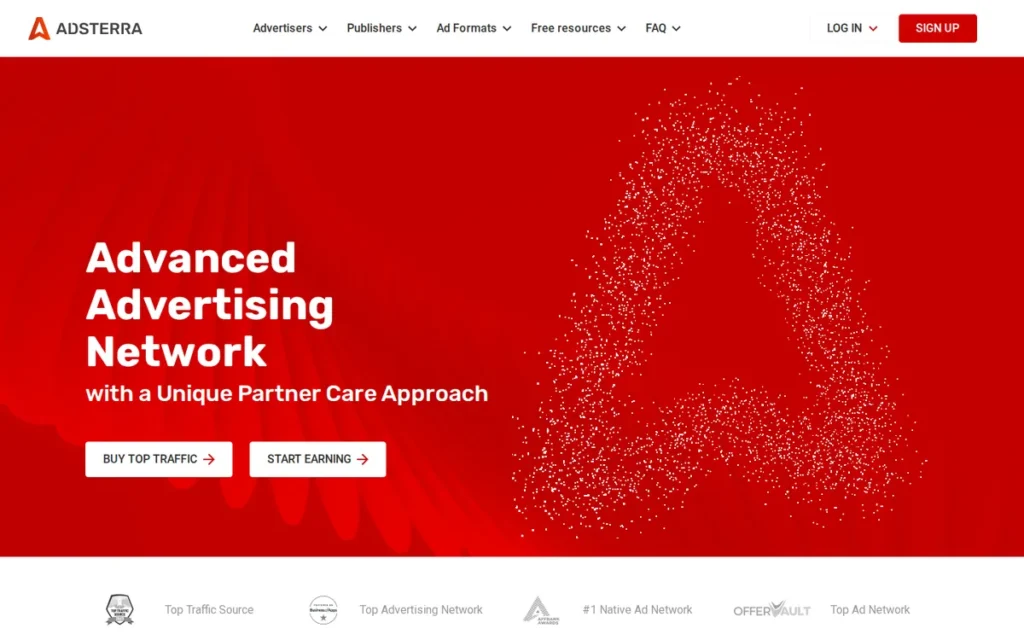
Adsterra is a performance advertising network specializing in anti-adblock technology, enabling publishers to serve ads to users who have adblockers installed. Adsterra targets publishers in niches where audience adblock rates are elevated (including gaming, software download, and file-sharing content) and direct-response advertisers seeking volume in Tier 2/3 markets.
Adsterra’s anti-adblock bypass is its primary technical differentiator in this comparison. Documented malvertising incidents (including reports of deceptive ad copy and misleading creative served through the Adsterra network) require publishers using Adsterra to implement independent ad quality monitoring before deploying the network on any page.
Key Features
- Anti-Adblock Technology: Adsterra’s core technical offering bypasses browser-level adblock extensions to serve ads to users who would otherwise generate zero display revenue, the primary reason publishers with adblock-heavy audiences evaluate Adsterra over mainstream networks.
- Multiple Ad Format Options: Adsterra supports popunder, social bar, interstitial, banner, and direct link formats, providing publishers with format options beyond standard display that suit performance and affiliate monetization contexts.
- Partner Care Program: Adsterra offers a dedicated partner care support model for publishers and advertisers, providing account manager access and onboarding support that contrasts with self-serve-only models of smaller networks.
- Self-Serve Advertiser Platform: Adsterra’s advertiser interface allows direct-response buyers to set up CPM-based campaigns without a managed account requirement, enabling performance marketers to test Adsterra inventory at controlled budget levels.
- Permissive Publisher Approval: Adsterra reviews publisher applications individually. Community reports indicate Adsterra accepts publishers with traffic quality levels that some mainstream networks would reject during standard approval screening.
Best For
Adsterra is best for publishers in high-adblock niches (software, gaming, download sites) where standard display revenue is materially impaired by audience adblock usage, and where the publisher’s brand reputation is explicitly compatible with Adsterra’s documented ad quality trade-offs. Adsterra is not appropriate for mainstream blog publishers, news sites, personal finance or health content, or any publisher with brand safety obligations.
Pricing
Adsterra’s publisher revenue share is not publicly disclosed and is set at account level. Advertiser accounts require a minimum deposit, with the amount varying by account type (Adsterra, 2026). Publishers should request explicit revenue-share terms in writing before completing the Adsterra approval process.
Strengths
- Effective Adblock Bypass: Adsterra’s anti-adblock technology delivers ad impressions to audiences that block standard display advertising, creating monetization opportunities in niches with elevated adblock rates (estimated at 40–70% in software and gaming verticals (industry estimates, 2025)) where conventional networks generate minimal revenue.
- Format Diversity for Performance Campaigns: Adsterra’s popunder, social bar, and interstitial formats support direct-response and affiliate campaign structures in ways that mainstream display-only networks in this comparison cannot match.
- Low Traffic Threshold Acceptance: Adsterra’s publisher approval criteria are reported by community members as more permissive than Google AdSense, providing a monetization path for smaller or newer publishers whose traffic falls below AdSense’s effective performance threshold.
- Partner Care Support Model: Adsterra’s partner care program provides dedicated account contacts for publishers and advertisers, a meaningful operational advantage for publishers who need direct support rather than navigating self-serve enforcement systems.
Limitations
- Documented Malvertising Incidents: Adsterra has multiple independent reports of malvertising (deceptive and misleading ad creatives served through the network) from publisher community members. One r/Blogging community member described encountering Adsterra ads with deceptive copy and $0.02 CPM on their site (u/ChubbyCheetahhh, r/Blogging, 2024).
“I used Adsterra for about two weeks and saw ads I’d never allow on my site, the kind of ‘you’ve won a prize’ garbage. Killed my bounce rate and I switched off immediately.” (u/ChubbyCheetahhh, r/Blogging, 2024)
Takeaway: Independent publisher reports of Adsterra ad quality issues are consistent and specific enough across community sources to treat as a documented pattern rather than isolated incidents.
- Brand Safety Incompatibility: Adsterra’s documented ad quality track record makes it incompatible with editorial sites, news publishers, personal finance content, health content, or any publisher whose audience or advertiser relationships require advertiser-grade brand safety standards.
- Ad Operations Community Reports: Independent ad operations professionals documented Adsterra brand safety concerns in r/adops community discussions. Two community members (u/cancle5 and u/SorinAcela) described Adsterra ad quality issues in posts from August 2022 (r/adops, August 2022). No publicly available documentation confirms these specific concerns have since been resolved.
- Limited Mainstream Publisher Applicability: Based on the documented evidence, publishers operating mainstream content sites should evaluate Adsterra only after exhausting all other monetization options, and only with independent ad quality monitoring infrastructure in place from day one.
Verdict
Adsterra ranks #7 in this comparison as a narrow-use-case network for publishers in high-adblock environments where no mainstream alternative generates viable revenue. Adsterra’s anti-adblock bypass technology is its effective differentiator, but the documented malvertising incidents and brand safety concerns mean that publishers operating mainstream content sites should avoid Adsterra based on the documented evidence. Adsterra is appropriate only for publishers who have explicitly accepted its documented ad quality trade-offs and implemented independent monitoring before deployment.
What Red Flags Should I Watch For When Evaluating Ad Network Software?
Six documented red flags affect ad network reliability, revenue integrity, and brand safety across the platforms in this comparison. Non-disclosed revenue share, account suspension risk, and SDK CTR anomalies are the three highest-impact risks for publishers evaluating mainstream ad networks in 2026.
Red Flag #1: Non-Disclosed Revenue Share When an ad network refuses to disclose its publisher revenue-share percentage before account approval, publishers cannot benchmark payout terms or forecast revenue accurately. Google AdSense is the only network in this comparison with a publicly disclosed split (68%/32%). All others require completing onboarding before revealing terms.
Red Flag #2: Account Suspension Without Transparent Appeals Google AdSense and Taboola have documented histories of account suspensions occurring without detailed explanation. Publishers who rely on any single ad network as their sole monetization source face income loss with no guaranteed recovery timeline. Maintaining at least one secondary monetization relationship reduces this exposure significantly.
Red Flag #3: SDK Click-Through Rate Anomalies For mobile app developers, SDK-level CTR anomalies can trigger revenue clawbacks from other networks running simultaneously. AppLovin’s SDK has been documented at 95–98% CTR, far above the 0.1–5% industry benchmark for mobile display. Developers should establish baseline CTR monitoring before deploying any new mediation SDK in production.
Red Flag #4: Malvertising and Brand Safety Incidents Networks with documented malvertising histories create brand safety exposure for every publisher they serve. Adsterra has the most documented brand safety concerns in this comparison (r/adops, August 2022; r/Blogging, 2024). Publishers should require independent ad quality monitoring for any network without a verified third-party brand safety audit.
Red Flag #5: Corporate Transparency Gaps Ad networks that do not disclose founding date, headquarters location, or company size limit publisher and advertiser due diligence options. PropellerAds does not publicly disclose these details. Corporate transparency functions as a proxy for long-term accountability when selecting a monetization partner.
Red Flag #6: Undated Vendor Performance Claims Ad networks frequently cite performance data from periods that do not reflect current platform conditions. Google AdSense’s Auto Ads 10% RPM lift claim originates from 2018 beta data (Econsultancy, 2018, Auto Ads beta launch data). Ask any network to specify when its published performance benchmarks were measured and whether those measurement conditions still apply.
What Questions Should I Ask Before Choosing Ad Network Software?
Eight questions help publishers, advertisers, and affiliate marketers eliminate networks that do not match their monetization context. The single most important question is whether the network publicly discloses its revenue-share percentage before account approval.
Question #1: What Is the Exact Revenue-Share Percentage, and Will You Confirm It in Writing? Only Google AdSense publicly discloses its revenue-share split (68% publisher / 32% Google) before onboarding. All other evaluated networks negotiate revenue share at the account level and require completing onboarding before sharing terms. Request written confirmation of exact percentages before signing any agreement.
Question #2: What Is Your Account Suspension Policy and Appeal Process? Ask the network to describe the specific conditions under which publisher accounts are suspended, what the appeal process involves, and what the average resolution timeline is. Networks with transparent enforcement policies reduce revenue continuity risk compared to networks with opaque or automated enforcement.
Question #3: What Is Your Fill Rate for My Specific Traffic Geography? Fill rate varies significantly by country, device, and content category. Request current fill-rate benchmarks specifically for your dominant traffic geography, not aggregated global averages. Aggregate fill rates can mask geographic variance that is material to revenue forecasting.
Question #4: What Third-Party Brand Safety Audit or Certification Covers Your Ad Inventory? Ask for documentation of the network’s ad quality controls, specifically whether a third-party organization (IAB, TAG, DoubleVerify) audits ad creative quality. Networks without third-party validation of ad quality require independent monitoring at the publisher’s expense.
Question #5: What Is the Minimum Payout Threshold and Net Payment Timeline? Ad network payment terms range from 30 to 90 days net. Google AdSense requires a $100 minimum payout threshold. Networks with high minimum payouts or long net payment terms create cash flow constraints for small publishers. Confirm exact payment timing, method, and threshold before deploying.
Question #6: What Support Tier Does My Account Qualify For? Self-serve networks (AdSense, PropellerAds) provide limited direct support for small publishers. Managed account networks (Media.net, Taboola, AppLovin) provide dedicated contacts but require higher traffic or spend levels for access. Confirm specifically which support tier your account qualifies for before deploying.
Question #7: What Independent Community or Review Source References Your Performance? Ask the network to point to independent (non-self-reported) performance references: G2, Capterra, or named publisher communities. Networks relying exclusively on self-reported case studies and testimonials lack independent third-party validation. Check r/adops, r/Adsense, r/gamedev, and r/juststart for community-level performance observations.
Question #8: Has Your Platform Had Documented Safety, Fraud, or Anomaly Incidents in the Past 24 Months? Ask networks directly about documented malvertising incidents, traffic quality issues, or SDK anomalies in the past 24 months. Adsterra has documented malvertising reports (r/adops, August 2022; r/Blogging, 2024). AppLovin has documented SDK CTR anomalies. Networks that do not acknowledge known issues require heightened independent monitoring from day one.
How Did We Rank These Ad Networks?
PlugRoute evaluated seven ad network platforms using six weighted criteria applied consistently across all entries. This section explains each criterion, why it matters, how evidence was weighted when sources conflicted, and how vendor claims were independently validated.
What Criteria Did We Use?
Six criteria drove all rankings in this comparison:
- C1: Documented Revenue Performance and Transparency (25%): Accounts for the largest share of score weight because revenue outcome is the primary reason publishers and advertisers select an ad network. Measurement included documented eCPM and fill-rate benchmarks from independent publisher community reports, not vendor-reported averages alone.
- C2: Platform Accessibility and Entry Requirements (15%): Covers traffic minimums, approval requirements, minimum spend thresholds, and onboarding complexity. Higher scores for platforms accessible to a broader range of publishers and advertisers without requiring completion of a full sales process.
- C3: Account Stability and Platform Reliability (25%): Covers documented account suspension rates, revenue continuity risk, SDK stability, and platform uptime. Weighted equally with revenue performance because platform instability can eliminate all realized revenue gains in a single enforcement action.
- C4: Feature Breadth and Technical Capability (15%): Covers ad format variety, targeting options, reporting depth, and SDK or integration quality. Weighted lower than revenue and stability because feature breadth without revenue performance is insufficient justification for a top ranking.
- C5: Audience Fit Across Primary User Roles (10%): Covers how well each platform serves web publishers, advertisers, mobile app developers, and affiliate marketers. Platforms serving multiple roles do not receive preferential treatment over single-role specialists.
- C6: Independent Review Ratings and Community Standing (10%): Covers G2, Capterra, Trustpilot, and community consensus across r/adops, r/Adsense, r/programmatic, r/juststart, r/gamedev, and r/Blogging. Self-reported vendor metrics are distinguished from independently verified measurements throughout.
How Did We Handle Conflicting Evidence?
When vendor claims conflicted with independent community reports, independent reports received higher evidentiary weight. When self-reported metrics were the only available source, they are explicitly flagged as “self-reported” in the relevant section. Community observations from a single source are distinguished from patterns documented across multiple independent sources.
How Were Vendor Claims Validated?
Vendor performance claims were cross-referenced against:
- Independent G2, Capterra, and Trustpilot reviews
- Subreddit community discussions across six active publisher and advertiser communities totaling 590,000+ members
- Public earnings releases and investor relations documents (for AppLovin)
- Named independent analyses where available
AppLovin Q1 2026 financial data was verified against the AppLovin Corporation Q1 2026 Earnings Release (AppLovin Investor Relations, May 2026; ir.applovin.com), not any third-party publication. Taboola and PropellerAds scale claims are flagged as self-reported where no independent verification is available.
What Community Sources Did We Consult?
Community intelligence for this comparison draws from 590,000+ total members across six active subreddits:
- r/adops: ad operations professionals
- r/Adsense: web publisher monetization discussions
- r/programmatic: programmatic advertising practitioners
- r/juststart: content publisher monetization
- r/gamedev: mobile and independent game developers
- r/Blogging: blog publisher monetization
What Is Our Update Cadence?
This guide is updated quarterly. Minimum spend thresholds, revenue-share terms, account policies, and platform features change frequently. Readers should verify all pricing, revenue-share, and policy details directly with each platform before committing budget or signing agreements.
What Is Our Independence Standard?
PlugRoute has no affiliate relationships with any company listed in this article. Rankings are determined entirely by research data and the objective evaluation criteria disclosed in this methodology section.
What Are the Most Common Questions About Ad Network Software?
Which ad network pays the highest CPMs?
No single ad network consistently pays the highest CPM across all publishers. StackAdapt delivers the highest CPMs for multi-channel programmatic advertisers. AppLovin delivers the highest mobile eCPMs in gaming verticals. Media.net delivers competitive CPMs for US/UK/CA contextual traffic. CPM depends on niche, geography, and traffic quality, not network choice alone.
Is Adsterra safe for a mainstream blog?
Adsterra is not recommended for mainstream blog publishers based on the documented evidence. Multiple independent reports document malvertising and deceptive ad creative served through the Adsterra network (r/adops, August 2022; r/Blogging, 2024). Publishers with brand safety obligations should evaluate AdSense, Media.net, or Taboola as alternatives with lower documented ad quality risk.
How does PlugRoute determine its rankings?
PlugRoute applies six weighted criteria: documented revenue performance and transparency (25%), account stability and platform reliability (25%), platform accessibility and entry requirements (15%), feature breadth and technical capability (15%), audience fit across primary user roles (10%), and independent review ratings and community standing (10%). No company pays for placement. Full methodology is in the section above.
What Key Terms Should I Know When Comparing Ad Network Software?
eCPM (Effective Cost Per Mille): The revenue a publisher earns per 1,000 ad impressions, calculated as total earnings divided by total impressions multiplied by 1,000. eCPM is the standard benchmark for comparing publisher ad network revenue, but it must be evaluated alongside fill rate to assess total revenue potential accurately.
Fill Rate: The percentage of available ad impression slots that an ad network successfully fills with paid ad content. A network with a 95% fill rate serves paid ads for 950 out of every 1,000 available impressions. Fill rate multiplied by eCPM determines total revenue per 1,000 available impressions.
Header Bidding: A programmatic advertising technique in which publishers offer ad inventory to multiple demand sources simultaneously before making a call to their ad server, enabling competitive real-time auctions that typically yield higher effective CPMs than sequential waterfall setups.
Ad Mediation: A mobile advertising infrastructure layer that aggregates demand from multiple ad networks through a single SDK, running simultaneous in-app bidding auctions to maximize eCPM for app developers. AppLovin’s MAX platform is the primary example of a mobile ad mediation stack in this comparison.
Malvertising: The delivery of malicious, deceptive, or fraudulent ad creative through legitimate advertising networks, often without publisher awareness when ad network quality controls fail to screen creative content. Publishers should apply independent ad quality monitoring for any network with documented malvertising incidents in its history.
Glossary: Key Terms Used in This Comparison
eCPM (Effective Cost Per Mille): The revenue a publisher earns per 1,000 ad impressions, calculated as total earnings divided by total impressions multiplied by 1,000. eCPM must be evaluated alongside fill rate to assess total revenue potential accurately.
Fill Rate: The percentage of available ad impression slots that an ad network successfully fills with paid ad content. Fill rate multiplied by eCPM determines total revenue per 1,000 available impressions.
Ad Mediation: A mobile advertising infrastructure layer that aggregates demand from multiple ad networks through a single SDK, running simultaneous in-app bidding auctions to maximize eCPM for app developers. AppLovin’s MAX platform is the primary example of a mobile ad mediation stack evaluated in this comparison.
Malvertising: The delivery of malicious, deceptive, or fraudulent ad creative through legitimate advertising networks, often without publisher awareness when ad network quality controls fail to screen creative content. Publishers should apply independent ad quality monitoring for any network with documented malvertising incidents in its history.
Header Bidding: A programmatic advertising technique in which publishers offer ad inventory to multiple demand sources simultaneously before making a call to their ad server. Header bidding enables competitive real-time auctions that typically yield higher effective CPMs than sequential waterfall setups.
Which Ad Network Software Is Right for You?
The right ad network depends primarily on your role (publisher, advertiser, mobile developer, or affiliate marketer) and on your traffic’s geographic concentration. No single network in this comparison is best for all use cases.
Key Insights
- StackAdapt is the top choice for programmatic multi-channel advertisers who need transparent cross-channel reporting across display, native, video, CTV, audio, and DOOH in a single platform with verifiable independent reviews.
- Google AdSense is the highest-confidence starting point for web publishers with mainstream content, its 68% publicly disclosed revenue share and broadest advertiser demand pool make it the default baseline for new publisher monetization.
- Media.net and Google AdSense can and should run simultaneously for US/UK/CA publishers, they draw on distinct demand pools (Yahoo/Bing vs. Google) with minimal auction overlap, making them complementary rather than competing.
- AppLovin MAX delivers documented eCPM leadership in mobile gaming but requires active SDK monitoring due to documented 95–98% CTR anomalies, it is not a passive monetization solution and should not be treated as one.
Publishers building a monetization stack from scratch should start with Google AdSense, then evaluate Media.net as a supplementary contextual layer after reaching stable traffic levels. Mobile app developers should evaluate AppLovin MAX with independent CTR monitoring deployed from day one. Advertisers seeking programmatic reach should begin with StackAdapt’s self-serve platform if budgets exceed $2,000–$5,000/month.
We update this guide quarterly. Last updated: June 2026. For additional independent comparisons across marketing technology categories, visit PlugRoute.